@A PRESENTATIONDONE BY SAMRIDDHA
SHIL@
Black Holes: A Theoretical
Definition:(A Review)
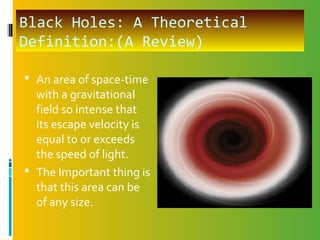
 An area of space-time
with a gravitational
field so intense that
its escape velocity is
equal to or exceeds
the speed of light.
 The Important thing is
that this area can be
of any size.
Thinking in Terms of General
Relativity
 Einstein’s Theory of
General Relativity
basically says that
gravity warps space
time.
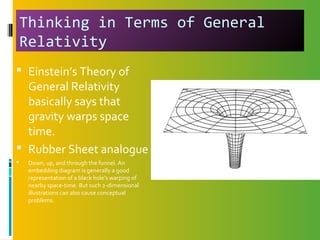
 Rubber Sheet analogue
 Down, up, and through the funnel. An
embedding diagram is generally a good
representation of a black hole's warping of
nearby space-time. But such 2-dimensional
illustrations can also cause conceptual
problems.
Escape Velocity, Density, and
SCHWARZSCHILD RADIUS
 In terms of
gravitational force,
every object has an
escape velocity as
 vesc = Sqrt[(2 G M)/r].
 From that
Schwarzschild Radius
can be easily found.
 All comes down to a
matter of density.
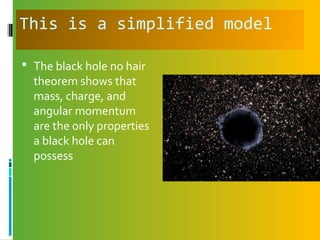
This is a simplified model
 The black hole no hair
theorem shows that
mass, charge, and
angular momentum
are the only properties
a black hole can
possess
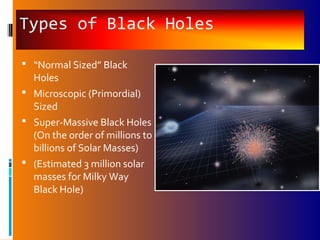
Types of Black Holes
 “Normal Sized” Black
Holes
 Microscopic (Primordial)
Sized
 Super-Massive Black Holes
(On the order of millions to
billions of Solar Masses)
 (Estimated 3 million solar
masses for Milky Way
Black Hole)
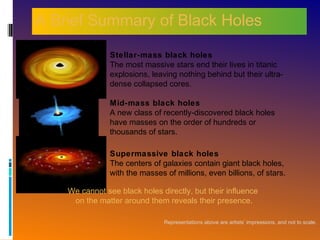
A Brief Summary of Black Holes
Stellar-mass black holes
The most massive stars end their lives in titanic
explosions, leaving nothing behind but their ultra-
dense collapsed cores.
Mid-mass black holes
A new class of recently-discovered black holes
have masses on the order of hundreds or
thousands of stars.
Representations above are artists’ impressions, and not to scale.
Supermassive black holes
The centers of galaxies contain giant black holes,
with the masses of millions, even billions, of stars.
We cannot see black holes directly, but their influence
on the matter around them reveals their presence.
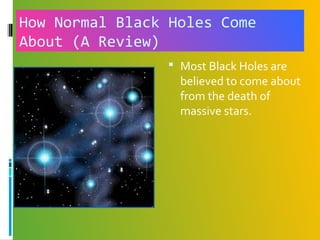
How Normal Black Holes Come
About (A Review)
 Most Black Holes are
believed to come about
from the death of
massive stars.
Stellar Evolution (Brief)
 Star (Mass of Hydrogen) is massive enough
(M > 0.1 Msun ) to ignite fusion
 Star performs stable core fusion (first
H->He)
 Cycle repeats if star is big enough until the
core is Fe.
 Star is in a kind of onion peel structure of
elemental layers
Supernovas!?
 After fusion cycles through and star’s core is
Fe, if the star now is M < 1.4 Msun , the star will
supernova as a Type II supernova. Otherwise,
it becomes a white dwarf, supported by
degenerate electron pressure.
 This mass limit for supernovas is the
Chandrasekhar limit.
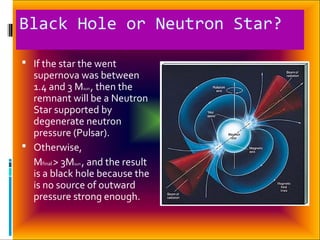
Black Hole or Neutron Star?
 If the star the went
supernova was between
1.4 and 3 Msun , then the
remnant will be a Neutron
Star supported by
degenerate neutron
pressure (Pulsar).
 Otherwise,
Mfinal > 3Msun , and the result
is a black hole because the
is no source of outward
pressure strong enough.
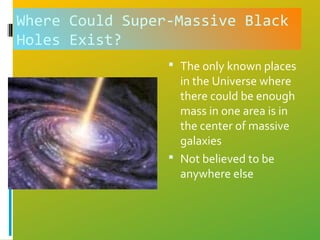
Where Could Super-Massive Black
Holes Exist?
 The only known places
in the Universe where
there could be enough
mass in one area is in
the center of massive
galaxies
 Not believed to be
anywhere else
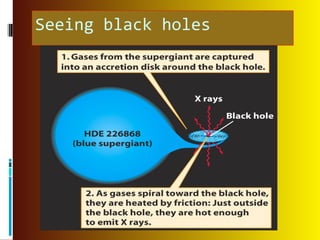
Seeing black holes
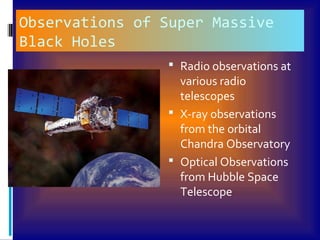
Observations of Super Massive
Black Holes
 Radio observations at
various radio
telescopes
 X-ray observations
from the orbital
Chandra Observatory
 Optical Observations
from Hubble Space
Telescope
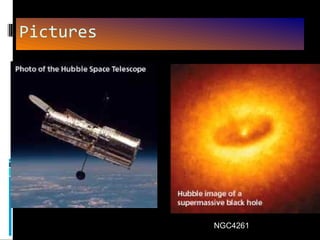
Pictures
NGC4261
@THANK YOU@
 ????????????????????????????
????????????????????????????
????????????????????????????
????????????????????????????
????????????????????????????
????????????????????????????
????????????????????????????
????????????????????????????
????????????????????????????
????????????????????????????
????????????????????????????
????????????????????????????
????????????????????????????
????????????????????????????
????????????????????????????
????????????????????????????
 ????????????????????????????
????????????????????????????
????????????????????????????
????????????????????????????
????????????????????????????
????????????????????????????
????????????????????????????
????????????????????????????
????????????????????????????
????????????????????????????
????????????????????????????
????????????????????????????
????????????????????????????
????????????????????????????
????????????????????????????
????????????????????????????

Black holes Samriddha Shil.....S@S

  • 1.
    @A PRESENTATIONDONE BYSAMRIDDHA SHIL@
  • 2.
    Black Holes: ATheoretical Definition:(A Review)  An area of space-time with a gravitational field so intense that its escape velocity is equal to or exceeds the speed of light.  The Important thing is that this area can be of any size.
  • 3.
    Thinking in Termsof General Relativity  Einstein’s Theory of General Relativity basically says that gravity warps space time.  Rubber Sheet analogue  Down, up, and through the funnel. An embedding diagram is generally a good representation of a black hole's warping of nearby space-time. But such 2-dimensional illustrations can also cause conceptual problems.
  • 4.
    Escape Velocity, Density,and SCHWARZSCHILD RADIUS  In terms of gravitational force, every object has an escape velocity as  vesc = Sqrt[(2 G M)/r].  From that Schwarzschild Radius can be easily found.  All comes down to a matter of density.
  • 5.
    This is asimplified model  The black hole no hair theorem shows that mass, charge, and angular momentum are the only properties a black hole can possess
  • 6.
    Types of BlackHoles  “Normal Sized” Black Holes  Microscopic (Primordial) Sized  Super-Massive Black Holes (On the order of millions to billions of Solar Masses)  (Estimated 3 million solar masses for Milky Way Black Hole)
  • 7.
    A Brief Summaryof Black Holes Stellar-mass black holes The most massive stars end their lives in titanic explosions, leaving nothing behind but their ultra- dense collapsed cores. Mid-mass black holes A new class of recently-discovered black holes have masses on the order of hundreds or thousands of stars. Representations above are artists’ impressions, and not to scale. Supermassive black holes The centers of galaxies contain giant black holes, with the masses of millions, even billions, of stars. We cannot see black holes directly, but their influence on the matter around them reveals their presence.
  • 8.
    How Normal BlackHoles Come About (A Review)  Most Black Holes are believed to come about from the death of massive stars.
  • 9.
    Stellar Evolution (Brief) Star (Mass of Hydrogen) is massive enough (M > 0.1 Msun ) to ignite fusion  Star performs stable core fusion (first H->He)  Cycle repeats if star is big enough until the core is Fe.  Star is in a kind of onion peel structure of elemental layers
  • 10.
    Supernovas!?  After fusioncycles through and star’s core is Fe, if the star now is M < 1.4 Msun , the star will supernova as a Type II supernova. Otherwise, it becomes a white dwarf, supported by degenerate electron pressure.  This mass limit for supernovas is the Chandrasekhar limit.
  • 11.
    Black Hole orNeutron Star?  If the star the went supernova was between 1.4 and 3 Msun , then the remnant will be a Neutron Star supported by degenerate neutron pressure (Pulsar).  Otherwise, Mfinal > 3Msun , and the result is a black hole because the is no source of outward pressure strong enough.
  • 12.
    Where Could Super-MassiveBlack Holes Exist?  The only known places in the Universe where there could be enough mass in one area is in the center of massive galaxies  Not believed to be anywhere else
  • 13.
  • 14.
    Observations of SuperMassive Black Holes  Radio observations at various radio telescopes  X-ray observations from the orbital Chandra Observatory  Optical Observations from Hubble Space Telescope
  • 15.
  • 16.
    @THANK YOU@  ???????????????????????????? ???????????????????????????? ???????????????????????????? ???????????????????????????? ???????????????????????????? ???????????????????????????? ???????????????????????????? ???????????????????????????? ???????????????????????????? ???????????????????????????? ???????????????????????????? ???????????????????????????? ???????????????????????????? ???????????????????????????? ???????????????????????????? ???????????????????????????? ???????????????????????????? ???????????????????????????? ???????????????????????????? ???????????????????????????? ???????????????????????????? ???????????????????????????? ???????????????????????????? ???????????????????????????? ???????????????????????????? ???????????????????????????? ???????????????????????????? ???????????????????????????? ???????????????????????????? ???????????????????????????? ???????????????????????????? ????????????????????????????

Editor's Notes

  • #8 Top: NASA/CXC/M. Weiss, http://chandra.harvard.edu/photo/2003/bhspin/index.html Middle: ESA, NASA, and Felix Mirabel (French Atomic Energy Commission and Institute for Astronomy and Space Physics/Conicet of Argentina) Bottom: NASA/CXC/M. Weiss, http://chandra.harvard.edu/photo/2005/sgra/index.html NOTE: Middle illustration is taken from an animation of a stellar-mass black hole http://www.spacetelescope.org/news/html/heic0211.html