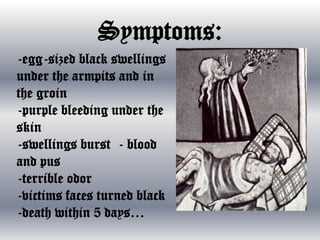
The Black Death, also known as the bubonic plague, was a pandemic in the 14th century caused by a bacteria carried by fleas that lived on rats. The rats spread the fleas and disease to people through their fur. Symptoms included black swellings under the armpits and groin, purple bleeding under the skin, and death within 5 days. It is estimated to have killed 25-50% of Europe's population between 1347-1350 as the disease spread from ships arriving from Asia. The long-term effects included a loss of community spirit, rise of individualism, labor shortages, higher wages, and a shift in artistic representations from beauty to images of death.














![Clarissablackdeath2[1][1]](https://cdn.slidesharecdn.com/ss_thumbnails/clarissablackdeath211-091208022151-phpapp01-thumbnail.jpg?width=640&height=640&fit=bounds)


![Clarissablackdeath2[1][1]](https://cdn.slidesharecdn.com/ss_thumbnails/clarissablackdeath211-091208024900-phpapp02-thumbnail.jpg?width=640&height=640&fit=bounds)
![Clarissablackdeath2[1][1]](https://cdn.slidesharecdn.com/ss_thumbnails/clarissablackdeath211-091208025026-phpapp02-thumbnail.jpg?width=640&height=640&fit=bounds)
![Clarissablackdeath2[1][1]](https://cdn.slidesharecdn.com/ss_thumbnails/clarissablackdeath211-091208024454-phpapp01-thumbnail.jpg?width=640&height=640&fit=bounds)


