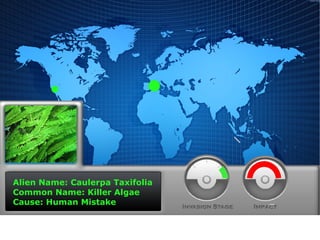
Alien Name: Caulerpa Taxifolia
Common Name: Killer Algae
Cause: Human Mistake
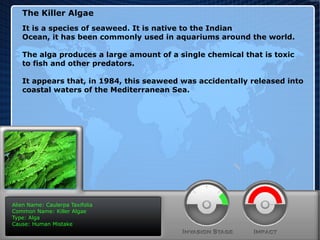
The Killer Algae
It is a species of seaweed. It is native to the Indian
Ocean, it has been commonly used in aquariums around the world.
The alga produces a large amount of a single chemical that is toxic
to fish and other predators.
It appears that, in 1984, this seaweed was accidentally released into
coastal waters of the Mediterranean Sea.

Alien Name: Caulerpa Taxifolia
Common Name: Killer Algae
Type: Alga
Cause: Human Mistake
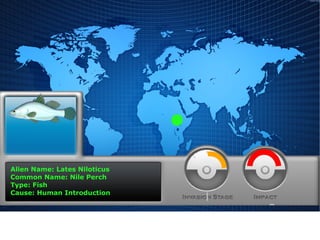
Alien Name: Lates Niloticus
Common Name: Nile Perch
Type: Fish
Cause: Human Introduction
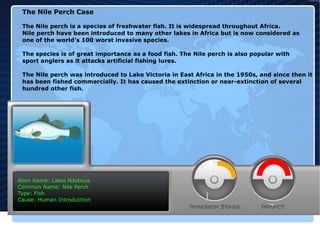
The Nile Perch Case
The Nile perch is a species of freshwater fish. It is widespread throughout Africa.
Nile perch have been introduced to many other lakes in Africa but is now considered as
one of the world's 100 worst invasive species.
The species is of great importance as a food fish. The Nile perch is also popular with
sport anglers as it attacks artificial fishing lures.
The Nile perch was introduced to Lake Victoria in East Africa in the 1950s, and since then it
has been fished commercially. It has caused the extinction or near-extinction of several
hundred other fish.

Alien Name: Lates Niloticus
Common Name: Nile Perch
Type: Fish
Cause: Human Introduction
Alien Name: Apis Mellifera Scutellata
Common Name: Killer Bee
Type: Insect
Cause: Human Mistake
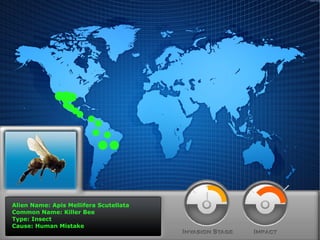
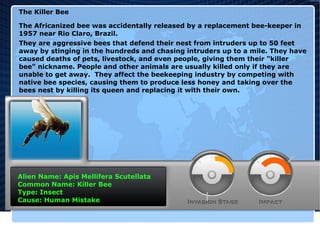
The Killer Bee
The Africanized bee was accidentally released by a replacement bee-keeper in
1957 near Rio Claro, Brazil.
They are aggressive bees that defend their nest from intruders up to 50 feet
away by stinging in the hundreds and chasing intruders up to a mile. They have
caused deaths of pets, livestock, and even people, giving them their "killer
bee" nickname. People and other animals are usually killed only if they are
unable to get away. They affect the beekeeping industry by competing with
native bee species, causing them to produce less honey and taking over the
bees nest by killing its queen and replacing it with their own.

Alien Name: Apis Mellifera Scutellata
Common Name: Killer Bee
Type: Insect
Cause: Human Mistake
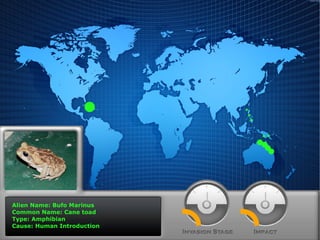
Alien Name: Bufo Marinus
Common Name: Cane toad
Type: Amphibian
Cause: Human Introduction
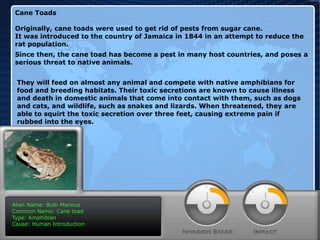
Cane Toads
Originally, cane toads were used to get rid of pests from sugar cane.
It was introduced to the country of Jamaica in 1844 in an attempt to reduce the
rat population.
Since then, the cane toad has become a pest in many host countries, and poses a
serious threat to native animals.
They will feed on almost any animal and compete with native amphibians for
food and breeding habitats. Their toxic secretions are known to cause illness
and death in domestic animals that come into contact with them, such as dogs
and cats, and wildlife, such as snakes and lizards. When threatened, they are
able to squirt the toxic secretion over three feet, causing extreme pain if
rubbed into the eyes.

Alien Name: Heracleum mantegazzianum
Bufo Marinus
Common Name: Giant toad
Cane Hogweed
Type: Plant
Amphibian
Cause: Human Introduction
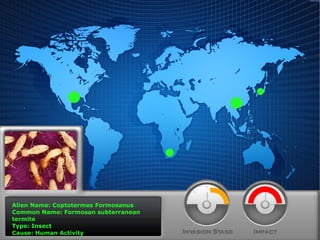
Alien Name: Coptotermes Formosanus
Common Name: Formosan subterranean
termite
Type: Insect
Cause: Human Activity
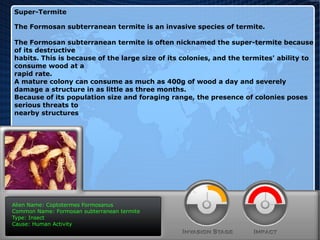
Super-Termite
The Formosan subterranean termite is an invasive species of termite.
The Formosan subterranean termite is often nicknamed the super-termite because
of its destructive
habits. This is because of the large size of its colonies, and the termites' ability to
consume wood at a
rapid rate.
A mature colony can consume as much as 400g of wood a day and severely
damage a structure in as little as three months.
Because of its population size and foraging range, the presence of colonies poses
serious threats to
nearby structures

Alien Name: Coptotermes Formosanus
Common Name: Formosan subterranean termite
Type: Insect
Cause: Human Activity
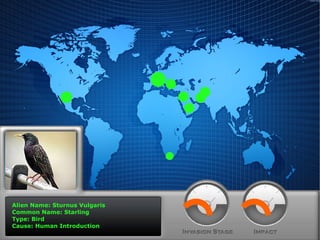
Alien Name: Sturnus Vulgaris
Common Name: Starling
Type: Bird
Cause: Human Introduction
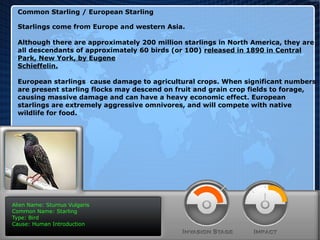
Common Starling / European Starling
Starlings come from Europe and western Asia.
Although there are approximately 200 million starlings in North America, they are
all descendants of approximately 60 birds (or 100) released in 1890 in Central
Park, New York, by Eugene
Schieffelin.
European starlings cause damage to agricultural crops. When significant numbers
are present starling flocks may descend on fruit and grain crop fields to forage,
causing massive damage and can have a heavy economic effect. European
starlings are extremely aggressive omnivores, and will compete with native
wildlife for food.

Alien Name: Sturnus Vulgaris
Common Name: Starling
Type: Bird
Cause: Human Introduction

Invasive species

  • 5.
    Alien Name: CaulerpaTaxifolia Common Name: Killer Algae Cause: Human Mistake
  • 6.
    The Killer Algae Itis a species of seaweed. It is native to the Indian Ocean, it has been commonly used in aquariums around the world. The alga produces a large amount of a single chemical that is toxic to fish and other predators. It appears that, in 1984, this seaweed was accidentally released into coastal waters of the Mediterranean Sea. Alien Name: Caulerpa Taxifolia Common Name: Killer Algae Type: Alga Cause: Human Mistake
  • 7.
    Alien Name: LatesNiloticus Common Name: Nile Perch Type: Fish Cause: Human Introduction
  • 8.
    The Nile PerchCase The Nile perch is a species of freshwater fish. It is widespread throughout Africa. Nile perch have been introduced to many other lakes in Africa but is now considered as one of the world's 100 worst invasive species. The species is of great importance as a food fish. The Nile perch is also popular with sport anglers as it attacks artificial fishing lures. The Nile perch was introduced to Lake Victoria in East Africa in the 1950s, and since then it has been fished commercially. It has caused the extinction or near-extinction of several hundred other fish. Alien Name: Lates Niloticus Common Name: Nile Perch Type: Fish Cause: Human Introduction
  • 9.
    Alien Name: ApisMellifera Scutellata Common Name: Killer Bee Type: Insect Cause: Human Mistake
  • 10.
    The Killer Bee TheAfricanized bee was accidentally released by a replacement bee-keeper in 1957 near Rio Claro, Brazil. They are aggressive bees that defend their nest from intruders up to 50 feet away by stinging in the hundreds and chasing intruders up to a mile. They have caused deaths of pets, livestock, and even people, giving them their "killer bee" nickname. People and other animals are usually killed only if they are unable to get away. They affect the beekeeping industry by competing with native bee species, causing them to produce less honey and taking over the bees nest by killing its queen and replacing it with their own. Alien Name: Apis Mellifera Scutellata Common Name: Killer Bee Type: Insect Cause: Human Mistake
  • 11.
    Alien Name: BufoMarinus Common Name: Cane toad Type: Amphibian Cause: Human Introduction
  • 12.
    Cane Toads Originally, canetoads were used to get rid of pests from sugar cane. It was introduced to the country of Jamaica in 1844 in an attempt to reduce the rat population. Since then, the cane toad has become a pest in many host countries, and poses a serious threat to native animals. They will feed on almost any animal and compete with native amphibians for food and breeding habitats. Their toxic secretions are known to cause illness and death in domestic animals that come into contact with them, such as dogs and cats, and wildlife, such as snakes and lizards. When threatened, they are able to squirt the toxic secretion over three feet, causing extreme pain if rubbed into the eyes. Alien Name: Heracleum mantegazzianum Bufo Marinus Common Name: Giant toad Cane Hogweed Type: Plant Amphibian Cause: Human Introduction
  • 13.
    Alien Name: CoptotermesFormosanus Common Name: Formosan subterranean termite Type: Insect Cause: Human Activity
  • 14.
    Super-Termite The Formosan subterraneantermite is an invasive species of termite. The Formosan subterranean termite is often nicknamed the super-termite because of its destructive habits. This is because of the large size of its colonies, and the termites' ability to consume wood at a rapid rate. A mature colony can consume as much as 400g of wood a day and severely damage a structure in as little as three months. Because of its population size and foraging range, the presence of colonies poses serious threats to nearby structures Alien Name: Coptotermes Formosanus Common Name: Formosan subterranean termite Type: Insect Cause: Human Activity
  • 15.
    Alien Name: SturnusVulgaris Common Name: Starling Type: Bird Cause: Human Introduction
  • 16.
    Common Starling /European Starling Starlings come from Europe and western Asia. Although there are approximately 200 million starlings in North America, they are all descendants of approximately 60 birds (or 100) released in 1890 in Central Park, New York, by Eugene Schieffelin. European starlings cause damage to agricultural crops. When significant numbers are present starling flocks may descend on fruit and grain crop fields to forage, causing massive damage and can have a heavy economic effect. European starlings are extremely aggressive omnivores, and will compete with native wildlife for food. Alien Name: Sturnus Vulgaris Common Name: Starling Type: Bird Cause: Human Introduction