Bitcoin
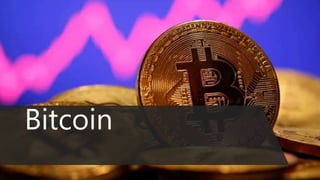
• Launched in 2009, bitcoin is the world's
largest cryptocurrency.
• The cryptocurrency was invented in 2008
by an unknown person or group of people
using the name Satoshi Nakamoto.
• Each Bitcoin is basically a computer file
which is stored in a 'digital wallet' app on a
smartphone or computer.
• Every single transaction is recorded in a
public list called the blockchain.
• Bitcoin mining is the process by which new bitcoins are
entered into circulation.
• Bitcoin mining is performed by high-powered
computers that solve complex computational math
problems.
• It is the only way to release new cryptocurrency into
circulation.
• In other words, miners are basically "minting" currency.
• The legal status of bitcoin varies from state to state and is still
undefined or changing in many of them.
• There are also hundreds of other notable companies that accept the
cryptocurrency as a valid form of payment.
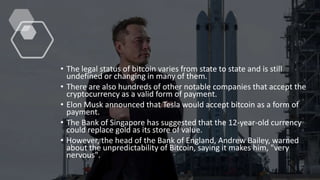
• Elon Musk announced that Tesla would accept bitcoin as a form of
payment.
• The Bank of Singapore has suggested that the 12-year-old currency
could replace gold as its store of value.
• However, the head of the Bank of England, Andrew Bailey, warned
about the unpredictability of Bitcoin, saying it makes him, "very
nervous".
El Salvador creates history
• The Central American nation’s Bitcoin law, which was sent to its
Congress on Wednesday morning by President Nayib Bukele, was
approved.
• It was approved in the legislative assembly by a “supermajority”
with 62 out of 84 votes.
• Tax contributions can be paid in Bitcoin.
• Exchanges in Bitcoin will not be subject to capital gains tax, just
like any legal tender.
What does
this mean for
the country?
• According to experts, EI Salvador's decision to
make bitcoin a legal tender will boost financial
inclusion in their country.
• "It will bring financial inclusion, investment,
tourism, innovation, and economic development
for our country," - Nayib Bukele.
• President Nayib Bukele says Bitcoin will make it
easier for Salvadorans living abroad to send
payments home.

BITCOIN

  • 1.
  • 2.
    • Launched in2009, bitcoin is the world's largest cryptocurrency. • The cryptocurrency was invented in 2008 by an unknown person or group of people using the name Satoshi Nakamoto. • Each Bitcoin is basically a computer file which is stored in a 'digital wallet' app on a smartphone or computer. • Every single transaction is recorded in a public list called the blockchain.
  • 3.
    • Bitcoin miningis the process by which new bitcoins are entered into circulation. • Bitcoin mining is performed by high-powered computers that solve complex computational math problems. • It is the only way to release new cryptocurrency into circulation. • In other words, miners are basically "minting" currency.
  • 4.
    • The legalstatus of bitcoin varies from state to state and is still undefined or changing in many of them. • There are also hundreds of other notable companies that accept the cryptocurrency as a valid form of payment. • Elon Musk announced that Tesla would accept bitcoin as a form of payment. • The Bank of Singapore has suggested that the 12-year-old currency could replace gold as its store of value. • However, the head of the Bank of England, Andrew Bailey, warned about the unpredictability of Bitcoin, saying it makes him, "very nervous".
  • 5.
    El Salvador createshistory • The Central American nation’s Bitcoin law, which was sent to its Congress on Wednesday morning by President Nayib Bukele, was approved. • It was approved in the legislative assembly by a “supermajority” with 62 out of 84 votes. • Tax contributions can be paid in Bitcoin. • Exchanges in Bitcoin will not be subject to capital gains tax, just like any legal tender.
  • 6.
    What does this meanfor the country? • According to experts, EI Salvador's decision to make bitcoin a legal tender will boost financial inclusion in their country. • "It will bring financial inclusion, investment, tourism, innovation, and economic development for our country," - Nayib Bukele. • President Nayib Bukele says Bitcoin will make it easier for Salvadorans living abroad to send payments home.