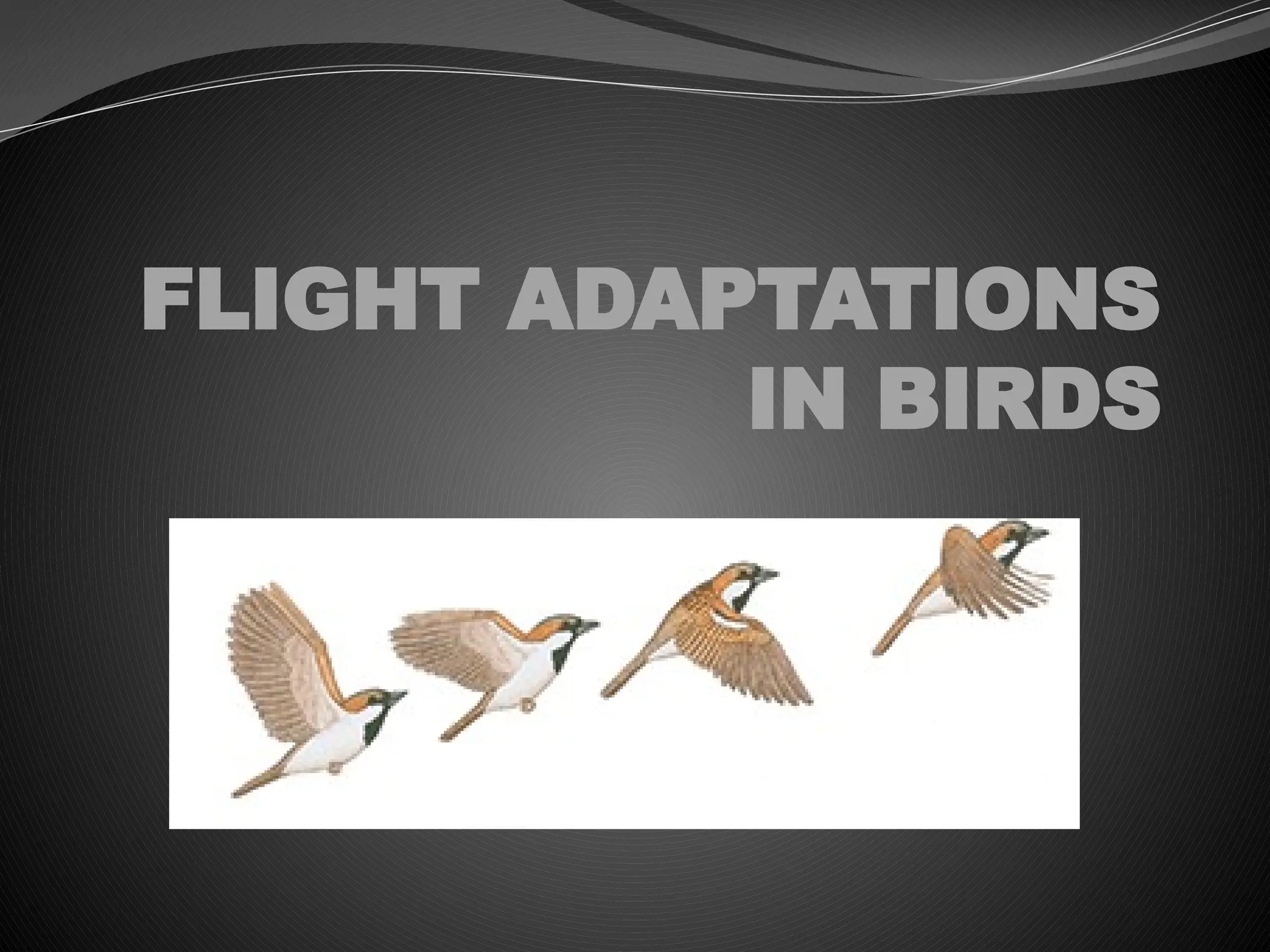
FLIGHT ADAPTATIONS
IN BIRDS
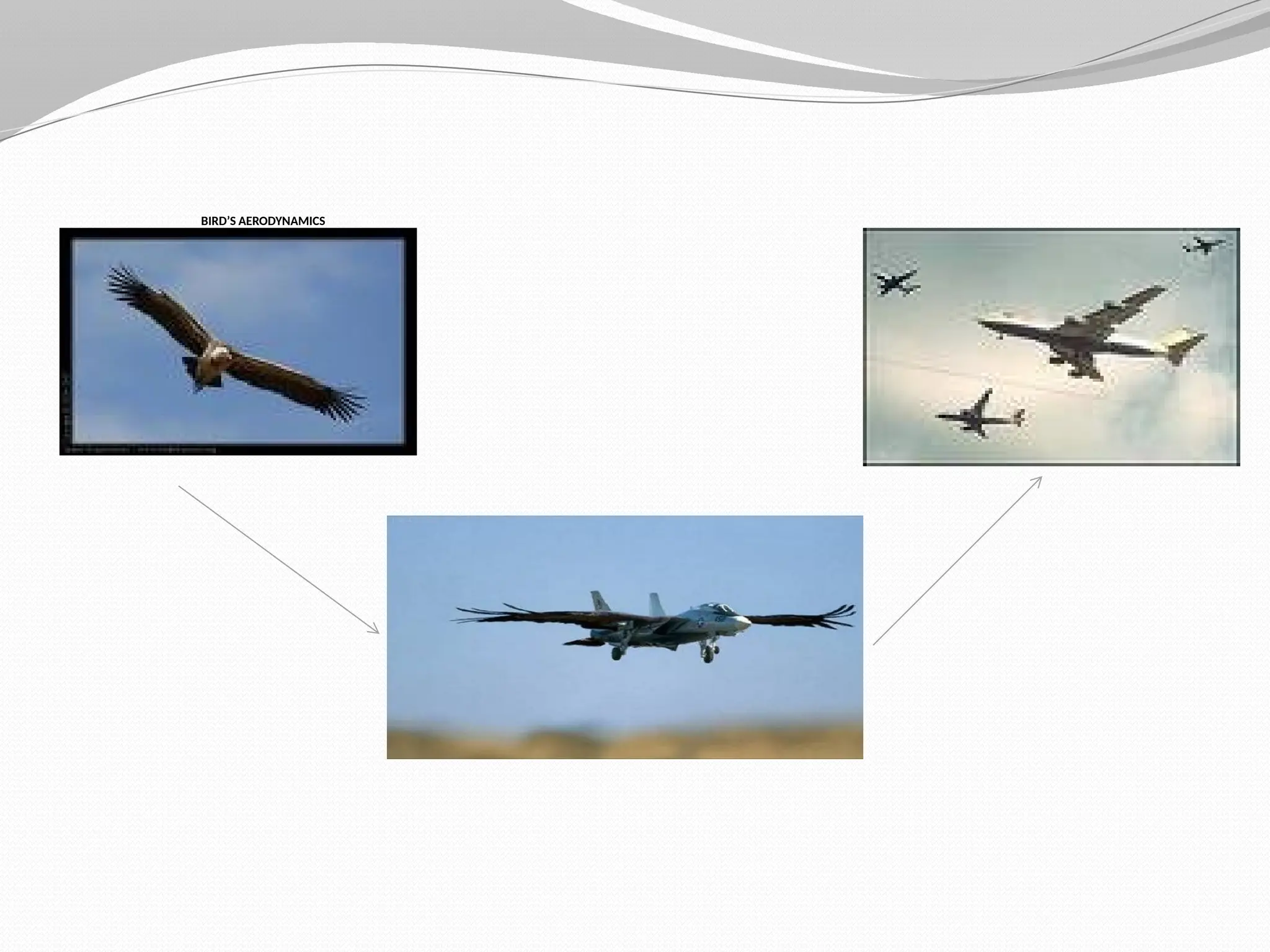
BIRD’S AERODYNAMICS
Air Pressure
 If equal on dorsal and ventral surfaces of wing,
then no lift if “symmetrically” streamlined wing
 Two ways to overcome this with the wings:
a) increase the attack angle
b) bend the surface
 Doing so, however, does increase drag (no totally
“free lunches here )
 A cambered airfoil (ventral surface of wing is
concave, dorsal surface is convex) results in the
air moving faster over the dorsal convex surface
relative to the ventral surface
 Man has always dreamed
of being able to fly.
 Our long years of
experiment and research
have resulted in machine
with advanced
technologies.
 However our techniques
are really primitive as
compared to nature’s
flying machine.
ABSTRACT
IMPORTANT TERMS
Essential for
understanding their flight
mechanism
 Lift
 Drag
 Angle of attack
 Stalling
 Covert eddy flaps
 Flapping
 Take off and Landing
 Camber
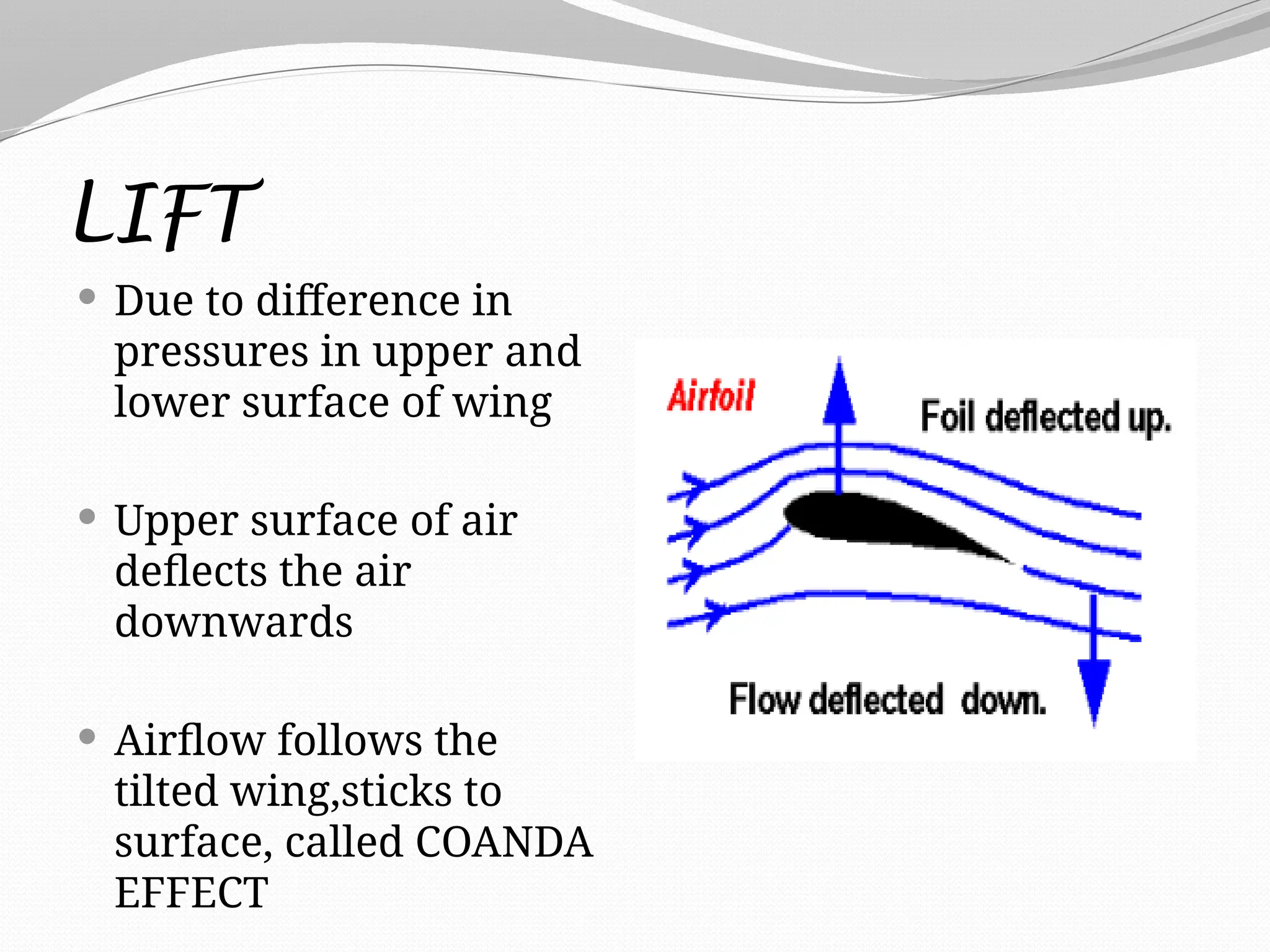
LIFT
 Due to difference in
pressures in upper and
lower surface of wing
 Upper surface of air
deflects the air
downwards
 Airflow follows the
tilted wing,sticks to
surface, called COANDA
EFFECT
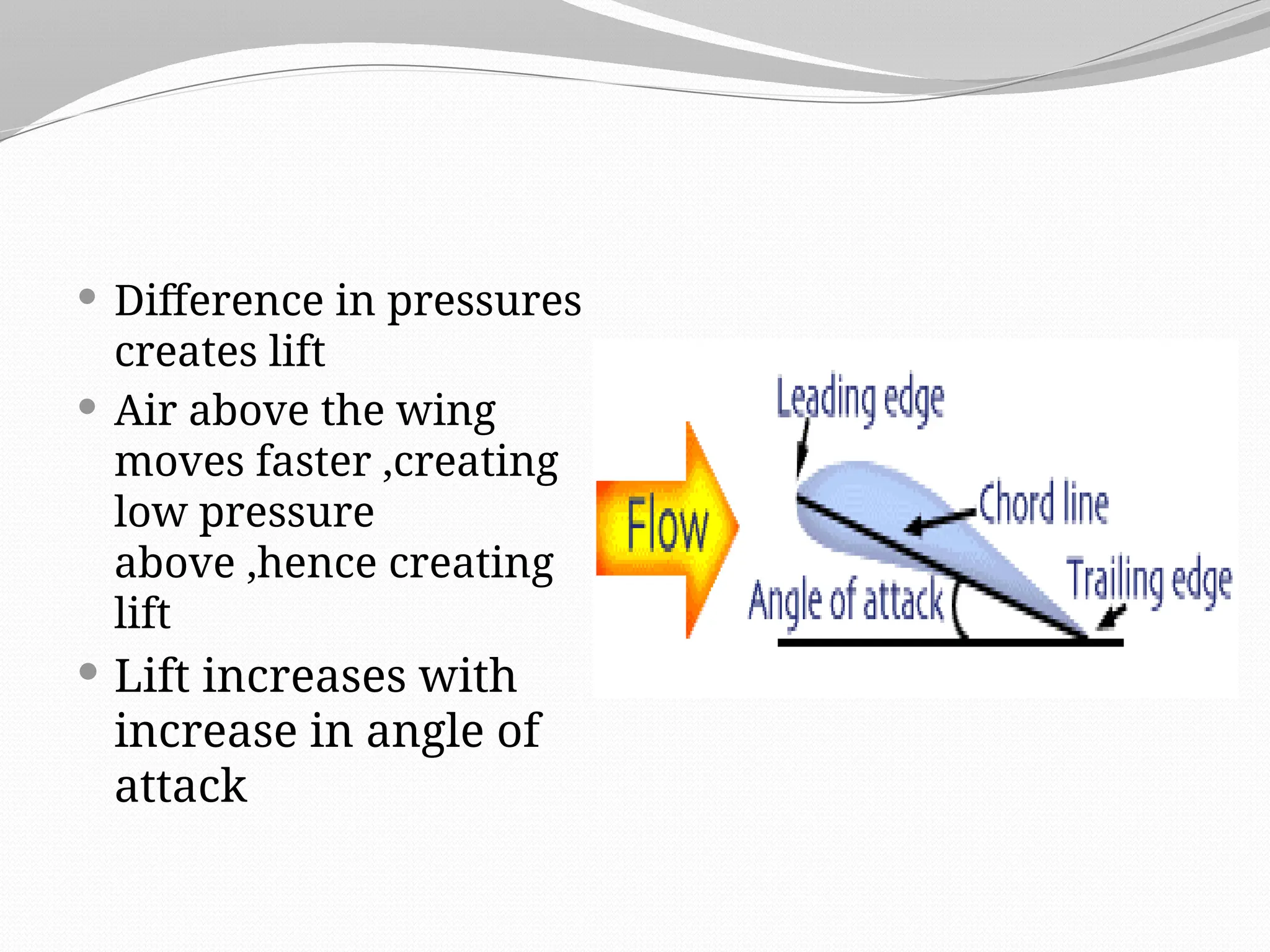
 Difference in pressures
creates lift
 Air above the wing
moves faster ,creating
low pressure
above ,hence creating
lift
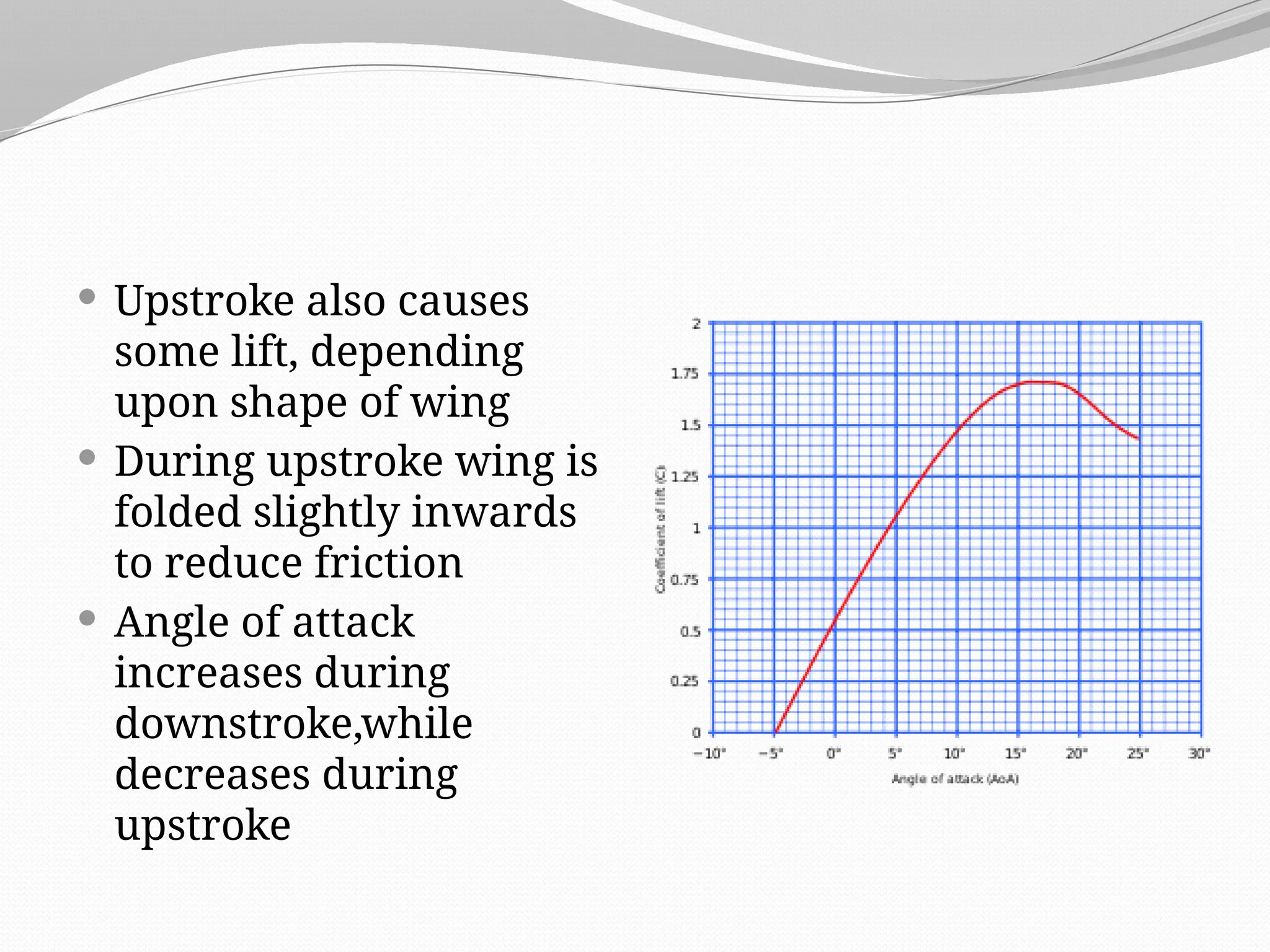
 Lift increases with
increase in angle of
attack
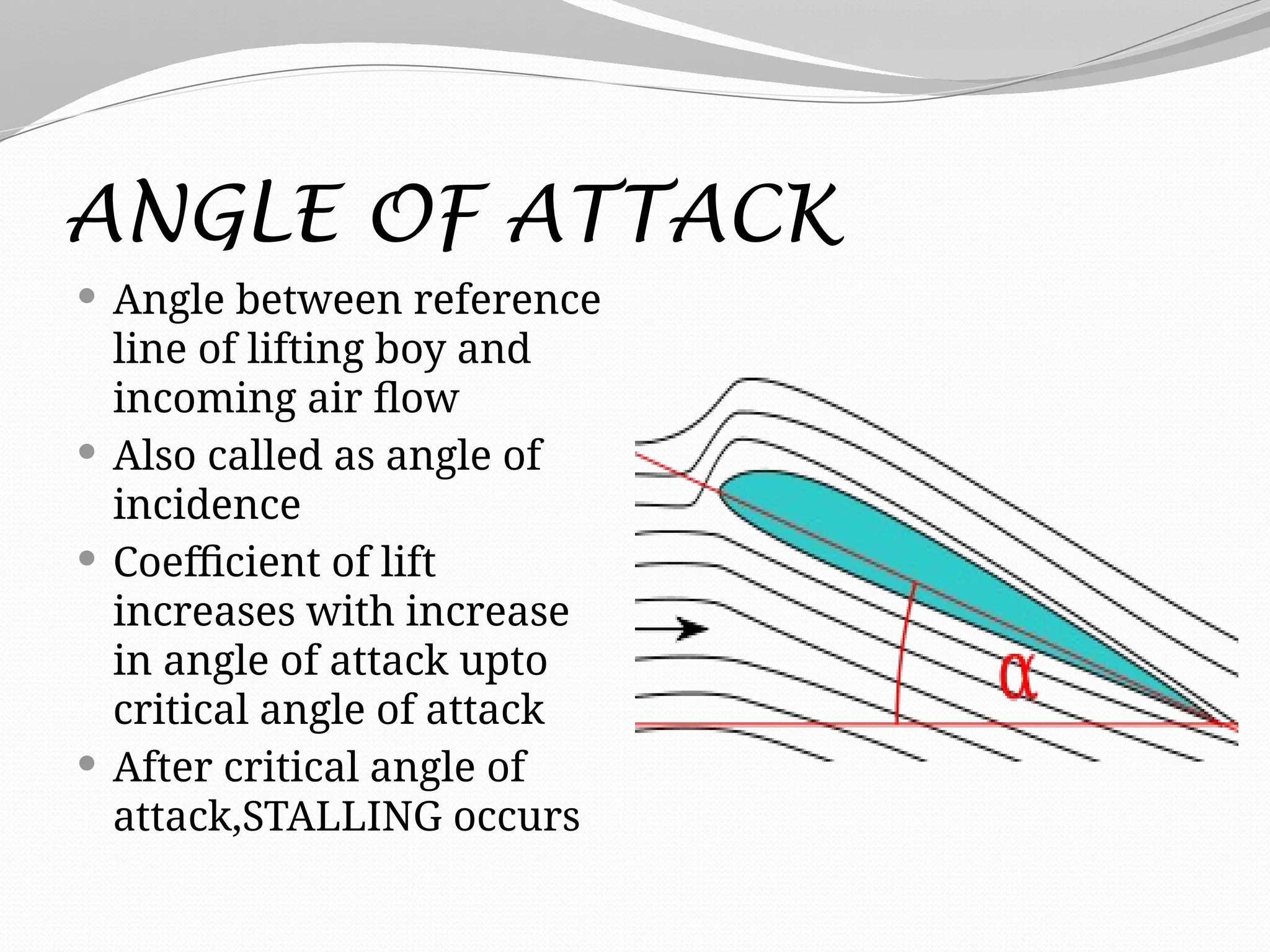
ANGLE OF ATTACK
 Angle between reference
line of lifting boy and
incoming air flow
 Also called as angle of
incidence
 Coefficient of lift
increases with increase
in angle of attack upto
critical angle of attack
 After critical angle of
attack,STALLING occurs
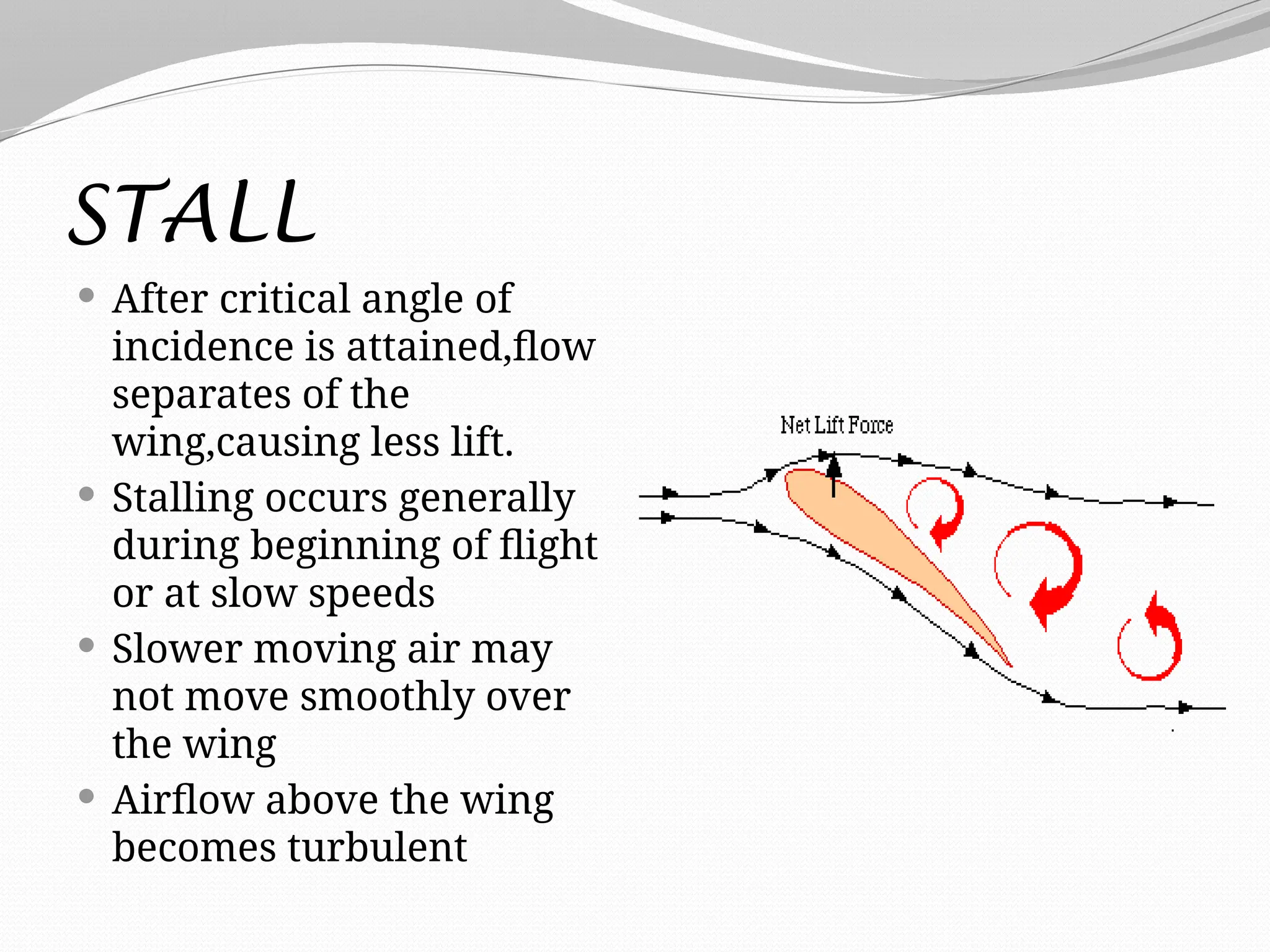
STALL
 After critical angle of
incidence is attained,flow
separates of the
wing,causing less lift.
 Stalling occurs generally
during beginning of flight
or at slow speeds
 Slower moving air may
not move smoothly over
the wing
 Airflow above the wing
becomes turbulent
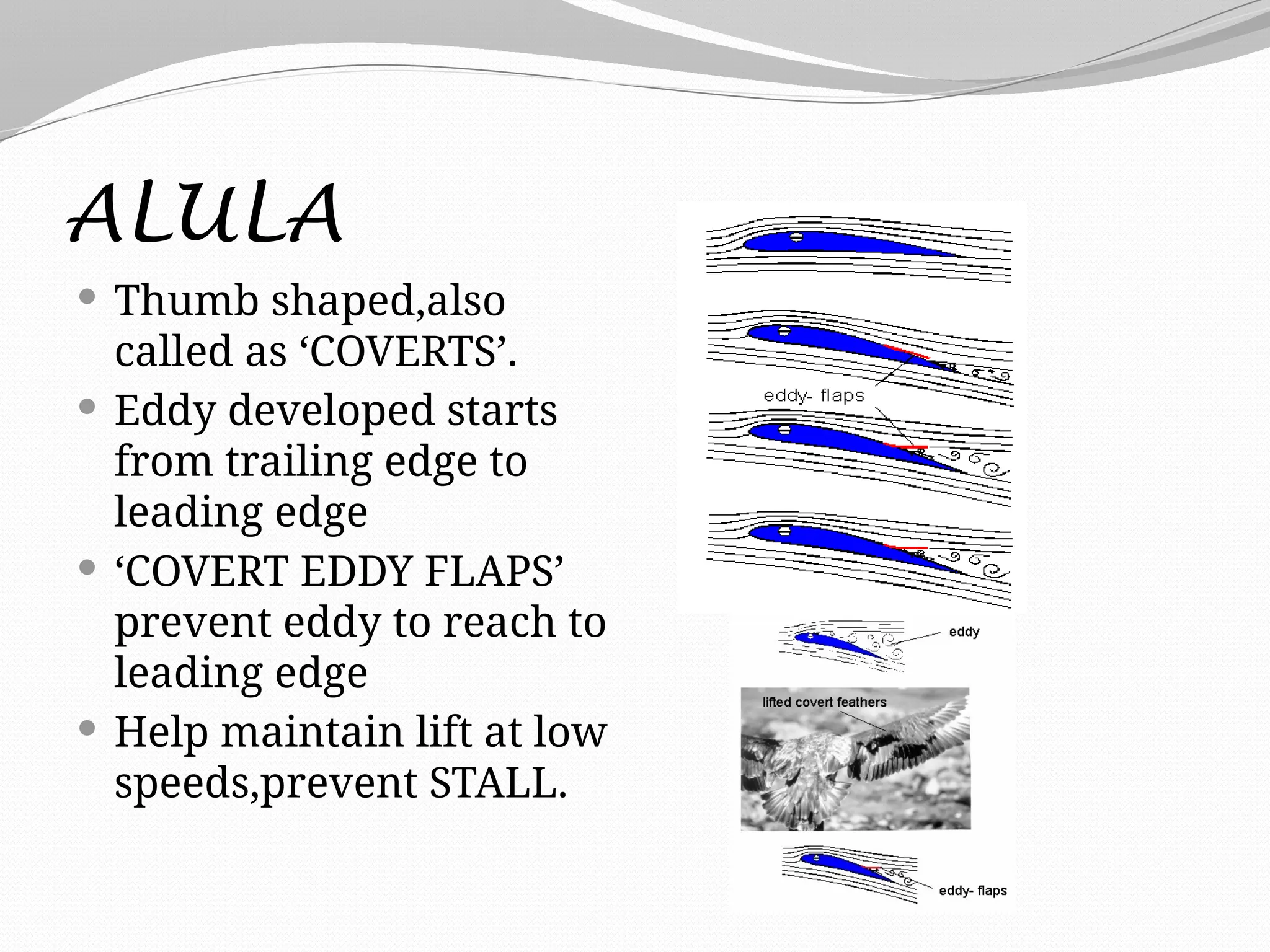
ALULA
 Thumb shaped,also
called as ‘COVERTS’.
 Eddy developed starts
from trailing edge to
leading edge
 ‘COVERT EDDY FLAPS’
prevent eddy to reach to
leading edge
 Help maintain lift at low
speeds,prevent STALL.
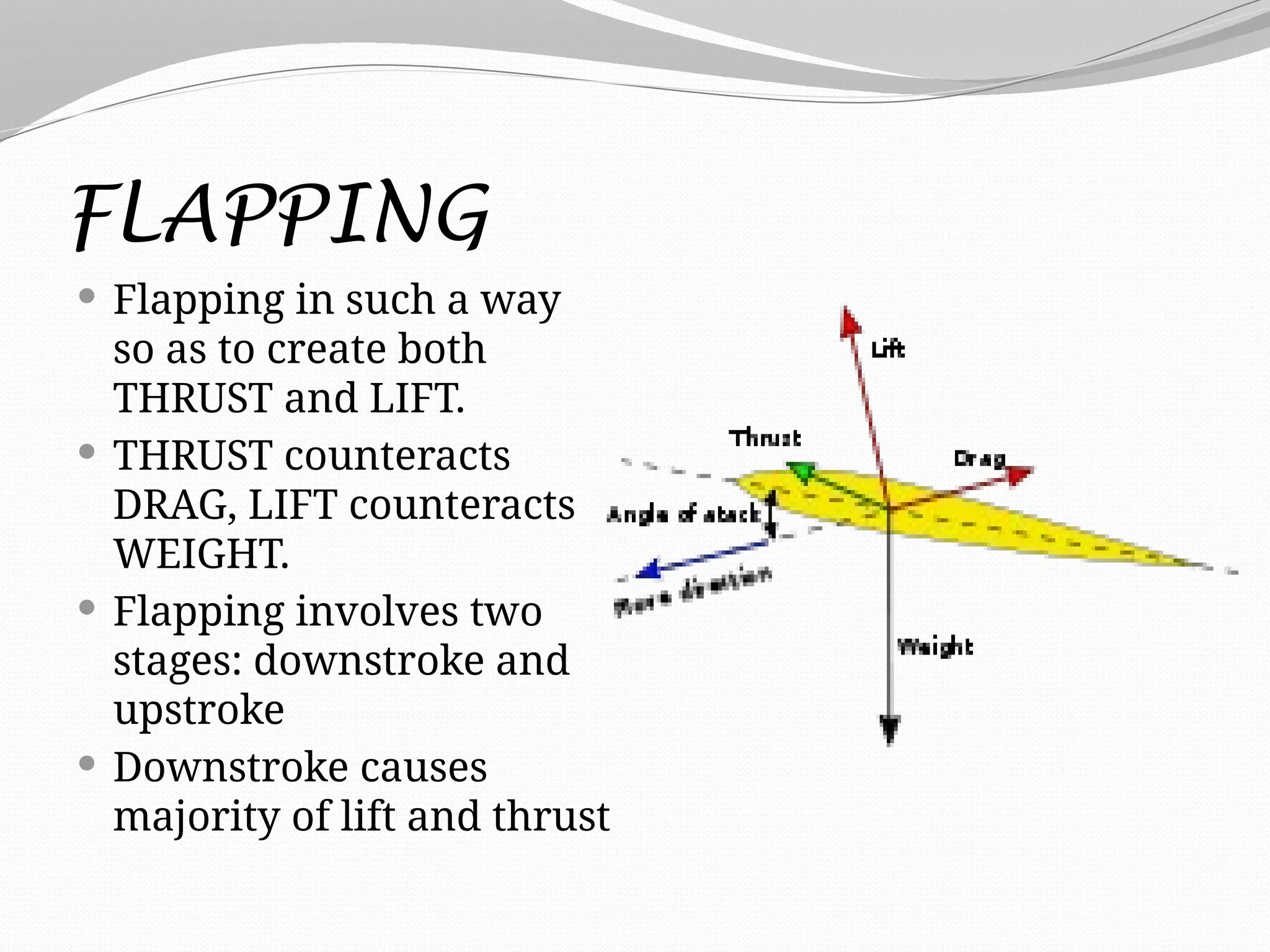
FLAPPING
 Flapping in such a way
so as to create both
THRUST and LIFT.
 THRUST counteracts
DRAG, LIFT counteracts
WEIGHT.
 Flapping involves two
stages: downstroke and
upstroke
 Downstroke causes
majority of lift and thrust
 Upstroke also causes
some lift, depending
upon shape of wing
 During upstroke wing is
folded slightly inwards
to reduce friction
 Angle of attack
increases during
downstroke,while
decreases during
upstroke
DRAG
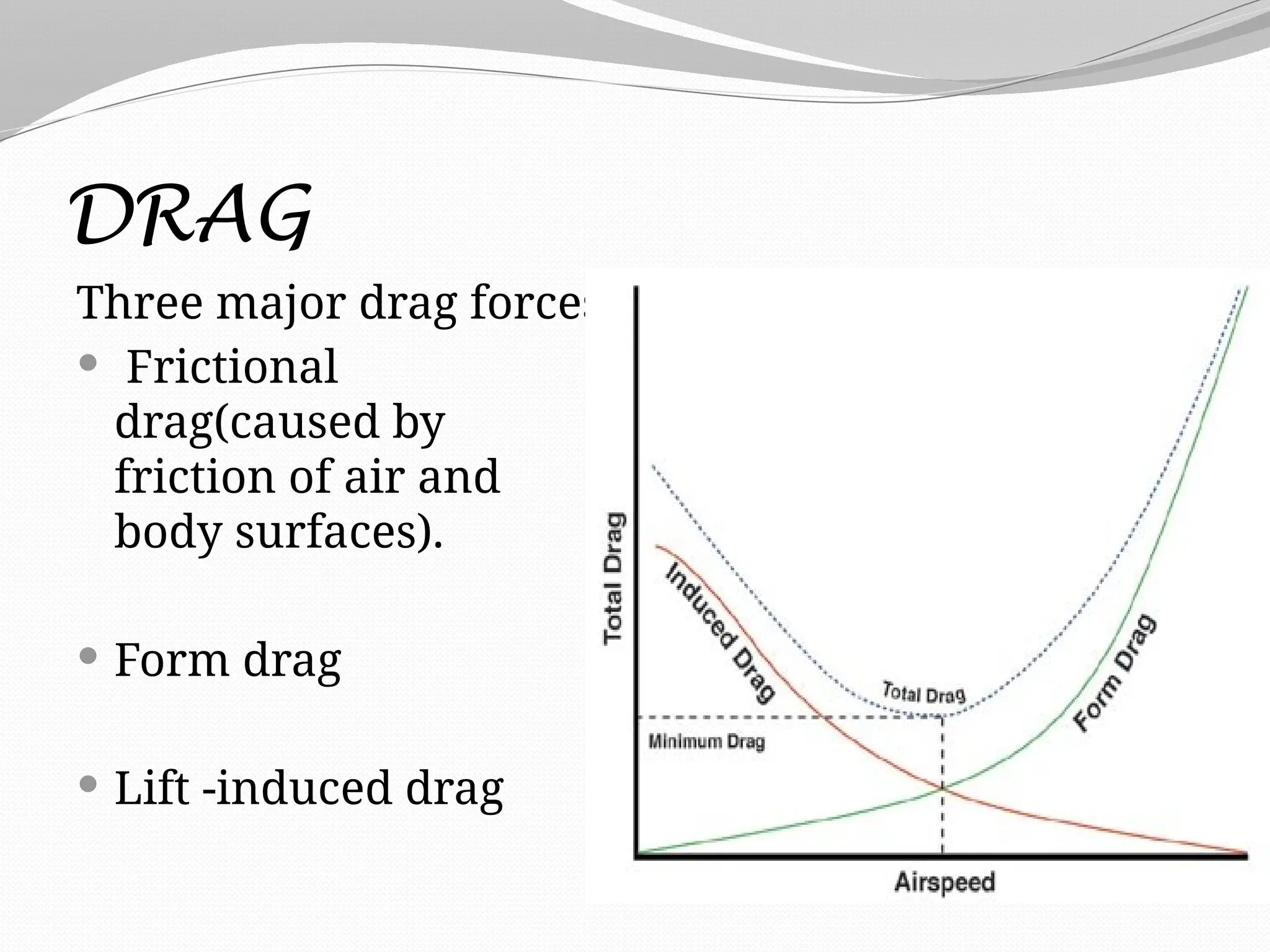
Three major drag forces
 Frictional
drag(caused by
friction of air and
body surfaces).
 Form drag
 Lift -induced drag
FORM DRAG
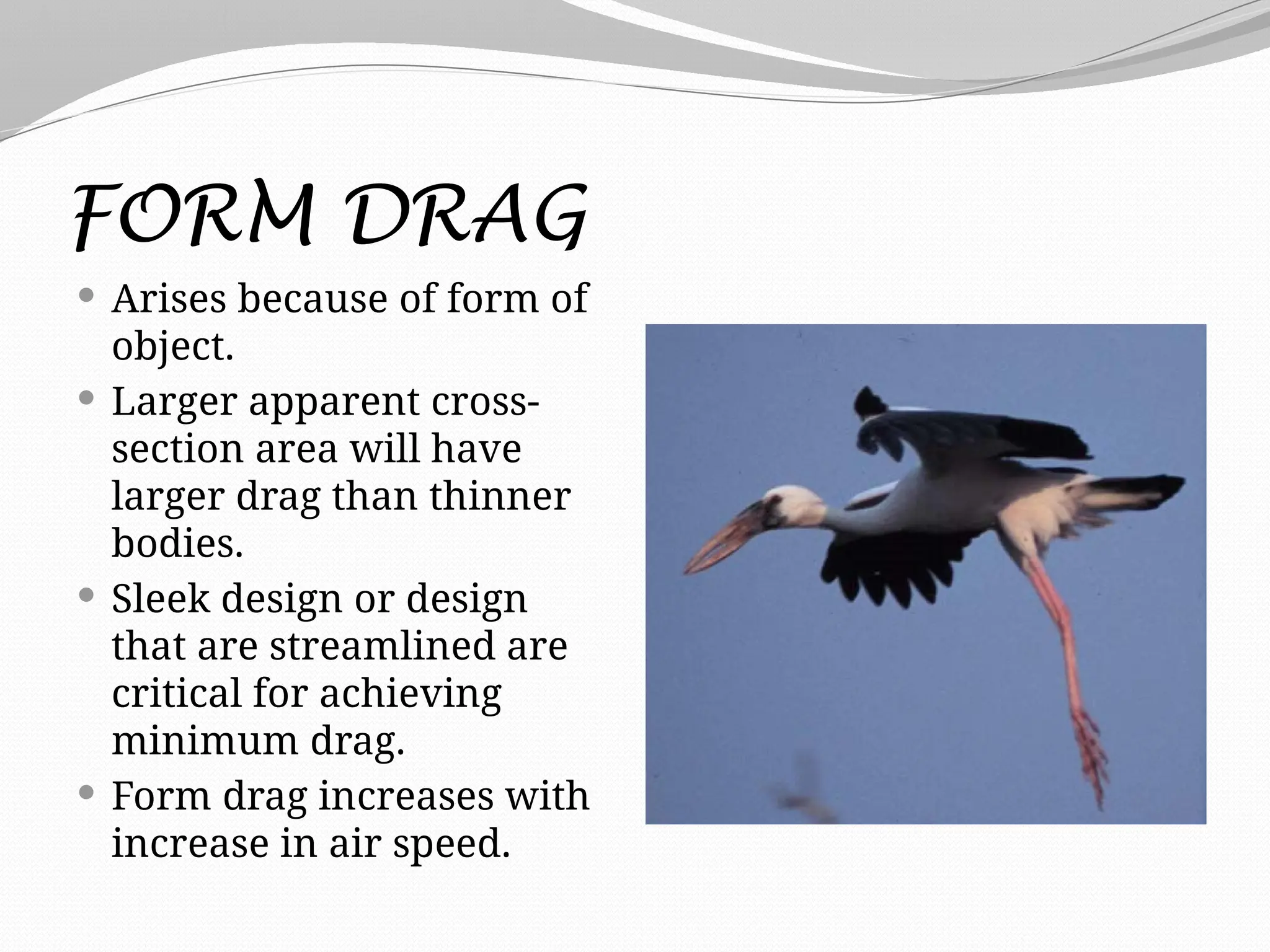
 Arises because of form of
object.
 Larger apparent cross-
section area will have
larger drag than thinner
bodies.
 Sleek design or design
that are streamlined are
critical for achieving
minimum drag.
 Form drag increases with
increase in air speed.
LIFT INDUCED DRAG
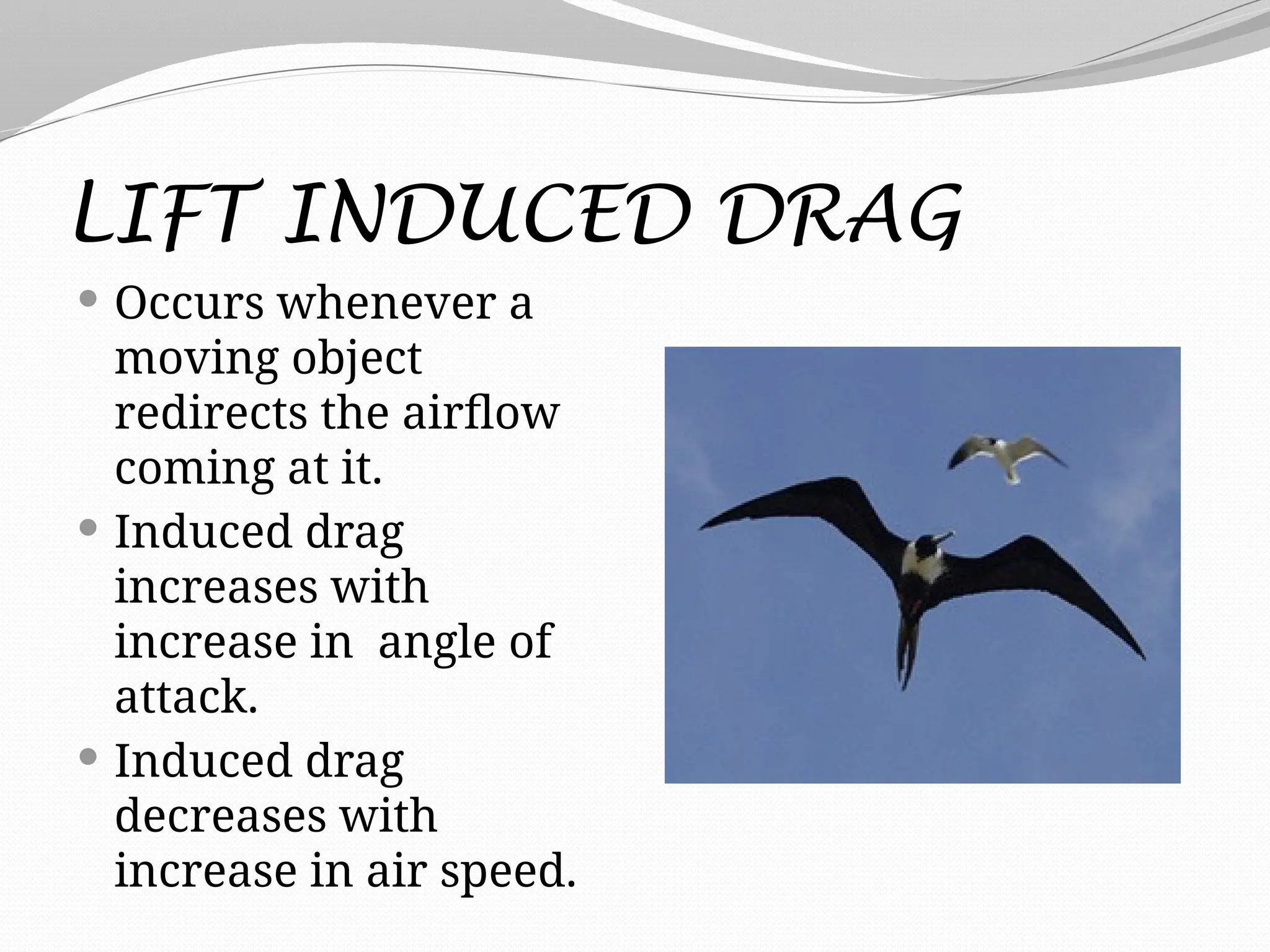
 Occurs whenever a
moving object
redirects the airflow
coming at it.
 Induced drag
increases with
increase in angle of
attack.
 Induced drag
decreases with
increase in air speed.
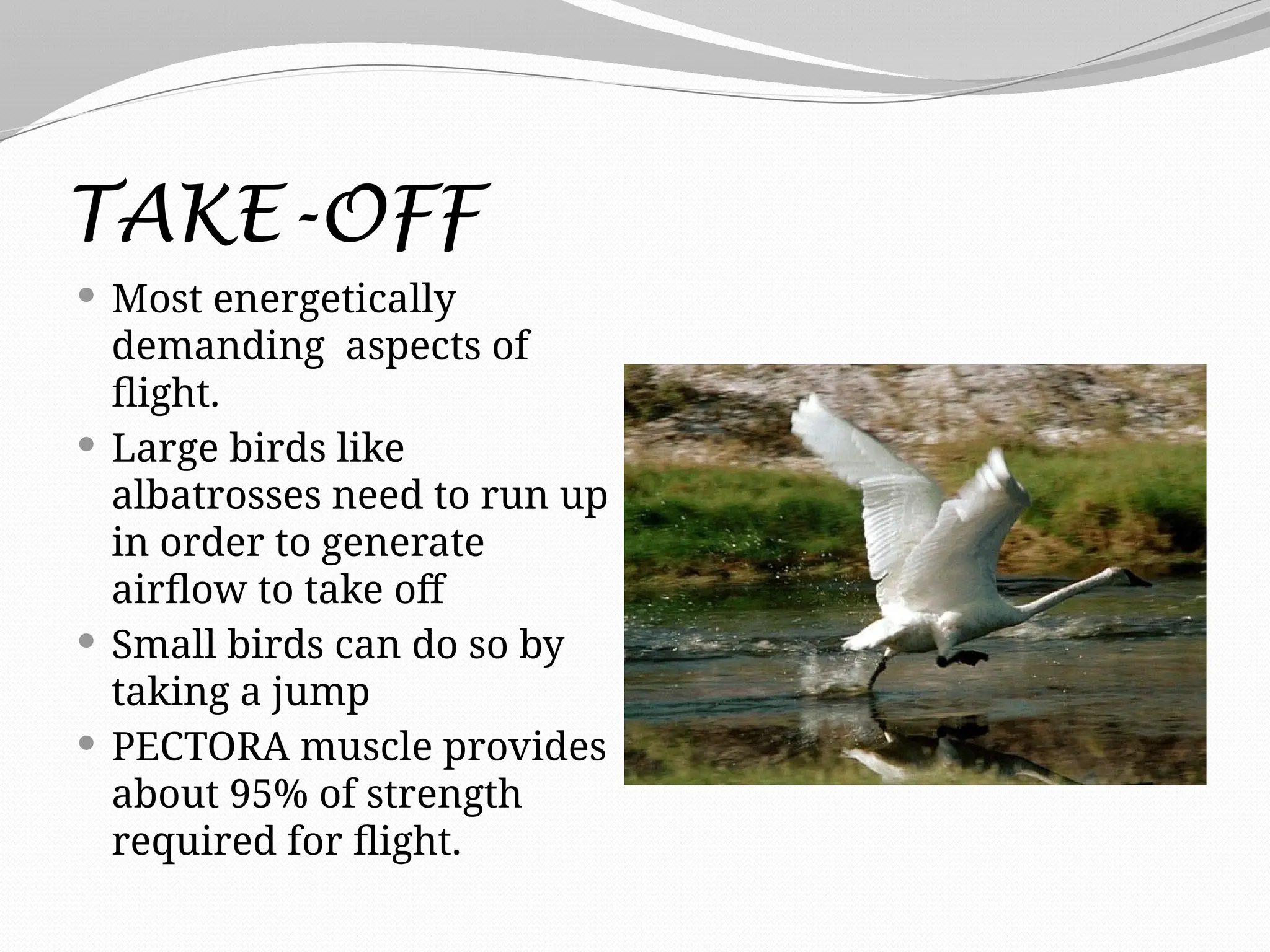
TAKE-OFF
 Most energetically
demanding aspects of
flight.
 Large birds like
albatrosses need to run up
in order to generate
airflow to take off
 Small birds can do so by
taking a jump
 PECTORA muscle provides
about 95% of strength
required for flight.
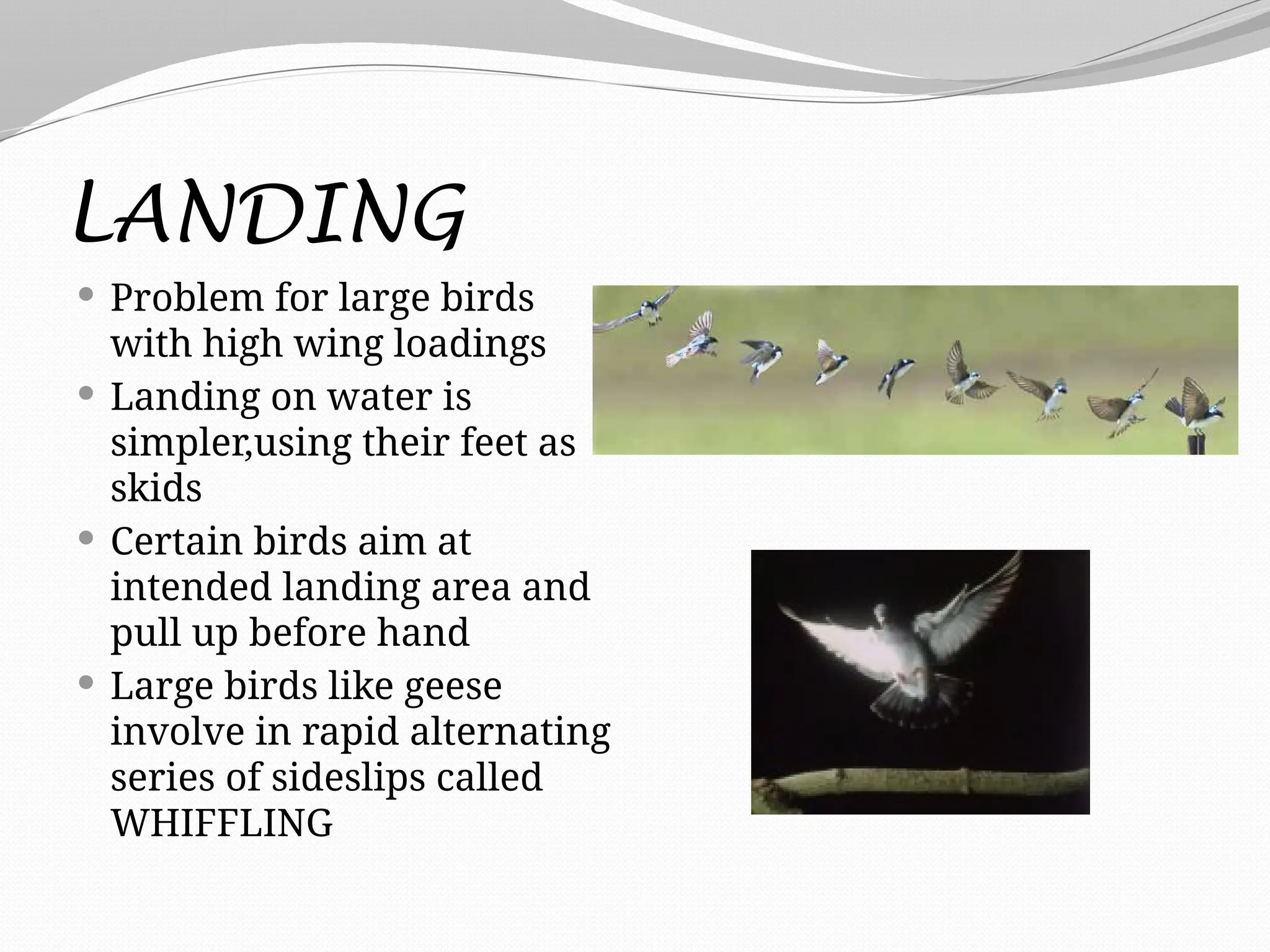
LANDING
 Problem for large birds
with high wing loadings
 Landing on water is
simpler,using their feet as
skids
 Certain birds aim at
intended landing area and
pull up before hand
 Large birds like geese
involve in rapid alternating
series of sideslips called
WHIFFLING
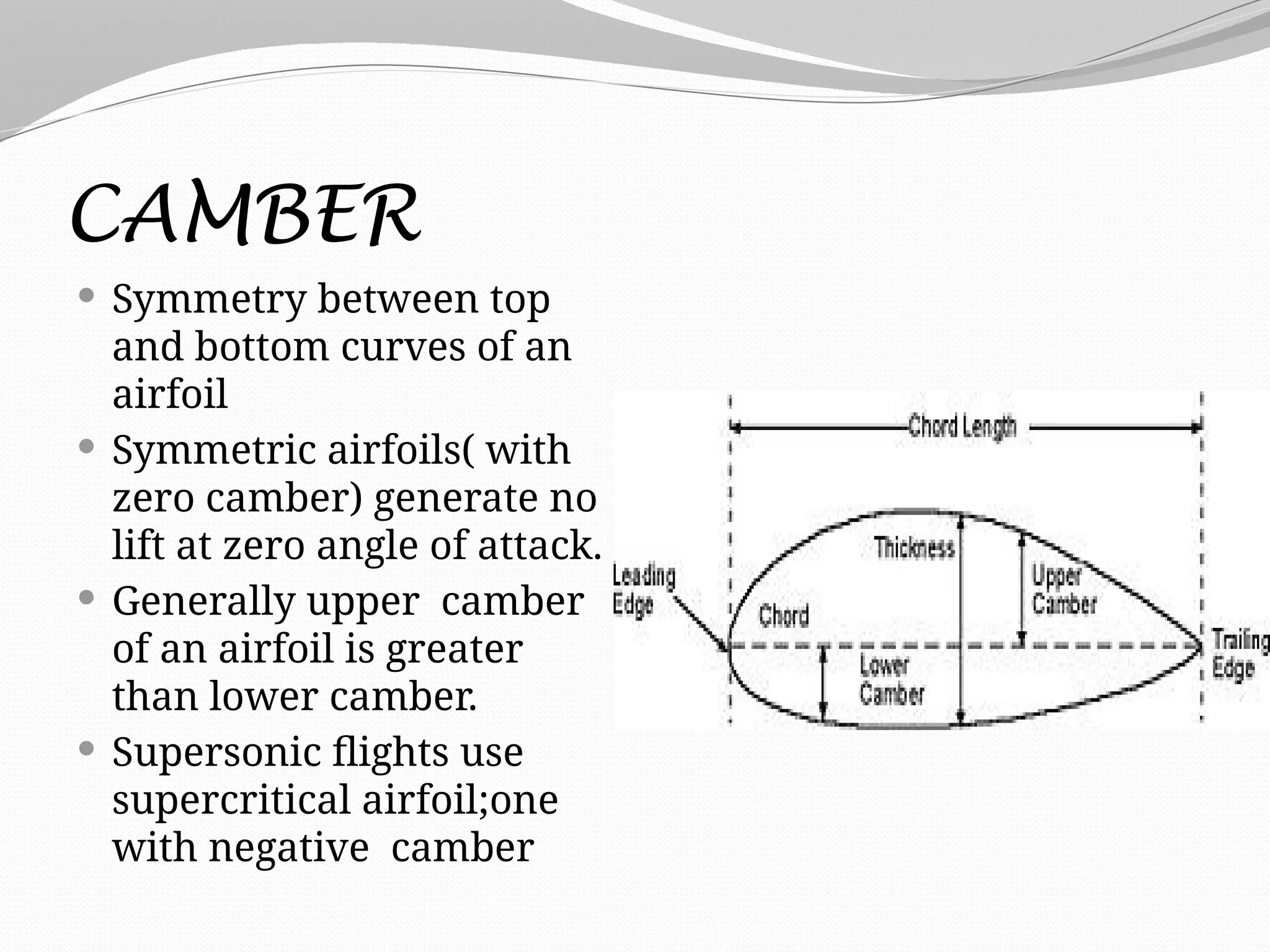
CAMBER
 Symmetry between top
and bottom curves of an
airfoil
 Symmetric airfoils( with
zero camber) generate no
lift at zero angle of attack.
 Generally upper camber
of an airfoil is greater
than lower camber.
 Supersonic flights use
supercritical airfoil;one
with negative camber
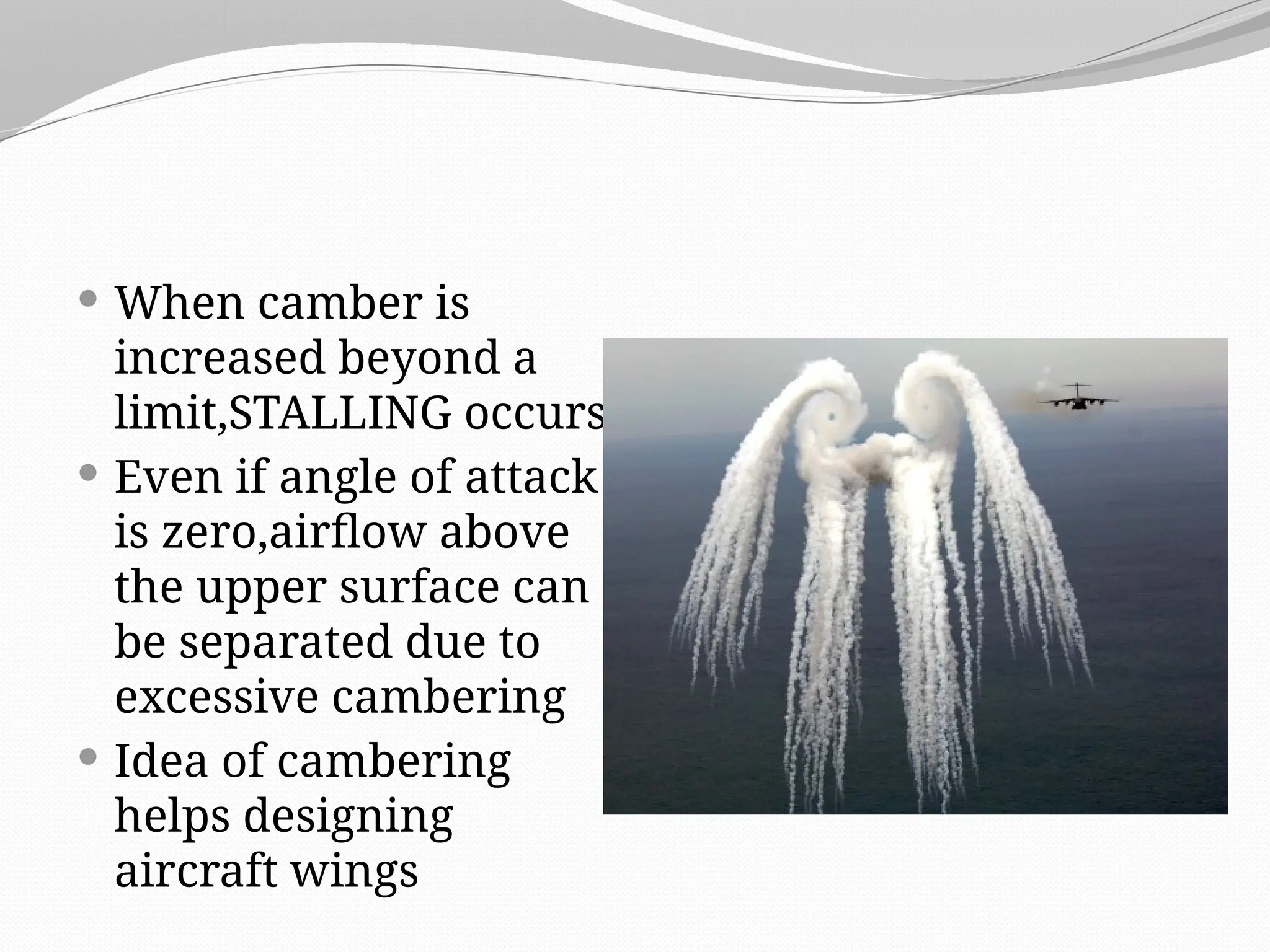
 When camber is
increased beyond a
limit,STALLING occurs
 Even if angle of attack
is zero,airflow above
the upper surface can
be separated due to
excessive cambering
 Idea of cambering
helps designing
aircraft wings
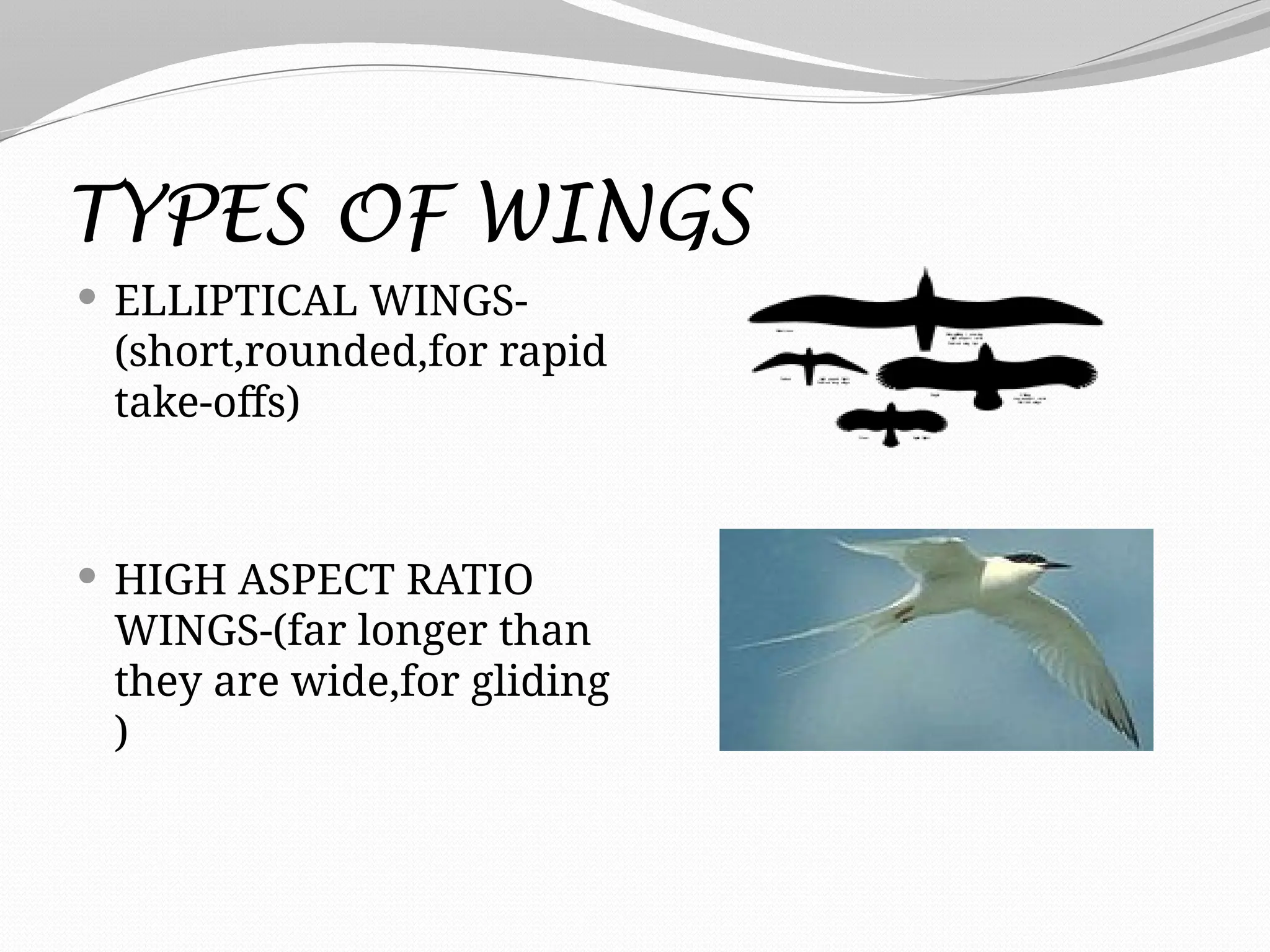
TYPES OF WINGS
 ELLIPTICAL WINGS-
(short,rounded,for rapid
take-offs)
 HIGH ASPECT RATIO
WINGS-(far longer than
they are wide,for gliding
)
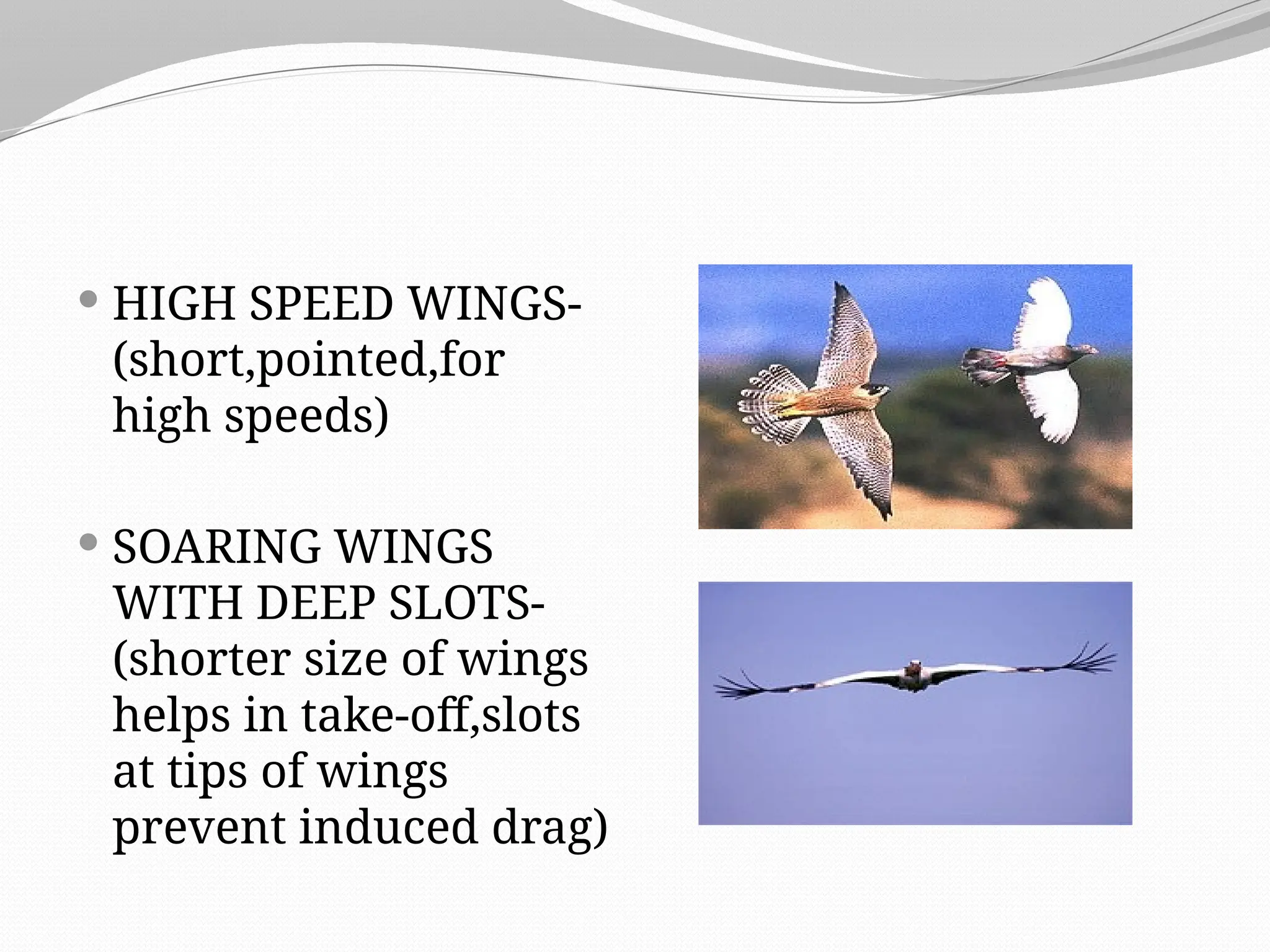
 HIGH SPEED WINGS-
(short,pointed,for
high speeds)
 SOARING WINGS
WITH DEEP SLOTS-
(shorter size of wings
helps in take-off,slots
at tips of wings
prevent induced drag)
HOVERING
 Done by birds with
high aspect ratio
wings
 Humming birds are
exception as they
create lift in both
upstroke and
downstroke
 Generally small birds
hover, but some larger
birds do so by flying in
headwind

bird flight aerodynamics TP1111111111111C.ppt

  • 1.
  • 2.
  • 3.
    Air Pressure  Ifequal on dorsal and ventral surfaces of wing, then no lift if “symmetrically” streamlined wing  Two ways to overcome this with the wings: a) increase the attack angle b) bend the surface  Doing so, however, does increase drag (no totally “free lunches here )  A cambered airfoil (ventral surface of wing is concave, dorsal surface is convex) results in the air moving faster over the dorsal convex surface relative to the ventral surface
  • 5.
     Man hasalways dreamed of being able to fly.  Our long years of experiment and research have resulted in machine with advanced technologies.  However our techniques are really primitive as compared to nature’s flying machine. ABSTRACT
  • 6.
    IMPORTANT TERMS Essential for understandingtheir flight mechanism  Lift  Drag  Angle of attack  Stalling  Covert eddy flaps  Flapping  Take off and Landing  Camber
  • 7.
    LIFT  Due todifference in pressures in upper and lower surface of wing  Upper surface of air deflects the air downwards  Airflow follows the tilted wing,sticks to surface, called COANDA EFFECT
  • 8.
     Difference inpressures creates lift  Air above the wing moves faster ,creating low pressure above ,hence creating lift  Lift increases with increase in angle of attack
  • 9.
    ANGLE OF ATTACK Angle between reference line of lifting boy and incoming air flow  Also called as angle of incidence  Coefficient of lift increases with increase in angle of attack upto critical angle of attack  After critical angle of attack,STALLING occurs
  • 10.
    STALL  After criticalangle of incidence is attained,flow separates of the wing,causing less lift.  Stalling occurs generally during beginning of flight or at slow speeds  Slower moving air may not move smoothly over the wing  Airflow above the wing becomes turbulent
  • 11.
    ALULA  Thumb shaped,also calledas ‘COVERTS’.  Eddy developed starts from trailing edge to leading edge  ‘COVERT EDDY FLAPS’ prevent eddy to reach to leading edge  Help maintain lift at low speeds,prevent STALL.
  • 12.
    FLAPPING  Flapping insuch a way so as to create both THRUST and LIFT.  THRUST counteracts DRAG, LIFT counteracts WEIGHT.  Flapping involves two stages: downstroke and upstroke  Downstroke causes majority of lift and thrust
  • 13.
     Upstroke alsocauses some lift, depending upon shape of wing  During upstroke wing is folded slightly inwards to reduce friction  Angle of attack increases during downstroke,while decreases during upstroke
  • 14.
    DRAG Three major dragforces  Frictional drag(caused by friction of air and body surfaces).  Form drag  Lift -induced drag
  • 15.
    FORM DRAG  Arisesbecause of form of object.  Larger apparent cross- section area will have larger drag than thinner bodies.  Sleek design or design that are streamlined are critical for achieving minimum drag.  Form drag increases with increase in air speed.
  • 16.
    LIFT INDUCED DRAG Occurs whenever a moving object redirects the airflow coming at it.  Induced drag increases with increase in angle of attack.  Induced drag decreases with increase in air speed.
  • 17.
    TAKE-OFF  Most energetically demandingaspects of flight.  Large birds like albatrosses need to run up in order to generate airflow to take off  Small birds can do so by taking a jump  PECTORA muscle provides about 95% of strength required for flight.
  • 18.
    LANDING  Problem forlarge birds with high wing loadings  Landing on water is simpler,using their feet as skids  Certain birds aim at intended landing area and pull up before hand  Large birds like geese involve in rapid alternating series of sideslips called WHIFFLING
  • 19.
    CAMBER  Symmetry betweentop and bottom curves of an airfoil  Symmetric airfoils( with zero camber) generate no lift at zero angle of attack.  Generally upper camber of an airfoil is greater than lower camber.  Supersonic flights use supercritical airfoil;one with negative camber
  • 20.
     When camberis increased beyond a limit,STALLING occurs  Even if angle of attack is zero,airflow above the upper surface can be separated due to excessive cambering  Idea of cambering helps designing aircraft wings
  • 21.
    TYPES OF WINGS ELLIPTICAL WINGS- (short,rounded,for rapid take-offs)  HIGH ASPECT RATIO WINGS-(far longer than they are wide,for gliding )
  • 22.
     HIGH SPEEDWINGS- (short,pointed,for high speeds)  SOARING WINGS WITH DEEP SLOTS- (shorter size of wings helps in take-off,slots at tips of wings prevent induced drag)
  • 23.
    HOVERING  Done bybirds with high aspect ratio wings  Humming birds are exception as they create lift in both upstroke and downstroke  Generally small birds hover, but some larger birds do so by flying in headwind

Editor's Notes