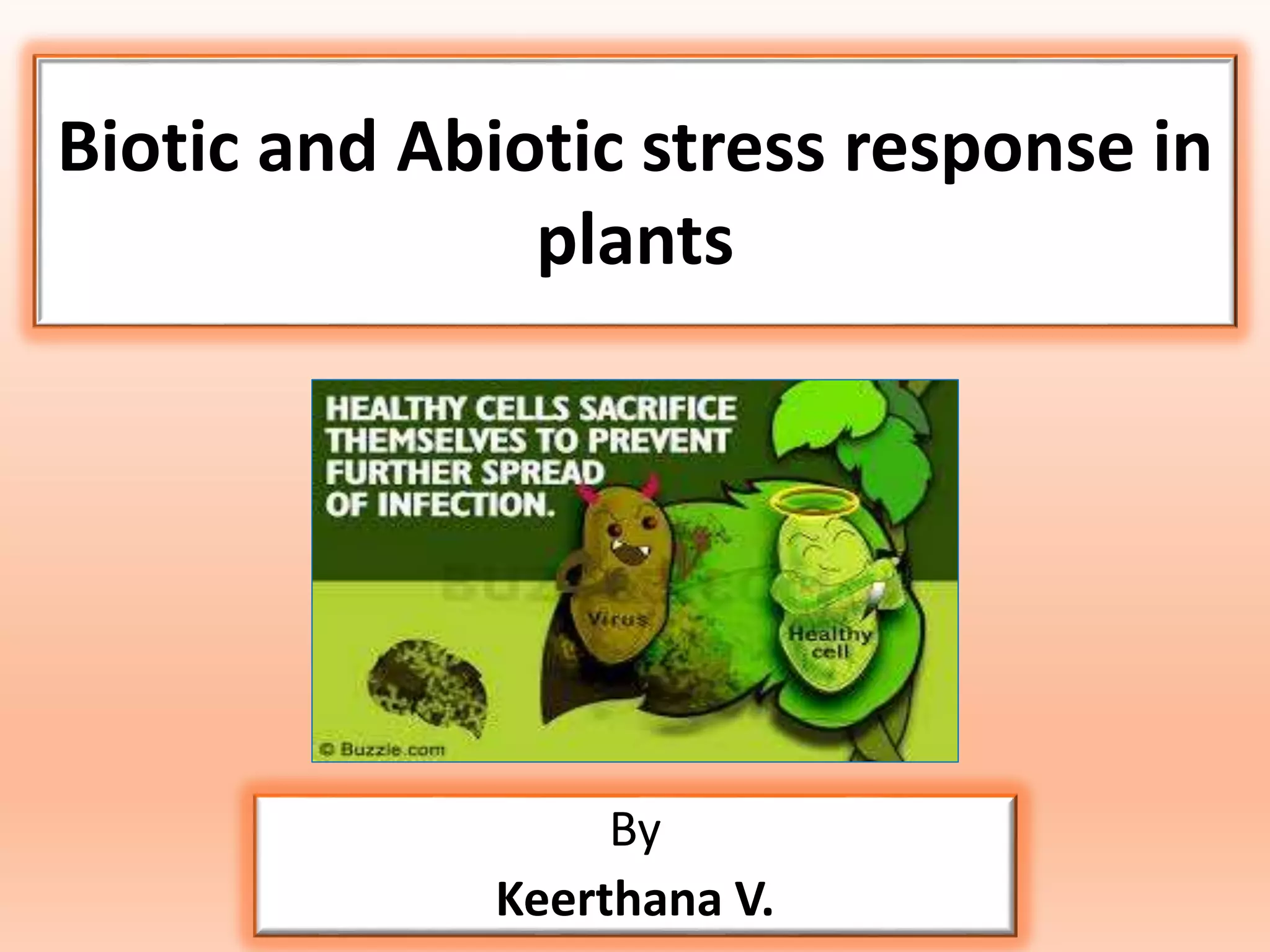
Biotic and Abiotic stress response in
plants
By
Keerthana V.
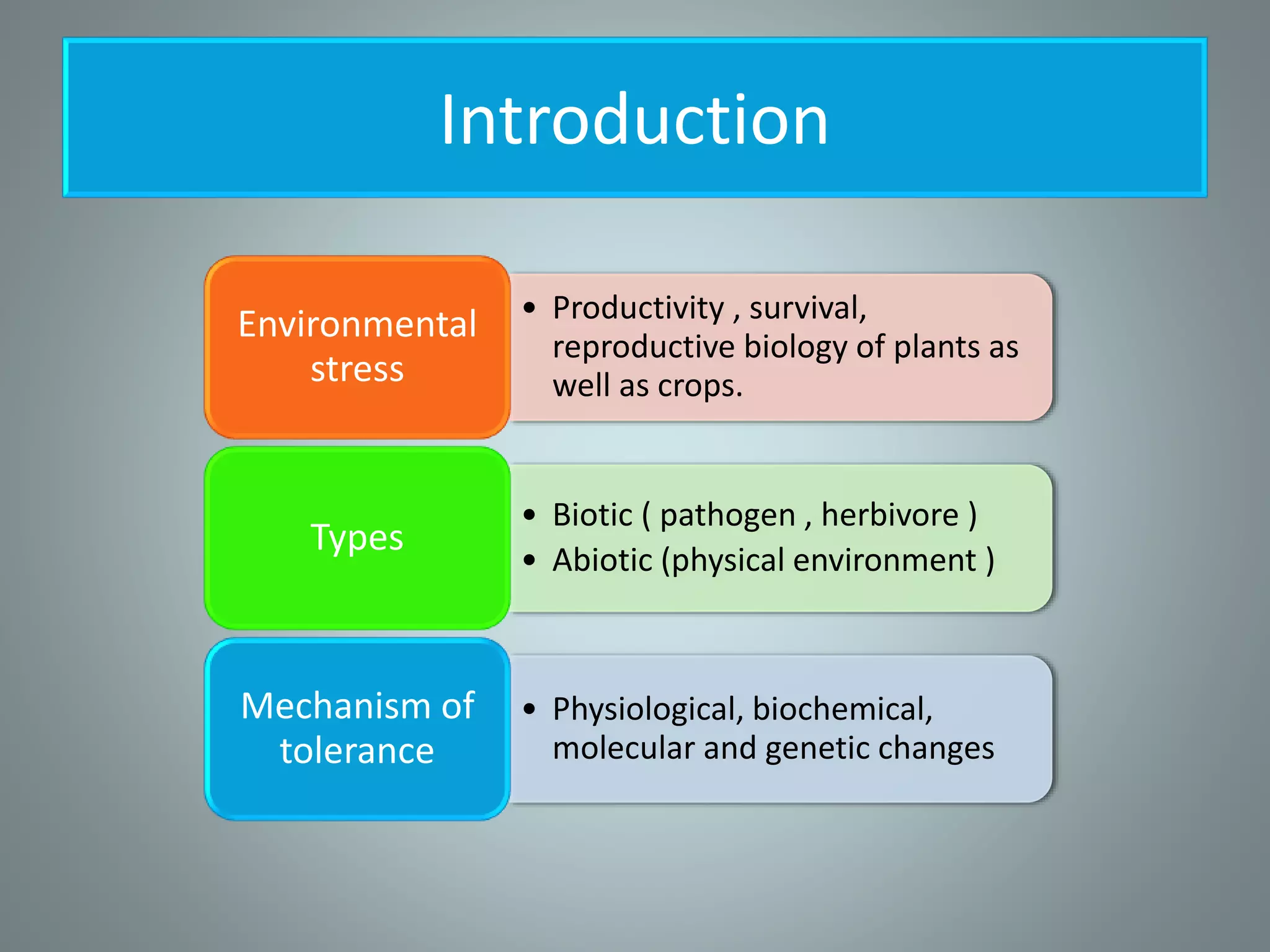
Introduction
• Productivity , survival,
reproductive biology of plants as
well as crops.
Environmental
stress
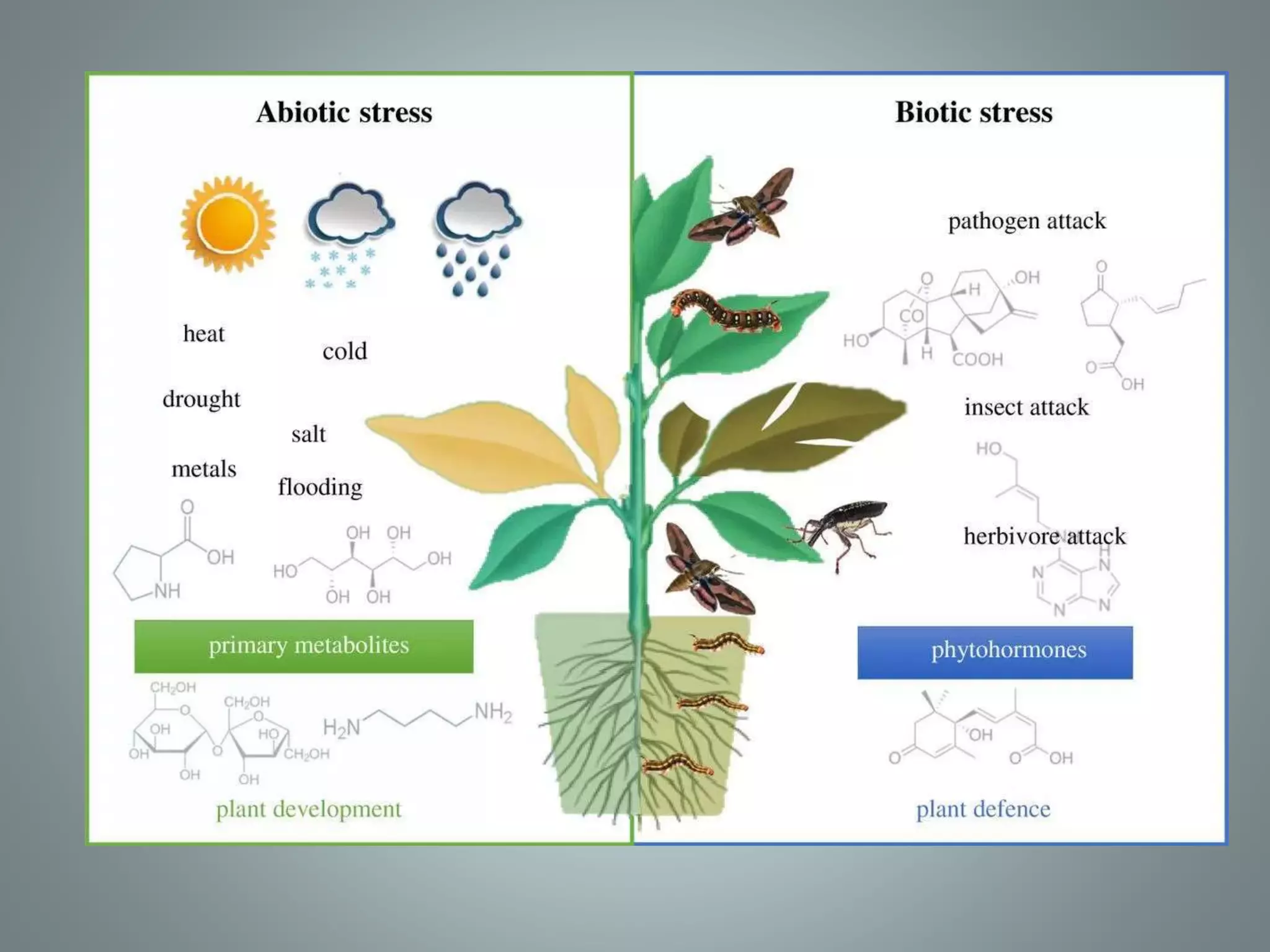
• Biotic ( pathogen , herbivore )
• Abiotic (physical environment )
Types
• Physiological, biochemical,
molecular and genetic changes
Mechanism of
tolerance
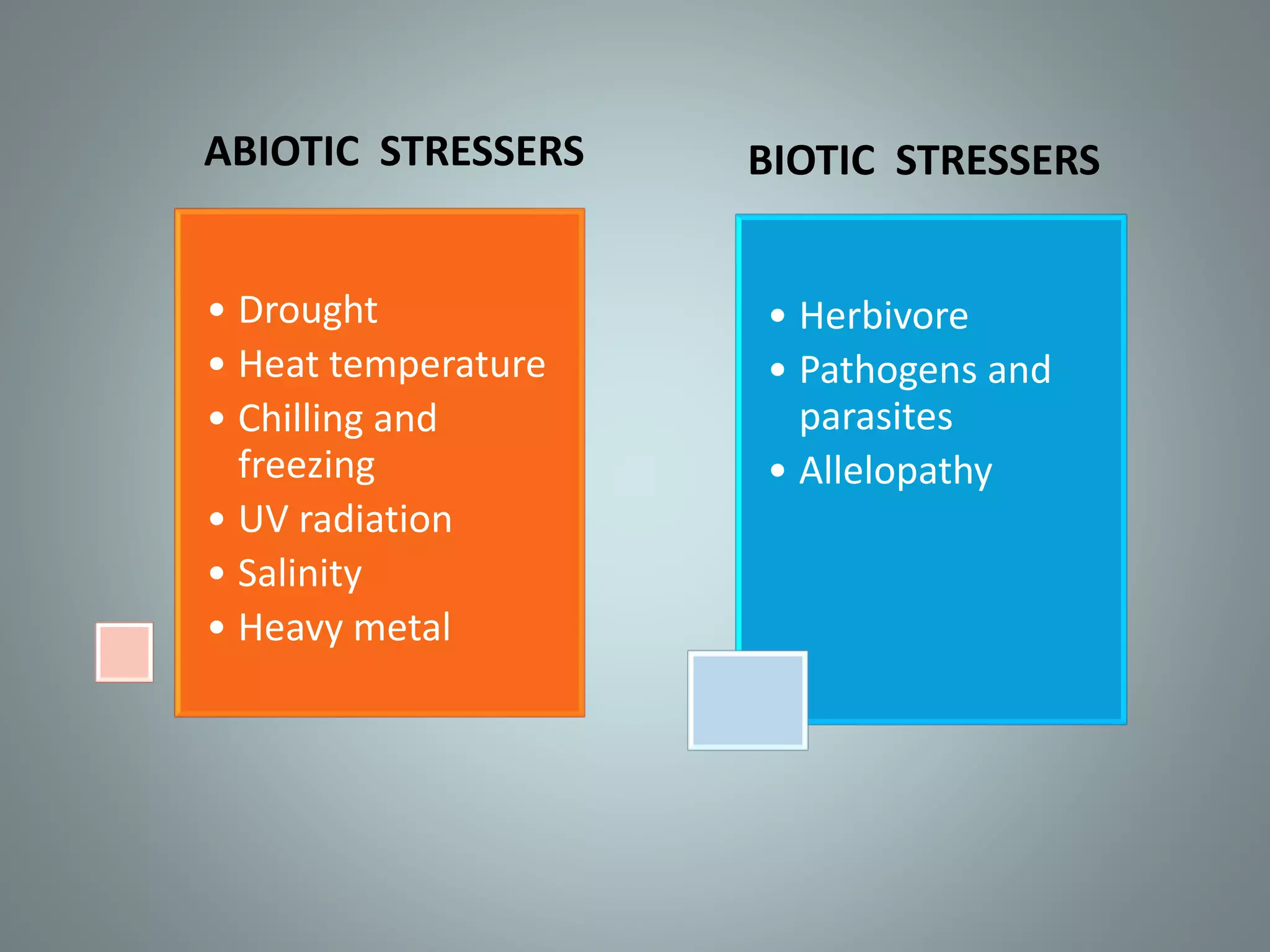
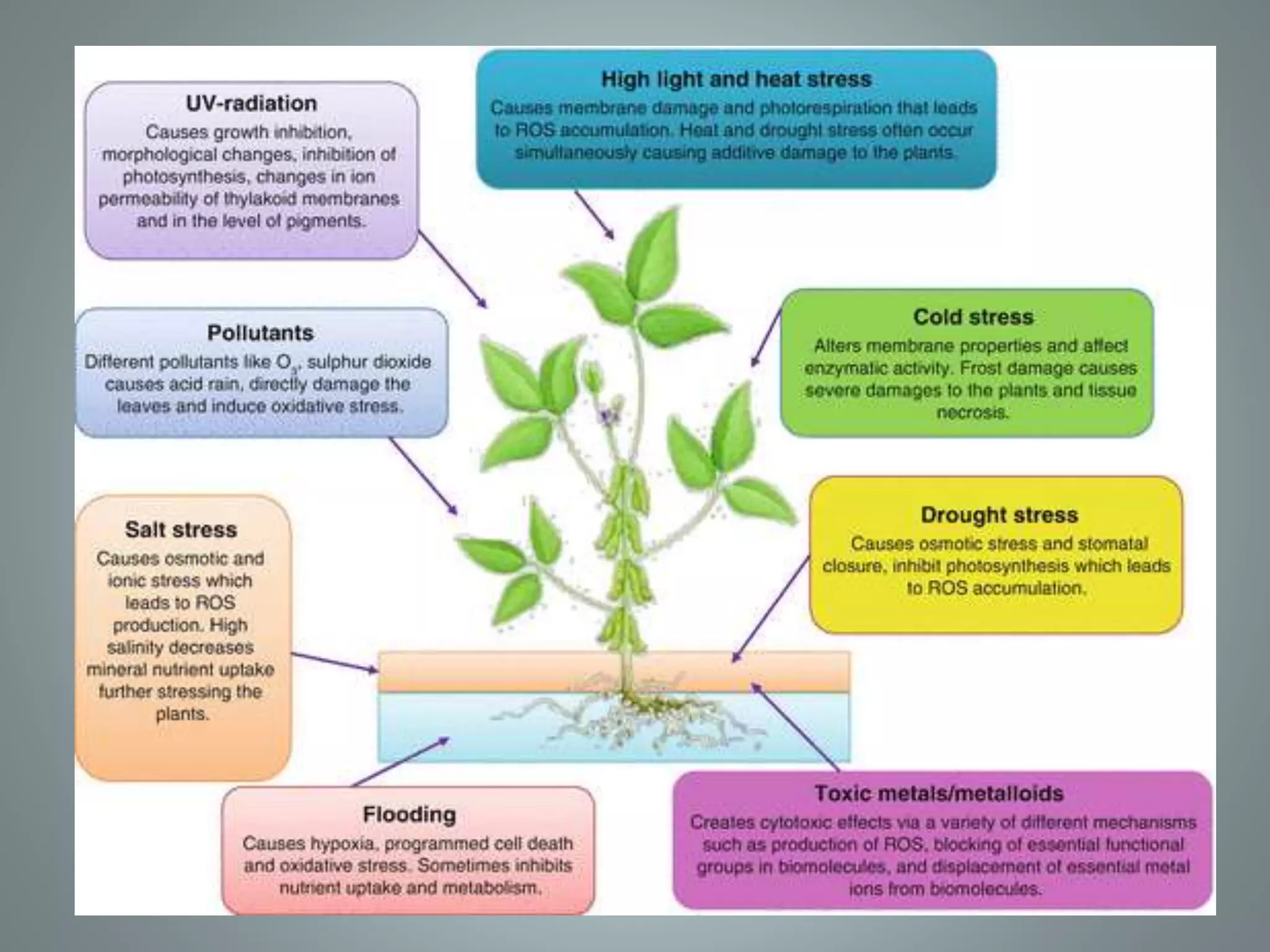
ABIOTIC STRESSERS
• Drought
• Heat temperature
• Chilling and
freezing
• UV radiation
• Salinity
• Heavy metal
BIOTIC STRESSERS
• Herbivore
• Pathogens and
parasites
• Allelopathy
Abiotic stressors
Drought
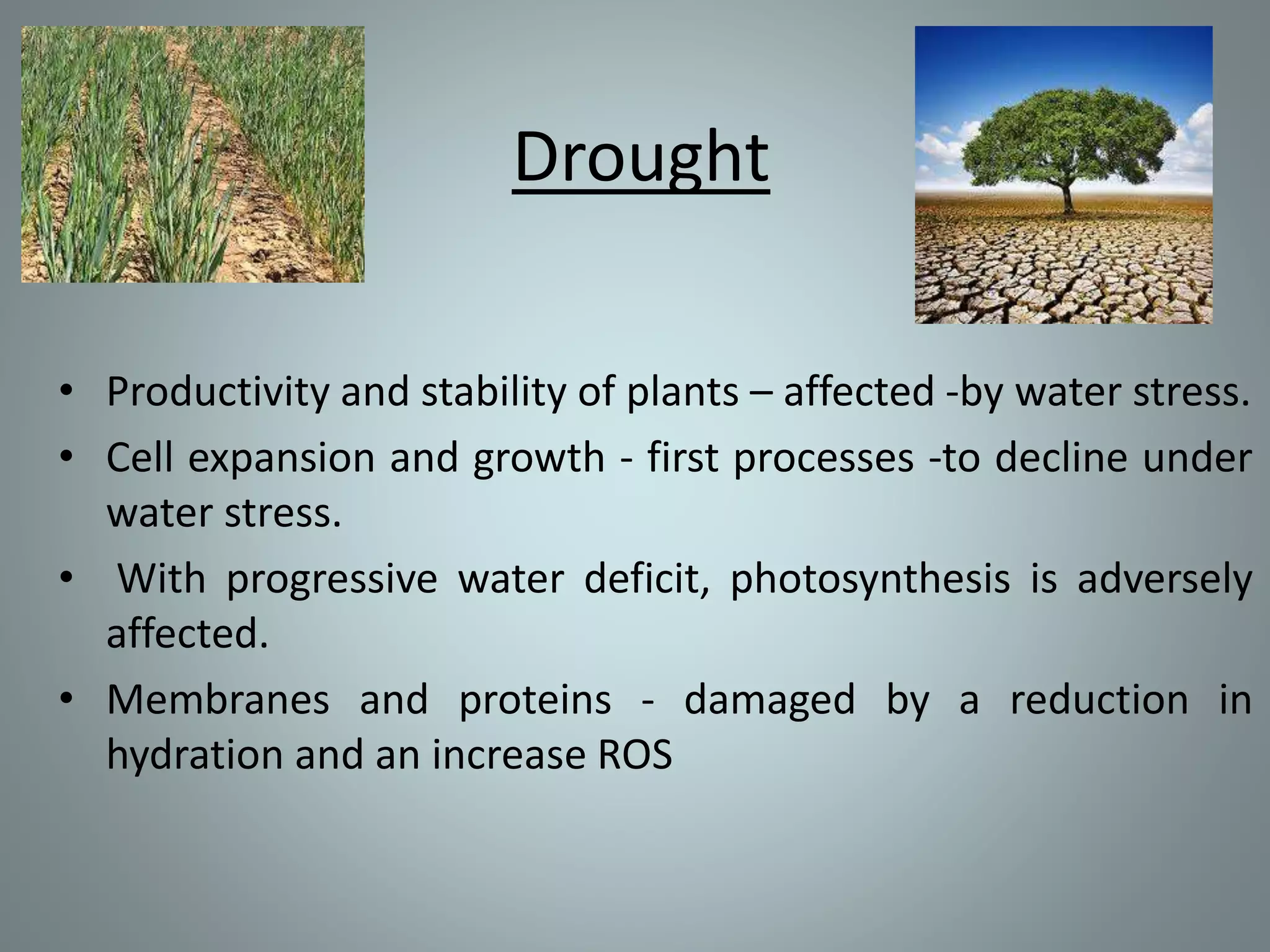
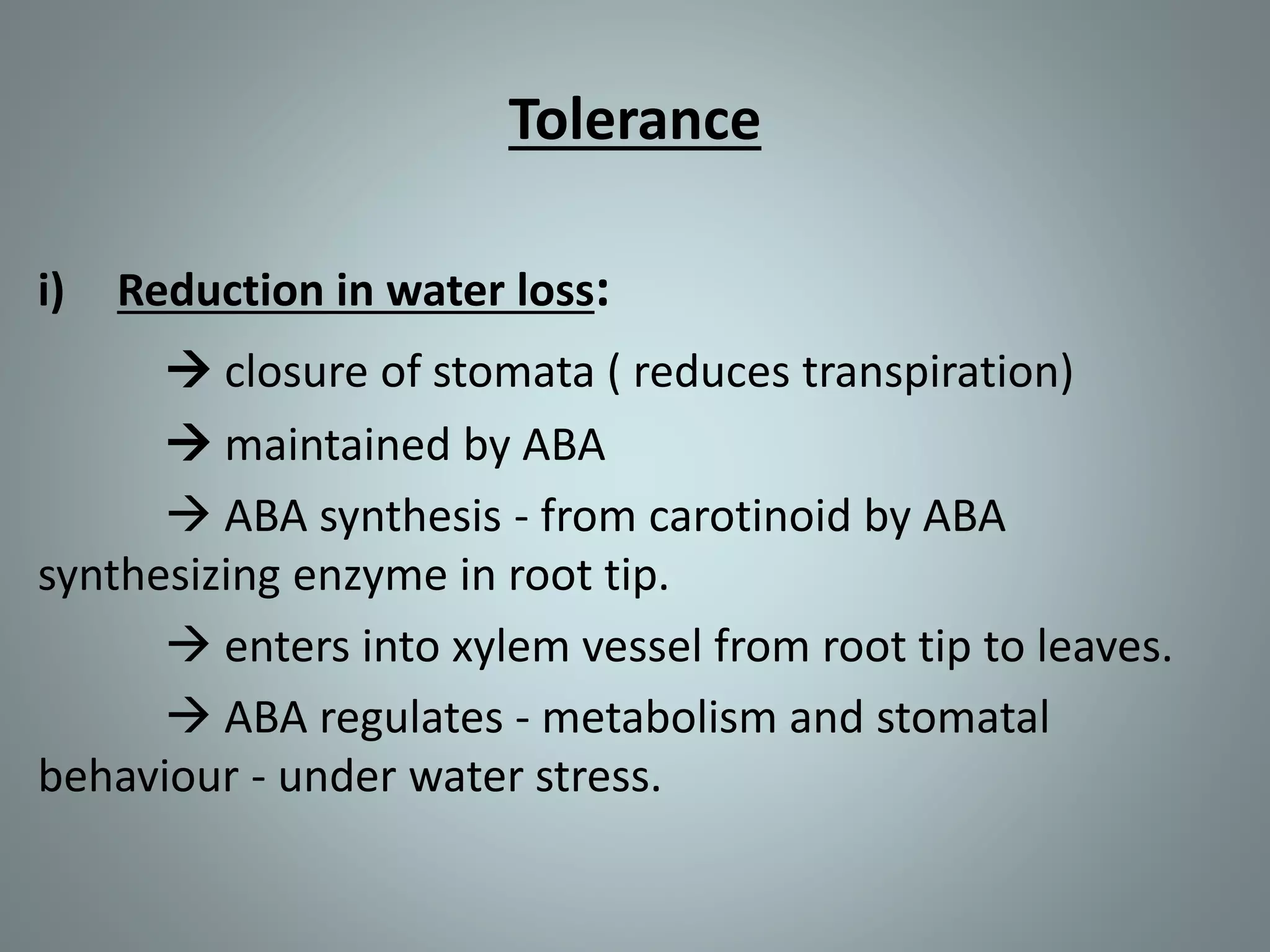
• Productivity and stability of plants – affected -by water stress.
• Cell expansion and growth - first processes -to decline under
water stress.
• With progressive water deficit, photosynthesis is adversely
affected.
• Membranes and proteins - damaged by a reduction in
hydration and an increase ROS
Tolerance
i) Reduction in water loss:
 closure of stomata ( reduces transpiration)
 maintained by ABA
 ABA synthesis - from carotinoid by ABA
synthesizing enzyme in root tip.
 enters into xylem vessel from root tip to leaves.
 ABA regulates - metabolism and stomatal
behaviour - under water stress.
ii) Protection of photosynthetic machinery:
 wilting of leaves – protects photosynthetic
machinery - direct sun rays.
 stomatal closure
iii) Osmotic adjustment :
 synthesis and accumulate compatible solutes and
ions- under water stress.
 proline and glycine betaine – highly compatible
solutes – increase cellular osmotic pressure.
 protect against water loss in leaves.
Heat temperature
• Serious threat – occurs - plant experience temperature
above - adapted.
• Plant exposed to high temperature – changes occur at
molecular level – altering the gene expression.
• Leads to synthesis -Heat shock proteins.
• Important adaptive strategy.
Tolerance
i)Anatomical changes :
 reduced cell size
 closure of stomata
 curtailed water loss
ii) Physiological changes :
 plant water status - important – water stress.
 minimize water loss and synthesize compatible solutes
(glycine betaine).
 In most species, rate of photosynthesis declines above
35* C.
 As temperature increases- rate of photosynthesis
decrease and Dark & photorespiration increase.
 Integrity and functions of biological membranes -
sensitive. As temperature increase - alters tertiary and
quaternary structures of membrane proteins.
iii) Molecular changes:
 temperature increases- increase HSPs production.
 HSPs - associate with particular structure- cell wall ,
chloroplast , ribosome and mitochondria.
eg. In tomato plant – HSPs aggregate into granular
structure in cytoplasm- protects the protein biosynthesis
machinery.
 other proteins or mRNAs – increase ( not considered
as HSPs) - includes – glycolytic enzymes , protein kinases and
ubiquitin.
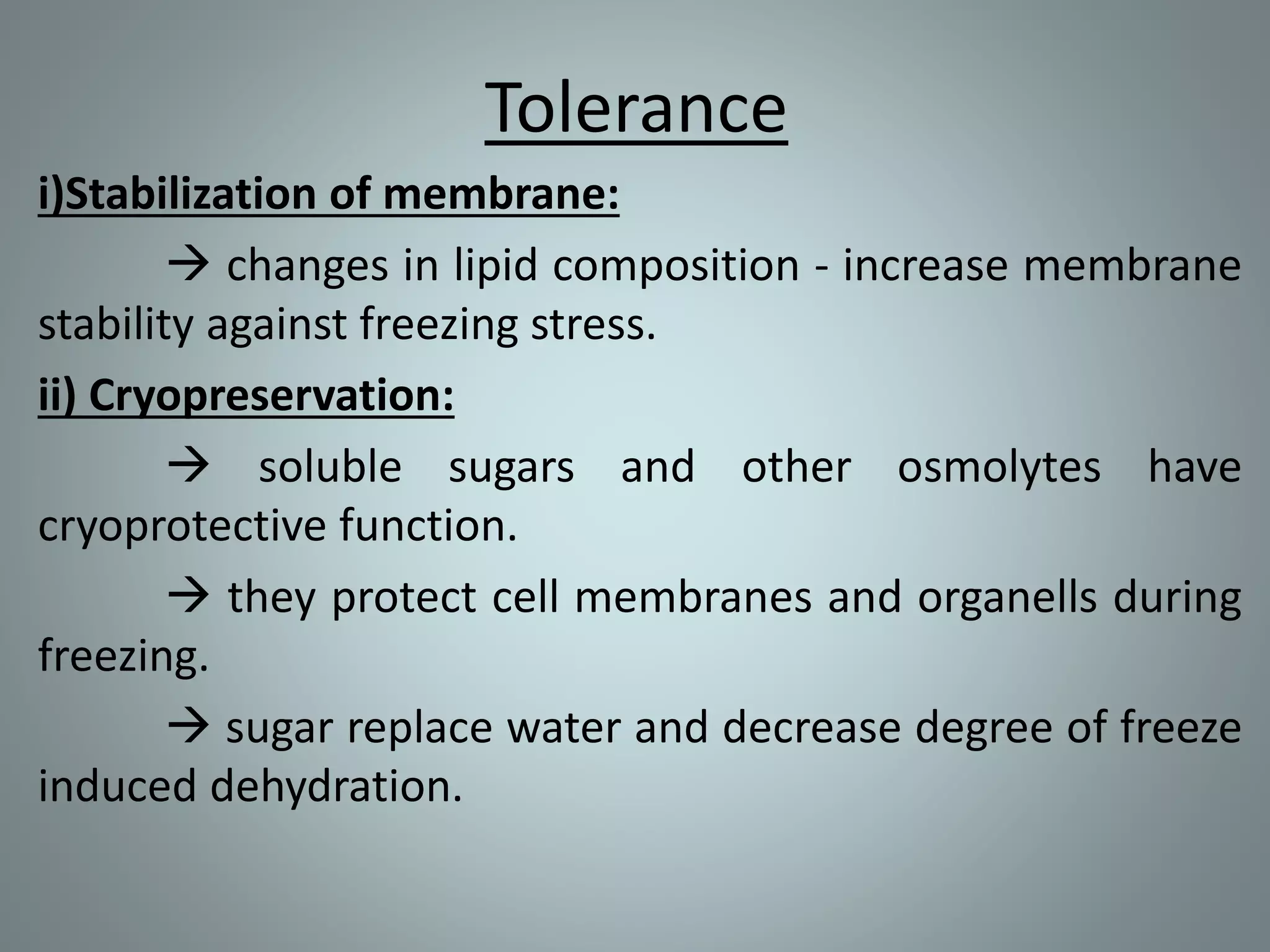
Chilling and freezing
• Above 0*C or below some threshold temperature (unique for
each species) – Chilling stress.
• Below 0*C – Freezing stress.
• Chill sensitive plants- cotton , soybean, maize and rice.
• Plants face 3 major problems:
 perturbation of membrane.
 slow down - chemical and biochemical reaction.
 changes in water status and availability.
• Plants -tolerate -extracellular freezing.
• Intracellular ice crystals – lethal.
They pierce- plasma membrane.
Tolerance
i)Stabilization of membrane:
 changes in lipid composition - increase membrane
stability against freezing stress.
ii) Cryopreservation:
 soluble sugars and other osmolytes have
cryoprotective function.
 they protect cell membranes and organells during
freezing.
 sugar replace water and decrease degree of freeze
induced dehydration.
UV radiation
• Reduction in stratospheric O3 - Increase solar UV-B
radiation (280-320nm)
• Cause – decrease in growth and other physiological
response in many crops.
Tolerance
i)DNA repair:
 UV-B radiation targets DNA.
UV radiation induces lesions in DNA. Eg.
Pyrimidine dimmers .
 dimmers – repaired via photorespiration
(photolyase) excision repair.
ii) Accumulation of secondary metabolites:
 flavonoids/anthocyanins – induced by UV-B
exposure.
 accumulate in epidermis – keep UV radiation
away from reaching photosynthetic tissues.
 polyamines , waxes, specific alkaloids –
contribute –UV tolerance.
iii) Morphological changes:
Leaf curling is a photomorphogenic response
observable at low fluences of UV-B.
A protective function – hypothesized - for leaf or
epidermal thickening
Salinity
• Presence of excess ions – affect many plant
processes.
• Plants are subjected to salinity are subjected to
two groups:
– Halophytes : withstand 20% of salt in soil.
– Non-halophytes : limited growth – in presence of
sodium salt(usually 0.01%).
Mechanism of tolerance
• Minimizing entry and conc. of salt in cytoplasm.
• Two strategies..
– Stress avoidance: barriers that negative effect of
stress.
– Stress tolerance: successful survival despite effect of
stress.
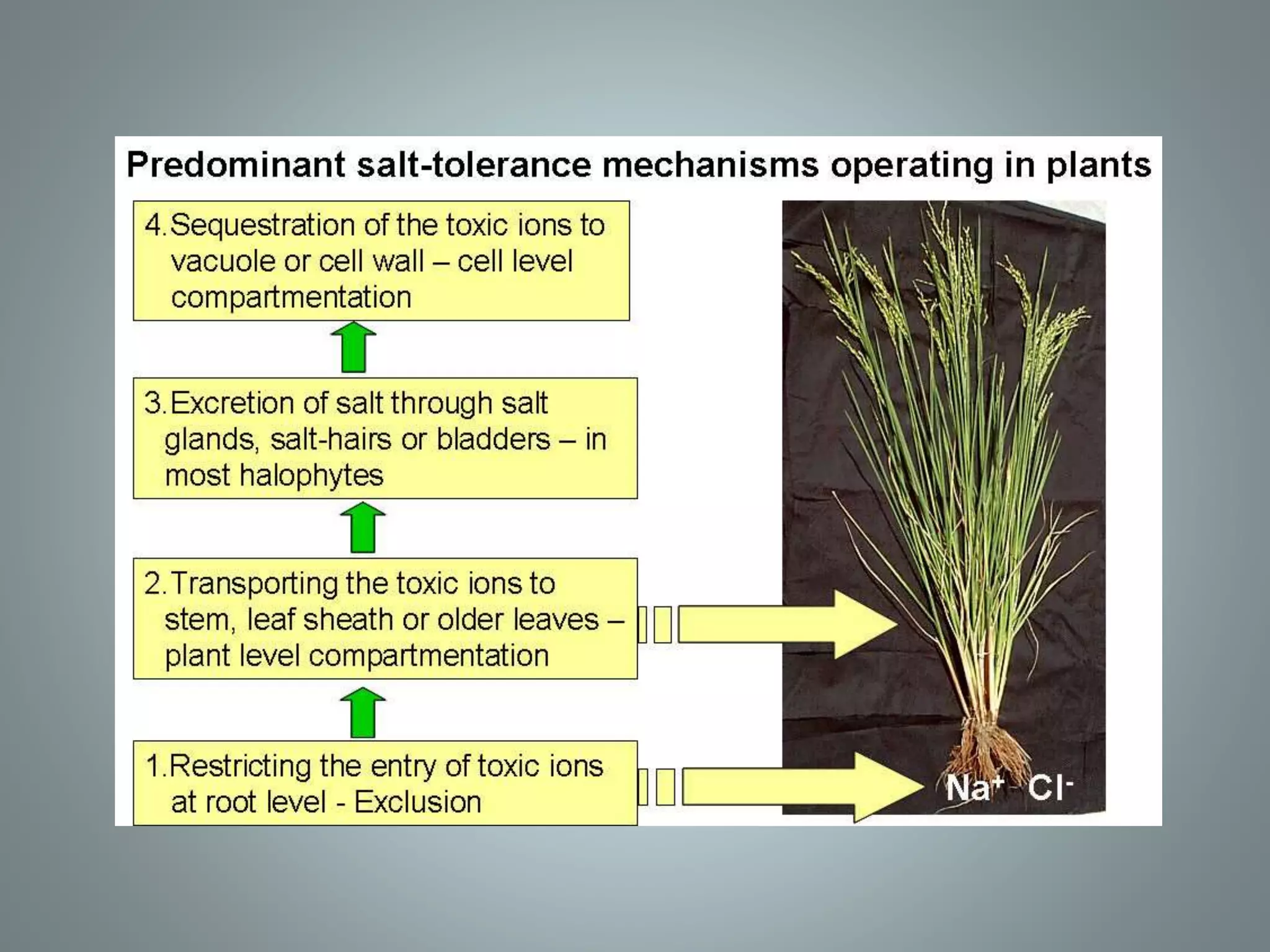
i) Salt exclusion :
-plants can limit salt accumulation in its tissues -by
inhibiting- root uptake.
-Strategies evolved - restrict salt transport - into
sensitive organs.
ii) Salt excretion :
- halophytes have anatomical structure – to
eliminate excess salt ions.
- salt glands and salt bladders
- salt glands: embedded in surface of leaves
- salt bladders: specialized trichomes.
Heavy metal
• Gaining importance – impact in human health  food
chain.
• Several vegetables , fruits and cereal crops – accumulate
heavy metals.
• Plants growing on soil – contains high level of metal –
metallophytes.
Tolerance
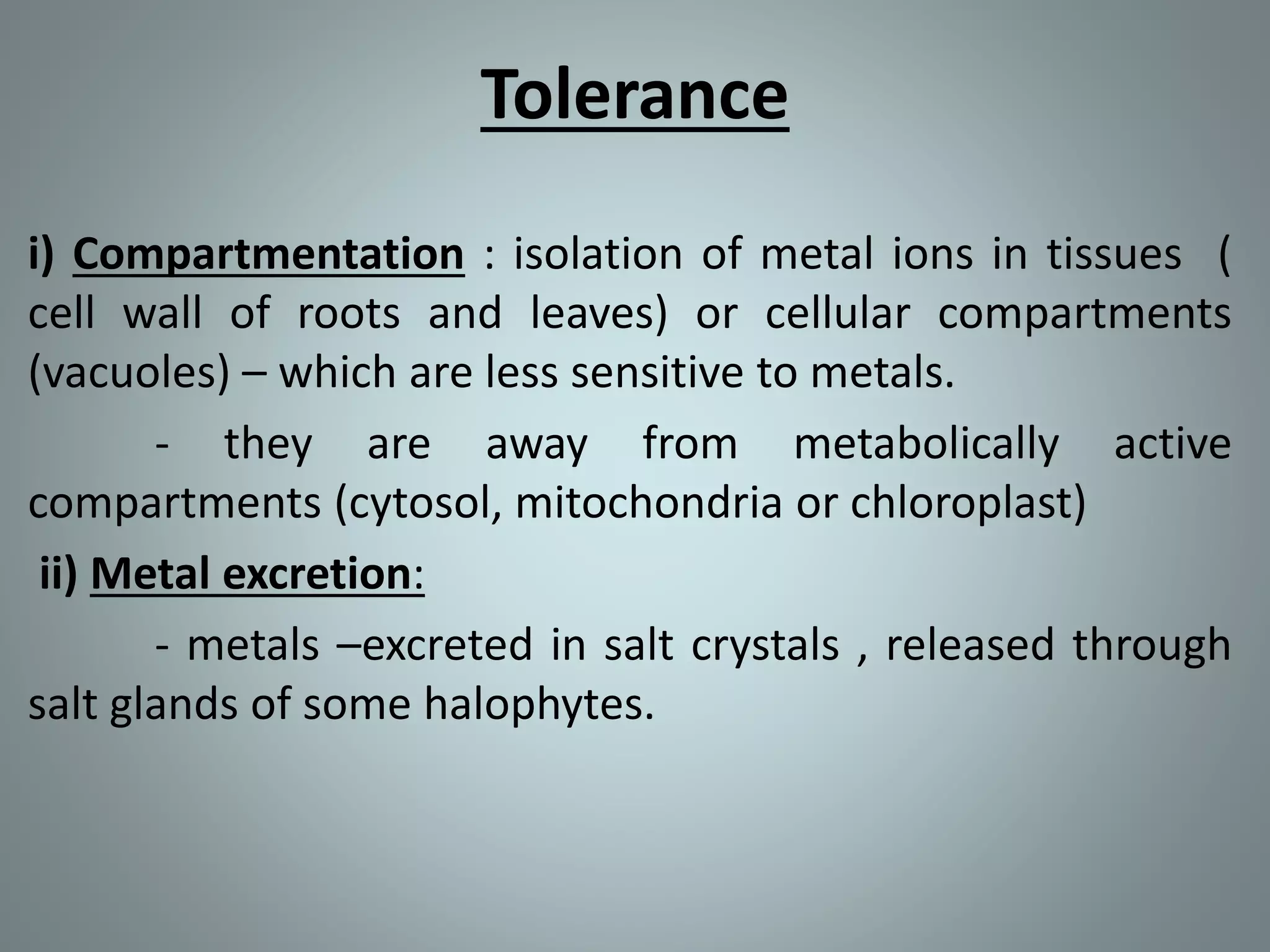
i) Compartmentation : isolation of metal ions in tissues (
cell wall of roots and leaves) or cellular compartments
(vacuoles) – which are less sensitive to metals.
- they are away from metabolically active
compartments (cytosol, mitochondria or chloroplast)
ii) Metal excretion:
- metals –excreted in salt crystals , released through
salt glands of some halophytes.
Biotic stressers
Biotic stressers
• Biotic stress - occurs as a result of damage done to
an organism by other living organisms.
(such as bacteria, viruses, fungi, parasites, beneficial
and harmful insects, weeds, and cultivated or native
plants)
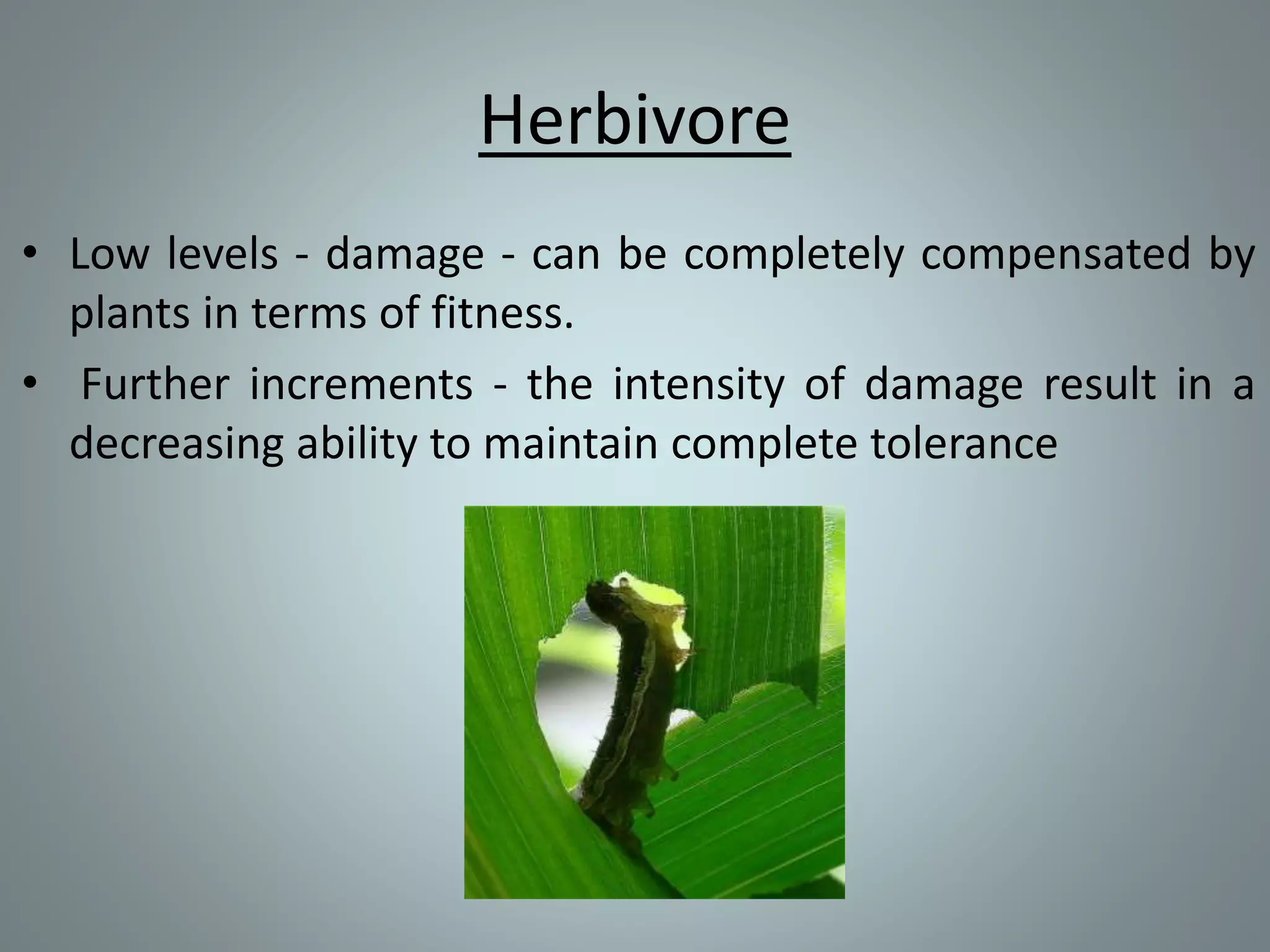
Herbivore
• Low levels - damage - can be completely compensated by
plants in terms of fitness.
• Further increments - the intensity of damage result in a
decreasing ability to maintain complete tolerance
Pathogens and parasites
• Pathogens are the agent that cause infection or disease
(microorganism).
• Host plants have evolved defence mechanisms (i.e.
resistance and/or tolerance) against pathogen and
parasites attacks.
• Tolerance -ability to compensate in part for fitness
decrements-by pathogens/parasites.
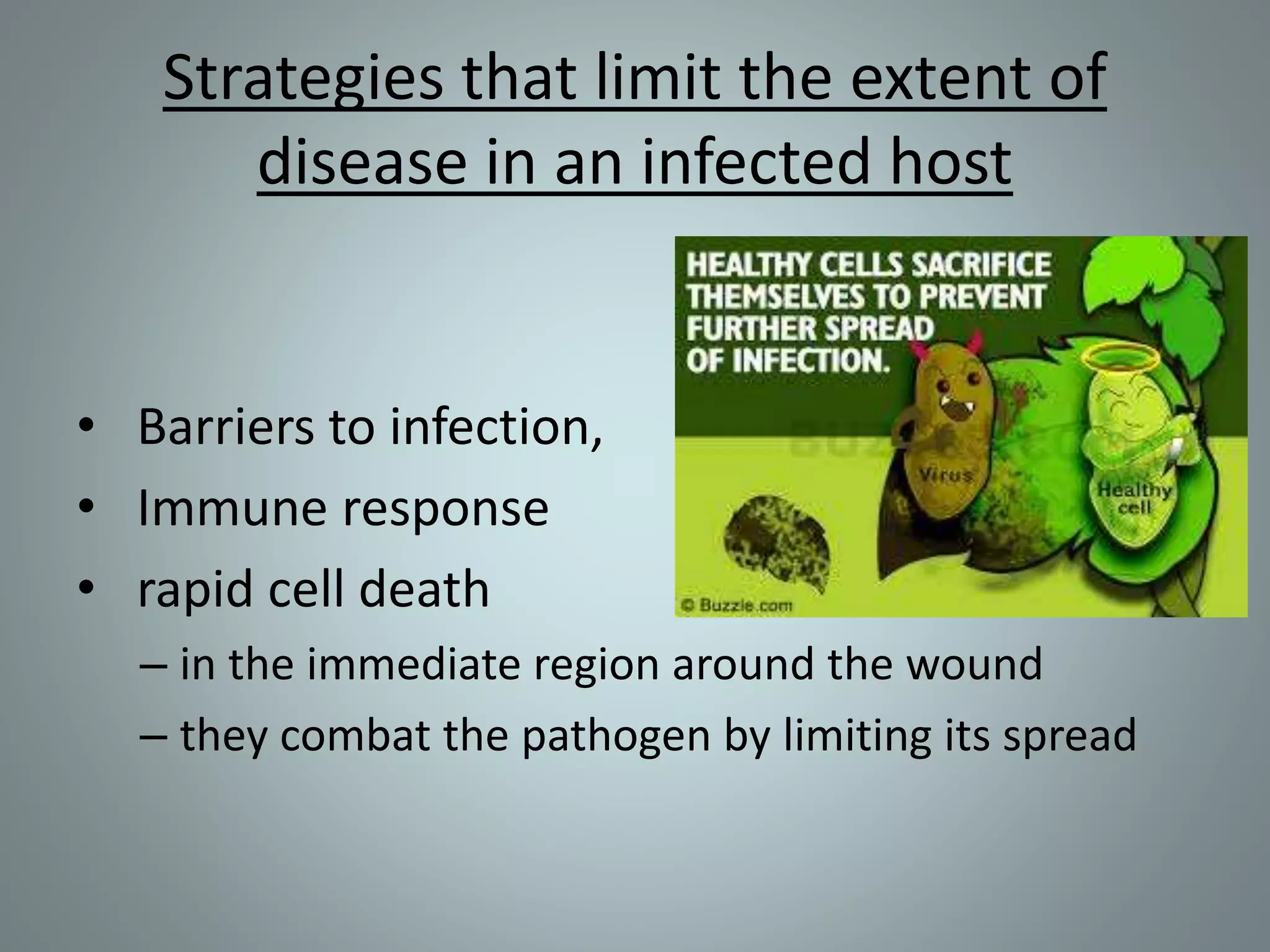
Strategies that limit the extent of
disease in an infected host
• Barriers to infection,
• Immune response
• rapid cell death
– in the immediate region around the wound
– they combat the pathogen by limiting its spread
Tolerance
• Photosynthetic enhancement
• Growth enhancement
• Advancing the timing of bud break
• Delaying the senescence of infected
tissue:(due to increased levels of cytokinins)
• Increasing nutrient uptake
Allelopathy
• Allelopathy – interference mechanism by which
plants release molecules (allelochemicals)- that
affect seed germination , plant phisiology, growth
and survival of other plants..
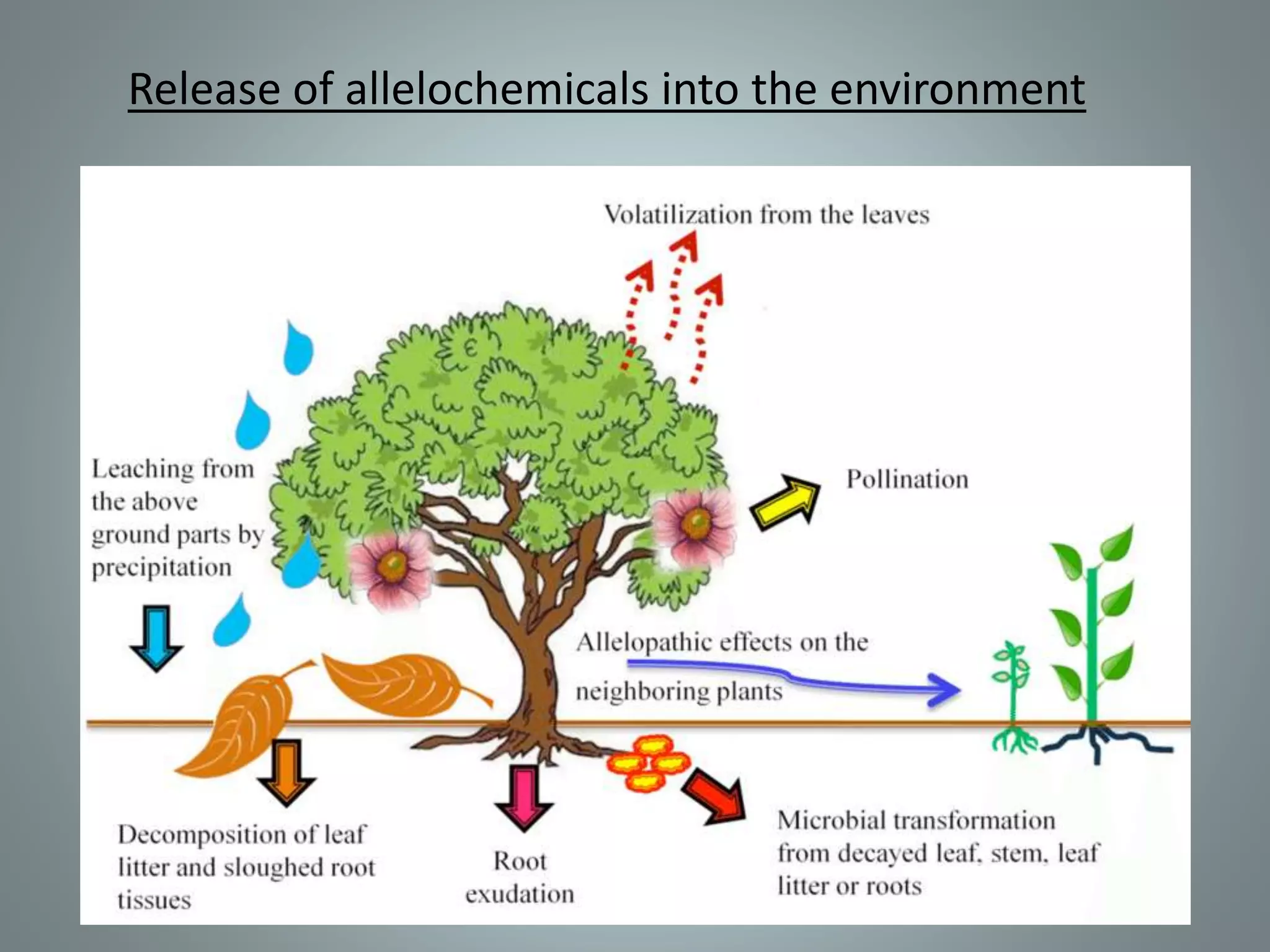
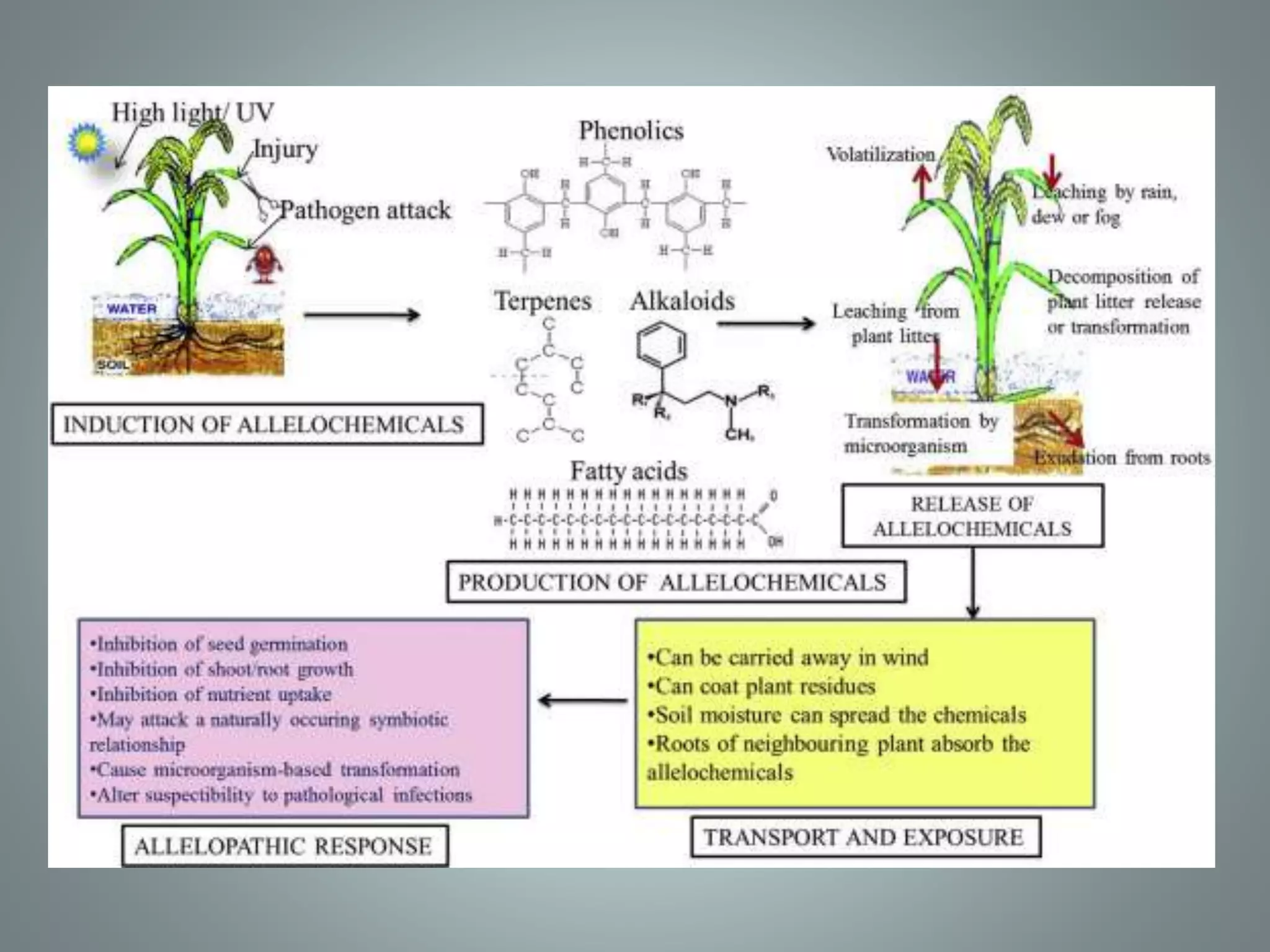
Release of allelochemicals into the environment
Tolerance of allelopathic compounds
in plants
• Exclusion (root or leaf)
• Compartmentation (deposit these compounds
in nonmetabolic compartments) (vacuole)
• Excretion
• Detoxification
Thank you

Biotic and Abitic stress response

  • 1.
    Biotic and Abioticstress response in plants By Keerthana V.
  • 2.
    Introduction • Productivity ,survival, reproductive biology of plants as well as crops. Environmental stress • Biotic ( pathogen , herbivore ) • Abiotic (physical environment ) Types • Physiological, biochemical, molecular and genetic changes Mechanism of tolerance
  • 3.
    ABIOTIC STRESSERS • Drought •Heat temperature • Chilling and freezing • UV radiation • Salinity • Heavy metal BIOTIC STRESSERS • Herbivore • Pathogens and parasites • Allelopathy
  • 5.
  • 6.
    Drought • Productivity andstability of plants – affected -by water stress. • Cell expansion and growth - first processes -to decline under water stress. • With progressive water deficit, photosynthesis is adversely affected. • Membranes and proteins - damaged by a reduction in hydration and an increase ROS
  • 7.
    Tolerance i) Reduction inwater loss:  closure of stomata ( reduces transpiration)  maintained by ABA  ABA synthesis - from carotinoid by ABA synthesizing enzyme in root tip.  enters into xylem vessel from root tip to leaves.  ABA regulates - metabolism and stomatal behaviour - under water stress.
  • 8.
    ii) Protection ofphotosynthetic machinery:  wilting of leaves – protects photosynthetic machinery - direct sun rays.  stomatal closure iii) Osmotic adjustment :  synthesis and accumulate compatible solutes and ions- under water stress.  proline and glycine betaine – highly compatible solutes – increase cellular osmotic pressure.  protect against water loss in leaves.
  • 10.
    Heat temperature • Seriousthreat – occurs - plant experience temperature above - adapted. • Plant exposed to high temperature – changes occur at molecular level – altering the gene expression. • Leads to synthesis -Heat shock proteins. • Important adaptive strategy.
  • 11.
    Tolerance i)Anatomical changes : reduced cell size  closure of stomata  curtailed water loss ii) Physiological changes :  plant water status - important – water stress.  minimize water loss and synthesize compatible solutes (glycine betaine).  In most species, rate of photosynthesis declines above 35* C.  As temperature increases- rate of photosynthesis decrease and Dark & photorespiration increase.
  • 12.
     Integrity andfunctions of biological membranes - sensitive. As temperature increase - alters tertiary and quaternary structures of membrane proteins. iii) Molecular changes:  temperature increases- increase HSPs production.  HSPs - associate with particular structure- cell wall , chloroplast , ribosome and mitochondria. eg. In tomato plant – HSPs aggregate into granular structure in cytoplasm- protects the protein biosynthesis machinery.  other proteins or mRNAs – increase ( not considered as HSPs) - includes – glycolytic enzymes , protein kinases and ubiquitin.
  • 13.
    Chilling and freezing •Above 0*C or below some threshold temperature (unique for each species) – Chilling stress. • Below 0*C – Freezing stress. • Chill sensitive plants- cotton , soybean, maize and rice. • Plants face 3 major problems:  perturbation of membrane.  slow down - chemical and biochemical reaction.  changes in water status and availability. • Plants -tolerate -extracellular freezing. • Intracellular ice crystals – lethal. They pierce- plasma membrane.
  • 14.
    Tolerance i)Stabilization of membrane: changes in lipid composition - increase membrane stability against freezing stress. ii) Cryopreservation:  soluble sugars and other osmolytes have cryoprotective function.  they protect cell membranes and organells during freezing.  sugar replace water and decrease degree of freeze induced dehydration.
  • 16.
    UV radiation • Reductionin stratospheric O3 - Increase solar UV-B radiation (280-320nm) • Cause – decrease in growth and other physiological response in many crops. Tolerance i)DNA repair:  UV-B radiation targets DNA. UV radiation induces lesions in DNA. Eg. Pyrimidine dimmers .  dimmers – repaired via photorespiration (photolyase) excision repair.
  • 17.
    ii) Accumulation ofsecondary metabolites:  flavonoids/anthocyanins – induced by UV-B exposure.  accumulate in epidermis – keep UV radiation away from reaching photosynthetic tissues.  polyamines , waxes, specific alkaloids – contribute –UV tolerance. iii) Morphological changes: Leaf curling is a photomorphogenic response observable at low fluences of UV-B. A protective function – hypothesized - for leaf or epidermal thickening
  • 18.
    Salinity • Presence ofexcess ions – affect many plant processes. • Plants are subjected to salinity are subjected to two groups: – Halophytes : withstand 20% of salt in soil. – Non-halophytes : limited growth – in presence of sodium salt(usually 0.01%).
  • 19.
    Mechanism of tolerance •Minimizing entry and conc. of salt in cytoplasm. • Two strategies.. – Stress avoidance: barriers that negative effect of stress. – Stress tolerance: successful survival despite effect of stress.
  • 20.
    i) Salt exclusion: -plants can limit salt accumulation in its tissues -by inhibiting- root uptake. -Strategies evolved - restrict salt transport - into sensitive organs. ii) Salt excretion : - halophytes have anatomical structure – to eliminate excess salt ions. - salt glands and salt bladders - salt glands: embedded in surface of leaves - salt bladders: specialized trichomes.
  • 22.
    Heavy metal • Gainingimportance – impact in human health  food chain. • Several vegetables , fruits and cereal crops – accumulate heavy metals. • Plants growing on soil – contains high level of metal – metallophytes.
  • 23.
    Tolerance i) Compartmentation :isolation of metal ions in tissues ( cell wall of roots and leaves) or cellular compartments (vacuoles) – which are less sensitive to metals. - they are away from metabolically active compartments (cytosol, mitochondria or chloroplast) ii) Metal excretion: - metals –excreted in salt crystals , released through salt glands of some halophytes.
  • 25.
  • 26.
  • 27.
    • Biotic stress- occurs as a result of damage done to an organism by other living organisms. (such as bacteria, viruses, fungi, parasites, beneficial and harmful insects, weeds, and cultivated or native plants)
  • 28.
    Herbivore • Low levels- damage - can be completely compensated by plants in terms of fitness. • Further increments - the intensity of damage result in a decreasing ability to maintain complete tolerance
  • 31.
    Pathogens and parasites •Pathogens are the agent that cause infection or disease (microorganism). • Host plants have evolved defence mechanisms (i.e. resistance and/or tolerance) against pathogen and parasites attacks. • Tolerance -ability to compensate in part for fitness decrements-by pathogens/parasites.
  • 32.
    Strategies that limitthe extent of disease in an infected host • Barriers to infection, • Immune response • rapid cell death – in the immediate region around the wound – they combat the pathogen by limiting its spread
  • 33.
    Tolerance • Photosynthetic enhancement •Growth enhancement • Advancing the timing of bud break • Delaying the senescence of infected tissue:(due to increased levels of cytokinins) • Increasing nutrient uptake
  • 34.
    Allelopathy • Allelopathy –interference mechanism by which plants release molecules (allelochemicals)- that affect seed germination , plant phisiology, growth and survival of other plants..
  • 35.
    Release of allelochemicalsinto the environment
  • 37.
    Tolerance of allelopathiccompounds in plants • Exclusion (root or leaf) • Compartmentation (deposit these compounds in nonmetabolic compartments) (vacuole) • Excretion • Detoxification
  • 38.

Editor's Notes

  • #7 The major environmental factor that affect the productivity and stability of plants is water stress. Cell expansion and growth are among the first processes to decline under water stress. With progressive water deficit, photosynthesis is adversely affected. On the cellular level, membranes and proteins can be damaged by a reduction in hydration and an increase ROS The production of ROS is strongly influenced by stress factor responses in plants,
  • #8 In a biological context, ROS are formed as a natural byproduct of the normal metabolism of oxygen and have important roles in cell signaling and homeostasis. However, during times of environmental stress (e.g., UV or heat exposure), ROS levels can increase dramatically. 
  • #11 Serious threat – occurs when plant experience temperature above to which they are adapted. Plant exposed to high temperature – changes occur at molecular level – altering the gene expression.
  • #13 Photorespiration is a wasteful pathway that occurs when the Calvin cycle enzyme rubisco acts on oxygen rather than carbon dioxide. plants minimize photorespiration and save water by separating these steps in time, between night and day. Definition of dark reaction. : any of a series of chemical reactions inphotosynthesis not requiring the presence of light and involving the reduction of carbon dioxide to form carbohydrate especially : calvin cycle.
  • #15 Compounds affects osmosis- osmolytes
  • #17 Lesions- an injured or diseased spot
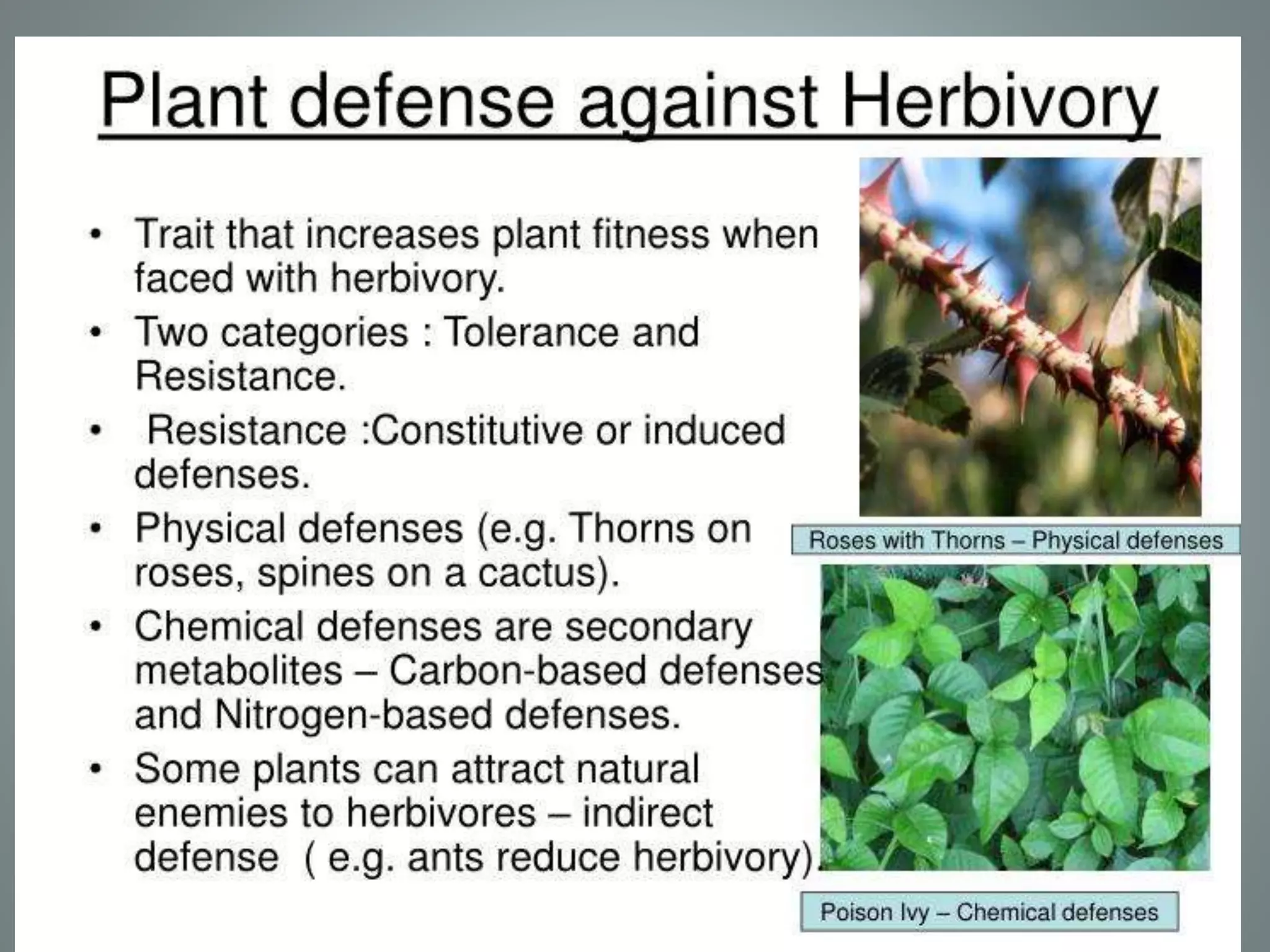
  • #30 Constitutive defence- present in nature ( always present in plant) Induced – after the attack of pathogen
  • #33 are sometimes interpreted as helping the host tolerate infection, but these are normally termed resistance strategies because they combat the pathogen by limiting its spread
  • #34 Tolerance often involves some degree of compensation for disease damage
  • #37 Induction – initiation