Site Evaluation and
Considerations for Design
and Review of Bioretention
Jay Dorsey & John Mathews
ODNR-DSWR
April 16, 2014
Goals for Presentation
 Understanding Why Bioretention Practices
Fail
 Site Considerations
 Right BMP? Site Limitations
 Site Properties for Design
 Giving Bioretention Practices the Best
Chance to Function Over the Long Haul
Why Do Bioretention Practices Fail?
Undersized Bioretention Cell Based on
Overestimate of Infiltration Capacity
Why Do Bioretention Practices Fail?
Undersized Bioretention Cell Based on
Overestimate of Infiltration Capacity
Why Do Bioretention Practices Fail?
Undersized Bioretention Cell Based on
Overestimate of Infiltration Capacity
Sediment Clogging of Geotextile Filter
Between Soil and Aggregate Layers
Why Do Bioretention Practices Fail?
Undersized Bioretention Cell Based on
Overestimate of Infiltration Capacity
Sediment Clogging of Geotextile Filter
Between Soil and Aggregate Layers
Why Do Bioretention Practices Fail?
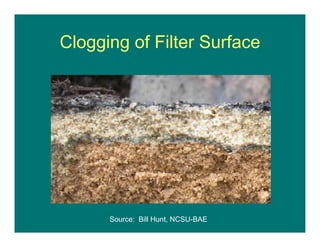
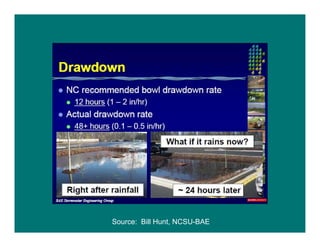
1. Sediment Clogging of Filter Bed Surface
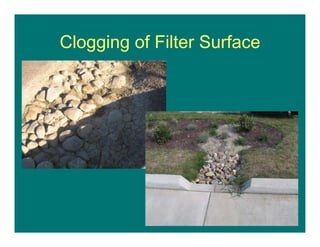
Clogging of Filter Surface
Source: Bill Hunt, NCSU-BAE
Clogging of Filter Surface
Source: Bill Hunt, NCSU-BAE
Why Do Bioretention Practices Fail?
1. Sediment Clogging of Filter Bed Surface
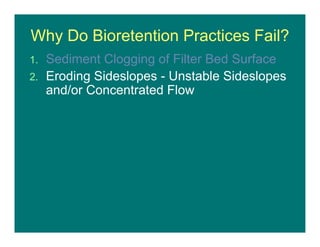
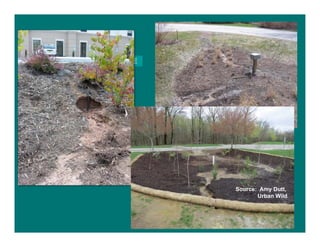
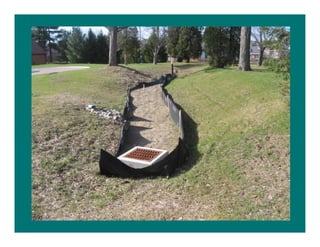
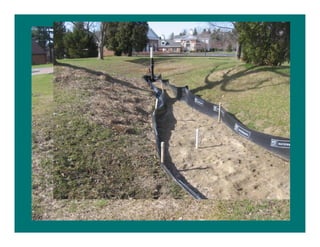
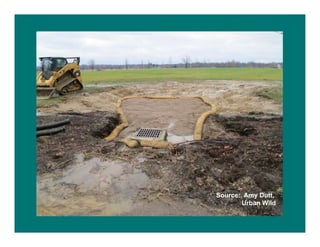
2. Eroding Sideslopes - Unstable Sideslopes
and/or Concentrated Flow
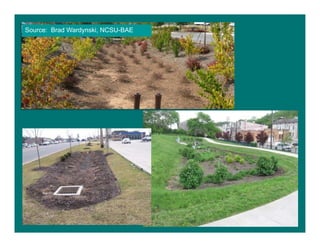
Source: Brad Wardynski, NCSU-BAE
Source: Amy Dutt,
Urban Wild
Source: Brad Wardynski, NCSU-BAE
Why Do Bioretention Practices Fail?
1. Sediment Clogging of Filter Bed Surface
2. Eroding Sideslopes
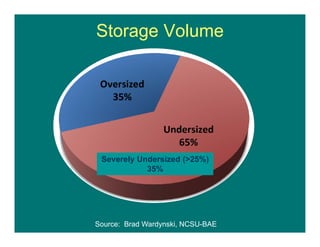
3. Undersized Surface Ponding Volume
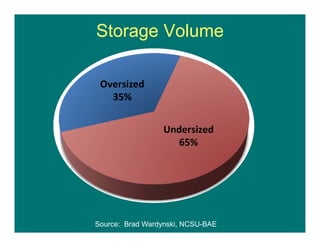
Storage Volume
Source: Brad Wardynski, NCSU-BAE
Storage Volume
Source: Brad Wardynski, NCSU-BAE
Severely Undersized (>25%)
35%
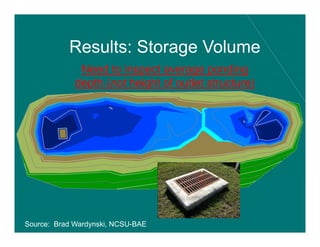
Results: Storage Volume
Need to inspect average ponding
depth (not height of outlet structure)
Source: Brad Wardynski, NCSU-BAE
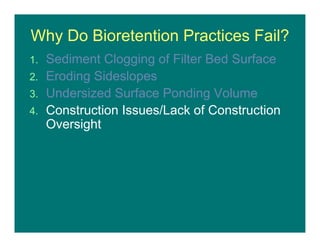
Why Do Bioretention Practices Fail?
1. Sediment Clogging of Filter Bed Surface
2. Eroding Sideslopes
3. Undersized Surface Ponding Volume
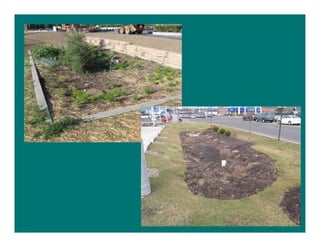
4. Construction Issues/Lack of Construction
Oversight
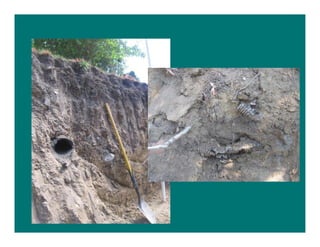
Construction Issues/Lack of
Construction Oversight
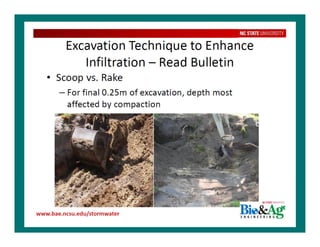
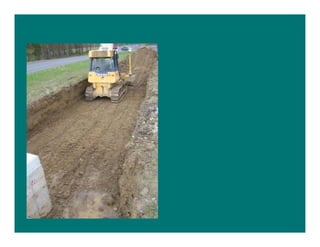
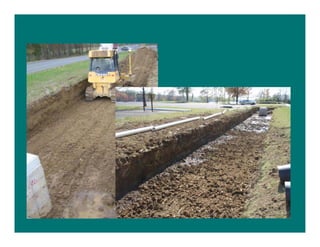
 Loss of Exfiltration/Infiltration Capacity
 smearing or compaction of subgrade soils during
excavation
 compaction of filter bed soils during construction
Construction Issues/Lack of
Construction Oversight
 Loss of Exfiltration/Infiltration Capacity
 smearing or compaction of subgrade soils during
excavation
 compaction of filter bed soils during construction
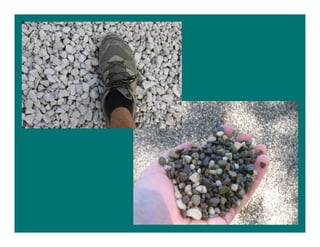
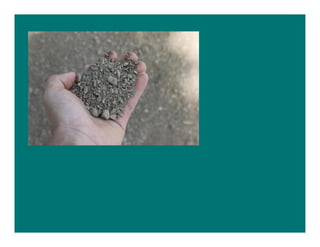
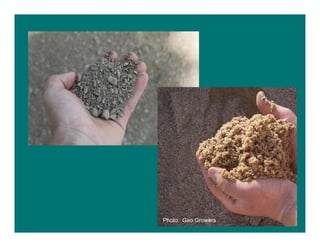
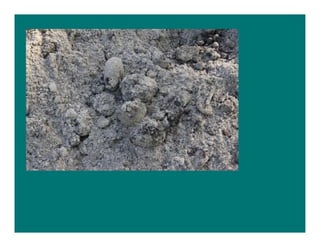
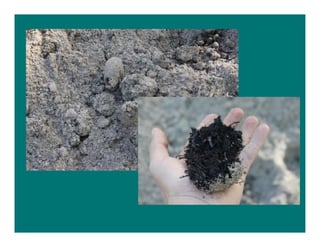
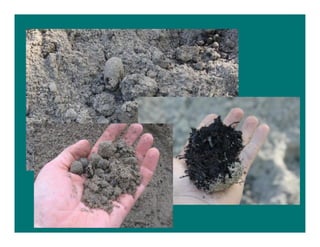
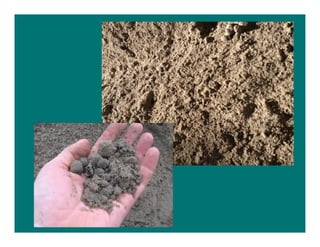
 Materials – esp. filter sand and planting media
Photo: Geo Growers
Construction Issues/Lack of
Construction Oversight
 Loss of Exfiltration/Infiltration Capacity
 smearing or compaction of subgrade soils during
excavation
 compaction of filter bed soils during construction
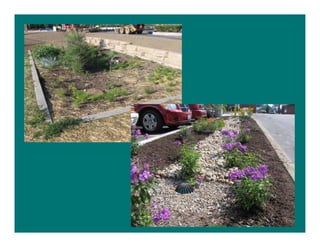
 Materials – esp. filter sand and planting media
 Elevations – filter bed surface, overflow
Construction Issues/Lack of
Construction Oversight
 Loss of Exfiltration/Infiltration Capacity
 smearing or compaction of subgrade soils during
excavation
 compaction of filter bed soils during construction
 Materials – esp. filter sand and planting media
 Elevations – filter bed surface, overflow
 Existing or Hidden Infrastructure
Construction Issues/Lack of
Construction Oversight
 Loss of Exfiltration/Infiltration Capacity
 smearing or compaction of subgrade soils during
excavation
 compaction of filter bed soils during construction
 Materials – esp. filter sand and planting media
 Elevations – filter bed surface, overflow
 Existing or Hidden Infrastructure
 Keeping Sediment Out of BRC During
Construction – staging, site drainage and
erosion control during construction, site
stabilization
Source: Amy Dutt,
Urban Wild
Why Do Bioretention Practices Fail?
1. Sediment Clogging of Filter Bed Surface
2. Eroding Sideslopes
3. Undersized Surface Ponding Volume
4. Construction Issues/Lack of Construction
Oversight
5. Plant Selection and Management
Plant Selection and Management
 Poor plant selection based on survivability
– extremely droughty, extended ponding,
salt
 Poor plant selection based on fit for
location – aesthetics, safety,
maintainability
 Inappropriate or inadequate post-
construction management
Plant Selection and Management
- Resources -
 Horticulturalist or Landscape Architect (esp.
ones with stormwater background)
 Local Rain Garden Alliance
 (e.g. CincyRain.org)
 Rain Garden and Stormwater Plant Guides
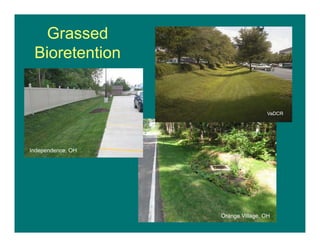
Grassed
Bioretention
VaDCR
Independence, OH
Orange Village, OH
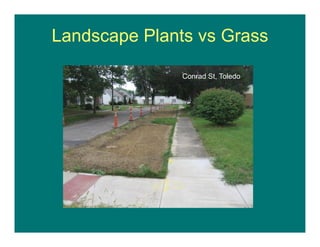
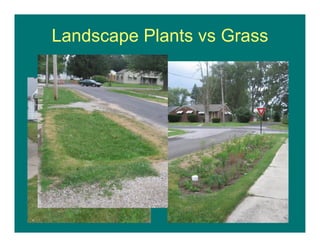
Landscape Plants vs Grass
Conrad St, Toledo
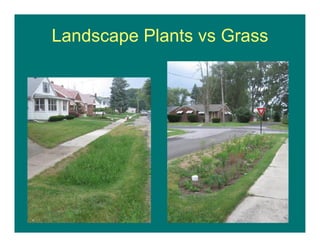
Landscape Plants vs Grass
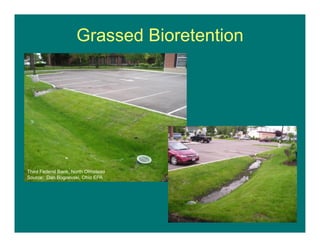
Third Federal Bank, North Olmstead
Source: Dan Bogoevski, Ohio EPA
Grassed Bioretention
Why Do Bioretention Practices Fail?
1. Sediment Clogging of Filter Bed Surface
2. Eroding Sideslopes
3. Undersized Surface Ponding Volume
4. Construction Issues/Lack of Construction
Oversight
5. Plant Selection and Management
6. Lack of Maintenance
Why Do Bioretention Practices Fail?
1. Sediment Clogging of Filter Bed Surface
2. Eroding Sideslopes
3. Undersized Surface Ponding Volume
4. Construction Issues/Lack of Construction
Oversight
5. Plant Selection and Management
6. Lack of Maintenance
7. Bioretention BMP or Design Poor Fit for
Site
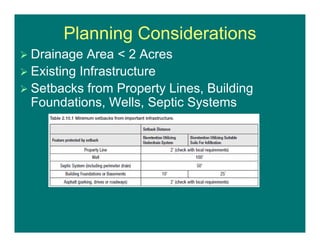
Planning Considerations
 Drainage Area < 2 Acres
 Existing Infrastructure
 Setbacks from Property Lines, Building
Foundations, Wells, Septic Systems
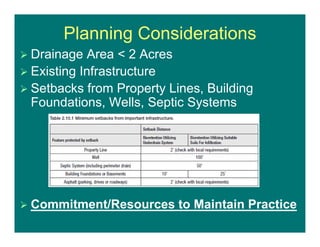
Planning Considerations
 Drainage Area < 2 Acres
 Existing Infrastructure
 Setbacks from Property Lines, Building
Foundations, Wells, Septic Systems
 Commitment/Resources to Maintain Practice
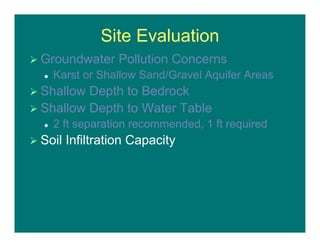
Site Evaluation
 Groundwater Pollution Concerns
 Karst or Shallow Sand/Gravel Aquifer Areas
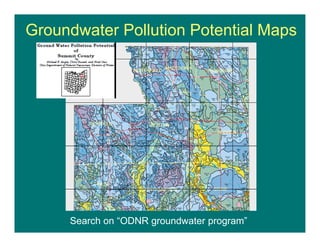
Search on “ODNR groundwater program”
Groundwater Pollution Potential Maps
Site Evaluation
 Groundwater Pollution Concerns
 Karst or Shallow Sand/Gravel Aquifer Areas
 Shallow Depth to Bedrock
 Shallow Depth to Water Table
 2 ft separation recommended, 1 ft required
Site Evaluation
 Groundwater Pollution Concerns
 Karst or Shallow Sand/Gravel Aquifer Areas
 Shallow Depth to Bedrock
 Shallow Depth to Water Table
 2 ft separation recommended, 1 ft required
 Soil Limitations/Hydrologic Soil Group
(HSG)
Search on “ODNR soils data”
Soil Survey Information
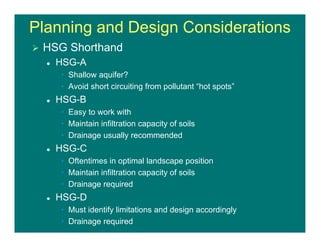
Planning and Design Considerations
 HSG Shorthand
 HSG-A
• Shallow aquifer?
• Avoid short circuiting from pollutant “hot spots”
 HSG-B
• Easy to work with
• Maintain infiltration capacity of soils
• Drainage usually recommended
 HSG-C
• Oftentimes in optimal landscape position
• Maintain infiltration capacity of soils
• Drainage required
 HSG-D
• Must identify limitations and design accordingly
• Drainage required
Site Evaluation
 Groundwater Pollution Concerns
 Karst or Shallow Sand/Gravel Aquifer Areas
 Shallow Depth to Bedrock
 Shallow Depth to Water Table
 2 ft separation recommended, 1 ft required
 Soil Infiltration Capacity
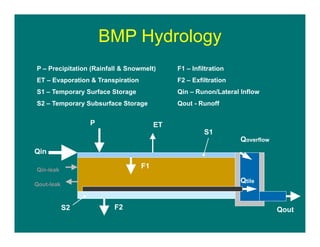
P
Qoverflow
ET
S2
F1
P – Precipitation (Rainfall & Snowmelt)
ET – Evaporation & Transpiration
S1 – Temporary Surface Storage
S2 – Temporary Subsurface Storage
S1
F2
Qin
Qin-leak
Qout-leak
Qout
F1 – Infiltration
F2 – Exfiltration
Qin – Runon/Lateral Inflow
Qout - Runoff
Qtile
BMP Hydrology
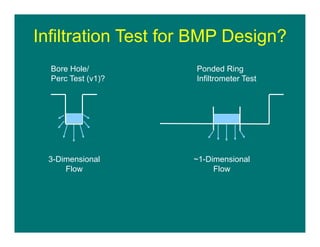
Infiltration Test for BMP Design?
Bore Hole/
Perc Test (v1)?
Ponded Ring
Infiltrometer Test
3-Dimensional
Flow
~1-Dimensional
Flow
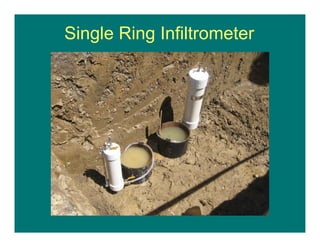
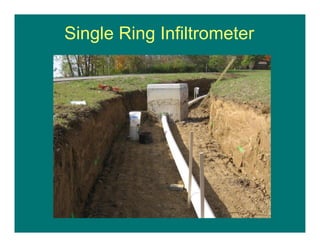
Single Ring Infiltrometer
Estimating Infiltration Rates for
BMPs for Site Planning
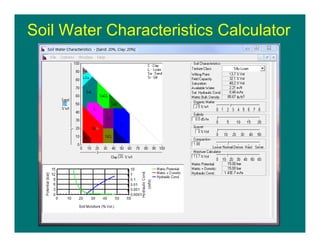
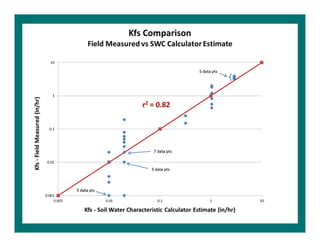
Soil Water Characteristics Calculator
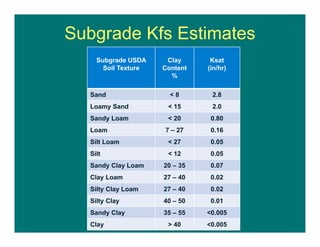
Subgrade USDA
Soil Texture
Clay
Content
%
Ksat
(in/hr)
Sand < 8 2.8
Loamy Sand < 15 2.0
Sandy Loam < 20 0.80
Loam 7 – 27 0.16
Silt Loam < 27 0.05
Silt < 12 0.05
Sandy Clay Loam 20 – 35 0.07
Clay Loam 27 – 40 0.02
Silty Clay Loam 27 – 40 0.02
Silty Clay 40 – 50 0.01
Sandy Clay 35 – 55 <0.005
Clay > 40 <0.005
Subgrade Kfs Estimates
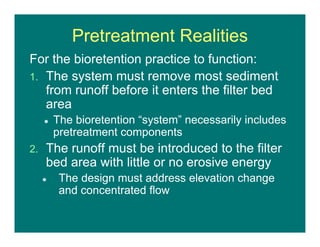
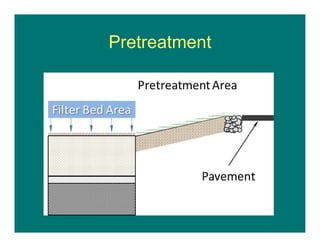
Pretreatment Realities
For the bioretention practice to function:
1. The system must remove most sediment
from runoff before it enters the filter bed
area
 The bioretention “system” necessarily includes
pretreatment components
2. The runoff must be introduced to the filter
bed area with little or no erosive energy
 The design must address elevation change
and concentrated flow
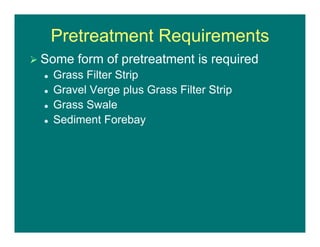
Pretreatment Requirements
 Some form of pretreatment is required
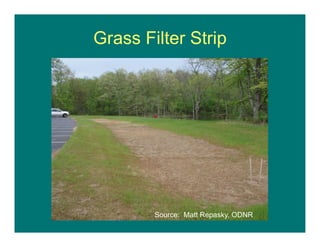
 Grass Filter Strip
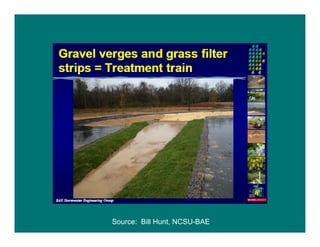
 Gravel Verge plus Grass Filter Strip
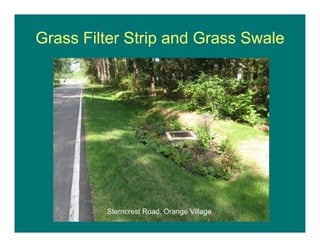
 Grass Swale
 Sediment Forebay
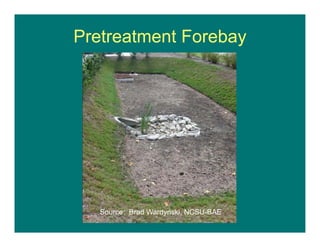
Source: Brad Wardynski, NCSU-BAE
Pretreatment Forebay
Pretreatment
Source: Bill Hunt, NCSU-BAE
Source: Matt Repasky, ODNR
Grass Filter Strip
Grass Filter Strip and Grass Swale
Sterncrest Road, Orange Village
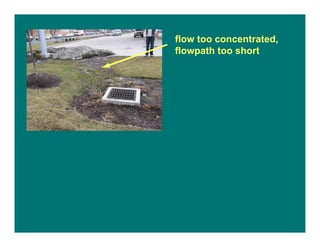
flow too concentrated,
flowpath too short
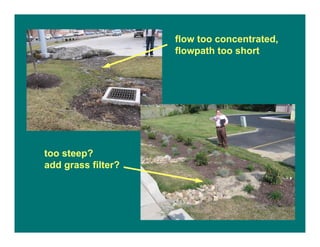
flow too concentrated,
flowpath too short
too steep?
add grass filter?
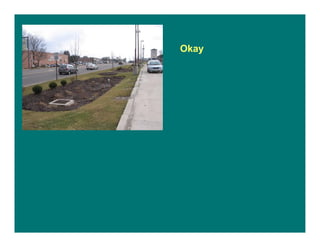
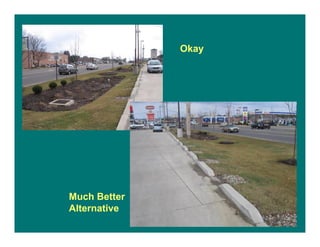
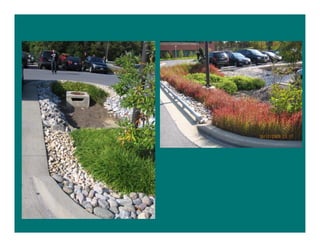
Okay
Okay
Much Better
Alternative
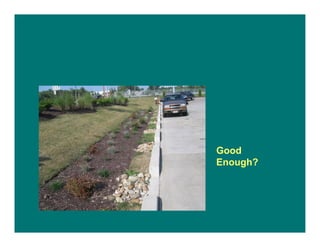
Good
Enough?
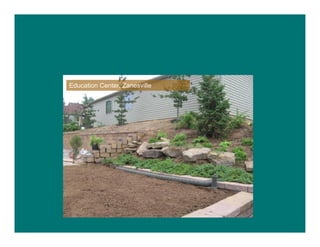
Education Center, Zanesville
References
 ODNR. Rainwater and Land Development Manual.
 Wardynski and Hunt. 2012. Are Bioretention Cells Being
Installed per Design Standards in North Carolina? A
Field Assessment. J. Env. Eng. 138(12): 1210-1217.
 Hunt, Davis, and Traver. 2012. Meeting Hydrologic and
Water Quality Goals through Targeted Bioretention
Design. J. Env. Eng. 138(6): 698-707.
 Brown, Hunt, and Kennedy. 2009. Designing
Bioretention with an Internal Water Storage (IWS) Layer.
NCSU-CE.
 CWP. 2012. West Virginia Stormwater Management and
Design Guidance Manual.
Questions:
Jay Dorsey
Water Resources Engineer
ODNR, Soil & Water Resources
(614) 265-6647
jay.dorsey@dnr.state.oh.us

Bioretention Site Evaluation and Considerations for Design

  • 1.
    Site Evaluation and Considerationsfor Design and Review of Bioretention Jay Dorsey & John Mathews ODNR-DSWR April 16, 2014
  • 2.
    Goals for Presentation Understanding Why Bioretention Practices Fail  Site Considerations  Right BMP? Site Limitations  Site Properties for Design  Giving Bioretention Practices the Best Chance to Function Over the Long Haul
  • 3.
    Why Do BioretentionPractices Fail? Undersized Bioretention Cell Based on Overestimate of Infiltration Capacity
  • 4.
    Why Do BioretentionPractices Fail? Undersized Bioretention Cell Based on Overestimate of Infiltration Capacity
  • 5.
    Why Do BioretentionPractices Fail? Undersized Bioretention Cell Based on Overestimate of Infiltration Capacity Sediment Clogging of Geotextile Filter Between Soil and Aggregate Layers
  • 6.
    Why Do BioretentionPractices Fail? Undersized Bioretention Cell Based on Overestimate of Infiltration Capacity Sediment Clogging of Geotextile Filter Between Soil and Aggregate Layers
  • 7.
    Why Do BioretentionPractices Fail? 1. Sediment Clogging of Filter Bed Surface
  • 8.
  • 9.
    Source: Bill Hunt,NCSU-BAE Clogging of Filter Surface
  • 10.
  • 11.
    Why Do BioretentionPractices Fail? 1. Sediment Clogging of Filter Bed Surface 2. Eroding Sideslopes - Unstable Sideslopes and/or Concentrated Flow
  • 12.
    Source: Brad Wardynski,NCSU-BAE Source: Amy Dutt, Urban Wild
  • 13.
  • 15.
    Why Do BioretentionPractices Fail? 1. Sediment Clogging of Filter Bed Surface 2. Eroding Sideslopes 3. Undersized Surface Ponding Volume
  • 16.
    Storage Volume Source: BradWardynski, NCSU-BAE
  • 17.
    Storage Volume Source: BradWardynski, NCSU-BAE Severely Undersized (>25%) 35%
  • 18.
    Results: Storage Volume Needto inspect average ponding depth (not height of outlet structure) Source: Brad Wardynski, NCSU-BAE
  • 20.
    Why Do BioretentionPractices Fail? 1. Sediment Clogging of Filter Bed Surface 2. Eroding Sideslopes 3. Undersized Surface Ponding Volume 4. Construction Issues/Lack of Construction Oversight
  • 21.
    Construction Issues/Lack of ConstructionOversight  Loss of Exfiltration/Infiltration Capacity  smearing or compaction of subgrade soils during excavation  compaction of filter bed soils during construction
  • 26.
    Construction Issues/Lack of ConstructionOversight  Loss of Exfiltration/Infiltration Capacity  smearing or compaction of subgrade soils during excavation  compaction of filter bed soils during construction  Materials – esp. filter sand and planting media
  • 29.
  • 34.
    Construction Issues/Lack of ConstructionOversight  Loss of Exfiltration/Infiltration Capacity  smearing or compaction of subgrade soils during excavation  compaction of filter bed soils during construction  Materials – esp. filter sand and planting media  Elevations – filter bed surface, overflow
  • 36.
    Construction Issues/Lack of ConstructionOversight  Loss of Exfiltration/Infiltration Capacity  smearing or compaction of subgrade soils during excavation  compaction of filter bed soils during construction  Materials – esp. filter sand and planting media  Elevations – filter bed surface, overflow  Existing or Hidden Infrastructure
  • 38.
    Construction Issues/Lack of ConstructionOversight  Loss of Exfiltration/Infiltration Capacity  smearing or compaction of subgrade soils during excavation  compaction of filter bed soils during construction  Materials – esp. filter sand and planting media  Elevations – filter bed surface, overflow  Existing or Hidden Infrastructure  Keeping Sediment Out of BRC During Construction – staging, site drainage and erosion control during construction, site stabilization
  • 41.
  • 42.
    Why Do BioretentionPractices Fail? 1. Sediment Clogging of Filter Bed Surface 2. Eroding Sideslopes 3. Undersized Surface Ponding Volume 4. Construction Issues/Lack of Construction Oversight 5. Plant Selection and Management
  • 43.
    Plant Selection andManagement  Poor plant selection based on survivability – extremely droughty, extended ponding, salt  Poor plant selection based on fit for location – aesthetics, safety, maintainability  Inappropriate or inadequate post- construction management
  • 44.
    Plant Selection andManagement - Resources -  Horticulturalist or Landscape Architect (esp. ones with stormwater background)  Local Rain Garden Alliance  (e.g. CincyRain.org)  Rain Garden and Stormwater Plant Guides
  • 45.
  • 46.
    Landscape Plants vsGrass Conrad St, Toledo
  • 47.
  • 48.
  • 49.
    Third Federal Bank,North Olmstead Source: Dan Bogoevski, Ohio EPA Grassed Bioretention
  • 50.
    Why Do BioretentionPractices Fail? 1. Sediment Clogging of Filter Bed Surface 2. Eroding Sideslopes 3. Undersized Surface Ponding Volume 4. Construction Issues/Lack of Construction Oversight 5. Plant Selection and Management 6. Lack of Maintenance
  • 51.
    Why Do BioretentionPractices Fail? 1. Sediment Clogging of Filter Bed Surface 2. Eroding Sideslopes 3. Undersized Surface Ponding Volume 4. Construction Issues/Lack of Construction Oversight 5. Plant Selection and Management 6. Lack of Maintenance 7. Bioretention BMP or Design Poor Fit for Site
  • 53.
    Planning Considerations  DrainageArea < 2 Acres  Existing Infrastructure  Setbacks from Property Lines, Building Foundations, Wells, Septic Systems
  • 54.
    Planning Considerations  DrainageArea < 2 Acres  Existing Infrastructure  Setbacks from Property Lines, Building Foundations, Wells, Septic Systems  Commitment/Resources to Maintain Practice
  • 55.
    Site Evaluation  GroundwaterPollution Concerns  Karst or Shallow Sand/Gravel Aquifer Areas
  • 56.
    Search on “ODNRgroundwater program” Groundwater Pollution Potential Maps
  • 57.
    Site Evaluation  GroundwaterPollution Concerns  Karst or Shallow Sand/Gravel Aquifer Areas  Shallow Depth to Bedrock  Shallow Depth to Water Table  2 ft separation recommended, 1 ft required
  • 58.
    Site Evaluation  GroundwaterPollution Concerns  Karst or Shallow Sand/Gravel Aquifer Areas  Shallow Depth to Bedrock  Shallow Depth to Water Table  2 ft separation recommended, 1 ft required  Soil Limitations/Hydrologic Soil Group (HSG)
  • 59.
    Search on “ODNRsoils data” Soil Survey Information
  • 60.
    Planning and DesignConsiderations  HSG Shorthand  HSG-A • Shallow aquifer? • Avoid short circuiting from pollutant “hot spots”  HSG-B • Easy to work with • Maintain infiltration capacity of soils • Drainage usually recommended  HSG-C • Oftentimes in optimal landscape position • Maintain infiltration capacity of soils • Drainage required  HSG-D • Must identify limitations and design accordingly • Drainage required
  • 61.
    Site Evaluation  GroundwaterPollution Concerns  Karst or Shallow Sand/Gravel Aquifer Areas  Shallow Depth to Bedrock  Shallow Depth to Water Table  2 ft separation recommended, 1 ft required  Soil Infiltration Capacity
  • 62.
    P Qoverflow ET S2 F1 P – Precipitation(Rainfall & Snowmelt) ET – Evaporation & Transpiration S1 – Temporary Surface Storage S2 – Temporary Subsurface Storage S1 F2 Qin Qin-leak Qout-leak Qout F1 – Infiltration F2 – Exfiltration Qin – Runon/Lateral Inflow Qout - Runoff Qtile BMP Hydrology
  • 63.
    Infiltration Test forBMP Design? Bore Hole/ Perc Test (v1)? Ponded Ring Infiltrometer Test 3-Dimensional Flow ~1-Dimensional Flow
  • 64.
  • 65.
  • 66.
    Estimating Infiltration Ratesfor BMPs for Site Planning
  • 67.
  • 68.
    Subgrade USDA Soil Texture Clay Content % Ksat (in/hr) Sand< 8 2.8 Loamy Sand < 15 2.0 Sandy Loam < 20 0.80 Loam 7 – 27 0.16 Silt Loam < 27 0.05 Silt < 12 0.05 Sandy Clay Loam 20 – 35 0.07 Clay Loam 27 – 40 0.02 Silty Clay Loam 27 – 40 0.02 Silty Clay 40 – 50 0.01 Sandy Clay 35 – 55 <0.005 Clay > 40 <0.005 Subgrade Kfs Estimates
  • 71.
    Pretreatment Realities For thebioretention practice to function: 1. The system must remove most sediment from runoff before it enters the filter bed area  The bioretention “system” necessarily includes pretreatment components 2. The runoff must be introduced to the filter bed area with little or no erosive energy  The design must address elevation change and concentrated flow
  • 72.
    Pretreatment Requirements  Someform of pretreatment is required  Grass Filter Strip  Gravel Verge plus Grass Filter Strip  Grass Swale  Sediment Forebay
  • 73.
    Source: Brad Wardynski,NCSU-BAE Pretreatment Forebay
  • 74.
  • 75.
  • 76.
    Source: Matt Repasky,ODNR Grass Filter Strip
  • 77.
    Grass Filter Stripand Grass Swale Sterncrest Road, Orange Village
  • 78.
  • 79.
    flow too concentrated, flowpathtoo short too steep? add grass filter?
  • 80.
  • 81.
  • 82.
  • 84.
  • 85.
    References  ODNR. Rainwaterand Land Development Manual.  Wardynski and Hunt. 2012. Are Bioretention Cells Being Installed per Design Standards in North Carolina? A Field Assessment. J. Env. Eng. 138(12): 1210-1217.  Hunt, Davis, and Traver. 2012. Meeting Hydrologic and Water Quality Goals through Targeted Bioretention Design. J. Env. Eng. 138(6): 698-707.  Brown, Hunt, and Kennedy. 2009. Designing Bioretention with an Internal Water Storage (IWS) Layer. NCSU-CE.  CWP. 2012. West Virginia Stormwater Management and Design Guidance Manual.
  • 86.
    Questions: Jay Dorsey Water ResourcesEngineer ODNR, Soil & Water Resources (614) 265-6647 jay.dorsey@dnr.state.oh.us