BIOLOGY OF
THE
EXTRACELLULA
R MATRIX
ABDULRAHMAN ALOMAIR
FIRST YEAR RESIDENT
JOINT DERMATOLOGY PROGRAM, RIYADH
OUTLINE
▸ Definitions
▸ Functions of the ECM
▸ Components of the ECM
▸ Diseases Related to Defects in ECM
▸ Diseases Related to Autoimmune Phenomena
DEFINITION
▸ ECM a three-dimensional network of extracellular
macromolecules, such as collagen, enzymes, and
glycoproteins, that provide structural and biochemical
support of surrounding cells.
FUNCTIONS OF THE ECM
▸ It maintains tissue architecture and mediating a number of
important biological events
▸ The Basement Membrane (BM) has important tissue specific
properties that allow for particular cell attachments; regulate
morphogenesis, differentiation, and barrier functions
▸ In the Dermis, the ECM maintains the elasticity, resilience, and
tautness of the skin
▸ At the Dermal-Epidermal junction, specific basement membrane-
associated strong aggregates ensure strong adhesion of the
epidermis to the dermis
FUNCTIONS OF THE ECM
▸ Attachment of tissue-specific cells, leukocytes, tumor
cells, and even micro-organisms
▸ Control cell proliferation, differentiation and migration.
▸ the ECM can function as a reservoir of information;
certain proteoglycans and proteins bind growth factors.
They will release and activate them as needed to control
cellular functions
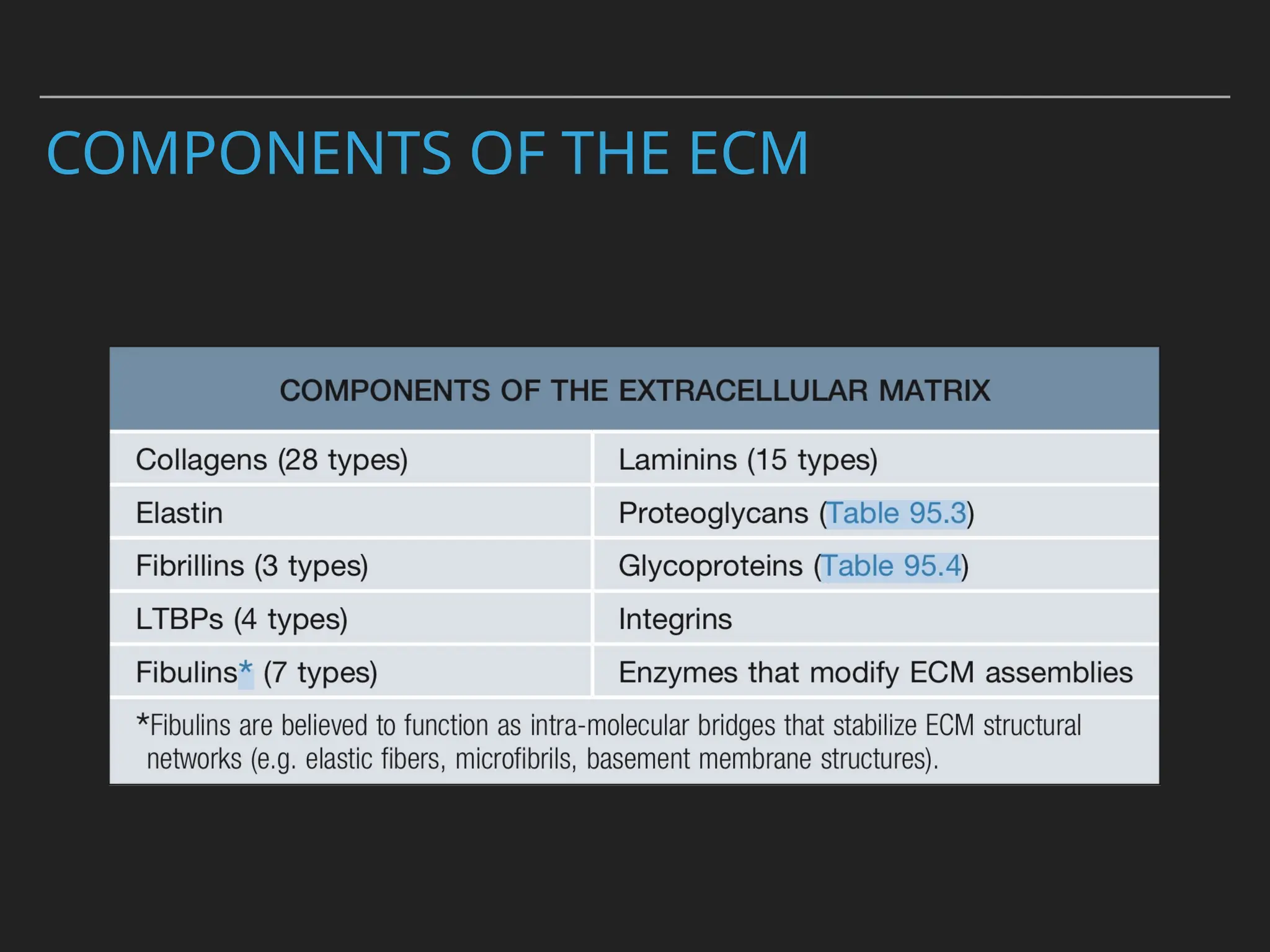
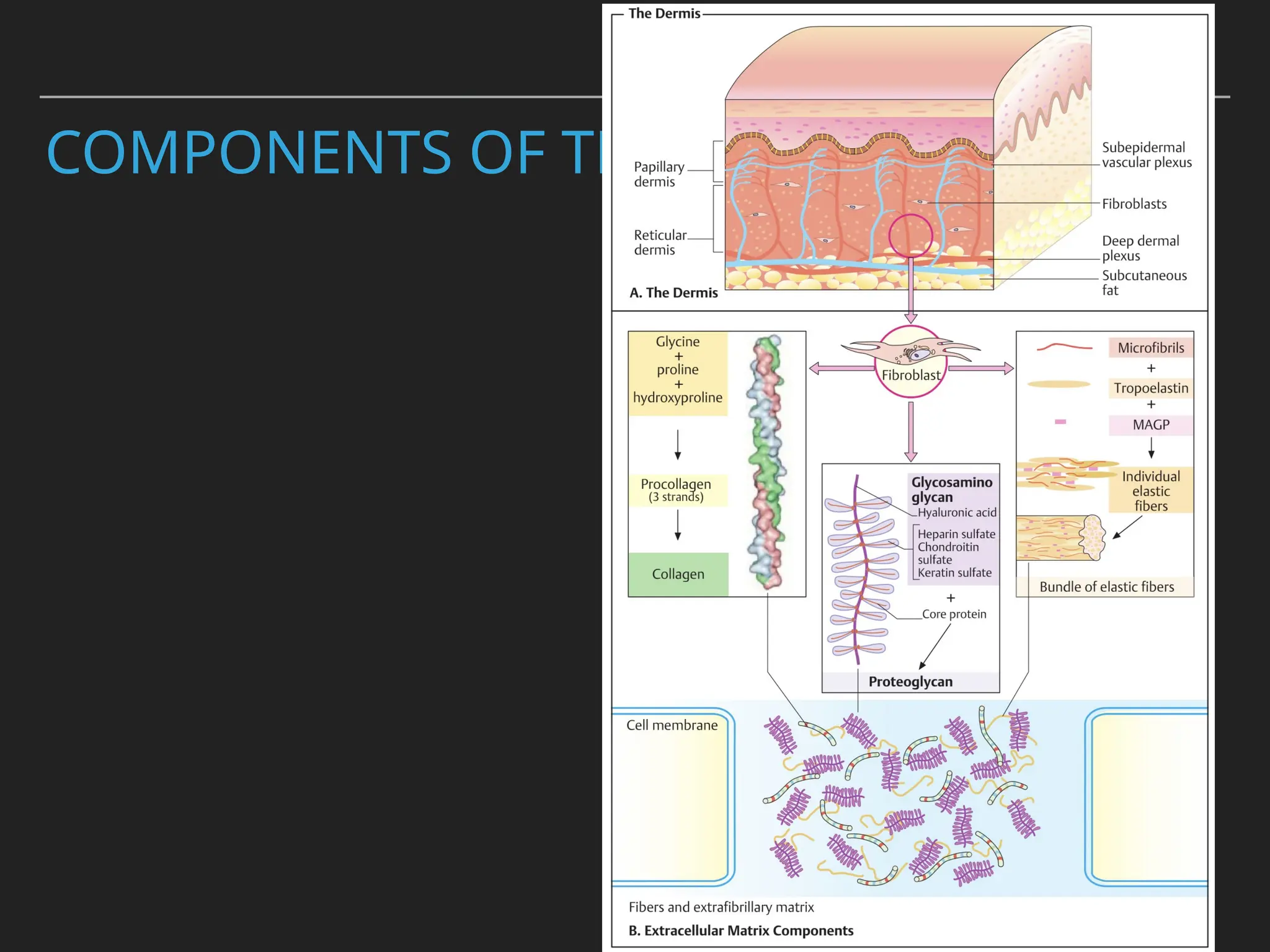
COMPONENTS OF THE ECM
COMPONENTS OF THE ECM: COLLAGEN
▸ The main structural component of the extracellular
protein of the human body
▸ The family currently includes 28 proteins , these proteins
contain at least 43 distinct polypeptide chains, each
encoded by a different gene
▸ 75% of the dry weight and 20–30% of the volume of the
dermis
COMPONENTS OF THE ECM: COLLAGEN
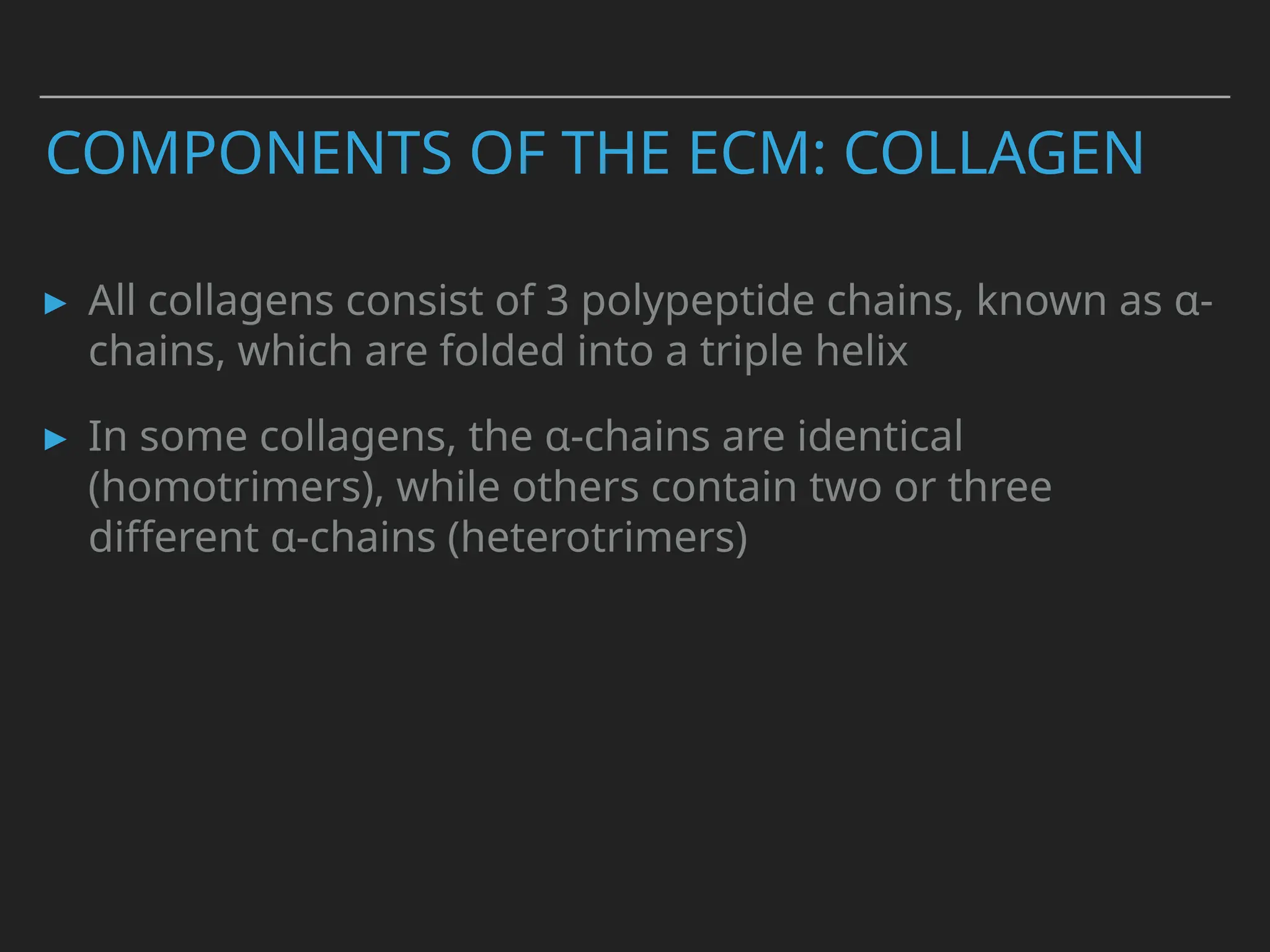
▸ All collagens consist of 3 polypeptide chains, known as α-
chains, which are folded into a triple helix
▸ In some collagens, the α-chains are identical
(homotrimers), while others contain two or three
different α-chains (heterotrimers)
COMPONENTS OF THE ECM: COLLAGEN
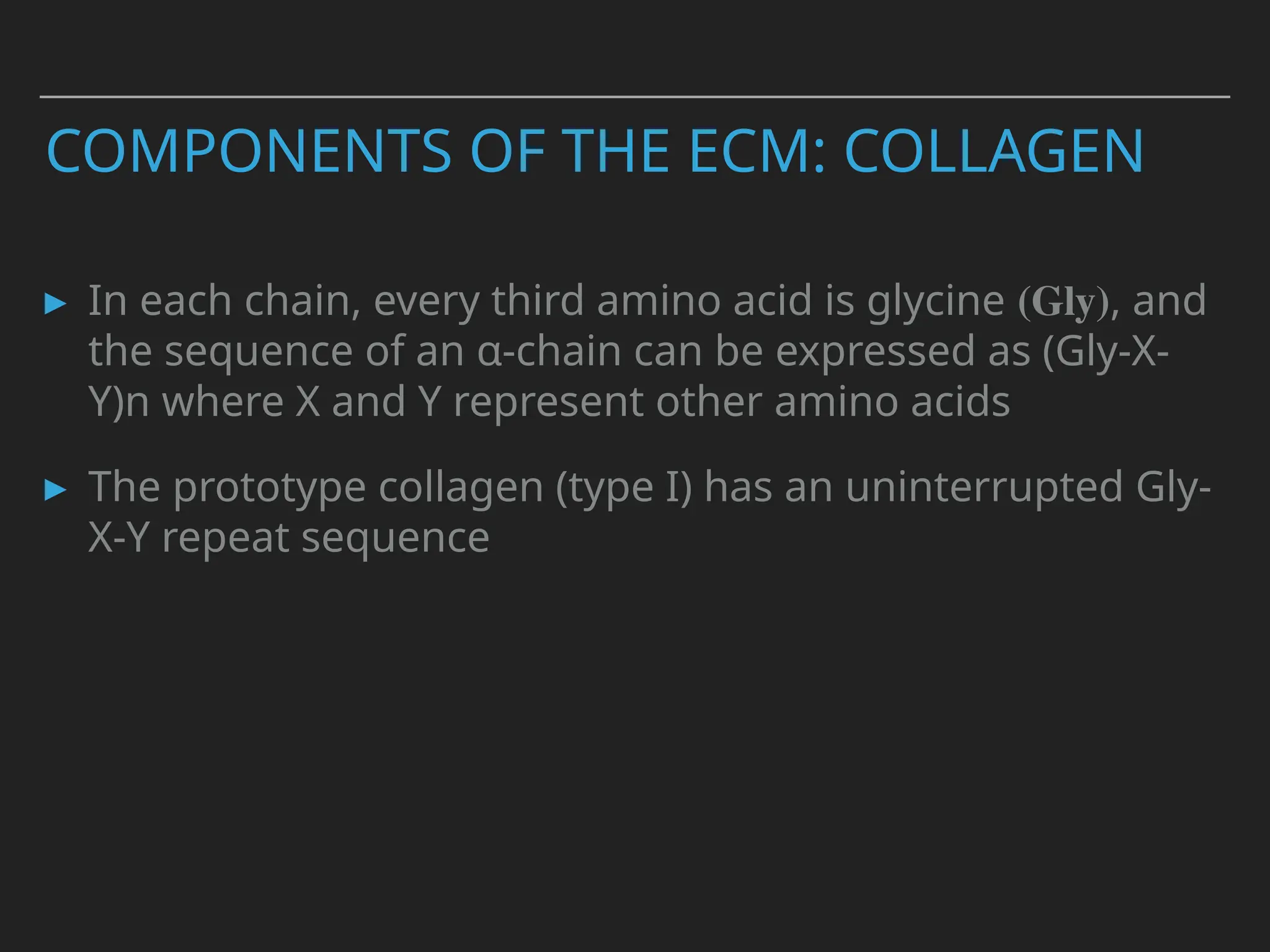
▸ In each chain, every third amino acid is glycine (Gly), and
the sequence of an α-chain can be expressed as (Gly-X-
Y)n where X and Y represent other amino acids
▸ The prototype collagen (type I) has an uninterrupted Gly-
X-Y repeat sequence
COMPONENTS OF THE ECM: COLLAGEN
▸ The synthesis of collagen has 2 steps:
▸ Intracellular
▸ Extracellular
BIOSYNTHESIS OF COLLAGEN:
INTRACELLULAR REACTIONS
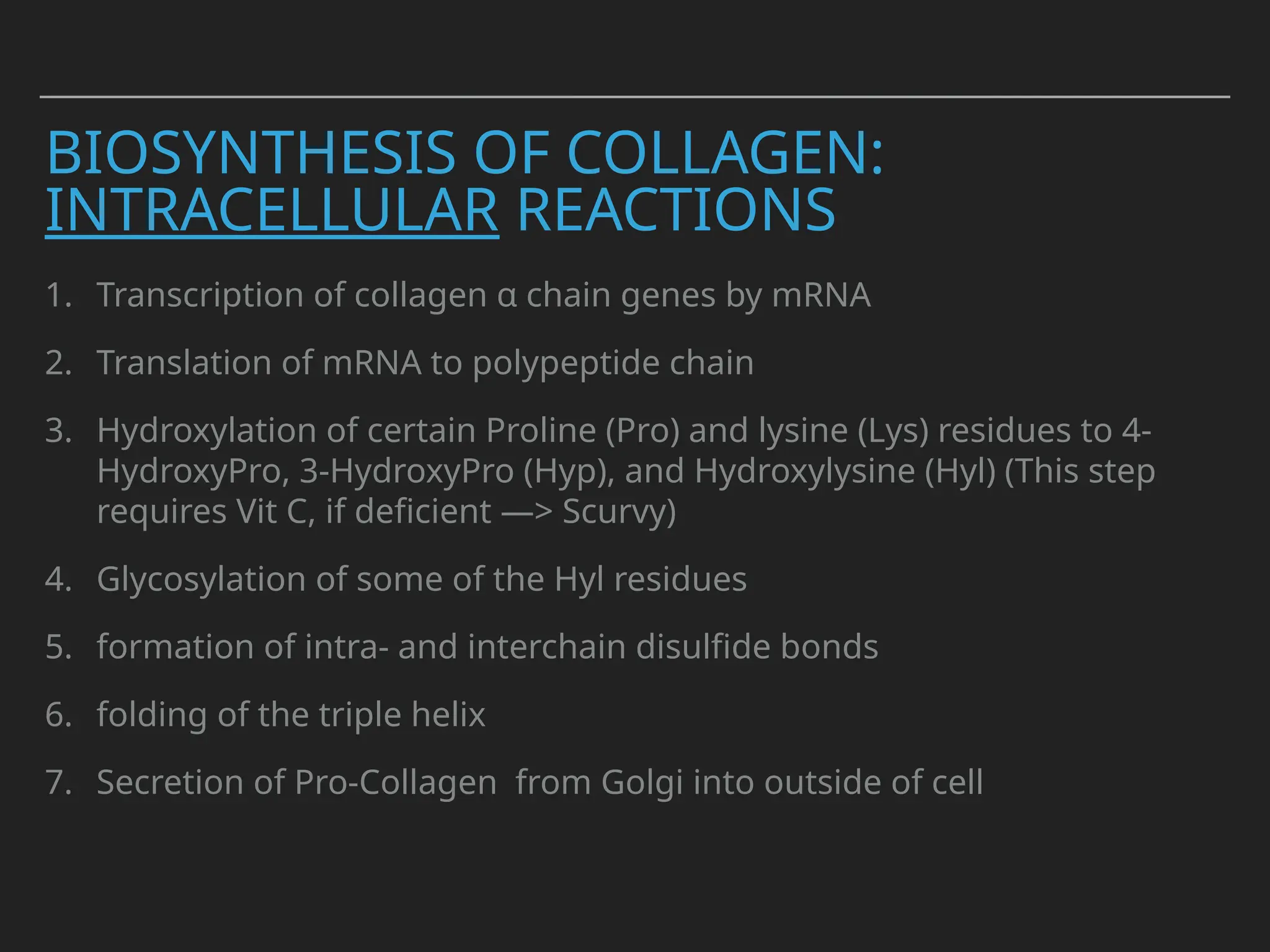
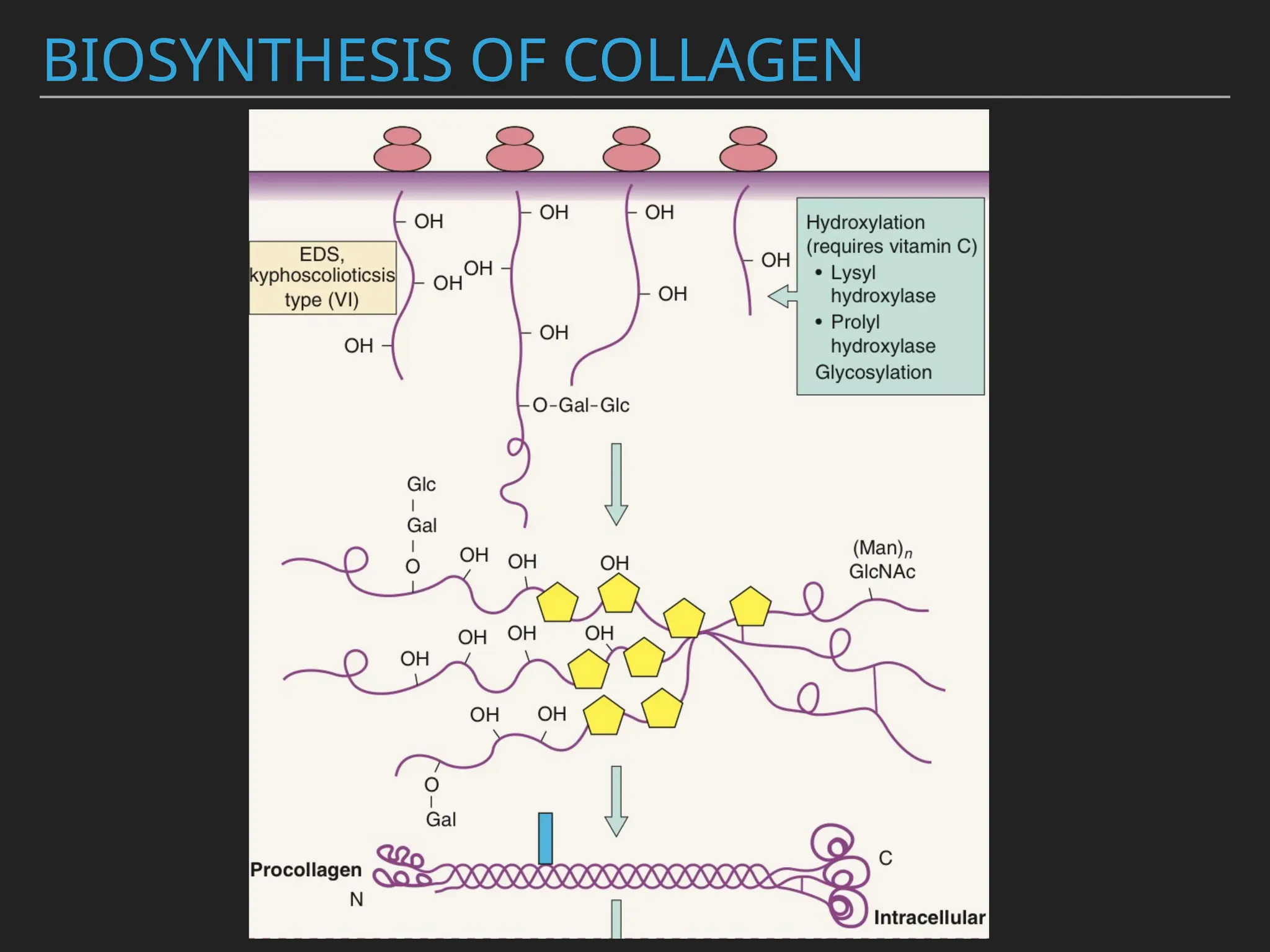
1. Transcription of collagen α chain genes by mRNA
2. Translation of mRNA to polypeptide chain
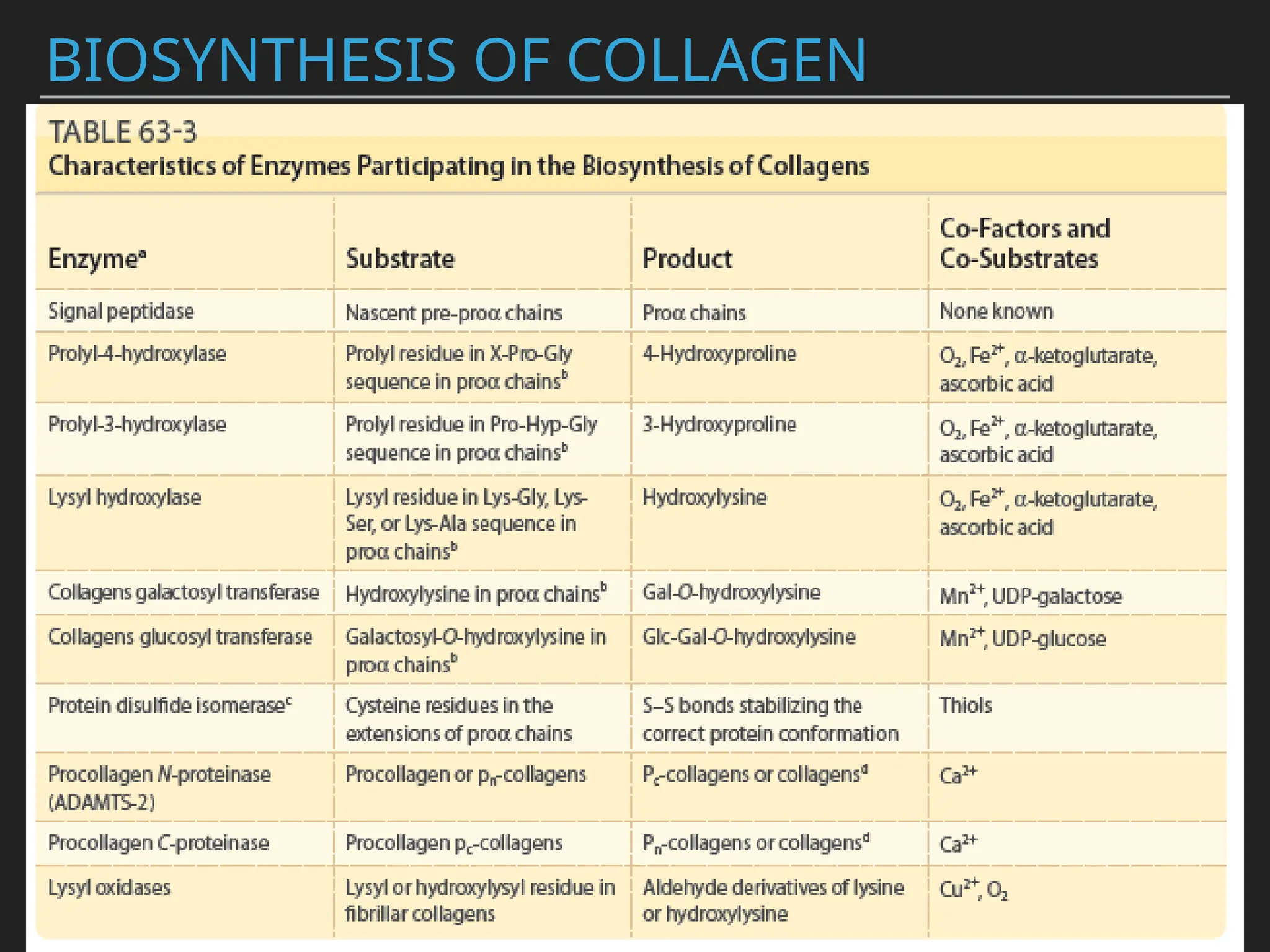
3. Hydroxylation of certain Proline (Pro) and lysine (Lys) residues to 4-
HydroxyPro, 3-HydroxyPro (Hyp), and Hydroxylysine (Hyl) (This step
requires Vit C, if deficient —> Scurvy)
4. Glycosylation of some of the Hyl residues
5. formation of intra- and interchain disulfide bonds
6. folding of the triple helix
7. Secretion of Pro-Collagen from Golgi into outside of cell
BIOSYNTHESIS OF COLLAGEN:
EXTRACELLULAR REACTIONS
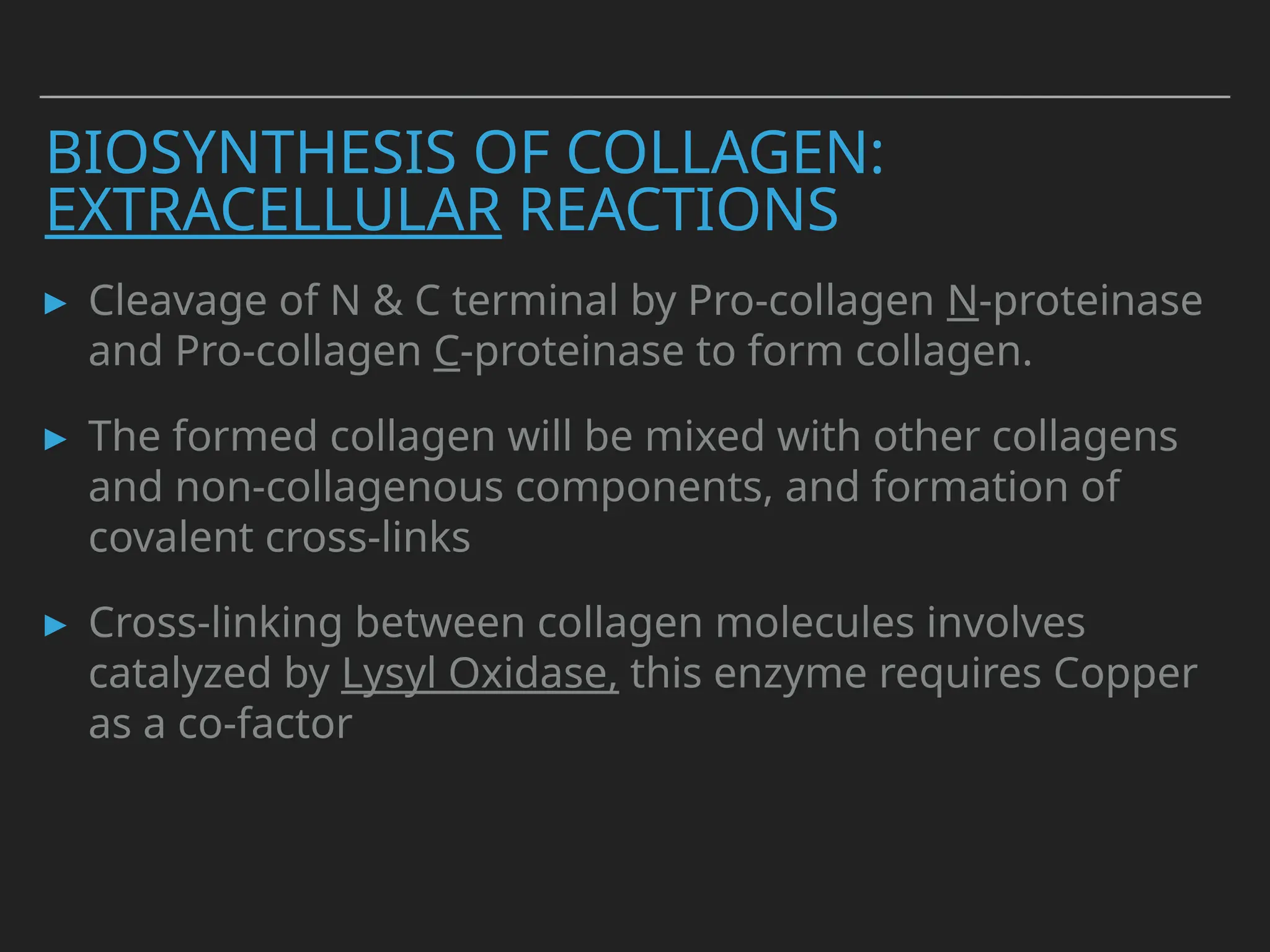
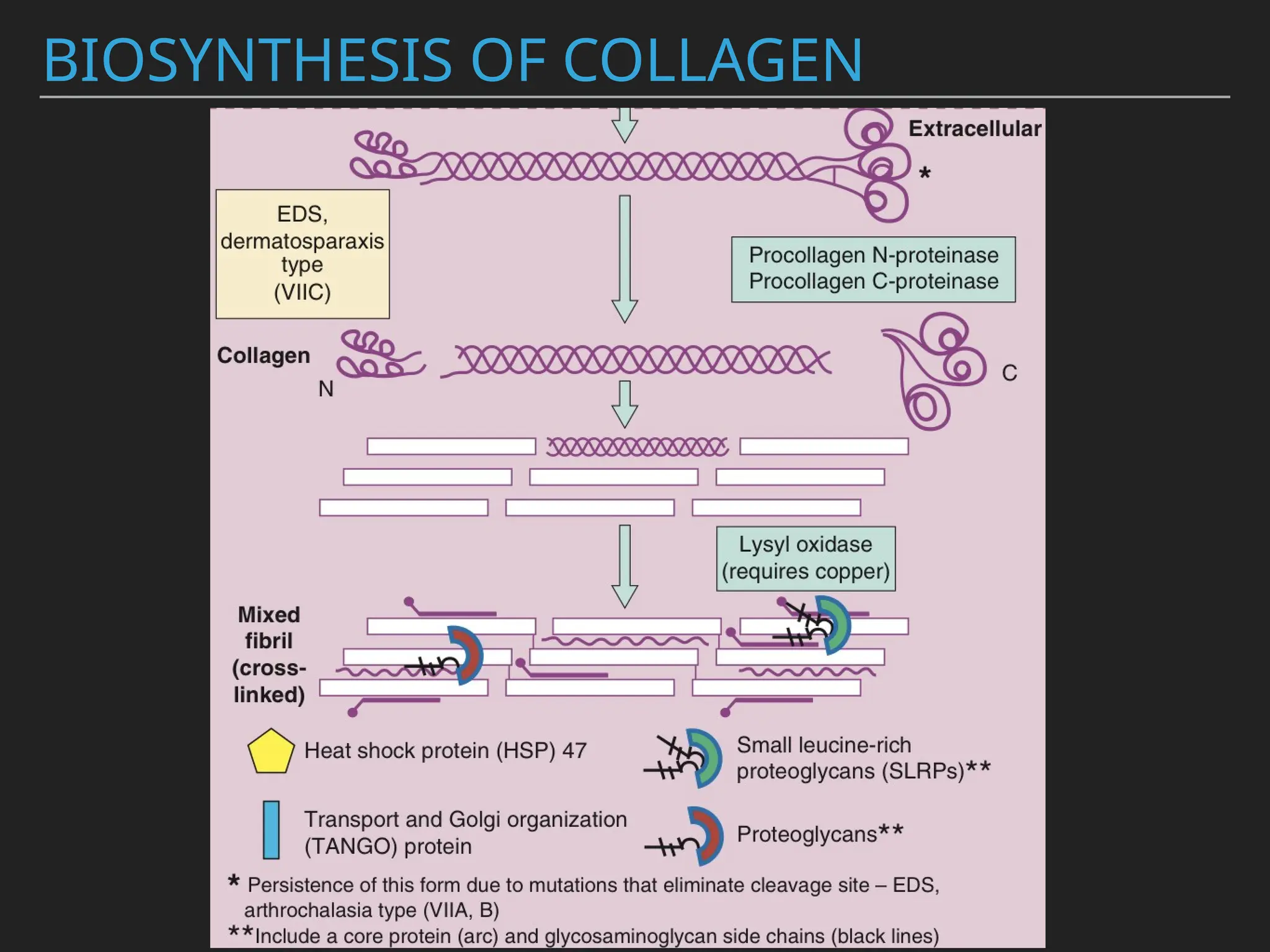
▸ Cleavage of N & C terminal by Pro-collagen N-proteinase
and Pro-collagen C-proteinase to form collagen.
▸ The formed collagen will be mixed with other collagens
and non-collagenous components, and formation of
covalent cross-links
▸ Cross-linking between collagen molecules involves
catalyzed by Lysyl Oxidase, this enzyme requires Copper
as a co-factor
BIOSYNTHESIS OF COLLAGEN
COLLAGEN FAMILY
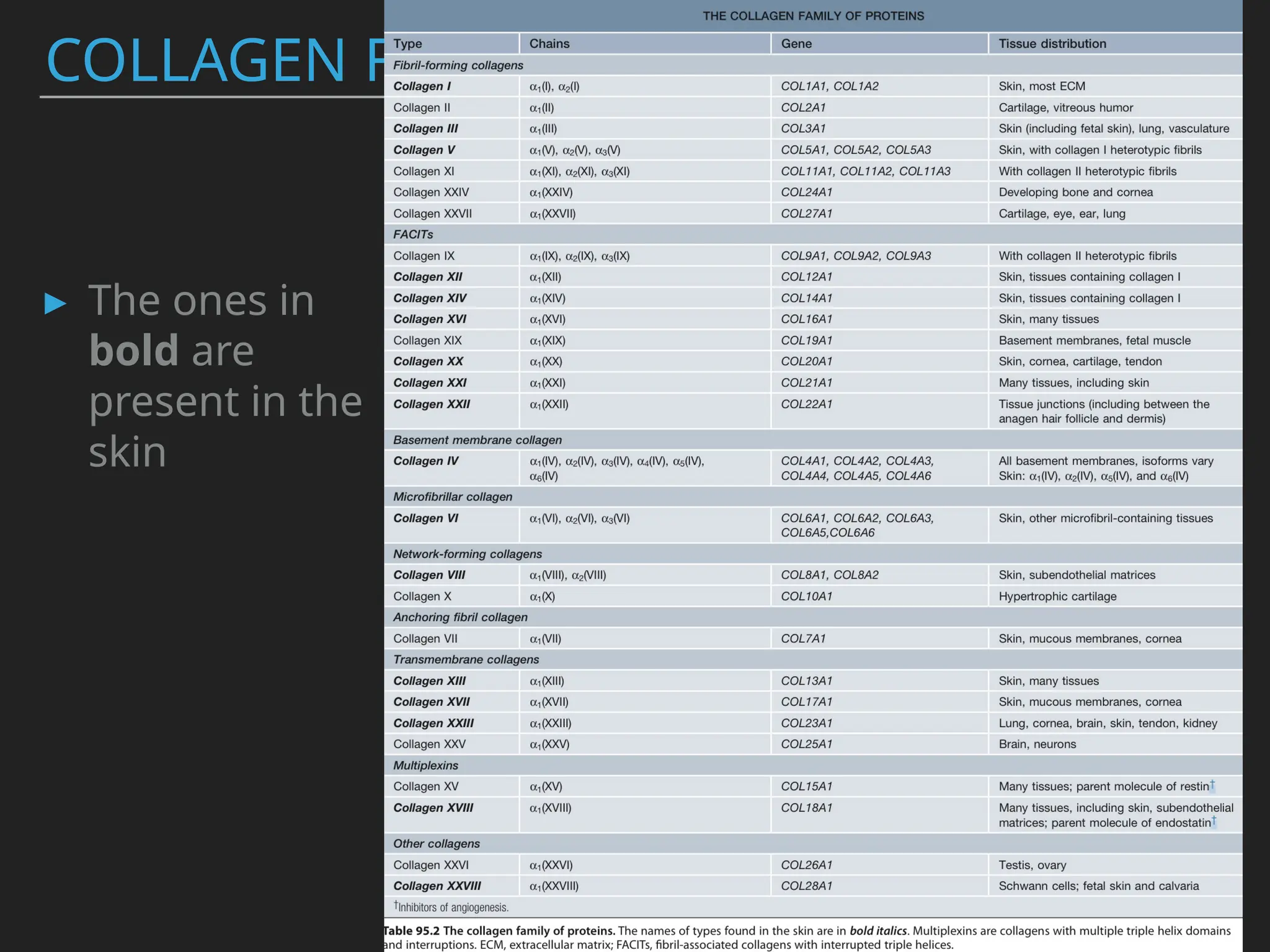
▸ The ones in
bold are
present in the
skin
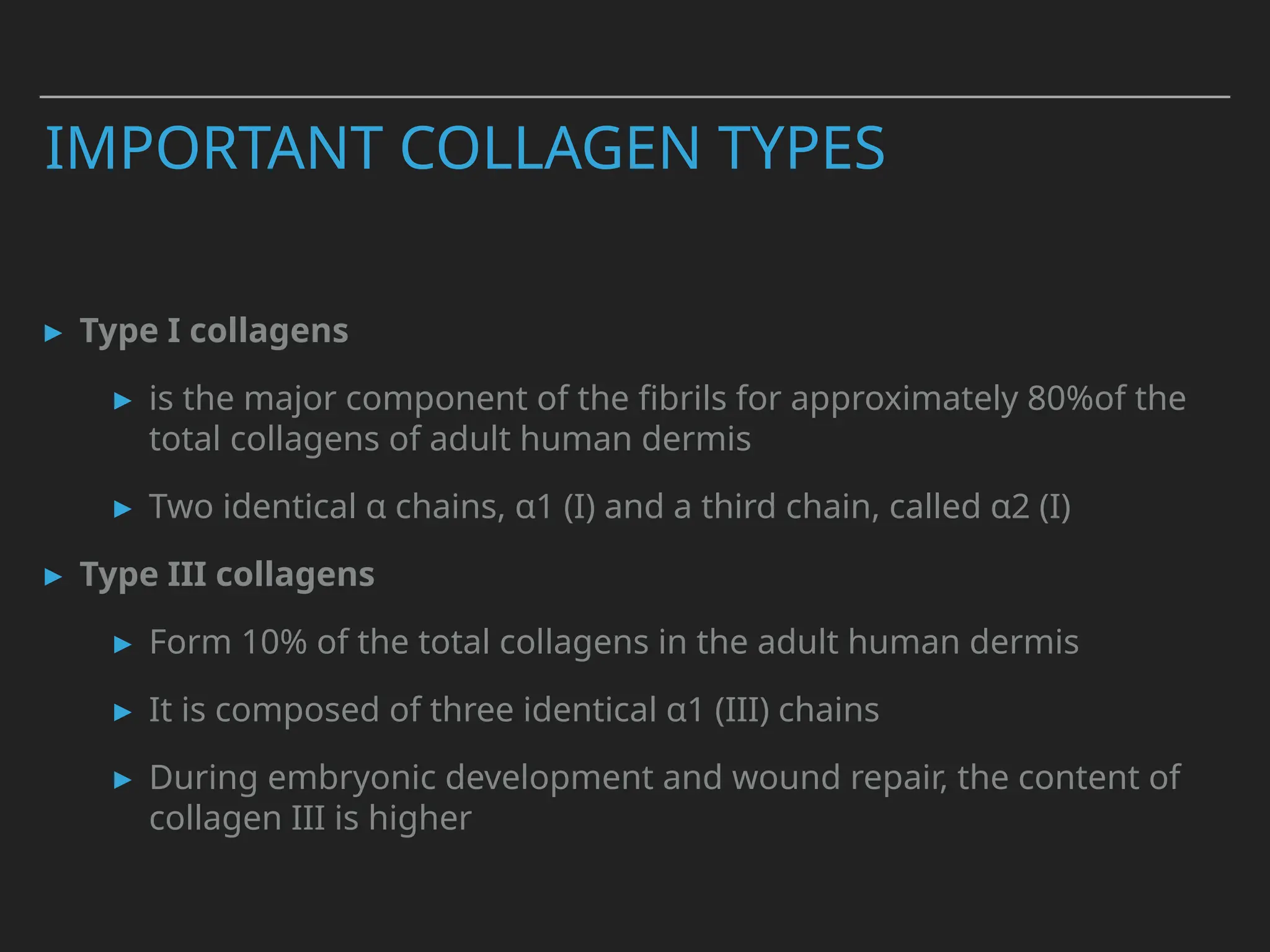
▸ Type I collagens
▸ is the major component of the fibrils for approximately 80%of the
total collagens of adult human dermis
▸ Two identical α chains, α1 (I) and a third chain, called α2 (I)
▸ Type III collagens
▸ Form 10% of the total collagens in the adult human dermis
▸ It is composed of three identical α1 (III) chains
▸ During embryonic development and wound repair, the content of
collagen III is higher
IMPORTANT COLLAGEN TYPES
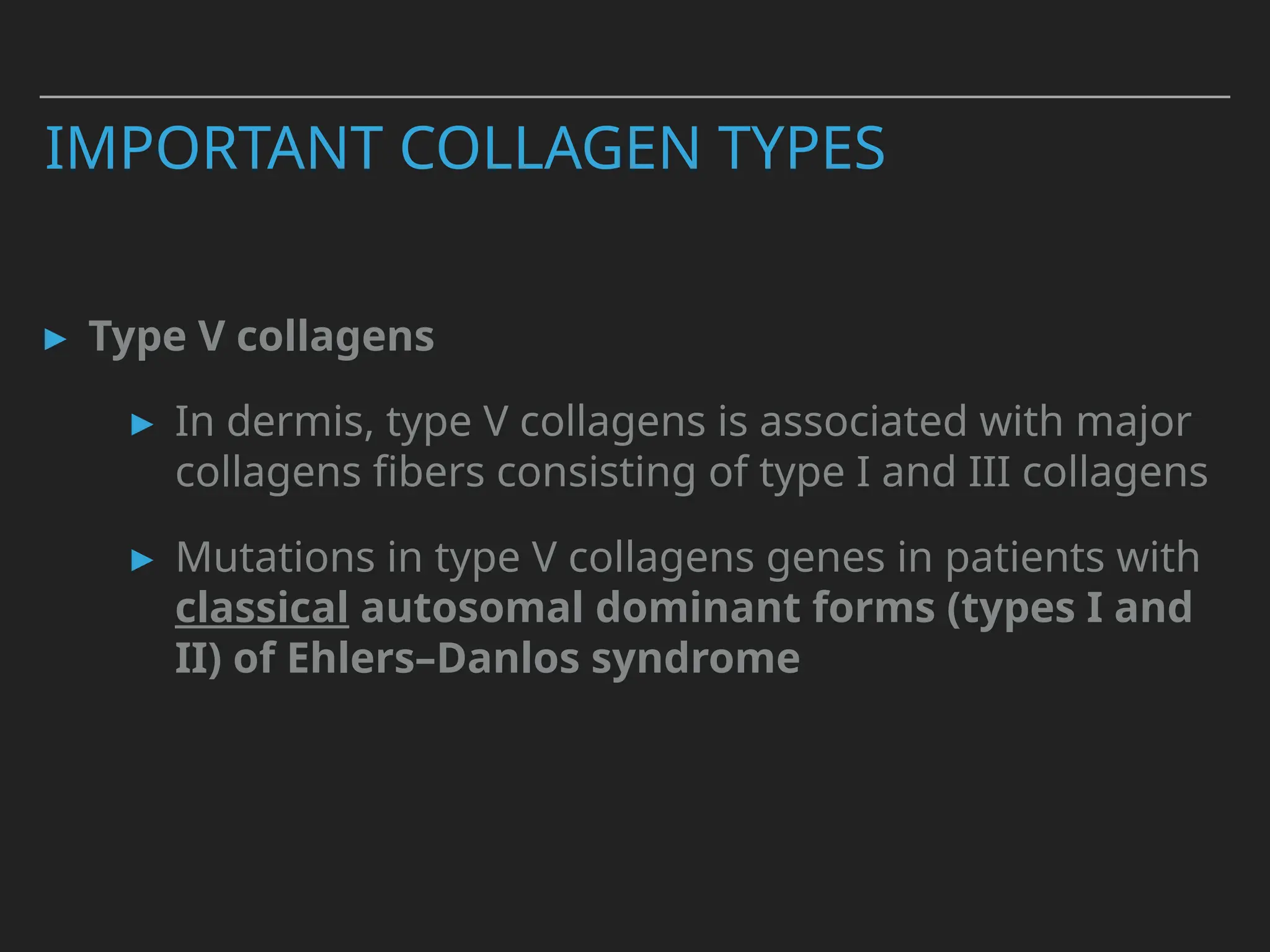
▸ Type V collagens
▸ In dermis, type V collagens is associated with major
collagens fibers consisting of type I and III collagens
▸ Mutations in type V collagens genes in patients with
classical autosomal dominant forms (types I and
II) of Ehlers–Danlos syndrome
IMPORTANT COLLAGEN TYPES
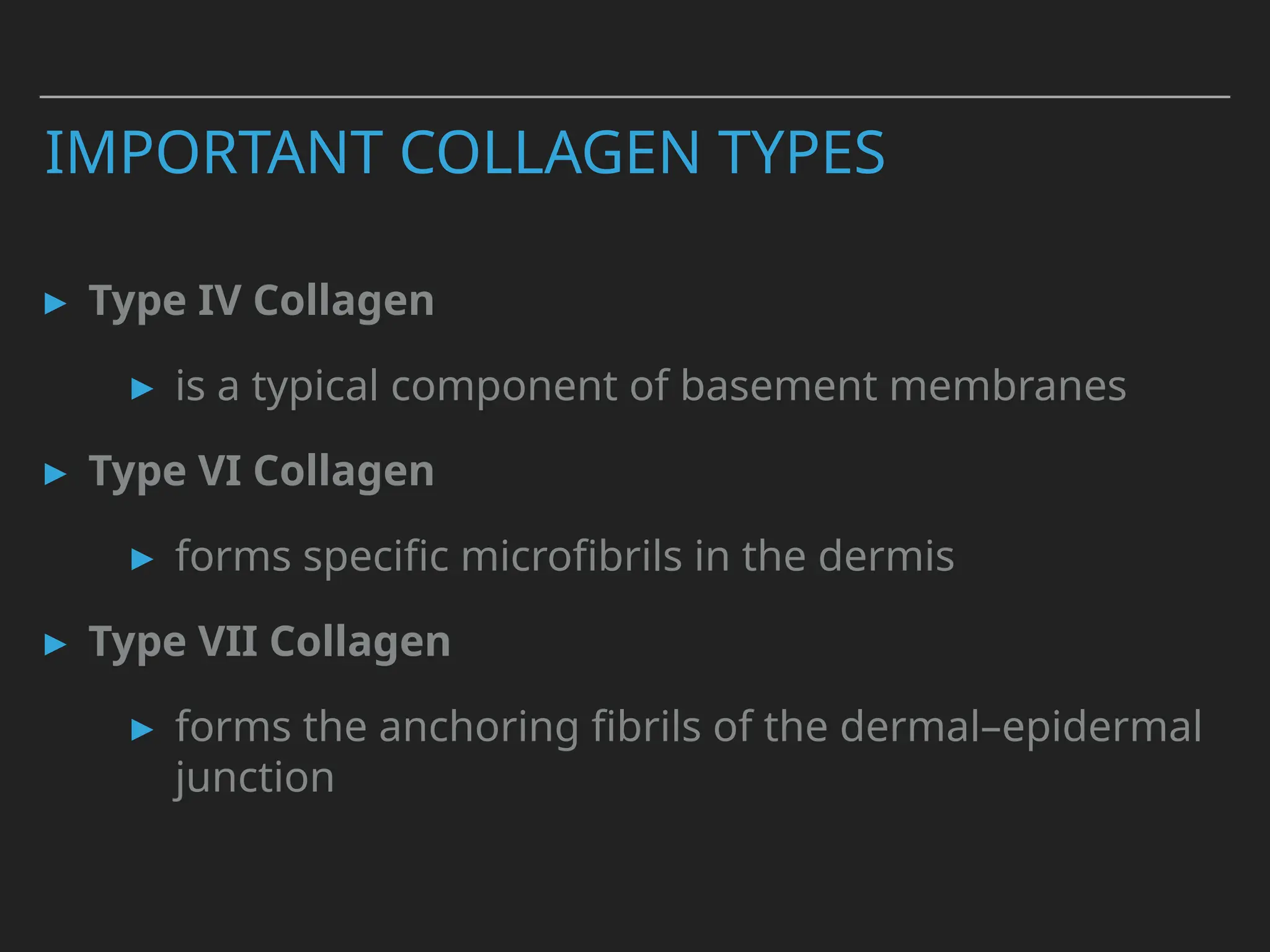
▸ Type IV Collagen
▸ is a typical component of basement membranes
▸ Type VI Collagen
▸ forms specific microfibrils in the dermis
▸ Type VII Collagen
▸ forms the anchoring fibrils of the dermal–epidermal
junction
IMPORTANT COLLAGEN TYPES
▸ Type XVII Collagen
▸ Also known as Bullous Pemphigoid Antigen 2
▸ It is a transmembrane collagen
▸ Component of the anchoring filaments that bind the
basal keratinocytes to the lamina densa (basement
membrane proper).
PRODUCTION OF COLLAGEN
▸ Most collagens in the skin are products of dermal fibroblasts.
Exceptions include:
▸ Collagen XVII
▸ a surface component of epidermal keratinocytes
▸ Collagen VII
▸ which can be synthesized by both Keratinocytes and fibroblasts
▸ Collagens VIII and XVIII
▸ which are produced by endothelial cells
COMPONENTS OF THE ECM: ELASTIC
FIBERS
▸ The elasticity of many tissues, including the skin,
depends upon the structure of elastic fibers.
▸ They can be stretched many times (by 100% or more) and
still return to their original form.
▸ The concentration of elastic fibers is highest in the aorta
and arterial blood vessels and in the lungs
▸ The main components of elastic fibers are ELASTIN and
MICROFIBRILS
COMPONENTS OF THE ECM: ELASTIC
FIBERS
▸ Forms 1%–2% of the total dry weight of dermis
▸ Lysyl oxidase, the same copper-dependent enzyme that
catalyzes collagen cross-linking, catalyzes the formation
of desmosine cross-links between elastin molecules,
which account for both the elasticity and insolubility of
elastic fibers.
COMPONENTS OF THE ECM: ELASTIC
FIBERS
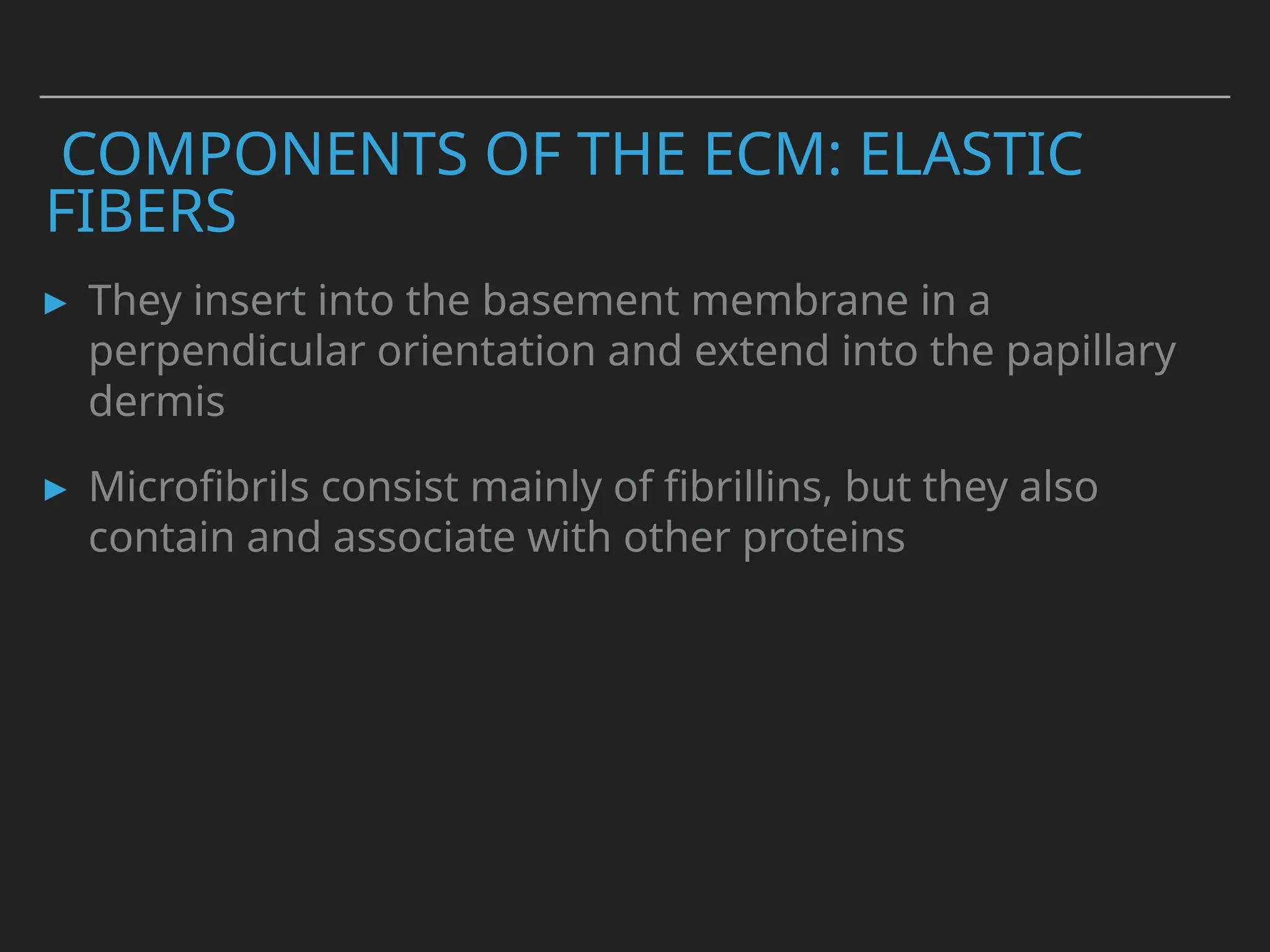
▸ They insert into the basement membrane in a
perpendicular orientation and extend into the papillary
dermis
▸ Microfibrils consist mainly of fibrillins, but they also
contain and associate with other proteins
COMPONENTS OF THE ECM: THE EXTRA-
FIBRILLAR MATRIX
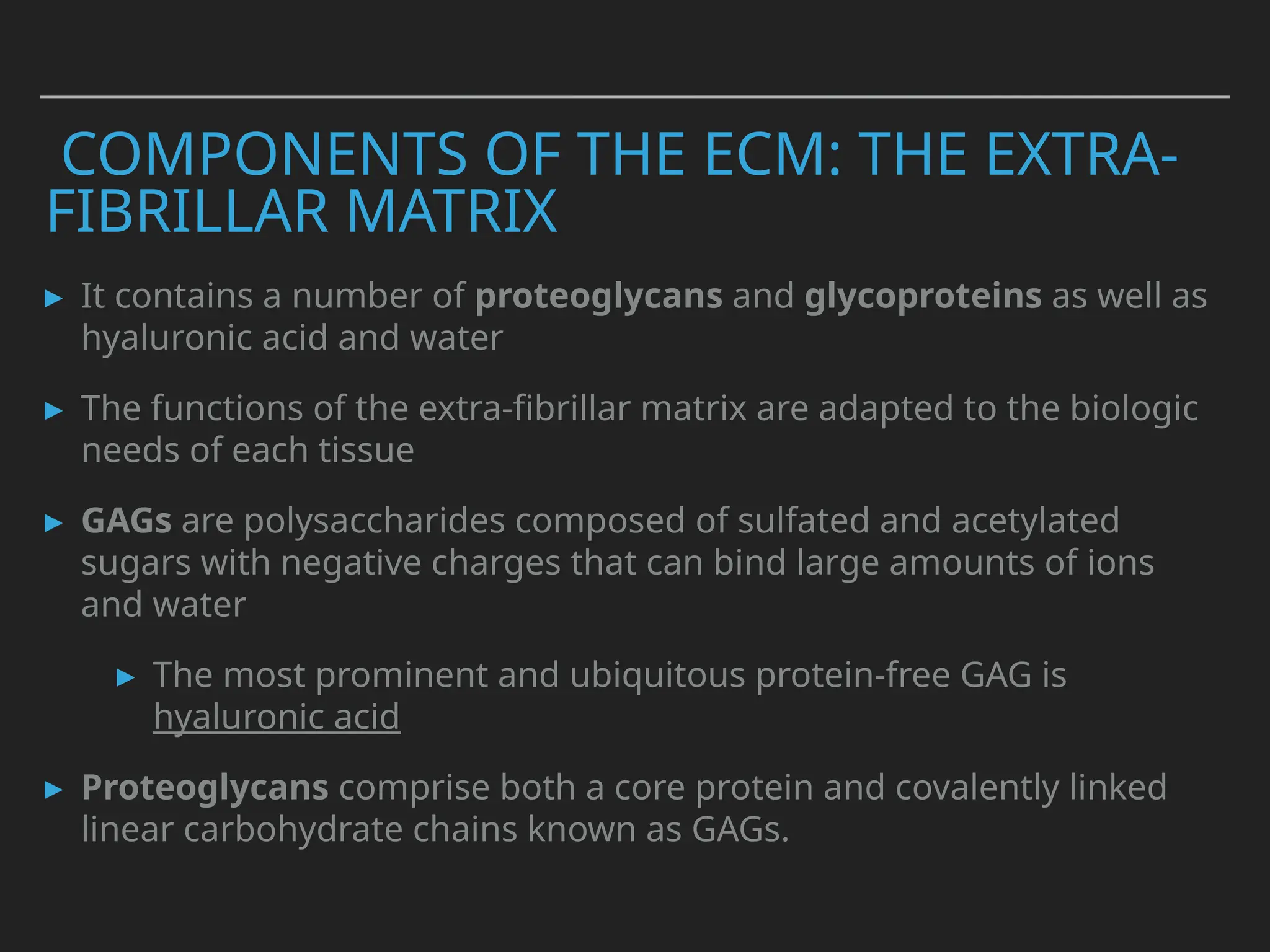
▸ It contains a number of proteoglycans and glycoproteins as well as
hyaluronic acid and water
▸ The functions of the extra-fibrillar matrix are adapted to the biologic
needs of each tissue
▸ GAGs are polysaccharides composed of sulfated and acetylated
sugars with negative charges that can bind large amounts of ions
and water
▸ The most prominent and ubiquitous protein-free GAG is
hyaluronic acid
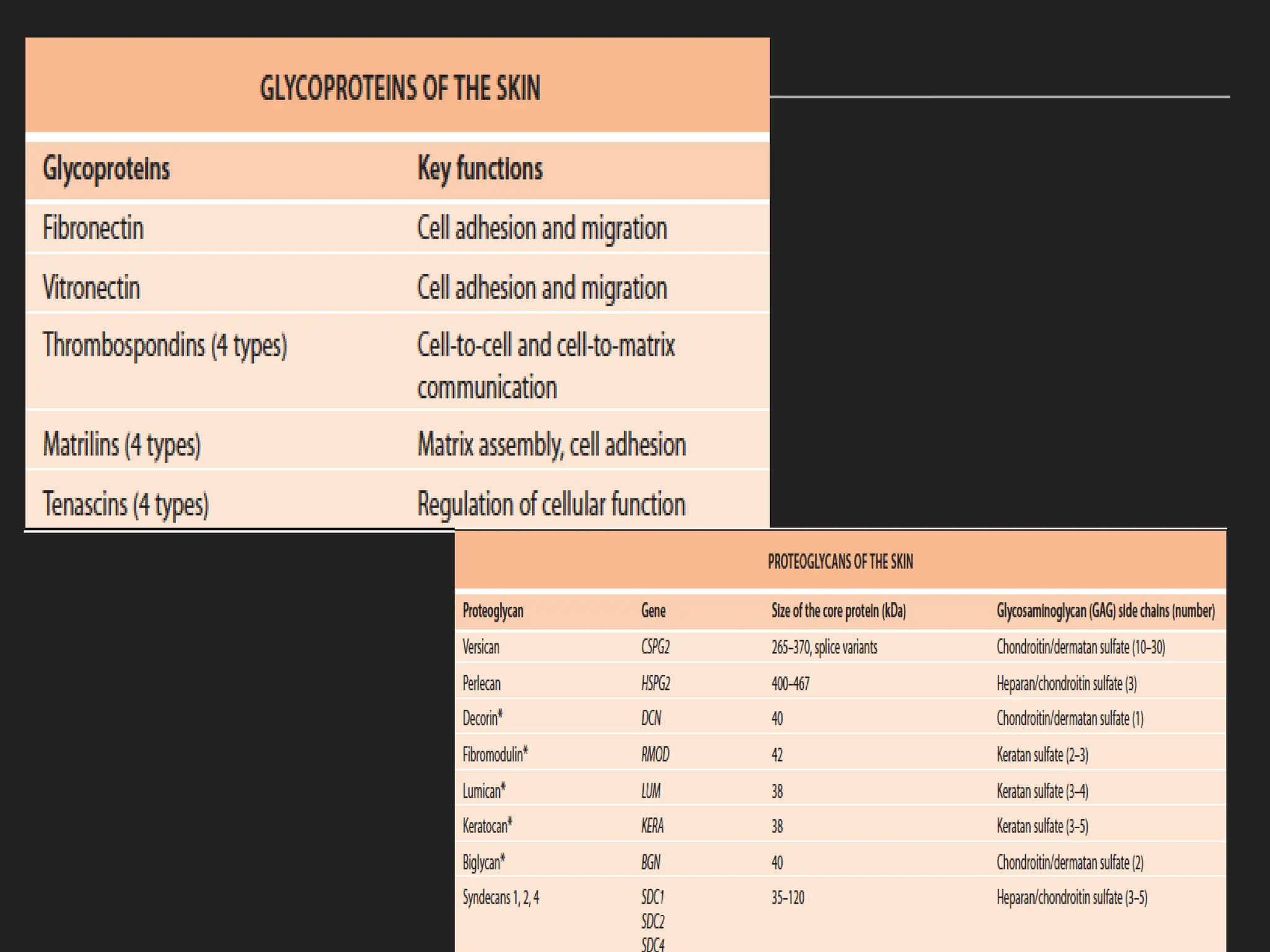
▸ Proteoglycans comprise both a core protein and covalently linked
linear carbohydrate chains known as GAGs.
TEXT
TEXT
COMPONENTS OF THE ECM: THE EXTRA-
FIBRILLAR MATRIX
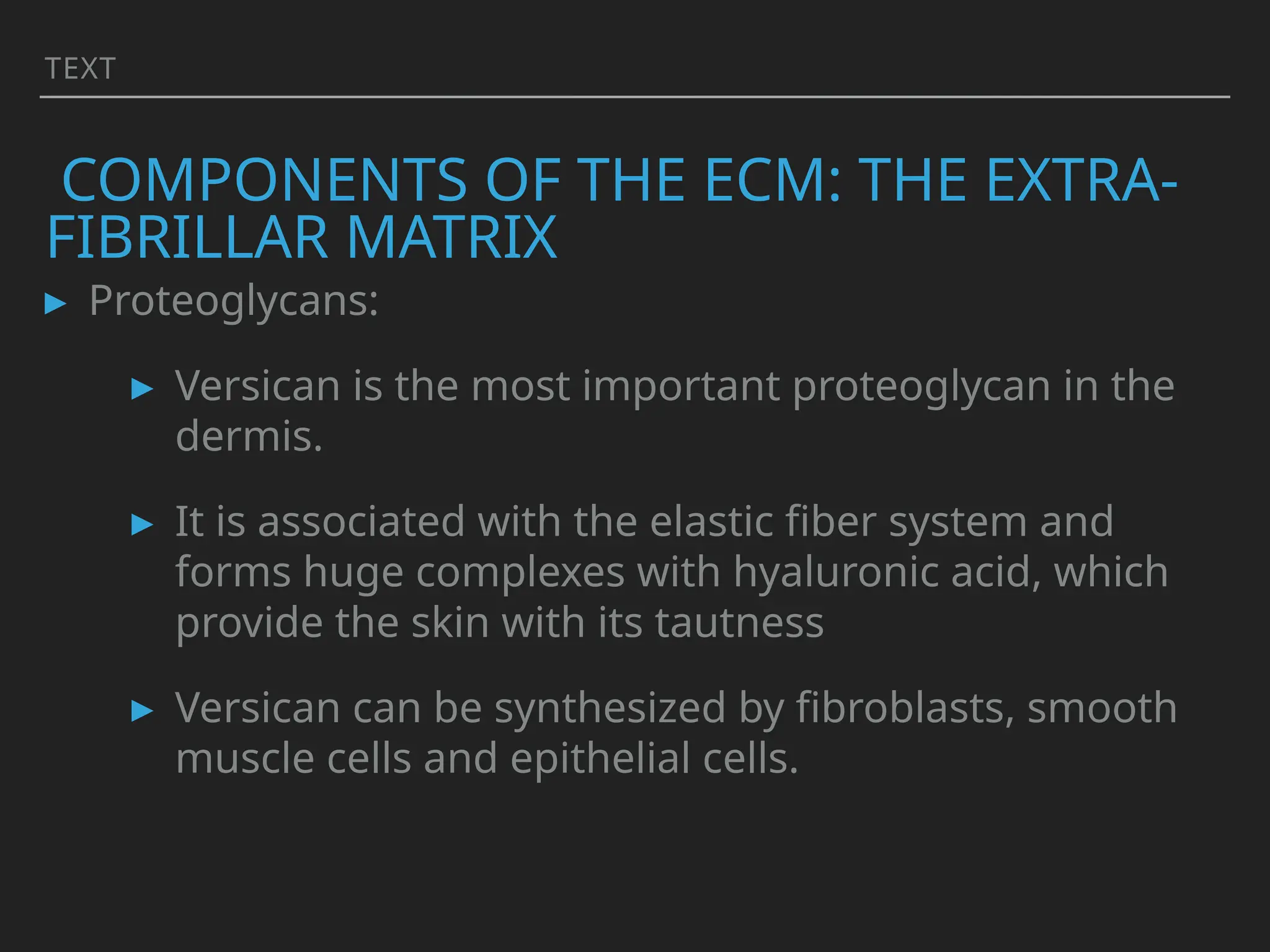
▸ Proteoglycans:
▸ Versican is the most important proteoglycan in the
dermis.
▸ It is associated with the elastic fiber system and
forms huge complexes with hyaluronic acid, which
provide the skin with its tautness
▸ Versican can be synthesized by fibroblasts, smooth
muscle cells and epithelial cells.
DISEASES RELATED TO DEFECTS
IN ECM
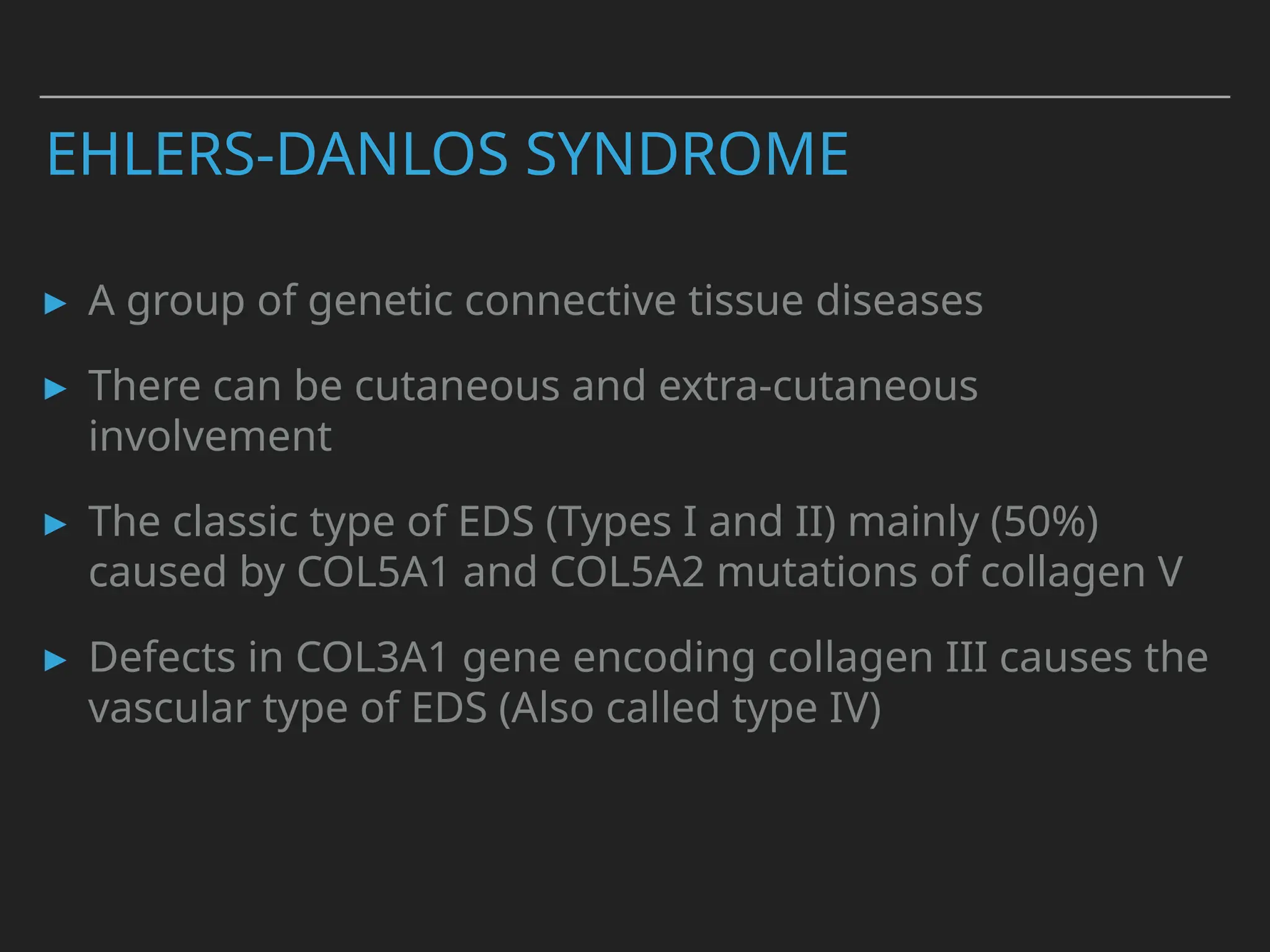
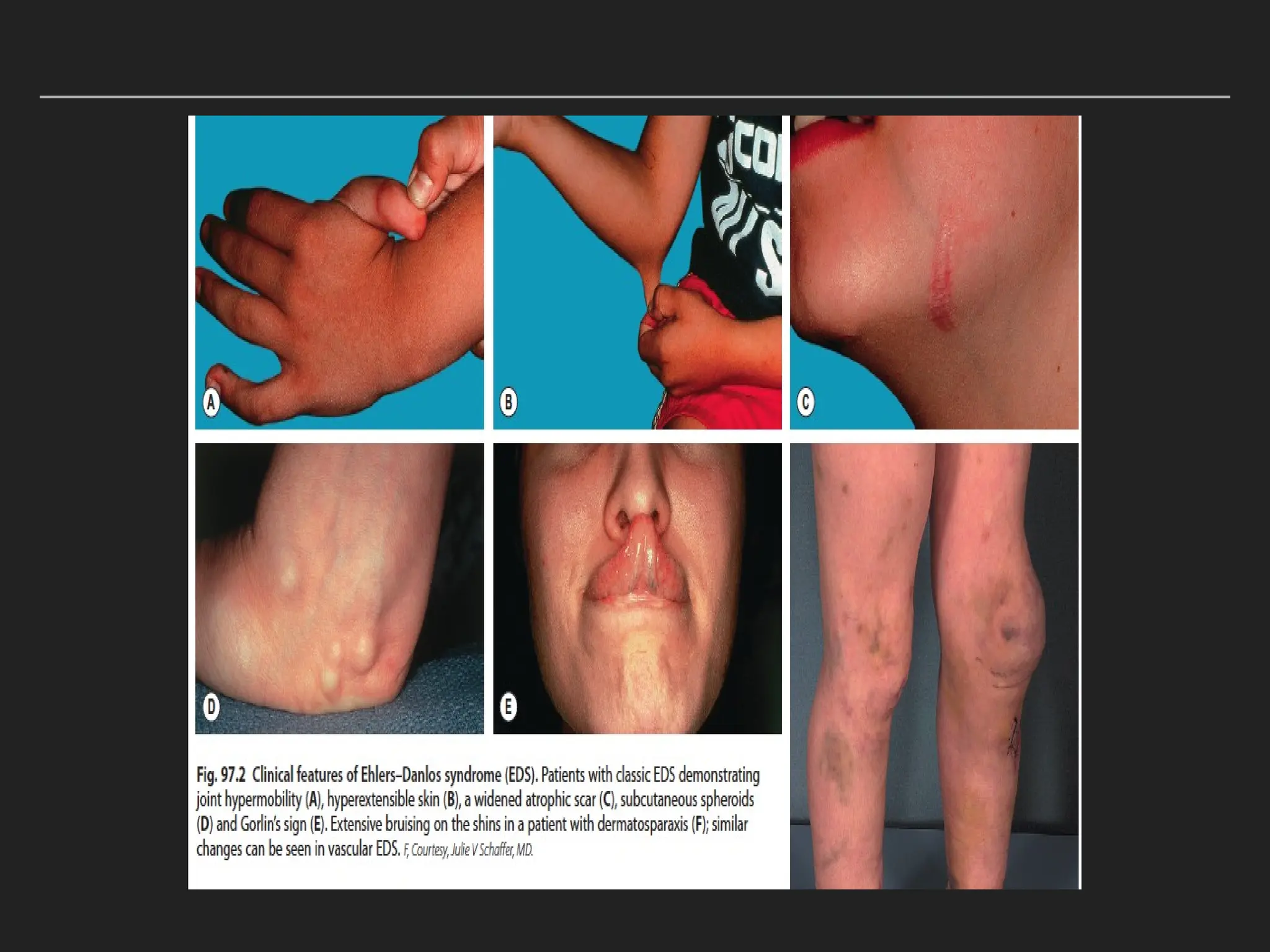
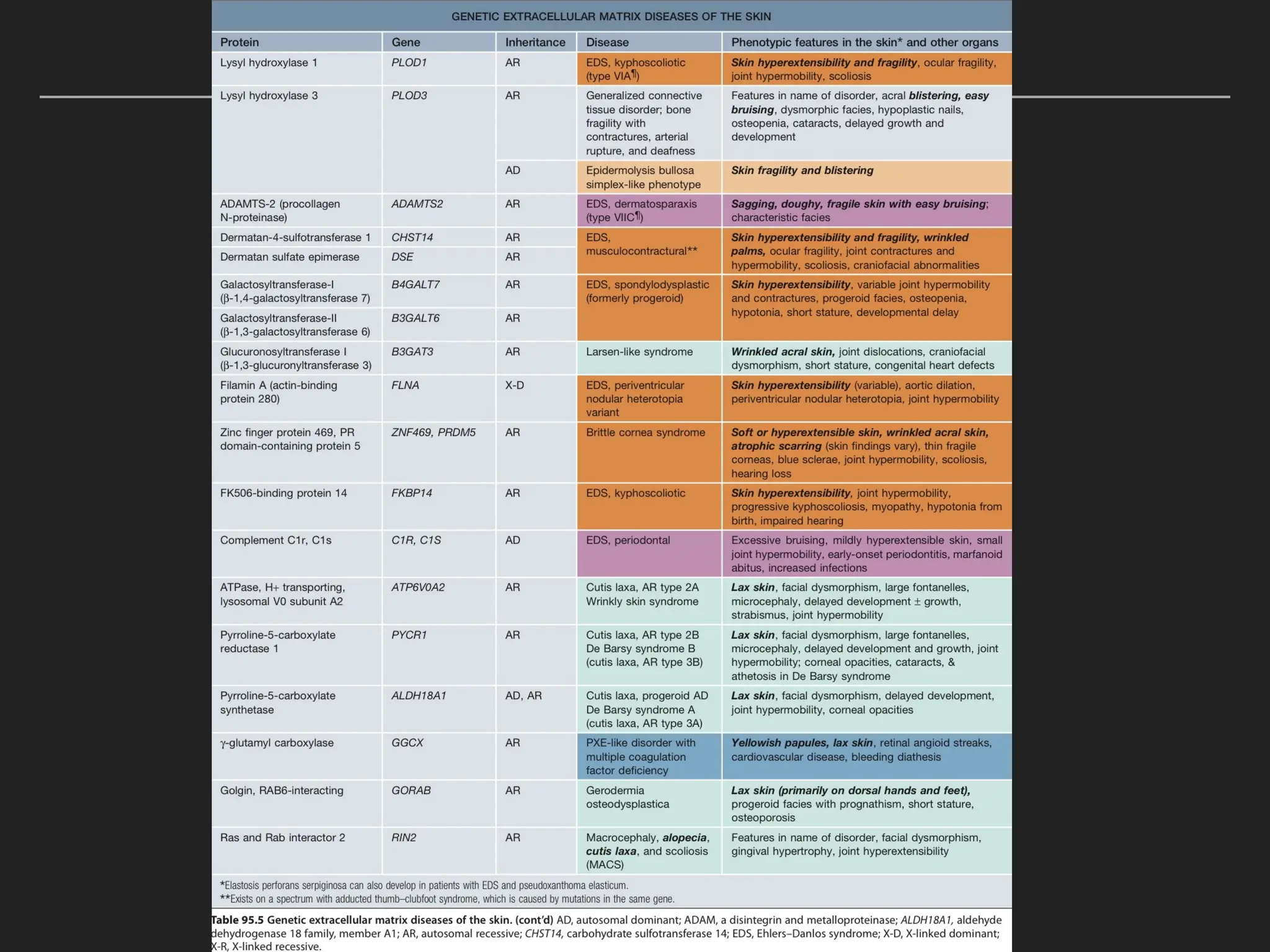
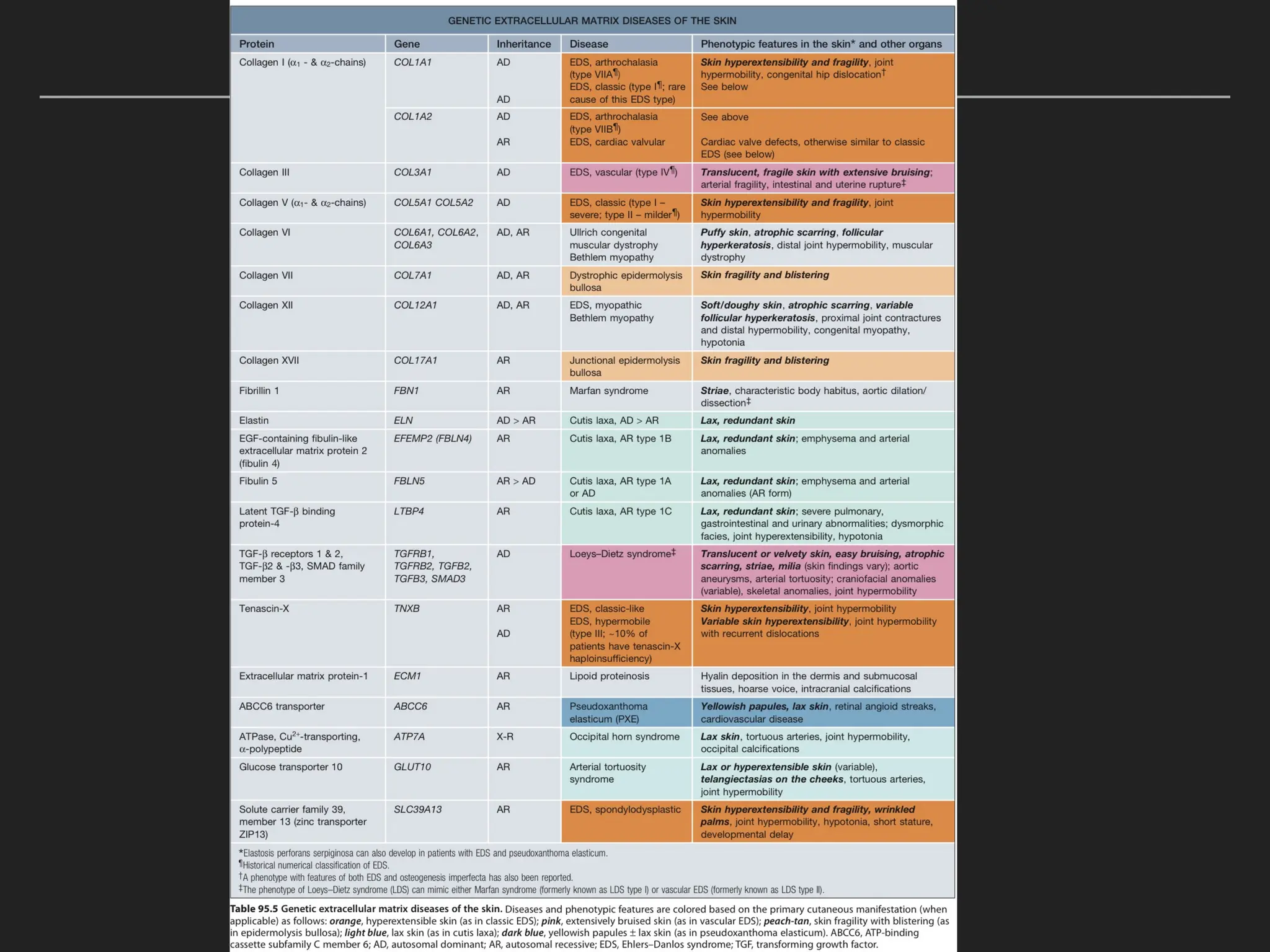
EHLERS-DANLOS SYNDROME
▸ A group of genetic connective tissue diseases
▸ There can be cutaneous and extra-cutaneous
involvement
▸ The classic type of EDS (Types I and II) mainly (50%)
caused by COL5A1 and COL5A2 mutations of collagen V
▸ Defects in COL3A1 gene encoding collagen III causes the
vascular type of EDS (Also called type IV)
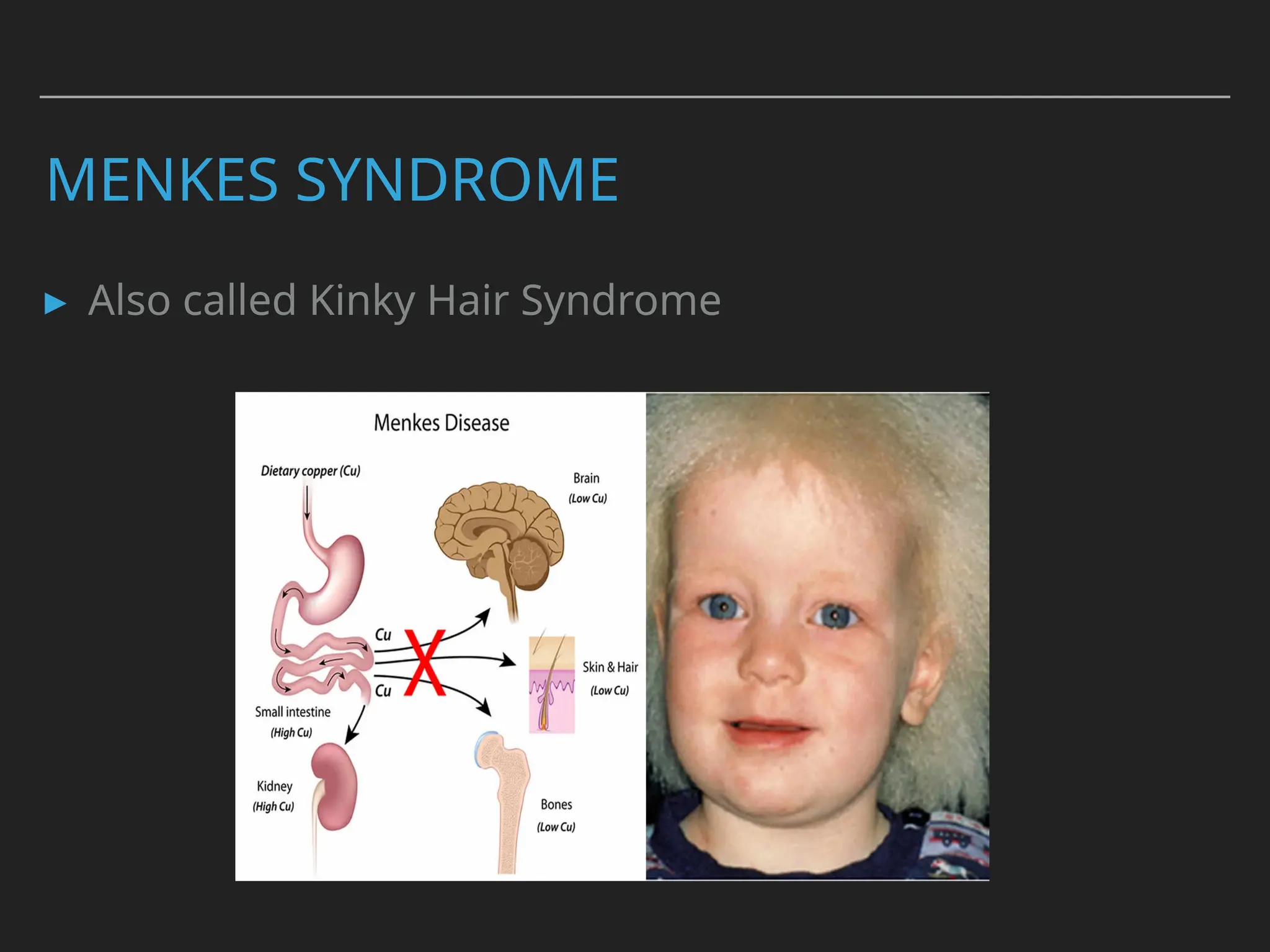
MENKES SYNDROME
▸ Also called Kinky Hair Syndrome
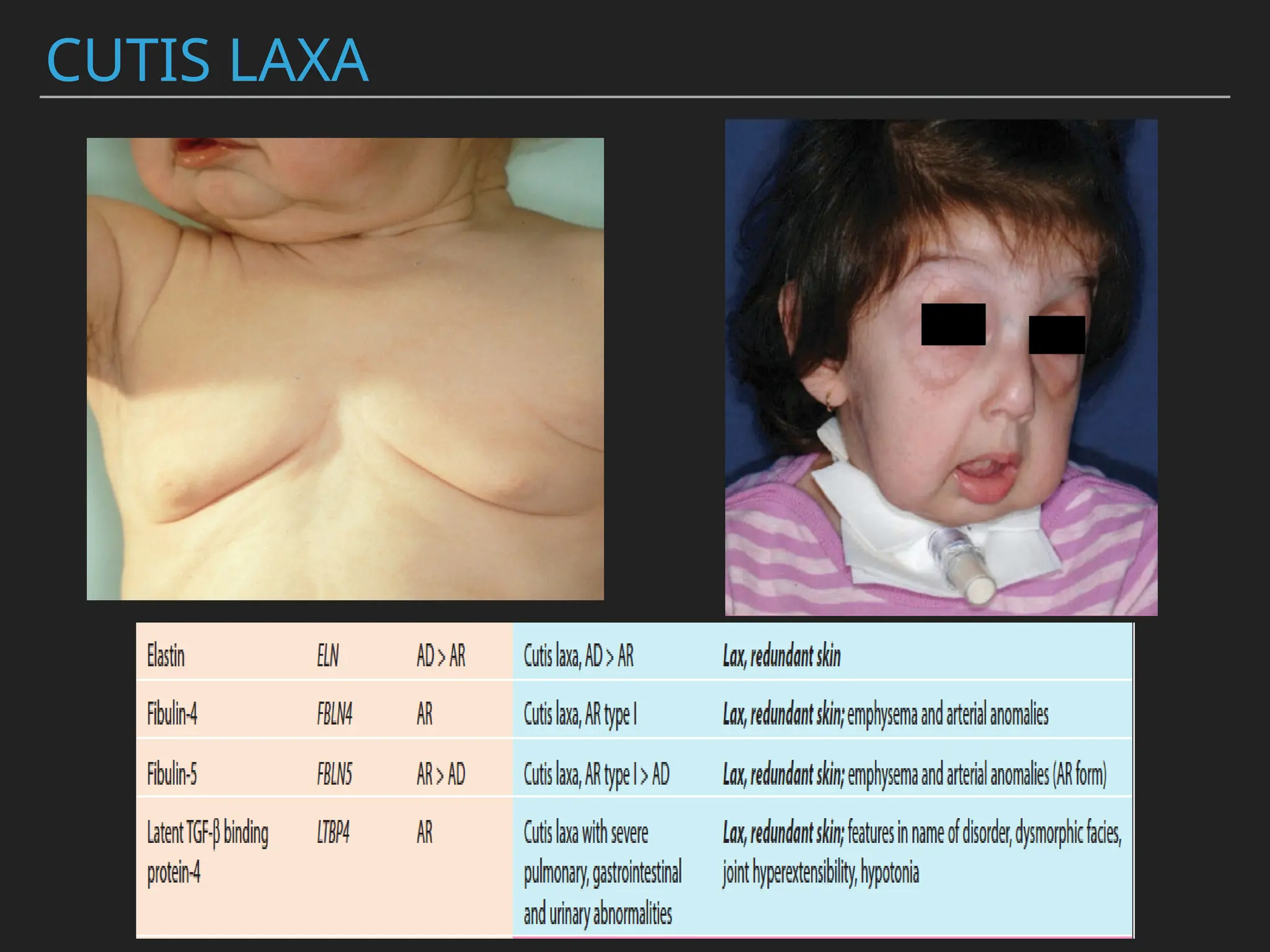
CUTIS LAXA
▸ Characterized by genetic heterogeneity and clinical
variability.
▸ In all cases, the primary diagnostic feature is: loose, hyper
extensible skin
▸ “Too large skin” appearance and premature aging
▸ Extra-cutaneous manifestations:
▸ Pulmonary emphysema, bladder diverticula and
pulmonary artery stenosis
CUTIS LAXA
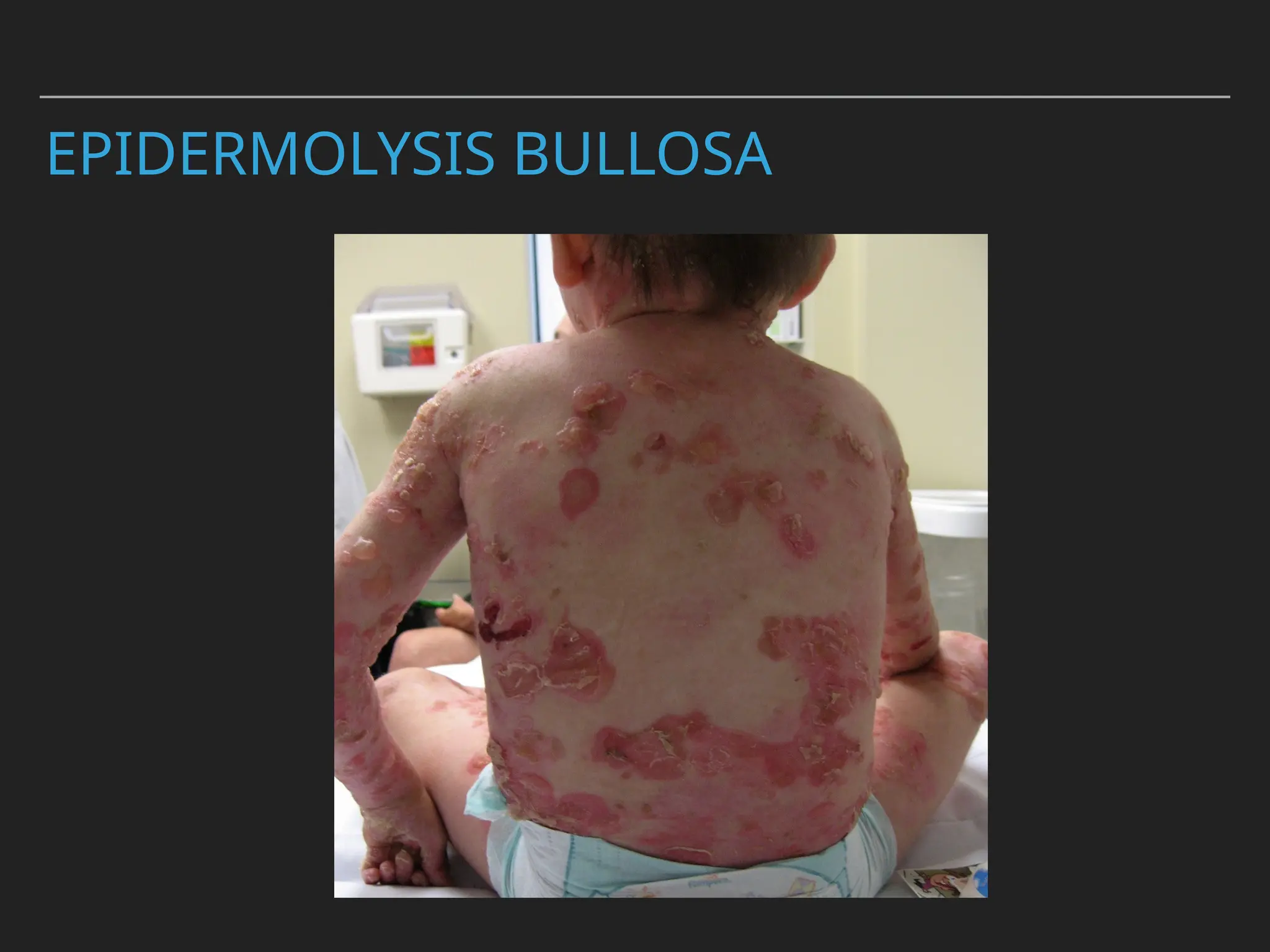
EPIDERMOLYSIS BULLOSA
▸ Diverse group of hereditary diseases characterized by mechanical
fragility of the skin that results in cutaneous blister formation
▸ Mutations in the collagen VII gene (COL7A1) cause both dominant
and recessive forms of dystrophic EB
▸ cleavage occurs in the uppermost dermis (just below the lamina
densa)
▸ Mutations in the collagen XVII gene (COL17A1) can cause junctional
EB
▸ cleavage within the lamina lucida of the epidermal basement
membrane
EPIDERMOLYSIS BULLOSA
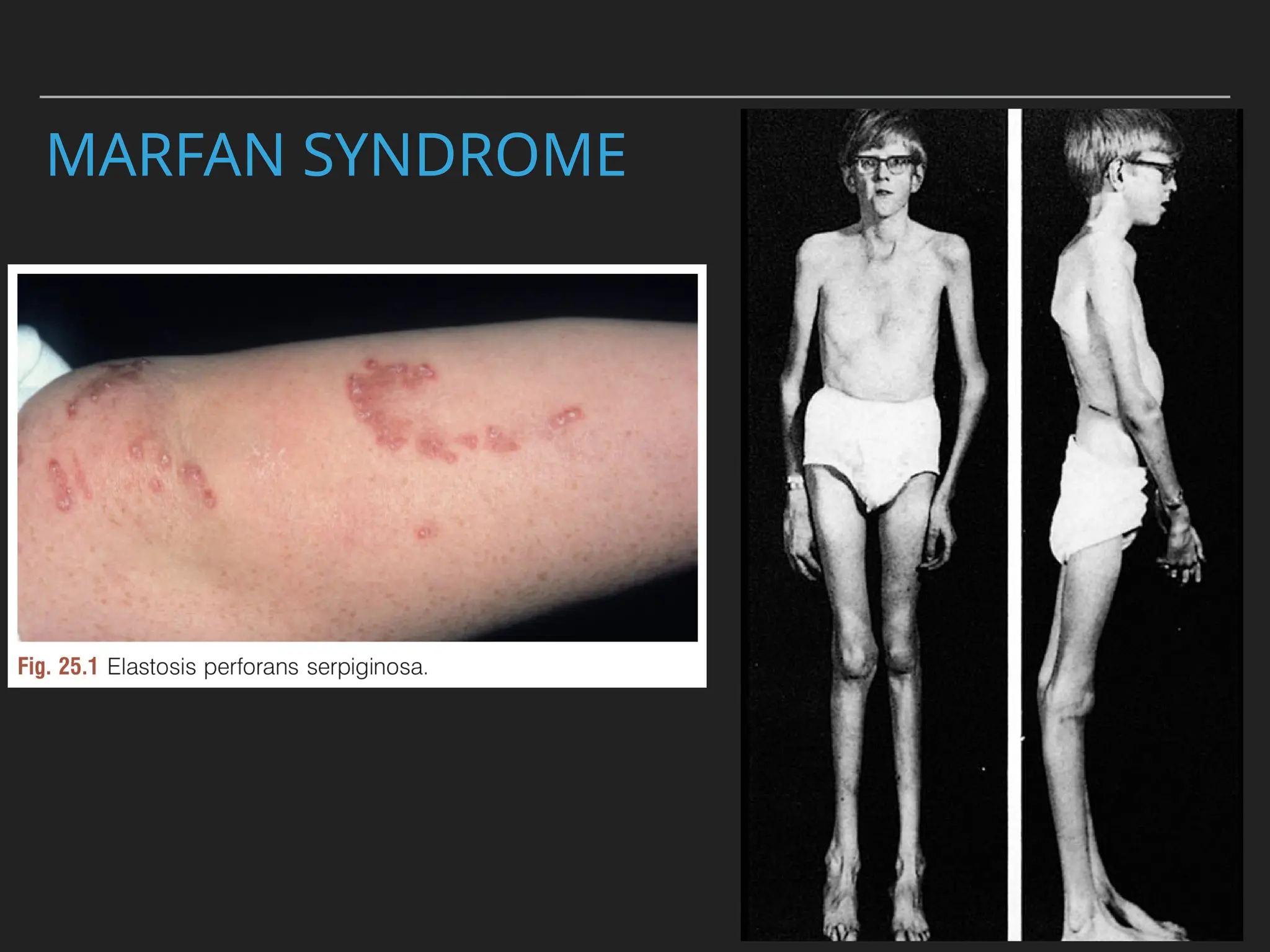
MARFAN SYNDROME
▸ Caused by Fibrillin -1 mutation (Fibrillin-1 is a component
of microfibrils)
▸ An autosomal dominant disorder
▸ Connective tissue weakness of the: skin, skeletal, ocular
and cardiovascular Systems
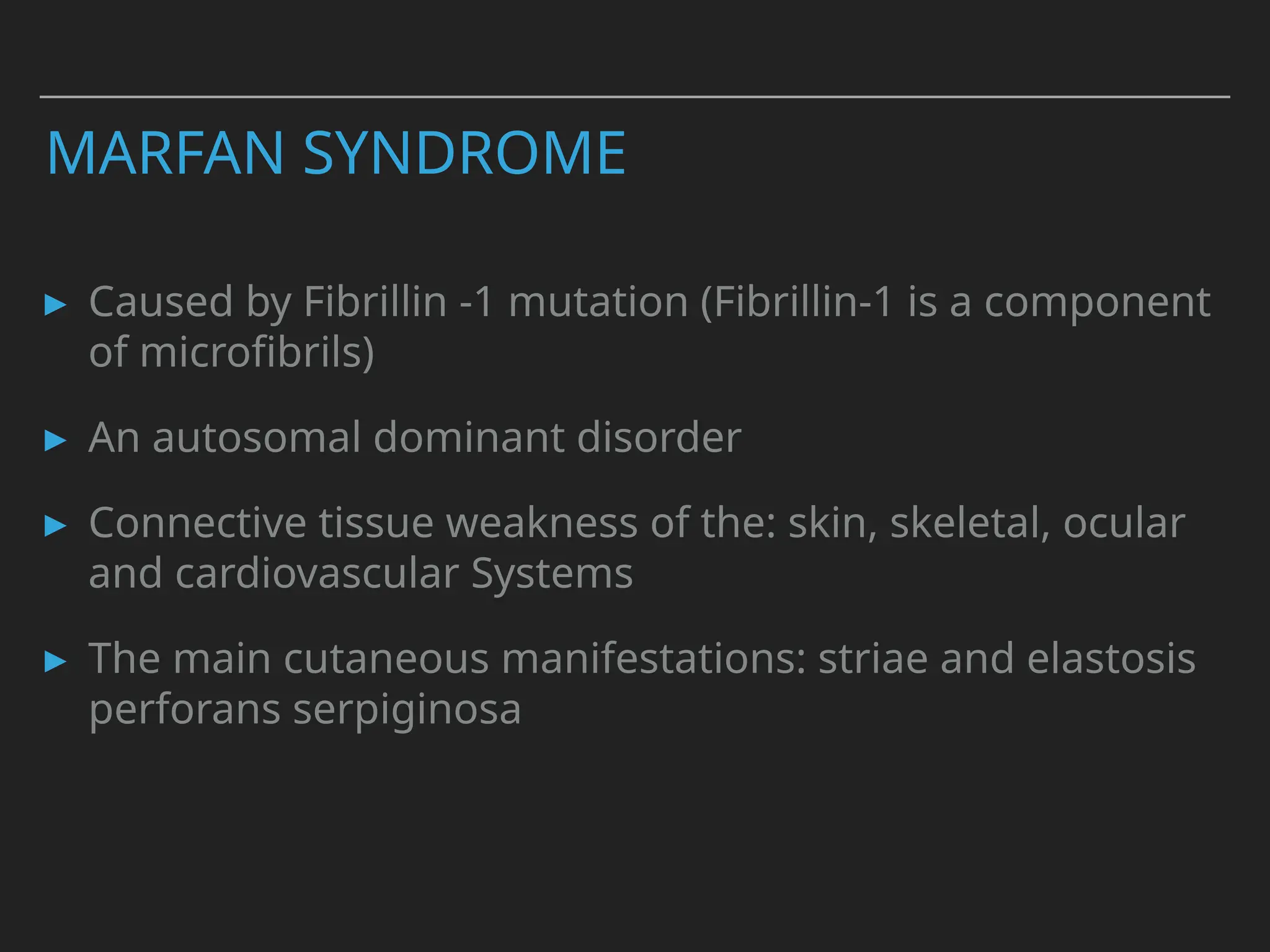
▸ The main cutaneous manifestations: striae and elastosis
perforans serpiginosa
MARFAN SYNDROME
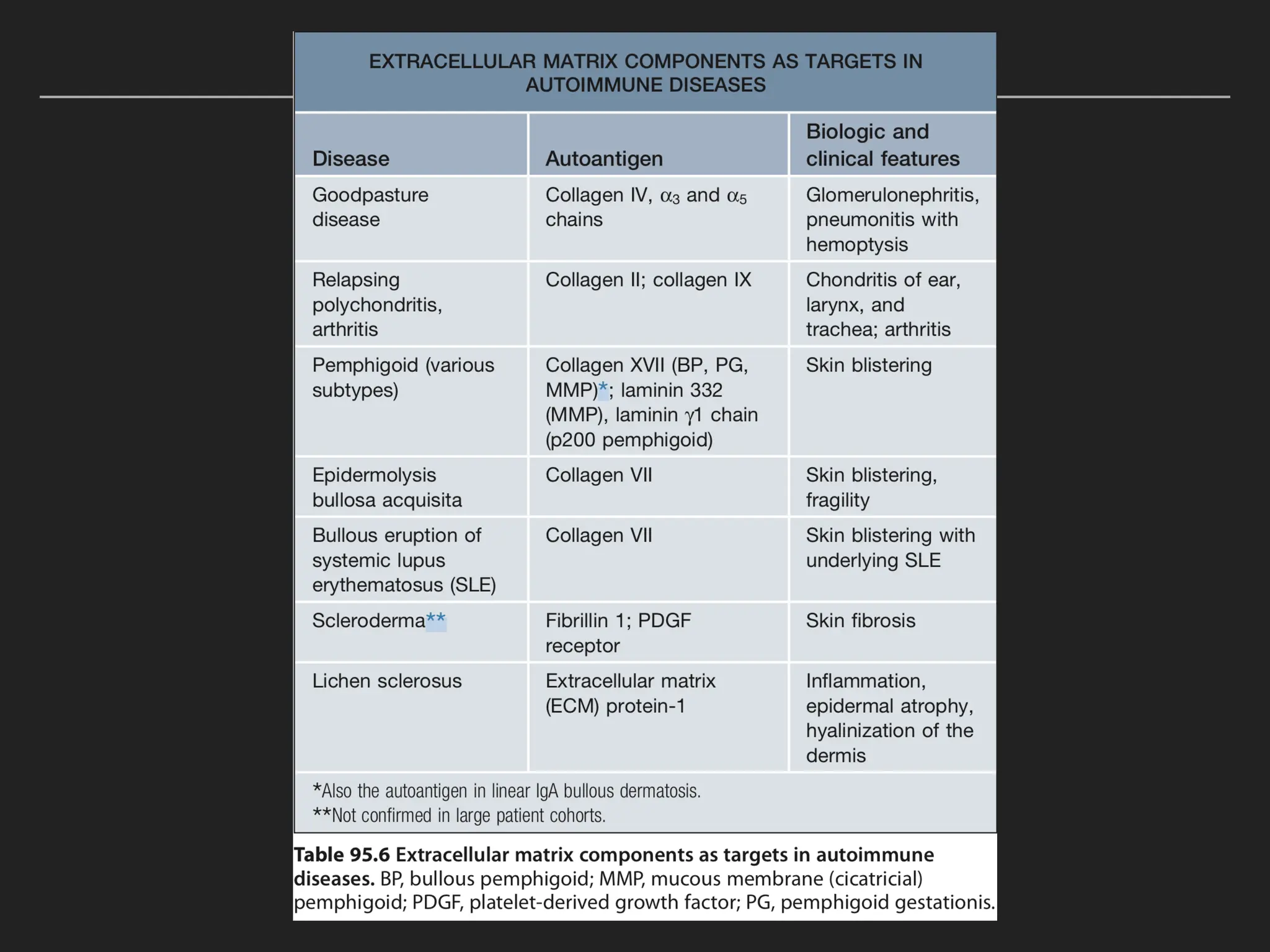
DISEASES RELATED TO
AUTOIMMUNE PHENOMENA
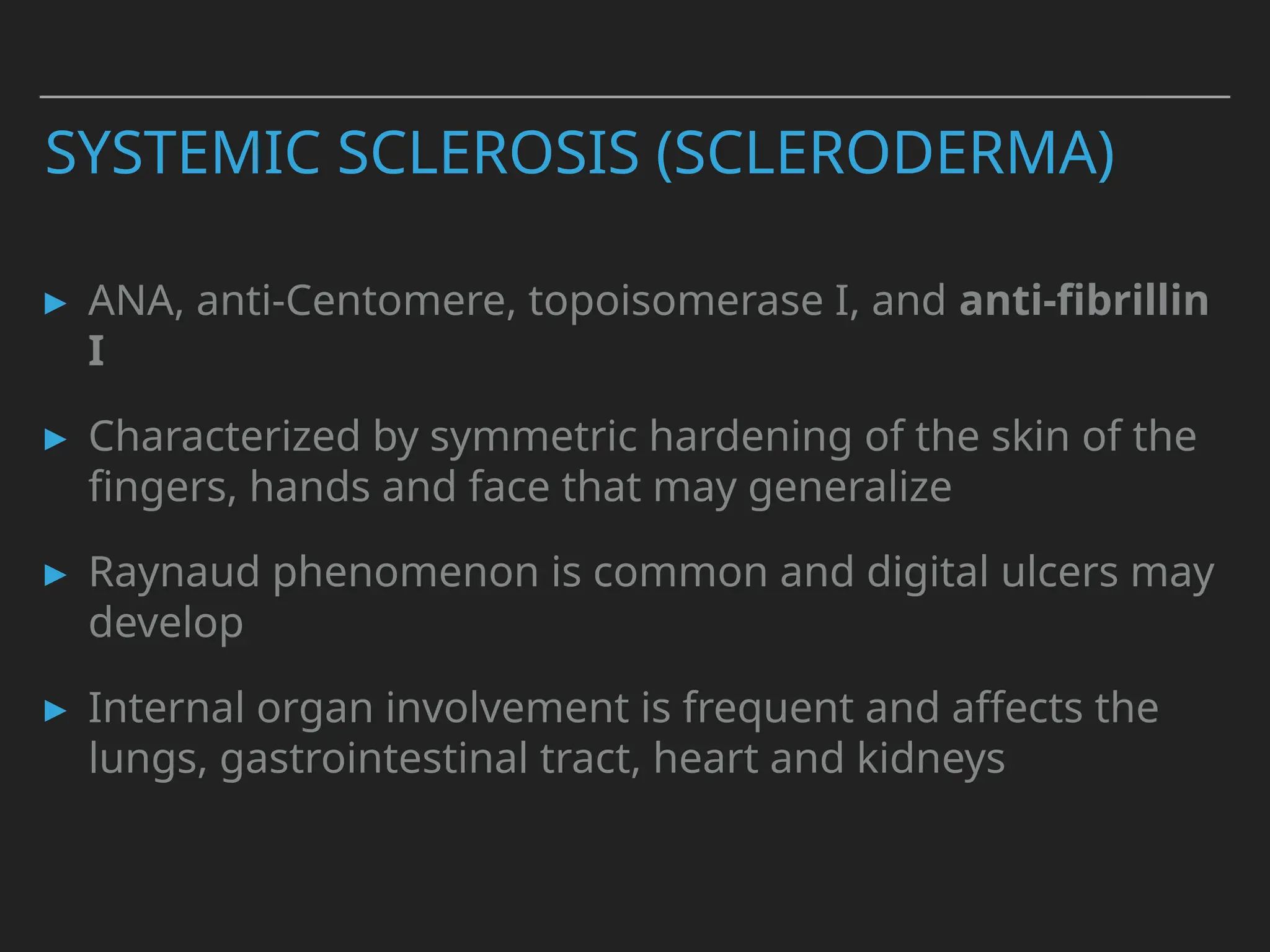
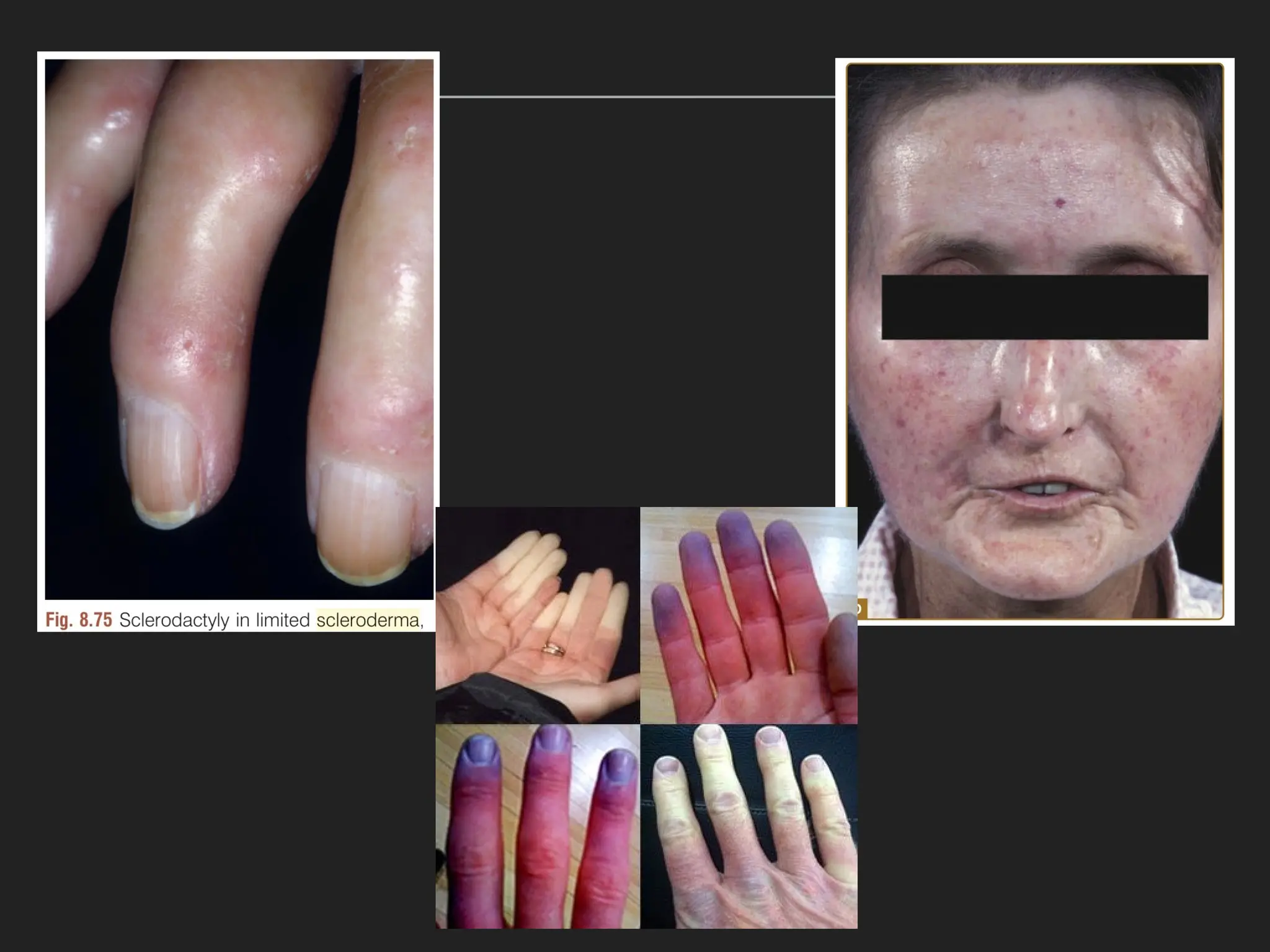
SYSTEMIC SCLEROSIS (SCLERODERMA)
▸ ANA, anti-Centomere, topoisomerase I, and anti-fibrillin
I
▸ Characterized by symmetric hardening of the skin of the
fingers, hands and face that may generalize
▸ Raynaud phenomenon is common and digital ulcers may
develop
▸ Internal organ involvement is frequent and affects the
lungs, gastrointestinal tract, heart and kidneys
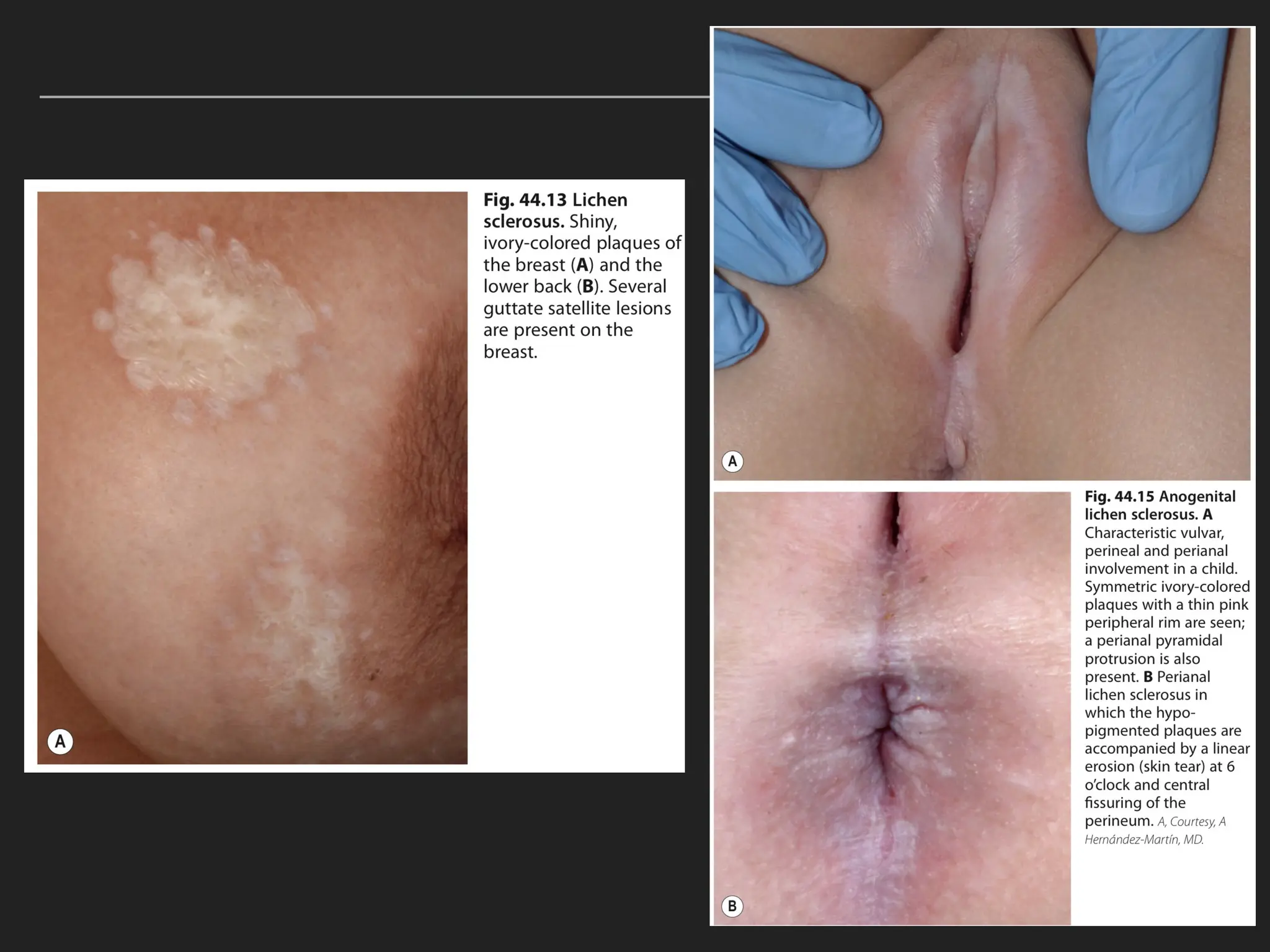
LICHEN SCLEROSIS
▸ Most commonly affects female or male genitalia, less
often extra-genital skin, no systemic manifestations
▸ May cause scarring of the vaginal introitus or phimosis
▸ Severe pruritus may occur
▸ Autoantibodies against extracellular matrix protein 1
(ECM-1)
▸ The extracellular matrix-1 (ECM-1) protein is mutated in
patients with lipoid proteinosis
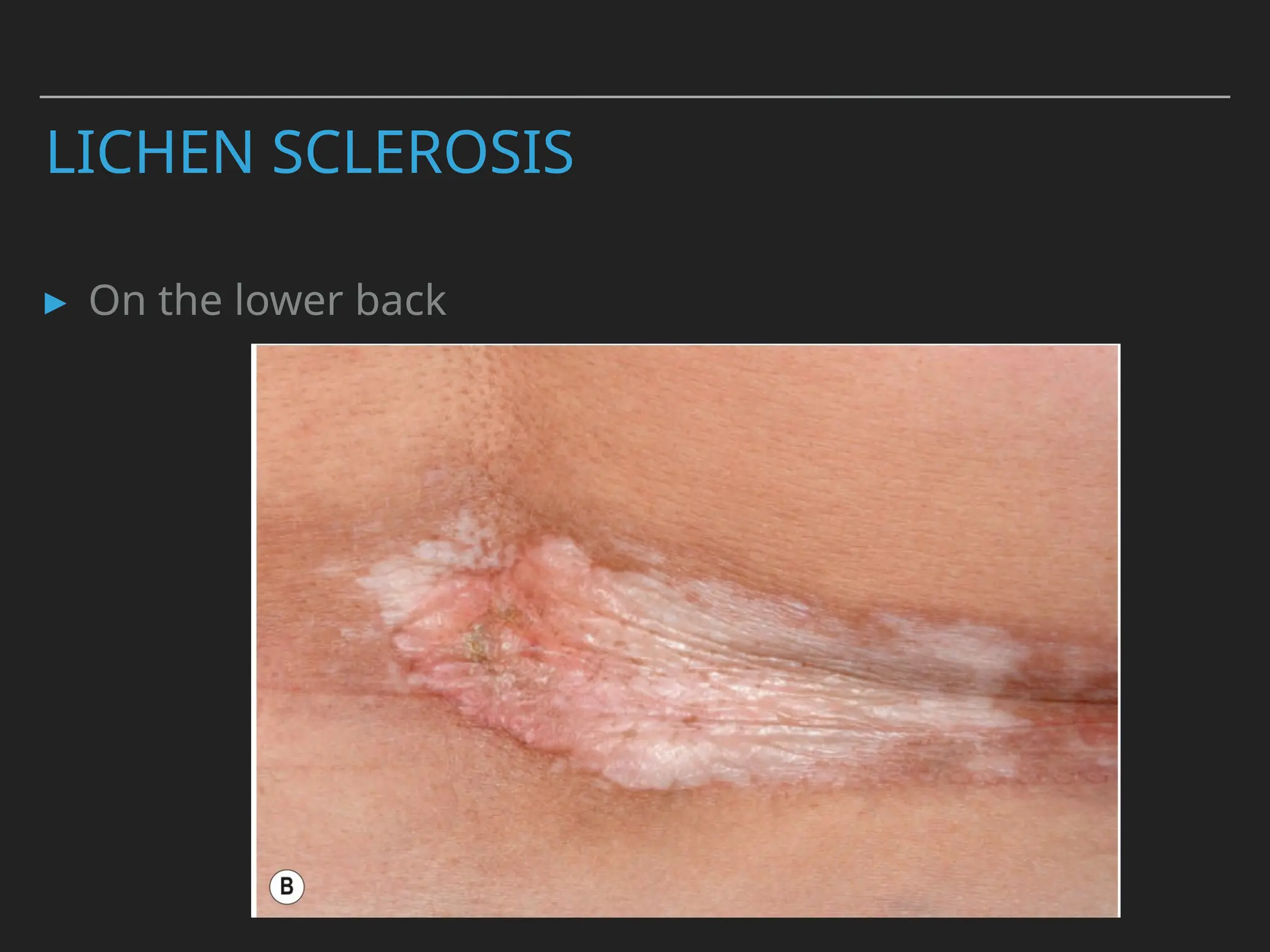
LICHEN SCLEROSIS
▸ On the lower back
MCQS
1. What is the most abundant amino acid in collagen’s
structure?
A. Lysine
B. Proline
C. Glycine
D. Valine
MCQS
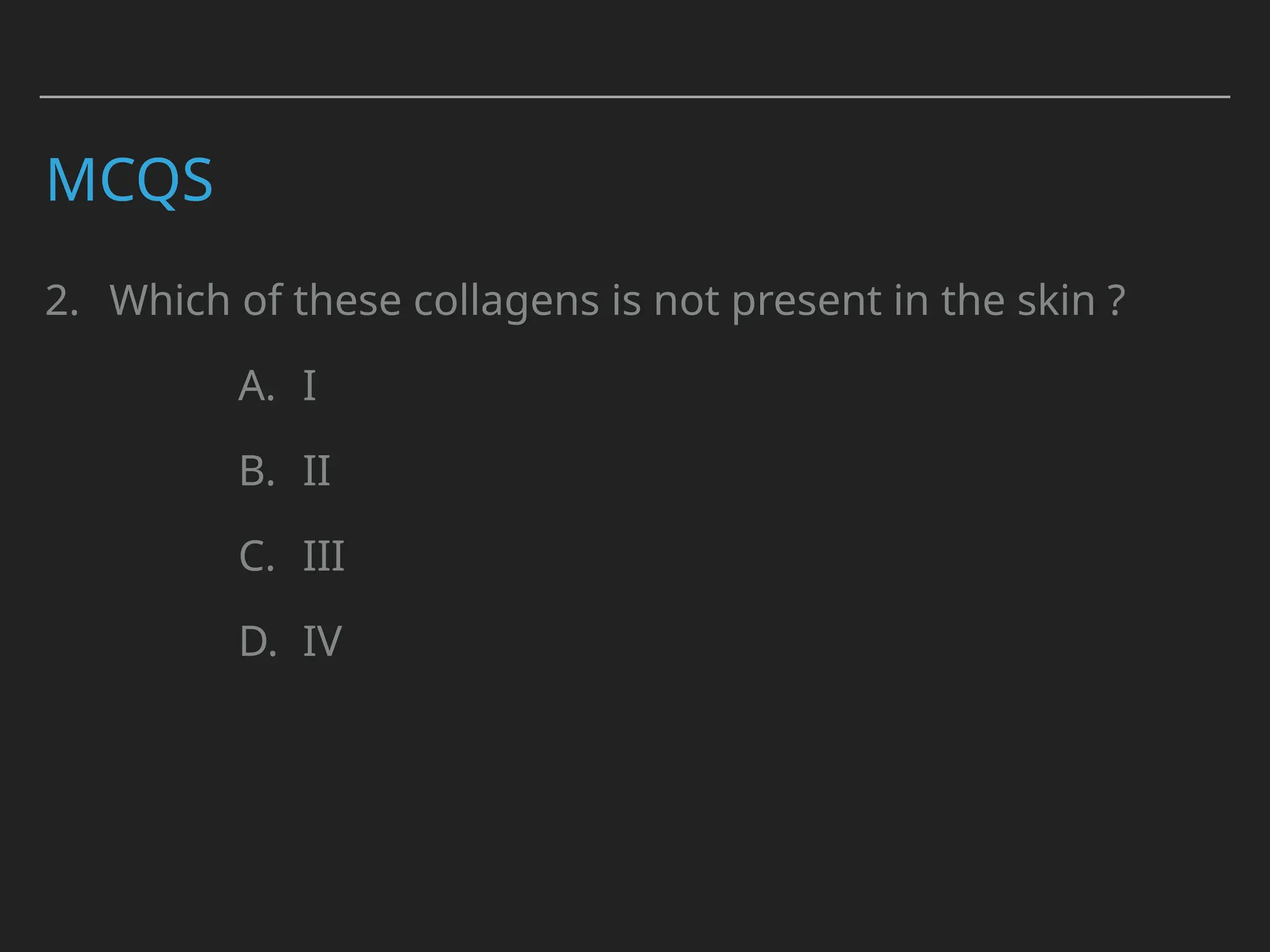
2. Which of these collagens is not present in the skin ?
A. I
B. II
C. III
D. IV
MCQS
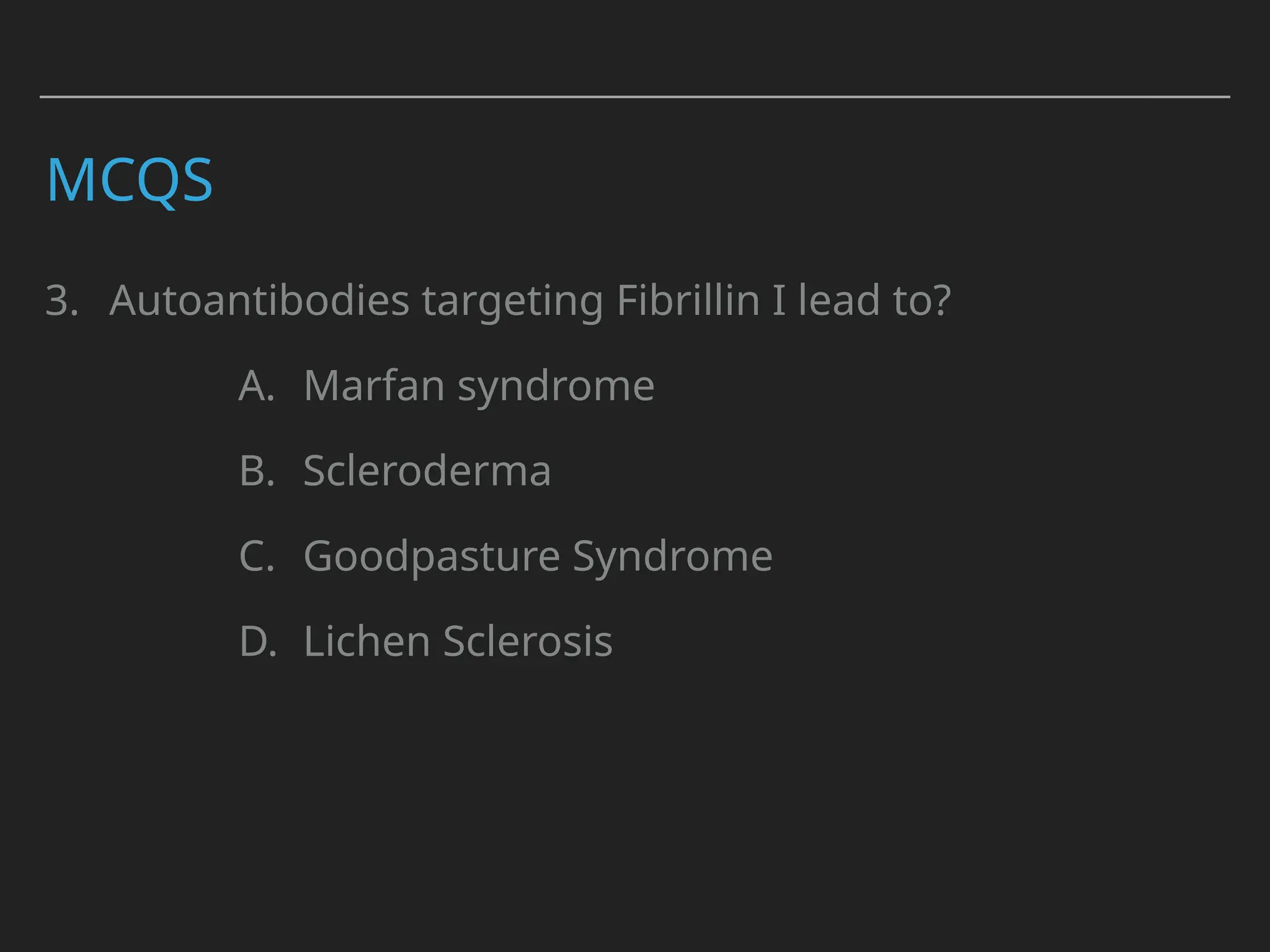
3. Autoantibodies targeting Fibrillin I lead to?
A. Marfan syndrome
B. Scleroderma
C. Goodpasture Syndrome
D. Lichen Sclerosis
MCQS
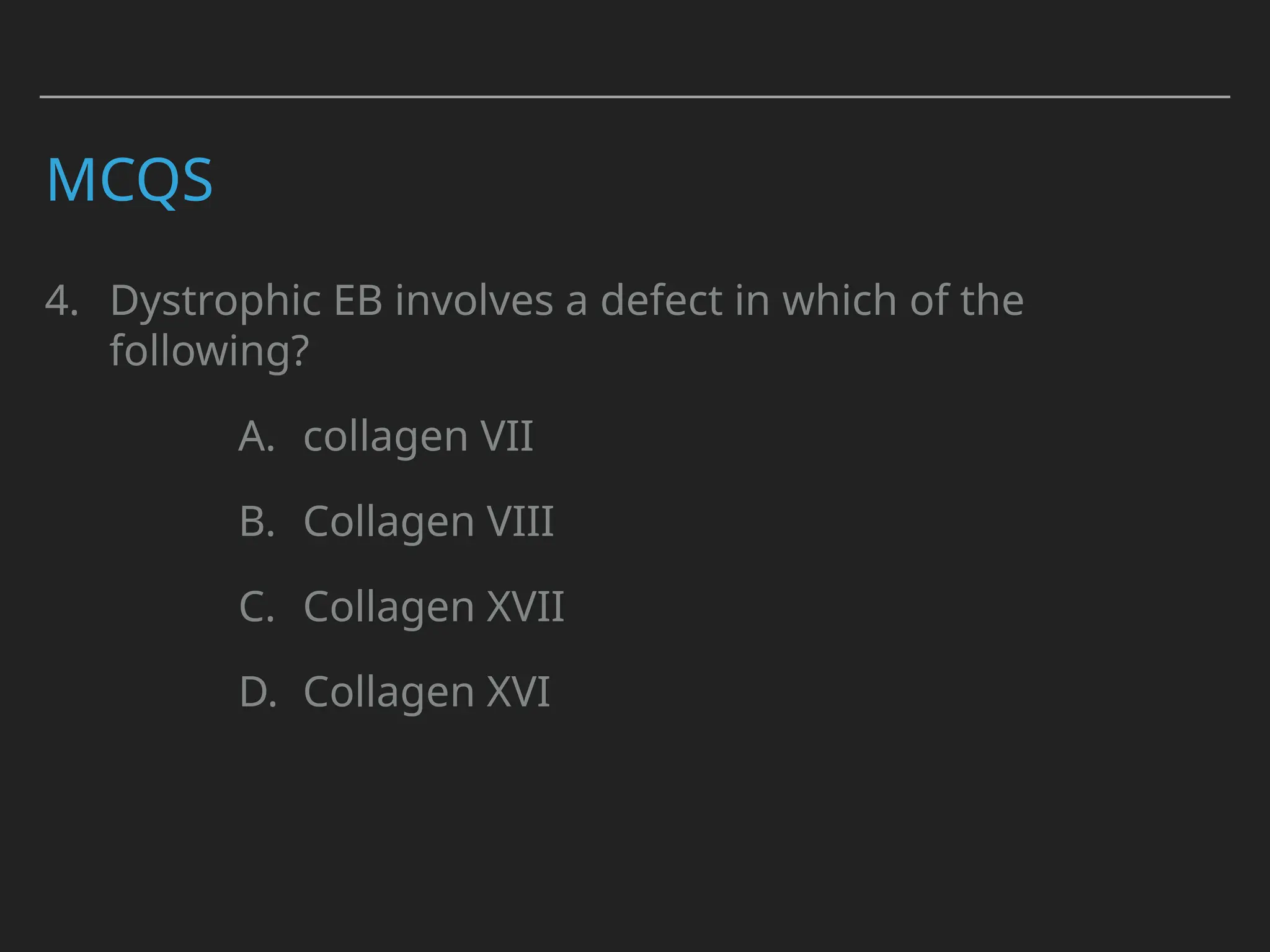
4. Dystrophic EB involves a defect in which of the
following?
A. collagen VII
B. Collagen VIII
C. Collagen XVII
D. Collagen XVI
MCQS
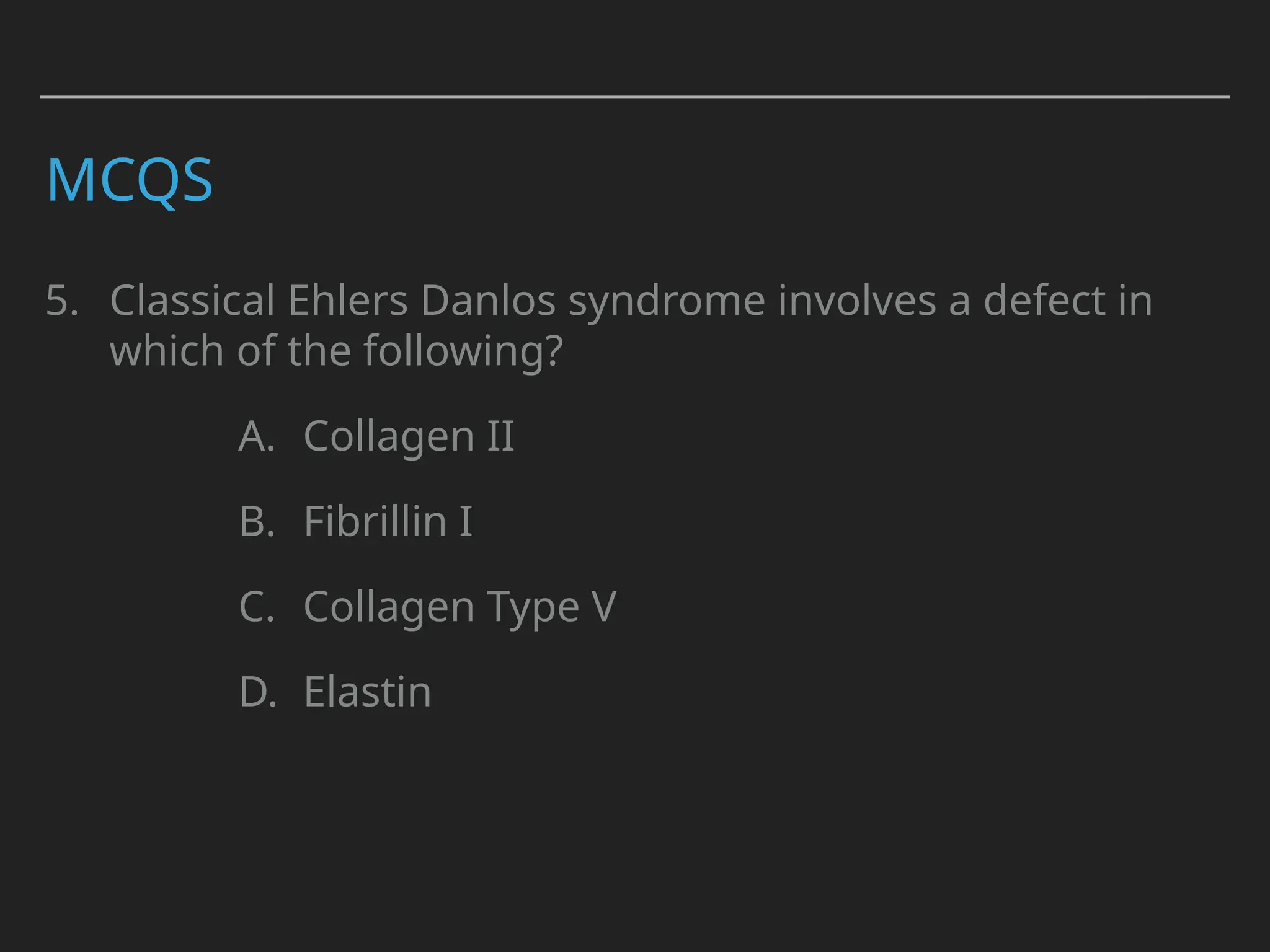
5. Classical Ehlers Danlos syndrome involves a defect in
which of the following?
A. Collagen II
B. Fibrillin I
C. Collagen Type V
D. Elastin
MCQS
6. Which of the following enzymes requires Vit C as a
cofactor?
A. prolyl-4-hydroxylase
B. Procollagen N-proteinas
C. Lysyl oxidase
D. Galactosyl transferase
▸ Thank You

Biology of the ExtraCellular Matrix - Functions of the ECM, Components of the ECM, Diseases Related to Defects in ECM

  • 1.
    BIOLOGY OF THE EXTRACELLULA R MATRIX ABDULRAHMANALOMAIR FIRST YEAR RESIDENT JOINT DERMATOLOGY PROGRAM, RIYADH
  • 2.
    OUTLINE ▸ Definitions ▸ Functionsof the ECM ▸ Components of the ECM ▸ Diseases Related to Defects in ECM ▸ Diseases Related to Autoimmune Phenomena
  • 3.
    DEFINITION ▸ ECM athree-dimensional network of extracellular macromolecules, such as collagen, enzymes, and glycoproteins, that provide structural and biochemical support of surrounding cells.
  • 4.
    FUNCTIONS OF THEECM ▸ It maintains tissue architecture and mediating a number of important biological events ▸ The Basement Membrane (BM) has important tissue specific properties that allow for particular cell attachments; regulate morphogenesis, differentiation, and barrier functions ▸ In the Dermis, the ECM maintains the elasticity, resilience, and tautness of the skin ▸ At the Dermal-Epidermal junction, specific basement membrane- associated strong aggregates ensure strong adhesion of the epidermis to the dermis
  • 5.
    FUNCTIONS OF THEECM ▸ Attachment of tissue-specific cells, leukocytes, tumor cells, and even micro-organisms ▸ Control cell proliferation, differentiation and migration. ▸ the ECM can function as a reservoir of information; certain proteoglycans and proteins bind growth factors. They will release and activate them as needed to control cellular functions
  • 6.
  • 7.
  • 8.
    COMPONENTS OF THEECM: COLLAGEN ▸ The main structural component of the extracellular protein of the human body ▸ The family currently includes 28 proteins , these proteins contain at least 43 distinct polypeptide chains, each encoded by a different gene ▸ 75% of the dry weight and 20–30% of the volume of the dermis
  • 9.
    COMPONENTS OF THEECM: COLLAGEN ▸ All collagens consist of 3 polypeptide chains, known as α- chains, which are folded into a triple helix ▸ In some collagens, the α-chains are identical (homotrimers), while others contain two or three different α-chains (heterotrimers)
  • 10.
    COMPONENTS OF THEECM: COLLAGEN ▸ In each chain, every third amino acid is glycine (Gly), and the sequence of an α-chain can be expressed as (Gly-X- Y)n where X and Y represent other amino acids ▸ The prototype collagen (type I) has an uninterrupted Gly- X-Y repeat sequence
  • 11.
    COMPONENTS OF THEECM: COLLAGEN ▸ The synthesis of collagen has 2 steps: ▸ Intracellular ▸ Extracellular
  • 12.
    BIOSYNTHESIS OF COLLAGEN: INTRACELLULARREACTIONS 1. Transcription of collagen α chain genes by mRNA 2. Translation of mRNA to polypeptide chain 3. Hydroxylation of certain Proline (Pro) and lysine (Lys) residues to 4- HydroxyPro, 3-HydroxyPro (Hyp), and Hydroxylysine (Hyl) (This step requires Vit C, if deficient —> Scurvy) 4. Glycosylation of some of the Hyl residues 5. formation of intra- and interchain disulfide bonds 6. folding of the triple helix 7. Secretion of Pro-Collagen from Golgi into outside of cell
  • 13.
    BIOSYNTHESIS OF COLLAGEN: EXTRACELLULARREACTIONS ▸ Cleavage of N & C terminal by Pro-collagen N-proteinase and Pro-collagen C-proteinase to form collagen. ▸ The formed collagen will be mixed with other collagens and non-collagenous components, and formation of covalent cross-links ▸ Cross-linking between collagen molecules involves catalyzed by Lysyl Oxidase, this enzyme requires Copper as a co-factor
  • 14.
  • 15.
  • 16.
  • 17.
    COLLAGEN FAMILY ▸ Theones in bold are present in the skin
  • 18.
    ▸ Type Icollagens ▸ is the major component of the fibrils for approximately 80%of the total collagens of adult human dermis ▸ Two identical α chains, α1 (I) and a third chain, called α2 (I) ▸ Type III collagens ▸ Form 10% of the total collagens in the adult human dermis ▸ It is composed of three identical α1 (III) chains ▸ During embryonic development and wound repair, the content of collagen III is higher IMPORTANT COLLAGEN TYPES
  • 19.
    ▸ Type Vcollagens ▸ In dermis, type V collagens is associated with major collagens fibers consisting of type I and III collagens ▸ Mutations in type V collagens genes in patients with classical autosomal dominant forms (types I and II) of Ehlers–Danlos syndrome IMPORTANT COLLAGEN TYPES
  • 20.
    IMPORTANT COLLAGEN TYPES ▸Type IV Collagen ▸ is a typical component of basement membranes ▸ Type VI Collagen ▸ forms specific microfibrils in the dermis ▸ Type VII Collagen ▸ forms the anchoring fibrils of the dermal–epidermal junction
  • 21.
    IMPORTANT COLLAGEN TYPES ▸Type XVII Collagen ▸ Also known as Bullous Pemphigoid Antigen 2 ▸ It is a transmembrane collagen ▸ Component of the anchoring filaments that bind the basal keratinocytes to the lamina densa (basement membrane proper).
  • 22.
    PRODUCTION OF COLLAGEN ▸Most collagens in the skin are products of dermal fibroblasts. Exceptions include: ▸ Collagen XVII ▸ a surface component of epidermal keratinocytes ▸ Collagen VII ▸ which can be synthesized by both Keratinocytes and fibroblasts ▸ Collagens VIII and XVIII ▸ which are produced by endothelial cells
  • 23.
    COMPONENTS OF THEECM: ELASTIC FIBERS ▸ The elasticity of many tissues, including the skin, depends upon the structure of elastic fibers. ▸ They can be stretched many times (by 100% or more) and still return to their original form. ▸ The concentration of elastic fibers is highest in the aorta and arterial blood vessels and in the lungs ▸ The main components of elastic fibers are ELASTIN and MICROFIBRILS
  • 24.
    COMPONENTS OF THEECM: ELASTIC FIBERS ▸ Forms 1%–2% of the total dry weight of dermis ▸ Lysyl oxidase, the same copper-dependent enzyme that catalyzes collagen cross-linking, catalyzes the formation of desmosine cross-links between elastin molecules, which account for both the elasticity and insolubility of elastic fibers.
  • 25.
    COMPONENTS OF THEECM: ELASTIC FIBERS ▸ They insert into the basement membrane in a perpendicular orientation and extend into the papillary dermis ▸ Microfibrils consist mainly of fibrillins, but they also contain and associate with other proteins
  • 26.
    COMPONENTS OF THEECM: THE EXTRA- FIBRILLAR MATRIX ▸ It contains a number of proteoglycans and glycoproteins as well as hyaluronic acid and water ▸ The functions of the extra-fibrillar matrix are adapted to the biologic needs of each tissue ▸ GAGs are polysaccharides composed of sulfated and acetylated sugars with negative charges that can bind large amounts of ions and water ▸ The most prominent and ubiquitous protein-free GAG is hyaluronic acid ▸ Proteoglycans comprise both a core protein and covalently linked linear carbohydrate chains known as GAGs.
  • 27.
  • 28.
    TEXT COMPONENTS OF THEECM: THE EXTRA- FIBRILLAR MATRIX ▸ Proteoglycans: ▸ Versican is the most important proteoglycan in the dermis. ▸ It is associated with the elastic fiber system and forms huge complexes with hyaluronic acid, which provide the skin with its tautness ▸ Versican can be synthesized by fibroblasts, smooth muscle cells and epithelial cells.
  • 29.
    DISEASES RELATED TODEFECTS IN ECM
  • 30.
    EHLERS-DANLOS SYNDROME ▸ Agroup of genetic connective tissue diseases ▸ There can be cutaneous and extra-cutaneous involvement ▸ The classic type of EDS (Types I and II) mainly (50%) caused by COL5A1 and COL5A2 mutations of collagen V ▸ Defects in COL3A1 gene encoding collagen III causes the vascular type of EDS (Also called type IV)
  • 32.
    MENKES SYNDROME ▸ Alsocalled Kinky Hair Syndrome
  • 33.
    CUTIS LAXA ▸ Characterizedby genetic heterogeneity and clinical variability. ▸ In all cases, the primary diagnostic feature is: loose, hyper extensible skin ▸ “Too large skin” appearance and premature aging ▸ Extra-cutaneous manifestations: ▸ Pulmonary emphysema, bladder diverticula and pulmonary artery stenosis
  • 34.
  • 35.
    EPIDERMOLYSIS BULLOSA ▸ Diversegroup of hereditary diseases characterized by mechanical fragility of the skin that results in cutaneous blister formation ▸ Mutations in the collagen VII gene (COL7A1) cause both dominant and recessive forms of dystrophic EB ▸ cleavage occurs in the uppermost dermis (just below the lamina densa) ▸ Mutations in the collagen XVII gene (COL17A1) can cause junctional EB ▸ cleavage within the lamina lucida of the epidermal basement membrane
  • 36.
  • 37.
    MARFAN SYNDROME ▸ Causedby Fibrillin -1 mutation (Fibrillin-1 is a component of microfibrils) ▸ An autosomal dominant disorder ▸ Connective tissue weakness of the: skin, skeletal, ocular and cardiovascular Systems ▸ The main cutaneous manifestations: striae and elastosis perforans serpiginosa
  • 38.
  • 41.
  • 43.
    SYSTEMIC SCLEROSIS (SCLERODERMA) ▸ANA, anti-Centomere, topoisomerase I, and anti-fibrillin I ▸ Characterized by symmetric hardening of the skin of the fingers, hands and face that may generalize ▸ Raynaud phenomenon is common and digital ulcers may develop ▸ Internal organ involvement is frequent and affects the lungs, gastrointestinal tract, heart and kidneys
  • 45.
    LICHEN SCLEROSIS ▸ Mostcommonly affects female or male genitalia, less often extra-genital skin, no systemic manifestations ▸ May cause scarring of the vaginal introitus or phimosis ▸ Severe pruritus may occur ▸ Autoantibodies against extracellular matrix protein 1 (ECM-1) ▸ The extracellular matrix-1 (ECM-1) protein is mutated in patients with lipoid proteinosis
  • 47.
  • 48.
    MCQS 1. What isthe most abundant amino acid in collagen’s structure? A. Lysine B. Proline C. Glycine D. Valine
  • 49.
    MCQS 2. Which ofthese collagens is not present in the skin ? A. I B. II C. III D. IV
  • 50.
    MCQS 3. Autoantibodies targetingFibrillin I lead to? A. Marfan syndrome B. Scleroderma C. Goodpasture Syndrome D. Lichen Sclerosis
  • 51.
    MCQS 4. Dystrophic EBinvolves a defect in which of the following? A. collagen VII B. Collagen VIII C. Collagen XVII D. Collagen XVI
  • 52.
    MCQS 5. Classical EhlersDanlos syndrome involves a defect in which of the following? A. Collagen II B. Fibrillin I C. Collagen Type V D. Elastin
  • 53.
    MCQS 6. Which ofthe following enzymes requires Vit C as a cofactor? A. prolyl-4-hydroxylase B. Procollagen N-proteinas C. Lysyl oxidase D. Galactosyl transferase
  • 54.