OCCUPATIONAL AND INDUSTRIAL TOXICOLOGY








2
By. Sachin kashanwal
Biological hazards, also known as biohazards, refer to
biological substances that pose a threat to the health of living
organism, especially that of humans. These hazards can be
encountered anywhere in the environment, including home,
school or work. The biohazard symbol was developed in 1966
by Charles Baldwin, an environmental health engineer.
3
By. Sachin kashanwal
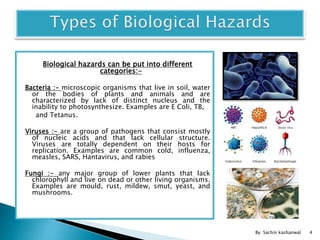
Biological hazards can be put into different
categories:-
Bacteria :- microscopic organisms that live in soil, water
or the bodies of plants and animals and are
characterized by lack of distinct nucleus and the
inability to photosynthesize. Examples are E Coli, TB,
and Tetanus.
Viruses :- are a group of pathogens that consist mostly
of nucleic acids and that lack cellular structure.
Viruses are totally dependent on their hosts for
replication. Examples are common cold, influenza,
measles, SARS, Hantavirus, and rabies
Fungi :- any major group of lower plants that lack
chlorophyll and live on dead or other living organisms.
Examples are mould, rust, mildew, smut, yeast, and
mushrooms.
4
By. Sachin kashanwal
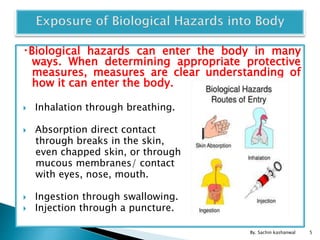
Biological hazards can enter the body in many
ways. When determining appropriate protective
measures, measures are clear understanding of
how it can enter the body.
 Inhalation through breathing.
 Absorption direct contact
through breaks in the skin,
even chapped skin, or through
mucous membranes/ contact
with eyes, nose, mouth.
 Ingestion through swallowing.
 Injection through a puncture.
5
By. Sachin kashanwal
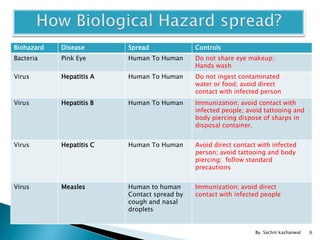
Biohazard Disease Spread Controls
Bacteria Pink Eye Human To Human Do not share eye makeup;
Hands wash
Virus Hepatitis A Human To Human Do not ingest contaminated
water or food; avoid direct
contact with infected person
Virus Hepatitis B Human To Human Immunization; avoid contact with
infected people; avoid tattooing and
body piercing dispose of sharps in
disposal container.
Virus Hepatitis C Human To Human Avoid direct contact with infected
person; avoid tattooing and body
piercing; follow standard
precautions
Virus Measles Human to human
Contact spread by
cough and nasal
droplets
Immunization; avoid direct
contact with infected people
6
By. Sachin kashanwal
7
Patient’s blood,
Body fluids
Undercooked food
Used needles, broken
glass
By. Sachin kashanwal 8
CONTACT SOURCE DISEASE
By. Sachin kashanwal 9
 Risk assessment is the process of evaluating risks to workers’
safety and health from workplace hazards. A risk assessment is a
systematic examination of all aspects of the work undertaken to
consider what could cause injury or harm, whether the hazards
could be eliminated, and if not what preventive or protective
measures are, or should be, in place to control the risks. For
most businesses, especially small and medium-sized enterprises,
a straightforward five-step approach (incorporating elements of
risk management) such as the one presented below should work
well.
By. Sachin kashanwal 10
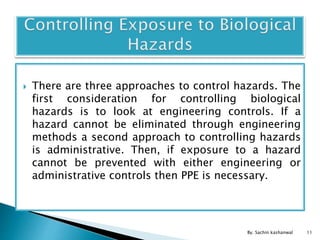
 There are three approaches to control hazards. The
first consideration for controlling biological
hazards is to look at engineering controls. If a
hazard cannot be eliminated through engineering
methods a second approach to controlling hazards
is administrative. Then, if exposure to a hazard
cannot be prevented with either engineering or
administrative controls then PPE is necessary.
By. Sachin kashanwal 11
By. Sachin kashanwal 12
These controls are the first line of defense
and include built in protection in building,
work areas, equipment or supplies.
Examples are:-
 Ventilation systems and construction seals to
create negative pressure rooms
 Bio-safety hoods, with specific ventilation
systems
By. Sachin kashanwal 13
These controls are steps in work procedures
or work processes that minimize the risk of
exposure to a hazard. This type if control
does not eliminate a hazard but can
significantly reduces the risk of injury.
Examples are:-
 Worker training
 Rules that require regular hand washing
By. Sachin kashanwal 14
 When a hazard poses a threat, even after engineering and administrative controls have
been implemented, then PPE is necessary. Then PPE methods can protect you from
biohazard.
 PPE to be effective it must be worn correctly and must be comfortable and fitted for each
person. Workers must be trained properly so that it is worn when needed.
By. Sachin kashanwal 15
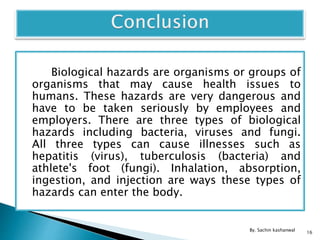
Biological hazards are organisms or groups of
organisms that may cause health issues to
humans. These hazards are very dangerous and
have to be taken seriously by employees and
employers. There are three types of biological
hazards including bacteria, viruses and fungi.
All three types can cause illnesses such as
hepatitis (virus), tuberculosis (bacteria) and
athlete's foot (fungi). Inhalation, absorption,
ingestion, and injection are ways these types of
hazards can enter the body.
By. Sachin kashanwal
16
 http://www.osha.mddsz.gov.si/resources/file
s/pdf/53_risk-assessment-biological-
agents.pdf
 http://www.oshc.org.hk/oshc_data/files/Hot
Topic/CB959E.pdf
 Enviromental Pollution-Health and Toxicology
by Rana , S.V.S Narosa Publishing
House,delhi.
By. Sachin kashanwal 17
By. Sachin kashanwal
18

BIOLOGICAL_HAZARDOUS.pptx

  • 1.
  • 2.
  • 3.
    Biological hazards, alsoknown as biohazards, refer to biological substances that pose a threat to the health of living organism, especially that of humans. These hazards can be encountered anywhere in the environment, including home, school or work. The biohazard symbol was developed in 1966 by Charles Baldwin, an environmental health engineer. 3 By. Sachin kashanwal
  • 4.
    Biological hazards canbe put into different categories:- Bacteria :- microscopic organisms that live in soil, water or the bodies of plants and animals and are characterized by lack of distinct nucleus and the inability to photosynthesize. Examples are E Coli, TB, and Tetanus. Viruses :- are a group of pathogens that consist mostly of nucleic acids and that lack cellular structure. Viruses are totally dependent on their hosts for replication. Examples are common cold, influenza, measles, SARS, Hantavirus, and rabies Fungi :- any major group of lower plants that lack chlorophyll and live on dead or other living organisms. Examples are mould, rust, mildew, smut, yeast, and mushrooms. 4 By. Sachin kashanwal
  • 5.
    Biological hazards canenter the body in many ways. When determining appropriate protective measures, measures are clear understanding of how it can enter the body.  Inhalation through breathing.  Absorption direct contact through breaks in the skin, even chapped skin, or through mucous membranes/ contact with eyes, nose, mouth.  Ingestion through swallowing.  Injection through a puncture. 5 By. Sachin kashanwal
  • 6.
    Biohazard Disease SpreadControls Bacteria Pink Eye Human To Human Do not share eye makeup; Hands wash Virus Hepatitis A Human To Human Do not ingest contaminated water or food; avoid direct contact with infected person Virus Hepatitis B Human To Human Immunization; avoid contact with infected people; avoid tattooing and body piercing dispose of sharps in disposal container. Virus Hepatitis C Human To Human Avoid direct contact with infected person; avoid tattooing and body piercing; follow standard precautions Virus Measles Human to human Contact spread by cough and nasal droplets Immunization; avoid direct contact with infected people 6 By. Sachin kashanwal
  • 7.
  • 8.
    Patient’s blood, Body fluids Undercookedfood Used needles, broken glass By. Sachin kashanwal 8 CONTACT SOURCE DISEASE
  • 9.
    By. Sachin kashanwal9  Risk assessment is the process of evaluating risks to workers’ safety and health from workplace hazards. A risk assessment is a systematic examination of all aspects of the work undertaken to consider what could cause injury or harm, whether the hazards could be eliminated, and if not what preventive or protective measures are, or should be, in place to control the risks. For most businesses, especially small and medium-sized enterprises, a straightforward five-step approach (incorporating elements of risk management) such as the one presented below should work well.
  • 10.
  • 11.
     There arethree approaches to control hazards. The first consideration for controlling biological hazards is to look at engineering controls. If a hazard cannot be eliminated through engineering methods a second approach to controlling hazards is administrative. Then, if exposure to a hazard cannot be prevented with either engineering or administrative controls then PPE is necessary. By. Sachin kashanwal 11
  • 12.
  • 13.
    These controls arethe first line of defense and include built in protection in building, work areas, equipment or supplies. Examples are:-  Ventilation systems and construction seals to create negative pressure rooms  Bio-safety hoods, with specific ventilation systems By. Sachin kashanwal 13
  • 14.
    These controls aresteps in work procedures or work processes that minimize the risk of exposure to a hazard. This type if control does not eliminate a hazard but can significantly reduces the risk of injury. Examples are:-  Worker training  Rules that require regular hand washing By. Sachin kashanwal 14
  • 15.
     When ahazard poses a threat, even after engineering and administrative controls have been implemented, then PPE is necessary. Then PPE methods can protect you from biohazard.  PPE to be effective it must be worn correctly and must be comfortable and fitted for each person. Workers must be trained properly so that it is worn when needed. By. Sachin kashanwal 15
  • 16.
    Biological hazards areorganisms or groups of organisms that may cause health issues to humans. These hazards are very dangerous and have to be taken seriously by employees and employers. There are three types of biological hazards including bacteria, viruses and fungi. All three types can cause illnesses such as hepatitis (virus), tuberculosis (bacteria) and athlete's foot (fungi). Inhalation, absorption, ingestion, and injection are ways these types of hazards can enter the body. By. Sachin kashanwal 16
  • 17.
     http://www.osha.mddsz.gov.si/resources/file s/pdf/53_risk-assessment-biological- agents.pdf  http://www.oshc.org.hk/oshc_data/files/Hot Topic/CB959E.pdf Enviromental Pollution-Health and Toxicology by Rana , S.V.S Narosa Publishing House,delhi. By. Sachin kashanwal 17
  • 18.