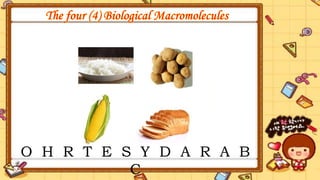
O H R T E S Y D A R A B
C
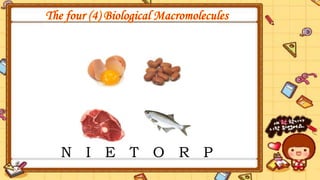
N I E T O R P
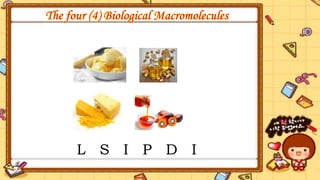
L S I P D I
LIPIDS
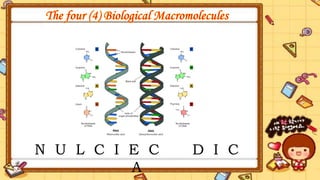
N U L C I E C D I C
A
NUCLEIC ACID
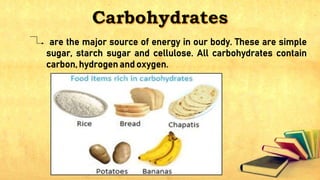
are the major source of energy in our body. These are simple
sugar, starch sugar and cellulose. All carbohydrates contain
carbon, hydrogen and oxygen.
 “mono” means one and saccharides also known as carbohydrates.
 white solid at room temperature and very soluble in water.
Examples of Monosaccharides
 Glucose (C6H12O6)-It is the major carbohydrates of the body and it is
carried by the bloodstream to all parts of the body. The body’s main source
of energy and can be found in rice, bread and pasta.
 Fructose or fruit sugar can be found in fruits and honey
 Galactose or milk sugar can be acquired through consuming
dairy products such as cheese, ice cream, butter and yoghurt.
1. Monosaccharide
 two monosaccharide molecules
 provides quick source of energy
Examples of Disaccharides
 Sucrose (C12H12O11), (glucose + fructose) –a.k.a. table sugar Good
sources of sucrose are sugar cane, sugar beets, maple syrup and
sorghum.
 Lactose (C12H12O11), (glucose + galactose)- milk sugar is found in nature
mainly in the milk of mammals.
 Maltose, glucose + glucose-is found much less commonly in
nature than either sucrose or lactose. It is found in sprouting grains.
2. Disaccharides
 are also called complex carbohydrates and can be hydrolyzed into many
monosaccharide units
Examples of Polysaccharides
 Starch-The chief sources of starch are corn, potatoes, rice, and cassava
whose uses are for foods.
 Cellulose-It is the chief structural components of plants and woods. It is also
used for making rayon fibers, photographic fil and cellophane.
 Glycogen- Animal Starch. Stored in the liver and muscle tissue.
3. Polysaccharides
-Also known as “Fats”
-have the “job” of storing energy for later use.
-found in hormones and cell membrane components.
-The most abundant of lipids are the fats and oils, also called
triglycerides.
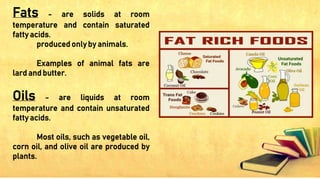
Fats - are solids at room
temperature and contain saturated
fatty acids.
produced only by animals.
Examples of animal fats are
lard and butter.
Oils - are liquids at room
temperature and contain unsaturated
fatty acids.
Most oils, such as vegetable oil,
corn oil, and olive oil are produced by
plants.
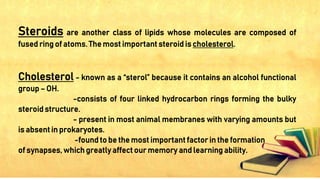
Steroids are another class of lipids whose molecules are composed of
fused ring of atoms. The most important steroid is cholesterol.
Cholesterol - known as a “sterol” because it contains an alcohol functional
group – OH.
-consists of four linked hydrocarbon rings forming the bulky
steroid structure.
- present in most animal membranes with varying amounts but
is absent in prokaryotes.
-found to be the most important factor in the formation
of synapses, which greatly affect our memory and learning ability.
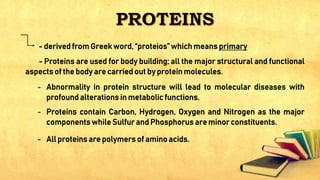
- derived from Greek word, “proteios” which means primary
- Proteins are used for body building; all the major structural and functional
aspects of the body are carried out by protein molecules.
- Abnormality in protein structure will lead to molecular diseases with
profound alterations in metabolic functions.
- Proteins contain Carbon, Hydrogen, Oxygen and Nitrogen as the major
components while Sulfur and Phosphorus are minor constituents.
- All proteins are polymers of amino acids.
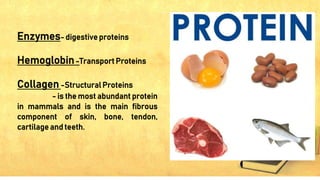
Enzymes- digestive proteins
Hemoglobin-Transport Proteins
Collagen -Structural Proteins
- is the most abundant protein
in mammals and is the main fibrous
component of skin, bone, tendon,
cartilage and teeth.
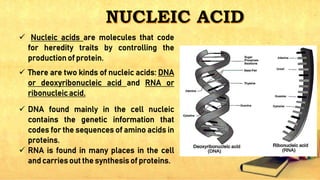
 Nucleic acids are molecules that code
for heredity traits by controlling the
production of protein.
 There are two kinds of nucleic acids: DNA
or deoxyribonucleic acid and RNA or
ribonucleic acid.
 DNA found mainly in the cell nucleic
contains the genetic information that
codes for the sequences of amino acids in
proteins.
 RNA is found in many places in the cell
and carries out the synthesis of proteins.
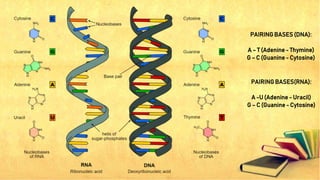
PAIRING BASES (DNA):
A – T (Adenine - Thymine)
G – C (Guanine - Cytosine)
PAIRING BASES(RNA):
A -U (Adenine - Uracil)
G – C (Guanine - Cytosine)
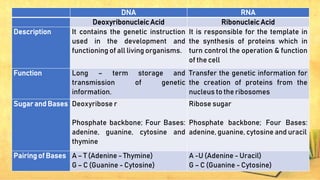
DNA RNA
Deoxyribonucleic Acid Ribonucleic Acid
Description It contains the genetic instruction
used in the development and
functioning of all living organisms.
It is responsible for the template in
the synthesis of proteins which in
turn control the operation & function
of the cell
Function Long – term storage and
transmission of genetic
information.
Transfer the genetic information for
the creation of proteins from the
nucleus to the ribosomes
Sugar and Bases Deoxyribose r
Phosphate backbone; Four Bases:
adenine, guanine, cytosine and
thymine
Ribose sugar
Phosphate backbone; Four Bases:
adenine, guanine, cytosine and uracil
Pairing of Bases A – T (Adenine - Thymine)
G – C (Guanine - Cytosine)
A -U (Adenine - Uracil)
G – C (Guanine - Cytosine)
ACTIVITY
TIME!

BIOLOGICAL MACROMOLECULES.pptx

  • 4.
    O H RT E S Y D A R A B C
  • 5.
    N I ET O R P
  • 6.
    L S IP D I LIPIDS
  • 7.
    N U LC I E C D I C A NUCLEIC ACID
  • 8.
    are the majorsource of energy in our body. These are simple sugar, starch sugar and cellulose. All carbohydrates contain carbon, hydrogen and oxygen.
  • 9.
     “mono” meansone and saccharides also known as carbohydrates.  white solid at room temperature and very soluble in water. Examples of Monosaccharides  Glucose (C6H12O6)-It is the major carbohydrates of the body and it is carried by the bloodstream to all parts of the body. The body’s main source of energy and can be found in rice, bread and pasta.  Fructose or fruit sugar can be found in fruits and honey  Galactose or milk sugar can be acquired through consuming dairy products such as cheese, ice cream, butter and yoghurt. 1. Monosaccharide
  • 10.
     two monosaccharidemolecules  provides quick source of energy Examples of Disaccharides  Sucrose (C12H12O11), (glucose + fructose) –a.k.a. table sugar Good sources of sucrose are sugar cane, sugar beets, maple syrup and sorghum.  Lactose (C12H12O11), (glucose + galactose)- milk sugar is found in nature mainly in the milk of mammals.  Maltose, glucose + glucose-is found much less commonly in nature than either sucrose or lactose. It is found in sprouting grains. 2. Disaccharides
  • 11.
     are alsocalled complex carbohydrates and can be hydrolyzed into many monosaccharide units Examples of Polysaccharides  Starch-The chief sources of starch are corn, potatoes, rice, and cassava whose uses are for foods.  Cellulose-It is the chief structural components of plants and woods. It is also used for making rayon fibers, photographic fil and cellophane.  Glycogen- Animal Starch. Stored in the liver and muscle tissue. 3. Polysaccharides
  • 12.
    -Also known as“Fats” -have the “job” of storing energy for later use. -found in hormones and cell membrane components. -The most abundant of lipids are the fats and oils, also called triglycerides.
  • 13.
    Fats - aresolids at room temperature and contain saturated fatty acids. produced only by animals. Examples of animal fats are lard and butter. Oils - are liquids at room temperature and contain unsaturated fatty acids. Most oils, such as vegetable oil, corn oil, and olive oil are produced by plants.
  • 14.
    Steroids are anotherclass of lipids whose molecules are composed of fused ring of atoms. The most important steroid is cholesterol. Cholesterol - known as a “sterol” because it contains an alcohol functional group – OH. -consists of four linked hydrocarbon rings forming the bulky steroid structure. - present in most animal membranes with varying amounts but is absent in prokaryotes. -found to be the most important factor in the formation of synapses, which greatly affect our memory and learning ability.
  • 15.
    - derived fromGreek word, “proteios” which means primary - Proteins are used for body building; all the major structural and functional aspects of the body are carried out by protein molecules. - Abnormality in protein structure will lead to molecular diseases with profound alterations in metabolic functions. - Proteins contain Carbon, Hydrogen, Oxygen and Nitrogen as the major components while Sulfur and Phosphorus are minor constituents. - All proteins are polymers of amino acids.
  • 16.
    Enzymes- digestive proteins Hemoglobin-TransportProteins Collagen -Structural Proteins - is the most abundant protein in mammals and is the main fibrous component of skin, bone, tendon, cartilage and teeth.
  • 17.
     Nucleic acidsare molecules that code for heredity traits by controlling the production of protein.  There are two kinds of nucleic acids: DNA or deoxyribonucleic acid and RNA or ribonucleic acid.  DNA found mainly in the cell nucleic contains the genetic information that codes for the sequences of amino acids in proteins.  RNA is found in many places in the cell and carries out the synthesis of proteins.
  • 18.
    PAIRING BASES (DNA): A– T (Adenine - Thymine) G – C (Guanine - Cytosine) PAIRING BASES(RNA): A -U (Adenine - Uracil) G – C (Guanine - Cytosine)
  • 19.
    DNA RNA Deoxyribonucleic AcidRibonucleic Acid Description It contains the genetic instruction used in the development and functioning of all living organisms. It is responsible for the template in the synthesis of proteins which in turn control the operation & function of the cell Function Long – term storage and transmission of genetic information. Transfer the genetic information for the creation of proteins from the nucleus to the ribosomes Sugar and Bases Deoxyribose r Phosphate backbone; Four Bases: adenine, guanine, cytosine and thymine Ribose sugar Phosphate backbone; Four Bases: adenine, guanine, cytosine and uracil Pairing of Bases A – T (Adenine - Thymine) G – C (Guanine - Cytosine) A -U (Adenine - Uracil) G – C (Guanine - Cytosine)
  • 20.