Biographies
         Nate
         Trish
Word Bank
 Real          Realism            Autobiography
                Vulnerabilities    Political
 Narrates
                Weaknesses         Explorers
 Learn
                Multi-cultural
 Historical                        Artists
                Truth
 Heroes                            Persevere
                Time period
 Idealized                         Authors
                Common
 Newberry      Partial
 Caldecott     Complete
 Represent     Collective
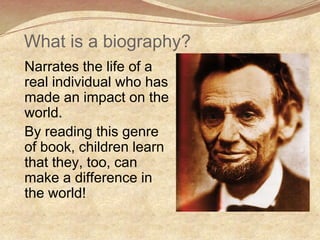
What is a biography?
Narrates the life of a
real individual who has
made an impact on the
world.
By reading this genre
of book, children learn
that they, too, can
make a difference in
the world!
Importance
 Children can learn from the lives of
  others
 Promotes social-emotional development
  by realizing that choices people make
  early in their lives can lead to greatness
 Connections can be made about
  people’s lives and the historical time in
  which they lived
History of Biography
Antiquity
 The first biographies were inscriptions on the tombs
    of rulers of ancient Assyria, Babylonia, and Egypt
   Early biographies also appear in the Hebrew Bible -
    Moses, Abraham, Noah
   The Greek Herodotus’s Histories, 400 B.C.
   Plutarch, Greek, wrote Parallel Lives of Illustrious
    Greeks and Romans A.D. 100 - more objective
   Suetonius Lives of the Caesars A.D. 121- scandal as
    well as facts

                                                           6
Middle Ages
 Hagiographies - written by the
  Church about the lives of saints
 In India, written Sanskrit was the
  Harshacarita (Deeds of Harsa,
  A.D. 600’s)
 China and Japan, biographical
  records of emperors and their
  courts. - Pillow Book (about
  A.D. 1000) by Sei Shonagon.


                                       7
Renaissance
 During the 1300's, an intellectual movement called
    humanism spread. Humanism emphasized the
    importance, dignity, and achievements of human beings,
    particularly of individual people.
   Sir Thomas Malory Le Morte d’Arthur 1485
   Shift to the Secular
   Giorgio Vasari Lives of the Most Eminent Painters,
    Sculptors, and Architects (1550)
   The invention of the printing press leads for a demand for
    a larger variety of biographies on the topics of criminals,
    military figures, explorers, world travelers, and even
    clergymen and landowners.
                                                                  8
1700s
 Continued concentration on the
  secular - increasing demand for facts
  in historical biography.
 Horace Walpole Historic Doubts on
  the Life and Reign of King Richard
  the Third (1768)
 Samuel Johnson The Lives of the
  English Poets (1779-1781)
 The rise of the fictional novel also
  created fictional biographical novels   9
1800s
 Historical biographies became
  increasingly dry and factual
 Thomas Carlyle Oliver Cromwell’s
  Letters and Speeches, with Elucidations
  (1845)
 Ernest Renan Life of Jesus (1863)
  looking at religious persons with a
  research perspective
 Biographers of the heroes of the
  American Revolution (1775-1783)
  attempted to create a spirit of
  nationalism, and their works became
                      Seidel, M. (2013). Biography. In World Book Advanced.   10
  especially popular.
1900s
 Freud and psychology have
  a huge impact on
  biographies
 Freud Leonardo da Vinci
  (1910), explains the
  personality of the famous
  artist
 Books called debunking
  biographies also became
  popular                     11
Early Children’s Biographies
 Oldest books for
  children
 Only exposed children
  to the lives of national
  and cultural heroes
 Subjects were idealized
  and larger than life
 Not altogether
  believable
Unsavory Realities
 Children should not
  be exposed to:
 Discrimination
 Violence
 Abuse
 Biographies were
  bland and unrealistic
Fictionalized Characters
 Narrated by a mouse    Narrated by a parrot
Early Recognition
 1934
 First Newberry Medal
 Invincible Louisa by
 Cornelia Meigs
1940
 Daniel Boone by James
  Daugherty
 Contemporary readers
  may be appalled by the
  portrayal of Native
  Americans
1st

Caldecott
1940
 Abraham Lincoln
  by Ingri and Edgar
  Parin D’Aulaire

 Established the
 picture-book
 biography for
 younger children
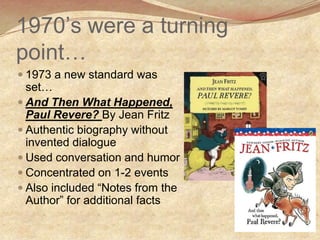
1970’s were a turning
point…
 1973 a new standard was
  set…
 And Then What Happened,
  Paul Revere? By Jean Fritz
 Authentic biography without
  invented dialogue
 Used conversation and humor
 Concentrated on 1-2 events
 Also included “Notes from the
  Author” for additional facts
Biographies give
 children a wider
 representation of
 people !
 Men, women, and
  children of many
  ethnic and racial
  backgrounds
 Varying occupations
  and contributions to   A biography of the Cherokee
  society                 Indian who created a
                          method for his people to
                          write and read their own
                          language.
Contemporary
 Authors handle
 their subjects
 with:
 New realism
 Present them as
 human beings with
 vulnerabilities and
                          In their review, Publ Weekly said Stanley and Vennema
 weaknesses                "make a seemingly effortless leap into ancient times,
                           masterfully relating Cleopatra's life story through words
                           and pictures...This peerless author/artist team makes
                           the captivating, ultimately tragic Cleopatra seem
                           astoundingly real."
TRUTH!    1970’s gave birth to the modern
           biographies
          Many cultures outside of one’s
           own are recognized
          Authors delve beneath the
           surface to give a truer account of
           the time and people
          Common person and time period
           is explored as opposed to only
           great people and events
Well Known People
+ portrayed in the context of their time
+ concerns of the day
+ choices available to the subject
+ social movements of the day
= a truer account of the
person and/or the event
Women’s Suffrage
             Lizzie begins her
              life as a girl who
              believes that
              women “didn’t
              count for much”.
              Then she grows
              up and dedicates
              her life to
              women’s suffrage.
Categories of
Biographies
Partial - about a short span of
a persons life


 Samuel Adams walked the         This biography concentrates on
 streets of pre-Revolutionary     Langston Hughes’ childhood.
 Boston promoting independence
 from England!
Complete - birth to death
Collective -
about several
people that
have
something in
common
Autobiography/
Memoir - written
by the author
about themselves
- usually written to
inspire or share
extraordinary
events
Explorers of
Earth and Space
- risk taking and
discovering the
unknown
Social and
Political
Activists -
including the
traditional
president
biographies
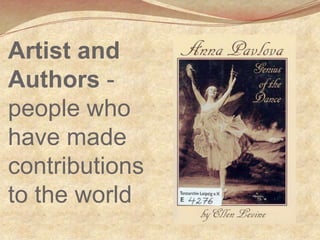
Artist and
Authors -
people who
have made
contributions
to the world
People who have
Persevered -
provide inspiration
and valuable
lessons about the
realities of the
world
How Biographies Work
 Must be about real       The author uses a
 people.                   filter to tell the story.

 The author must
                           Advanced readers
 create the personality
                           should be aware of
 and events of a
                           this filter and in order
 person's life.
                           to evaluate the truth of
                           the biography.
Major Writers
 David Adler

 Russell Freedman

 Jean Fritz

 Diane Stanley
Criteria for Selection
 Can be about heroes, villains, and regular people.
  Remember the needs of your patrons.
 How is the characterization handled? Are there
  stereotypes?
 Check to make sure that the information is
  accurate and that careful research has been
  made by the author.
 Most importantly is the book engaging for the
  readers, and is the tone appropriate for your
  patrons?
Awards they compete for non-fiction awards
There are no “Biography” awards,
as well as awards that can be given to any genre.
Awards are often indicate with a seal on the cover.
Question
How would you characterize
 your personal hero if you
 were to write a children’s
 biography of that person?
Categories of Biographies
Partial         Political
Complete        Explorers
Collective      Artists
Autobiography   Persevere

Biographies

  • 1.
    Biographies Nate Trish
  • 2.
    Word Bank  Real  Realism  Autobiography  Vulnerabilities  Political  Narrates  Weaknesses  Explorers  Learn  Multi-cultural  Historical  Artists  Truth  Heroes  Persevere  Time period  Idealized  Authors  Common  Newberry  Partial  Caldecott  Complete  Represent  Collective
  • 3.
    What is abiography? Narrates the life of a real individual who has made an impact on the world. By reading this genre of book, children learn that they, too, can make a difference in the world!
  • 4.
    Importance  Children canlearn from the lives of others  Promotes social-emotional development by realizing that choices people make early in their lives can lead to greatness  Connections can be made about people’s lives and the historical time in which they lived
  • 5.
  • 6.
    Antiquity  The firstbiographies were inscriptions on the tombs of rulers of ancient Assyria, Babylonia, and Egypt  Early biographies also appear in the Hebrew Bible - Moses, Abraham, Noah  The Greek Herodotus’s Histories, 400 B.C.  Plutarch, Greek, wrote Parallel Lives of Illustrious Greeks and Romans A.D. 100 - more objective  Suetonius Lives of the Caesars A.D. 121- scandal as well as facts 6
  • 7.
    Middle Ages  Hagiographies- written by the Church about the lives of saints  In India, written Sanskrit was the Harshacarita (Deeds of Harsa, A.D. 600’s)  China and Japan, biographical records of emperors and their courts. - Pillow Book (about A.D. 1000) by Sei Shonagon. 7
  • 8.
    Renaissance  During the1300's, an intellectual movement called humanism spread. Humanism emphasized the importance, dignity, and achievements of human beings, particularly of individual people.  Sir Thomas Malory Le Morte d’Arthur 1485  Shift to the Secular  Giorgio Vasari Lives of the Most Eminent Painters, Sculptors, and Architects (1550)  The invention of the printing press leads for a demand for a larger variety of biographies on the topics of criminals, military figures, explorers, world travelers, and even clergymen and landowners. 8
  • 9.
    1700s  Continued concentrationon the secular - increasing demand for facts in historical biography.  Horace Walpole Historic Doubts on the Life and Reign of King Richard the Third (1768)  Samuel Johnson The Lives of the English Poets (1779-1781)  The rise of the fictional novel also created fictional biographical novels 9
  • 10.
    1800s  Historical biographiesbecame increasingly dry and factual  Thomas Carlyle Oliver Cromwell’s Letters and Speeches, with Elucidations (1845)  Ernest Renan Life of Jesus (1863) looking at religious persons with a research perspective  Biographers of the heroes of the American Revolution (1775-1783) attempted to create a spirit of nationalism, and their works became Seidel, M. (2013). Biography. In World Book Advanced. 10 especially popular.
  • 11.
    1900s  Freud andpsychology have a huge impact on biographies  Freud Leonardo da Vinci (1910), explains the personality of the famous artist  Books called debunking biographies also became popular 11
  • 12.
    Early Children’s Biographies Oldest books for children  Only exposed children to the lives of national and cultural heroes  Subjects were idealized and larger than life  Not altogether believable
  • 13.
    Unsavory Realities  Childrenshould not be exposed to:  Discrimination  Violence  Abuse  Biographies were bland and unrealistic
  • 14.
    Fictionalized Characters  Narratedby a mouse  Narrated by a parrot
  • 15.
    Early Recognition  1934 First Newberry Medal  Invincible Louisa by Cornelia Meigs
  • 16.
    1940  Daniel Booneby James Daugherty  Contemporary readers may be appalled by the portrayal of Native Americans
  • 17.
    1st Caldecott 1940  Abraham Lincoln by Ingri and Edgar Parin D’Aulaire  Established the picture-book biography for younger children
  • 18.
    1970’s were aturning point…  1973 a new standard was set…  And Then What Happened, Paul Revere? By Jean Fritz  Authentic biography without invented dialogue  Used conversation and humor  Concentrated on 1-2 events  Also included “Notes from the Author” for additional facts
  • 19.
    Biographies give childrena wider representation of people !  Men, women, and children of many ethnic and racial backgrounds  Varying occupations and contributions to A biography of the Cherokee society Indian who created a method for his people to write and read their own language.
  • 20.
    Contemporary Authors handle their subjects with:  New realism  Present them as human beings with vulnerabilities and  In their review, Publ Weekly said Stanley and Vennema weaknesses "make a seemingly effortless leap into ancient times, masterfully relating Cleopatra's life story through words and pictures...This peerless author/artist team makes the captivating, ultimately tragic Cleopatra seem astoundingly real."
  • 21.
    TRUTH!  1970’s gave birth to the modern biographies  Many cultures outside of one’s own are recognized  Authors delve beneath the surface to give a truer account of the time and people  Common person and time period is explored as opposed to only great people and events
  • 22.
    Well Known People +portrayed in the context of their time + concerns of the day + choices available to the subject + social movements of the day = a truer account of the person and/or the event
  • 23.
    Women’s Suffrage Lizzie begins her life as a girl who believes that women “didn’t count for much”. Then she grows up and dedicates her life to women’s suffrage.
  • 24.
  • 25.
    Partial - abouta short span of a persons life  Samuel Adams walked the  This biography concentrates on streets of pre-Revolutionary Langston Hughes’ childhood. Boston promoting independence from England!
  • 26.
  • 27.
    Collective - about several peoplethat have something in common
  • 28.
    Autobiography/ Memoir - written bythe author about themselves - usually written to inspire or share extraordinary events
  • 29.
    Explorers of Earth andSpace - risk taking and discovering the unknown
  • 30.
    Social and Political Activists - includingthe traditional president biographies
  • 31.
    Artist and Authors - peoplewho have made contributions to the world
  • 32.
    People who have Persevered- provide inspiration and valuable lessons about the realities of the world
  • 33.
    How Biographies Work Must be about real  The author uses a people. filter to tell the story.  The author must  Advanced readers create the personality should be aware of and events of a this filter and in order person's life. to evaluate the truth of the biography.
  • 34.
    Major Writers  DavidAdler  Russell Freedman  Jean Fritz  Diane Stanley
  • 35.
    Criteria for Selection Can be about heroes, villains, and regular people. Remember the needs of your patrons.  How is the characterization handled? Are there stereotypes?  Check to make sure that the information is accurate and that careful research has been made by the author.  Most importantly is the book engaging for the readers, and is the tone appropriate for your patrons?
  • 36.
    Awards they competefor non-fiction awards There are no “Biography” awards, as well as awards that can be given to any genre. Awards are often indicate with a seal on the cover.
  • 37.
    Question How would youcharacterize your personal hero if you were to write a children’s biography of that person?
  • 38.
    Categories of Biographies Partial Political Complete Explorers Collective Artists Autobiography Persevere