Antonio Oliveira
Centre for Strategic Studies and Managment – CGEE
BRAZIL
Santiago 7 y 8 octubre de 2015
Session 1:
Regional, national and local bioeconomy strategies
"Bioeconomy can be thought of as a world where biotechnology
contributes to a significant share of economic output”
OECD. (2009)
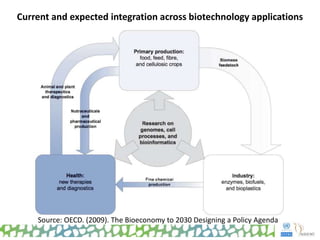
Current and expected integration across biotechnology applications
Source: OECD. (2009). The Bioeconomy to 2030 Designing a Policy Agenda
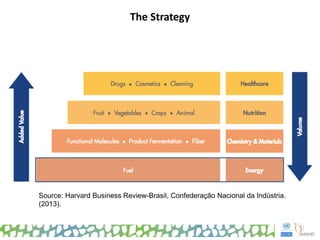
The Strategy
Source: Harvard Business Review-Brasil, Confederação Nacional da Indústria.
(2013).
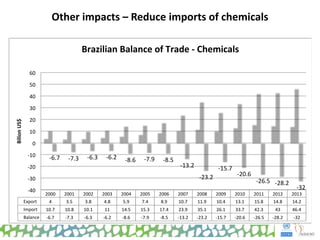
Other impacts – Reduce imports of chemicals
2000 2001 2002 2003 2004 2005 2006 2007 2008 2009 2010 2011 2012 2013
Export 4 3.5 3.8 4.8 5.9 7.4 8.9 10.7 11.9 10.4 13.1 15.8 14.8 14.2
Import 10.7 10.8 10.1 11 14.5 15.3 17.4 23.9 35.1 26.1 33.7 42.3 43 46.4
Balance -6.7 -7.3 -6.3 -6.2 -8.6 -7.9 -8.5 -13.2 -23.2 -15.7 -20.6 -26.5 -28.2 -32
-6.7 -7.3 -6.3 -6.2 -8.6 -7.9 -8.5
-13.2
-23.2
-15.7
-20.6
-26.5 -28.2
-32-40
-30
-20
-10
0
10
20
30
40
50
60
BilionUS$
Brazilian Balance of Trade - Chemicals
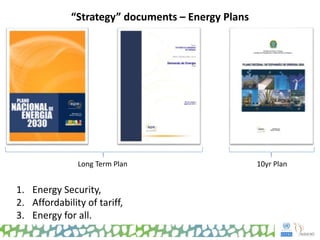
“Strategy” documents – Energy Plans
Long Term Plan 10yr Plan
1. Energy Security,
2. Affordability of tariff,
3. Energy for all.
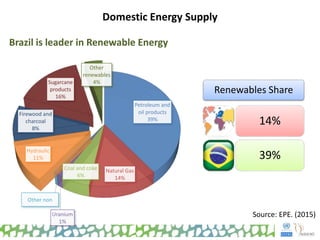
Domestic Energy Supply
Brazil is leader in Renewable Energy
Petroleum and
oil products
39%
Natural Gas
14%
Coal and coke
6%
Uranium
1%
Other non
Hydraulic
11%
Firewood and
charcoal
8%
Sugarcane
products
16%
Other
renewables
4%
Renewables Share
14%
39%
Source: EPE. (2015)
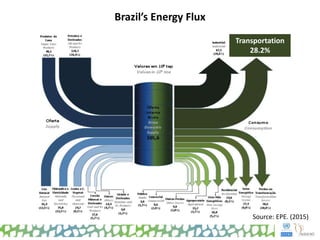
Brazil’s Energy Flux
Source: EPE. (2015)
Transportation
28.2%
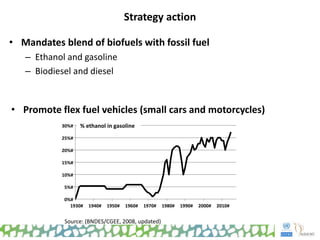
Strategy action
• Mandates blend of biofuels with fossil fuel
– Ethanol and gasoline
– Biodiesel and diesel
• Promote flex fuel vehicles (small cars and motorcycles)
0%#
5%#
10%#
15%#
20%#
25%#
30%#
1930# 1940# 1950# 1960# 1970# 1980# 1990# 2000# 2010#
% ethanol in gasoline
Source: (BNDES/CGEE, 2008, updated)
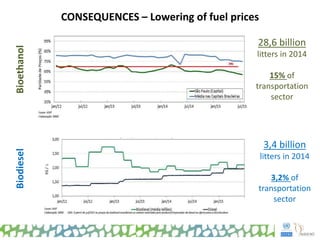
CONSEQUENCES – Lowering of fuel pricesBioethanolBiodiesel
28,6 billion
litters in 2014
15% of
transportation
sector
3,4 billion
litters in 2014
3,2% of
transportation
sector
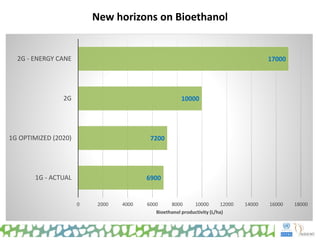
New horizons on Bioethanol
6900
7200
10000
17000
0 2000 4000 6000 8000 10000 12000 14000 16000 18000
1G - ACTUAL
1G OPTIMIZED (2020)
2G
2G - ENERGY CANE
Bioethanol productivity (L/ha)
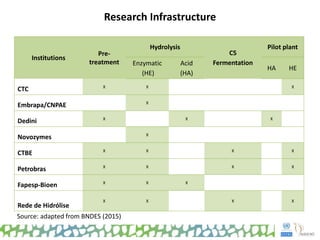
Research Infrastructure
Institutions
Pre-
treatment
Hydrolysis
C5
Fermentation
Pilot plant
Enzymatic
(HE)
Acid
(HA)
HA HE
CTC X X X
Embrapa/CNPAE X
Dedini X X X
Novozymes X
CTBE X X X X
Petrobras X X X X
Fapesp-Bioen X X X
Rede de Hidrólise
X X X X
Source: adapted from BNDES (2015)
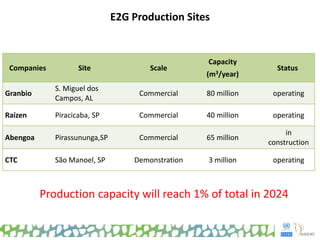
E2G Production Sites
Companies Site Scale
Capacity
(m3/year)
Status
Granbio
S. Miguel dos
Campos, AL
Commercial 80 million operating
Raízen Piracicaba, SP Commercial 40 million operating
Abengoa Pirassununga,SP Commercial 65 million
in
construction
CTC São Manoel, SP Demonstration 3 million operating
Production capacity will reach 1% of total in 2024
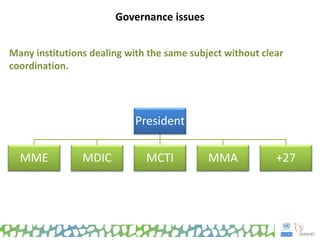
Governance issues
Many institutions dealing with the same subject without clear
coordination.
President
MME MDIC MCTI MMA +27
Role of CGEE
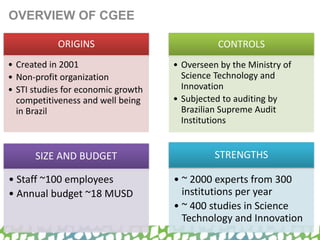
OVERVIEW OF CGEE
ORIGINS
• Created in 2001
• Non-profit organization
• STI studies for economic growth
competitiveness and well being
in Brazil
CONTROLS
• Overseen by the Ministry of
Science Technology and
Innovation
• Subjected to auditing by
Brazilian Supreme Audit
Institutions
SIZE AND BUDGET
• Staff ~100 employees
• Annual budget ~18 MUSD
STRENGTHS
• ~ 2000 experts from 300
institutions per year
• ~ 400 studies in Science
Technology and Innovation
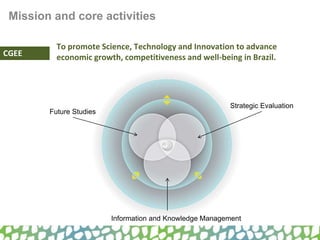
Mission and core activities
To promote Science, Technology and Innovation to advance
economic growth, competitiveness and well-being in Brazil.CGEE
Future Studies
Strategic Evaluation
Information and Knowledge Management
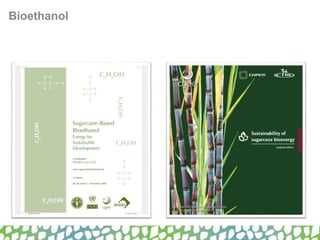
Bioethanol
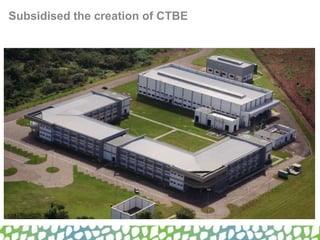
Subsidised the creation of CTBE
Green chemistry
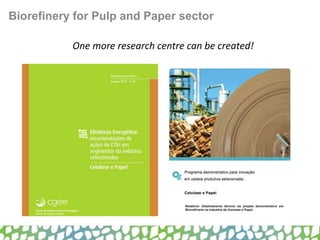
Biorefinery for Pulp and Paper sector
One more research centre can be created!
Incursions in LAC
Bioeconomy
Biodiversity
Obrigado!
Thank you!
Gracias!
Antonio Oliveira – aoliveira@cgee.org.br
http://www.cgee.org.br/

Bioenergy "Strategy" in Brazil

  • 1.
    Antonio Oliveira Centre forStrategic Studies and Managment – CGEE BRAZIL Santiago 7 y 8 octubre de 2015
  • 2.
    Session 1: Regional, nationaland local bioeconomy strategies
  • 3.
    "Bioeconomy can bethought of as a world where biotechnology contributes to a significant share of economic output” OECD. (2009)
  • 4.
    Current and expectedintegration across biotechnology applications Source: OECD. (2009). The Bioeconomy to 2030 Designing a Policy Agenda
  • 5.
    The Strategy Source: HarvardBusiness Review-Brasil, Confederação Nacional da Indústria. (2013).
  • 6.
    Other impacts –Reduce imports of chemicals 2000 2001 2002 2003 2004 2005 2006 2007 2008 2009 2010 2011 2012 2013 Export 4 3.5 3.8 4.8 5.9 7.4 8.9 10.7 11.9 10.4 13.1 15.8 14.8 14.2 Import 10.7 10.8 10.1 11 14.5 15.3 17.4 23.9 35.1 26.1 33.7 42.3 43 46.4 Balance -6.7 -7.3 -6.3 -6.2 -8.6 -7.9 -8.5 -13.2 -23.2 -15.7 -20.6 -26.5 -28.2 -32 -6.7 -7.3 -6.3 -6.2 -8.6 -7.9 -8.5 -13.2 -23.2 -15.7 -20.6 -26.5 -28.2 -32-40 -30 -20 -10 0 10 20 30 40 50 60 BilionUS$ Brazilian Balance of Trade - Chemicals
  • 7.
    “Strategy” documents –Energy Plans Long Term Plan 10yr Plan 1. Energy Security, 2. Affordability of tariff, 3. Energy for all.
  • 8.
    Domestic Energy Supply Brazilis leader in Renewable Energy Petroleum and oil products 39% Natural Gas 14% Coal and coke 6% Uranium 1% Other non Hydraulic 11% Firewood and charcoal 8% Sugarcane products 16% Other renewables 4% Renewables Share 14% 39% Source: EPE. (2015)
  • 9.
    Brazil’s Energy Flux Source:EPE. (2015) Transportation 28.2%
  • 10.
    Strategy action • Mandatesblend of biofuels with fossil fuel – Ethanol and gasoline – Biodiesel and diesel • Promote flex fuel vehicles (small cars and motorcycles) 0%# 5%# 10%# 15%# 20%# 25%# 30%# 1930# 1940# 1950# 1960# 1970# 1980# 1990# 2000# 2010# % ethanol in gasoline Source: (BNDES/CGEE, 2008, updated)
  • 11.
    CONSEQUENCES – Loweringof fuel pricesBioethanolBiodiesel 28,6 billion litters in 2014 15% of transportation sector 3,4 billion litters in 2014 3,2% of transportation sector
  • 12.
    New horizons onBioethanol 6900 7200 10000 17000 0 2000 4000 6000 8000 10000 12000 14000 16000 18000 1G - ACTUAL 1G OPTIMIZED (2020) 2G 2G - ENERGY CANE Bioethanol productivity (L/ha)
  • 13.
    Research Infrastructure Institutions Pre- treatment Hydrolysis C5 Fermentation Pilot plant Enzymatic (HE) Acid (HA) HAHE CTC X X X Embrapa/CNPAE X Dedini X X X Novozymes X CTBE X X X X Petrobras X X X X Fapesp-Bioen X X X Rede de Hidrólise X X X X Source: adapted from BNDES (2015)
  • 14.
    E2G Production Sites CompaniesSite Scale Capacity (m3/year) Status Granbio S. Miguel dos Campos, AL Commercial 80 million operating Raízen Piracicaba, SP Commercial 40 million operating Abengoa Pirassununga,SP Commercial 65 million in construction CTC São Manoel, SP Demonstration 3 million operating Production capacity will reach 1% of total in 2024
  • 15.
    Governance issues Many institutionsdealing with the same subject without clear coordination. President MME MDIC MCTI MMA +27
  • 16.
  • 17.
    OVERVIEW OF CGEE ORIGINS •Created in 2001 • Non-profit organization • STI studies for economic growth competitiveness and well being in Brazil CONTROLS • Overseen by the Ministry of Science Technology and Innovation • Subjected to auditing by Brazilian Supreme Audit Institutions SIZE AND BUDGET • Staff ~100 employees • Annual budget ~18 MUSD STRENGTHS • ~ 2000 experts from 300 institutions per year • ~ 400 studies in Science Technology and Innovation
  • 18.
    Mission and coreactivities To promote Science, Technology and Innovation to advance economic growth, competitiveness and well-being in Brazil.CGEE Future Studies Strategic Evaluation Information and Knowledge Management
  • 19.
  • 20.
  • 21.
  • 22.
    Biorefinery for Pulpand Paper sector One more research centre can be created!
  • 23.
  • 24.
    Obrigado! Thank you! Gracias! Antonio Oliveira– aoliveira@cgee.org.br http://www.cgee.org.br/