Hi Dr. B,
Here is the link to BIO202 Module 6 Critical Thinking Assignment in the SlideShare site:
Blood Flow and Pressure Regulation
Simon Noeumoh
Colorado State University - Global Campus
BIO200 Human Anatomy and Physiology I with Lab
Dr Burress, Landrus
27th, January 2024
Introduction
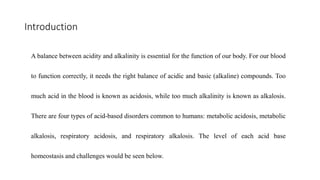
A balance between acidity and alkalinity is essential for the function of our body. For our blood
to function correctly, it needs the right balance of acidic and basic (alkaline) compounds. Too
much acid in the blood is known as acidosis, while too much alkalinity is known as alkalosis.
There are four types of acid-based disorders common to humans: metabolic acidosis, metabolic
alkalosis, respiratory acidosis, and respiratory alkalosis. The level of each acid base
homeostasis and challenges would be seen below.
Acid-base balance overview
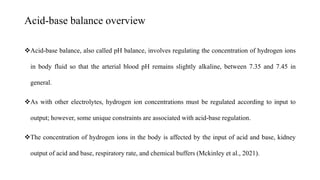
Acid-base balance, also called pH balance, involves regulating the concentration of hydrogen ions
in body fluid so that the arterial blood pH remains slightly alkaline, between 7.35 and 7.45 in
general.
As with other electrolytes, hydrogen ion concentrations must be regulated according to input to
output; however, some unique constraints are associated with acid-base regulation.
The concentration of hydrogen ions in the body is affected by the input of acid and base, kidney
output of acid and base, respiratory rate, and chemical buffers (Mckinley et al., 2021).
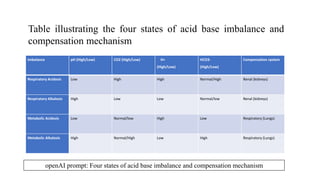
Imbalance pH (High/Low) CO2 (High/Low) H+
(High/Low)
HCO3-
(High/Low)
Compensation system
Respiratory Acidosis Low High High Normal/High Renal (kidneys)
Respiratory Alkalosis High Low Low Normal/low Renal (kidneys)
Metabolic Acidosis Low Normal/low High Low Respiratory (Lungs)
Metabolic Alkalosis High Normal/High Low High Respiratory (Lungs)
Table illustrating the four states of acid base imbalance and
compensation mechanism
openAI prompt: Four states of acid base imbalance and compensation mechanism
Respiratory acidosis (NEW)
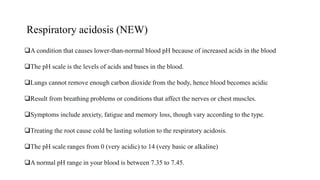
A condition that causes lower-than-normal blood pH because of increased acids in the blood
The pH scale is the levels of acids and bases in the blood.
Lungs cannot remove enough carbon dioxide from the body, hence blood becomes acidic
Result from breathing problems or conditions that affect the nerves or chest muscles.
Symptoms include anxiety, fatigue and memory loss, though vary according to the type.
Treating the root cause cold be lasting solution to the respiratory acidosis.
The pH scale ranges from 0 (very acidic) to 14 (very basic or alkaline)
A normal pH range in your blood is between 7.35 to 7.45.
Respiratory alkalosis
Respiratory alkalosis occurs when low carbon dioxide levels disrupt the blood’s acid-base balance.
Often occurs in people who experience rapid, uncontrollable breathing (hyperventilation).
Supplemental oxygen and therapies to reduce the risk of hyperventilation.
Our body is continuously working to maintain the blood’s acid-base (alkali) balance.
Alkalosis occurs when there’s too much alkali and not enough acid.
Chemical changes in the acid-base balance can reflect changes in metabolism or breathing.
Metabolic acidosis
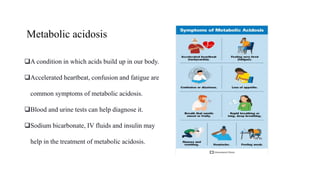
A condition in which acids build up in our body.
Accelerated heartbeat, confusion and fatigue are
common symptoms of metabolic acidosis.
Blood and urine tests can help diagnose it.
Sodium bicarbonate, IV fluids and insulin may
help in the treatment of metabolic acidosis.
Metabolic alkalosis
Alkalosis occurs when the blood and body fluids contain an excess of bases or alkali.
It is an excess of bicarbonate in the body fluids that occurs in a variety of conditions.
Result from digestive issues, like repeated vomiting, that disrupt the blood’s acid-base balance.
Happens when stomach acid is decreased or certain electrolyte levels drop.
Metabolic alkalosis can occur as a result of severe bouts of vomiting.
work cited
Cleveland Clinic. (2023, March 17). Respiratory Acidosis: Causes, Symptoms & Treatment.
Cleveland Clinic. https://my.clevelandclinic.org/health/diseases/24834-respiratory-acidosis.
Brinkman, J. E., & Sharma, S. (2022). Physiology, respiratory alkalosis. Nih.gov; StatPearls
Publishing. https://www.ncbi.nlm.nih.gov/books/NBK482117/.
Mckinley, M. P., Valerie Dean O'loughlin, & Theresa Stouter Bidle. (2021). Anatomy & physiology :
an integrative approach (4th ed.). Mcgraw-Hill Llc.
https://chat.openai.com/c/f4ea2b3a-5699-40a0-ba48-562e8a4d6242

BIO202 module 6 Critical Thinking presentation slidShare.pptx

  • 1.
    Hi Dr. B, Hereis the link to BIO202 Module 6 Critical Thinking Assignment in the SlideShare site:
  • 2.
    Blood Flow andPressure Regulation Simon Noeumoh Colorado State University - Global Campus BIO200 Human Anatomy and Physiology I with Lab Dr Burress, Landrus 27th, January 2024
  • 3.
    Introduction A balance betweenacidity and alkalinity is essential for the function of our body. For our blood to function correctly, it needs the right balance of acidic and basic (alkaline) compounds. Too much acid in the blood is known as acidosis, while too much alkalinity is known as alkalosis. There are four types of acid-based disorders common to humans: metabolic acidosis, metabolic alkalosis, respiratory acidosis, and respiratory alkalosis. The level of each acid base homeostasis and challenges would be seen below.
  • 4.
    Acid-base balance overview Acid-basebalance, also called pH balance, involves regulating the concentration of hydrogen ions in body fluid so that the arterial blood pH remains slightly alkaline, between 7.35 and 7.45 in general. As with other electrolytes, hydrogen ion concentrations must be regulated according to input to output; however, some unique constraints are associated with acid-base regulation. The concentration of hydrogen ions in the body is affected by the input of acid and base, kidney output of acid and base, respiratory rate, and chemical buffers (Mckinley et al., 2021).
  • 5.
    Imbalance pH (High/Low)CO2 (High/Low) H+ (High/Low) HCO3- (High/Low) Compensation system Respiratory Acidosis Low High High Normal/High Renal (kidneys) Respiratory Alkalosis High Low Low Normal/low Renal (kidneys) Metabolic Acidosis Low Normal/low High Low Respiratory (Lungs) Metabolic Alkalosis High Normal/High Low High Respiratory (Lungs) Table illustrating the four states of acid base imbalance and compensation mechanism openAI prompt: Four states of acid base imbalance and compensation mechanism
  • 6.
    Respiratory acidosis (NEW) Acondition that causes lower-than-normal blood pH because of increased acids in the blood The pH scale is the levels of acids and bases in the blood. Lungs cannot remove enough carbon dioxide from the body, hence blood becomes acidic Result from breathing problems or conditions that affect the nerves or chest muscles. Symptoms include anxiety, fatigue and memory loss, though vary according to the type. Treating the root cause cold be lasting solution to the respiratory acidosis. The pH scale ranges from 0 (very acidic) to 14 (very basic or alkaline) A normal pH range in your blood is between 7.35 to 7.45.
  • 7.
    Respiratory alkalosis Respiratory alkalosisoccurs when low carbon dioxide levels disrupt the blood’s acid-base balance. Often occurs in people who experience rapid, uncontrollable breathing (hyperventilation). Supplemental oxygen and therapies to reduce the risk of hyperventilation. Our body is continuously working to maintain the blood’s acid-base (alkali) balance. Alkalosis occurs when there’s too much alkali and not enough acid. Chemical changes in the acid-base balance can reflect changes in metabolism or breathing.
  • 8.
    Metabolic acidosis A conditionin which acids build up in our body. Accelerated heartbeat, confusion and fatigue are common symptoms of metabolic acidosis. Blood and urine tests can help diagnose it. Sodium bicarbonate, IV fluids and insulin may help in the treatment of metabolic acidosis.
  • 9.
    Metabolic alkalosis Alkalosis occurswhen the blood and body fluids contain an excess of bases or alkali. It is an excess of bicarbonate in the body fluids that occurs in a variety of conditions. Result from digestive issues, like repeated vomiting, that disrupt the blood’s acid-base balance. Happens when stomach acid is decreased or certain electrolyte levels drop. Metabolic alkalosis can occur as a result of severe bouts of vomiting.
  • 10.
    work cited Cleveland Clinic.(2023, March 17). Respiratory Acidosis: Causes, Symptoms & Treatment. Cleveland Clinic. https://my.clevelandclinic.org/health/diseases/24834-respiratory-acidosis. Brinkman, J. E., & Sharma, S. (2022). Physiology, respiratory alkalosis. Nih.gov; StatPearls Publishing. https://www.ncbi.nlm.nih.gov/books/NBK482117/. Mckinley, M. P., Valerie Dean O'loughlin, & Theresa Stouter Bidle. (2021). Anatomy & physiology : an integrative approach (4th ed.). Mcgraw-Hill Llc. https://chat.openai.com/c/f4ea2b3a-5699-40a0-ba48-562e8a4d6242