Jan W
. Veldsink MSc
THE ART OF


ARTIFICIAL INTELLIGENCE


TRUSTWORTHY AI


Jan W Veldsink MSc


Jan W
. Veldsink MSc
Modular MBA


2021


AI and Digital Security


AISEC
drs. Jan W Veldsink
Jan W
. Veldsink MSc
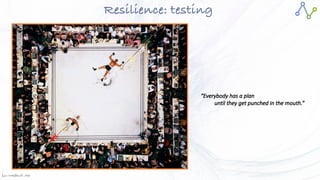
“Everybody has a plan
until they get punched in the mouth.”
Resilience: testing
Jan W
. Veldsink MSc
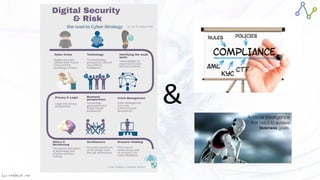
&
Jan W
. Veldsink MSc
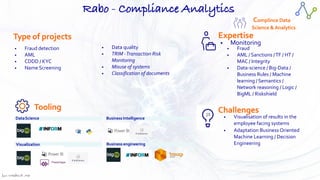
Rabo - Compliance Analytics


• Fraud


• AML / Sanctions /TF / HT /
MAC / Integrity


• Data-science / Big-Data /
Business Rules / Machine
learning / Semantics /
Network reasoning / Logic /
BigML / Riskshield
Expertise


• Monitoring
• Visualisation of results in the
employee facing systems


• Adaptation Business Oriented
Machine Learning / Decision
Engineering
Challenges
Tooling
DataScience
Visualization
BusinessIntelligence
Business engineering
Type of projects
• Fraud detection


• AML


• CDDD / KYC


• Name Screening
• Data quality


• TRIM -Transaction Risk
Monitoring


• Misuse of systems


• Classification of documents
Complince Data
Science & Analytics
Jan W
. Veldsink MSc
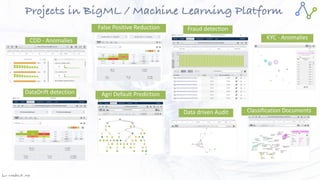
Projects in BigML / Machine Learning Platform
DataDrift detection Agri Default Prediction
Fraud detection
CDD - Anomalies
Data driven Audit
False Positive Reduction
Classification Documents
KYC - Anomalies
Jan W
. Veldsink MSc
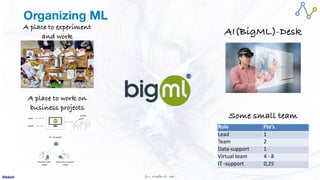
Organizing ML
Role Fte’s
Lead 1
Team 2
Data-support 1
Virtual team 4 - 8
IT -support 0,25
Some small team
A place to experiment
and work
ML/AI expert
Domain Data
expert
Business Domain
expert
Data
Labels
Model
A place to work on
business projects
AI(BigML)-Desk
Jan W
. Veldsink MSc
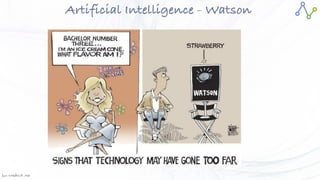
Artificial Intelligence - Watson
Jan W
. Veldsink MSc
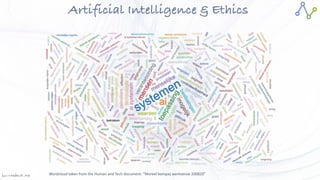
Artificial Intelligence & Ethics
Wordcloud taken from the Human and Tech document: “Moreel kompas werkversie 200820”
Jan W
. Veldsink MSc
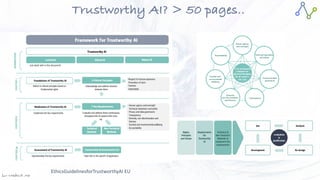
Trustworthy AI? > 50 pages..
EthicsGuidelinesforTrustworthyAI EU
Jan W Veldsink / Grio
CONFIDENTIAL
© AXVECO 2020. All rights reserved
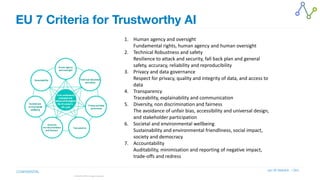
EU 7 Criteria for Trustworthy AI
1. Human agency and oversight


Fundamental rights, human agency and human oversight


2. Technical Robustness and safety


Resilience to attack and security, fall back plan and general
safety, accuracy, reliability and reproducibility


3. Privacy and data governance


Respect for privacy, quality and integrity of data, and access to
data


4. Transparency


Traceability, explainability and communication


5. Diversity, non discrimination and fairness


The avoidance of unfair bias, accessibility and universal design,
and stakeholder participation


6. Societal and environmental wellbeing


Sustainability and environmental friendliness, social impact,
society and democracy


7. Accountability


Auditability, minimisation and reporting of negative impact,
trade-offs and redress
Jan W
. Veldsink MSc
Jan W
. Veldsink MSc
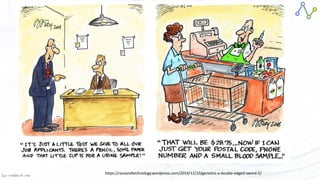
https://raceandtechnology.wordpress.com/2014/12/10/genetics-a-double-edged-sword-2/
Jan W
. Veldsink MSc
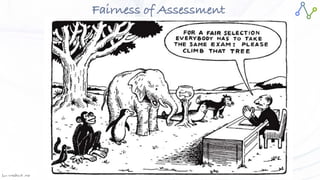
Fairness of Assessment
Jan W
. Veldsink MSc
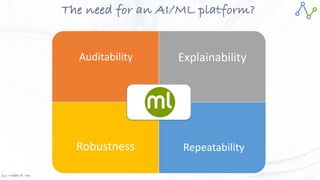
The need for an AI/ML platform?
Auditability
Repeatability
Jan W
. Veldsink MSc
Situational Ethics
Situational ethics or situation ethics takes into account the particular context of
an act when evaluating it ethically, rather than judging it according to absolute
moral standards. With the intent to have a fair basis for judgments or action, one
looks to personal ideals of what is appropriate to guide them, rather than an
unchanging universal code of conduct, such as Biblical law under divine command
theory or the Kantian categorical imperative.[1] Proponents of situational
approaches to ethics include existentialist philosophers Sartre, de Beauvoir,
Jaspers, and Heidegger.[2
]

https://en.wikipedia.org/wiki/Situational_ethics
Jan W
. Veldsink MSc
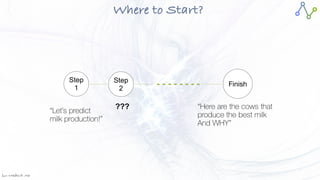
Where to Start?
Step


1
Finish
“Let’s predict


milk production!”
“Here are the cows that
produce the best milk


And WHY”
Step
2
- - - - - - - -
???
Jan W
. Veldsink MSc
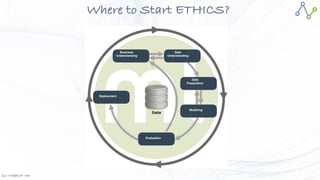
Where to Start ETHICS?
Step


1
“Let’s predict


milk production!”
Evaluation
Modeling
Data
Understanding
Data
Preparation
Business
Understanding
Deployment
Jan W
. Veldsink MSc
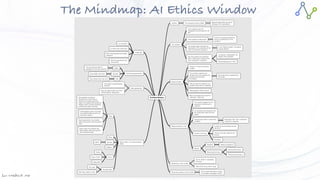
The Mindmap: AI Ethics Window
AI Ethics Window
Initiation The business need for AI/ML
Business task within the vision/
strategy of the organisation
The question
Is the question specific,
transparent and focussed on AI/
ML?
Is the question is Business?
From the business perspective
there is a justification for the
question:
The question also includes the
description of the data that will be
used to answer the question!
In the “Model creation” the data is
exactly defined
Can the question be answered
with or without the consent of the
user / employee / customer?
Is a person / organisation the
subject of the question
Can people get hurt / die?
Model Creation
There is no reuse of previous
models
The model is made for the
question and only answers the
question that has been
formulated
Every decision is explained by
the model
Only the data formulated in the
question was used for modeling
Tested against “Ethics Frame”
Will it be designed for dynamic /
calibration / learning?
Model execution / Use
The model is applied for the
purpose of answering the
question!
No questions are answered with
the model other than the ones
asked.
Are personal values or autonomy
at stake?
Permission from user / employee /
customer is required
Human in the loop
Is there a human making the last
decision?
Can the end-user influence the
actions
Feedback
Monitor
Datadrift Model competence
Model performance
Ethics performance
Decision performance
Destruction of the model
The AI model is completely
removed
Parts of the AI are left for reuse
Recycling of parts / of the model
Is the model intended for reuse,
for example a language model?
Ethics frame / non discriminatory
labels
Bias
Demographic blindness:
decisions are made using a
limited set of features that are
highly uncorrelated with protected
classes, that is, groups of people
protected by laws or policies.
Demographic parity: outcomes
are proportionally equal for all
protected classes.
Equal opportunity: true-positive
rates are equal for each protected
class.
Equal odds: true-positive and
false-positive rates are equal for
each protected class.
Race
Gender
M/F/U
Religion
Etnics
Name
Place of birth
Nationality
Societal class
Zip code
Earnings / salary / funds
Data assessment
Is the data a representative
sample?
Does the data contain any of the
“discriminating” data points
Technology assessment
Viable
Are we using the right AI
paradigm to solve the problem
Valuable
Does AI/ML add value
Vital
How critical is the use of AI
4-Way test
Is it the truth?
Is it fair to all concerned?
Will it build goodwill and better
relations?
Will it be beneficial to all
concerned?
Jan W
. Veldsink MSc
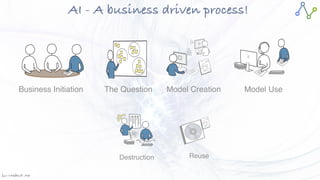
AI - A business driven process!
Destruction Reuse
Business Initiation The Question Model Creation Model Use
Jan W Veldsink / Grio
CONFIDENTIAL
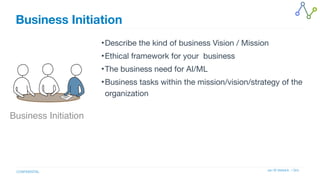
Business Initiation
Business Initiation
•Describe the kind of business Vision / Mission

•Ethical framework for your business

•The business need for AI/ML

•Business tasks within the mission/vision/strategy of the
organization
Jan W Veldsink / Grio
CONFIDENTIAL
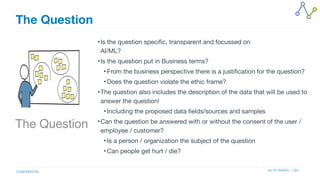
The Question
•Is the question specific, transparent and focussed on 

AI/ML?

•Is the question put in Business terms?

• From the business perspective there is a justification for the question?

• Does the question violate the ethic frame?

•The question also includes the description of the data that will be used to
answer the question!

• Including the proposed data fields/sources and samples

•Can the question be answered with or without the consent of the user /
employee / customer?

• Is a person / organization the subject of the question

• Can people get hurt / die?
The Question
Jan W Veldsink / Grio
CONFIDENTIAL
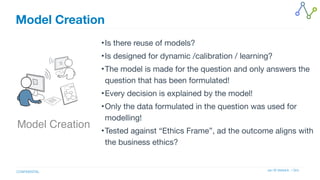
Model Creation
•Is there reuse of models?

•Is designed for dynamic /calibration / learning?

•The model is made for the question and only answers the
question that has been formulated!

•Every decision is explained by the model! 

•Only the data formulated in the question was used for
modelling!

•Tested against “Ethics Frame”, ad the outcome aligns with
the business ethics?
Model Creation
Jan W Veldsink / Grio
CONFIDENTIAL
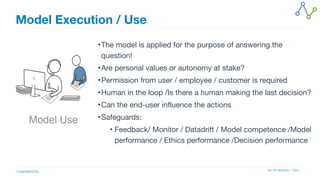
Model Execution / Use
•The model is applied for the purpose of answering the
question!

•Are personal values or autonomy at stake?

•Permission from user / employee / customer is required

•Human in the loop /Is there a human making the last decision?

•Can the end-user influence the actions

•Safeguards:

• Feedback/ Monitor / Datadrift / Model competence /Model
performance / Ethics performance /Decision performance
Model Use
Jan W Veldsink / Grio
CONFIDENTIAL
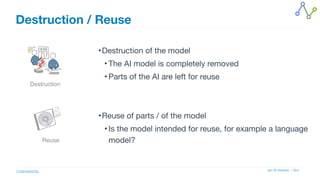
Destruction / Reuse
•Destruction of the model

• The AI model is completely removed

• Parts of the AI are left for reuse

•Reuse of parts / of the model

• Is the model intended for reuse, for example a language
model?
Destruction
Reuse
Jan W
. Veldsink MSc
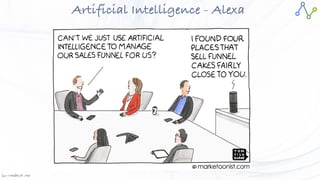
Artificial Intelligence - Alexa
Jan W
. Veldsink MSc
Destruction / Reuse
Jan W
. Veldsink MSc
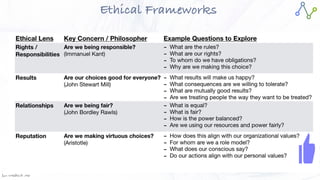
Ethical Frameworks
Jan W Veldsink / Grio
CONFIDENTIAL
Bias Assessment
•Demographic blindness: decisions are made using a
limited set of features that are highly uncorrelated with
protected classes, that is, groups of people protected by
laws or policies.

•Demographic parity: outcomes are proportionally equal for
all protected classes.

•Equal opportunity: true-positive rates are equal for each
protected class.

•Equal odds: true-positive and false-positive rates are equal
for each protected class.
Jan W Veldsink / Grio
CONFIDENTIAL
Data Assessment
•Is the data for training the model a representative sample?

•Does the data contain any of the “discriminating” data
points

• Race

• Gender

• Religion

• Ethnics

• Nationality

• Societal class
Data
Jan W
. Veldsink MSc
What
	
is (algorithmic) accountability?
• Responsibility (bad predictions) vs.
accountability (accurate, but “unethical”
predictions)


• “With great power comes great responsibility”


• Accountability – being answerable for
managing quality, risks, results, and for
compliance with policies wrt assigned
responsibilities
Jan W
. Veldsink MSc
Discrimination Prevention: Why?
ML algorithms are considered to be inherently
objective, or to have no bad intent, but:


• models are as good as the underlying (biased)
data they learn from,


• algorithms may reinforce human prejudices,


• while human decision makers may
discriminate occasionally, algorithms would
discriminate systematically.
Jan W
. Veldsink MSc
Why Can Predictive Models Discriminate?
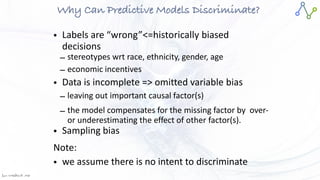
• Labels are “wrong”<=historically biased
decisions


– stereotypes wrt race, ethnicity, gender, age


– economic incentives


• Data is incomplete => omitted variable bias


– leaving out important causal factor(s)


– the model compensates for the missing factor by over-
or underestimating the effect of other factor(s).


• Sampling bias


Note:


• we assume there is no intent to discriminate
Jan W
. Veldsink MSc
Discrimination Prevention: How?
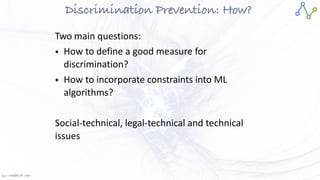
Two main questions:


• How to define a good measure for
discrimination?


• How to incorporate constraints into ML
algorithms?


Social-technical, legal-technical and technical
issues
Jan W
. Veldsink MSc
Predicting with SensitiveAttributes
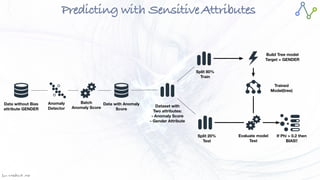
Dataset with
Two attributes:
- Anomaly Score
- Gender Attribute
Split 80%
Train
Split 20%
Test
Build Tree model
Target = GENDER
Evaluate model
Test
If Phi > 0.2 then
BIAS!!
Trained
Model(tree)
Data without Bias
attribute GENDER
Anomaly
Detector
Data with Anomaly
Score
Batch
Anomaly Score
Jan W
. Veldsink MSc
Discrimination-aware Solutions
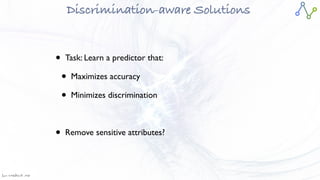
• Task: Learn a predictor that
:

• Maximizes accurac
y

• Minimizes discriminatio
n

• Remove sensitive attributes?
Jan W Veldsink / Grio
CONFIDENTIAL
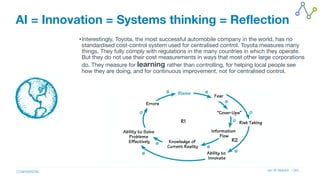
AI = Innovation = Systems thinking = Reflection
•Interestingly, Toyota, the most successful automobile company in the world, has no
standardised cost-control system used for centralised control. Toyota measures many
things. They fully comply with regulations in the many countries in which they operate.
But they do not use their cost measurements in ways that most other large corporations
do. They measure for learning rather than controlling, for helping local people see
how they are doing, and for continuous improvement, not for centralised control.
Jan W
. Veldsink MSc
Jan W
. Veldsink MSc
CONFIDENTIAL
Drs. Jan Veldsink
Jan W Veldsink / Grio
CONFIDENTIAL

BigMLSchool: Trustworthy AI

  • 1.
    Jan W . VeldsinkMSc THE ART OF ARTIFICIAL INTELLIGENCE TRUSTWORTHY AI Jan W Veldsink MSc 

  • 2.
  • 3.
    Modular MBA 2021 AI andDigital Security AISEC drs. Jan W Veldsink
  • 4.
    Jan W . VeldsinkMSc “Everybody has a plan until they get punched in the mouth.” Resilience: testing
  • 5.
  • 6.
    Jan W . VeldsinkMSc Rabo - Compliance Analytics • Fraud • AML / Sanctions /TF / HT / MAC / Integrity • Data-science / Big-Data / Business Rules / Machine learning / Semantics / Network reasoning / Logic / BigML / Riskshield Expertise • Monitoring • Visualisation of results in the employee facing systems • Adaptation Business Oriented Machine Learning / Decision Engineering Challenges Tooling DataScience Visualization BusinessIntelligence Business engineering Type of projects • Fraud detection • AML • CDDD / KYC • Name Screening • Data quality • TRIM -Transaction Risk Monitoring • Misuse of systems • Classification of documents Complince Data Science & Analytics
  • 7.
    Jan W . VeldsinkMSc Projects in BigML / Machine Learning Platform DataDrift detection Agri Default Prediction Fraud detection CDD - Anomalies Data driven Audit False Positive Reduction Classification Documents KYC - Anomalies
  • 8.
    Jan W . VeldsinkMSc Organizing ML Role Fte’s Lead 1 Team 2 Data-support 1 Virtual team 4 - 8 IT -support 0,25 Some small team A place to experiment and work ML/AI expert Domain Data expert Business Domain expert Data Labels Model A place to work on business projects AI(BigML)-Desk
  • 9.
    Jan W . VeldsinkMSc Artificial Intelligence - Watson
  • 10.
    Jan W . VeldsinkMSc Artificial Intelligence & Ethics Wordcloud taken from the Human and Tech document: “Moreel kompas werkversie 200820”
  • 11.
    Jan W . VeldsinkMSc Trustworthy AI? > 50 pages.. EthicsGuidelinesforTrustworthyAI EU
  • 12.
    Jan W Veldsink/ Grio CONFIDENTIAL © AXVECO 2020. All rights reserved EU 7 Criteria for Trustworthy AI 1. Human agency and oversight 
 Fundamental rights, human agency and human oversight 2. Technical Robustness and safety 
 Resilience to attack and security, fall back plan and general safety, accuracy, reliability and reproducibility 3. Privacy and data governance 
 Respect for privacy, quality and integrity of data, and access to data 4. Transparency 
 Traceability, explainability and communication 5. Diversity, non discrimination and fairness 
 The avoidance of unfair bias, accessibility and universal design, and stakeholder participation 6. Societal and environmental wellbeing 
 Sustainability and environmental friendliness, social impact, society and democracy 7. Accountability 
 Auditability, minimisation and reporting of negative impact, trade-offs and redress
  • 13.
  • 14.
    Jan W . VeldsinkMSc https://raceandtechnology.wordpress.com/2014/12/10/genetics-a-double-edged-sword-2/
  • 15.
    Jan W . VeldsinkMSc Fairness of Assessment
  • 16.
    Jan W . VeldsinkMSc The need for an AI/ML platform? Auditability Repeatability
  • 17.
    Jan W . VeldsinkMSc Situational Ethics Situational ethics or situation ethics takes into account the particular context of an act when evaluating it ethically, rather than judging it according to absolute moral standards. With the intent to have a fair basis for judgments or action, one looks to personal ideals of what is appropriate to guide them, rather than an unchanging universal code of conduct, such as Biblical law under divine command theory or the Kantian categorical imperative.[1] Proponents of situational approaches to ethics include existentialist philosophers Sartre, de Beauvoir, Jaspers, and Heidegger.[2 ] https://en.wikipedia.org/wiki/Situational_ethics
  • 18.
    Jan W . VeldsinkMSc Where to Start? Step 1 Finish “Let’s predict 
 milk production!” “Here are the cows that produce the best milk And WHY” Step 2 - - - - - - - - ???
  • 19.
    Jan W . VeldsinkMSc Where to Start ETHICS? Step 1 “Let’s predict 
 milk production!” Evaluation Modeling Data Understanding Data Preparation Business Understanding Deployment
  • 20.
    Jan W . VeldsinkMSc The Mindmap: AI Ethics Window AI Ethics Window Initiation The business need for AI/ML Business task within the vision/ strategy of the organisation The question Is the question specific, transparent and focussed on AI/ ML? Is the question is Business? From the business perspective there is a justification for the question: The question also includes the description of the data that will be used to answer the question! In the “Model creation” the data is exactly defined Can the question be answered with or without the consent of the user / employee / customer? Is a person / organisation the subject of the question Can people get hurt / die? Model Creation There is no reuse of previous models The model is made for the question and only answers the question that has been formulated Every decision is explained by the model Only the data formulated in the question was used for modeling Tested against “Ethics Frame” Will it be designed for dynamic / calibration / learning? Model execution / Use The model is applied for the purpose of answering the question! No questions are answered with the model other than the ones asked. Are personal values or autonomy at stake? Permission from user / employee / customer is required Human in the loop Is there a human making the last decision? Can the end-user influence the actions Feedback Monitor Datadrift Model competence Model performance Ethics performance Decision performance Destruction of the model The AI model is completely removed Parts of the AI are left for reuse Recycling of parts / of the model Is the model intended for reuse, for example a language model? Ethics frame / non discriminatory labels Bias Demographic blindness: decisions are made using a limited set of features that are highly uncorrelated with protected classes, that is, groups of people protected by laws or policies. Demographic parity: outcomes are proportionally equal for all protected classes. Equal opportunity: true-positive rates are equal for each protected class. Equal odds: true-positive and false-positive rates are equal for each protected class. Race Gender M/F/U Religion Etnics Name Place of birth Nationality Societal class Zip code Earnings / salary / funds Data assessment Is the data a representative sample? Does the data contain any of the “discriminating” data points Technology assessment Viable Are we using the right AI paradigm to solve the problem Valuable Does AI/ML add value Vital How critical is the use of AI 4-Way test Is it the truth? Is it fair to all concerned? Will it build goodwill and better relations? Will it be beneficial to all concerned?
  • 21.
    Jan W . VeldsinkMSc AI - A business driven process! Destruction Reuse Business Initiation The Question Model Creation Model Use
  • 22.
    Jan W Veldsink/ Grio CONFIDENTIAL Business Initiation Business Initiation •Describe the kind of business Vision / Mission •Ethical framework for your business •The business need for AI/ML •Business tasks within the mission/vision/strategy of the organization
  • 23.
    Jan W Veldsink/ Grio CONFIDENTIAL The Question •Is the question specific, transparent and focussed on 
 AI/ML? •Is the question put in Business terms? • From the business perspective there is a justification for the question? • Does the question violate the ethic frame? •The question also includes the description of the data that will be used to answer the question! • Including the proposed data fields/sources and samples •Can the question be answered with or without the consent of the user / employee / customer? • Is a person / organization the subject of the question • Can people get hurt / die? The Question
  • 24.
    Jan W Veldsink/ Grio CONFIDENTIAL Model Creation •Is there reuse of models? •Is designed for dynamic /calibration / learning? •The model is made for the question and only answers the question that has been formulated! •Every decision is explained by the model! •Only the data formulated in the question was used for modelling! •Tested against “Ethics Frame”, ad the outcome aligns with the business ethics? Model Creation
  • 25.
    Jan W Veldsink/ Grio CONFIDENTIAL Model Execution / Use •The model is applied for the purpose of answering the question! •Are personal values or autonomy at stake? •Permission from user / employee / customer is required •Human in the loop /Is there a human making the last decision? •Can the end-user influence the actions •Safeguards: • Feedback/ Monitor / Datadrift / Model competence /Model performance / Ethics performance /Decision performance Model Use
  • 26.
    Jan W Veldsink/ Grio CONFIDENTIAL Destruction / Reuse •Destruction of the model • The AI model is completely removed • Parts of the AI are left for reuse •Reuse of parts / of the model • Is the model intended for reuse, for example a language model? Destruction Reuse
  • 27.
    Jan W . VeldsinkMSc Artificial Intelligence - Alexa
  • 28.
    Jan W . VeldsinkMSc Destruction / Reuse
  • 29.
    Jan W . VeldsinkMSc Ethical Frameworks
  • 30.
    Jan W Veldsink/ Grio CONFIDENTIAL Bias Assessment •Demographic blindness: decisions are made using a limited set of features that are highly uncorrelated with protected classes, that is, groups of people protected by laws or policies. •Demographic parity: outcomes are proportionally equal for all protected classes. •Equal opportunity: true-positive rates are equal for each protected class. •Equal odds: true-positive and false-positive rates are equal for each protected class.
  • 31.
    Jan W Veldsink/ Grio CONFIDENTIAL Data Assessment •Is the data for training the model a representative sample? •Does the data contain any of the “discriminating” data points • Race • Gender • Religion • Ethnics • Nationality • Societal class Data
  • 32.
    Jan W . VeldsinkMSc What is (algorithmic) accountability? • Responsibility (bad predictions) vs. accountability (accurate, but “unethical” predictions) • “With great power comes great responsibility” • Accountability – being answerable for managing quality, risks, results, and for compliance with policies wrt assigned responsibilities
  • 33.
    Jan W . VeldsinkMSc Discrimination Prevention: Why? ML algorithms are considered to be inherently objective, or to have no bad intent, but: • models are as good as the underlying (biased) data they learn from, • algorithms may reinforce human prejudices, • while human decision makers may discriminate occasionally, algorithms would discriminate systematically.
  • 34.
    Jan W . VeldsinkMSc Why Can Predictive Models Discriminate? • Labels are “wrong”<=historically biased decisions – stereotypes wrt race, ethnicity, gender, age – economic incentives • Data is incomplete => omitted variable bias – leaving out important causal factor(s) – the model compensates for the missing factor by over- or underestimating the effect of other factor(s). • Sampling bias Note: • we assume there is no intent to discriminate
  • 35.
    Jan W . VeldsinkMSc Discrimination Prevention: How? Two main questions: • How to define a good measure for discrimination? • How to incorporate constraints into ML algorithms? Social-technical, legal-technical and technical issues
  • 36.
    Jan W . VeldsinkMSc Predicting with SensitiveAttributes Dataset with Two attributes: - Anomaly Score - Gender Attribute Split 80% Train Split 20% Test Build Tree model Target = GENDER Evaluate model Test If Phi > 0.2 then BIAS!! Trained Model(tree) Data without Bias attribute GENDER Anomaly Detector Data with Anomaly Score Batch Anomaly Score
  • 37.
    Jan W . VeldsinkMSc Discrimination-aware Solutions • Task: Learn a predictor that : • Maximizes accurac y • Minimizes discriminatio n • Remove sensitive attributes?
  • 38.
    Jan W Veldsink/ Grio CONFIDENTIAL AI = Innovation = Systems thinking = Reflection •Interestingly, Toyota, the most successful automobile company in the world, has no standardised cost-control system used for centralised control. Toyota measures many things. They fully comply with regulations in the many countries in which they operate. But they do not use their cost measurements in ways that most other large corporations do. They measure for learning rather than controlling, for helping local people see how they are doing, and for continuous improvement, not for centralised control.
  • 39.
  • 40.
    Jan W . VeldsinkMSc CONFIDENTIAL Drs. Jan Veldsink
  • 41.
    Jan W Veldsink/ Grio CONFIDENTIAL