BIAS IN HEALTHCARE
An Evidence-Based
Overview
Kimberley Barker, MLIS
Librarian for Belonging & Community Engagement
Claude Moore Health Sciences Library
University of Virginia
LAND ACKNOWLEDGMENT
I respectfully acknowledge that
the University of Virginia
inhabits the unceded, traditional, and
current territory of the
Monacan Indian Nation.
https://www.monacannation.com/
LABOR ACKNOWLEDGEMENT
We must acknowledge that the University of Virginia-
its construction, growth, and development- was
made possible through the coerced labor of enslaved
Africans and African Americans. We are all indebted
to their sacrifice. We recognize that the legacies of
slavery are still present today and that racism
continues to shape our laws, cultures, and
institutions.
Credit: Meggan Cashwell, Ph.D. Adapted from Terah ‘TJ’ Stewart and the Mid-American Arts Alliance.
Learning Objectives
• At the end of this presentation, you will be able to:
• Define bias
• List effects of bias on healthcare (patients & providers)
• Identify different types of bias
• Define systemic bias/structural racism
• List effects of systemic bias on healthcare
Learning Objectives, cont’d
• Understand the difference between conscious and unconscious bias
• Understand how to combat both explicit/conscious and
implicit/unconscious bias
• Define health disparity and health inequity
• Define cultural trauma
• Define epigenetics
• Understand the costs of bias in healthcare
• negative effects of bias for patients’ health
• economic impacts
• Understand how bias affects healthcare as an industry
What is bias (conscious & unconscious)?
• Conscious bias is defined as, “prejudice in favor of or against one thing,
person, or group compared with another, usually in a way considered to
be unfair.”
• Unconscious bias is, “attitudes or stereotypes that unknowingly alter our
perceptions or understanding of our experiences, thereby affecting
behavior interactions and decision-making.”
Some Types of Bias
• Weight/anti-fat bias
• LGBTQIA2S+ bias
• Racial bias
• Gender bias
• Class bias
• Disability bias
What is racism?
“… prejudice, discrimination, or antagonism by an
individual, community, or institution against a person
or people on the basis of their membership in a
particular racial or ethnic group, typically one that is a
minority or marginalized.”
-- from Oxford Languages
Structural/systemic racism
• “…refers to the totality of ways in which societies foster racial
discrimination through mutually reinforcing systems of housing,
education, employment, earnings, benefits, credit, media, health
care and criminal justice. These patterns and practices in turn
reinforce discriminatory beliefs, values and distribution of
resources, according to Zinzi Bailey, ScD, MSPH, et al.1”
doi:10.1001/jamanetworkopen.2023.9739
• Many of these patterns and systems in the U.S. have their roots in slavery.
• While slavery itself may be ended, its effects are felt in the lives of BIPOC
to this day, not only in systemic racism and the resulting health disparities
and health inequities, but in epigenetics.
Health Disparities & Health Inequities
• Health disparities are preventable differences in the burden of
disease, injury, violence, or opportunities to achieve optimal
health that are experienced by socially disadvantaged
populations.- CDC
• Health inequities are differences in health status or in the
distribution of health resources between different population
groups, arising from the social conditions in which people are
born, grow, live, work and age.- WHO
Epigenetics, 1
• “the study of how cells control gene activity without changing the DNA
sequence.”- MedlinePlus
• “the study of how your behaviors and environment can cause changes that
affect the way your genes work. Unlike genetic changes, epigenetic
changes are reversible and do not change your DNA sequence, but they
can change how your body reads a DNA sequence.”- CDC
Epigenetics, 2
• The Dutch Hunger Winter
• the regulatory systems of growth genes were altered in children
conceived, but not born, during the famine
• Holocaust Survivors
• Epigenetic transference of nightmares and stress responses to their
children
• The Vietnam Conflict
• Transference of PTSD to offspring of people who served in Vietnam
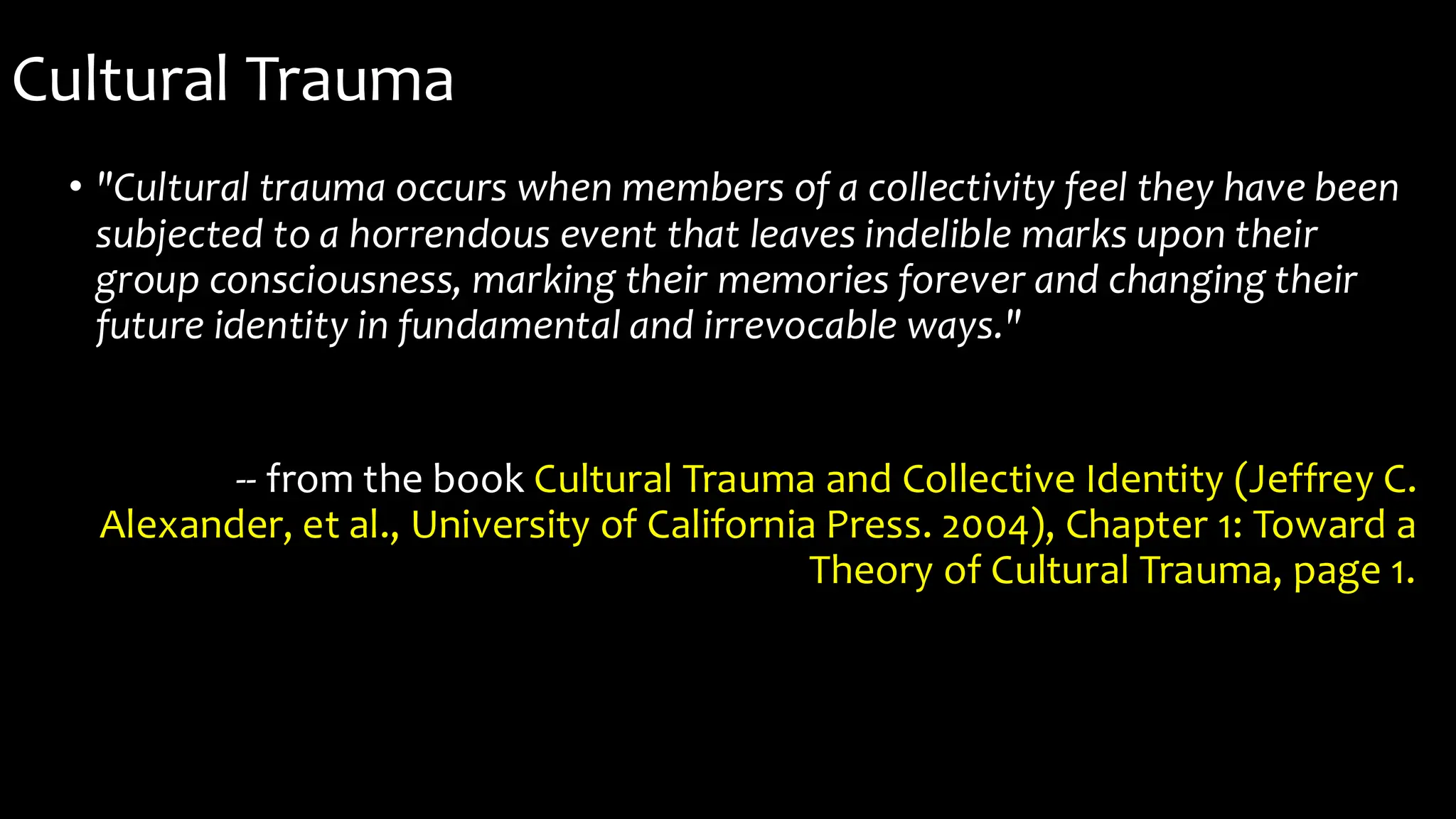
Cultural Trauma
• "Cultural trauma occurs when members of a collectivity feel they have been
subjected to a horrendous event that leaves indelible marks upon their
group consciousness, marking their memories forever and changing their
future identity in fundamental and irrevocable ways."
-- from the book Cultural Trauma and Collective Identity (Jeffrey C.
Alexander, et al., University of California Press. 2004), Chapter 1: Toward a
Theory of Cultural Trauma, page 1.
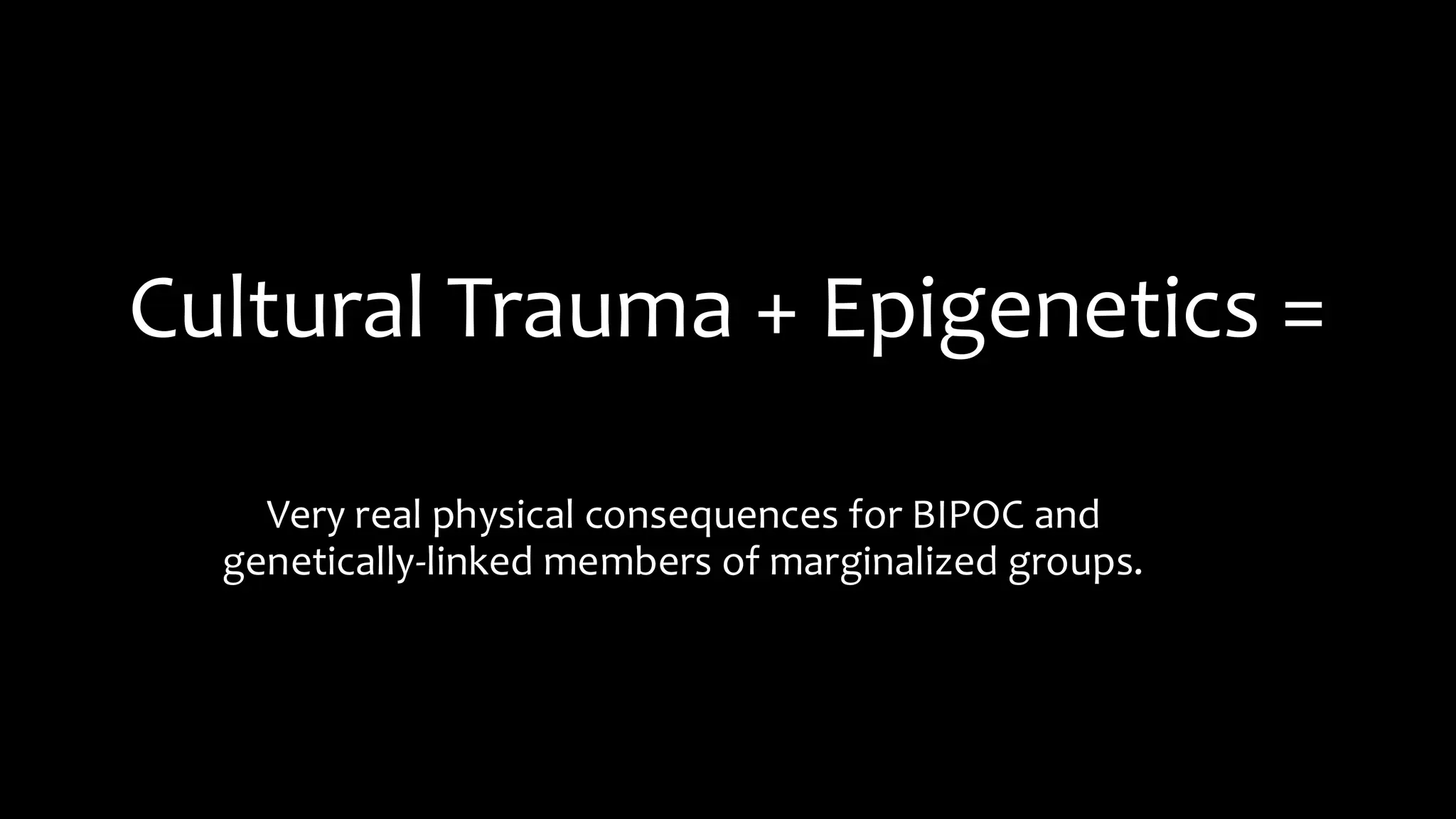
Cultural Trauma + Epigenetics =
Very real physical consequences for BIPOC and
genetically-linked members of marginalized groups.
"We postulate that race and ethnicity disparities in brain aging
are due to lifetime cumulative exposure to structural and
social forces that elevate subsequent exposure to risk factors
for brain pathology.”
-- from Brain Aging Among Racially and Ethnically Diverse Middle-Aged and
Older Adults
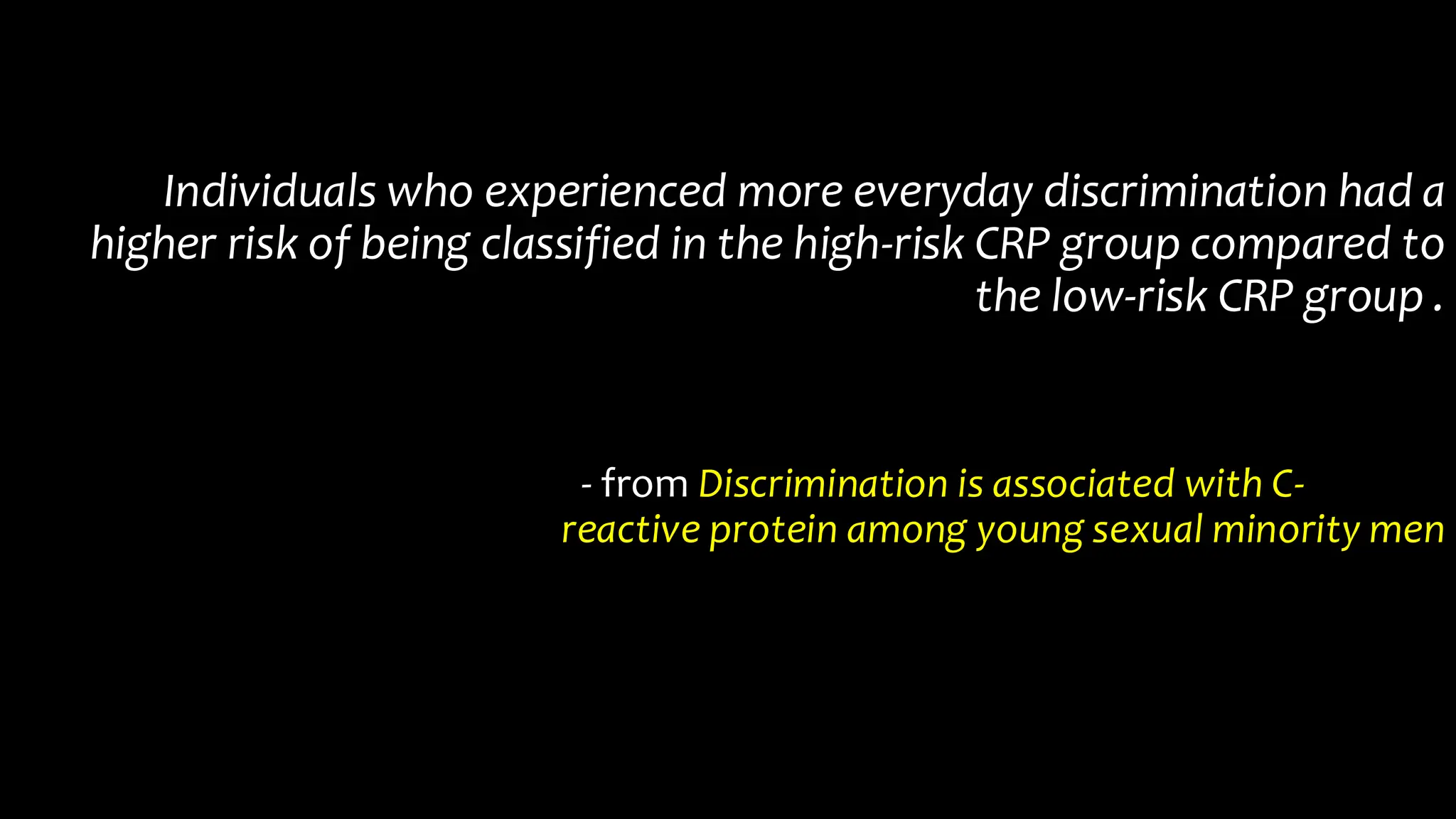
Individuals who experienced more everyday discrimination had a
higher risk of being classified in the high-risk CRP group compared to
the low-risk CRP group .
- from Discrimination is associated with C-
reactive protein among young sexual minority men
Weight/Anti-Fat Bias
• ”prejudicial assumptions that are based on an assessment of a person as being
overweight or obese.”
• “All test-takers and the MD sub-sample reported a strong preference for thin
people rather than fat people or a strong explicit anti-fat bias. We conclude that
strong implicit and explicit anti-fat bias is as pervasive among MDs as it is among
the general public.”
– from Implicit and Explicit Anti-Fat Bias among a Large Sample of Medical Doctors
by BMI, Race/Ethnicity and Gender
Weight/Anti-Fat Bias
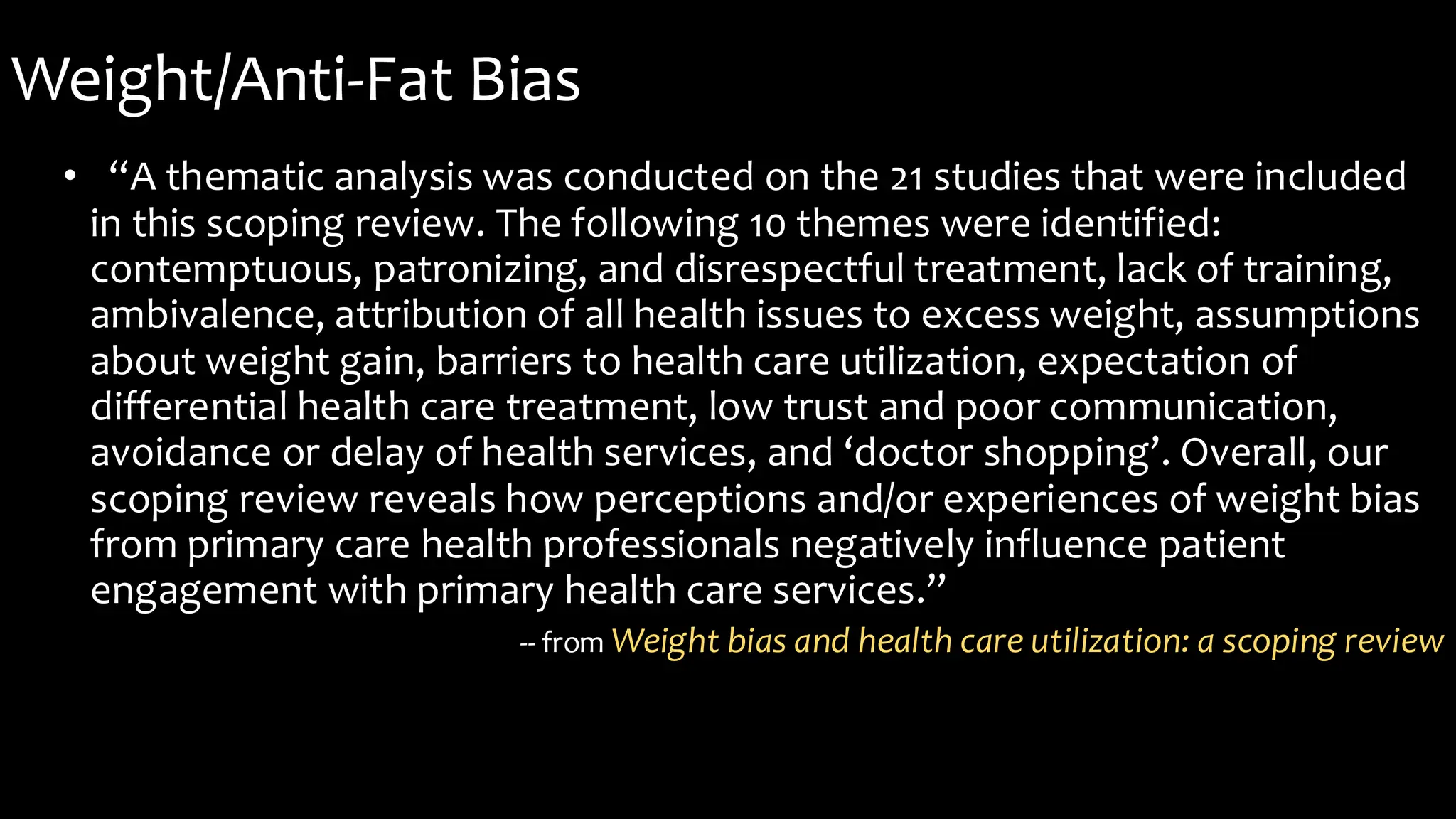
• “A thematic analysis was conducted on the 21 studies that were included
in this scoping review. The following 10 themes were identified:
contemptuous, patronizing, and disrespectful treatment, lack of training,
ambivalence, attribution of all health issues to excess weight, assumptions
about weight gain, barriers to health care utilization, expectation of
differential health care treatment, low trust and poor communication,
avoidance or delay of health services, and ‘doctor shopping’. Overall, our
scoping review reveals how perceptions and/or experiences of weight bias
from primary care health professionals negatively influence patient
engagement with primary health care services.”
-- from Weight bias and health care utilization: a scoping review
Weight/Anti-Fat Bias
• Clinicians’ weight bias can cause poor or fatal outcomes for people
with obesity or larger body types.
• “Physicians build less rapport with obese patients”
https://pubmed.ncbi.nlm.nih.gov/23512862/
• More than 40% of physicians had a negative reaction towards obese patients-
Physicians' attitudes about obesity and their associations with competency and
specialty: a cross-sectional study- https://pubmed.ncbi.nlm.nih.gov/19552823/
• Obese people avoid seeking medical care due to anti-fat bias
HAES (Health At Every Size)
• What is the HAES approach?
• “…a lifestyle that encourages healthy eating and enjoyable physical activity as a way
to feel better and live longer. Unlike other programs, it does not believe weight loss
through dieting is the way to become healthy. Scientific evidence supports this
idea.”
- “Health at Every Size”- National Geographic
• Principles*
• Weight inclusivity
• Health Enhancement
• Respectful Care
• Life-Enhancing Movement
Eating for Wellbeing
*https://asdah.org/health-at-every-size-haes-approach/
Racial Bias & Healthcare
• a personal and unreasoned judgment made solely on an
individual’s or group’s race.
• Some examples in medicine:
• Diagnostic algorithms; e.g. *pulmonary function tests
• Practice corrections
• Tests
• Medical gaslighting
Read about the initial results of race-neutral algorithms in pulmonary testing: Global, Race-Neutral
Reference Equations and Pulmonary Function Test Interpretation
Racial Bias & Healthcare
• “Black patients are significantly less likely to be prescribed pain medication
and that they generally receive lower doses of it when they are.”-
https://batten.virginia.edu/about/news/black-americans-are-systematically-
under-treated-pain-why
• Dermatology- less likely to receive care; less likely to received
informed/effective care due to lack of appropriate training (most visual
representations of skin conditions have been shown on light skin). (Note:
HSL subscribes to VisualDX, which has greatly expanded its galleries with
more diverse skin)
• COVID-19 disproportionately impacted BIPOC
• Types of jobs
• Health disparities
• Distrust of the medical community due to years of racism & horrible treatment
“Hidden in Plain
Sight —
Reconsidering
the Use of Race
Correction in
Clinical
Algorithms”
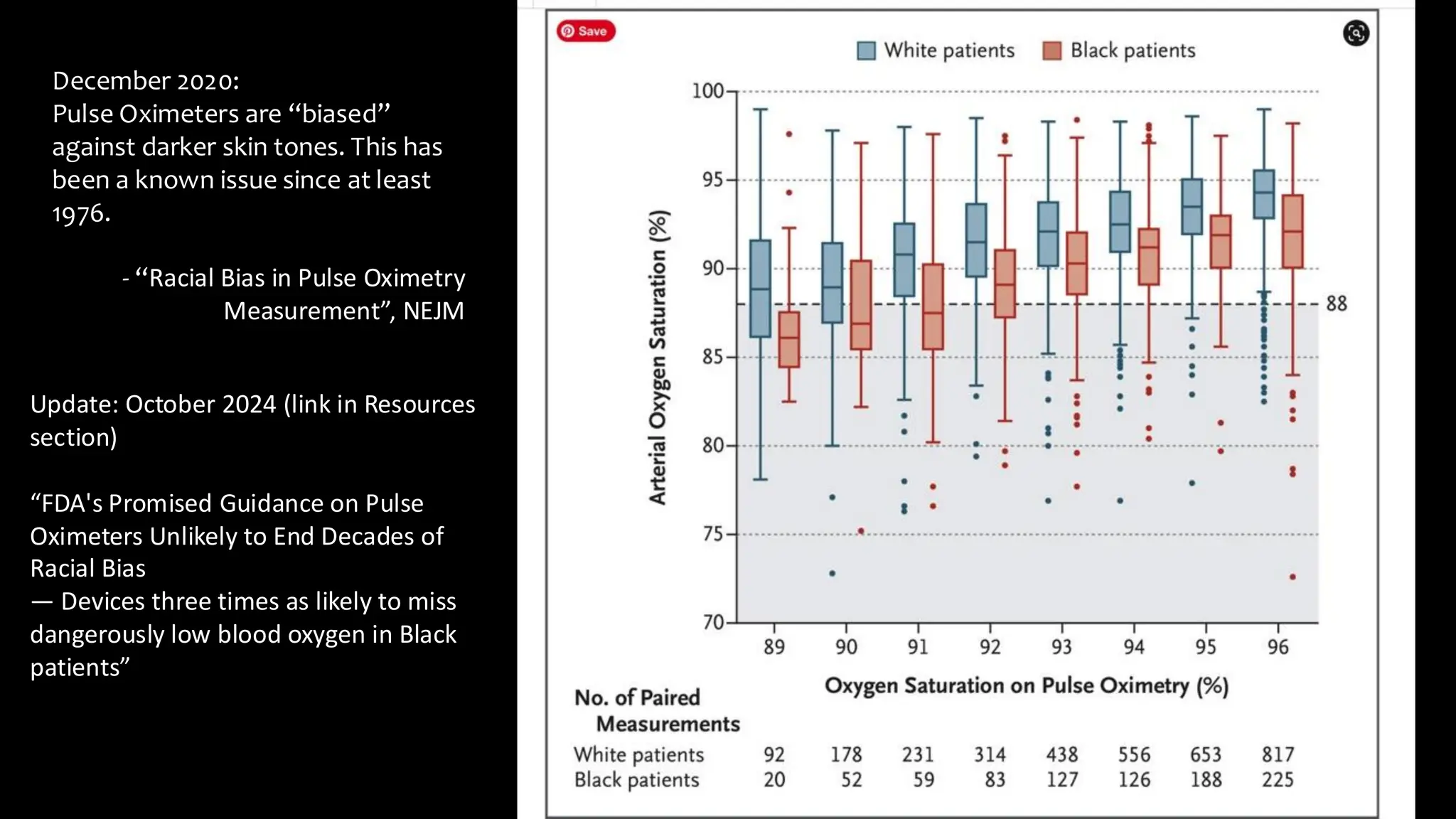
December 2020:
Pulse Oximeters are “biased”
against darker skin tones. This has
been a known issue since at least
1976.
- “Racial Bias in Pulse Oximetry
Measurement”, NEJM
Update: October 2024 (link in Resources
section)
“FDA's Promised Guidance on Pulse
Oximeters Unlikely to End Decades of
Racial Bias
— Devices three times as likely to miss
dangerously low blood oxygen in Black
patients”
Black Maternal Morbidity
“Women of color in the U.S., especially Black women, are far more
likely than white women to die in childbirth or experience childbirth-
related complications. Black and Indigenous women are two to three
times more likely to die from pregnancy-related causes than white
women (CDC, n.d.), even though pregnancy-related deaths in the U.S.
are largely preventable (Tikkanen, et al., 2020).”
-https://kbr.org/wp-content/uploads/2021/02/Birth-Justice.pdf
Black Maternal Morbidity
2007-2016
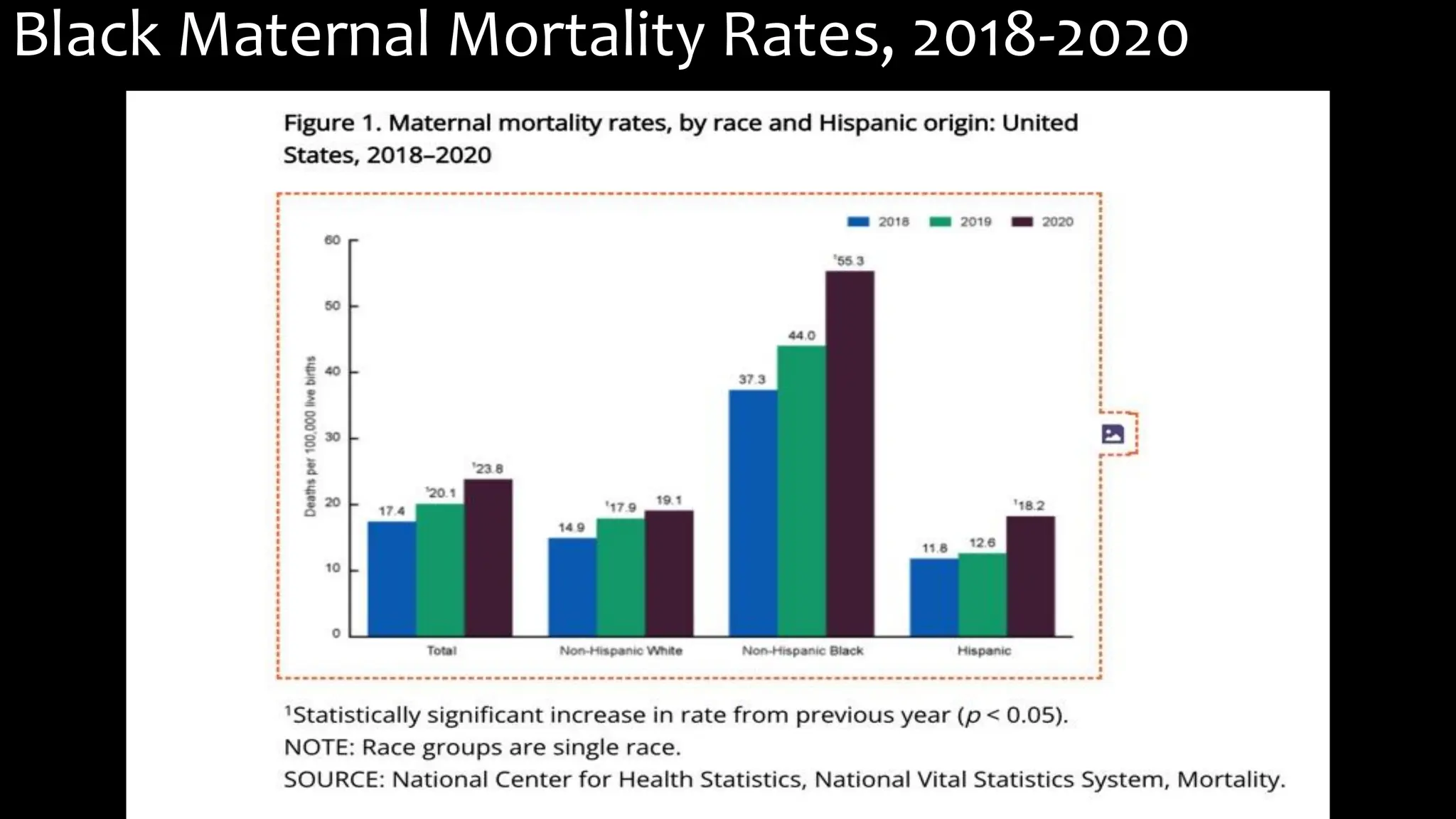
Black Maternal Mortality Rates, 2018-2020
Causes of High Rates of Black Maternal Morbidity
• variation in quality healthcare
• underlying chronic conditions
• structural racism
• implicit bias
What Healthcare Providers can do to Address the
Causes of Black Maternal Morbidity
- question negative/disbelieving reactions to patient concerns
- Instead of dismissing concerns, do tests
-make decisions based on the information that test results produce
The Birth Justice Movement
Birth Justice is a movement that believes when birthing
people recognize their innate power to make the best
health decisions for themselves and their families during
all stages of the pregnancy, birth, and the post-birth
period, that power will have a transformational impact on
their family and community.
Impacts of bias & racism on the healthcare
workforce
• Bias, unconscious and conscious affects:
• Recruitment
• Hiring
• Promotion
• Compensation
• Research funding
This bias means fewer members of marginalized communities become healthcare
providers and fewer still attain positions of power.
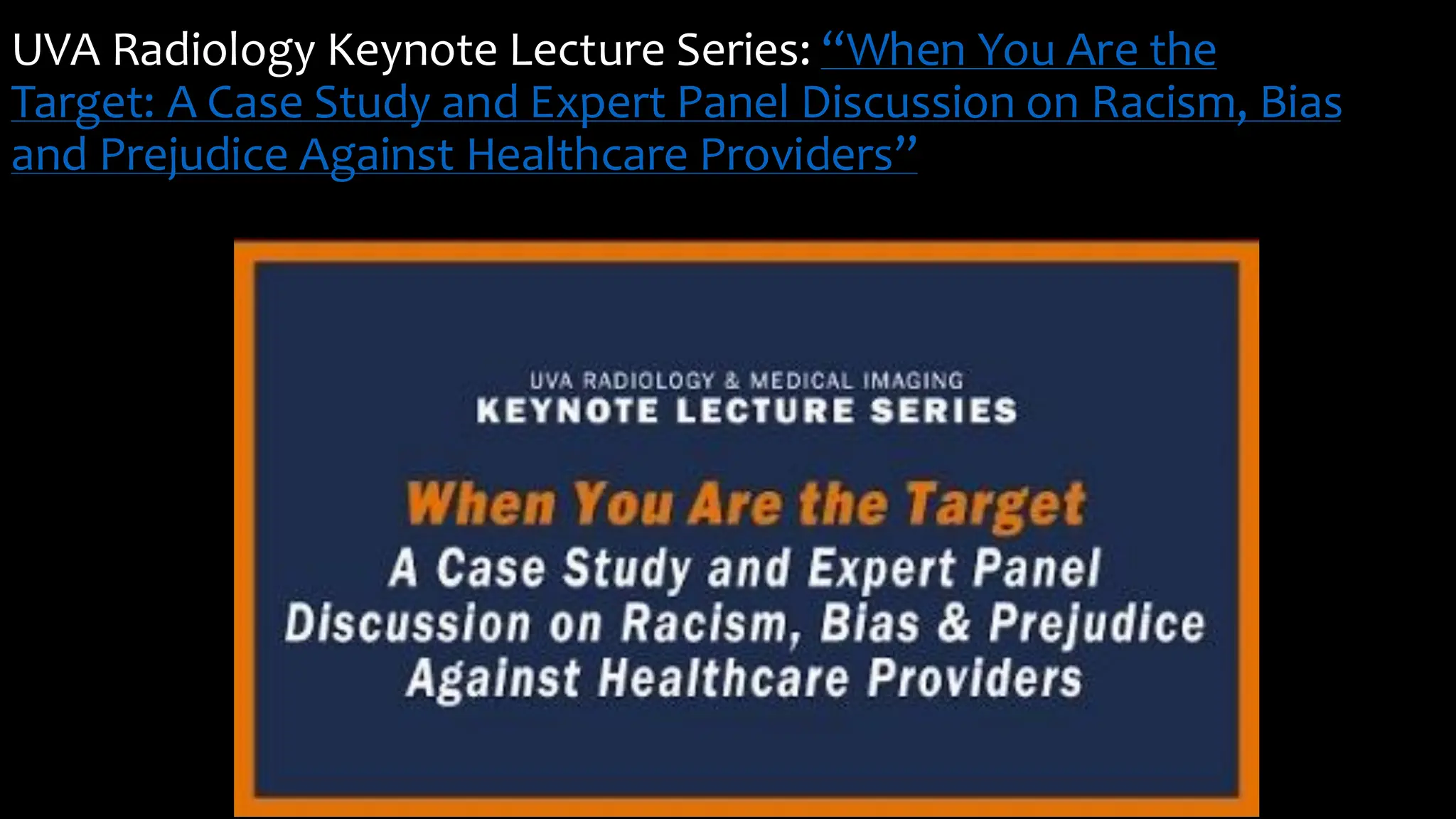
UVA Radiology Keynote Lecture Series: “When You Are the
Target: A Case Study and Expert Panel Discussion on Racism, Bias
and Prejudice Against Healthcare Providers”
Bias and racism in the healthcare workforce
impacts patients
• Patients, particularly from underrepresented groups, often feel more
comfortable with a provider to whom they can relate; one review of
studies demonstrated why:
• White providers viewed Black patients as less medically adherent than
White patients
• Implicit racial bias on the part of healthcare providers caused Black patients
to:
• Assign negative ratings of their clinical interactions
• Experience less patient-centeredness
• Experience poor provider communication
• Experience undertreatment of pain
How Bias Impacts Patients
• Worse outcomes for BIPOC patients during hospital stays
• Higher incidents of sepsis
• Less likely to receive medications for Opioid Use Disorder
• Less likely to be believed about their pain level
• Significantly longer hospital stay durations (sepsis and acute respiratory failure)
• In the Emergency Department, specifically:
• More likely to be queue-jumped
• Higher odds of hallway bed placement
• More likely to leave before treatment is completed
What can be done to combat and
eliminate bias in healthcare?
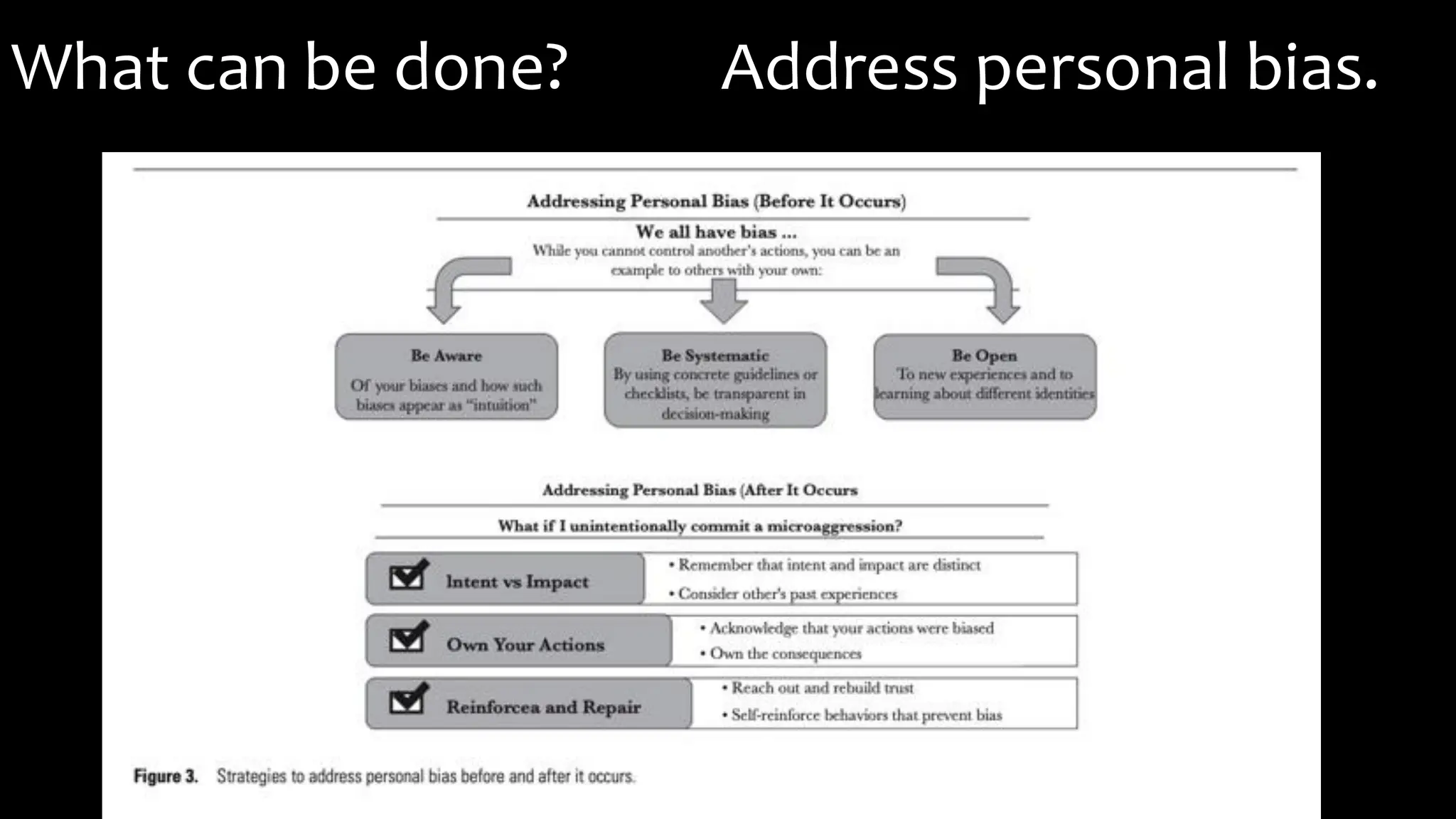
What can be done? Address personal bias.
What can be done? Training.
• Standardize training throughout a hospital or health system
• Provide educational opportunities on:
• Implicit and explicit bias
• Systemic and institutional racism
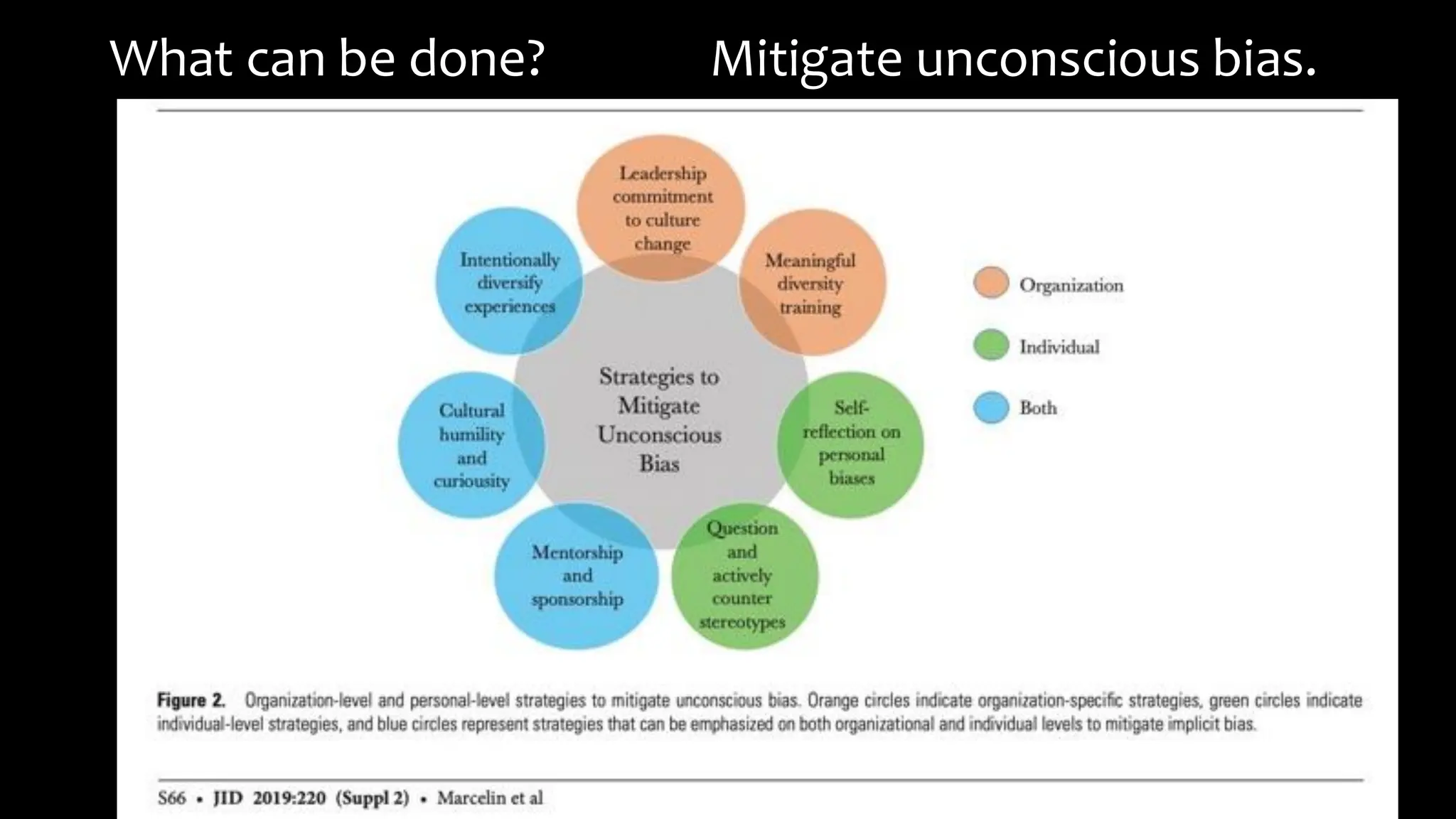
What can be done? Mitigate unconscious bias.
What can be done? Medical education.
“Of the 71 medical schools that
responded, only 36 (51% of
respondents and less than 25% of
the medical schools indicated that
their students received training on
implicit bias.”
“Implicit bias training occurred
most frequently with LGBTQ
patients (39% of respondents)
followed by migrant farmworker
patients (14%) and patients
experiencing homelessness
(11%).”
What can be done? Research.
• Developing objective blood biomarkers of pain severity:
10.1038/s41380-018-0345-5
• Finding ways to minimize unintended biases in AI algorithms that
perpetuate health inequities:
https://www.hsph.harvard.edu/ecpe/how-to-prevent-algorithmic-
bias-in-health-care/
• Developing in-the-moment technology to help detect bias in
clinical care: https://www.unbiased.health/
What can be done? Policies & Procedures
• Standardize triage processes and protocols
• Standardize treatment (reduces unwarranted racial differences in
treatment decisions)
• Aggregate information to reveal any racial disparities
Questions? Get in touch!
Kimberley R. Barker, MLIS
krb3k@virginia.edu
Resources
• Addressing the caste system in U.S. healthcare in the era of COVID-19;
https://equityhealthj.biomedcentral.com/articles/10.1186/s12939-020-01298-x
• Neurologic Health Is Worse Due to Environmental Factors, Review Suggests-
https://www.medpagetoday.com/neurology/generalneurology/101788?
• Troubling podcast puts JAMA, the ‘voice of medicine,’ under fire for its mishandling of race;
https://www.statnews.com/2021/04/06/podcast-puts-jama-under-fire-for-mishandling-of-race/
• What is structural racism?- https://www.ama-assn.org/delivering-care/health-equity/what-structural-racism
• Vital Signs: Racial Disparities in Age-Specific Mortality Among Blacks or African Americans — United States, 1999–
2015; https://www.cdc.gov/mmwr/volumes/66/wr/mm6617e1.htm
• 19 unconscious biases to overcome and help promote inclusivity; https://asana.com/resources/unconscious-bias-
examples
• Brain Aging Among Racially and Ethnically Diverse Middle-Aged and Older Adults;
https://jamanetwork.com/journals/jamaneurology/article-abstract/2798587
Resources
• What is Epigenetics?- https://medlineplus.gov/genetics/understanding/howgeneswork/epigenome/
• What is Epigenetics?- https://www.cdc.gov/genomics/disease/epigenetics.ht
• Discrimination is associated with C-reactive protein among young sexual minority men-
https://pubmed.ncbi.nlm.nih.gov/35394239/
• The Impact of Unconscious Bias in Healthcare: How to Recognize and Mitigate It- DOI: 10.1093/infdis/jiz214
• Association of Racial/Ethnic and Gender Concordance Between Patients and Physicians With Patient
Experience Ratings- https://jamanetwork.com/journals/jamanetworkopen/fullarticle/2772682
• The Economic Burden of Health Inequalities in the United States-
https://hsrc.himmelfarb.gwu.edu/cgi/viewcontent.cgi?article=1224&context=sphhs_policy_facpubs
• Climate Change & Healthcare LibGuide- https://guides.hsl.virginia.edu/climatechange/health_inequities
• Block-by-block data shows pollution’s stark toll on people of color- The Washington Post, May 25, 2022.
• Impacts of Climate Change and Air Pollution on Neurologic Health, Disease, and Practice: A Scoping
Review- https://doi.org/10.1212/WNL.0000000000201630
• Weight bias and health care utilization: a scoping review-
https://www.cambridge.org/core/journals/primary-health-care-research-and-development/article/weight-
bias-and-health-care-utilization-a-scoping-review/1FC4C7CF66473AB6CFB6ED5AD2C8DD43
Resources
• Intergenerational Transfer of Epigenetic Information in Sperm-
https://www.ncbi.nlm.nih.gov/pmc/articles/PMC4852801/
• Persistent epigenetic differences associated with prenatal exposure to famine in humans-
https://www.ncbi.nlm.nih.gov/pmc/articles/PMC2579375/
• Cohort profile: the Dutch famine birth cohort (DFBC)- a prospective birth cohort study in the Netherlands-
https://pubmed.ncbi.nlm.nih.gov/33664071/
• Epigenetic transmission of Holocaust trauma: can nightmares be inherited?-
https://pubmed.ncbi.nlm.nih.gov/24029109/
• DNA methylation signatures link prenatal famine exposure to growth and metabolism-
https://www.nature.com/articles/ncomms6592
• The inheritance of non-genetic material: DNA Methylation Patterns in Fathers with PTSD and their Offspring-
https://sites.tufts.edu/epigeneticsbiochemistry/
• Implicit and Explicit Anti-Fat Bias among a Large Sample of Medical Doctors by BMI, Race/Ethnicity and Gender-
https://journals.plos.org/plosone/article?id=10.1371/journal.pone.0048448
• The implicit nature of the anti-fat bias- https://www.frontiersin.org/articles/10.3389/fnhum.2011.00023/full
• Implicit and explicit anti-fat bias: The role of weight-related attitudes and beliefs-
https://pubmed.ncbi.nlm.nih.gov/29655062/
• Effective strategies in ending weight stigma in healthcare- https://pubmed.ncbi.nlm.nih.gov/35934011/
• 'Mail-Order Bride' or 'Very Obese': Bias in Resident Patient Handoffs-
https://www.medpagetoday.com/publichealthpolicy/ethics/105879
Resources
• Hidden in Plain Sight — Reconsidering the Use of Race Correction in Clinical Algorithms-
https://www.nejm.org/doi/full/10.1056/NEJMms2004740
• Preparing Medical Students to Address the Needs of Vulnerable Patient Populations: Implicit Bias Training in
US Medical Schools- doi: 10.1007/s40670-020-00930-3
• Assessment of Racial and Ethnic Disparities in Outcomes of Pediatric Hospitalizations for Sepsis Across the
United States- doi:10.1001/jamapediatrics.2022.4396
• Hospital outcomes for children with severe sepsis in the USA by race or ethnicity and insurance status: a
population-based, retrospective cohort study- https://doi.org/10.1016/S2352-4642(20)30341-2
• Racial Disparities in Length of Stay Among Severely Ill Patients Presenting With Sepsis and Acute Respiratory
Failure- doi:10.1001/jamanetworkopen.2023.9739
• Racial Inequality in Receipt of Medications for Opioid Use Disorder-
https://www.nejm.org/doi/full/10.1056/NEJMsa2212412
• EPA: Racial disparity in Louisiana’s ‘Cancer Alley’- https://apnews.com/article/health-louisiana-new-orleans-
discrimination-business-ef621bf3407ea6ec3f15d47db488f96f
• Global, Race-Neutral Reference Equations and Pulmonary Function Test Interpretation
• Lawsuit accuses VA of racial discrimination in benefits decisions-
https://www.militarytimes.com/veterans/2022/11/28/lawsuit-accuses-va-of-racial-discrimination-in-benefits-
decisions/
Resources
• COVID-19 made pulse oximeters ubiquitous. Engineers are fixing their racial bias- https://n.pr/3MOGGok
• Racial bias in pain assessment and treatment recommendations, and false beliefs about biological
differences between blacks and whites- https://www.ncbi.nlm.nih.gov/pmc/articles/PMC4843483/
• Racial disparities in dermatology- https://www.ncbi.nlm.nih.gov/pmc/articles/PMC9743121/
• Racial Disparities in Length of Stay Among Severely Ill Patients Presenting With Sepsis and Acute
Respiratory Failure- doi:10.1001/jamanetworkopen.2023.9739
• Racism undermines the health of Black Americans. This physician-economist is looking for solutions-
https://www.pbs.org/newshour/health/racism-undermines-the-health-of-black-americans-this-physician-
economist-is-looking-for-solutions
• When Doctors Downplay Women’s Health Concerns- https://www.nytimes.com/2018/05/03/well/live/when-
doctors-downplay-womens-health-concerns.html
• The toxic power dynamics of gaslighting in medicine-
https://www.ncbi.nlm.nih.gov/pmc/articles/PMC8115954/
• Perspective: Tackling Implicit Bias in Healthcare: https://www.nejm.org/doi/full/10.1056/NEJMp2201180
• Sociodemographic Disparities in Queue Jumping for Emergency Department Care:
https://jamanetwork.com/journals/jamanetworkopen/fullarticle/2807707
Resources
• National Institutes of Health Office of Research on Women’s Health. NIH inclusion outreach toolkit: how to
engage, recruit, and retain women in clinical research. 2022. Accessed Jun 23,
2023. https://orwh.od.nih.gov/toolkit/other-relevant-federal-policies/OMB-standards
• Eliminating Explicit and Implicit Biases in Health Care: Evidence and Research Needs doi: 10.1146/annurev-
publhealth-052620-103528
• Reducing Racial Health Care Disparities: A Social Psychological Analysis doi: 10.1177/2372732214548430
• Killer Fat: Media, Medicine, and Morals in the American ”Obesity Epidemic”-
https://search.lib.virginia.edu/sources/uva_library/items/u6143117
• Racial Bias in Pulse Oximetry Measurement, December 16, 2020, N Engl J Med 2020; 383:2477-2478 DOI:
10.1056/NEJMc2029240
• FDA's Promised Guidance on Pulse Oximeters Unlikely to End Decades of Racial Bias
• — Devices three times as likely to miss dangerously low blood oxygen in Black patients:
• https://www.medpagetoday.com/pulmonology/generalpulmonary/112340?xid=nl_mpt_DHE_2024-10-
10&mh=50a01fa55826e592df403b264e19591c
•

Bias in Healthcare: An Evidence-Based Overview Nov 2024

  • 1.
    BIAS IN HEALTHCARE AnEvidence-Based Overview Kimberley Barker, MLIS Librarian for Belonging & Community Engagement Claude Moore Health Sciences Library University of Virginia
  • 2.
    LAND ACKNOWLEDGMENT I respectfullyacknowledge that the University of Virginia inhabits the unceded, traditional, and current territory of the Monacan Indian Nation. https://www.monacannation.com/
  • 3.
    LABOR ACKNOWLEDGEMENT We mustacknowledge that the University of Virginia- its construction, growth, and development- was made possible through the coerced labor of enslaved Africans and African Americans. We are all indebted to their sacrifice. We recognize that the legacies of slavery are still present today and that racism continues to shape our laws, cultures, and institutions. Credit: Meggan Cashwell, Ph.D. Adapted from Terah ‘TJ’ Stewart and the Mid-American Arts Alliance.
  • 4.
    Learning Objectives • Atthe end of this presentation, you will be able to: • Define bias • List effects of bias on healthcare (patients & providers) • Identify different types of bias • Define systemic bias/structural racism • List effects of systemic bias on healthcare
  • 5.
    Learning Objectives, cont’d •Understand the difference between conscious and unconscious bias • Understand how to combat both explicit/conscious and implicit/unconscious bias • Define health disparity and health inequity • Define cultural trauma • Define epigenetics • Understand the costs of bias in healthcare • negative effects of bias for patients’ health • economic impacts • Understand how bias affects healthcare as an industry
  • 6.
    What is bias(conscious & unconscious)? • Conscious bias is defined as, “prejudice in favor of or against one thing, person, or group compared with another, usually in a way considered to be unfair.” • Unconscious bias is, “attitudes or stereotypes that unknowingly alter our perceptions or understanding of our experiences, thereby affecting behavior interactions and decision-making.”
  • 7.
    Some Types ofBias • Weight/anti-fat bias • LGBTQIA2S+ bias • Racial bias • Gender bias • Class bias • Disability bias
  • 8.
    What is racism? “…prejudice, discrimination, or antagonism by an individual, community, or institution against a person or people on the basis of their membership in a particular racial or ethnic group, typically one that is a minority or marginalized.” -- from Oxford Languages
  • 9.
    Structural/systemic racism • “…refersto the totality of ways in which societies foster racial discrimination through mutually reinforcing systems of housing, education, employment, earnings, benefits, credit, media, health care and criminal justice. These patterns and practices in turn reinforce discriminatory beliefs, values and distribution of resources, according to Zinzi Bailey, ScD, MSPH, et al.1” doi:10.1001/jamanetworkopen.2023.9739 • Many of these patterns and systems in the U.S. have their roots in slavery. • While slavery itself may be ended, its effects are felt in the lives of BIPOC to this day, not only in systemic racism and the resulting health disparities and health inequities, but in epigenetics.
  • 10.
    Health Disparities &Health Inequities • Health disparities are preventable differences in the burden of disease, injury, violence, or opportunities to achieve optimal health that are experienced by socially disadvantaged populations.- CDC • Health inequities are differences in health status or in the distribution of health resources between different population groups, arising from the social conditions in which people are born, grow, live, work and age.- WHO
  • 11.
    Epigenetics, 1 • “thestudy of how cells control gene activity without changing the DNA sequence.”- MedlinePlus • “the study of how your behaviors and environment can cause changes that affect the way your genes work. Unlike genetic changes, epigenetic changes are reversible and do not change your DNA sequence, but they can change how your body reads a DNA sequence.”- CDC
  • 12.
    Epigenetics, 2 • TheDutch Hunger Winter • the regulatory systems of growth genes were altered in children conceived, but not born, during the famine • Holocaust Survivors • Epigenetic transference of nightmares and stress responses to their children • The Vietnam Conflict • Transference of PTSD to offspring of people who served in Vietnam
  • 13.
    Cultural Trauma • "Culturaltrauma occurs when members of a collectivity feel they have been subjected to a horrendous event that leaves indelible marks upon their group consciousness, marking their memories forever and changing their future identity in fundamental and irrevocable ways." -- from the book Cultural Trauma and Collective Identity (Jeffrey C. Alexander, et al., University of California Press. 2004), Chapter 1: Toward a Theory of Cultural Trauma, page 1.
  • 14.
    Cultural Trauma +Epigenetics = Very real physical consequences for BIPOC and genetically-linked members of marginalized groups.
  • 15.
    "We postulate thatrace and ethnicity disparities in brain aging are due to lifetime cumulative exposure to structural and social forces that elevate subsequent exposure to risk factors for brain pathology.” -- from Brain Aging Among Racially and Ethnically Diverse Middle-Aged and Older Adults
  • 16.
    Individuals who experiencedmore everyday discrimination had a higher risk of being classified in the high-risk CRP group compared to the low-risk CRP group . - from Discrimination is associated with C- reactive protein among young sexual minority men
  • 17.
    Weight/Anti-Fat Bias • ”prejudicialassumptions that are based on an assessment of a person as being overweight or obese.” • “All test-takers and the MD sub-sample reported a strong preference for thin people rather than fat people or a strong explicit anti-fat bias. We conclude that strong implicit and explicit anti-fat bias is as pervasive among MDs as it is among the general public.” – from Implicit and Explicit Anti-Fat Bias among a Large Sample of Medical Doctors by BMI, Race/Ethnicity and Gender
  • 18.
    Weight/Anti-Fat Bias • “Athematic analysis was conducted on the 21 studies that were included in this scoping review. The following 10 themes were identified: contemptuous, patronizing, and disrespectful treatment, lack of training, ambivalence, attribution of all health issues to excess weight, assumptions about weight gain, barriers to health care utilization, expectation of differential health care treatment, low trust and poor communication, avoidance or delay of health services, and ‘doctor shopping’. Overall, our scoping review reveals how perceptions and/or experiences of weight bias from primary care health professionals negatively influence patient engagement with primary health care services.” -- from Weight bias and health care utilization: a scoping review
  • 19.
    Weight/Anti-Fat Bias • Clinicians’weight bias can cause poor or fatal outcomes for people with obesity or larger body types. • “Physicians build less rapport with obese patients” https://pubmed.ncbi.nlm.nih.gov/23512862/ • More than 40% of physicians had a negative reaction towards obese patients- Physicians' attitudes about obesity and their associations with competency and specialty: a cross-sectional study- https://pubmed.ncbi.nlm.nih.gov/19552823/ • Obese people avoid seeking medical care due to anti-fat bias
  • 20.
    HAES (Health AtEvery Size) • What is the HAES approach? • “…a lifestyle that encourages healthy eating and enjoyable physical activity as a way to feel better and live longer. Unlike other programs, it does not believe weight loss through dieting is the way to become healthy. Scientific evidence supports this idea.” - “Health at Every Size”- National Geographic • Principles* • Weight inclusivity • Health Enhancement • Respectful Care • Life-Enhancing Movement Eating for Wellbeing *https://asdah.org/health-at-every-size-haes-approach/
  • 21.
    Racial Bias &Healthcare • a personal and unreasoned judgment made solely on an individual’s or group’s race. • Some examples in medicine: • Diagnostic algorithms; e.g. *pulmonary function tests • Practice corrections • Tests • Medical gaslighting Read about the initial results of race-neutral algorithms in pulmonary testing: Global, Race-Neutral Reference Equations and Pulmonary Function Test Interpretation
  • 22.
    Racial Bias &Healthcare • “Black patients are significantly less likely to be prescribed pain medication and that they generally receive lower doses of it when they are.”- https://batten.virginia.edu/about/news/black-americans-are-systematically- under-treated-pain-why • Dermatology- less likely to receive care; less likely to received informed/effective care due to lack of appropriate training (most visual representations of skin conditions have been shown on light skin). (Note: HSL subscribes to VisualDX, which has greatly expanded its galleries with more diverse skin) • COVID-19 disproportionately impacted BIPOC • Types of jobs • Health disparities • Distrust of the medical community due to years of racism & horrible treatment
  • 23.
    “Hidden in Plain Sight— Reconsidering the Use of Race Correction in Clinical Algorithms”
  • 24.
    December 2020: Pulse Oximetersare “biased” against darker skin tones. This has been a known issue since at least 1976. - “Racial Bias in Pulse Oximetry Measurement”, NEJM Update: October 2024 (link in Resources section) “FDA's Promised Guidance on Pulse Oximeters Unlikely to End Decades of Racial Bias — Devices three times as likely to miss dangerously low blood oxygen in Black patients”
  • 25.
    Black Maternal Morbidity “Womenof color in the U.S., especially Black women, are far more likely than white women to die in childbirth or experience childbirth- related complications. Black and Indigenous women are two to three times more likely to die from pregnancy-related causes than white women (CDC, n.d.), even though pregnancy-related deaths in the U.S. are largely preventable (Tikkanen, et al., 2020).” -https://kbr.org/wp-content/uploads/2021/02/Birth-Justice.pdf
  • 26.
  • 27.
    Black Maternal MortalityRates, 2018-2020
  • 28.
    Causes of HighRates of Black Maternal Morbidity • variation in quality healthcare • underlying chronic conditions • structural racism • implicit bias
  • 29.
    What Healthcare Providerscan do to Address the Causes of Black Maternal Morbidity - question negative/disbelieving reactions to patient concerns - Instead of dismissing concerns, do tests -make decisions based on the information that test results produce
  • 30.
    The Birth JusticeMovement Birth Justice is a movement that believes when birthing people recognize their innate power to make the best health decisions for themselves and their families during all stages of the pregnancy, birth, and the post-birth period, that power will have a transformational impact on their family and community.
  • 31.
    Impacts of bias& racism on the healthcare workforce • Bias, unconscious and conscious affects: • Recruitment • Hiring • Promotion • Compensation • Research funding This bias means fewer members of marginalized communities become healthcare providers and fewer still attain positions of power.
  • 32.
    UVA Radiology KeynoteLecture Series: “When You Are the Target: A Case Study and Expert Panel Discussion on Racism, Bias and Prejudice Against Healthcare Providers”
  • 33.
    Bias and racismin the healthcare workforce impacts patients • Patients, particularly from underrepresented groups, often feel more comfortable with a provider to whom they can relate; one review of studies demonstrated why: • White providers viewed Black patients as less medically adherent than White patients • Implicit racial bias on the part of healthcare providers caused Black patients to: • Assign negative ratings of their clinical interactions • Experience less patient-centeredness • Experience poor provider communication • Experience undertreatment of pain
  • 34.
    How Bias ImpactsPatients • Worse outcomes for BIPOC patients during hospital stays • Higher incidents of sepsis • Less likely to receive medications for Opioid Use Disorder • Less likely to be believed about their pain level • Significantly longer hospital stay durations (sepsis and acute respiratory failure) • In the Emergency Department, specifically: • More likely to be queue-jumped • Higher odds of hallway bed placement • More likely to leave before treatment is completed
  • 35.
    What can bedone to combat and eliminate bias in healthcare?
  • 36.
    What can bedone? Address personal bias.
  • 37.
    What can bedone? Training. • Standardize training throughout a hospital or health system • Provide educational opportunities on: • Implicit and explicit bias • Systemic and institutional racism
  • 38.
    What can bedone? Mitigate unconscious bias.
  • 39.
    What can bedone? Medical education. “Of the 71 medical schools that responded, only 36 (51% of respondents and less than 25% of the medical schools indicated that their students received training on implicit bias.” “Implicit bias training occurred most frequently with LGBTQ patients (39% of respondents) followed by migrant farmworker patients (14%) and patients experiencing homelessness (11%).”
  • 40.
    What can bedone? Research. • Developing objective blood biomarkers of pain severity: 10.1038/s41380-018-0345-5 • Finding ways to minimize unintended biases in AI algorithms that perpetuate health inequities: https://www.hsph.harvard.edu/ecpe/how-to-prevent-algorithmic- bias-in-health-care/ • Developing in-the-moment technology to help detect bias in clinical care: https://www.unbiased.health/
  • 41.
    What can bedone? Policies & Procedures • Standardize triage processes and protocols • Standardize treatment (reduces unwarranted racial differences in treatment decisions) • Aggregate information to reveal any racial disparities
  • 42.
    Questions? Get intouch! Kimberley R. Barker, MLIS krb3k@virginia.edu
  • 43.
    Resources • Addressing thecaste system in U.S. healthcare in the era of COVID-19; https://equityhealthj.biomedcentral.com/articles/10.1186/s12939-020-01298-x • Neurologic Health Is Worse Due to Environmental Factors, Review Suggests- https://www.medpagetoday.com/neurology/generalneurology/101788? • Troubling podcast puts JAMA, the ‘voice of medicine,’ under fire for its mishandling of race; https://www.statnews.com/2021/04/06/podcast-puts-jama-under-fire-for-mishandling-of-race/ • What is structural racism?- https://www.ama-assn.org/delivering-care/health-equity/what-structural-racism • Vital Signs: Racial Disparities in Age-Specific Mortality Among Blacks or African Americans — United States, 1999– 2015; https://www.cdc.gov/mmwr/volumes/66/wr/mm6617e1.htm • 19 unconscious biases to overcome and help promote inclusivity; https://asana.com/resources/unconscious-bias- examples • Brain Aging Among Racially and Ethnically Diverse Middle-Aged and Older Adults; https://jamanetwork.com/journals/jamaneurology/article-abstract/2798587
  • 44.
    Resources • What isEpigenetics?- https://medlineplus.gov/genetics/understanding/howgeneswork/epigenome/ • What is Epigenetics?- https://www.cdc.gov/genomics/disease/epigenetics.ht • Discrimination is associated with C-reactive protein among young sexual minority men- https://pubmed.ncbi.nlm.nih.gov/35394239/ • The Impact of Unconscious Bias in Healthcare: How to Recognize and Mitigate It- DOI: 10.1093/infdis/jiz214 • Association of Racial/Ethnic and Gender Concordance Between Patients and Physicians With Patient Experience Ratings- https://jamanetwork.com/journals/jamanetworkopen/fullarticle/2772682 • The Economic Burden of Health Inequalities in the United States- https://hsrc.himmelfarb.gwu.edu/cgi/viewcontent.cgi?article=1224&context=sphhs_policy_facpubs • Climate Change & Healthcare LibGuide- https://guides.hsl.virginia.edu/climatechange/health_inequities • Block-by-block data shows pollution’s stark toll on people of color- The Washington Post, May 25, 2022. • Impacts of Climate Change and Air Pollution on Neurologic Health, Disease, and Practice: A Scoping Review- https://doi.org/10.1212/WNL.0000000000201630 • Weight bias and health care utilization: a scoping review- https://www.cambridge.org/core/journals/primary-health-care-research-and-development/article/weight- bias-and-health-care-utilization-a-scoping-review/1FC4C7CF66473AB6CFB6ED5AD2C8DD43
  • 45.
    Resources • Intergenerational Transferof Epigenetic Information in Sperm- https://www.ncbi.nlm.nih.gov/pmc/articles/PMC4852801/ • Persistent epigenetic differences associated with prenatal exposure to famine in humans- https://www.ncbi.nlm.nih.gov/pmc/articles/PMC2579375/ • Cohort profile: the Dutch famine birth cohort (DFBC)- a prospective birth cohort study in the Netherlands- https://pubmed.ncbi.nlm.nih.gov/33664071/ • Epigenetic transmission of Holocaust trauma: can nightmares be inherited?- https://pubmed.ncbi.nlm.nih.gov/24029109/ • DNA methylation signatures link prenatal famine exposure to growth and metabolism- https://www.nature.com/articles/ncomms6592 • The inheritance of non-genetic material: DNA Methylation Patterns in Fathers with PTSD and their Offspring- https://sites.tufts.edu/epigeneticsbiochemistry/ • Implicit and Explicit Anti-Fat Bias among a Large Sample of Medical Doctors by BMI, Race/Ethnicity and Gender- https://journals.plos.org/plosone/article?id=10.1371/journal.pone.0048448 • The implicit nature of the anti-fat bias- https://www.frontiersin.org/articles/10.3389/fnhum.2011.00023/full • Implicit and explicit anti-fat bias: The role of weight-related attitudes and beliefs- https://pubmed.ncbi.nlm.nih.gov/29655062/ • Effective strategies in ending weight stigma in healthcare- https://pubmed.ncbi.nlm.nih.gov/35934011/ • 'Mail-Order Bride' or 'Very Obese': Bias in Resident Patient Handoffs- https://www.medpagetoday.com/publichealthpolicy/ethics/105879
  • 46.
    Resources • Hidden inPlain Sight — Reconsidering the Use of Race Correction in Clinical Algorithms- https://www.nejm.org/doi/full/10.1056/NEJMms2004740 • Preparing Medical Students to Address the Needs of Vulnerable Patient Populations: Implicit Bias Training in US Medical Schools- doi: 10.1007/s40670-020-00930-3 • Assessment of Racial and Ethnic Disparities in Outcomes of Pediatric Hospitalizations for Sepsis Across the United States- doi:10.1001/jamapediatrics.2022.4396 • Hospital outcomes for children with severe sepsis in the USA by race or ethnicity and insurance status: a population-based, retrospective cohort study- https://doi.org/10.1016/S2352-4642(20)30341-2 • Racial Disparities in Length of Stay Among Severely Ill Patients Presenting With Sepsis and Acute Respiratory Failure- doi:10.1001/jamanetworkopen.2023.9739 • Racial Inequality in Receipt of Medications for Opioid Use Disorder- https://www.nejm.org/doi/full/10.1056/NEJMsa2212412 • EPA: Racial disparity in Louisiana’s ‘Cancer Alley’- https://apnews.com/article/health-louisiana-new-orleans- discrimination-business-ef621bf3407ea6ec3f15d47db488f96f • Global, Race-Neutral Reference Equations and Pulmonary Function Test Interpretation • Lawsuit accuses VA of racial discrimination in benefits decisions- https://www.militarytimes.com/veterans/2022/11/28/lawsuit-accuses-va-of-racial-discrimination-in-benefits- decisions/
  • 47.
    Resources • COVID-19 madepulse oximeters ubiquitous. Engineers are fixing their racial bias- https://n.pr/3MOGGok • Racial bias in pain assessment and treatment recommendations, and false beliefs about biological differences between blacks and whites- https://www.ncbi.nlm.nih.gov/pmc/articles/PMC4843483/ • Racial disparities in dermatology- https://www.ncbi.nlm.nih.gov/pmc/articles/PMC9743121/ • Racial Disparities in Length of Stay Among Severely Ill Patients Presenting With Sepsis and Acute Respiratory Failure- doi:10.1001/jamanetworkopen.2023.9739 • Racism undermines the health of Black Americans. This physician-economist is looking for solutions- https://www.pbs.org/newshour/health/racism-undermines-the-health-of-black-americans-this-physician- economist-is-looking-for-solutions • When Doctors Downplay Women’s Health Concerns- https://www.nytimes.com/2018/05/03/well/live/when- doctors-downplay-womens-health-concerns.html • The toxic power dynamics of gaslighting in medicine- https://www.ncbi.nlm.nih.gov/pmc/articles/PMC8115954/ • Perspective: Tackling Implicit Bias in Healthcare: https://www.nejm.org/doi/full/10.1056/NEJMp2201180 • Sociodemographic Disparities in Queue Jumping for Emergency Department Care: https://jamanetwork.com/journals/jamanetworkopen/fullarticle/2807707
  • 48.
    Resources • National Institutesof Health Office of Research on Women’s Health. NIH inclusion outreach toolkit: how to engage, recruit, and retain women in clinical research. 2022. Accessed Jun 23, 2023. https://orwh.od.nih.gov/toolkit/other-relevant-federal-policies/OMB-standards • Eliminating Explicit and Implicit Biases in Health Care: Evidence and Research Needs doi: 10.1146/annurev- publhealth-052620-103528 • Reducing Racial Health Care Disparities: A Social Psychological Analysis doi: 10.1177/2372732214548430 • Killer Fat: Media, Medicine, and Morals in the American ”Obesity Epidemic”- https://search.lib.virginia.edu/sources/uva_library/items/u6143117 • Racial Bias in Pulse Oximetry Measurement, December 16, 2020, N Engl J Med 2020; 383:2477-2478 DOI: 10.1056/NEJMc2029240 • FDA's Promised Guidance on Pulse Oximeters Unlikely to End Decades of Racial Bias • — Devices three times as likely to miss dangerously low blood oxygen in Black patients: • https://www.medpagetoday.com/pulmonology/generalpulmonary/112340?xid=nl_mpt_DHE_2024-10- 10&mh=50a01fa55826e592df403b264e19591c •