device emulation
an introduction
leon dang
nahanni systems
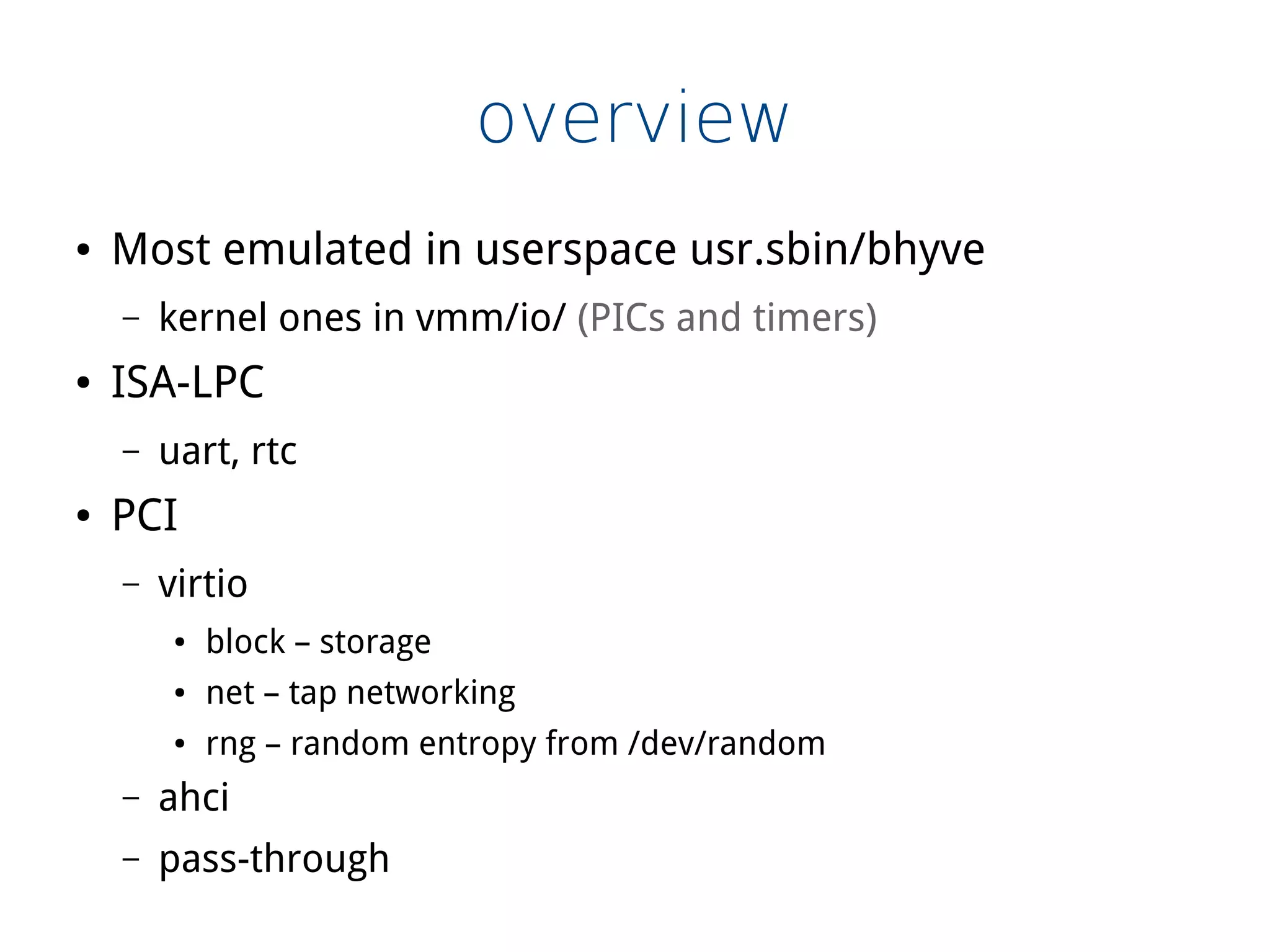
overview
● Most emulated in userspace usr.sbin/bhyve
– kernel ones in vmm/io/ (PICs and timers)
● ISA-LPC
– uart, rtc
● PCI
– virtio
● block – storage
● net – tap networking
● rng – random entropy from /dev/random
– ahci
– pass-through
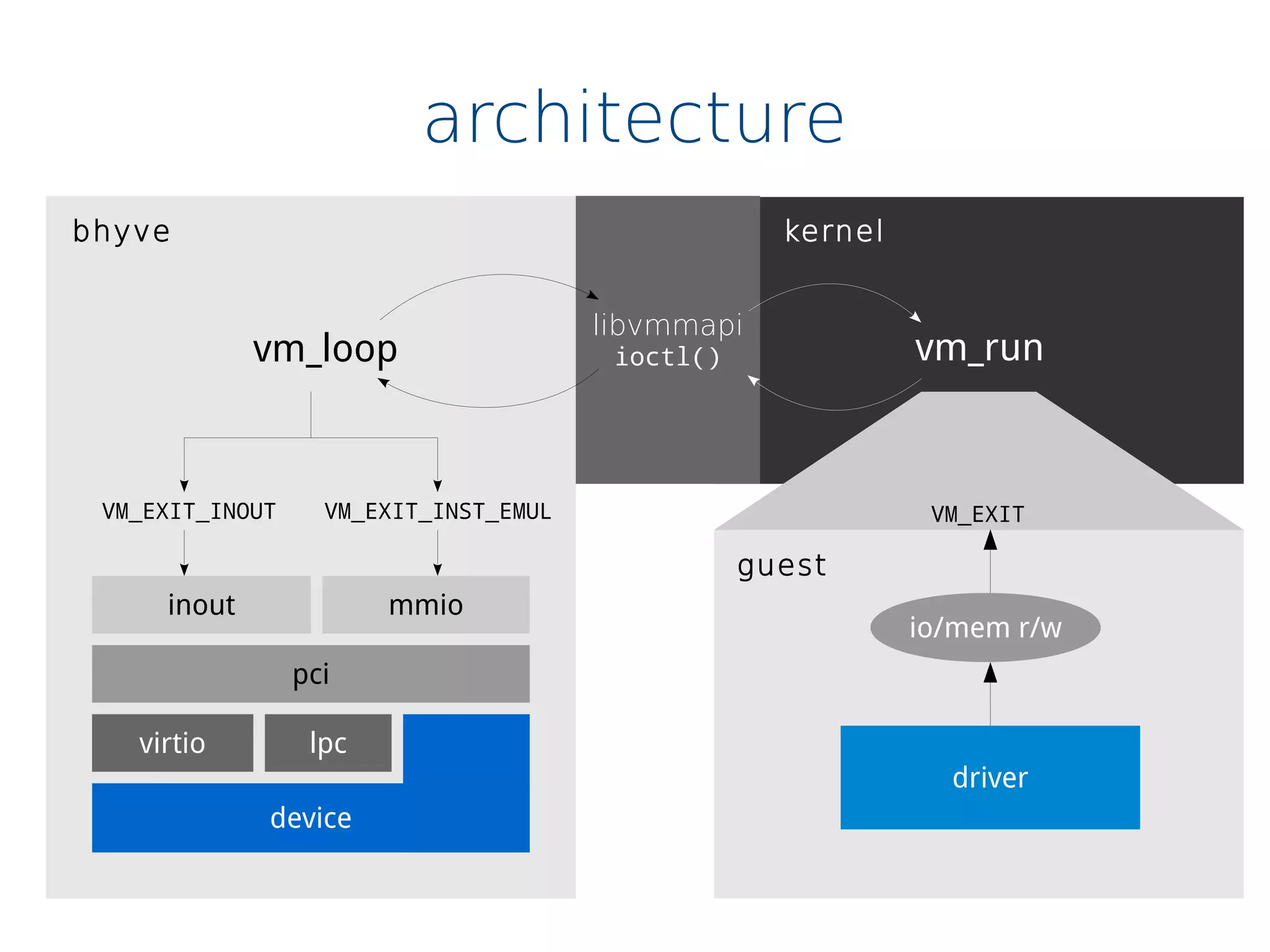
architecture
bhyve kernel
libvmmapi
ioctl() vm_run
guest
driver
mmio
pci
lpc
device
virtio
vm_loop
inout
VM_EXIT_INOUT VM_EXIT_INST_EMUL
io/mem r/w
VM_EXIT
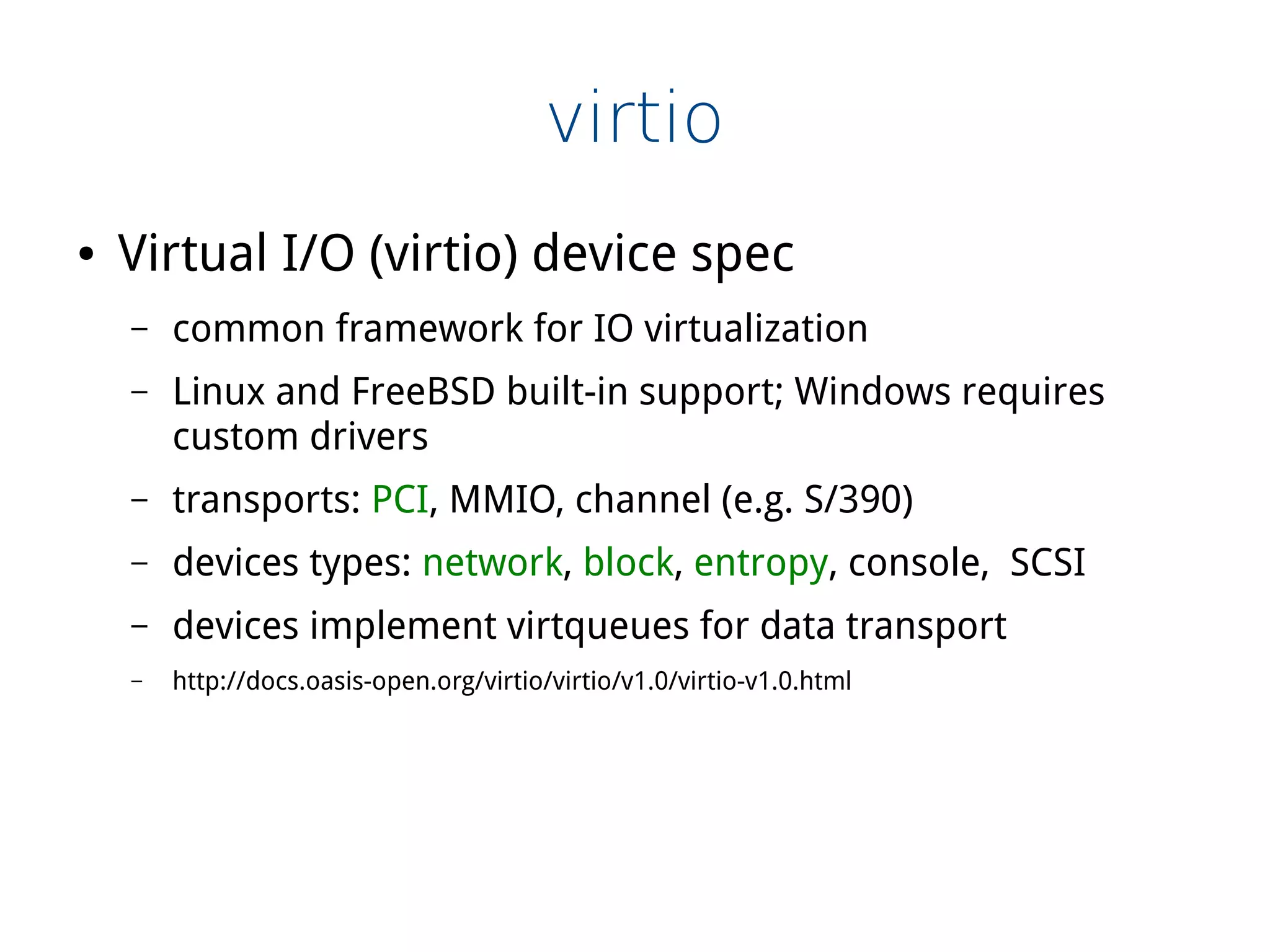
virtio
● Virtual I/O (virtio) device spec
– common framework for IO virtualization
– Linux and FreeBSD built-in support; Windows requires
custom drivers
– transports: PCI, MMIO, channel (e.g. S/390)
– devices types: network, block, entropy, console, SCSI
– devices implement virtqueues for data transport
– http://docs.oasis-open.org/virtio/virtio/v1.0/virtio-v1.0.html
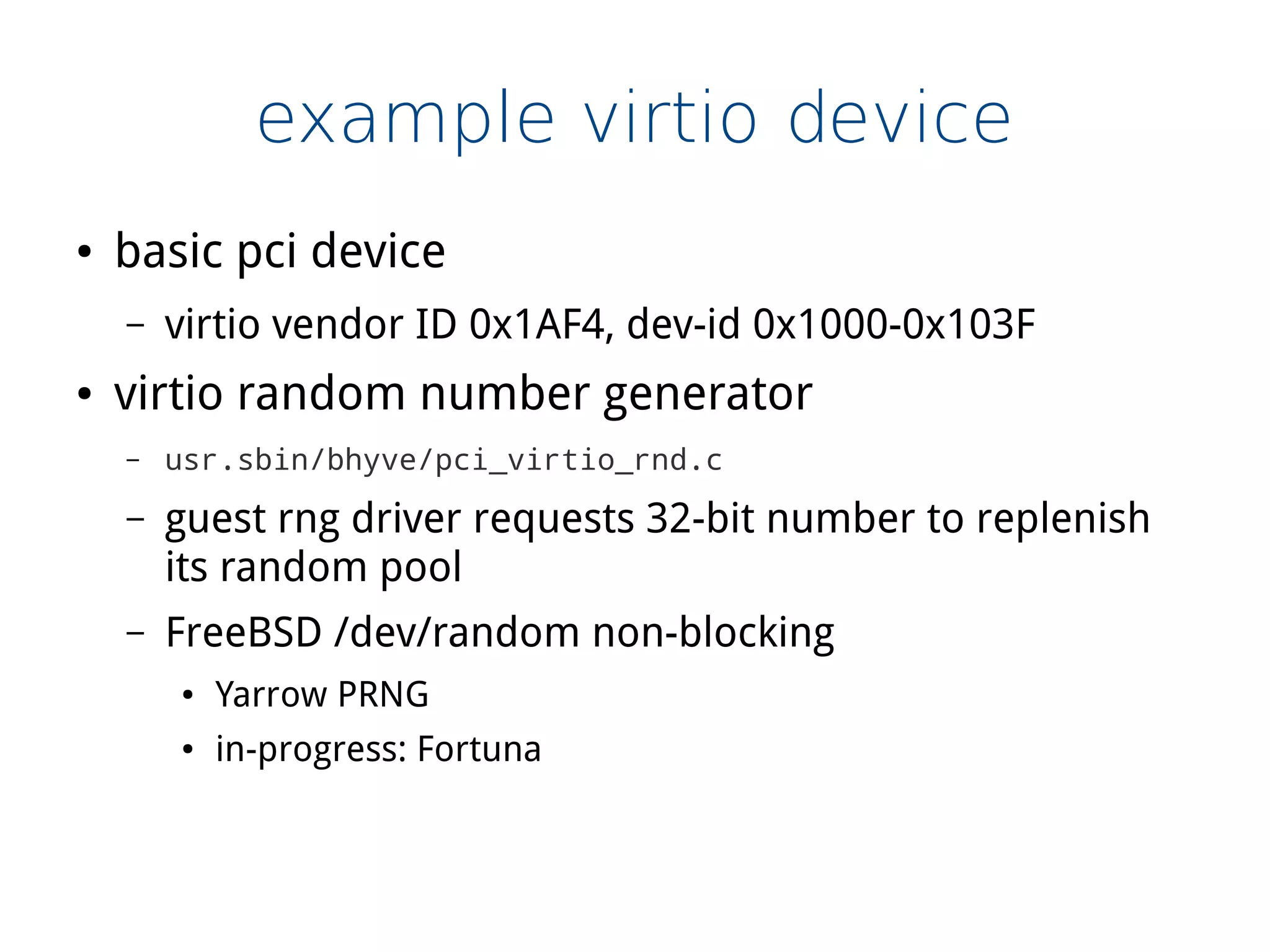
example virtio device
● basic pci device
– virtio vendor ID 0x1AF4, dev-id 0x1000-0x103F
● virtio random number generator
– usr.sbin/bhyve/pci_virtio_rnd.c
– guest rng driver requests 32-bit number to replenish
its random pool
– FreeBSD /dev/random non-blocking
● Yarrow PRNG
● in-progress: Fortuna
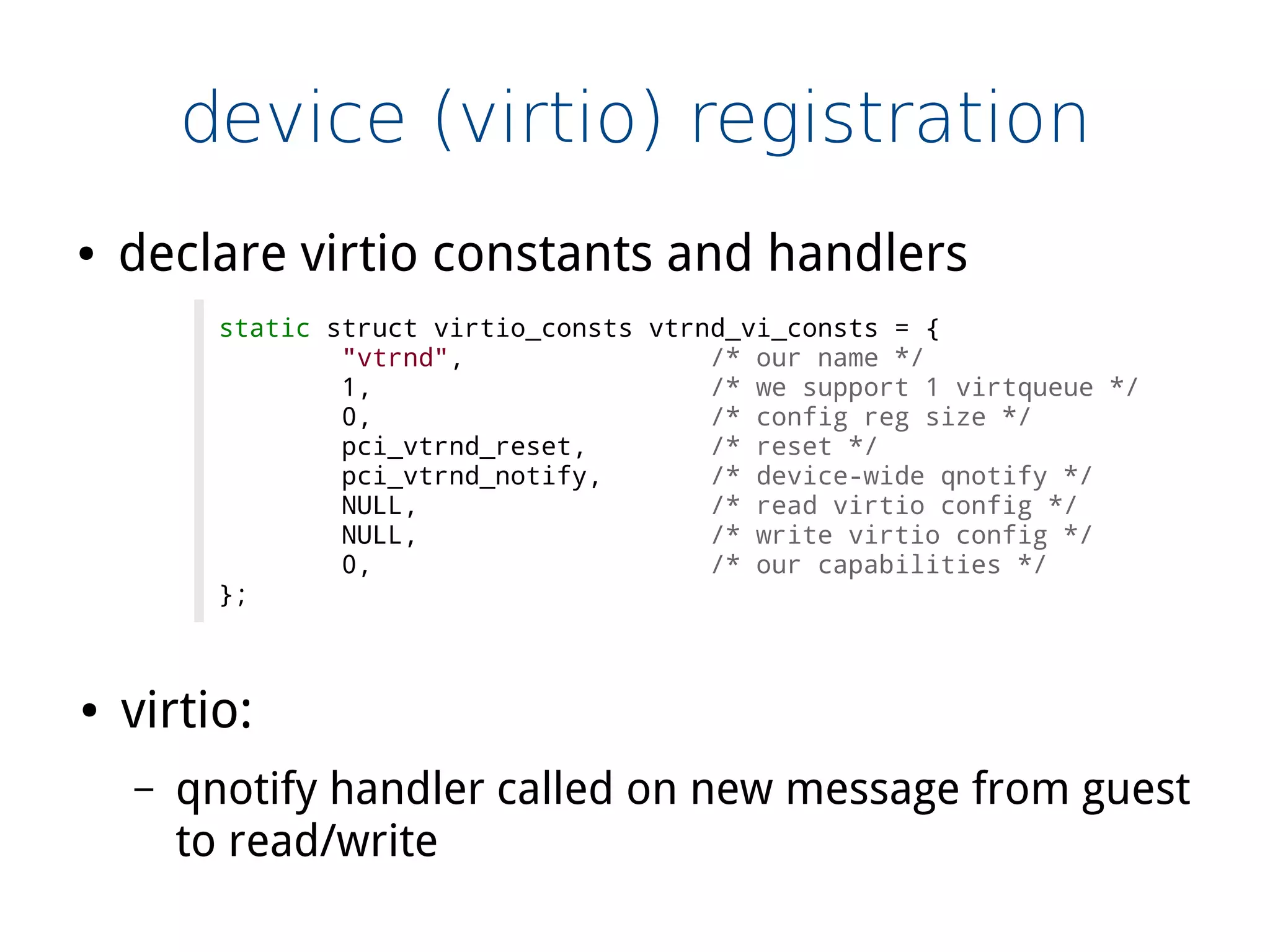
device (virtio) registration
● declare virtio constants and handlers
static struct virtio_consts vtrnd_vi_consts = {
"vtrnd", /* our name */
1, /* we support 1 virtqueue */
0, /* config reg size */
pci_vtrnd_reset, /* reset */
pci_vtrnd_notify, /* device-wide qnotify */
NULL, /* read virtio config */
NULL, /* write virtio config */
0, /* our capabilities */
};
● virtio:
– qnotify handler called on new message from guest
to read/write
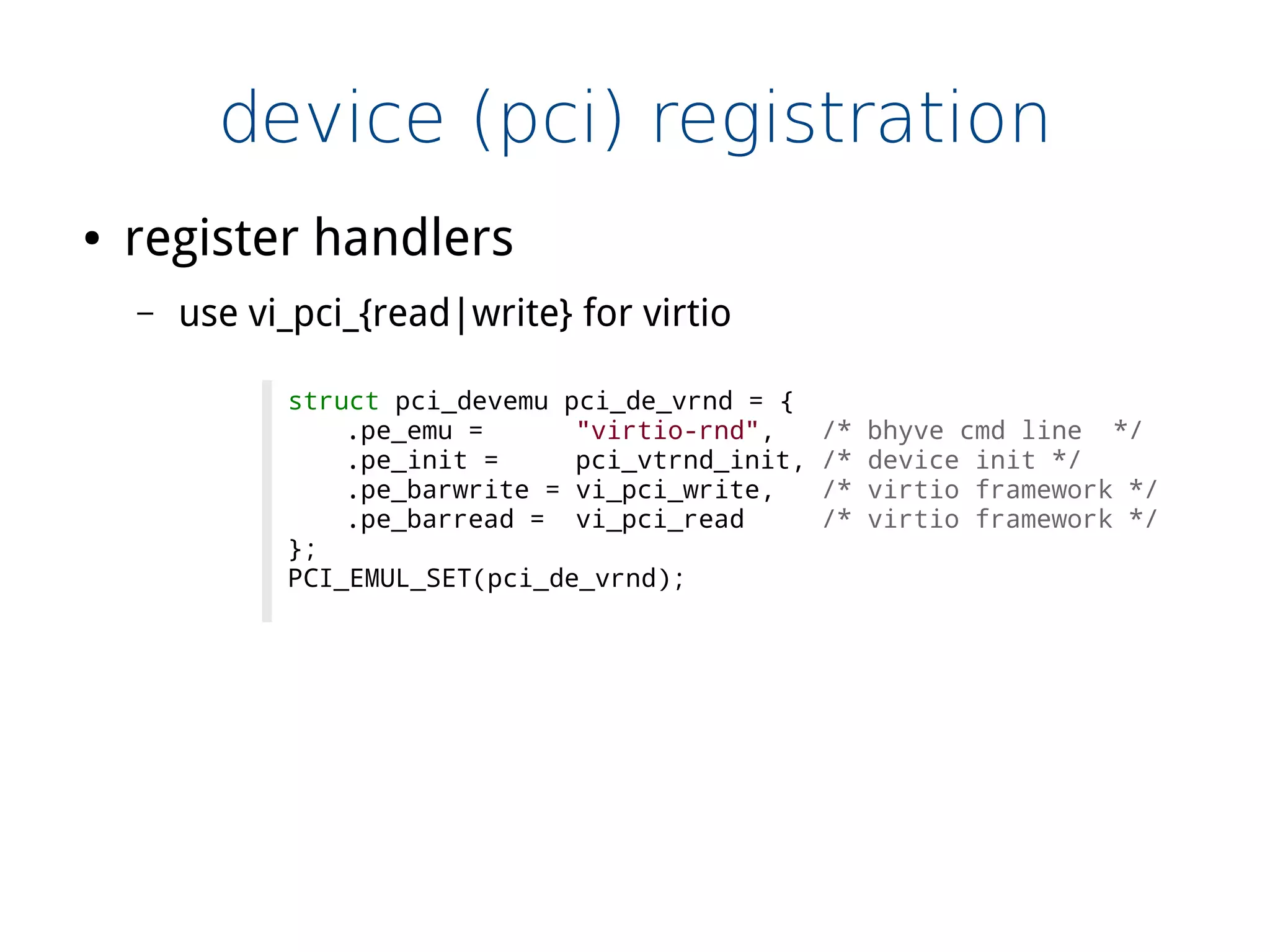
device (pci) registration
struct pci_devemu pci_de_vrnd = {
.pe_emu = "virtio-rnd", /* bhyve cmd line */
.pe_init = pci_vtrnd_init, /* device init */
.pe_barwrite = vi_pci_write, /* virtio framework */
.pe_barread = vi_pci_read /* virtio framework */
};
PCI_EMUL_SET(pci_de_vrnd);
● register handlers
– use vi_pci_{read|write} for virtio
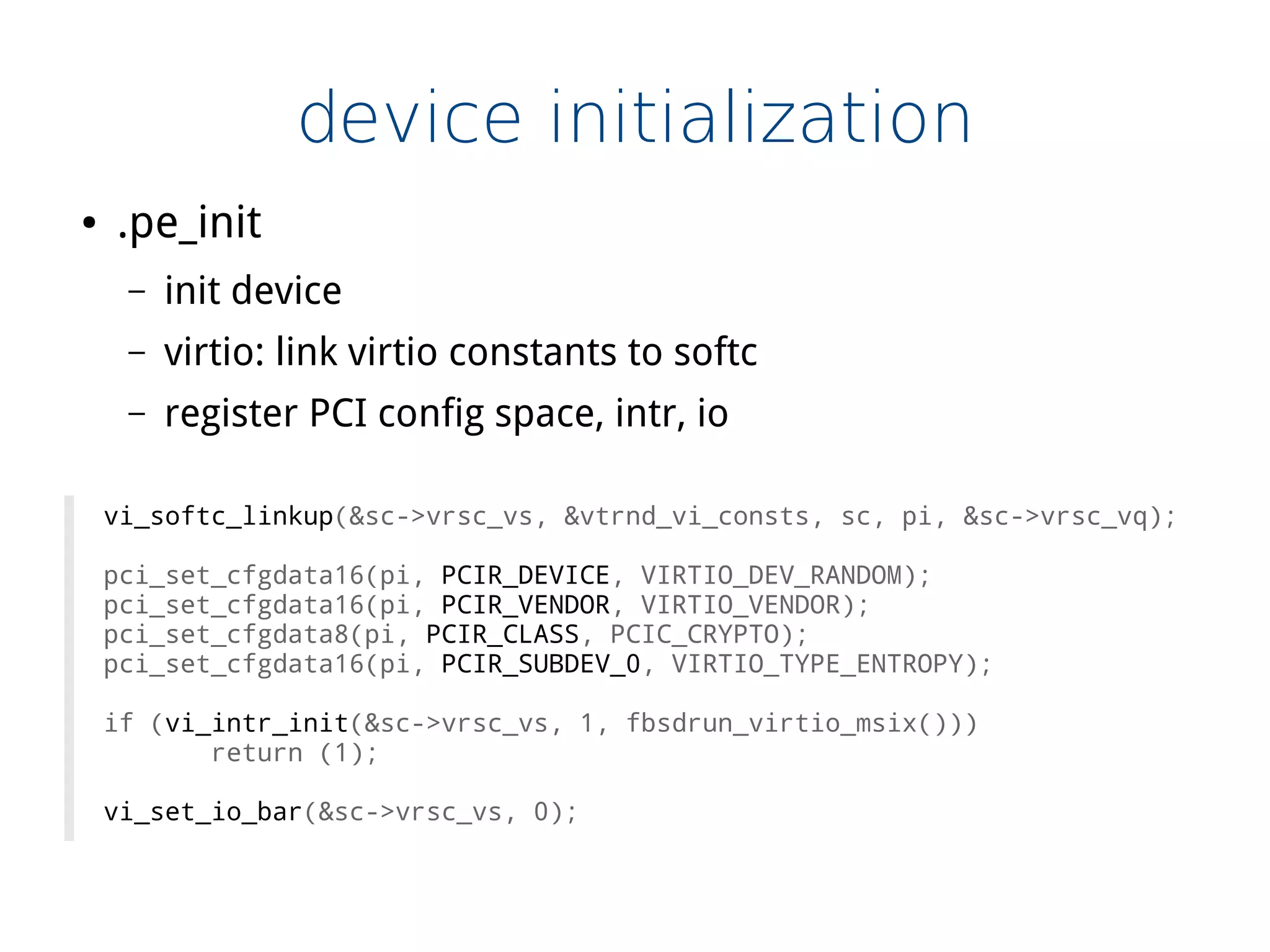
device initialization
● .pe_init
– init device
– virtio: link virtio constants to softc
– register PCI config space, intr, io
vi_softc_linkup(&sc->vrsc_vs, &vtrnd_vi_consts, sc, pi, &sc->vrsc_vq);
pci_set_cfgdata16(pi, PCIR_DEVICE, VIRTIO_DEV_RANDOM);
pci_set_cfgdata16(pi, PCIR_VENDOR, VIRTIO_VENDOR);
pci_set_cfgdata8(pi, PCIR_CLASS, PCIC_CRYPTO);
pci_set_cfgdata16(pi, PCIR_SUBDEV_0, VIRTIO_TYPE_ENTROPY);
if (vi_intr_init(&sc->vrsc_vs, 1, fbsdrun_virtio_msix()))
return (1);
vi_set_io_bar(&sc->vrsc_vs, 0);
launching bhyve
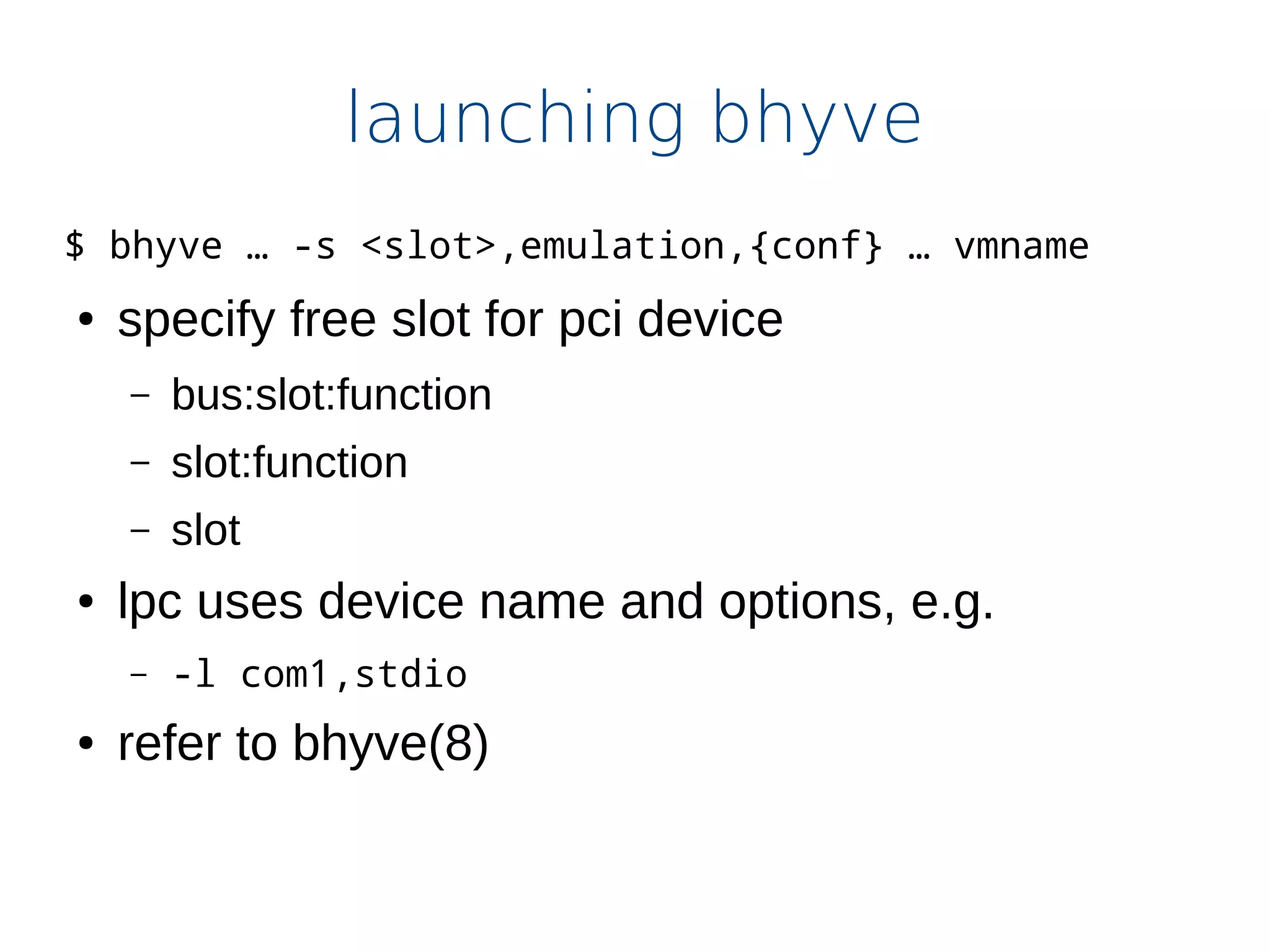
$ bhyve … -s <slot>,emulation,{conf} … vmname
● specify free slot for pci device
– bus:slot:function
– slot:function
– slot
● lpc uses device name and options, e.g.
– -l com1,stdio
● refer to bhyve(8)
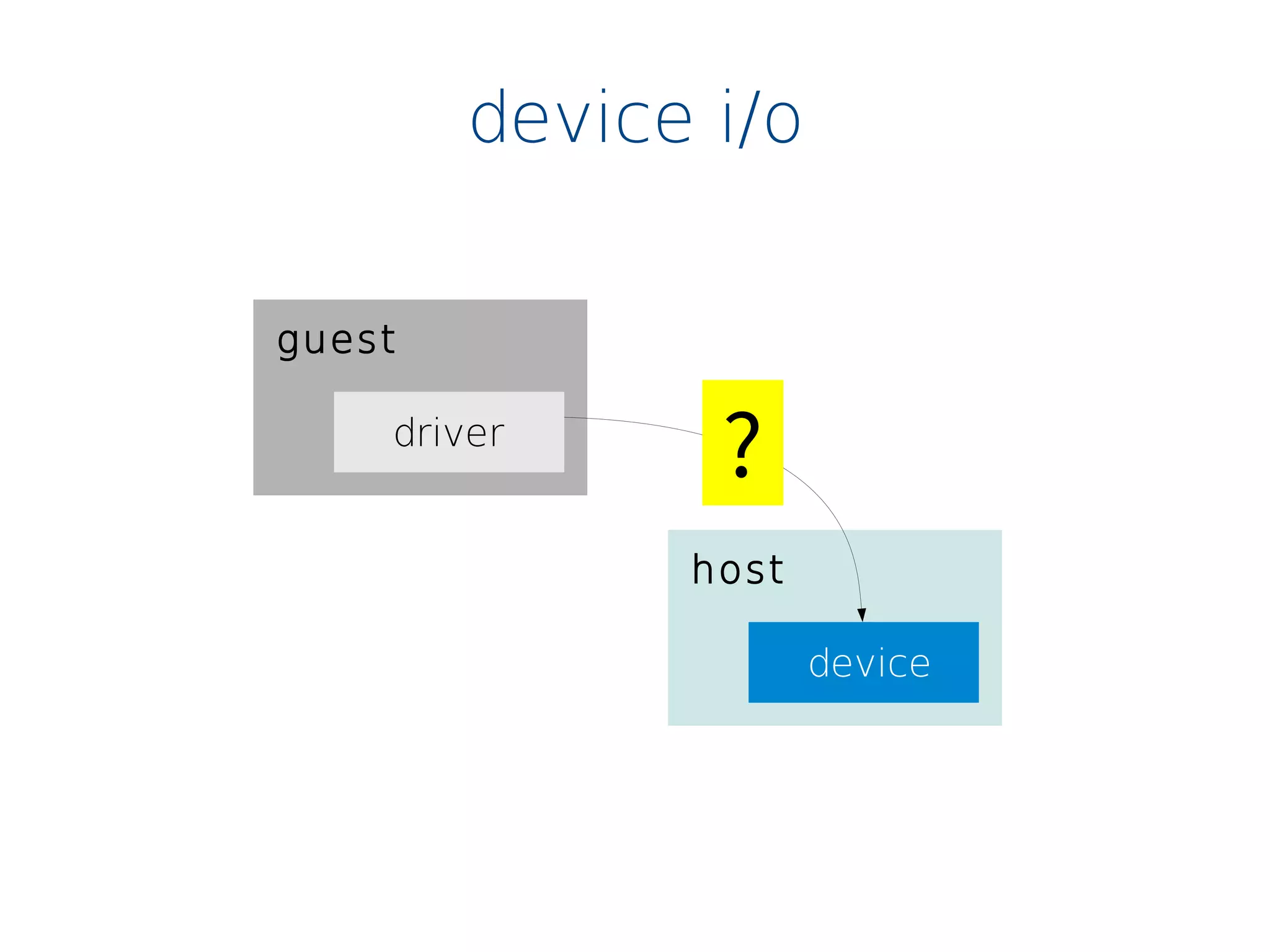
device i/o
guest
driver
host
device
?
device i/o
guest
driver
device model
bhyve
vmx_run() vmx_enter_guest
VM EXIT
condition
io/mem
read/write
return from vm_run ioctl
io: handler[VM_EXITCODE_INOUT]
mem: handler[VM_EXITCODE_INST_EMUL]
vm_run ioctl
pci / virtio / lpc
device interrupts
device
bhyve
pci
libvmmapi
ioctl()
lpc
vm_isa_pulse_irq
vm_lapic_msi
pci_lintr_assert /
pci_generate_msi[x]
kernel
vmm
vioapic
vlapicmsi
irq
vm_run:
● calls vmx_inject_interrupts
to push pending intr's
posted interrupts:
● calls ipi_cpu to send to target
vtapic
irq
vm_ioapic_assert_irq
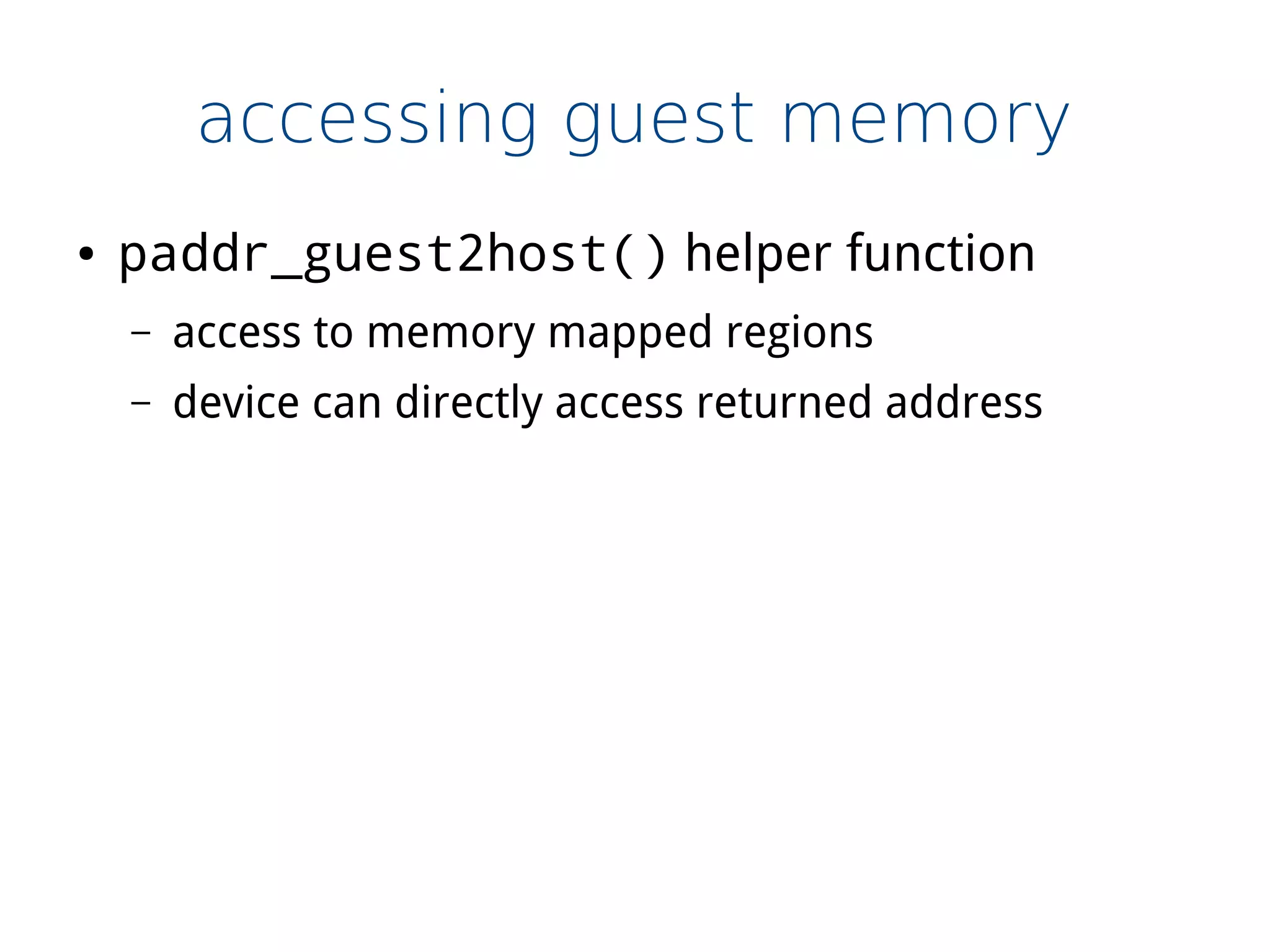
accessing guest memory
● paddr_guest2host() helper function
– access to memory mapped regions
– device can directly access returned address
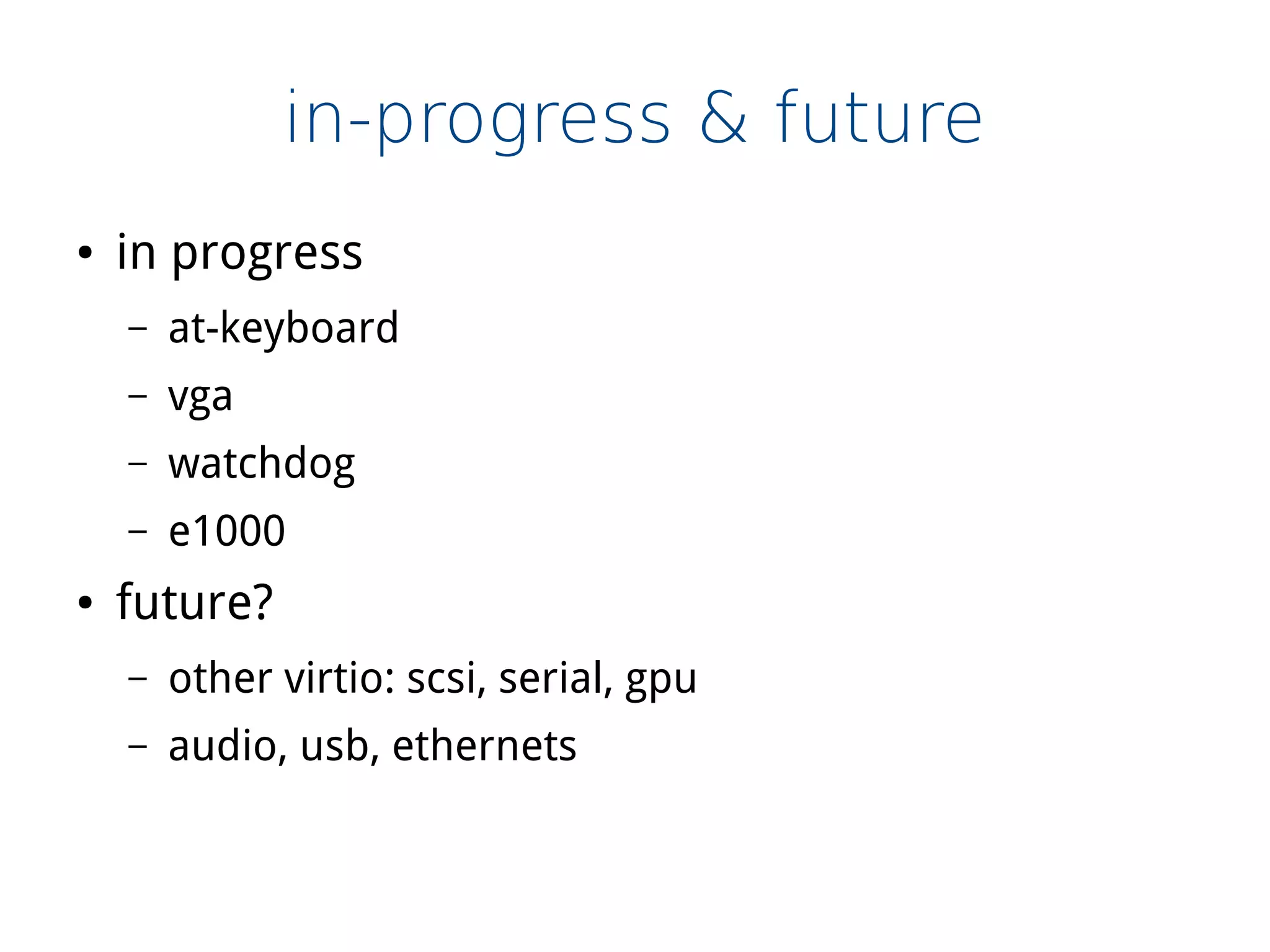
in-progress & future
● in progress
– at-keyboard
– vga
– watchdog
– e1000
● future?
– other virtio: scsi, serial, gpu
– audio, usb, ethernets

bhyve Device Emulation Introduction

  • 1.
  • 2.
    overview ● Most emulatedin userspace usr.sbin/bhyve – kernel ones in vmm/io/ (PICs and timers) ● ISA-LPC – uart, rtc ● PCI – virtio ● block – storage ● net – tap networking ● rng – random entropy from /dev/random – ahci – pass-through
  • 3.
  • 4.
    virtio ● Virtual I/O(virtio) device spec – common framework for IO virtualization – Linux and FreeBSD built-in support; Windows requires custom drivers – transports: PCI, MMIO, channel (e.g. S/390) – devices types: network, block, entropy, console, SCSI – devices implement virtqueues for data transport – http://docs.oasis-open.org/virtio/virtio/v1.0/virtio-v1.0.html
  • 5.
    example virtio device ●basic pci device – virtio vendor ID 0x1AF4, dev-id 0x1000-0x103F ● virtio random number generator – usr.sbin/bhyve/pci_virtio_rnd.c – guest rng driver requests 32-bit number to replenish its random pool – FreeBSD /dev/random non-blocking ● Yarrow PRNG ● in-progress: Fortuna
  • 6.
    device (virtio) registration ●declare virtio constants and handlers static struct virtio_consts vtrnd_vi_consts = { "vtrnd", /* our name */ 1, /* we support 1 virtqueue */ 0, /* config reg size */ pci_vtrnd_reset, /* reset */ pci_vtrnd_notify, /* device-wide qnotify */ NULL, /* read virtio config */ NULL, /* write virtio config */ 0, /* our capabilities */ }; ● virtio: – qnotify handler called on new message from guest to read/write
  • 7.
    device (pci) registration structpci_devemu pci_de_vrnd = { .pe_emu = "virtio-rnd", /* bhyve cmd line */ .pe_init = pci_vtrnd_init, /* device init */ .pe_barwrite = vi_pci_write, /* virtio framework */ .pe_barread = vi_pci_read /* virtio framework */ }; PCI_EMUL_SET(pci_de_vrnd); ● register handlers – use vi_pci_{read|write} for virtio
  • 8.
    device initialization ● .pe_init –init device – virtio: link virtio constants to softc – register PCI config space, intr, io vi_softc_linkup(&sc->vrsc_vs, &vtrnd_vi_consts, sc, pi, &sc->vrsc_vq); pci_set_cfgdata16(pi, PCIR_DEVICE, VIRTIO_DEV_RANDOM); pci_set_cfgdata16(pi, PCIR_VENDOR, VIRTIO_VENDOR); pci_set_cfgdata8(pi, PCIR_CLASS, PCIC_CRYPTO); pci_set_cfgdata16(pi, PCIR_SUBDEV_0, VIRTIO_TYPE_ENTROPY); if (vi_intr_init(&sc->vrsc_vs, 1, fbsdrun_virtio_msix())) return (1); vi_set_io_bar(&sc->vrsc_vs, 0);
  • 9.
    launching bhyve $ bhyve… -s <slot>,emulation,{conf} … vmname ● specify free slot for pci device – bus:slot:function – slot:function – slot ● lpc uses device name and options, e.g. – -l com1,stdio ● refer to bhyve(8)
  • 10.
  • 11.
    device i/o guest driver device model bhyve vmx_run()vmx_enter_guest VM EXIT condition io/mem read/write return from vm_run ioctl io: handler[VM_EXITCODE_INOUT] mem: handler[VM_EXITCODE_INST_EMUL] vm_run ioctl pci / virtio / lpc
  • 12.
    device interrupts device bhyve pci libvmmapi ioctl() lpc vm_isa_pulse_irq vm_lapic_msi pci_lintr_assert / pci_generate_msi[x] kernel vmm vioapic vlapicmsi irq vm_run: ●calls vmx_inject_interrupts to push pending intr's posted interrupts: ● calls ipi_cpu to send to target vtapic irq vm_ioapic_assert_irq
  • 13.
    accessing guest memory ●paddr_guest2host() helper function – access to memory mapped regions – device can directly access returned address
  • 14.
    in-progress & future ●in progress – at-keyboard – vga – watchdog – e1000 ● future? – other virtio: scsi, serial, gpu – audio, usb, ethernets