
BEYOND DESIGN PATTERNS
& PRINCIPLES
WRITING GOOD OO CODE
Before?
Matthias Noback
@matthiasnoback
My goals
To give you some vocabulary for code discussions
and reviews

To bring back our focus to the basic ideas behind
OOP
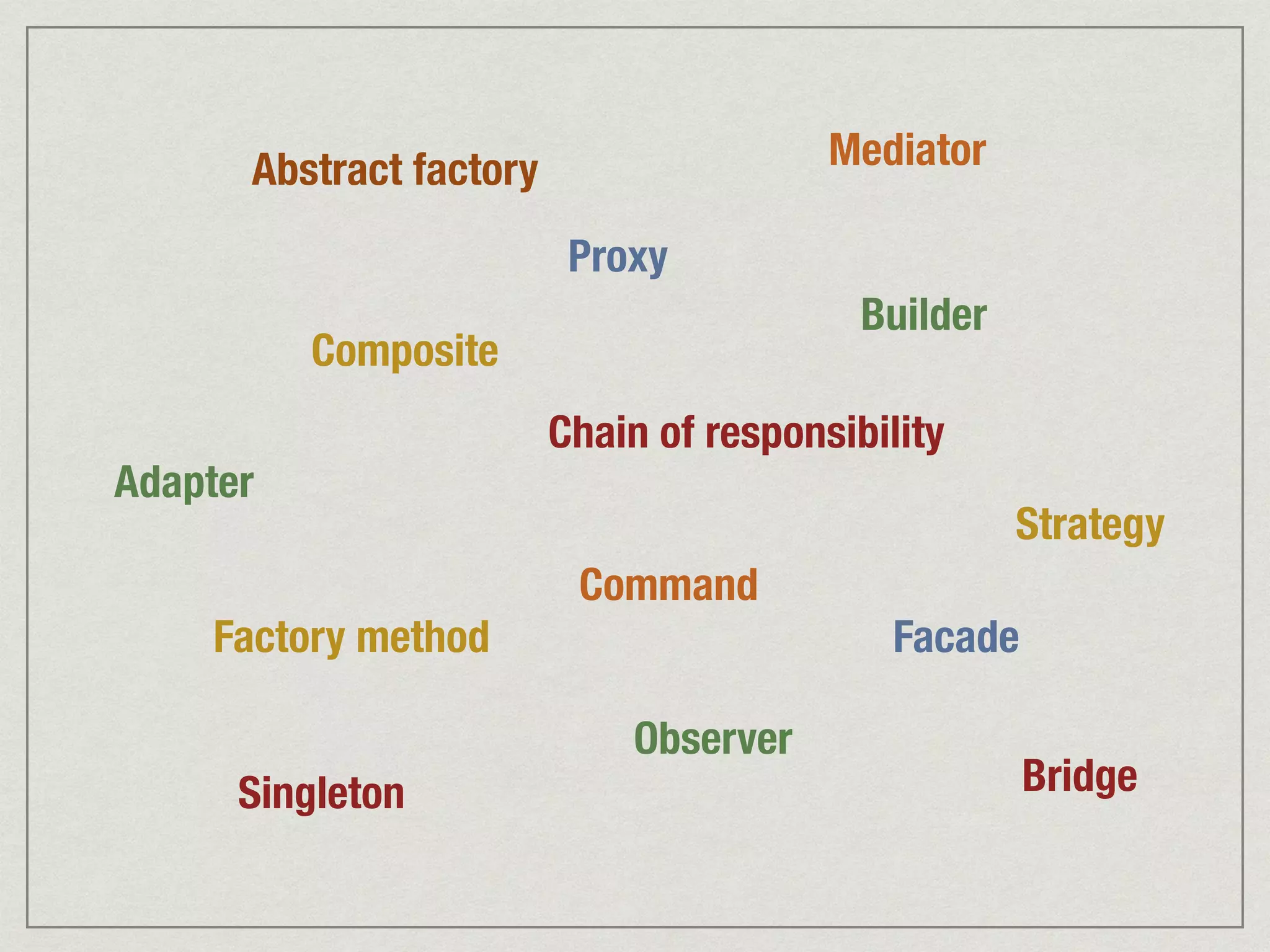
Abstract factory
Builder
Factory method
Singleton
Adapter
Bridge
Composite
Facade
Proxy
Chain of responsibility
Command
Mediator
Strategy
Observer
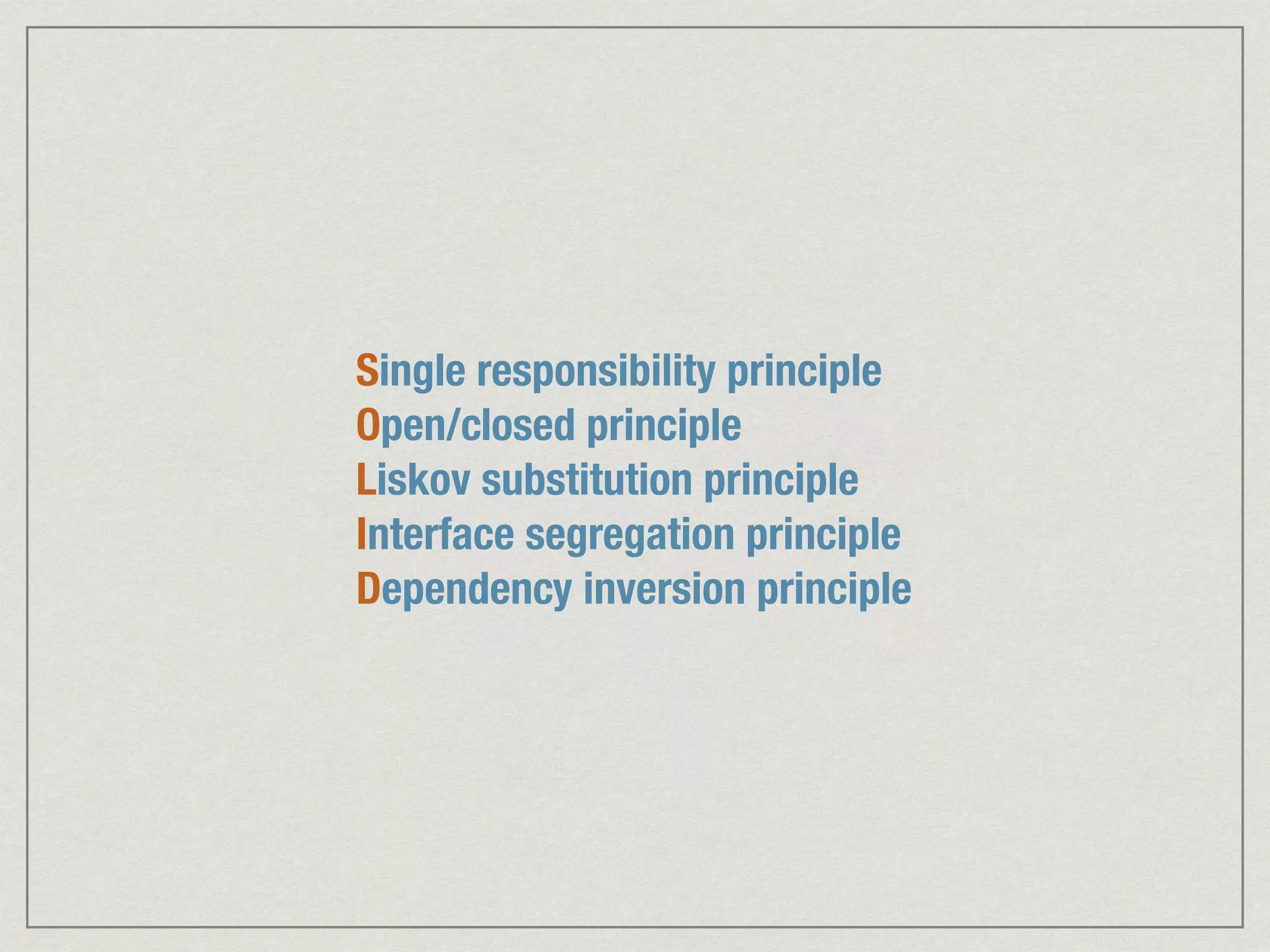
Single responsibility principle
Open/closed principle
Liskov substitution principle
Interface segregation principle
Dependency inversion principle
EVERYTHING IS AN OBJECT
Alan Kay
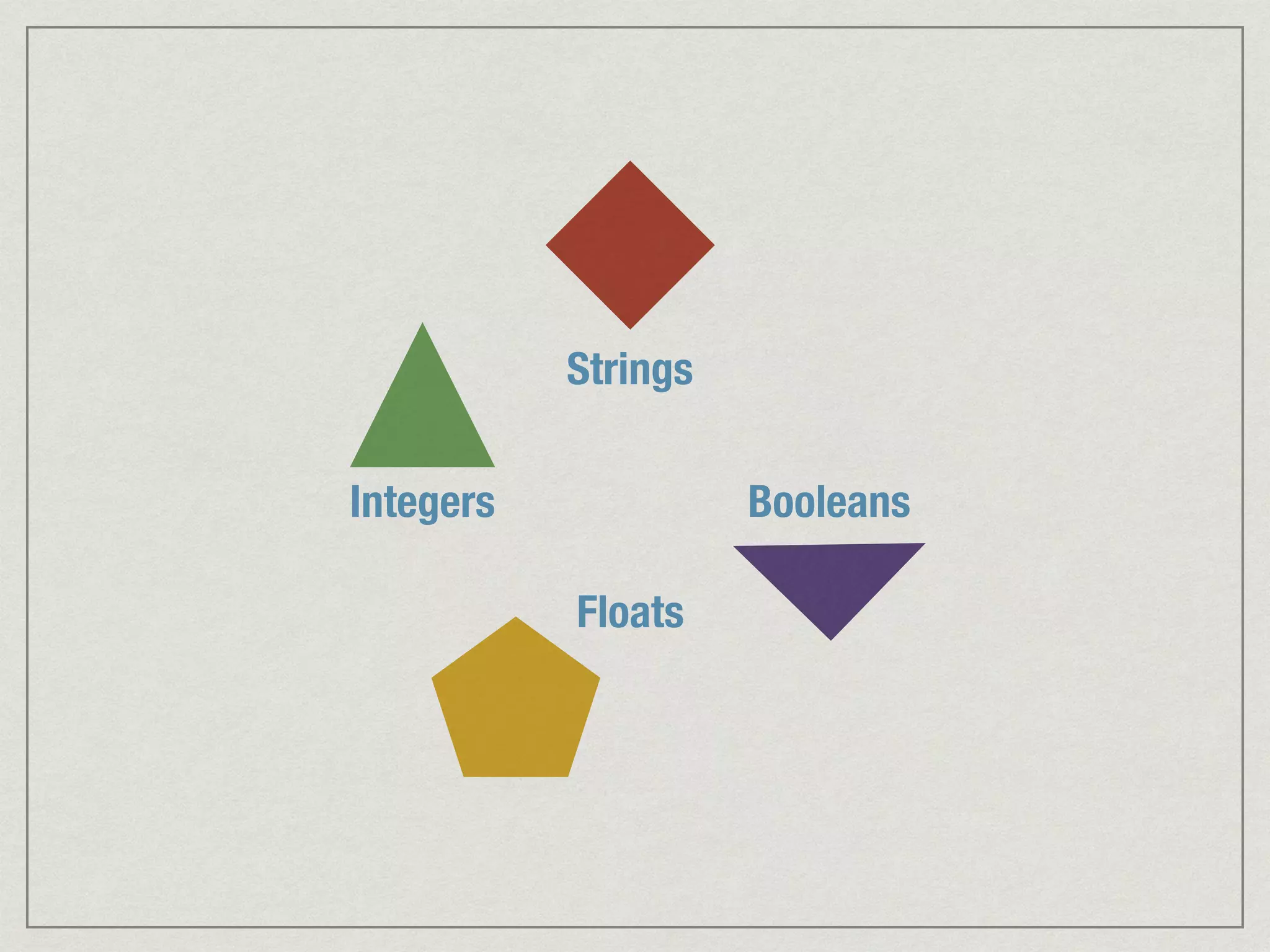
Strings
Integers Booleans
Floats
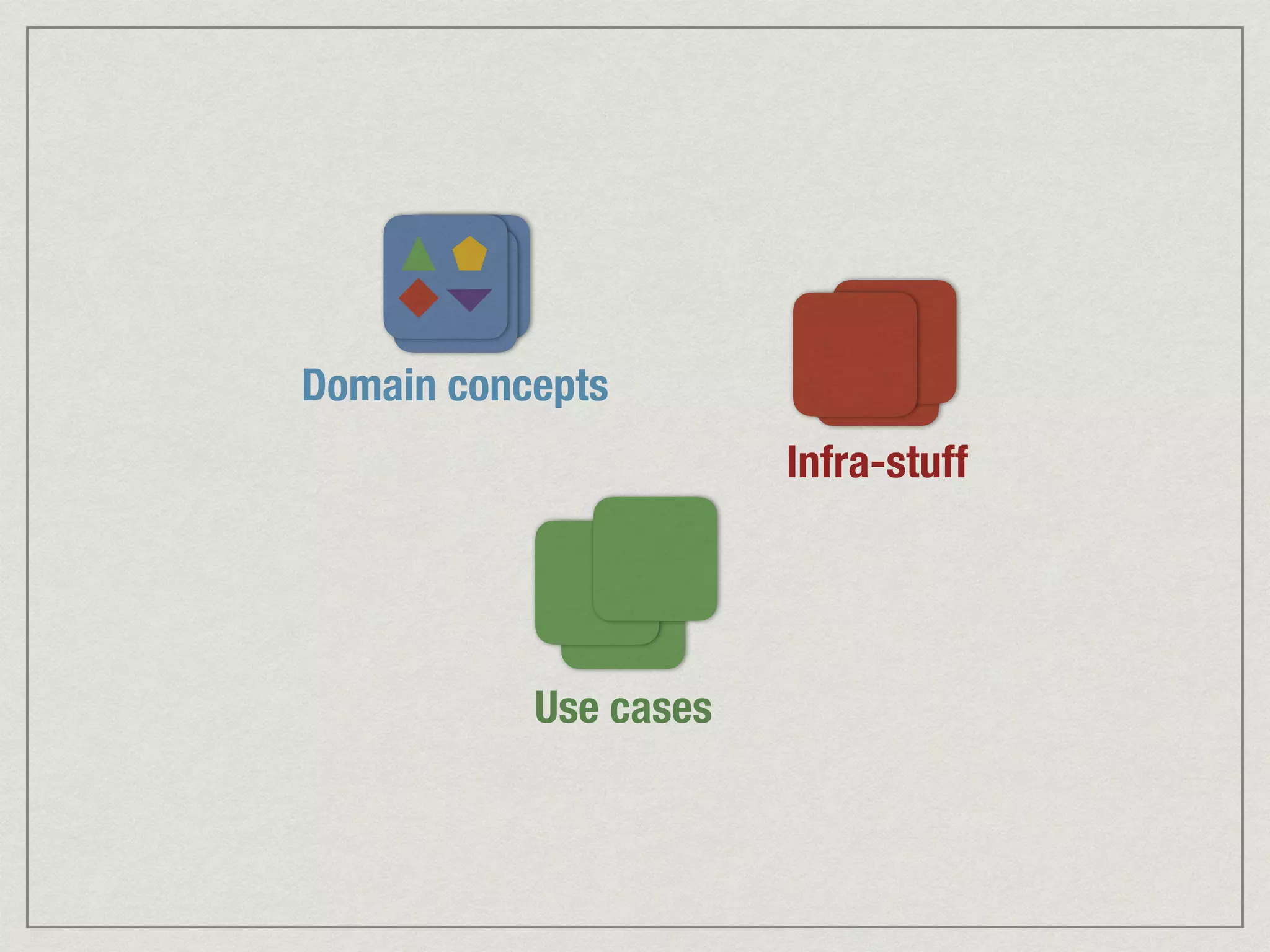
Domain concepts
Use cases
Infra-stuff
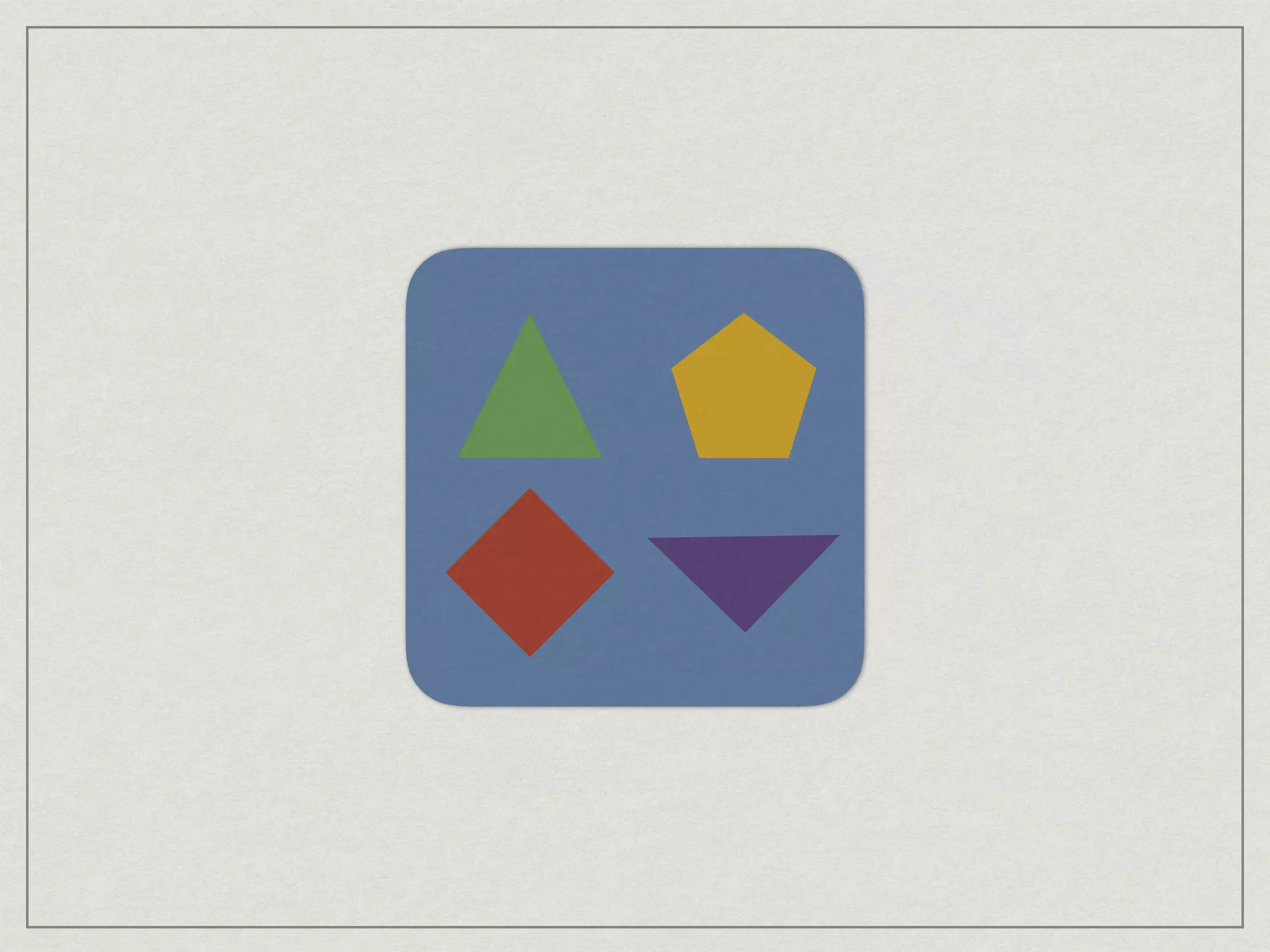
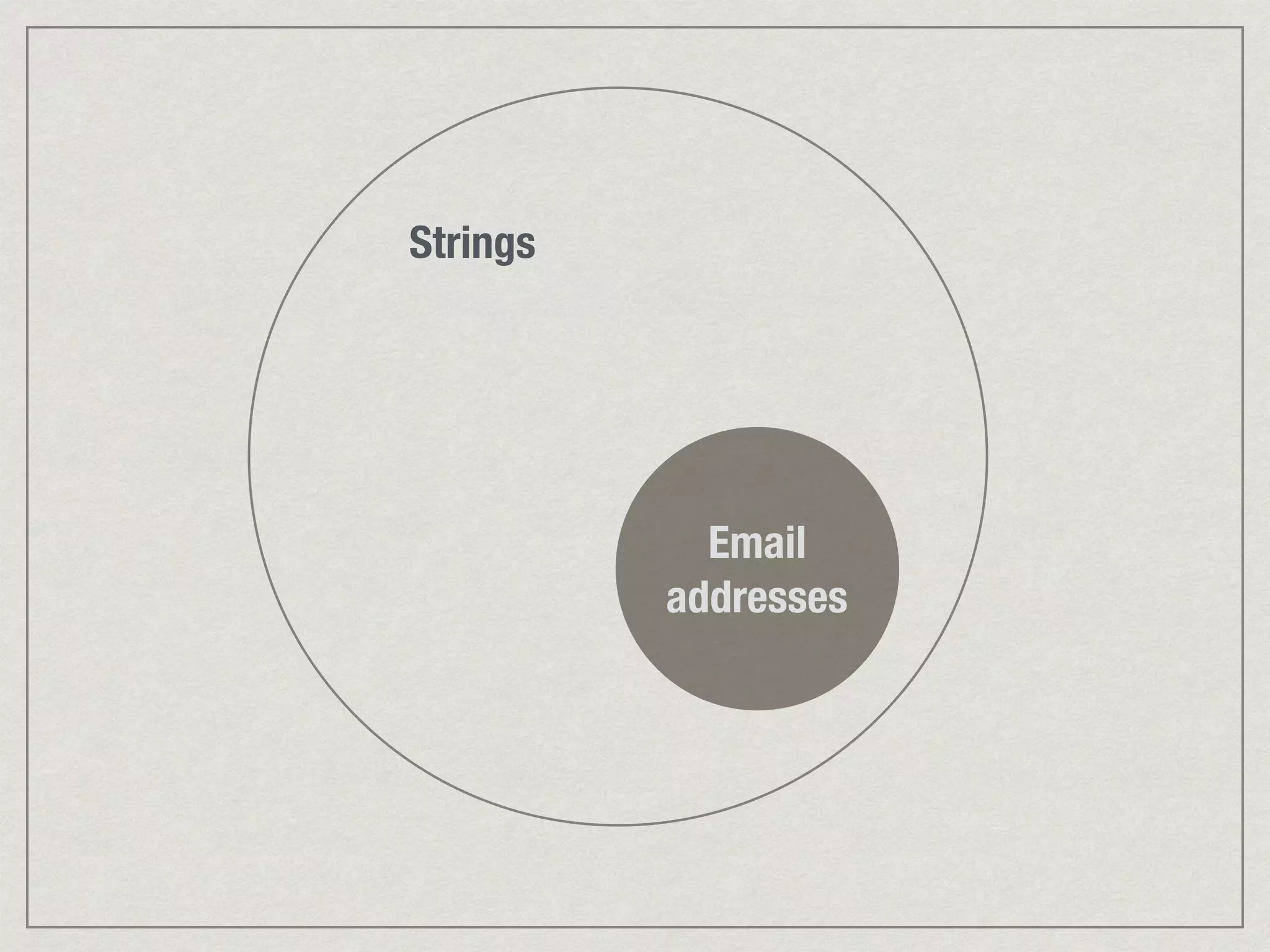
Objects introduce meaning
Strings
Email
addresses
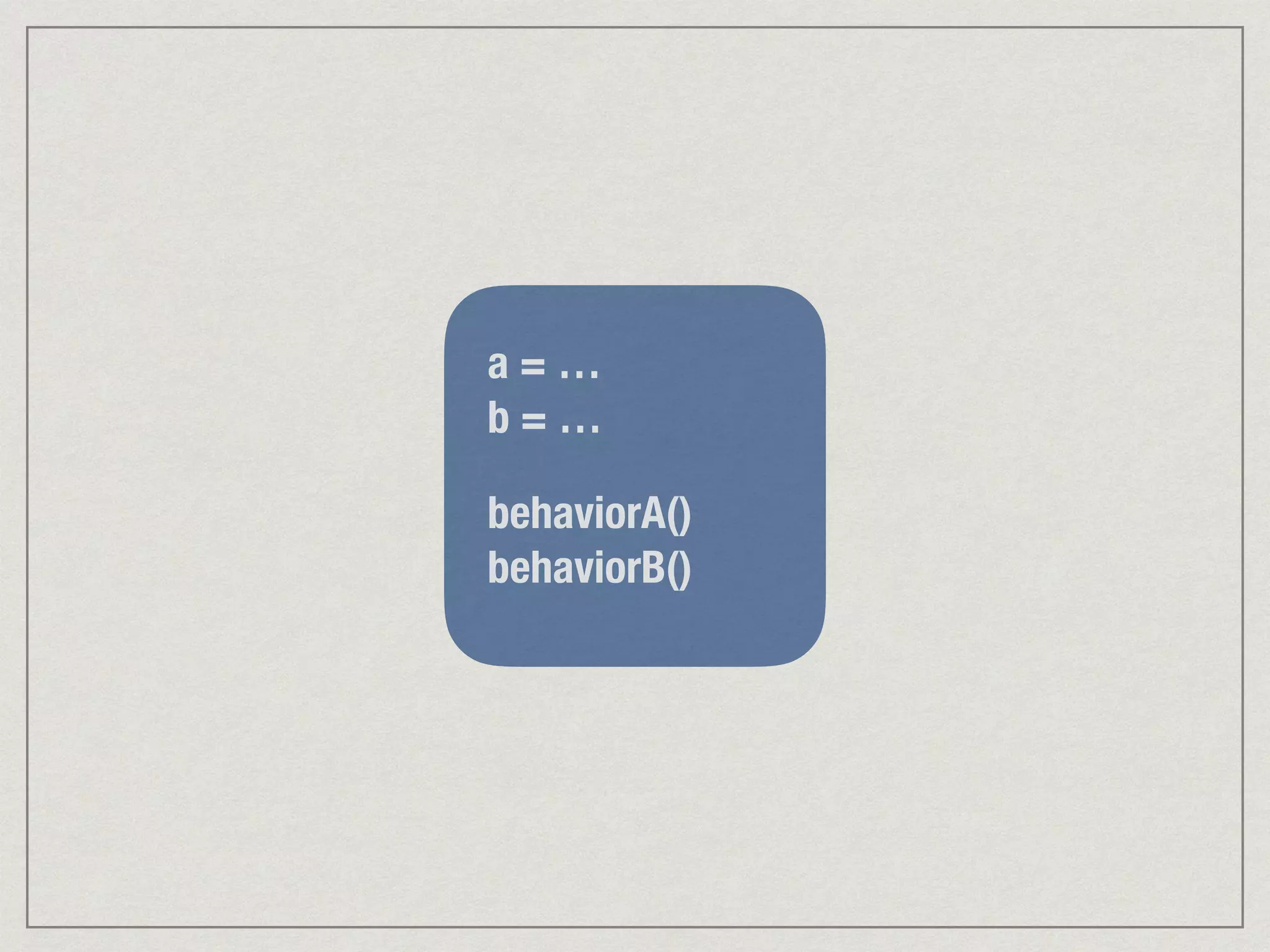
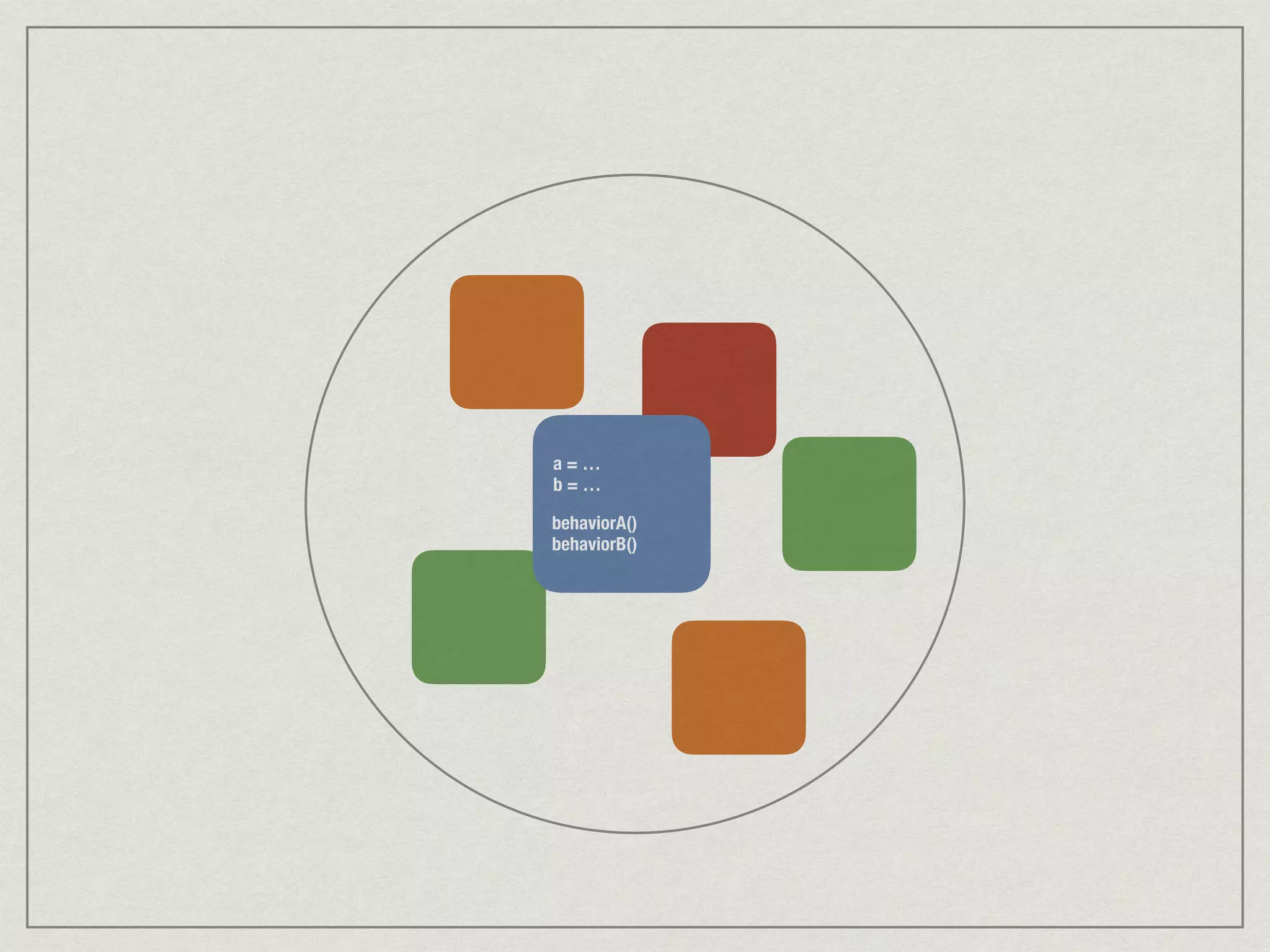
OBJECTS ENCAPSULATE
STATE AND BEHAVIOR
enclose
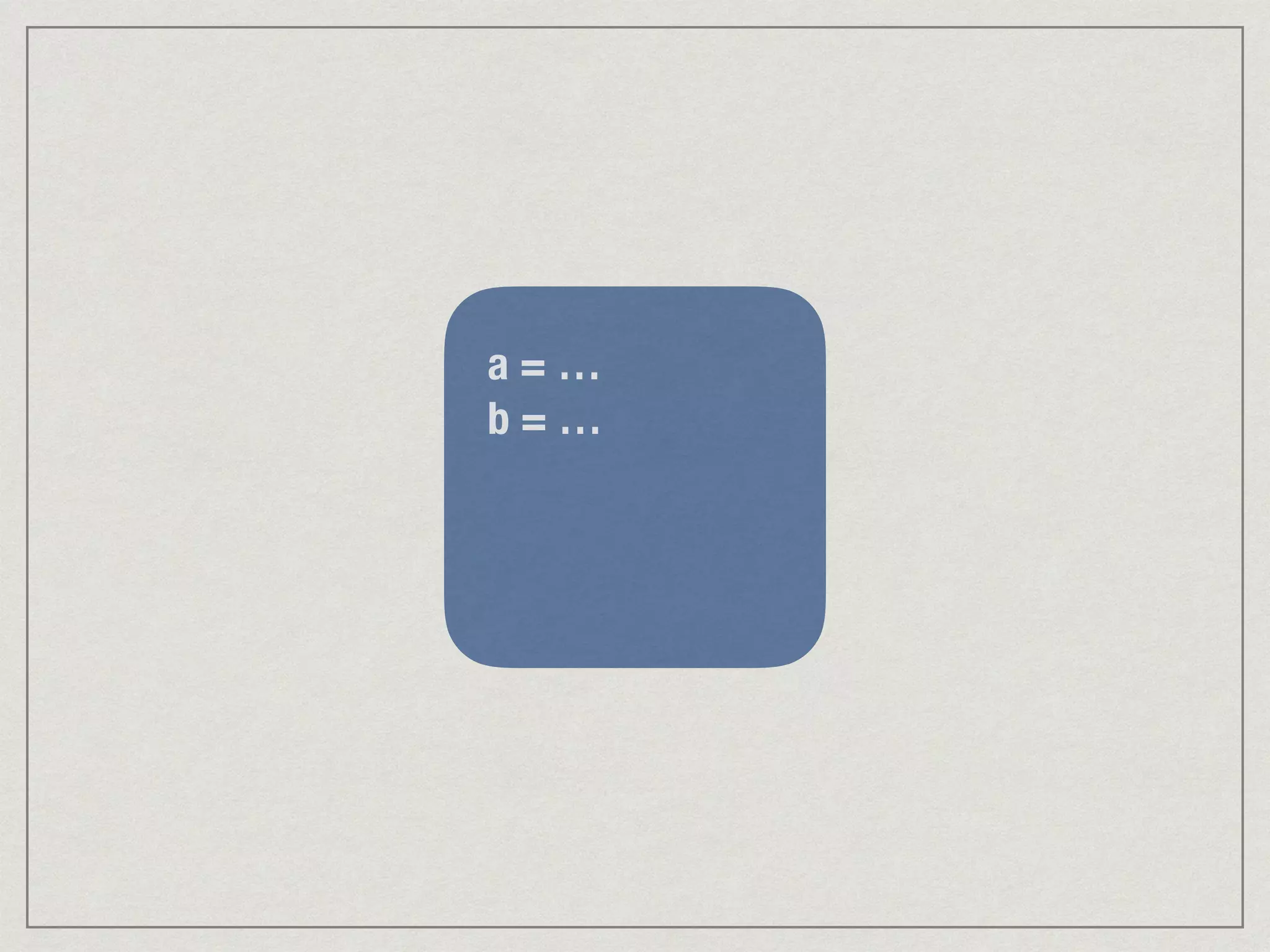
a = …
b = …
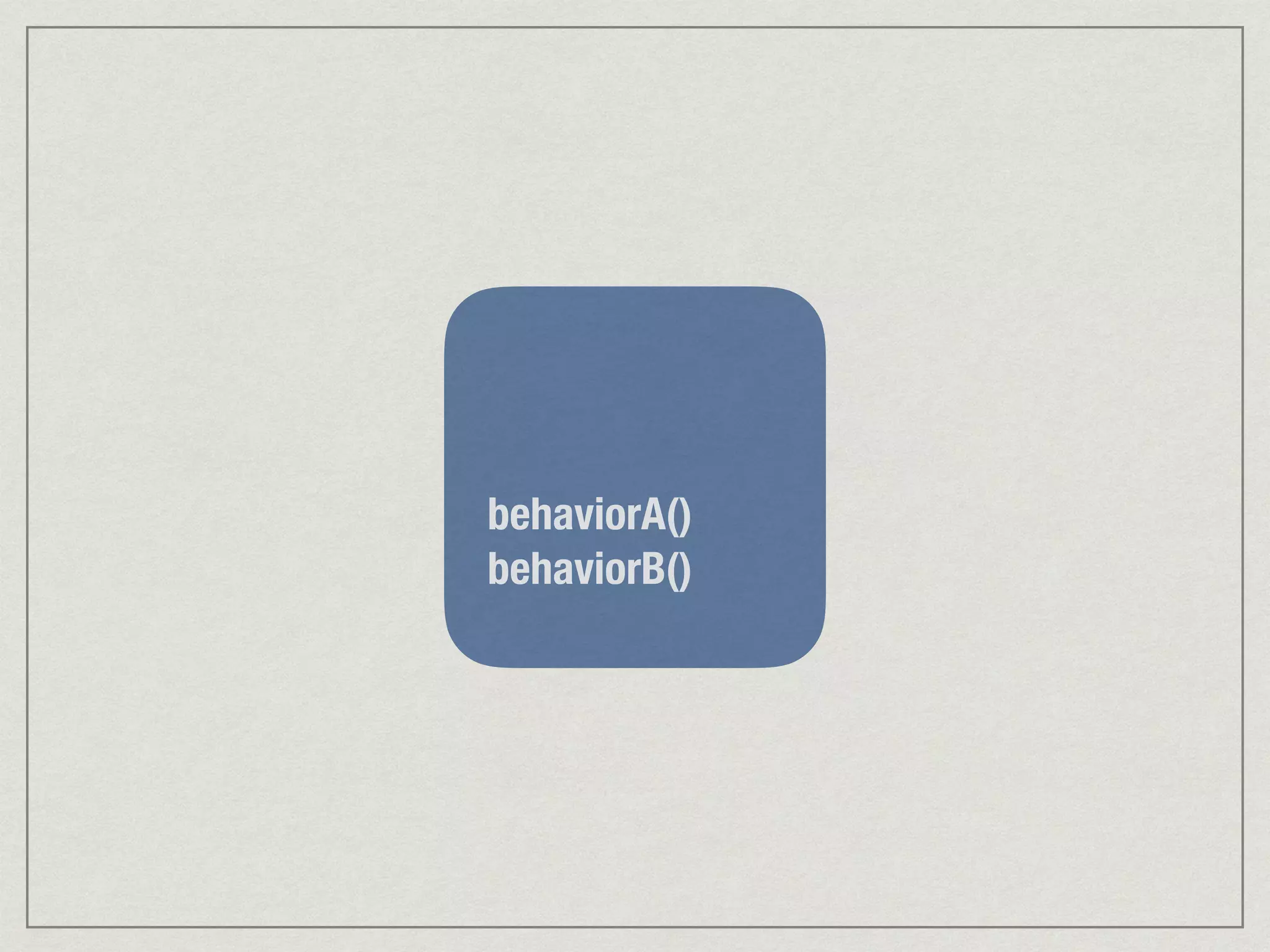
behaviorA()
behaviorB()
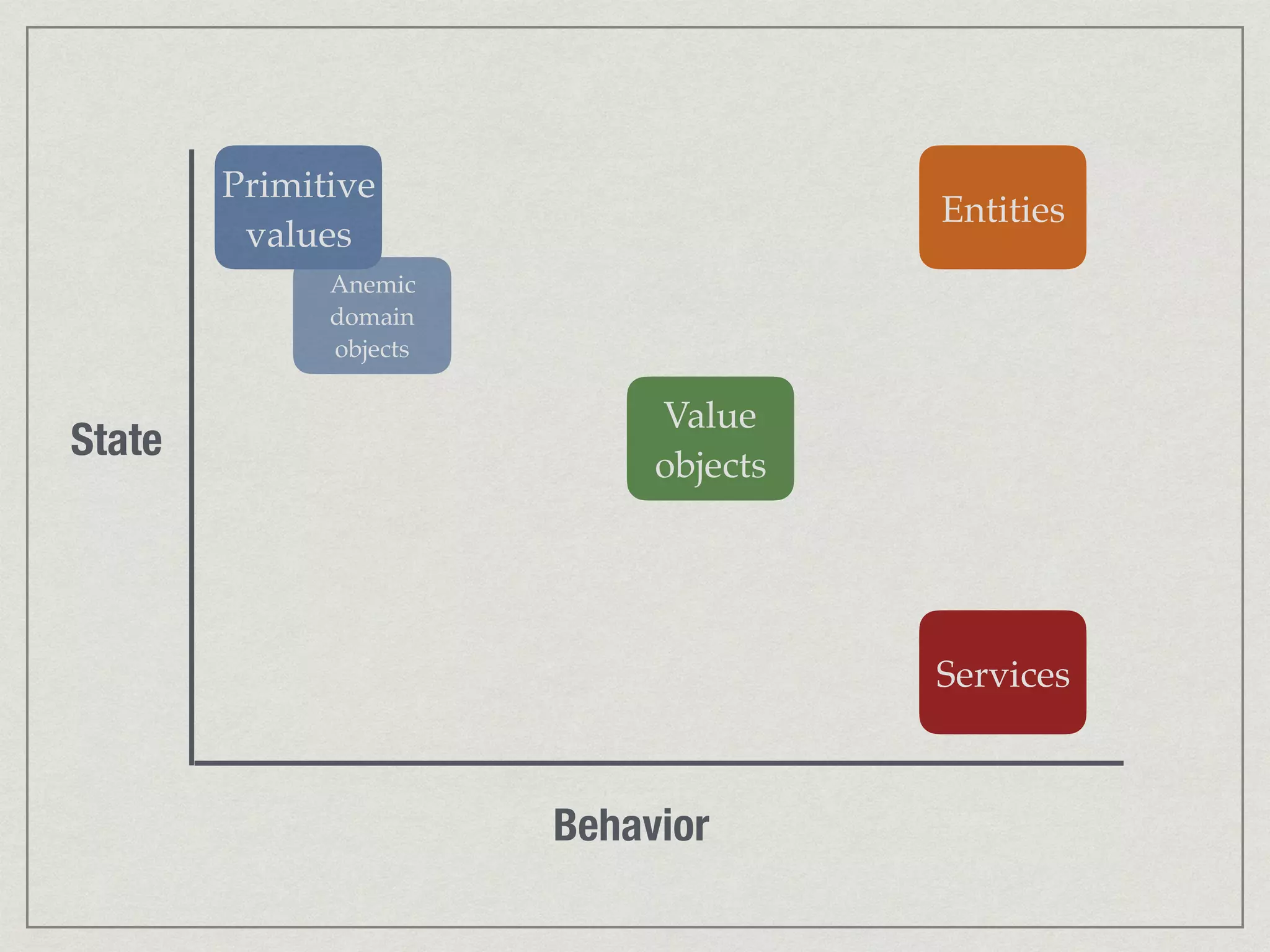
Behavior
State
Primitive
values
Services
Entities
Value
objects
Anemic
domain
objects
Find a balance
SERVICES SHOULD BE
MODELLED AS FUNCTIONS
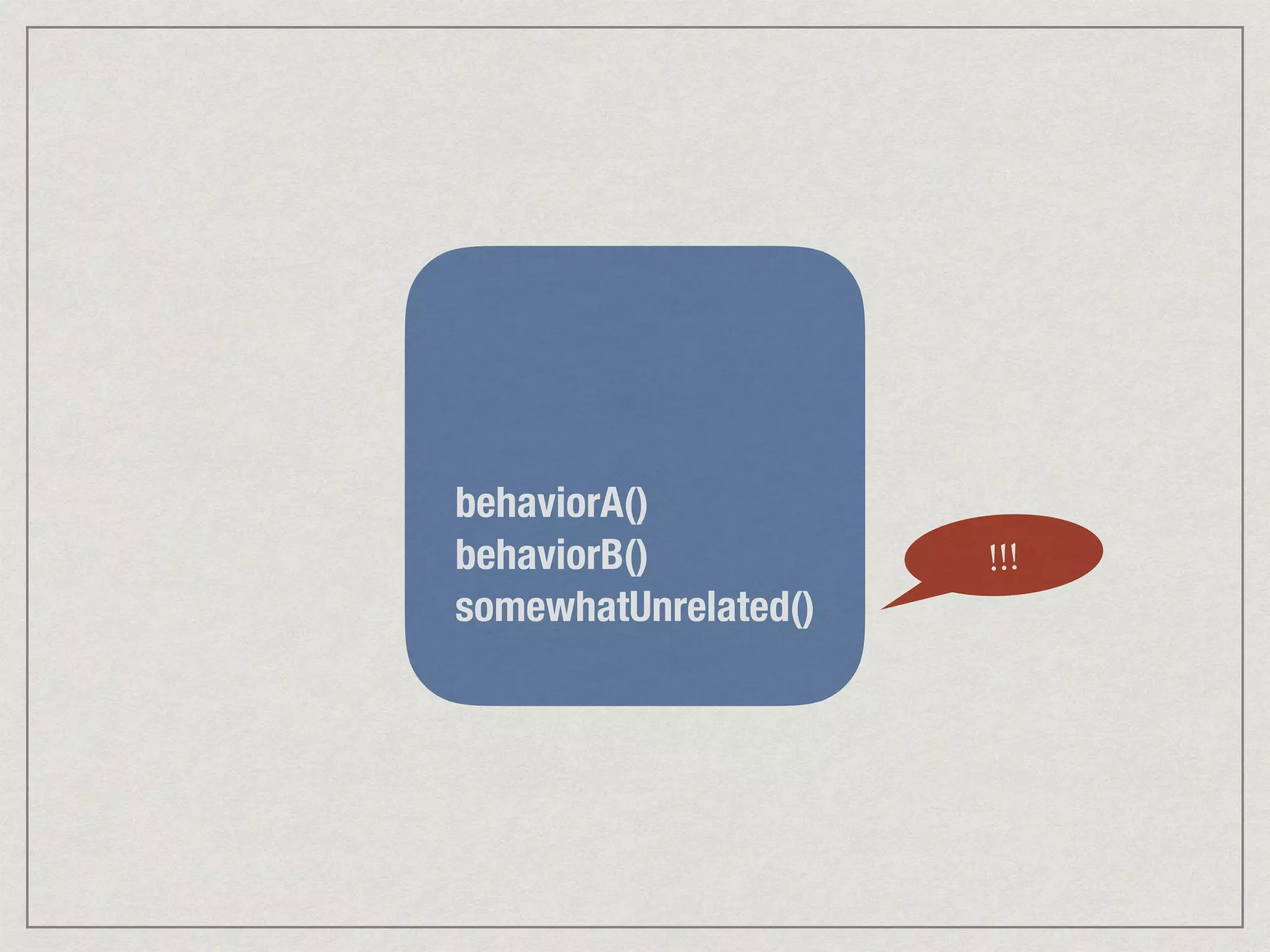
behaviorA()
behaviorB()
somewhatUnrelated()
!!!
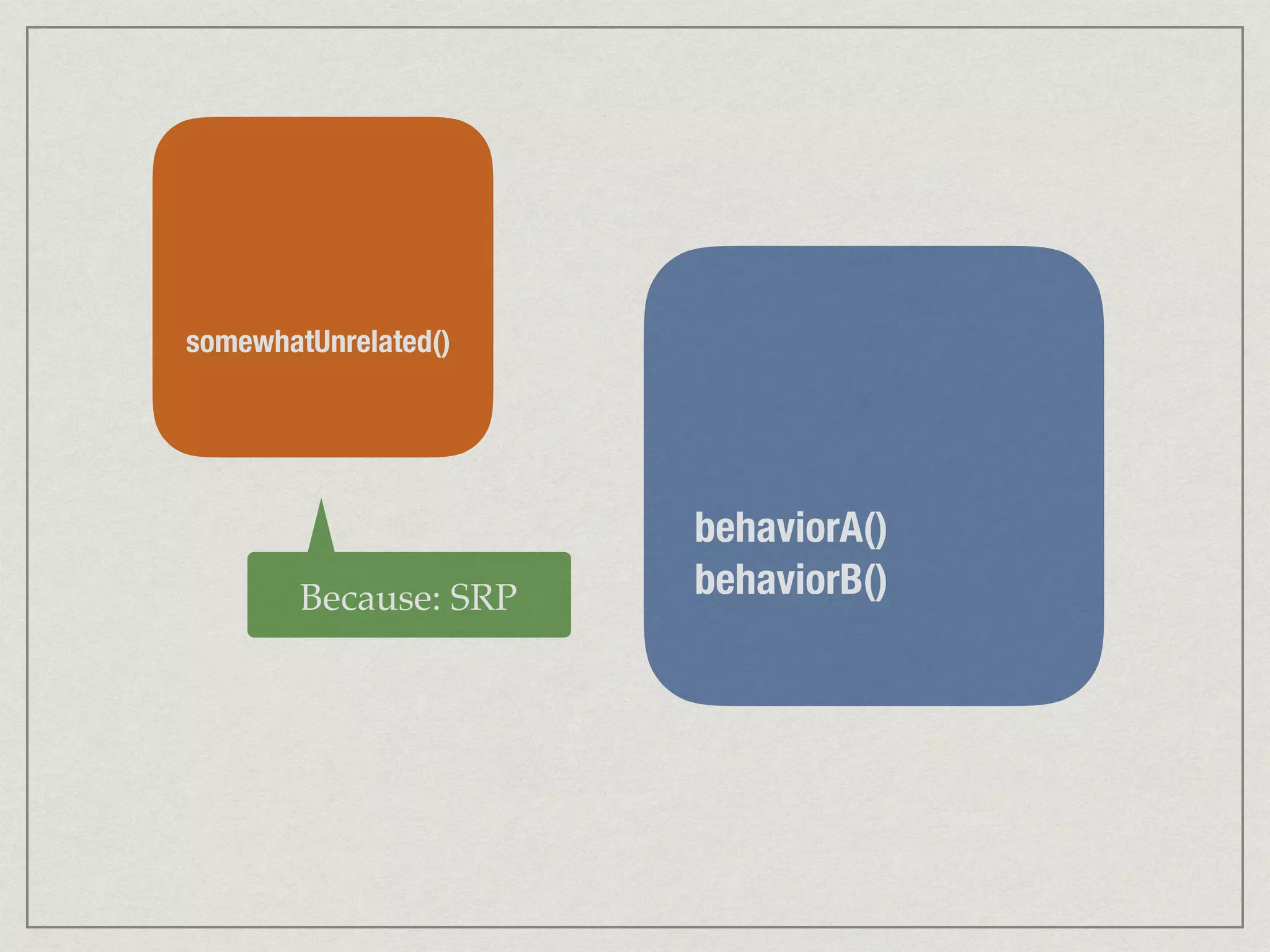
somewhatUnrelated()
behaviorA()
behaviorB()Because: SRP
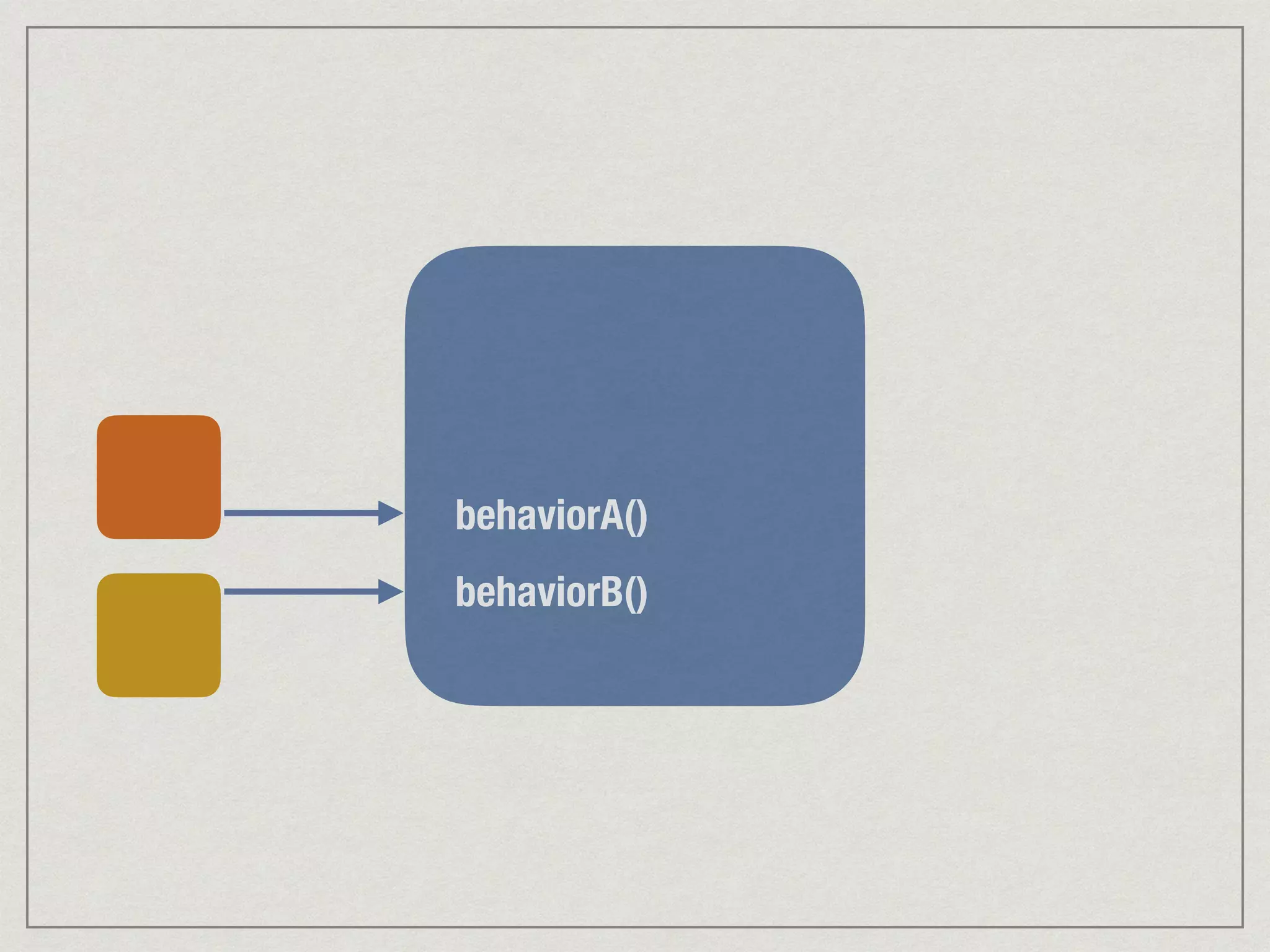
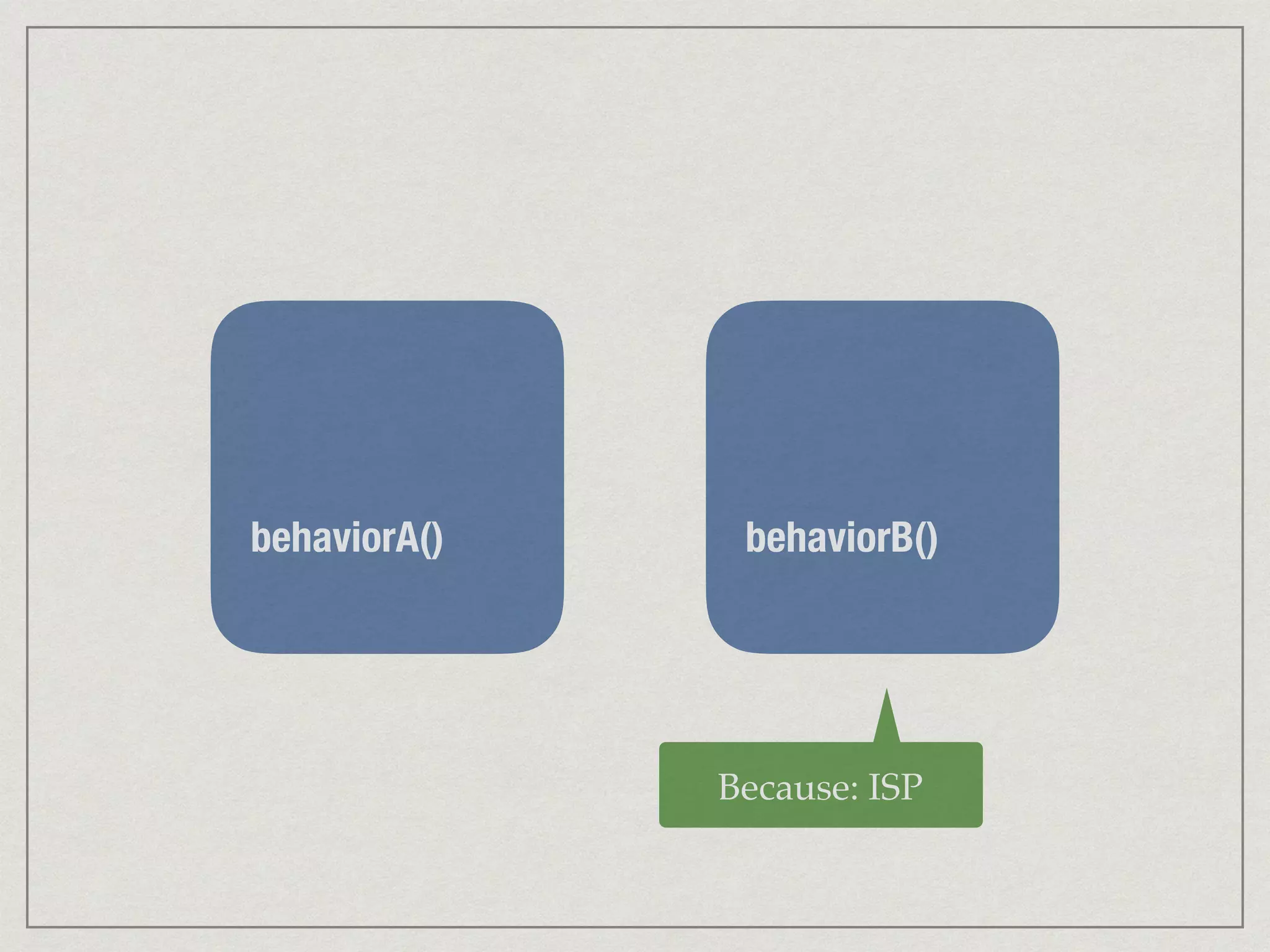
behaviorA()
behaviorB()
behaviorB()
Because: ISP
behaviorA()
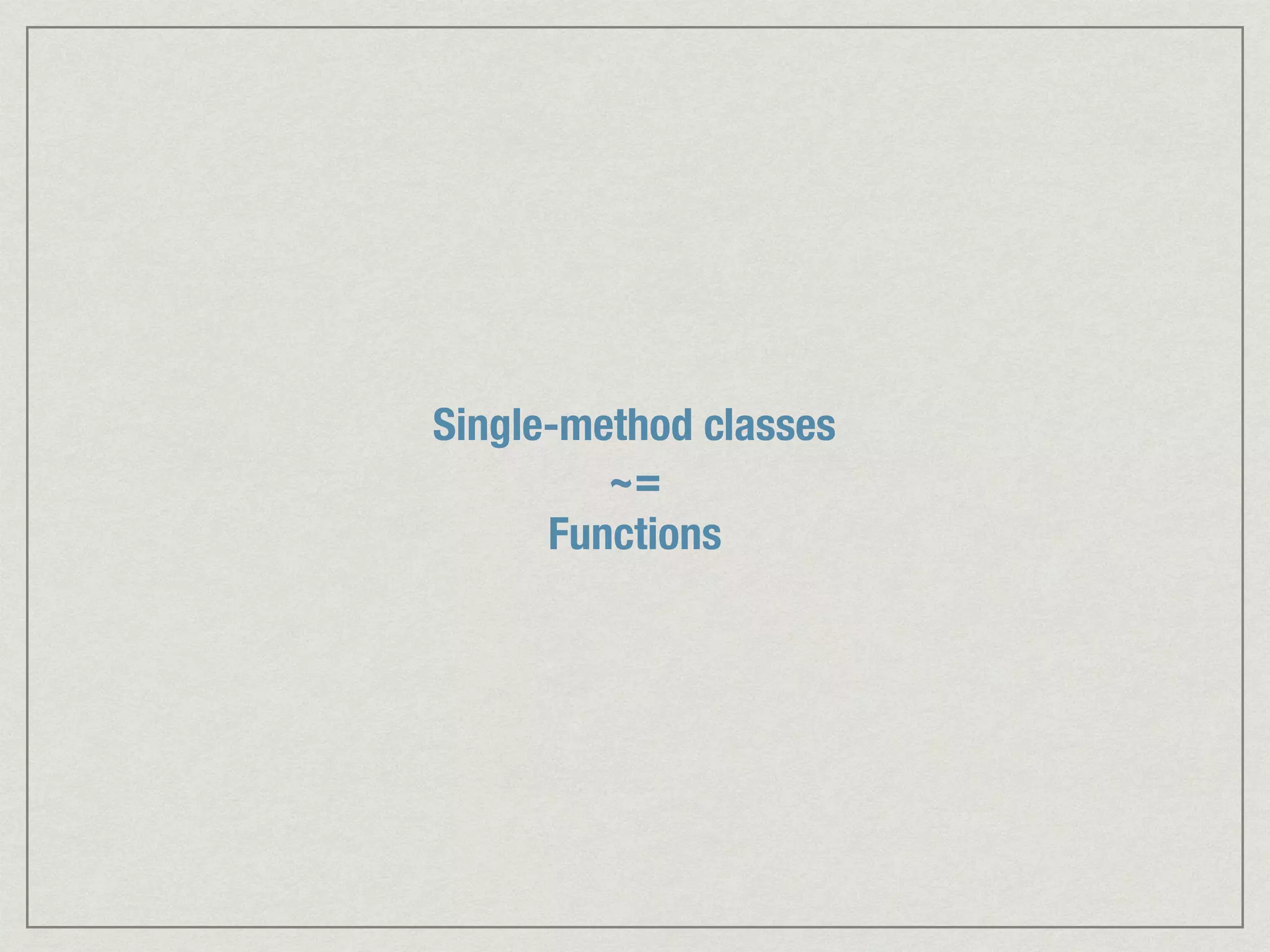
Single-method classes
~=
Functions
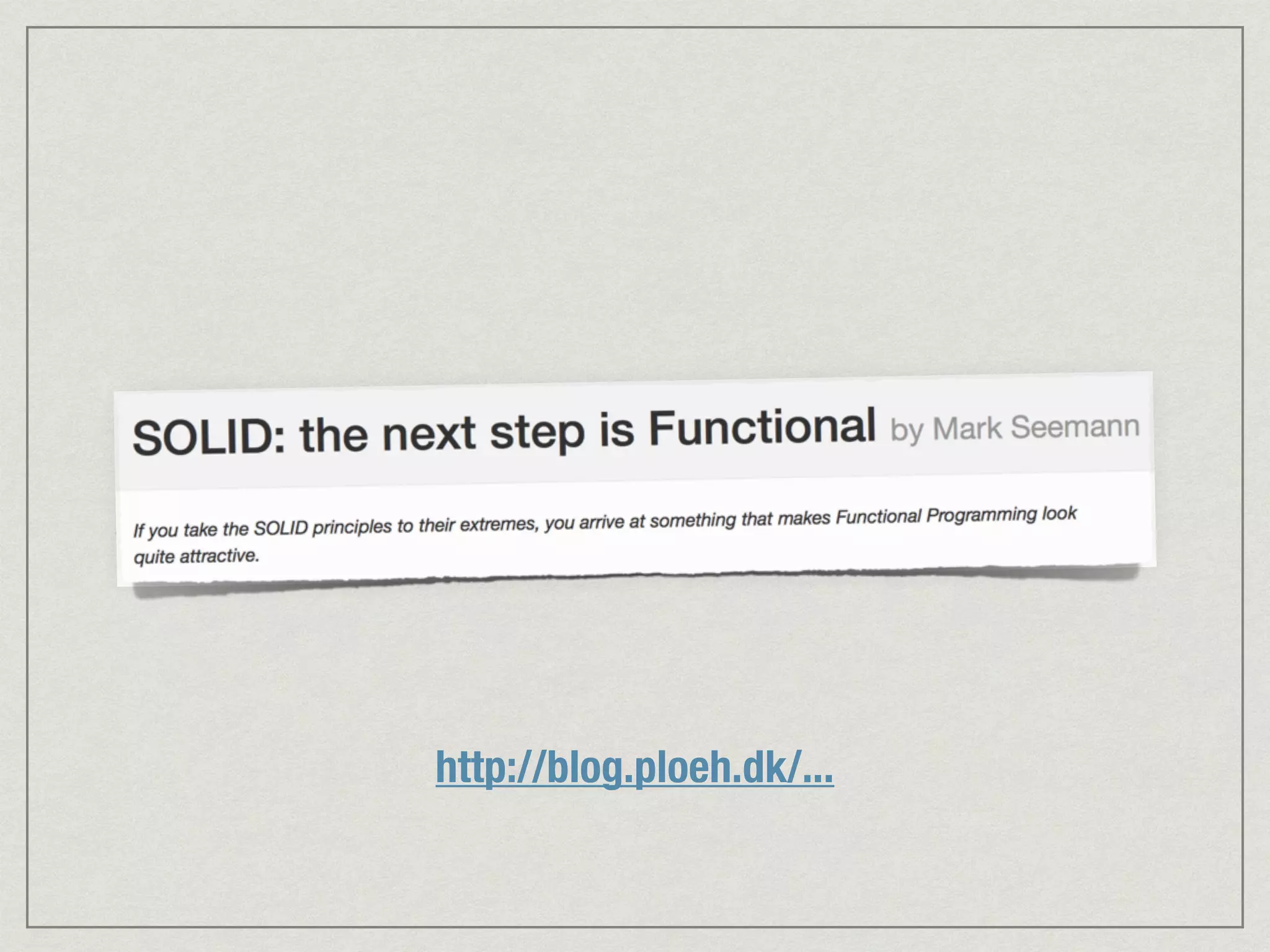
http://blog.ploeh.dk/...
Functions
Naturally stateless
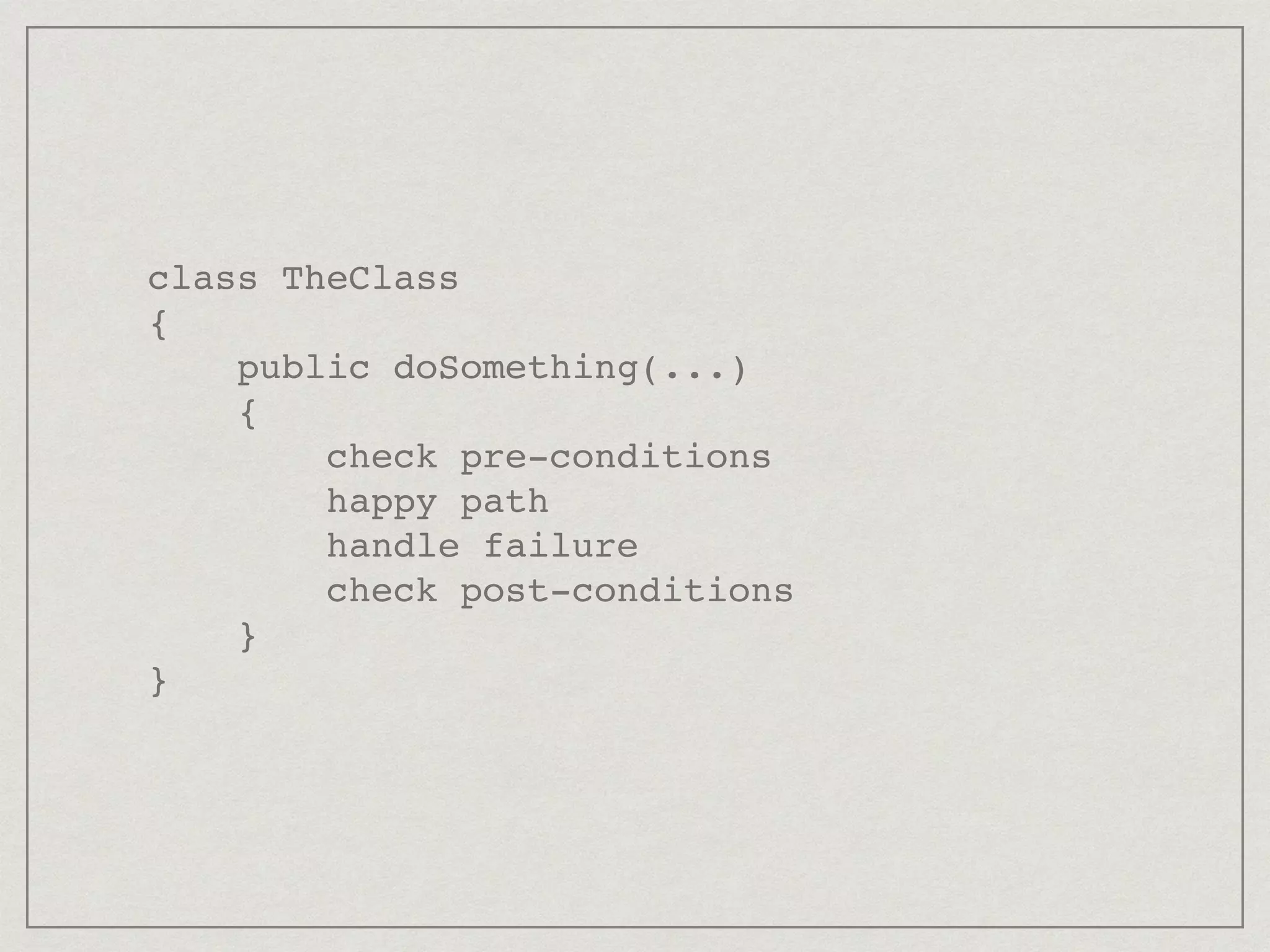
class TheClass
{
public doSomething(...)
{
check pre-conditions
happy path
handle failure
check post-conditions
}
}
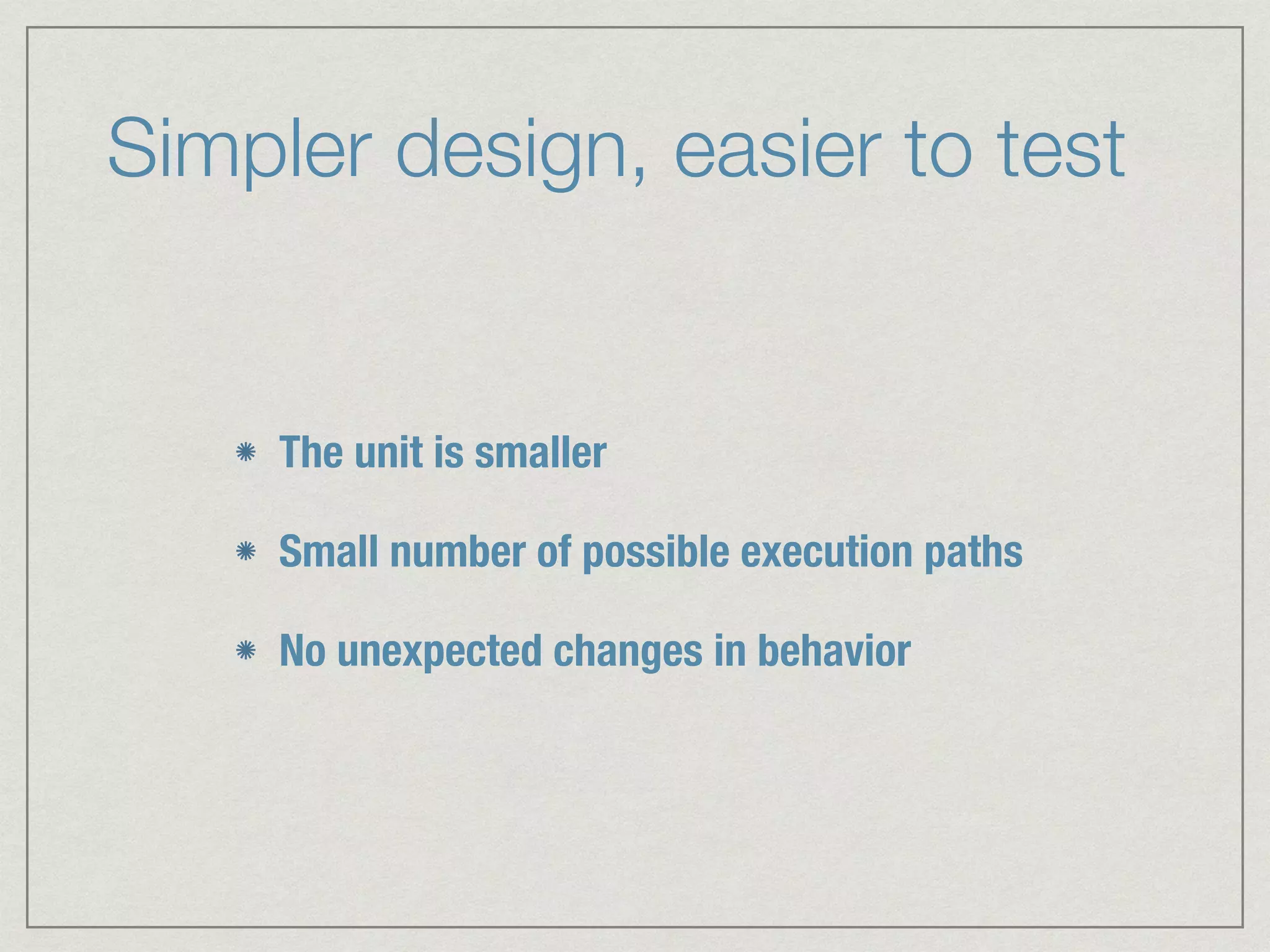
Simpler design, easier to test
The unit is smaller
Small number of possible execution paths
No unexpected changes in behavior
OBJECTS SHOULD BE EXPLICIT
ABOUT SIDE-EFFECTS
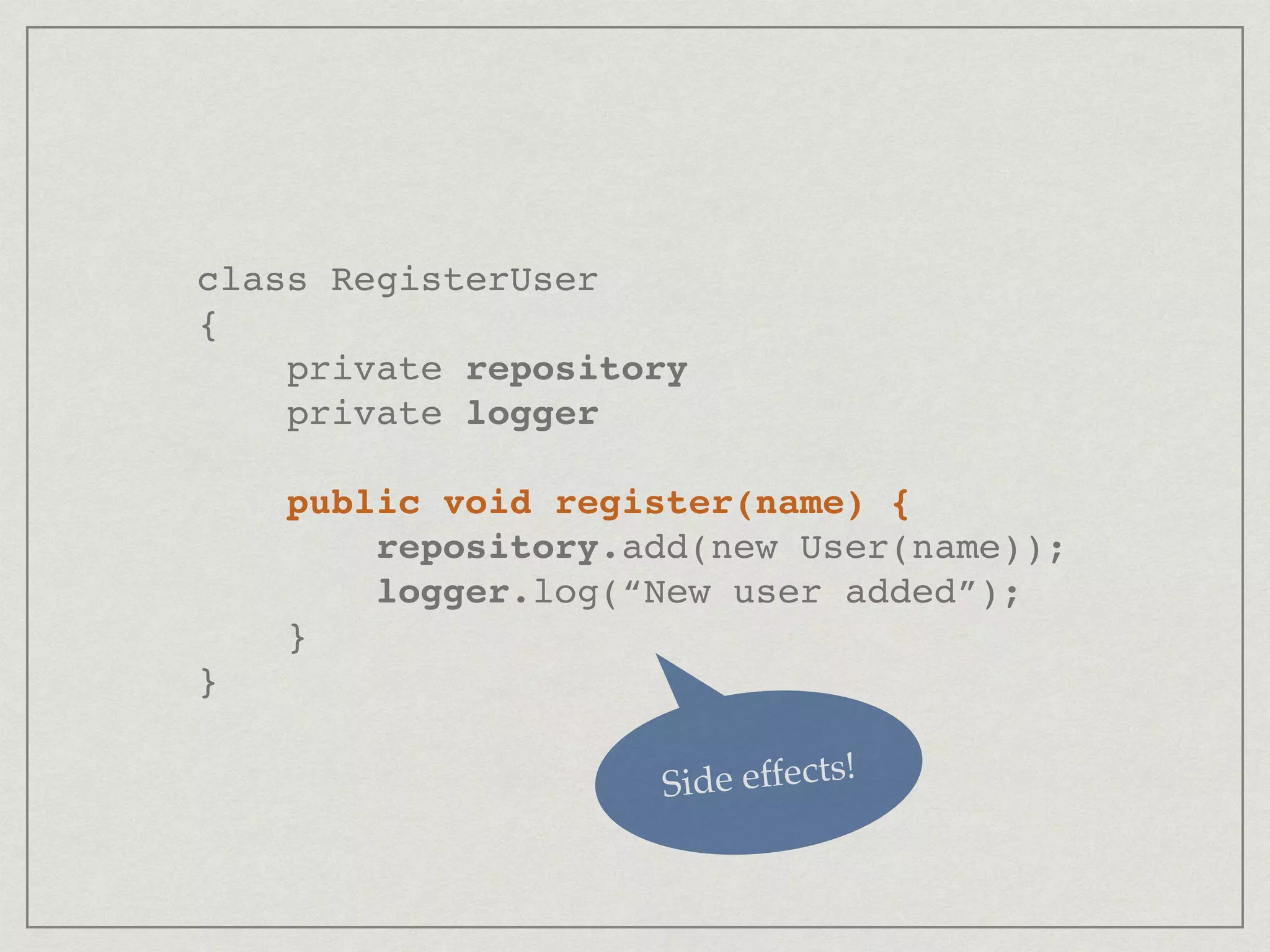
class RegisterUser
{
private repository
private logger
public void register(name) {
repository.add(new User(name));
logger.log(“New user added”);
}
}
Side effects!
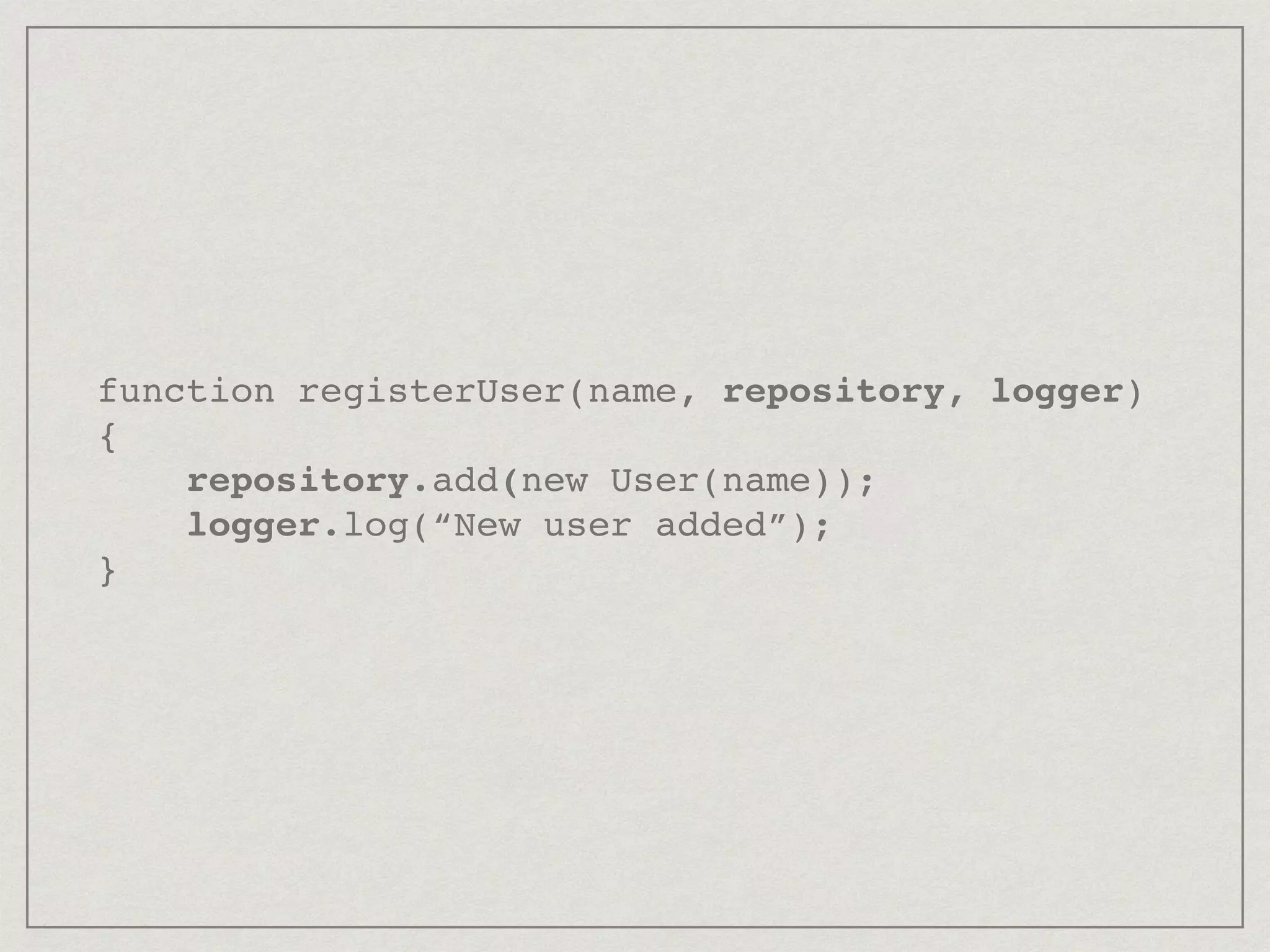
function registerUser(name, repository, logger)
{
repository.add(new User(name));
logger.log(“New user added”);
}
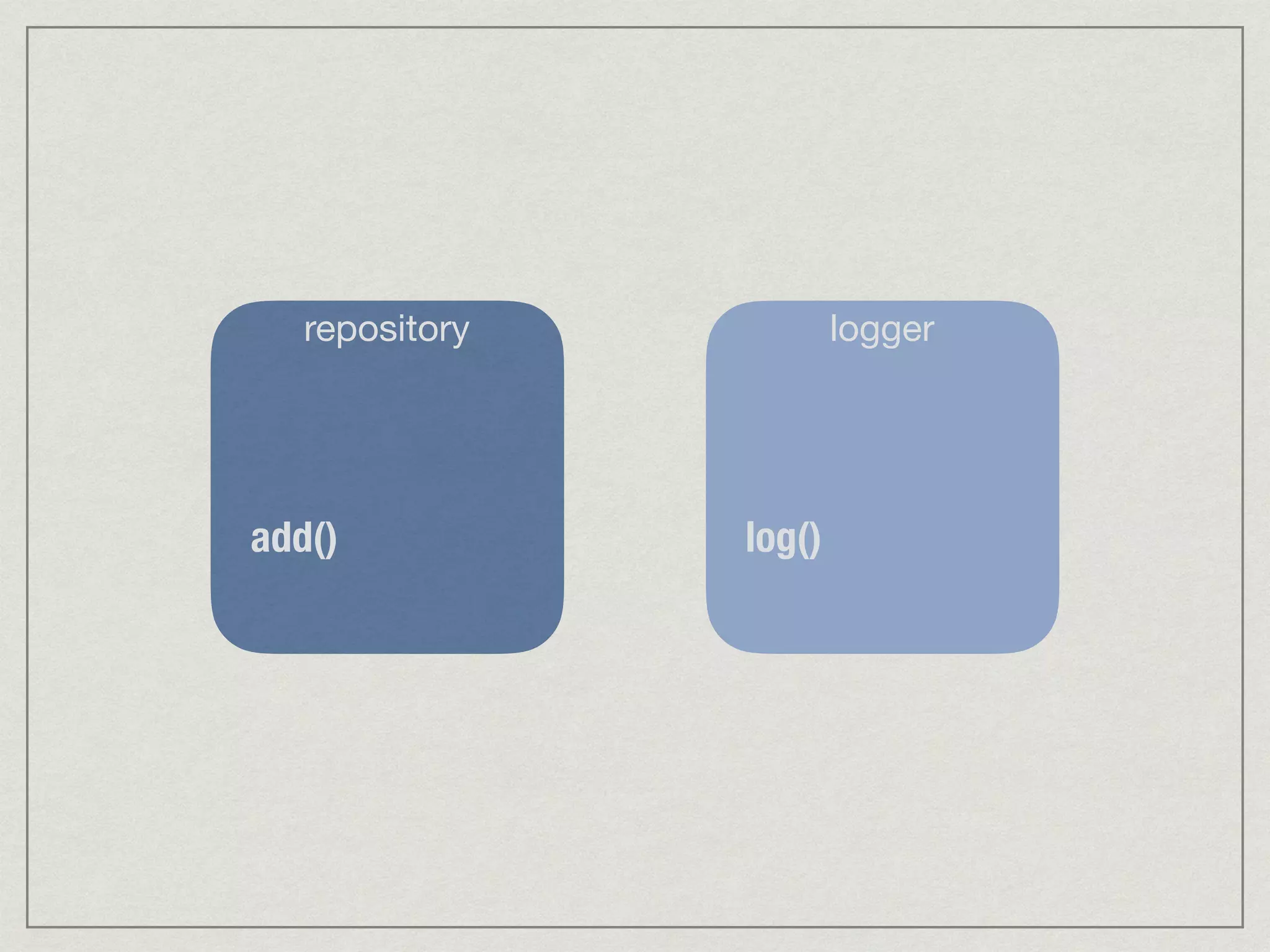
logger
log()
repository
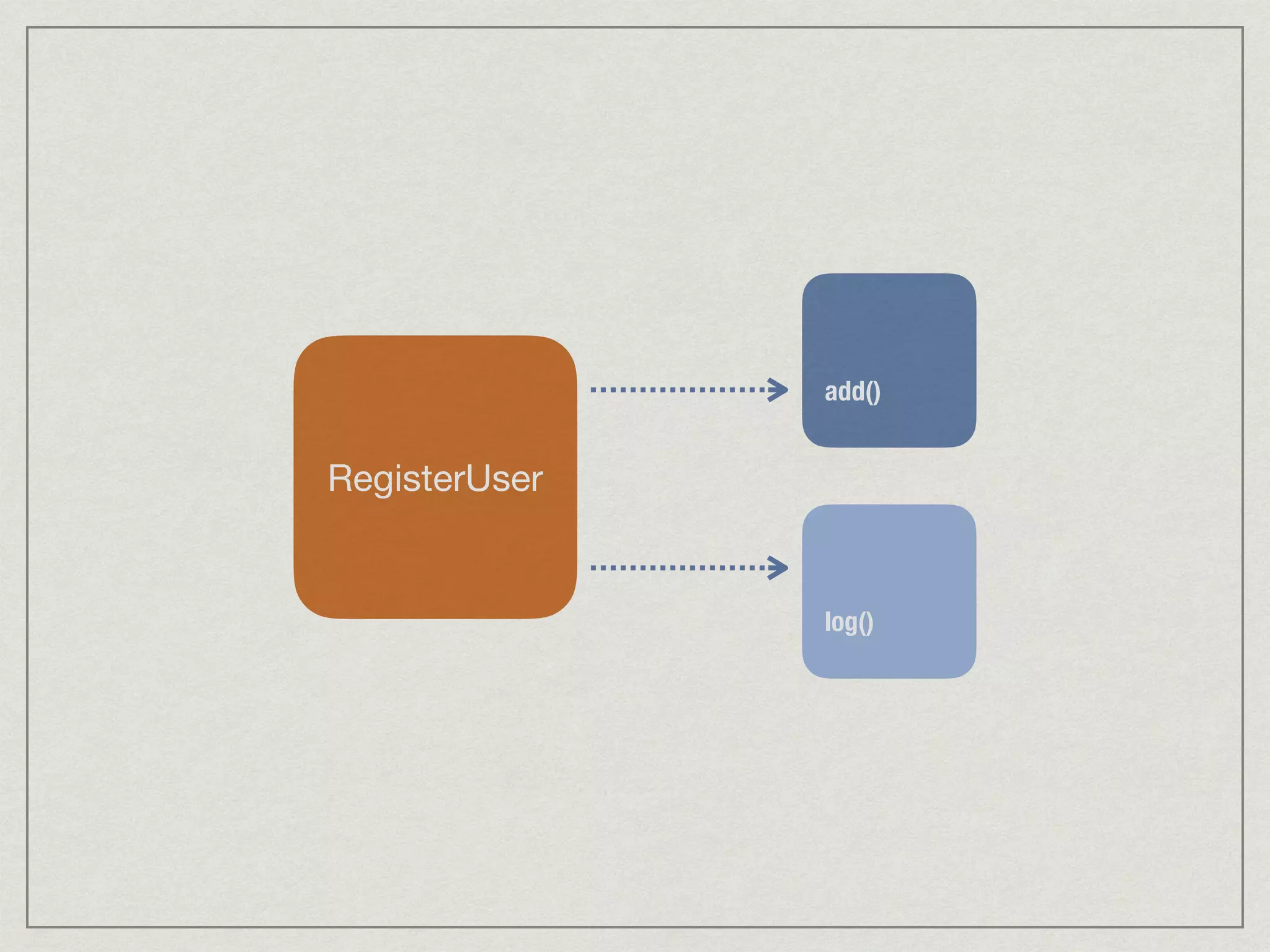
add()
add()
log()
RegisterUser
INJECTED SERVICES SHOULD BE
SINGLE-METHOD OBJECTS TOO
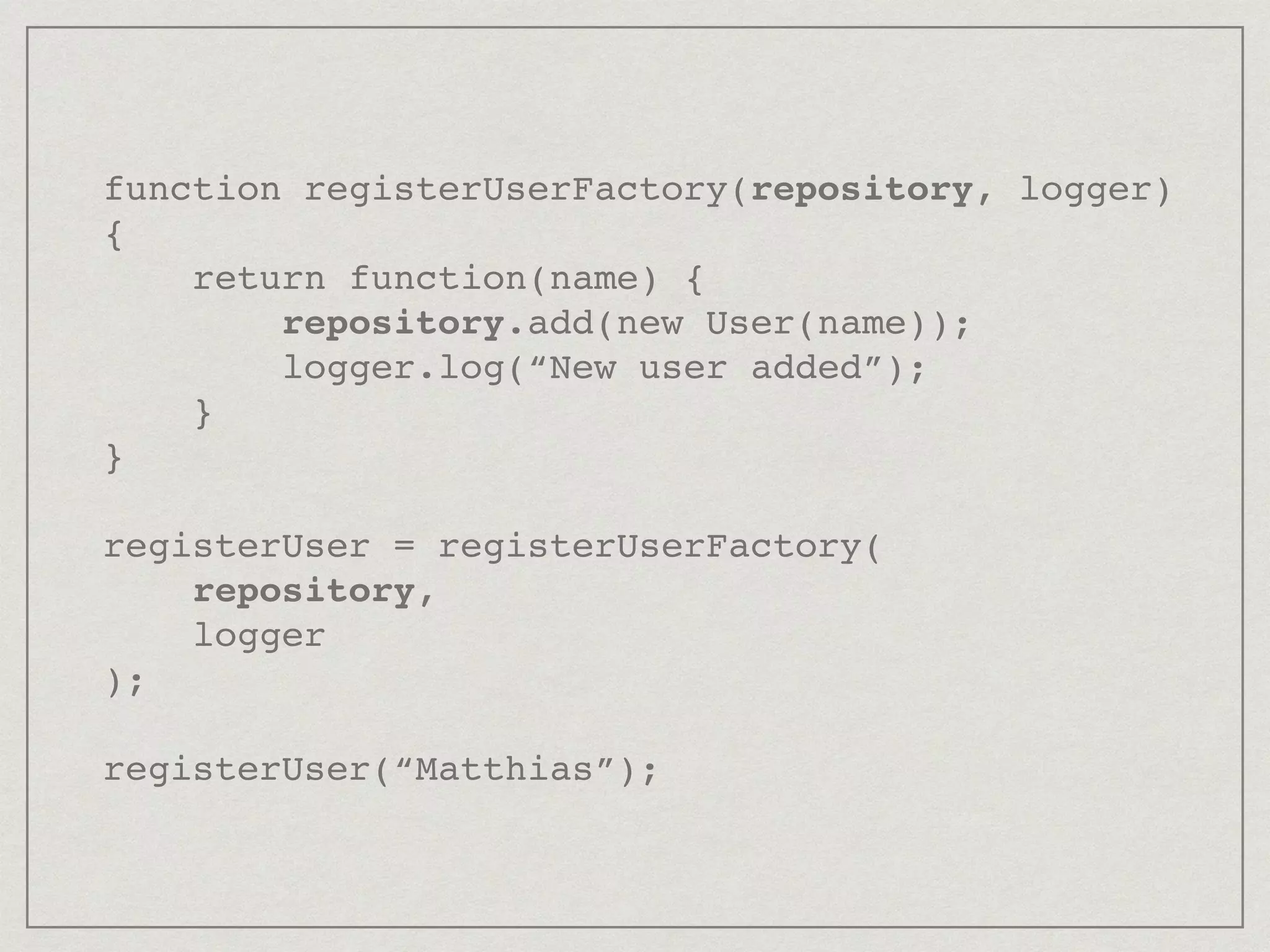
function registerUserFactory(repository, logger)
{
return function(name) {
repository.add(new User(name));
logger.log(“New user added”);
}
}
registerUser = registerUserFactory(
repository,
logger
);
registerUser(“Matthias”);
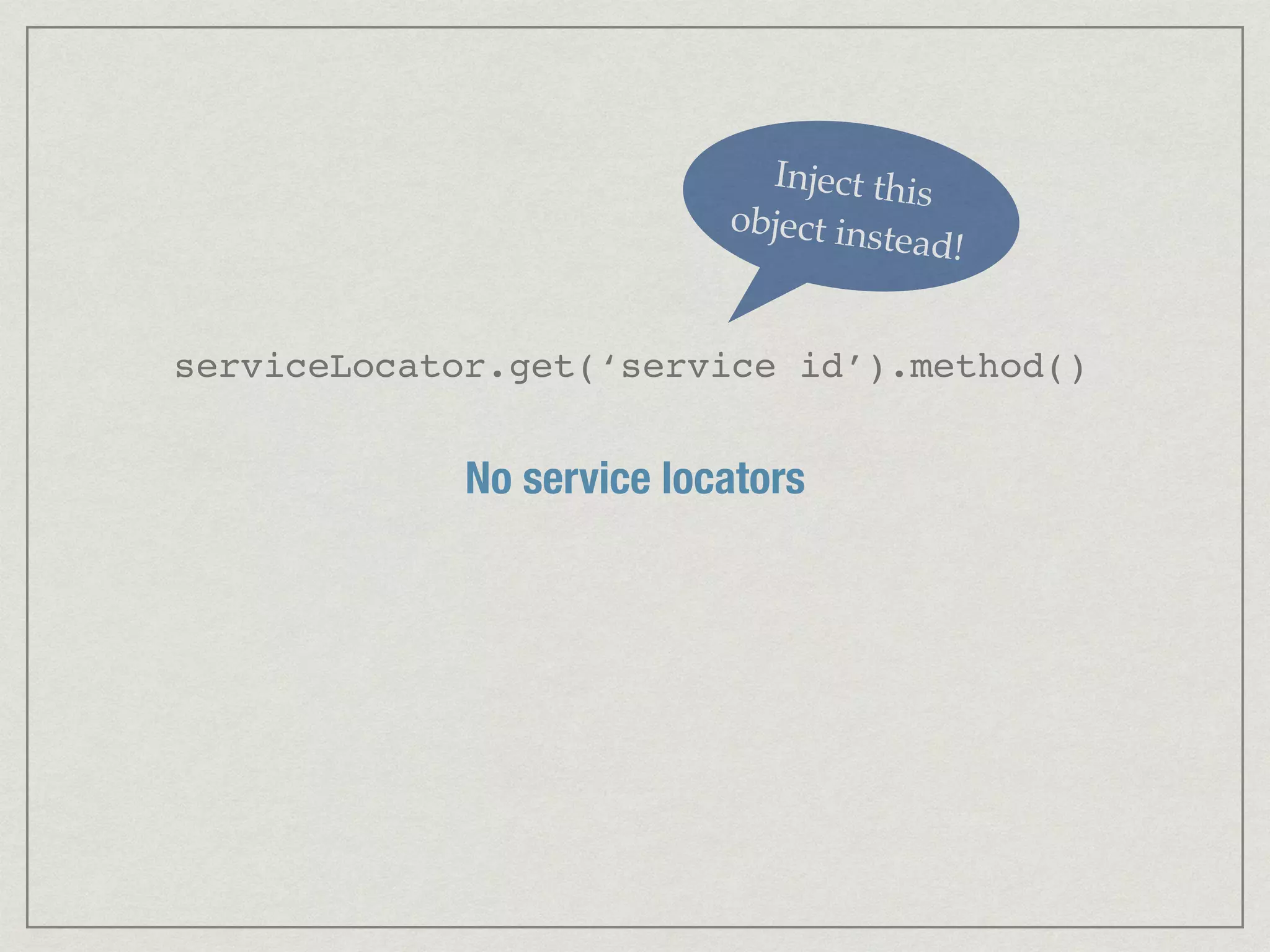
No service locators
serviceLocator.get(‘service id’).method()
Inject this
object instead!
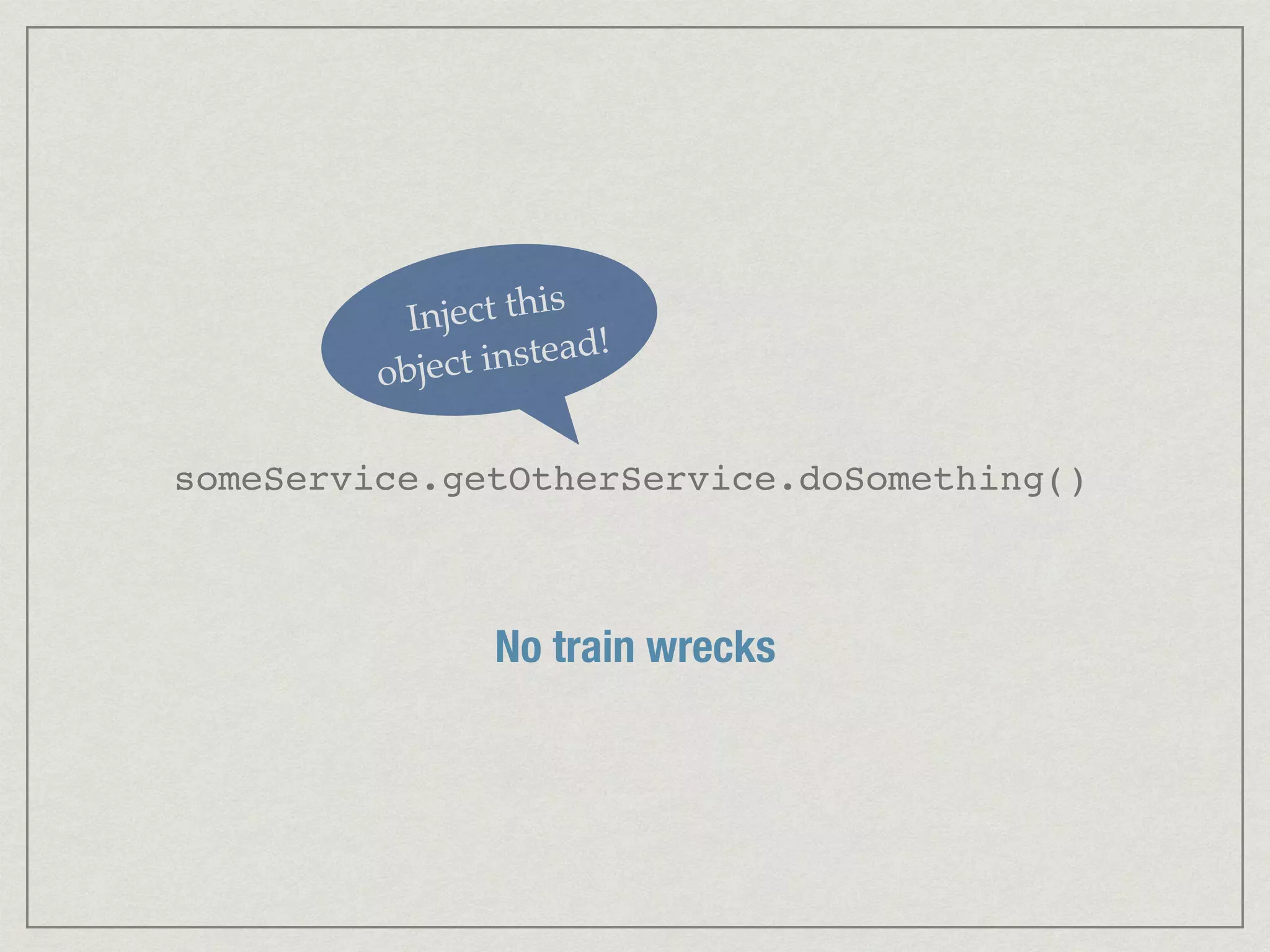
No train wrecks
someService.getOtherService.doSomething()
Inject this
object instead!
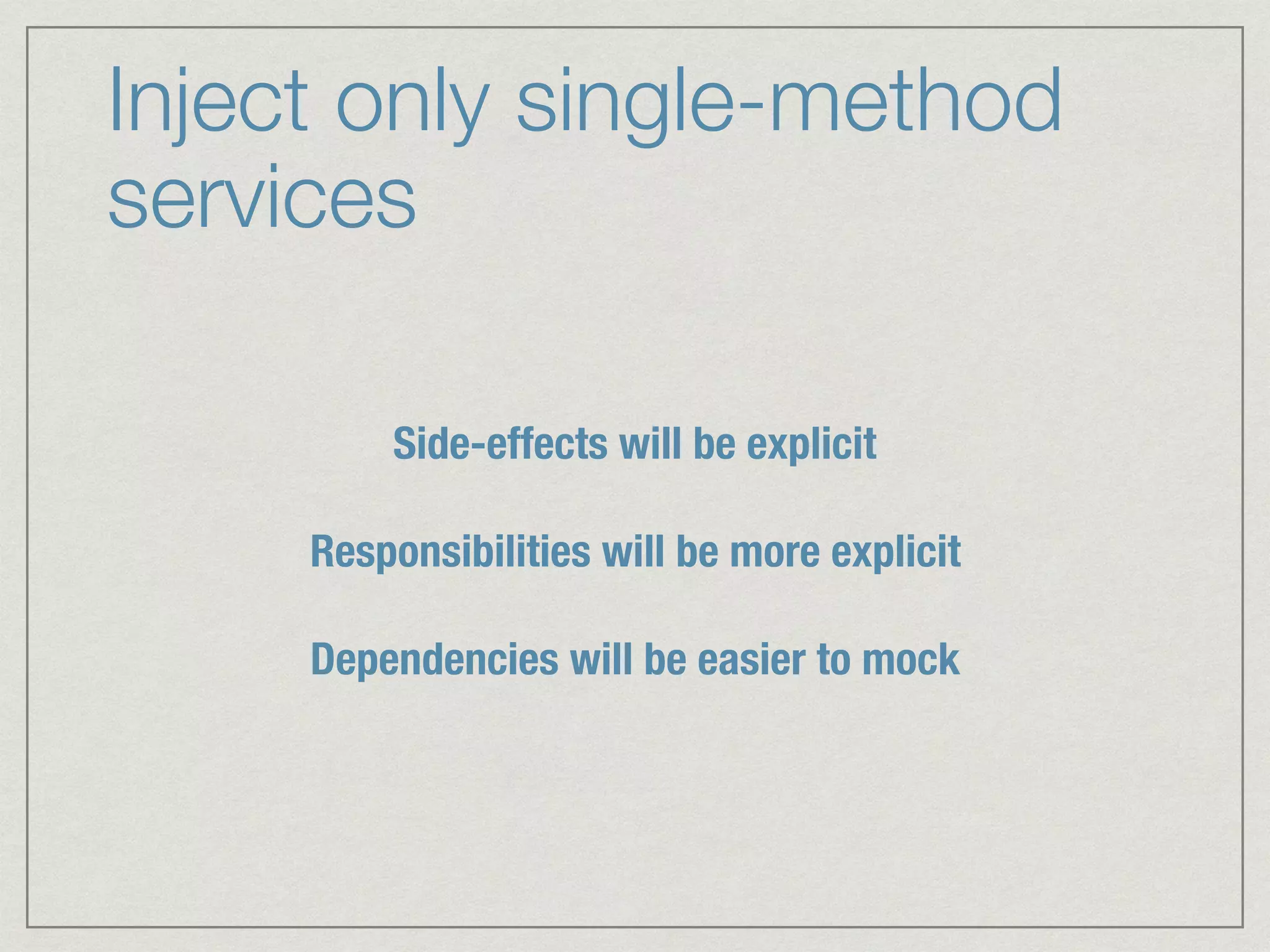
Inject only single-method
services
Side-effects will be explicit
Responsibilities will be more explicit
Dependencies will be easier to mock
OBJECTS SHOULD ONLY
EXIST IN A VALID STATE
condition
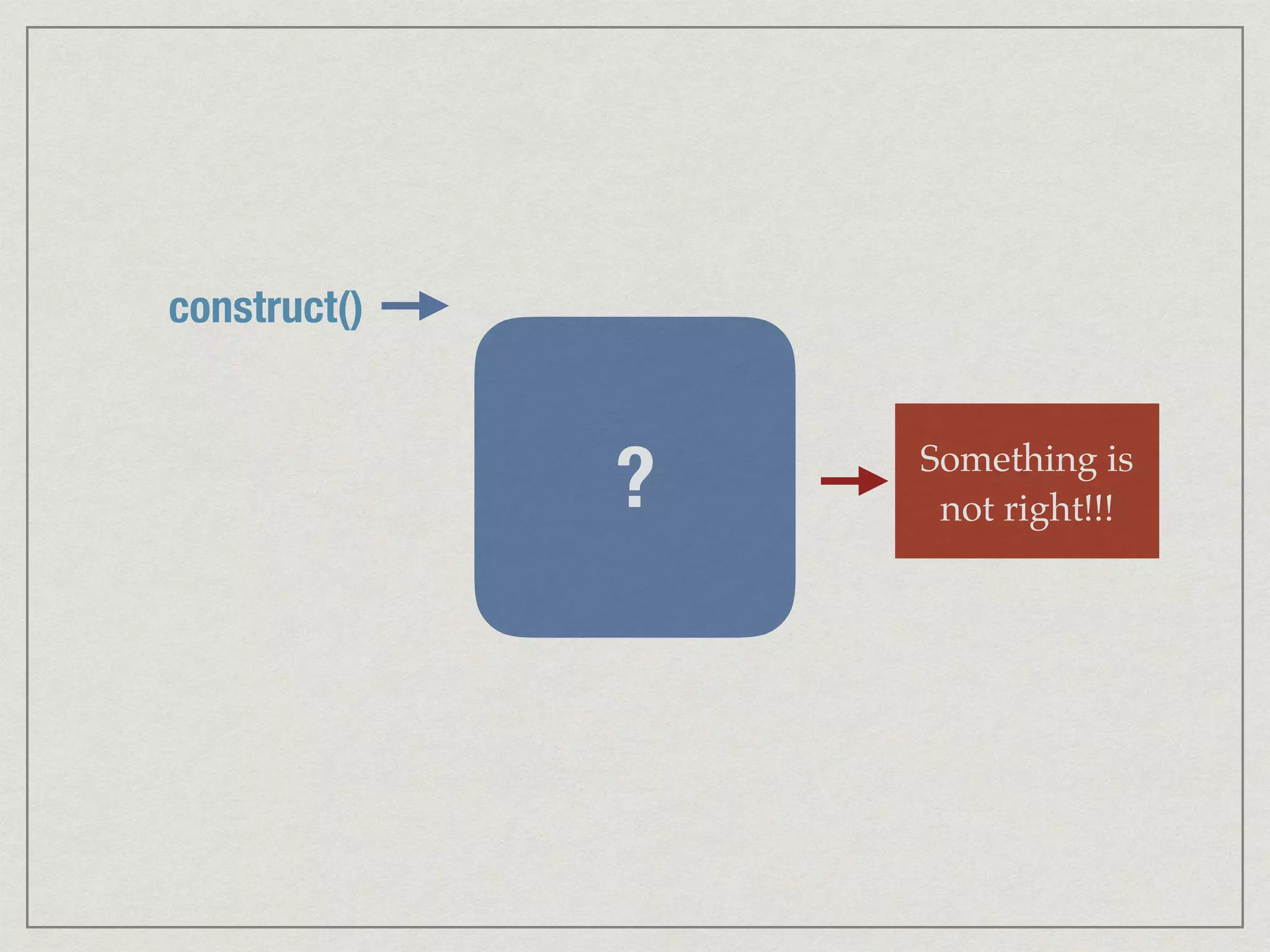
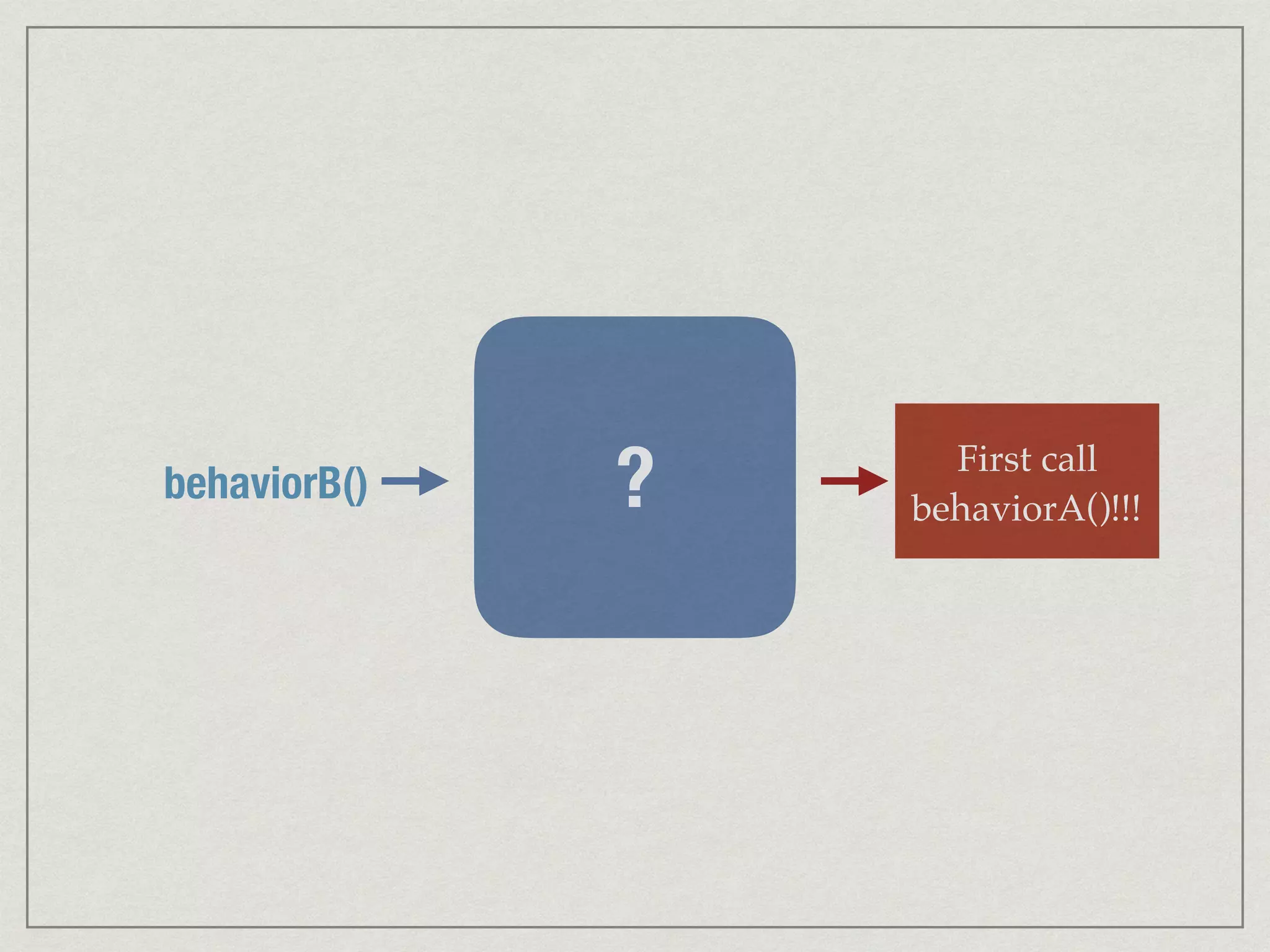
?
construct()
Something is
not right!!!?
behaviorB()
First call
behaviorA()!!!?
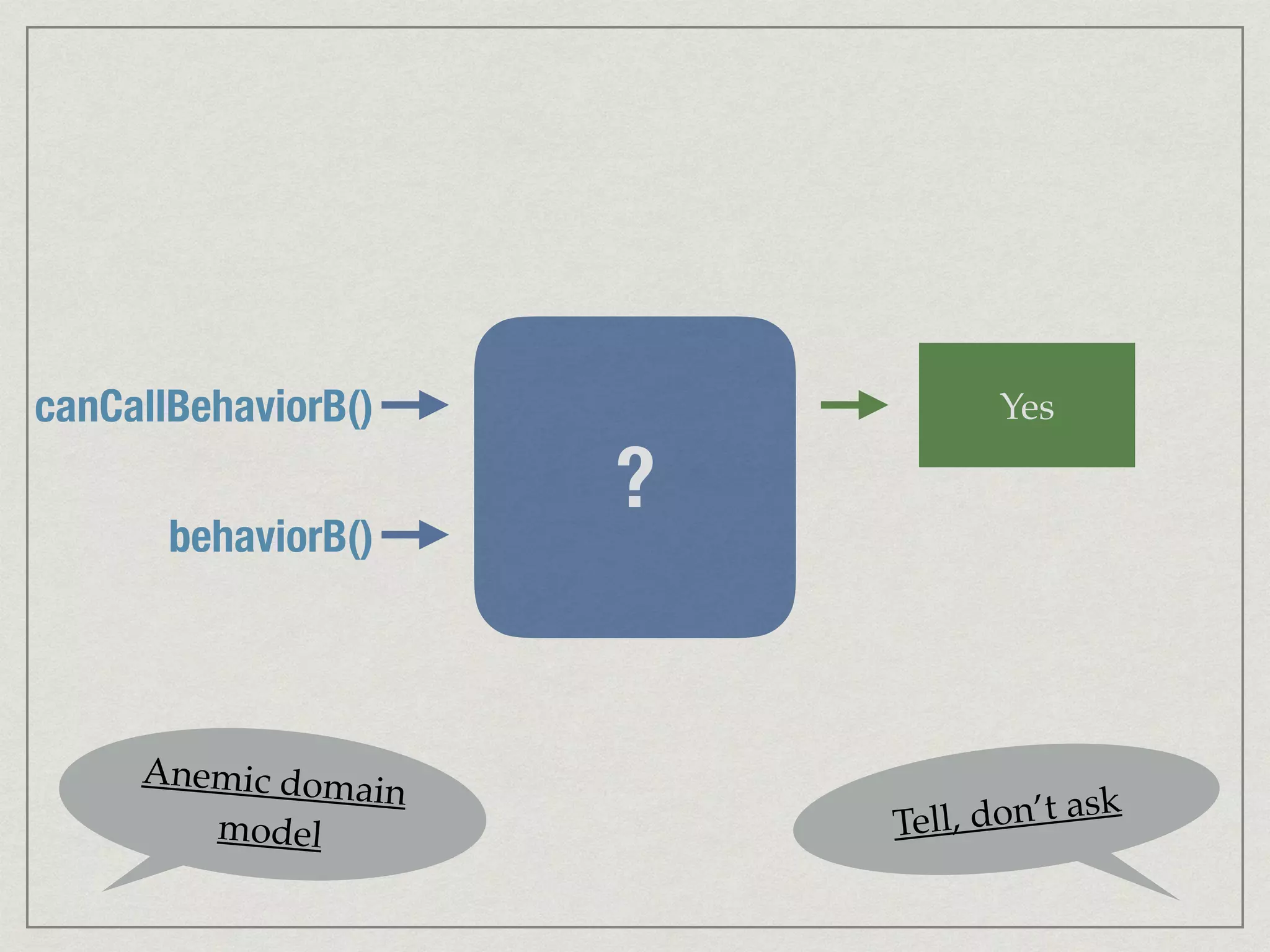
canCallBehaviorB()
behaviorB()
Yes
Tell, don’t ask
Anemic domain
model
?
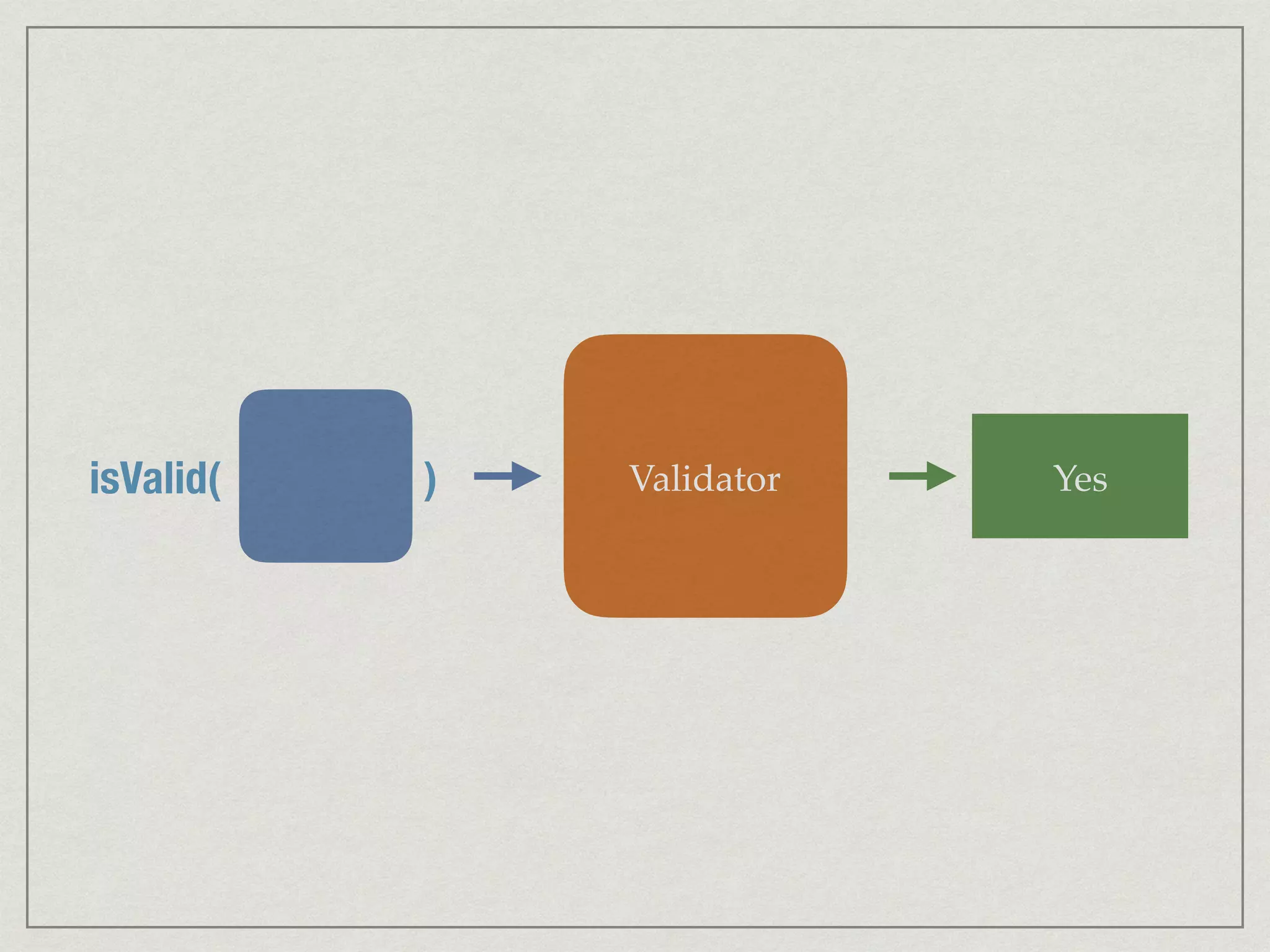
YesValidatorisValid( )
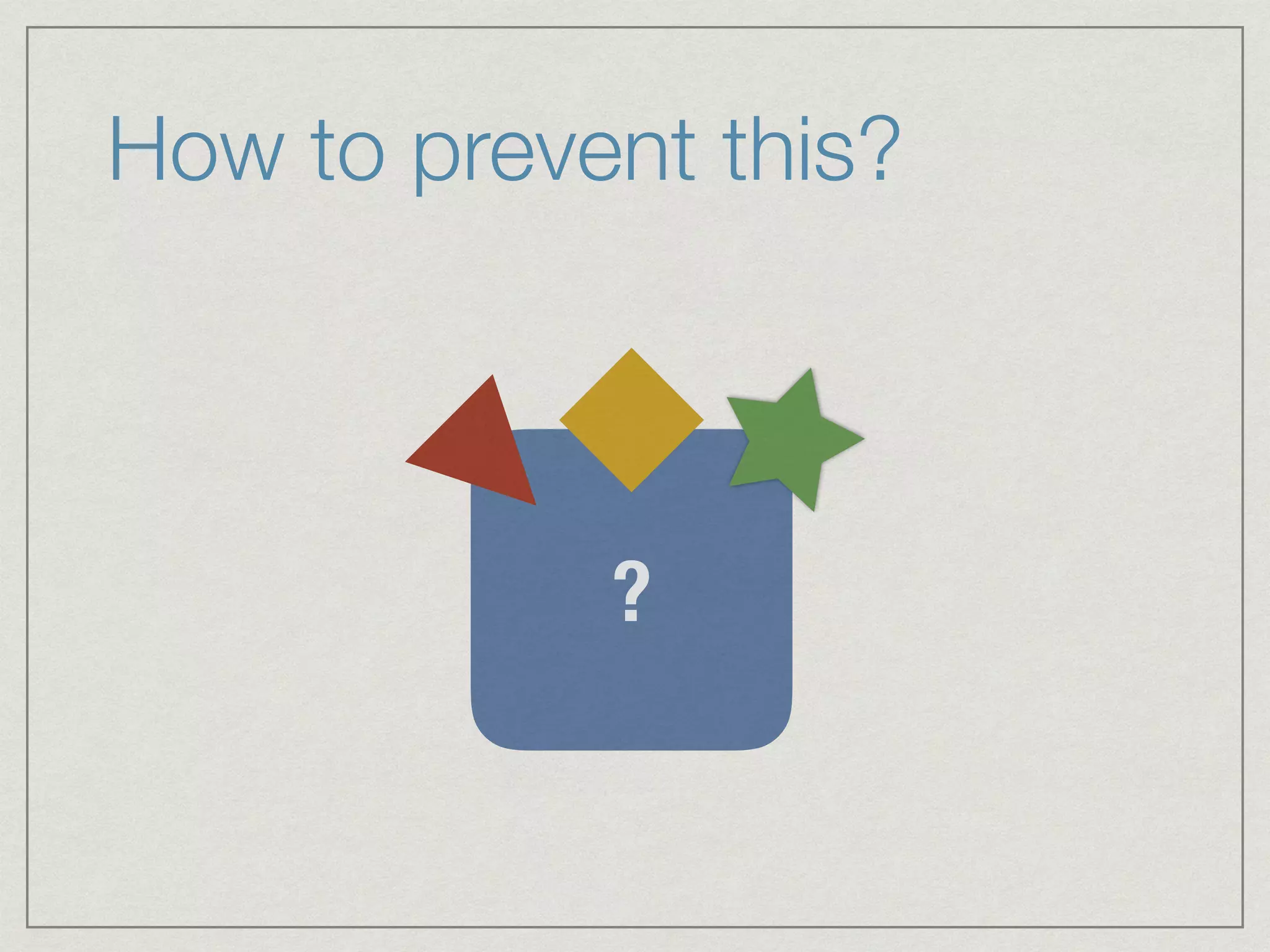
How to prevent this?
?
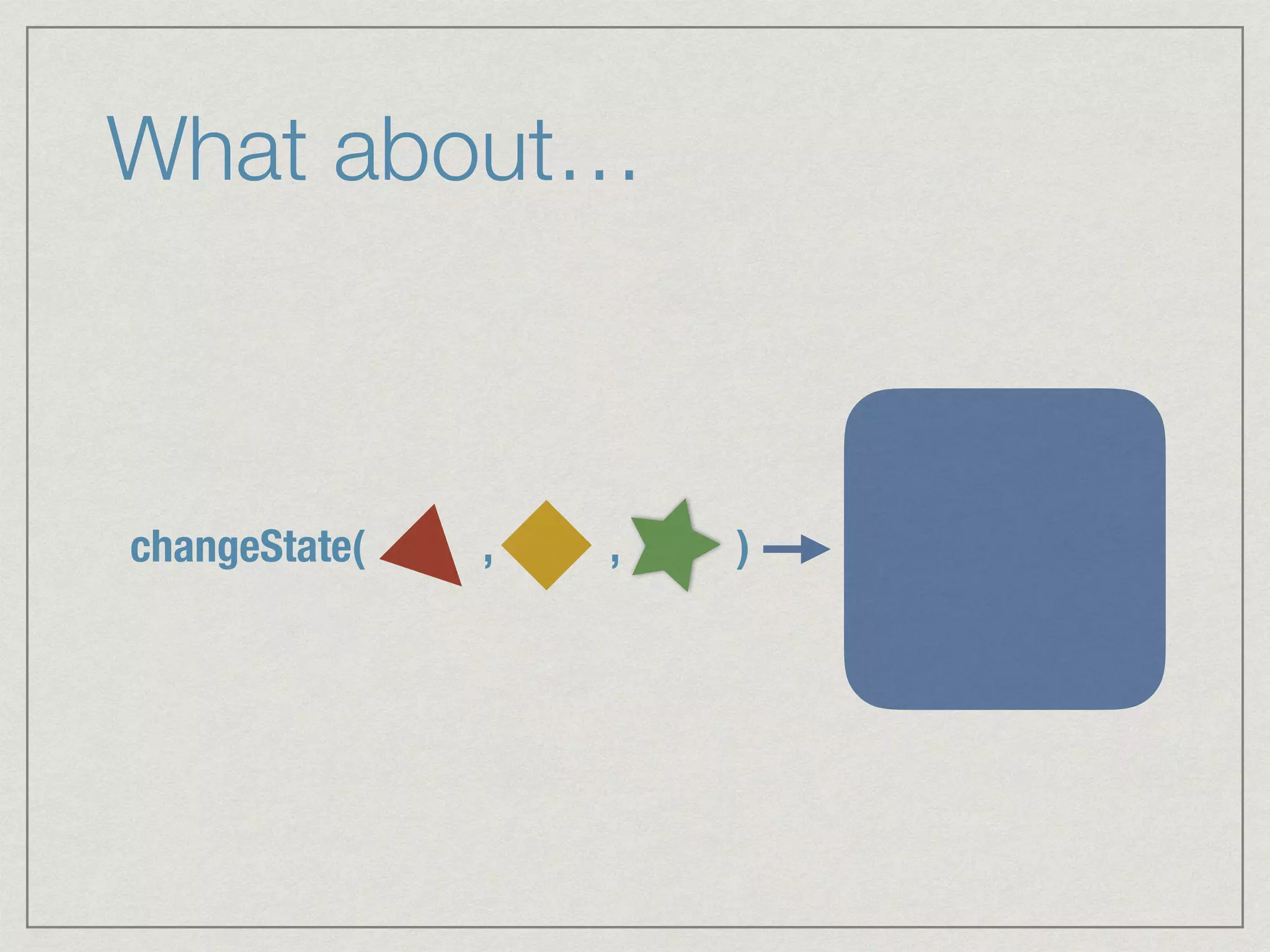
What about…
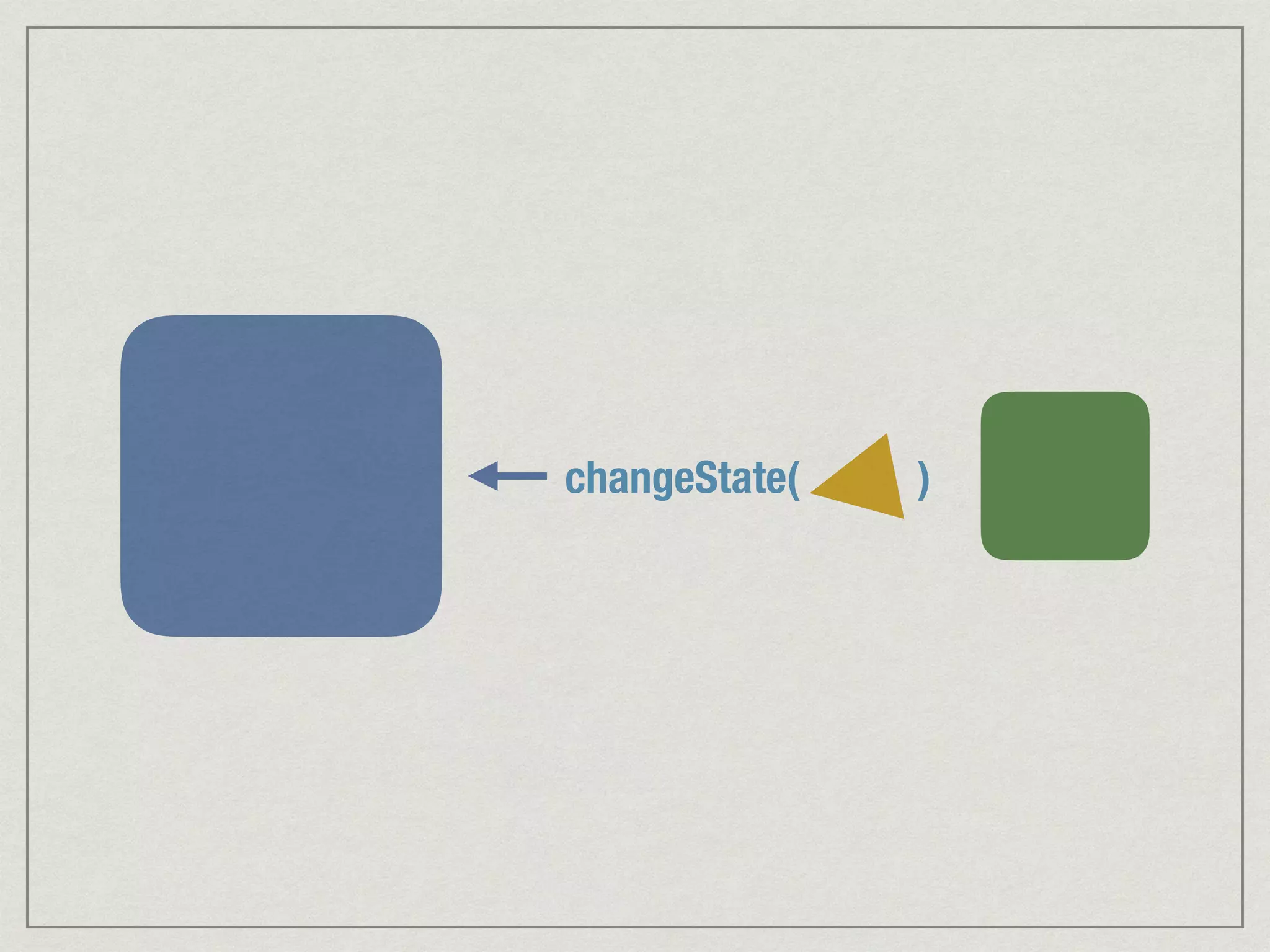
changeState( , , )
?
ONLY VALID VALUES SHOULD
CROSS OBJECT BOUNDARIES
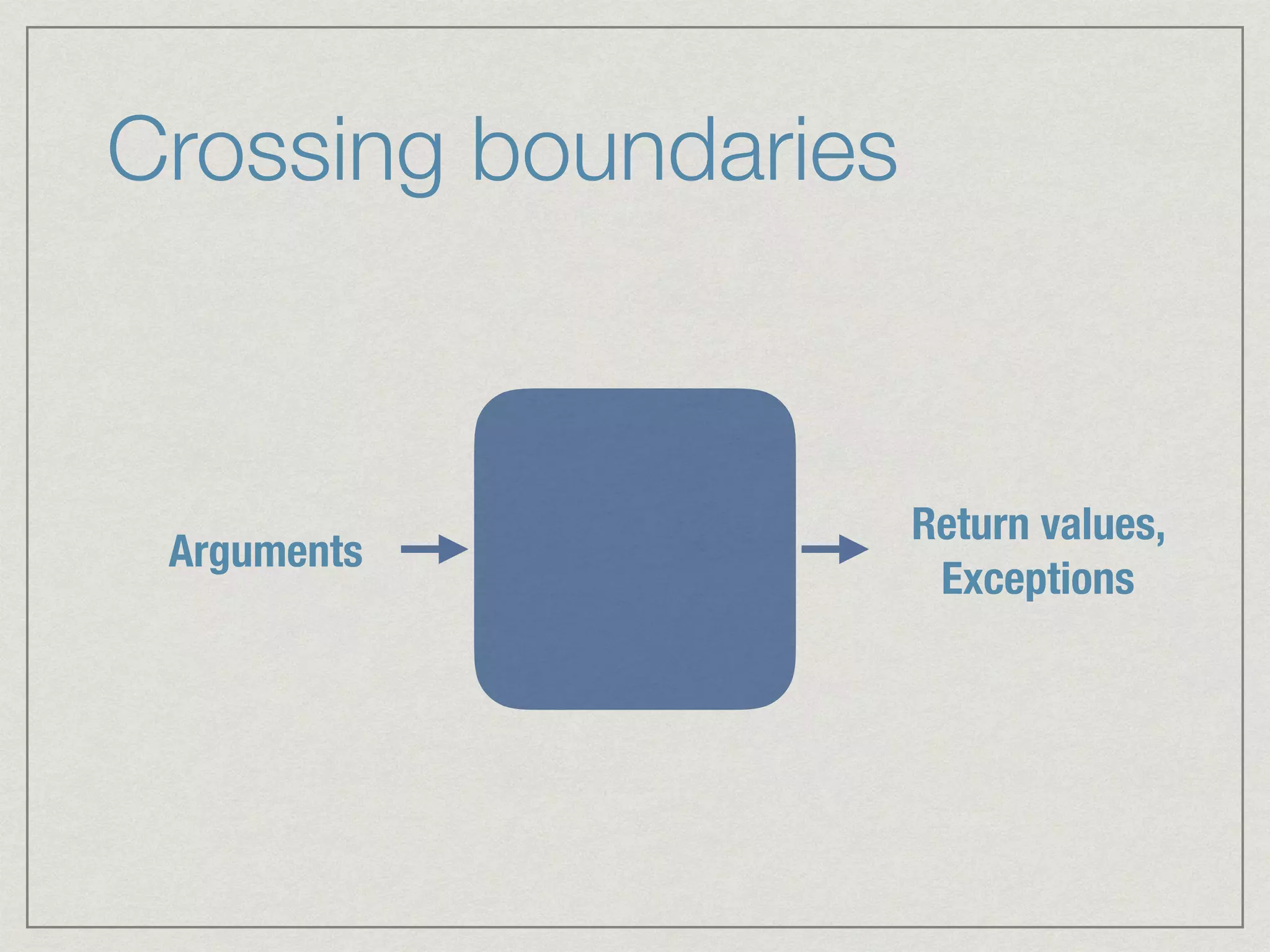
Crossing boundaries
Arguments
Return values,
Exceptions
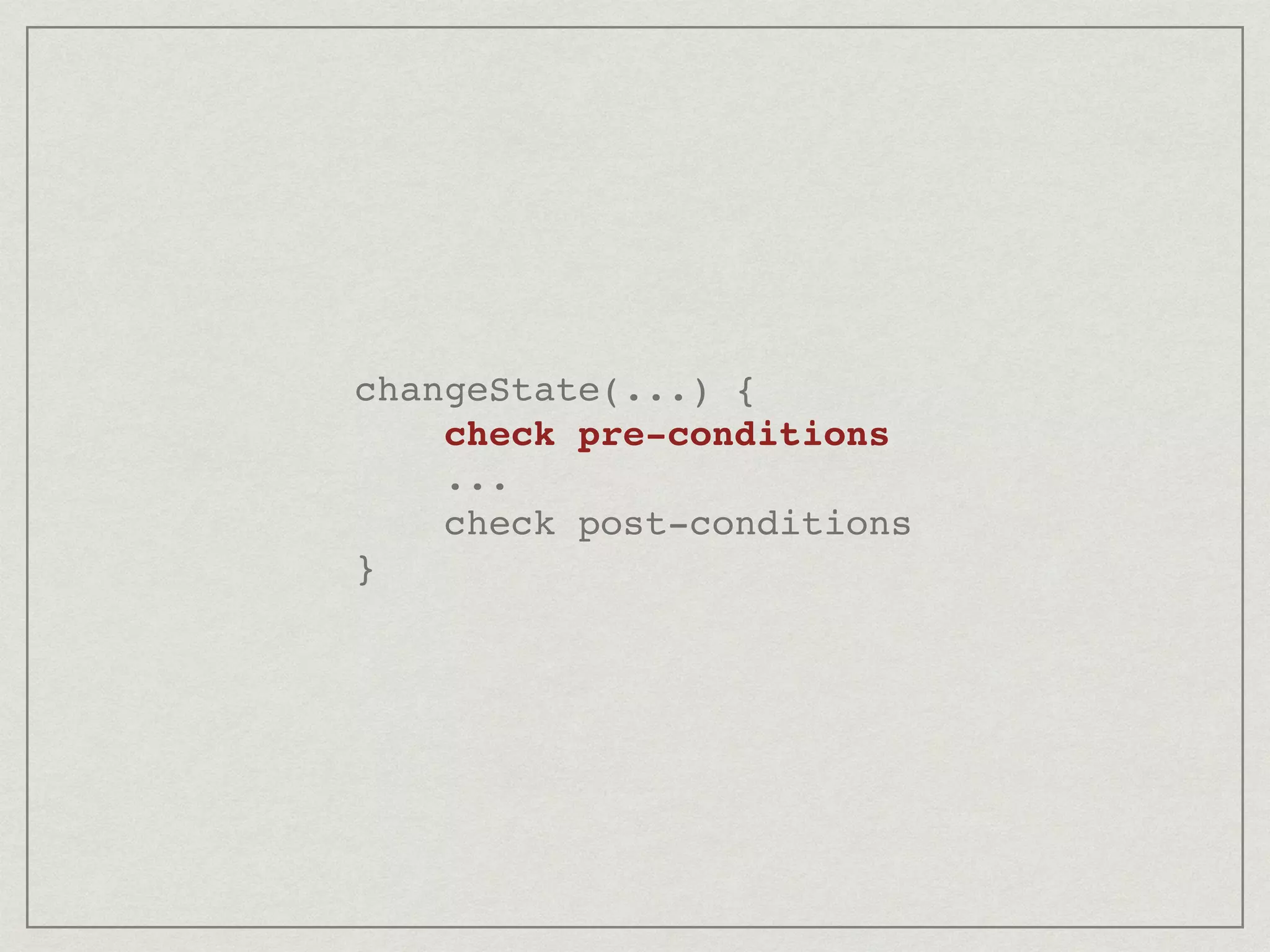
changeState(...) {
check pre-conditions
...
check post-conditions
}
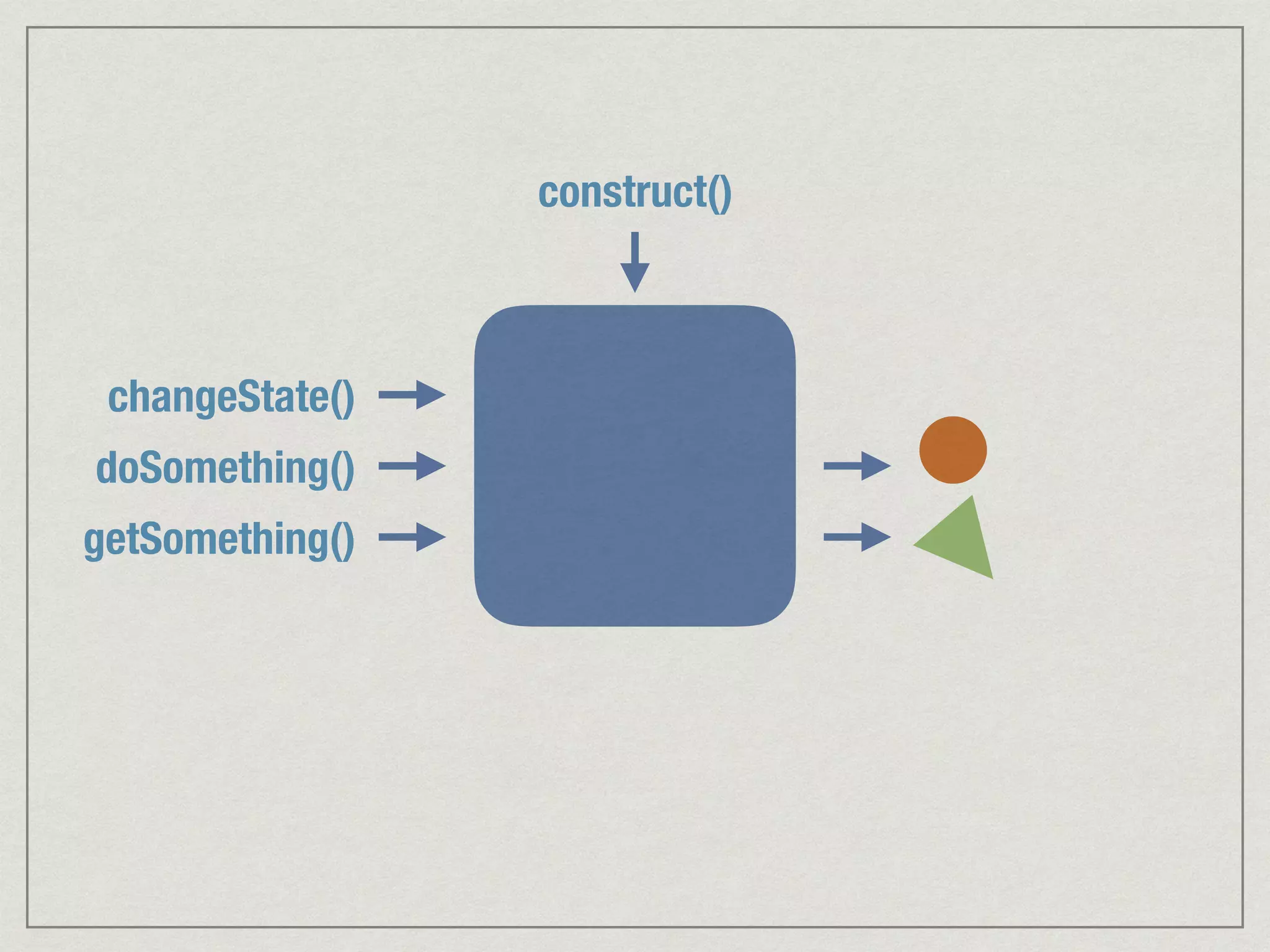
changeState()
doSomething()
getSomething()
construct()
Advantages of always-valid
objects
Easy to debug
Easy to refactor
Easy to reason about
ALMOST ALL OBJECTS
SHOULD BE IMMUTABLE
unable to be changed
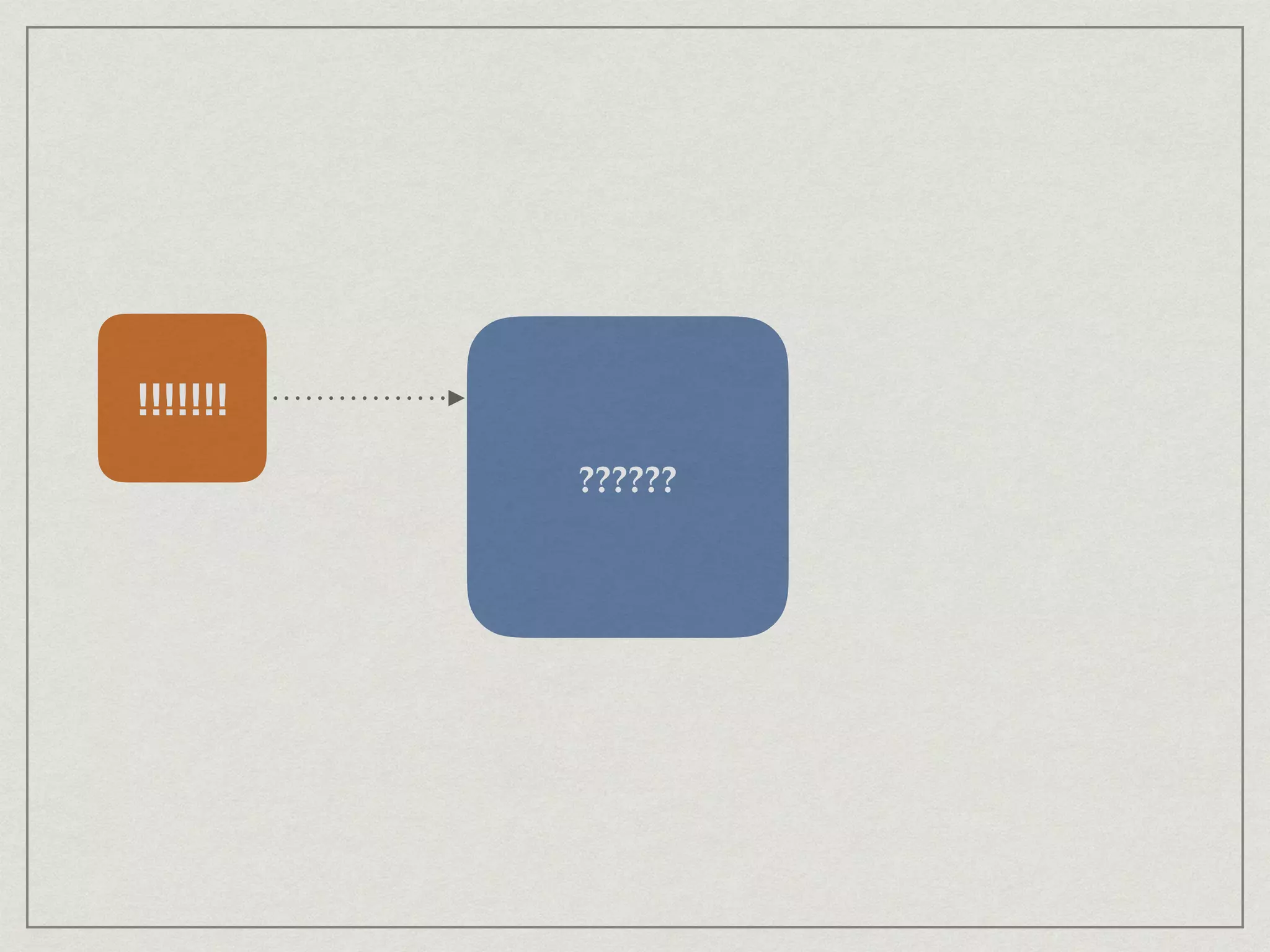
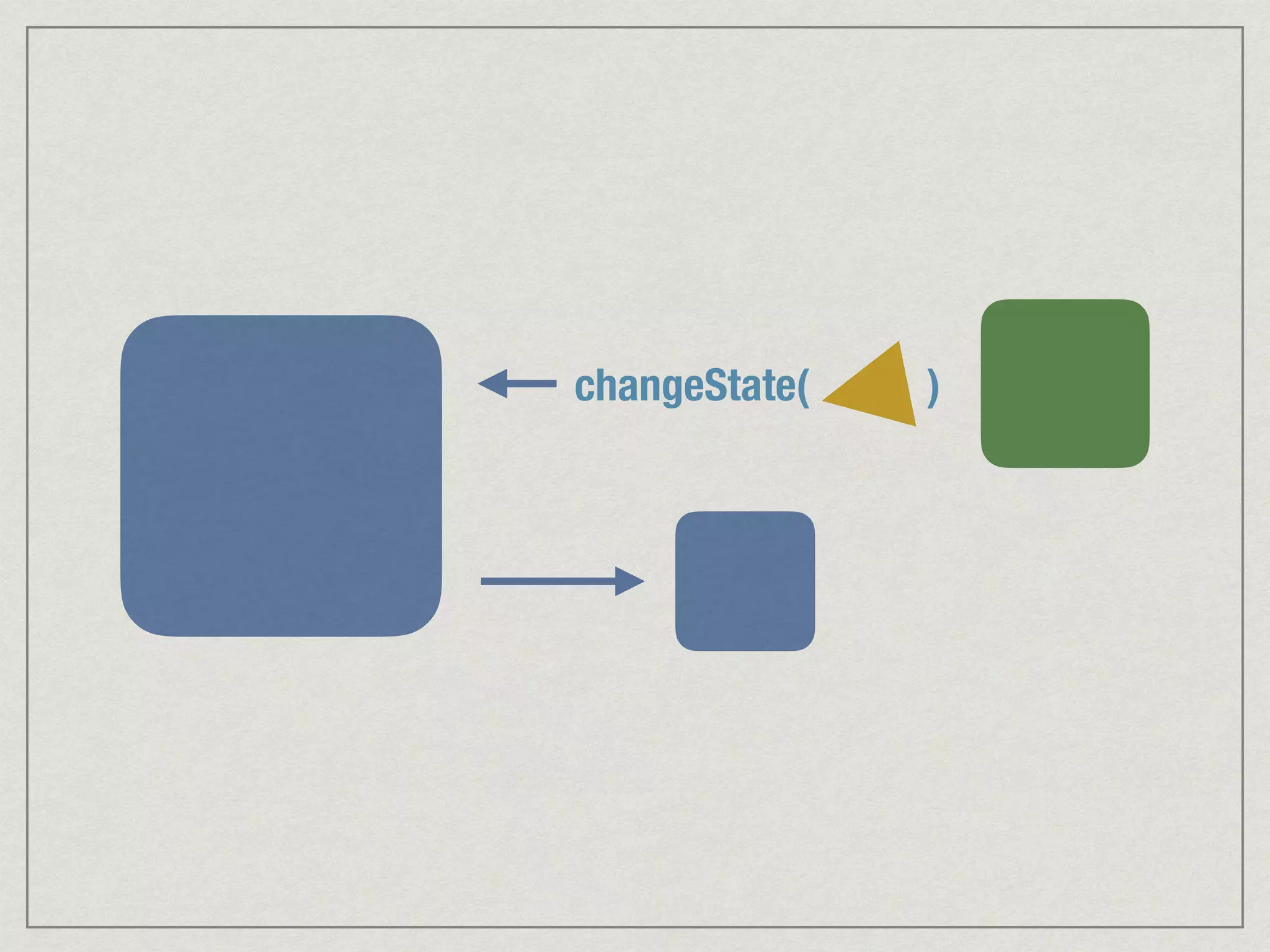
changeState( )
??????
!!!!!!!
changeState( )
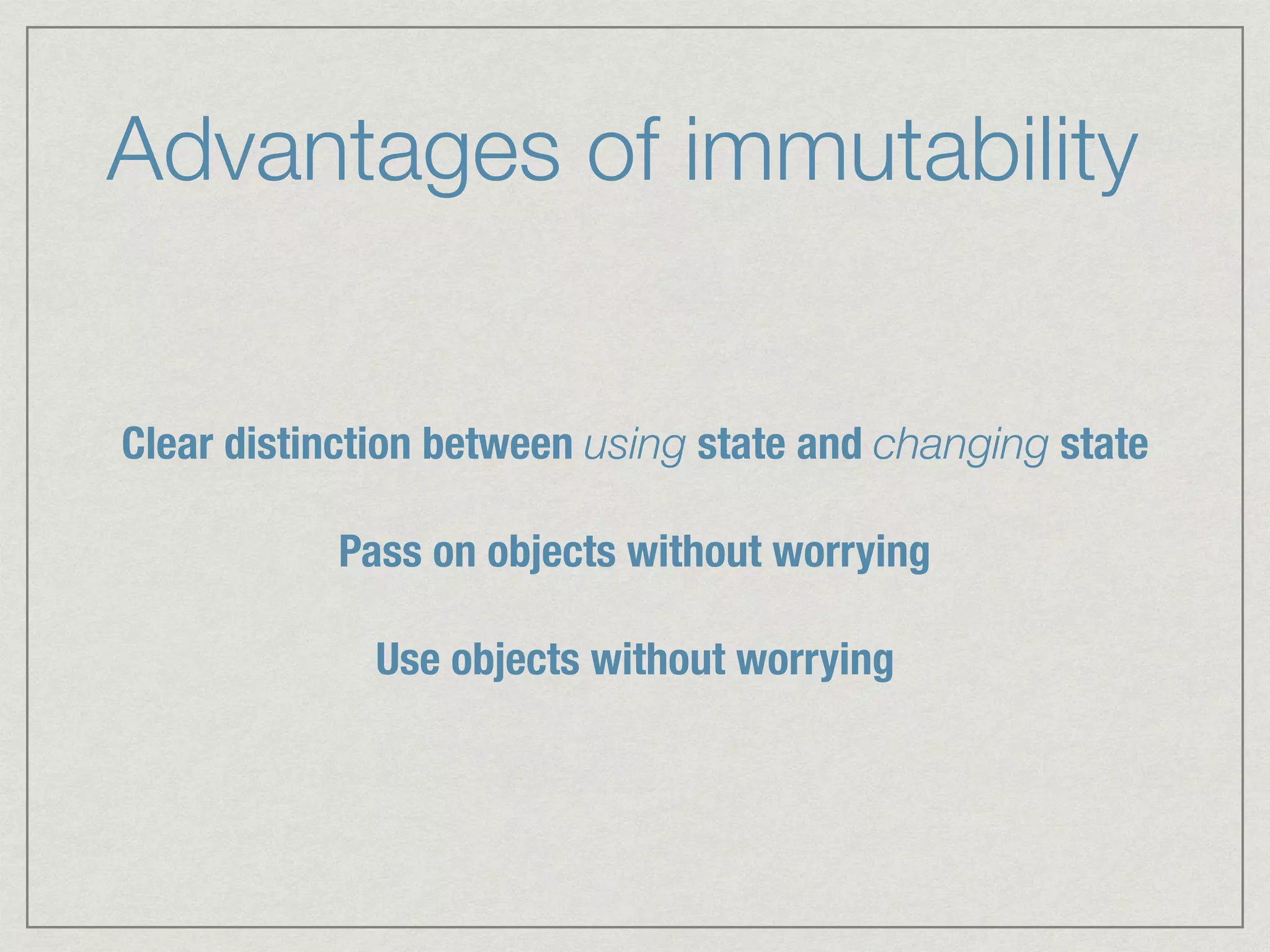
Advantages of immutability
Clear distinction between using state and changing state
Pass on objects without worrying
Use objects without worrying
Easier to reason about
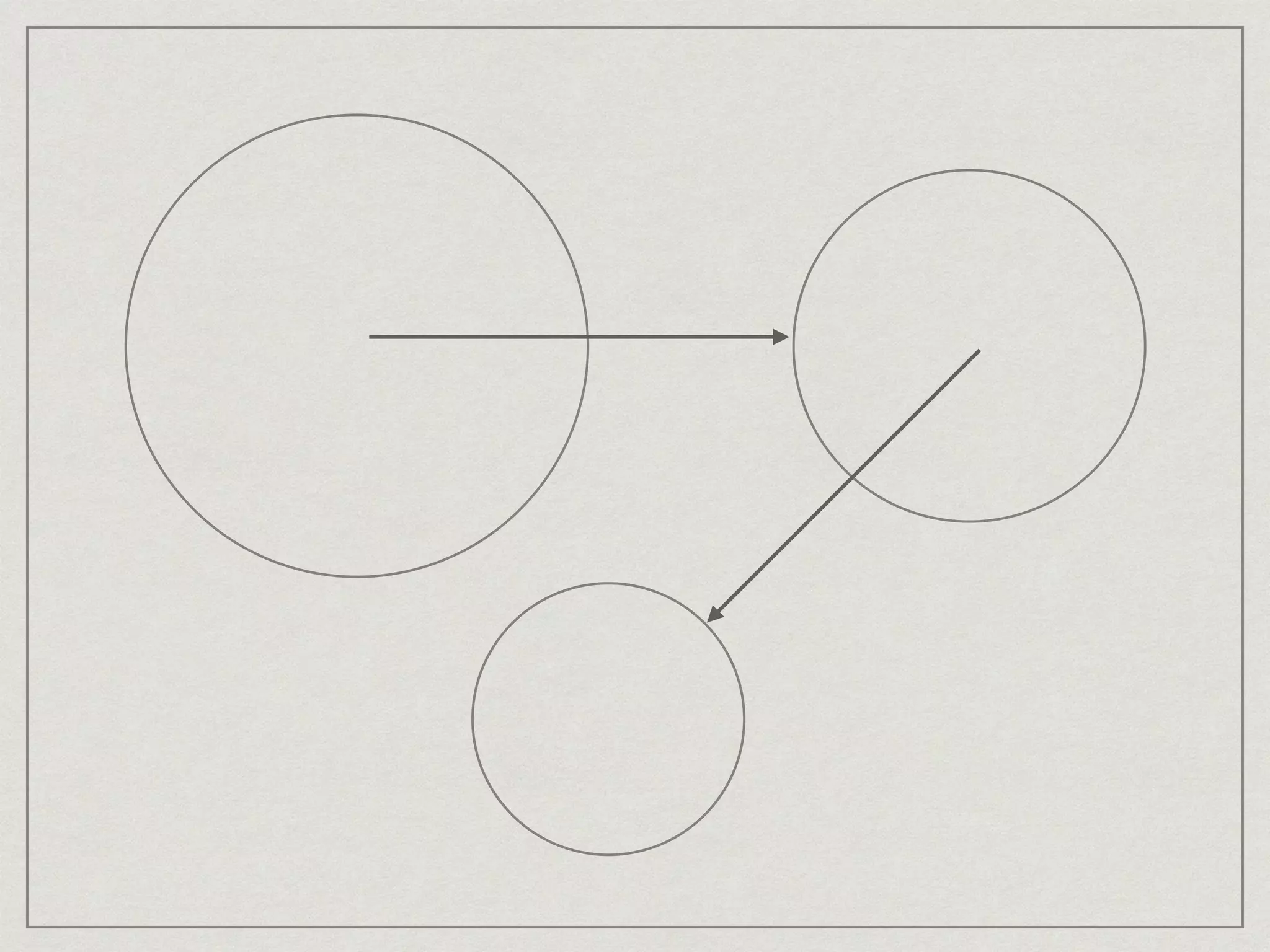
OBJECTS SHOULD COMMUNICATE
USING WELL-DEFINED MESSAGES
“Alan Kay”
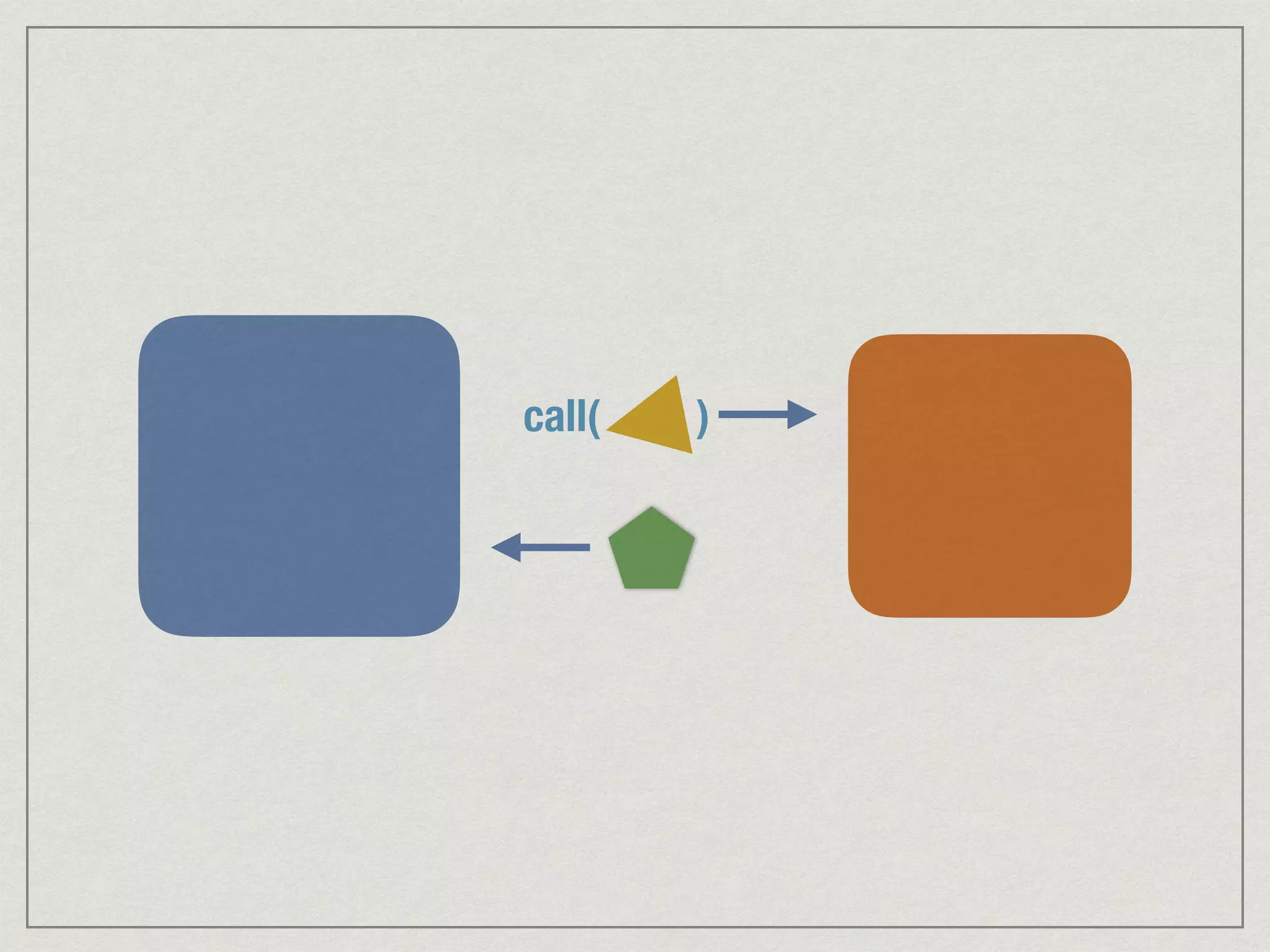
call( )
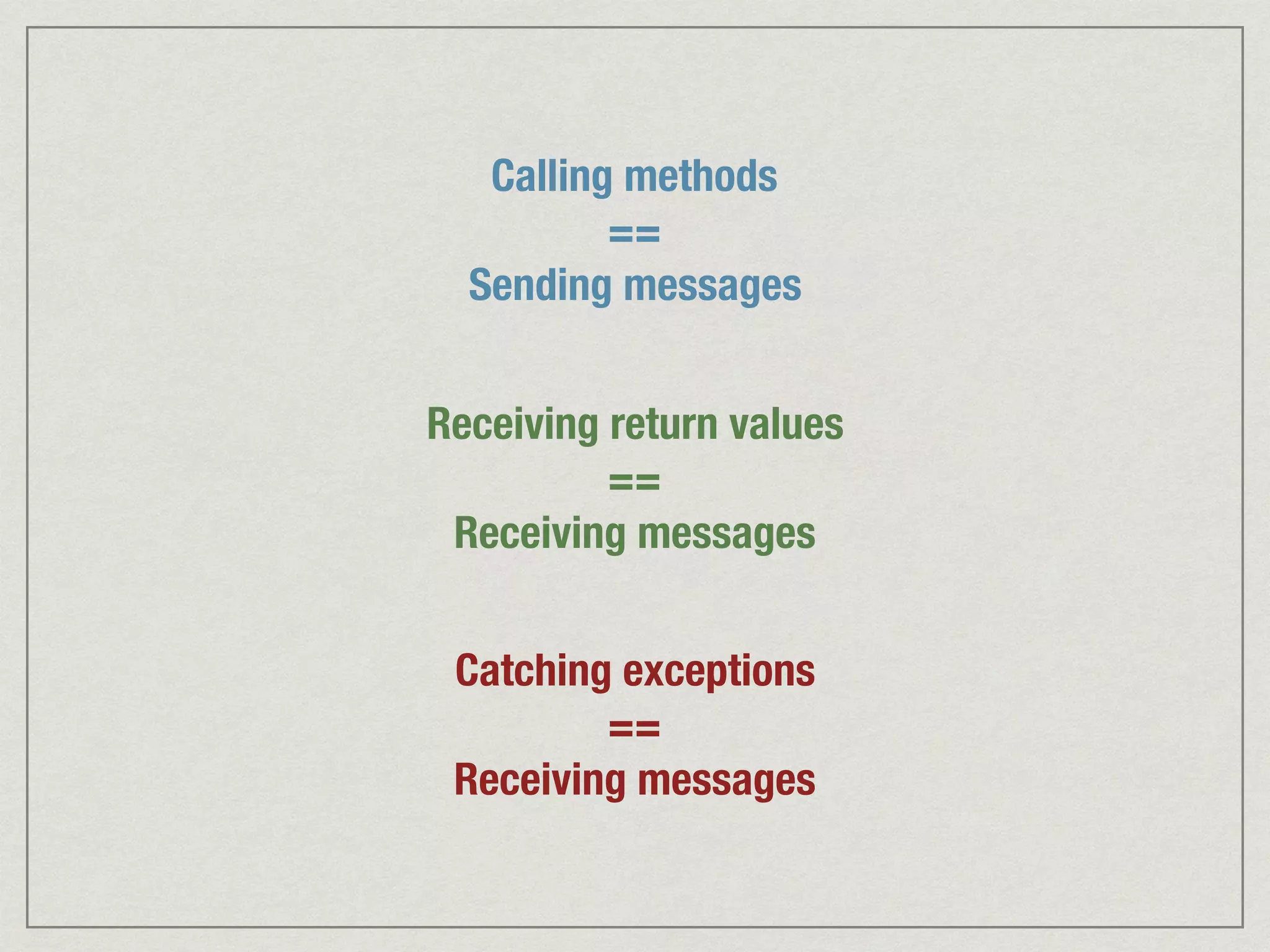
Calling methods
==
Sending messages
Receiving return values
==
Receiving messages
Catching exceptions
==
Receiving messages
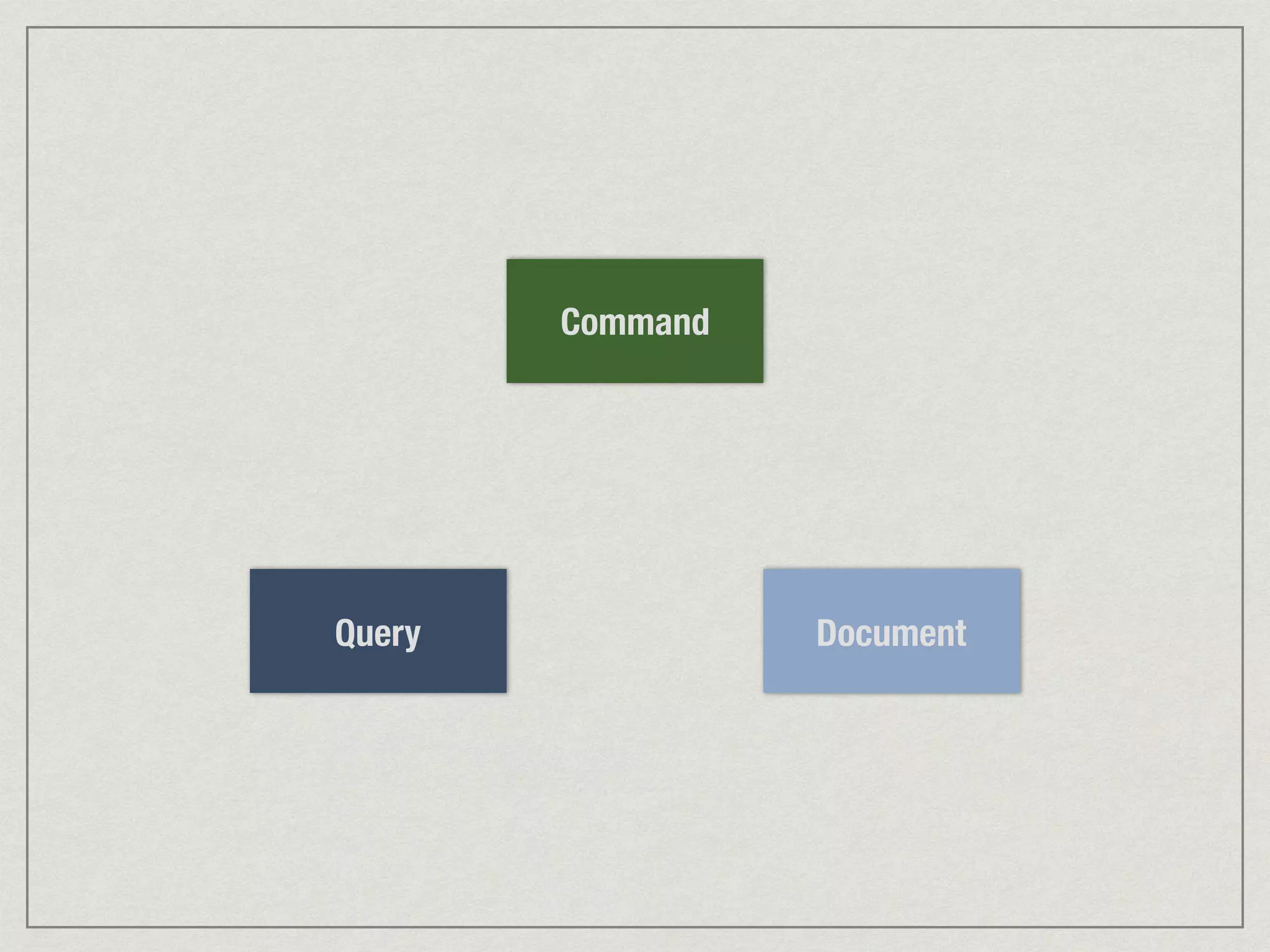
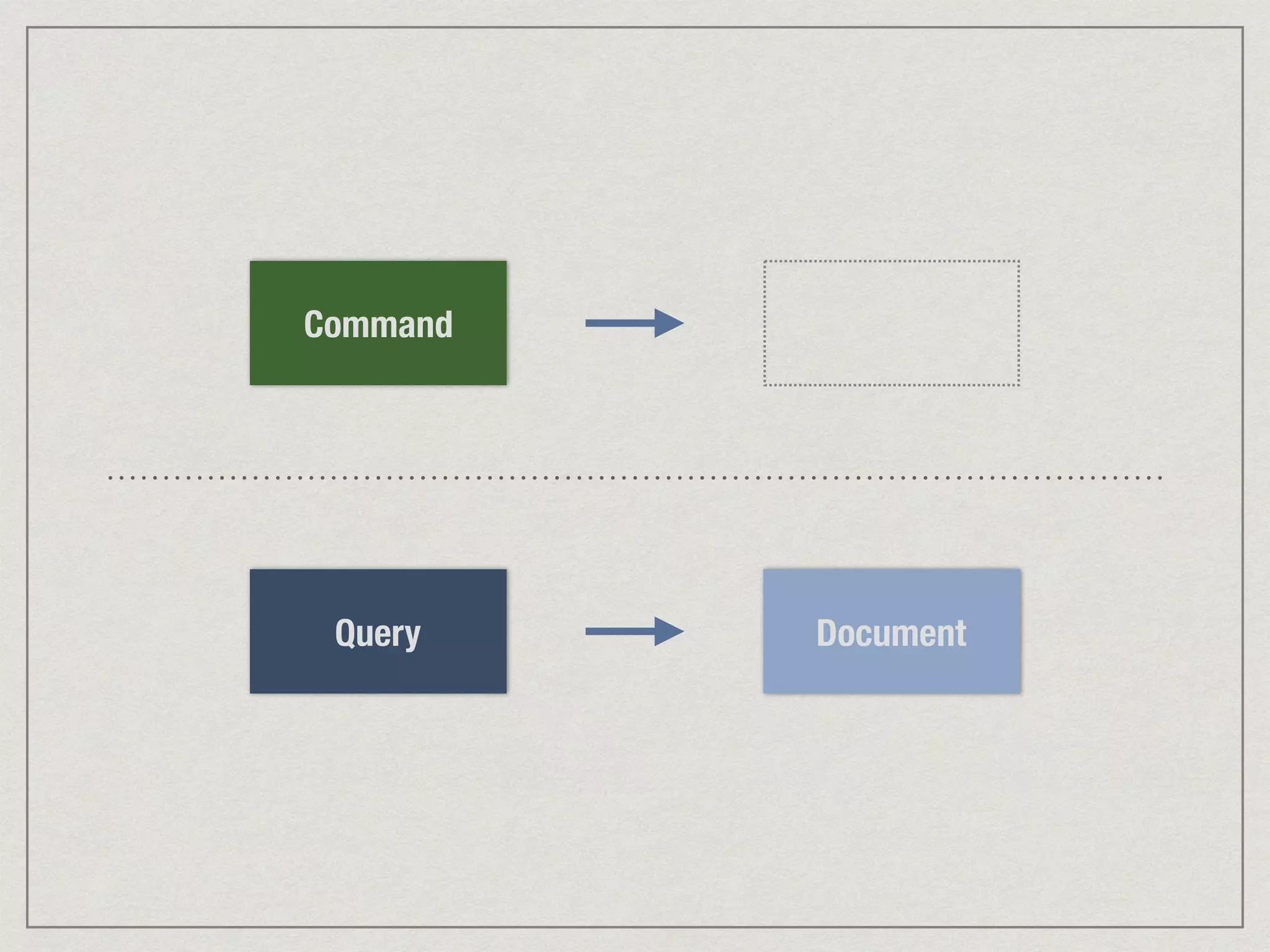
Command
Query Document
Command
Query Document
public void doSomething(...) {
...
}
public [return-type] getSomething(...) {
return ...
}
CQS: command-query
separation
Asking for information doesn’t change observable state
EVERYTHING IS AN OBJECT
YOUR APPLICATION TOO!
Sort of…
“I thought of objects being like biological cells and/
or individual computers on a network, only able to
communicate with messages […]”
Alan Kay
a = …
b = …
behaviorA()
behaviorB()
a = …
b = …
behaviorA()
behaviorB()
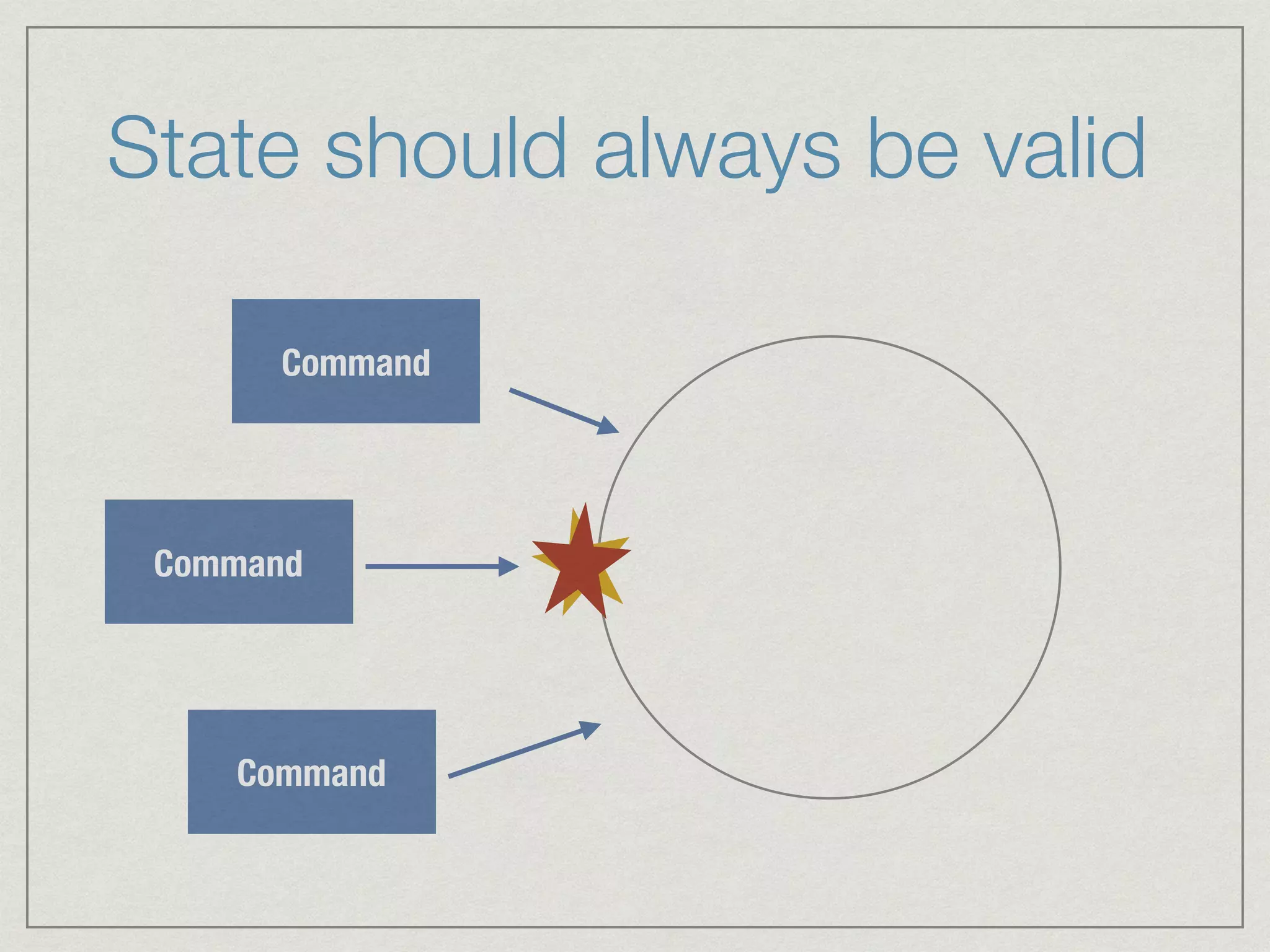
State should always be valid
Command
Command
Command
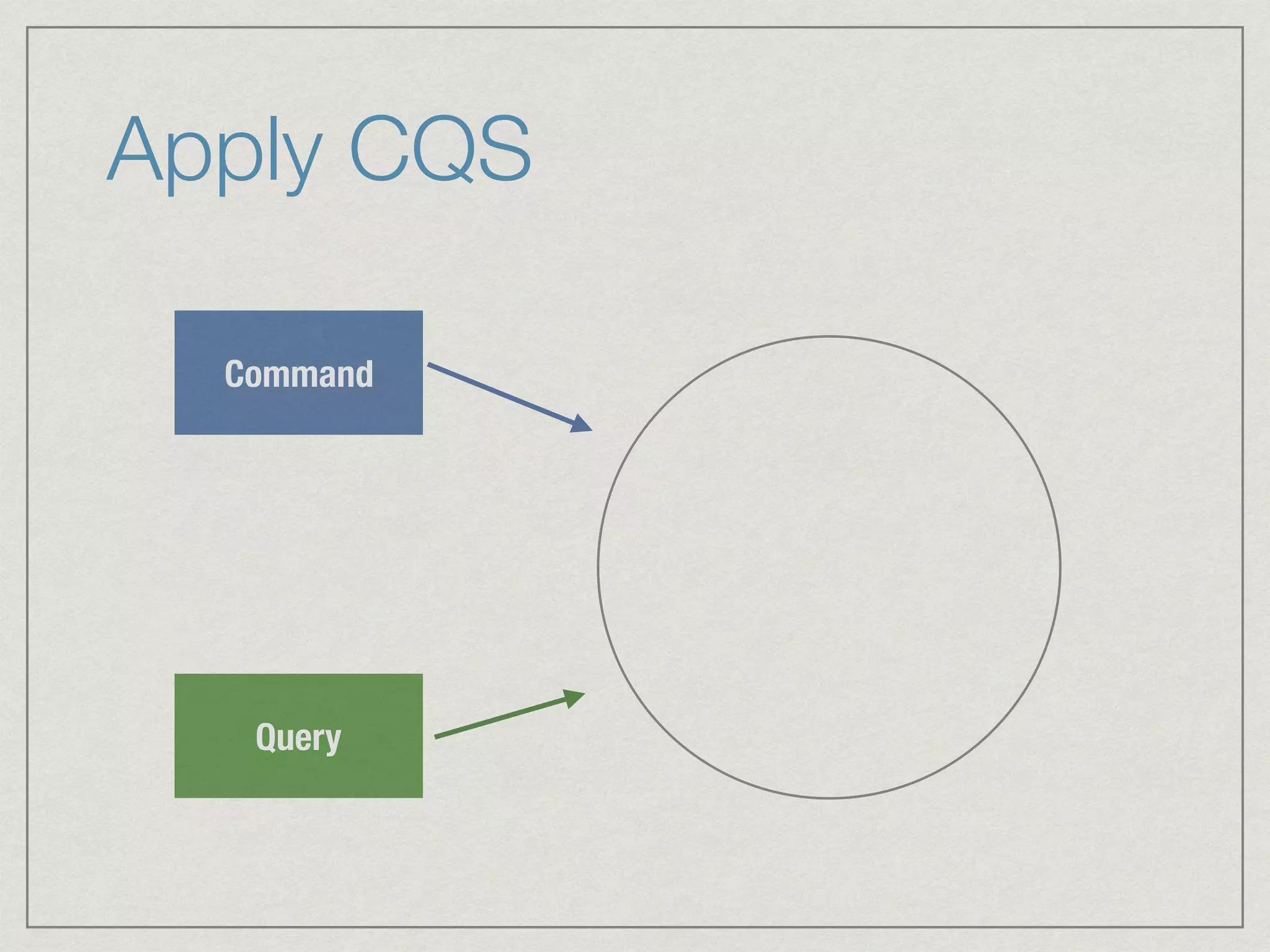
Apply CQS
Command
Query
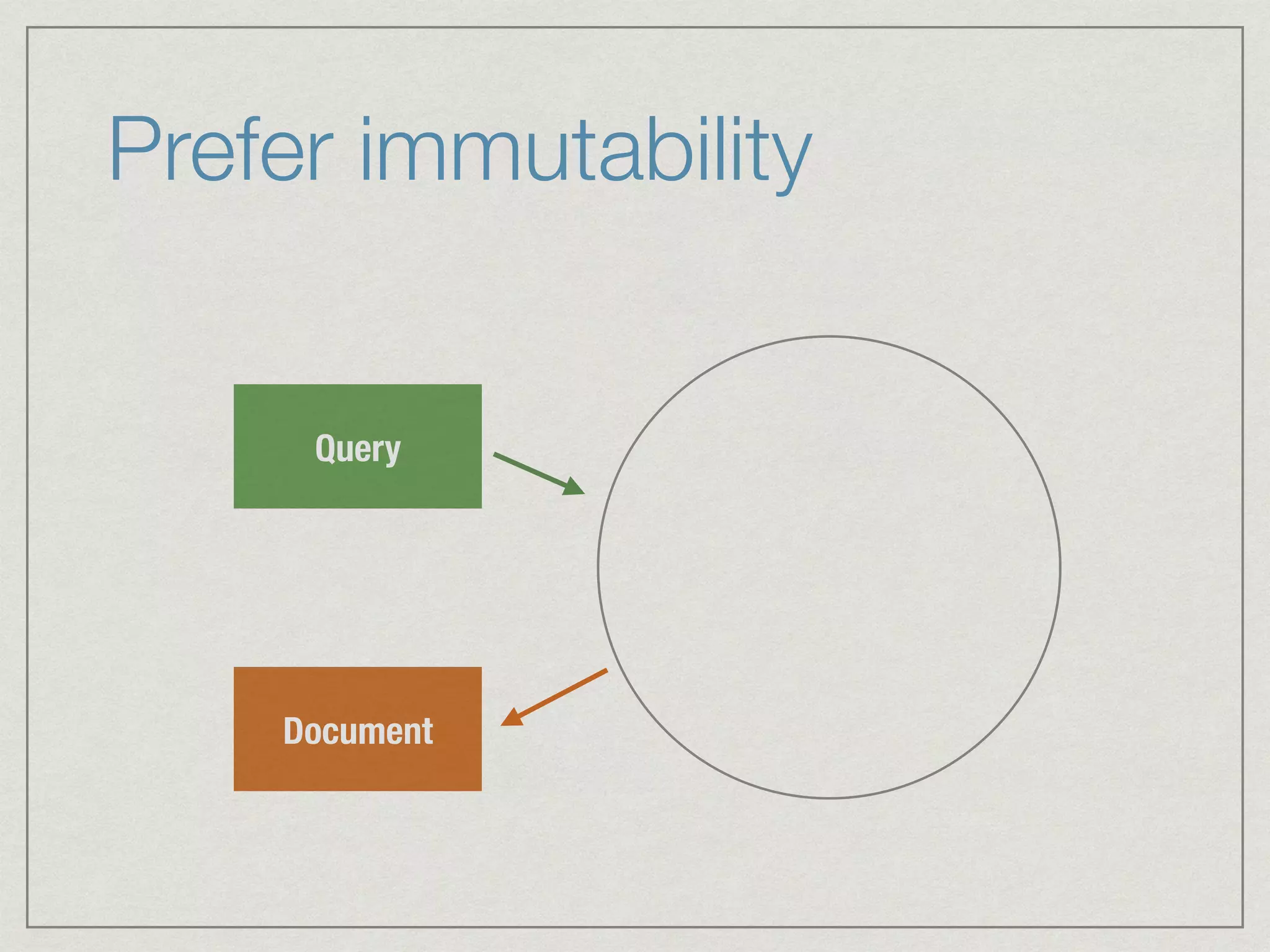
Prefer immutability
Query
Document
This design emerges
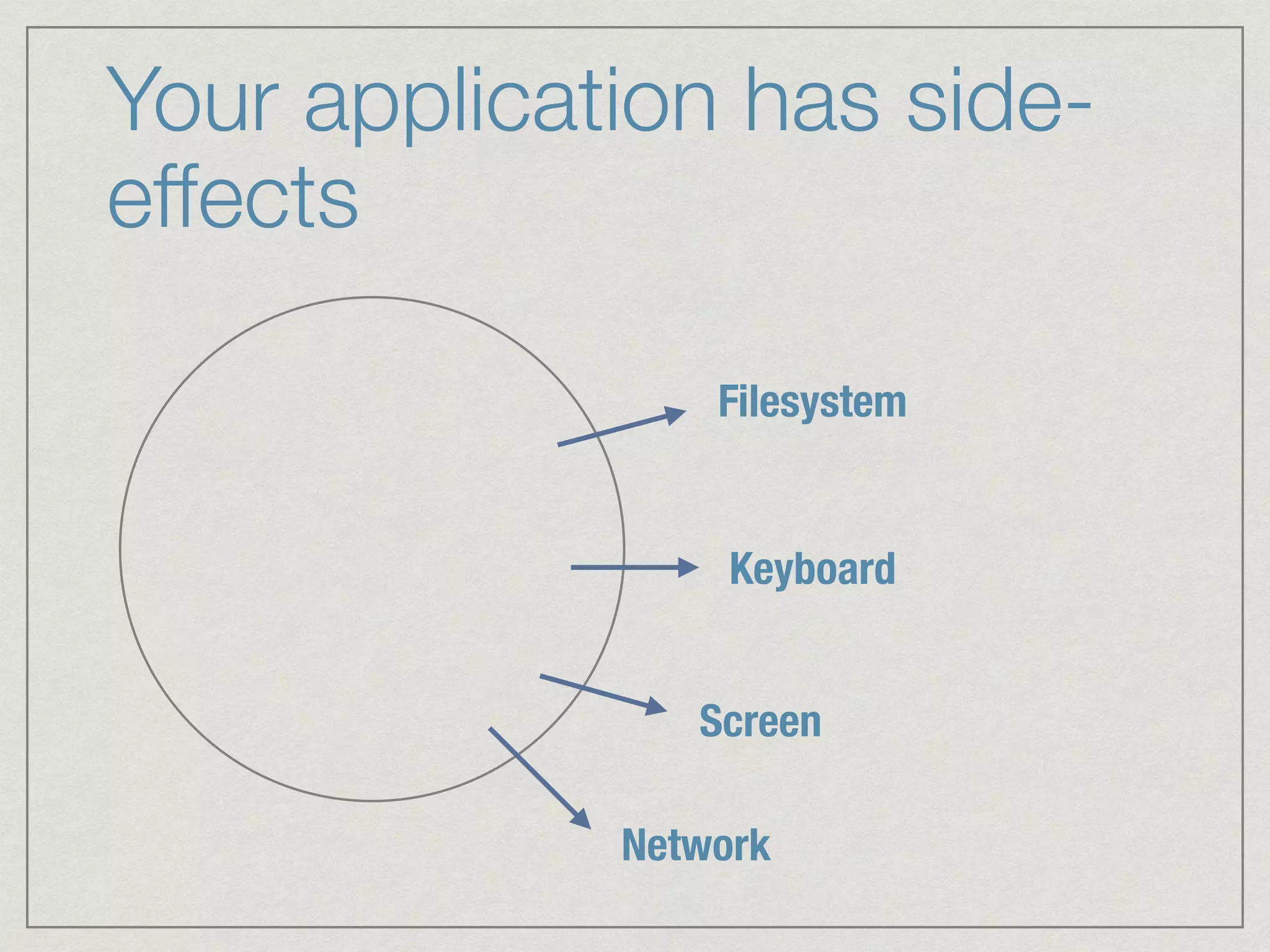
Your application has side-
effects
Filesystem
Keyboard
Screen
Network
Apply hexagonal
architecture
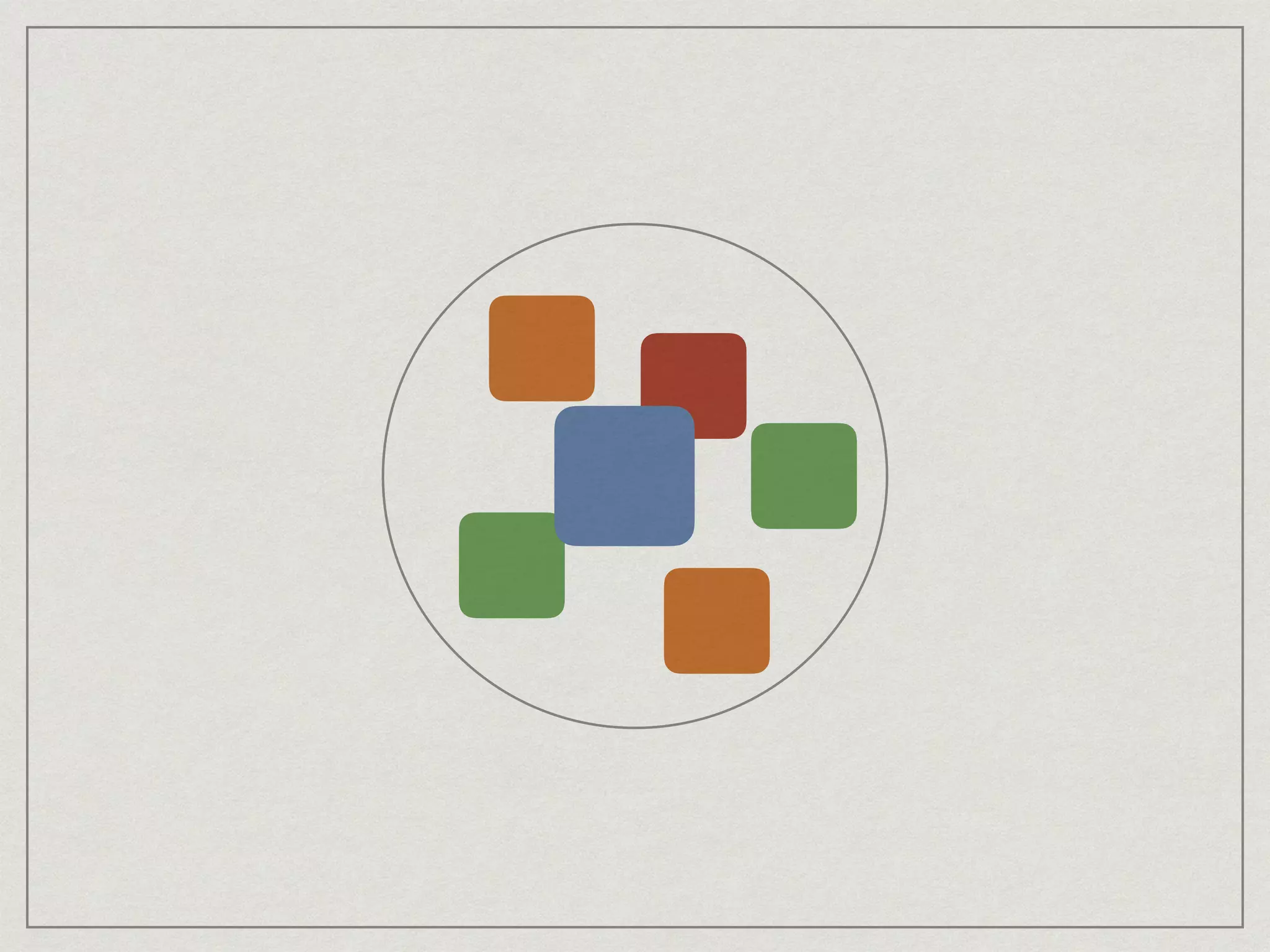
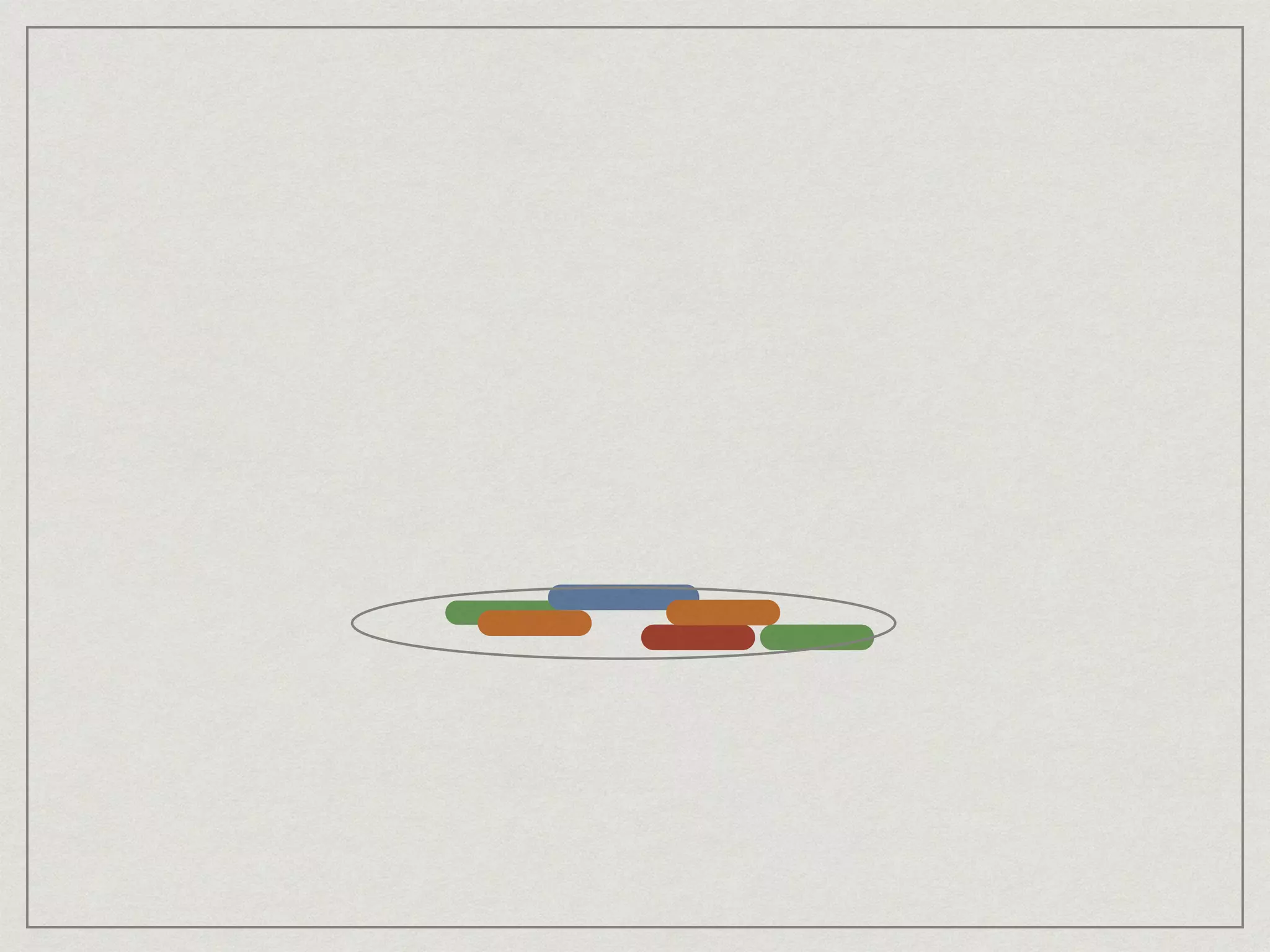
IN WHICH WAYS IS YOUR
APPLICATION NOT AN OBJECT?
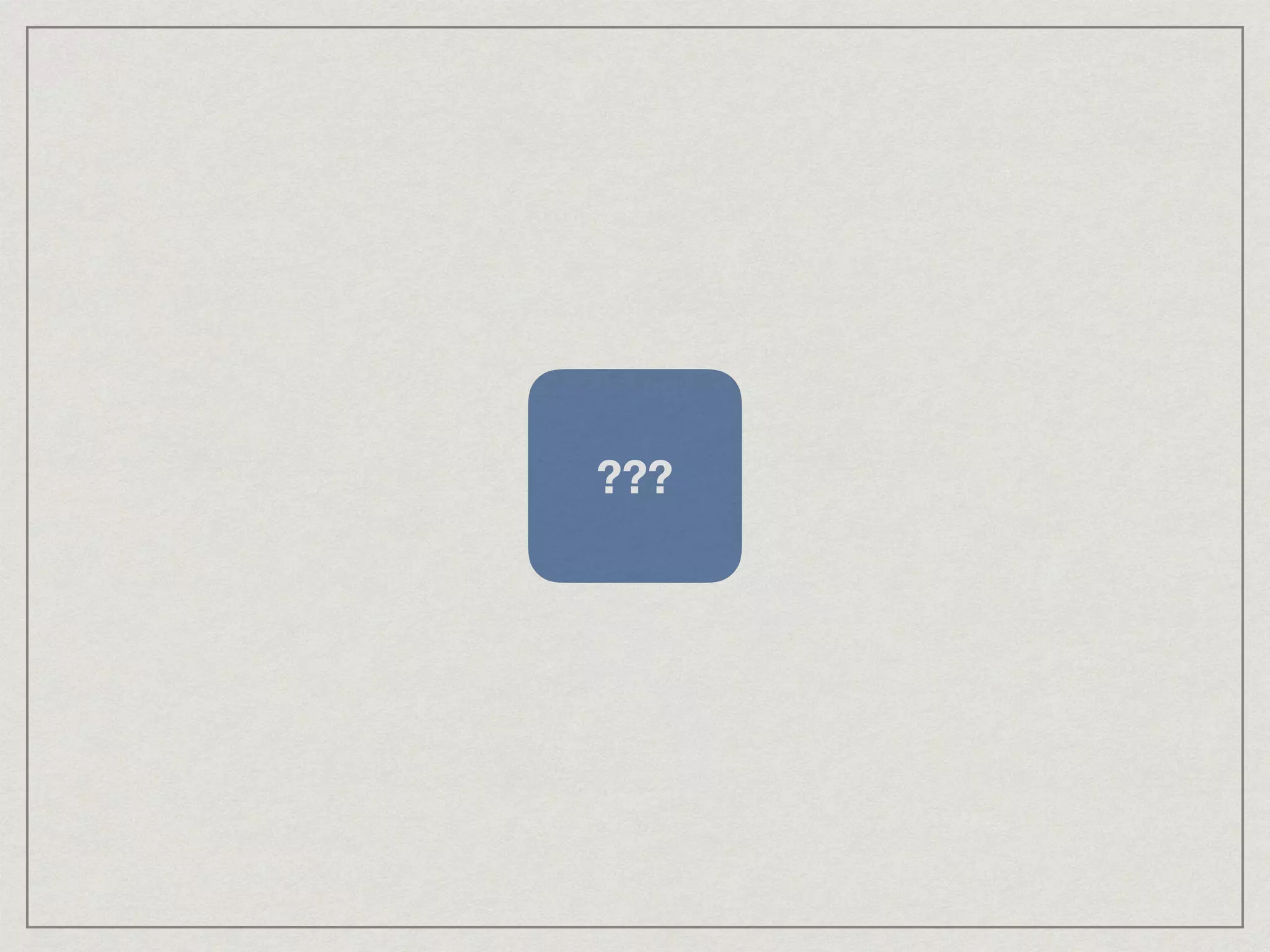
???
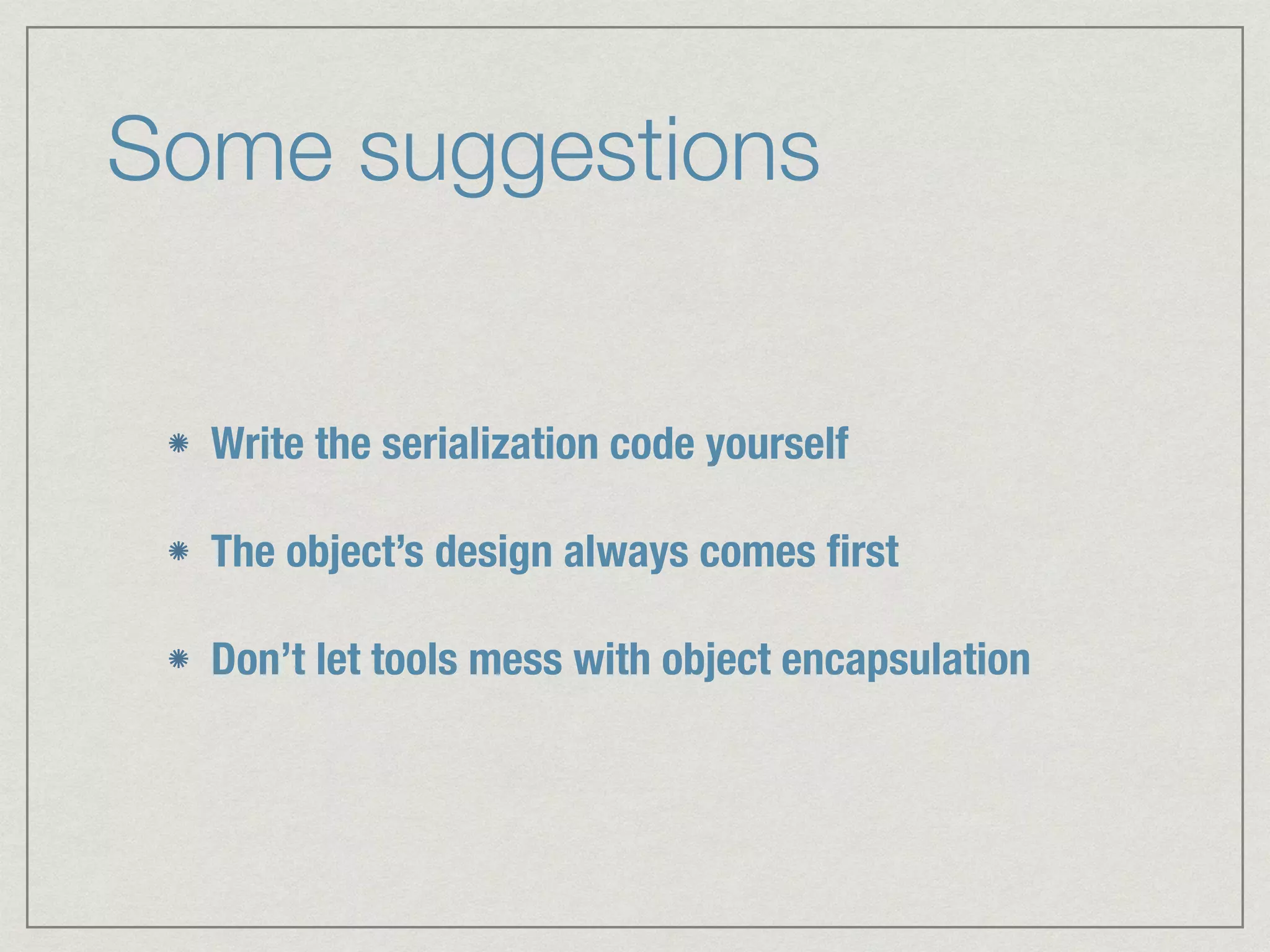
Some suggestions
Write the serialization code yourself
The object’s design always comes first
Don’t let tools mess with object encapsulation
Also…
Try Event Sourcing
CONCLUSION
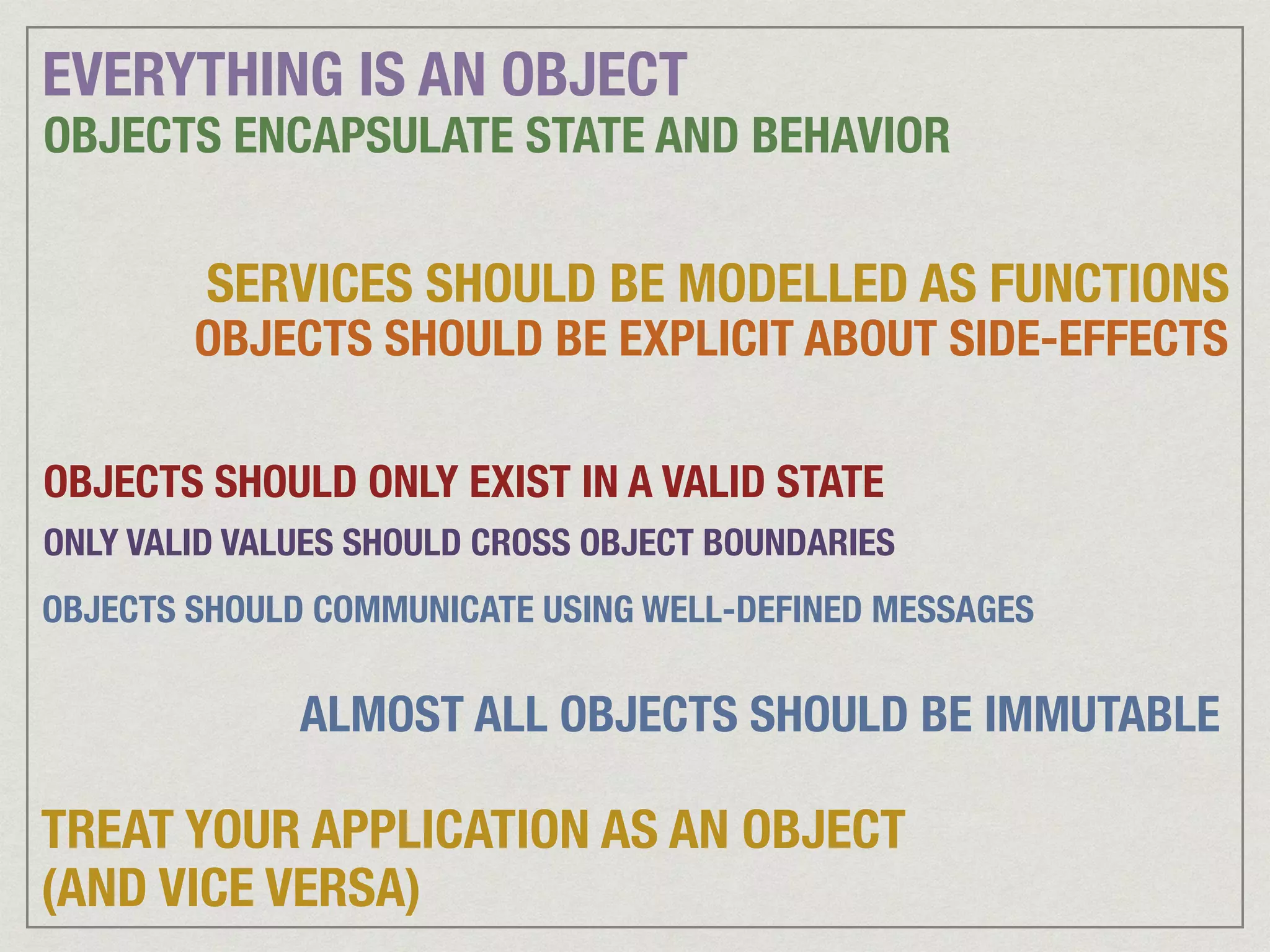
EVERYTHING IS AN OBJECT
OBJECTS ENCAPSULATE STATE AND BEHAVIOR
SERVICES SHOULD BE MODELLED AS FUNCTIONS
OBJECTS SHOULD BE EXPLICIT ABOUT SIDE-EFFECTS
ALMOST ALL OBJECTS SHOULD BE IMMUTABLE
TREAT YOUR APPLICATION AS AN OBJECT

(AND VICE VERSA)
ONLY VALID VALUES SHOULD CROSS OBJECT BOUNDARIES
OBJECTS SHOULD ONLY EXIST IN A VALID STATE
OBJECTS SHOULD COMMUNICATE USING WELL-DEFINED MESSAGES

Beyond design patterns and principles - writing good OO code