Berry Aneurysm
Raju Raj Shakya
PDCH, 20th
Batch
Roll No. : 27
• Aneurysma (greek for dilation)
• An aneurysm is an outward bulging, like a bubble or an
inflated balloon, caused by a localized, abnormal, weak
spot on a blood vessel wall.
• Blood vessels dilates about one and a half times larger
than the normal diameter of the blood vessel.
• Commonly takes place in: aorta, femoral, iliac and
cerebral arteries
• Very rare in veins
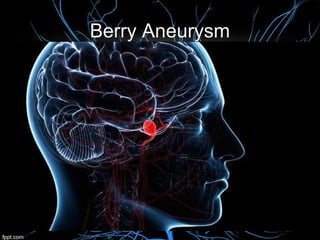
Berry Aneurysm
Berry Aneurysm
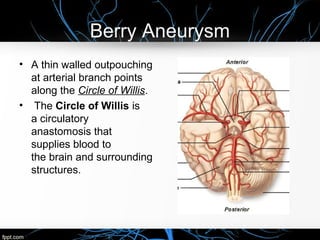
• A thin walled outpouching
at arterial branch points
along the Circle of Willis.
• The Circle of Willis is
a circulatory
anastomosis that
supplies blood to
the brain and surrounding
structures.
• Most common type of intracranial aneurysm.
• Ruptured Berry aneurysm is the 4th
most common
cerebrovascular disorder.
• The annual rate of rupture is approximately 8 – 10 per
100,000 people.
• Ruptured brain aneurysms are fatal in about 40% of
cases.
• Of those who survive, about 66% suffer some permanent
neurological deficit.
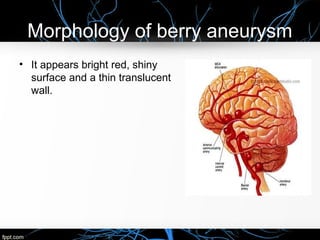
Morphology of berry aneurysm
• It appears bright red, shiny
surface and a thin translucent
wall.
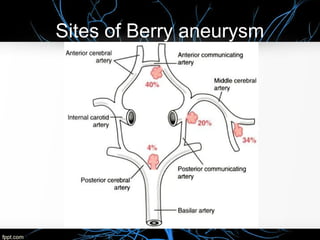
Sites of Berry aneurysm
Risk factors
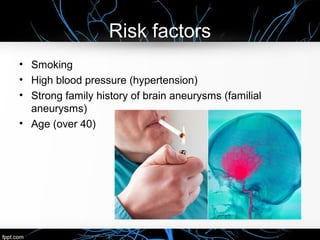
• Smoking
• High blood pressure (hypertension)
• Strong family history of brain aneurysms (familial
aneurysms)
• Age (over 40)
Risk factors contd.
• Gender: women have an increased risk of aneurysms
• Race: people of color have an increased risk of ruptured
aneurysms
• Other disorders: Ehlers-Danlos syndrome, autosomal
dominant polycystic kidney disease, Marfan syndrome,
and fibromuscular dysplasia
• Congenital abnormality in the artery
• Drug use, particularly cocaine
• Excessive alcohol use
• Infection
• Severe head trauma
Symptoms of unruptured Berry aneurysm
• blurred or double vision,
• a drooping eyelid,
• a dilated pupil,
• weakness and/or numbness, or pain above and behind
the eye.
• If you experience these symptoms seek prompt medical
attention. Unruptured aneurysms rarely cause chronic
headaches.
Rupture of Berry aneurysm
• Probability of rupture increases with the size of the
lesion; aneurysms greater than 10mm have high risk.
• Rupture can occur at any time but is often after acute
increase in intracranial pressure such as while straining
stool or sexual orgasms.
Rupture of Berry aneurysm
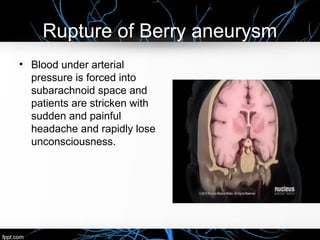
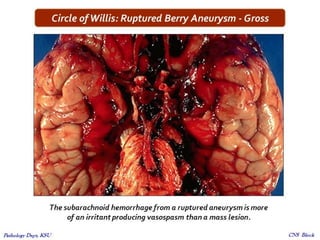
• Blood under arterial
pressure is forced into
subarachnoid space and
patients are stricken with
sudden and painful
headache and rapidly lose
unconsciousness.
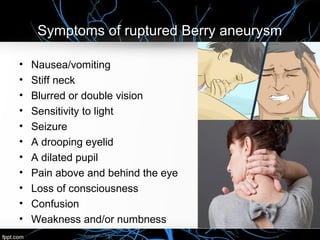
Symptoms of ruptured Berry aneurysm
• Nausea/vomiting
• Stiff neck
• Blurred or double vision
• Sensitivity to light
• Seizure
• A drooping eyelid
• A dilated pupil
• Pain above and behind the eye
• Loss of consciousness
• Confusion
• Weakness and/or numbness
Complications of ruptured Berry aneurysm
• Subarachnoid hemorrhage
• Death
• Several neurologic deficits
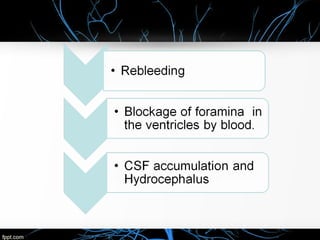
• Rebleeding leading to Hydrocephalous
Diagnosis
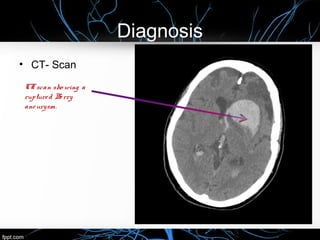
• CT- Scan
CTscan sho wing a
ruptured Berry
aneurysm.
Diagnosis
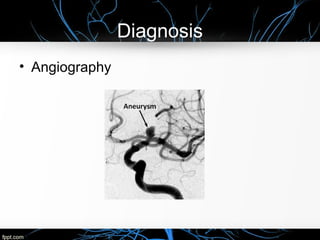
• Angiography
Treatment
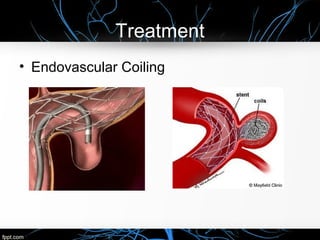
• Endovascular Coiling
Treatment
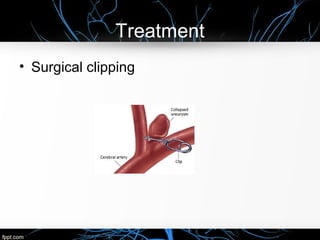
• Surgical clipping
Reference
• https://bafound.org/about-brain-aneurysms/brain-aneurysm-ba
• https://www.youtube.com/watch?v=0v55qpYP_Uo
• https://www.google.com
• Cotran, Kumar, Collins. The central nervous system. In,
Robbins Pathologic Basis of Disease, 6th
edition.
Thomson press(I) Ltd. Noida, India.
Any queries??

Berry aneurysm

  • 1.
    Berry Aneurysm Raju RajShakya PDCH, 20th Batch Roll No. : 27
  • 3.
    • Aneurysma (greekfor dilation) • An aneurysm is an outward bulging, like a bubble or an inflated balloon, caused by a localized, abnormal, weak spot on a blood vessel wall. • Blood vessels dilates about one and a half times larger than the normal diameter of the blood vessel. • Commonly takes place in: aorta, femoral, iliac and cerebral arteries • Very rare in veins
  • 4.
  • 5.
    Berry Aneurysm • Athin walled outpouching at arterial branch points along the Circle of Willis. • The Circle of Willis is a circulatory anastomosis that supplies blood to the brain and surrounding structures.
  • 6.
    • Most commontype of intracranial aneurysm. • Ruptured Berry aneurysm is the 4th most common cerebrovascular disorder. • The annual rate of rupture is approximately 8 – 10 per 100,000 people. • Ruptured brain aneurysms are fatal in about 40% of cases. • Of those who survive, about 66% suffer some permanent neurological deficit.
  • 7.
    Morphology of berryaneurysm • It appears bright red, shiny surface and a thin translucent wall.
  • 8.
  • 9.
    Risk factors • Smoking •High blood pressure (hypertension) • Strong family history of brain aneurysms (familial aneurysms) • Age (over 40)
  • 10.
    Risk factors contd. •Gender: women have an increased risk of aneurysms • Race: people of color have an increased risk of ruptured aneurysms • Other disorders: Ehlers-Danlos syndrome, autosomal dominant polycystic kidney disease, Marfan syndrome, and fibromuscular dysplasia • Congenital abnormality in the artery • Drug use, particularly cocaine • Excessive alcohol use • Infection • Severe head trauma
  • 11.
    Symptoms of unrupturedBerry aneurysm • blurred or double vision, • a drooping eyelid, • a dilated pupil, • weakness and/or numbness, or pain above and behind the eye. • If you experience these symptoms seek prompt medical attention. Unruptured aneurysms rarely cause chronic headaches.
  • 12.
    Rupture of Berryaneurysm • Probability of rupture increases with the size of the lesion; aneurysms greater than 10mm have high risk. • Rupture can occur at any time but is often after acute increase in intracranial pressure such as while straining stool or sexual orgasms.
  • 13.
    Rupture of Berryaneurysm • Blood under arterial pressure is forced into subarachnoid space and patients are stricken with sudden and painful headache and rapidly lose unconsciousness.
  • 15.
    Symptoms of rupturedBerry aneurysm • Nausea/vomiting • Stiff neck • Blurred or double vision • Sensitivity to light • Seizure • A drooping eyelid • A dilated pupil • Pain above and behind the eye • Loss of consciousness • Confusion • Weakness and/or numbness
  • 16.
    Complications of rupturedBerry aneurysm • Subarachnoid hemorrhage • Death • Several neurologic deficits • Rebleeding leading to Hydrocephalous
  • 18.
    Diagnosis • CT- Scan CTscansho wing a ruptured Berry aneurysm.
  • 19.
  • 20.
  • 21.
  • 22.
    Reference • https://bafound.org/about-brain-aneurysms/brain-aneurysm-ba • https://www.youtube.com/watch?v=0v55qpYP_Uo •https://www.google.com • Cotran, Kumar, Collins. The central nervous system. In, Robbins Pathologic Basis of Disease, 6th edition. Thomson press(I) Ltd. Noida, India.
  • 24.