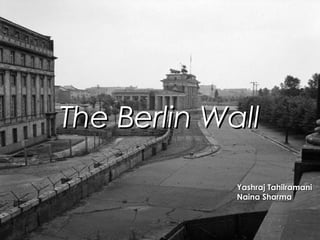
TThhee BBeerrlliinn WWaallll 
YYaasshhrraajj TTaahhiillrraammaannii 
NNaaiinnaa SShhaarrmmaa
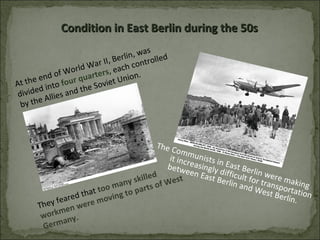
Condition iinn EEaasstt BBeerrlliinn dduurriinngg tthhee 5500ss 
At the end of World War II, Berlin, was 
divided into four quarters, each controlled 
by the Allies and the Soviet Union. 
The Communists in East Berlin were making 
it increasingly difficult for transportation 
between East Berlin and West Berlin. 
They feared that too many skilled 
workmen were moving to parts of West 
Germany.
PPuurrppoossee ooff tthhee WWaallll 
Many people in East Berlin saw that life 
in West Berlin was much better and that 
people in West Berlin had much more 
freedom. 
From 1949 to 1961, as many as 
2.6 million people escaped to 
West Berlin. 
To prevent more people from fleeing 
Communist control into West Germany, 
East Germany build the Berlin Wall, 
completely encircling West Berlin. 
 The purpose was to cut off West 
Berlin from the rest of East Berlin.
Many people in East 
Germany tried to escape 
into West Germany. 
However, there were 
guards at the Wall at all 
times. Thousands of people 
were arrested or even shot 
down for attempting to 
cross the Wall
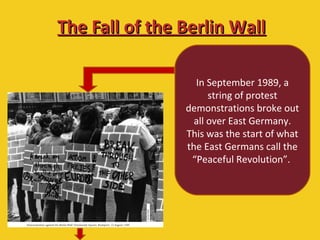
TThhee FFaallll ooff tthhee BBeerrlliinn WWaallll 
In September 1989, a 
string of protest 
demonstrations broke out 
all over East Germany. 
This was the start of what 
the East Germans call the 
“Peaceful Revolution”.
By November, 1989, 
protests had increased 
significantly. 
Soon enough, the East 
Germans were forced 
to open a number of 
new border crossings. 
From then on, Germans 
were allowed to cross 
from the East to the 
West without a visa.
On June 13th, 1990, the East 
Germans officially started 
dismantling the Wall. The Fall of 
the Berlin Wall was the first step 
to the reunification of Germany. 
The dismantling continued until 
November 1991. Only a few 
sections and towers were left 
standing as memorials.
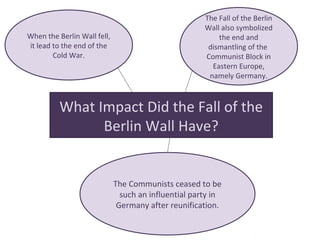
When the Berlin Wall fell, 
it lead to the end of the 
What Impact Did the Fall of the 
Berlin Wall Have? 
Cold War. 
The Fall of the Berlin 
Wall also symbolized 
the end and 
dismantling of the 
Communist Block in 
Eastern Europe, 
namely Germany. 
The Communists ceased to be 
such an influential party in 
Germany after reunification.
The union of east and 
west lead to increase in 
population and a bigger 
market, which was an 
opportunity for other 
What Impact Did the Fall of the 
Berlin Wall Have? 
countries. 
Huge increase in foreign 
direct investment and 
cross border trade of 
goods, services and 
labor. 
Lead to the enhancement of 
Europe’s position in the 
International affairs.
Thank You

Berlin wall

  • 1.
    TThhee BBeerrlliinn WWaallll YYaasshhrraajj TTaahhiillrraammaannii NNaaiinnaa SShhaarrmmaa
  • 2.
    Condition iinn EEaassttBBeerrlliinn dduurriinngg tthhee 5500ss At the end of World War II, Berlin, was divided into four quarters, each controlled by the Allies and the Soviet Union. The Communists in East Berlin were making it increasingly difficult for transportation between East Berlin and West Berlin. They feared that too many skilled workmen were moving to parts of West Germany.
  • 3.
    PPuurrppoossee ooff tthheeWWaallll Many people in East Berlin saw that life in West Berlin was much better and that people in West Berlin had much more freedom. From 1949 to 1961, as many as 2.6 million people escaped to West Berlin. To prevent more people from fleeing Communist control into West Germany, East Germany build the Berlin Wall, completely encircling West Berlin.  The purpose was to cut off West Berlin from the rest of East Berlin.
  • 4.
    Many people inEast Germany tried to escape into West Germany. However, there were guards at the Wall at all times. Thousands of people were arrested or even shot down for attempting to cross the Wall
  • 5.
    TThhee FFaallll oofftthhee BBeerrlliinn WWaallll In September 1989, a string of protest demonstrations broke out all over East Germany. This was the start of what the East Germans call the “Peaceful Revolution”.
  • 6.
    By November, 1989, protests had increased significantly. Soon enough, the East Germans were forced to open a number of new border crossings. From then on, Germans were allowed to cross from the East to the West without a visa.
  • 7.
    On June 13th,1990, the East Germans officially started dismantling the Wall. The Fall of the Berlin Wall was the first step to the reunification of Germany. The dismantling continued until November 1991. Only a few sections and towers were left standing as memorials.
  • 8.
    When the BerlinWall fell, it lead to the end of the What Impact Did the Fall of the Berlin Wall Have? Cold War. The Fall of the Berlin Wall also symbolized the end and dismantling of the Communist Block in Eastern Europe, namely Germany. The Communists ceased to be such an influential party in Germany after reunification.
  • 9.
    The union ofeast and west lead to increase in population and a bigger market, which was an opportunity for other What Impact Did the Fall of the Berlin Wall Have? countries. Huge increase in foreign direct investment and cross border trade of goods, services and labor. Lead to the enhancement of Europe’s position in the International affairs.
  • 10.