BEHAVIOR_SCIENCE
S mid term paper
Solved by Arman
Malik
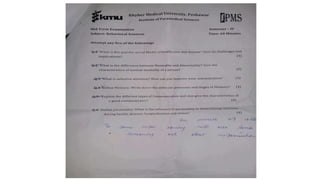
Q1 Biopsychosocial Modle of health, Its challenges
and Impication?
• The biopsychosocial model (abbreviated "BPS") is a general model or approach
posessing that biological, psychological (which entails thoughts, emotions, and
behaviors), and social factors, all play a significant role in human functioning in
the context of disease or illness.
• Implication.
Consider biological, psychological, and social factors
Relationships are significant to health
• Patient and doctor
• Patient and family, friends, others
Keep people healthy rather than wait to treat them when they become ill.
Challenges
Poverty as underlying issue
• Lack of resources, education
Behavior and/or lifestyle
Misuse of antibiotics
Gaps in immunizations
Lack of access to healthcare
New diseases and re-emerging strains
Q2.Difference between Normality and abnormality?
Characteritics of normal mentality of person.
• Normality vs. Abnormality
• Normality.
The absence of illness and the presence of state of well being called
normality.
The condition of being normal; the state of being usual, typical, or
expected
Abnormality
A physical malformation; deformity
 Deviation from the typical or usual; irregularity

( According to Morgan & King)

Abnormality is the significant deviation from commonly accepted
patterns of behavior, emotion or thought".
Characteristic of normal mental person
• Efficient perception of reality
They have a realistic view of their strengths and weaknesses
• Self knowledge
• They have an understanding of WHY they do things and WHY they have certain
emotions.
• Ability to control behaviour
• Occasionally normal people may act impulsively [Without thinking] but
normally they can control DRIVES such as aggression
• Self-esteem
• They know their own value and feel happy with their achievements and
abilities.
• Able to form close relationships
NORMAL people are able to form close and satisfying friendships and
relationships. They are aware of other peoples feelings and beliefs
and adapt to them.
• Productivity
They are able to channel their energies into work' and social life.
Q3. Selective Attention And How can impove the
concentration
• Selective Attention
• s the process of attending to some information coming into our
senses and ignoring or screening out other information.
• Impoveing concentration
learn to manage stress,
2. recognize energy demands of concentration,
3. practice concentrating
4 experience the skill
5 direct attention away from distracting thoughts and feelings
6 think non judgmentally
Q4.Memory And different processes and stages of
memory
• Memory.
• Memory is the process in which information is encoded, stored, and
retrieved (Recovered).
• Processes of memory
Encoding.Convert of information into a form that is usable in the brain’s
storage systems.
Storage.holding onto information for some period of time.
• Retrieval.recall or recognition: calling back the stored information in
response to some cue for use in a process or activity
Stages of Memory
1. Sensory Memory
• 2. Short-Term Memory
• 3. Long-Term Memory
• Sensory Memory
• the very first stage of memory, the point at which information enters the
nervous system through the sensory systems.
• Short-Term Memory
• the memory system in which information is held for brief periods of time while
being used.
• Long-Term Memory
• the system of memory into which all the information is placed to be kept more
or less permanently.
Q5Different types of communication And
Characterstic of good communication
• Types of Communication.
• Inter persoanal. Communication between tow or more than people called
inter personal communication.
• Intra personal communication. Communication is processe in which the
people communcate with thenselves either consciously or unconsiously.
• extra personal communication. Communication between human and non
human entites.
• Group communication. communication in group from.
• Mass communication. communication through electronic gadgets likes TV
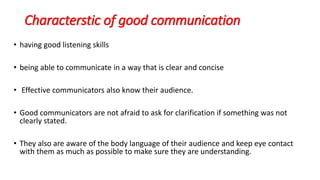
Characterstic of good communication
• having good listening skills
• being able to communicate in a way that is clear and concise
• Effective communicators also know their audience.
• Good communicators are not afraid to ask for clarification if something was not
clearly stated.
• They also are aware of the body language of their audience and keep eye contact
with them as much as possible to make sure they are understanding.
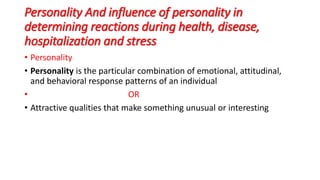
Personality And influence of personality in
determining reactions during health, disease,
hospitalization and stress
• Personality
• Personality is the particular combination of emotional, attitudinal,
and behavioral response patterns of an individual
• OR
• Attractive qualities that make something unusual or interesting
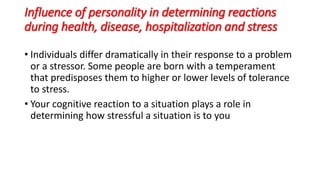
Influence of personality in determining reactions
during health, disease, hospitalization and stress
• Individuals differ dramatically in their response to a problem
or a stressor. Some people are born with a temperament
that predisposes them to higher or lower levels of tolerance
to stress.
• Your cognitive reaction to a situation plays a role in
determining how stressful a situation is to you

Behavior sciences paper

  • 1.
    BEHAVIOR_SCIENCE S mid termpaper Solved by Arman Malik
  • 3.
    Q1 Biopsychosocial Modleof health, Its challenges and Impication? • The biopsychosocial model (abbreviated "BPS") is a general model or approach posessing that biological, psychological (which entails thoughts, emotions, and behaviors), and social factors, all play a significant role in human functioning in the context of disease or illness. • Implication. Consider biological, psychological, and social factors Relationships are significant to health • Patient and doctor • Patient and family, friends, others Keep people healthy rather than wait to treat them when they become ill.
  • 4.
    Challenges Poverty as underlyingissue • Lack of resources, education Behavior and/or lifestyle Misuse of antibiotics Gaps in immunizations Lack of access to healthcare New diseases and re-emerging strains
  • 5.
    Q2.Difference between Normalityand abnormality? Characteritics of normal mentality of person. • Normality vs. Abnormality • Normality. The absence of illness and the presence of state of well being called normality. The condition of being normal; the state of being usual, typical, or expected
  • 6.
    Abnormality A physical malformation;deformity  Deviation from the typical or usual; irregularity  ( According to Morgan & King)  Abnormality is the significant deviation from commonly accepted patterns of behavior, emotion or thought".
  • 7.
    Characteristic of normalmental person • Efficient perception of reality They have a realistic view of their strengths and weaknesses • Self knowledge • They have an understanding of WHY they do things and WHY they have certain emotions. • Ability to control behaviour • Occasionally normal people may act impulsively [Without thinking] but normally they can control DRIVES such as aggression • Self-esteem • They know their own value and feel happy with their achievements and abilities.
  • 8.
    • Able toform close relationships NORMAL people are able to form close and satisfying friendships and relationships. They are aware of other peoples feelings and beliefs and adapt to them. • Productivity They are able to channel their energies into work' and social life.
  • 9.
    Q3. Selective AttentionAnd How can impove the concentration • Selective Attention • s the process of attending to some information coming into our senses and ignoring or screening out other information. • Impoveing concentration learn to manage stress, 2. recognize energy demands of concentration, 3. practice concentrating 4 experience the skill 5 direct attention away from distracting thoughts and feelings 6 think non judgmentally
  • 10.
    Q4.Memory And differentprocesses and stages of memory • Memory. • Memory is the process in which information is encoded, stored, and retrieved (Recovered). • Processes of memory Encoding.Convert of information into a form that is usable in the brain’s storage systems. Storage.holding onto information for some period of time. • Retrieval.recall or recognition: calling back the stored information in response to some cue for use in a process or activity
  • 11.
    Stages of Memory 1.Sensory Memory • 2. Short-Term Memory • 3. Long-Term Memory
  • 12.
    • Sensory Memory •the very first stage of memory, the point at which information enters the nervous system through the sensory systems. • Short-Term Memory • the memory system in which information is held for brief periods of time while being used. • Long-Term Memory • the system of memory into which all the information is placed to be kept more or less permanently.
  • 13.
    Q5Different types ofcommunication And Characterstic of good communication • Types of Communication. • Inter persoanal. Communication between tow or more than people called inter personal communication. • Intra personal communication. Communication is processe in which the people communcate with thenselves either consciously or unconsiously. • extra personal communication. Communication between human and non human entites. • Group communication. communication in group from. • Mass communication. communication through electronic gadgets likes TV
  • 14.
    Characterstic of goodcommunication • having good listening skills • being able to communicate in a way that is clear and concise • Effective communicators also know their audience. • Good communicators are not afraid to ask for clarification if something was not clearly stated. • They also are aware of the body language of their audience and keep eye contact with them as much as possible to make sure they are understanding.
  • 15.
    Personality And influenceof personality in determining reactions during health, disease, hospitalization and stress • Personality • Personality is the particular combination of emotional, attitudinal, and behavioral response patterns of an individual • OR • Attractive qualities that make something unusual or interesting
  • 16.
    Influence of personalityin determining reactions during health, disease, hospitalization and stress • Individuals differ dramatically in their response to a problem or a stressor. Some people are born with a temperament that predisposes them to higher or lower levels of tolerance to stress. • Your cognitive reaction to a situation plays a role in determining how stressful a situation is to you