Before Automation 2
OEE, Overall Equipment Efficiency.
OEE calculates your efficiency on the machine
The higher, the better.
BUT!
Be realistic in your wishes.
OEE is calculated with the following parameters:
Availability
Performance
Quality
Availability:
When is your machine availleble?
24/7/265 or less?
This is something you have to find out, something you decide.
In theory it is 24/4/365, but in reality it is openinghours.
Minus for example lunchbreak, maintenance and more.
Be carefull with this.
Availability:
An example:
A workday is 8 hours.
Minus half a hour lunchbreak, half a hour daily cleaning.
And last, but not least, planned maintenave, 15 minuttes.
This will give you an availabilety of 6 hours and 45 minuttes.
In decimal, 6,75 hour, is in this case 100%
Availability:
6,75 hour, is 100%
Unplanned stop: 1 hour.
Makes the availabilety 85%
Performance
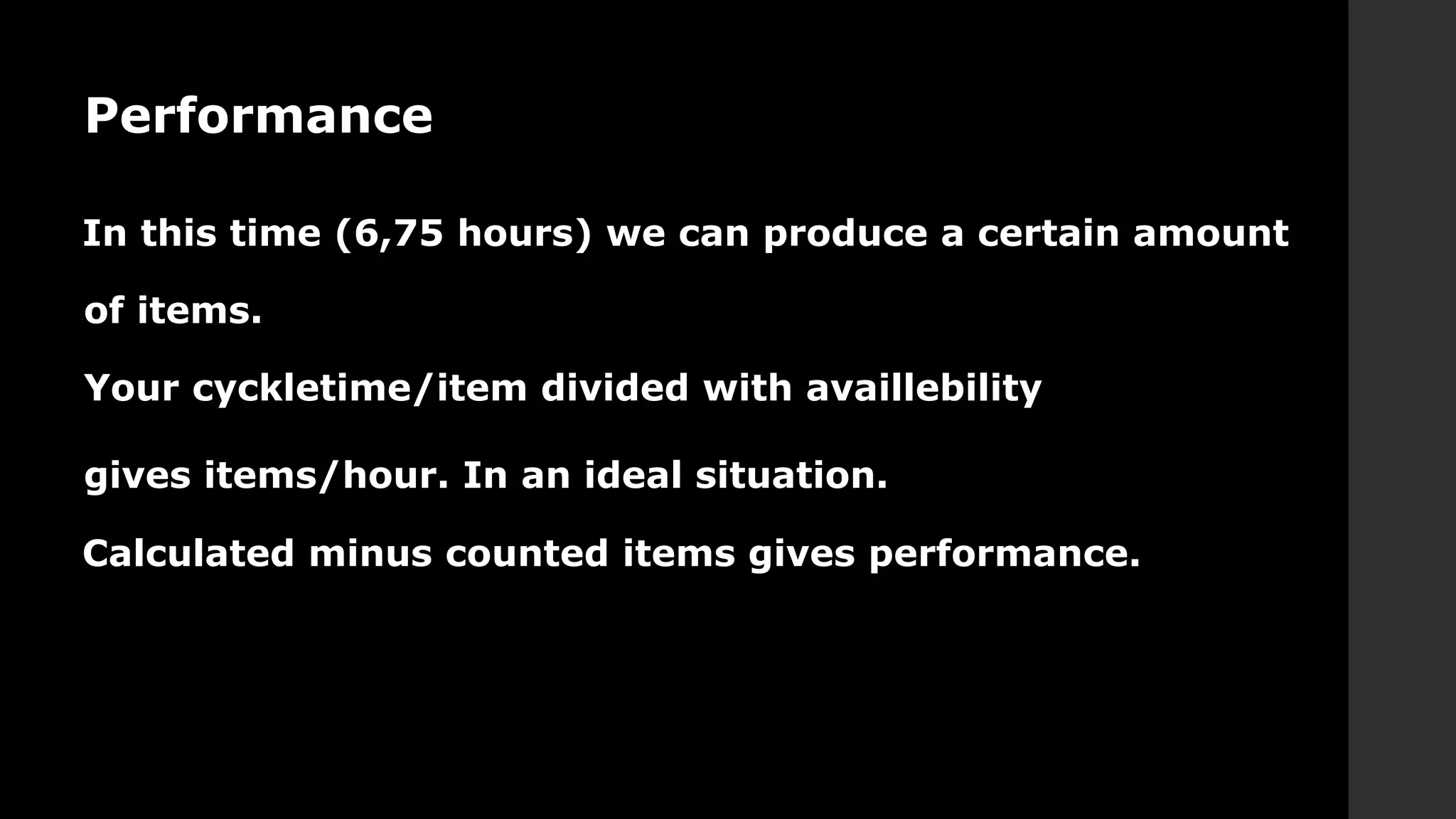
In this time (6,75 hours) we can produce a certain amount
of items.
Your cyckletime/item divided with availlebility
gives items/hour. In an ideal situation.
Calculated minus counted items gives performance.
Performance
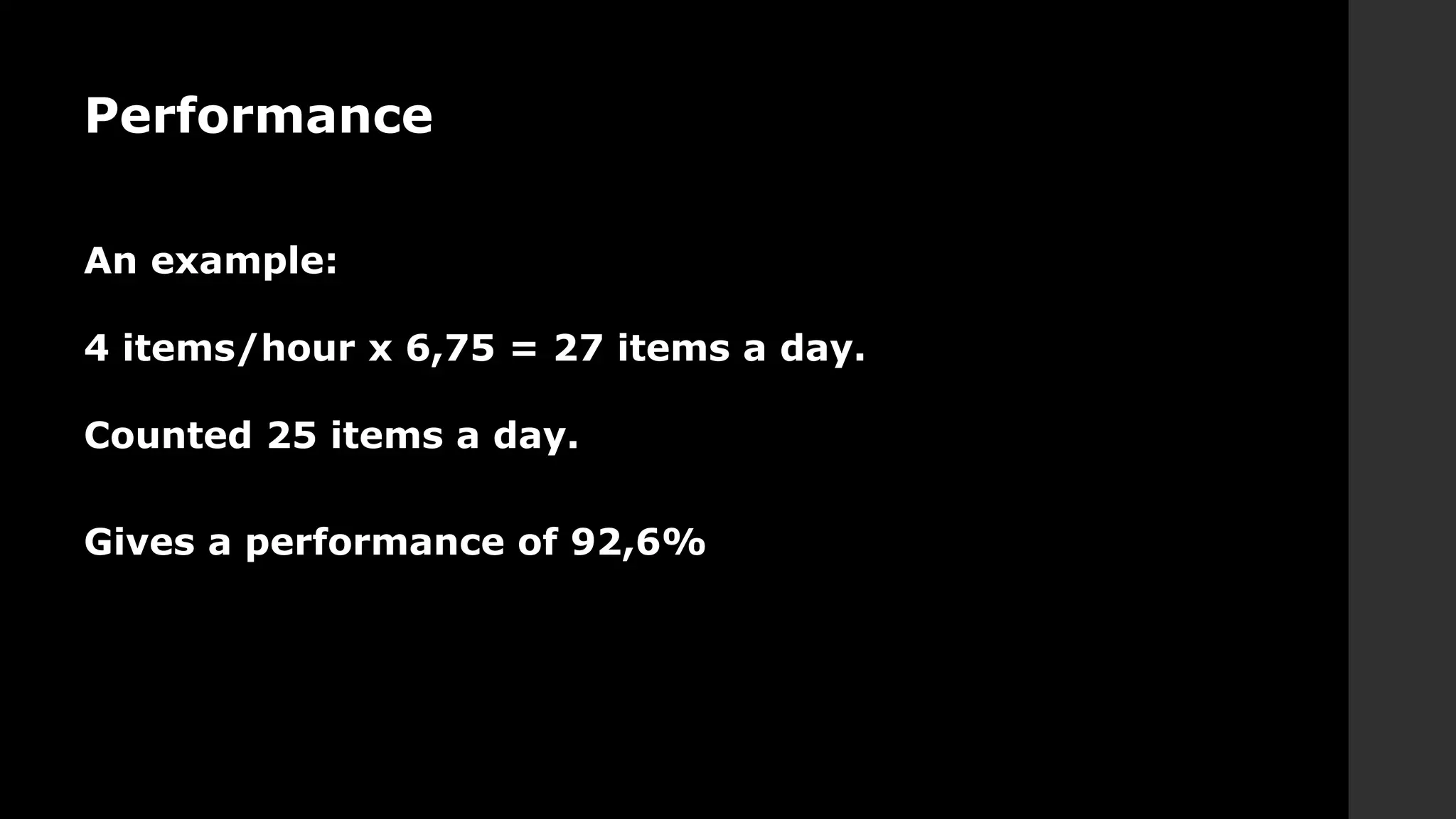
An example:
4 items/hour x 6,75 = 27 items a day.
Counted 25 items a day.
Gives a performance of 92,6%
Quality
The last parameter is quality, how many perfect items do
we produce?
We made 25 items, how many of them are perfect?
Perfect means, directly to the next operation. All others
need rework or are thrown away.
Quality
Out of these 25, 19 are perfect.
Which means, 6 items are bad quality.
This gives us the last parameter for our OEE:
This gives the quality rate of 76 %
OEE
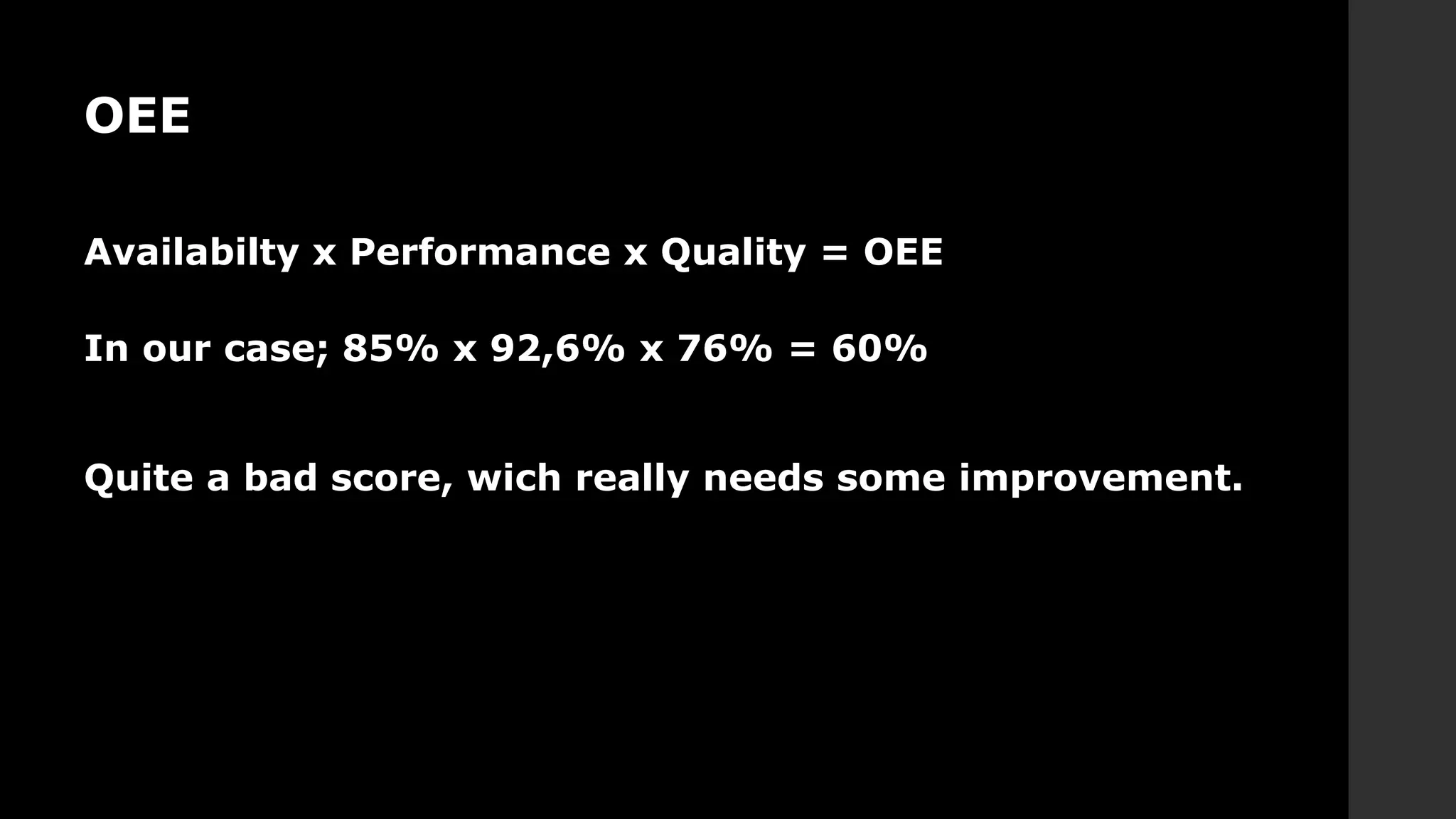
Availabilty x Performance x Quality = OEE
In our case; 85% x 92,6% x 76% = 60%
Quite a bad score, wich really needs some improvement.
Where would you improve?
Right! The quality of the deliveret parts for this item.
But this poor quality is allready detected, or?
It should, for this is also a problem for the manual workforce.
This is one og the things you have to check, before buying
a robot.

Before automation 2

  • 1.
    Before Automation 2 OEE,Overall Equipment Efficiency.
  • 2.
    OEE calculates yourefficiency on the machine The higher, the better. BUT! Be realistic in your wishes.
  • 3.
    OEE is calculatedwith the following parameters: Availability Performance Quality
  • 4.
    Availability: When is yourmachine availleble? 24/7/265 or less? This is something you have to find out, something you decide. In theory it is 24/4/365, but in reality it is openinghours. Minus for example lunchbreak, maintenance and more. Be carefull with this.
  • 5.
    Availability: An example: A workdayis 8 hours. Minus half a hour lunchbreak, half a hour daily cleaning. And last, but not least, planned maintenave, 15 minuttes. This will give you an availabilety of 6 hours and 45 minuttes. In decimal, 6,75 hour, is in this case 100%
  • 6.
    Availability: 6,75 hour, is100% Unplanned stop: 1 hour. Makes the availabilety 85%
  • 7.
    Performance In this time(6,75 hours) we can produce a certain amount of items. Your cyckletime/item divided with availlebility gives items/hour. In an ideal situation. Calculated minus counted items gives performance.
  • 8.
    Performance An example: 4 items/hourx 6,75 = 27 items a day. Counted 25 items a day. Gives a performance of 92,6%
  • 9.
    Quality The last parameteris quality, how many perfect items do we produce? We made 25 items, how many of them are perfect? Perfect means, directly to the next operation. All others need rework or are thrown away.
  • 10.
    Quality Out of these25, 19 are perfect. Which means, 6 items are bad quality. This gives us the last parameter for our OEE: This gives the quality rate of 76 %
  • 11.
    OEE Availabilty x Performancex Quality = OEE In our case; 85% x 92,6% x 76% = 60% Quite a bad score, wich really needs some improvement.
  • 12.
    Where would youimprove? Right! The quality of the deliveret parts for this item. But this poor quality is allready detected, or? It should, for this is also a problem for the manual workforce. This is one og the things you have to check, before buying a robot.