BASIC RADIATION SAFETY
AWARENESS
S.GOKULAPRIYA,
RADIATION SAFETY OFFICER,
KING GEORGE HOSPITAL,
VISAKHAPATNAM, ANDHRA
PRADESH
OBJECTIVE
 To understand:
 What is radiation
 Effects of radiation
 Safe practices with radiation for worker, public and
patients
 Reporting mechanism incase of over exposure
WHY SHOULD WE BE CONCERNED ABOUT
RADIATION EXPOSURE ?
 Can it hurt ?
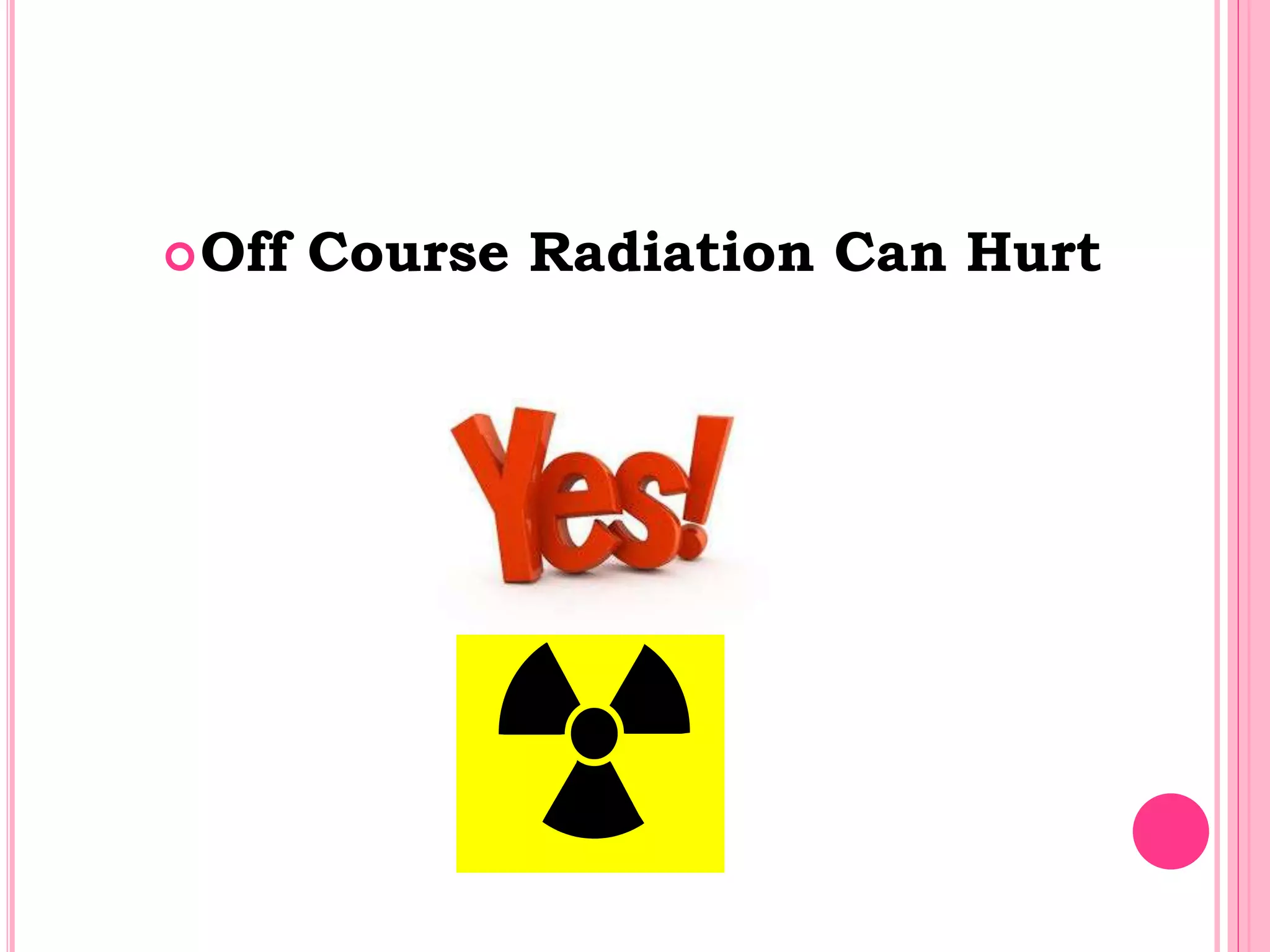
Off Course Radiation Can Hurt
EFFECTS OF RADIATION
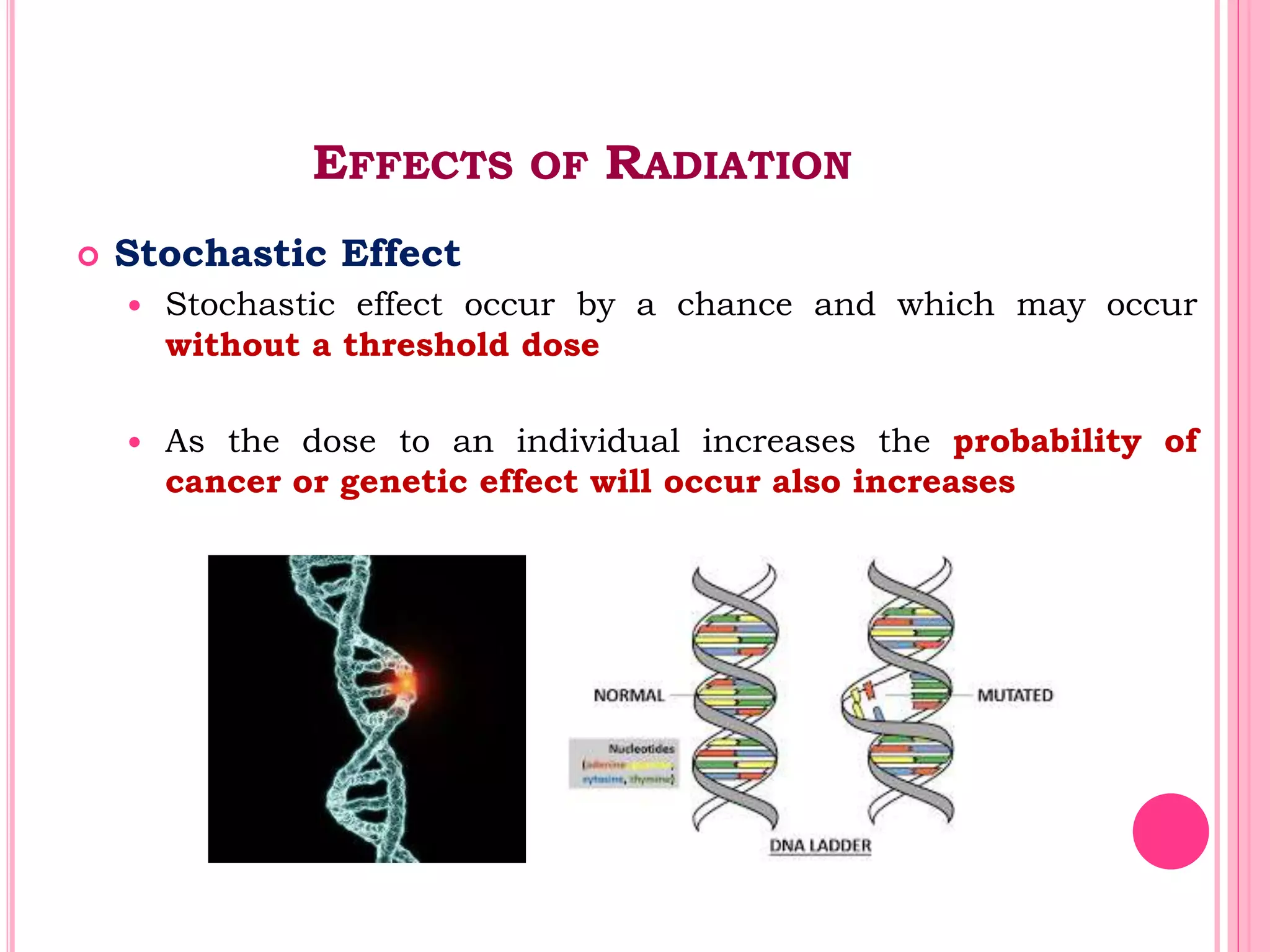
 Stochastic Effect
 Stochastic effect occur by a chance and which may occur
without a threshold dose
 As the dose to an individual increases the probability of
cancer or genetic effect will occur also increases
EFFECTS OF RADIATION
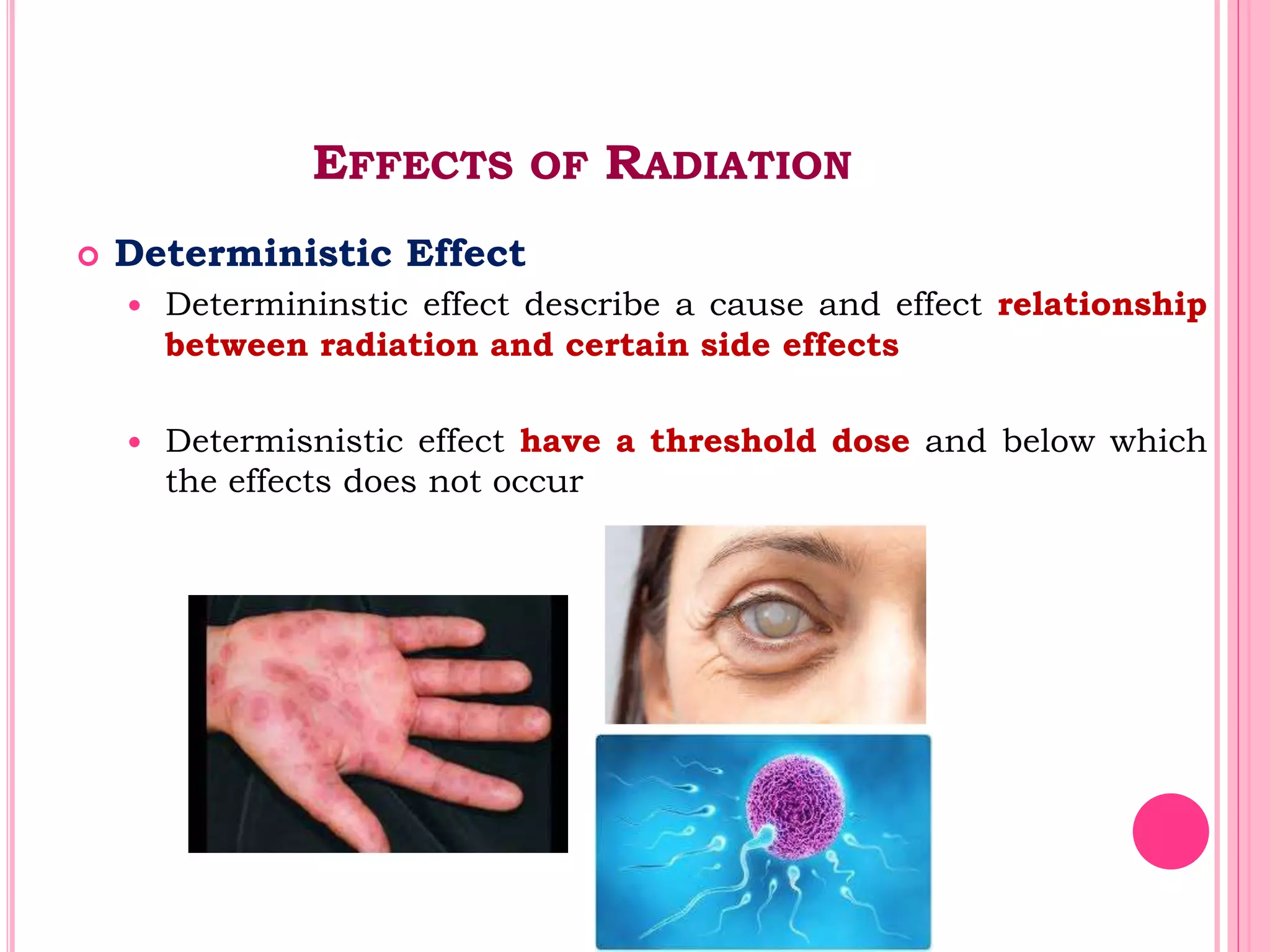
 Deterministic Effect
 Determininstic effect describe a cause and effect relationship
between radiation and certain side effects
 Determisnistic effect have a threshold dose and below which
the effects does not occur
EFFECTS OF RADIATION
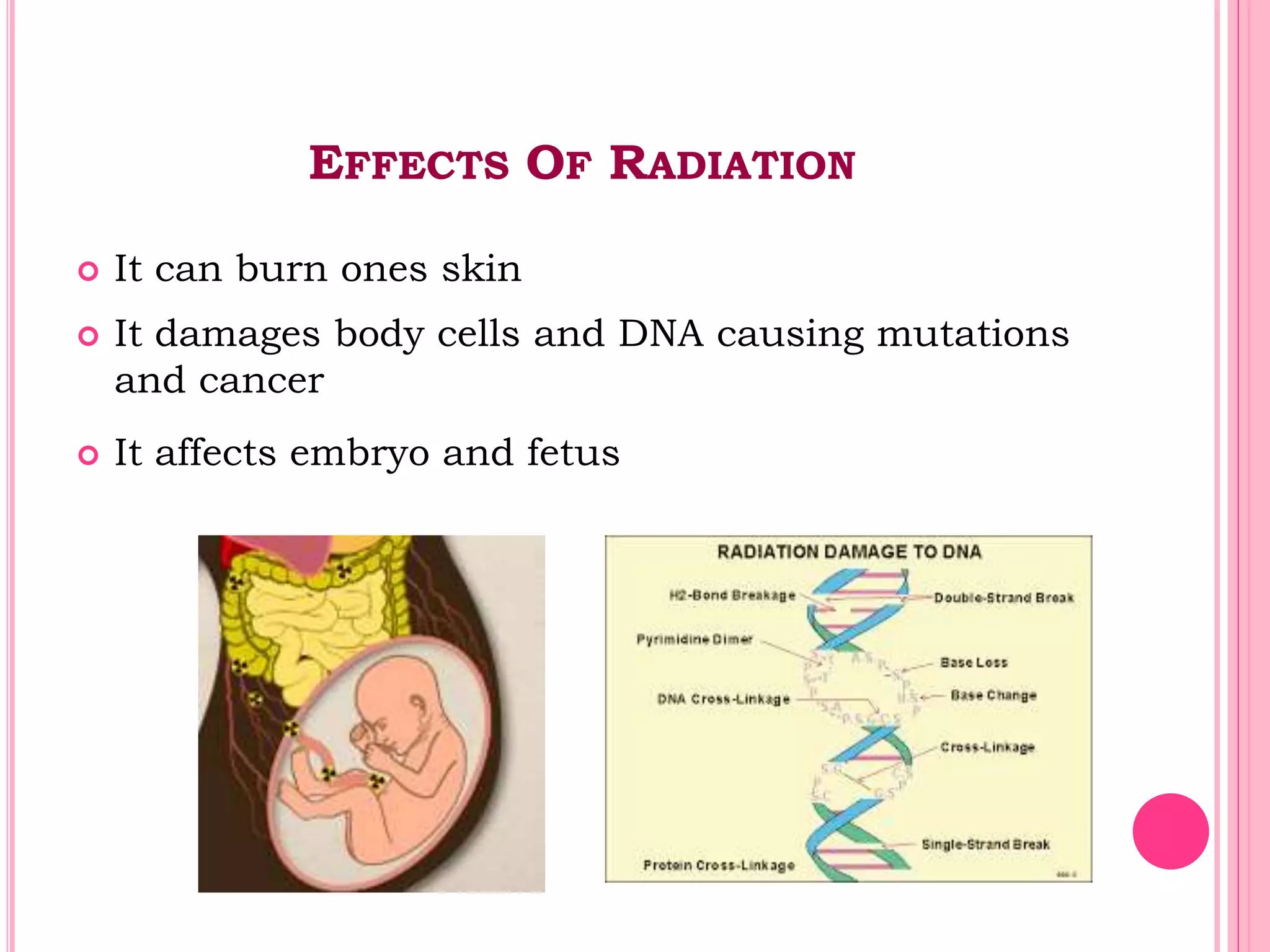
 It can burn ones skin
 It damages body cells and DNA causing mutations
and cancer
 It affects embryo and fetus
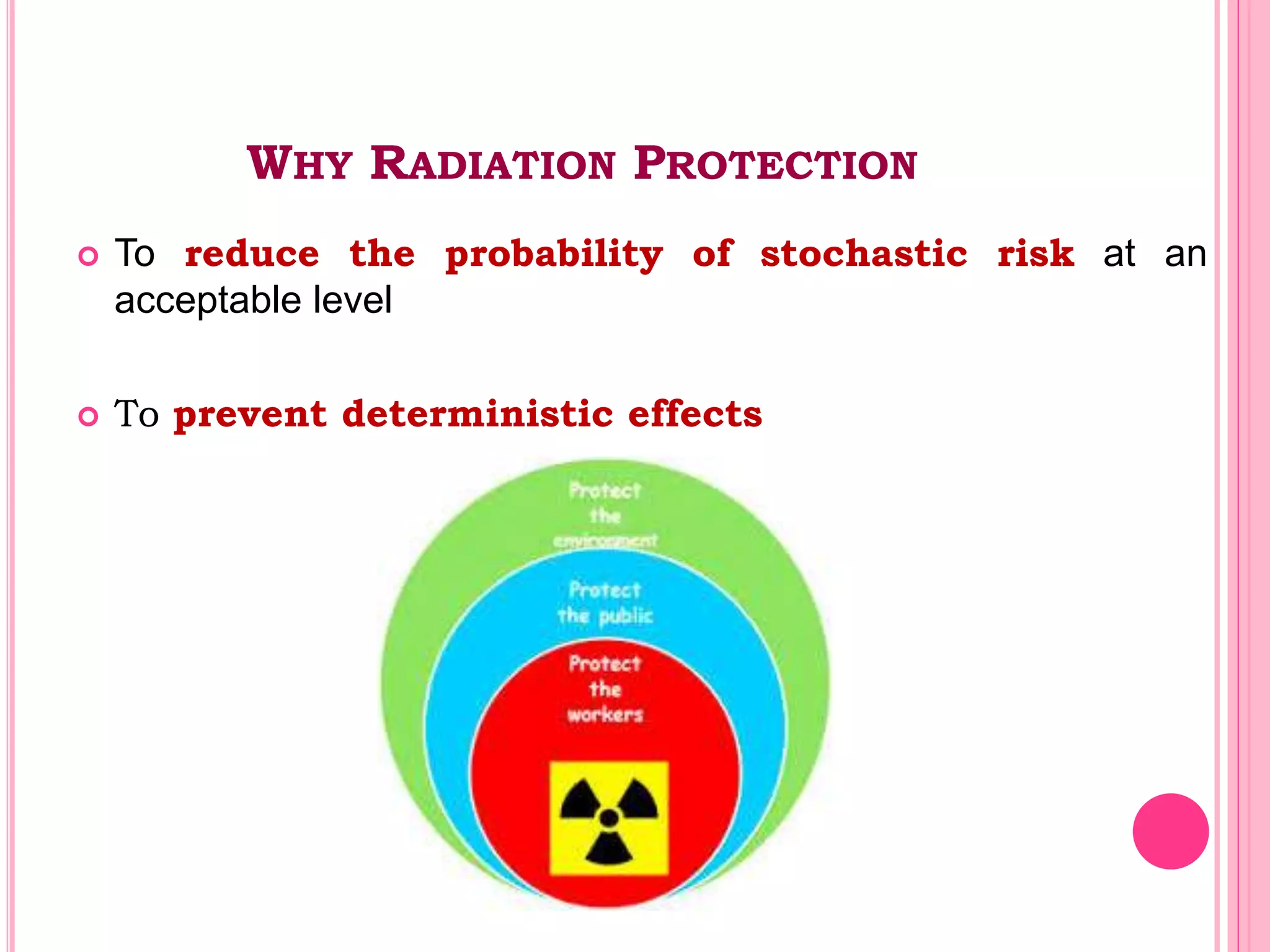
WHY RADIATION PROTECTION
 To reduce the probability of stochastic risk at an
acceptable level
 To prevent deterministic effects
 How to Protect Patients, Public And Staffs From
Radiation?
Protection Of Radiation Workers
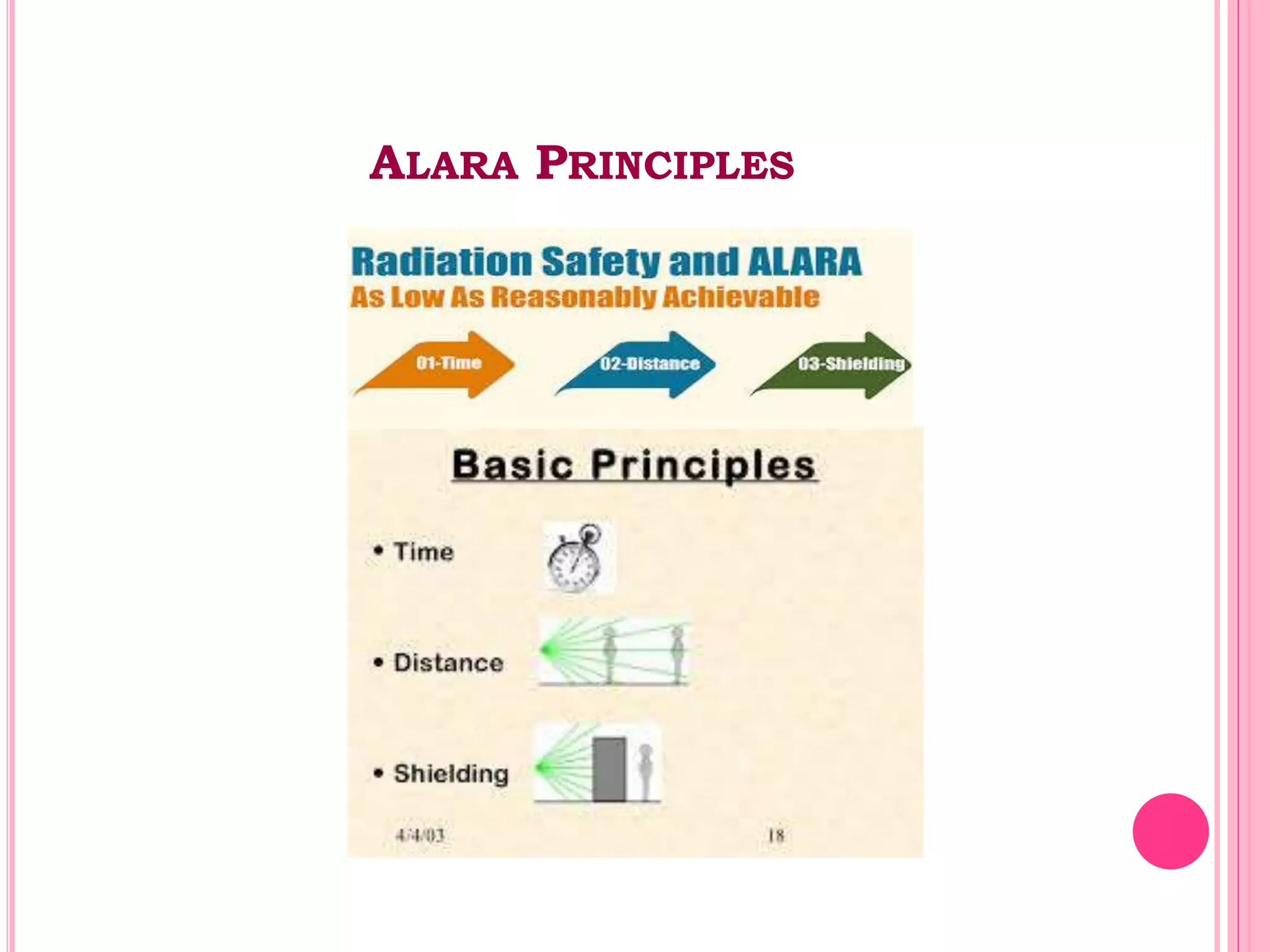
ALARA PRINCIPLES
ALARA
 Alara is a philosophy, necessary to maintain personnel
exposure or the release of radioactivity to the environment
well below applicable limits by means of a good radiation
protection plan, through education, administrative
controls and safe lab practices.
TIME
 Less time = less radiation exposure
 Radiation workers should pre plan the procedure to
minimize the exposure
 Radiation workers should do dry runs (without
radioactive material) to practice
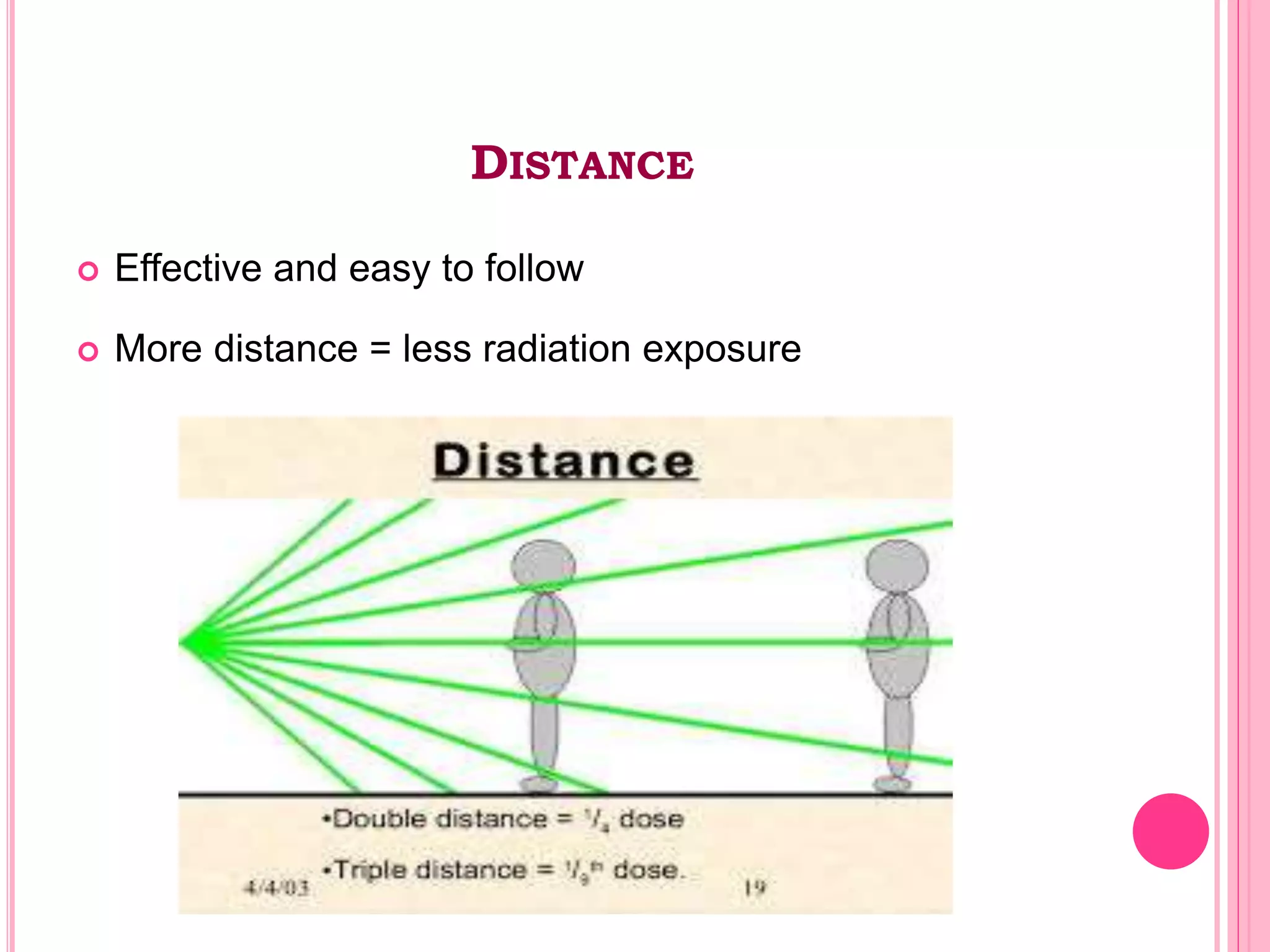
DISTANCE
 Effective and easy to follow
 More distance = less radiation exposure
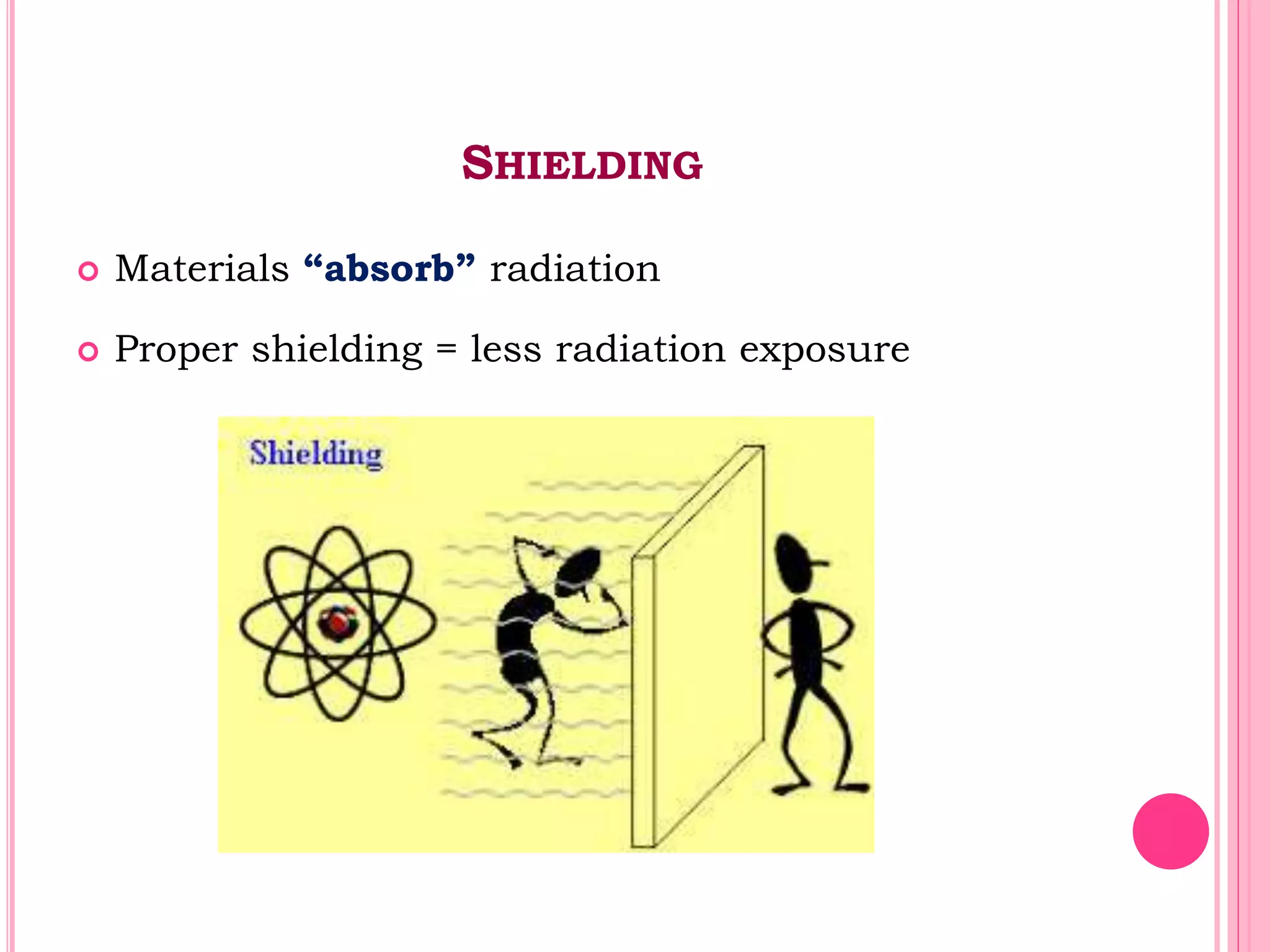
SHIELDING
 Materials “absorb” radiation
 Proper shielding = less radiation exposure
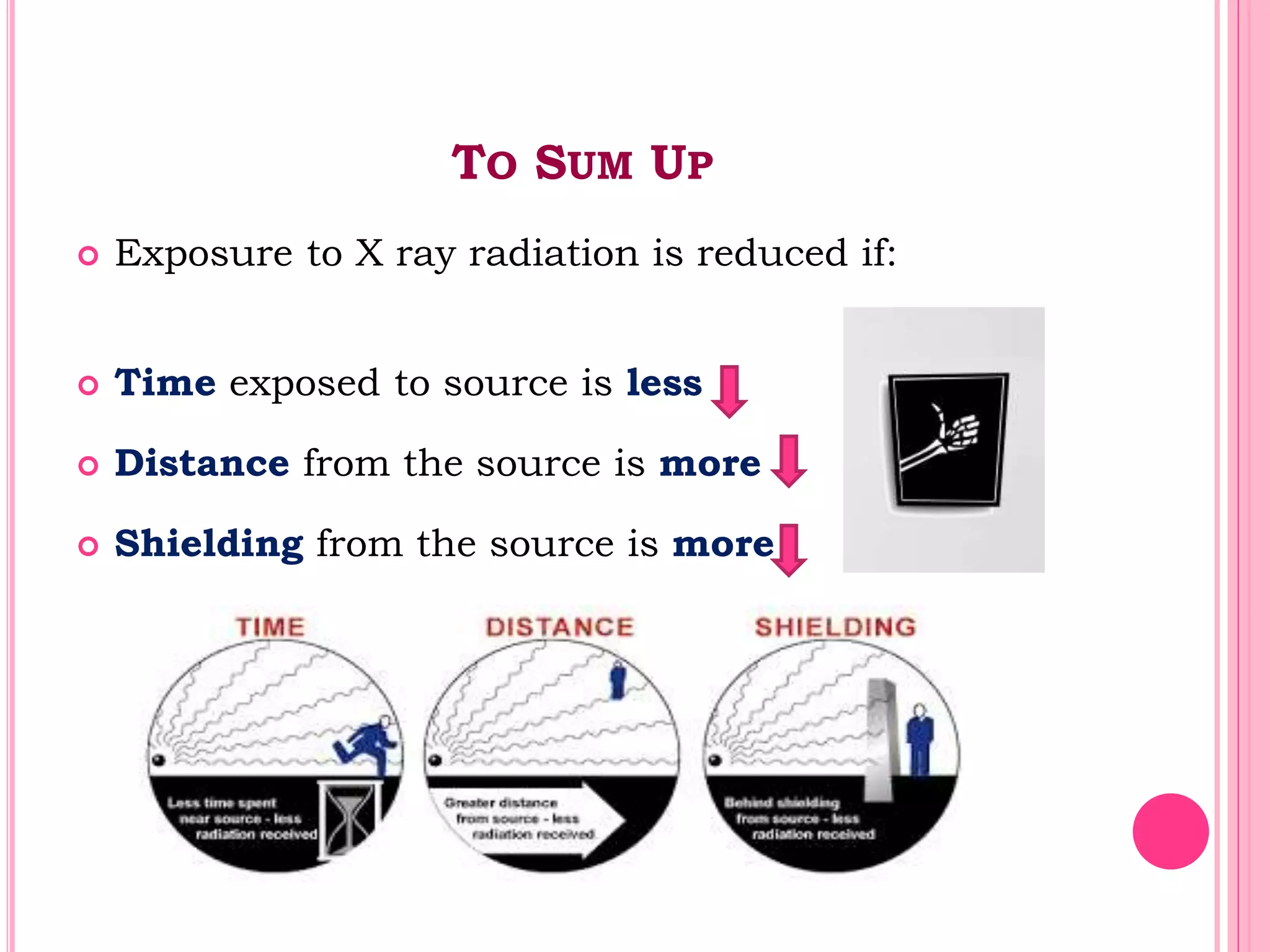
TO SUM UP
 Exposure to X ray radiation is reduced if:
 Time exposed to source is less
 Distance from the source is more
 Shielding from the source is more
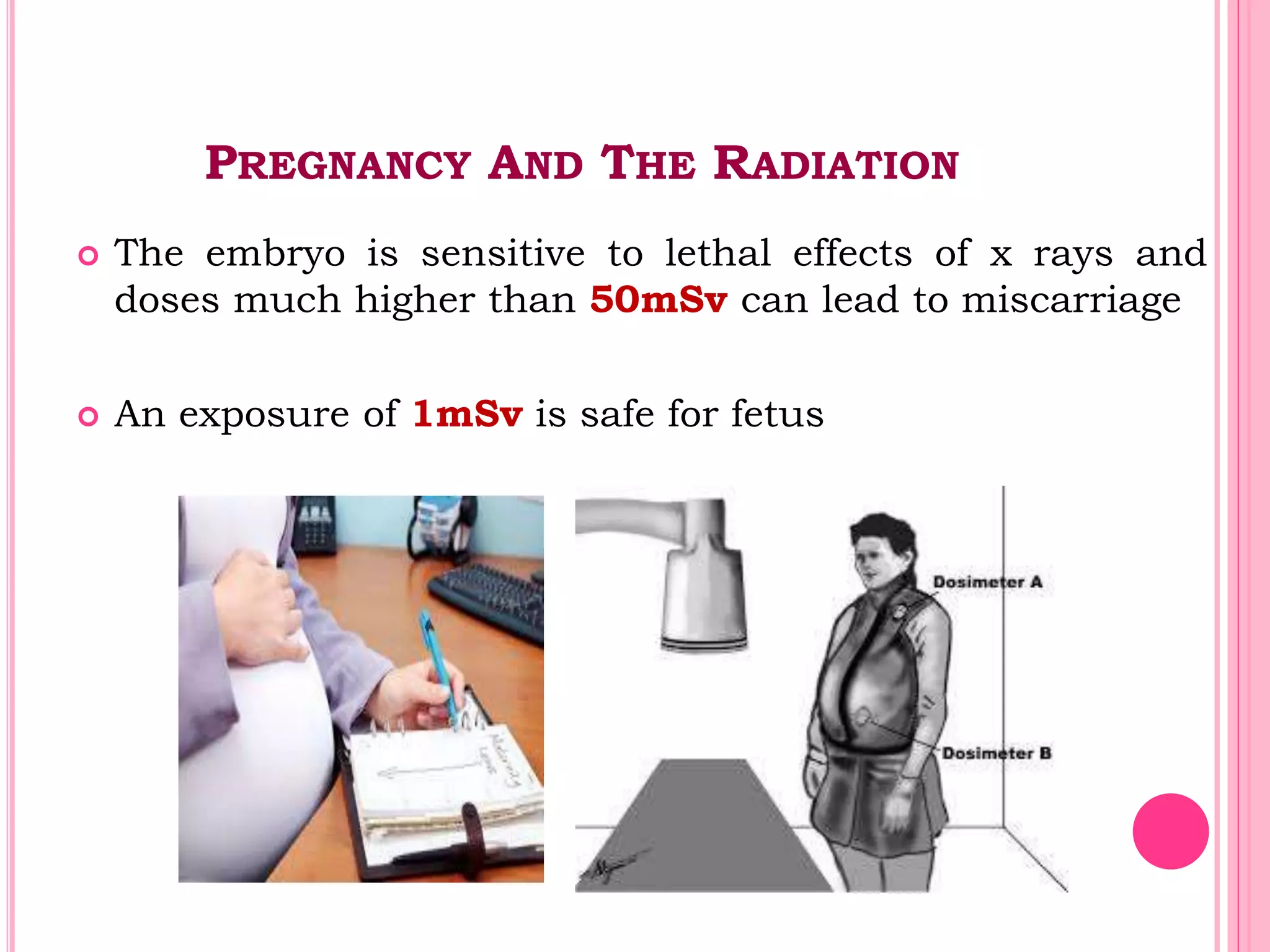
PREGNANCY AND THE RADIATION
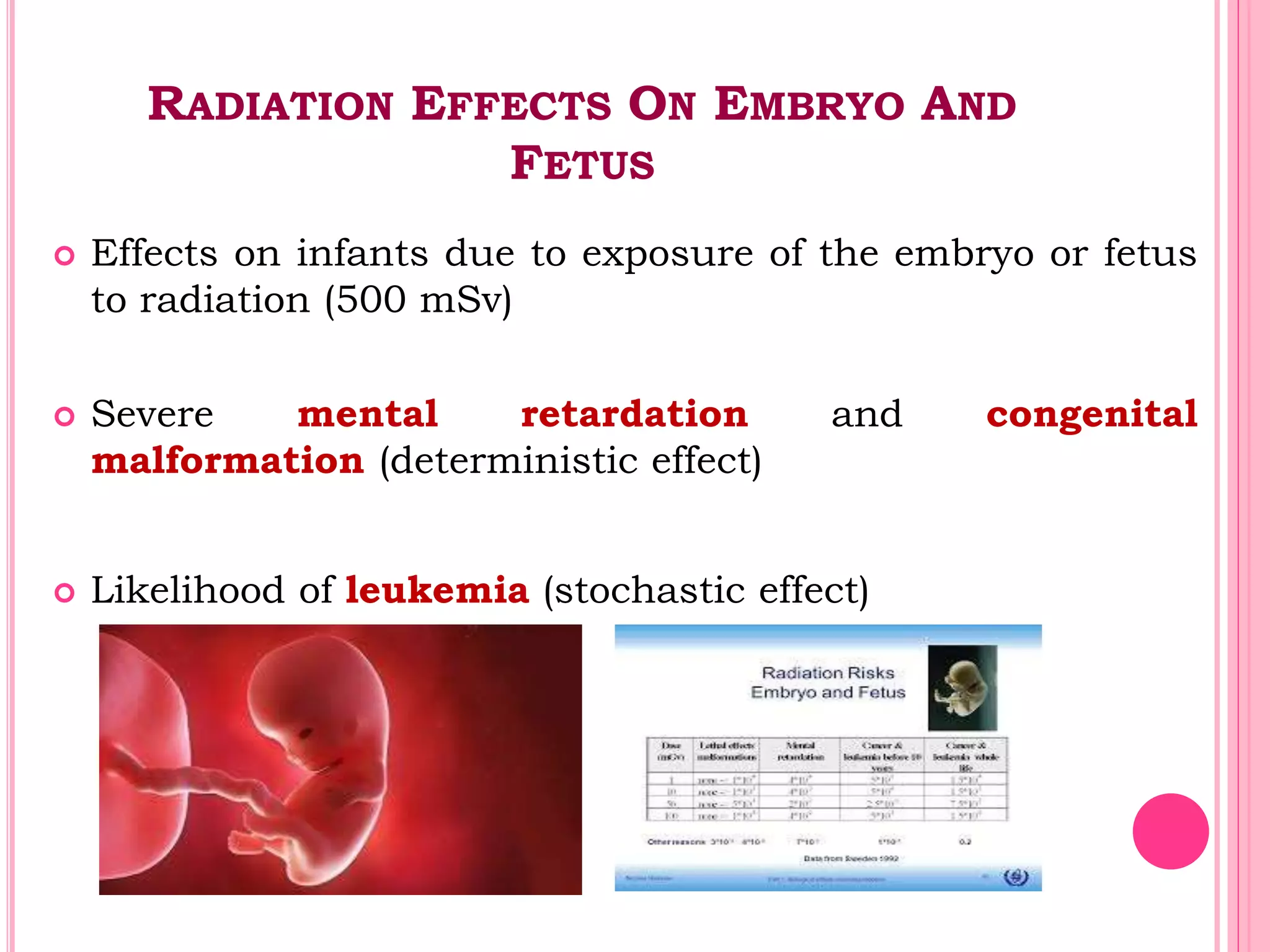
 The embryo is sensitive to lethal effects of x rays and
doses much higher than 50mSv can lead to miscarriage
 An exposure of 1mSv is safe for fetus
RADIATION EFFECTS ON EMBRYO AND
FETUS
 Effects on infants due to exposure of the embryo or fetus
to radiation (500 mSv)
 Severe mental retardation and congenital
malformation (deterministic effect)
 Likelihood of leukemia (stochastic effect)
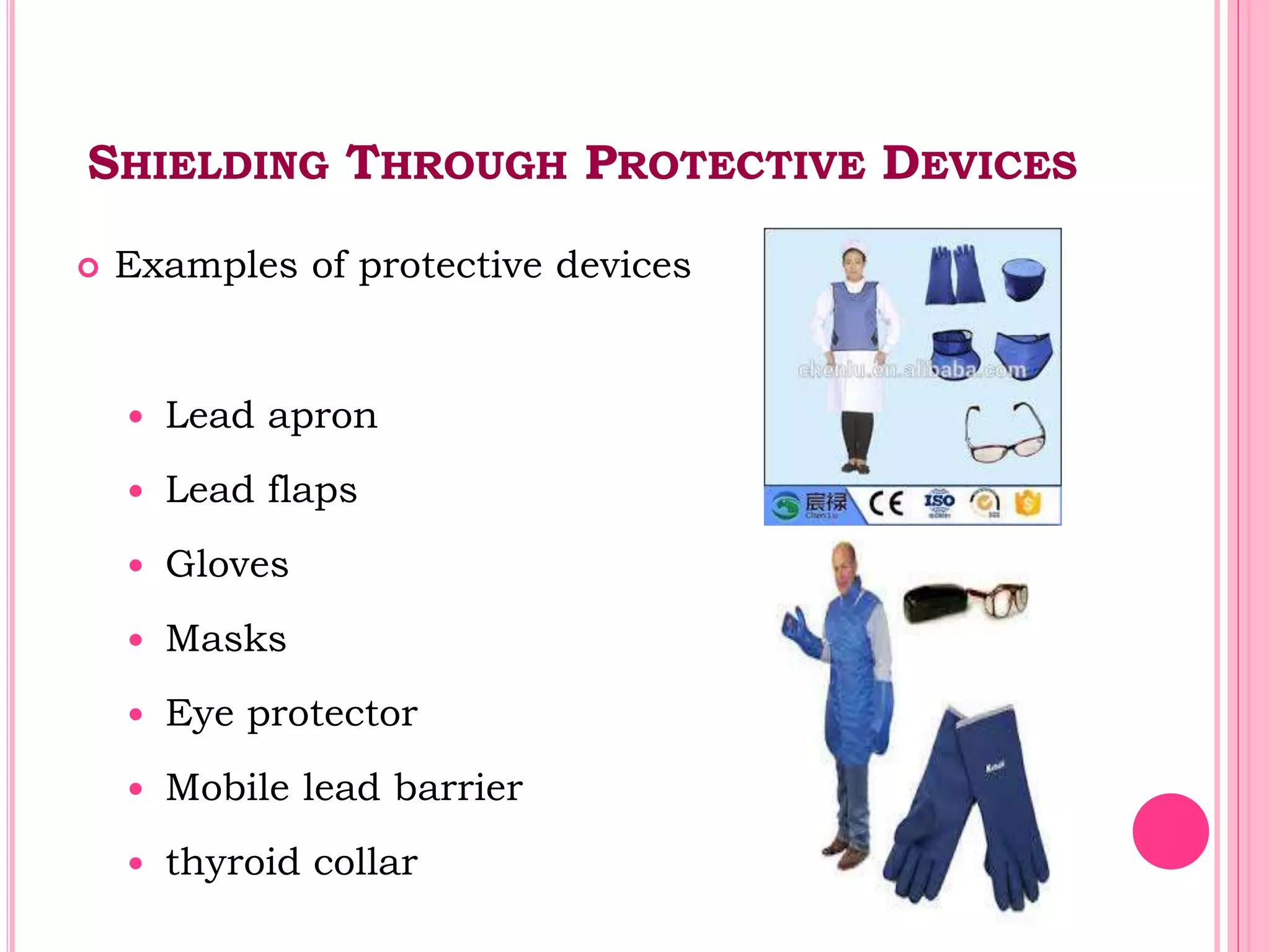
SHIELDING THROUGH PROTECTIVE DEVICES
 Examples of protective devices
 Lead apron
 Lead flaps
 Gloves
 Masks
 Eye protector
 Mobile lead barrier
 thyroid collar
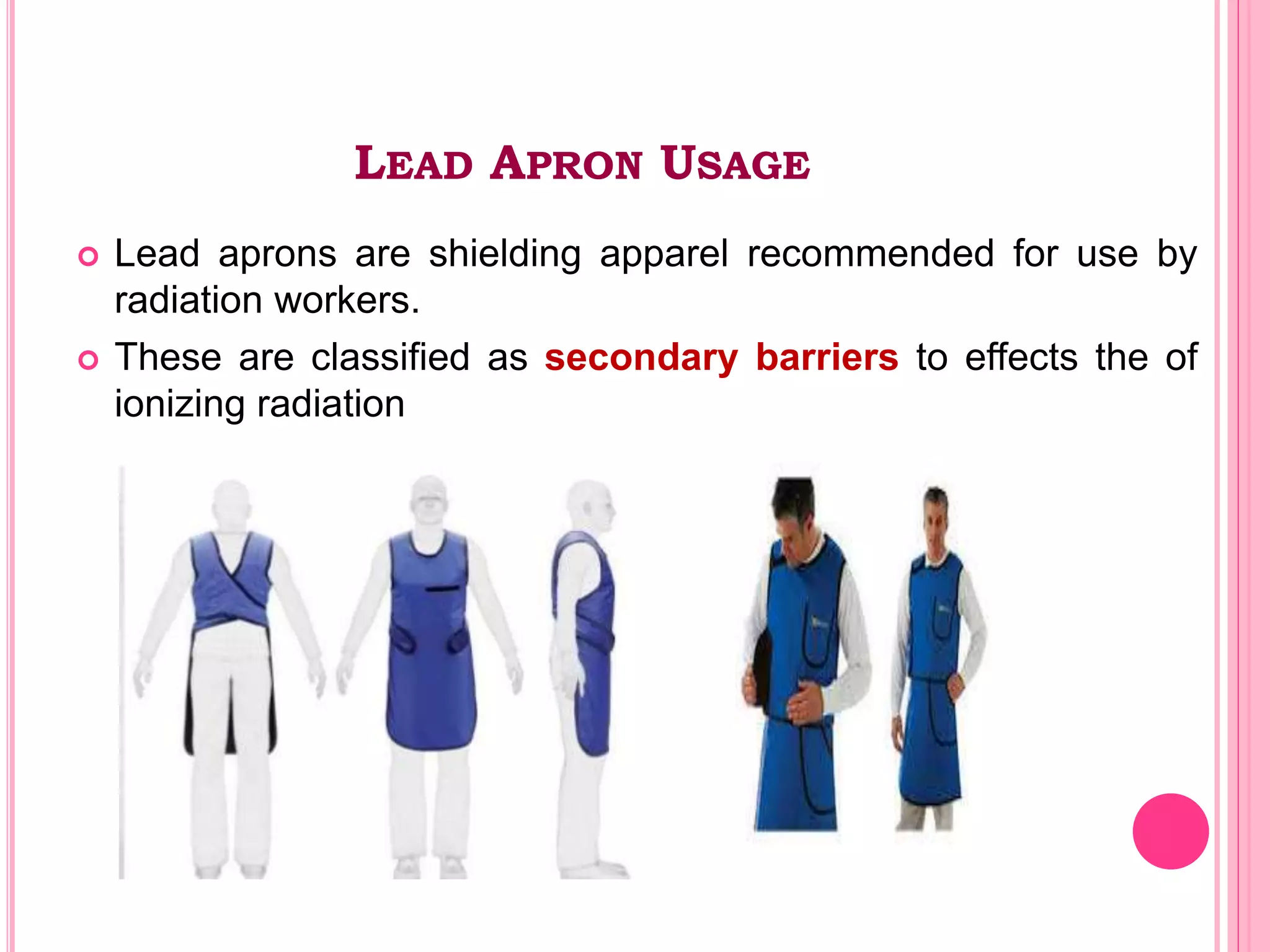
LEAD APRON USAGE
 Lead aprons are shielding apparel recommended for use by
radiation workers.
 These are classified as secondary barriers to effects the of
ionizing radiation
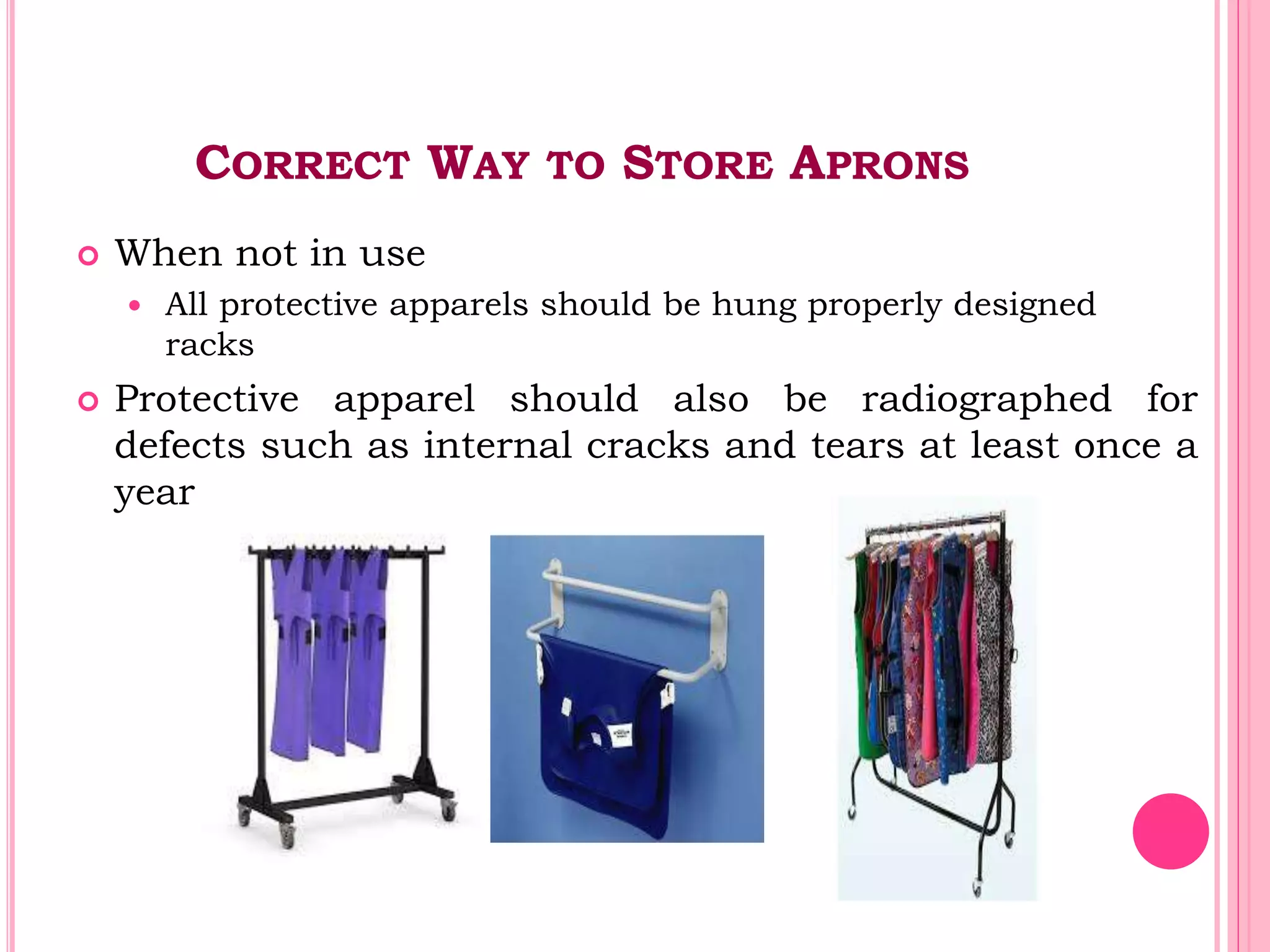
CORRECT WAY TO STORE APRONS
 When not in use
 All protective apparels should be hung properly designed
racks
 Protective apparel should also be radiographed for
defects such as internal cracks and tears at least once a
year
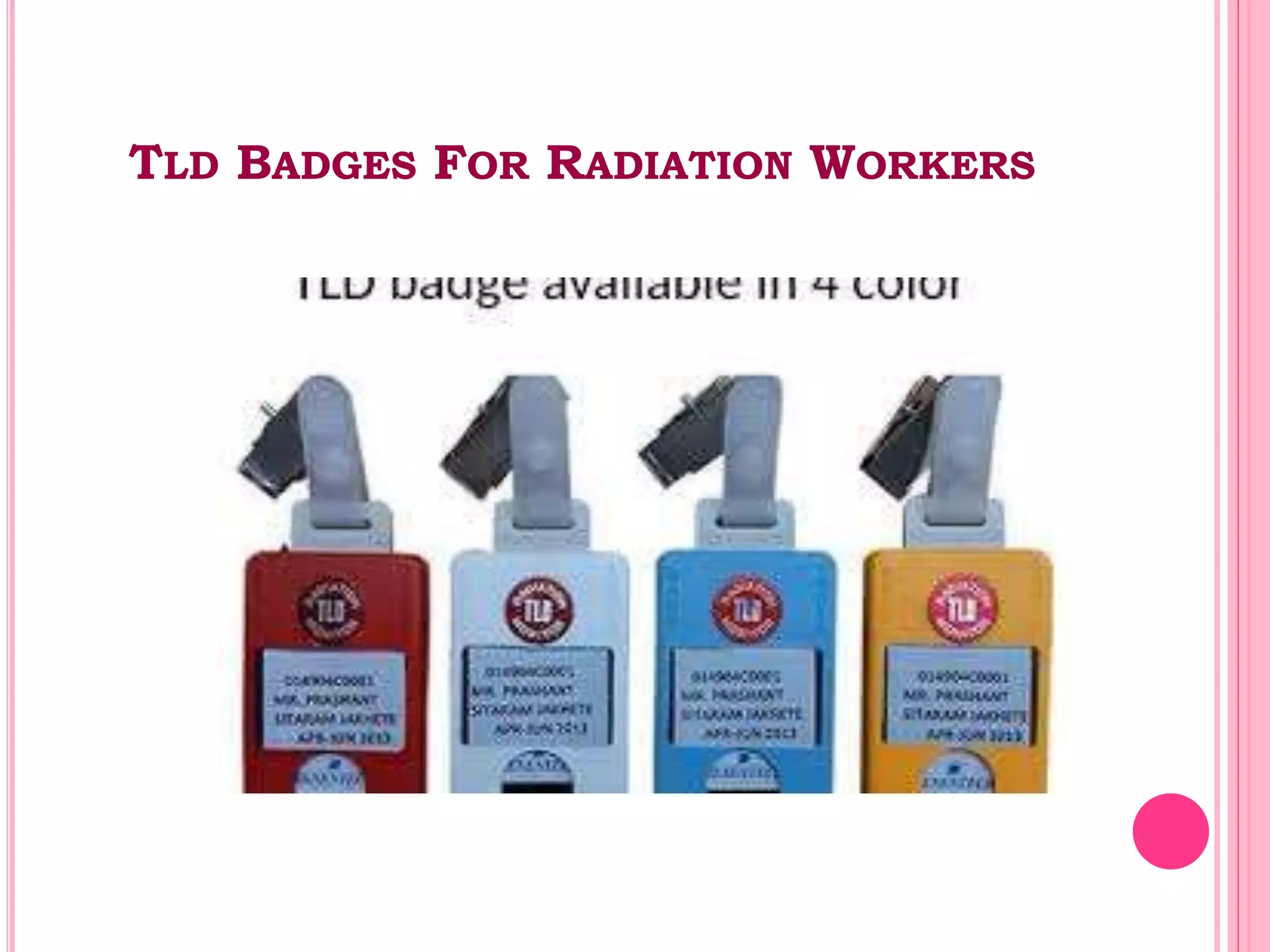
TLD BADGES FOR RADIATION WORKERS
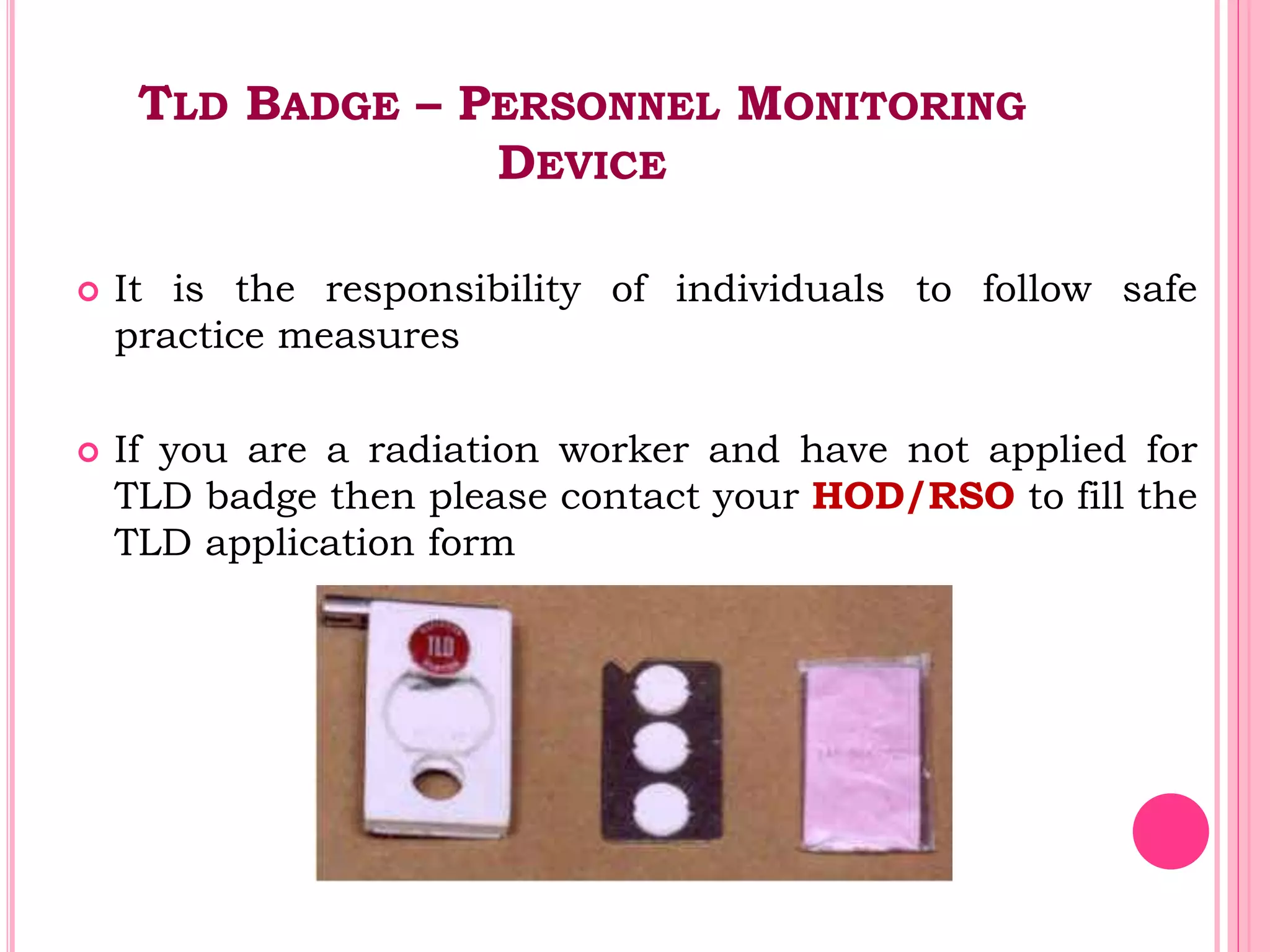
TLD BADGE – PERSONNEL MONITORING
DEVICE
 It is the responsibility of individuals to follow safe
practice measures
 If you are a radiation worker and have not applied for
TLD badge then please contact your HOD/RSO to fill the
TLD application form
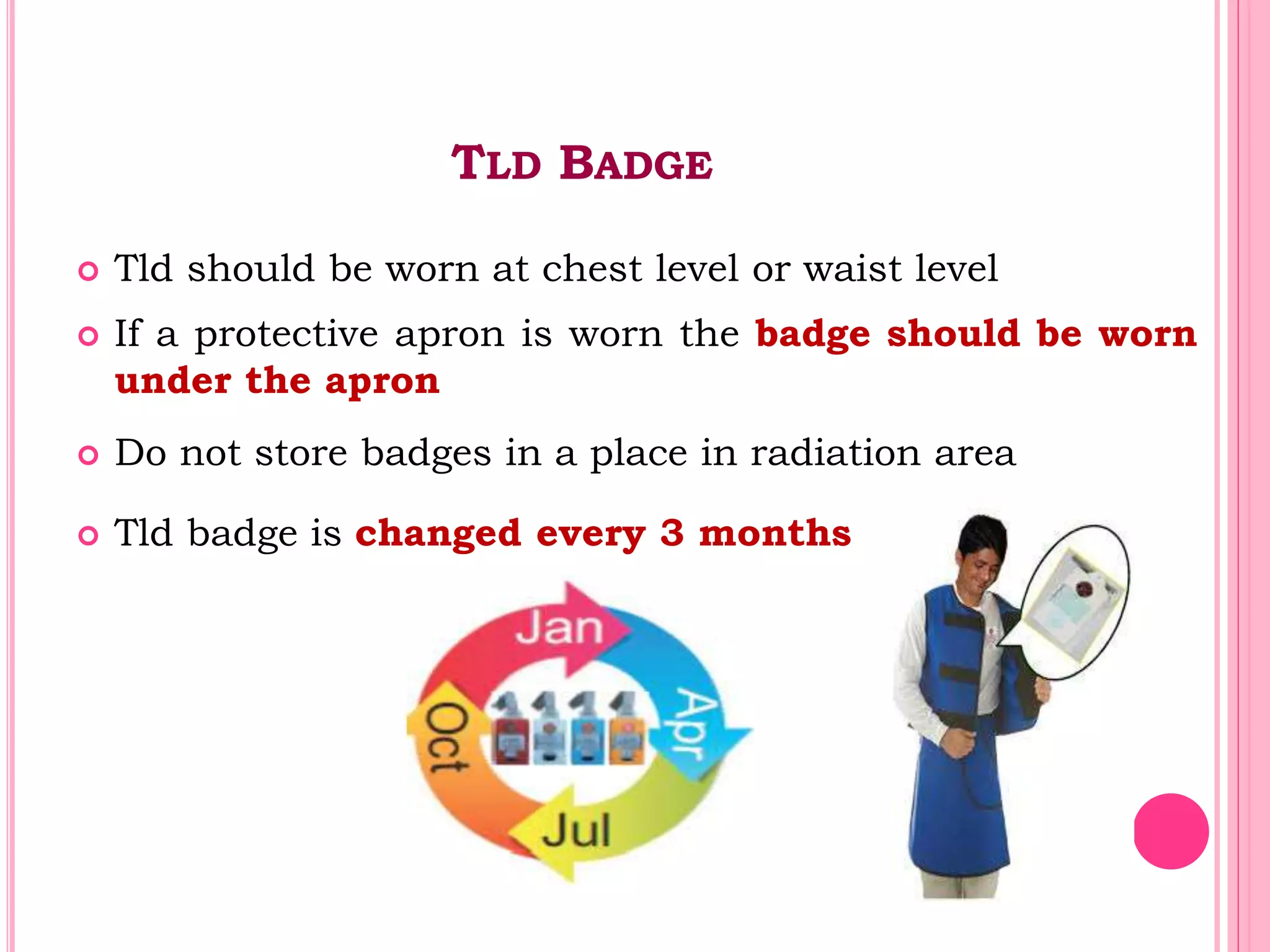
TLD BADGE
 Tld should be worn at chest level or waist level
 If a protective apron is worn the badge should be worn
under the apron
 Do not store badges in a place in radiation area
 Tld badge is changed every 3 months
RADIATION AREAS AT KGH
 Radiotherapy
 Radiology
 Nuclear medicine
 Cath lab
 Ot
 Dental
 Mamography
 Orthopaedics
 Gastro Entrology
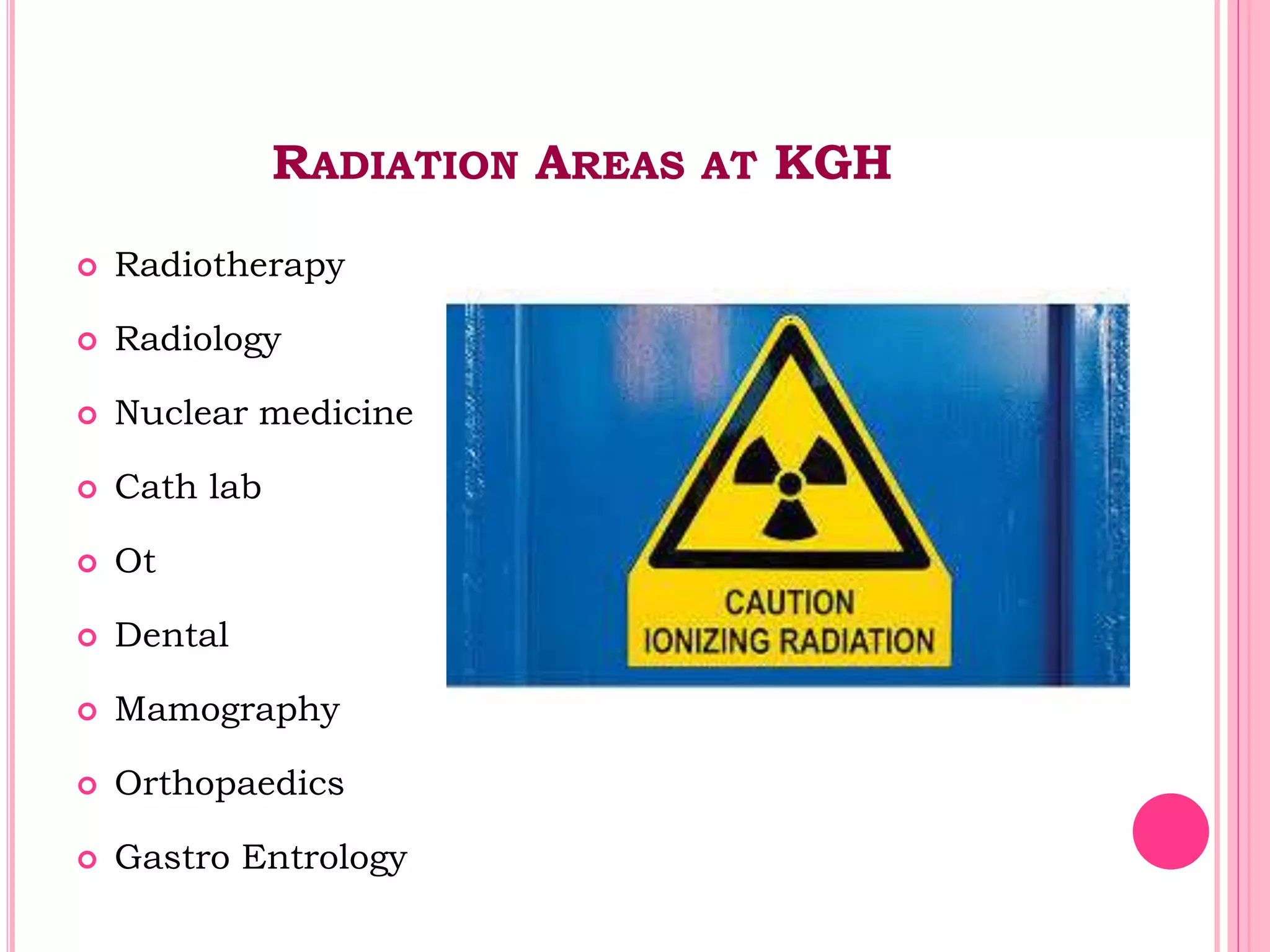
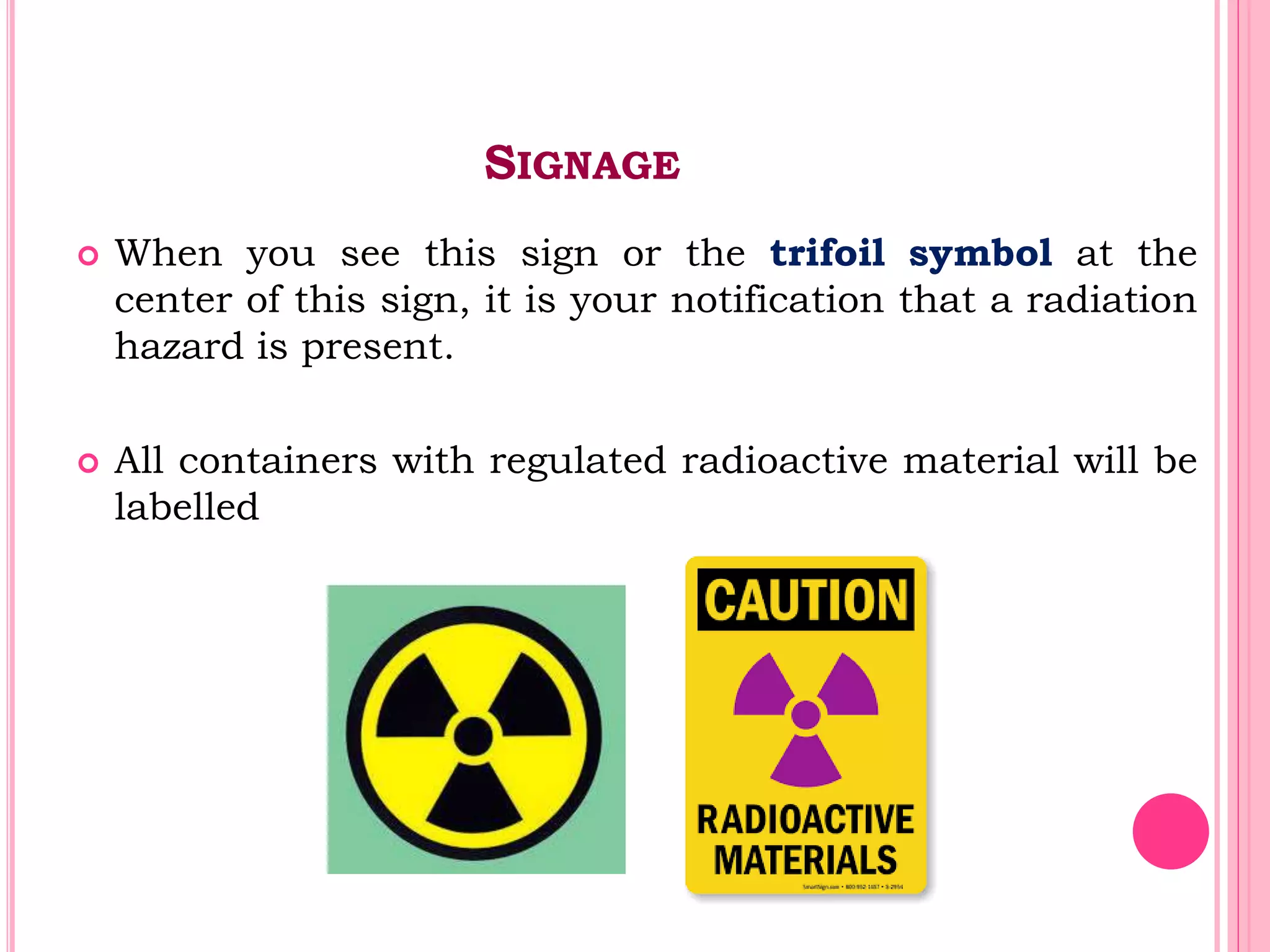
SIGNAGE
 When you see this sign or the trifoil symbol at the
center of this sign, it is your notification that a radiation
hazard is present.
 All containers with regulated radioactive material will be
labelled
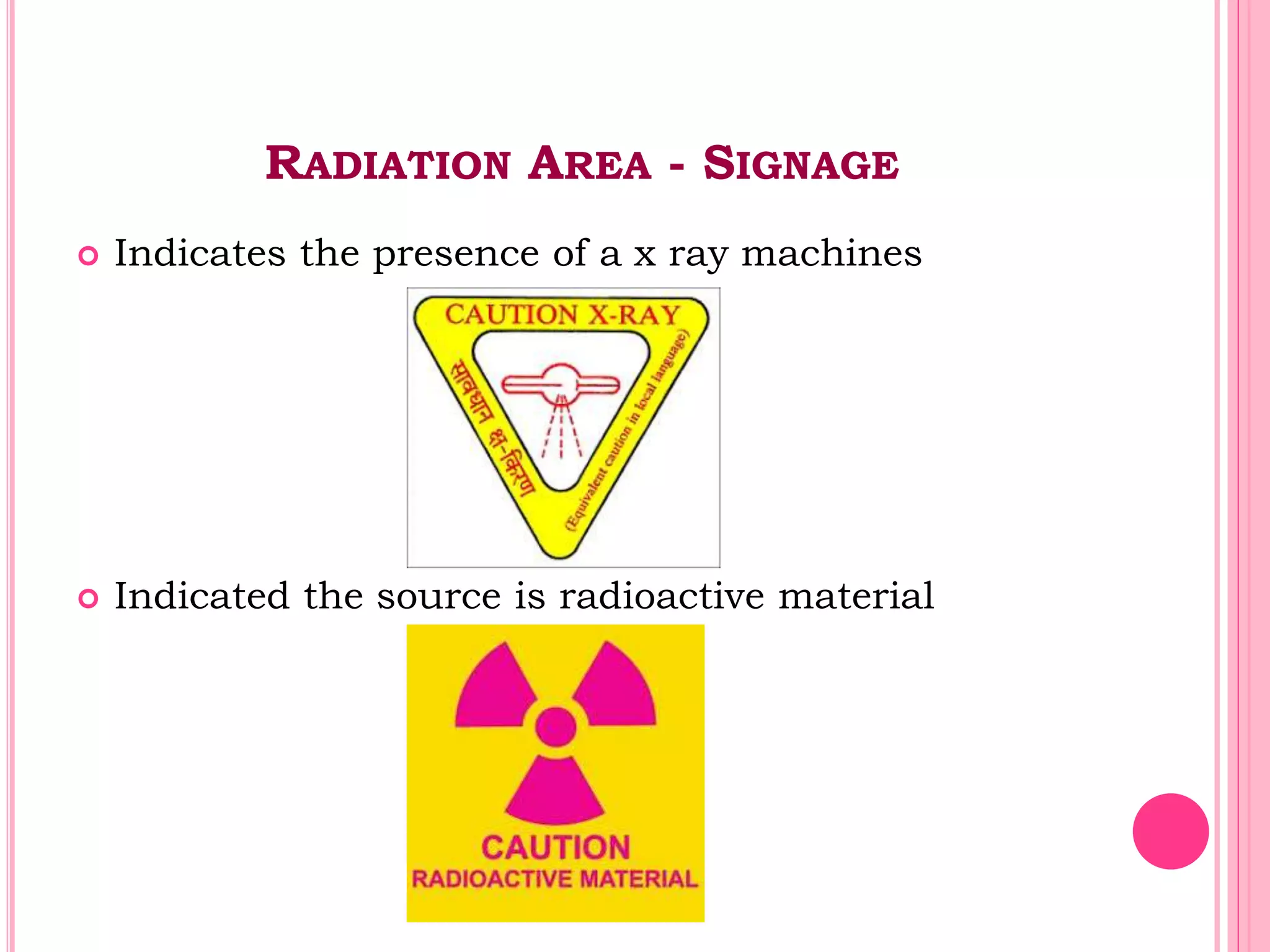
RADIATION AREA - SIGNAGE
 Indicates the presence of a x ray machines
 Indicated the source is radioactive material
 Reporting Mechanism In Case Of Over Exposure
EMERGENCY RESPONSE
 Unsafe radiological conditions should be promptly
reported to the RSO.
 Report emergencies such as personnel contamination,
radioactive spills, lost or stolen radioactive material
(including waste) or other potentially hazardous
conditions
 Loss or accidental exposure to the TLD badges should be
immediately reported to the RSO
 An accident involving medical emergencies, shall take
priority over the concern for radioactivity
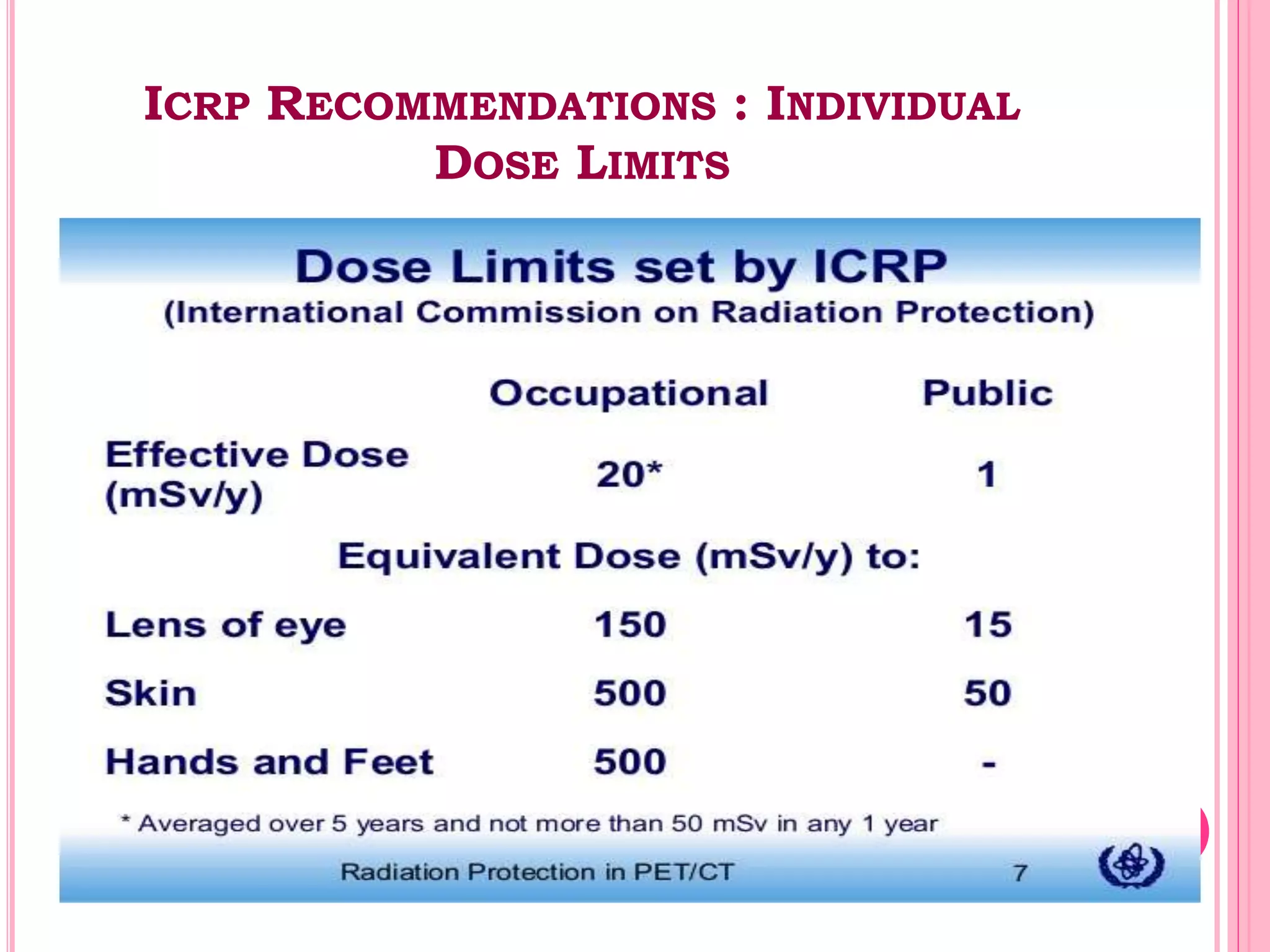
ICRP RECOMMENDATIONS : INDIVIDUAL
DOSE LIMITS
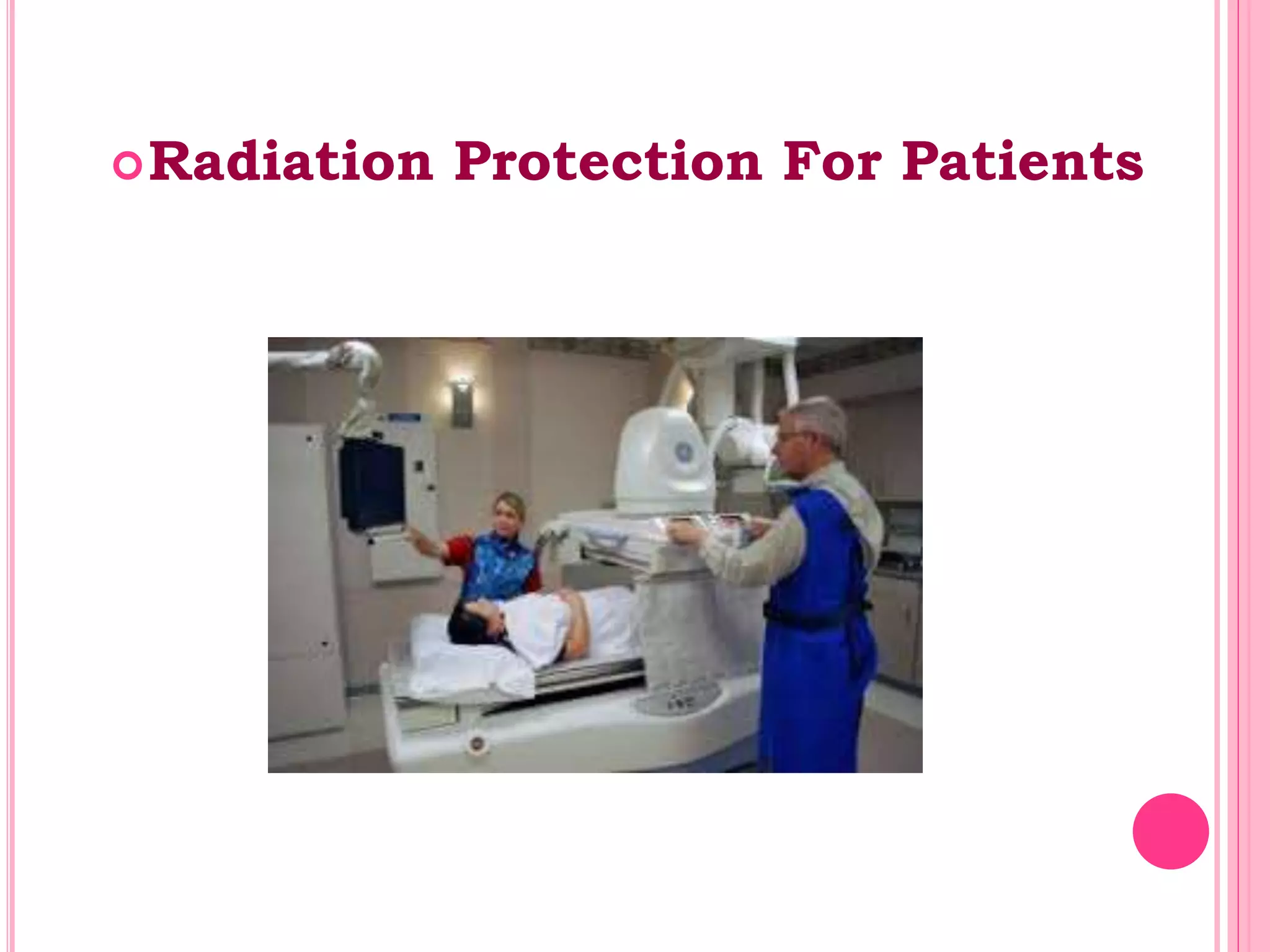
Radiation Protection For Patients
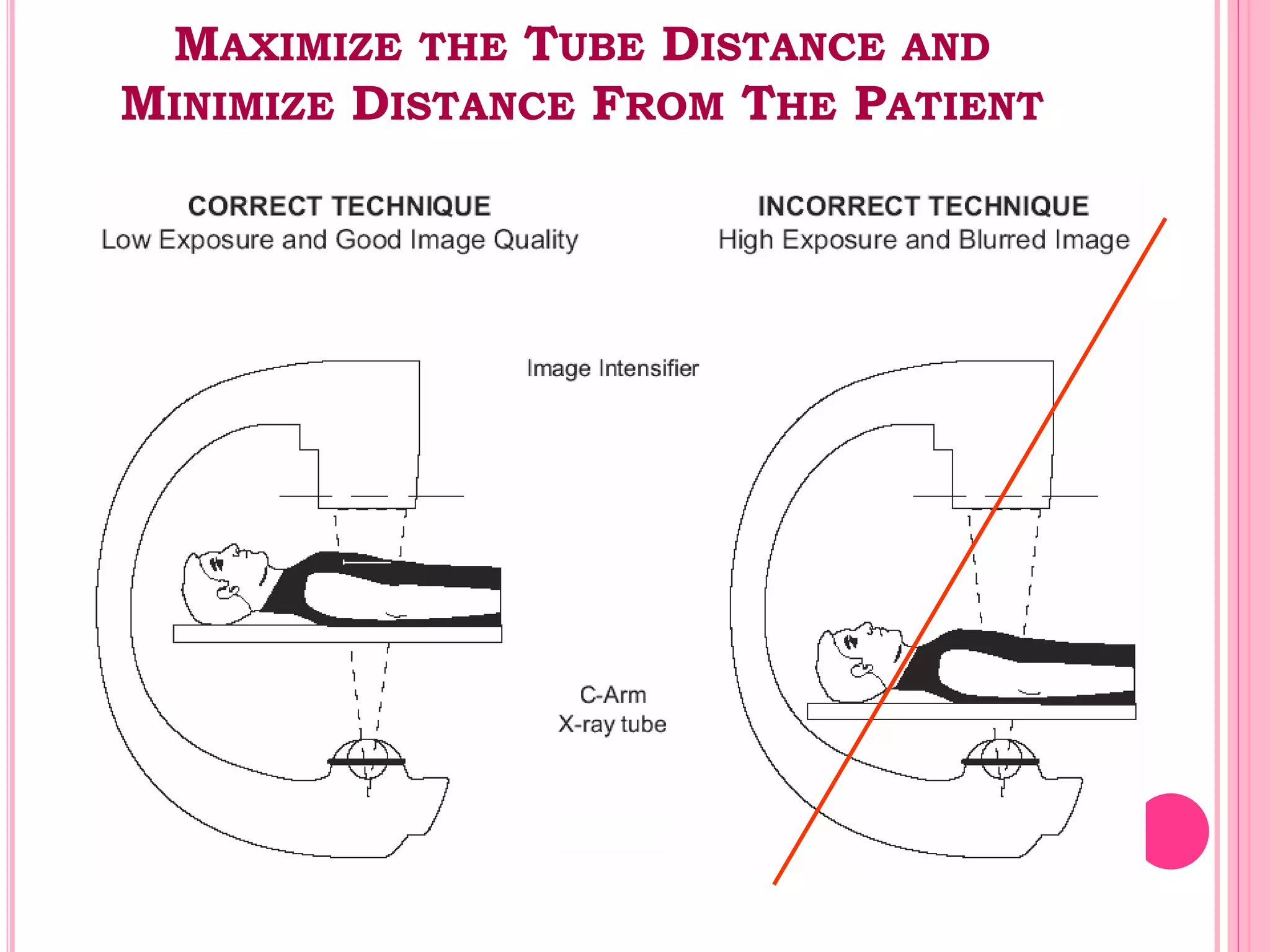
MAXIMIZE THE TUBE DISTANCE AND
MINIMIZE DISTANCE FROM THE PATIENT
Radiation Protection For Public
RADIOTHERAPY AND THE PUBLIC
 Public:
 People living around a radiotherapy facility
 Visitors to the department
 Relatives, friends and other persons who may be in
contact with patients
 Not necessarily: Partners and non-occupational
persons who are involved in care or comforting the
patient - this is “Medical Exposure”
…PUBLIC COULD ALSO BE:
 Staff from other departments/divisions
 Contractors
 electricians
 painters
 plumbers
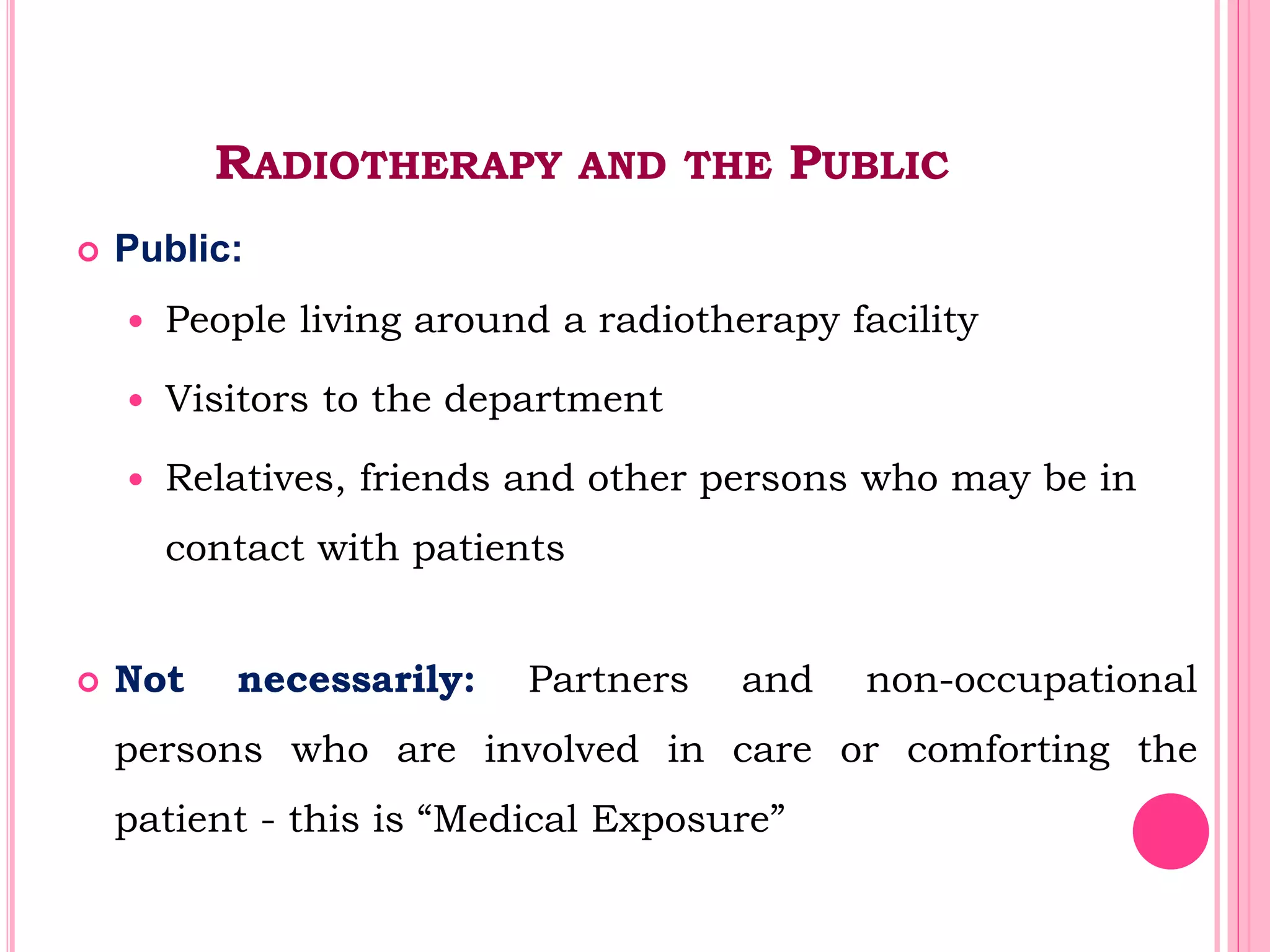
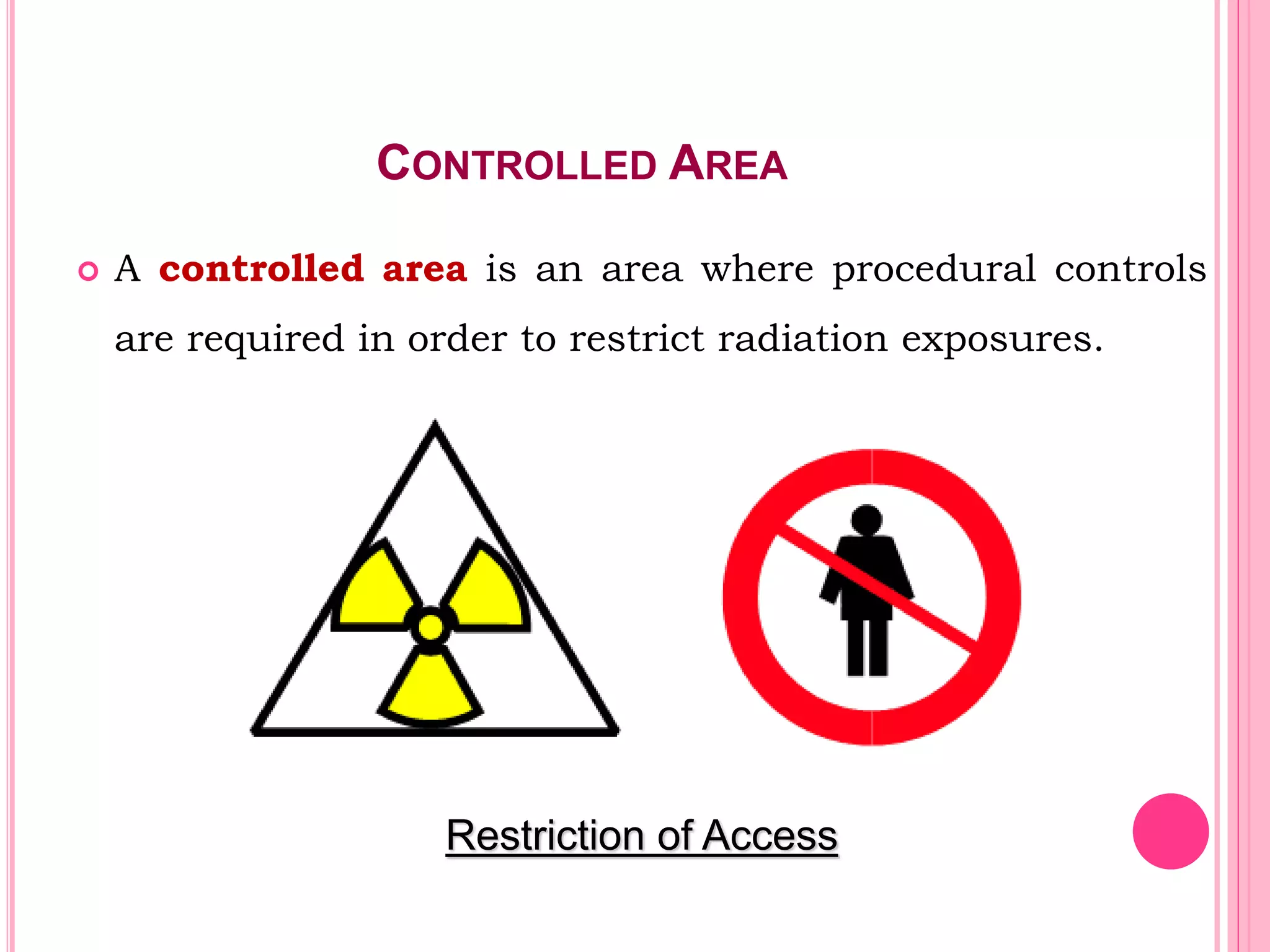
CONTROLLED AREA
 A controlled area is an area where procedural controls
are required in order to restrict radiation exposures.
Restriction of Access
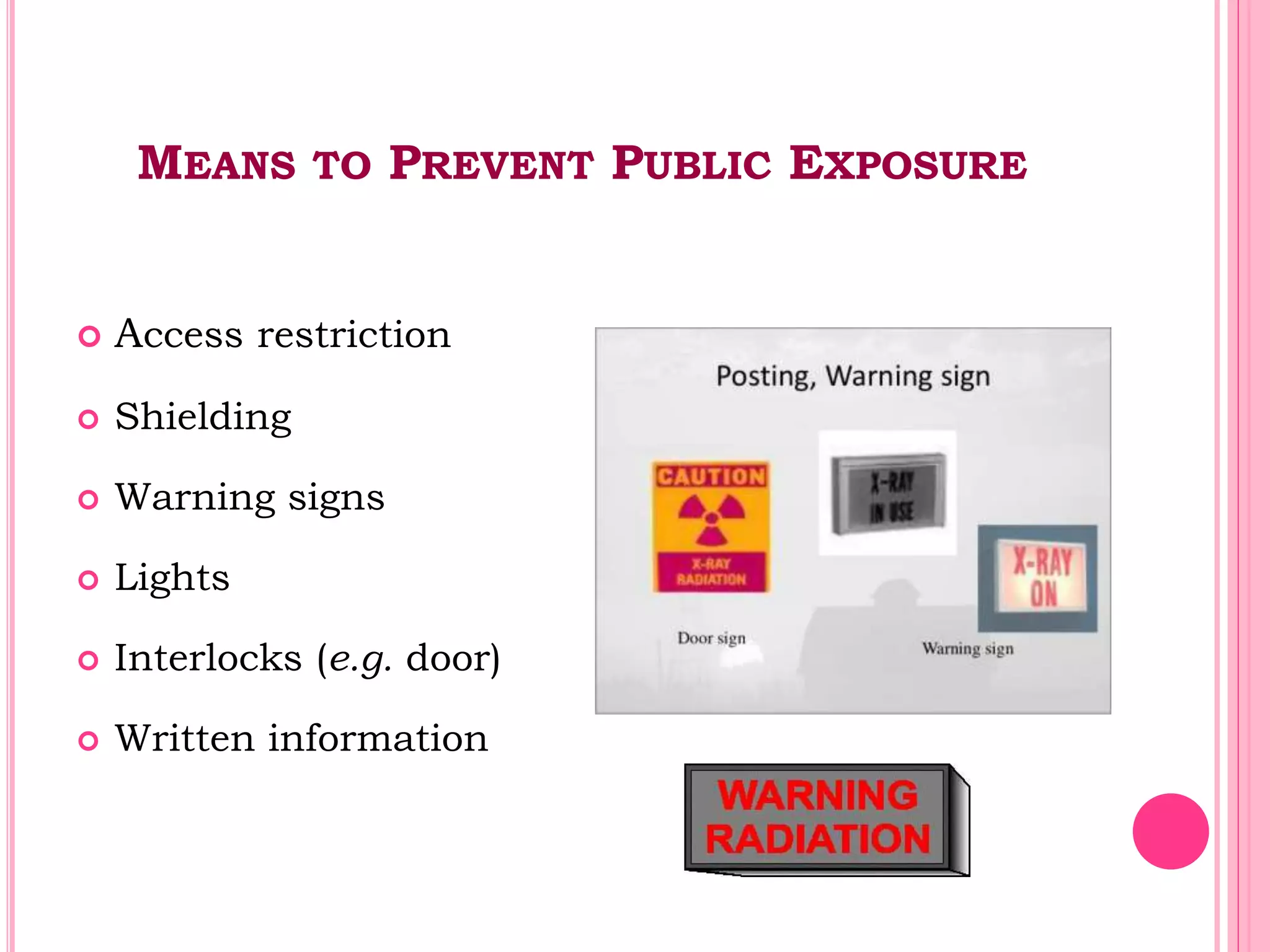
MEANS TO PREVENT PUBLIC EXPOSURE
 Access restriction
 Shielding
 Warning signs
 Lights
 Interlocks (e.g. door)
 Written information
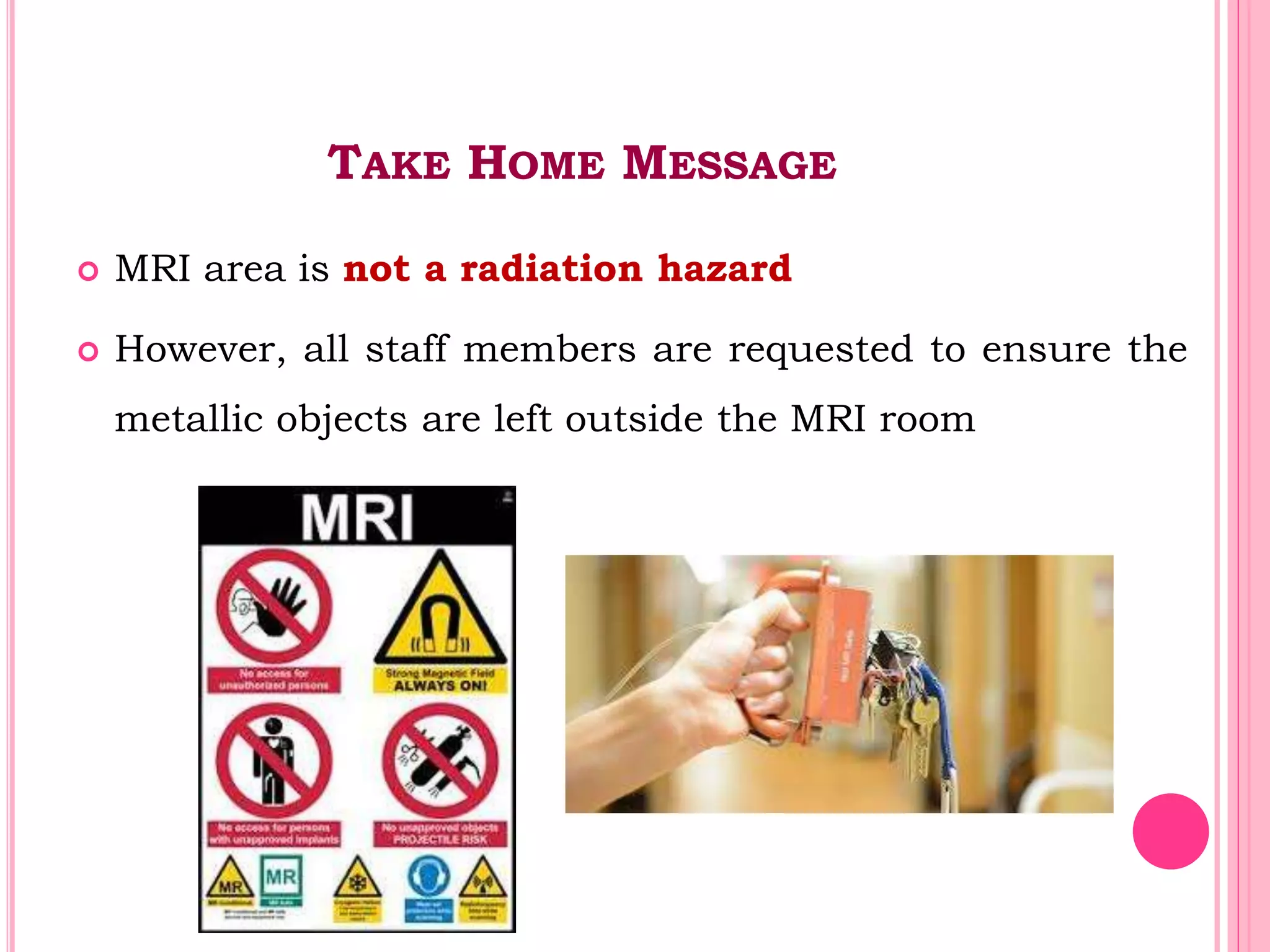
TAKE HOME MESSAGE
 MRI area is not a radiation hazard
 However, all staff members are requested to ensure the
metallic objects are left outside the MRI room
TAKE HOME MESSAGE
 Be aware of radiation application/radiation warning
symbol
 Follow the basic principles of radiation safety
 Intimate your Supervision/HOD/RSO if you are
pregnant and working in the radiation zone
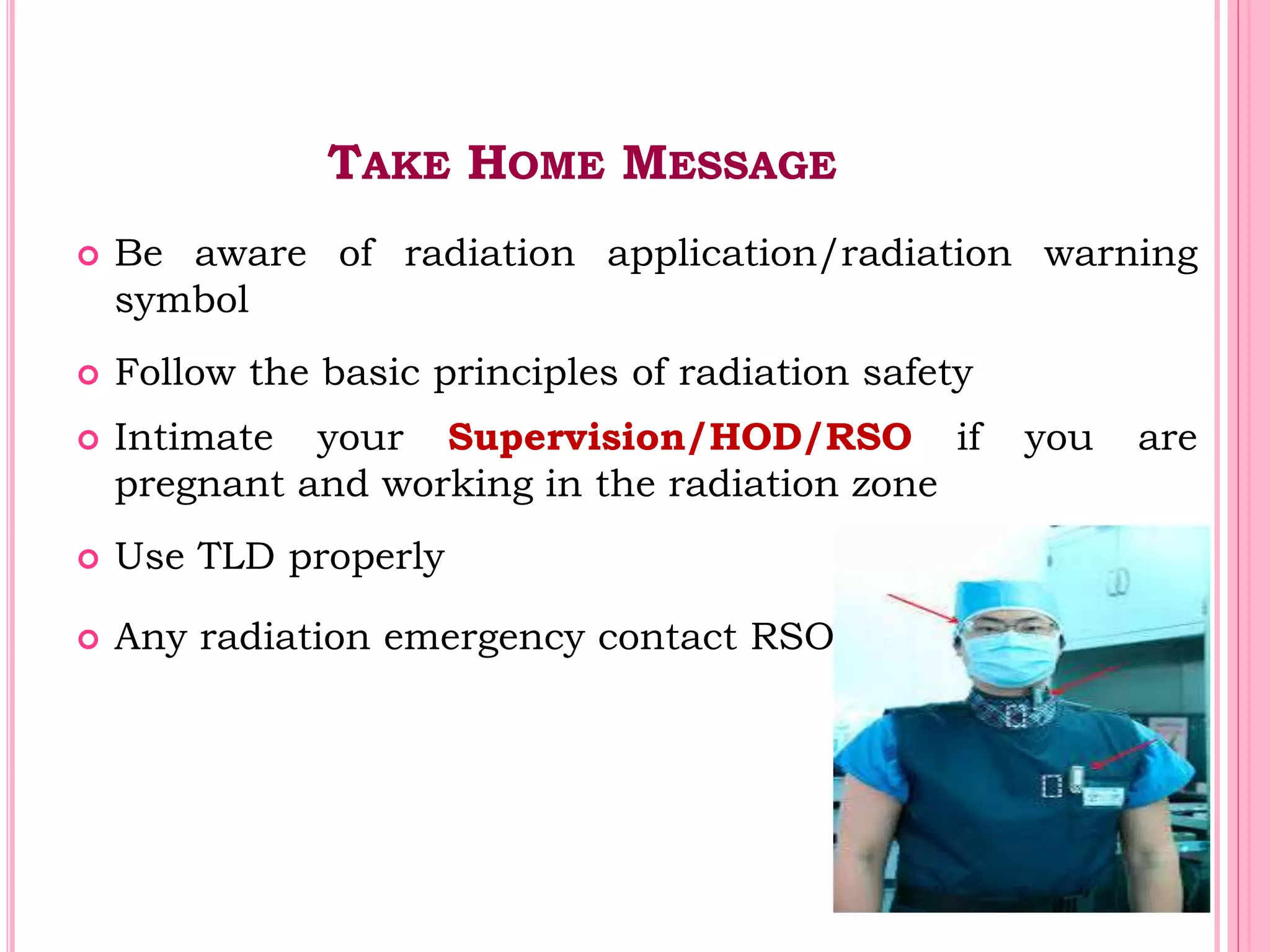
 Use TLD properly
 Any radiation emergency contact RSO
BASIC RADIATION SAFETY AWARENESS

BASIC RADIATION SAFETY AWARENESS

  • 1.
    BASIC RADIATION SAFETY AWARENESS S.GOKULAPRIYA, RADIATIONSAFETY OFFICER, KING GEORGE HOSPITAL, VISAKHAPATNAM, ANDHRA PRADESH
  • 2.
    OBJECTIVE  To understand: What is radiation  Effects of radiation  Safe practices with radiation for worker, public and patients  Reporting mechanism incase of over exposure
  • 3.
    WHY SHOULD WEBE CONCERNED ABOUT RADIATION EXPOSURE ?  Can it hurt ?
  • 4.
  • 5.
    EFFECTS OF RADIATION Stochastic Effect  Stochastic effect occur by a chance and which may occur without a threshold dose  As the dose to an individual increases the probability of cancer or genetic effect will occur also increases
  • 6.
    EFFECTS OF RADIATION Deterministic Effect  Determininstic effect describe a cause and effect relationship between radiation and certain side effects  Determisnistic effect have a threshold dose and below which the effects does not occur
  • 7.
    EFFECTS OF RADIATION It can burn ones skin  It damages body cells and DNA causing mutations and cancer  It affects embryo and fetus
  • 8.
    WHY RADIATION PROTECTION To reduce the probability of stochastic risk at an acceptable level  To prevent deterministic effects
  • 9.
     How toProtect Patients, Public And Staffs From Radiation?
  • 10.
  • 11.
  • 12.
    ALARA  Alara isa philosophy, necessary to maintain personnel exposure or the release of radioactivity to the environment well below applicable limits by means of a good radiation protection plan, through education, administrative controls and safe lab practices.
  • 13.
    TIME  Less time= less radiation exposure  Radiation workers should pre plan the procedure to minimize the exposure  Radiation workers should do dry runs (without radioactive material) to practice
  • 14.
    DISTANCE  Effective andeasy to follow  More distance = less radiation exposure
  • 15.
    SHIELDING  Materials “absorb”radiation  Proper shielding = less radiation exposure
  • 16.
    TO SUM UP Exposure to X ray radiation is reduced if:  Time exposed to source is less  Distance from the source is more  Shielding from the source is more
  • 17.
    PREGNANCY AND THERADIATION  The embryo is sensitive to lethal effects of x rays and doses much higher than 50mSv can lead to miscarriage  An exposure of 1mSv is safe for fetus
  • 18.
    RADIATION EFFECTS ONEMBRYO AND FETUS  Effects on infants due to exposure of the embryo or fetus to radiation (500 mSv)  Severe mental retardation and congenital malformation (deterministic effect)  Likelihood of leukemia (stochastic effect)
  • 19.
    SHIELDING THROUGH PROTECTIVEDEVICES  Examples of protective devices  Lead apron  Lead flaps  Gloves  Masks  Eye protector  Mobile lead barrier  thyroid collar
  • 20.
    LEAD APRON USAGE Lead aprons are shielding apparel recommended for use by radiation workers.  These are classified as secondary barriers to effects the of ionizing radiation
  • 21.
    CORRECT WAY TOSTORE APRONS  When not in use  All protective apparels should be hung properly designed racks  Protective apparel should also be radiographed for defects such as internal cracks and tears at least once a year
  • 22.
    TLD BADGES FORRADIATION WORKERS
  • 23.
    TLD BADGE –PERSONNEL MONITORING DEVICE  It is the responsibility of individuals to follow safe practice measures  If you are a radiation worker and have not applied for TLD badge then please contact your HOD/RSO to fill the TLD application form
  • 24.
    TLD BADGE  Tldshould be worn at chest level or waist level  If a protective apron is worn the badge should be worn under the apron  Do not store badges in a place in radiation area  Tld badge is changed every 3 months
  • 25.
    RADIATION AREAS ATKGH  Radiotherapy  Radiology  Nuclear medicine  Cath lab  Ot  Dental  Mamography  Orthopaedics  Gastro Entrology
  • 26.
    SIGNAGE  When yousee this sign or the trifoil symbol at the center of this sign, it is your notification that a radiation hazard is present.  All containers with regulated radioactive material will be labelled
  • 27.
    RADIATION AREA -SIGNAGE  Indicates the presence of a x ray machines  Indicated the source is radioactive material
  • 28.
     Reporting MechanismIn Case Of Over Exposure
  • 29.
    EMERGENCY RESPONSE  Unsaferadiological conditions should be promptly reported to the RSO.  Report emergencies such as personnel contamination, radioactive spills, lost or stolen radioactive material (including waste) or other potentially hazardous conditions  Loss or accidental exposure to the TLD badges should be immediately reported to the RSO  An accident involving medical emergencies, shall take priority over the concern for radioactivity
  • 30.
    ICRP RECOMMENDATIONS :INDIVIDUAL DOSE LIMITS
  • 31.
  • 32.
    MAXIMIZE THE TUBEDISTANCE AND MINIMIZE DISTANCE FROM THE PATIENT
  • 33.
  • 34.
    RADIOTHERAPY AND THEPUBLIC  Public:  People living around a radiotherapy facility  Visitors to the department  Relatives, friends and other persons who may be in contact with patients  Not necessarily: Partners and non-occupational persons who are involved in care or comforting the patient - this is “Medical Exposure”
  • 35.
    …PUBLIC COULD ALSOBE:  Staff from other departments/divisions  Contractors  electricians  painters  plumbers
  • 36.
    CONTROLLED AREA  Acontrolled area is an area where procedural controls are required in order to restrict radiation exposures. Restriction of Access
  • 37.
    MEANS TO PREVENTPUBLIC EXPOSURE  Access restriction  Shielding  Warning signs  Lights  Interlocks (e.g. door)  Written information
  • 38.
    TAKE HOME MESSAGE MRI area is not a radiation hazard  However, all staff members are requested to ensure the metallic objects are left outside the MRI room
  • 39.
    TAKE HOME MESSAGE Be aware of radiation application/radiation warning symbol  Follow the basic principles of radiation safety  Intimate your Supervision/HOD/RSO if you are pregnant and working in the radiation zone  Use TLD properly  Any radiation emergency contact RSO