Psychology's Scientific
Method
Objectives






5 Basic steps in the scientific research
Types of research & research settings
Analyze & interpreting data
Conducting and evaluating research-ethics in research
Psychology’s Scientific Method
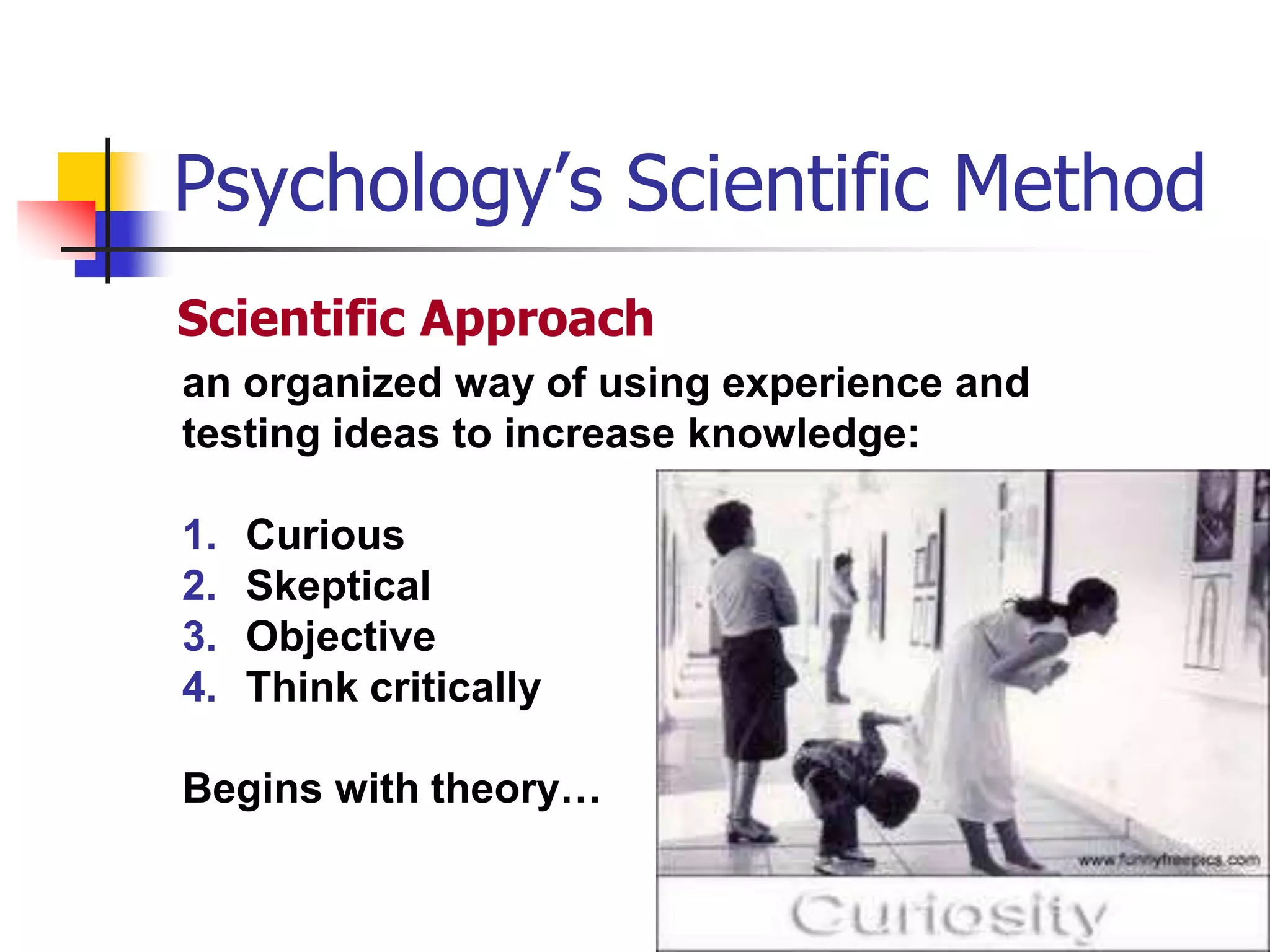
Scientific Approach
an organized way of using experience and
testing ideas to increase knowledge:

1.
2.
3.
4.

Curious
Skeptical
Objective
Think critically

Begins with theory…
Research settings & types of
research
A theory is a broad idea or set of
closely related facts that
attempts to explain and predict
something.
Steps of the Scientific Method
Psychology’s Scientific Method
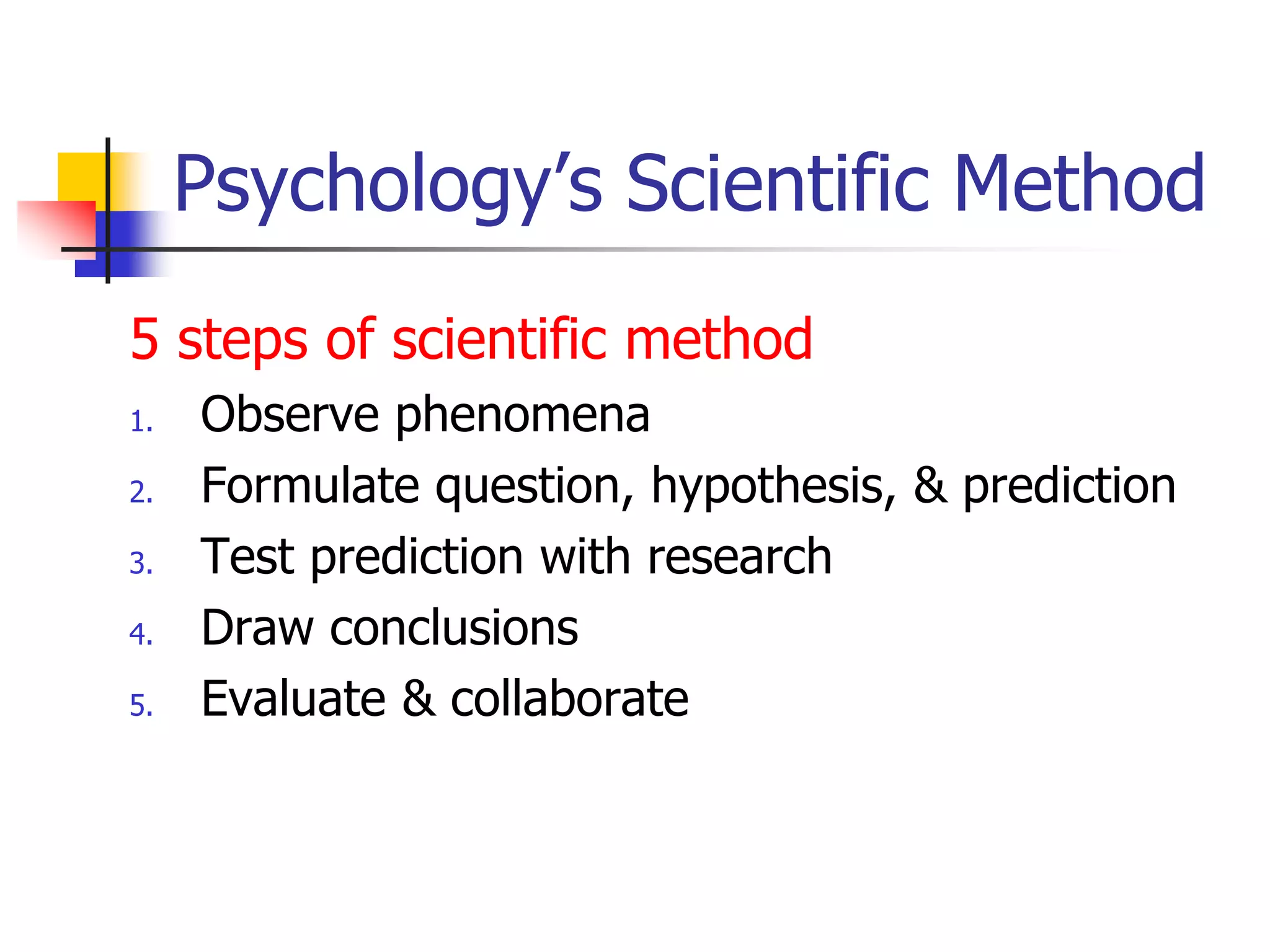
5 steps of scientific method
1.
2.

3.
4.
5.

Observe phenomena
Formulate question, hypothesis, & prediction
Test prediction with research
Draw conclusions
Evaluate & collaborate
Research settings & types of
research


Types of research:






Descriptive
Correlational
Experimental

Research settings




Laboratory
Natural observation
Research settings & types of
research


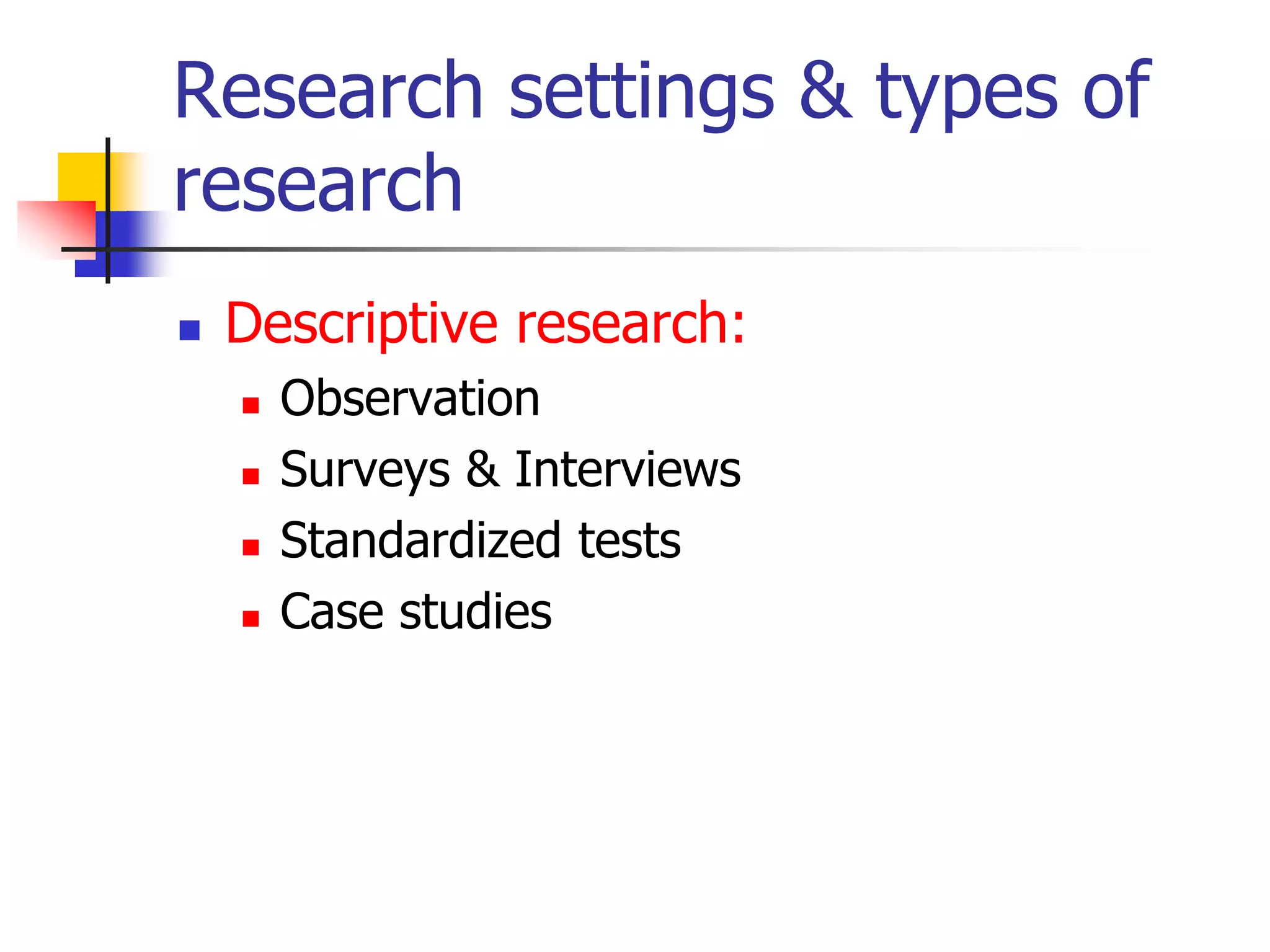
Descriptive research:






Observation
Surveys & Interviews
Standardized tests
Case studies
Research settings & types of
research


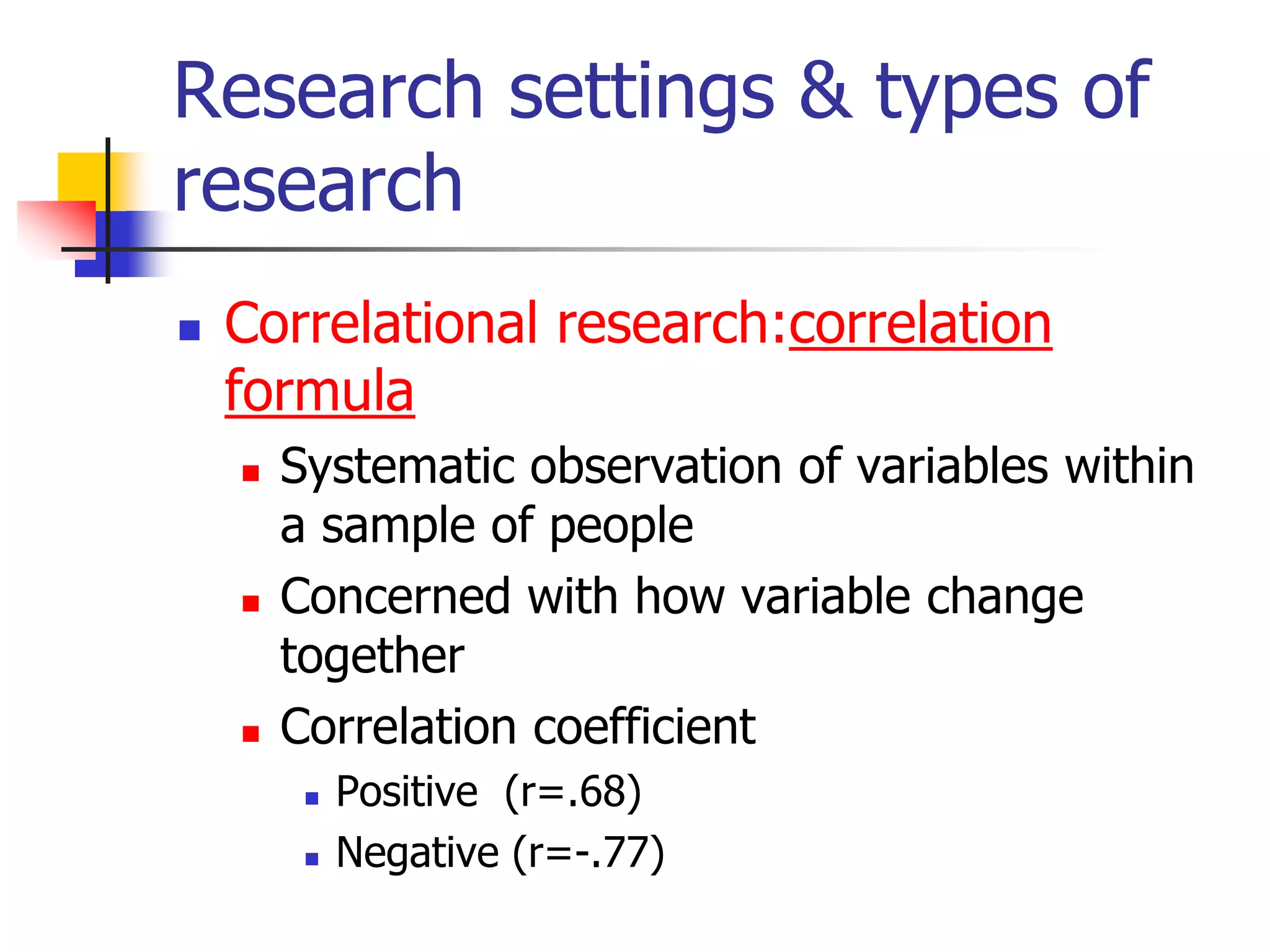
Correlational research:correlation
formula






Systematic observation of variables within
a sample of people
Concerned with how variable change
together
Correlation coefficient



Positive (r=.68)
Negative (r=-.77)
Research settings & types of
research


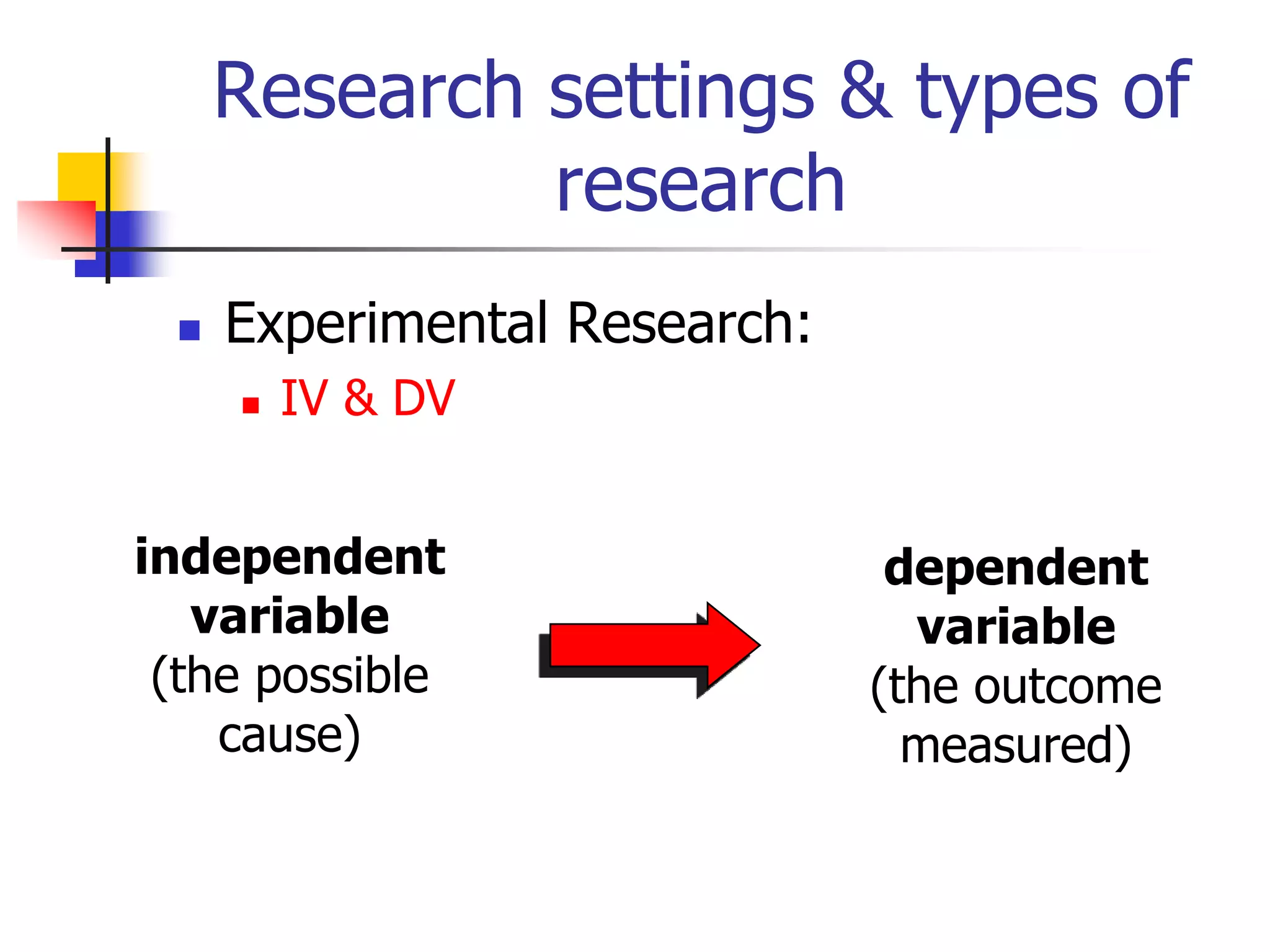
Experimental Research:


IV & DV

independent
variable
(the possible
cause)

dependent
variable
(the outcome
measured)
Research settings & types of
research


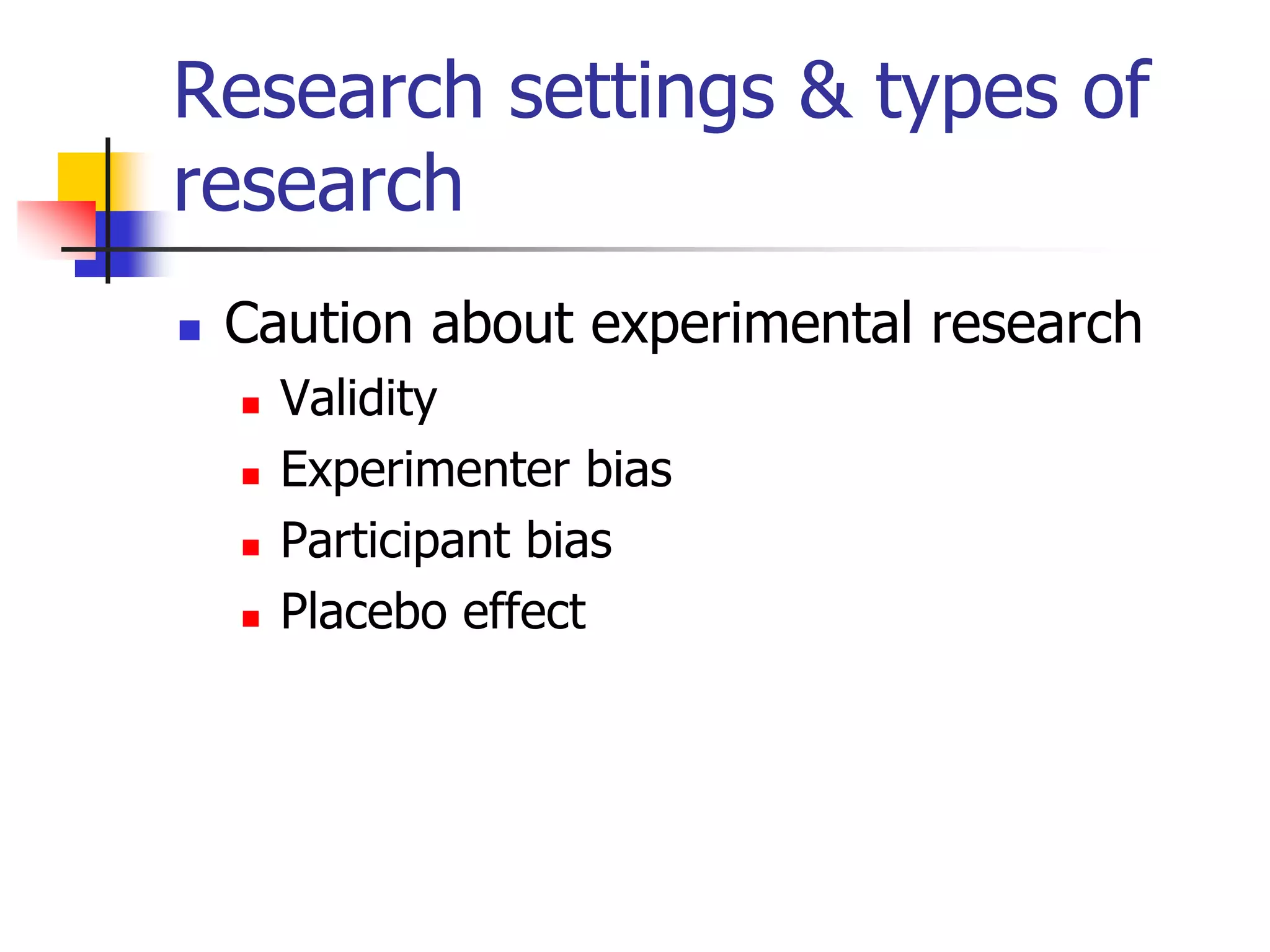
Caution about experimental research






Validity
Experimenter bias
Participant bias
Placebo effect
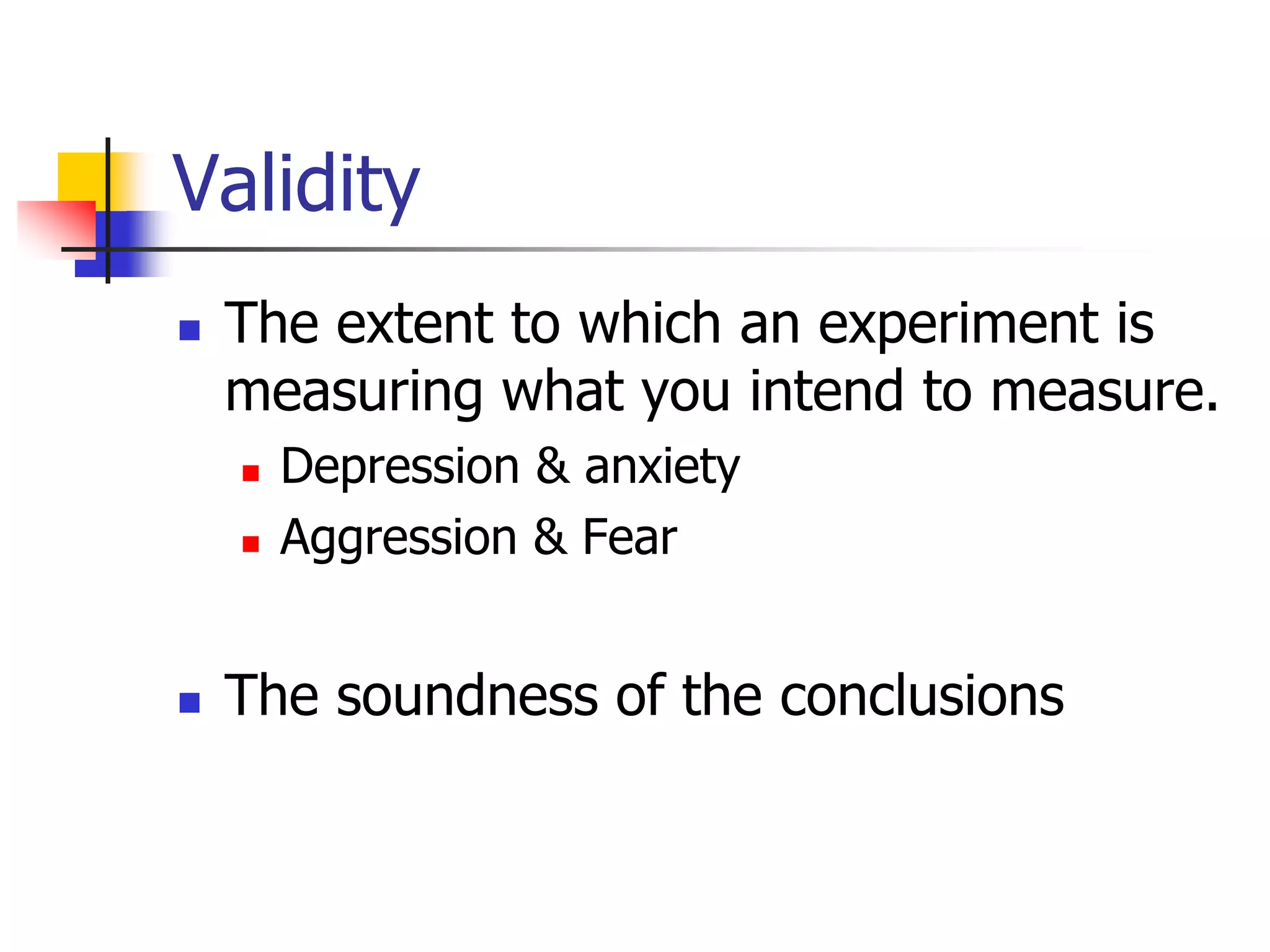
Validity


The extent to which an experiment is
measuring what you intend to measure.





Depression & anxiety
Aggression & Fear

The soundness of the conclusions
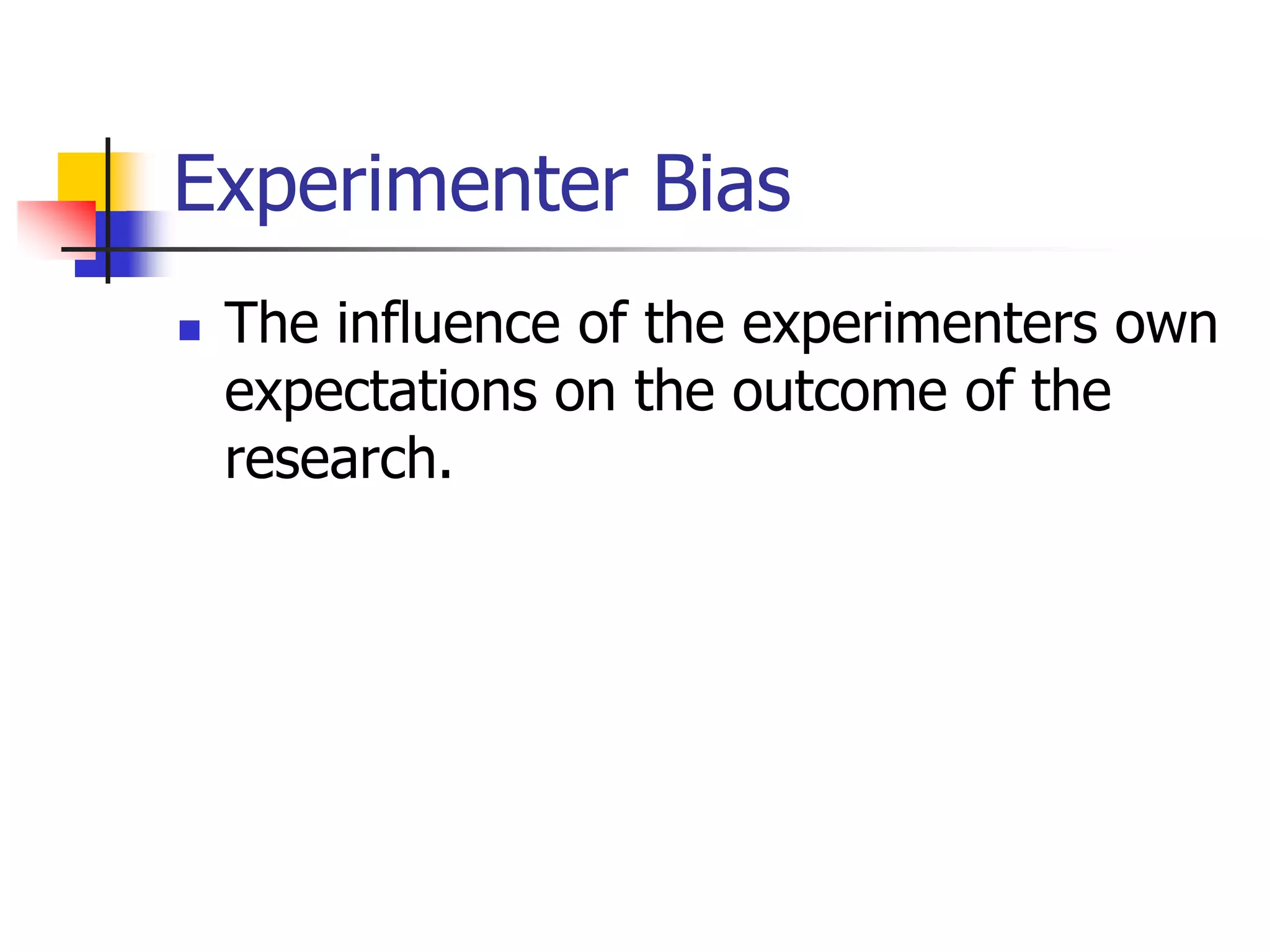
Experimenter Bias


The influence of the experimenters own
expectations on the outcome of the
research.
Participant Bias


The influence of the participant’s
expectations on their behavior in the
experiment.
Placebo Effect
A placebo is a bogus treatment that
has the appearance of being
genuine.
A placebo effect occurs when subjects
who have not received the independent
variable have results similar to
subjects who do.
Single Blind Study
Well-designed experiments
control for the effects of
expectations by creating
conditions under which
participants are unaware of the
treatment and are called single
blind studies.
Double Blind Study
Studies in which both participants
and experimenters are unaware of
who has obtained the treatment are
called double-blind studies.
Analyzing and Interpreting
Data


Descriptive statistics – describe and summarize
data for large groups of participants


Mean: average



Median: midpoint in rank-ordered data



Mode: score appearing most often
Analyzing and Interpreting
Data


Measure of dispersion:


Range



Normal distribution: bell-shaped curve



Standard deviation: degree to which scores in ordered
distribution are spread out
Analyzing and Interpreting
Data


Inferential statistics:

methods used to indicate
whether or not data sufficiently support hypothesis.



Statistical significance
.05, .01, .001
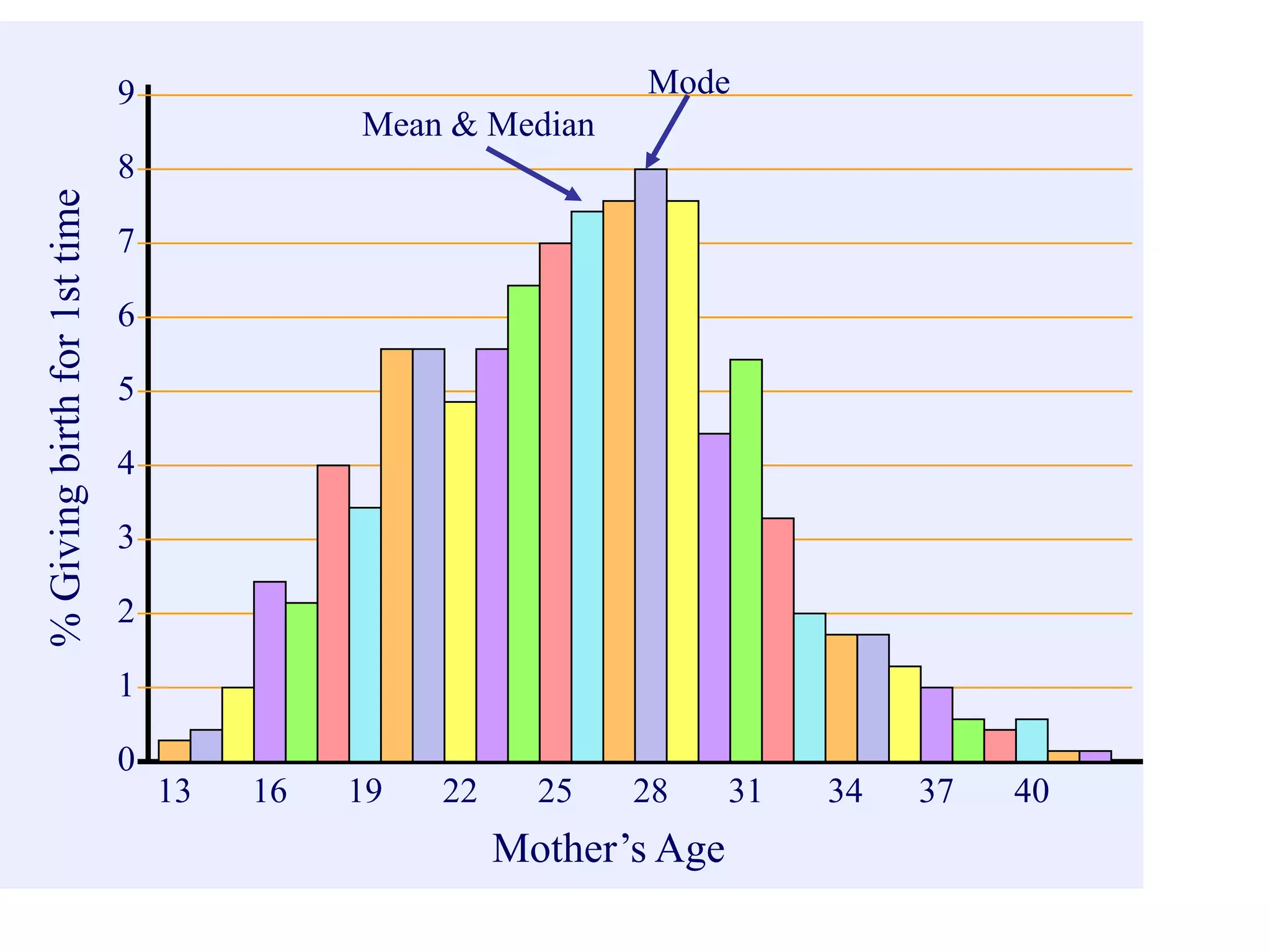
Mode

9

Mean & Median

% Giving birth for 1st time

8
7

6
5
4

3
2
1

0

13

16

19

22

25

28

Mother’s Age

31

34

37

40
Analyzing and Interpreting Data


Reaching conclusions from data


Statistical significance






Size of correlation

Difference of means are greater than chance

Two issues for significance




Larger sample size is better
Statistical difference does not equal practical
significance
Challenges of Conducting
Ethical Research
Ethics of Research with Human
Participants
Ethics of Research with Nonhuman
Animals
Ethics of Research with
Human Participants
1. Freedom from Coercion
2. Informed consent
3. Limited deception

4. Adequate debriefing
5. Confidentiality
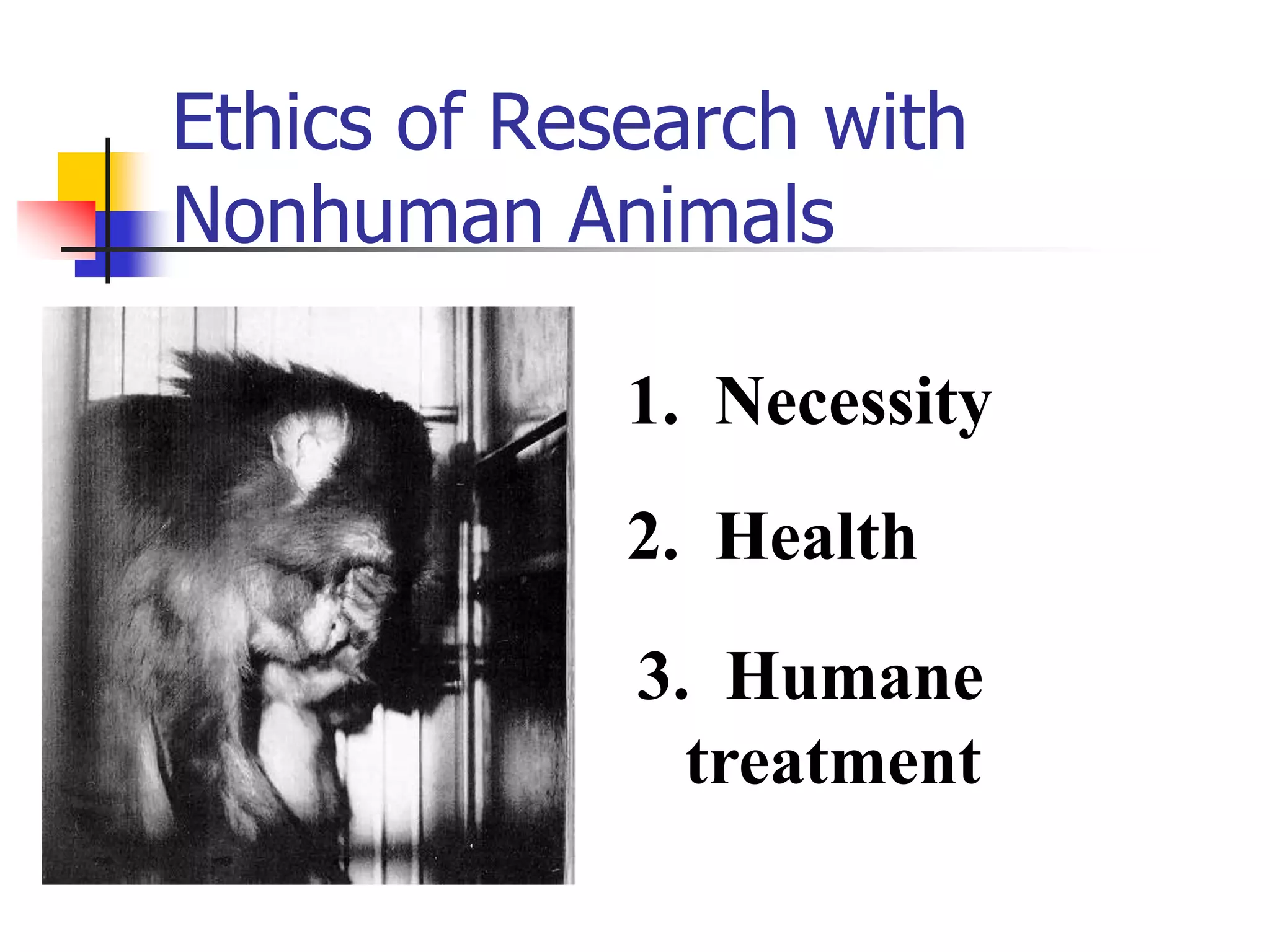
Ethics of Research with
Nonhuman Animals
1. Necessity

2. Health
3. Humane
treatment
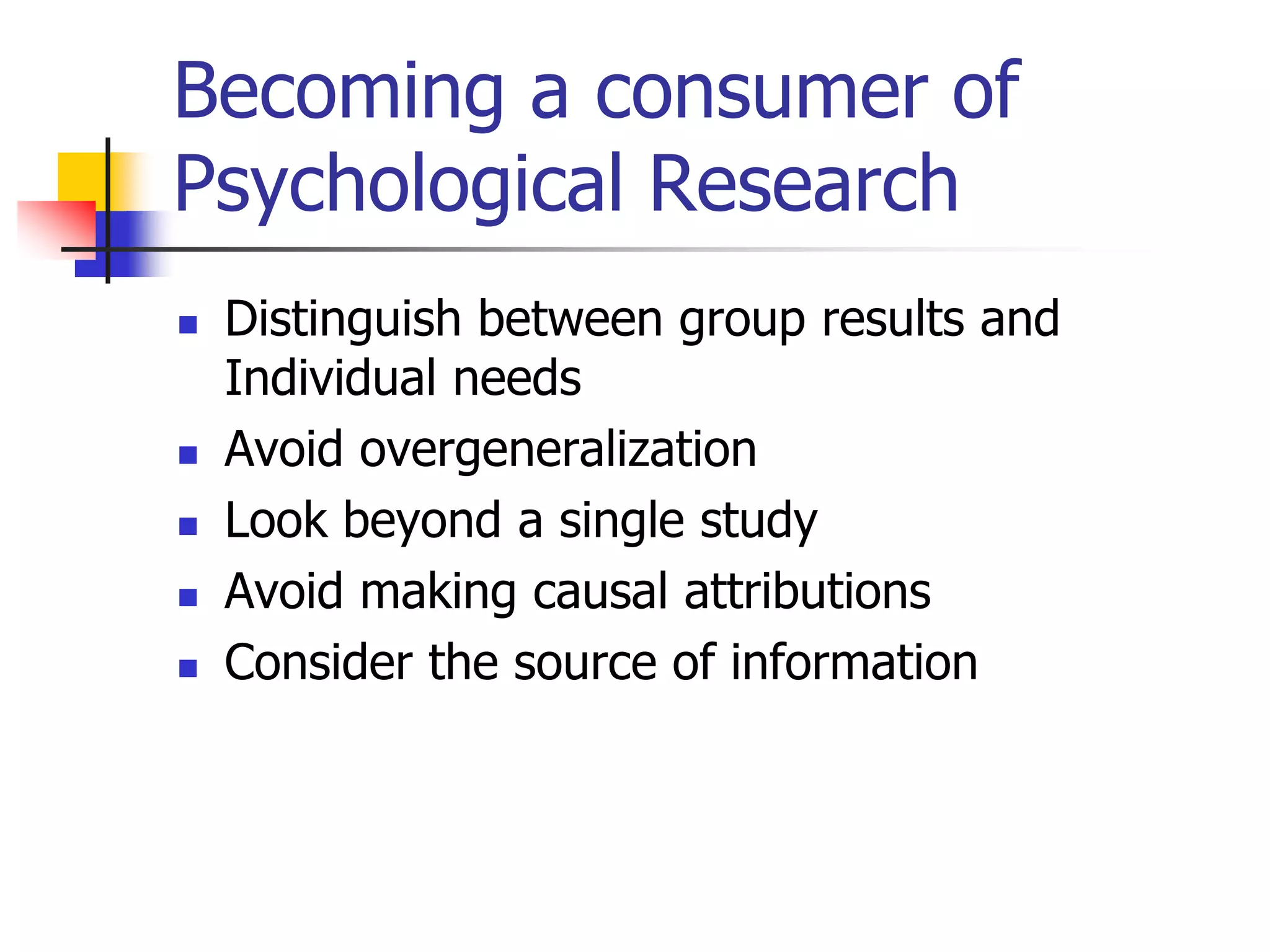
Becoming a consumer of
Psychological Research







Distinguish between group results and
Individual needs
Avoid overgeneralization
Look beyond a single study
Avoid making causal attributions
Consider the source of information

Basic introduction to research methods

  • 1.
  • 2.
    Objectives     5 Basic stepsin the scientific research Types of research & research settings Analyze & interpreting data Conducting and evaluating research-ethics in research
  • 3.
    Psychology’s Scientific Method ScientificApproach an organized way of using experience and testing ideas to increase knowledge: 1. 2. 3. 4. Curious Skeptical Objective Think critically Begins with theory…
  • 4.
    Research settings &types of research A theory is a broad idea or set of closely related facts that attempts to explain and predict something. Steps of the Scientific Method
  • 5.
    Psychology’s Scientific Method 5steps of scientific method 1. 2. 3. 4. 5. Observe phenomena Formulate question, hypothesis, & prediction Test prediction with research Draw conclusions Evaluate & collaborate
  • 7.
    Research settings &types of research  Types of research:     Descriptive Correlational Experimental Research settings   Laboratory Natural observation
  • 8.
    Research settings &types of research  Descriptive research:     Observation Surveys & Interviews Standardized tests Case studies
  • 9.
    Research settings &types of research  Correlational research:correlation formula    Systematic observation of variables within a sample of people Concerned with how variable change together Correlation coefficient   Positive (r=.68) Negative (r=-.77)
  • 10.
    Research settings &types of research  Experimental Research:  IV & DV independent variable (the possible cause) dependent variable (the outcome measured)
  • 11.
    Research settings &types of research  Caution about experimental research     Validity Experimenter bias Participant bias Placebo effect
  • 12.
    Validity  The extent towhich an experiment is measuring what you intend to measure.    Depression & anxiety Aggression & Fear The soundness of the conclusions
  • 13.
    Experimenter Bias  The influenceof the experimenters own expectations on the outcome of the research.
  • 14.
    Participant Bias  The influenceof the participant’s expectations on their behavior in the experiment.
  • 15.
    Placebo Effect A placebois a bogus treatment that has the appearance of being genuine. A placebo effect occurs when subjects who have not received the independent variable have results similar to subjects who do.
  • 16.
    Single Blind Study Well-designedexperiments control for the effects of expectations by creating conditions under which participants are unaware of the treatment and are called single blind studies.
  • 17.
    Double Blind Study Studiesin which both participants and experimenters are unaware of who has obtained the treatment are called double-blind studies.
  • 18.
    Analyzing and Interpreting Data  Descriptivestatistics – describe and summarize data for large groups of participants  Mean: average  Median: midpoint in rank-ordered data  Mode: score appearing most often
  • 19.
    Analyzing and Interpreting Data  Measureof dispersion:  Range  Normal distribution: bell-shaped curve  Standard deviation: degree to which scores in ordered distribution are spread out
  • 20.
    Analyzing and Interpreting Data  Inferentialstatistics: methods used to indicate whether or not data sufficiently support hypothesis.   Statistical significance .05, .01, .001
  • 21.
    Mode 9 Mean & Median %Giving birth for 1st time 8 7 6 5 4 3 2 1 0 13 16 19 22 25 28 Mother’s Age 31 34 37 40
  • 22.
    Analyzing and InterpretingData  Reaching conclusions from data  Statistical significance    Size of correlation Difference of means are greater than chance Two issues for significance   Larger sample size is better Statistical difference does not equal practical significance
  • 23.
    Challenges of Conducting EthicalResearch Ethics of Research with Human Participants Ethics of Research with Nonhuman Animals
  • 24.
    Ethics of Researchwith Human Participants 1. Freedom from Coercion 2. Informed consent 3. Limited deception 4. Adequate debriefing 5. Confidentiality
  • 25.
    Ethics of Researchwith Nonhuman Animals 1. Necessity 2. Health 3. Humane treatment
  • 26.
    Becoming a consumerof Psychological Research      Distinguish between group results and Individual needs Avoid overgeneralization Look beyond a single study Avoid making causal attributions Consider the source of information