Our material
today
Introduction to
Embedded System
Speakers
Md. Mehedi Hasan
Department of CSE
Daffodil International University.
Our material
today
What are Embedded
Systems?
Embedded systems are specialized
computing systems that perform
dedicated functions or tasks within
larger systems. They combine hardware
and software to achieve specific control
functions.
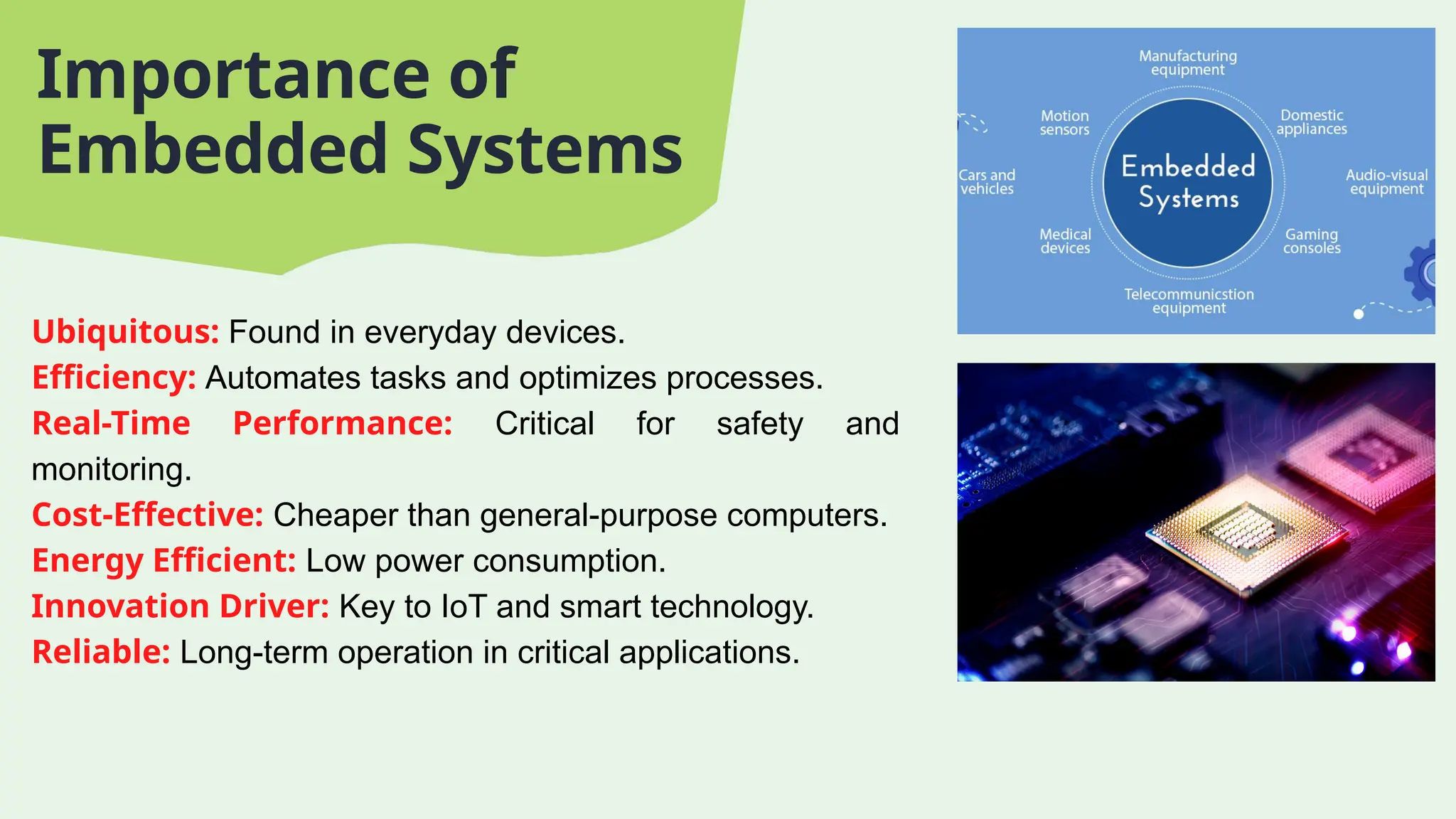
Ubiquitous: Found in everyday devices.
Efficiency: Automates tasks and optimizes processes.
Real-Time Performance: Critical for safety and
monitoring.
Cost-Effective: Cheaper than general-purpose computers.
Energy Efficient: Low power consumption.
Innovation Driver: Key to IoT and smart technology.
Reliable: Long-term operation in critical applications.
Importance of
Embedded Systems
What is a
Microcontroller?
A microcontroller is a small, low-cost
computer on a single integrated
circuit, designed to control specific
electronic devices and systems. It's
the "brain" behind many everyday
devices like remote controls,
washing machines, and automotive
systems.
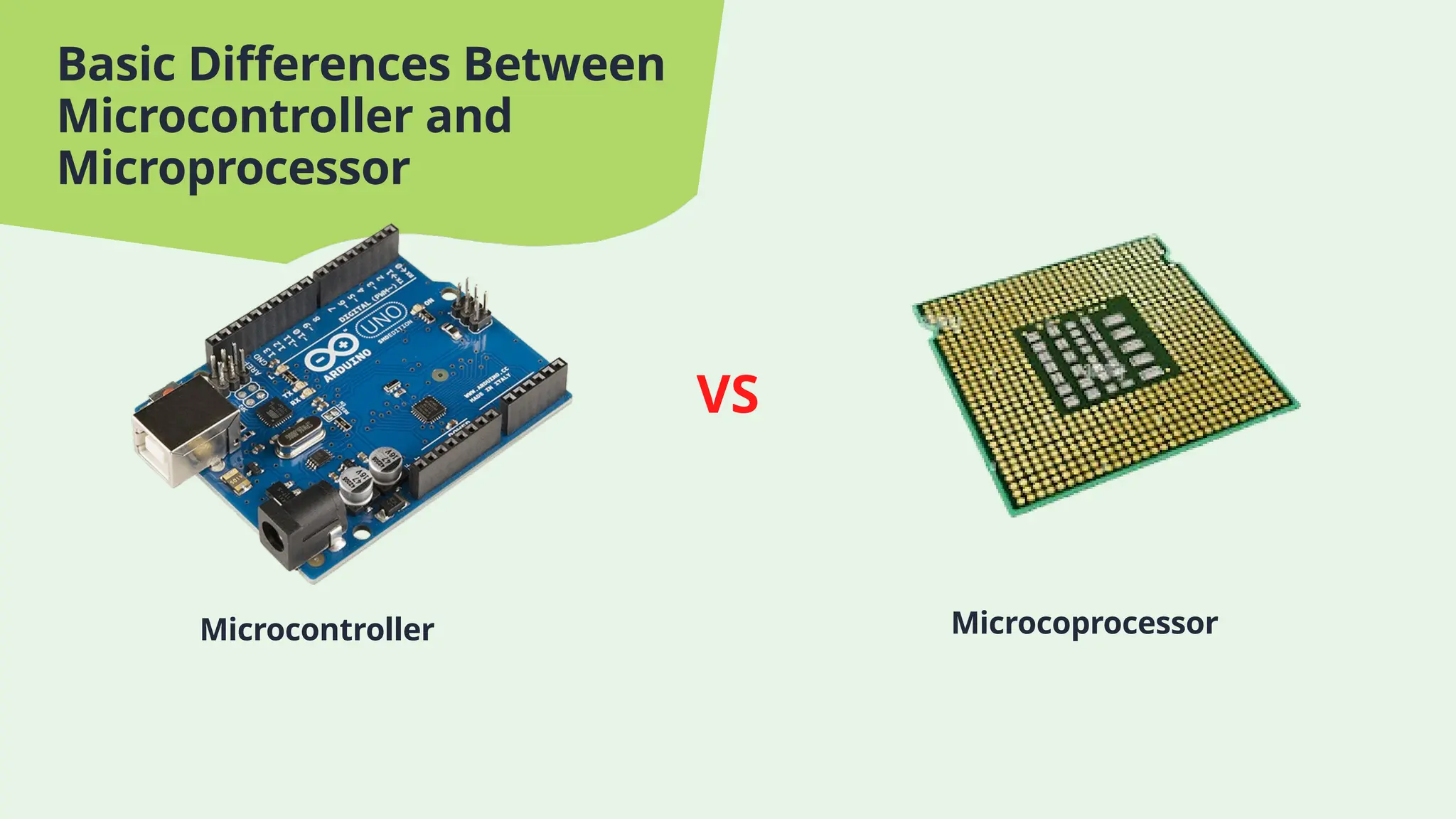
Basic Differences Between
Microcontroller and
Microprocessor
VS
Microcontroller Microcoprocessor
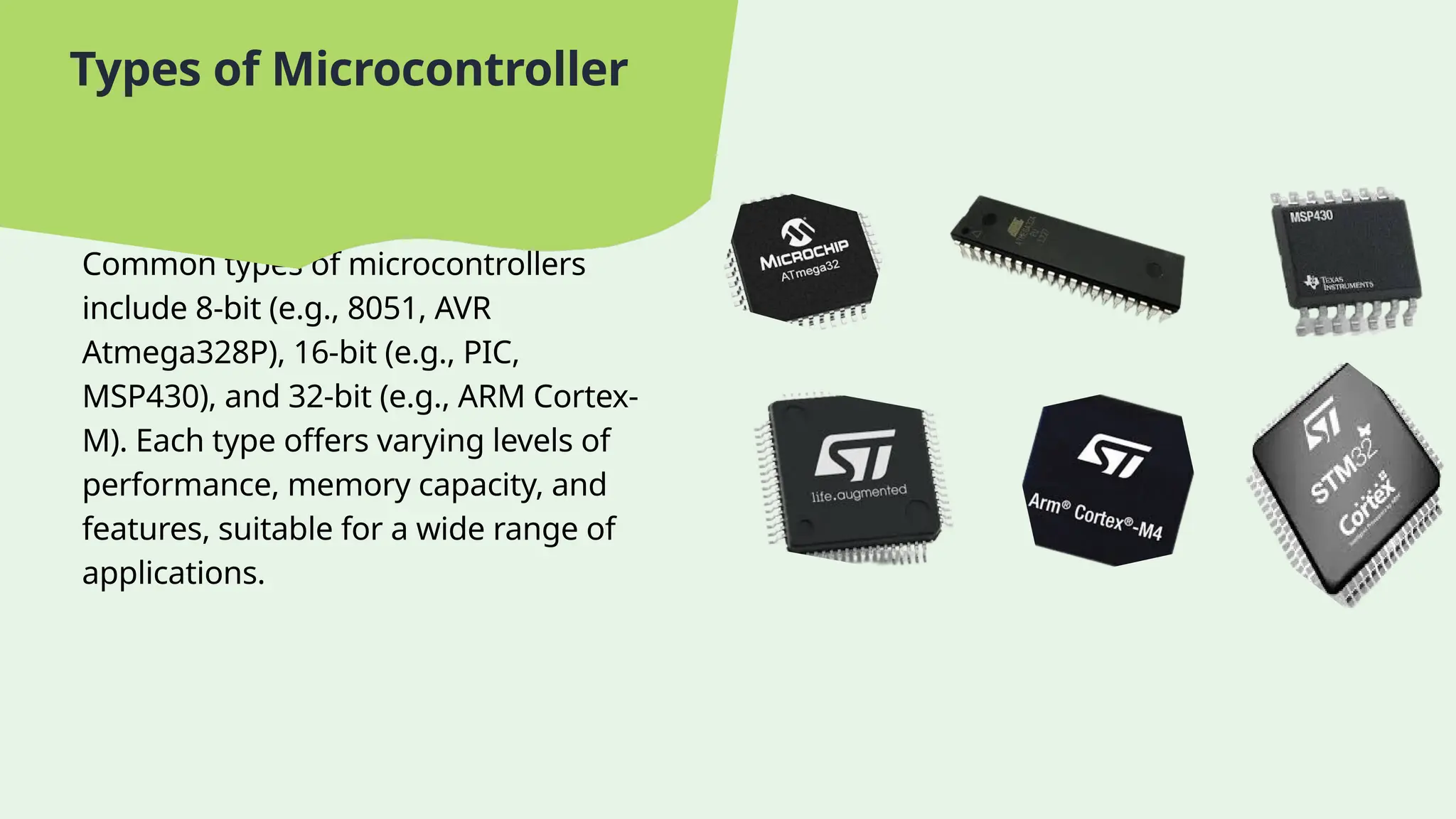
Common types of microcontrollers
include 8-bit (e.g., 8051, AVR
Atmega328P), 16-bit (e.g., PIC,
MSP430), and 32-bit (e.g., ARM Cortex-
M). Each type offers varying levels of
performance, memory capacity, and
features, suitable for a wide range of
applications.
Types of Microcontroller
Introduction to Arduino
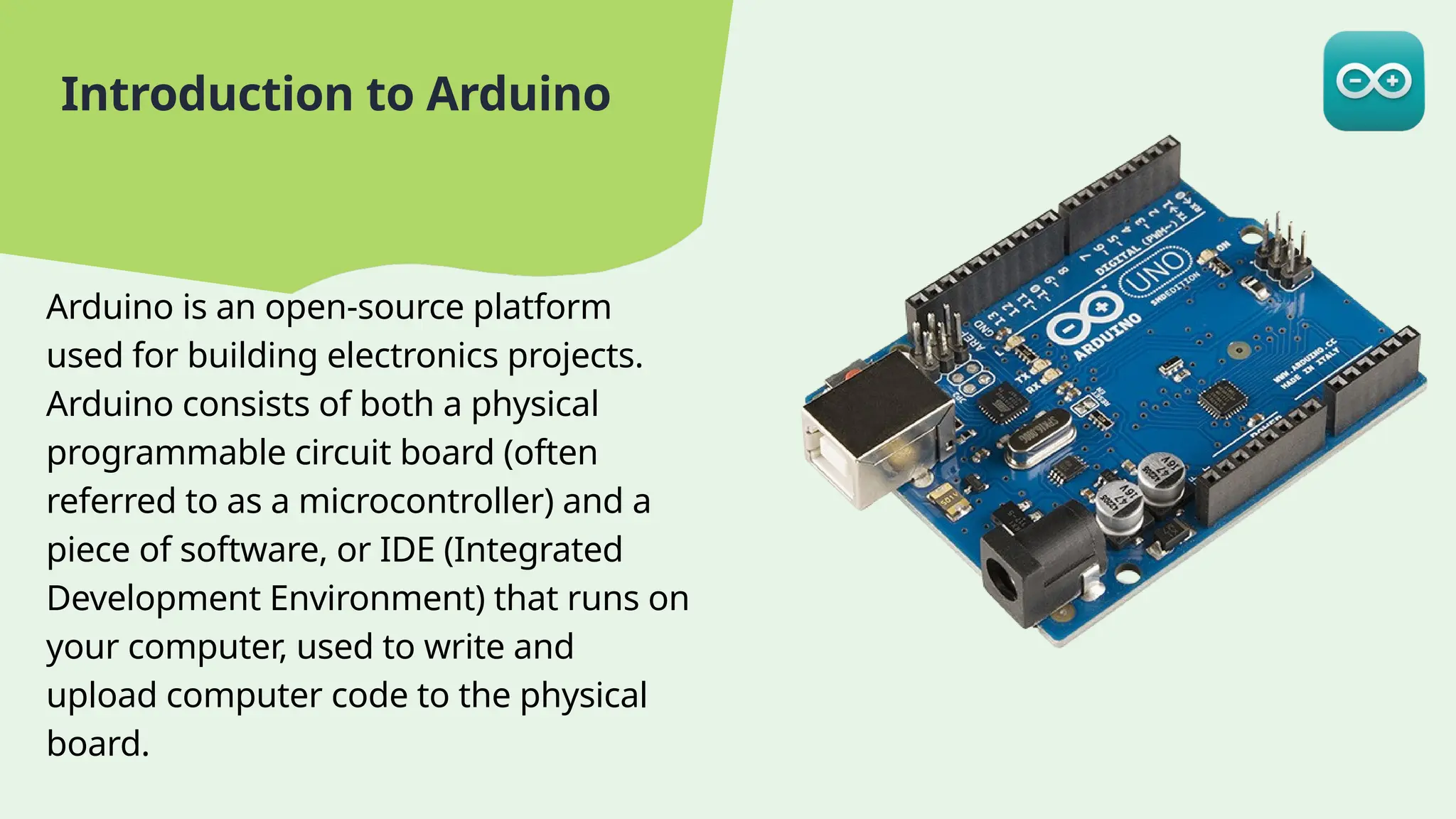
Arduino is an open-source platform
used for building electronics projects.
Arduino consists of both a physical
programmable circuit board (often
referred to as a microcontroller) and a
piece of software, or IDE (Integrated
Development Environment) that runs on
your computer, used to write and
upload computer code to the physical
board.
Speciffications of
Atmega328P
Core: 8-bit AVR RISC
Clock Speed: Up to 20 MHz
Flash Memory: 32 KB
SRAM: 2 KB
EEPROM: 1 KB
I/O Pins: 23
ADC Channels: 6
Timers: 3
Serial Interfaces: UART, SPI, I2C
Power Supply: 1.8V to 5.5V
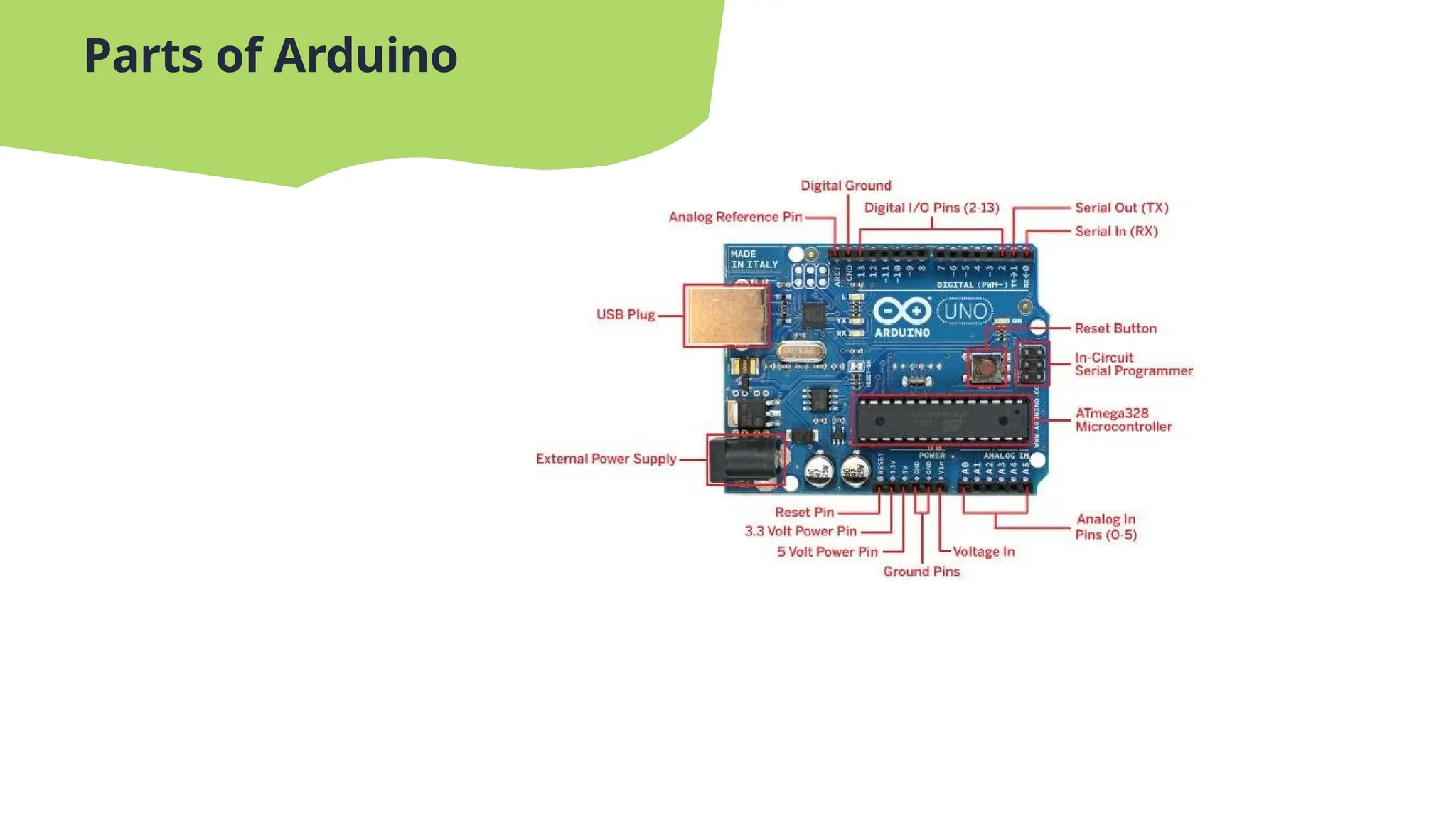
Parts of Arduino
Q&A
Thank
You

Basic Introduction to Embedded Systems.pptx

  • 1.
  • 2.
    Speakers Md. Mehedi Hasan Departmentof CSE Daffodil International University.
  • 3.
    Our material today What areEmbedded Systems? Embedded systems are specialized computing systems that perform dedicated functions or tasks within larger systems. They combine hardware and software to achieve specific control functions.
  • 4.
    Ubiquitous: Found ineveryday devices. Efficiency: Automates tasks and optimizes processes. Real-Time Performance: Critical for safety and monitoring. Cost-Effective: Cheaper than general-purpose computers. Energy Efficient: Low power consumption. Innovation Driver: Key to IoT and smart technology. Reliable: Long-term operation in critical applications. Importance of Embedded Systems
  • 5.
    What is a Microcontroller? Amicrocontroller is a small, low-cost computer on a single integrated circuit, designed to control specific electronic devices and systems. It's the "brain" behind many everyday devices like remote controls, washing machines, and automotive systems.
  • 6.
    Basic Differences Between Microcontrollerand Microprocessor VS Microcontroller Microcoprocessor
  • 7.
    Common types ofmicrocontrollers include 8-bit (e.g., 8051, AVR Atmega328P), 16-bit (e.g., PIC, MSP430), and 32-bit (e.g., ARM Cortex- M). Each type offers varying levels of performance, memory capacity, and features, suitable for a wide range of applications. Types of Microcontroller
  • 8.
    Introduction to Arduino Arduinois an open-source platform used for building electronics projects. Arduino consists of both a physical programmable circuit board (often referred to as a microcontroller) and a piece of software, or IDE (Integrated Development Environment) that runs on your computer, used to write and upload computer code to the physical board.
  • 9.
    Speciffications of Atmega328P Core: 8-bitAVR RISC Clock Speed: Up to 20 MHz Flash Memory: 32 KB SRAM: 2 KB EEPROM: 1 KB I/O Pins: 23 ADC Channels: 6 Timers: 3 Serial Interfaces: UART, SPI, I2C Power Supply: 1.8V to 5.5V
  • 10.
  • 11.
  • 12.