


DEGROWTH:
   New Strategies for
Strengthening Tradition
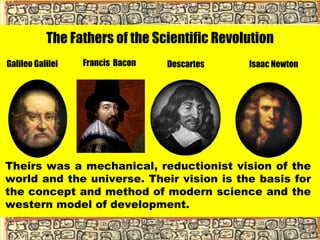
The Fathers of the Scientific Revolution
Galileo Galilei   Francis Bacon   Descartes   Isaac Newton


Theirs was a mechanical, reductionist vision of the
world and the universe. Their vision is the basis for
the concept and method of modern science and the
western model of development.
Francis Bacon:
Nature has to be “hounded in her
wanderings”, “bound into service”, and
made a “slave”. She was to be “put in
constraint”, and the aim of the scientist was
to “torture nature’s secrets from her”.
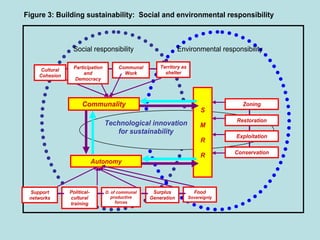
Figure 3: Building sustainability: Social and environmental responsibility


                 Social responsibility                         Environmental responsibility

                 Participation        Communal        Territory as
     Cultural
                      and               Work            shelter
    Cohesion
                 Democracy


                      Communality                                                    Zoning
                                                                          S
                                                                                   Restoration
                                 Technological innovation                 M
                                    for sustainability
                                                                                   Exploitation
                                                                          R
                                                                                   Conservation
                                                                          R
                             Autonomy


 Support        Political-       D. of communal    Surplus             Food
 networks       cultural            productive    Generation         Sovereignty
                training              forces
NEW COMMUNITARIAN
       RURALITY
      (Actors creating new persona)

Strategic approach:


    Sustainable Regional
   Resource Management
       (People rewriting theory)
Heterodox Ecological
          Economics
            Moving Forward
• Mainstream science: critical pol. econ. of
    productive structures and growth
• Heterodox paradigm : commitment w/
    viable alternatives for well-being
• Post-normal science: conservation,
    production and protection
• EE: creating new social-productive models
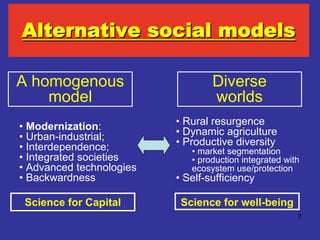
Alternative social models

A homogenous                      Diverse
    model                         worlds
• Modernization:          • Rural resurgence
• Urban-industrial;       • Dynamic agriculture
• Interdependence;        • Productive diversity
                             • market segmentation
• Integrated societies       • production integrated with
• Advanced technologies      ecosystem use/protection
• Backwardness            • Self-sufficiency

 Science for Capital       Science for well-being
                                                        7
Struggles for local
       development
        Strategic principles:


• Autonomy
• Self-Sufficiency
• Productive diversification
• Ecosystem management
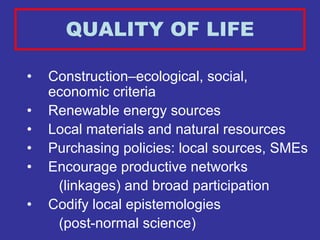
QUALITY OF LIFE

•   Construction–ecological, social,
    economic criteria
•   Renewable energy sources
•   Local materials and natural resources
•   Purchasing policies: local sources, SMEs
•   Encourage productive networks
     (linkages) and broad participation
•   Codify local epistemologies
     (post-normal science)
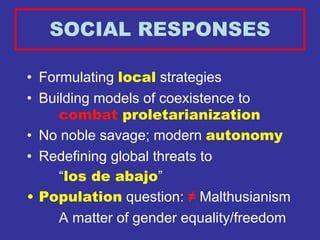
SOCIAL RESPONSES

• Formulating local strategies
• Building models of coexistence to
     combat proletarianization
• No noble savage; modern autonomy
• Redefining global threats to
     “los de abajo”
• Population question: ≠ Malthusianism
     A matter of gender equality/freedom
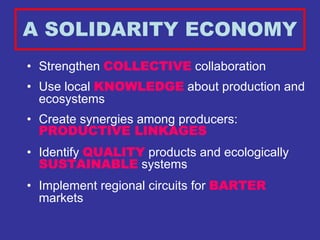
A SOLIDARITY ECONOMY
• Strengthen COLLECTIVE collaboration
• Use local KNOWLEDGE about production and
  ecosystems
• Create synergies among producers:
  PRODUCTIVE LINKAGES
• Identify QUALITY products and ecologically
  SUSTAINABLE systems
• Implement regional circuits for BARTER
  markets
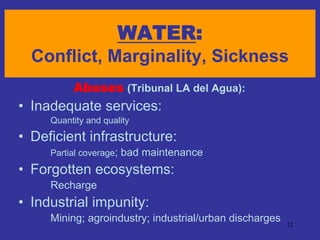
WATER:
  Conflict, Marginality, Sickness
          Abuses (Tribunal LA del Agua):
• Inadequate services:
     Quantity and quality
• Deficient infrastructure:
     Partial coverage;   bad maintenance
• Forgotten ecosystems:
     Recharge
• Industrial impunity:
     Mining; agroindustry; industrial/urban discharges   12
WATER:
 Life, Collaboration, Sustenance
   Possibilities for social organization :
• Universal service:
     Principle of solidarity
• Quality of life :
    Education to change consumption pattern
• Technological change:
     Quality; availability; conservation

                                             13
The New Culture of Water
             (Mexicanized)
Fundamental principles:
     1) Social Economy: (free)
•   Water as a human right
•   Water for environmental needs
•   Water for social solidarity
    2) Capitalist Economy: (auction)
•   Water for economic and social development

(punish and end illegal uses of water)
                                          14
The scandalous/careful
socio-political construction of
 NATURAL DISASTERS


                            15
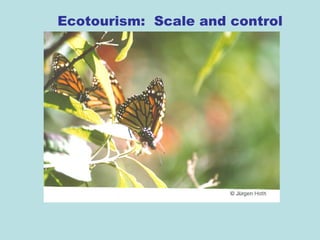
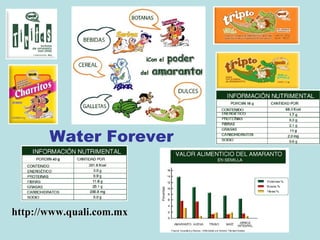
Ecotourism: Scale and control
Water Forever


http://www.quali.com.mx
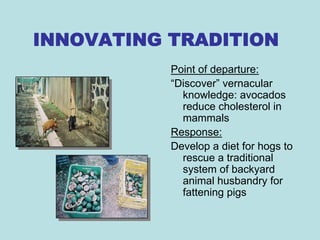
INNOVATING TRADITION
           Point of departure:
           “Discover” vernacular
             knowledge: avocados
             reduce cholesterol in
             mammals
           Response:
           Develop a diet for hogs to
             rescue a traditional
             system of backyard
             animal husbandry for
             fattening pigs
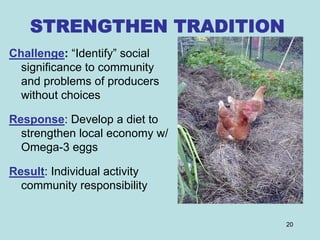
STRENGTHEN TRADITION
Challenge: “Identify” social
  significance to community
  and problems of producers
  without choices

Response: Develop a diet to
  strengthen local economy w/
  Omega-3 eggs

Result: Individual activity
  community responsibility


                                20
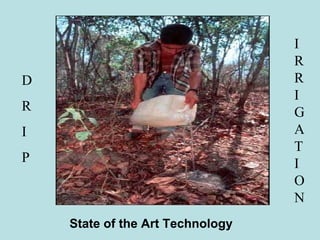
I
                                  R
D                                 R
                                  I
R                                 G
I                                 A
                                  T
P                                 I
                                  O
                                  N
    State of the Art Technology
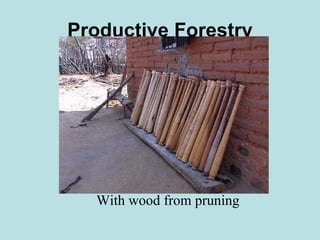
Productive Forestry


  With wood from pruning
Fair Trade


(http://www.artinoaxaca.addr.com)
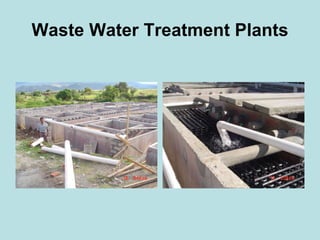
Waste Water Treatment Plants
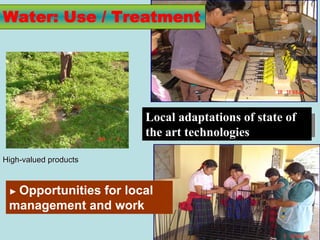
Water: Use / Treatment


                       Local adaptations of state of
                       the art technologies
            ▲

High-valued products


 ► Opportunities
              for local
 management and work
                                                   25
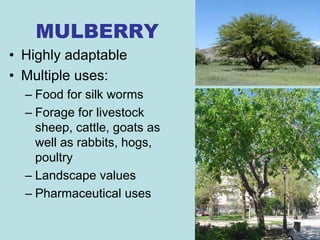
MULBERRY
• Highly adaptable
• Multiple uses:
  – Food for silk worms
  – Forage for livestock
    sheep, cattle, goats as
    well as rabbits, hogs,
    poultry
  – Landscape values
  – Pharmaceutical uses
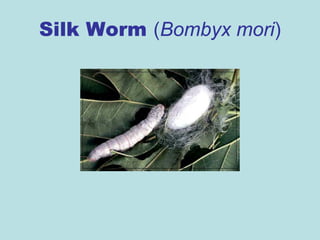
Silk Worm (Bombyx mori)
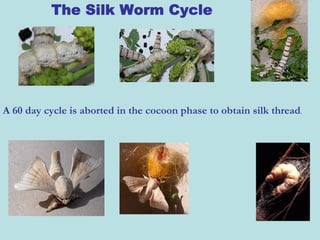
The Silk Worm Cycle


A 60 day cycle is aborted in the cocoon phase to obtain silk thread.
OBJETIVES
Initiate sustainable management of
      mulberry and silk worms
• 1. Establish nurseries and mulberry
  plantations in community forests
• 2. Establish and adapt rooms for raising
  silk worms in local households
• 3. Produce silk work cocoons and
  transform them into silk thread
• 4. Market silk thread and develop its
  incorporation into artisan production.
OTHER WORLDS
   ARE POSSIBLE


SAY    NO TO “TINA”
    “There is no Alternative”
(Margaret Thatcher – World Bank)
DEGROWTH:
  New Strategies for
Public Water Management
Strengthening Tradition
       Lessons for
        Democratization
       barkin@correo.xoc.uam.mx
                 David Barkin
   Universidad Autónoma Metropolitana – Xochimilco


Sources:
            Wealth, Poverty and Sustainable
                       Development
                        D. Barkin
7 Noviembre 2007 Water Management in Mexico
    Urban              CISDA: Analizando el agua     31

Barkin decrecbarcelona

  • 1.
    DEGROWTH: New Strategies for Strengthening Tradition
  • 2.
    The Fathers ofthe Scientific Revolution Galileo Galilei Francis Bacon Descartes Isaac Newton Theirs was a mechanical, reductionist vision of the world and the universe. Their vision is the basis for the concept and method of modern science and the western model of development.
  • 3.
    Francis Bacon: Nature hasto be “hounded in her wanderings”, “bound into service”, and made a “slave”. She was to be “put in constraint”, and the aim of the scientist was to “torture nature’s secrets from her”.
  • 4.
    Figure 3: Buildingsustainability: Social and environmental responsibility Social responsibility Environmental responsibility Participation Communal Territory as Cultural and Work shelter Cohesion Democracy Communality Zoning S Restoration Technological innovation M for sustainability Exploitation R Conservation R Autonomy Support Political- D. of communal Surplus Food networks cultural productive Generation Sovereignty training forces
  • 5.
    NEW COMMUNITARIAN RURALITY (Actors creating new persona) Strategic approach: Sustainable Regional Resource Management (People rewriting theory)
  • 6.
    Heterodox Ecological Economics Moving Forward • Mainstream science: critical pol. econ. of productive structures and growth • Heterodox paradigm : commitment w/ viable alternatives for well-being • Post-normal science: conservation, production and protection • EE: creating new social-productive models
  • 7.
    Alternative social models Ahomogenous Diverse model worlds • Modernization: • Rural resurgence • Urban-industrial; • Dynamic agriculture • Interdependence; • Productive diversity • market segmentation • Integrated societies • production integrated with • Advanced technologies ecosystem use/protection • Backwardness • Self-sufficiency Science for Capital Science for well-being 7
  • 8.
    Struggles for local development Strategic principles: • Autonomy • Self-Sufficiency • Productive diversification • Ecosystem management
  • 9.
    QUALITY OF LIFE • Construction–ecological, social, economic criteria • Renewable energy sources • Local materials and natural resources • Purchasing policies: local sources, SMEs • Encourage productive networks (linkages) and broad participation • Codify local epistemologies (post-normal science)
  • 10.
    SOCIAL RESPONSES • Formulatinglocal strategies • Building models of coexistence to combat proletarianization • No noble savage; modern autonomy • Redefining global threats to “los de abajo” • Population question: ≠ Malthusianism A matter of gender equality/freedom
  • 11.
    A SOLIDARITY ECONOMY •Strengthen COLLECTIVE collaboration • Use local KNOWLEDGE about production and ecosystems • Create synergies among producers: PRODUCTIVE LINKAGES • Identify QUALITY products and ecologically SUSTAINABLE systems • Implement regional circuits for BARTER markets
  • 12.
    WATER: Conflict,Marginality, Sickness Abuses (Tribunal LA del Agua): • Inadequate services: Quantity and quality • Deficient infrastructure: Partial coverage; bad maintenance • Forgotten ecosystems: Recharge • Industrial impunity: Mining; agroindustry; industrial/urban discharges 12
  • 13.
    WATER: Life, Collaboration,Sustenance Possibilities for social organization : • Universal service: Principle of solidarity • Quality of life : Education to change consumption pattern • Technological change: Quality; availability; conservation 13
  • 14.
    The New Cultureof Water (Mexicanized) Fundamental principles: 1) Social Economy: (free) • Water as a human right • Water for environmental needs • Water for social solidarity 2) Capitalist Economy: (auction) • Water for economic and social development (punish and end illegal uses of water) 14
  • 15.
  • 16.
  • 18.
  • 19.
    INNOVATING TRADITION Point of departure: “Discover” vernacular knowledge: avocados reduce cholesterol in mammals Response: Develop a diet for hogs to rescue a traditional system of backyard animal husbandry for fattening pigs
  • 20.
    STRENGTHEN TRADITION Challenge: “Identify”social significance to community and problems of producers without choices Response: Develop a diet to strengthen local economy w/ Omega-3 eggs Result: Individual activity community responsibility 20
  • 21.
    I R D R I R G I A T P I O N State of the Art Technology
  • 22.
    Productive Forestry With wood from pruning
  • 23.
  • 24.
  • 25.
    Water: Use /Treatment Local adaptations of state of the art technologies ▲ High-valued products ► Opportunities for local management and work 25
  • 26.
    MULBERRY • Highly adaptable •Multiple uses: – Food for silk worms – Forage for livestock sheep, cattle, goats as well as rabbits, hogs, poultry – Landscape values – Pharmaceutical uses
  • 27.
  • 28.
    The Silk WormCycle A 60 day cycle is aborted in the cocoon phase to obtain silk thread.
  • 29.
    OBJETIVES Initiate sustainable managementof mulberry and silk worms • 1. Establish nurseries and mulberry plantations in community forests • 2. Establish and adapt rooms for raising silk worms in local households • 3. Produce silk work cocoons and transform them into silk thread • 4. Market silk thread and develop its incorporation into artisan production.
  • 30.
    OTHER WORLDS ARE POSSIBLE SAY NO TO “TINA” “There is no Alternative” (Margaret Thatcher – World Bank)
  • 31.
    DEGROWTH: NewStrategies for Public Water Management Strengthening Tradition Lessons for Democratization barkin@correo.xoc.uam.mx David Barkin Universidad Autónoma Metropolitana – Xochimilco Sources: Wealth, Poverty and Sustainable Development D. Barkin 7 Noviembre 2007 Water Management in Mexico Urban CISDA: Analizando el agua 31