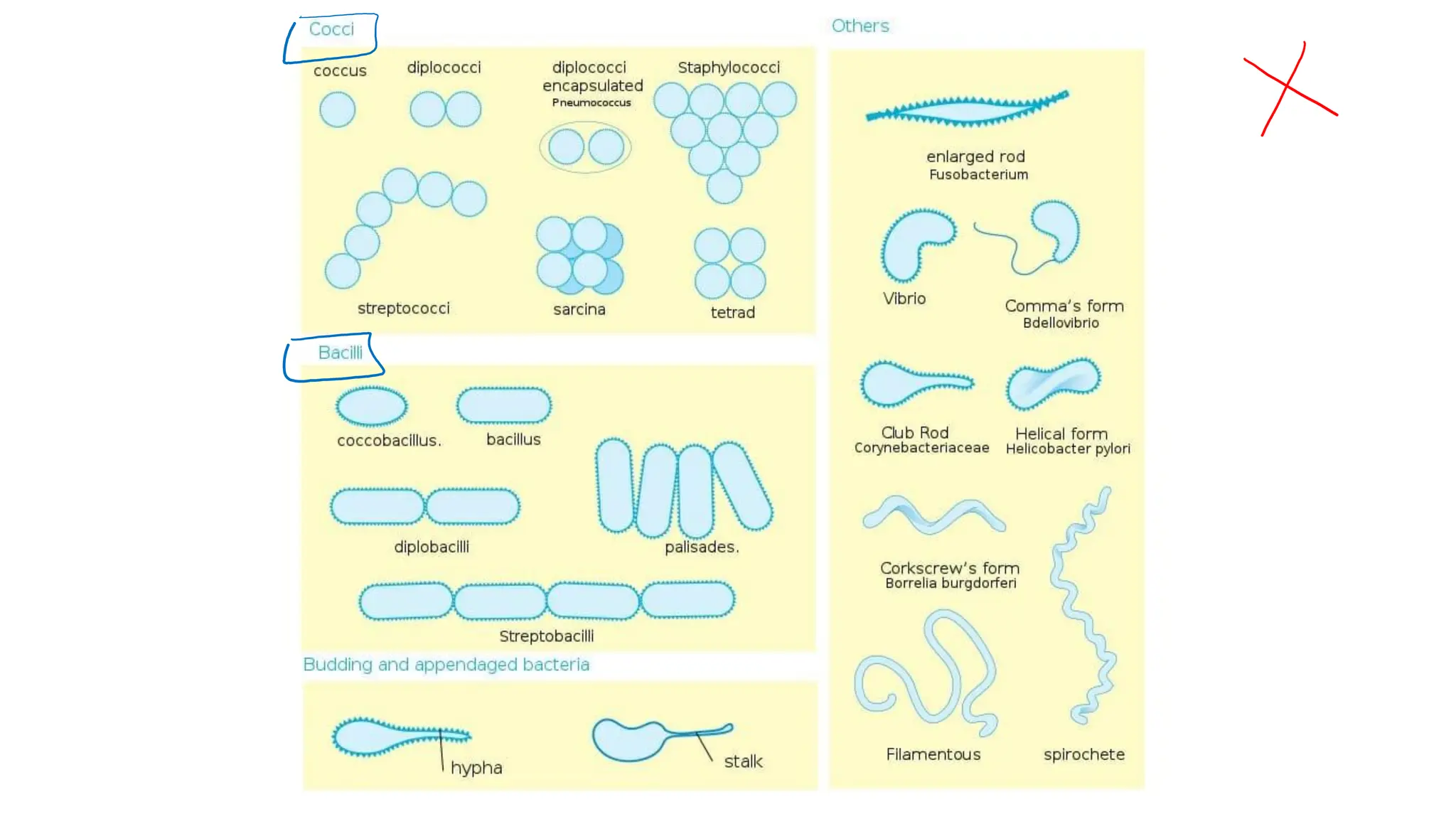
Bacterial Structure
Topic
1 Introduction
2 Structure
3 Growth, physiology & metabolism
4 Identification & tests
5 Sterilization & disinfection
6 Genetics
7 Microbiota
8 Pathogenesis
9 Communities
∞ Bacterial species
Characteristics
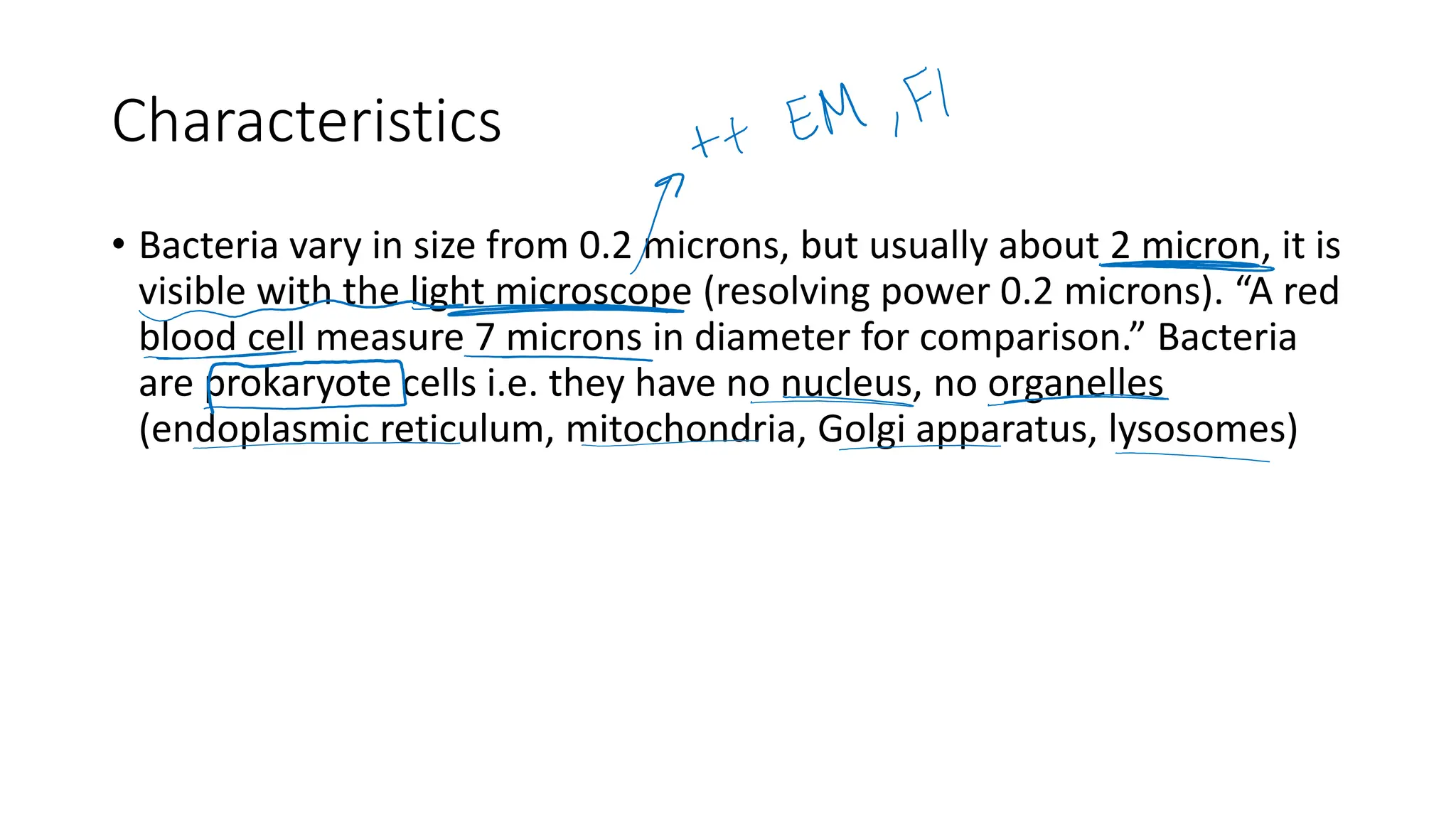
• Bacteria vary in size from 0.2 microns, but usually about 2 micron, it is
visible with the light microscope (resolving power 0.2 microns). “A red
blood cell measure 7 microns in diameter for comparison.” Bacteria
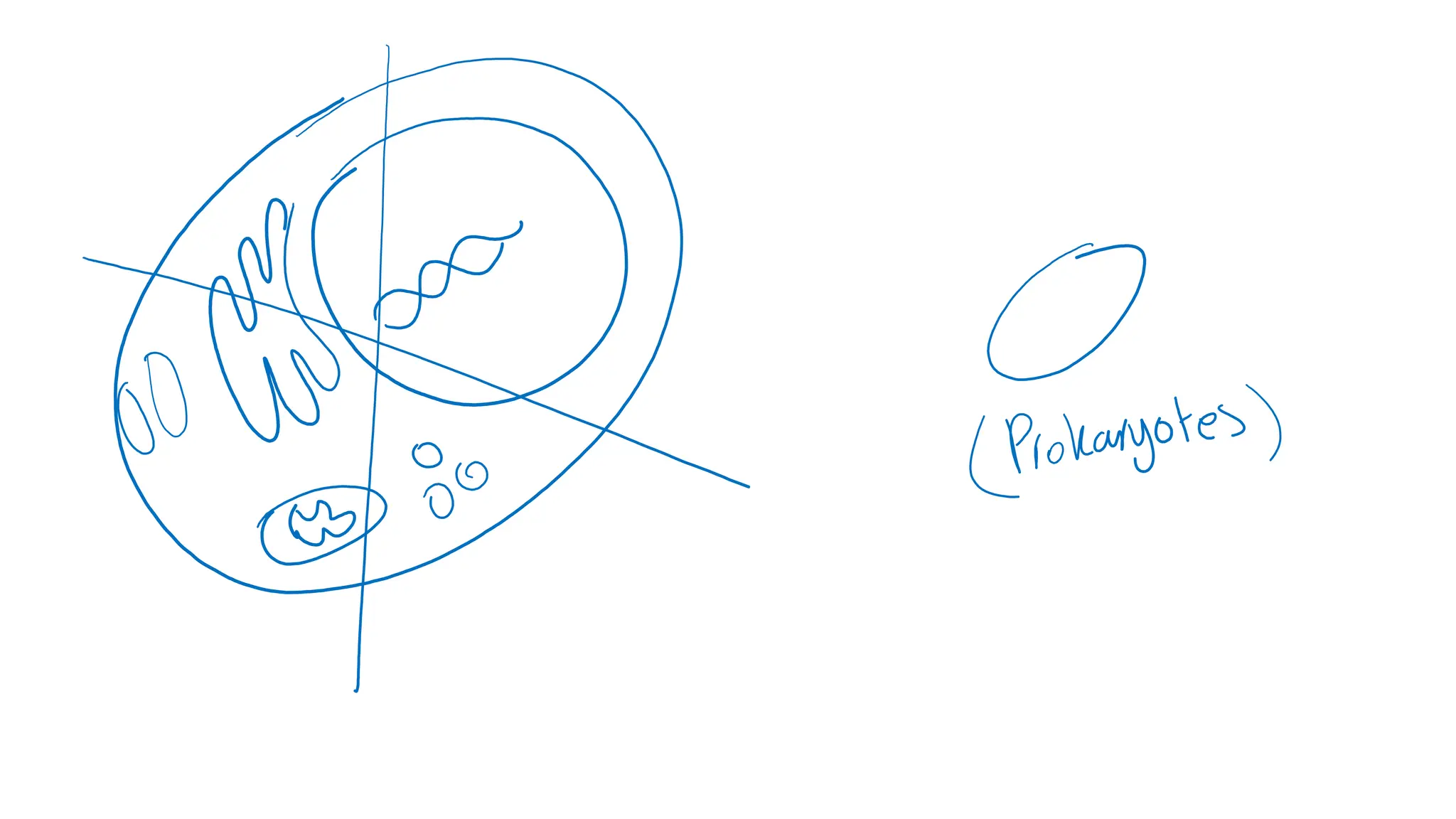
are prokaryote cells i.e. they have no nucleus, no organelles
(endoplasmic reticulum, mitochondria, Golgi apparatus, lysosomes)
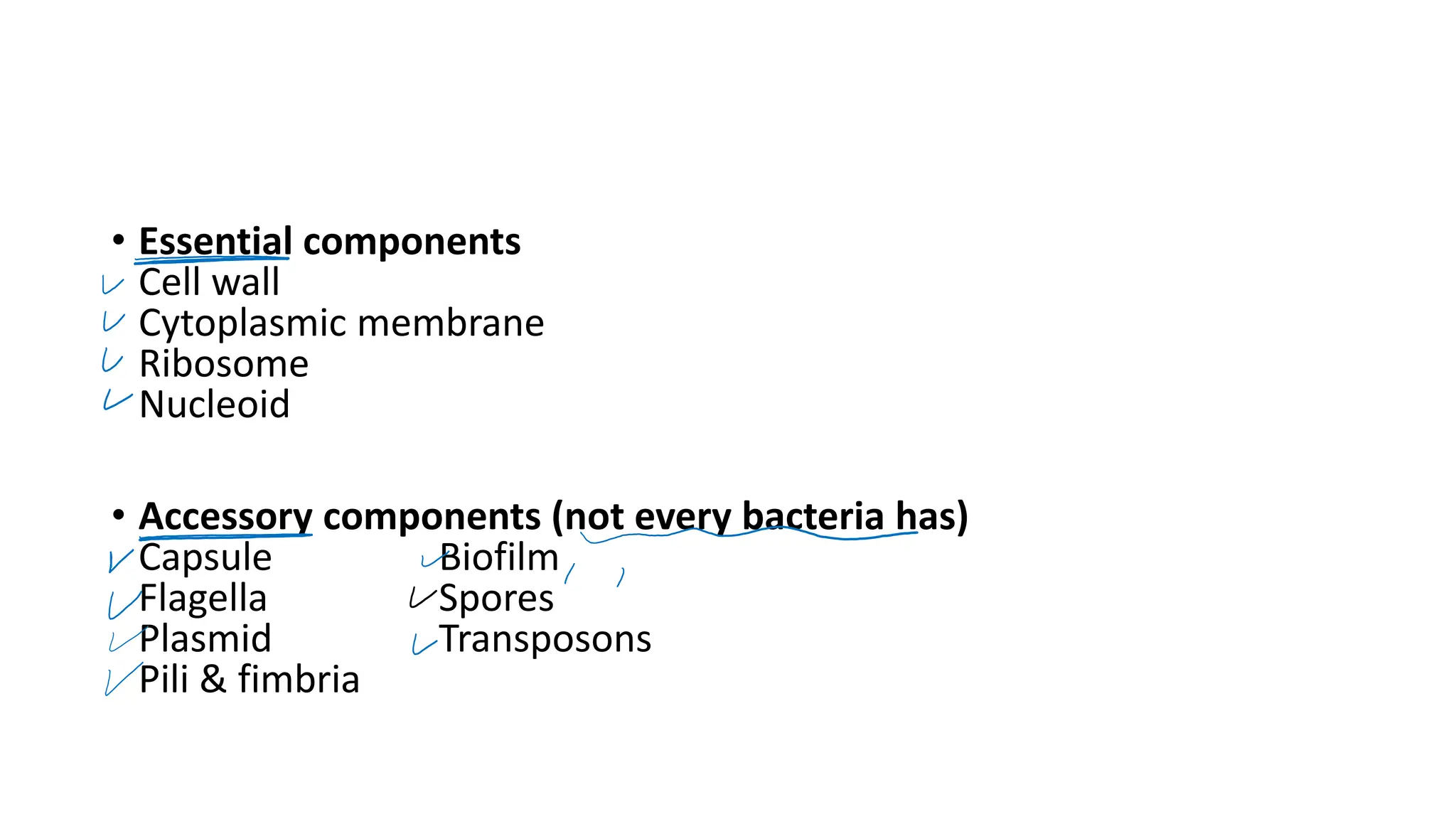
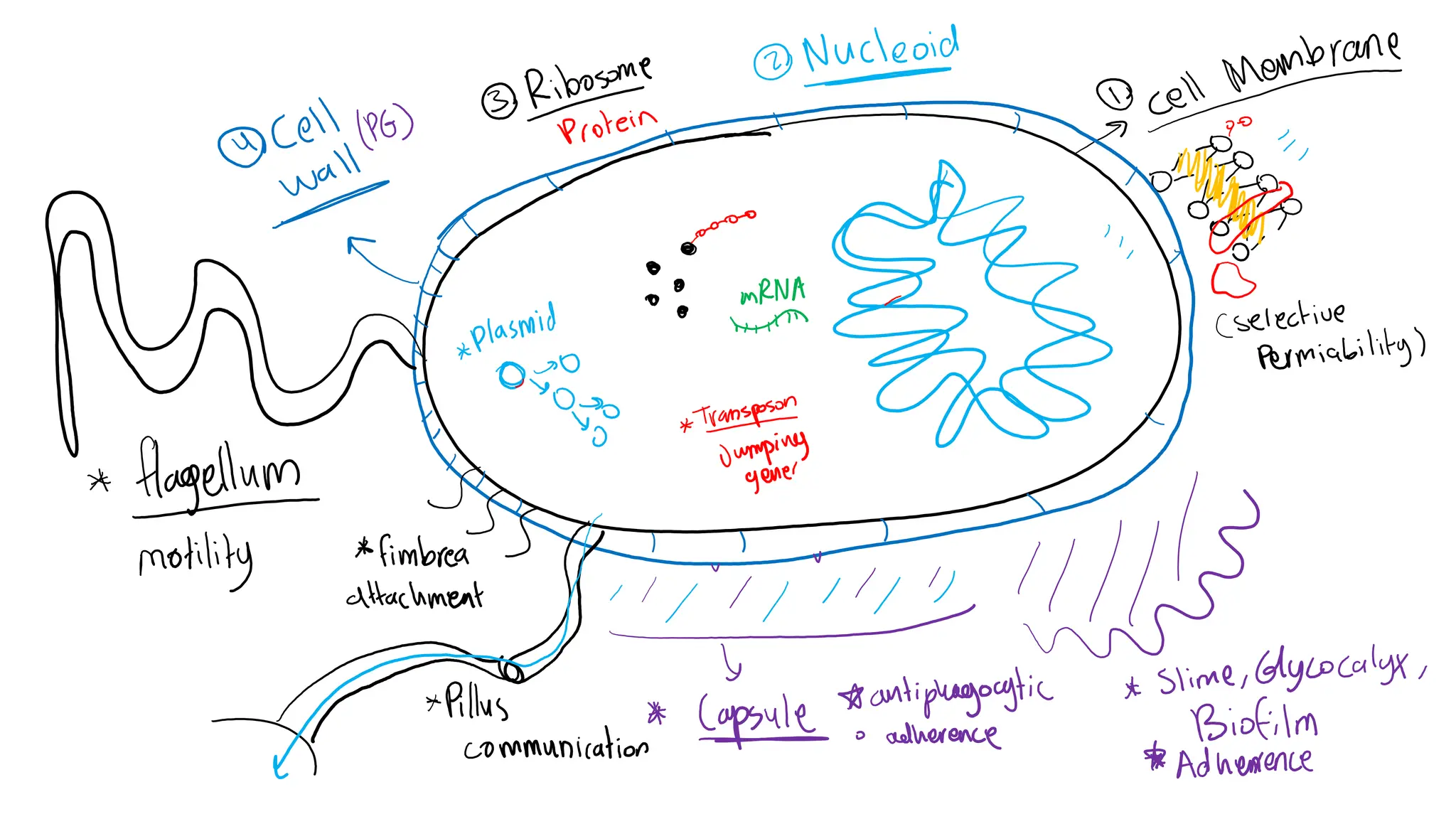
• Essential components
Cell wall
Cytoplasmic membrane
Ribosome
Nucleoid
• Accessory components (not every bacteria has)
Capsule Biofilm
Flagella Spores
Plasmid Transposons
Pili & fimbria
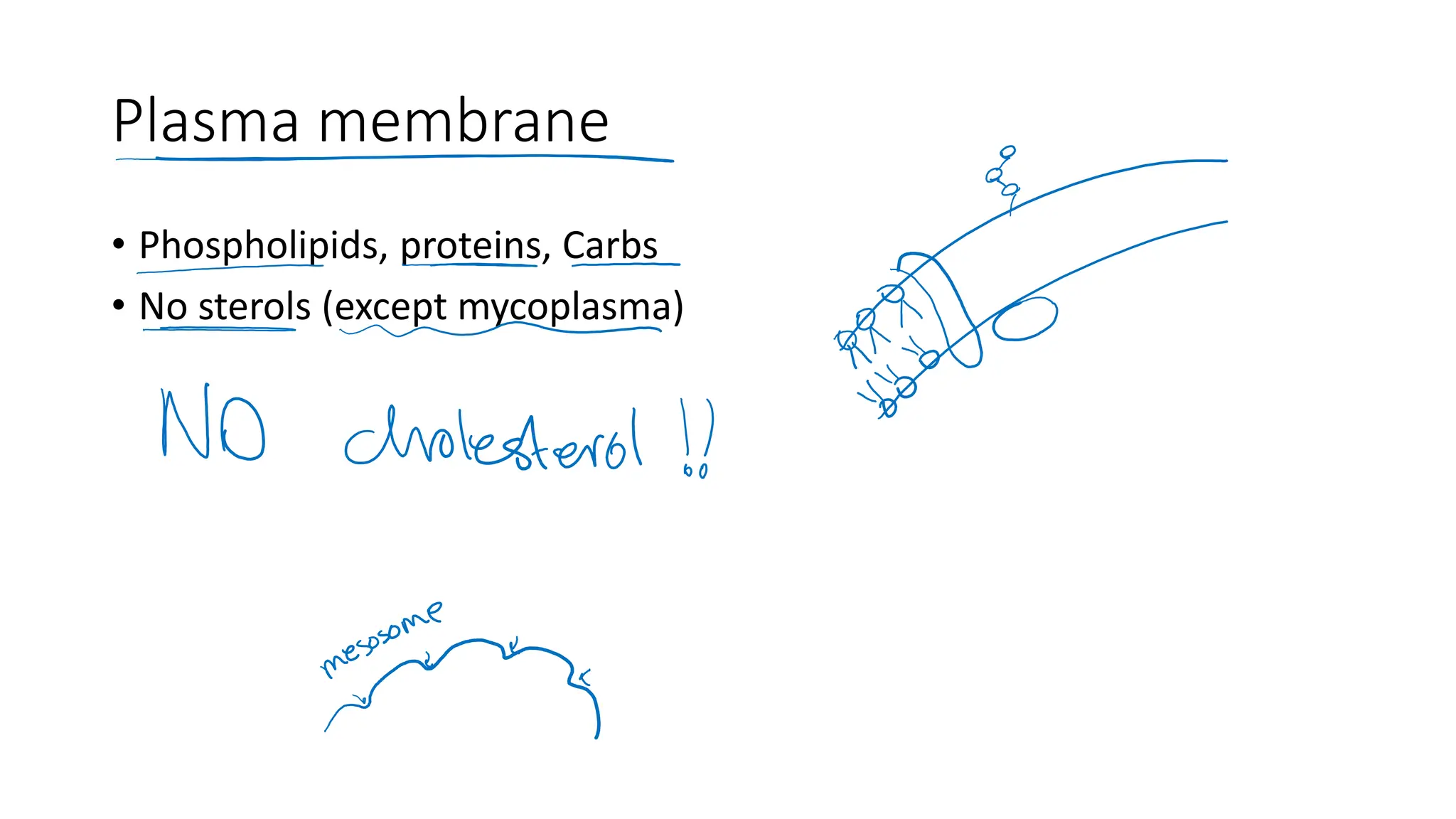
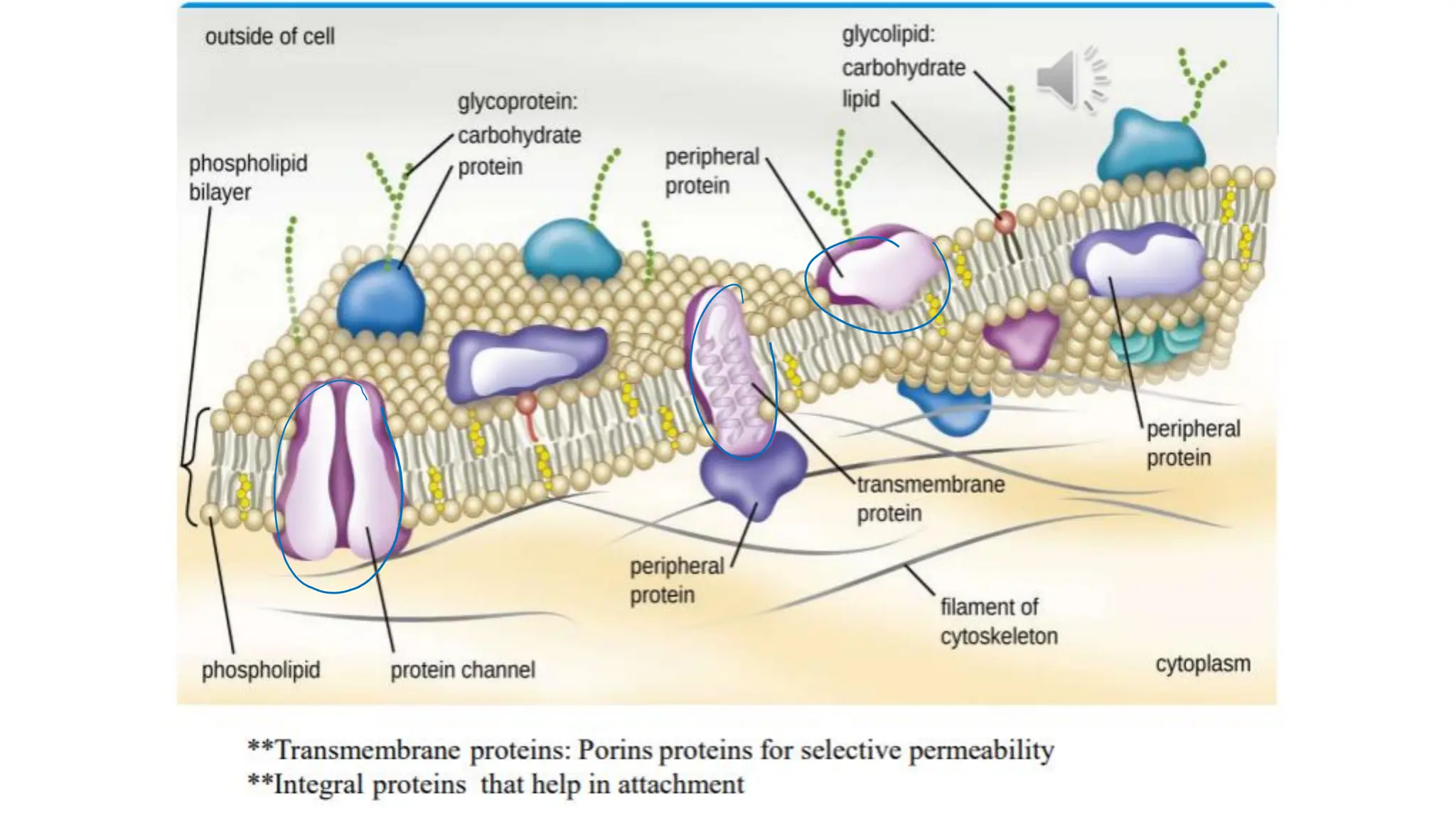
Plasma membrane
• Phospholipids, proteins, Carbs
• No sterols (except mycoplasma)
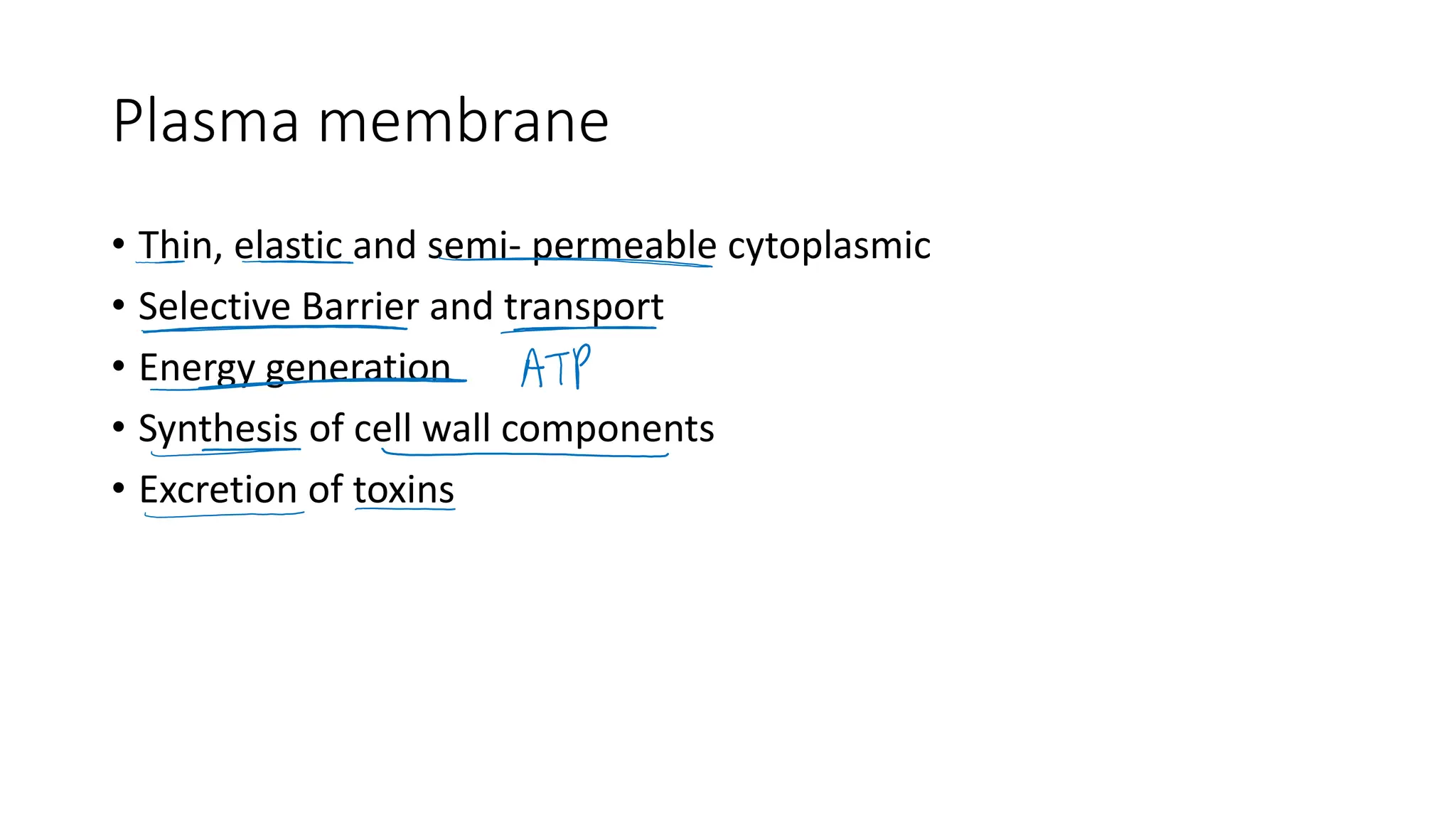
Plasma membrane
• Thin, elastic and semi- permeable cytoplasmic
• Selective Barrier and transport
• Energy generation
• Synthesis of cell wall components
• Excretion of toxins
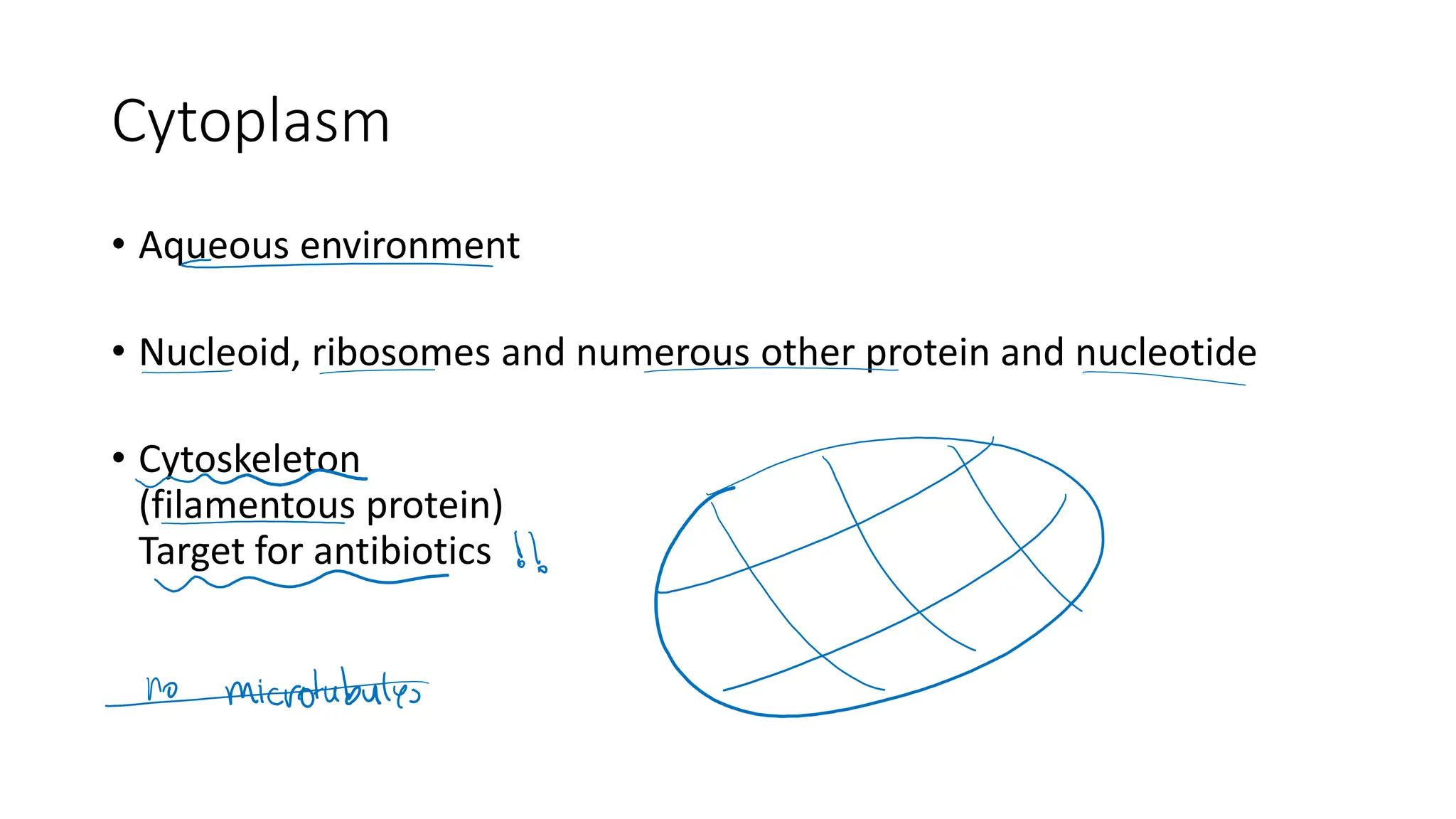
Cytoplasm
• Aqueous environment
• Nucleoid, ribosomes and numerous other protein and nucleotide
• Cytoskeleton
(filamentous protein)
Target for antibiotics
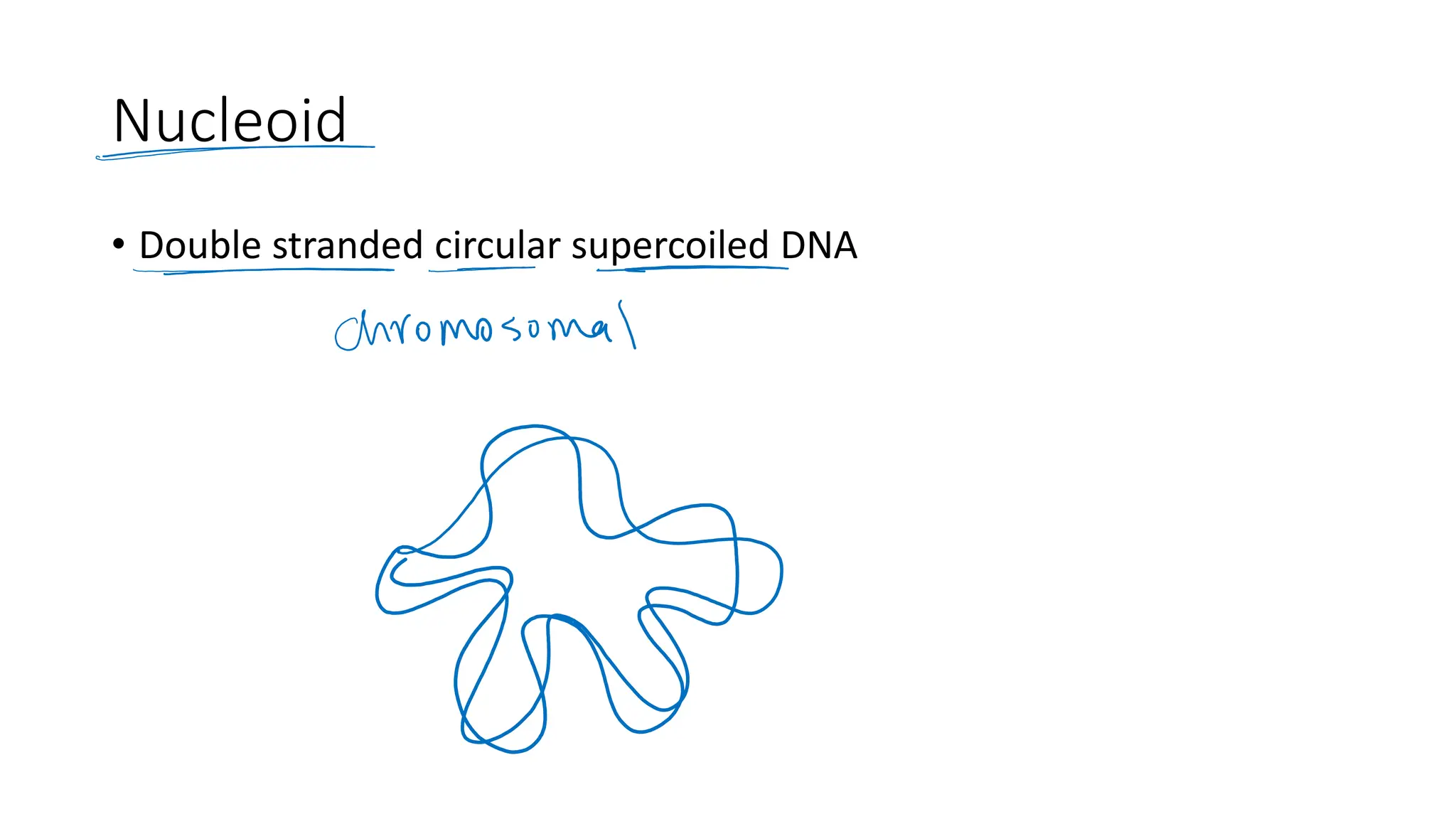
Nucleoid
• Double stranded circular supercoiled DNA
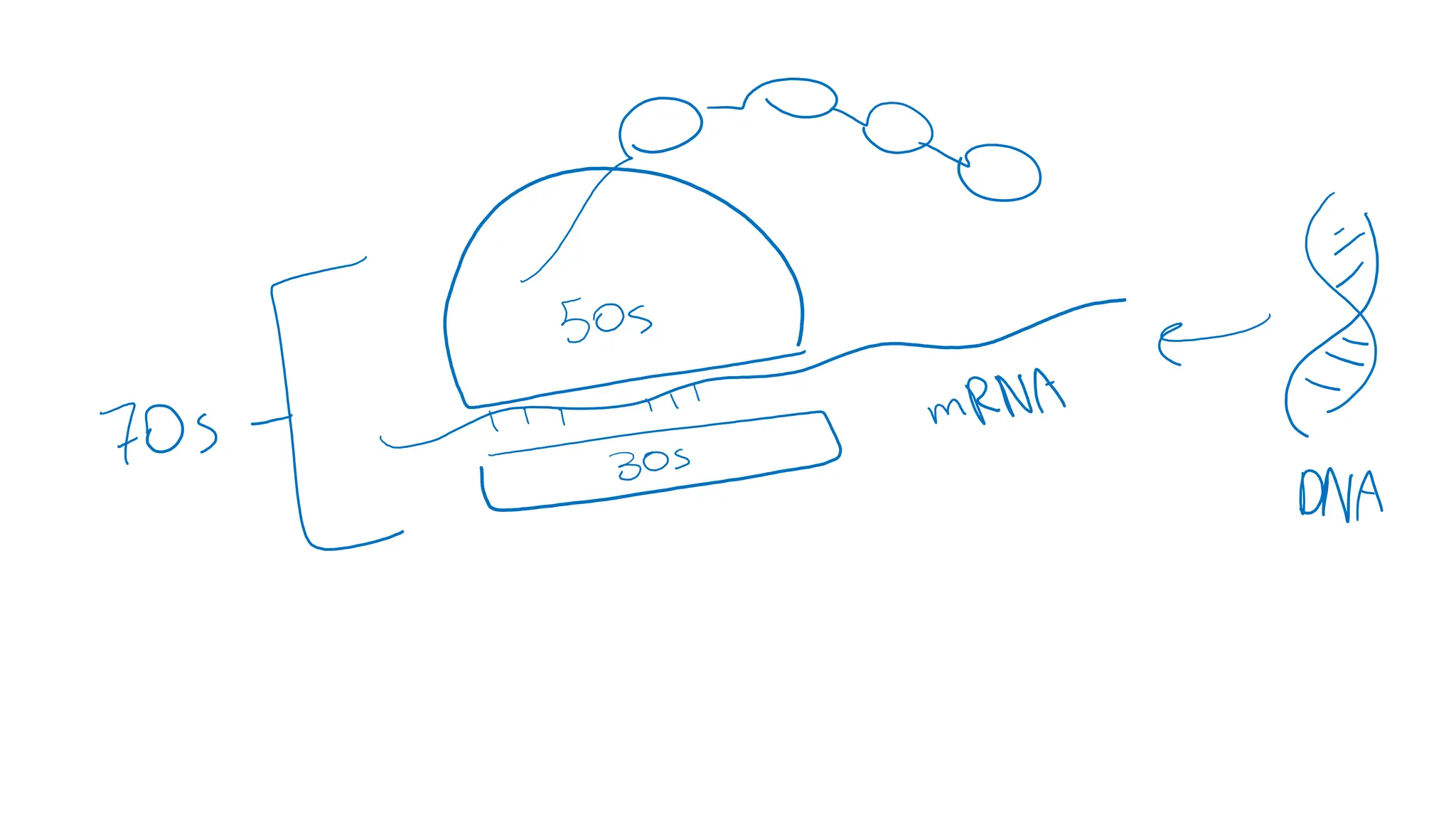
Ribosomes
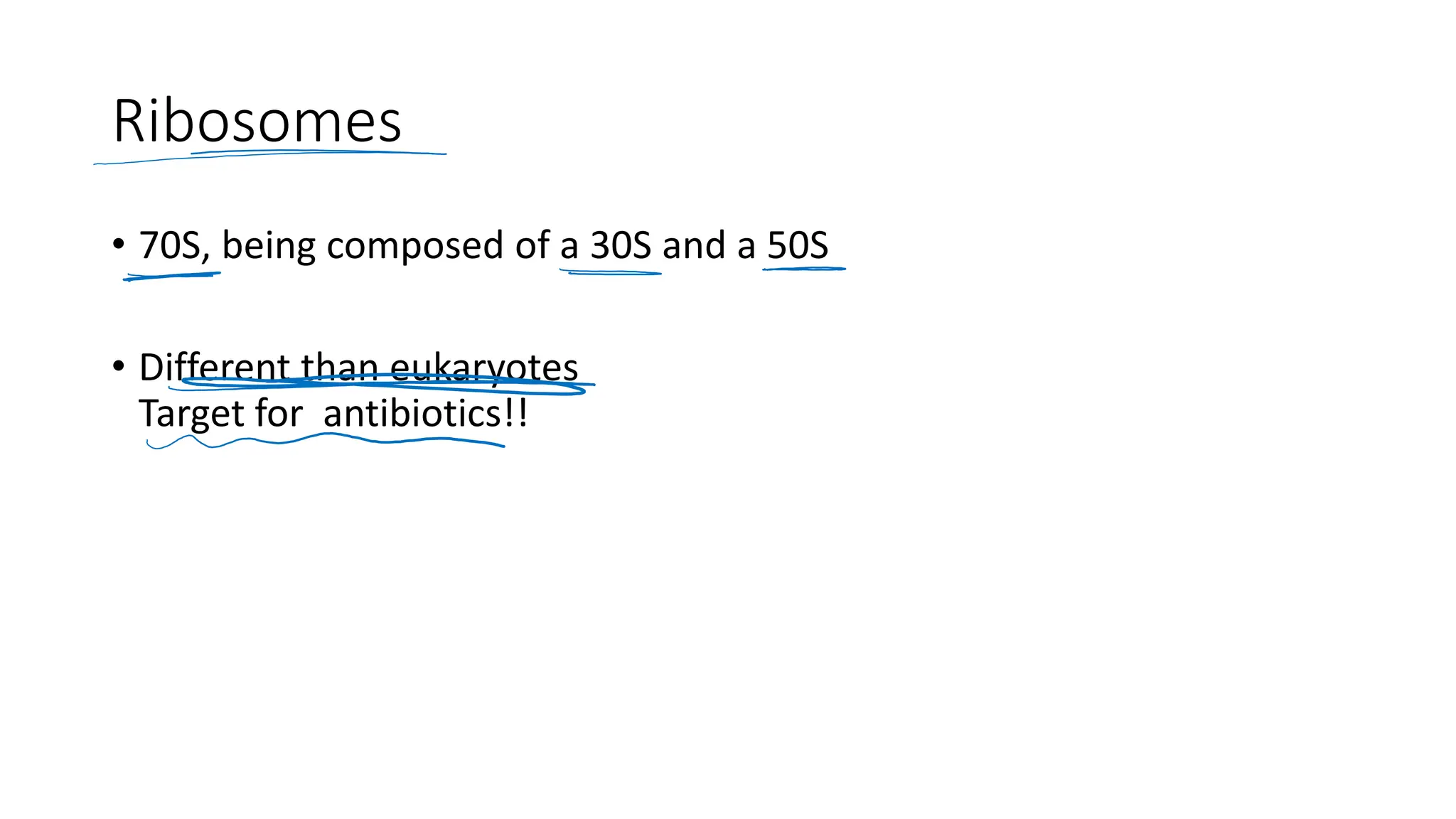
• 70S, being composed of a 30S and a 50S
• Different than eukaryotes
Target for antibiotics!!
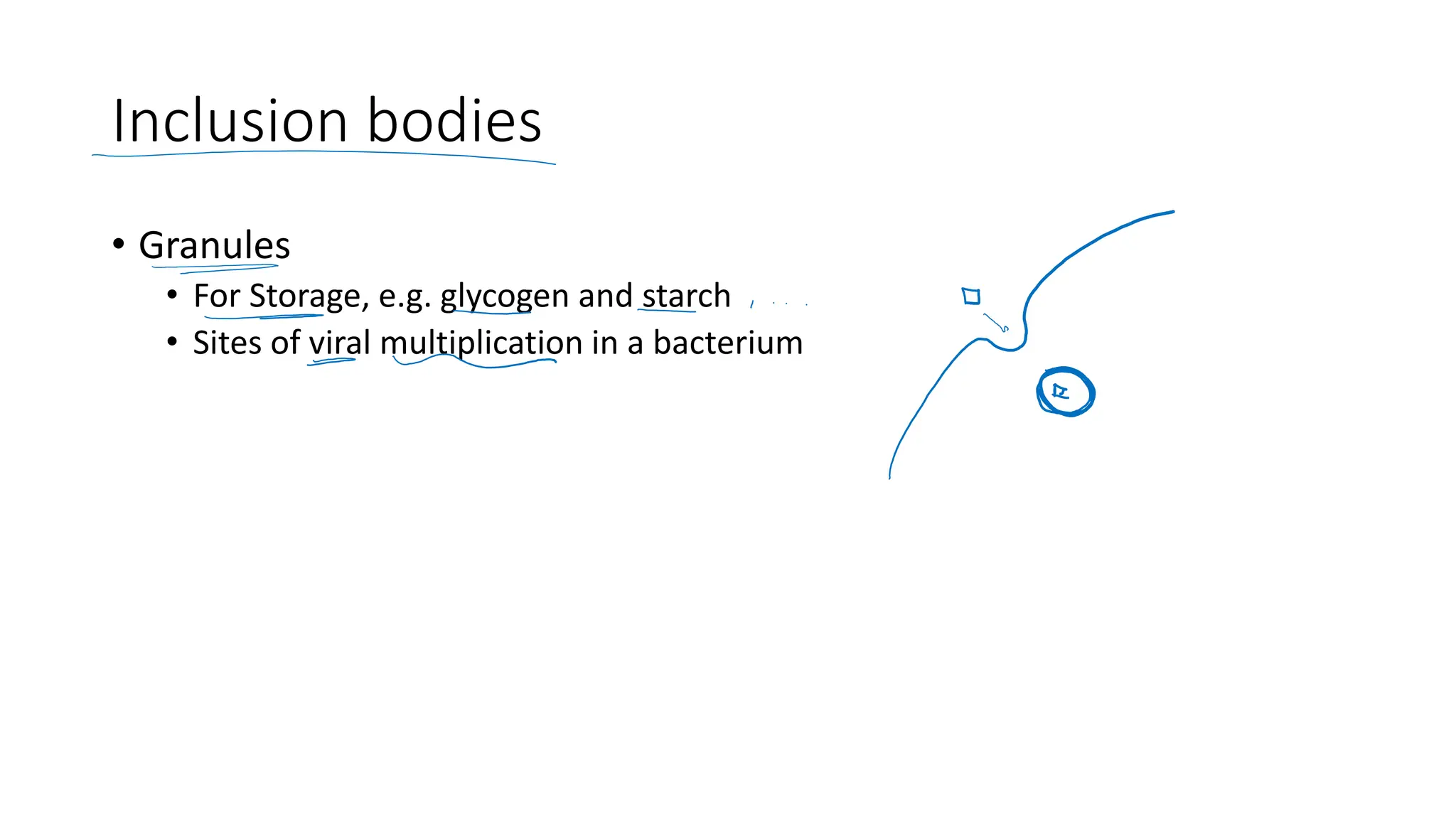
Inclusion bodies
• Granules
• For Storage, e.g. glycogen and starch
• Sites of viral multiplication in a bacterium
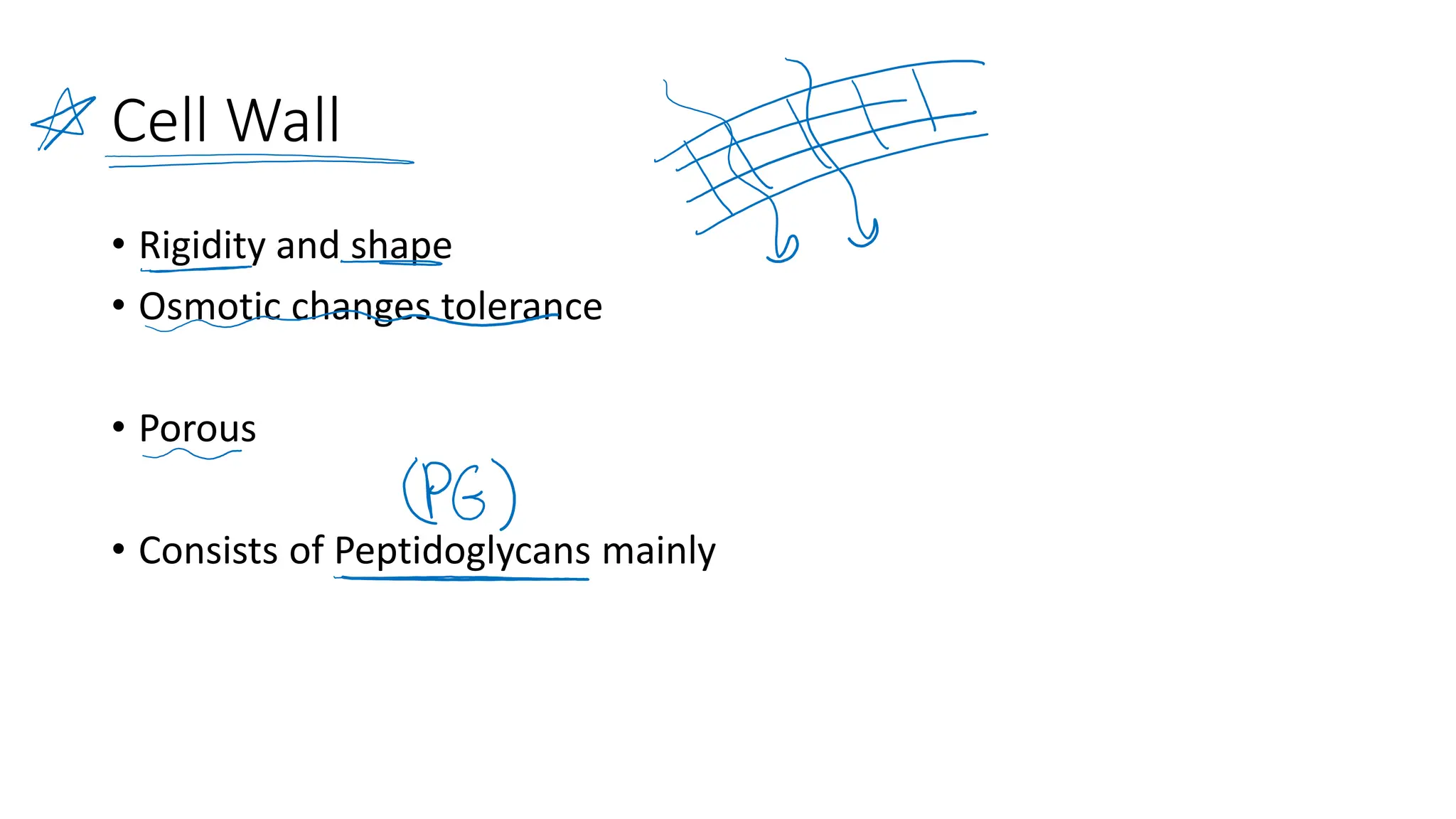
Cell Wall
• Rigidity and shape
• Osmotic changes tolerance
• Porous
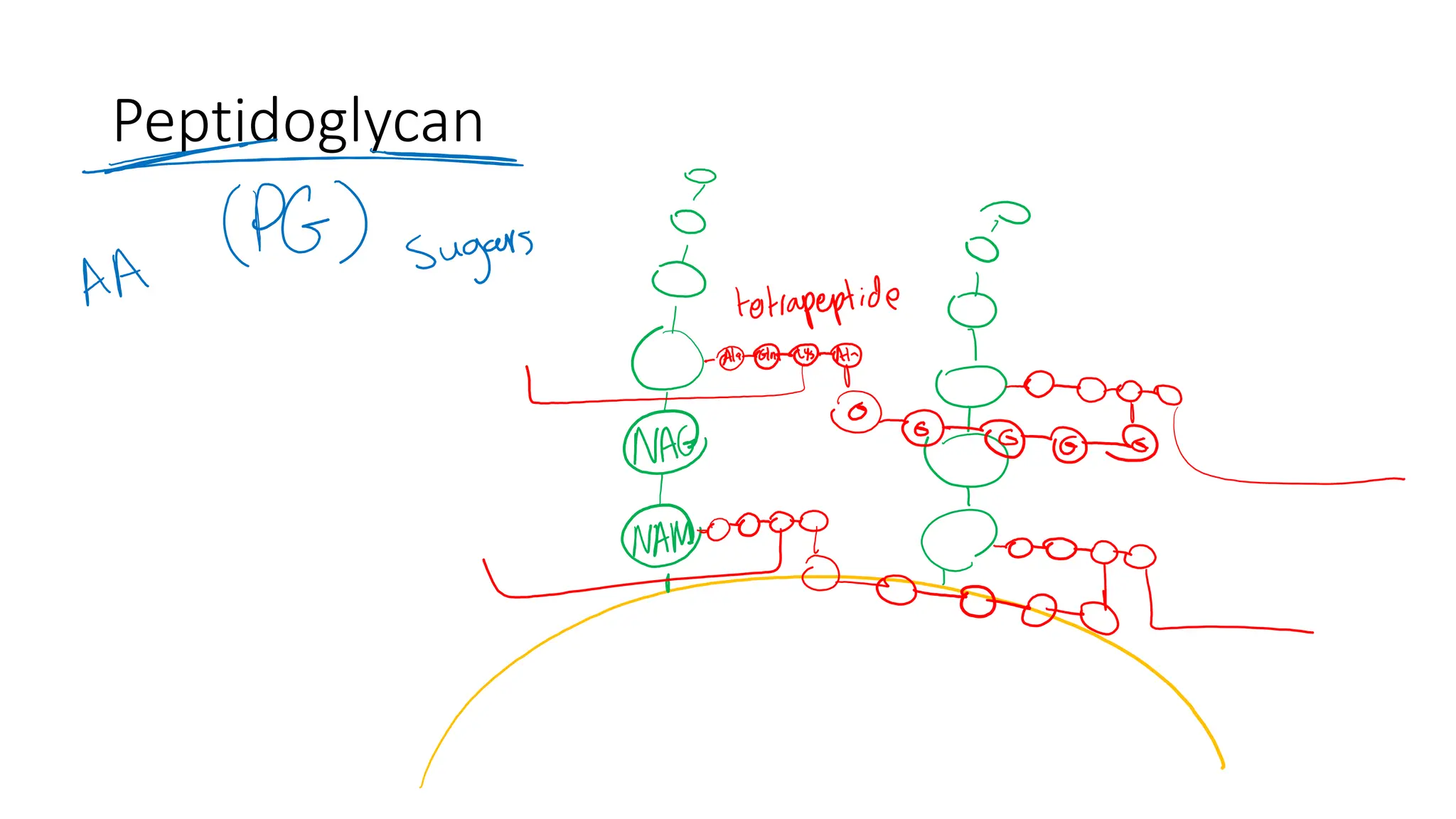
• Consists of Peptidoglycans mainly
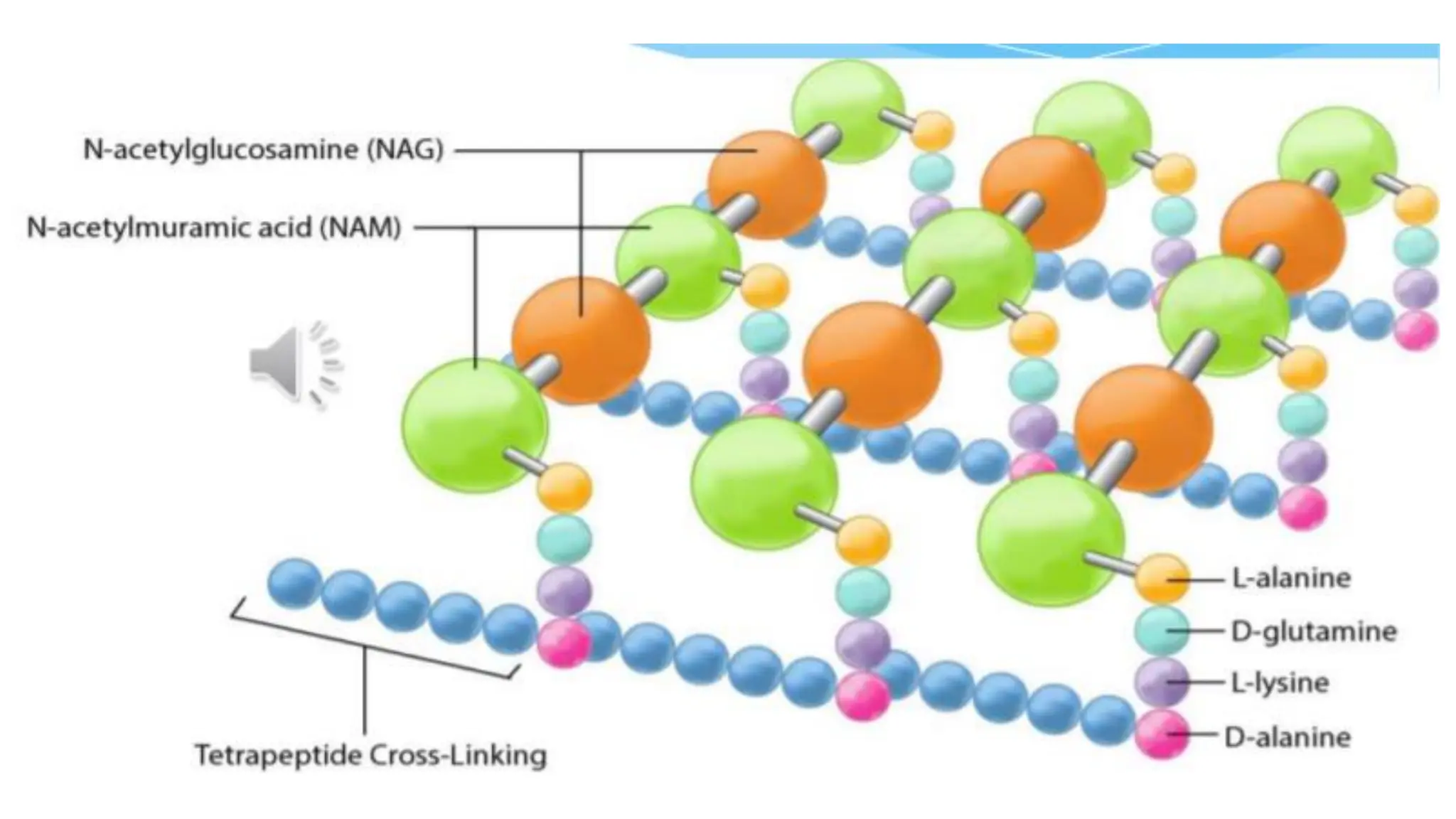
Peptidoglycan
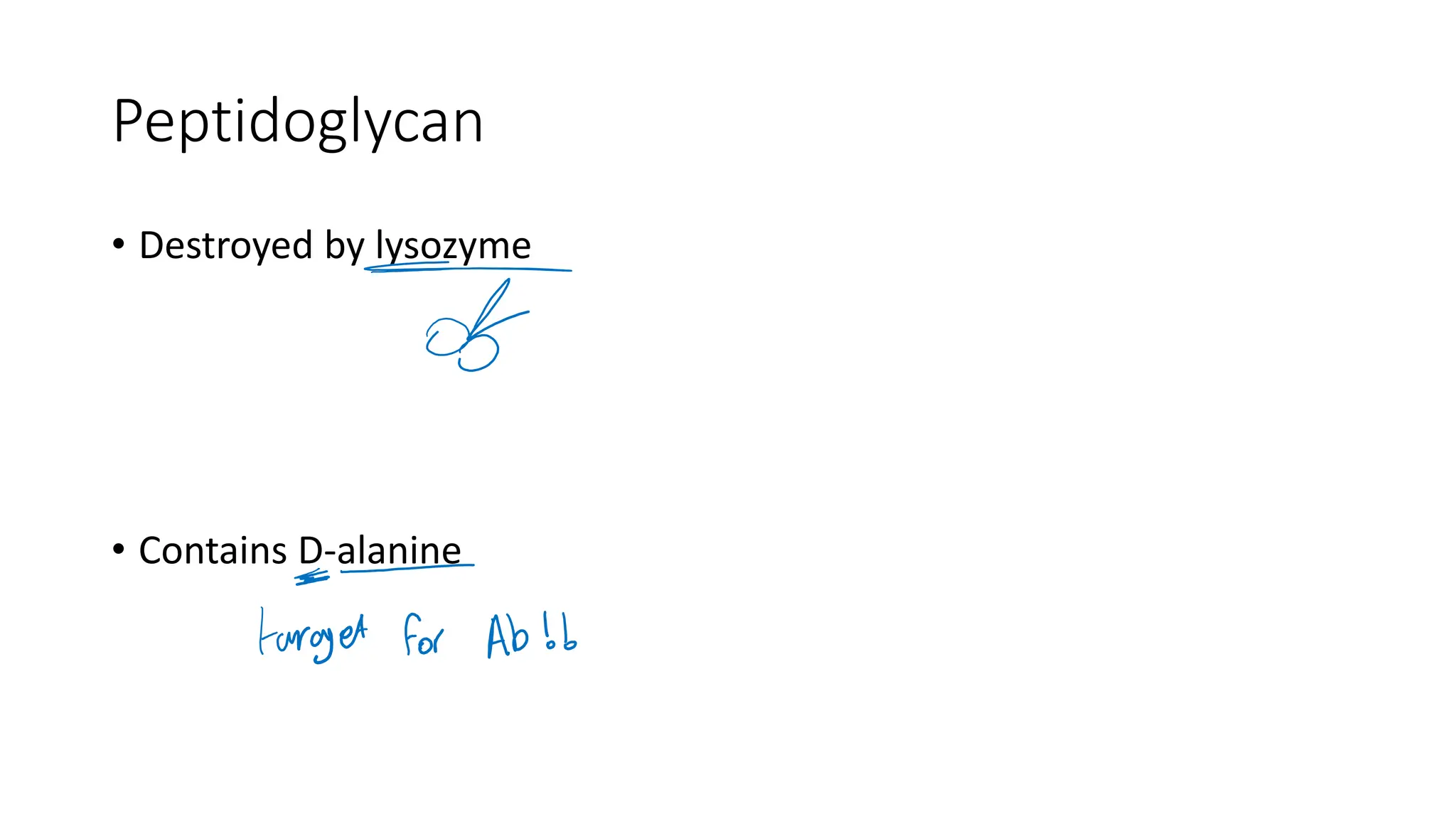
Peptidoglycan
• Destroyed by lysozyme
• Contains D-alanine
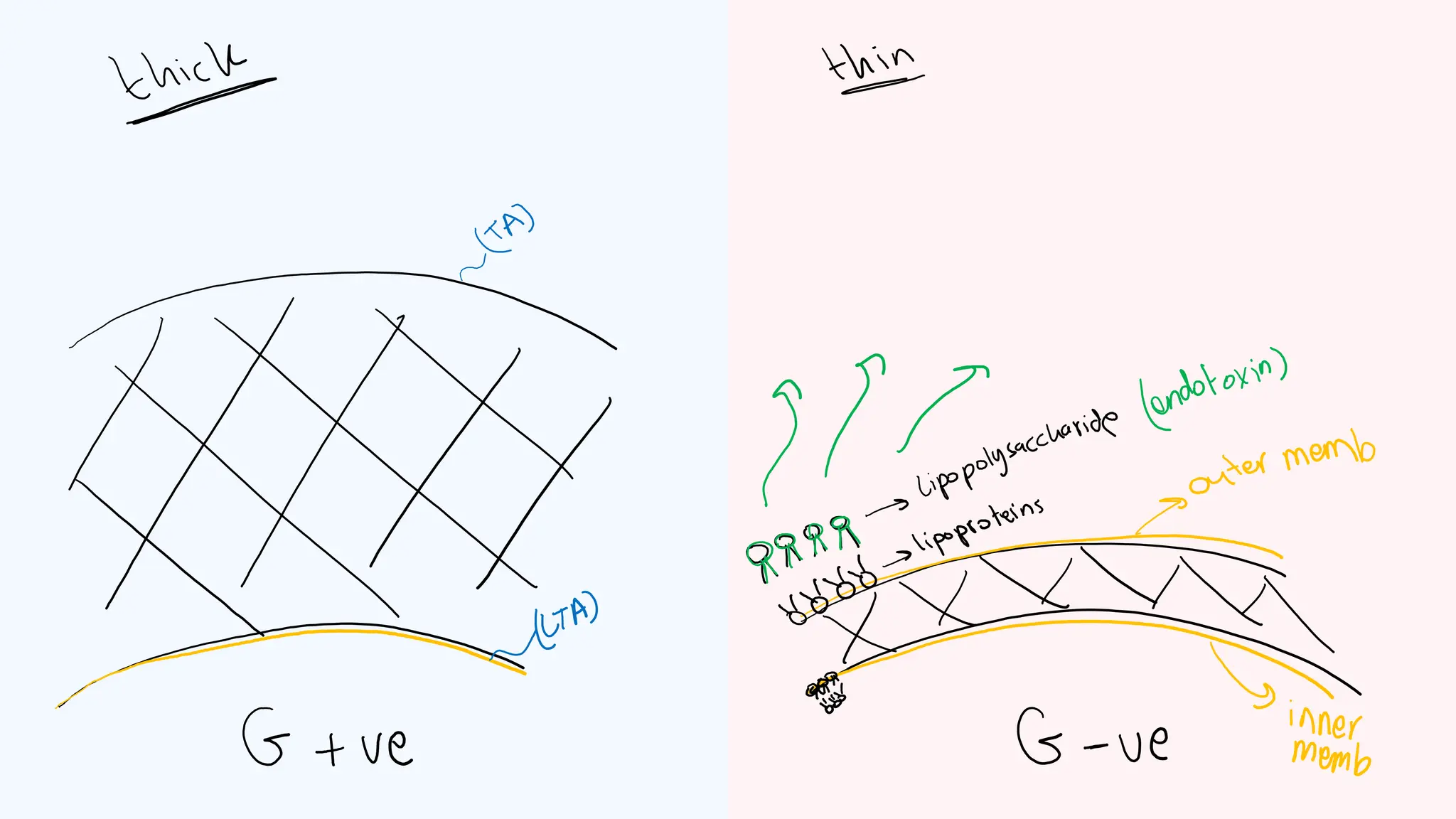
Cell wall
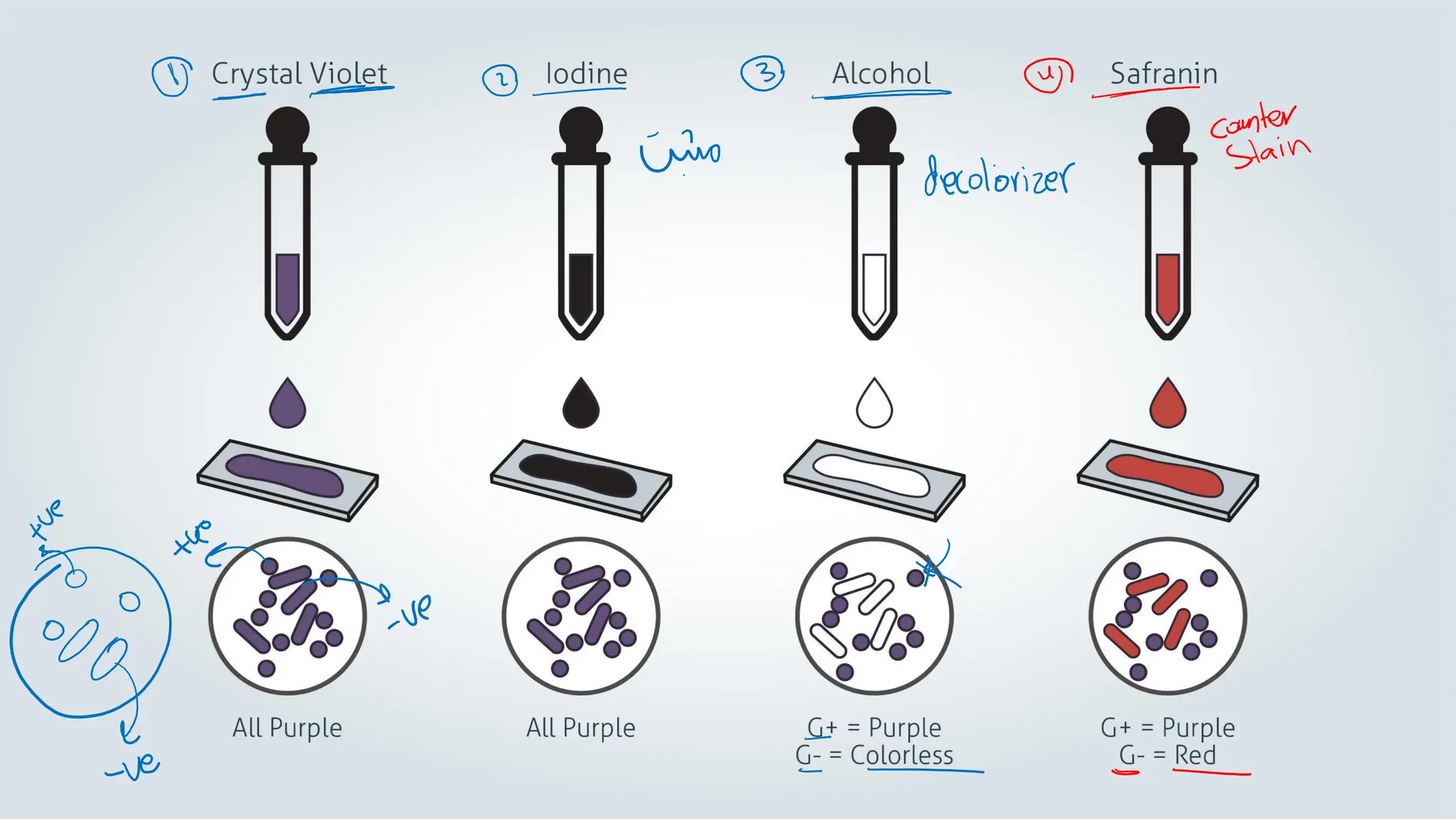
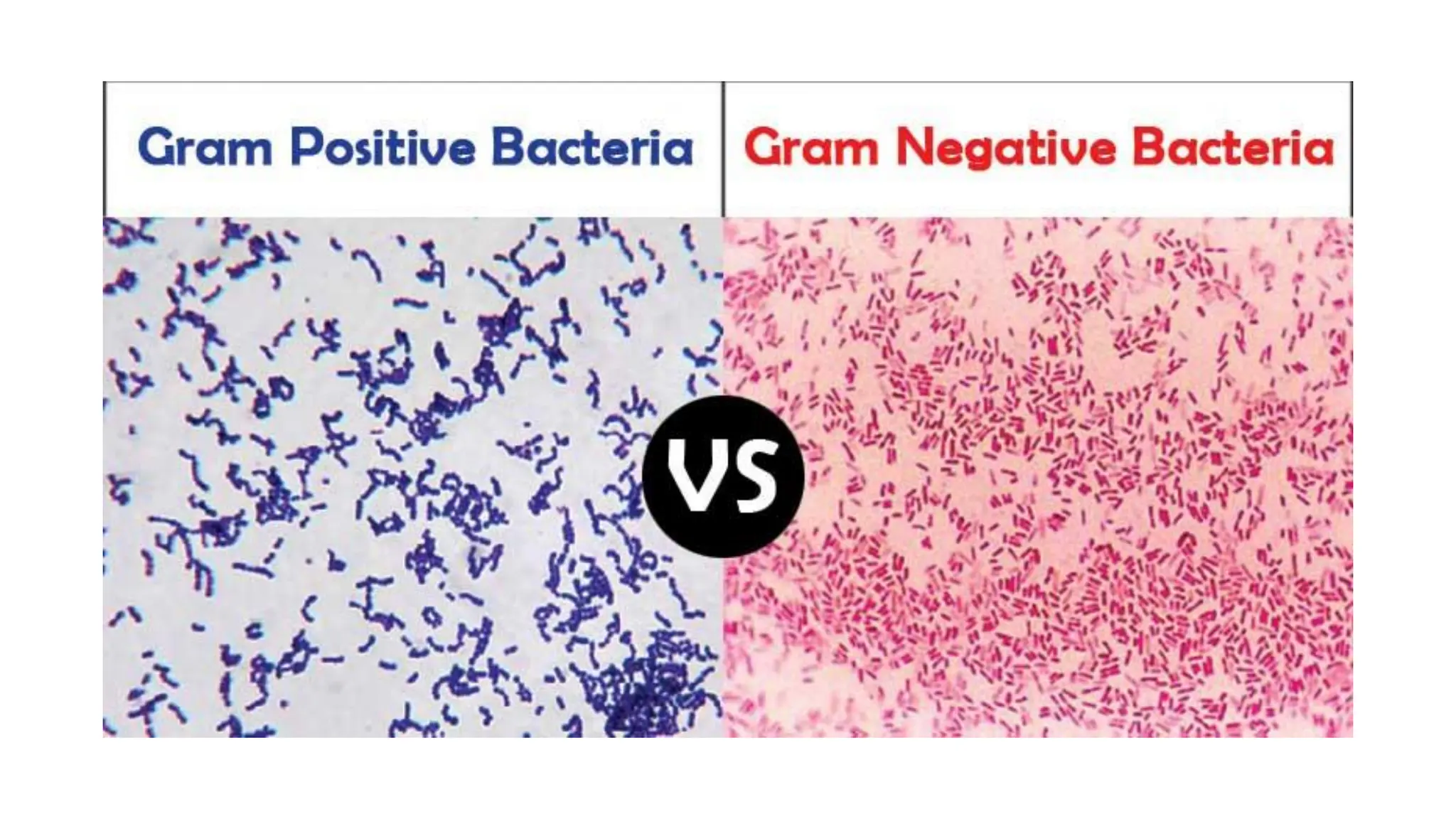
• Gram positive vs Gram negative
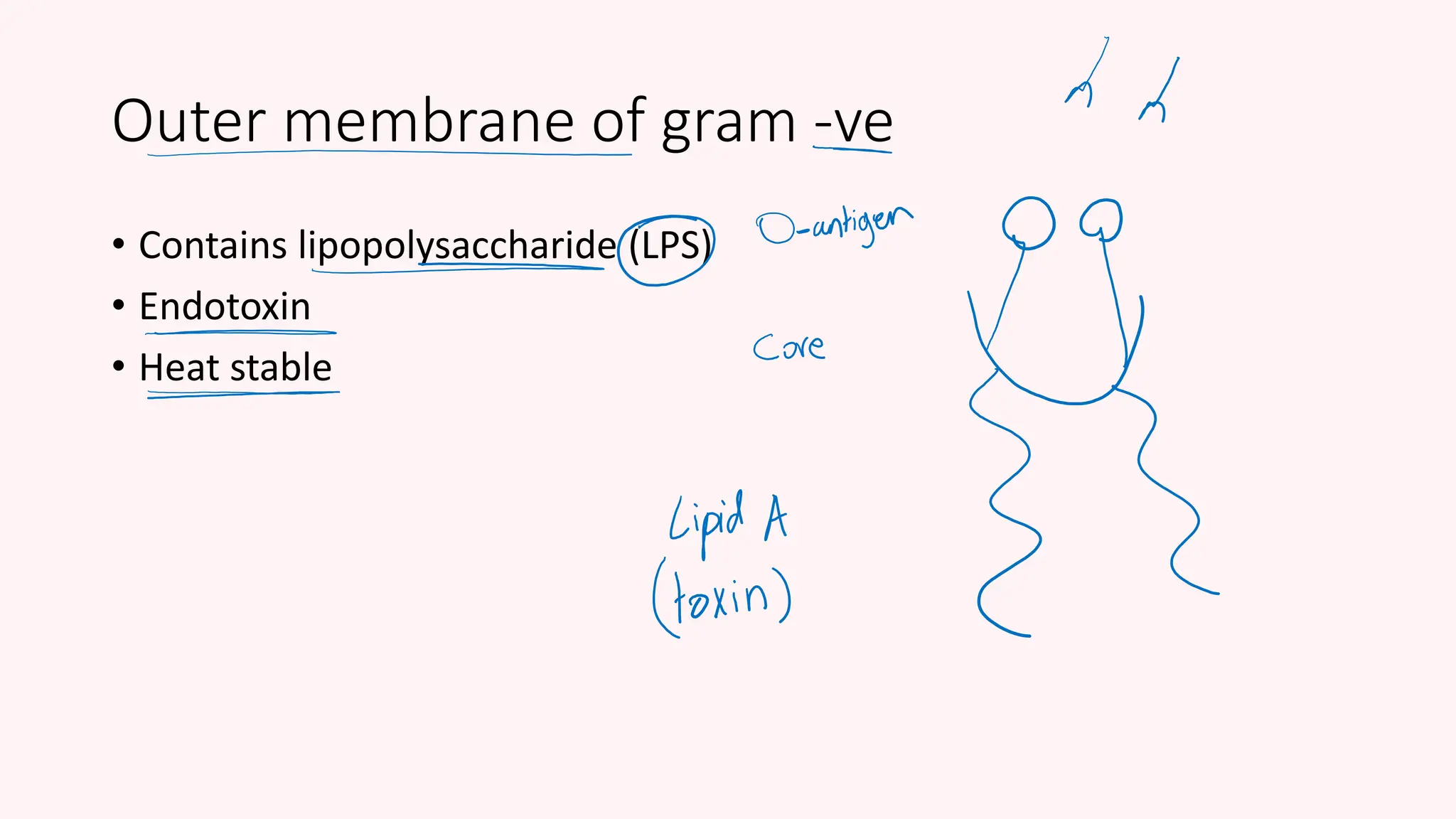
Outer membrane of gram -ve
• Contains lipopolysaccharide (LPS)
• Endotoxin
• Heat stable
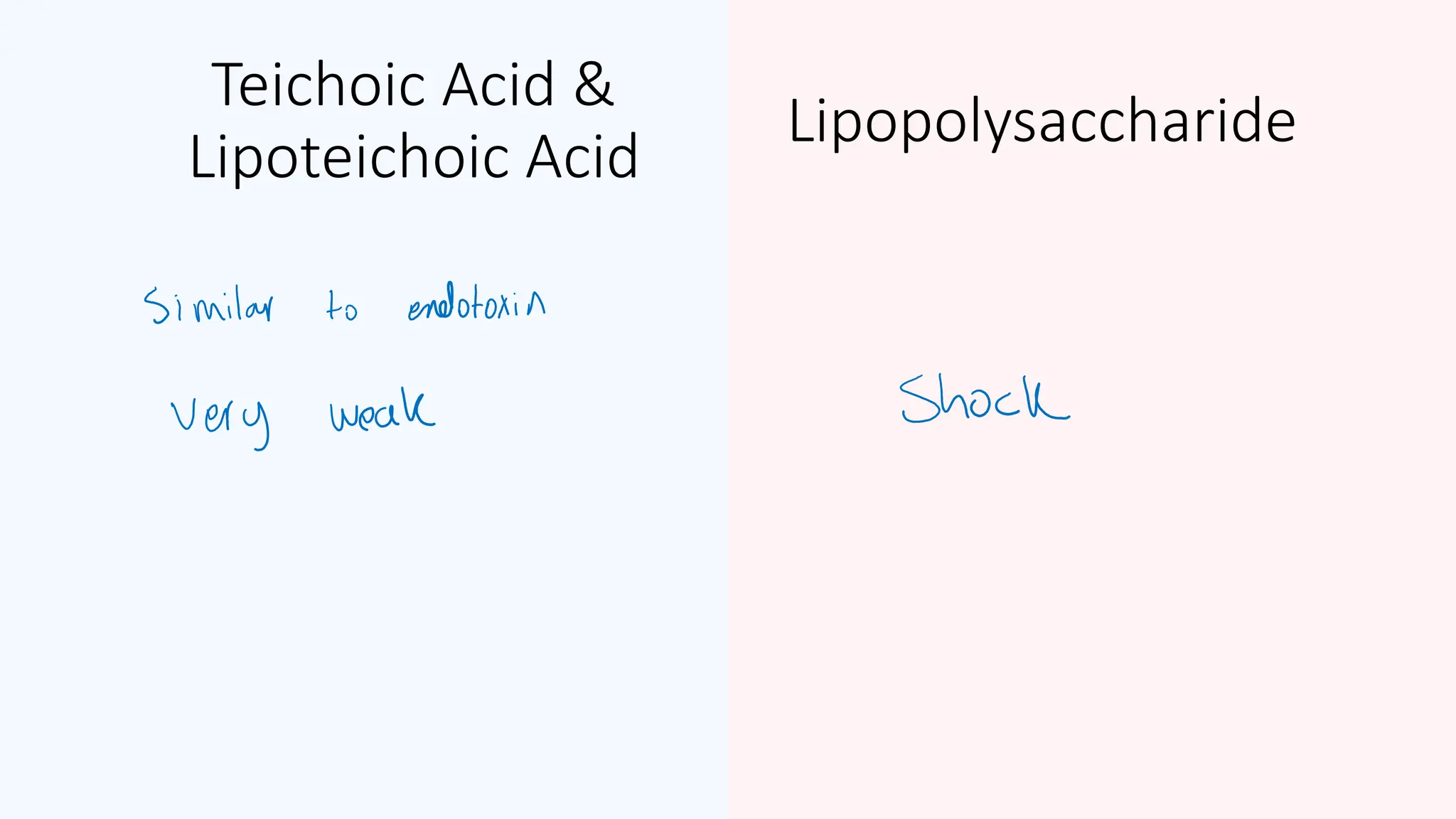
Lipopolysaccharide
Teichoic Acid &
Lipoteichoic Acid
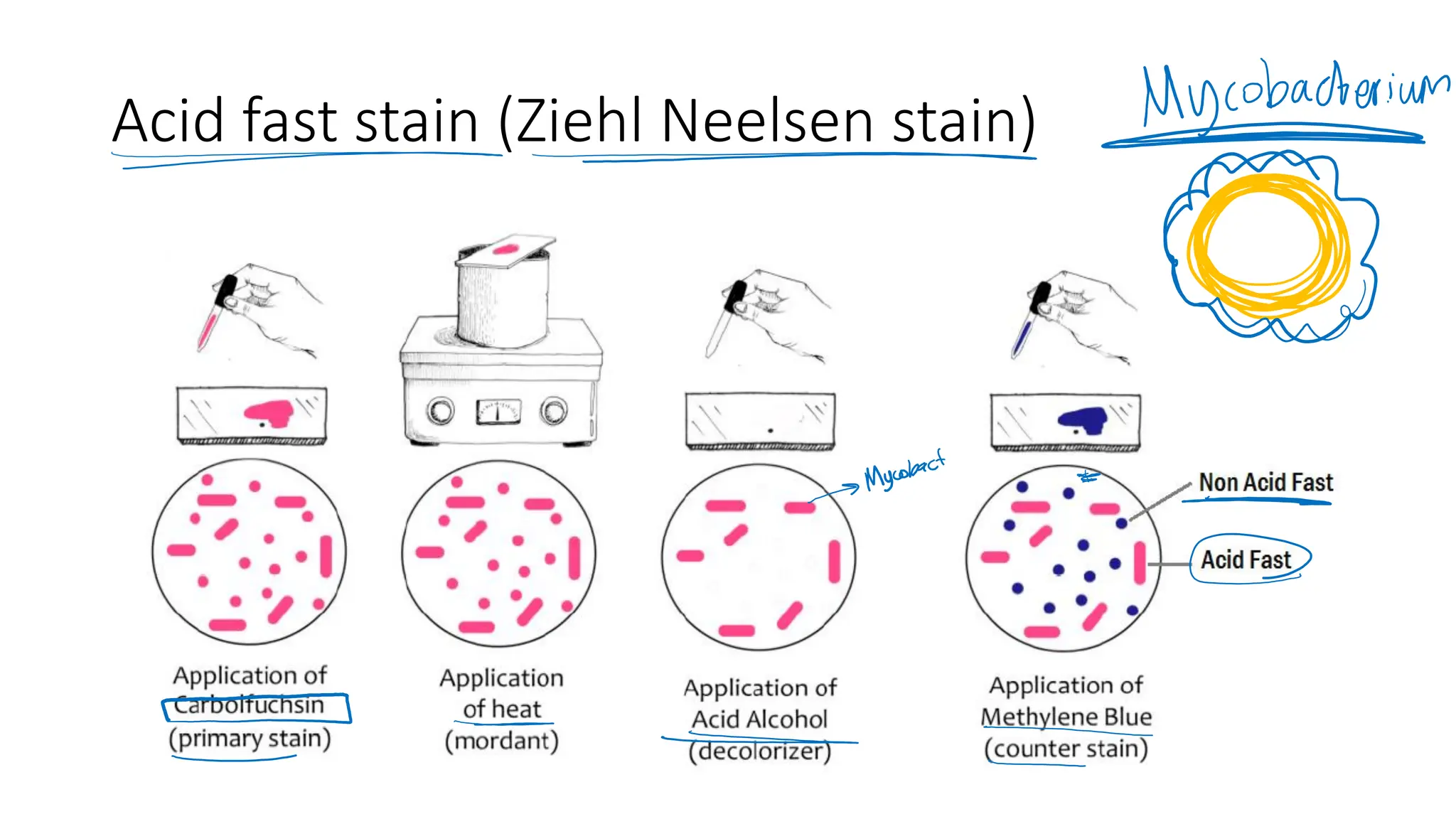
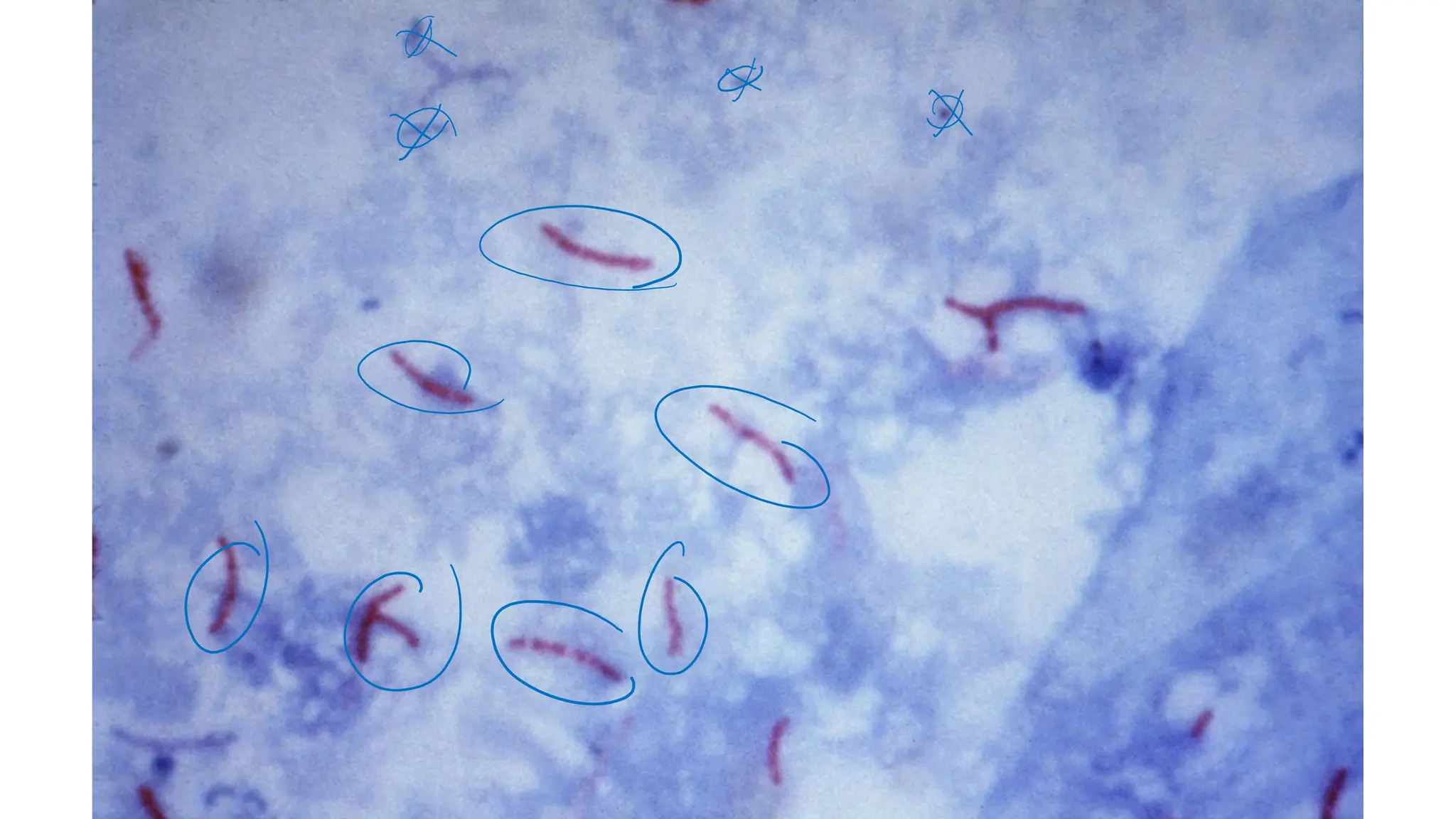
Acid fast stain (Ziehl Neelsen stain)
• Some bacteria can not be stained because they are intracellular as
Chlamydiae & Rickettsiae.
Culturing Bacteria & Streaking Method
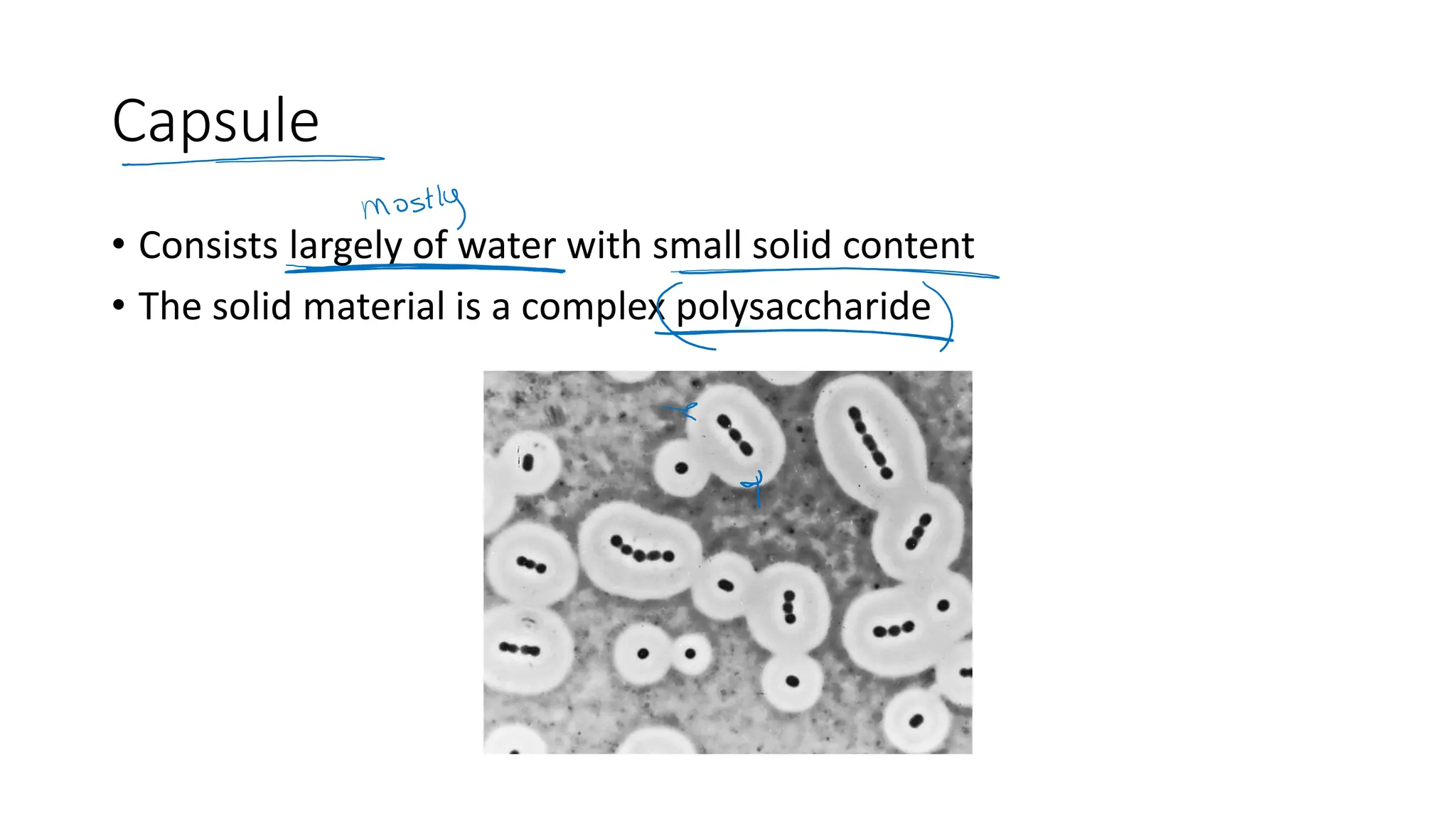
Capsule
• Consists largely of water with small solid content
• The solid material is a complex polysaccharide
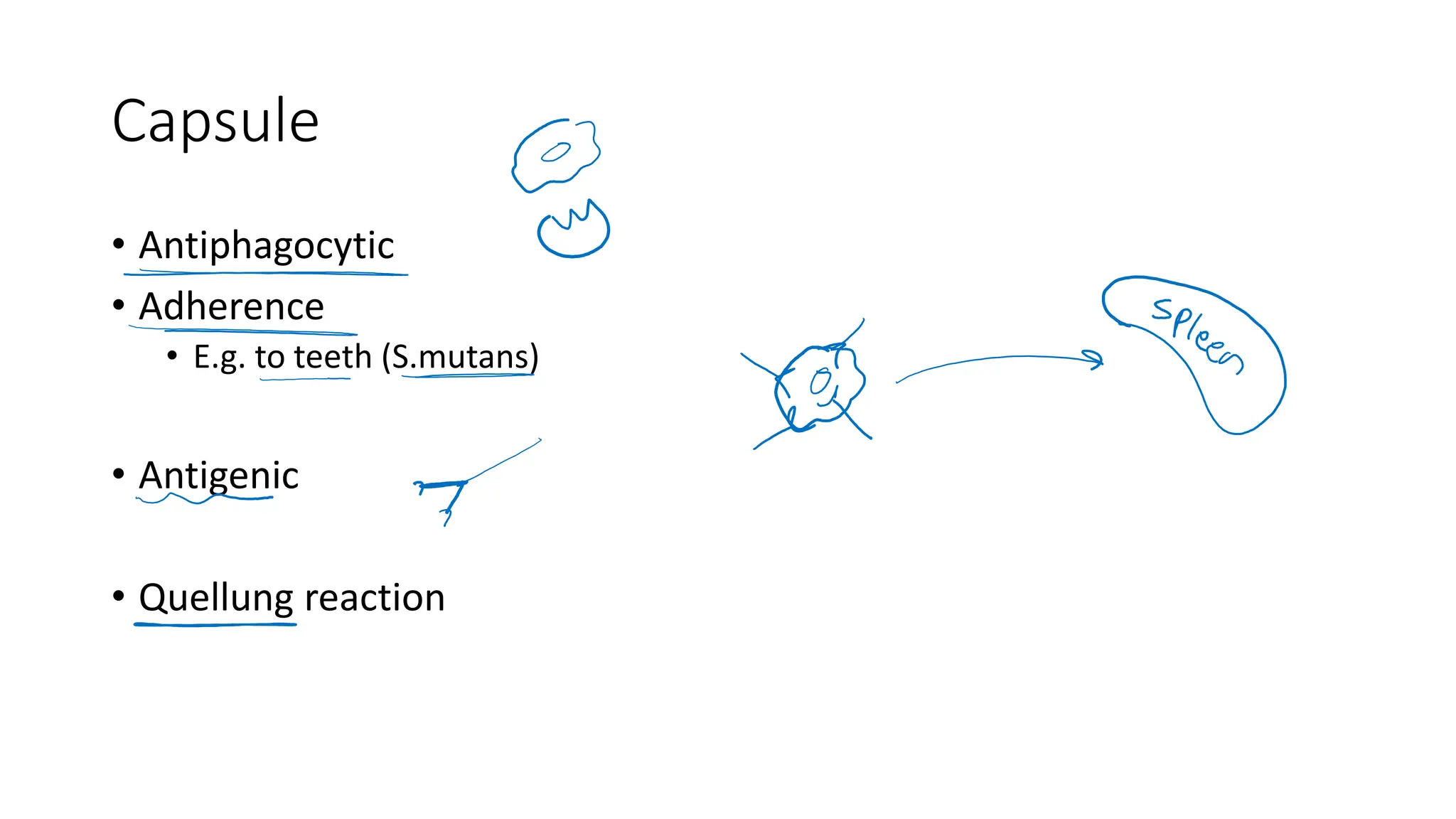
Capsule
• Antiphagocytic
• Adherence
• E.g. to teeth (S.mutans)
• Antigenic
• Quellung reaction
Free slime / Glycocalyx / Biofilm
• Extracellular polysaccharide coat
• Adherence
• e.g.: heart valves, skin, catheters, surface of the teeth.
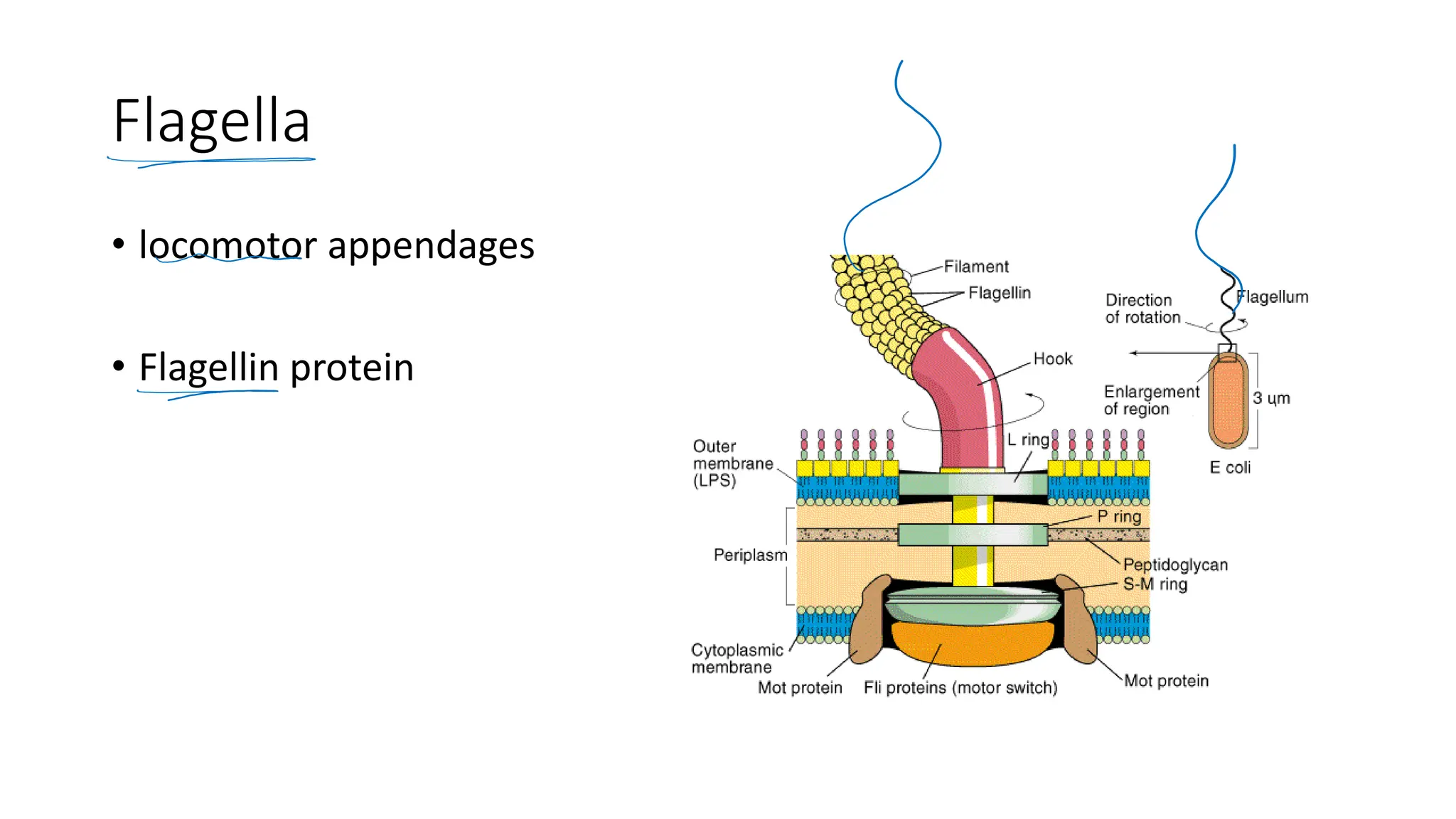
Flagella
• locomotor appendages
• Flagellin protein
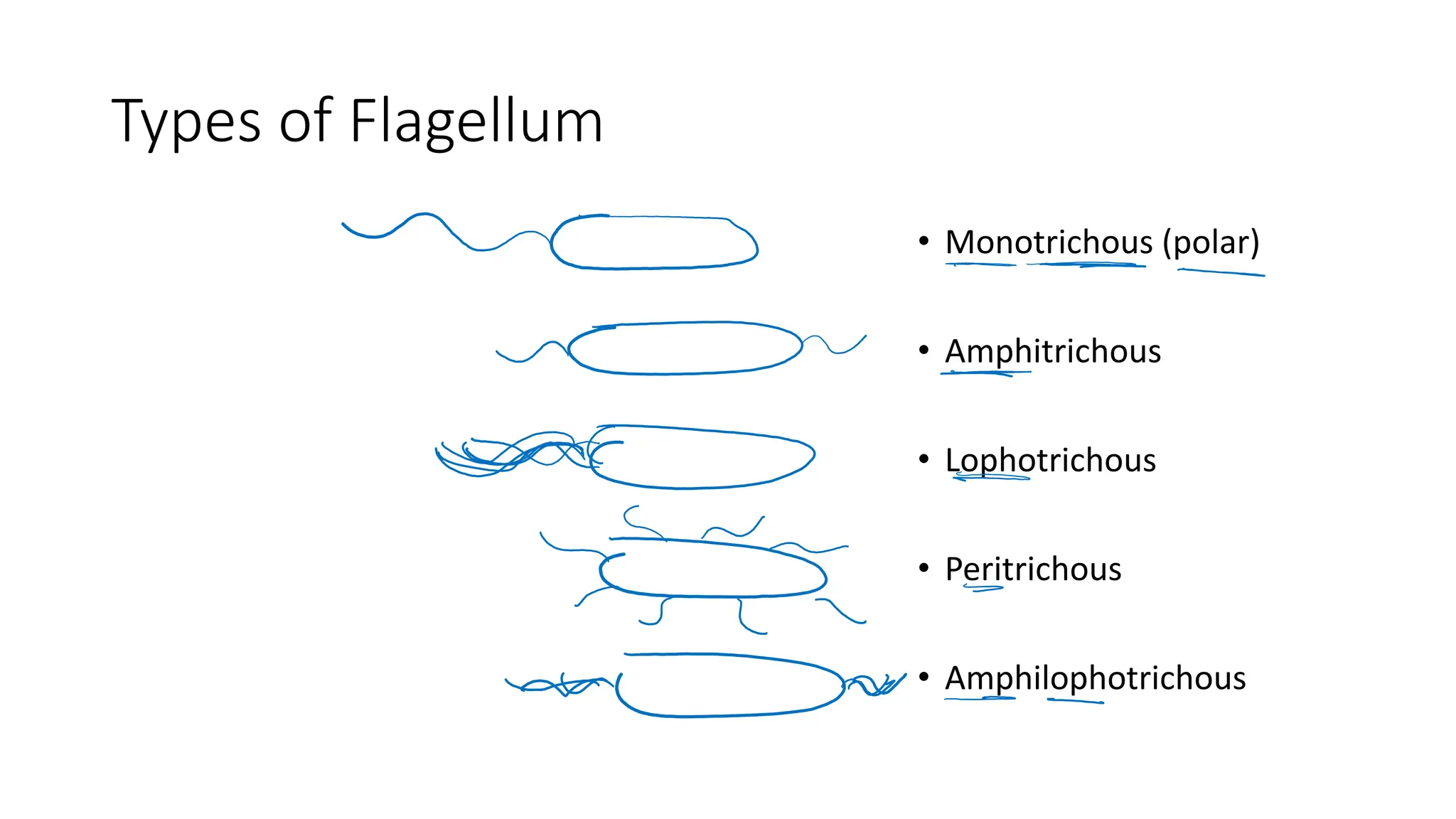
Types of Flagellum
• Monotrichous (polar)
• Amphitrichous
• Lophotrichous
• Peritrichous
• Amphilophotrichous
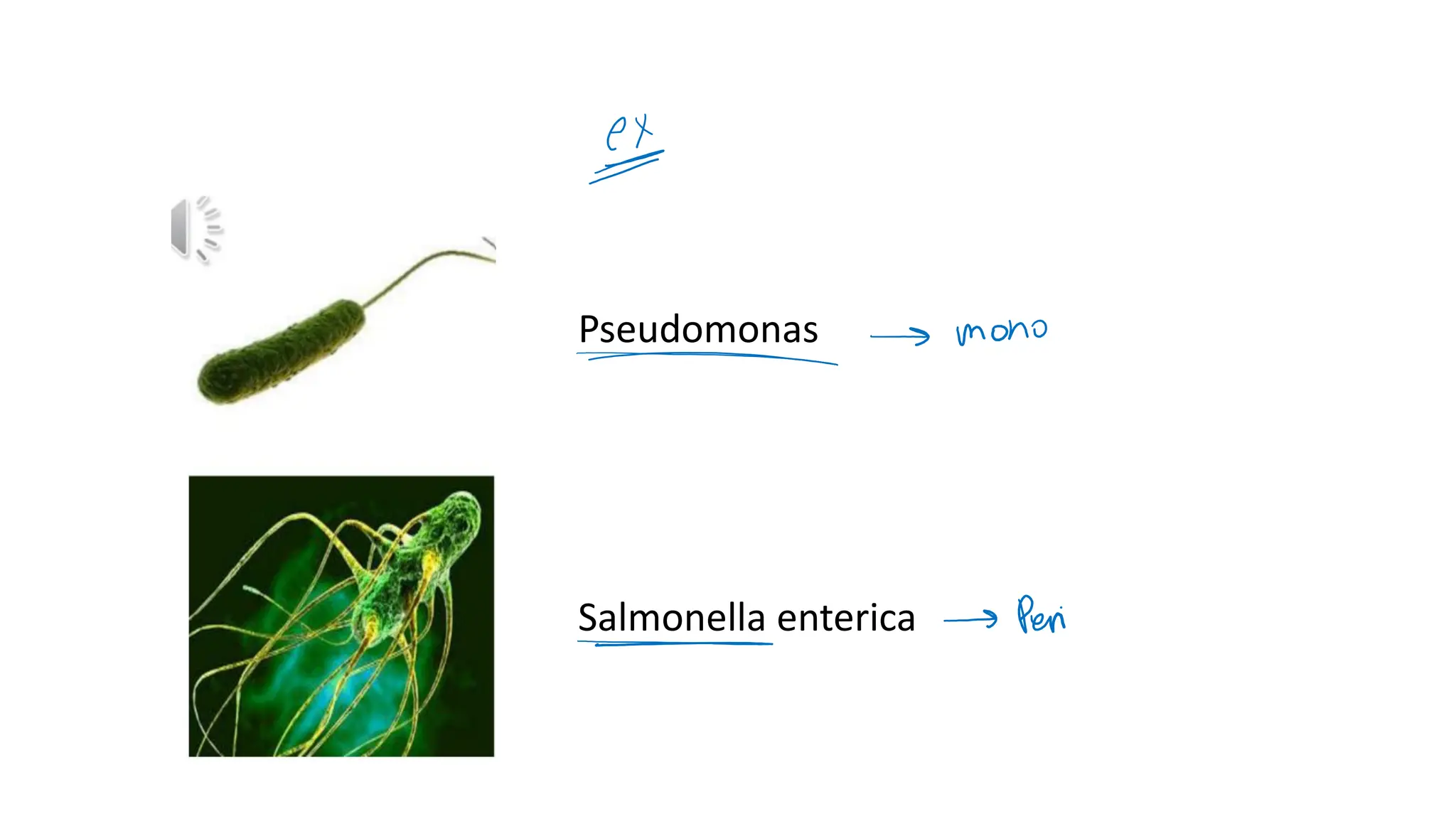
Pseudomonas
Salmonella enterica
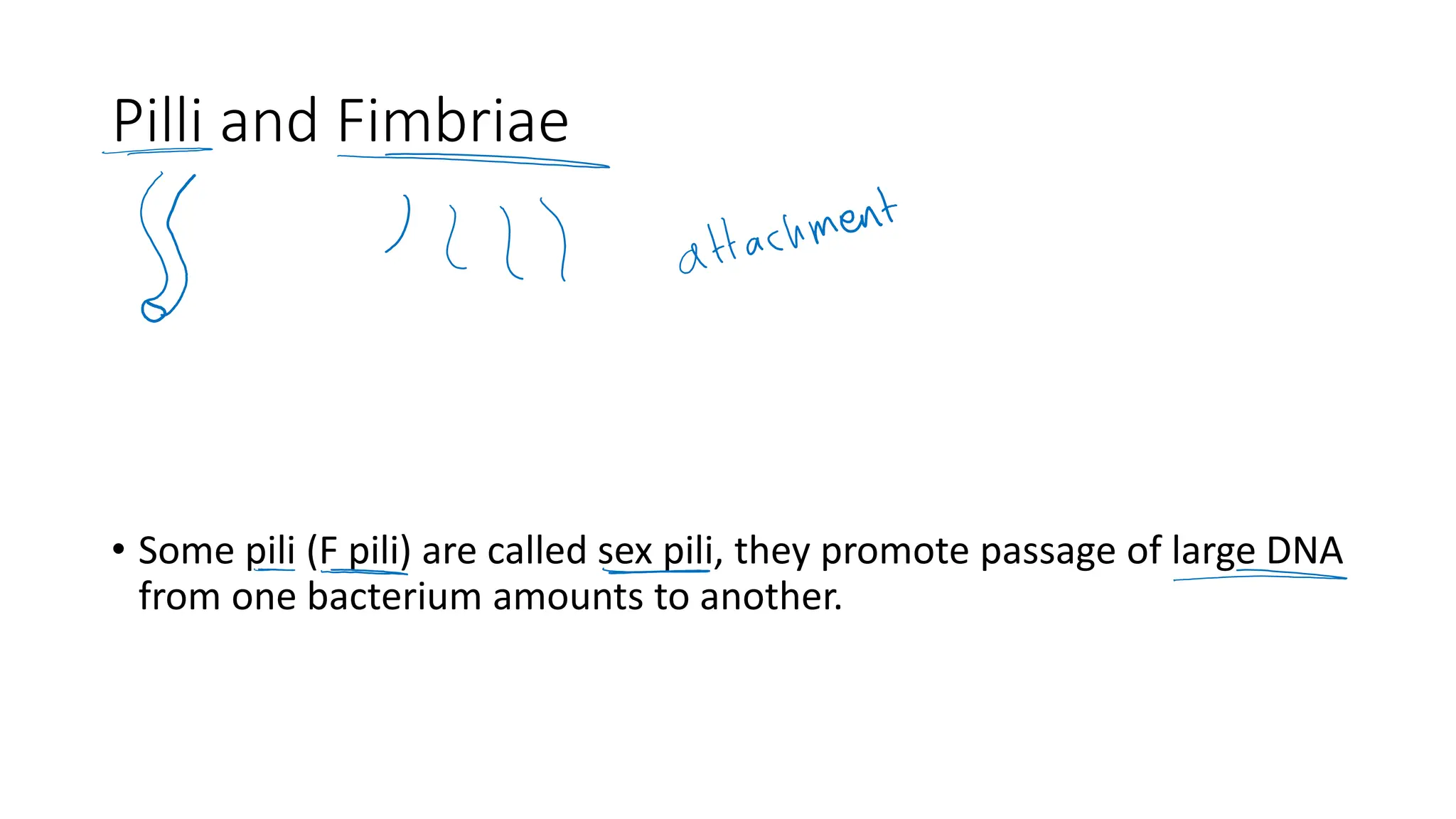
Pilli and Fimbriae
• Some pili (F pili) are called sex pili, they promote passage of large DNA
from one bacterium amounts to another.
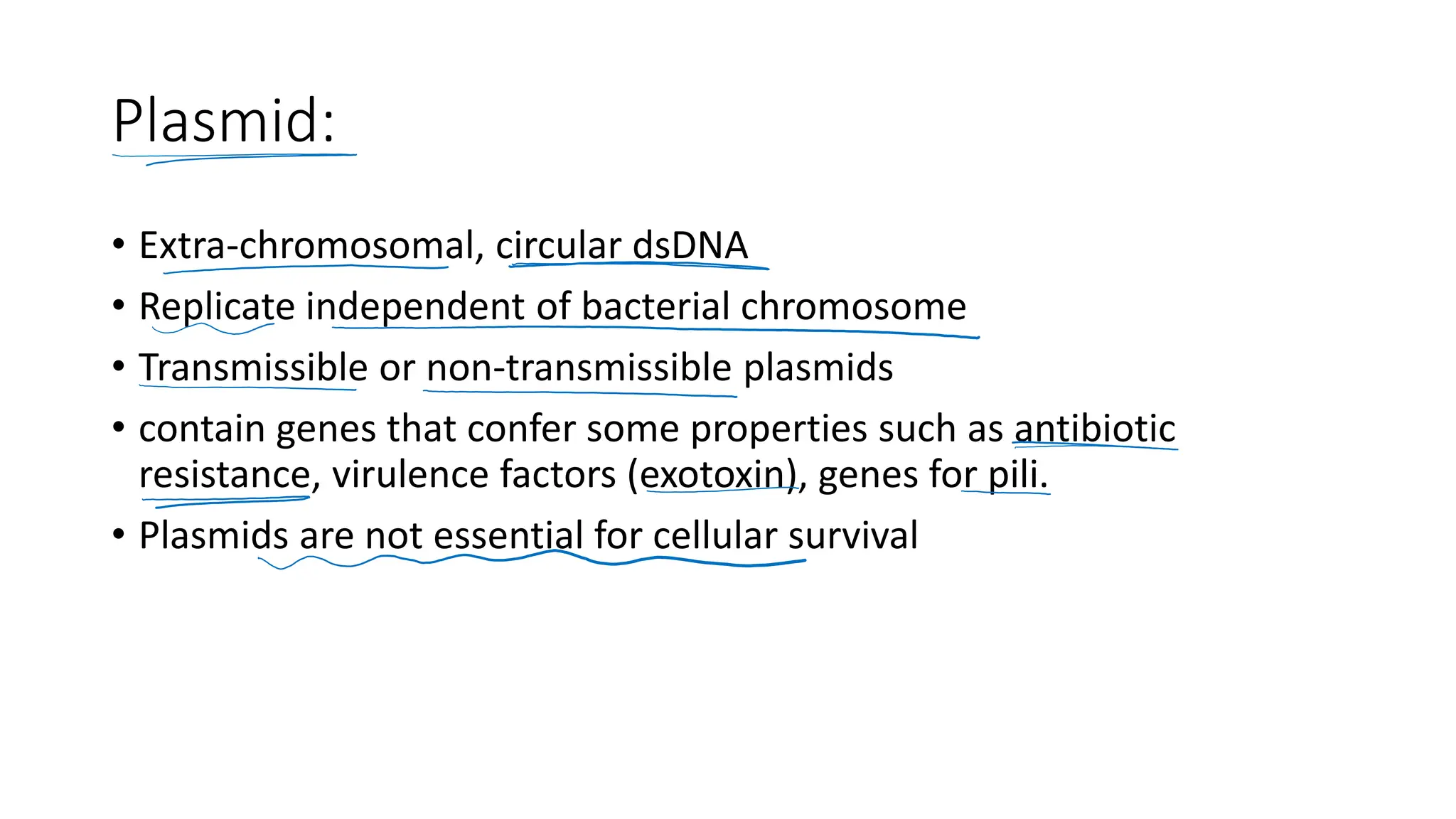
Plasmid:
• Extra-chromosomal, circular dsDNA
• Replicate independent of bacterial chromosome
• Transmissible or non-transmissible plasmids
• contain genes that confer some properties such as antibiotic
resistance, virulence factors (exotoxin), genes for pili.
• Plasmids are not essential for cellular survival
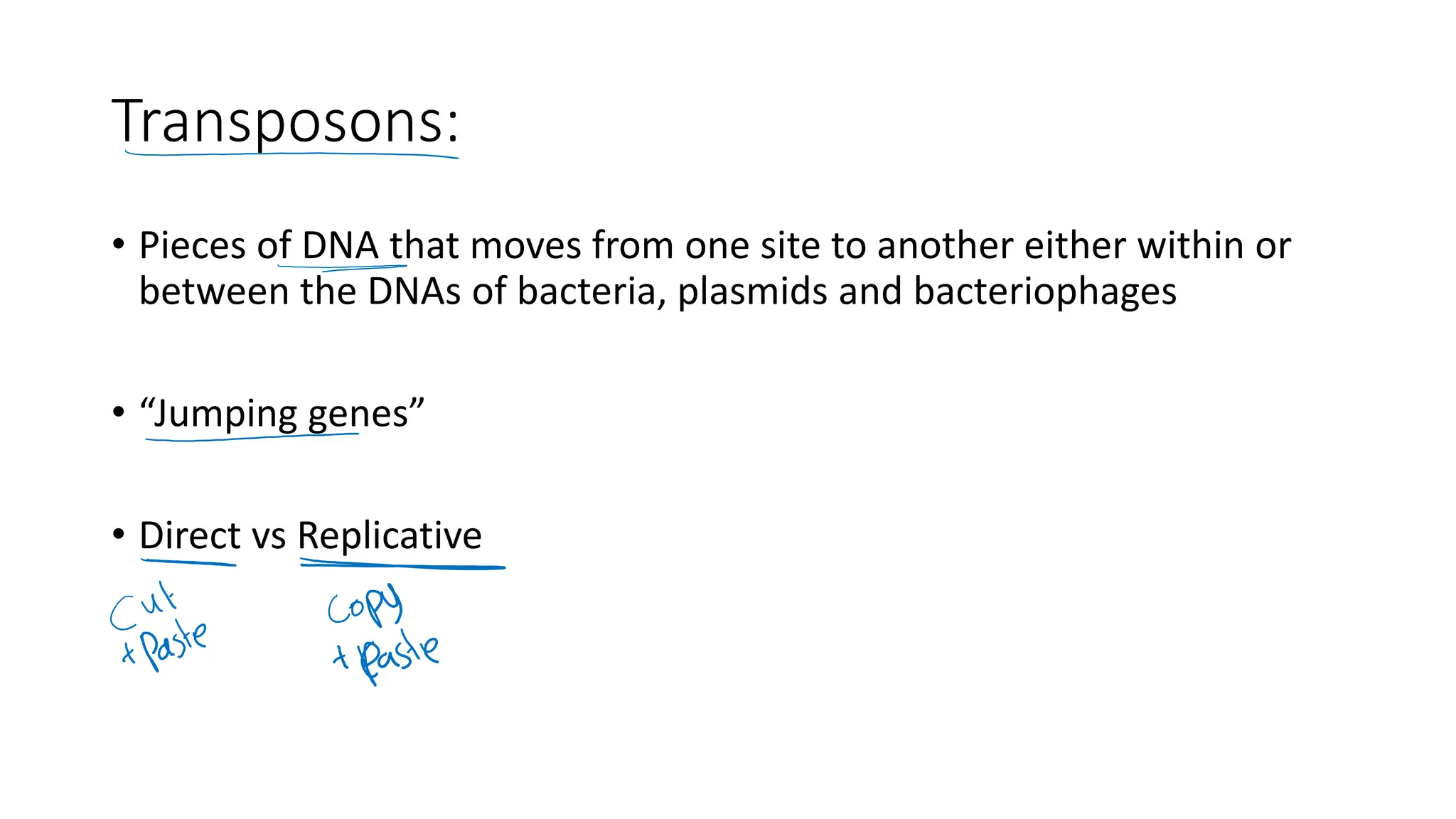
Transposons:
• Pieces of DNA that moves from one site to another either within or
between the DNAs of bacteria, plasmids and bacteriophages
• “Jumping genes”
• Direct vs Replicative
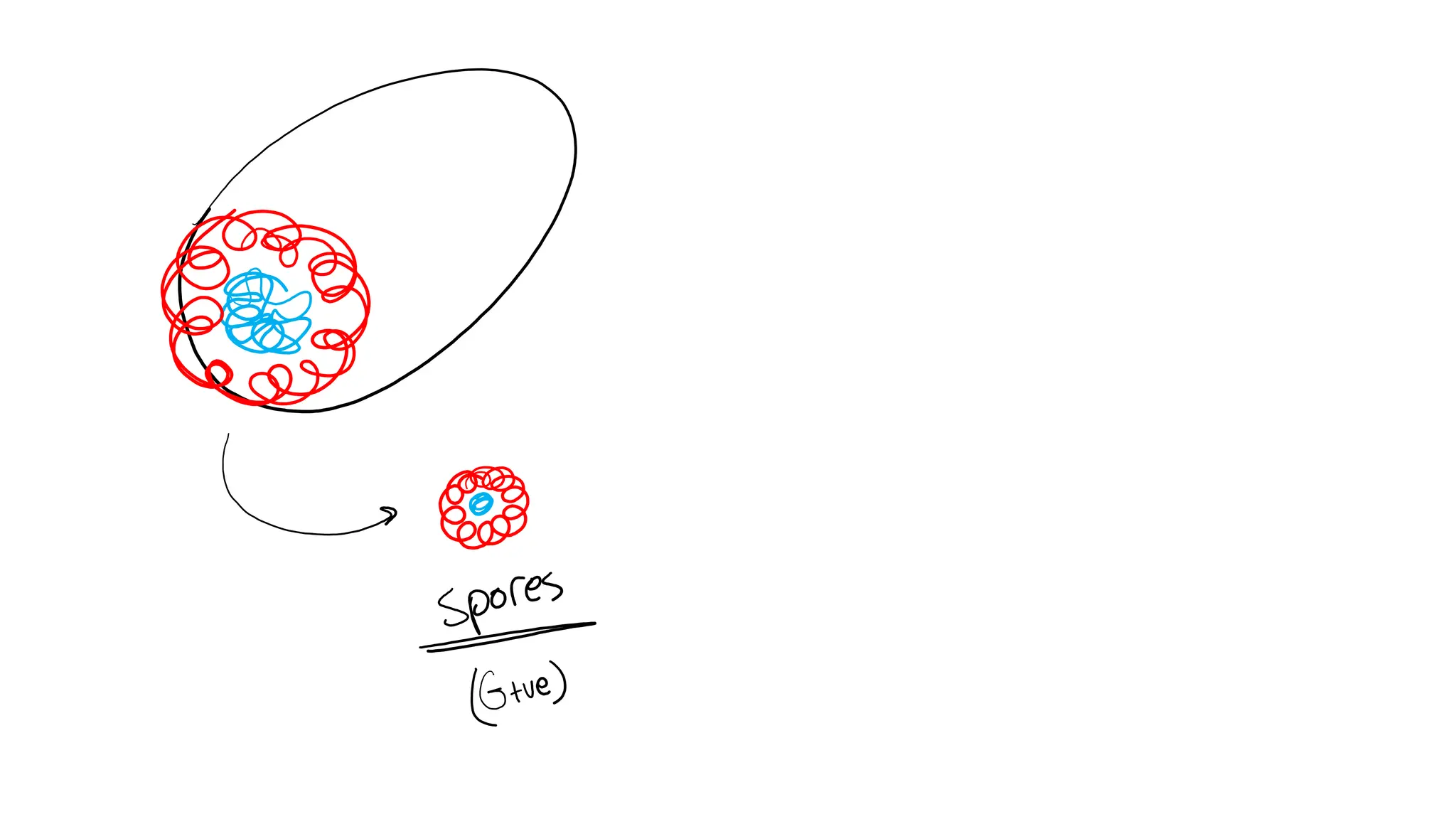
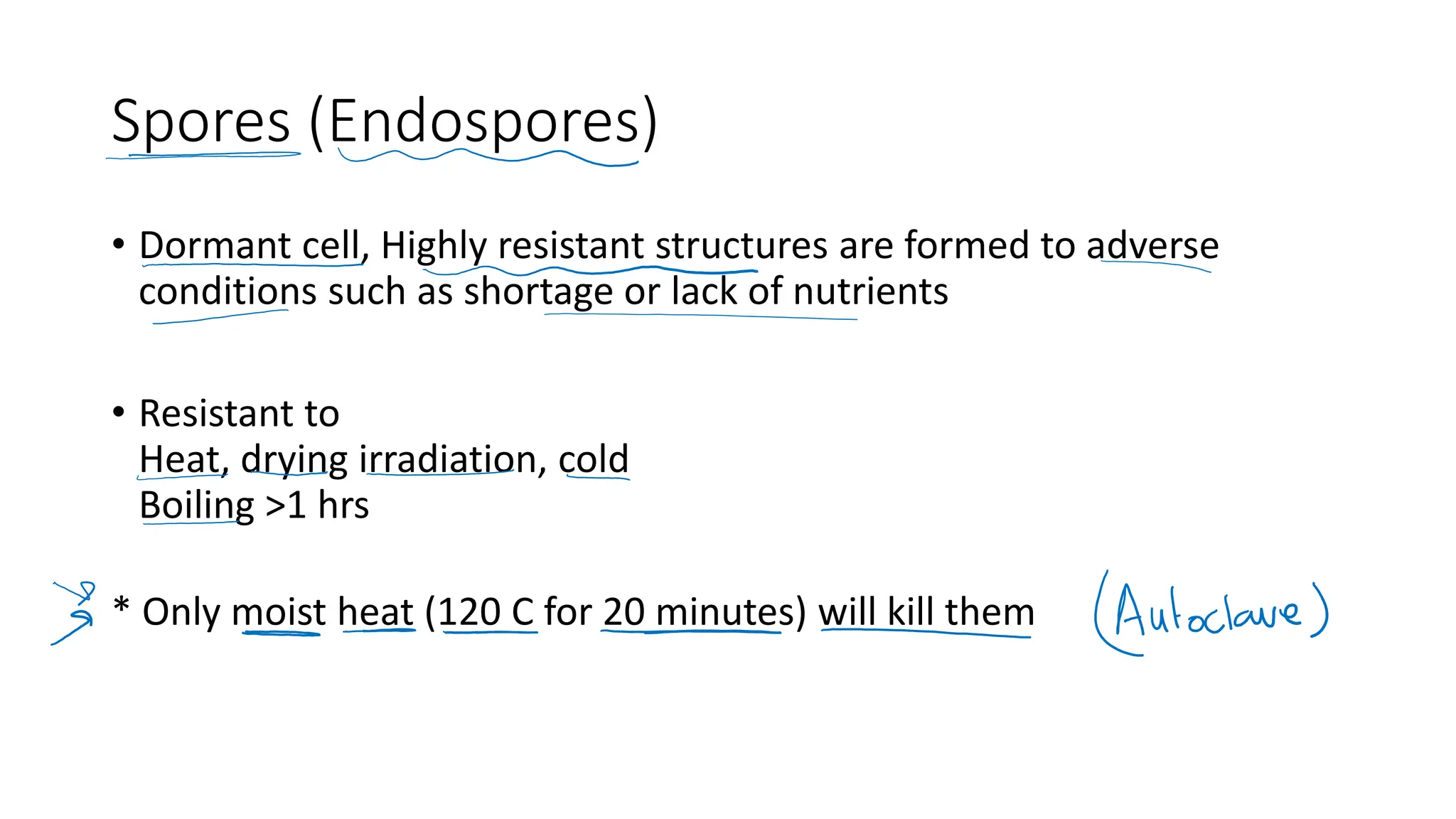
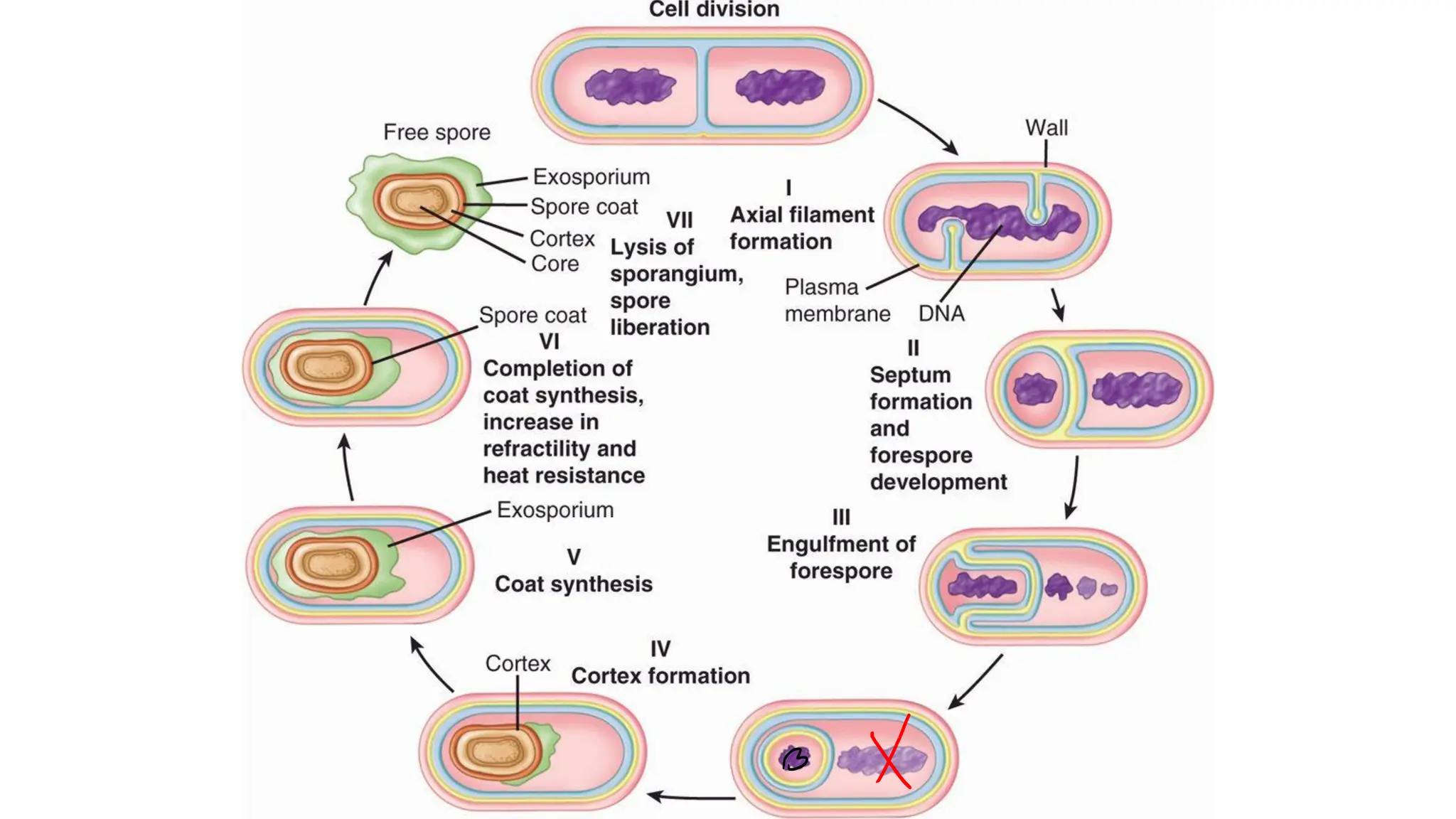
Spores (Endospores)
• Dormant cell, Highly resistant structures are formed to adverse
conditions such as shortage or lack of nutrients
• Resistant to
Heat, drying irradiation, cold
Boiling >1 hrs
* Only moist heat (120 C for 20 minutes) will kill them
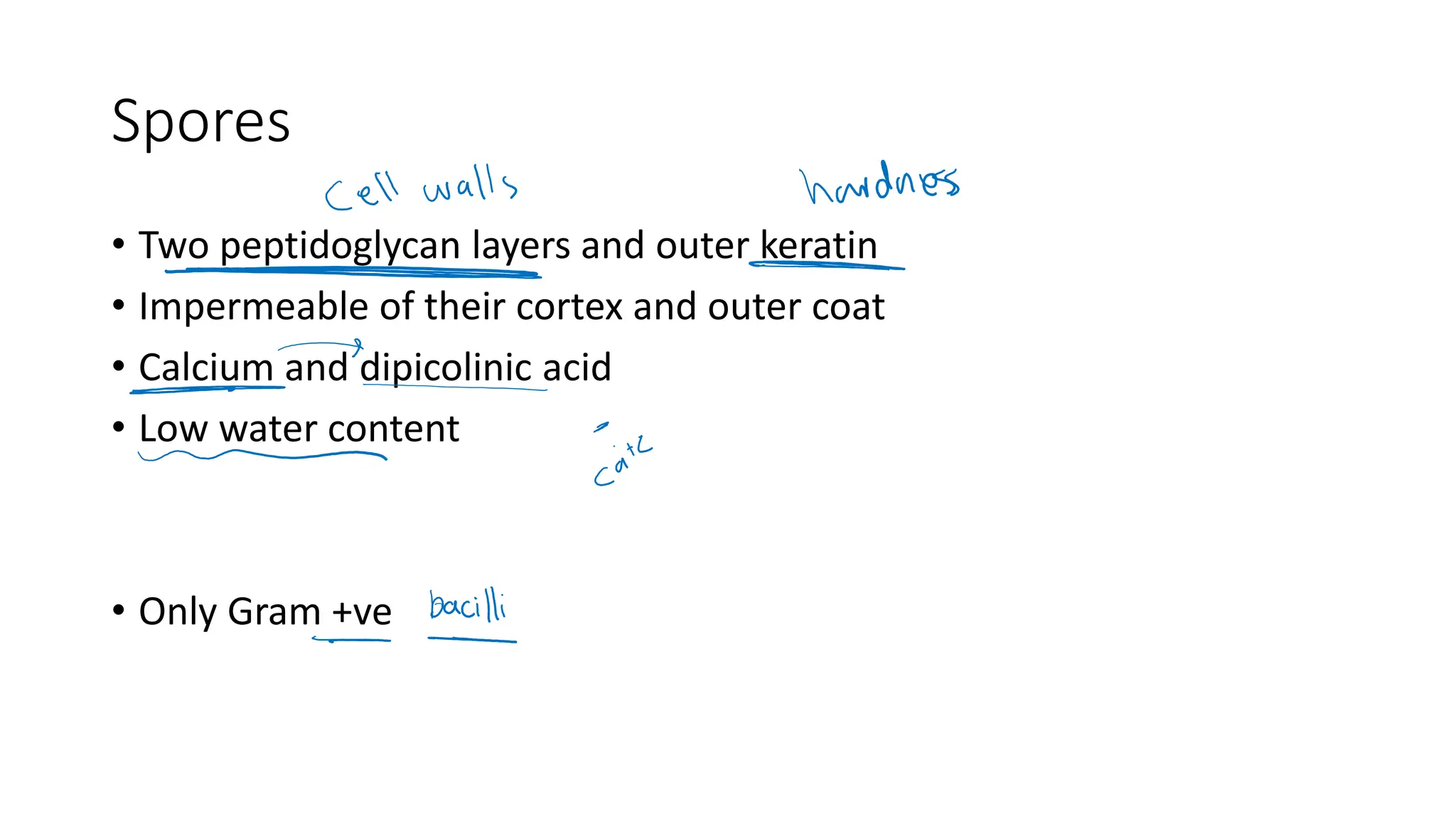
Spores
• Two peptidoglycan layers and outer keratin
• Impermeable of their cortex and outer coat
• Calcium and dipicolinic acid
• Low water content
• Only Gram +ve
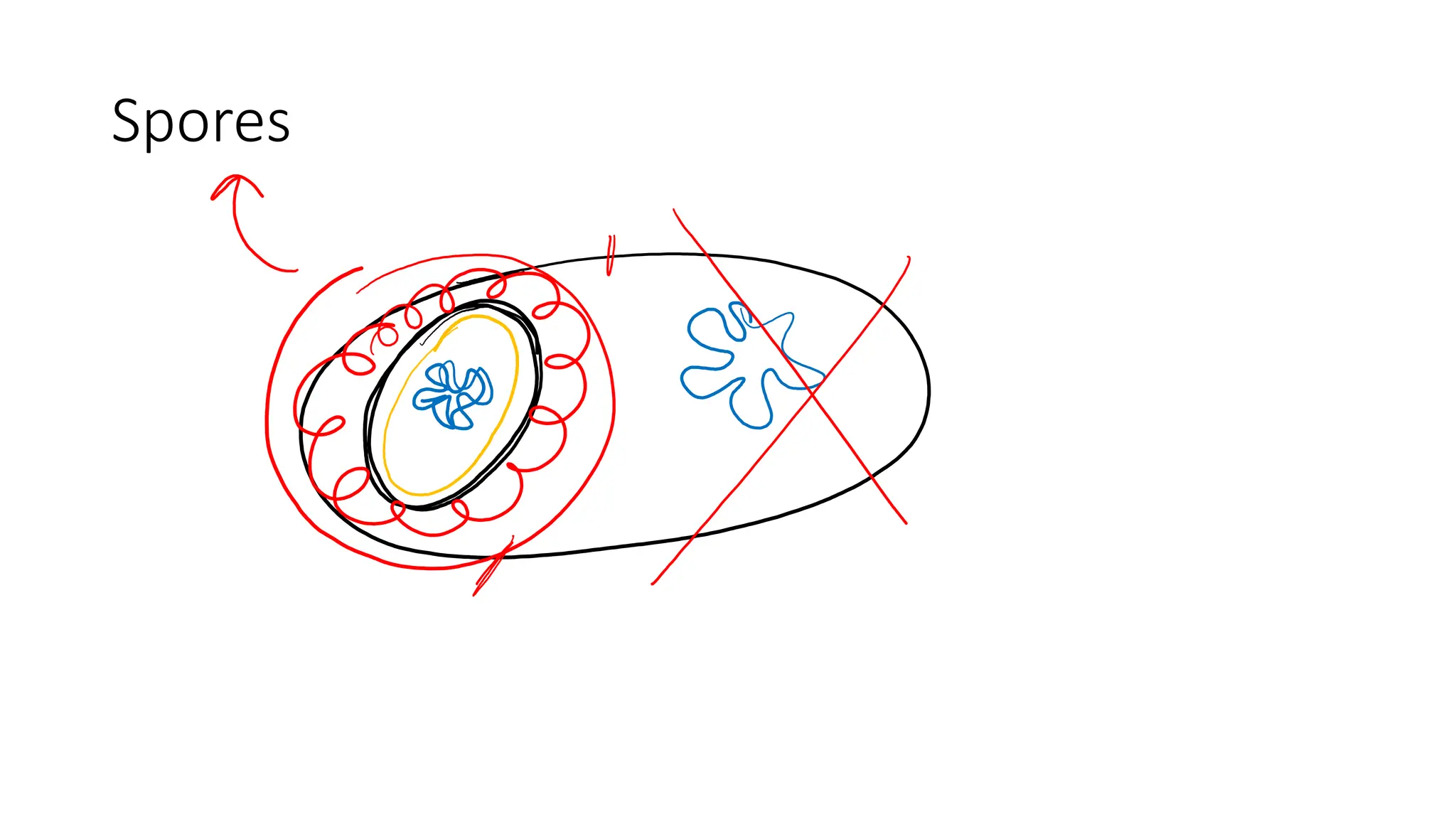
Spores
Quiz
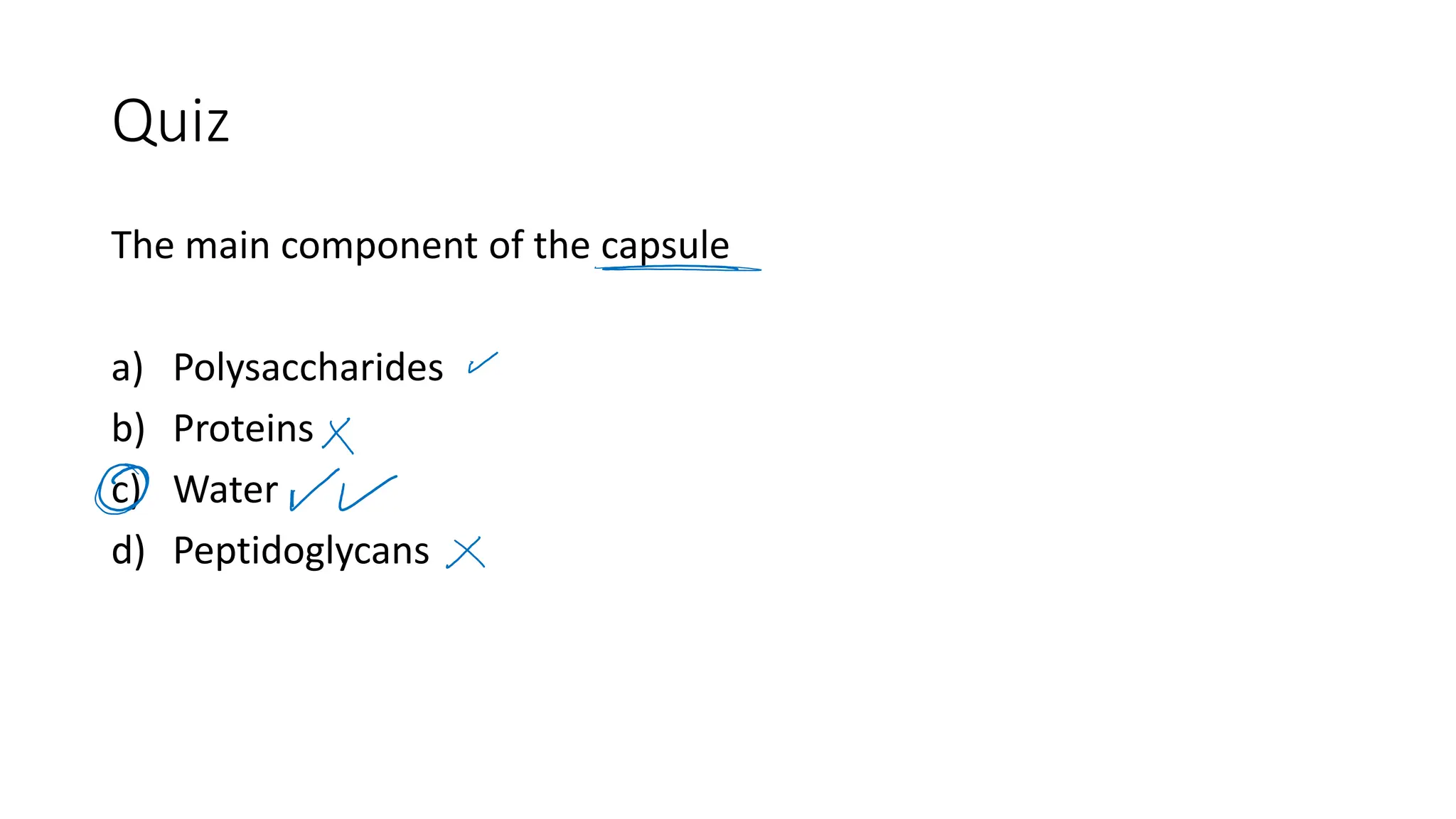
The main component of the capsule
a) Polysaccharides
b) Proteins
c) Water
d) Peptidoglycans
Quiz
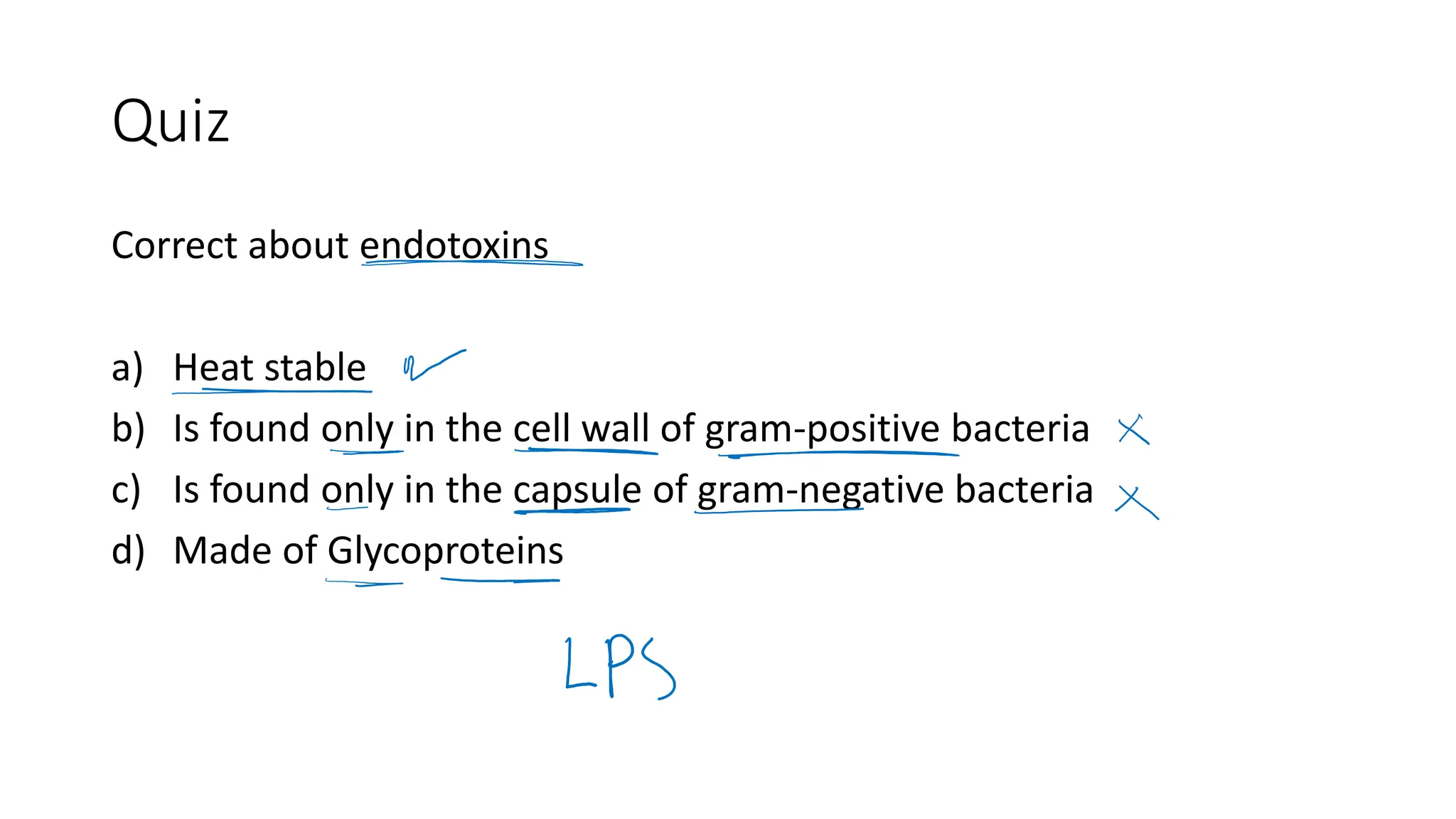
Correct about endotoxins
a) Heat stable
b) Is found only in the cell wall of gram-positive bacteria
c) Is found only in the capsule of gram-negative bacteria
d) Made of Glycoproteins
Quiz
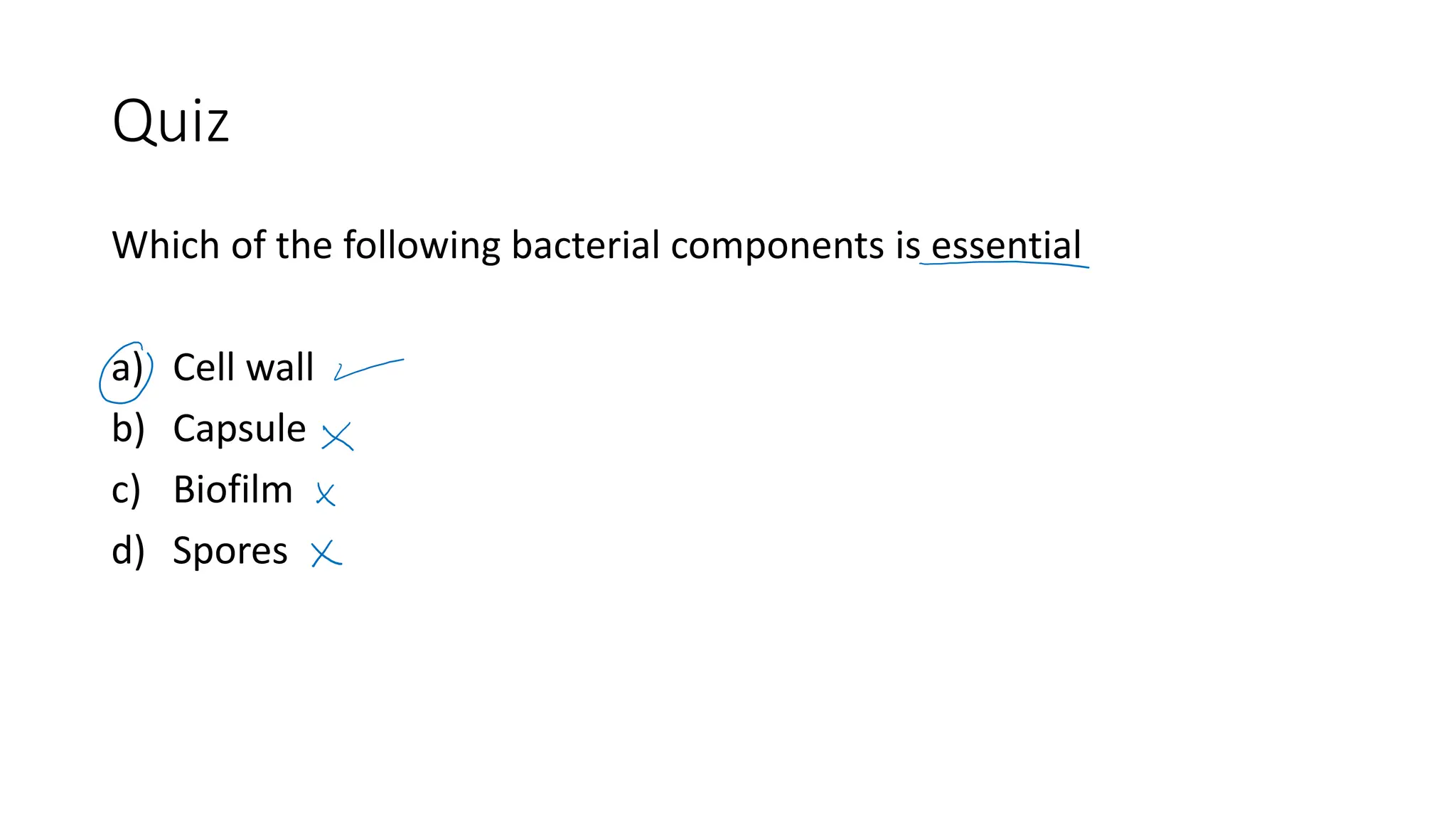
Which of the following bacterial components is essential
a) Cell wall
b) Capsule
c) Biofilm
d) Spores
Quiz
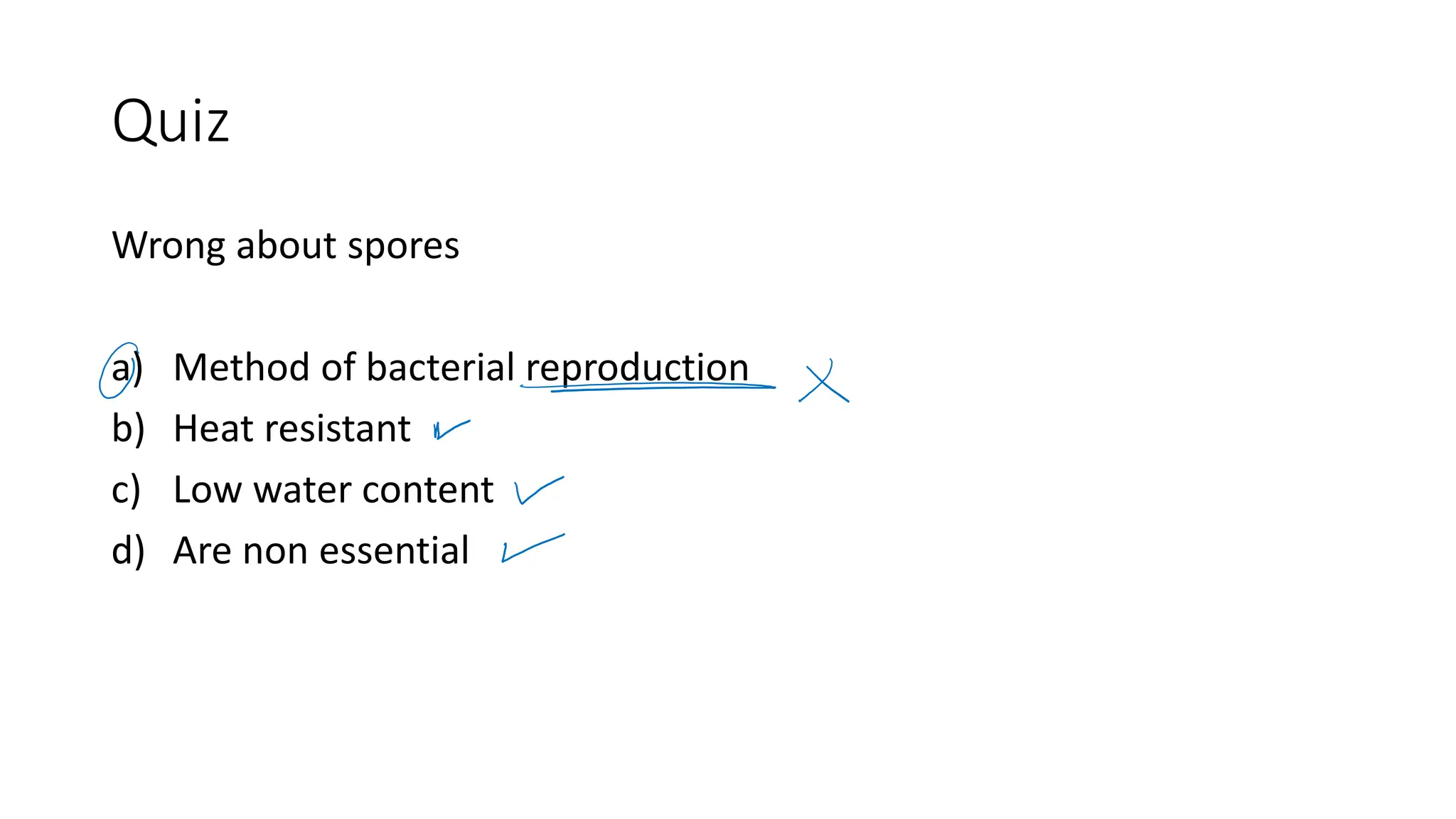
Wrong about spores
a) Method of bacterial reproduction
b) Heat resistant
c) Low water content
d) Are non essential
Questions?

Bacteriology2_structure_lyst8173.gggggggpdf