Backyard Rain Gardens
Kerrie Roach
Horticulture Extension Agent
Henderson County
Do you need a Raingarden?
• Where is water pooling?
• Where is the water coming from?
• Where is the water going?
Steps
• Garden Location
• Soils & Drainage
• Sizing the Garden
• Garden Construction
• Plant Material
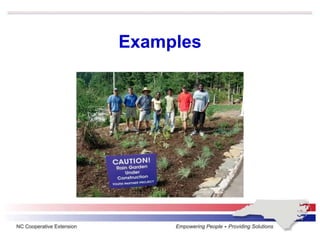
• Examples
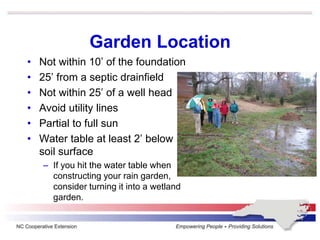
Garden Location
• Not within 10’ of the foundation
• 25’ from a septic drainfield
• Not within 25’ of a well head
• Avoid utility lines
• Partial to full sun
• Water table at least 2’ below
soil surface
– If you hit the water table when
constructing your rain garden,
consider turning it into a wetland
garden.
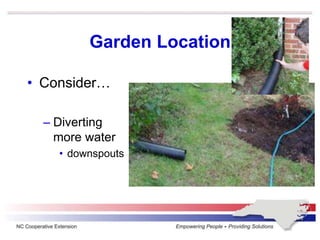
Garden Location
• Consider…
– Diverting
more water
• downspouts
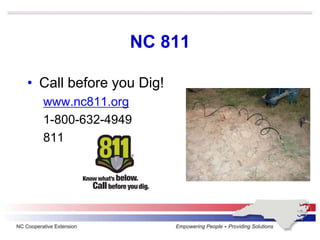
NC 811
• Call before you Dig!
www.nc811.org
1-800-632-4949
811
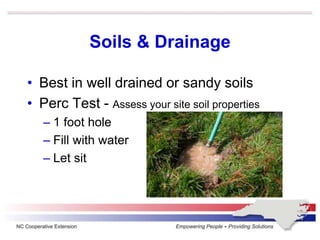
Soils & Drainage
• Best in well drained or sandy soils
• Perc Test - Assess your site soil properties
– 1 foot hole
– Fill with water
– Let sit
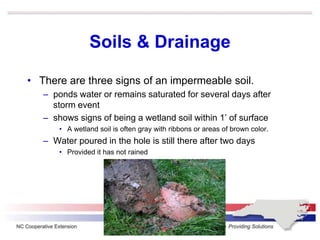
Soils & Drainage
• There are three signs of an impermeable soil.
– ponds water or remains saturated for several days after
storm event
– shows signs of being a wetland soil within 1’ of surface
• A wetland soil is often gray with ribbons or areas of brown color.
– Water poured in the hole is still there after two days
• Provided it has not rained
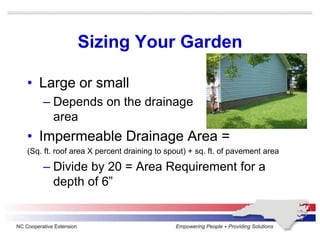
Sizing Your Garden
• Large or small
– Depends on the drainage
area
• Impermeable Drainage Area =
(Sq. ft. roof area X percent draining to spout) + sq. ft. of pavement area
– Divide by 20 = Area Requirement for a
depth of 6”
Sizing Your Garden
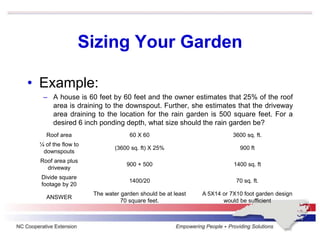
• Example:
– A house is 60 feet by 60 feet and the owner estimates that 25% of the roof
area is draining to the downspout. Further, she estimates that the driveway
area draining to the location for the rain garden is 500 square feet. For a
desired 6 inch ponding depth, what size should the rain garden be?
Roof area 60 X 60 3600 sq. ft.
¼ of the flow to
downspouts
(3600 sq. ft) X 25% 900 ft
Roof area plus
driveway
900 + 500 1400 sq. ft
Divide square
footage by 20
1400/20 70 sq. ft.
ANSWER
The water garden should be at least
70 square feet.
A 5X14 or 7X10 foot garden design
would be sufficient
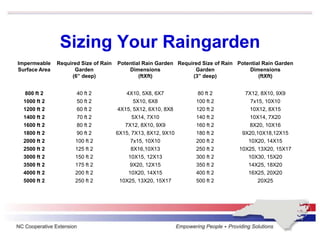
Sizing Your Raingarden
Impermeable
Surface Area
Required Size of Rain
Garden
(6” deep)
Potential Rain Garden
Dimensions
(ftXft)
Required Size of Rain
Garden
(3” deep)
Potential Rain Garden
Dimensions
(ftXft)
800 ft 2 40 ft 2 4X10, 5X8, 6X7 80 ft 2 7X12, 8X10, 9X9
1000 ft 2 50 ft 2 5X10, 6X8 100 ft 2 7x15, 10X10
1200 ft 2 60 ft 2 4X15, 5X12, 6X10, 8X8 120 ft 2 10X12, 8X15
1400 ft 2 70 ft 2 5X14, 7X10 140 ft 2 10X14, 7X20
1600 ft 2 80 ft 2 7X12, 8X10, 9X9 160 ft 2 8X20, 10X16
1800 ft 2 90 ft 2 6X15, 7X13, 8X12, 9X10 180 ft 2 9X20,10X18,12X15
2000 ft 2 100 ft 2 7x15, 10X10 200 ft 2 10X20, 14X15
2500 ft 2 125 ft 2 8X16,10X13 250 ft 2 10X25, 13X20, 15X17
3000 ft 2 150 ft 2 10X15, 12X13 300 ft 2 10X30, 15X20
3500 ft 2 175 ft 2 9X20, 12X15 350 ft 2 14X25, 18X20
4000 ft 2 200 ft 2 10X20, 14X15 400 ft 2 16X25, 20X20
5000 ft 2 250 ft 2 10X25, 13X20, 15X17 500 ft 2 20X25
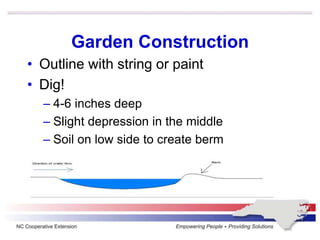
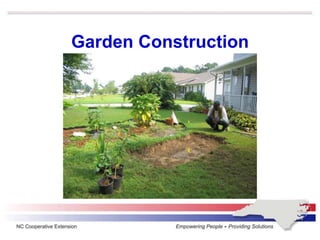
Garden Construction
• Outline with string or paint
• Dig!
– 4-6 inches deep
– Slight depression in the middle
– Soil on low side to create berm
Garden Construction
• Mulch or plant grass on berm
• Add compost for well drained soils
• Add mulch or gravel for compacted soils
Garden Construction
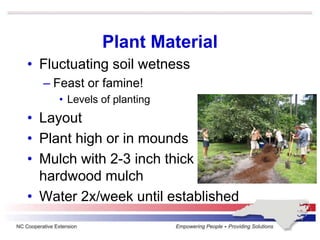
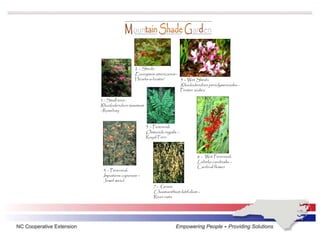
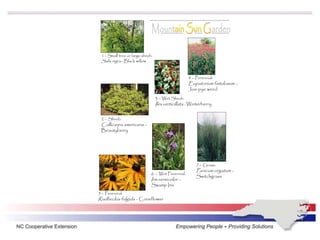
Plant Material
• Fluctuating soil wetness
– Feast or famine!
• Levels of planting
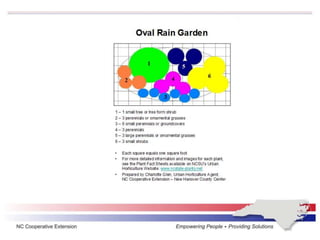
• Layout
• Plant high or in mounds
• Mulch with 2-3 inch thick
hardwood mulch
• Water 2x/week until established
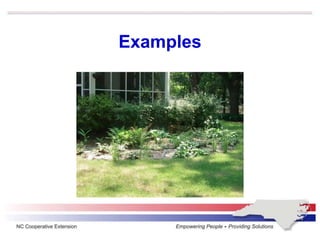
Examples
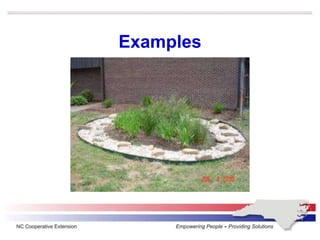
Examples
Examples
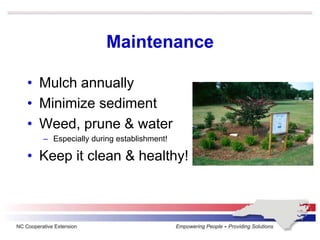
Maintenance
• Mulch annually
• Minimize sediment
• Weed, prune & water
– Especially during establishment!
• Keep it clean & healthy!
Questions?
• https://www.bae.ncsu.edu/topic/raingard
en/index.htm

Backyard raingardens

  • 1.
    Backyard Rain Gardens KerrieRoach Horticulture Extension Agent Henderson County
  • 2.
    Do you needa Raingarden? • Where is water pooling? • Where is the water coming from? • Where is the water going?
  • 3.
    Steps • Garden Location •Soils & Drainage • Sizing the Garden • Garden Construction • Plant Material • Examples
  • 4.
    Garden Location • Notwithin 10’ of the foundation • 25’ from a septic drainfield • Not within 25’ of a well head • Avoid utility lines • Partial to full sun • Water table at least 2’ below soil surface – If you hit the water table when constructing your rain garden, consider turning it into a wetland garden.
  • 5.
    Garden Location • Consider… –Diverting more water • downspouts
  • 6.
    NC 811 • Callbefore you Dig! www.nc811.org 1-800-632-4949 811
  • 7.
    Soils & Drainage •Best in well drained or sandy soils • Perc Test - Assess your site soil properties – 1 foot hole – Fill with water – Let sit
  • 8.
    Soils & Drainage •There are three signs of an impermeable soil. – ponds water or remains saturated for several days after storm event – shows signs of being a wetland soil within 1’ of surface • A wetland soil is often gray with ribbons or areas of brown color. – Water poured in the hole is still there after two days • Provided it has not rained
  • 9.
    Sizing Your Garden •Large or small – Depends on the drainage area • Impermeable Drainage Area = (Sq. ft. roof area X percent draining to spout) + sq. ft. of pavement area – Divide by 20 = Area Requirement for a depth of 6”
  • 10.
    Sizing Your Garden •Example: – A house is 60 feet by 60 feet and the owner estimates that 25% of the roof area is draining to the downspout. Further, she estimates that the driveway area draining to the location for the rain garden is 500 square feet. For a desired 6 inch ponding depth, what size should the rain garden be? Roof area 60 X 60 3600 sq. ft. ¼ of the flow to downspouts (3600 sq. ft) X 25% 900 ft Roof area plus driveway 900 + 500 1400 sq. ft Divide square footage by 20 1400/20 70 sq. ft. ANSWER The water garden should be at least 70 square feet. A 5X14 or 7X10 foot garden design would be sufficient
  • 11.
    Sizing Your Raingarden Impermeable SurfaceArea Required Size of Rain Garden (6” deep) Potential Rain Garden Dimensions (ftXft) Required Size of Rain Garden (3” deep) Potential Rain Garden Dimensions (ftXft) 800 ft 2 40 ft 2 4X10, 5X8, 6X7 80 ft 2 7X12, 8X10, 9X9 1000 ft 2 50 ft 2 5X10, 6X8 100 ft 2 7x15, 10X10 1200 ft 2 60 ft 2 4X15, 5X12, 6X10, 8X8 120 ft 2 10X12, 8X15 1400 ft 2 70 ft 2 5X14, 7X10 140 ft 2 10X14, 7X20 1600 ft 2 80 ft 2 7X12, 8X10, 9X9 160 ft 2 8X20, 10X16 1800 ft 2 90 ft 2 6X15, 7X13, 8X12, 9X10 180 ft 2 9X20,10X18,12X15 2000 ft 2 100 ft 2 7x15, 10X10 200 ft 2 10X20, 14X15 2500 ft 2 125 ft 2 8X16,10X13 250 ft 2 10X25, 13X20, 15X17 3000 ft 2 150 ft 2 10X15, 12X13 300 ft 2 10X30, 15X20 3500 ft 2 175 ft 2 9X20, 12X15 350 ft 2 14X25, 18X20 4000 ft 2 200 ft 2 10X20, 14X15 400 ft 2 16X25, 20X20 5000 ft 2 250 ft 2 10X25, 13X20, 15X17 500 ft 2 20X25
  • 12.
    Garden Construction • Outlinewith string or paint • Dig! – 4-6 inches deep – Slight depression in the middle – Soil on low side to create berm
  • 13.
    Garden Construction • Mulchor plant grass on berm • Add compost for well drained soils • Add mulch or gravel for compacted soils
  • 14.
  • 15.
    Plant Material • Fluctuatingsoil wetness – Feast or famine! • Levels of planting • Layout • Plant high or in mounds • Mulch with 2-3 inch thick hardwood mulch • Water 2x/week until established
  • 19.
  • 20.
  • 21.
  • 22.
    Maintenance • Mulch annually •Minimize sediment • Weed, prune & water – Especially during establishment! • Keep it clean & healthy!
  • 23.