Azure AD B2C
DogFoodCon
Jeremy Gray
Microsoft
Cloud Solution Architect, Financial Services
10/4/2018
© Microsoft Corporation
Introduction
© Microsoft Corporation
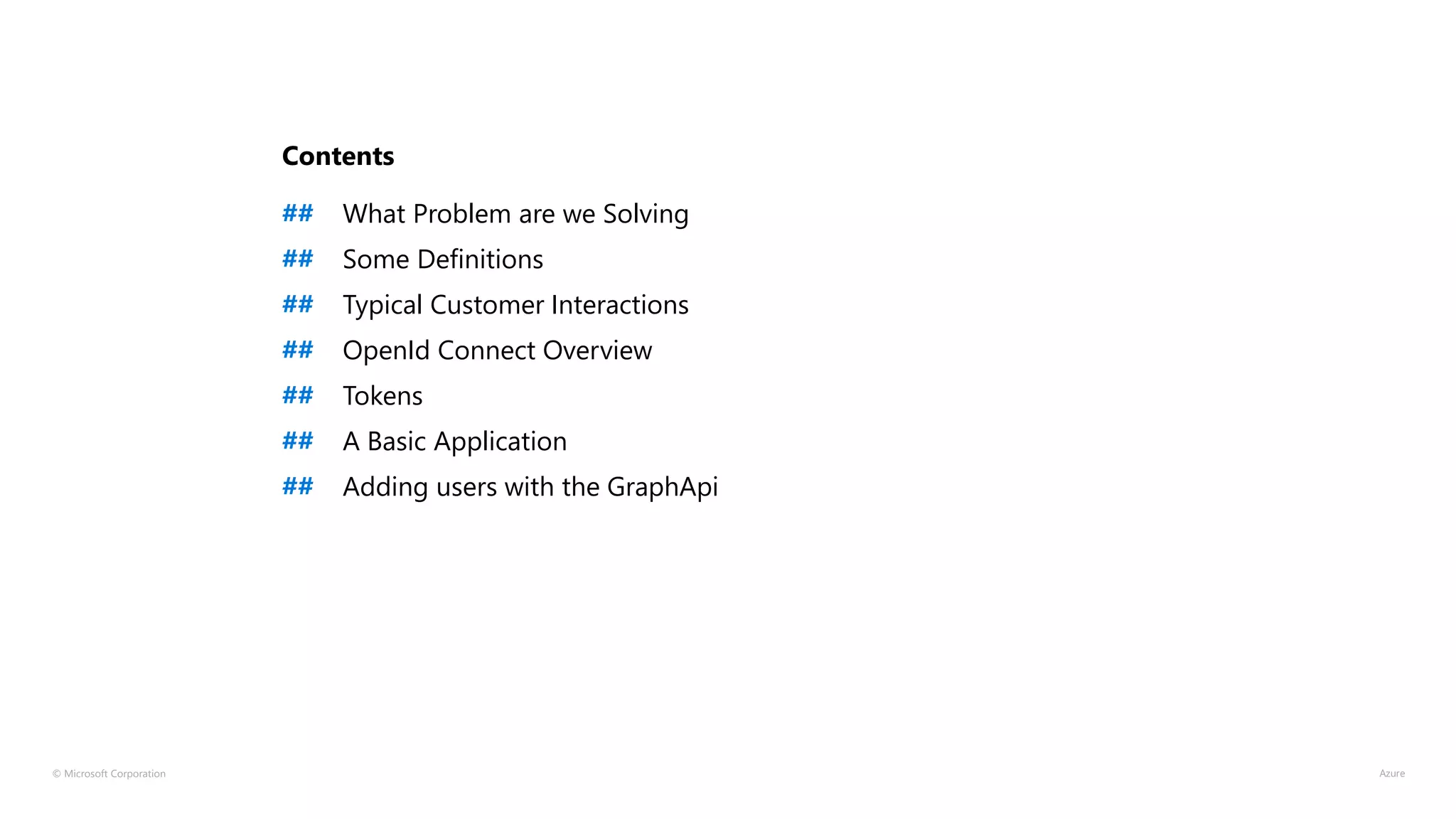
Contents
## What Problem are we Solving
## Some Definitions
## Typical Customer Interactions
## OpenId Connect Overview
## Tokens
## A Basic Application
## Adding users with the GraphApi
How can businesses securely
connect with their customers?
© Microsoft Corporation
Authentication: The process of confirming identity
Authorization: Specifying access rights to resources
OAuth 2.0: OAuth 2.0 is the industry-standard protocol for authorization. OAuth 2.0 focuses on client developer
simplicity while providing specific authorization flows for web applications, desktop applications, mobile phones,
and living room devices. This specification and its extensions are being developed within the IETF OAuth Working
Group.
OpenId Connect: OpenID Connect (OIDC) is an authentication layer on top of OAuth 2.0,
an authorization framework. The standard is controlled by the OpenID Foundation.
Client: This is an application, not a user
Definitions
© Microsoft Corporation
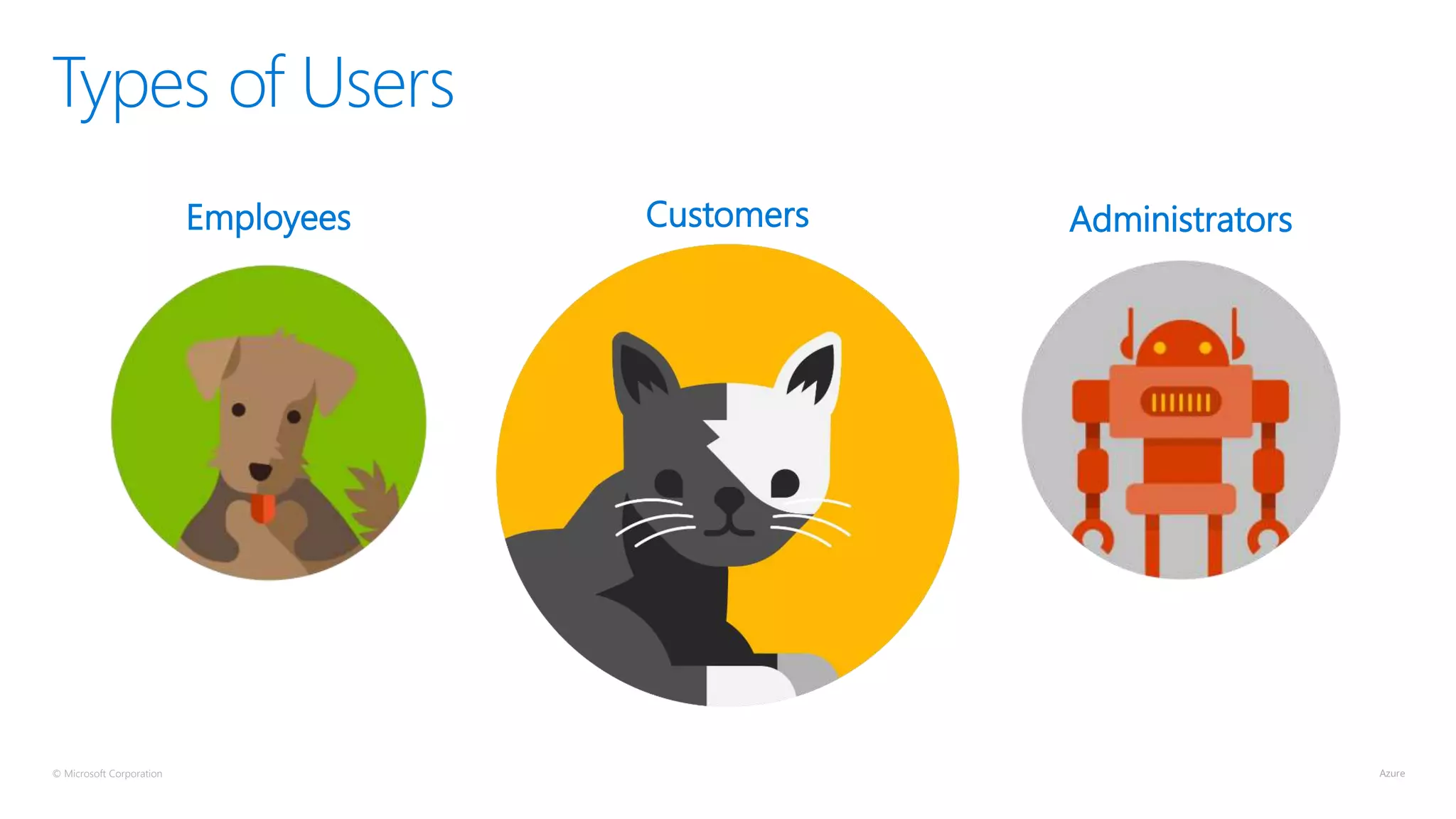
Types of Users
Employees Customers Administrators
© Microsoft Corporation
• Interoperability
• The client-server authentication model doesn’t account for mobile (non-browser) devices, or anything cross-
domain.
• Netscape came up with cookies before api’s and interop were issues.
• The ability to restrict access to a limited subset of resources for a specified duration is difficult.
• Governance
• Credentials must be shared with 3rd parties
• 3rd party systems we store credentials in can’t be governed
• Revoking access to the 3rd party would mean changing all stored (user) passwords.
Some classic problems
© Microsoft Corporation
A “new” scenario
© Microsoft Corporation
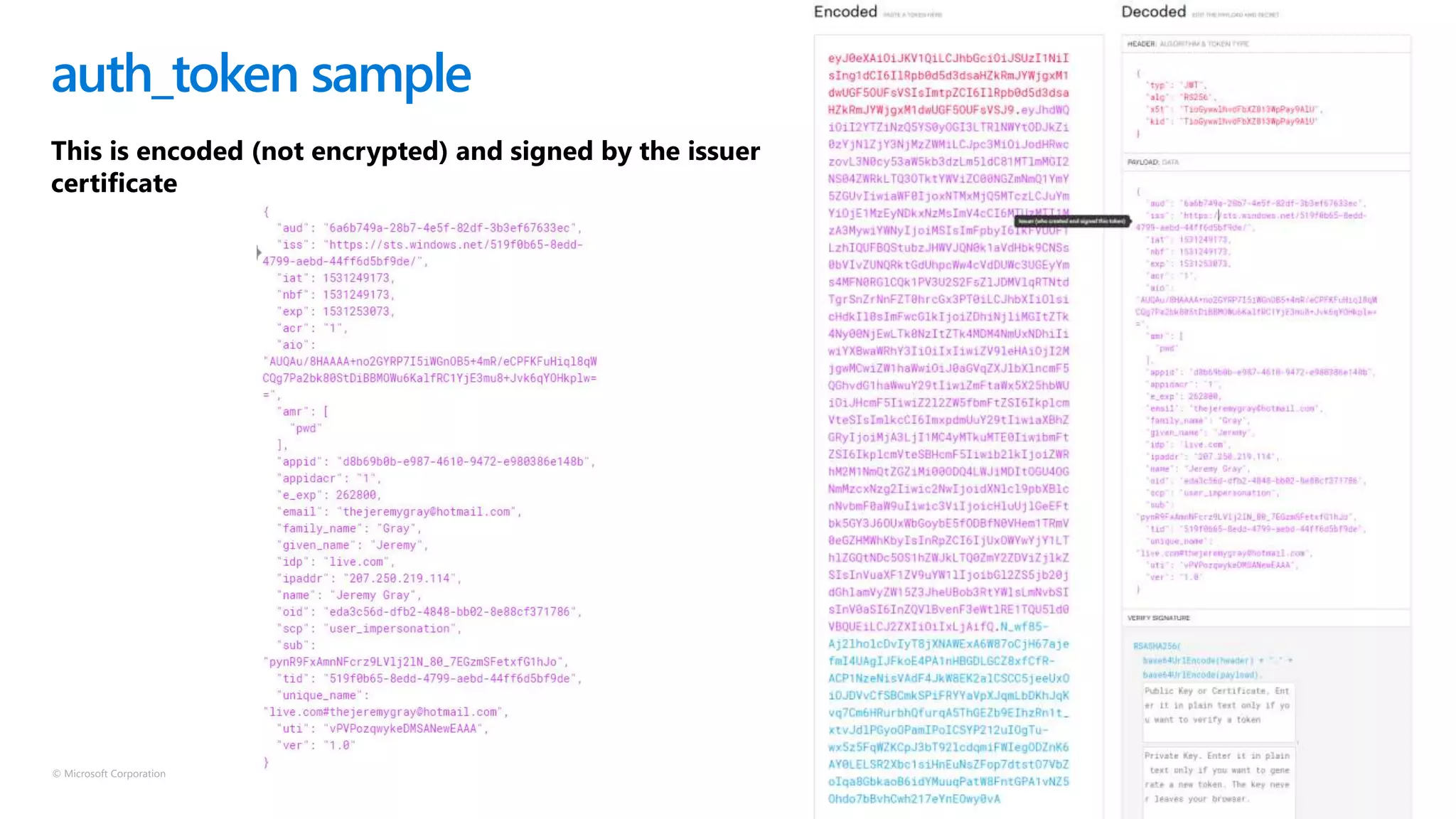
auth_token sample
This is encoded (not encrypted) and signed by the issuer
certificate
© Microsoft Corporation
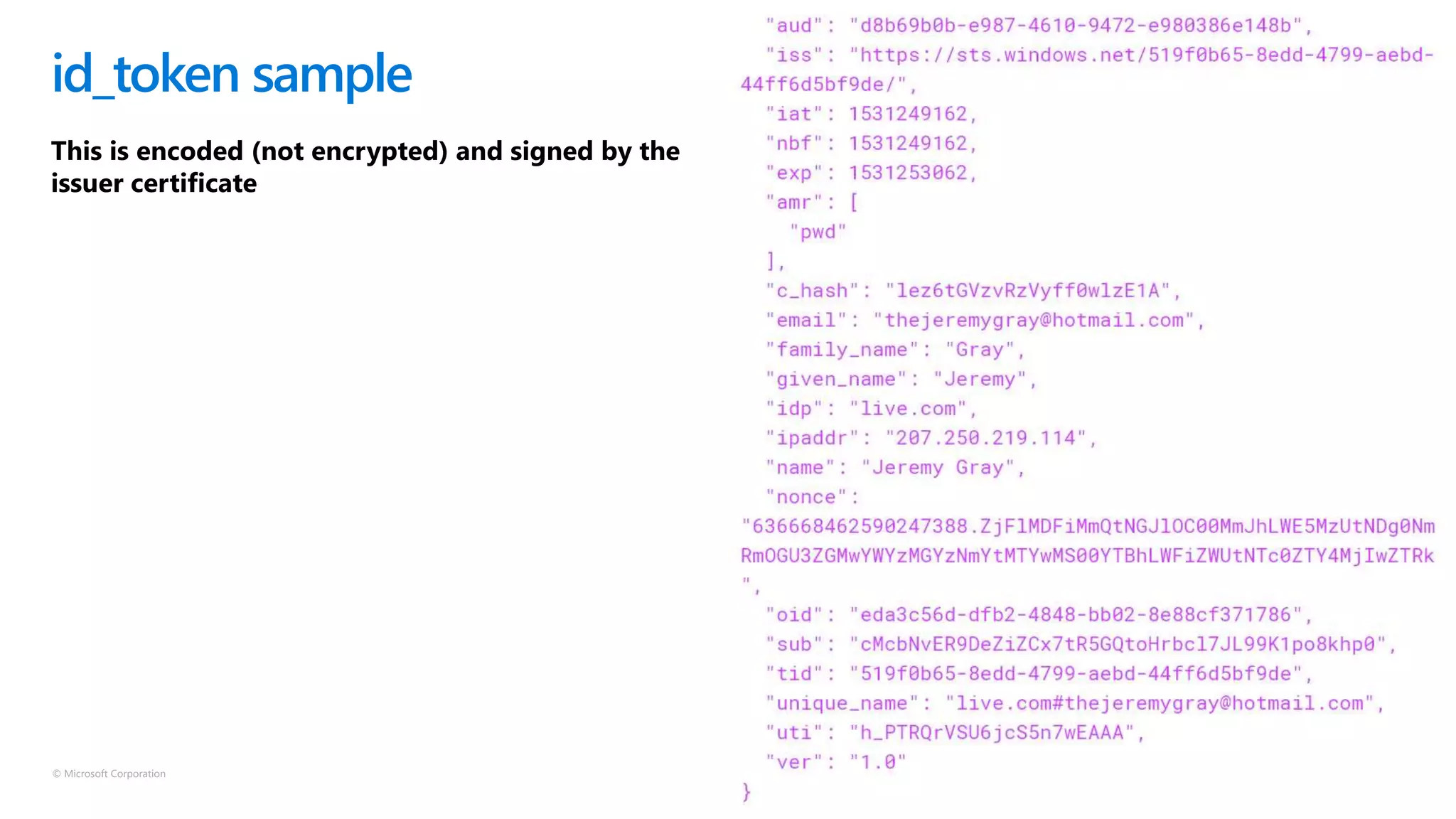
id_token sample
This is encoded (not encrypted) and signed by the
issuer certificate
Apps
Analytics
Line of
business
integration
Business
Social IDs
Business & Government IDs
contoso
Customers
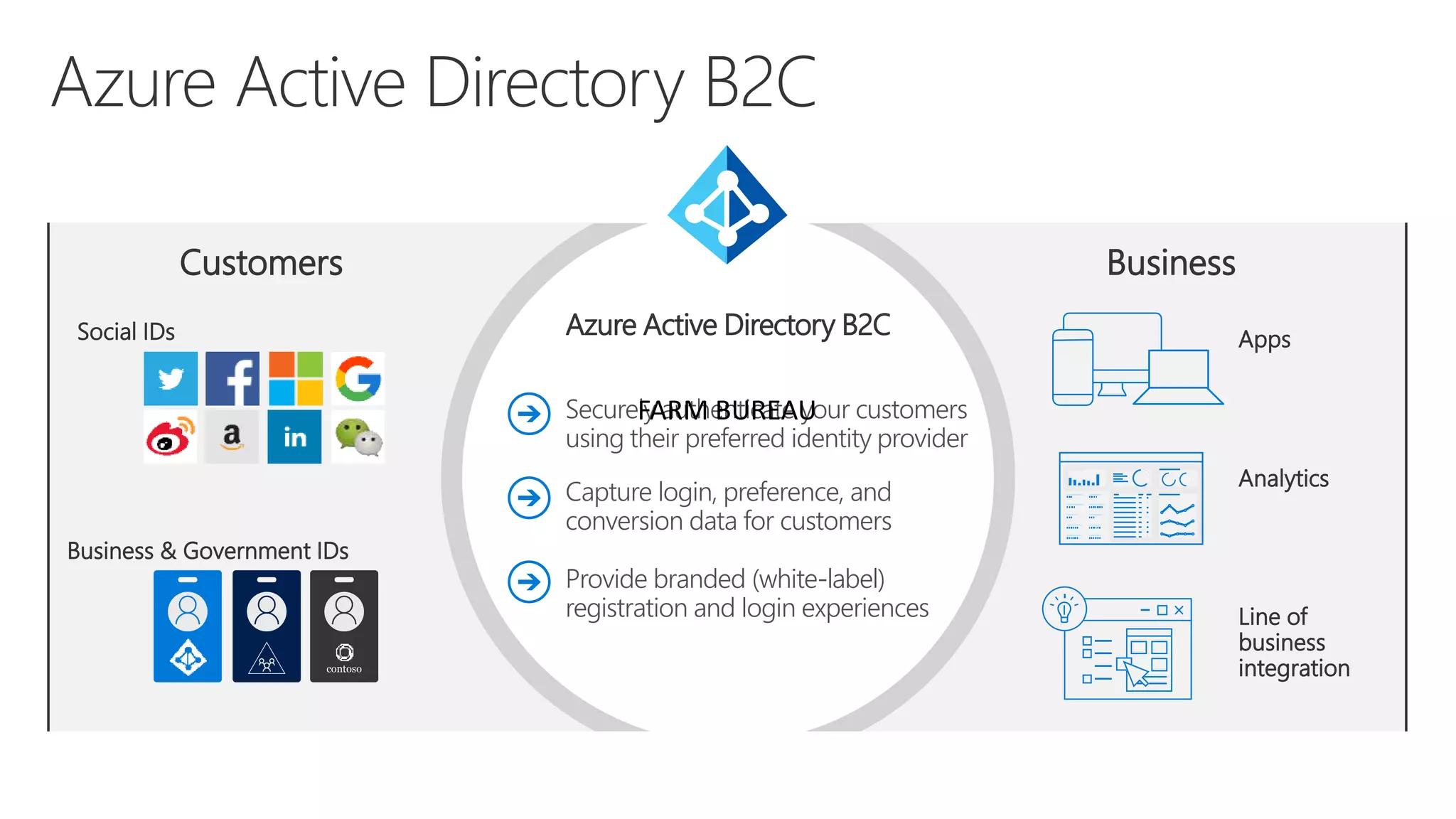
Azure Active Directory B2C
Securely authenticate your customers
using their preferred identity provider
Capture login, preference, and
conversion data for customers
Provide branded (white-label)
registration and login experiences
FARM BUREAU
© Microsoft Corporation
Demo - Basic
© Microsoft Corporation
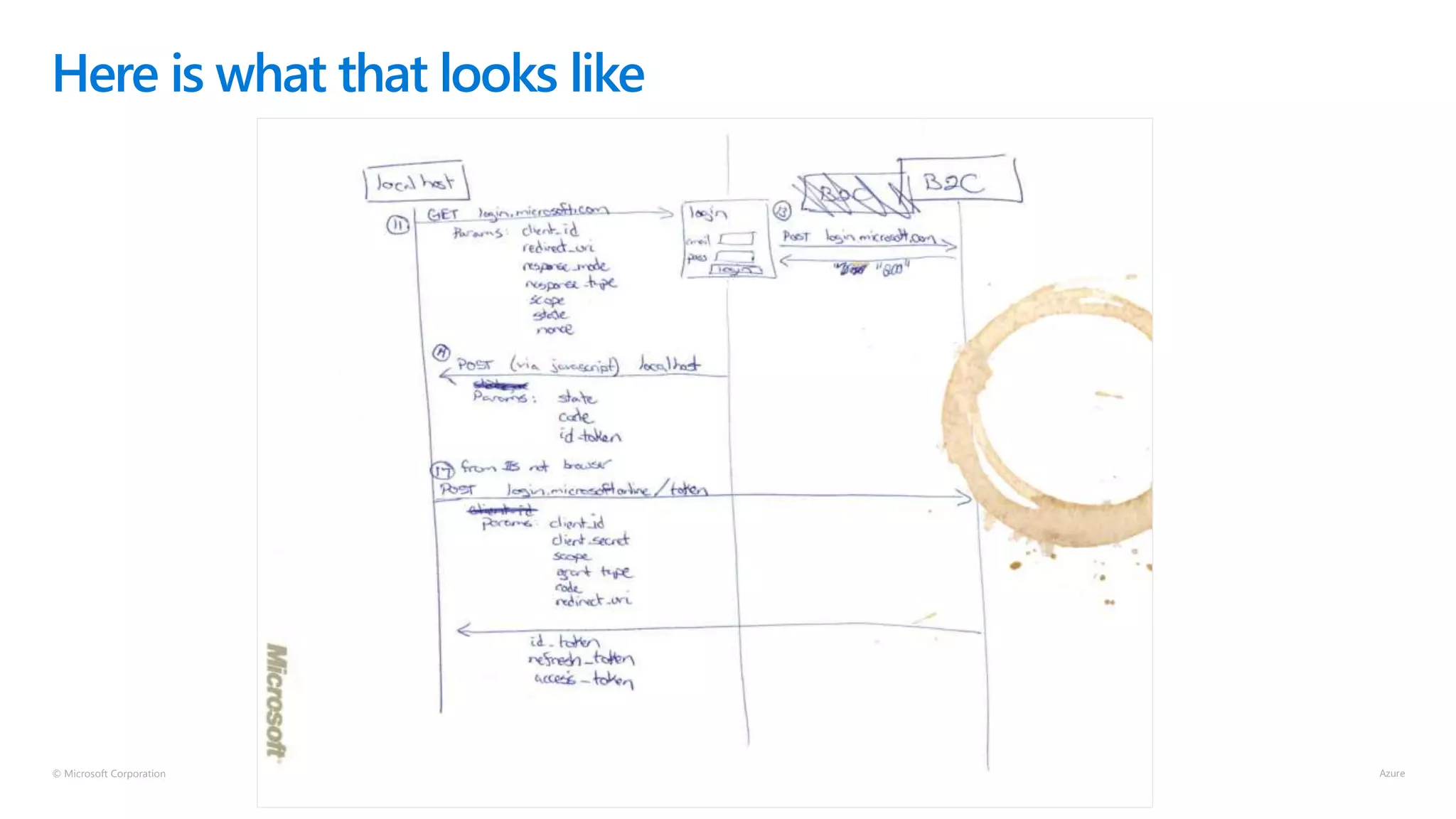
Here is what that looks like
© Microsoft Corporation
Using Graph Api / User
Migration
© Microsoft Corporation
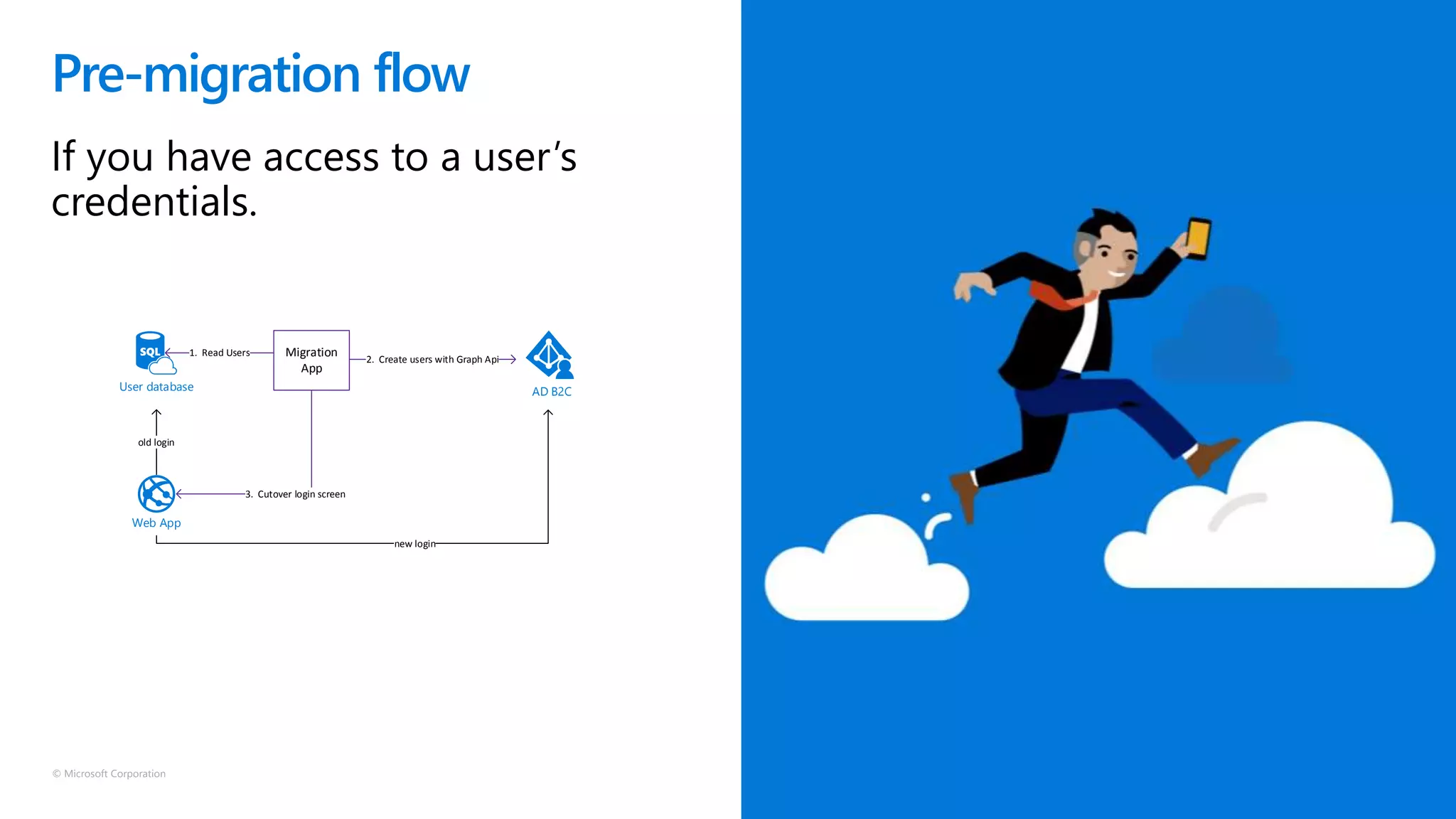
Pre-migration flow
If you have access to a user’s
credentials.
User database
Web App
AD B2C
old login
Migration
App
1. Read Users
2. Create users with Graph Api
3. Cutover login screen
new login
© Microsoft Corporation
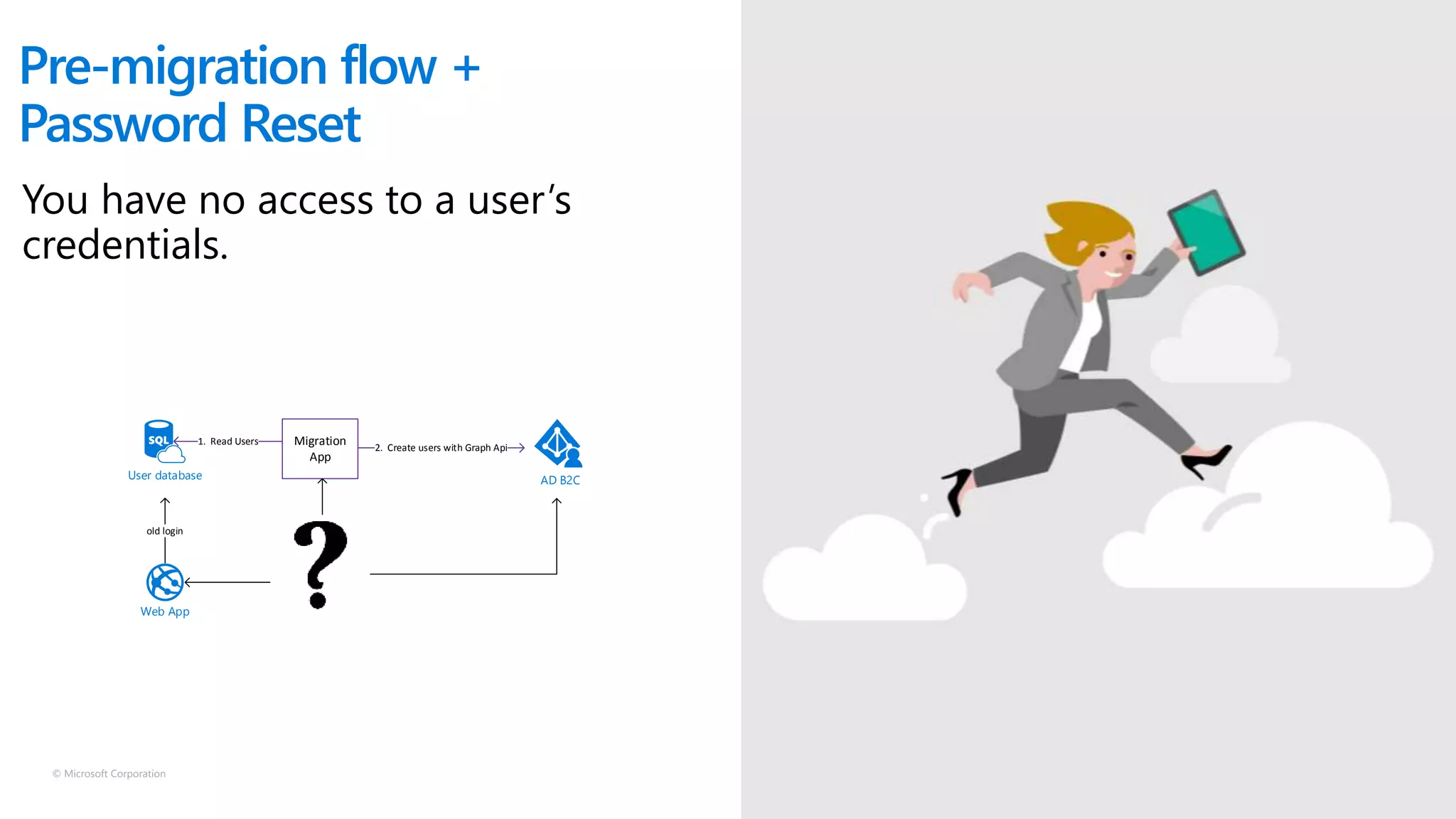
Pre-migration flow +
Password Reset
You have no access to a user’s
credentials.
User database
Web App
AD B2C
old login
Migration
App
1. Read Users
2. Create users with Graph Api
© Microsoft Corporation
Demo Using Graph Api /
User Migration
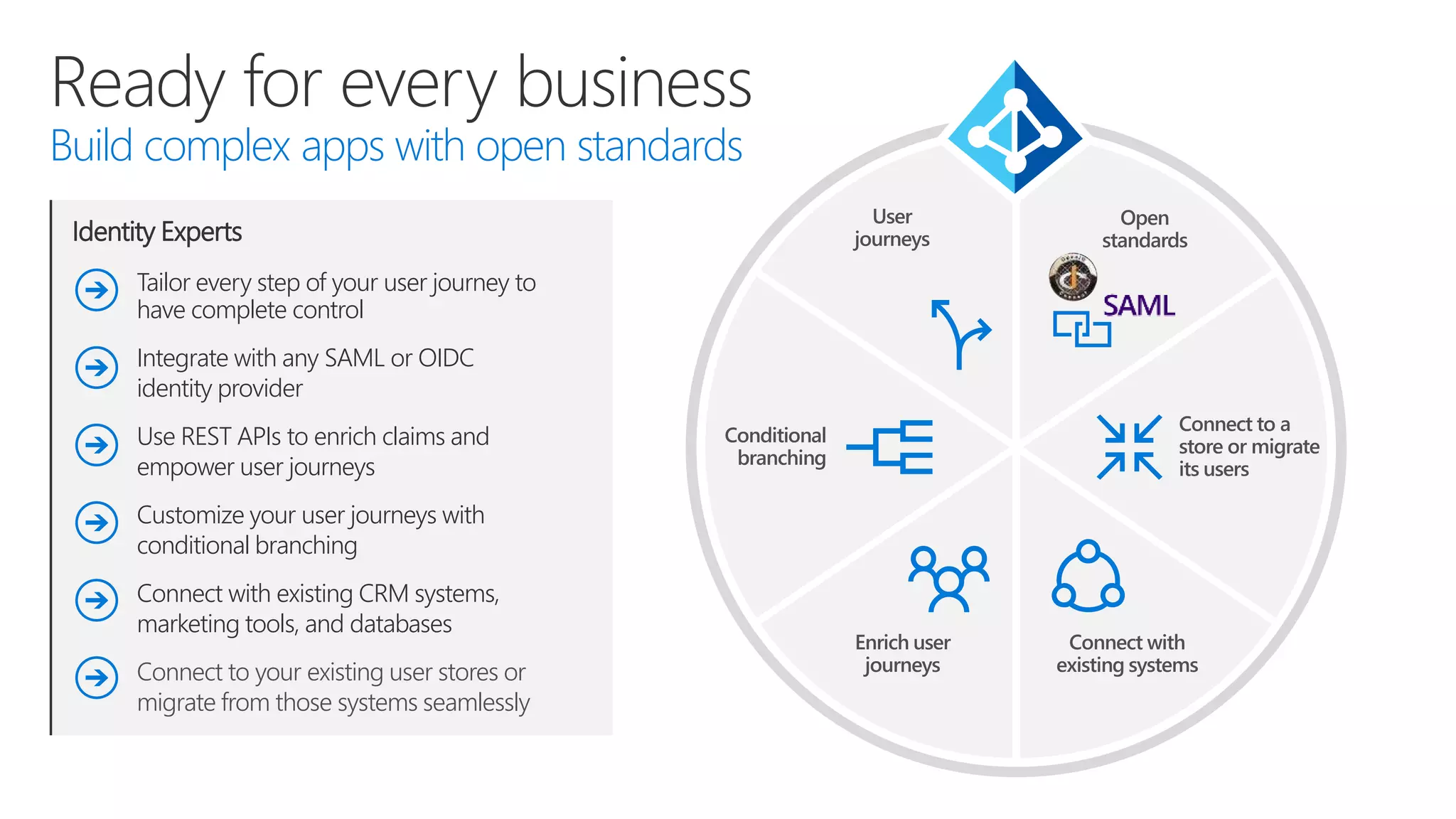
User
journeys
Open
standards
Connect to a
store or migrate
its users
Conditional
branching
Enrich user
journeys
Connect with
existing systems
Build complex apps with open standards
Identity Experts
Tailor every step of your user journey to
have complete control
Integrate with any SAML or OIDC
identity provider
Use REST APIs to enrich claims and
empower user journeys
Customize your user journeys with
conditional branching
Connect with existing CRM systems,
marketing tools, and databases
Connect to your existing user stores or
migrate from those systems seamlessly
© Copyright Microsoft Corporation. All rights reserved.

Azure AD B2C An Introduction - DogFoodCon 2018

  • 1.
    Azure AD B2C DogFoodCon JeremyGray Microsoft Cloud Solution Architect, Financial Services 10/4/2018
  • 2.
  • 3.
  • 4.
    © Microsoft Corporation Contents ##What Problem are we Solving ## Some Definitions ## Typical Customer Interactions ## OpenId Connect Overview ## Tokens ## A Basic Application ## Adding users with the GraphApi
  • 5.
    How can businessessecurely connect with their customers?
  • 6.
    © Microsoft Corporation Authentication:The process of confirming identity Authorization: Specifying access rights to resources OAuth 2.0: OAuth 2.0 is the industry-standard protocol for authorization. OAuth 2.0 focuses on client developer simplicity while providing specific authorization flows for web applications, desktop applications, mobile phones, and living room devices. This specification and its extensions are being developed within the IETF OAuth Working Group. OpenId Connect: OpenID Connect (OIDC) is an authentication layer on top of OAuth 2.0, an authorization framework. The standard is controlled by the OpenID Foundation. Client: This is an application, not a user Definitions
  • 7.
    © Microsoft Corporation Typesof Users Employees Customers Administrators
  • 8.
    © Microsoft Corporation •Interoperability • The client-server authentication model doesn’t account for mobile (non-browser) devices, or anything cross- domain. • Netscape came up with cookies before api’s and interop were issues. • The ability to restrict access to a limited subset of resources for a specified duration is difficult. • Governance • Credentials must be shared with 3rd parties • 3rd party systems we store credentials in can’t be governed • Revoking access to the 3rd party would mean changing all stored (user) passwords. Some classic problems
  • 9.
    © Microsoft Corporation A“new” scenario
  • 10.
    © Microsoft Corporation auth_tokensample This is encoded (not encrypted) and signed by the issuer certificate
  • 11.
    © Microsoft Corporation id_tokensample This is encoded (not encrypted) and signed by the issuer certificate
  • 12.
    Apps Analytics Line of business integration Business Social IDs Business& Government IDs contoso Customers Azure Active Directory B2C Securely authenticate your customers using their preferred identity provider Capture login, preference, and conversion data for customers Provide branded (white-label) registration and login experiences FARM BUREAU
  • 13.
  • 14.
    © Microsoft Corporation Hereis what that looks like
  • 15.
    © Microsoft Corporation UsingGraph Api / User Migration
  • 16.
    © Microsoft Corporation Pre-migrationflow If you have access to a user’s credentials. User database Web App AD B2C old login Migration App 1. Read Users 2. Create users with Graph Api 3. Cutover login screen new login
  • 17.
    © Microsoft Corporation Pre-migrationflow + Password Reset You have no access to a user’s credentials. User database Web App AD B2C old login Migration App 1. Read Users 2. Create users with Graph Api
  • 18.
    © Microsoft Corporation DemoUsing Graph Api / User Migration
  • 19.
    User journeys Open standards Connect to a storeor migrate its users Conditional branching Enrich user journeys Connect with existing systems Build complex apps with open standards Identity Experts Tailor every step of your user journey to have complete control Integrate with any SAML or OIDC identity provider Use REST APIs to enrich claims and empower user journeys Customize your user journeys with conditional branching Connect with existing CRM systems, marketing tools, and databases Connect to your existing user stores or migrate from those systems seamlessly
  • 20.
    © Copyright MicrosoftCorporation. All rights reserved.

Editor's Notes

  • #3 There has never been a better time to be in technology.
  • #4  Rock my linked in https://www.linkedin.com/in/thejeremygray/
  • #8 This is how I think of users, employees (inclucing consultants/contractors or anyone we have a company level contract with) are like dogs…loyal they do what you want most of the time, we trust them. Customers are like cats, they like us most of the time, but wouldn’t really notice if we didn’t exists anymore. Internal administrators have a higher level of access and should be governed at a higher level.
  • #9 These issues lead to us creating islands of authentication with no interop between them.
  • #10 Log into Walmart and pull resources from flickr to print…how do we do this?
  • #11 Jwt.io
  • #12 Notice the “aud” / audience, this is scoped to the web application whereas the auth token is scoped to the function.
  • #14 https://github.com/Azure-Samples/active-directory-b2c-dotnet-webapp-and-webapi
  • #15 Heres a lovely drawing written on really old letterhead.
  • #16 https://github.com/Azure-Samples/active-directory-b2c-dotnet-webapp-and-webapi https://docs.microsoft.com/en-us/azure/active-directory-b2c/active-directory-b2c-devquickstarts-graph-dotnet
  • #17 https://docs.microsoft.com/en-us/azure/active-directory-b2c/active-directory-b2c-user-migration
  • #18 https://docs.microsoft.com/en-us/azure/active-directory-b2c/active-directory-b2c-user-migration You have options here on how to do the cutover and you should make a smart decision based on your users. The easiest would be to do a blanket password reset cutover. Send an email and say “Your password has been reset”, making them go through the normal password reset policy. A little less intrusive would be to manage in your application which IdP the user is on and cut them over when their current password expires.
  • #19 https://github.com/Azure-Samples/active-directory-b2c-dotnet-webapp-and-webapi https://docs.microsoft.com/en-us/azure/active-directory-b2c/active-directory-b2c-devquickstarts-graph-dotnet cd C:\src\B2C-GraphAPI-DotNet\B2CGraphClient\bin\Debug B2C Create-User ..\..\..\usertemplate-email.json B2C Create-User ..\..\..\usertemplate-username.json
  • #20 Integrate with developer tools, libraries, and SDKs supporting OAUTH/Open ID Connect