LORI BOWEN AYRE
LIB R A RY TEC H N OLOGY C ON SU LTA N T
TH E GA LEC IA GR OU P
L O R I . AY R E @ G A L E C I A . C O M
SUPPORTING SERVICES AND
CARE
NISO Virtual Conference: Using Open Source in Your Institution: 02.17.16
OPEN SOURCE ILS SERVICE
PROVIDERS PROVIDE THE SAME
SERVICES AS PROPRIETARY ILS
VENDORS
….AND MORE
SERVICES PROVIDED BY VENDORS
AND SERVICE PROVIDERS
Proprietary ILS Vendor
• Migration
• Implementation
• Training
• Support
• Hosting
• Access to User
Community
Open Source Service
Providers
• Migration
• Implementation
• Training
• Support
• Hosting
• Access to User
Community
• Development
UNIQUE ASPECTS OF WORKING WITH
OPEN SOURCE SERVICE PROVIDERS
 Choices
• Can use one provider for hosting and support and another for
development
• Can switch from one provider to another without giving up your
ILS
 Community
• Open source community is another resource that is much more
than a “user group”
• Your Service Provider may be your library’s primary link to the
larger open source community – but it doesn’t have to be
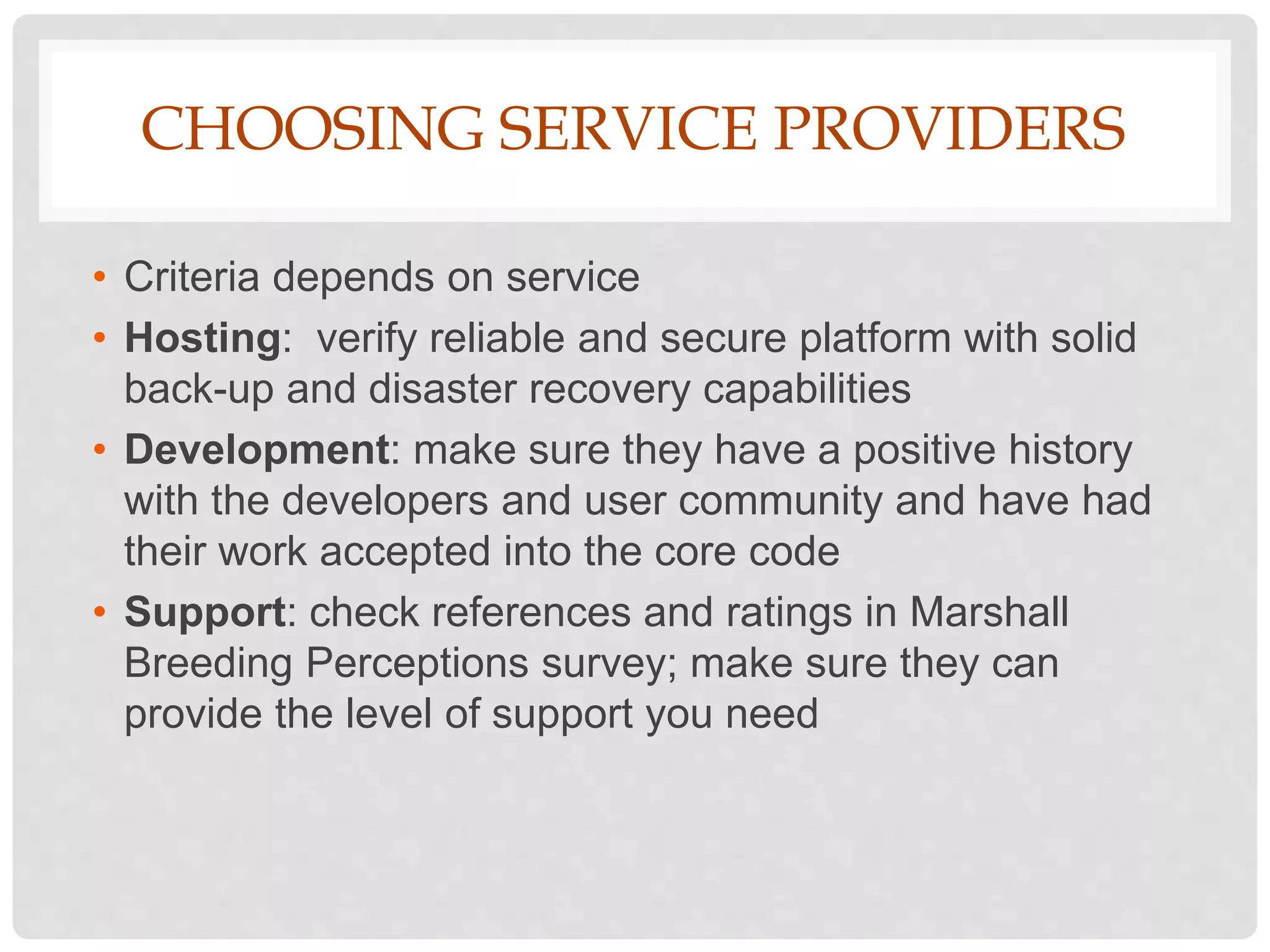
CHOOSING SERVICE PROVIDERS
• Criteria depends on service
• Hosting: verify reliable and secure platform with solid
back-up and disaster recovery capabilities
• Development: make sure they have a positive history
with the developers and user community and have had
their work accepted into the core code
• Support: check references and ratings in Marshall
Breeding Perceptions survey; make sure they can
provide the level of support you need
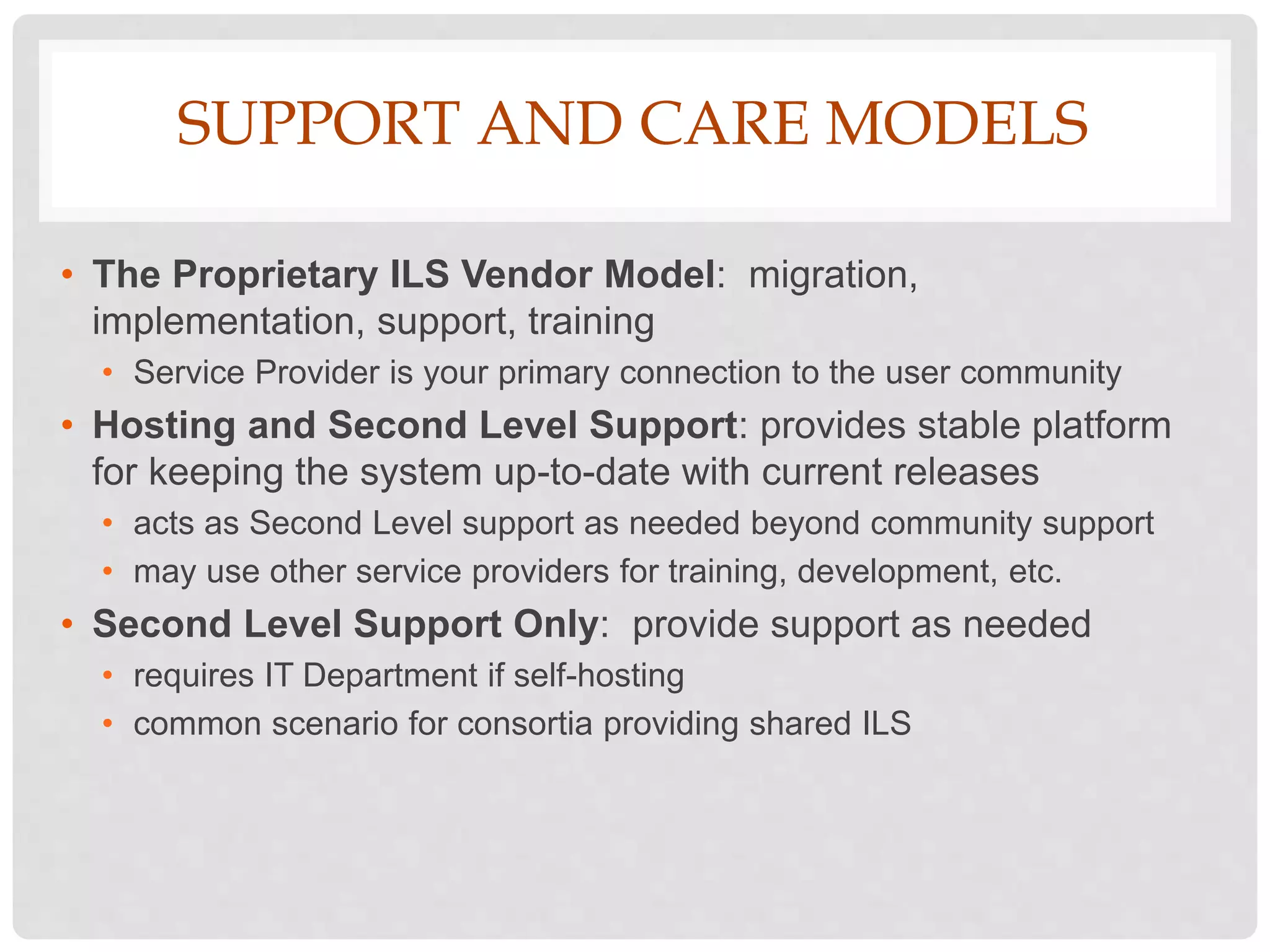
SUPPORT AND CARE MODELS
• The Proprietary ILS Vendor Model: migration,
implementation, support, training
• Service Provider is your primary connection to the user community
• Hosting and Second Level Support: provides stable platform
for keeping the system up-to-date with current releases
• acts as Second Level support as needed beyond community support
• may use other service providers for training, development, etc.
• Second Level Support Only: provide support as needed
• requires IT Department if self-hosting
• common scenario for consortia providing shared ILS

Ayre niso virtual conf feb17

  • 1.
    LORI BOWEN AYRE LIBR A RY TEC H N OLOGY C ON SU LTA N T TH E GA LEC IA GR OU P L O R I . AY R E @ G A L E C I A . C O M SUPPORTING SERVICES AND CARE NISO Virtual Conference: Using Open Source in Your Institution: 02.17.16
  • 2.
    OPEN SOURCE ILSSERVICE PROVIDERS PROVIDE THE SAME SERVICES AS PROPRIETARY ILS VENDORS ….AND MORE
  • 3.
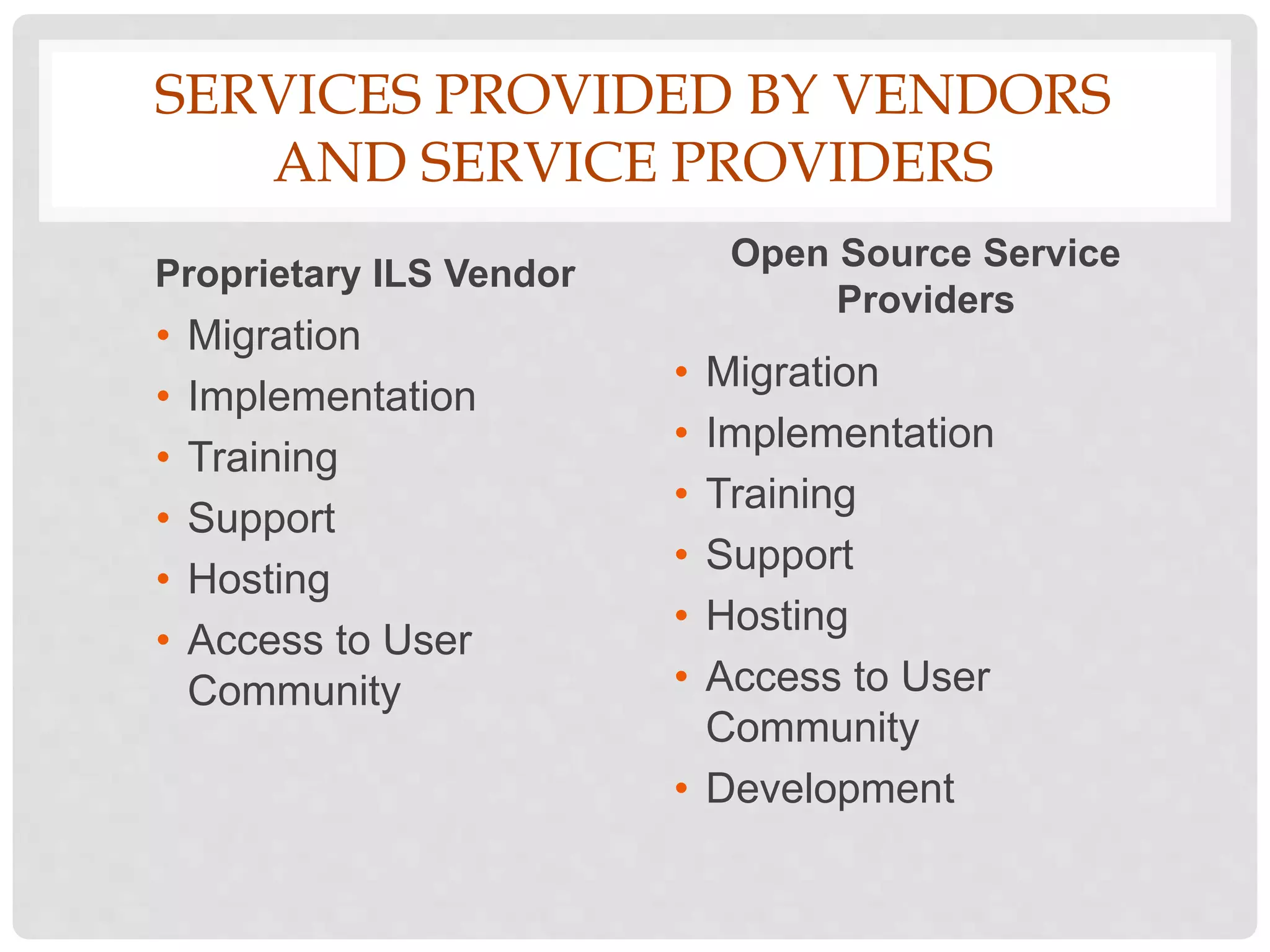
    SERVICES PROVIDED BYVENDORS AND SERVICE PROVIDERS Proprietary ILS Vendor • Migration • Implementation • Training • Support • Hosting • Access to User Community Open Source Service Providers • Migration • Implementation • Training • Support • Hosting • Access to User Community • Development
  • 4.
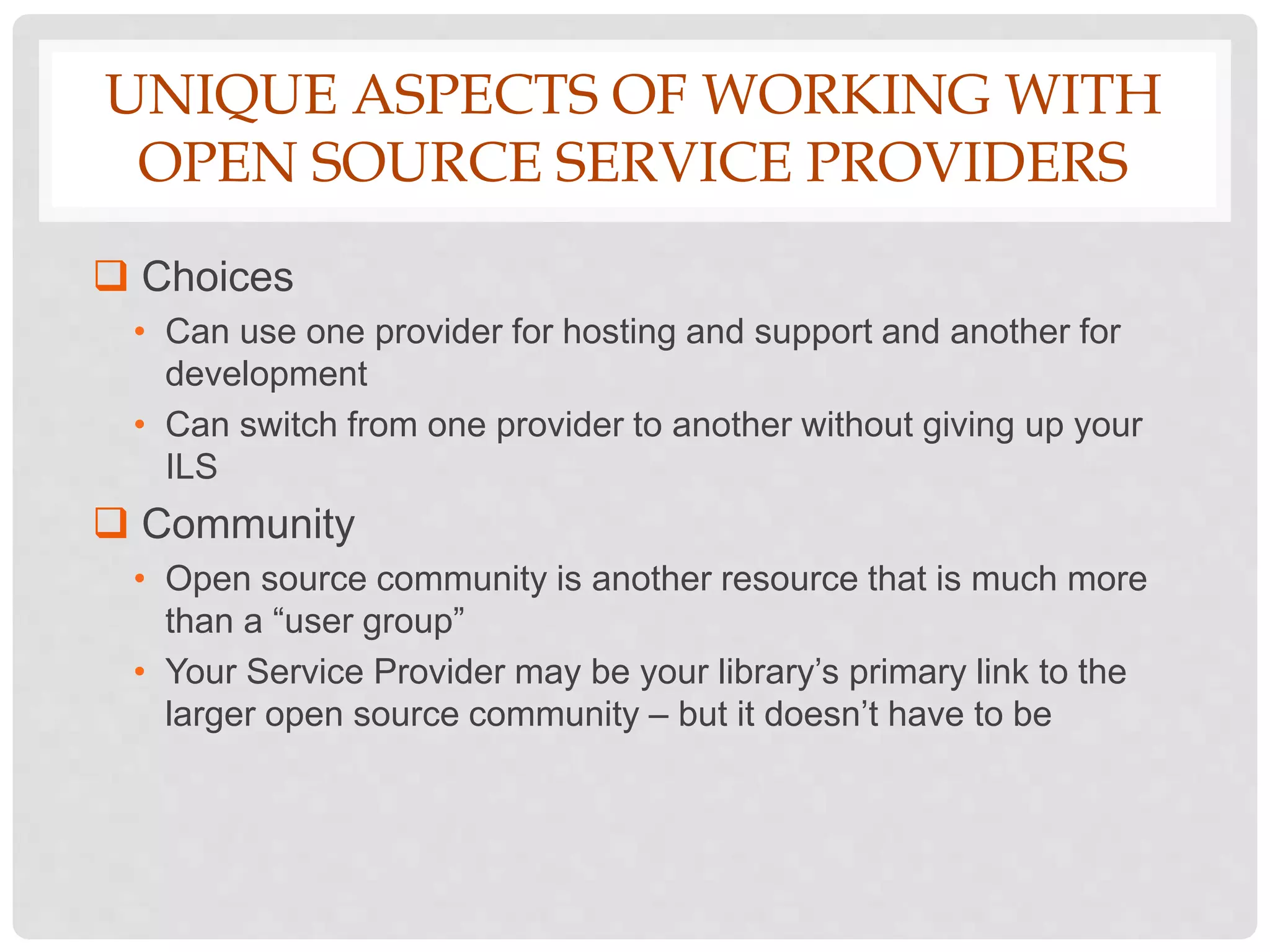
    UNIQUE ASPECTS OFWORKING WITH OPEN SOURCE SERVICE PROVIDERS  Choices • Can use one provider for hosting and support and another for development • Can switch from one provider to another without giving up your ILS  Community • Open source community is another resource that is much more than a “user group” • Your Service Provider may be your library’s primary link to the larger open source community – but it doesn’t have to be
  • 5.
    CHOOSING SERVICE PROVIDERS •Criteria depends on service • Hosting: verify reliable and secure platform with solid back-up and disaster recovery capabilities • Development: make sure they have a positive history with the developers and user community and have had their work accepted into the core code • Support: check references and ratings in Marshall Breeding Perceptions survey; make sure they can provide the level of support you need
  • 6.
    SUPPORT AND CAREMODELS • The Proprietary ILS Vendor Model: migration, implementation, support, training • Service Provider is your primary connection to the user community • Hosting and Second Level Support: provides stable platform for keeping the system up-to-date with current releases • acts as Second Level support as needed beyond community support • may use other service providers for training, development, etc. • Second Level Support Only: provide support as needed • requires IT Department if self-hosting • common scenario for consortia providing shared ILS