VIVO, an Open-Source
Research Networking System:
A Case Study at
The Scripps Research Institute
Brian Lowe
Ontocale SRL
brian@ontocale.com
Michaeleen Trimarchi
Former Manager, Library
Programs, Kresge Library, TSRI
VIVO basics
VIVO
• Research Networking System (RNS)
• An open, shared platform for connecting
scholars, research communities, campuses, and
the world using Linked Open Data (LOD)
• Supports recording, editing, searching, browsing
& visualizing scholarly activity
Key VIVO principles
• Open software: vivoweb.org
• Open data: RDF & Linked Open Data
• Open ontology: VIVO-ISF
• Open community: VIVO at Duraspace.org
• Local control
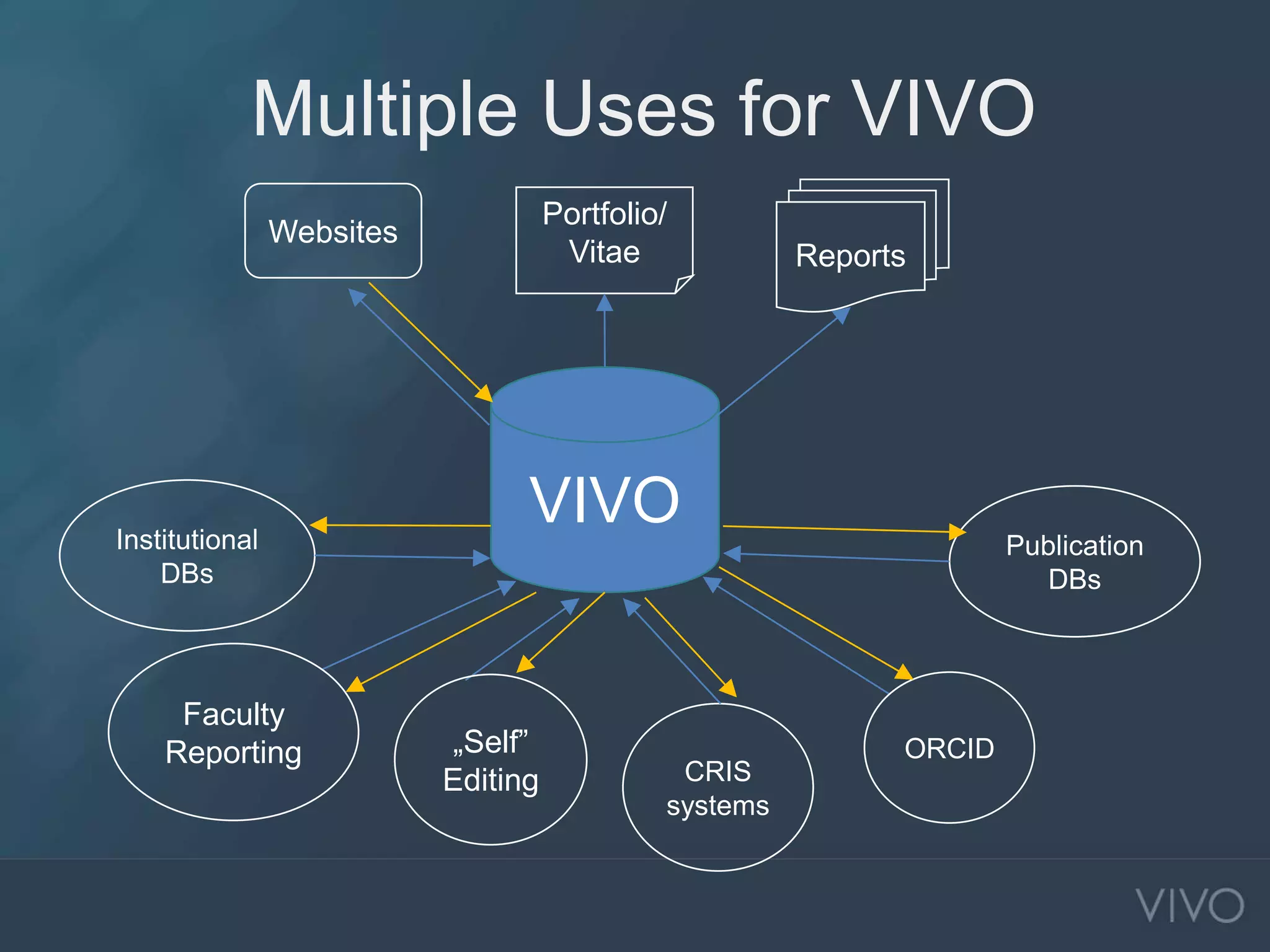
Multiple Uses for VIVO
VIVO
Reports
Portfolio/
Vitae
Websites
Faculty
Reporting
CRIS
systems
„Self”
Editing
ORCID
Institutional
DBs
Publication
DBs
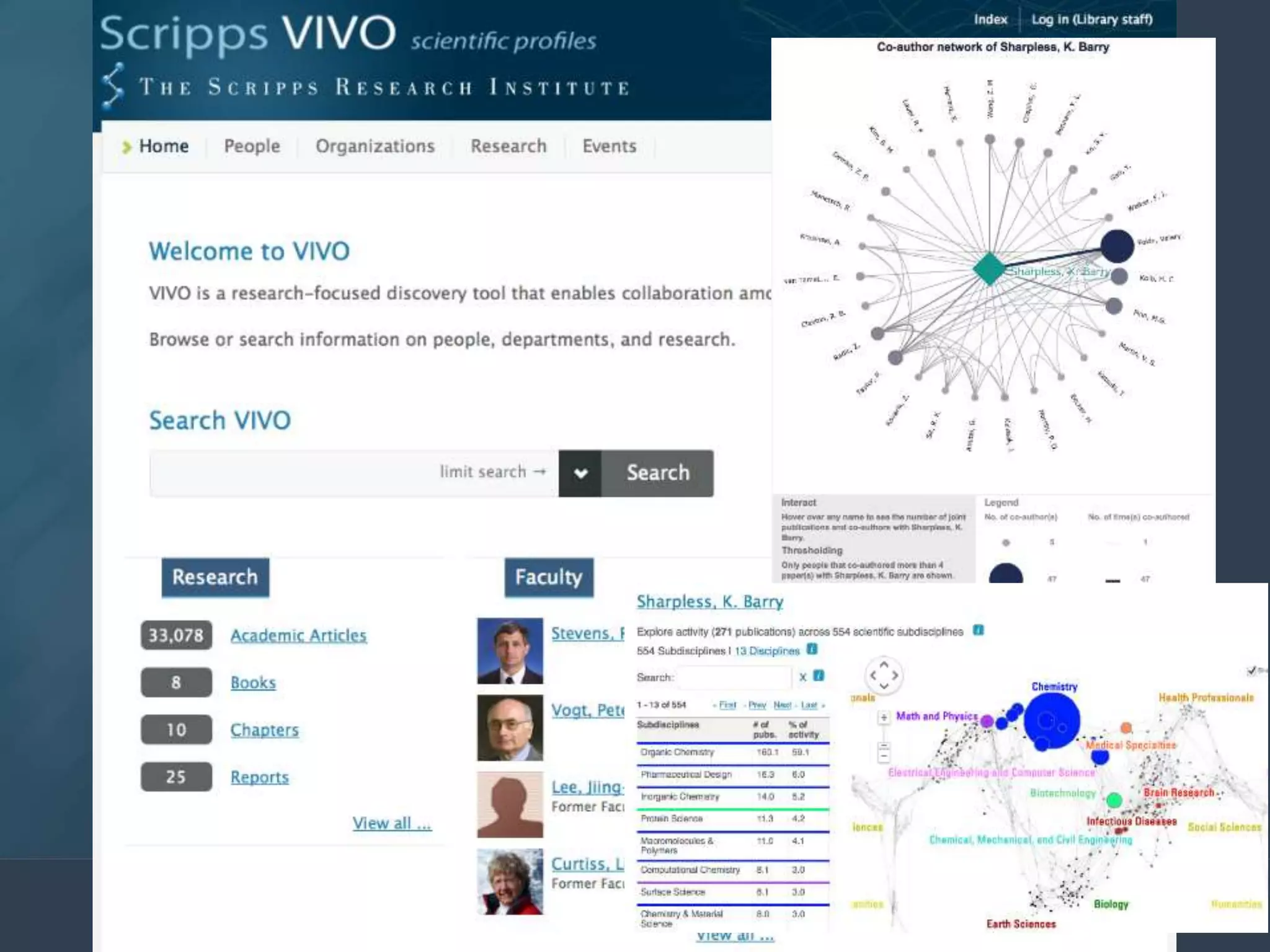
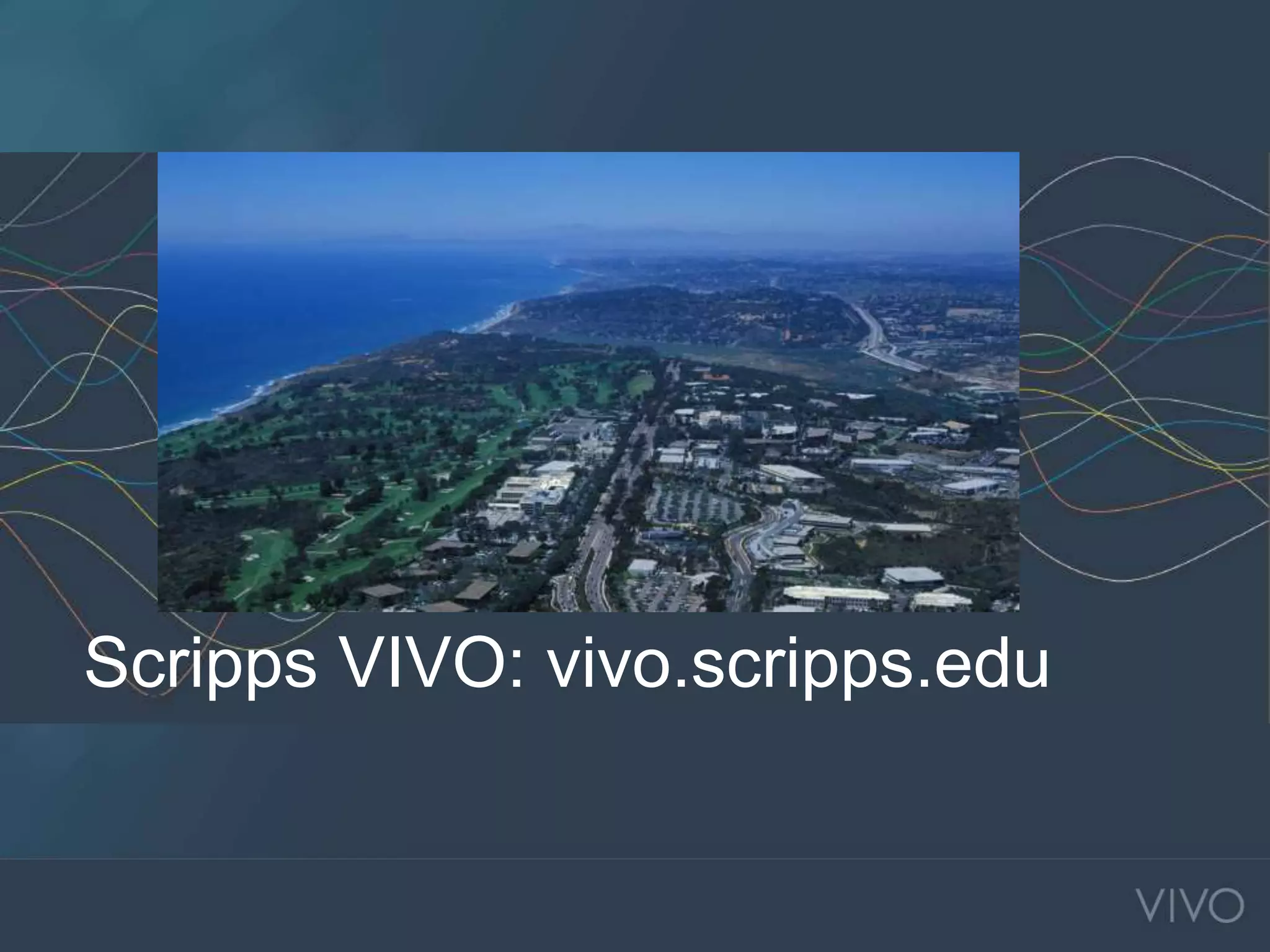
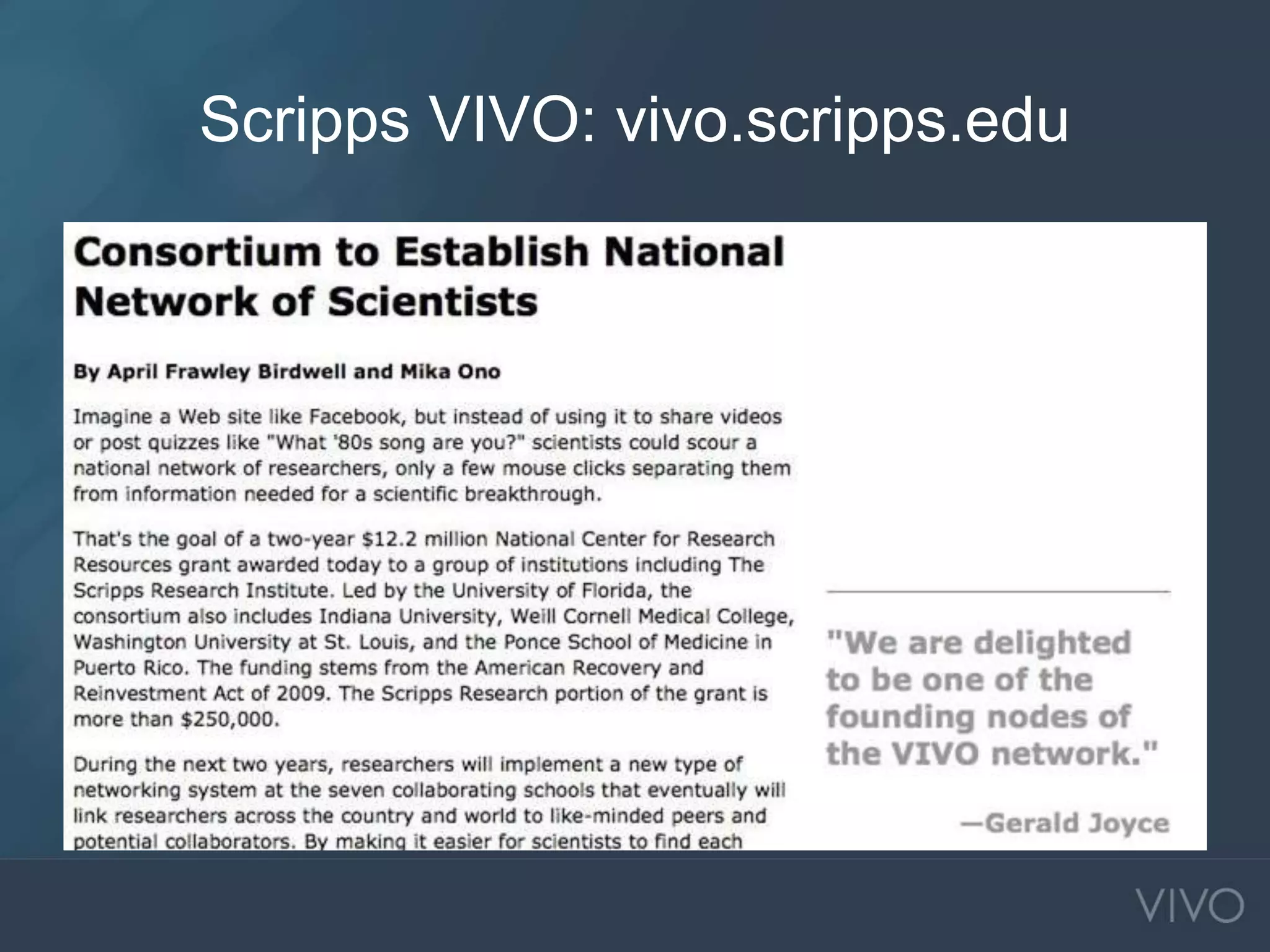
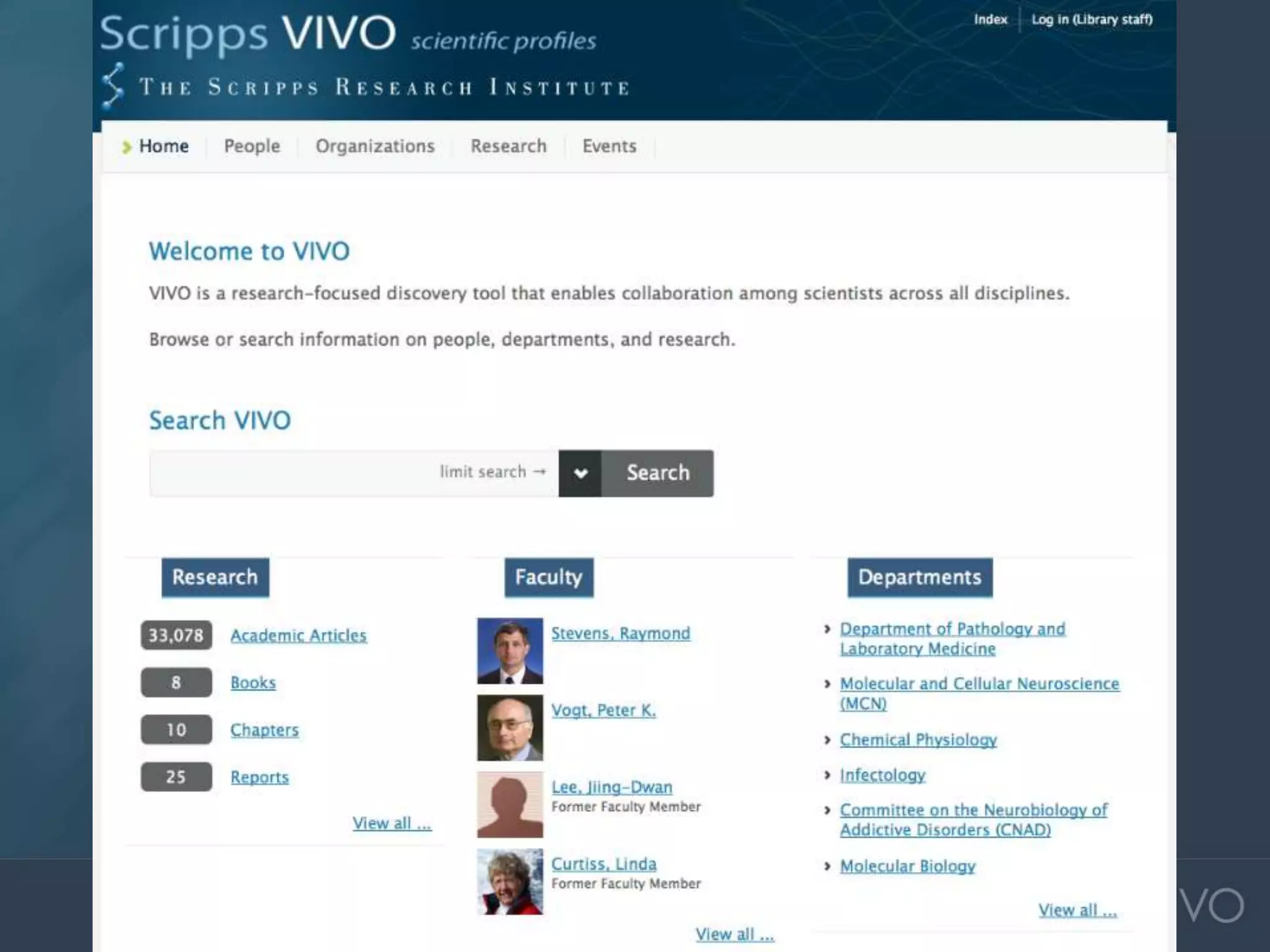
Scripps VIVO: vivo.scripps.edu
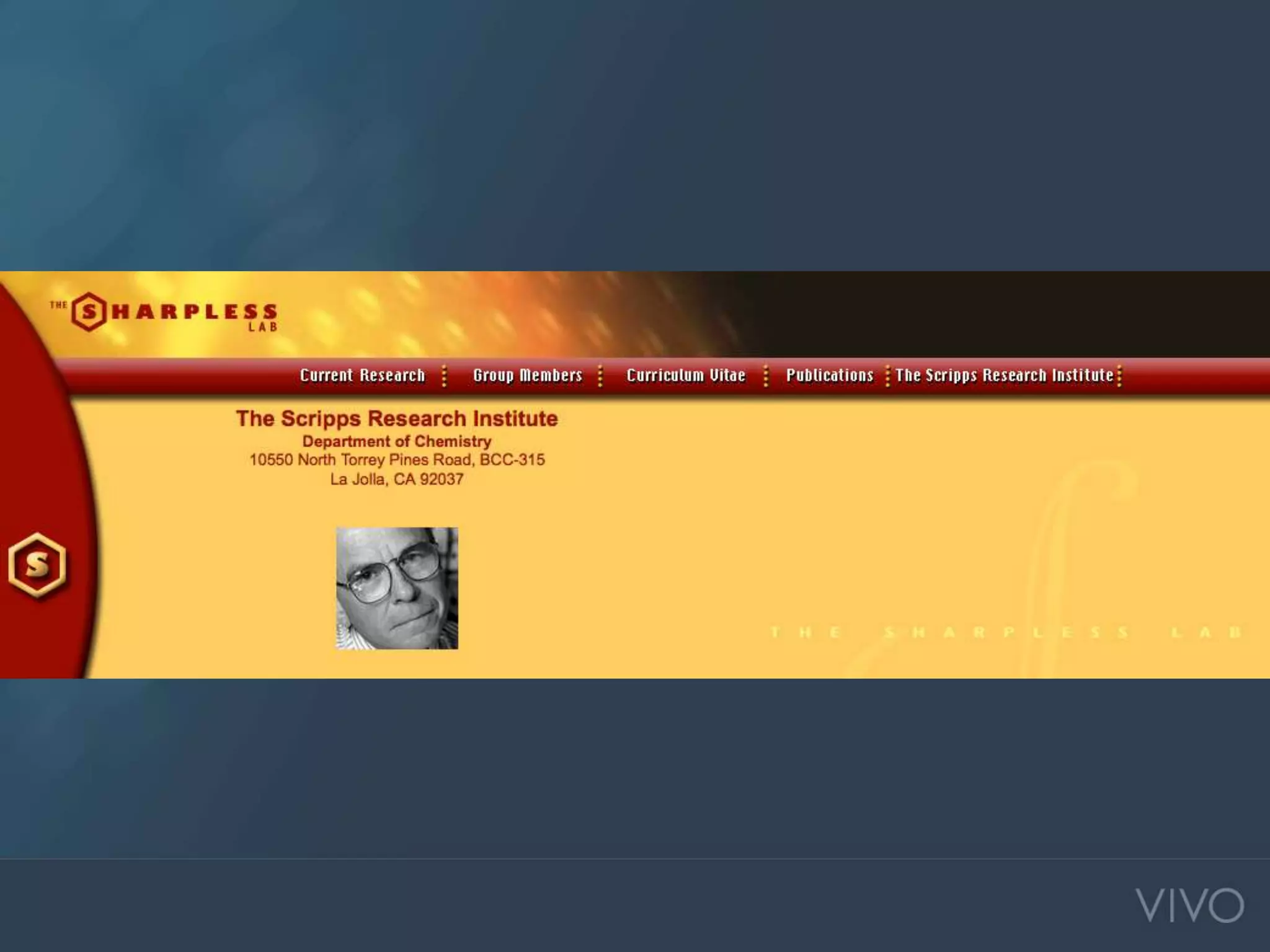
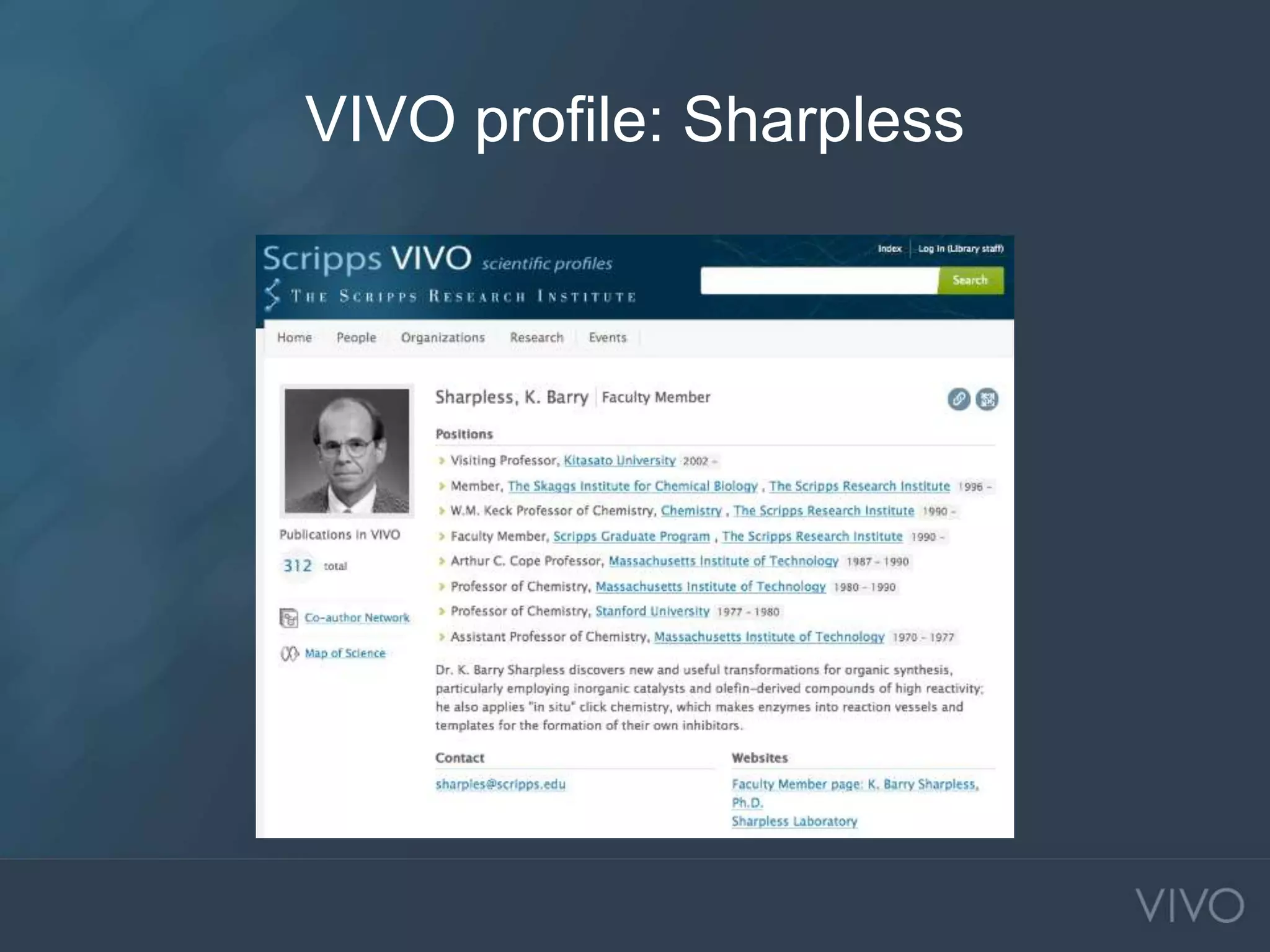
VIVO profile: Sharpless
Customizing and extending
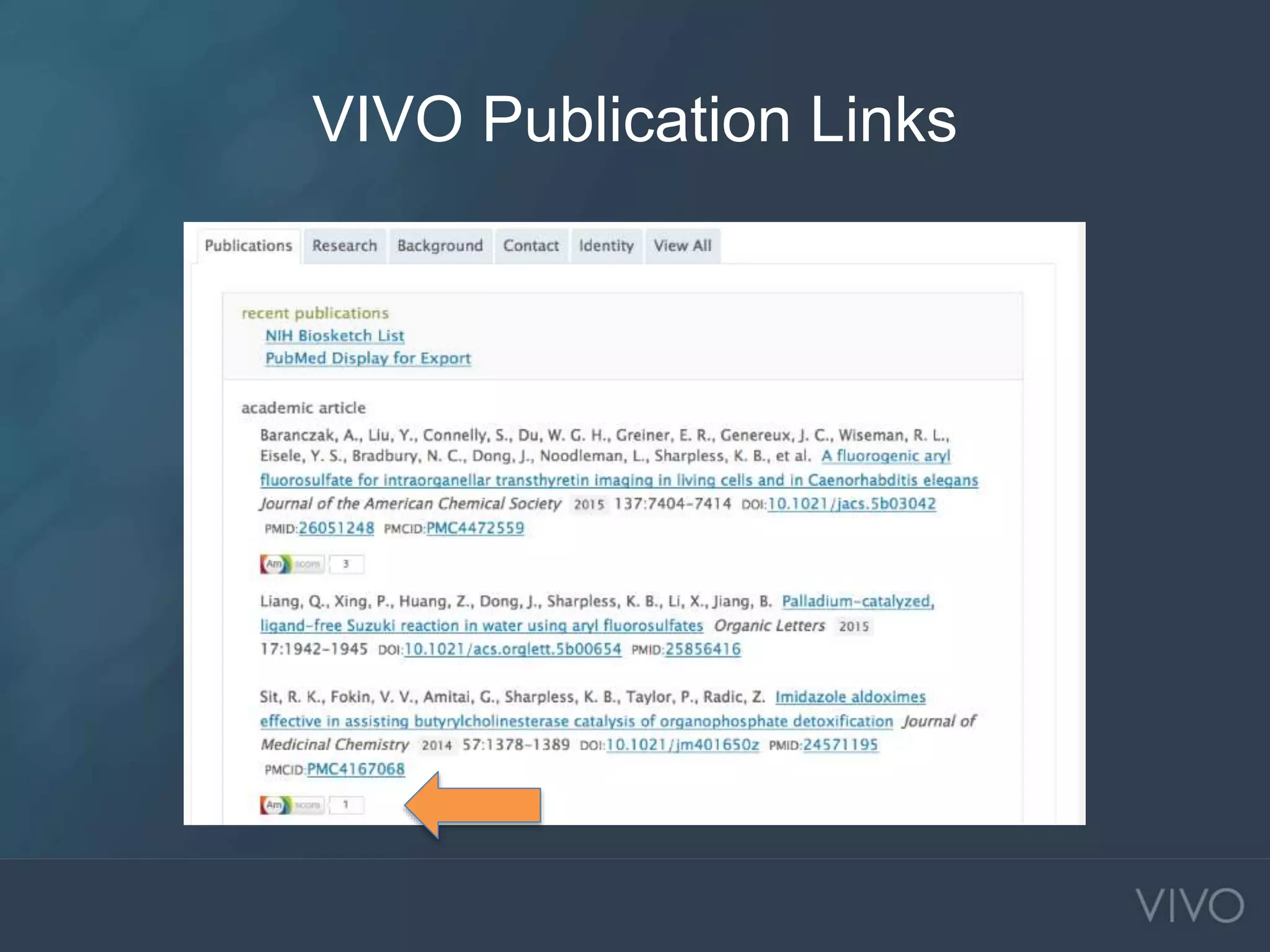
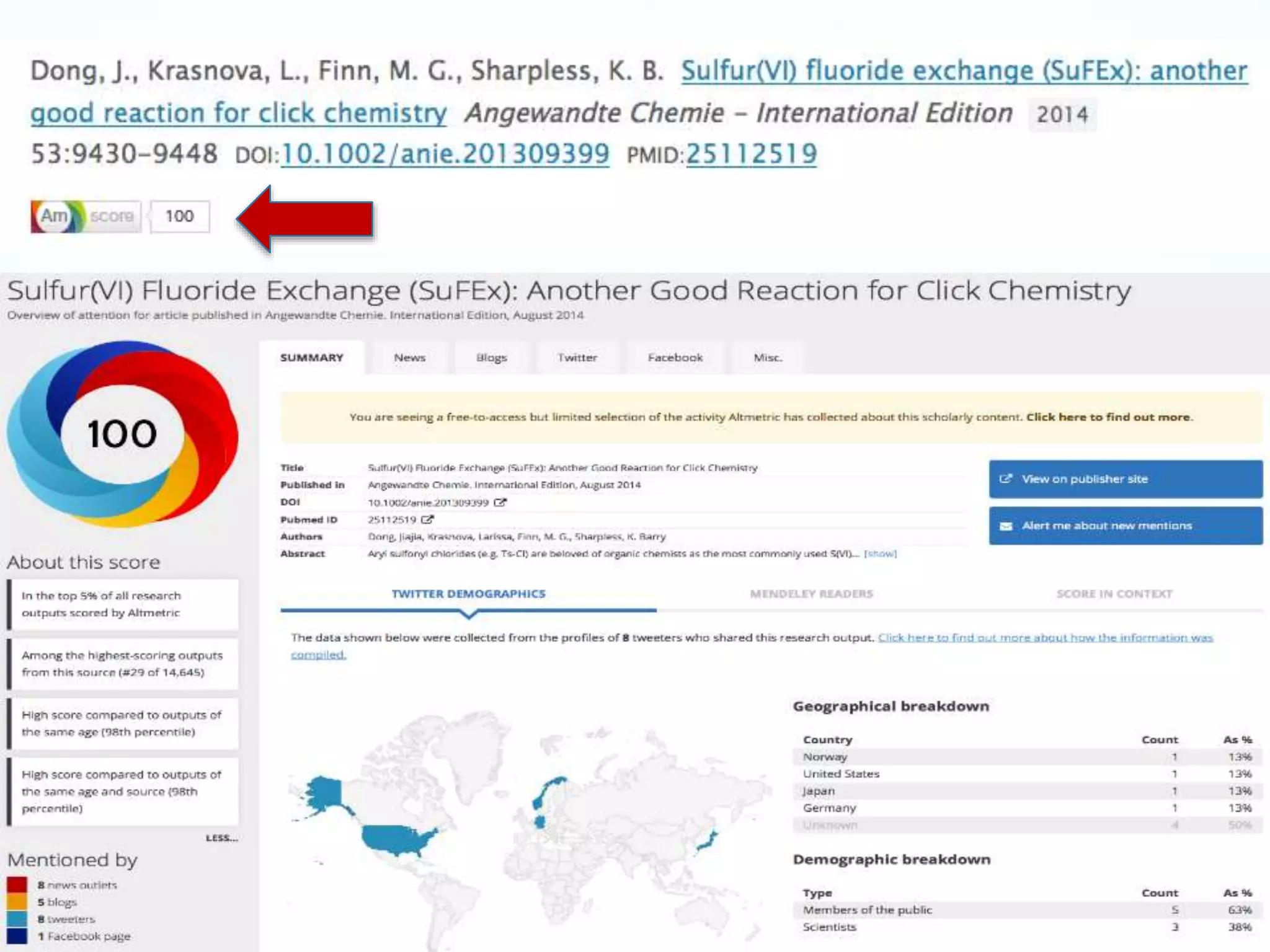
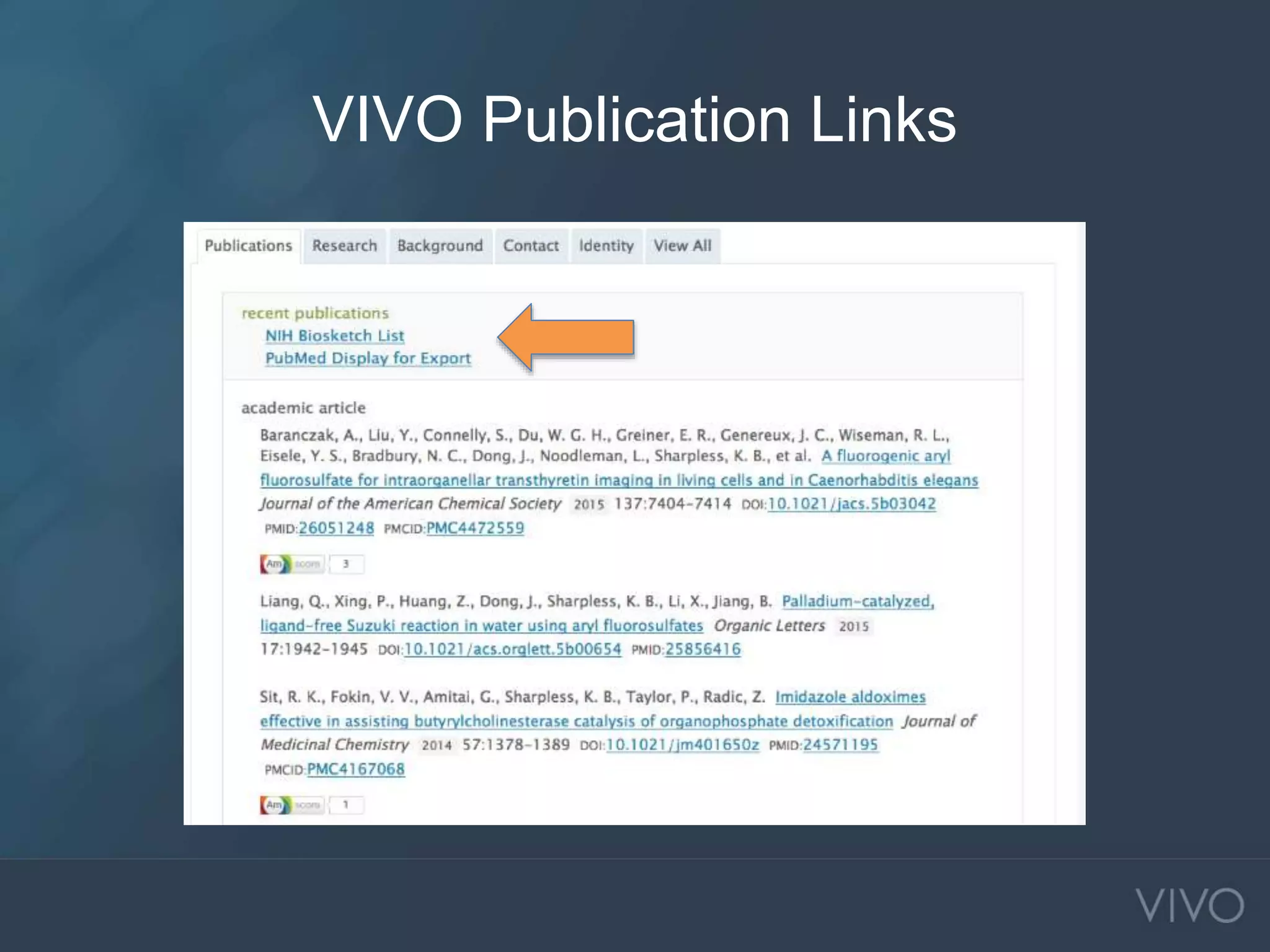
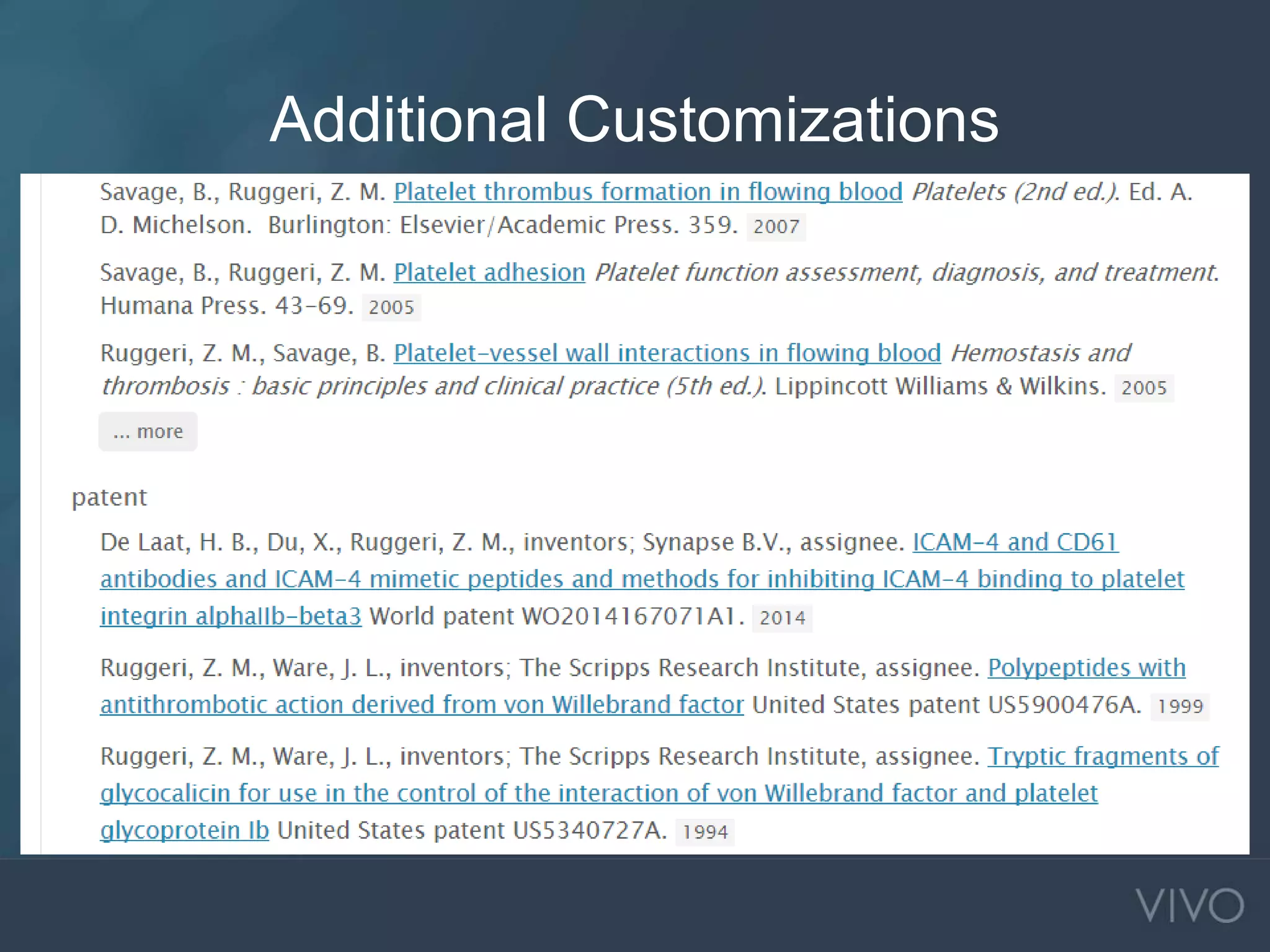
VIVO Publication Links
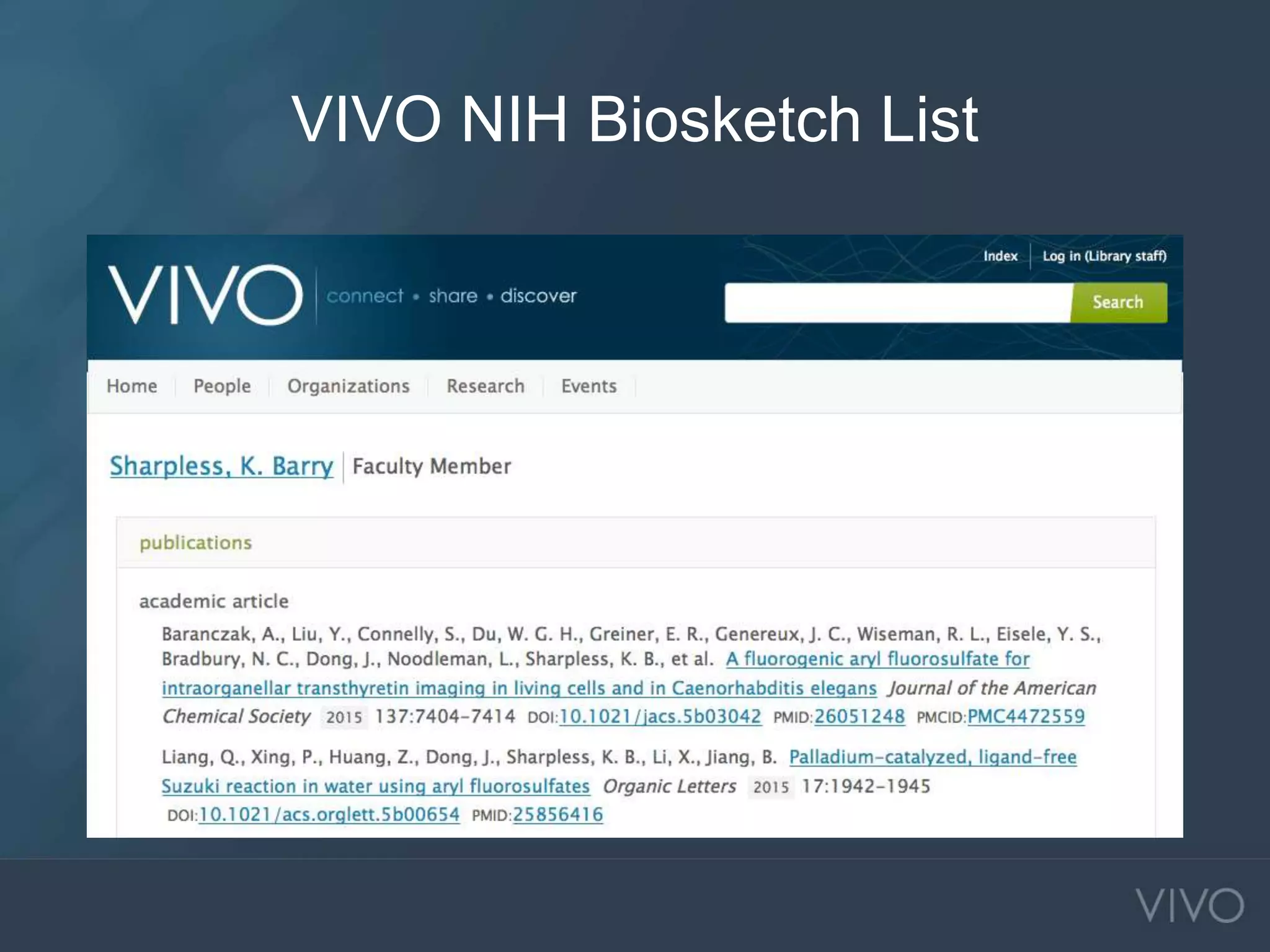
VIVO NIH Biosketch List
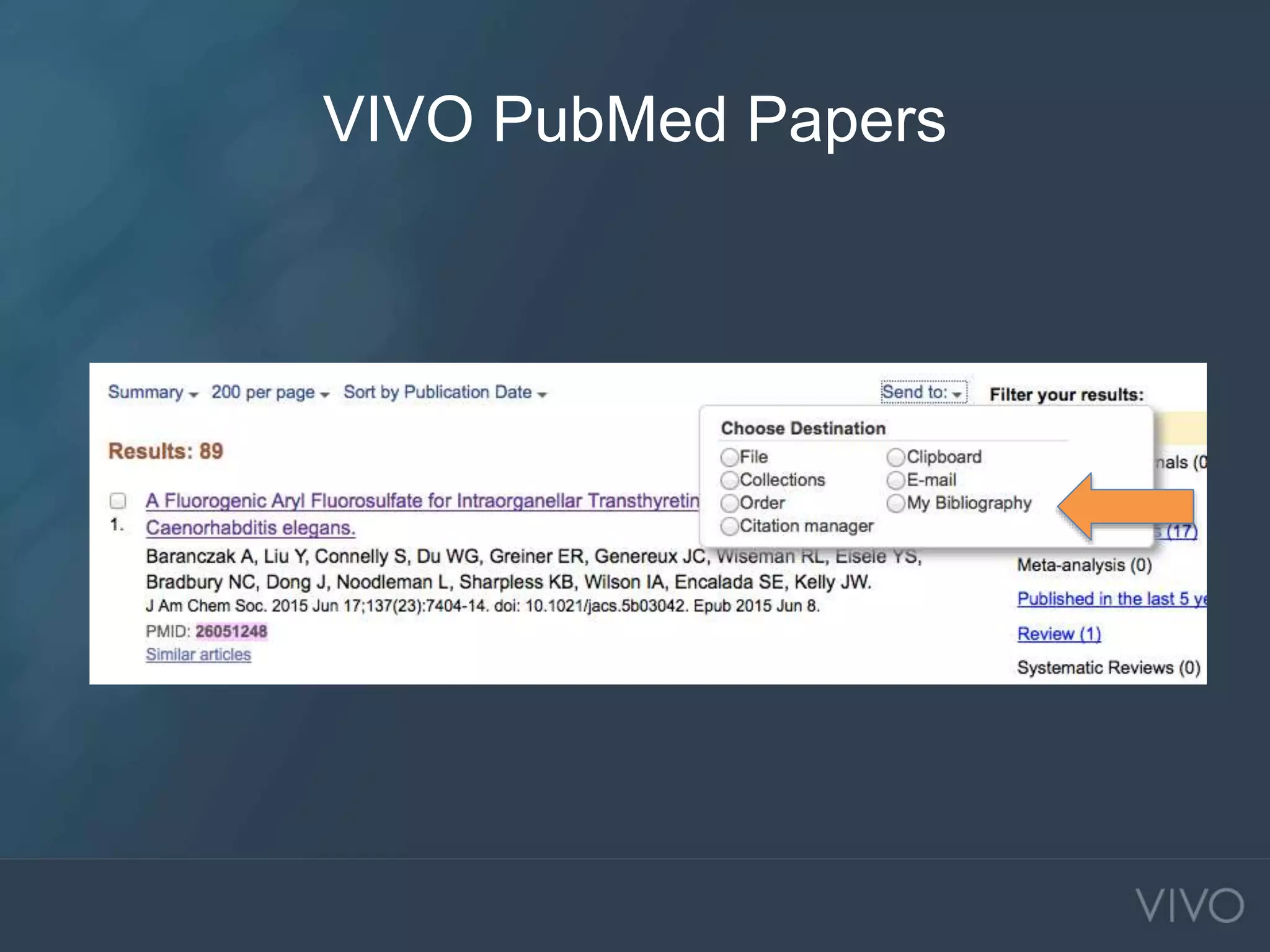
VIVO PubMed Papers
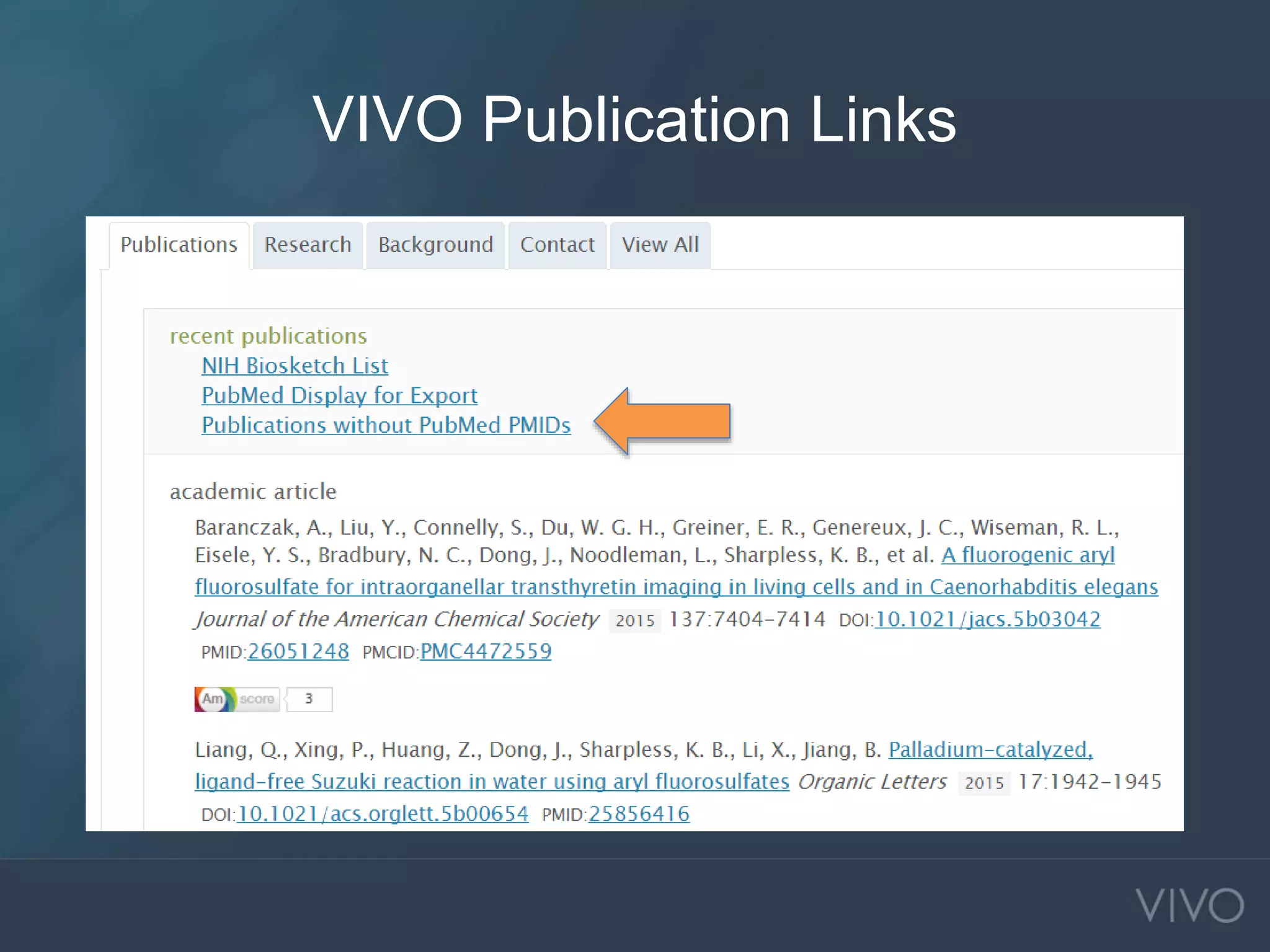
VIVO Publication Links
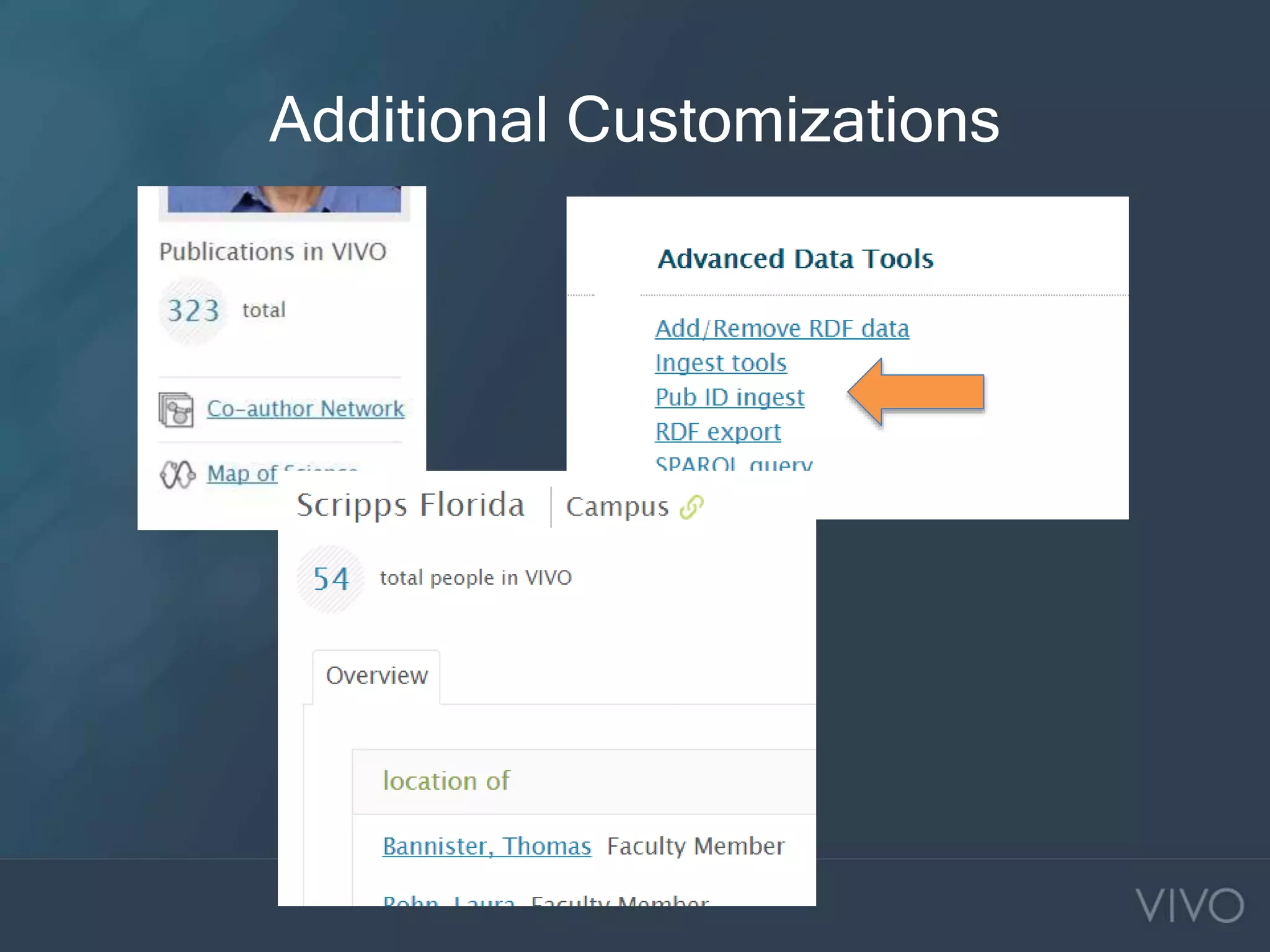
Additional Customizations
Getting the data into VIVO
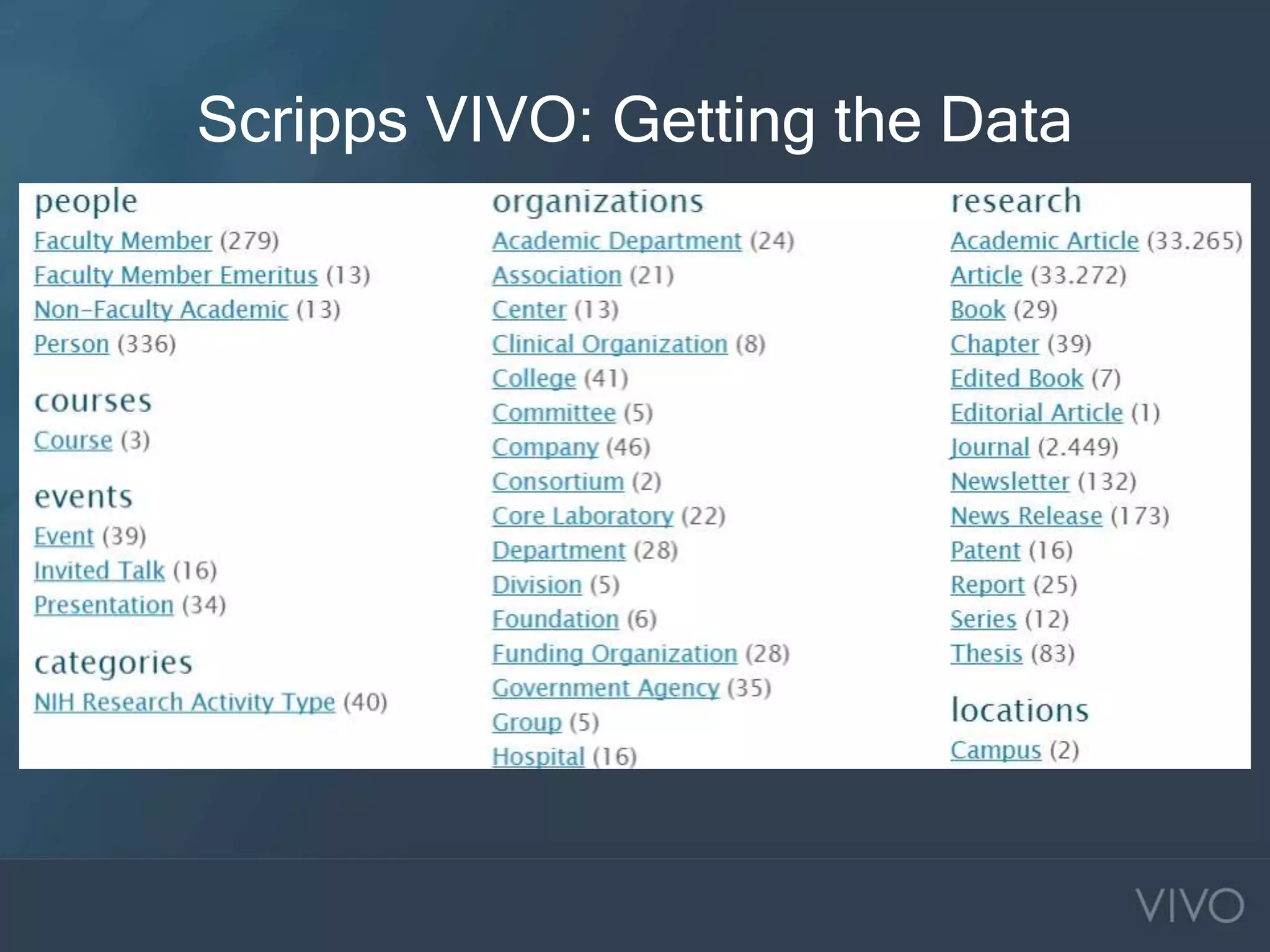
Scripps VIVO: Getting the Data
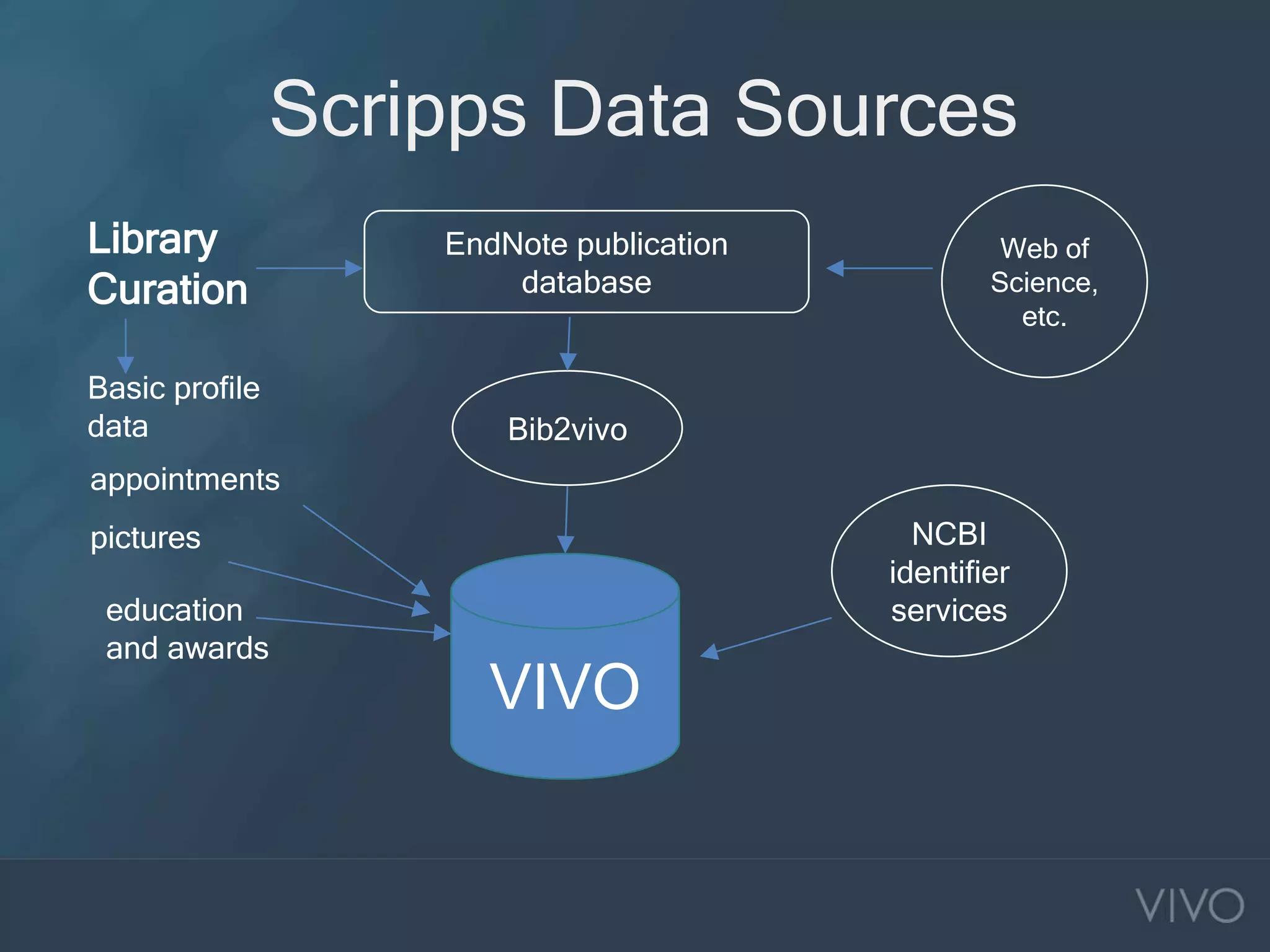
Scripps Data Sources
VIVO
EndNote publication
database
Bib2vivo
Web of
Science,
etc.
NCBI
identifier
services
pictures
Basic profile
data
Library
Curation
appointments
education
and awards
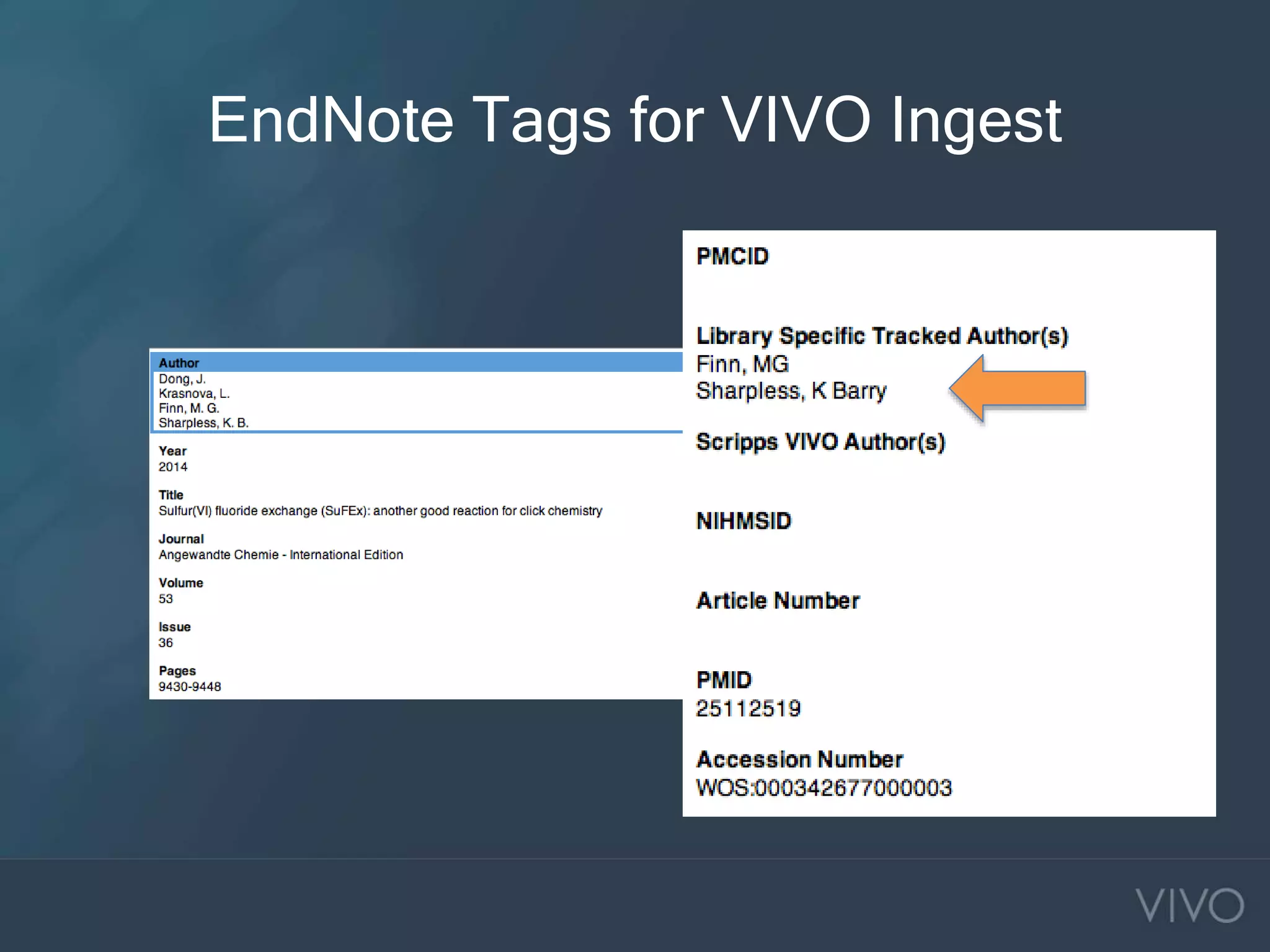
EndNote Tags for VIVO Ingest
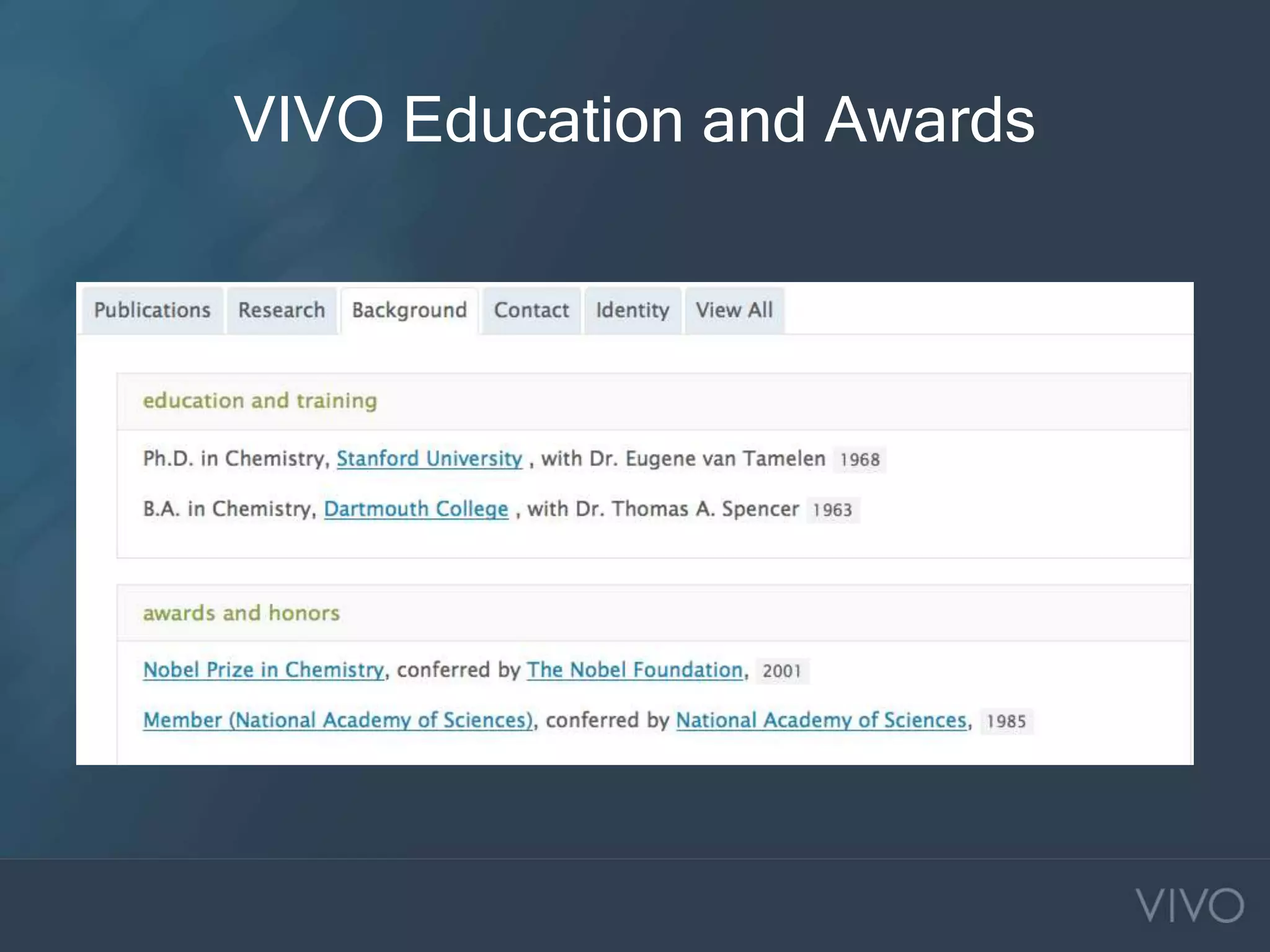
VIVO Education and Awards
Harnessing the data
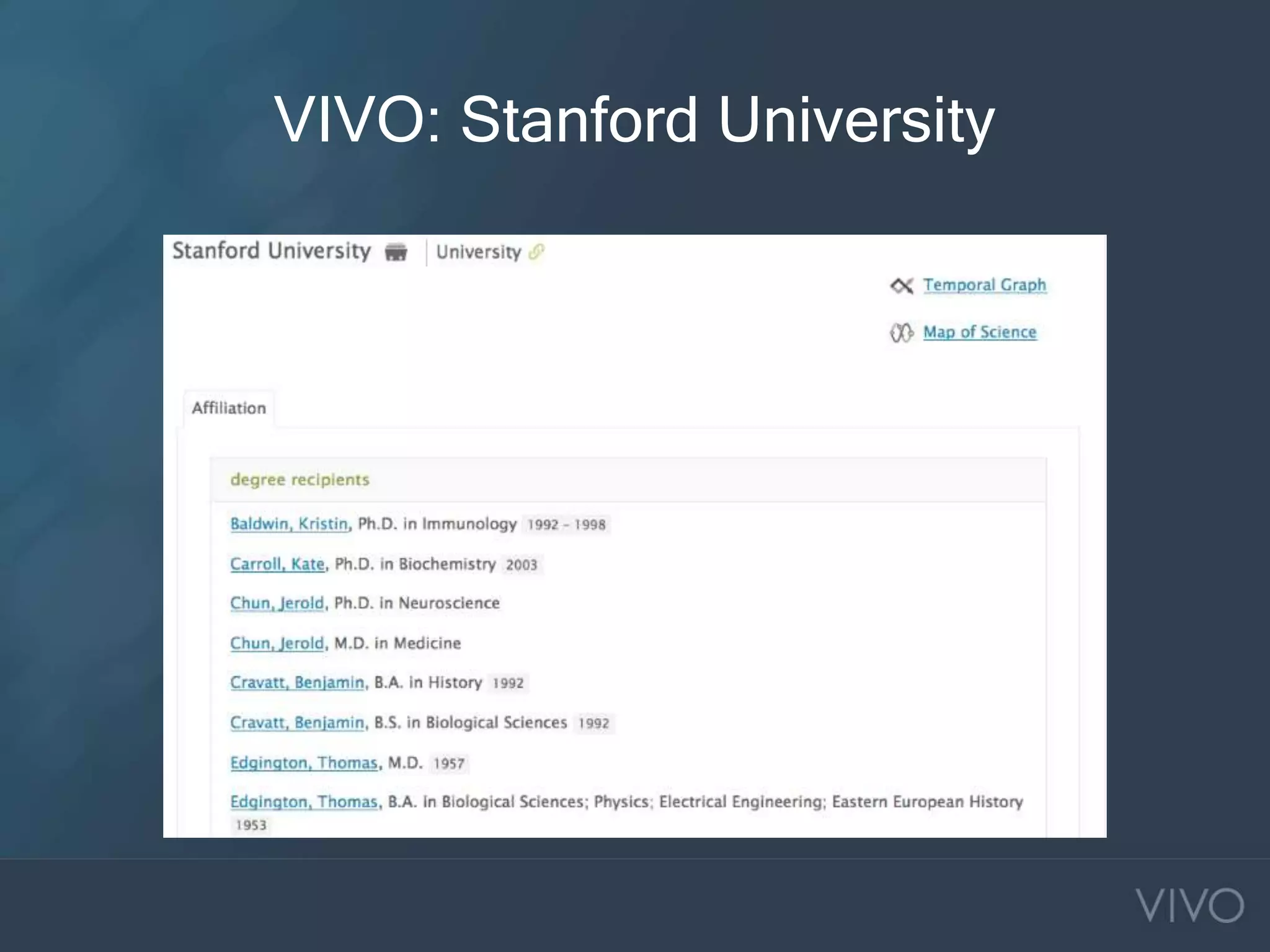
VIVO search: Stanford
VIVO: Stanford University
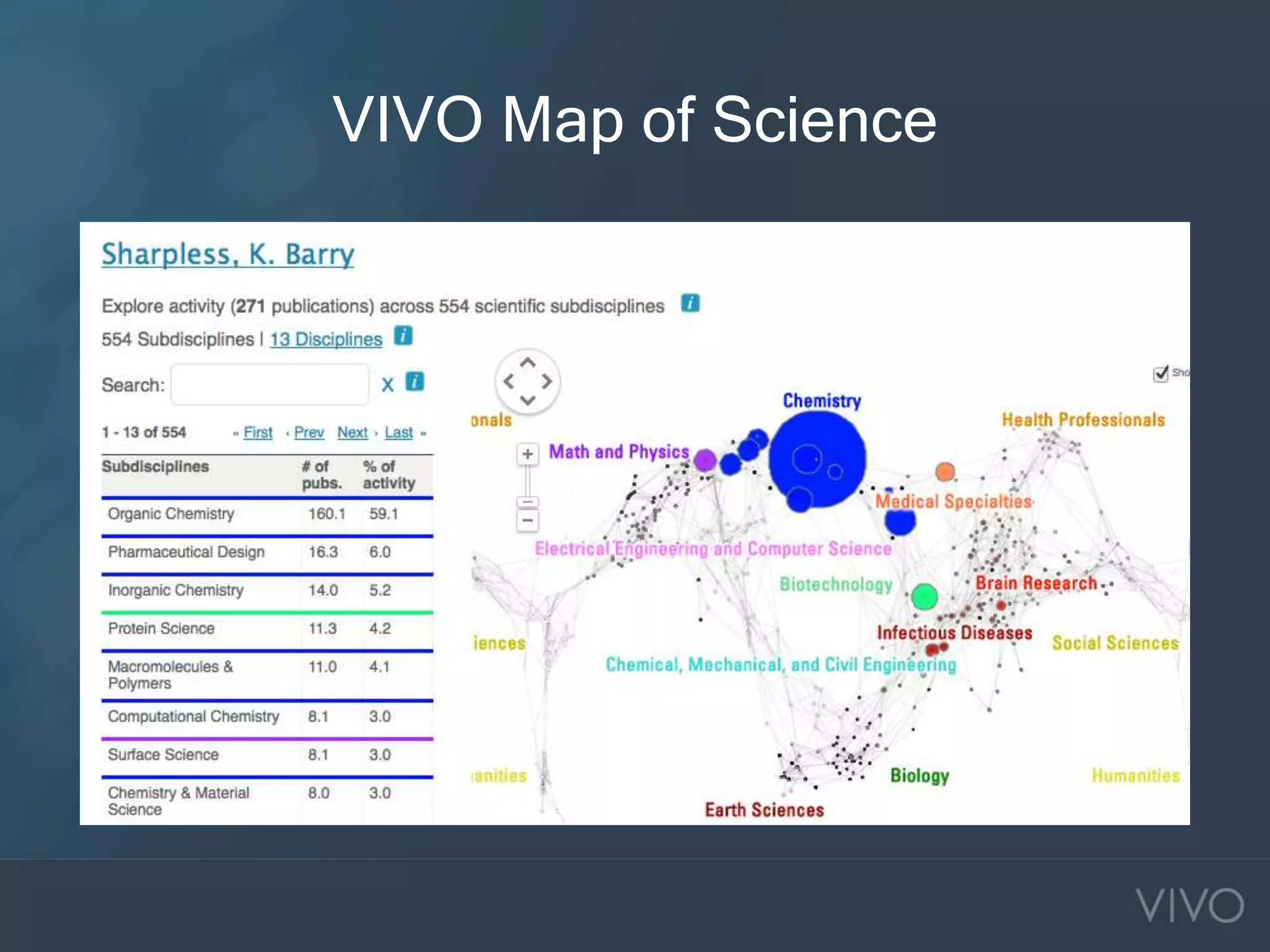
VIVO Map of Science
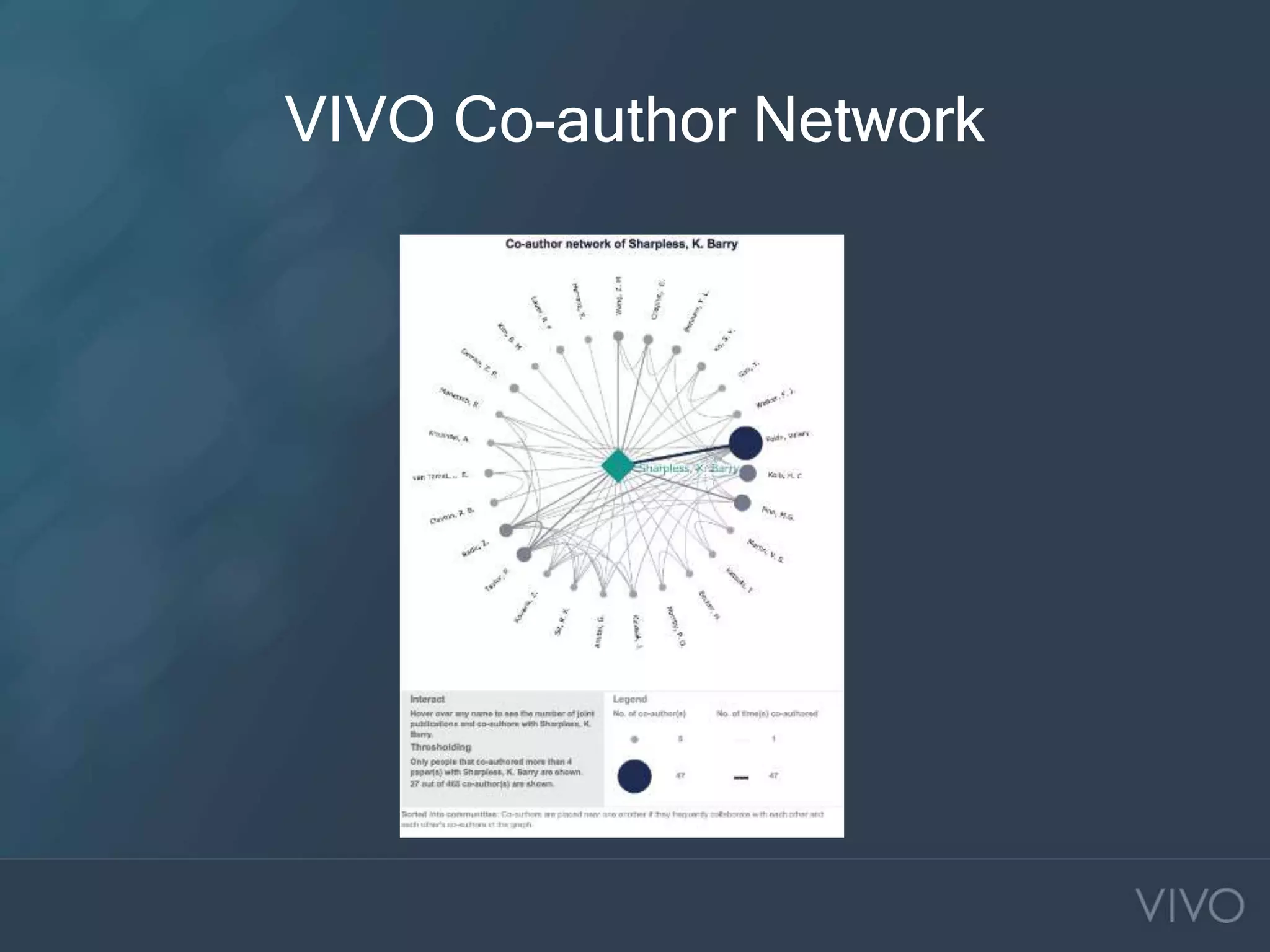
VIVO Co-author Network
Co-author Visualization
Lessons learned
Lessons Learned
• Administrative support
• Critical for project launch
• Office of the COO & the Dean of Faculty
• Financial support
• Unexpected costs arise
• Team participation in early stages was limited by
already-approved library budget
Lessons Learned
• Technical support
• NIH grant: >100 people across seven institutions
• resources to supplement in-house expertise
• Access to software development resources
proven critical to project’s success
• identification of qualified contract programmers
became a priority
Additional considerations
Accessibility Issues
• Only library staff can log in to edit VIVO
• Editing forms need further refinement to be usable
by the wider academic community
• not a high priority at this time
• Most data in standard text format
• Raw visualization data available for use in other
environments
Evaluation
• Currently no formalized evaluation process
• Have been responsive to faculty needs
• supporting NIH grant application process
• institution relies on NIH grant support for
approximately three-quarters of our operating
budget
Integration with Other Library Websites
• Integration of VIVO into faculty biographical
sketches on the main institution website
• explored with (former) director of IT services
• not yet implemented
• Data curated for VIVO allows library staff to be
responsive to requests from administration
• demonstrate faculty collaboration
Thank You
Questions?
Brian Lowe
Ontocale SRL
brian@ontocale.com
Michaeleen Trimarchi
Former Manager, Library
Programs, Kresge Library, TSRI

Lowe NISO virtual conf feb17