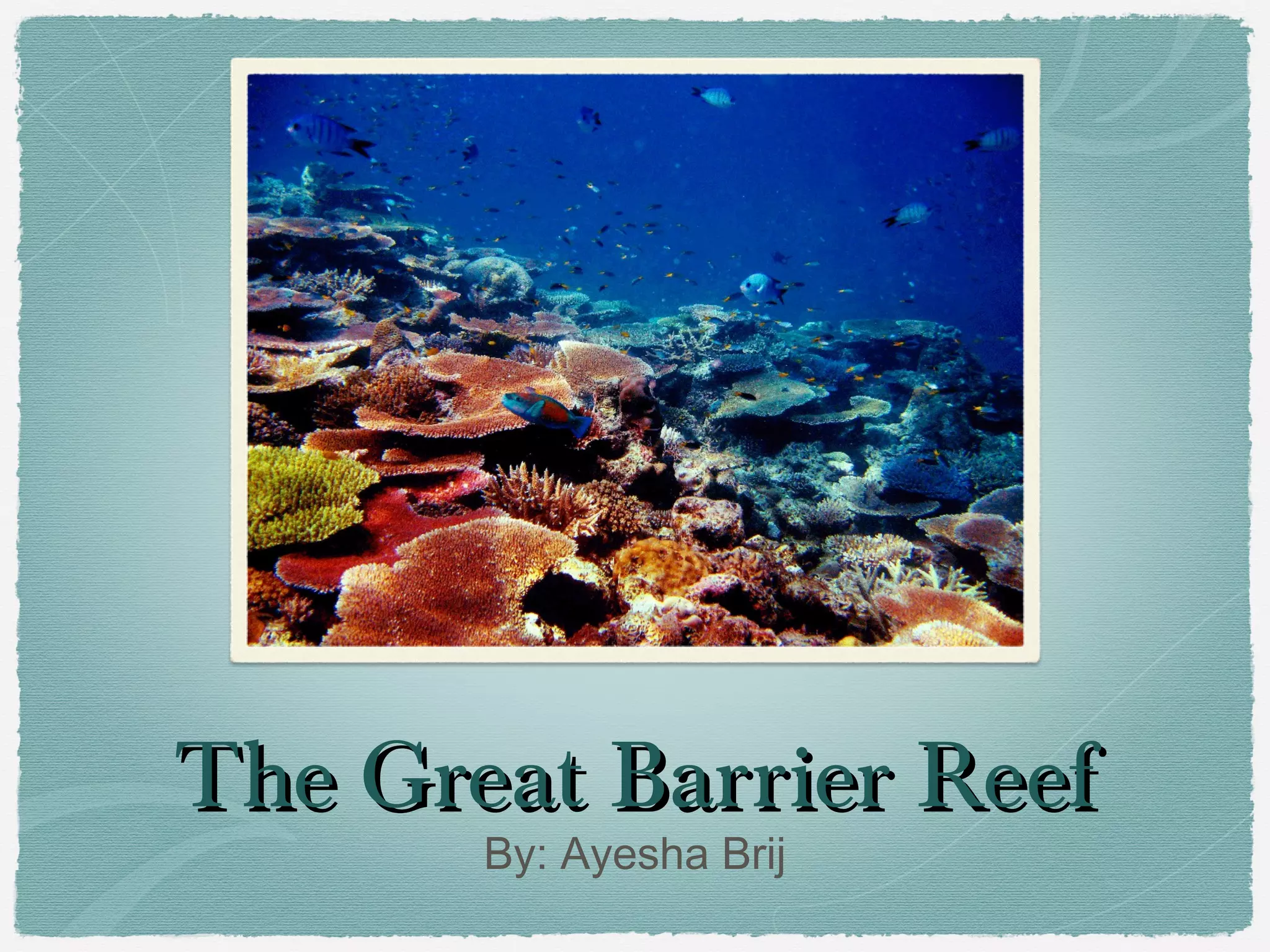
The Great Barrier Reef
By: Ayesha Brij
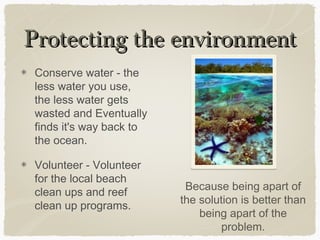
Protecting the environment
Conserve water - the
less water you use,
the less water gets
wasted and Eventually
finds it's way back to
the ocean.
Volunteer - Volunteer
for the local beach
clean ups and reef
clean up programs.

Because being apart of
the solution is better than
being apart of the
problem.
Interesting Facts
The Great Barrier Reef is the worlds largest reef
system.
The Great Barrier Reef is composed of over
2,900 individual reefs.
The Great Barrier Reef has over 900 Islands
stretching for over 2,600 kilometres
What is it known for?
It's fish
It's jelly fish
Fun
Discovering corals
Discovering different species
My description
Appearance:

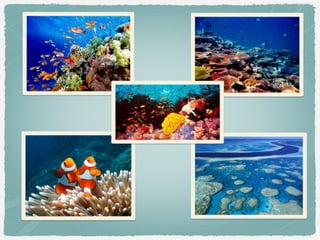
The Great Barrier Reef has a great appearance it has
corals, reefs, and the Amazing ocean.
Size:
The Great Barrier Reef Marine Park covers 344,400
square kilometres in area.
Location:
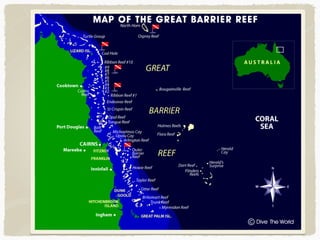
The Great Barrier Reef is located in a lovely town
called Cairns.
It extends south from Northern tip of
Queensland in North-eastern Australia to just north of
bundaberg
My description pt.2
Animals:
Angelfish
Known for their distinctive shape and often strikingly
colourful markings, Angelfish are one of the more
numerous species of fish in the Great Barrier Reef, with
over 80 different species in the family in total. Typical
characteristics of the Angelfish include their beauty,
inquisitive nature, and tendency to be found in all levels
of the upper reef, from the surface to the base of the
area’s coral formations..
My description pt.3
The history of Great Barrier Reef is limited to what we
humans know after we inhabited the continent. But the
process of coral building, where a new coral reef would
erect on a dead one has been going on a million years,
which lead to the structure of Great Barrier Reef.
The Great Barrier Reef is an extremely ancient, nature’s
creation ranging millions and millions years back. It consists
of thousands of species of animal life both above and below
the sea.
My description pt.4
Interesting facts:

Over 1500 different species of fish live in the Great
Barrier Reef, including clownfish, star of the animated
film Finding Nemo.
Whales, dolphins and dugong can also be seen in the
Great Barrier Reef.
Climate change is perhaps the biggest threat to the
Great Barrier Reef.
Finally I have finished my description back to the rest
of the work.
What impact has there been on the
Landmark by people?

Did you know that the
impact that has been
on the Great Barrier
Reef by people is ways
like
Pollution, Fertilizers,
What have they had
to do to survive when
living in this area.
Marine fish, Damsel fish,
tusk fish, mantra rays, whale
sharks, turtles.
When they had to survive
they needed to use...
Water from the Great Barrier
Impact have they
had on this
environment?
Caribbean Tube-worm has
been
Introduced on The Great Barrier
Reef it is a nuisance for vessel
owners because it builds
Calcareous tubes on hard
surfaces such as boat, and
Thank you �����
By: Ayesha Brij �������✌️

Ayesha's Presentation on the Great Barrier Reef

  • 1.
    The Great BarrierReef By: Ayesha Brij
  • 2.
    Protecting the environment Conservewater - the less water you use, the less water gets wasted and Eventually finds it's way back to the ocean. Volunteer - Volunteer for the local beach clean ups and reef clean up programs. Because being apart of the solution is better than being apart of the problem.
  • 3.
    Interesting Facts The GreatBarrier Reef is the worlds largest reef system. The Great Barrier Reef is composed of over 2,900 individual reefs. The Great Barrier Reef has over 900 Islands stretching for over 2,600 kilometres
  • 4.
    What is itknown for? It's fish It's jelly fish Fun Discovering corals Discovering different species
  • 5.
    My description Appearance: The GreatBarrier Reef has a great appearance it has corals, reefs, and the Amazing ocean. Size: The Great Barrier Reef Marine Park covers 344,400 square kilometres in area. Location: The Great Barrier Reef is located in a lovely town called Cairns. It extends south from Northern tip of Queensland in North-eastern Australia to just north of bundaberg
  • 6.
    My description pt.2 Animals: Angelfish Knownfor their distinctive shape and often strikingly colourful markings, Angelfish are one of the more numerous species of fish in the Great Barrier Reef, with over 80 different species in the family in total. Typical characteristics of the Angelfish include their beauty, inquisitive nature, and tendency to be found in all levels of the upper reef, from the surface to the base of the area’s coral formations..
  • 7.
    My description pt.3 Thehistory of Great Barrier Reef is limited to what we humans know after we inhabited the continent. But the process of coral building, where a new coral reef would erect on a dead one has been going on a million years, which lead to the structure of Great Barrier Reef. The Great Barrier Reef is an extremely ancient, nature’s creation ranging millions and millions years back. It consists of thousands of species of animal life both above and below the sea.
  • 8.
    My description pt.4 Interestingfacts: Over 1500 different species of fish live in the Great Barrier Reef, including clownfish, star of the animated film Finding Nemo. Whales, dolphins and dugong can also be seen in the Great Barrier Reef. Climate change is perhaps the biggest threat to the Great Barrier Reef. Finally I have finished my description back to the rest of the work.
  • 9.
    What impact hasthere been on the Landmark by people? Did you know that the impact that has been on the Great Barrier Reef by people is ways like Pollution, Fertilizers,
  • 10.
    What have theyhad to do to survive when living in this area. Marine fish, Damsel fish, tusk fish, mantra rays, whale sharks, turtles. When they had to survive they needed to use... Water from the Great Barrier
  • 11.
    Impact have they hadon this environment? Caribbean Tube-worm has been Introduced on The Great Barrier Reef it is a nuisance for vessel owners because it builds Calcareous tubes on hard surfaces such as boat, and
  • 14.
    Thank you ����� By:Ayesha Brij �������✌️

Editor's Notes