Guided by, Presented by,
Prof. A. W. Nemade Vishal Y. Jadhav
(152031)
INTRODUCTION
 An autonomous underwater vehicles, is a robot
or a vehicles that are able to operate underwater
without a human occupant.
 These vehicles may be divided into two
categories
 Remotely operated vehicles
 Autonomous vehicles
VARIOUS PARAMETERS OF
AUVS
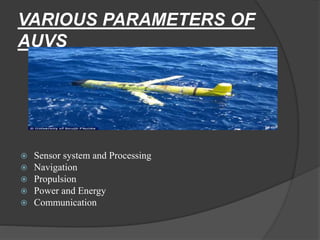
 Sensor system and Processing
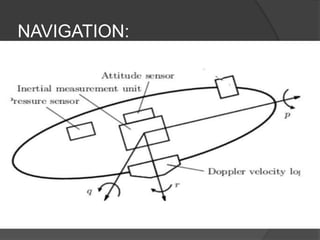
 Navigation
 Propulsion
 Power and Energy
 Communication
SENSORS
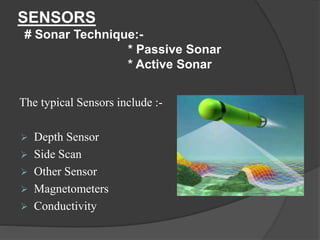
# Sonar Technique:-
* Passive Sonar
* Active Sonar
The typical Sensors include :-
 Depth Sensor
 Side Scan
 Other Sensor
 Magnetometers
 Conductivity
NAVIGATION:
PROPULSION
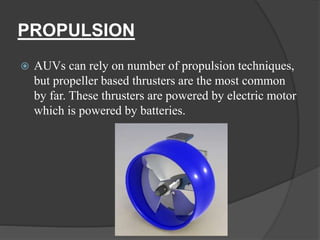
 AUVs can rely on number of propulsion techniques,
but propeller based thrusters are the most common
by far. These thrusters are powered by electric motor
which is powered by batteries.
POWER
 Most AUVs in used today are powered by
rechargeable batteries
 Primary batteries: provide perhaps twice
endurance
 Fuel cells: electricity generate using the
chemical reaction of Hydrogen combines with
oxygen
APPLICATIONS
i. Commercial
ii. Military
iii. Scientist uses AUVs to study lakes, the ocean,
the ocean floor.
iv. Anti-submarine warfare.
v. Measurement of concentration of various
elements.
FUTURE POSSIBILITIES
 AUVs are now at an early stage of acceptance .
As they work there way into the phase of
operational acceptance on a commercial level ,
their numbers will grow.
THANK YOU!

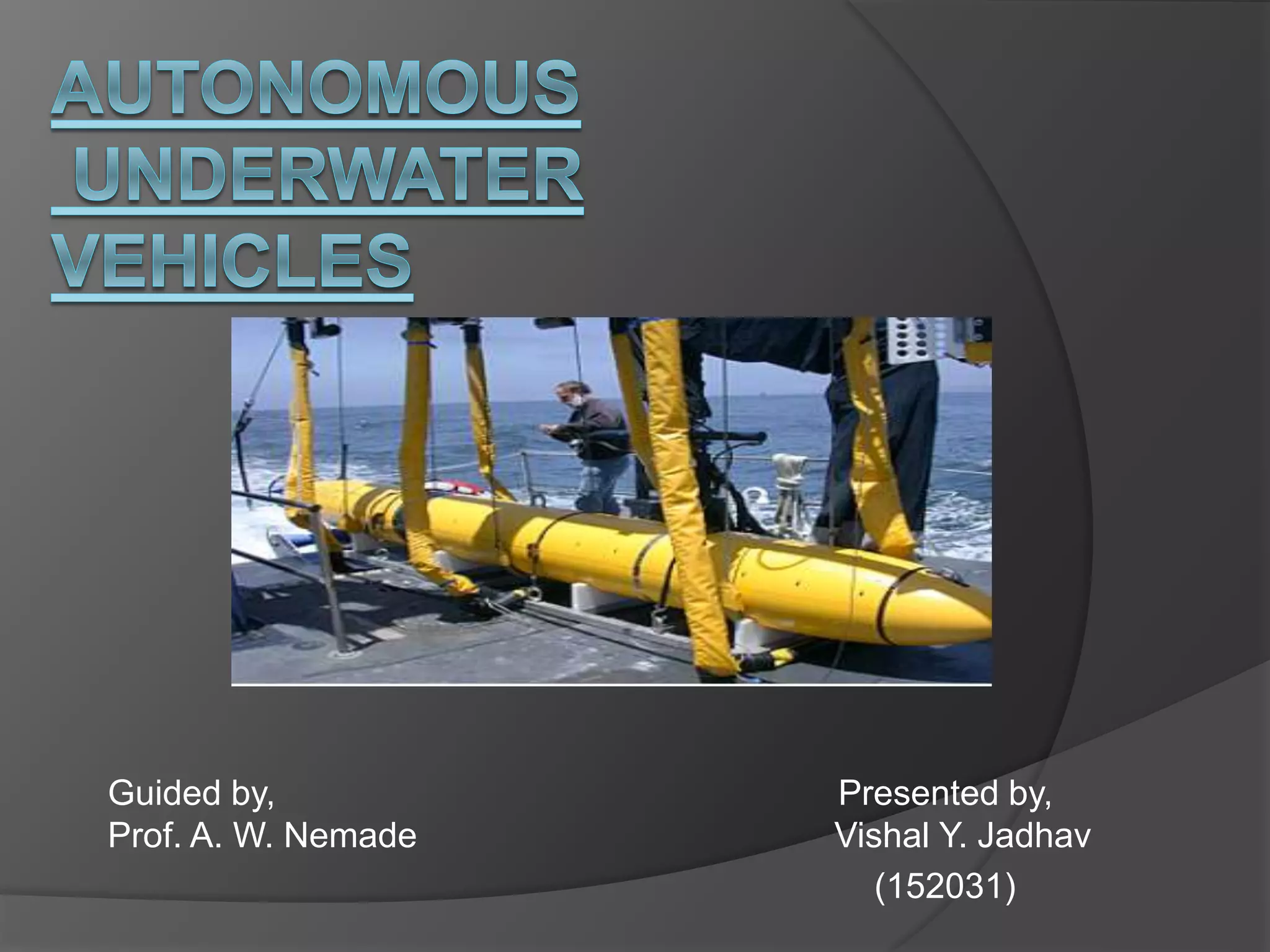
autonomous underwater vehicles

  • 1.
    Guided by, Presentedby, Prof. A. W. Nemade Vishal Y. Jadhav (152031)
  • 2.
    INTRODUCTION  An autonomousunderwater vehicles, is a robot or a vehicles that are able to operate underwater without a human occupant.  These vehicles may be divided into two categories  Remotely operated vehicles  Autonomous vehicles
  • 3.
    VARIOUS PARAMETERS OF AUVS Sensor system and Processing  Navigation  Propulsion  Power and Energy  Communication
  • 4.
    SENSORS # Sonar Technique:- *Passive Sonar * Active Sonar The typical Sensors include :-  Depth Sensor  Side Scan  Other Sensor  Magnetometers  Conductivity
  • 5.
  • 6.
    PROPULSION  AUVs canrely on number of propulsion techniques, but propeller based thrusters are the most common by far. These thrusters are powered by electric motor which is powered by batteries.
  • 7.
    POWER  Most AUVsin used today are powered by rechargeable batteries  Primary batteries: provide perhaps twice endurance  Fuel cells: electricity generate using the chemical reaction of Hydrogen combines with oxygen
  • 8.
    APPLICATIONS i. Commercial ii. Military iii.Scientist uses AUVs to study lakes, the ocean, the ocean floor. iv. Anti-submarine warfare. v. Measurement of concentration of various elements.
  • 9.
    FUTURE POSSIBILITIES  AUVsare now at an early stage of acceptance . As they work there way into the phase of operational acceptance on a commercial level , their numbers will grow.
  • 10.