JOURNAL CLUB :
Automated Insulin Delivery in Women with Pregnancy
Complicated by Type 1 Diabetes (NEJM Oct 2023)
MENTORS :
DR. NIRANJAN PATHAK
DR. DHANLAXMI
PRESENTOR :
DR. GNANSHREE DAVE
Understanding Pregnancy complicated by
Diabetes
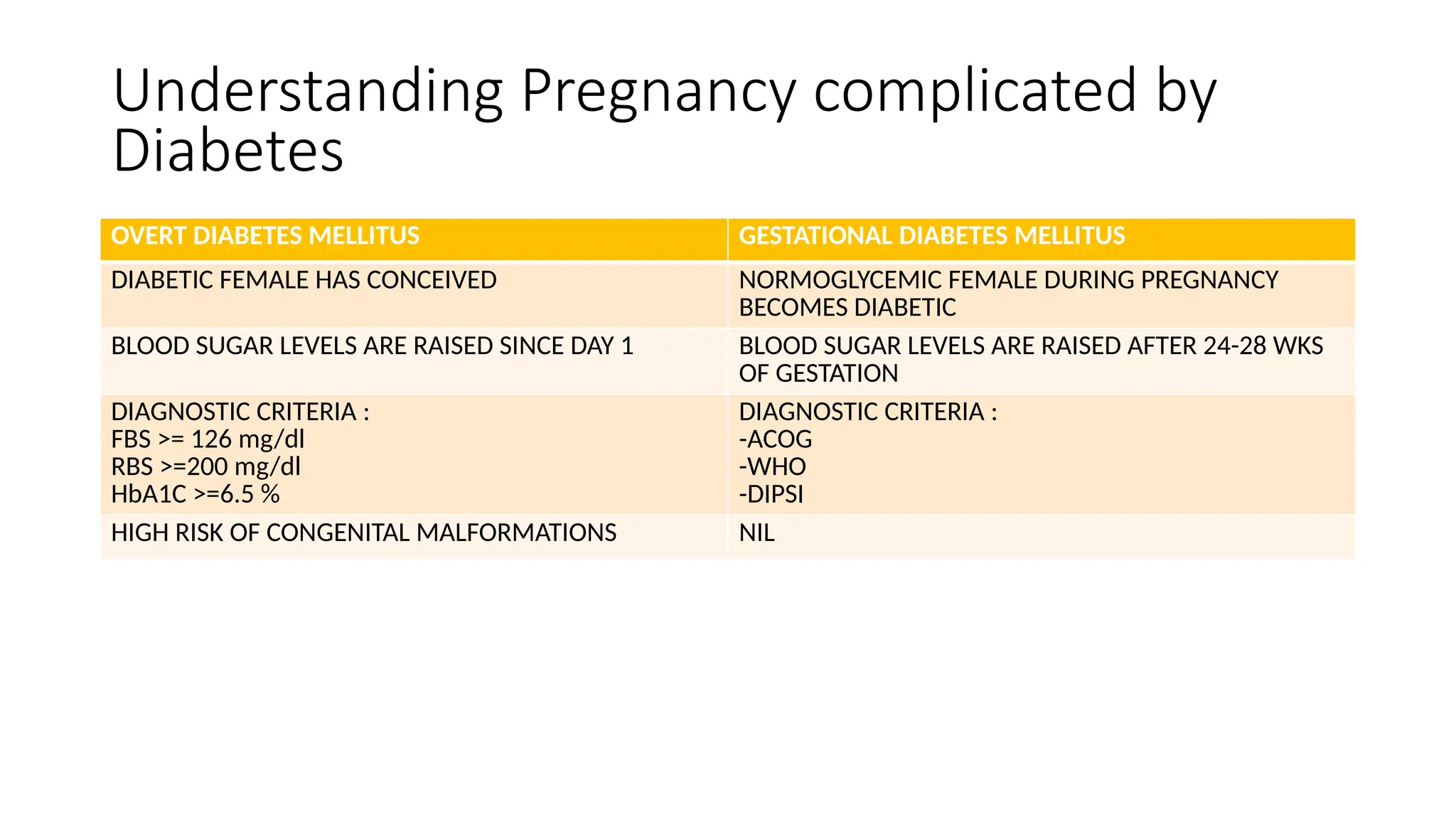
OVERT DIABETES MELLITUS GESTATIONAL DIABETES MELLITUS
DIABETIC FEMALE HAS CONCEIVED NORMOGLYCEMIC FEMALE DURING PREGNANCY
BECOMES DIABETIC
BLOOD SUGAR LEVELS ARE RAISED SINCE DAY 1 BLOOD SUGAR LEVELS ARE RAISED AFTER 24-28 WKS
OF GESTATION
DIAGNOSTIC CRITERIA :
FBS >= 126 mg/dl
RBS >=200 mg/dl
HbA1C >=6.5 %
DIAGNOSTIC CRITERIA :
-ACOG
-WHO
-DIPSI
HIGH RISK OF CONGENITAL MALFORMATIONS NIL
GDM – DIAGNOSTIC CRITERIAS
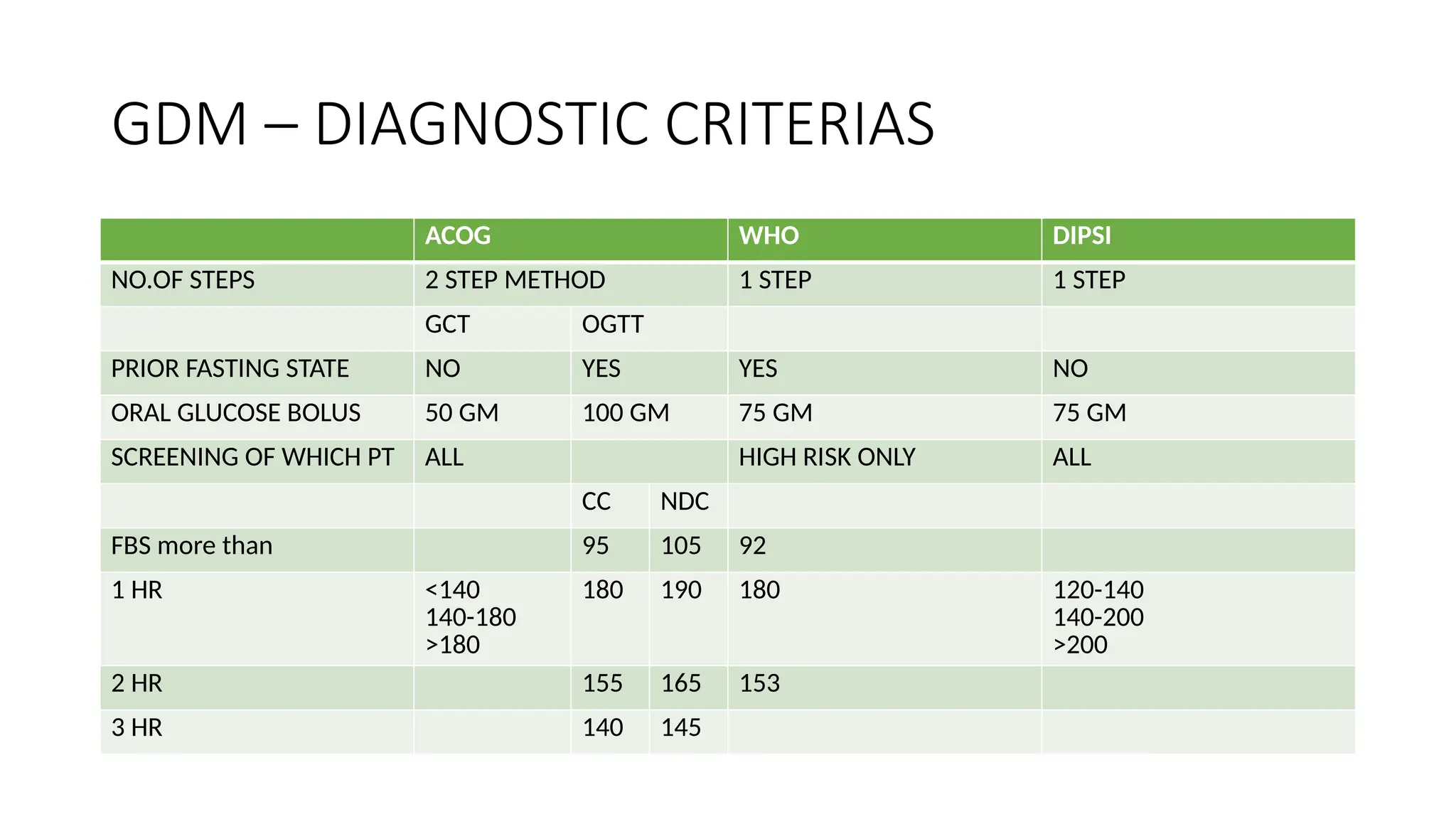
ACOG WHO DIPSI
NO.OF STEPS 2 STEP METHOD 1 STEP 1 STEP
GCT OGTT
PRIOR FASTING STATE NO YES YES NO
ORAL GLUCOSE BOLUS 50 GM 100 GM 75 GM 75 GM
SCREENING OF WHICH PT ALL HIGH RISK ONLY ALL
CC NDC
FBS more than 95 105 92
1 HR <140
140-180
>180
180 190 180 120-140
140-200
>200
2 HR 155 165 153
3 HR 140 145
COMPLICATIONS OF DIABETES IN PREGNANCY
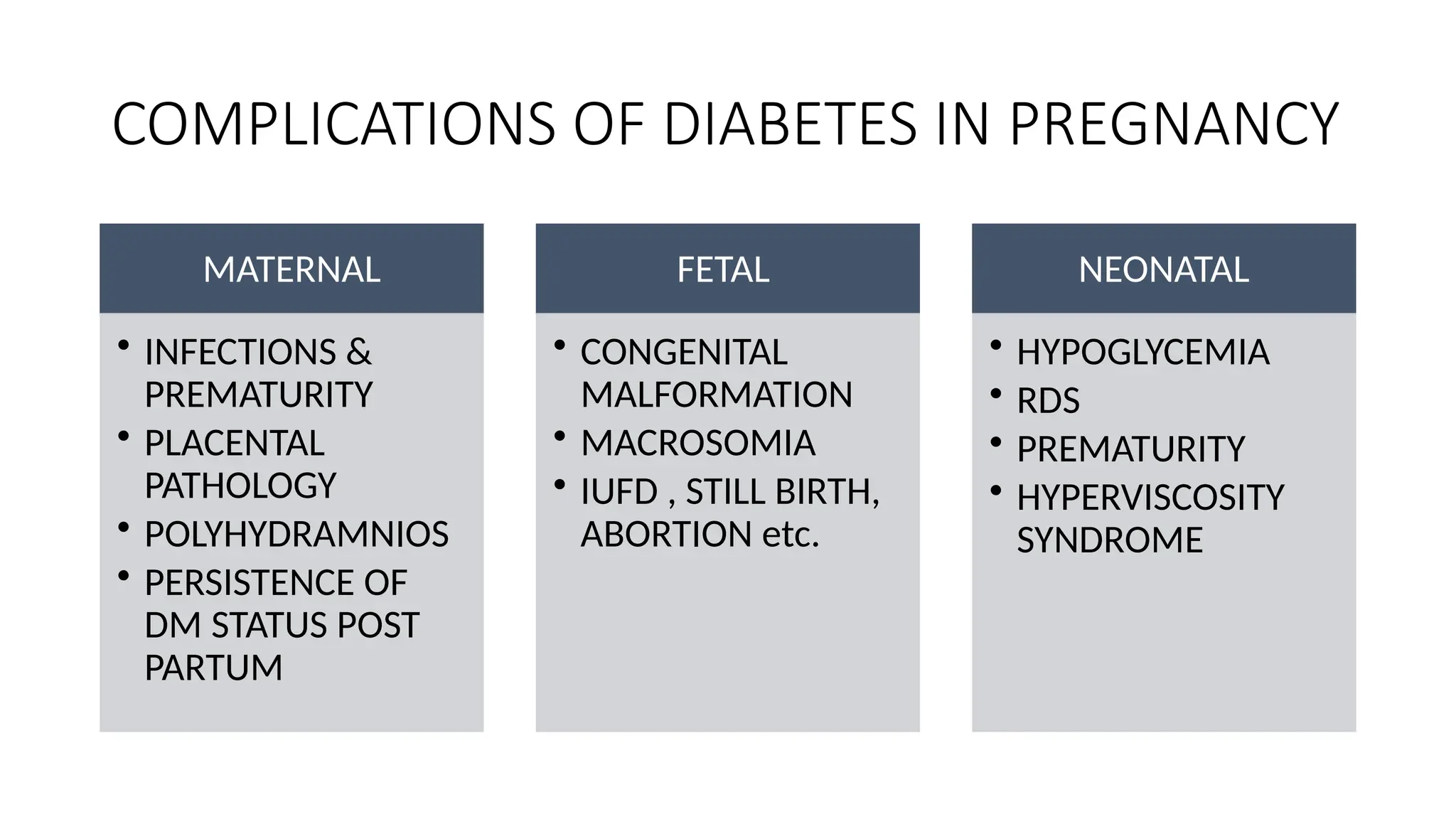
MATERNAL
• INFECTIONS &
PREMATURITY
• PLACENTAL
PATHOLOGY
• POLYHYDRAMNIOS
• PERSISTENCE OF
DM STATUS POST
PARTUM
FETAL
• CONGENITAL
MALFORMATION
• MACROSOMIA
• IUFD , STILL BIRTH,
ABORTION etc.
NEONATAL
• HYPOGLYCEMIA
• RDS
• PREMATURITY
• HYPERVISCOSITY
SYNDROME
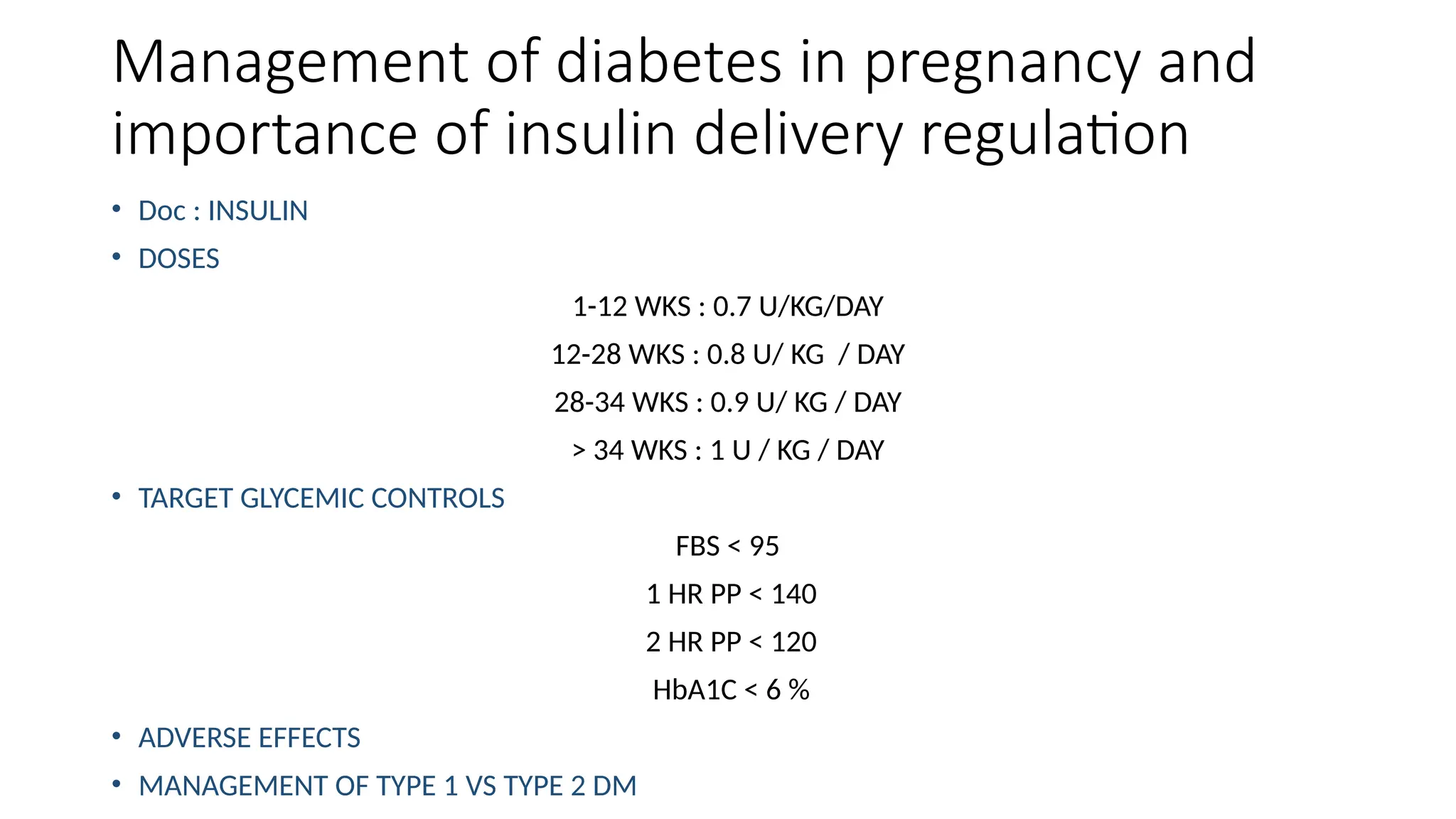
Management of diabetes in pregnancy and
importance of insulin delivery regulation
• Doc : INSULIN
• DOSES
1-12 WKS : 0.7 U/KG/DAY
12-28 WKS : 0.8 U/ KG / DAY
28-34 WKS : 0.9 U/ KG / DAY
> 34 WKS : 1 U / KG / DAY
• TARGET GLYCEMIC CONTROLS
FBS < 95
1 HR PP < 140
2 HR PP < 120
HbA1C < 6 %
• ADVERSE EFFECTS
• MANAGEMENT OF TYPE 1 VS TYPE 2 DM
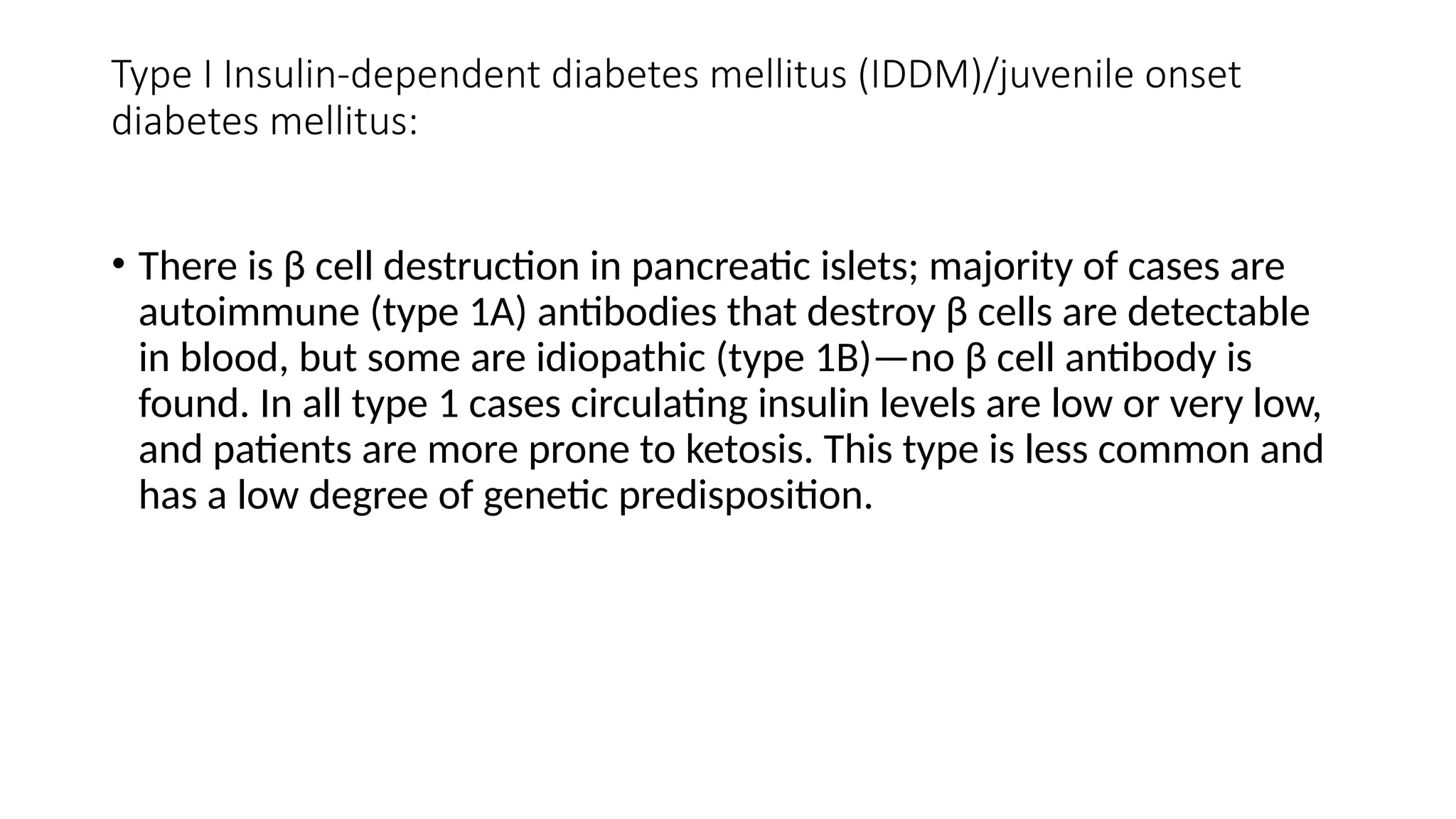
Type I Insulin-dependent diabetes mellitus (IDDM)/juvenile onset
diabetes mellitus:
• There is β cell destruction in pancreatic islets; majority of cases are
autoimmune (type 1A) antibodies that destroy β cells are detectable
in blood, but some are idiopathic (type 1B)—no β cell antibody is
found. In all type 1 cases circulating insulin levels are low or very low,
and patients are more prone to ketosis. This type is less common and
has a low degree of genetic predisposition.
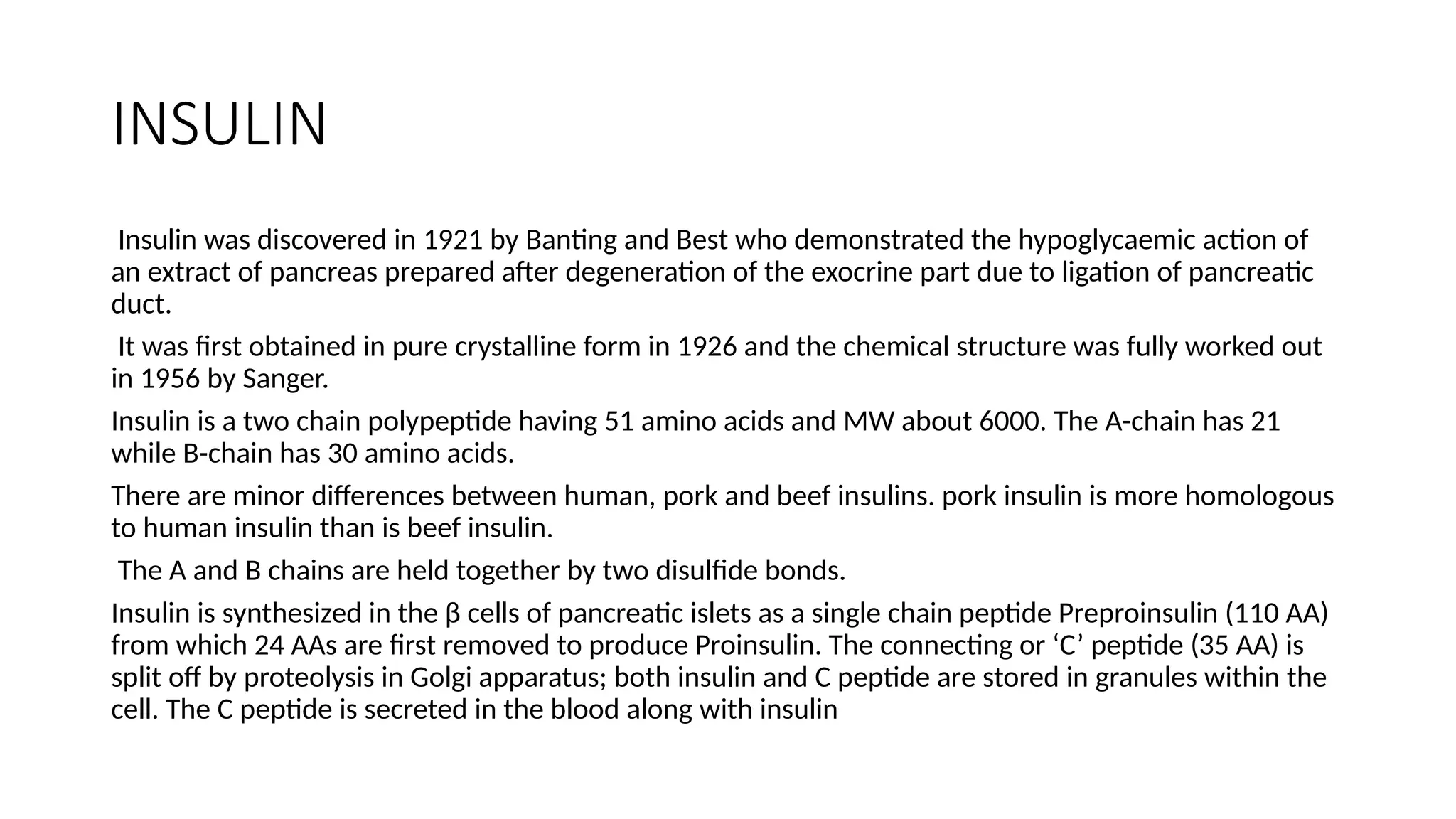
INSULIN
Insulin was discovered in 1921 by Banting and Best who demonstrated the hypoglycaemic action of
an extract of pancreas prepared after degeneration of the exocrine part due to ligation of pancreatic
duct.
It was first obtained in pure crystalline form in 1926 and the chemical structure was fully worked out
in 1956 by Sanger.
Insulin is a two chain polypeptide having 51 amino acids and MW about 6000. The A-chain has 21
while B-chain has 30 amino acids.
There are minor differences between human, pork and beef insulins. pork insulin is more homologous
to human insulin than is beef insulin.
The A and B chains are held together by two disulfide bonds.
Insulin is synthesized in the β cells of pancreatic islets as a single chain peptide Preproinsulin (110 AA)
from which 24 AAs are first removed to produce Proinsulin. The connecting or ‘C’ peptide (35 AA) is
split off by proteolysis in Golgi apparatus; both insulin and C peptide are stored in granules within the
cell. The C peptide is secreted in the blood along with insulin
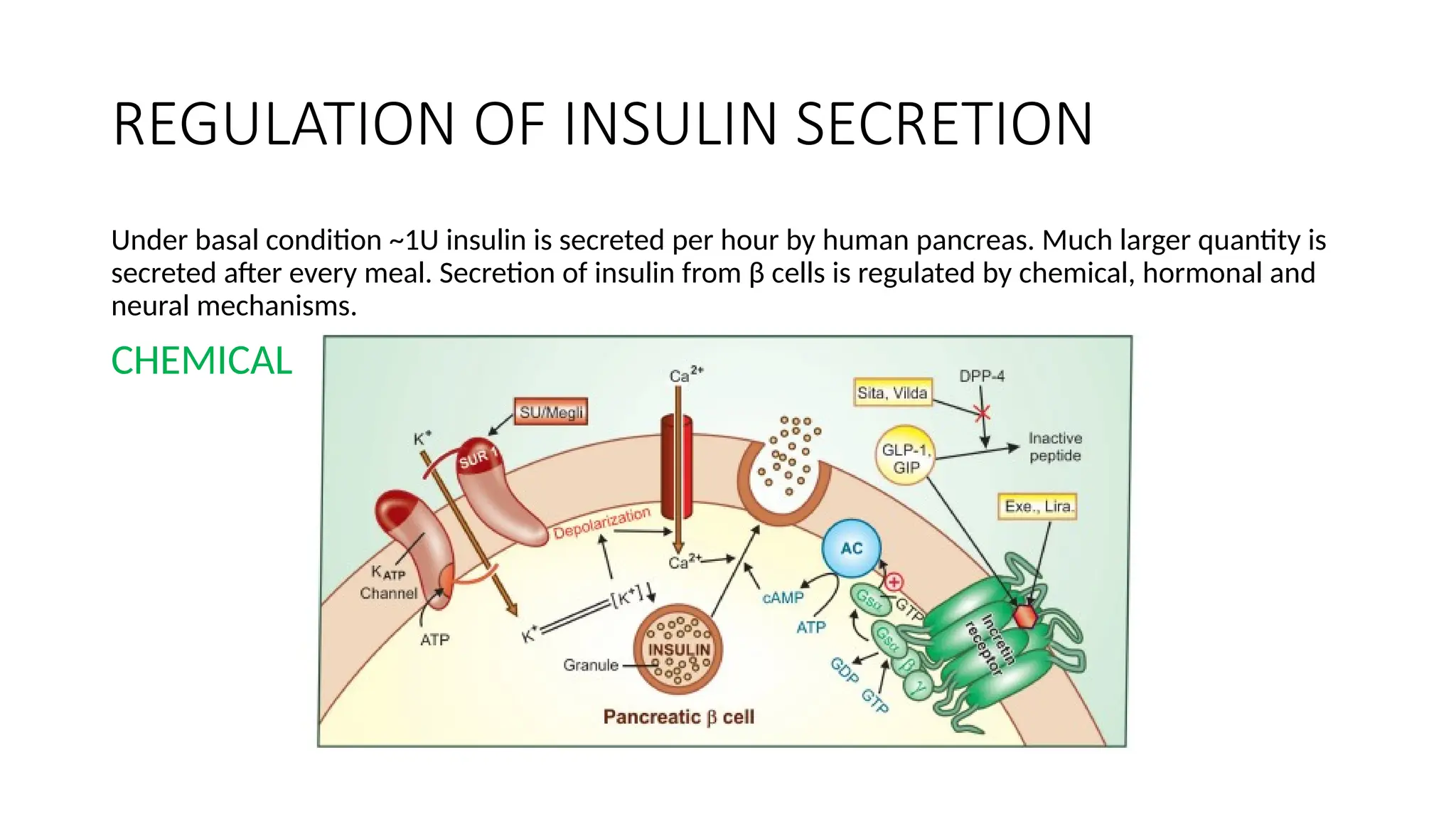
REGULATION OF INSULIN SECRETION
Under basal condition ~1U insulin is secreted per hour by human pancreas. Much larger quantity is
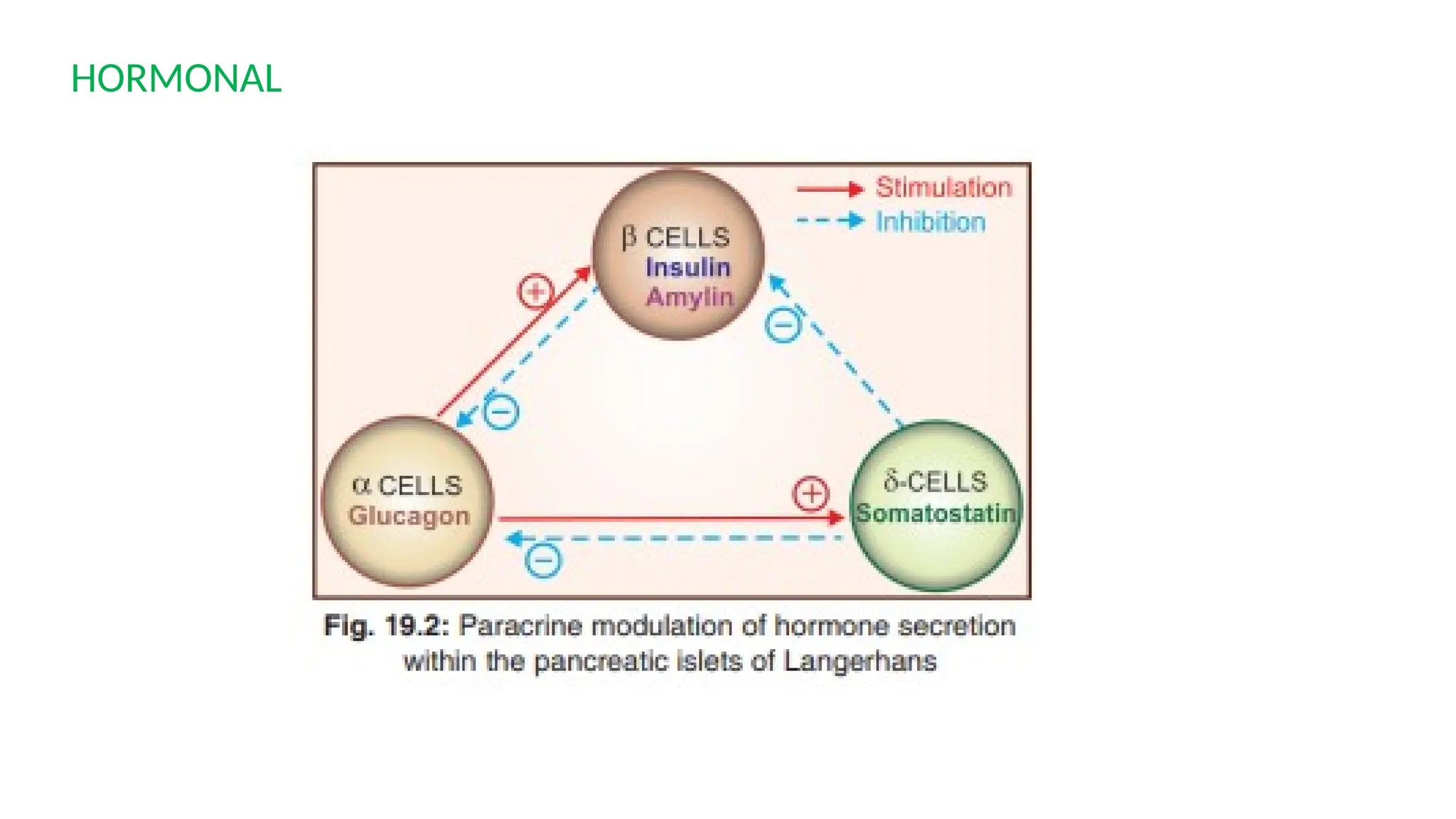
secreted after every meal. Secretion of insulin from β cells is regulated by chemical, hormonal and
neural mechanisms.
CHEMICAL
HORMONAL
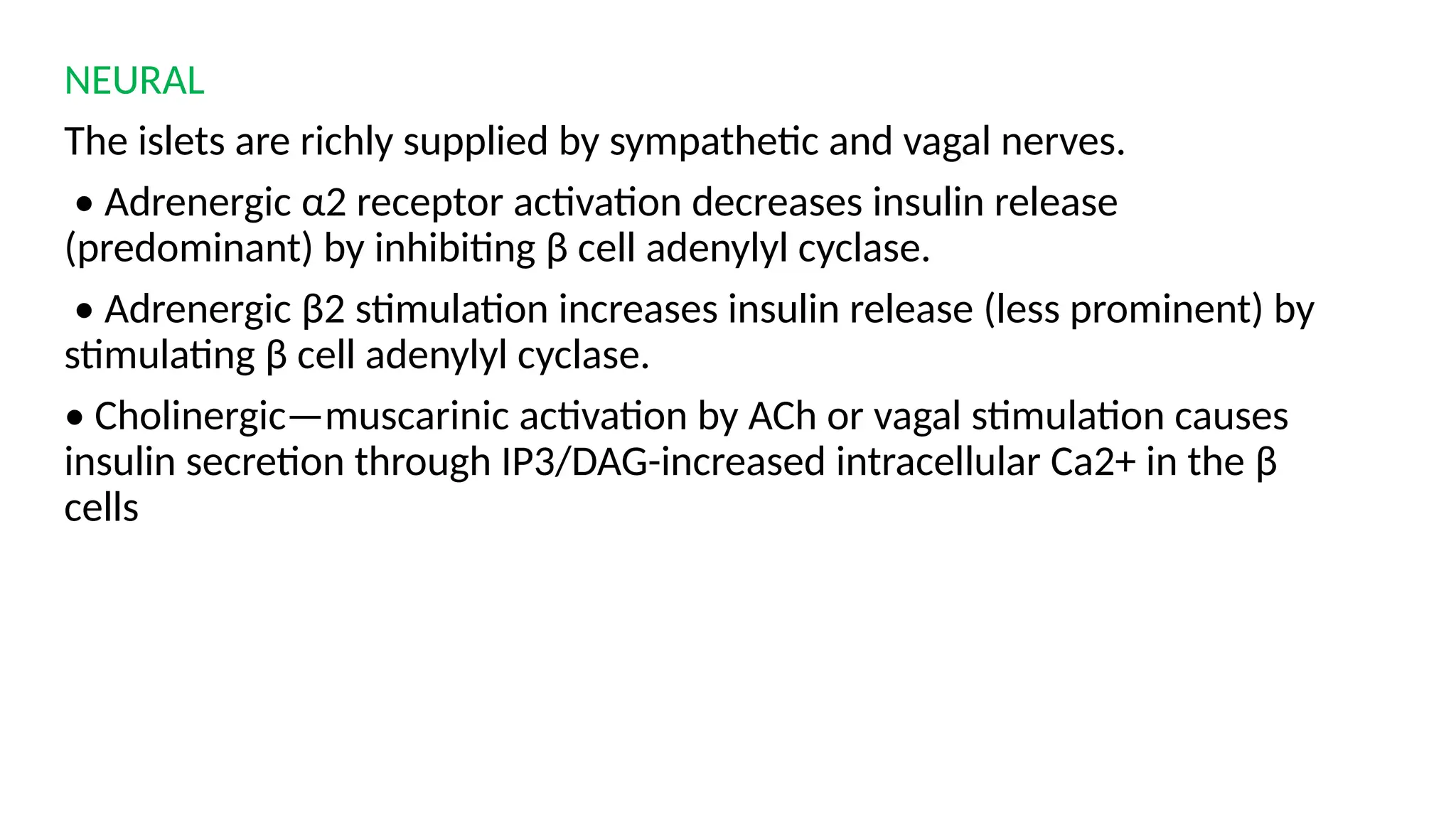
NEURAL
The islets are richly supplied by sympathetic and vagal nerves.
• Adrenergic α2 receptor activation decreases insulin release
(predominant) by inhibiting β cell adenylyl cyclase.
• Adrenergic β2 stimulation increases insulin release (less prominent) by
stimulating β cell adenylyl cyclase.
• Cholinergic—muscarinic activation by ACh or vagal stimulation causes
insulin secretion through IP3/DAG-increased intracellular Ca2+ in the β
cells
ACTIONS OF INSULIN
RAPID
• Insulin facilitates glucose transport across cell membrane; skeletal muscle and fat are
highly sensitive
• Synthesis of GLUT4 is upregulated by insulin and favours its translocation to the
membrane
• Increased production of glucokinase , hence increased phosphorylation.
• Insulin inhibits lipolysis in adipose tissue and favours triglyceride synthesis
INTERMEDIATE
• Insulin enhances transcription of vascular endothelial lipoprotein lipase and thus
increases clearance of VLDL and chylomicrons.
• Insulin facilitates AA entry and their synthesis into proteins, as well as inhibits protein
breakdown in muscle and most other cells
LONG TERM EFFECTS
multiplication and differentiation of many types of cells
METABOLISM OF INSULIN
• Insulin is distributed only extracellularly. It is a peptide; gets degraded in
the g.i.t. if given orally.
• Injected insulin or that released from pancreas is metabolized primarily in
liver and to a smaller extent in kidney and muscles. Nearly half of the
insulin entering portal vein from pancreas is inactivated in the first passage
through liver. Thus, normally liver is exposed to a much higher
concentration (4–8 fold) of insulin than are other tissues.
• Degradation of insulin after receptor mediated internalization occurs to
variable extents in most target cells. During biotransformation the disulfide
bonds are reduced—A and B chains are separated. These are further
broken down to the constituent amino acids. The plasma t½ is 5–9 min
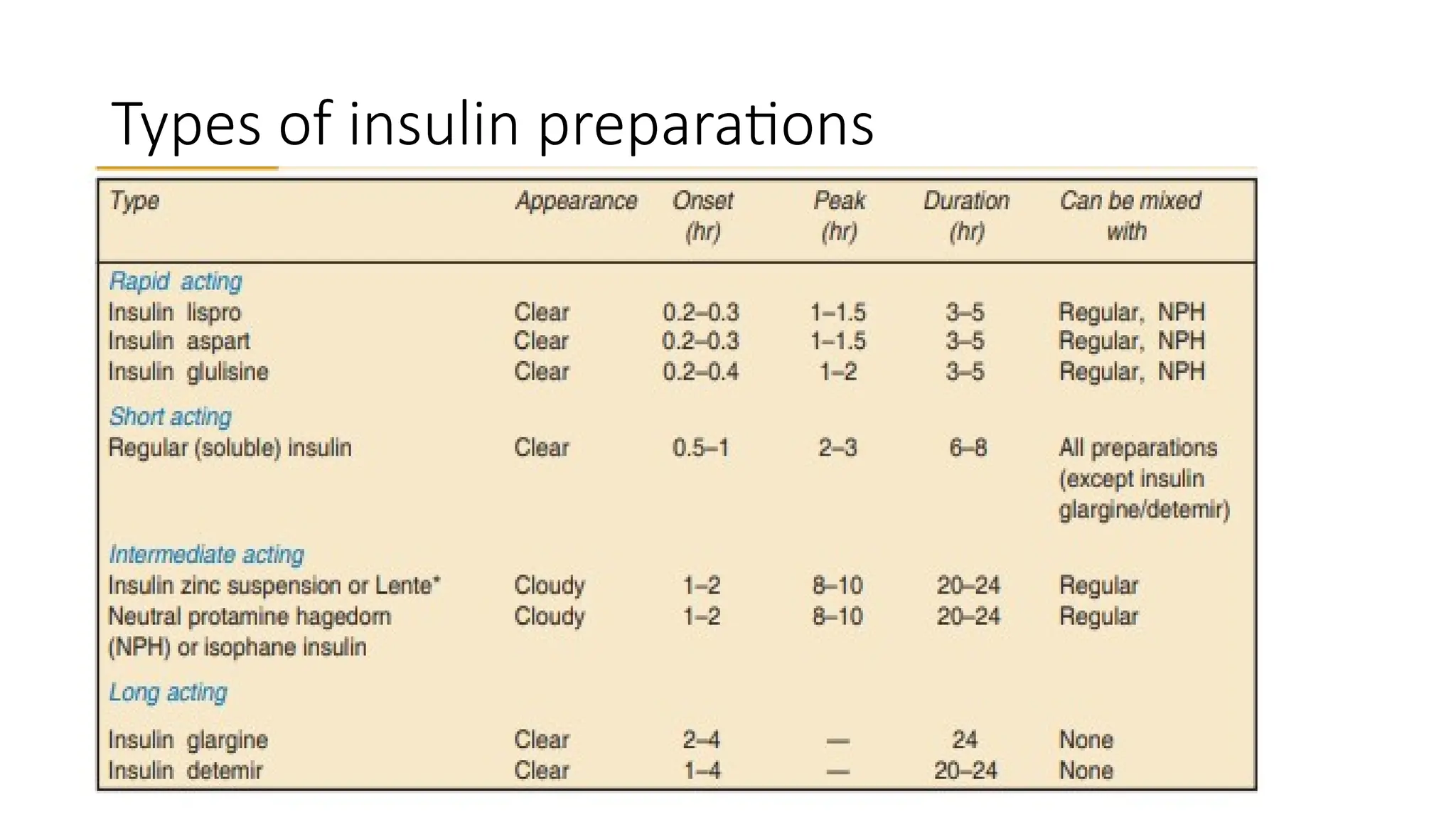
Types of insulin preparations
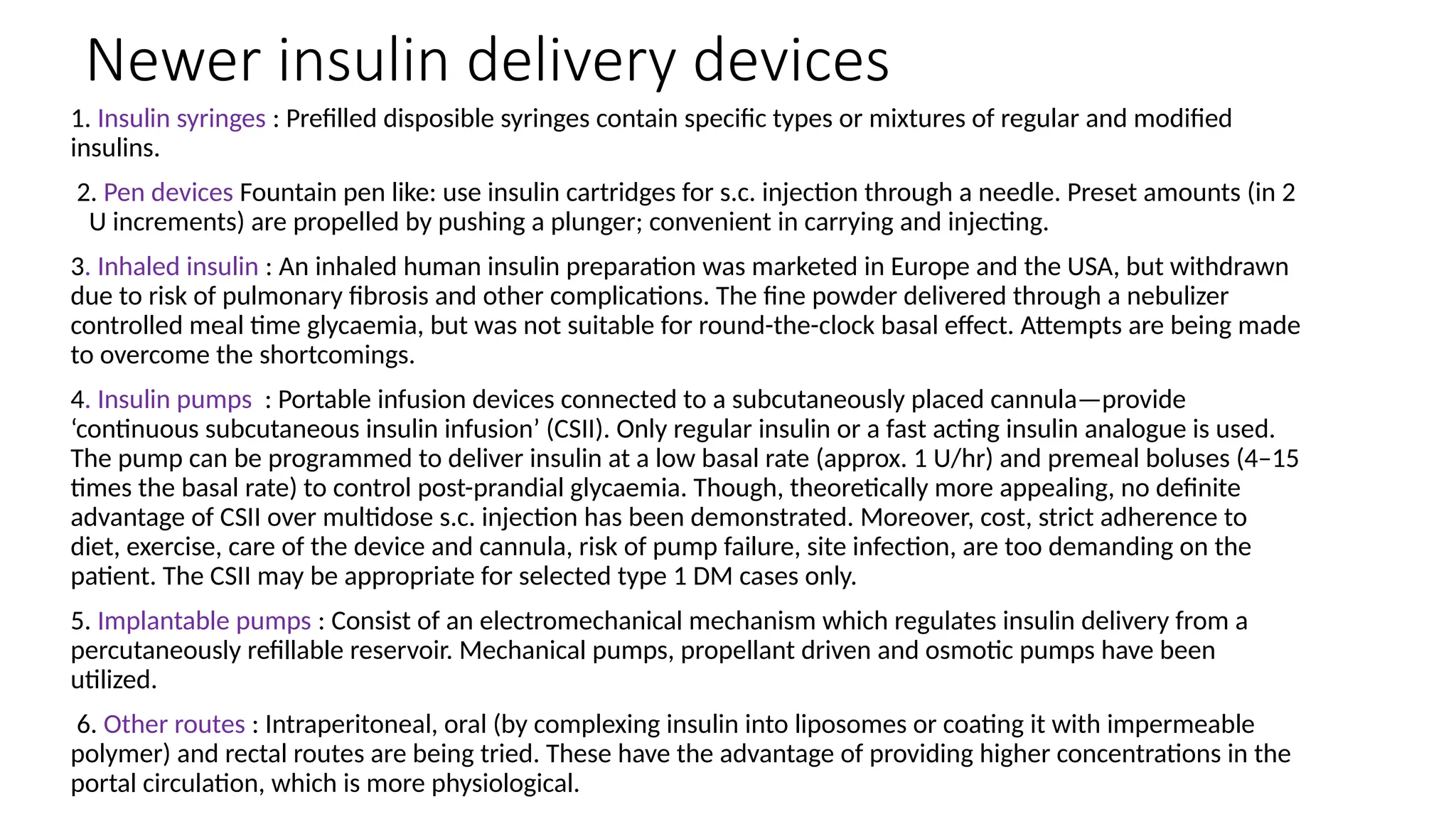
Newer insulin delivery devices
1. Insulin syringes : Prefilled disposible syringes contain specific types or mixtures of regular and modified
insulins.
2. Pen devices Fountain pen like: use insulin cartridges for s.c. injection through a needle. Preset amounts (in 2
U increments) are propelled by pushing a plunger; convenient in carrying and injecting.
3. Inhaled insulin : An inhaled human insulin preparation was marketed in Europe and the USA, but withdrawn
due to risk of pulmonary fibrosis and other complications. The fine powder delivered through a nebulizer
controlled meal time glycaemia, but was not suitable for round-the-clock basal effect. Attempts are being made
to overcome the shortcomings.
4. Insulin pumps : Portable infusion devices connected to a subcutaneously placed cannula—provide
‘continuous subcutaneous insulin infusion’ (CSII). Only regular insulin or a fast acting insulin analogue is used.
The pump can be programmed to deliver insulin at a low basal rate (approx. 1 U/hr) and premeal boluses (4–15
times the basal rate) to control post-prandial glycaemia. Though, theoretically more appealing, no definite
advantage of CSII over multidose s.c. injection has been demonstrated. Moreover, cost, strict adherence to
diet, exercise, care of the device and cannula, risk of pump failure, site infection, are too demanding on the
patient. The CSII may be appropriate for selected type 1 DM cases only.
5. Implantable pumps : Consist of an electromechanical mechanism which regulates insulin delivery from a
percutaneously refillable reservoir. Mechanical pumps, propellant driven and osmotic pumps have been
utilized.
6. Other routes : Intraperitoneal, oral (by complexing insulin into liposomes or coating it with impermeable
polymer) and rectal routes are being tried. These have the advantage of providing higher concentrations in the
portal circulation, which is more physiological.
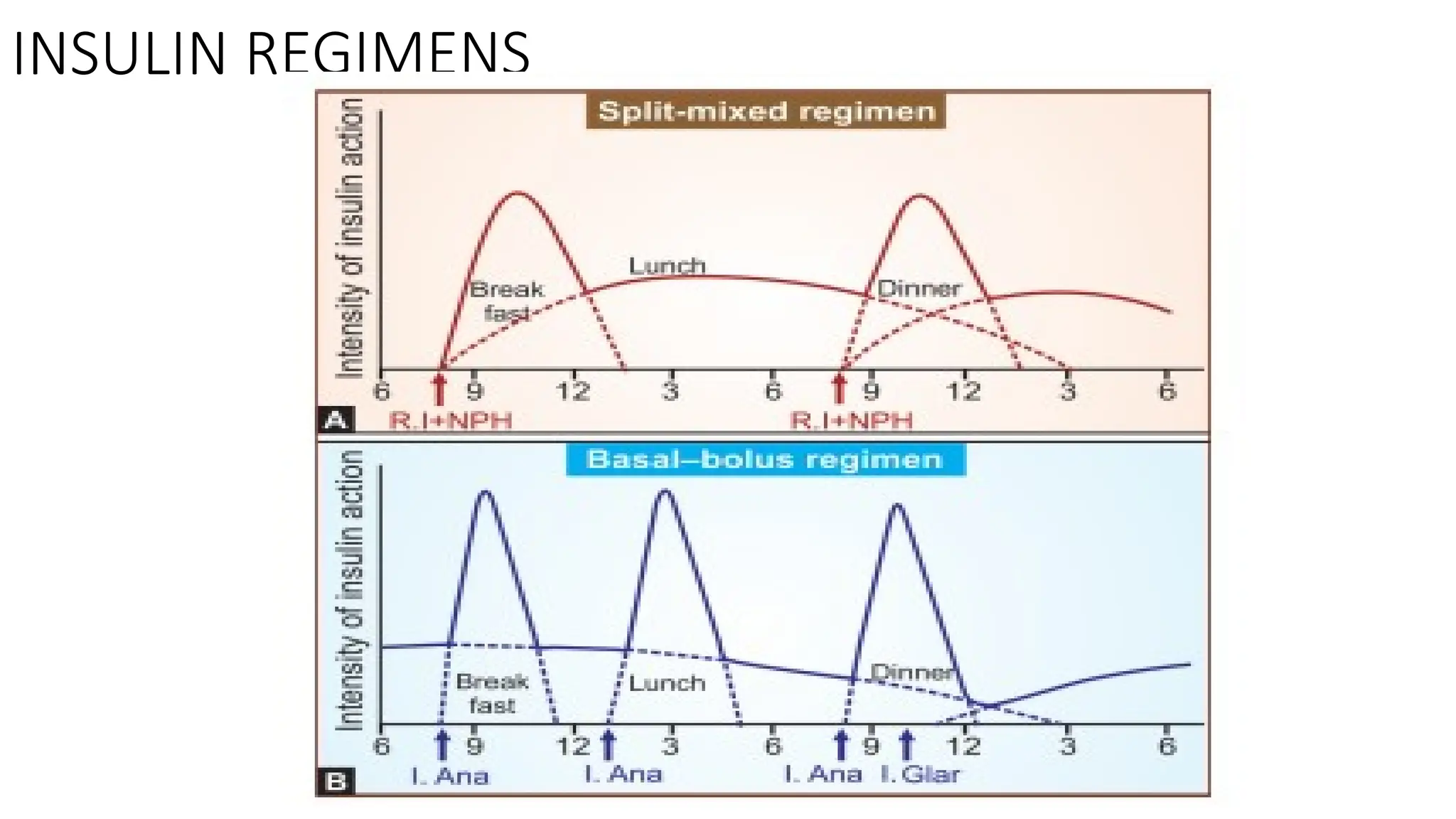
INSULIN REGIMENS
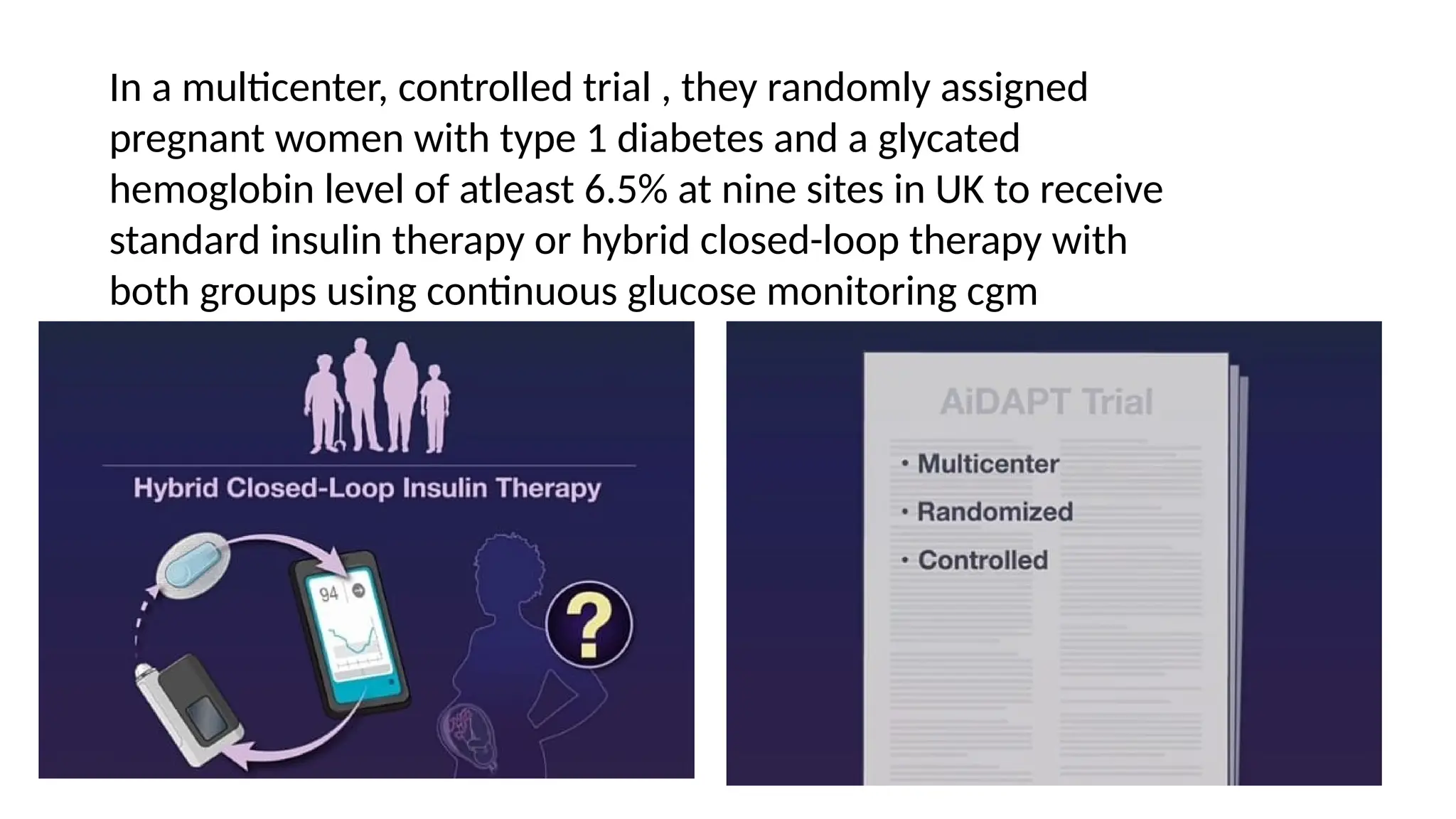
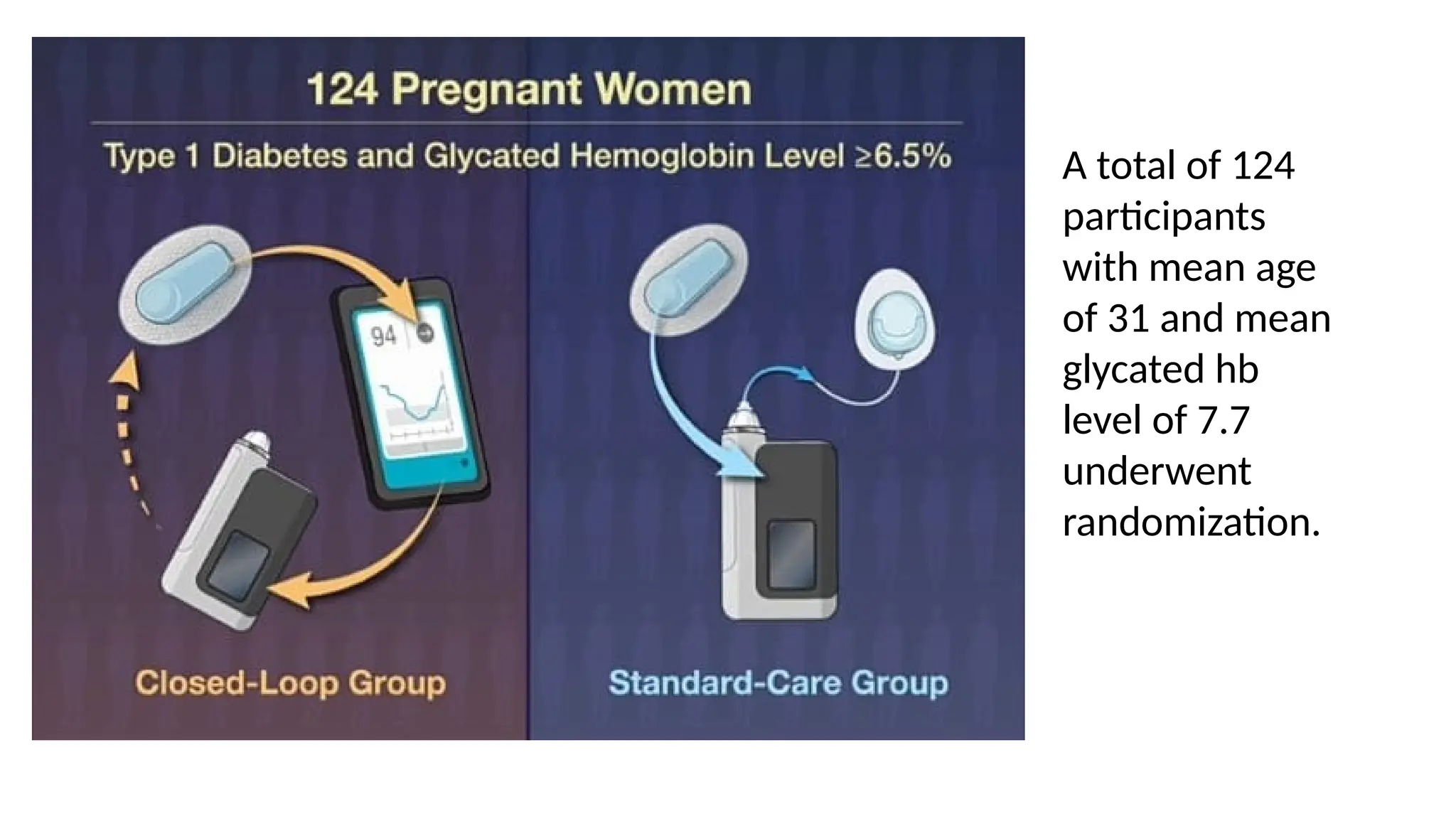
In a multicenter, controlled trial , they randomly assigned
pregnant women with type 1 diabetes and a glycated
hemoglobin level of atleast 6.5% at nine sites in UK to receive
standard insulin therapy or hybrid closed-loop therapy with
both groups using continuous glucose monitoring cgm
A total of 124
participants
with mean age
of 31 and mean
glycated hb
level of 7.7
underwent
randomization.
OUTCOME INDICATORS
• PRIMARY :
Percentage of time spent in pregnancy specific target glucose range
• SECONDARY
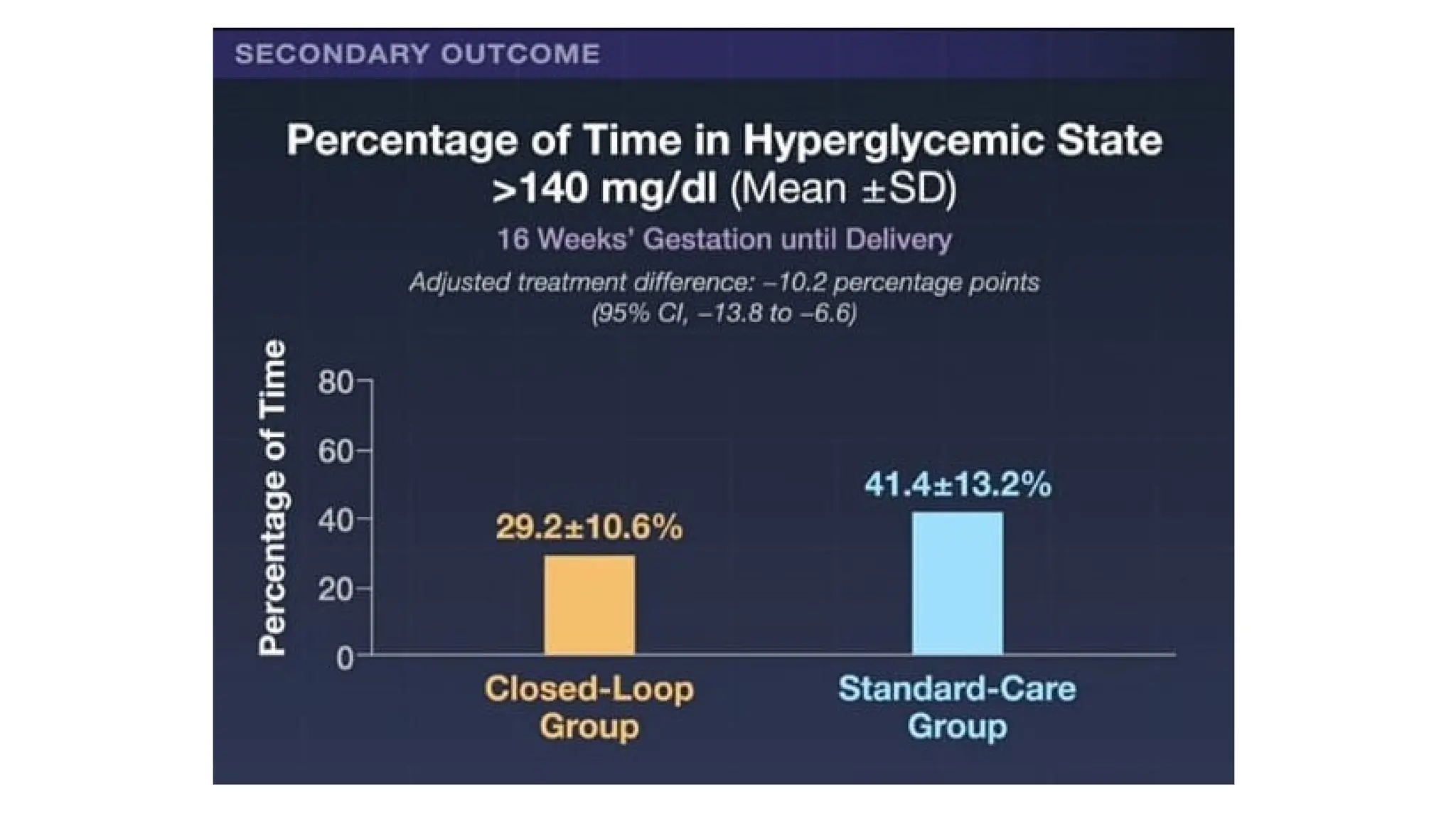
a) Percentage of time spent in hyperglycemic state
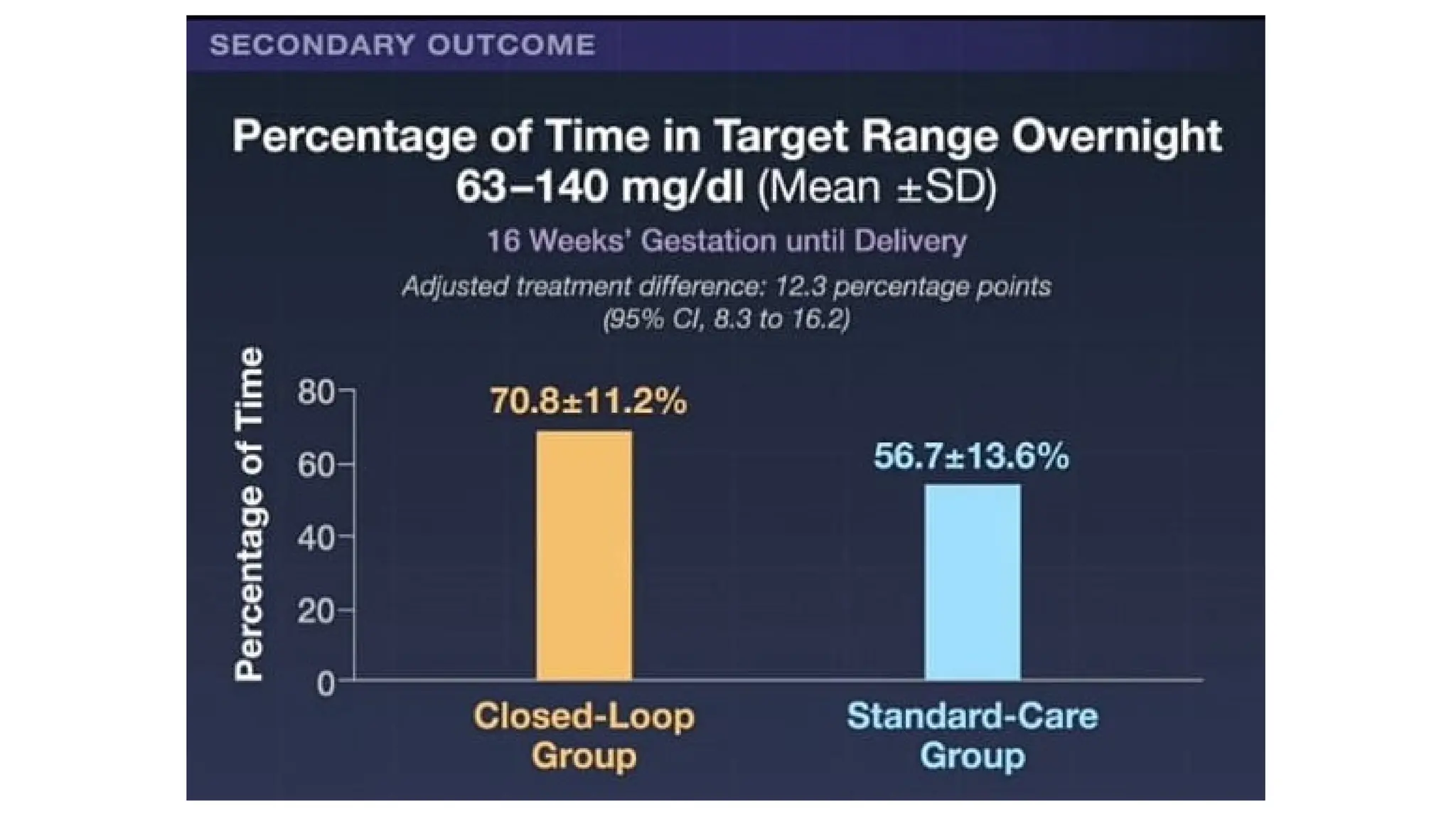
b) Overnight time in target range
c) Glycated hemoglobin level
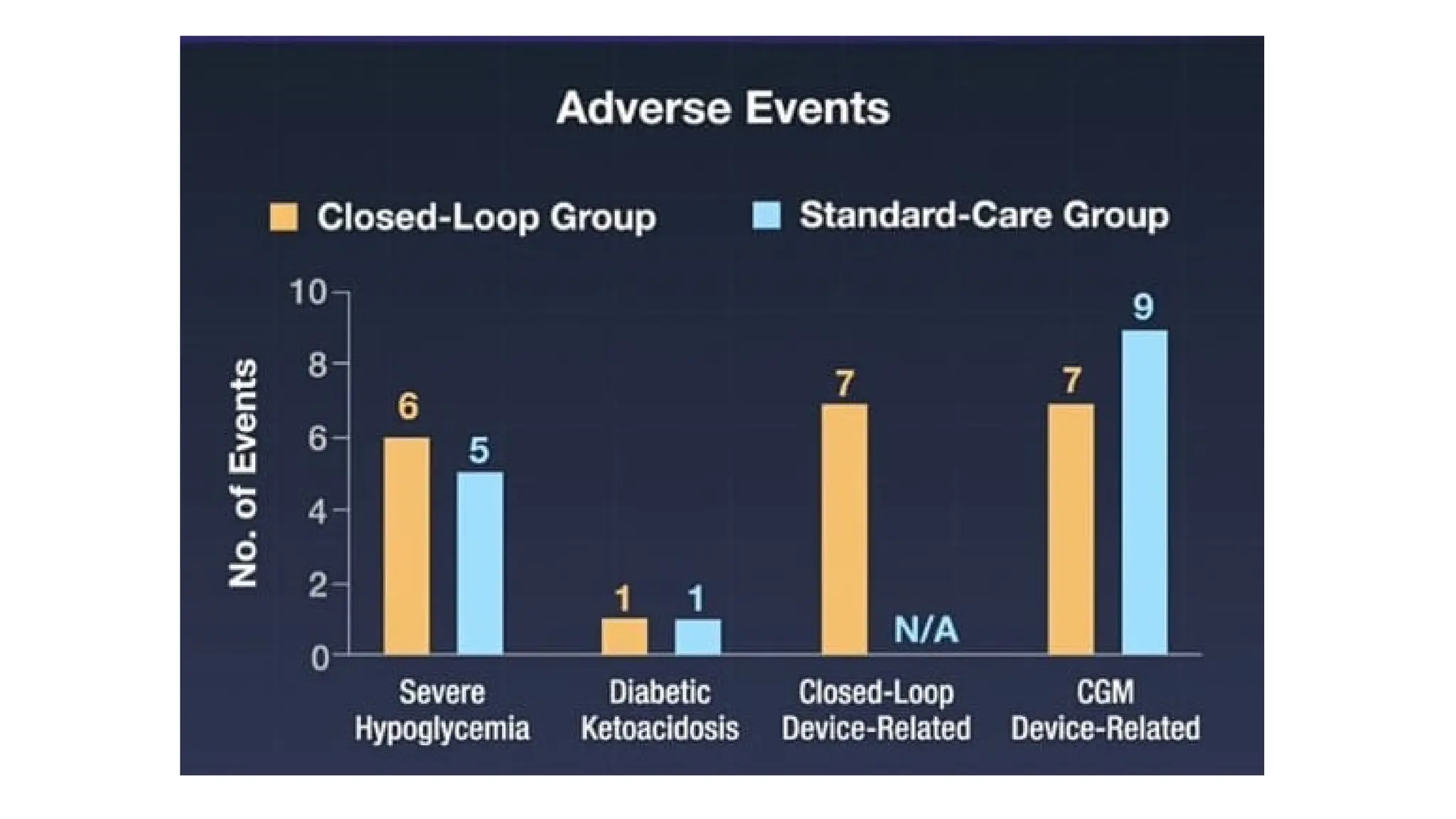
d) Adverse events .
CONCLUSION
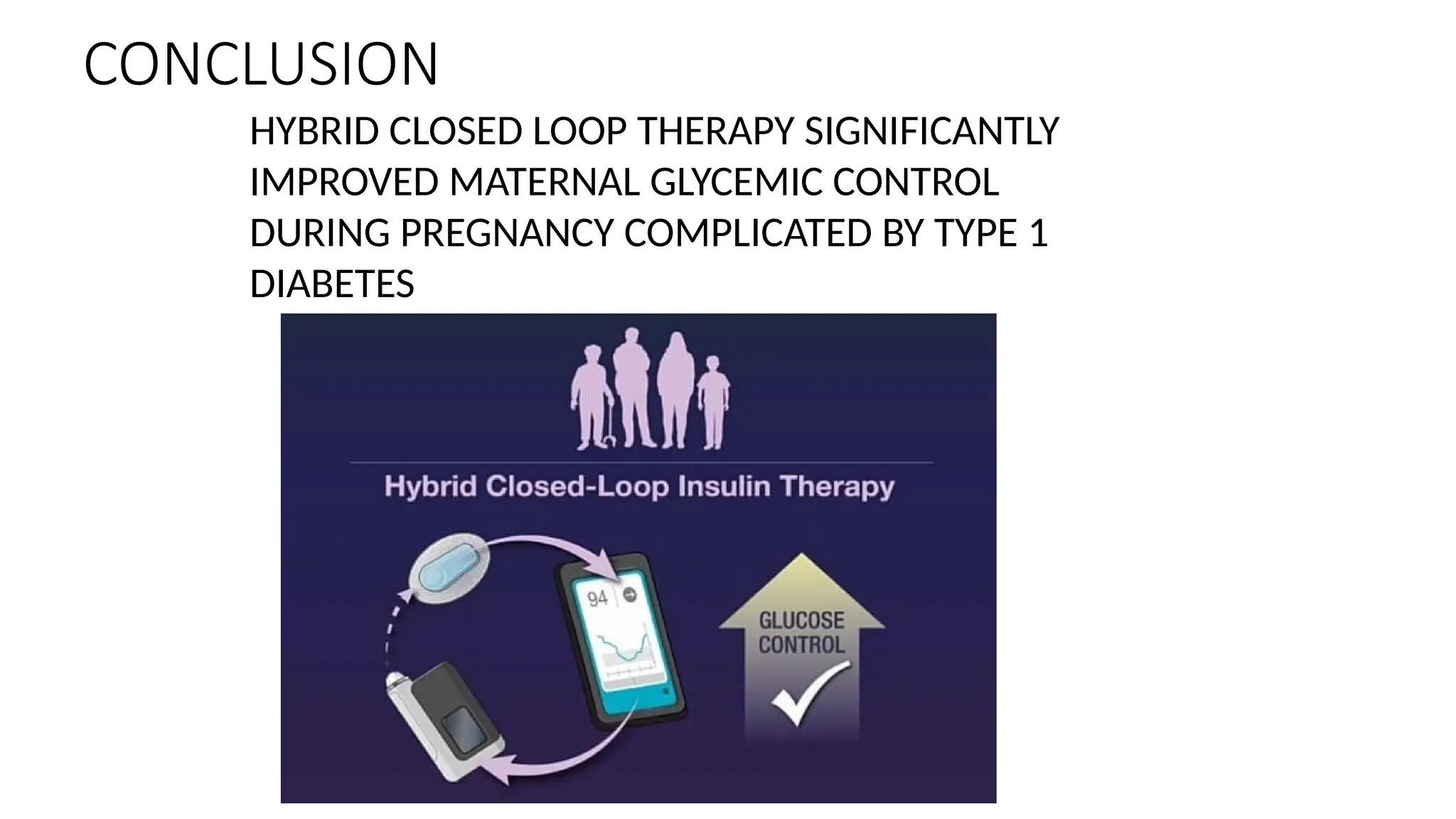
HYBRID CLOSED LOOP THERAPY SIGNIFICANTLY
IMPROVED MATERNAL GLYCEMIC CONTROL
DURING PREGNANCY COMPLICATED BY TYPE 1
DIABETES
Closed loop system / Artificial Pancreas
• Some people with type 1 diabetes use an insulin pump and a continuous glucose monitor
that ‘talk to each other’. It does this through a computer programme on your phone or
inside the pump.
• This is called a closed loop system. It is sometimes known as an artificial pancreas. It can do
some of the work for you to help manage your blood sugar levels (apart from you tapping
in the carbs from the food you eat).
The doses of insulin your body needs through the day and night to help keep your blood
sugar levels stable are released via your pump. Some of these are adjusted automatically in
response to your blood sugar levels which are monitored all the time by the continuous
glucose monitor (CGM). When you have type 1 diabetes, your pancreas can’t make
and release insulin like it should. By releasing insulin whenever your body needs it, a closed
loop system works like a pancreas. So a closed loop system is sometimes called an artificial
pancreas or an artificial pancreas system.
Types of closed loop systems
There are two types of closed loop systems.
• The first is Hybrid closed loop systems, which are regulated and
available to buy. In November 2023, NICE recommended that over the
next five years hundreds of thousands of people living with type 1
diabetes should be offered hybrid closed-loop systems.
• The other type of closed loop system is called a DIY system. These
systems are developed by people in the diabetes community. They are
unregulated and so not available through the NHS.
Different parts of a hybrid closed loop system
• There are three parts to a closed loop system.
• Not all types of continuous glucose monitors and insulin pumps can work together.
• Continuous glucose monitor
• A small sensor that sits under your skin. It continuously sends your blood sugar readings to a separate device like a
mobile phone or direct to your insulin pump.
• The algorithm
• A computer programme that reads the blood sugar info and works out how much insulin is needed. The algorithm
can be part of an app on a separate device like a mobile phone or may be part of the insulin pump itself.
• An insulin pump
• The pump automatically releases insulin into your body whenever you need it based on your blood sugar readings
(except for mealtimes when the pump still needs info about carb amounts in your food). To work as a hybrid closed
loop, it needs to be able to communicate with a CGM sensor, sometimes called a looping, sensor augmented, or an
integrated pump.
Benefits of hybrid closed loop systems
• As the amount of insulin given is calculated more precisely and given more often, this can
help keep blood sugar levels more stable. As a result, this can increase the amount of time
you spend in your target blood sugar range. This can reduce hypos and lower your HbA1c and
risk of diabetes complications.
• Research shows the benefits brought by closed loop systems can help give people with type 1
diabetes and people caring for them a better quality of life.
One study testing the closed loop system for children found nine out of 10 parents:
• Spend less time managing their child’s diabetes
• Spend less time worrying about their child’s blood sugar levels
• Report less trouble sleeping
Downsides of hybrid closed loop systems
• Using technology to help you manage your blood sugar levels is a
little like switching from driving a car with manual gears to driving
an automatic car. It can take a while to get used to and you’ll still
need to keep an eye on things.
As well as tapping in what food you’re eating you’ll need to replace
the sensors and keep the insulin topped up. And you’ll need to be
aware of any drastic changes in blood sugar. For example, if you do
very strenuous exercise or wildly miscalculate carbs, the system may
not respond quickly enough. You may need to change the insulin
settings manually in these situations.
Can anything go wrong with a hybrid closed
loop system?
• It’s important to always carry a back-up diabetes kit with you if you
use a hybrid closed loop system. You need to be able to do an insulin
injection or a finger prick test if it goes wrong for any reason. For
example, the pump might stop working if the batteries need replacing
or the tubing becomes blocked. Or you may be unable to get a signal
between devices if there are sensor or transmitter issues.
Who can use a hybrid closed loop system?
• Hybrid closed loop systems are generally suitable for children and
adults with type 1 diabetes, although it will depend on the licensing
rules for each system.
• These systems aren’t currently available for people with type 2
diabetes who use insulin through the NHS, although research has
been initiated in this area
Who might a hybrid closed loop system not
be suitable for?
• If you’re not comfortable wearing diabetes equipment on your body,
a closed loop system may not be suitable for you. And the amount of
data about your blood sugar levels and insulin doses can be
overwhelming so it may not suit everyone. If you find it hard to do
things with your hands, or you have vision problems, you may find it
hard to use a closed loop system unless you have a carer to support
you
How much does a closed loop system cost?
• A hybrid closed loop pump costs almost 5 lakh indian rupees with a monthly
maintenance cost of 20k each.
• A hybrid closed loop insulin pump can cost between £2,000 and £3,000 plus
around £1,500 per year for the cannulas, reservoirs and tubing required for its use.
• A continuous glucose monitor (CGM) can cost about £2,000 a year. If you are using
a CGM with an insulin pump you may not need to purchase a standalone CGM
reader.
• You'll also need to change the sensor on your CGM about every 7 to 10 days,
depending on which continuous glucose monitor you're using. Transmitters which
send the information to the pump cost around £200 to £500 and last between 4
months to a year depending on the system.
Main hybrid closed loop systems available
The first tubeless hybrid closed loop system - Omnipod 5 - is available on the NHS. It works with the
Dexcom G6 CGM.
• CamAPS FX
An app which uses the Dexcom G6 CGM or Dana Diabecare RS and DANA-i insulin pumps. Licensed
for use from the age of one and over.
• Medtronic 780g
Insulin pump which works with a Guardian 4 Sensor CGM. Licensed for use from the age of seven up.
• Medtronic MiniMed 670G
Insulin pump works with a Guardian 4 Sensor CGM. Licensed for use aged two and over.
• Tandem Tslim Control IQ
An insulin pump which works with the standard Dexcom G6 CGM. Licensed for use from the age of
six
DIY SYSTEMS
• You need the technical know-how to build and use a DIY system. Unless you have a good
understanding of technology and operating systems needed, you won’t be able to fine tune the
algorithm to your own needs.
These systems are not regulated and often involve self-funding the various pieces of technology to
make them work.
There are no manuals, warranties or customer support – just an online community. Healthcare teams
have limited knowledge of DIY systems so are unlikely to be able to offer much guidance. But if you're
using one of these systems, they should still offer you support to look after your diabetes.
If you have the technical skills you can finely tune a DIY loop system so it’s more responsive to you as
an individual. You can ‘train’ your system to respond to what you’re eating. So a DIY closed loop
system will do even more of the work for you than a hybrid closed loop system.
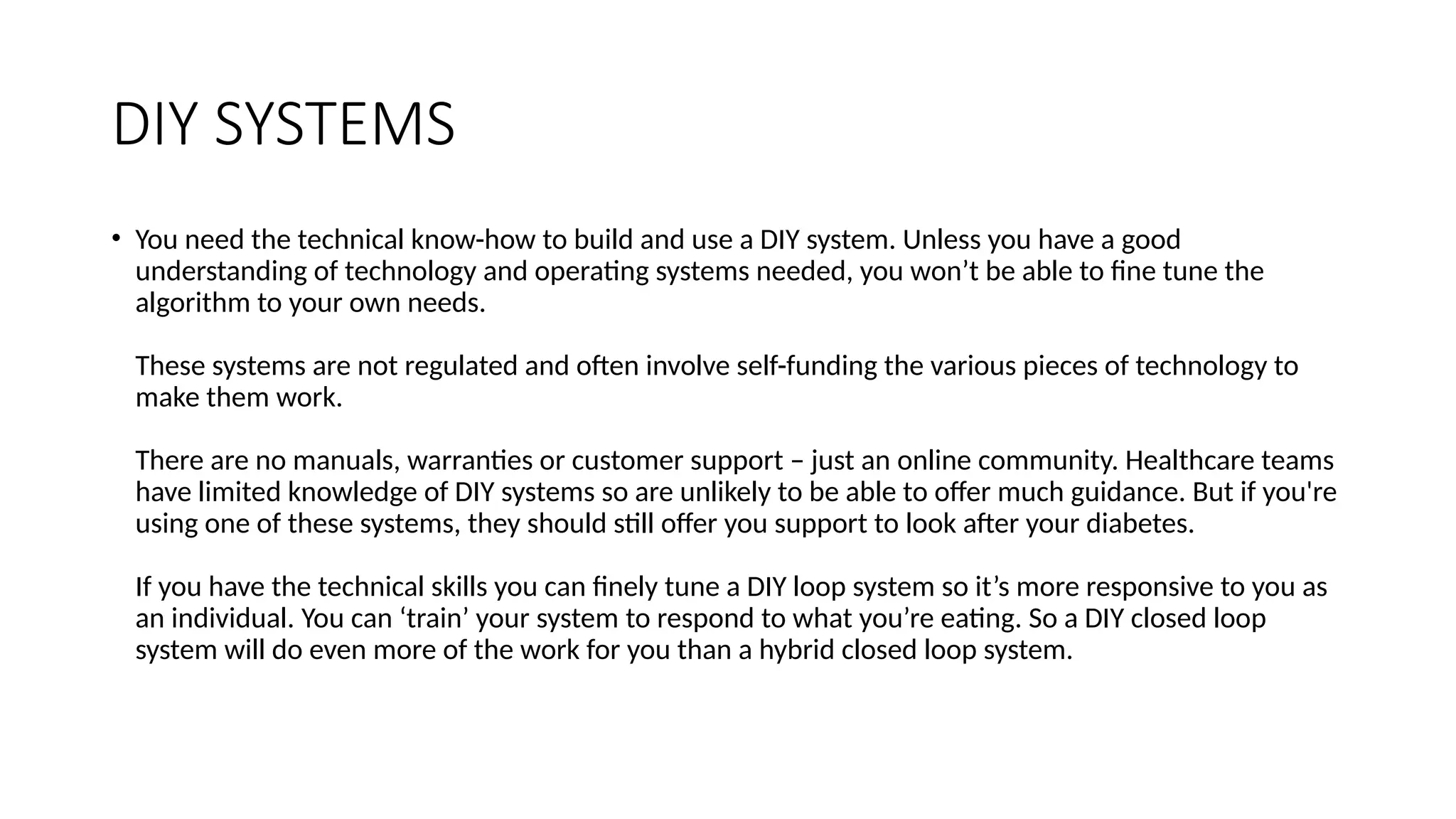
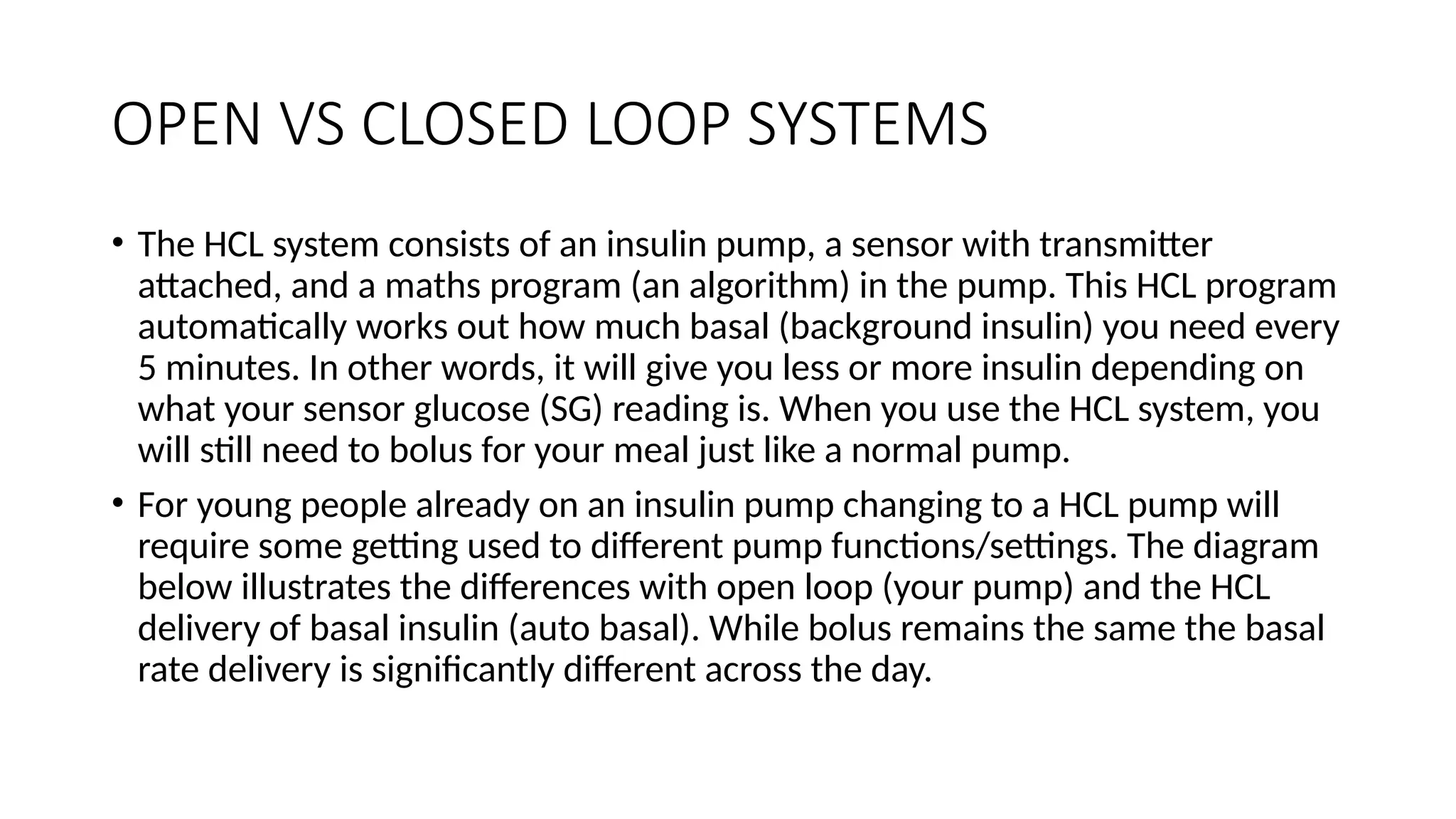
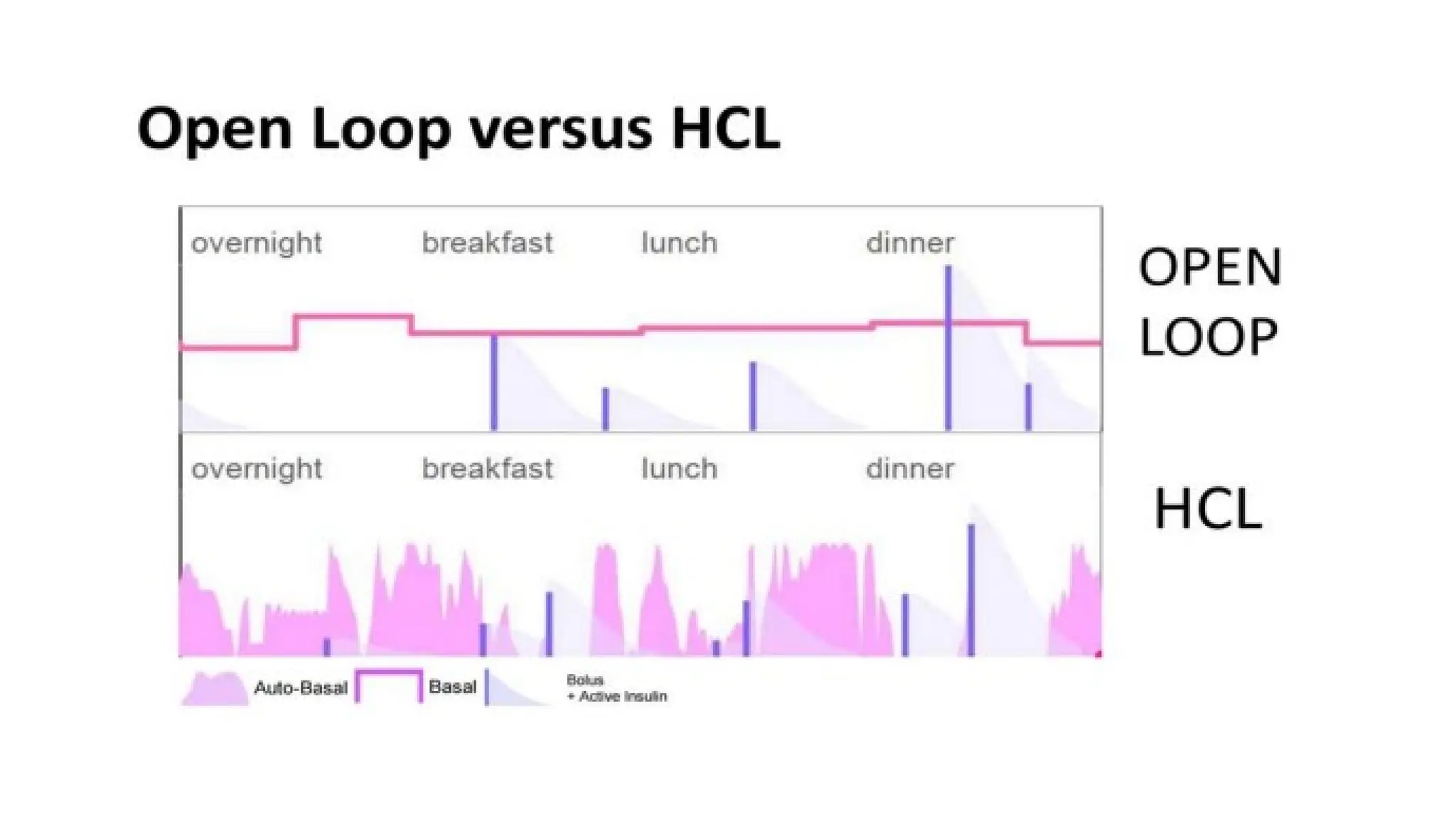
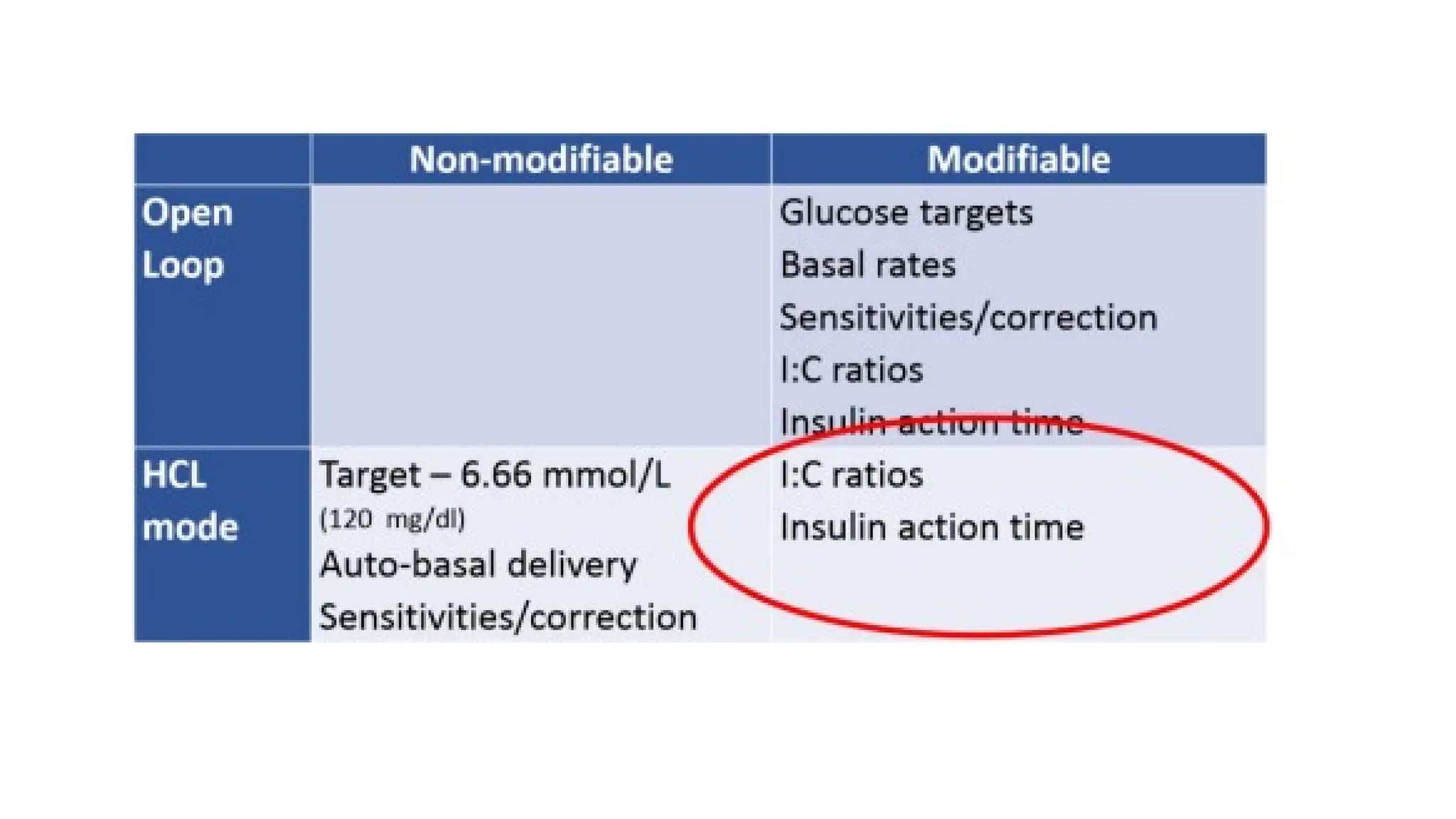
OPEN VS CLOSED LOOP SYSTEMS
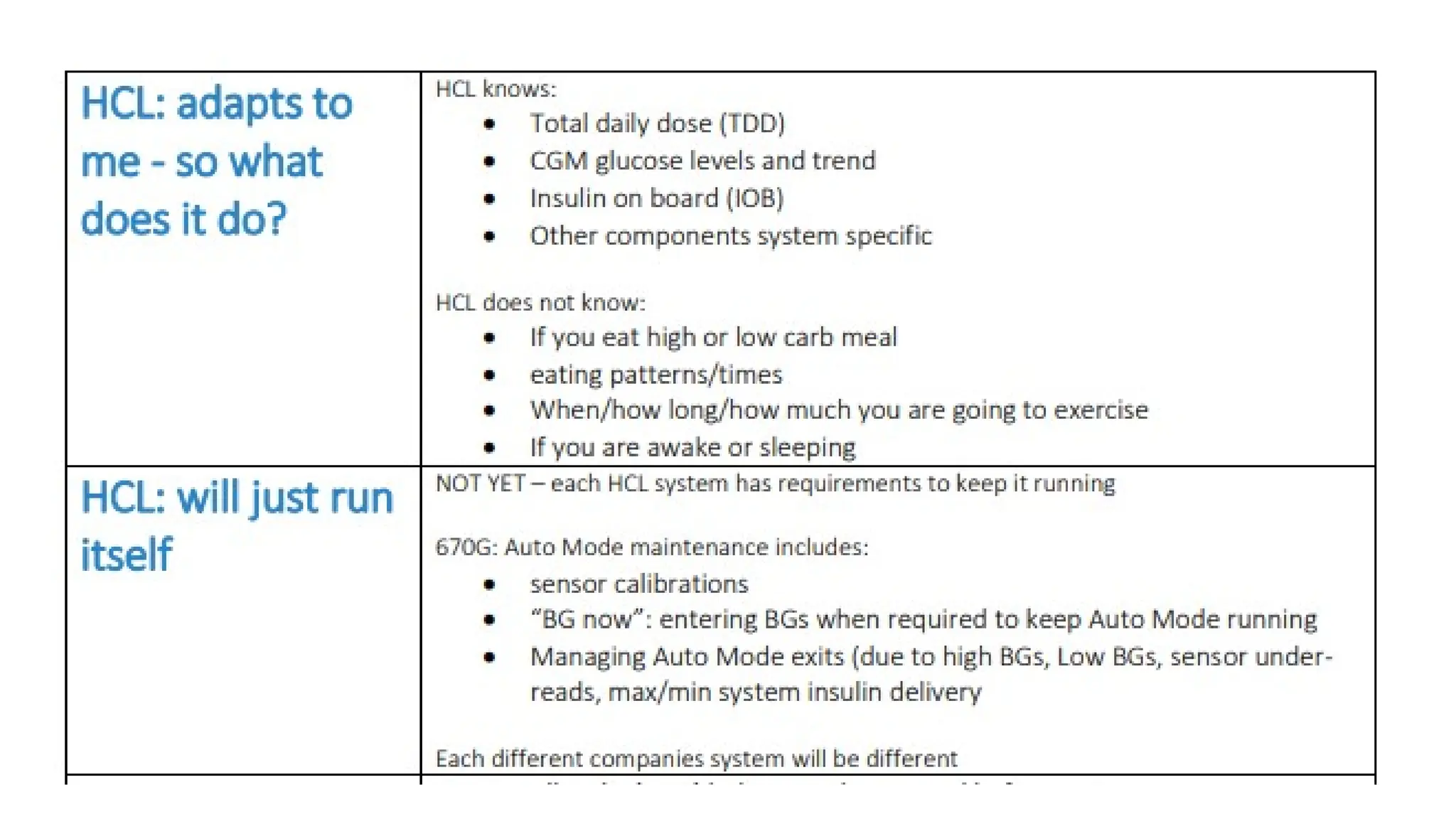
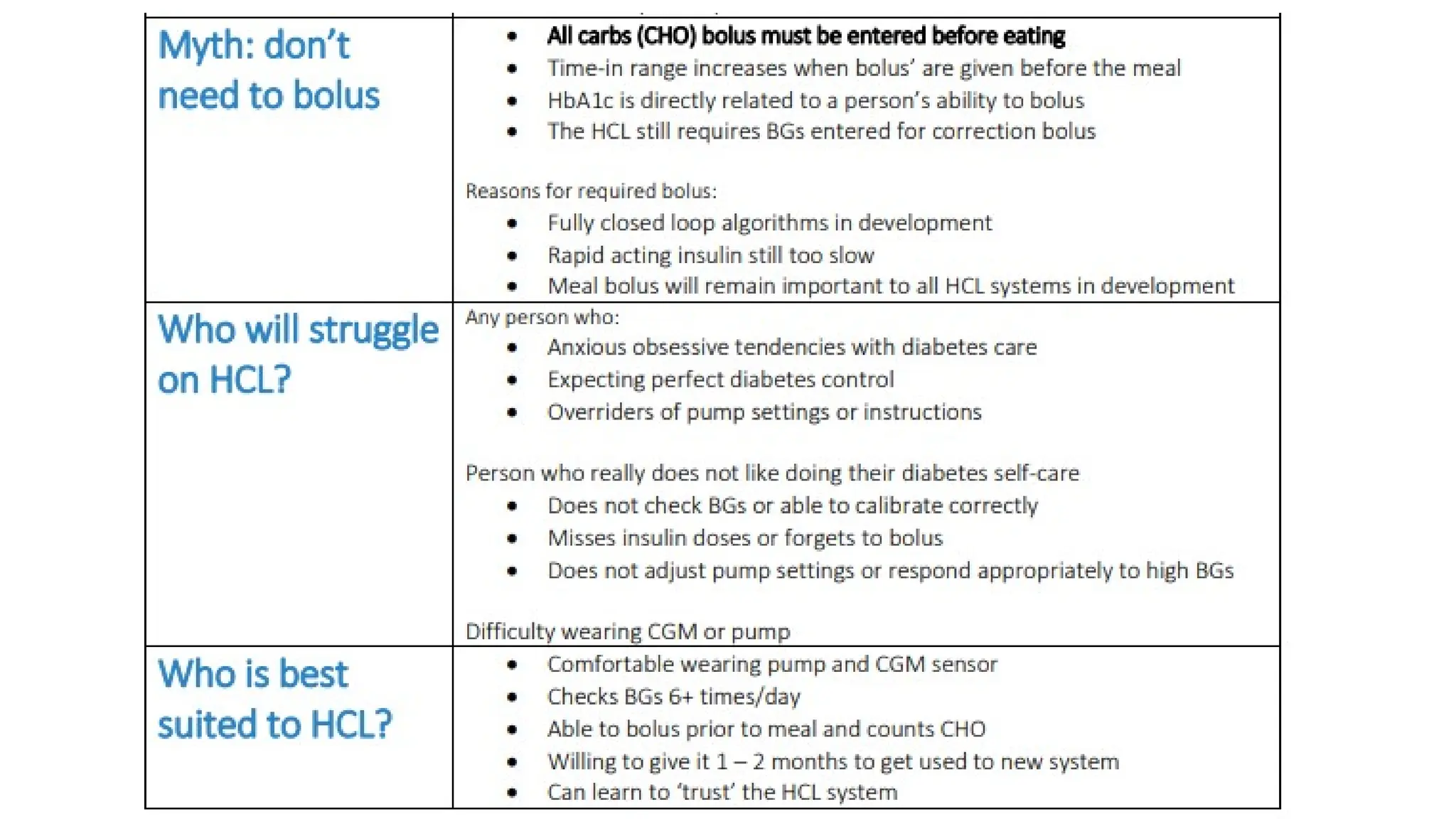
• The HCL system consists of an insulin pump, a sensor with transmitter
attached, and a maths program (an algorithm) in the pump. This HCL program
automatically works out how much basal (background insulin) you need every
5 minutes. In other words, it will give you less or more insulin depending on
what your sensor glucose (SG) reading is. When you use the HCL system, you
will still need to bolus for your meal just like a normal pump.
• For young people already on an insulin pump changing to a HCL pump will
require some getting used to different pump functions/settings. The diagram
below illustrates the differences with open loop (your pump) and the HCL
delivery of basal insulin (auto basal). While bolus remains the same the basal
rate delivery is significantly different across the day.
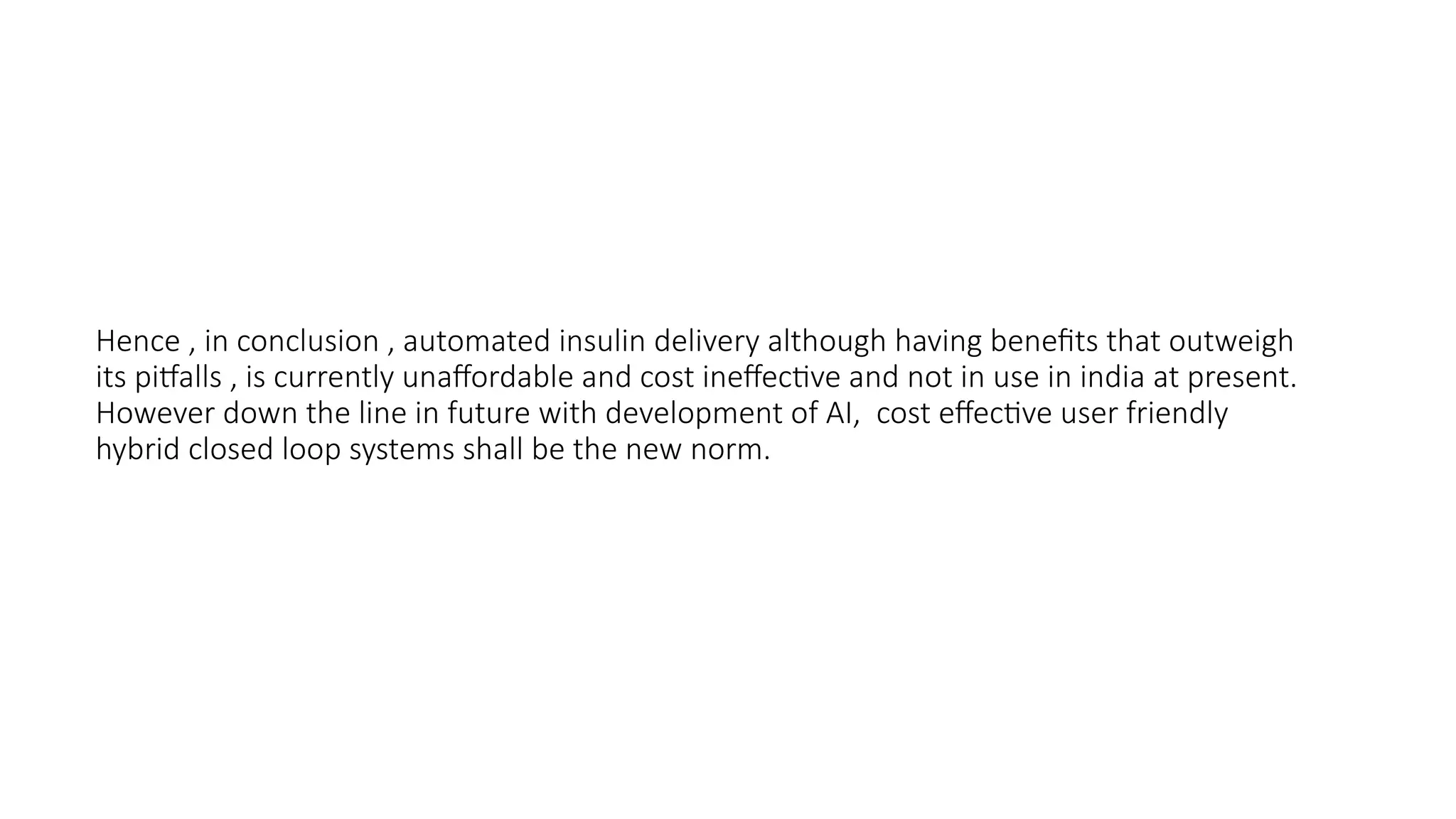
Hence , in conclusion , automated insulin delivery although having benefits that outweigh
its pitfalls , is currently unaffordable and cost ineffective and not in use in india at present.
However down the line in future with development of AI, cost effective user friendly
hybrid closed loop systems shall be the new norm.
THANK YOU

Automated insulin in type 1 dm preg.pptx

  • 1.
    JOURNAL CLUB : AutomatedInsulin Delivery in Women with Pregnancy Complicated by Type 1 Diabetes (NEJM Oct 2023) MENTORS : DR. NIRANJAN PATHAK DR. DHANLAXMI PRESENTOR : DR. GNANSHREE DAVE
  • 2.
    Understanding Pregnancy complicatedby Diabetes OVERT DIABETES MELLITUS GESTATIONAL DIABETES MELLITUS DIABETIC FEMALE HAS CONCEIVED NORMOGLYCEMIC FEMALE DURING PREGNANCY BECOMES DIABETIC BLOOD SUGAR LEVELS ARE RAISED SINCE DAY 1 BLOOD SUGAR LEVELS ARE RAISED AFTER 24-28 WKS OF GESTATION DIAGNOSTIC CRITERIA : FBS >= 126 mg/dl RBS >=200 mg/dl HbA1C >=6.5 % DIAGNOSTIC CRITERIA : -ACOG -WHO -DIPSI HIGH RISK OF CONGENITAL MALFORMATIONS NIL
  • 3.
    GDM – DIAGNOSTICCRITERIAS ACOG WHO DIPSI NO.OF STEPS 2 STEP METHOD 1 STEP 1 STEP GCT OGTT PRIOR FASTING STATE NO YES YES NO ORAL GLUCOSE BOLUS 50 GM 100 GM 75 GM 75 GM SCREENING OF WHICH PT ALL HIGH RISK ONLY ALL CC NDC FBS more than 95 105 92 1 HR <140 140-180 >180 180 190 180 120-140 140-200 >200 2 HR 155 165 153 3 HR 140 145
  • 4.
    COMPLICATIONS OF DIABETESIN PREGNANCY MATERNAL • INFECTIONS & PREMATURITY • PLACENTAL PATHOLOGY • POLYHYDRAMNIOS • PERSISTENCE OF DM STATUS POST PARTUM FETAL • CONGENITAL MALFORMATION • MACROSOMIA • IUFD , STILL BIRTH, ABORTION etc. NEONATAL • HYPOGLYCEMIA • RDS • PREMATURITY • HYPERVISCOSITY SYNDROME
  • 5.
    Management of diabetesin pregnancy and importance of insulin delivery regulation • Doc : INSULIN • DOSES 1-12 WKS : 0.7 U/KG/DAY 12-28 WKS : 0.8 U/ KG / DAY 28-34 WKS : 0.9 U/ KG / DAY > 34 WKS : 1 U / KG / DAY • TARGET GLYCEMIC CONTROLS FBS < 95 1 HR PP < 140 2 HR PP < 120 HbA1C < 6 % • ADVERSE EFFECTS • MANAGEMENT OF TYPE 1 VS TYPE 2 DM
  • 6.
    Type I Insulin-dependentdiabetes mellitus (IDDM)/juvenile onset diabetes mellitus: • There is β cell destruction in pancreatic islets; majority of cases are autoimmune (type 1A) antibodies that destroy β cells are detectable in blood, but some are idiopathic (type 1B)—no β cell antibody is found. In all type 1 cases circulating insulin levels are low or very low, and patients are more prone to ketosis. This type is less common and has a low degree of genetic predisposition.
  • 7.
    INSULIN Insulin was discoveredin 1921 by Banting and Best who demonstrated the hypoglycaemic action of an extract of pancreas prepared after degeneration of the exocrine part due to ligation of pancreatic duct. It was first obtained in pure crystalline form in 1926 and the chemical structure was fully worked out in 1956 by Sanger. Insulin is a two chain polypeptide having 51 amino acids and MW about 6000. The A-chain has 21 while B-chain has 30 amino acids. There are minor differences between human, pork and beef insulins. pork insulin is more homologous to human insulin than is beef insulin. The A and B chains are held together by two disulfide bonds. Insulin is synthesized in the β cells of pancreatic islets as a single chain peptide Preproinsulin (110 AA) from which 24 AAs are first removed to produce Proinsulin. The connecting or ‘C’ peptide (35 AA) is split off by proteolysis in Golgi apparatus; both insulin and C peptide are stored in granules within the cell. The C peptide is secreted in the blood along with insulin
  • 8.
    REGULATION OF INSULINSECRETION Under basal condition ~1U insulin is secreted per hour by human pancreas. Much larger quantity is secreted after every meal. Secretion of insulin from β cells is regulated by chemical, hormonal and neural mechanisms. CHEMICAL
  • 9.
  • 10.
    NEURAL The islets arerichly supplied by sympathetic and vagal nerves. • Adrenergic α2 receptor activation decreases insulin release (predominant) by inhibiting β cell adenylyl cyclase. • Adrenergic β2 stimulation increases insulin release (less prominent) by stimulating β cell adenylyl cyclase. • Cholinergic—muscarinic activation by ACh or vagal stimulation causes insulin secretion through IP3/DAG-increased intracellular Ca2+ in the β cells
  • 11.
    ACTIONS OF INSULIN RAPID •Insulin facilitates glucose transport across cell membrane; skeletal muscle and fat are highly sensitive • Synthesis of GLUT4 is upregulated by insulin and favours its translocation to the membrane • Increased production of glucokinase , hence increased phosphorylation. • Insulin inhibits lipolysis in adipose tissue and favours triglyceride synthesis INTERMEDIATE • Insulin enhances transcription of vascular endothelial lipoprotein lipase and thus increases clearance of VLDL and chylomicrons. • Insulin facilitates AA entry and their synthesis into proteins, as well as inhibits protein breakdown in muscle and most other cells LONG TERM EFFECTS multiplication and differentiation of many types of cells
  • 12.
    METABOLISM OF INSULIN •Insulin is distributed only extracellularly. It is a peptide; gets degraded in the g.i.t. if given orally. • Injected insulin or that released from pancreas is metabolized primarily in liver and to a smaller extent in kidney and muscles. Nearly half of the insulin entering portal vein from pancreas is inactivated in the first passage through liver. Thus, normally liver is exposed to a much higher concentration (4–8 fold) of insulin than are other tissues. • Degradation of insulin after receptor mediated internalization occurs to variable extents in most target cells. During biotransformation the disulfide bonds are reduced—A and B chains are separated. These are further broken down to the constituent amino acids. The plasma t½ is 5–9 min
  • 13.
    Types of insulinpreparations
  • 14.
    Newer insulin deliverydevices 1. Insulin syringes : Prefilled disposible syringes contain specific types or mixtures of regular and modified insulins. 2. Pen devices Fountain pen like: use insulin cartridges for s.c. injection through a needle. Preset amounts (in 2 U increments) are propelled by pushing a plunger; convenient in carrying and injecting. 3. Inhaled insulin : An inhaled human insulin preparation was marketed in Europe and the USA, but withdrawn due to risk of pulmonary fibrosis and other complications. The fine powder delivered through a nebulizer controlled meal time glycaemia, but was not suitable for round-the-clock basal effect. Attempts are being made to overcome the shortcomings. 4. Insulin pumps : Portable infusion devices connected to a subcutaneously placed cannula—provide ‘continuous subcutaneous insulin infusion’ (CSII). Only regular insulin or a fast acting insulin analogue is used. The pump can be programmed to deliver insulin at a low basal rate (approx. 1 U/hr) and premeal boluses (4–15 times the basal rate) to control post-prandial glycaemia. Though, theoretically more appealing, no definite advantage of CSII over multidose s.c. injection has been demonstrated. Moreover, cost, strict adherence to diet, exercise, care of the device and cannula, risk of pump failure, site infection, are too demanding on the patient. The CSII may be appropriate for selected type 1 DM cases only. 5. Implantable pumps : Consist of an electromechanical mechanism which regulates insulin delivery from a percutaneously refillable reservoir. Mechanical pumps, propellant driven and osmotic pumps have been utilized. 6. Other routes : Intraperitoneal, oral (by complexing insulin into liposomes or coating it with impermeable polymer) and rectal routes are being tried. These have the advantage of providing higher concentrations in the portal circulation, which is more physiological.
  • 15.
  • 16.
    In a multicenter,controlled trial , they randomly assigned pregnant women with type 1 diabetes and a glycated hemoglobin level of atleast 6.5% at nine sites in UK to receive standard insulin therapy or hybrid closed-loop therapy with both groups using continuous glucose monitoring cgm
  • 17.
    A total of124 participants with mean age of 31 and mean glycated hb level of 7.7 underwent randomization.
  • 18.
    OUTCOME INDICATORS • PRIMARY: Percentage of time spent in pregnancy specific target glucose range • SECONDARY a) Percentage of time spent in hyperglycemic state b) Overnight time in target range c) Glycated hemoglobin level d) Adverse events .
  • 22.
    CONCLUSION HYBRID CLOSED LOOPTHERAPY SIGNIFICANTLY IMPROVED MATERNAL GLYCEMIC CONTROL DURING PREGNANCY COMPLICATED BY TYPE 1 DIABETES
  • 23.
    Closed loop system/ Artificial Pancreas • Some people with type 1 diabetes use an insulin pump and a continuous glucose monitor that ‘talk to each other’. It does this through a computer programme on your phone or inside the pump. • This is called a closed loop system. It is sometimes known as an artificial pancreas. It can do some of the work for you to help manage your blood sugar levels (apart from you tapping in the carbs from the food you eat). The doses of insulin your body needs through the day and night to help keep your blood sugar levels stable are released via your pump. Some of these are adjusted automatically in response to your blood sugar levels which are monitored all the time by the continuous glucose monitor (CGM). When you have type 1 diabetes, your pancreas can’t make and release insulin like it should. By releasing insulin whenever your body needs it, a closed loop system works like a pancreas. So a closed loop system is sometimes called an artificial pancreas or an artificial pancreas system.
  • 24.
    Types of closedloop systems There are two types of closed loop systems. • The first is Hybrid closed loop systems, which are regulated and available to buy. In November 2023, NICE recommended that over the next five years hundreds of thousands of people living with type 1 diabetes should be offered hybrid closed-loop systems. • The other type of closed loop system is called a DIY system. These systems are developed by people in the diabetes community. They are unregulated and so not available through the NHS.
  • 25.
    Different parts ofa hybrid closed loop system • There are three parts to a closed loop system. • Not all types of continuous glucose monitors and insulin pumps can work together. • Continuous glucose monitor • A small sensor that sits under your skin. It continuously sends your blood sugar readings to a separate device like a mobile phone or direct to your insulin pump. • The algorithm • A computer programme that reads the blood sugar info and works out how much insulin is needed. The algorithm can be part of an app on a separate device like a mobile phone or may be part of the insulin pump itself. • An insulin pump • The pump automatically releases insulin into your body whenever you need it based on your blood sugar readings (except for mealtimes when the pump still needs info about carb amounts in your food). To work as a hybrid closed loop, it needs to be able to communicate with a CGM sensor, sometimes called a looping, sensor augmented, or an integrated pump.
  • 26.
    Benefits of hybridclosed loop systems • As the amount of insulin given is calculated more precisely and given more often, this can help keep blood sugar levels more stable. As a result, this can increase the amount of time you spend in your target blood sugar range. This can reduce hypos and lower your HbA1c and risk of diabetes complications. • Research shows the benefits brought by closed loop systems can help give people with type 1 diabetes and people caring for them a better quality of life. One study testing the closed loop system for children found nine out of 10 parents: • Spend less time managing their child’s diabetes • Spend less time worrying about their child’s blood sugar levels • Report less trouble sleeping
  • 27.
    Downsides of hybridclosed loop systems • Using technology to help you manage your blood sugar levels is a little like switching from driving a car with manual gears to driving an automatic car. It can take a while to get used to and you’ll still need to keep an eye on things. As well as tapping in what food you’re eating you’ll need to replace the sensors and keep the insulin topped up. And you’ll need to be aware of any drastic changes in blood sugar. For example, if you do very strenuous exercise or wildly miscalculate carbs, the system may not respond quickly enough. You may need to change the insulin settings manually in these situations.
  • 28.
    Can anything gowrong with a hybrid closed loop system? • It’s important to always carry a back-up diabetes kit with you if you use a hybrid closed loop system. You need to be able to do an insulin injection or a finger prick test if it goes wrong for any reason. For example, the pump might stop working if the batteries need replacing or the tubing becomes blocked. Or you may be unable to get a signal between devices if there are sensor or transmitter issues.
  • 29.
    Who can usea hybrid closed loop system? • Hybrid closed loop systems are generally suitable for children and adults with type 1 diabetes, although it will depend on the licensing rules for each system. • These systems aren’t currently available for people with type 2 diabetes who use insulin through the NHS, although research has been initiated in this area
  • 30.
    Who might ahybrid closed loop system not be suitable for? • If you’re not comfortable wearing diabetes equipment on your body, a closed loop system may not be suitable for you. And the amount of data about your blood sugar levels and insulin doses can be overwhelming so it may not suit everyone. If you find it hard to do things with your hands, or you have vision problems, you may find it hard to use a closed loop system unless you have a carer to support you
  • 31.
    How much doesa closed loop system cost? • A hybrid closed loop pump costs almost 5 lakh indian rupees with a monthly maintenance cost of 20k each. • A hybrid closed loop insulin pump can cost between £2,000 and £3,000 plus around £1,500 per year for the cannulas, reservoirs and tubing required for its use. • A continuous glucose monitor (CGM) can cost about £2,000 a year. If you are using a CGM with an insulin pump you may not need to purchase a standalone CGM reader. • You'll also need to change the sensor on your CGM about every 7 to 10 days, depending on which continuous glucose monitor you're using. Transmitters which send the information to the pump cost around £200 to £500 and last between 4 months to a year depending on the system.
  • 32.
    Main hybrid closedloop systems available The first tubeless hybrid closed loop system - Omnipod 5 - is available on the NHS. It works with the Dexcom G6 CGM. • CamAPS FX An app which uses the Dexcom G6 CGM or Dana Diabecare RS and DANA-i insulin pumps. Licensed for use from the age of one and over. • Medtronic 780g Insulin pump which works with a Guardian 4 Sensor CGM. Licensed for use from the age of seven up. • Medtronic MiniMed 670G Insulin pump works with a Guardian 4 Sensor CGM. Licensed for use aged two and over. • Tandem Tslim Control IQ An insulin pump which works with the standard Dexcom G6 CGM. Licensed for use from the age of six
  • 33.
    DIY SYSTEMS • Youneed the technical know-how to build and use a DIY system. Unless you have a good understanding of technology and operating systems needed, you won’t be able to fine tune the algorithm to your own needs. These systems are not regulated and often involve self-funding the various pieces of technology to make them work. There are no manuals, warranties or customer support – just an online community. Healthcare teams have limited knowledge of DIY systems so are unlikely to be able to offer much guidance. But if you're using one of these systems, they should still offer you support to look after your diabetes. If you have the technical skills you can finely tune a DIY loop system so it’s more responsive to you as an individual. You can ‘train’ your system to respond to what you’re eating. So a DIY closed loop system will do even more of the work for you than a hybrid closed loop system.
  • 34.
    OPEN VS CLOSEDLOOP SYSTEMS • The HCL system consists of an insulin pump, a sensor with transmitter attached, and a maths program (an algorithm) in the pump. This HCL program automatically works out how much basal (background insulin) you need every 5 minutes. In other words, it will give you less or more insulin depending on what your sensor glucose (SG) reading is. When you use the HCL system, you will still need to bolus for your meal just like a normal pump. • For young people already on an insulin pump changing to a HCL pump will require some getting used to different pump functions/settings. The diagram below illustrates the differences with open loop (your pump) and the HCL delivery of basal insulin (auto basal). While bolus remains the same the basal rate delivery is significantly different across the day.
  • 39.
    Hence , inconclusion , automated insulin delivery although having benefits that outweigh its pitfalls , is currently unaffordable and cost ineffective and not in use in india at present. However down the line in future with development of AI, cost effective user friendly hybrid closed loop systems shall be the new norm.
  • 40.