Autism Management & Organization
PRESENTED BY:-
Sheikh Mohammad Talha
BPH in RCH
Fall-16
ID: 02104162008
INTRODUCTION
The word “AUTISM” is
derived from Greek word
AUTOS means SELF . In
1911 Swiss Psychiatrist,
EUGENE BLEULER first
used the word.
What isAutism?
 Autism or Autism Spectrum Disorders (ASD) are a
group of Neurodevelopmental disorders with
common disabilities in three key areas:
 Social awareness and interaction
 Language and other communication skills(Verbal
and nonverbal communication)
 Imaginative play (variable interests and Repetitive
behaviors)
 Autism affects families in all races, cultures all
around the world.
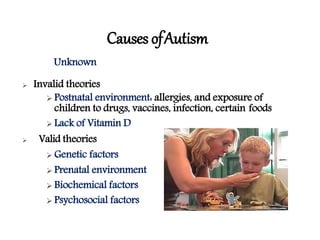
Causes ofAutism
Unknown
 Invalid theories
 Postnatal environment: allergies, and exposure of
children to drugs, vaccines, infection, certain foods
 Lack of Vitamin D
 Valid theories
 Genetic factors
 Prenatal environment
 Biochemical factors
 Psychosocial factors
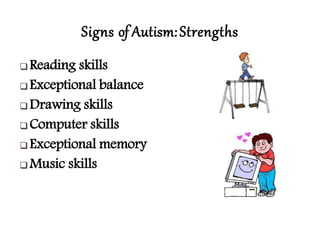
Signs of Autism:Strengths
 Reading skills
 Exceptional balance
 Drawing skills
 Computer skills
 Exceptional memory
 Music skills
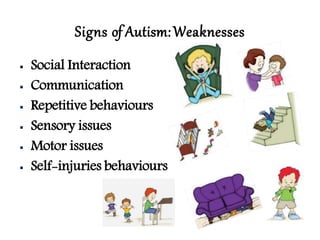
Signs of Autism:Weaknesses
 Social Interaction
 Communication
 Repetitive behaviours
 Sensory issues
 Motor issues
 Self-injuries behaviours
AutismAppear
 Several symptoms appear by 18 months of age:
Poor eye contact, trouble with pretend play and
imitation, delayed communication skills, Joint
attention.
 Average age of diagnosis: About three years old.
 Regression: Stop using the language, play, or
social skills they had already learned; usually
between the first and second birthdays.
UNDERGRADUATE
Treatment forAutism
9Simon Bignell
Psychology, School of Science
• The common view is that Autism is a lifelong disorder.
• No curative treatment.
• Symptomatic approaches. Available approaches include applied
behavior analysis (ABA), developmental models, structured teaching,
speech and language therapy, social skills therapy, and occupational
therapy.
• Two developmental periods are especially important for
autism: the early preschool years and early adolescence.
• Treatment depends on individual needs.
• There is no ‘cure’ for autism (yet); however, with
appropriate treatment and education, many children with
the disorder can learn and develop.
UNDERGRADUATE
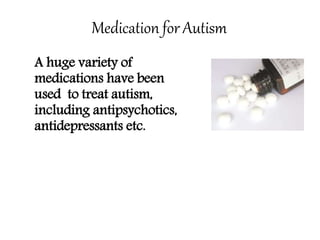
A huge variety of
medications have been
used to treat autism,
including antipsychotics,
antidepressants etc.
Medication for Autism
Simon Bignell
Psychology, School of Science
Organizations working for Autism
Bangladesh:
• AUTISTIC CHILDREN'S WELFARE FOUNDATION,
BANGLADESH
• Autism School and Resource Center in Bangladesh
• Global Autism Movement and Bangladesh
• Society For The Welfare Of Autistic Children: SWAC
Abroad:
• Asperger Syndrome and High Functioning Autism Association
• Autism Highway
• Autism Navigator
• Disability Scoop
• My AutismTeam
• Organization for Autism Research
• Sesame Street and Autism: See Amazing in All Children
• Autism Research Institute
• Autism Society
• Autism Speaks
UNDERGRADUATE
34Simon Bignell
Psychology, School of Science
Autism Management & Organization

Autism Management & Organization

  • 1.
    Autism Management &Organization PRESENTED BY:- Sheikh Mohammad Talha BPH in RCH Fall-16 ID: 02104162008
  • 2.
    INTRODUCTION The word “AUTISM”is derived from Greek word AUTOS means SELF . In 1911 Swiss Psychiatrist, EUGENE BLEULER first used the word.
  • 3.
    What isAutism?  Autismor Autism Spectrum Disorders (ASD) are a group of Neurodevelopmental disorders with common disabilities in three key areas:  Social awareness and interaction  Language and other communication skills(Verbal and nonverbal communication)  Imaginative play (variable interests and Repetitive behaviors)  Autism affects families in all races, cultures all around the world.
  • 5.
    Causes ofAutism Unknown  Invalidtheories  Postnatal environment: allergies, and exposure of children to drugs, vaccines, infection, certain foods  Lack of Vitamin D  Valid theories  Genetic factors  Prenatal environment  Biochemical factors  Psychosocial factors
  • 6.
    Signs of Autism:Strengths Reading skills  Exceptional balance  Drawing skills  Computer skills  Exceptional memory  Music skills
  • 7.
    Signs of Autism:Weaknesses Social Interaction  Communication  Repetitive behaviours  Sensory issues  Motor issues  Self-injuries behaviours
  • 8.
    AutismAppear  Several symptomsappear by 18 months of age: Poor eye contact, trouble with pretend play and imitation, delayed communication skills, Joint attention.  Average age of diagnosis: About three years old.  Regression: Stop using the language, play, or social skills they had already learned; usually between the first and second birthdays.
  • 9.
    UNDERGRADUATE Treatment forAutism 9Simon Bignell Psychology,School of Science • The common view is that Autism is a lifelong disorder. • No curative treatment. • Symptomatic approaches. Available approaches include applied behavior analysis (ABA), developmental models, structured teaching, speech and language therapy, social skills therapy, and occupational therapy. • Two developmental periods are especially important for autism: the early preschool years and early adolescence. • Treatment depends on individual needs. • There is no ‘cure’ for autism (yet); however, with appropriate treatment and education, many children with the disorder can learn and develop.
  • 10.
    UNDERGRADUATE A huge varietyof medications have been used to treat autism, including antipsychotics, antidepressants etc. Medication for Autism Simon Bignell Psychology, School of Science
  • 11.
    Organizations working forAutism Bangladesh: • AUTISTIC CHILDREN'S WELFARE FOUNDATION, BANGLADESH • Autism School and Resource Center in Bangladesh • Global Autism Movement and Bangladesh • Society For The Welfare Of Autistic Children: SWAC Abroad: • Asperger Syndrome and High Functioning Autism Association • Autism Highway • Autism Navigator
  • 12.
    • Disability Scoop •My AutismTeam • Organization for Autism Research • Sesame Street and Autism: See Amazing in All Children • Autism Research Institute • Autism Society • Autism Speaks
  • 13.