By: Crystal ChapmanAutism
IntroductionAutism is a developmental disability that affects a person’s communication and social skills.Autism affects one in every 100 births, and is more likely to occur in males than females.There is no known cause or cure for autism.Through early diagnosis, intervention, and the support of loved ones, individuals with autism can lead meaningful lives.
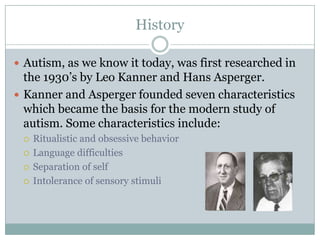
HistoryAutism, as we know it today, was first researched in the 1930’s by Leo Kanner and Hans Asperger.Kanner and Asperger founded seven characteristics which became the basis for the modern study of autism. Some characteristics include:Ritualistic and obsessive behaviorLanguage difficultiesSeparation of selfIntolerance of sensory stimuli
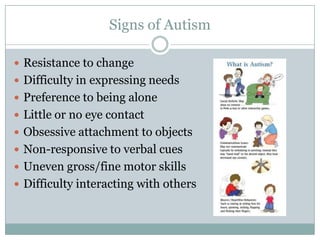
Signs of AutismResistance to changeDifficulty in expressing needsPreference to being aloneLittle or no eye contactObsessive attachment to objectsNon-responsive to verbal cuesUneven gross/fine motor skillsDifficulty interacting with others
DiagnosisChildren with autism are typically diagnosed at age 2 to 3, since this is when delays in communication/socialization become more obvious.Early diagnosis is key to progress with the disorder-the sooner a diagnosis is given, the sooner intervention and therapy can begin.Studies show that children with autism who receive treatment early in life, tend to progress and develop stronger life skills than individuals diagnosed later in childhood.
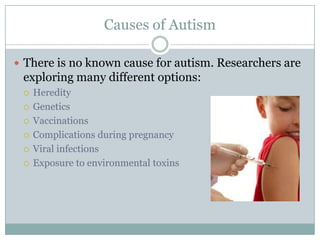
Causes of AutismThere is no known cause for autism. Researchers are exploring many different options:HeredityGeneticsVaccinationsComplications during pregnancyViral infections Exposure to environmental toxins
Treatment OptionsEvery case of autism is different, and varies with severity and symptoms. Many different treatment options and therapies are available.Applied Behavior Analysis (A.B.A.)Relationship Development Intervention (R.D.I)DIR/FloortimePhysical/Occupational/Speech TherapyMedication TherapyNutritional Therapy
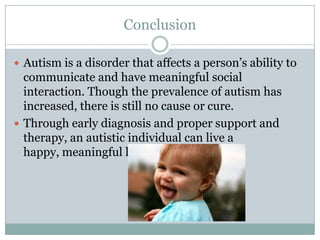
ConclusionAutism is a disorder that affects a person’s ability to communicate and have meaningful social interaction. Though the prevalence of autism has increased, there is still no cause or cure.Through early diagnosis and proper support and therapy, an autistic individual can live a happy, meaningful life.

Chapman Research Powerpoint

  • 1.
  • 2.
    IntroductionAutism is adevelopmental disability that affects a person’s communication and social skills.Autism affects one in every 100 births, and is more likely to occur in males than females.There is no known cause or cure for autism.Through early diagnosis, intervention, and the support of loved ones, individuals with autism can lead meaningful lives.
  • 3.
    HistoryAutism, as weknow it today, was first researched in the 1930’s by Leo Kanner and Hans Asperger.Kanner and Asperger founded seven characteristics which became the basis for the modern study of autism. Some characteristics include:Ritualistic and obsessive behaviorLanguage difficultiesSeparation of selfIntolerance of sensory stimuli
  • 4.
    Signs of AutismResistanceto changeDifficulty in expressing needsPreference to being aloneLittle or no eye contactObsessive attachment to objectsNon-responsive to verbal cuesUneven gross/fine motor skillsDifficulty interacting with others
  • 5.
    DiagnosisChildren with autismare typically diagnosed at age 2 to 3, since this is when delays in communication/socialization become more obvious.Early diagnosis is key to progress with the disorder-the sooner a diagnosis is given, the sooner intervention and therapy can begin.Studies show that children with autism who receive treatment early in life, tend to progress and develop stronger life skills than individuals diagnosed later in childhood.
  • 6.
    Causes of AutismThereis no known cause for autism. Researchers are exploring many different options:HeredityGeneticsVaccinationsComplications during pregnancyViral infections Exposure to environmental toxins
  • 7.
    Treatment OptionsEvery caseof autism is different, and varies with severity and symptoms. Many different treatment options and therapies are available.Applied Behavior Analysis (A.B.A.)Relationship Development Intervention (R.D.I)DIR/FloortimePhysical/Occupational/Speech TherapyMedication TherapyNutritional Therapy
  • 8.
    ConclusionAutism is adisorder that affects a person’s ability to communicate and have meaningful social interaction. Though the prevalence of autism has increased, there is still no cause or cure.Through early diagnosis and proper support and therapy, an autistic individual can live a happy, meaningful life.