Political & Physical Features of Australia Unit 10 Notes
I. Australia’s Political Features
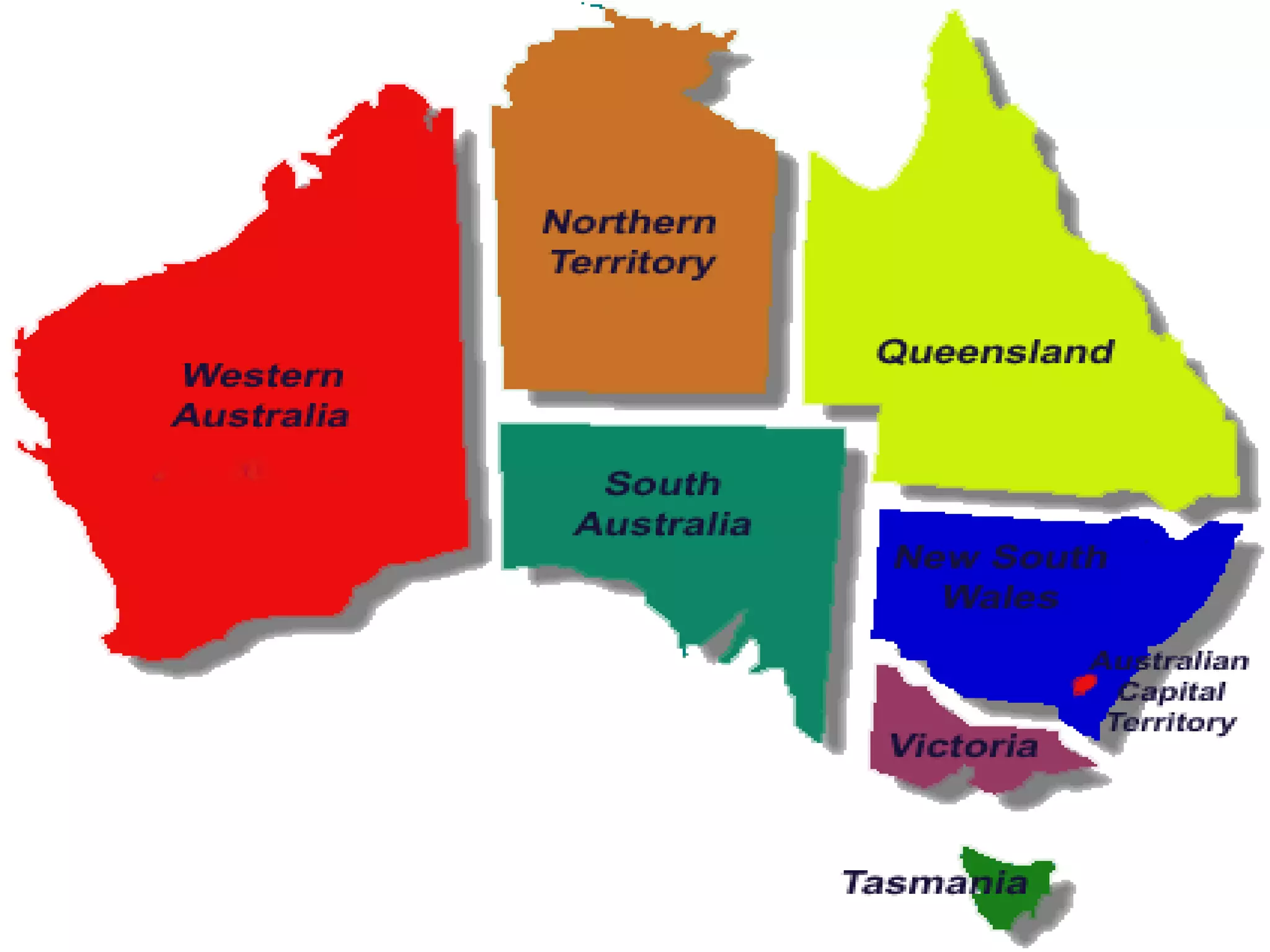
Australia… Is divided into territories and states: States: Tasmania, Victoria, South Australia, Western Australia, New South Wales, Queensland Territories: Northern Territory and Australian Capital Territory
 
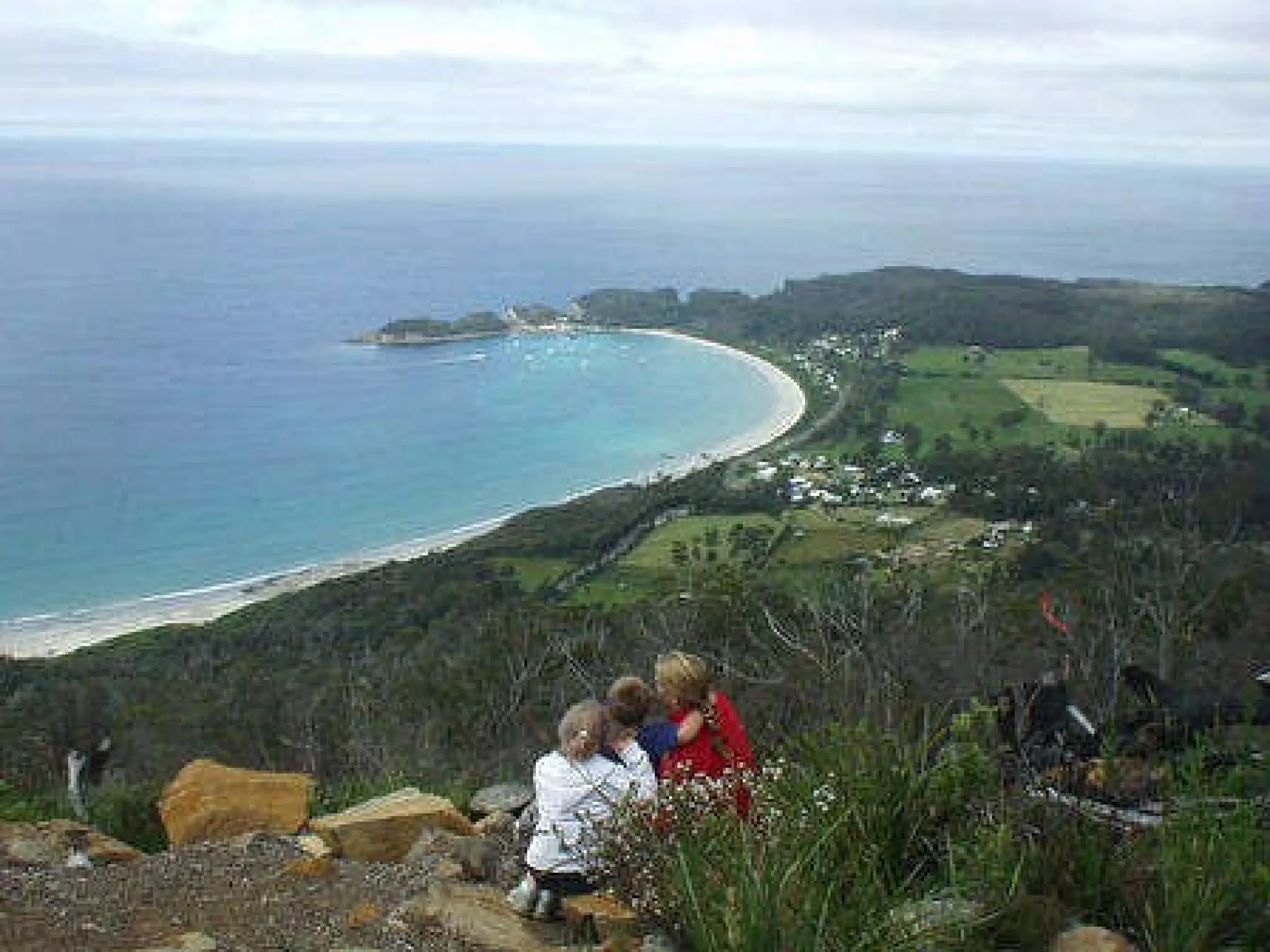
Tasmania Island off the southeast coast of the mainland Almost half of Tasmania is unspoiled land that is protected by the government
 
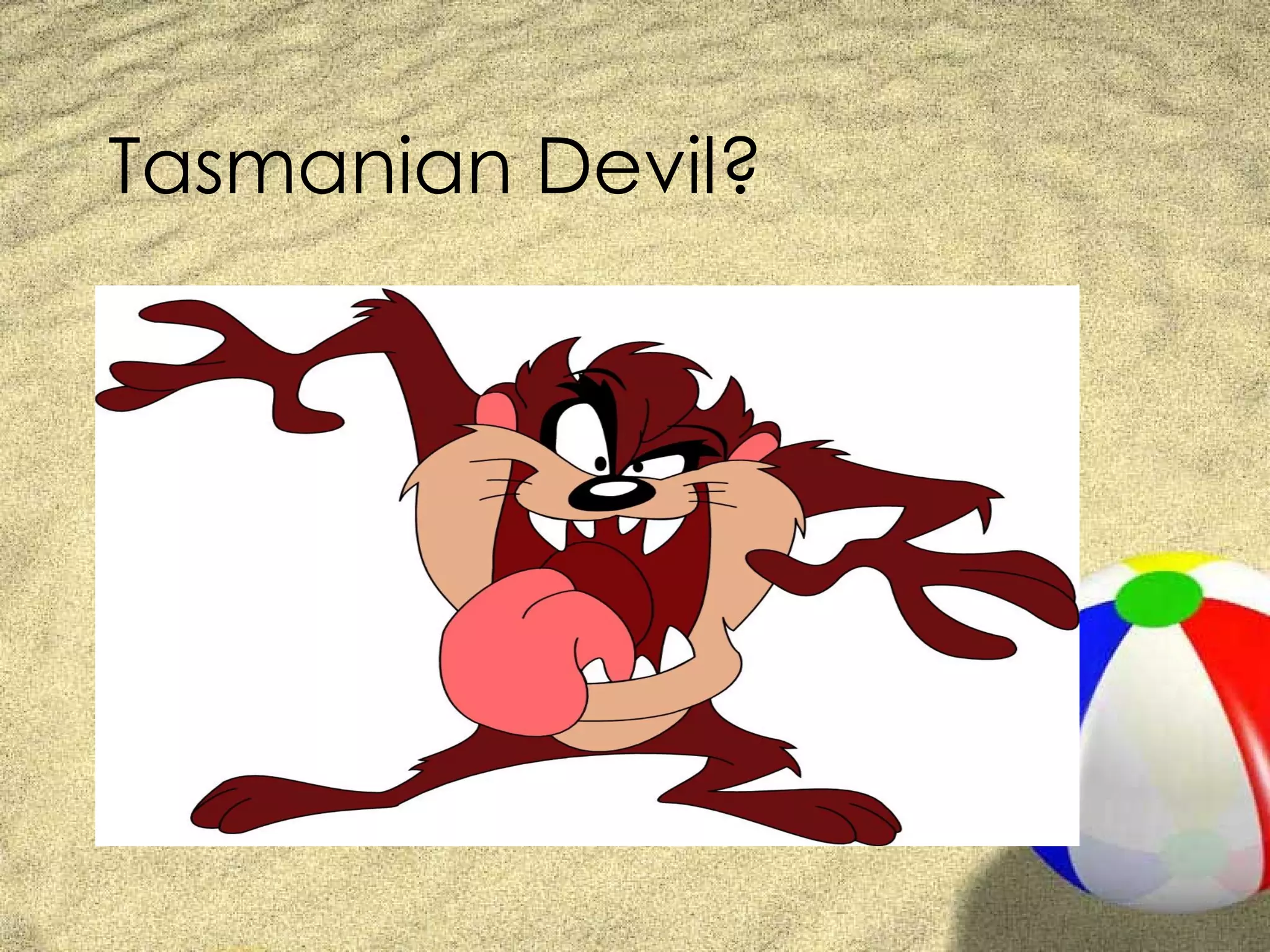
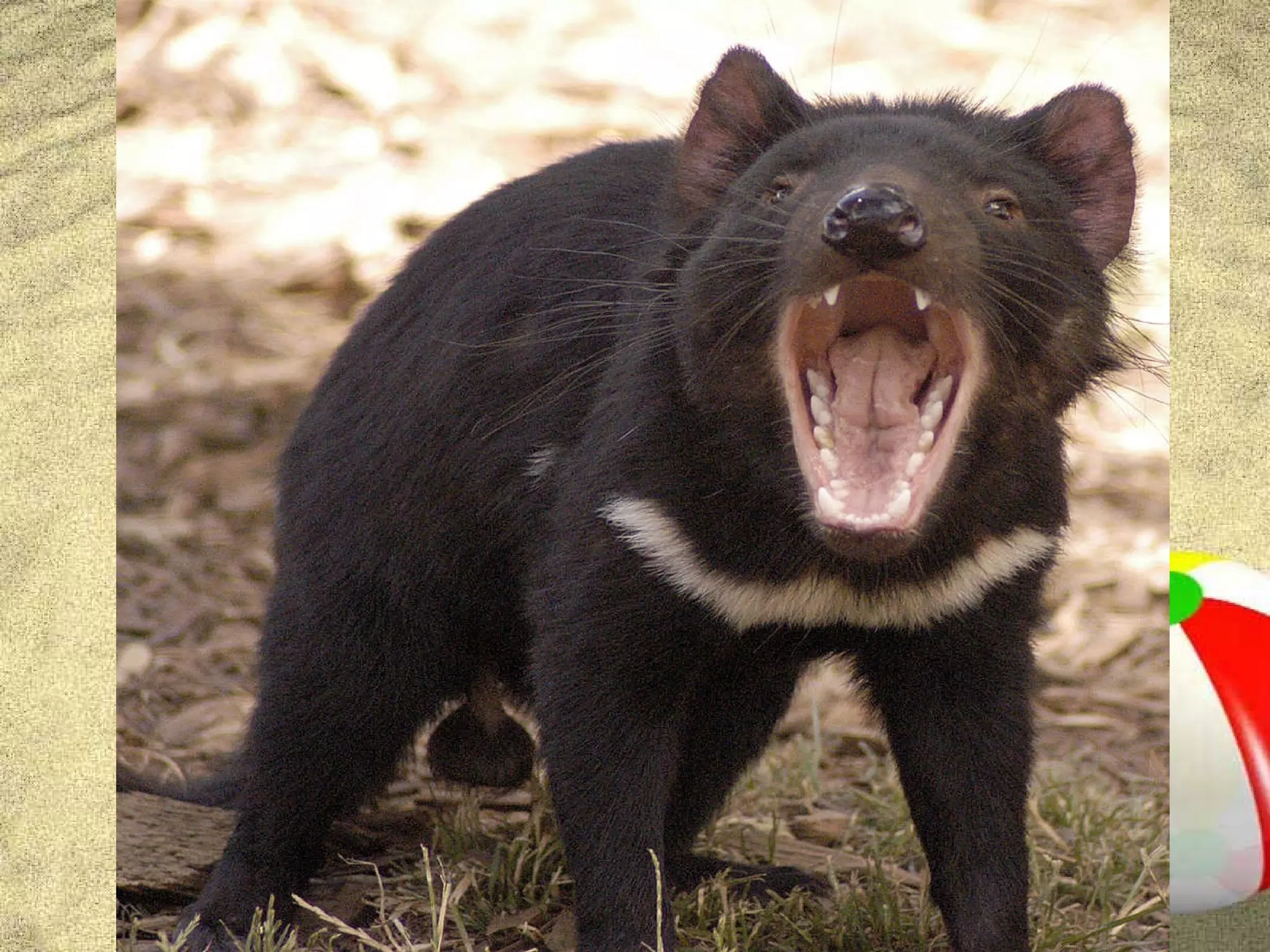
Tasmanian Devil?
 
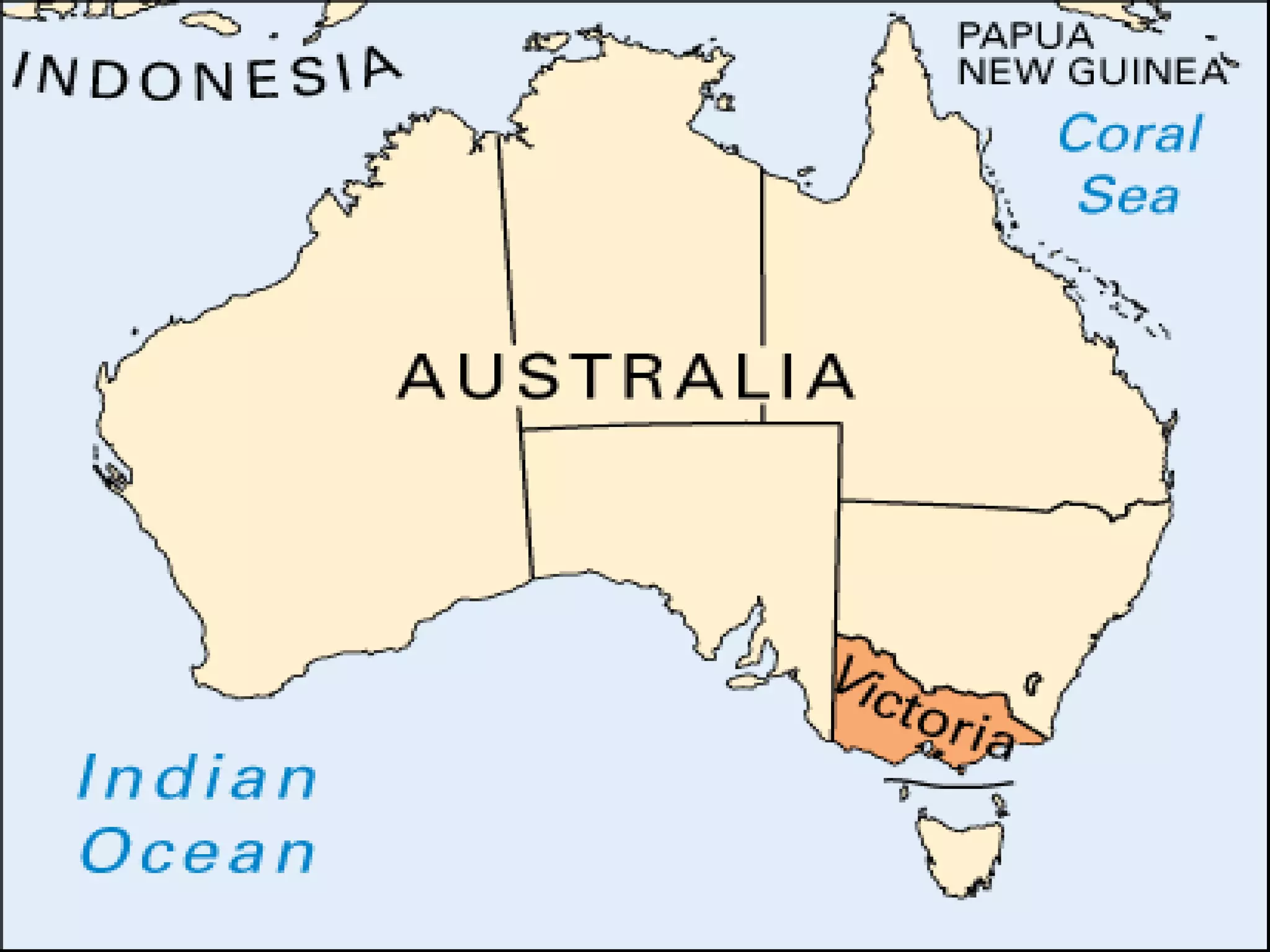
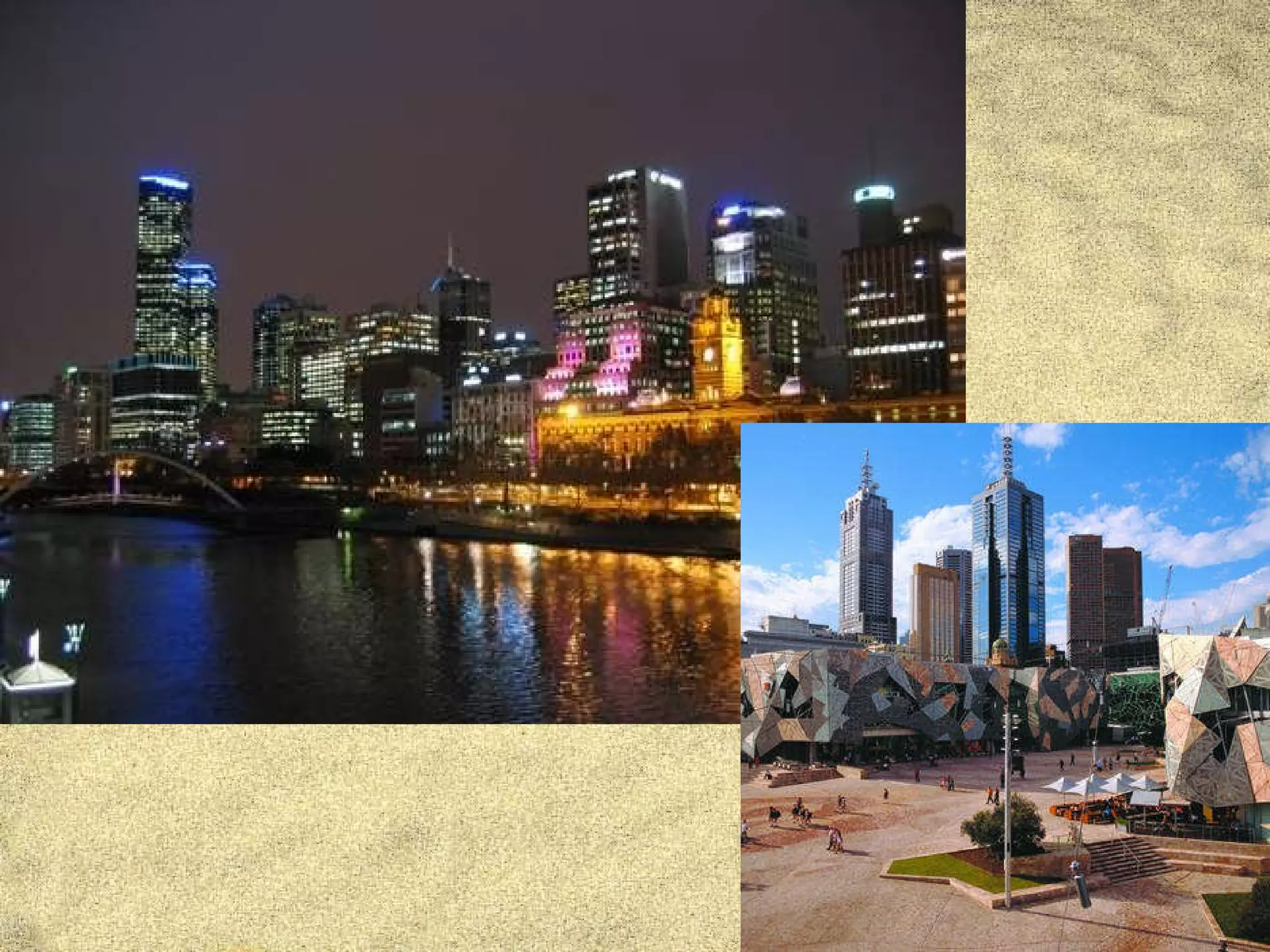
Victoria State closest to Tasmania Southeast part of the mainland Capital is Melbourne; it’s the most urban state in Australia The many rivers of the region are a good source of fresh water for farming
 
 
South Australia State in south-central Australia The Great Victoria Desert is located here…
 
 
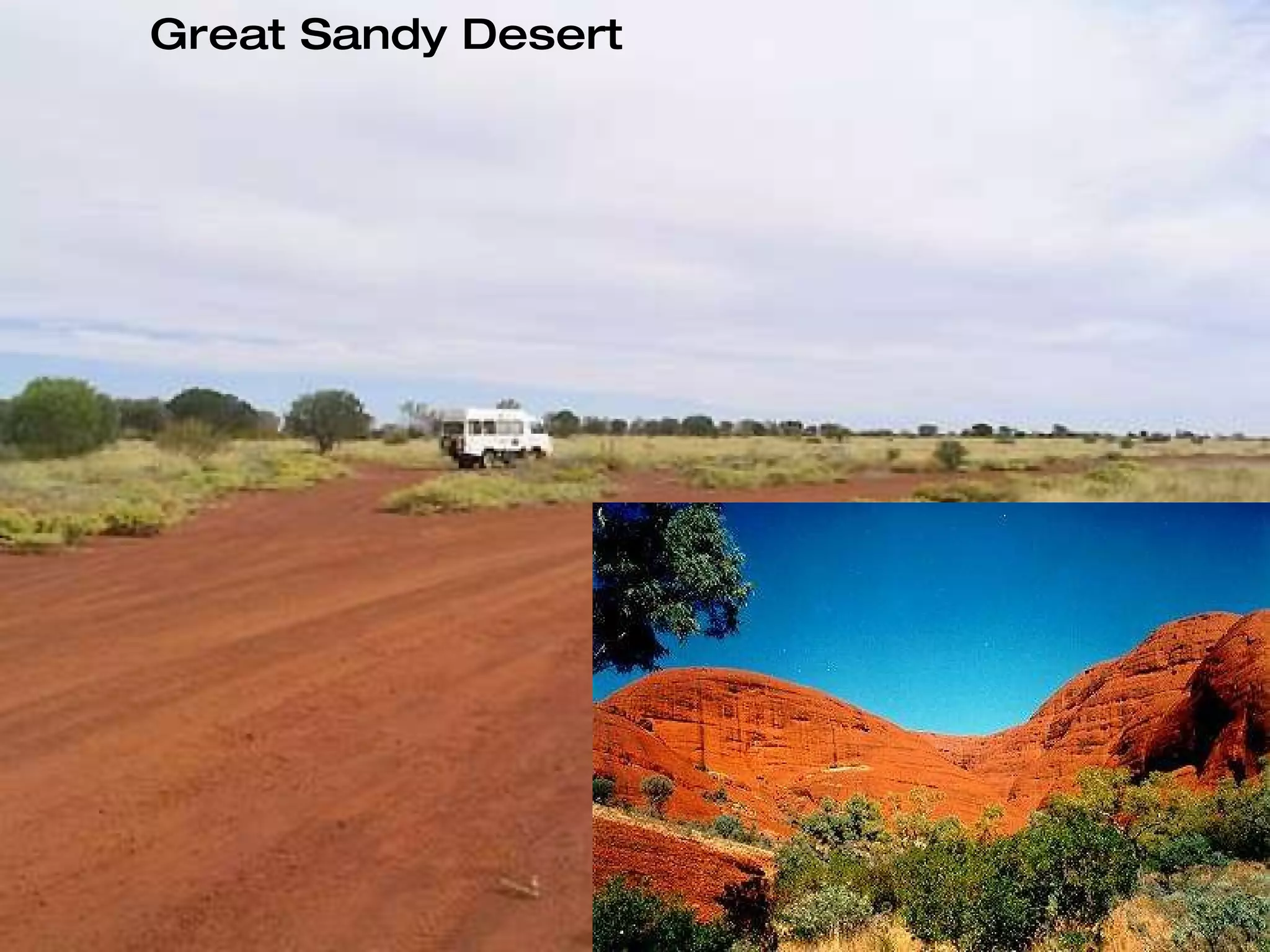
Western Australia Largest state; makes up 1/3rd of the mainland Most of Western Australia is desert (Great Victoria Desert and Great Sandy Desert are located here)
Great Sandy Desert
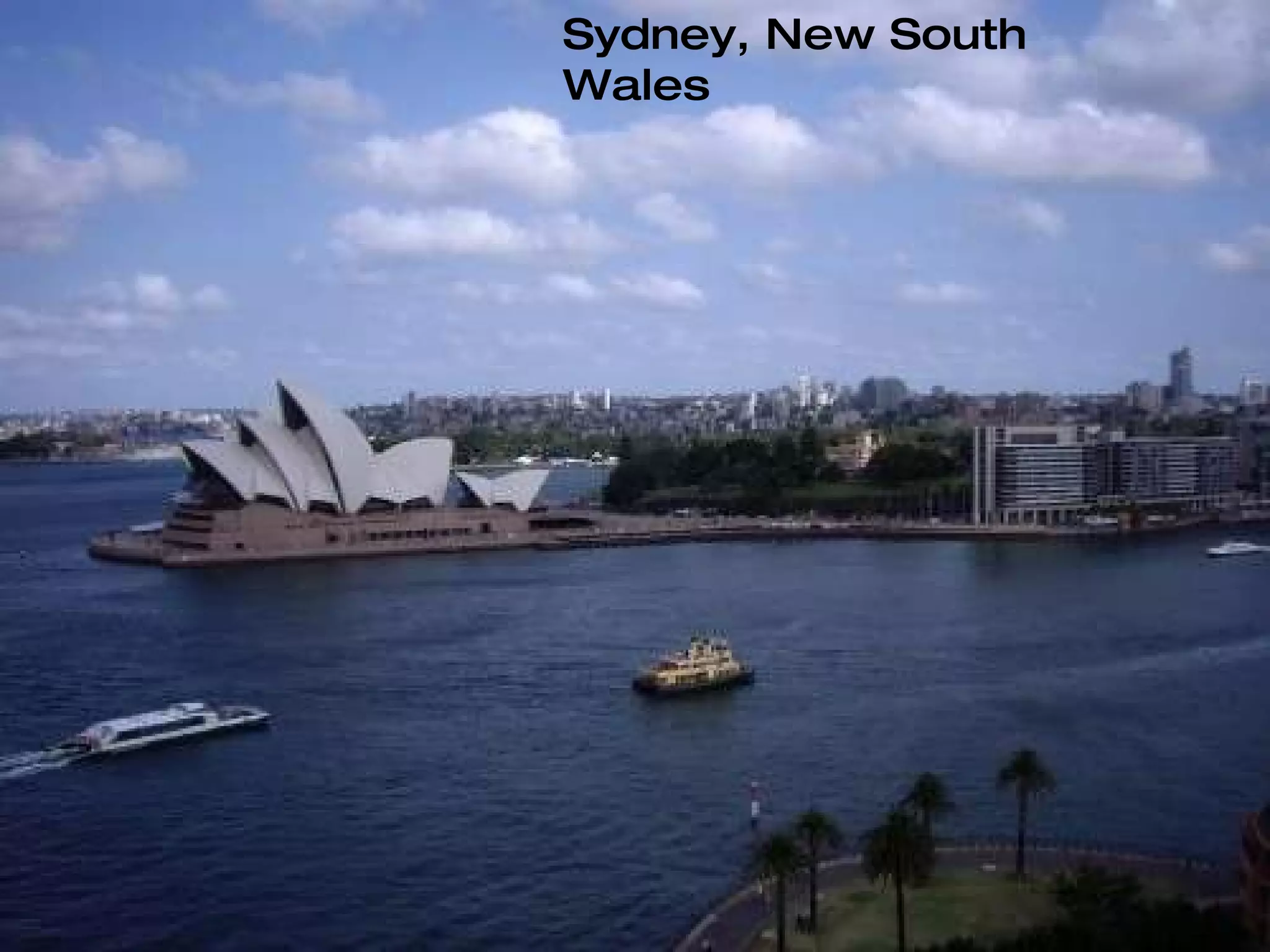
New South Wales North of Victoria, on the eastern coast Has more people than any other Australian state The capital, Sydney, is the most populated city in Australia -- 3 1/2 million people live there! Australian Capital Territory is located here
Sydney, New South Wales
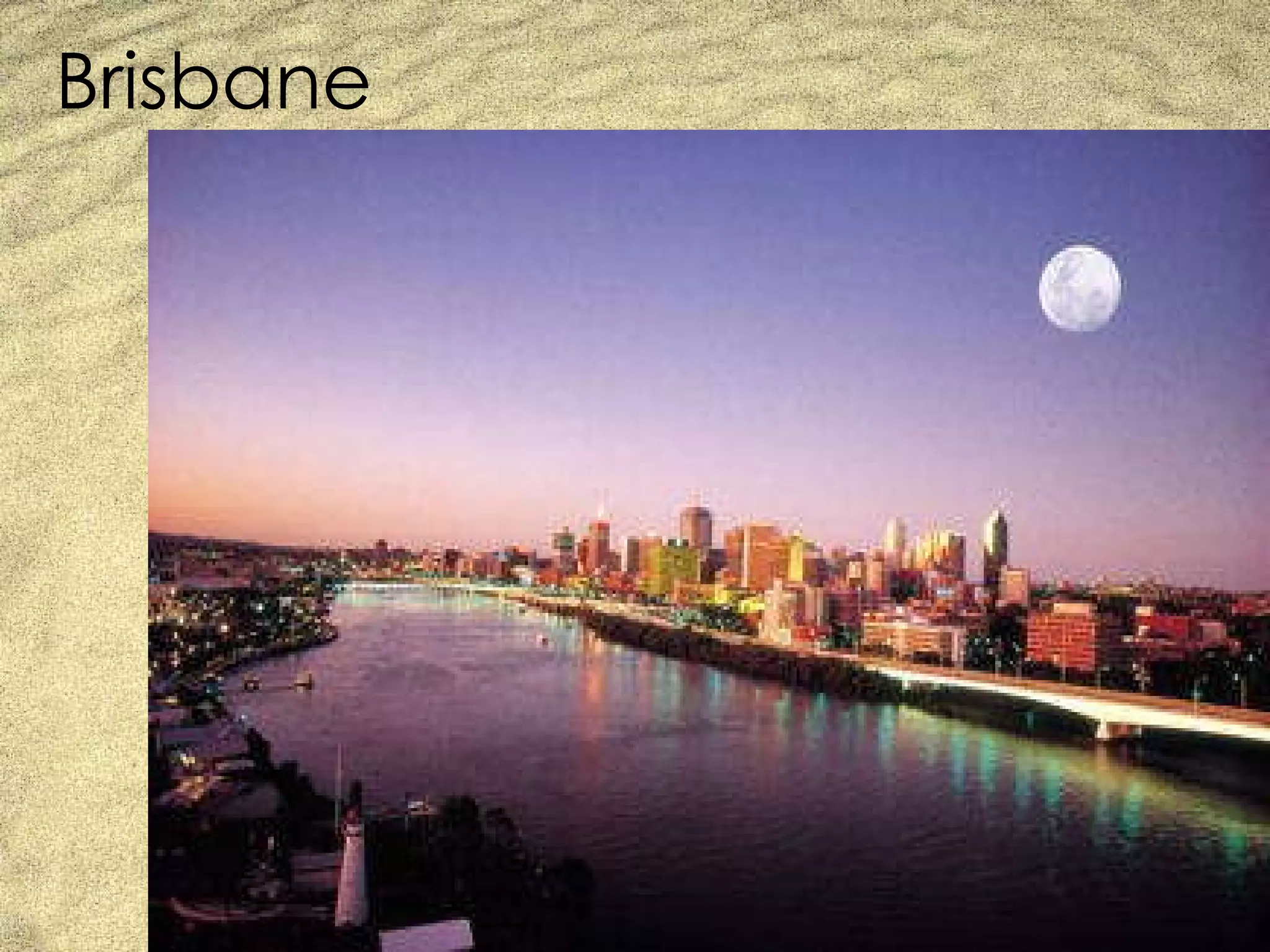
Queensland Second largest state; 7 times the size of England! In the northeastern part of the mainland Great Barrier Reef is located off the coast in the Coral Sea More than half of Queensland’s population lives in the capital: Brisbane
Brisbane
 
Northern Territory Northern coast of the mainland, between Western Australia and Queensland Largest population of Aborigines in Australia
 
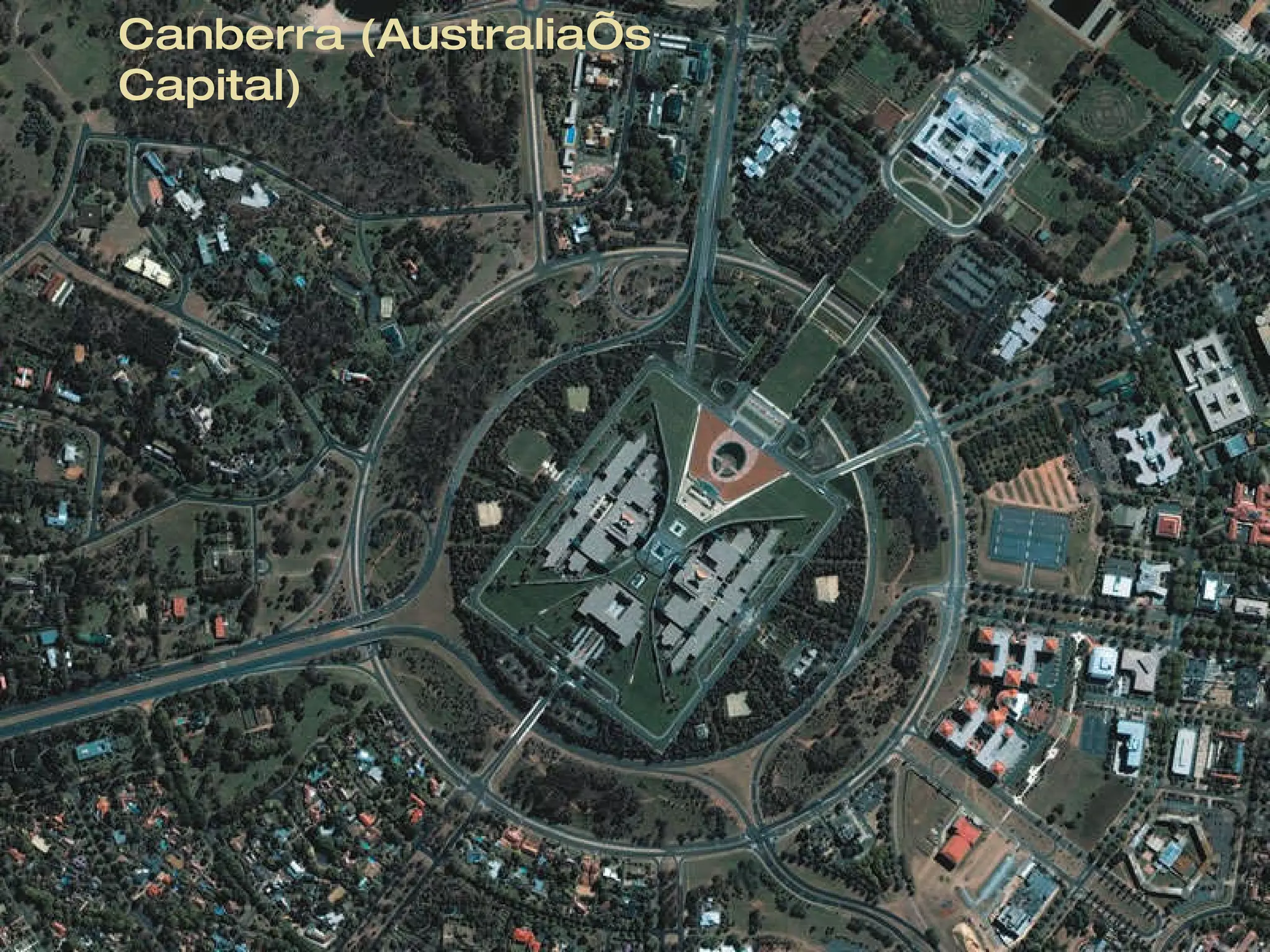
Australian Capital Territory Located in New South Wales The  national capital, Canberra , is located here
Canberra (Australia’s Capital)
II. Australia’s Physical Features
Australia… The only country on the world’s smallest and flattest continent… Has Earth’s oldest and least fertile soils Only Antarctica receives less rainfall! Commonwealth of Australia also includes Tasmania, an island south of the mainland It’s surrounded by the Indian and Pacific Oceans
Huge desert plains stretch across the country’s middle--central Australia’s climate is hot and dry Milder climates along the southeastern and southwestern coasts Most Australians live in the southeastern coastal region
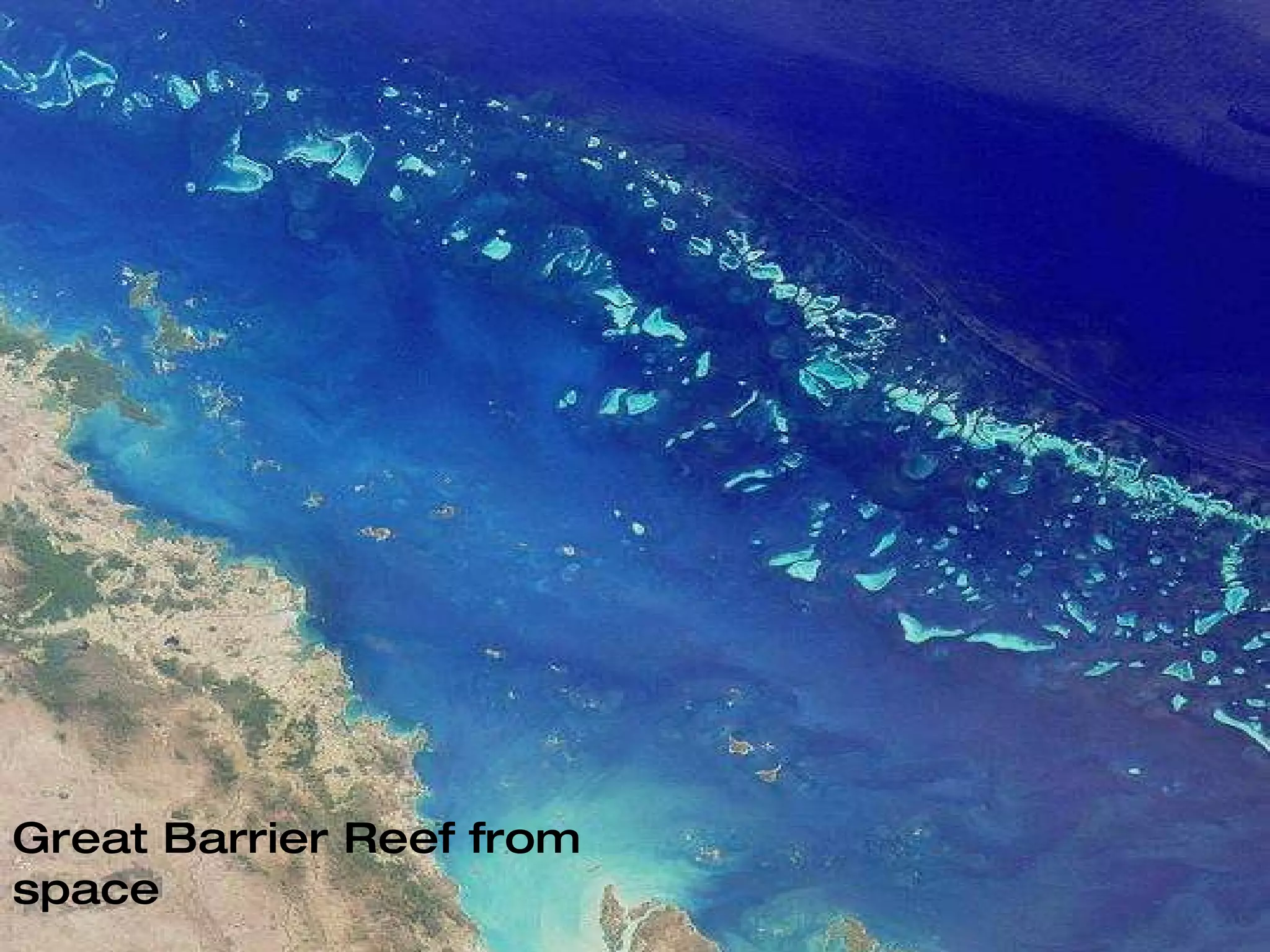
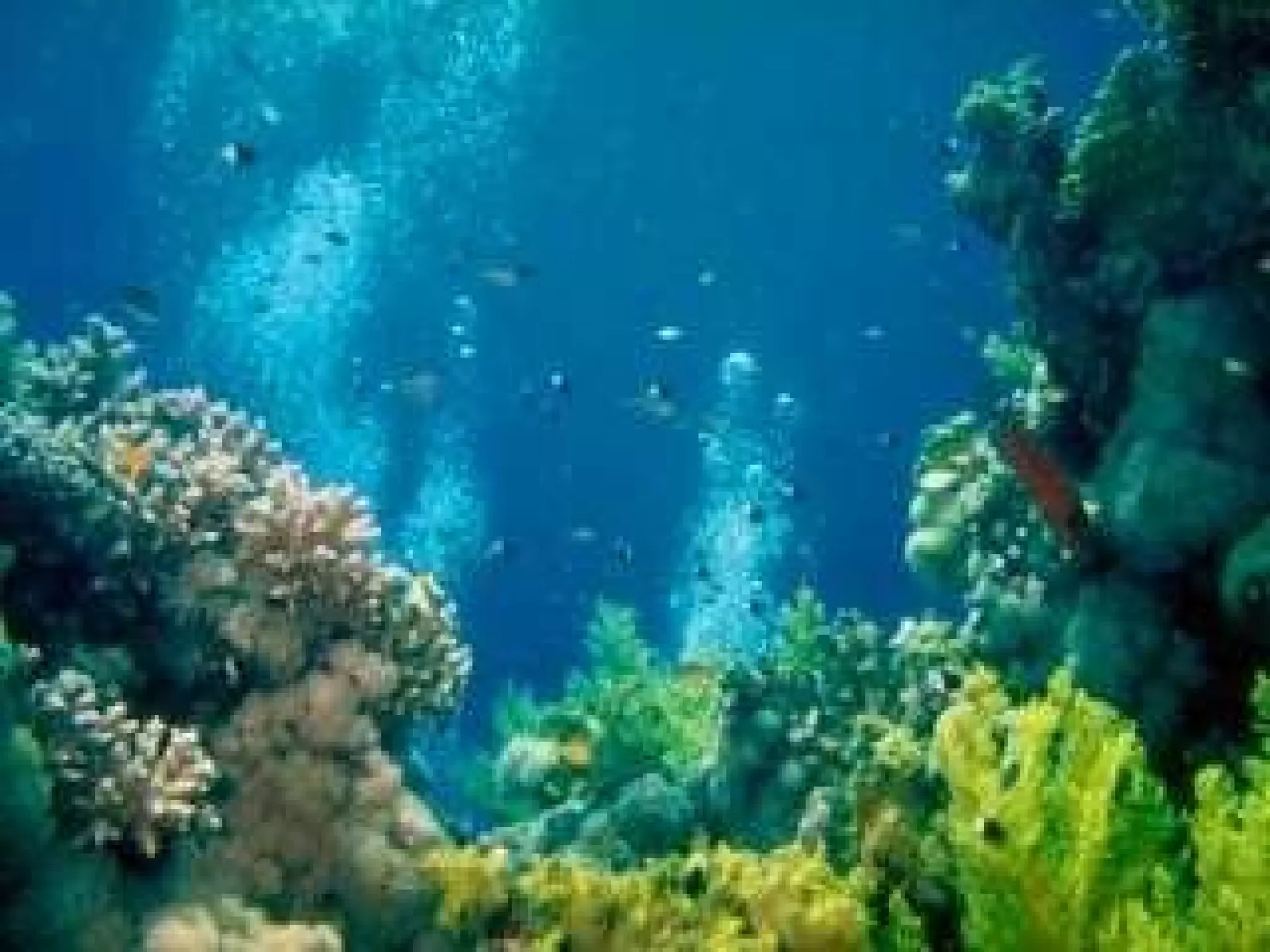
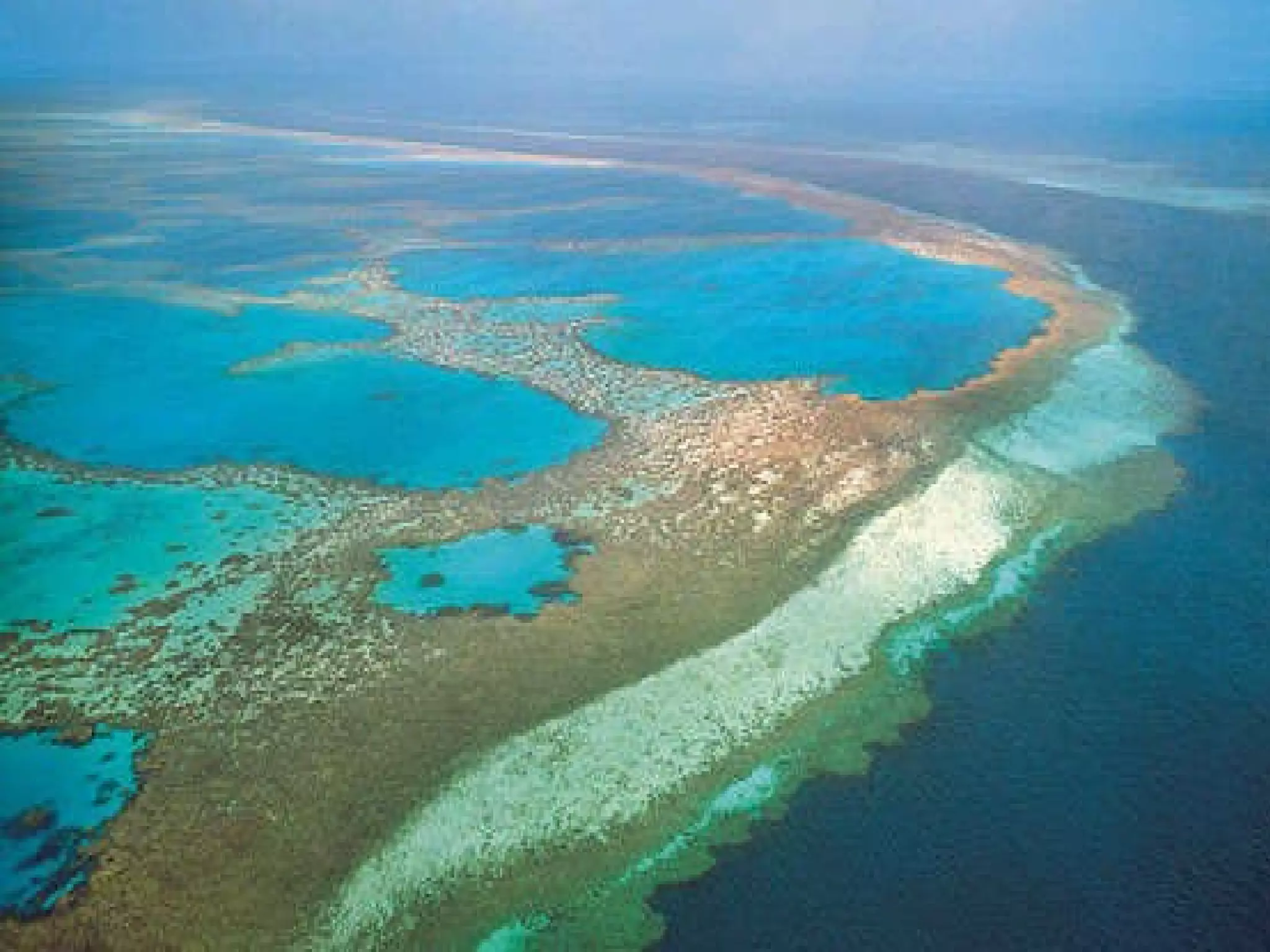
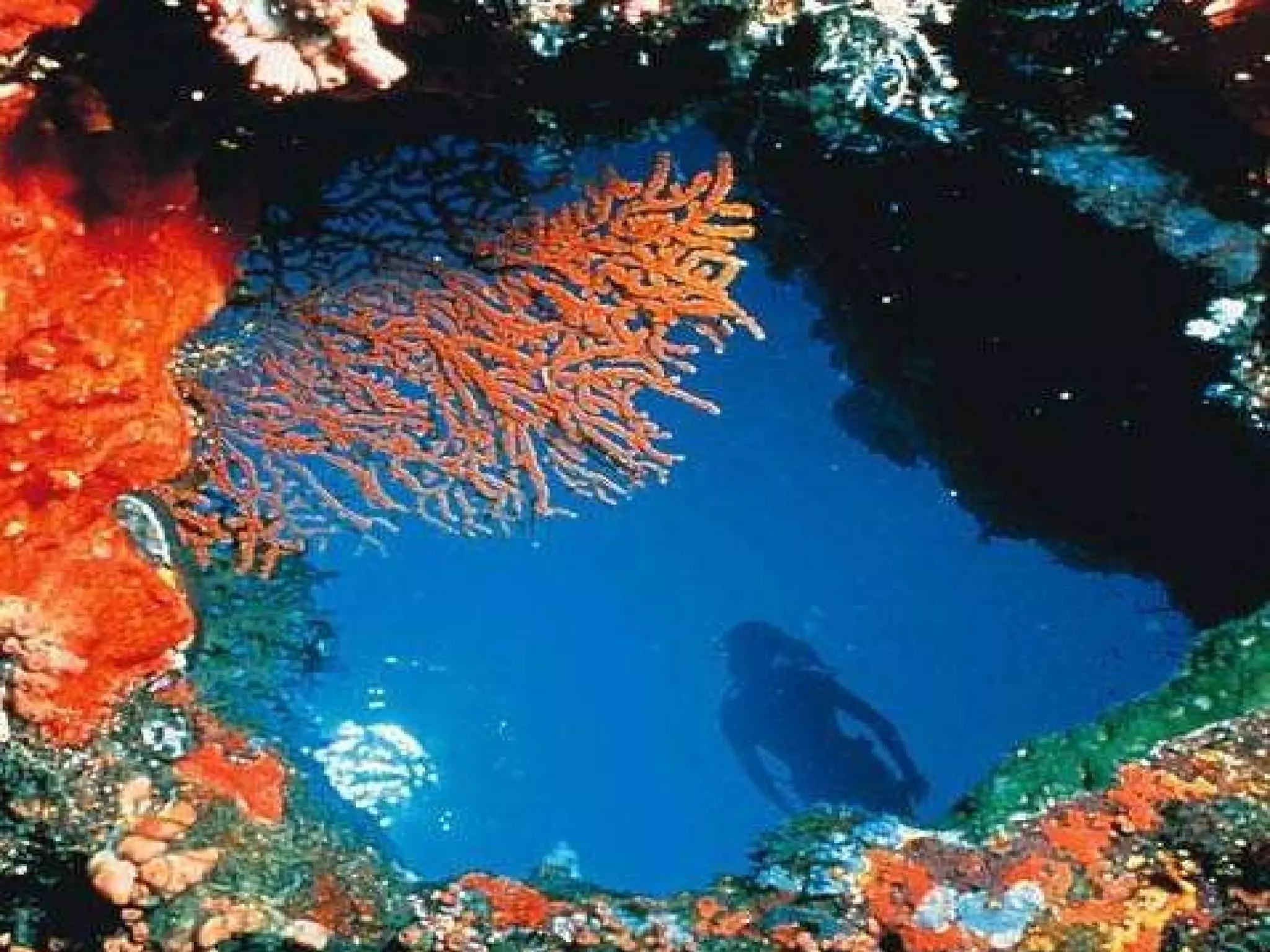
Great Barrier Reef World’s largest coral reef! Lies off the northeast coast of Queensland--over 1,200 miles long Contains an amazing variety of marine life, including the world’s largest collection of coral 400 types of coral, 1,500 species of fish, & 4,000 mollusks (snails, clams, octopi, & squid) Also includes rare species like the sea cow and the large green turtle
Great Barrier Reef from space
 
 
Coral Sea An important source of coral for the Great Barrier Reef Part of the Pacific Ocean Off the northeast coast of Australia When the earth’s crust moved millions of years ago, it created the Coral Sea and the Great Dividing Range (largest mountain range in Australia) Coral Sea islands are scattered over thousands of miles of ocean--no one lives on the islands except for a small group of weather specialists
 
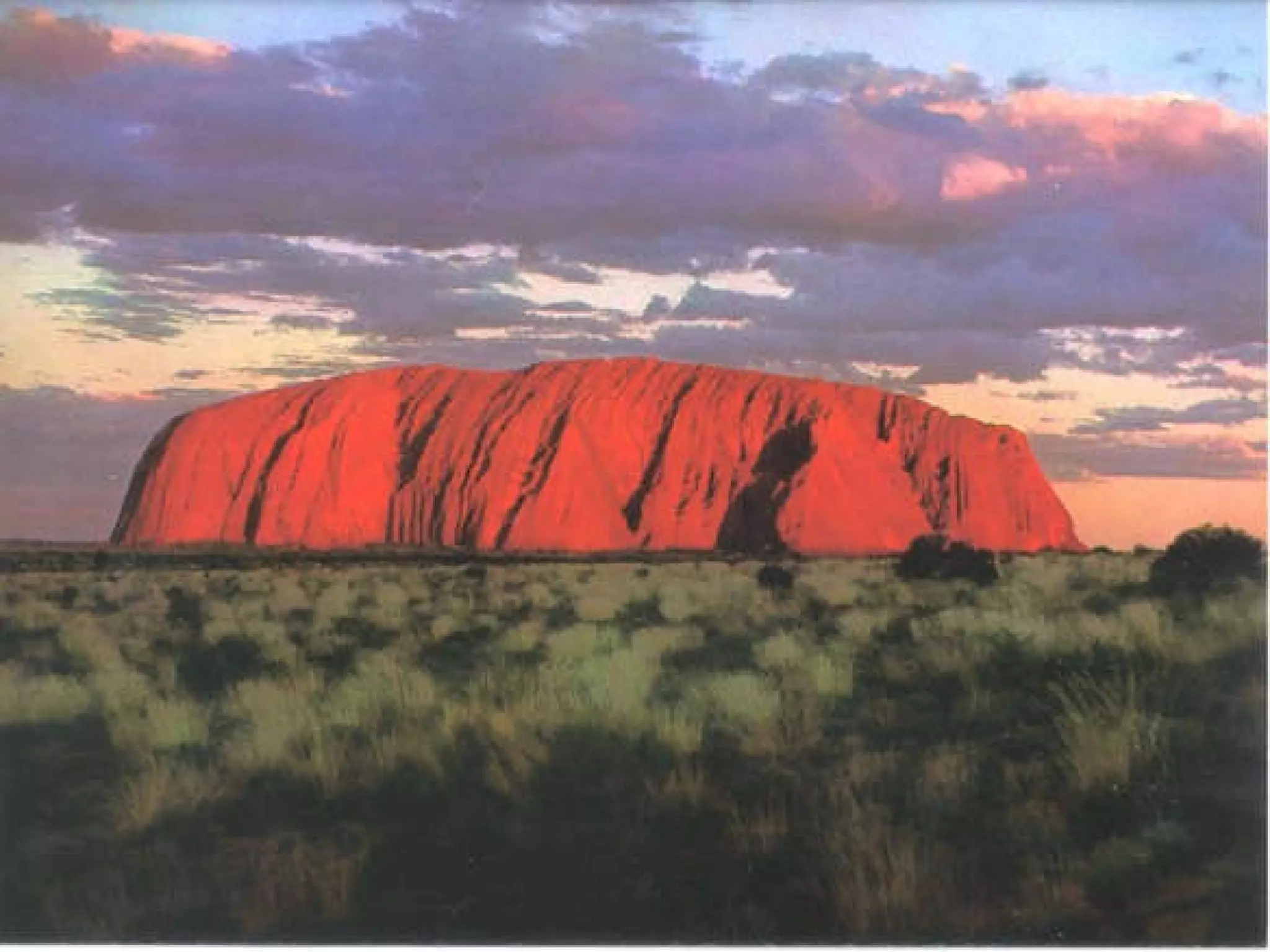
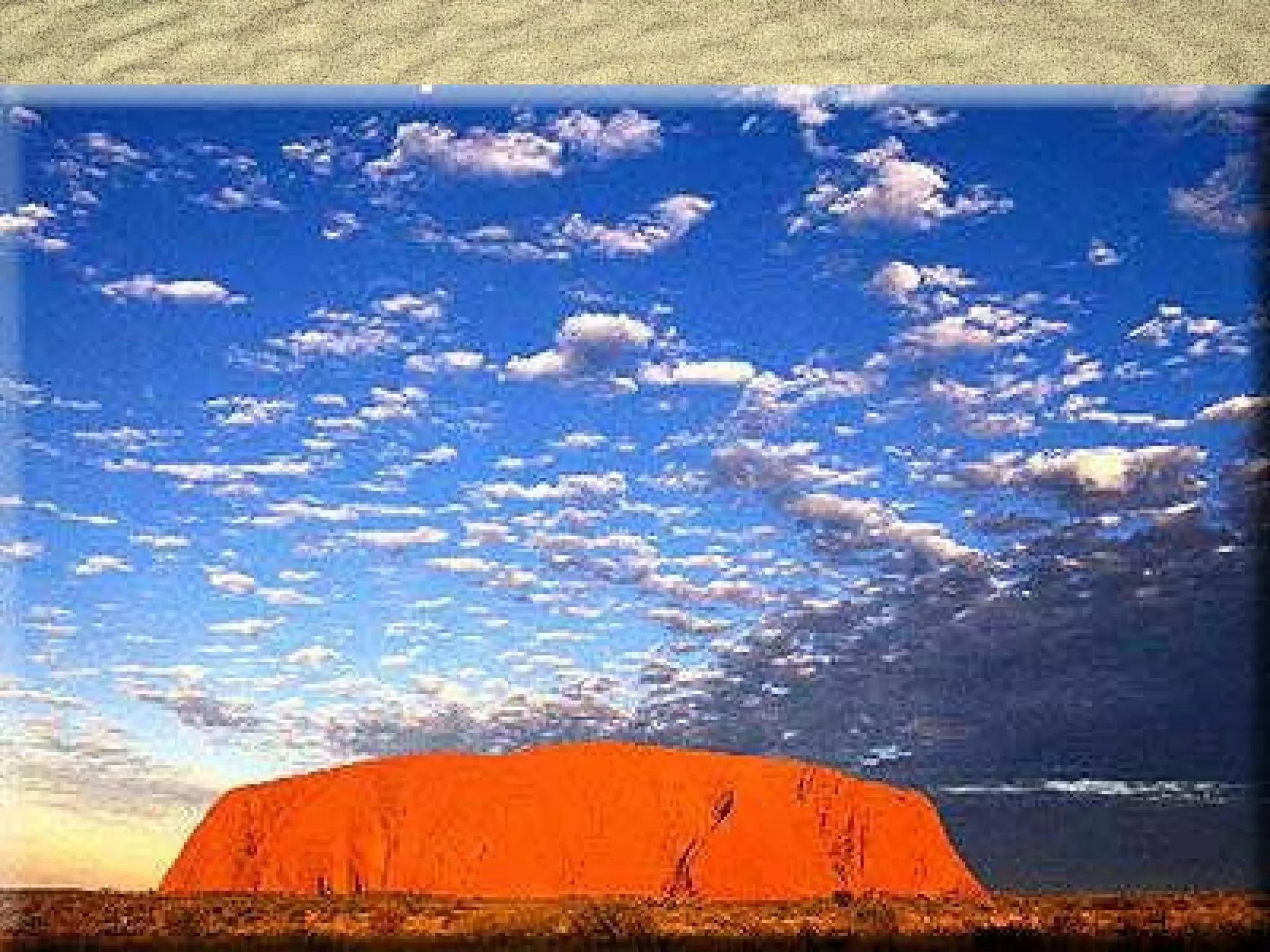
Ayers Rock A huge, reddish rock in the center of Australia Very close to the geographic center of the continent… It’s a  monolith , which is a single, large rock sticking out of the earth Appears reddish because its iron content “rusts” at the surface Nearly 12 stories high and almost 6 miles wide!
 
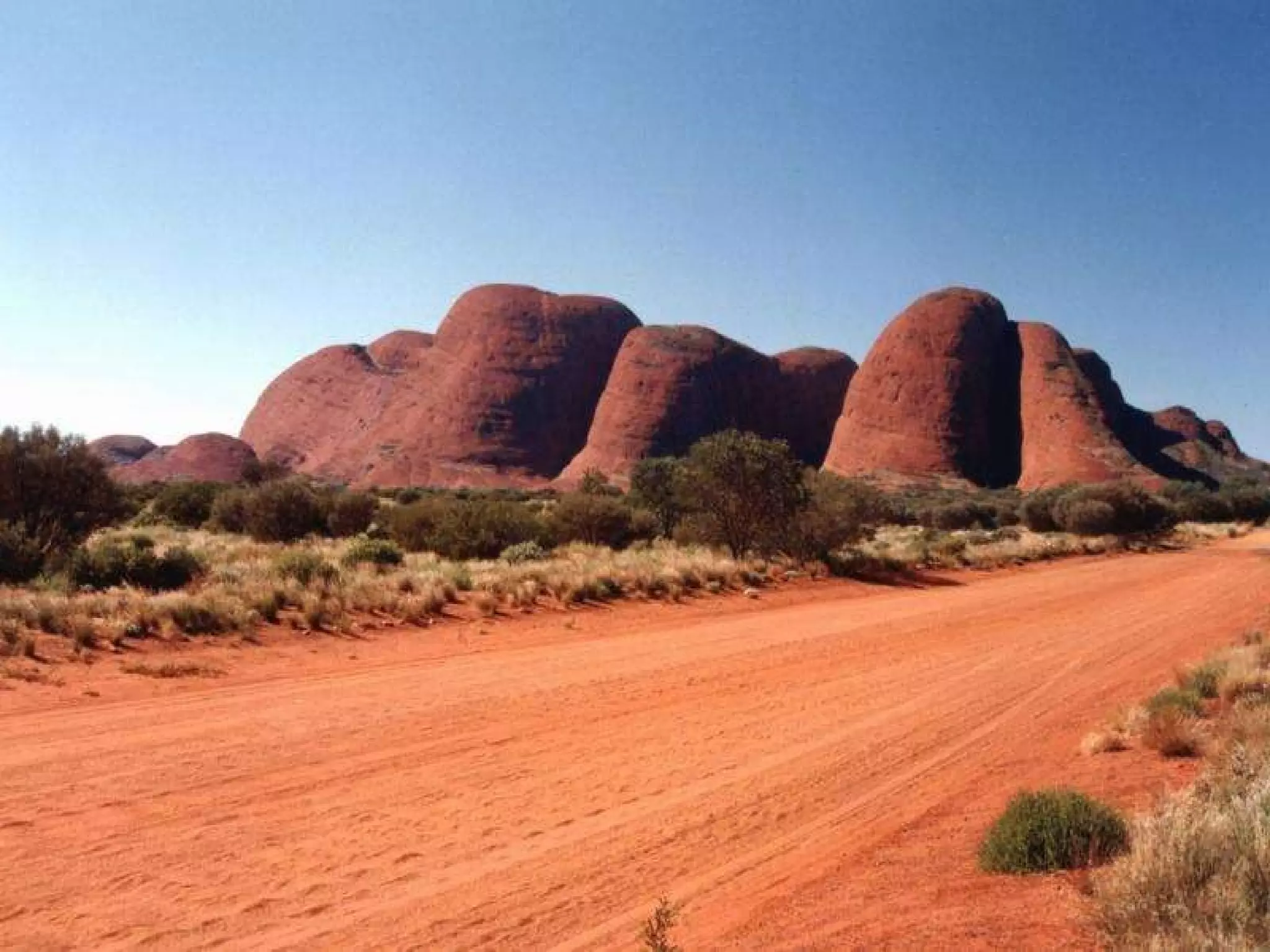
Ayers Rock Aborigines call it “Uluru”, which is its official name European surveyor visited the rock in 1873 and named it after Sir Henry Ayers, an English government official in South Australia In 1950, Australia created Uluru-Kata Tjuta National Park around Ayers Rock Both are located in the southwest corner of the state called Northern Territory
 
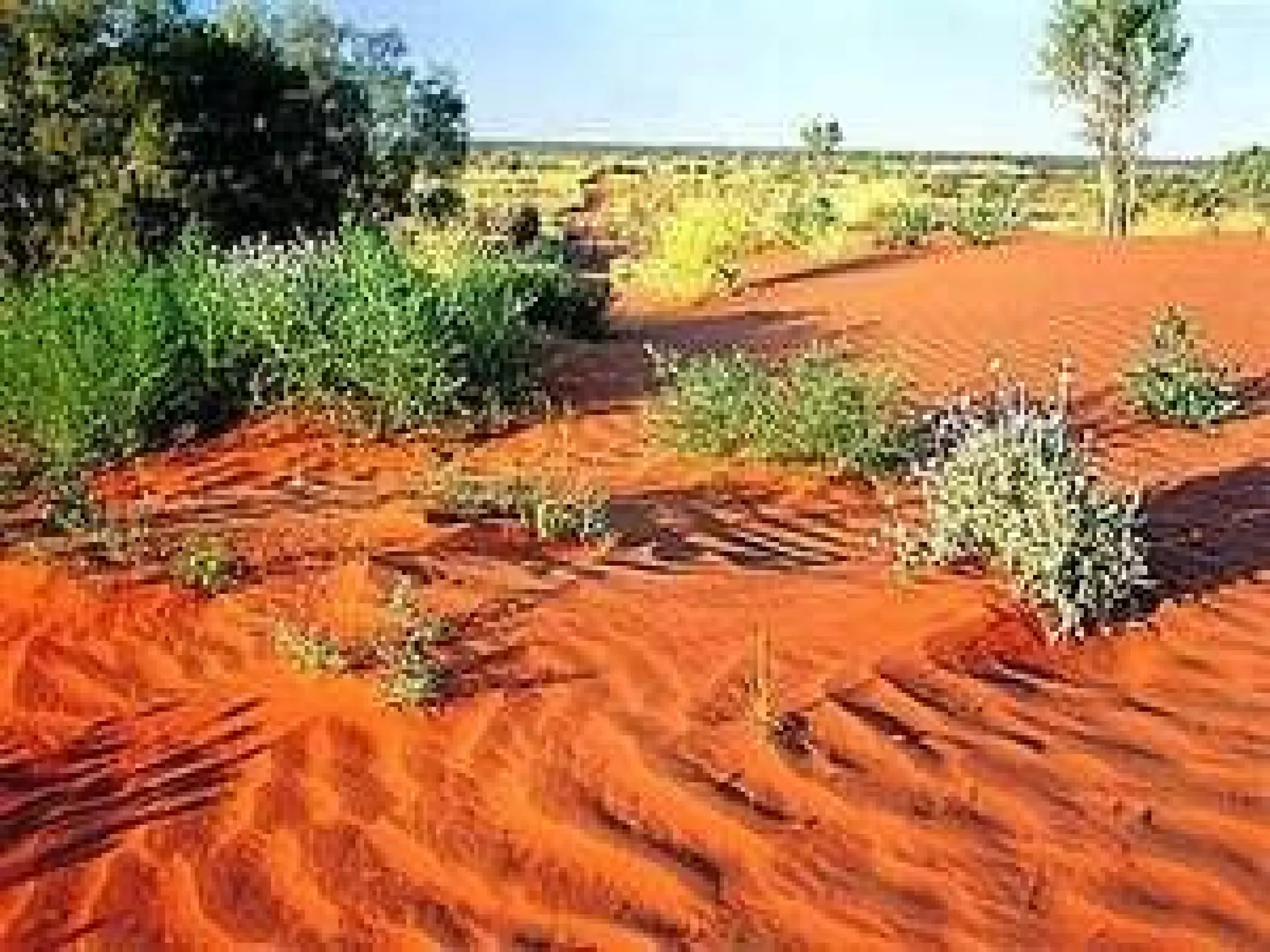
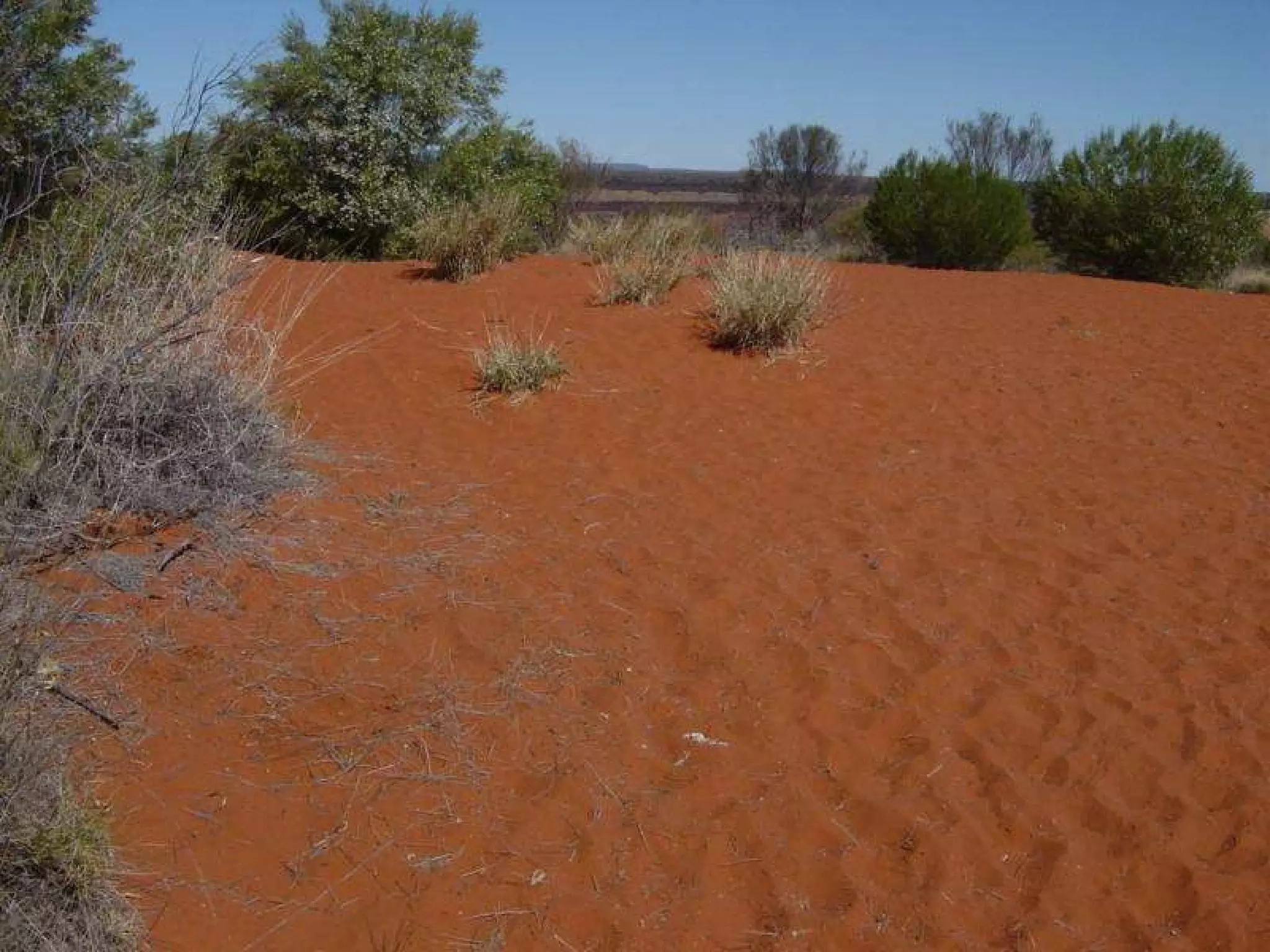
Great Victoria Desert Stretches through the states of South Australia and Western Australia Receives only 8 to 10 inches of rain each year, and it never snows! Some grasslands in the desert along with sandhills and salt
 
Great Victoria Desert First Europeans to cross the desert named it after British Queen Victoria in 1875 160,000 miles long & is a protected wilderness area Very few Australians live here because it’s too hot and dry
 

Physical Features Of Australia 08 09

  • 1.
    Political & PhysicalFeatures of Australia Unit 10 Notes
  • 2.
  • 3.
    Australia… Is dividedinto territories and states: States: Tasmania, Victoria, South Australia, Western Australia, New South Wales, Queensland Territories: Northern Territory and Australian Capital Territory
  • 4.
  • 5.
    Tasmania Island offthe southeast coast of the mainland Almost half of Tasmania is unspoiled land that is protected by the government
  • 6.
  • 7.
  • 8.
  • 9.
    Victoria State closestto Tasmania Southeast part of the mainland Capital is Melbourne; it’s the most urban state in Australia The many rivers of the region are a good source of fresh water for farming
  • 10.
  • 11.
  • 12.
    South Australia Statein south-central Australia The Great Victoria Desert is located here…
  • 13.
  • 14.
  • 15.
    Western Australia Largeststate; makes up 1/3rd of the mainland Most of Western Australia is desert (Great Victoria Desert and Great Sandy Desert are located here)
  • 16.
  • 17.
    New South WalesNorth of Victoria, on the eastern coast Has more people than any other Australian state The capital, Sydney, is the most populated city in Australia -- 3 1/2 million people live there! Australian Capital Territory is located here
  • 18.
  • 19.
    Queensland Second largeststate; 7 times the size of England! In the northeastern part of the mainland Great Barrier Reef is located off the coast in the Coral Sea More than half of Queensland’s population lives in the capital: Brisbane
  • 20.
  • 21.
  • 22.
    Northern Territory Northerncoast of the mainland, between Western Australia and Queensland Largest population of Aborigines in Australia
  • 23.
  • 24.
    Australian Capital TerritoryLocated in New South Wales The national capital, Canberra , is located here
  • 25.
  • 26.
  • 27.
    Australia… The onlycountry on the world’s smallest and flattest continent… Has Earth’s oldest and least fertile soils Only Antarctica receives less rainfall! Commonwealth of Australia also includes Tasmania, an island south of the mainland It’s surrounded by the Indian and Pacific Oceans
  • 28.
    Huge desert plainsstretch across the country’s middle--central Australia’s climate is hot and dry Milder climates along the southeastern and southwestern coasts Most Australians live in the southeastern coastal region
  • 29.
    Great Barrier ReefWorld’s largest coral reef! Lies off the northeast coast of Queensland--over 1,200 miles long Contains an amazing variety of marine life, including the world’s largest collection of coral 400 types of coral, 1,500 species of fish, & 4,000 mollusks (snails, clams, octopi, & squid) Also includes rare species like the sea cow and the large green turtle
  • 30.
  • 31.
  • 32.
  • 33.
    Coral Sea Animportant source of coral for the Great Barrier Reef Part of the Pacific Ocean Off the northeast coast of Australia When the earth’s crust moved millions of years ago, it created the Coral Sea and the Great Dividing Range (largest mountain range in Australia) Coral Sea islands are scattered over thousands of miles of ocean--no one lives on the islands except for a small group of weather specialists
  • 34.
  • 35.
    Ayers Rock Ahuge, reddish rock in the center of Australia Very close to the geographic center of the continent… It’s a monolith , which is a single, large rock sticking out of the earth Appears reddish because its iron content “rusts” at the surface Nearly 12 stories high and almost 6 miles wide!
  • 36.
  • 37.
    Ayers Rock Aboriginescall it “Uluru”, which is its official name European surveyor visited the rock in 1873 and named it after Sir Henry Ayers, an English government official in South Australia In 1950, Australia created Uluru-Kata Tjuta National Park around Ayers Rock Both are located in the southwest corner of the state called Northern Territory
  • 38.
  • 39.
    Great Victoria DesertStretches through the states of South Australia and Western Australia Receives only 8 to 10 inches of rain each year, and it never snows! Some grasslands in the desert along with sandhills and salt
  • 40.
  • 41.
    Great Victoria DesertFirst Europeans to cross the desert named it after British Queen Victoria in 1875 160,000 miles long & is a protected wilderness area Very few Australians live here because it’s too hot and dry
  • 42.