ATTACKER
TECHNIQUES AND
MOTIVATION
Dr.M.Karthika
Head/Department of Information Technology
Mannar Thirumalai Naicker College(Autonomous)
Madurai.
Contents
How Hackers cover their racks (Anti forensics)
FraudTechniques
Threat Infrastructure
What we are going to see
How hackers cover their
tracks(Antiforensics)
Tunneling Techniques Threat Infrastructure
 How and why Attackers use
proxies
 Types of Proxies
 Detecting the use of proxies
 HTTP
 DNS
 ICMP
 Intermediaries,steganography
and other concepts
 Detection and Prevention
 Botnets
 Fast-Flux
 Advanced Fast Flux
How andWhy Attackers Use Proxies
You will… I will...
 A proxy allows actors to send network traffic
through another computer, which satisfies
requests and returns the result.
 give you directions for morning work
 assist you with questions about morning
work and check it over/discuss it with you
 be tracking respectful and responsible
student behavior with <insert behavior
system>
Whole Group Lesson
You will… I will...
 sit in your own space
 be respectful and responsible by…
 maintaining good eye contact
 being a good listener and not
interrupting
 asking questions if you do not
understand (yes, that is OK!)
 help a friend if she/he does not understand
 listen carefully to instructions for what
comes next
 be at the front of the whole class
 present a quick mini lesson on something that is
important to ALL students
 answer any questions you may have
 allow you to have discussions with your
classmates about what we are learning (just wait
for my signal!)
 give directions for what comes next
 be tracking respectful and responsible student
behavior as I work with my small groups with
<insert behavior system>
Small Groups & Rotations
You will… I will...
 go to each station in which you have work to
complete or to which you have been assigned
 complete all work at your station quietly and
carefully
 ask three (3) peers for help before asking <insert
teacher’s name> (YES! It is OK to ask questions!)
 use <insert teacher’s name>’s system for asking
questions if <she/he> is with a small group
 <insert what students should do if they are stuck
on something but can not speak to you>
 be working with a small group of students
 work with individual students on specific
skills
 answer your questions after you have asked
three (3) peers and <insert your system for
asking you a question>
 be tracking respectful and responsible
student behavior as I work with my small
groups with <insert behavior system>
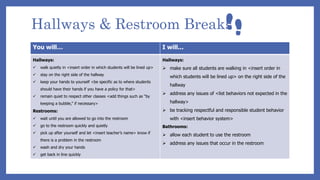
Hallways & Restroom Breaks
You will… I will...
Hallways:
 walk quietly in <insert order in which students will be lined up>
 stay on the right side of the hallway
 keep your hands to yourself <be specific as to where students
should have their hands if you have a policy for that>
 remain quiet to respect other classes <add things such as “by
keeping a bubble,” if necessary>
Restrooms:
 wait until you are allowed to go into the restroom
 go to the restroom quickly and quietly
 pick up after yourself and let <insert teacher’s name> know if
there is a problem in the restroom
 wash and dry your hands
 get back in line quickly
Hallways:
 make sure all students are walking in <insert order in
which students will be lined up> on the right side of the
hallway
 address any issues of <list behaviors not expected in the
hallway>
 be tracking respectful and responsible student behavior
with <insert behavior system>
Bathrooms:
 allow each student to use the restroom
 address any issues that occur in the restroom
Lunchroom
You will… I will...
 walk into the lunchroom in <insert order in which
students will be lined up>
 stay in the lunch line quietly (It is OK to talk, just be
sure to whisper!)
 keep your hands to yourself
 sit next to friends that help you make great decisions or
classmates you would like to get to know
 talk to friends right next to you and use an indoor voice
 stay in your seat unless you have permission to get up
 keep your lunch area clean
 not play with food or waste food you do not want to eat
(It is OK if you do not want to eat something)
 line up when <insert teacher’s name> arrives or you are
dismissed
 remind you of all lunchroom rules
 walk you to the lunchroom on time in
<insert order in which students will be lined
up>
 make sure you are in the correct lunch line
or at our lunch table before leaving
 eat my lunch <insert where you will be for
lunch>
 pick the class up on time at <insert where
you will pick your students up after lunch>
Recess
You will… I will...
 HAVE FUN by…
 playing on the playground equipment
 inventing a game
 exploring nature
 reading your favorite book
 chatting with a buddy
 drawing/writing
 resting in the shade
 doing anything else that is safe and allows you to
enjoy your break!
 *if necessary* follow through with <insert teacher’s
name> consequence for your misbehavior
 be monitoring the class to make sure you
all are safe
 give you logical consequences for
misbehavior during recess
 <list consequences for misbehavior>
 make sure all students are lined up quickly
and safely when it is time to go inside
Dismissal
You will… I will...
 make sure your space is clean and organized
 complete your class job if you have one
 make sure you have your homework or the directions for
homework
 have <insert teacher’s name> sign off on your behavior
<folder/sheet> and place it in your backpack
 sit quietly until you are dismissed (Is it OK to talk?
Absolutely! Just make sure you are using a whisper
voice so we can hear all announcements!)
 say goodbye to <insert teacher’s name> and your
friends as you leave
 look to make sure all student spaces are
clean and organized
 make sure you are completing your class
job, if you have one
 sign off on your behavior <folder/sheet>
 <insert what you will do during dismissal…
will you be reading to them, talking to them
about their day, doing work, etc.?>

ATTACKER TECHNIQUES AND MOTIVATION.pptx

  • 1.
    ATTACKER TECHNIQUES AND MOTIVATION Dr.M.Karthika Head/Department ofInformation Technology Mannar Thirumalai Naicker College(Autonomous) Madurai.
  • 2.
    Contents How Hackers covertheir racks (Anti forensics) FraudTechniques Threat Infrastructure
  • 3.
    What we aregoing to see How hackers cover their tracks(Antiforensics) Tunneling Techniques Threat Infrastructure  How and why Attackers use proxies  Types of Proxies  Detecting the use of proxies  HTTP  DNS  ICMP  Intermediaries,steganography and other concepts  Detection and Prevention  Botnets  Fast-Flux  Advanced Fast Flux
  • 4.
    How andWhy AttackersUse Proxies You will… I will...  A proxy allows actors to send network traffic through another computer, which satisfies requests and returns the result.  give you directions for morning work  assist you with questions about morning work and check it over/discuss it with you  be tracking respectful and responsible student behavior with <insert behavior system>
  • 5.
    Whole Group Lesson Youwill… I will...  sit in your own space  be respectful and responsible by…  maintaining good eye contact  being a good listener and not interrupting  asking questions if you do not understand (yes, that is OK!)  help a friend if she/he does not understand  listen carefully to instructions for what comes next  be at the front of the whole class  present a quick mini lesson on something that is important to ALL students  answer any questions you may have  allow you to have discussions with your classmates about what we are learning (just wait for my signal!)  give directions for what comes next  be tracking respectful and responsible student behavior as I work with my small groups with <insert behavior system>
  • 6.
    Small Groups &Rotations You will… I will...  go to each station in which you have work to complete or to which you have been assigned  complete all work at your station quietly and carefully  ask three (3) peers for help before asking <insert teacher’s name> (YES! It is OK to ask questions!)  use <insert teacher’s name>’s system for asking questions if <she/he> is with a small group  <insert what students should do if they are stuck on something but can not speak to you>  be working with a small group of students  work with individual students on specific skills  answer your questions after you have asked three (3) peers and <insert your system for asking you a question>  be tracking respectful and responsible student behavior as I work with my small groups with <insert behavior system>
  • 7.
    Hallways & RestroomBreaks You will… I will... Hallways:  walk quietly in <insert order in which students will be lined up>  stay on the right side of the hallway  keep your hands to yourself <be specific as to where students should have their hands if you have a policy for that>  remain quiet to respect other classes <add things such as “by keeping a bubble,” if necessary> Restrooms:  wait until you are allowed to go into the restroom  go to the restroom quickly and quietly  pick up after yourself and let <insert teacher’s name> know if there is a problem in the restroom  wash and dry your hands  get back in line quickly Hallways:  make sure all students are walking in <insert order in which students will be lined up> on the right side of the hallway  address any issues of <list behaviors not expected in the hallway>  be tracking respectful and responsible student behavior with <insert behavior system> Bathrooms:  allow each student to use the restroom  address any issues that occur in the restroom
  • 8.
    Lunchroom You will… Iwill...  walk into the lunchroom in <insert order in which students will be lined up>  stay in the lunch line quietly (It is OK to talk, just be sure to whisper!)  keep your hands to yourself  sit next to friends that help you make great decisions or classmates you would like to get to know  talk to friends right next to you and use an indoor voice  stay in your seat unless you have permission to get up  keep your lunch area clean  not play with food or waste food you do not want to eat (It is OK if you do not want to eat something)  line up when <insert teacher’s name> arrives or you are dismissed  remind you of all lunchroom rules  walk you to the lunchroom on time in <insert order in which students will be lined up>  make sure you are in the correct lunch line or at our lunch table before leaving  eat my lunch <insert where you will be for lunch>  pick the class up on time at <insert where you will pick your students up after lunch>
  • 9.
    Recess You will… Iwill...  HAVE FUN by…  playing on the playground equipment  inventing a game  exploring nature  reading your favorite book  chatting with a buddy  drawing/writing  resting in the shade  doing anything else that is safe and allows you to enjoy your break!  *if necessary* follow through with <insert teacher’s name> consequence for your misbehavior  be monitoring the class to make sure you all are safe  give you logical consequences for misbehavior during recess  <list consequences for misbehavior>  make sure all students are lined up quickly and safely when it is time to go inside
  • 10.
    Dismissal You will… Iwill...  make sure your space is clean and organized  complete your class job if you have one  make sure you have your homework or the directions for homework  have <insert teacher’s name> sign off on your behavior <folder/sheet> and place it in your backpack  sit quietly until you are dismissed (Is it OK to talk? Absolutely! Just make sure you are using a whisper voice so we can hear all announcements!)  say goodbye to <insert teacher’s name> and your friends as you leave  look to make sure all student spaces are clean and organized  make sure you are completing your class job, if you have one  sign off on your behavior <folder/sheet>  <insert what you will do during dismissal… will you be reading to them, talking to them about their day, doing work, etc.?>

Editor's Notes

  • #2 Are your classroom colors different than what you see in this template? That’s OK! Click on Design -> Variants (the down arrow) -> Pick the color scheme that works for you! Feel free to change any “You will…” and “I will…” statements to ensure they align with your classroom procedures and rules!