Presentation
Sir: Amir Khan
G R O U P M E M B E R S
Laiba
eman
isha
Hoorain
kiran
Iqra
Durrey
Shehwar
gl
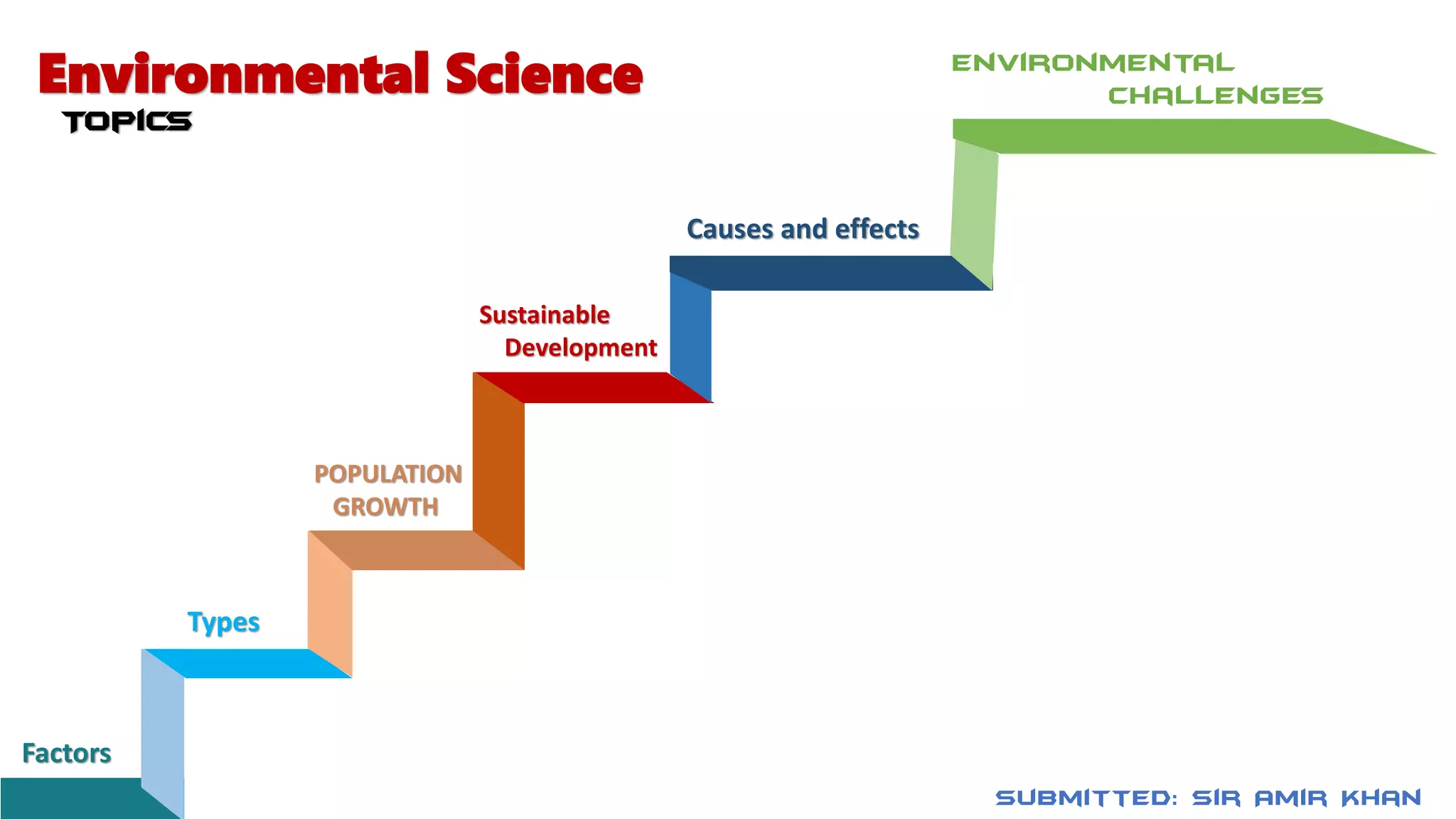
Environmental
challenges
Causes and effects
Sustainable
Development
POPULATION
GROWTH
Types
Factors
Environmental Science
Topics
Submitted: Sir Amir Khan
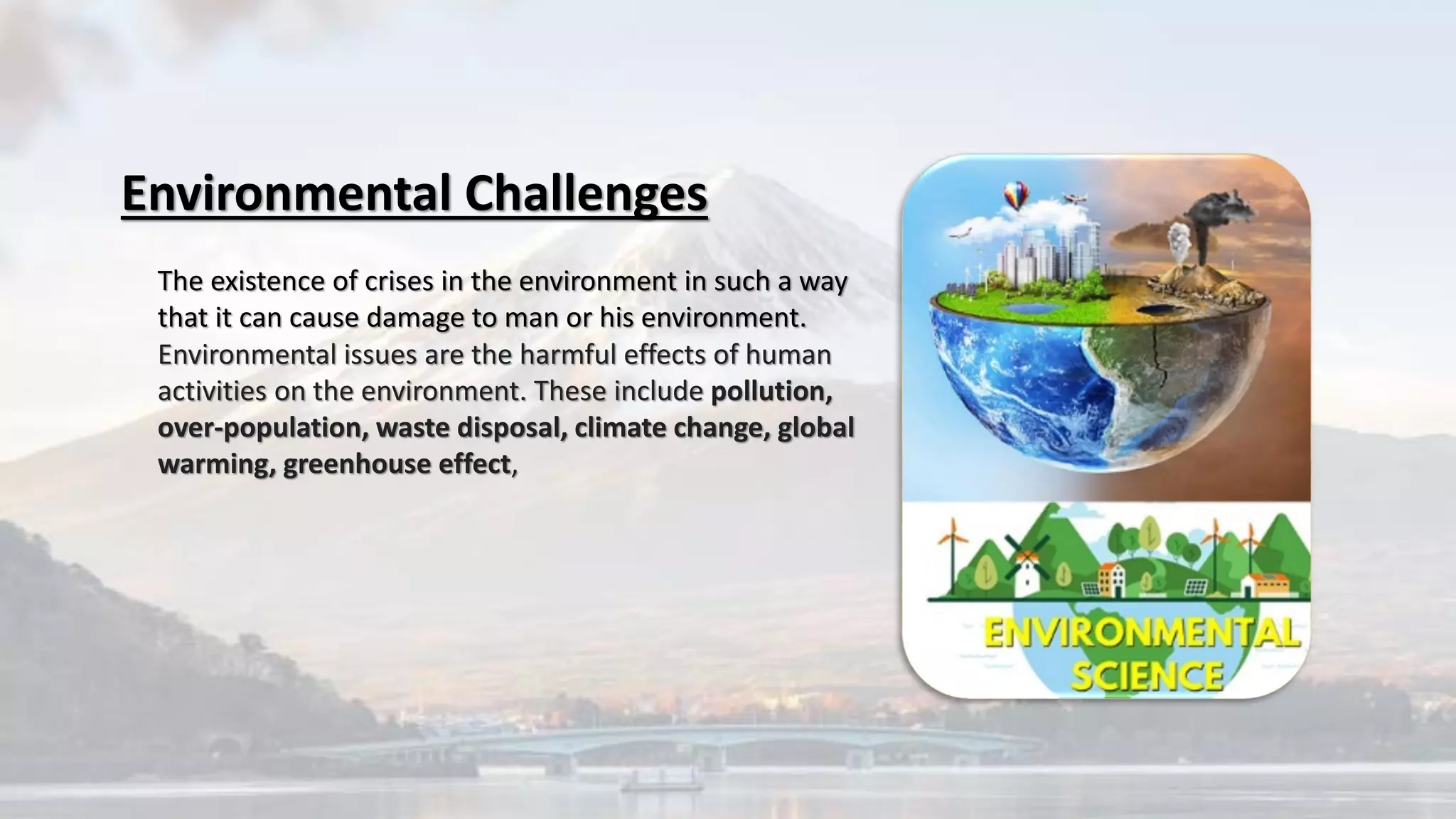
The existence of crises in the environment in such a way
that it can cause damage to man or his environment.
Environmental Challenges
Environmental issues are the harmful effects of human
activities on the environment. These include pollution,
over-population, waste disposal, climate change, global
warming, greenhouse effect,
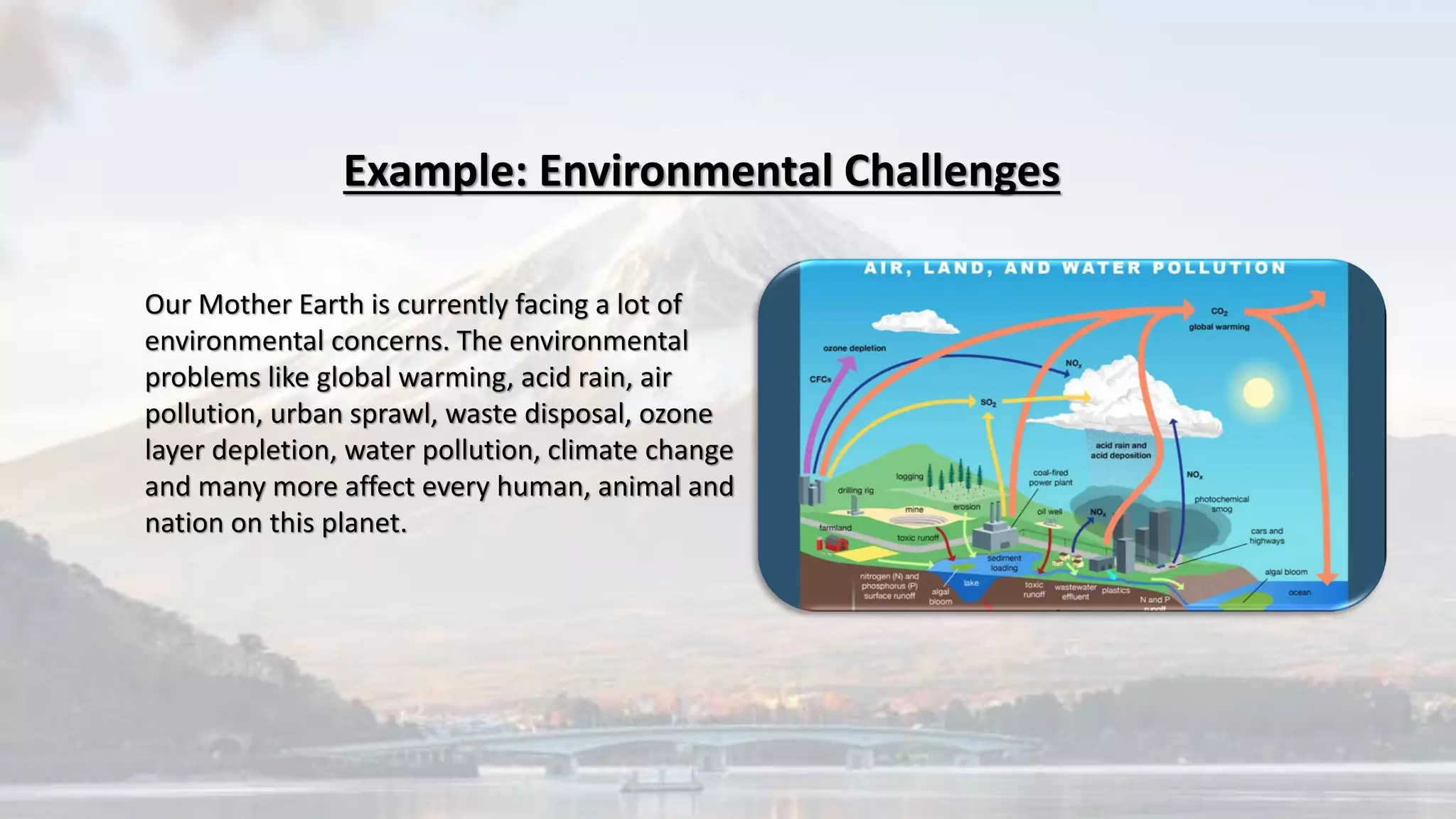
Our Mother Earth is currently facing a lot of
environmental concerns. The environmental
problems like global warming, acid rain, air
pollution, urban sprawl, waste disposal, ozone
layer depletion, water pollution, climate change
and many more affect every human, animal and
nation on this planet.
Example: Environmental Challenges
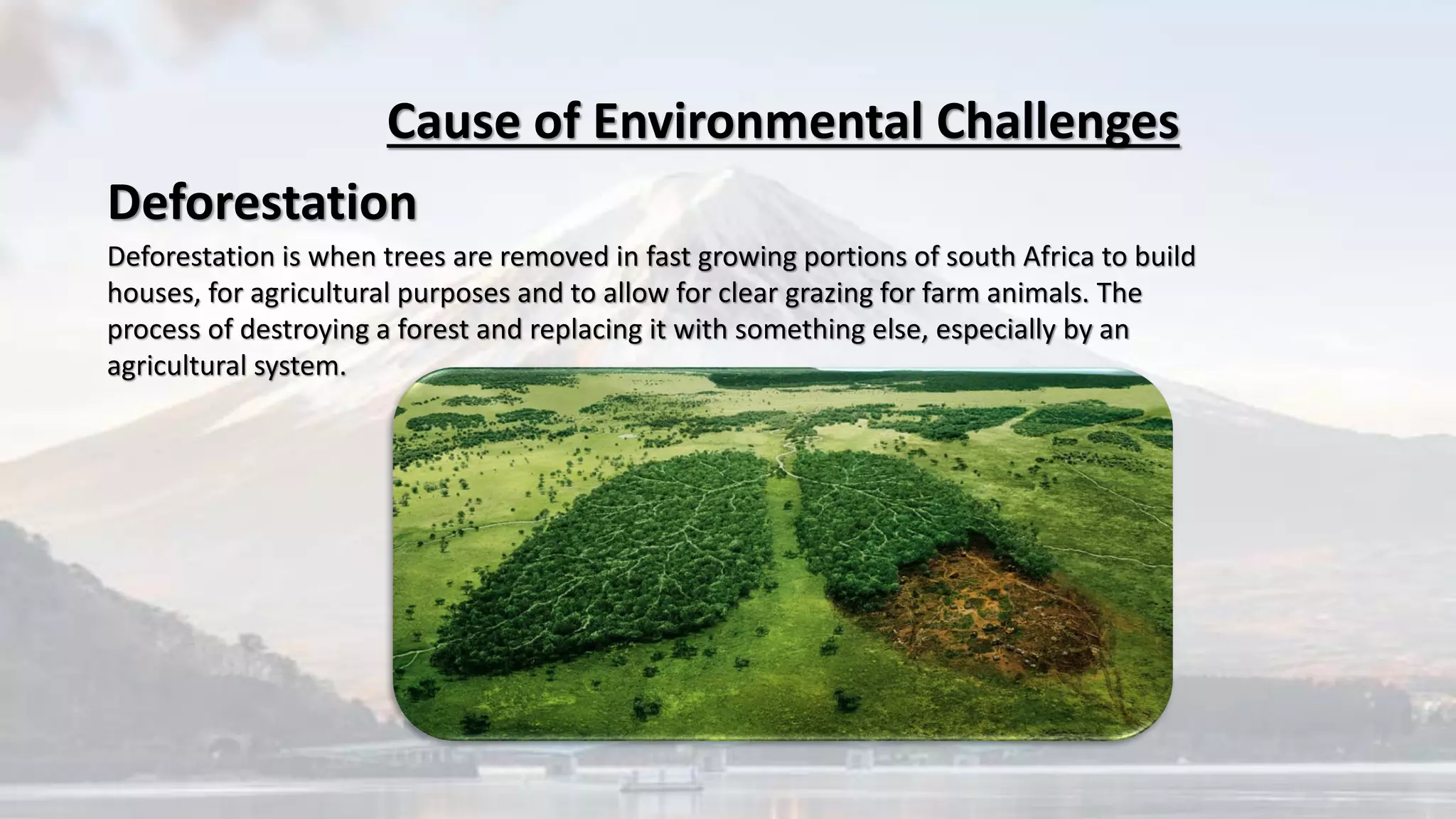
Deforestation is when trees are removed in fast growing portions of south Africa to build
houses, for agricultural purposes and to allow for clear grazing for farm animals. The
process of destroying a forest and replacing it with something else, especially by an
agricultural system.
Cause of Environmental Challenges
Deforestation
Cause of Environmental Challenges
Air Pollution
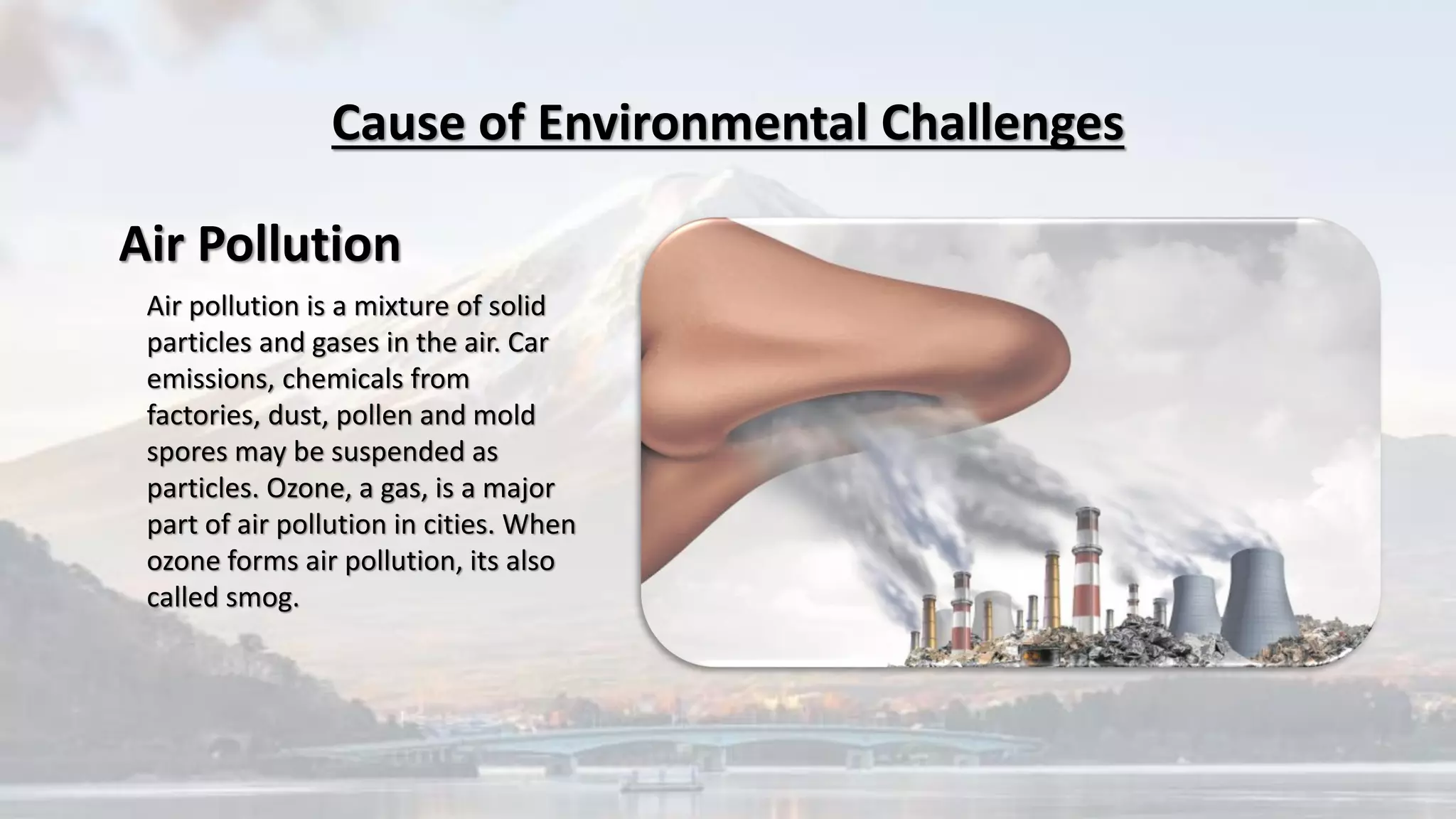
Air pollution is a mixture of solid
particles and gases in the air. Car
emissions, chemicals from
factories, dust, pollen and mold
spores may be suspended as
particles. Ozone, a gas, is a major
part of air pollution in cities. When
ozone forms air pollution, its also
called smog.
Cause of Environmental Challenges
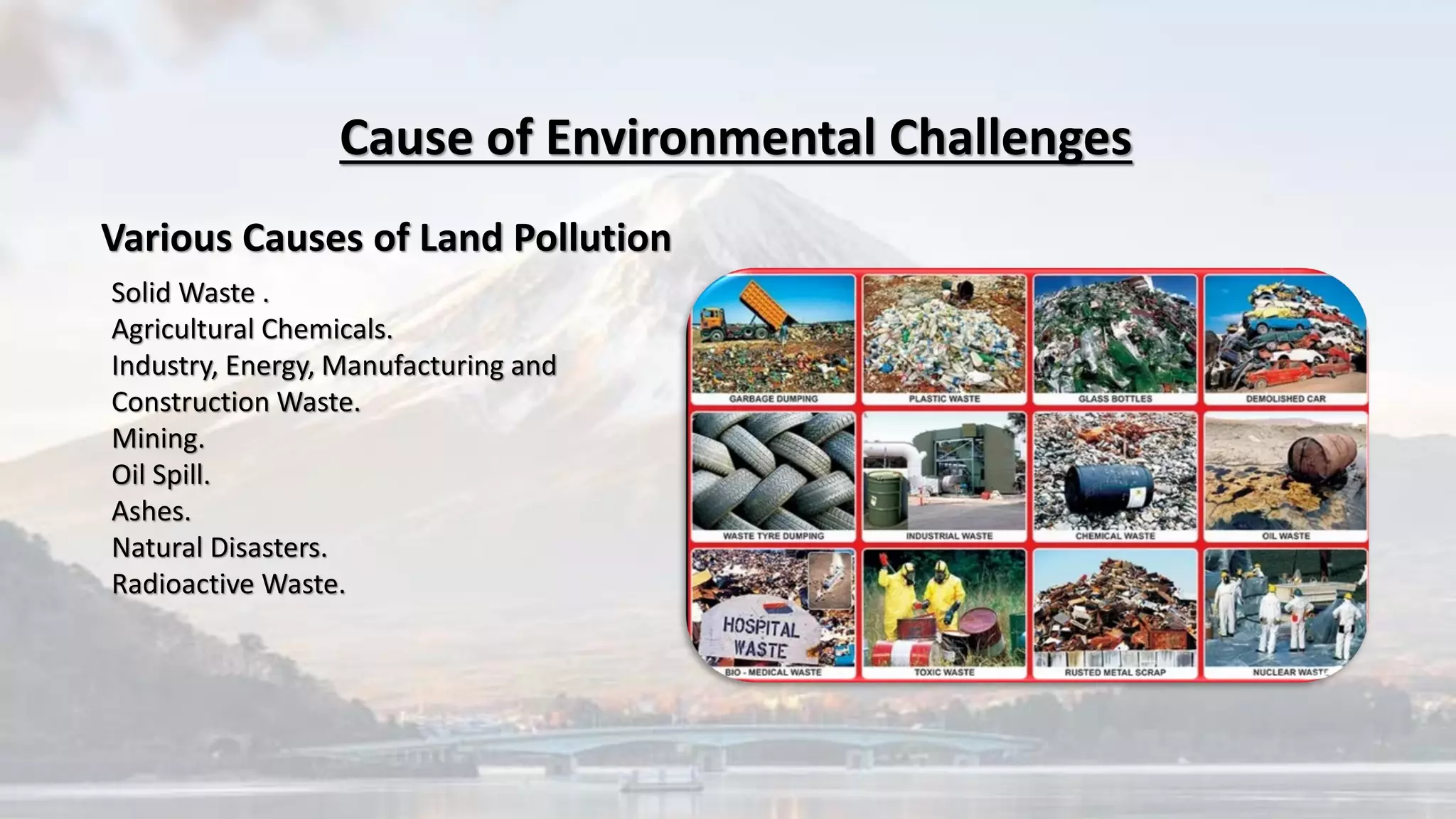
Various Causes of Land Pollution
Solid Waste .
Agricultural Chemicals.
Industry, Energy, Manufacturing and
Construction Waste.
Mining.
Oil Spill.
Ashes.
Natural Disasters.
Radioactive Waste.
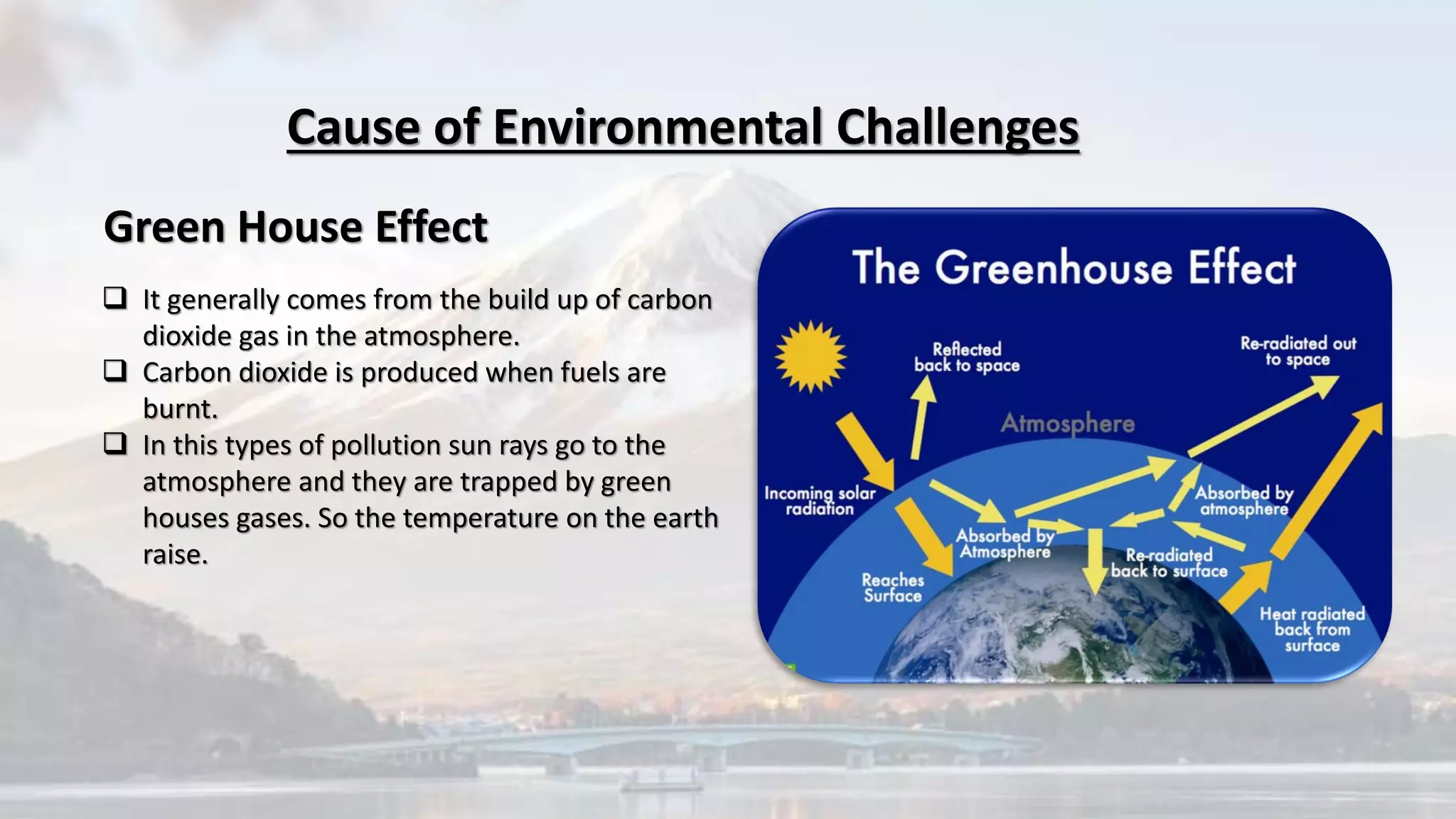
 It generally comes from the build up of carbon
dioxide gas in the atmosphere.
 Carbon dioxide is produced when fuels are
burnt.
 In this types of pollution sun rays go to the
atmosphere and they are trapped by green
houses gases. So the temperature on the earth
raise.
Cause of Environmental Challenges
Green House Effect
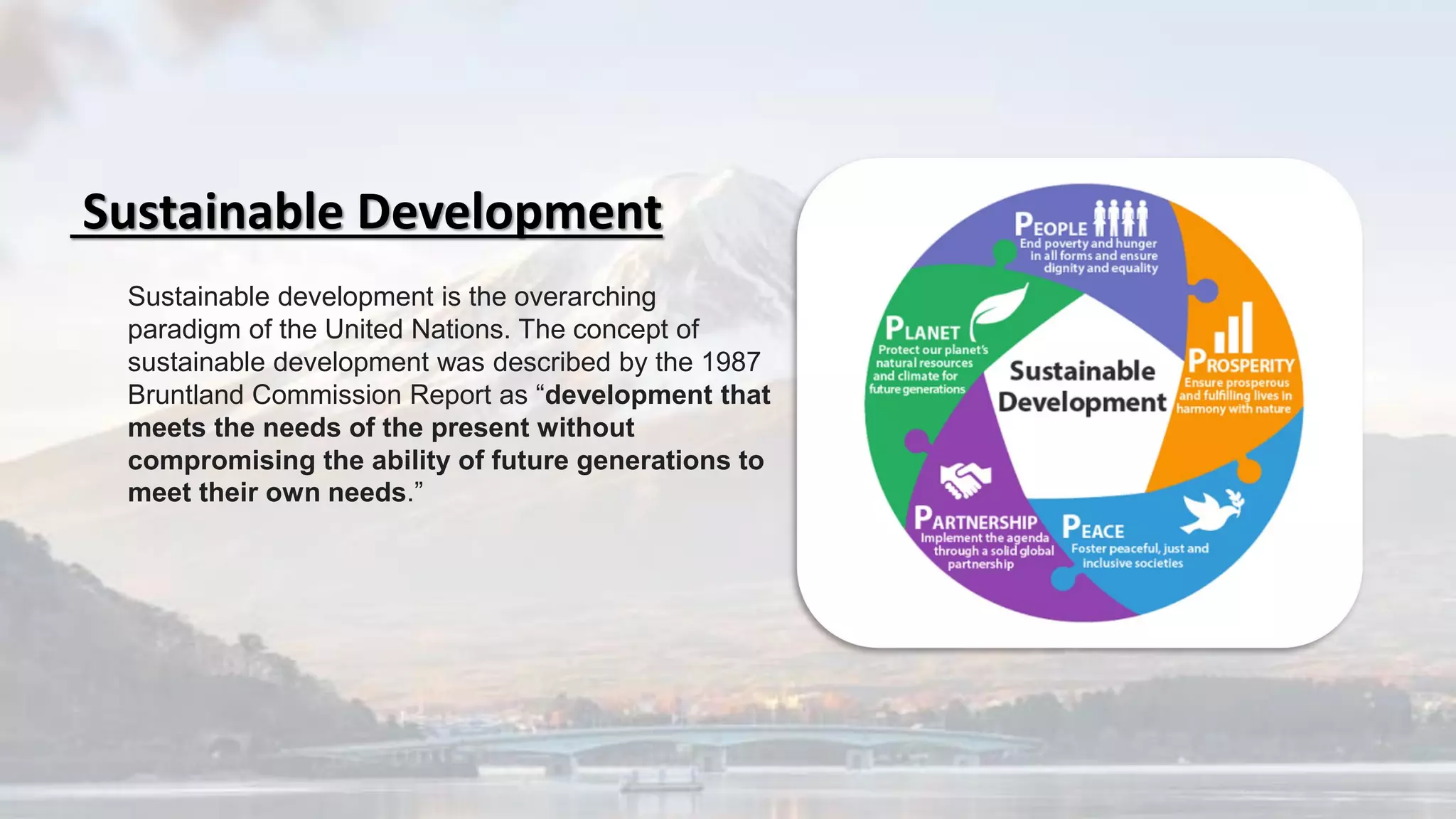
Sustainable development is the overarching
paradigm of the United Nations. The concept of
sustainable development was described by the 1987
Bruntland Commission Report as “development that
meets the needs of the present without
compromising the ability of future generations to
meet their own needs.”
Sustainable Development
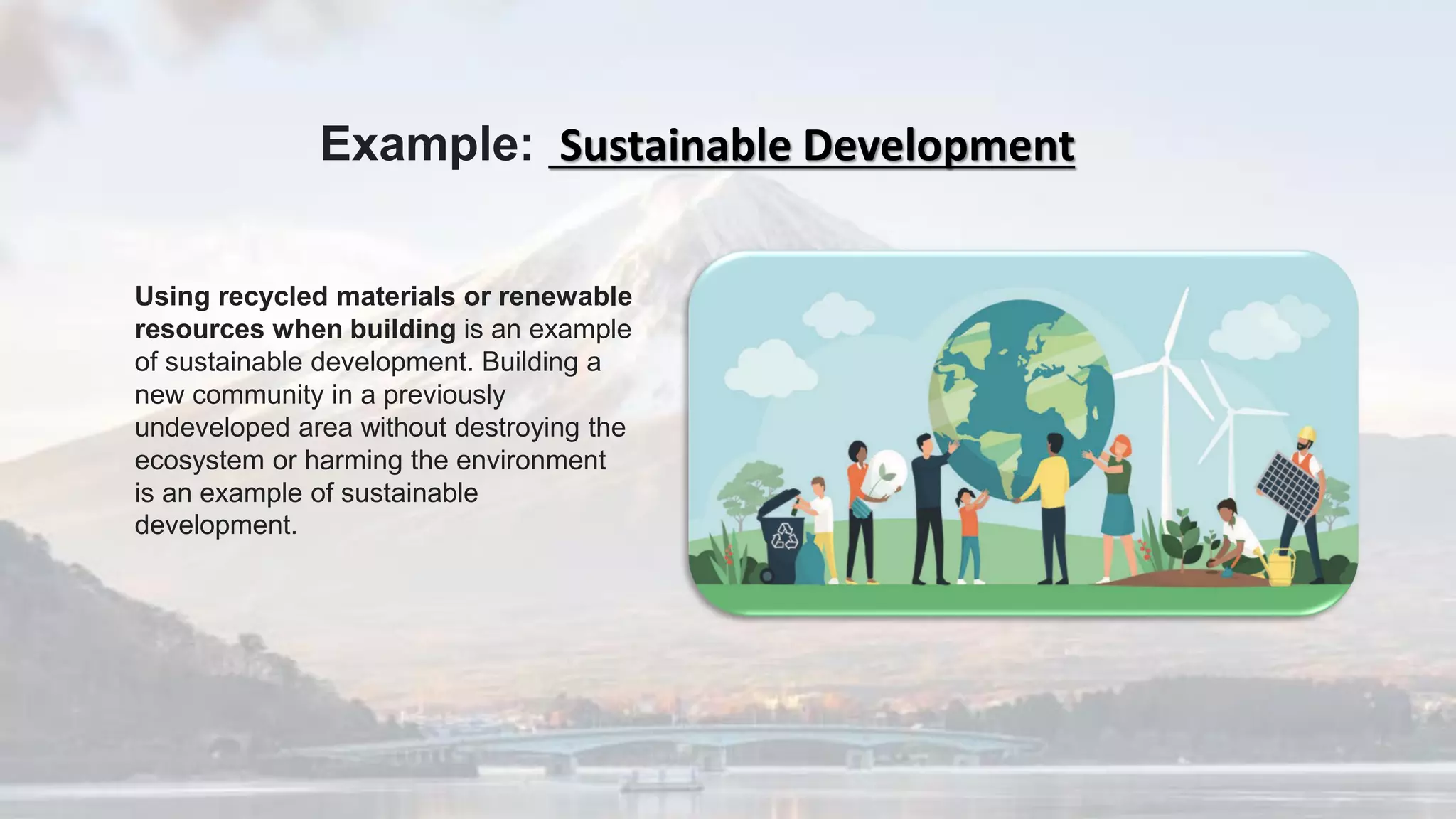
Using recycled materials or renewable
resources when building is an example
of sustainable development. Building a
new community in a previously
undeveloped area without destroying the
ecosystem or harming the environment
is an example of sustainable
development.
Example: Sustainable Development
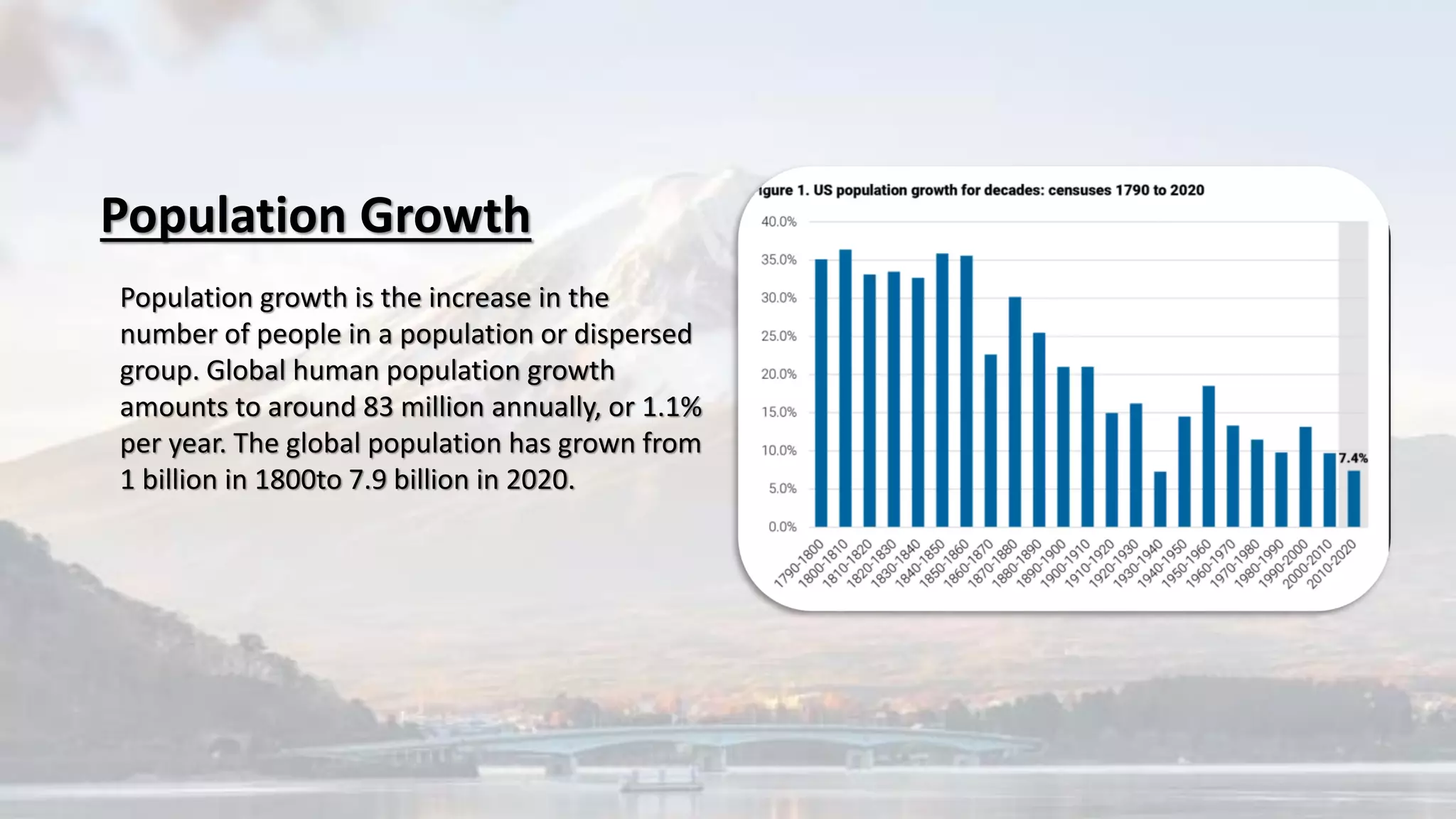
Population growth is the increase in the
number of people in a population or dispersed
group. Global human population growth
amounts to around 83 million annually, or 1.1%
per year. The global population has grown from
1 billion in 1800to 7.9 billion in 2020.
Population Growth
A group of organisms of one species
that interbreed and live in the same
place at the same time (e.g., human
population, the population of apple
trees, total population of deer in a
forest). It is a subset of total
individuals of a species that occupy a
certain geographic area in the world.
Example: Population Growth
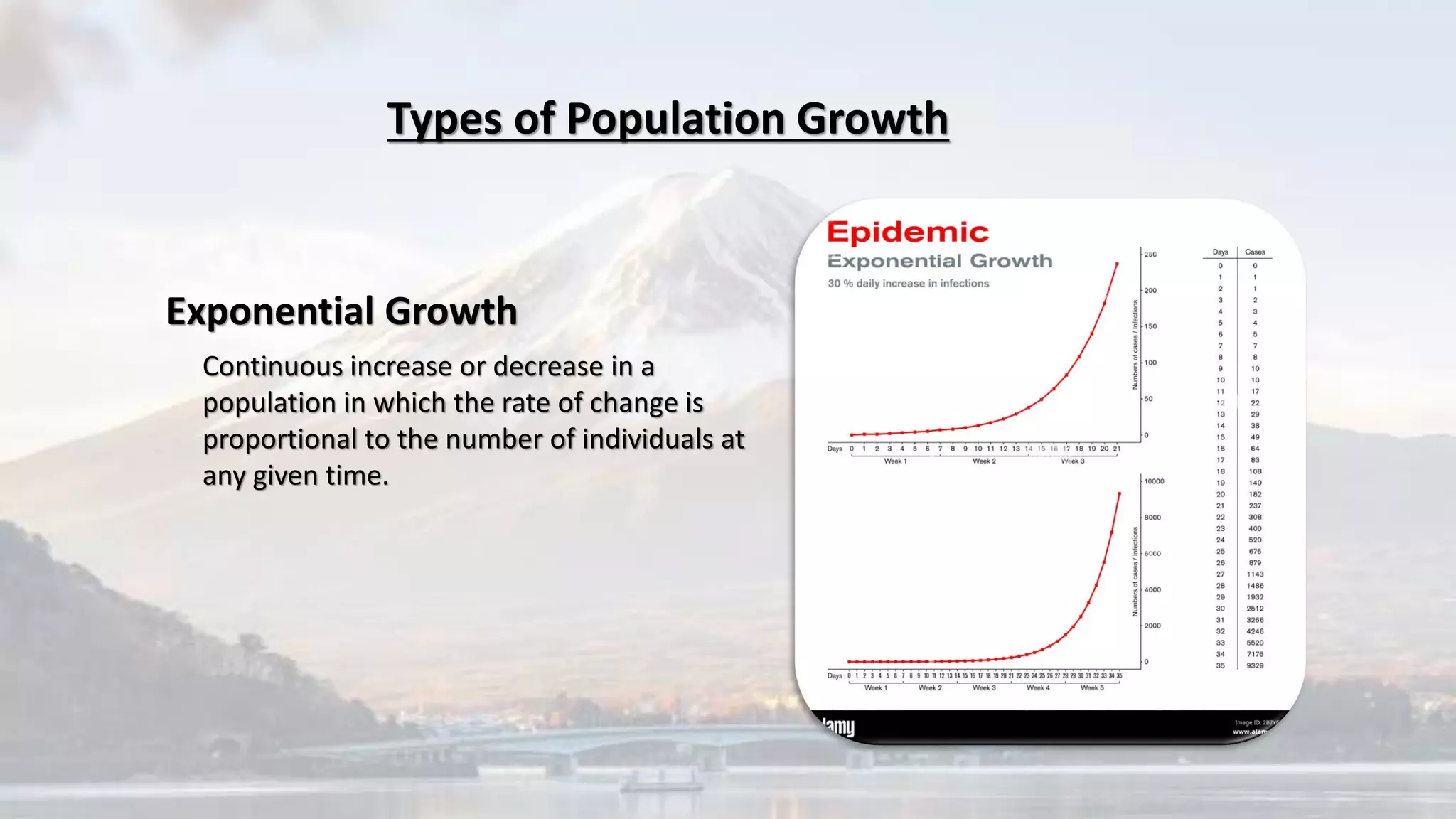
Continuous increase or decrease in a
population in which the rate of change is
proportional to the number of individuals at
any given time.
Exponential Growth
Types of Population Growth
In logistic growth, Population expansion
decreases as resources become scarce and it
levels off when the carrying capacity of the
environment is reached. The logistic growth
curve is S-shaped.
Logistic Growth
Factor of population growth
When demographers attempt to forecast changes in the size of a population, they typically
focus on four main factors: fertility rates, mortality rates (life expectancy), the initial
age profile of the population (whether it is relatively old or relatively young to begin
with) and migration
 Population growth contribute to climate change and
changing environmental sustainability growth not
only affect the developmental objectives but also
social, economic and environmental changes. The
resources provided by the earth is not sustained and
could result in degradation in the coming decades.
 Population Growth increase demand for fresh water
increases.
 Population Growth increases demand for food
increases.
 Population Growth increases demand for energy
increases.
How population growth affect sustainability?
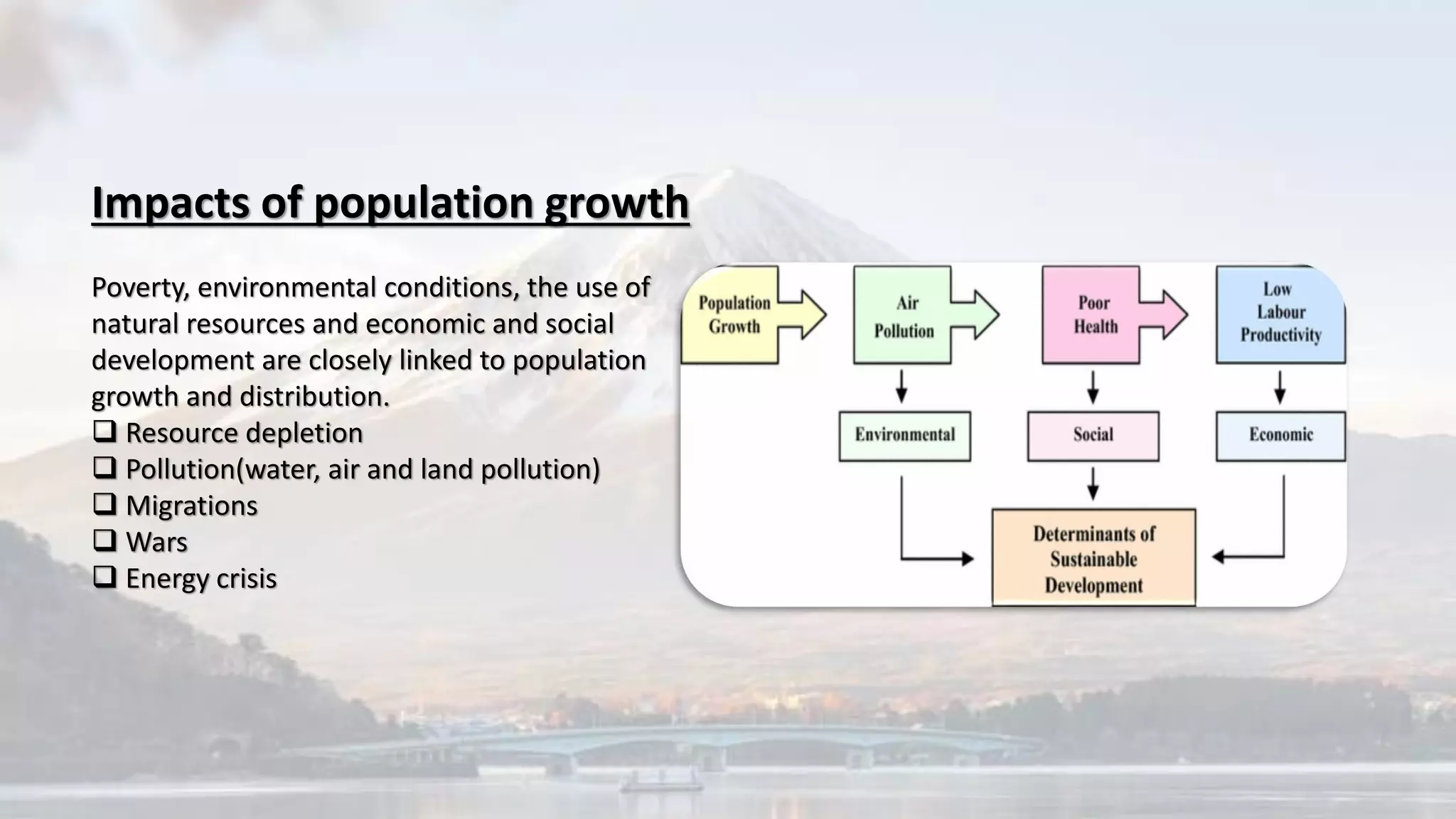
Poverty, environmental conditions, the use of
natural resources and economic and social
development are closely linked to population
growth and distribution.
 Resource depletion
 Pollution(water, air and land pollution)
 Migrations
 Wars
 Energy crisis
Impacts of population growth
Thank you

Atmosphere and population types

  • 1.
    Presentation Sir: Amir Khan GR O U P M E M B E R S Laiba eman isha Hoorain kiran Iqra Durrey Shehwar gl
  • 2.
  • 3.
    The existence ofcrises in the environment in such a way that it can cause damage to man or his environment. Environmental Challenges Environmental issues are the harmful effects of human activities on the environment. These include pollution, over-population, waste disposal, climate change, global warming, greenhouse effect,
  • 4.
    Our Mother Earthis currently facing a lot of environmental concerns. The environmental problems like global warming, acid rain, air pollution, urban sprawl, waste disposal, ozone layer depletion, water pollution, climate change and many more affect every human, animal and nation on this planet. Example: Environmental Challenges
  • 5.
    Deforestation is whentrees are removed in fast growing portions of south Africa to build houses, for agricultural purposes and to allow for clear grazing for farm animals. The process of destroying a forest and replacing it with something else, especially by an agricultural system. Cause of Environmental Challenges Deforestation
  • 6.
    Cause of EnvironmentalChallenges Air Pollution Air pollution is a mixture of solid particles and gases in the air. Car emissions, chemicals from factories, dust, pollen and mold spores may be suspended as particles. Ozone, a gas, is a major part of air pollution in cities. When ozone forms air pollution, its also called smog.
  • 7.
    Cause of EnvironmentalChallenges Various Causes of Land Pollution Solid Waste . Agricultural Chemicals. Industry, Energy, Manufacturing and Construction Waste. Mining. Oil Spill. Ashes. Natural Disasters. Radioactive Waste.
  • 8.
     It generallycomes from the build up of carbon dioxide gas in the atmosphere.  Carbon dioxide is produced when fuels are burnt.  In this types of pollution sun rays go to the atmosphere and they are trapped by green houses gases. So the temperature on the earth raise. Cause of Environmental Challenges Green House Effect
  • 9.
    Sustainable development isthe overarching paradigm of the United Nations. The concept of sustainable development was described by the 1987 Bruntland Commission Report as “development that meets the needs of the present without compromising the ability of future generations to meet their own needs.” Sustainable Development
  • 10.
    Using recycled materialsor renewable resources when building is an example of sustainable development. Building a new community in a previously undeveloped area without destroying the ecosystem or harming the environment is an example of sustainable development. Example: Sustainable Development
  • 11.
    Population growth isthe increase in the number of people in a population or dispersed group. Global human population growth amounts to around 83 million annually, or 1.1% per year. The global population has grown from 1 billion in 1800to 7.9 billion in 2020. Population Growth
  • 12.
    A group oforganisms of one species that interbreed and live in the same place at the same time (e.g., human population, the population of apple trees, total population of deer in a forest). It is a subset of total individuals of a species that occupy a certain geographic area in the world. Example: Population Growth
  • 13.
    Continuous increase ordecrease in a population in which the rate of change is proportional to the number of individuals at any given time. Exponential Growth Types of Population Growth
  • 14.
    In logistic growth,Population expansion decreases as resources become scarce and it levels off when the carrying capacity of the environment is reached. The logistic growth curve is S-shaped. Logistic Growth
  • 15.
    Factor of populationgrowth When demographers attempt to forecast changes in the size of a population, they typically focus on four main factors: fertility rates, mortality rates (life expectancy), the initial age profile of the population (whether it is relatively old or relatively young to begin with) and migration
  • 16.
     Population growthcontribute to climate change and changing environmental sustainability growth not only affect the developmental objectives but also social, economic and environmental changes. The resources provided by the earth is not sustained and could result in degradation in the coming decades.  Population Growth increase demand for fresh water increases.  Population Growth increases demand for food increases.  Population Growth increases demand for energy increases. How population growth affect sustainability?
  • 17.
    Poverty, environmental conditions,the use of natural resources and economic and social development are closely linked to population growth and distribution.  Resource depletion  Pollution(water, air and land pollution)  Migrations  Wars  Energy crisis Impacts of population growth
  • 18.