is a mythical creature in Filipino folklore. The
Aswang is an inherently evil vampire-like creature and is
the subject of a wide variety of myths and stories.
Spanish colonists noted that the Aswang was the most
feared among the mythical creatures of the Philippines,
even in the 16th century .
The myth of the Aswang is well known
throughout the Philippines, except in the Ilocos region,
which is the only region that does not have an
equivalent myth. It is especially popular in the Western
Visayan regions such as Capiz, Iloilo, Negros, Bohol,
Masbate, Aklan, Antique. Other regional names for the
aswang include "tik-tik" and "wak-wak".
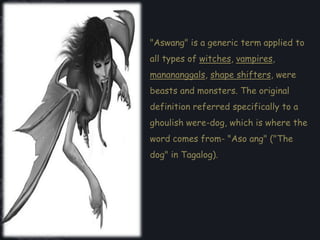
"Aswang" is a generic term applied to
all types of witches, vampires,
manananggals, shape shifters, were
beasts and monsters. The original
definition referred specifically to a
ghoulish were-dog, which is where the
word comes from- "Aso ang" ("The
dog" in Tagalog).
This type of creature was an eater of the dead,
also called the bal-bal (maninilong in Catanauan,
Quezon), which replaces the cadaver with banana
trunks after consumption. Aswang stories and
definitions vary greatly from region to region and
person to person, and no particular set of
characteristics can be ascribed to the term.
However, the term is mostly used interchangeably
with manananggal and are also usually depicted as
female.
•The wide variety of descriptions in the aswang stories
make it difficult to settle upon a fixed definition of aswang
appearances or activities.
• However, several common themes that differentiate
aswangs from other mythological creatures do emerge:
Aswangs are shape shifters. Stories recount aswangs living
as regular townspeople.
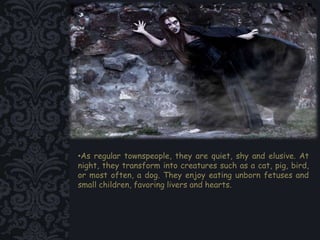
•As regular townspeople, they are quiet, shy and elusive. At
night, they transform into creatures such as a cat, pig, bird,
or most often, a dog. They enjoy eating unborn fetuses and
small children, favoring livers and hearts.
•Some have long proboscises, which they use to suck the
children out of their mothers' wombs or their homes.
•Some are so thin that they can hide themselves behind
a bamboo post. They are fast and silent. Some also
make noises, like the Tik-Tik, (the name was derived
from the sound it produces) which are louder the
further away the aswang is, to confuse its potential
victim; and the Bubuu, an aggressive kind of aswang that
makes a sound of a laying hen at midnight.
•They may also replace their live victims or stolen
cadavers with doppelgangers made from tree trunks
or other plant materials. This facsimile will return to
the victim's home, only to become sick and die. An
aswang will also have bloodshot eyes, the result of
staying up all night searching for houses where
wakes are held to steal the bodies
The Kikik orWakwakThe Kikik orWakwakThe Kikik orWakwakThe Kikik orWakwakThe Kikik orWakwak
•One type of Aswang is the kikik, which transforms
into a huge bird/bat at night and prowls. The kikik
looks for a sleeping pregnant woman. When it has
found one, it extends a very long proboscis into the
womb and kills the fetus by draining its blood. It is
said that while this is taking place, a 'kik-kik-kik'
sound is often heard.
• In some stories, the
kikik is an Aswang's
familiar, said to confuse
people by its 'kikik'
sound. If the Aswang is
near, the sound would be
faint so that people
hearing it would think
that the Aswang is still
far away.
• The term wak-wak or wuk-wuk is frequently used
for the same creature in the Cebu region. The
legends of the wak-wak and kikik are much the
same, but the wak-wak is specifically supposed to
change into its birdlike form by leaving behind its
lower body, much like the Manananggal, another
Philippine vampire.
The cry of a night bird which
makes a "wuk-wuk-wuk" sound is
believed to be the call of this
monster and is feared by
superstitious villagers. As with
the call of the kikik, the wak-
wak is believed able to make its
cry sound distant when the
creature is near.
•In Panitan(Panit'an) Capiz, there is a myth of
the Dangga or Agitot. This type of aswang is
said to take the form of a handsome gay man
that hunts women during the night and drinks
blood like a vampire.
• One of the most popular legends in the
visayas region is the infamous Aswang
Tiniente Gimo(lieutenant Gimo) of the town
of Dueñas, Iloilo.
• Another familiar is the sigbin or Zegben Some say
that this is another form that the Aswang
transforms into and yet some say it is the companion
of the kikik. Its appearance is said to be similar to
the chupacabra and Tasmanian devil in appearance,
although with spotty fur. It supposedly has a wide
mouth with large fangs.
•Shamans
-to heal and to save lives.
-are referred to locally as the mananambal. They are local healers
who use their magic to heal diseases and illnesses that are caused
by supernatural causes. All the mananambals claim that their
powers also come from supernatural sources like saints or the
spirits of dead people.
•Sorcerers
-to destroy or inflict harm.
-locally called the mambabarang. They use their powers
to inflict pain, disease or even death to their clients’
enemies.

Aswang

  • 4.
    is a mythicalcreature in Filipino folklore. The Aswang is an inherently evil vampire-like creature and is the subject of a wide variety of myths and stories. Spanish colonists noted that the Aswang was the most feared among the mythical creatures of the Philippines, even in the 16th century .
  • 5.
    The myth ofthe Aswang is well known throughout the Philippines, except in the Ilocos region, which is the only region that does not have an equivalent myth. It is especially popular in the Western Visayan regions such as Capiz, Iloilo, Negros, Bohol, Masbate, Aklan, Antique. Other regional names for the aswang include "tik-tik" and "wak-wak".
  • 6.
    "Aswang" is ageneric term applied to all types of witches, vampires, manananggals, shape shifters, were beasts and monsters. The original definition referred specifically to a ghoulish were-dog, which is where the word comes from- "Aso ang" ("The dog" in Tagalog).
  • 7.
    This type ofcreature was an eater of the dead, also called the bal-bal (maninilong in Catanauan, Quezon), which replaces the cadaver with banana trunks after consumption. Aswang stories and definitions vary greatly from region to region and person to person, and no particular set of characteristics can be ascribed to the term. However, the term is mostly used interchangeably with manananggal and are also usually depicted as female.
  • 8.
    •The wide varietyof descriptions in the aswang stories make it difficult to settle upon a fixed definition of aswang appearances or activities. • However, several common themes that differentiate aswangs from other mythological creatures do emerge: Aswangs are shape shifters. Stories recount aswangs living as regular townspeople.
  • 9.
    •As regular townspeople,they are quiet, shy and elusive. At night, they transform into creatures such as a cat, pig, bird, or most often, a dog. They enjoy eating unborn fetuses and small children, favoring livers and hearts.
  • 10.
    •Some have longproboscises, which they use to suck the children out of their mothers' wombs or their homes. •Some are so thin that they can hide themselves behind a bamboo post. They are fast and silent. Some also make noises, like the Tik-Tik, (the name was derived from the sound it produces) which are louder the further away the aswang is, to confuse its potential victim; and the Bubuu, an aggressive kind of aswang that makes a sound of a laying hen at midnight.
  • 11.
    •They may alsoreplace their live victims or stolen cadavers with doppelgangers made from tree trunks or other plant materials. This facsimile will return to the victim's home, only to become sick and die. An aswang will also have bloodshot eyes, the result of staying up all night searching for houses where wakes are held to steal the bodies
  • 12.
    The Kikik orWakwakTheKikik orWakwakThe Kikik orWakwakThe Kikik orWakwakThe Kikik orWakwak •One type of Aswang is the kikik, which transforms into a huge bird/bat at night and prowls. The kikik looks for a sleeping pregnant woman. When it has found one, it extends a very long proboscis into the womb and kills the fetus by draining its blood. It is said that while this is taking place, a 'kik-kik-kik' sound is often heard.
  • 13.
    • In somestories, the kikik is an Aswang's familiar, said to confuse people by its 'kikik' sound. If the Aswang is near, the sound would be faint so that people hearing it would think that the Aswang is still far away.
  • 14.
    • The termwak-wak or wuk-wuk is frequently used for the same creature in the Cebu region. The legends of the wak-wak and kikik are much the same, but the wak-wak is specifically supposed to change into its birdlike form by leaving behind its lower body, much like the Manananggal, another Philippine vampire. The cry of a night bird which makes a "wuk-wuk-wuk" sound is believed to be the call of this monster and is feared by superstitious villagers. As with the call of the kikik, the wak- wak is believed able to make its cry sound distant when the creature is near.
  • 15.
    •In Panitan(Panit'an) Capiz,there is a myth of the Dangga or Agitot. This type of aswang is said to take the form of a handsome gay man that hunts women during the night and drinks blood like a vampire. • One of the most popular legends in the visayas region is the infamous Aswang Tiniente Gimo(lieutenant Gimo) of the town of Dueñas, Iloilo.
  • 16.
    • Another familiaris the sigbin or Zegben Some say that this is another form that the Aswang transforms into and yet some say it is the companion of the kikik. Its appearance is said to be similar to the chupacabra and Tasmanian devil in appearance, although with spotty fur. It supposedly has a wide mouth with large fangs.
  • 17.
    •Shamans -to heal andto save lives. -are referred to locally as the mananambal. They are local healers who use their magic to heal diseases and illnesses that are caused by supernatural causes. All the mananambals claim that their powers also come from supernatural sources like saints or the spirits of dead people.
  • 18.
    •Sorcerers -to destroy orinflict harm. -locally called the mambabarang. They use their powers to inflict pain, disease or even death to their clients’ enemies.