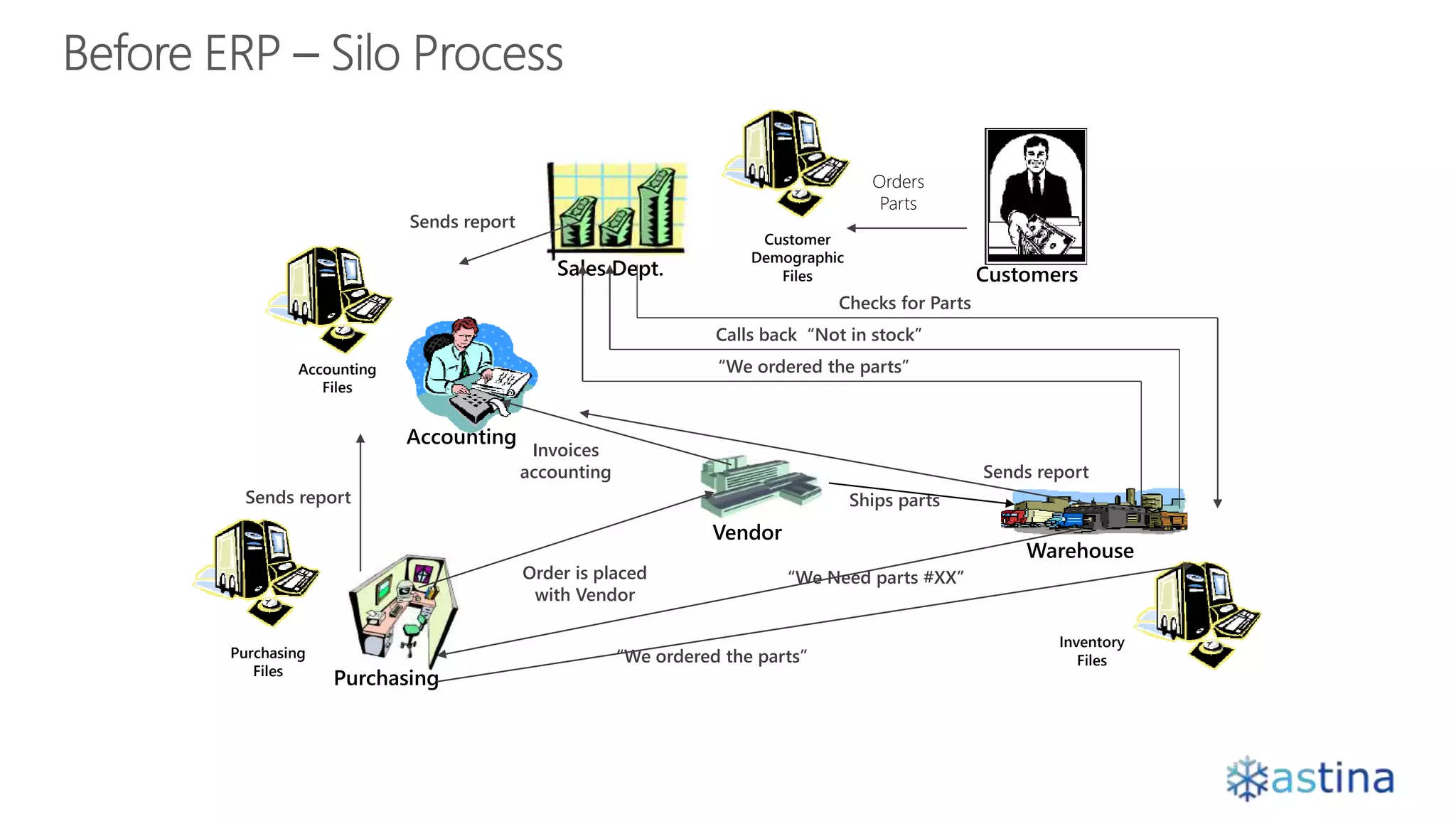
Customers
Customer
Demographic
FilesSales Dept.
Vendor
Orders
Parts
Accounting
Accounting
Files
Purchasing
Purchasing
Files
Order is placed
with Vendor
Invoices
accounting
Inventory
Files
Warehouse
Checks for Parts
Calls back “Not in stock”
“We ordered the parts”
“We Need parts #XX”
“We ordered the parts”
Sends report
Sends report
Sends report
Ships parts
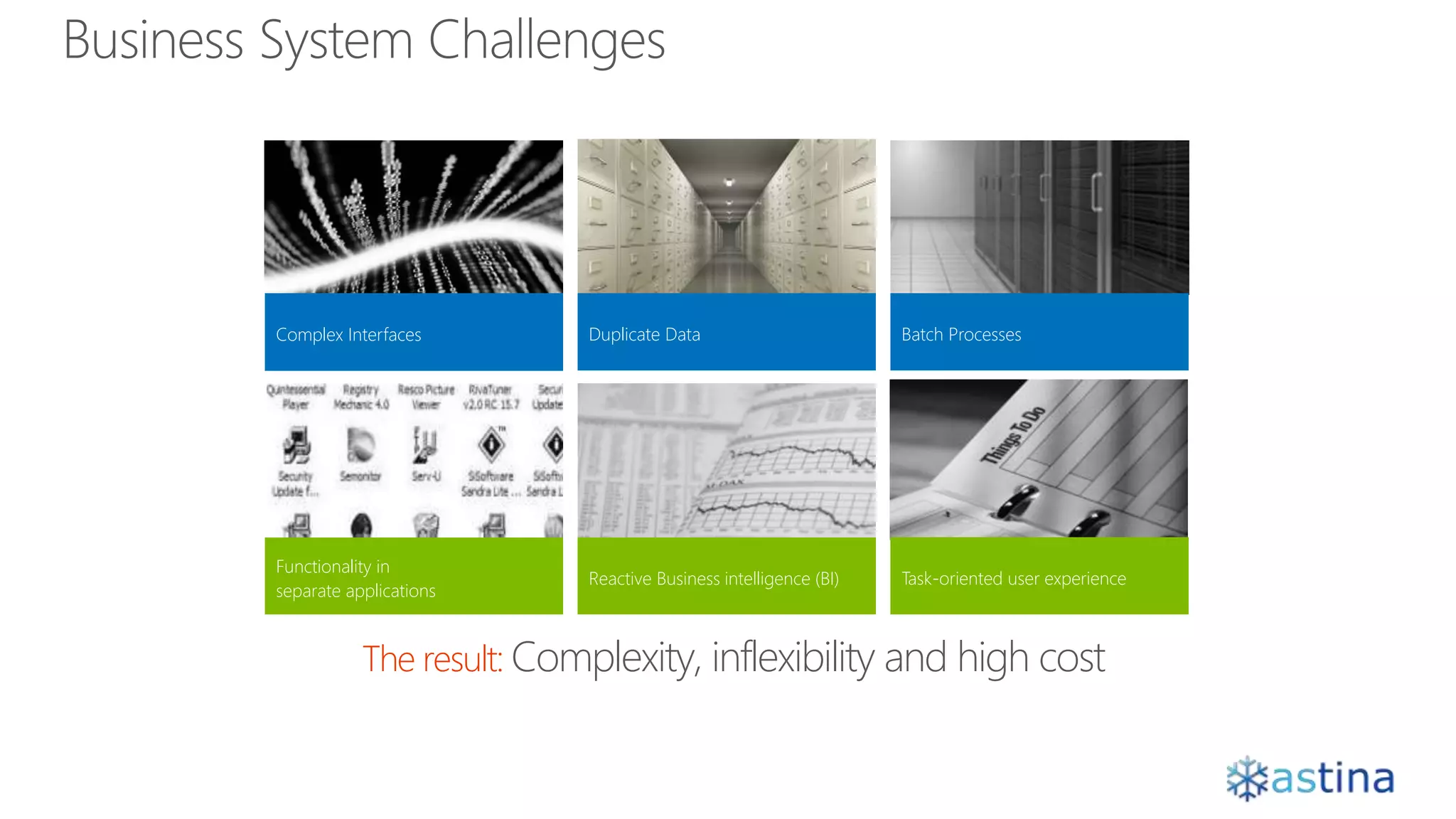
Duplicate Data Batch ProcessesComplex Interfaces
Functionality in
separate applications
Reactive Business intelligence (BI) Task-oriented user experience
The result: Complexity, inflexibility and high cost
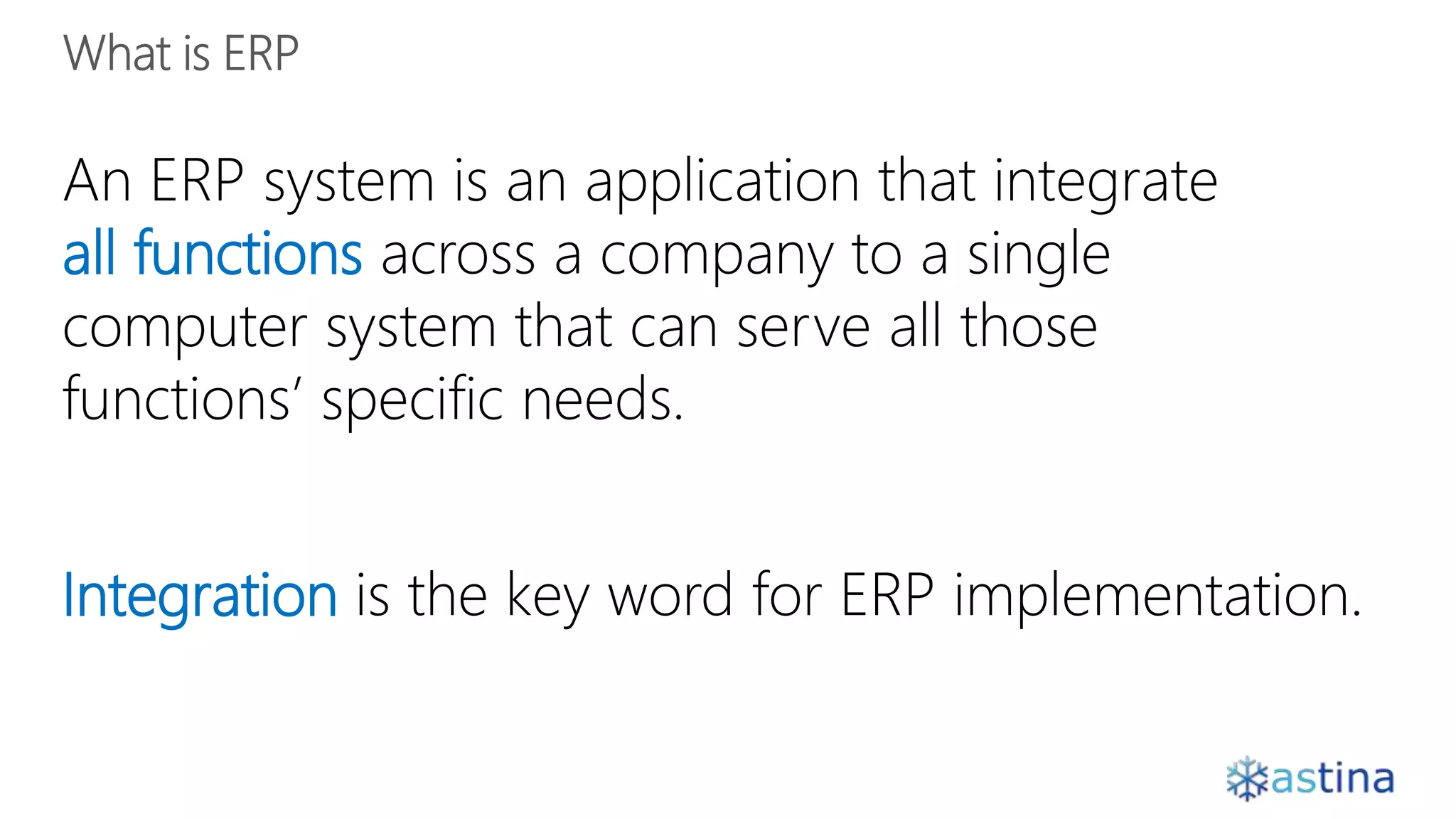
An ERP system is an application that integrate
all functions across a company to a single
computer system that can serve all those
functions’ specific needs.
Integration is the key word for ERP implementation.
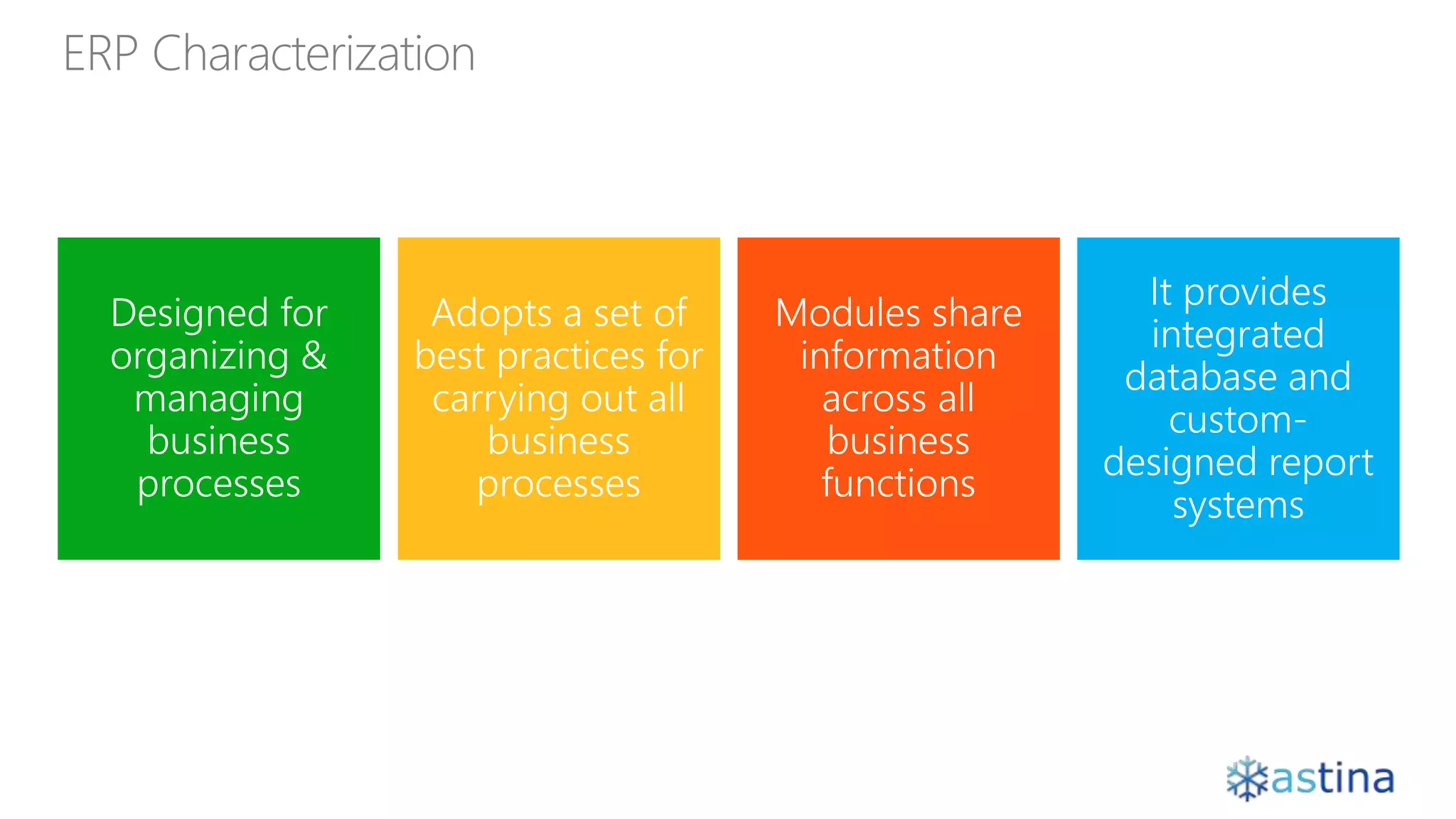
ERP Characterization
AstinaERP – Open Source ERP
www.idempiere.org
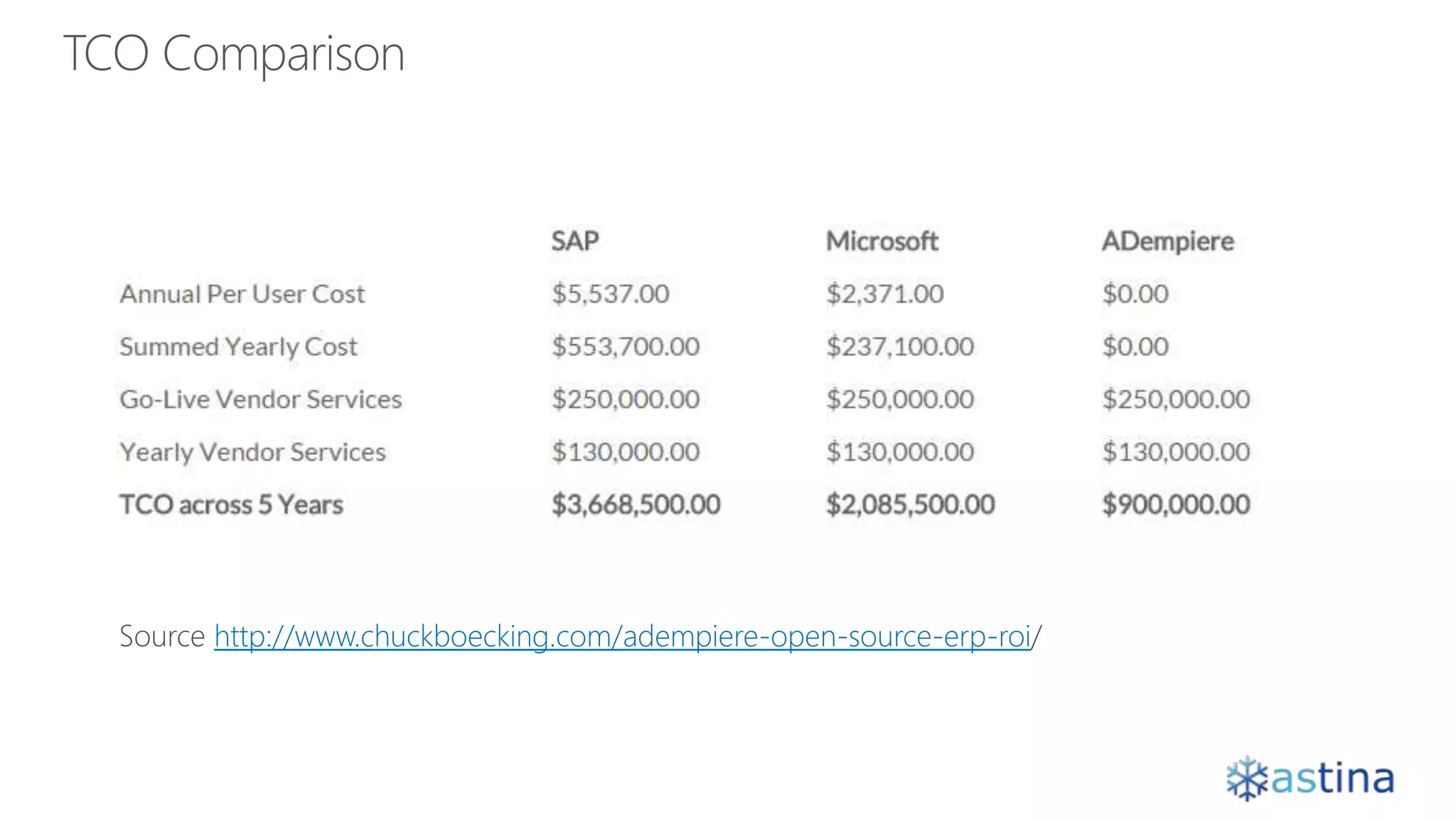
http://www.chuckboecking.com/adempiere-open-source-erp-roi
Bossie Awards 2016
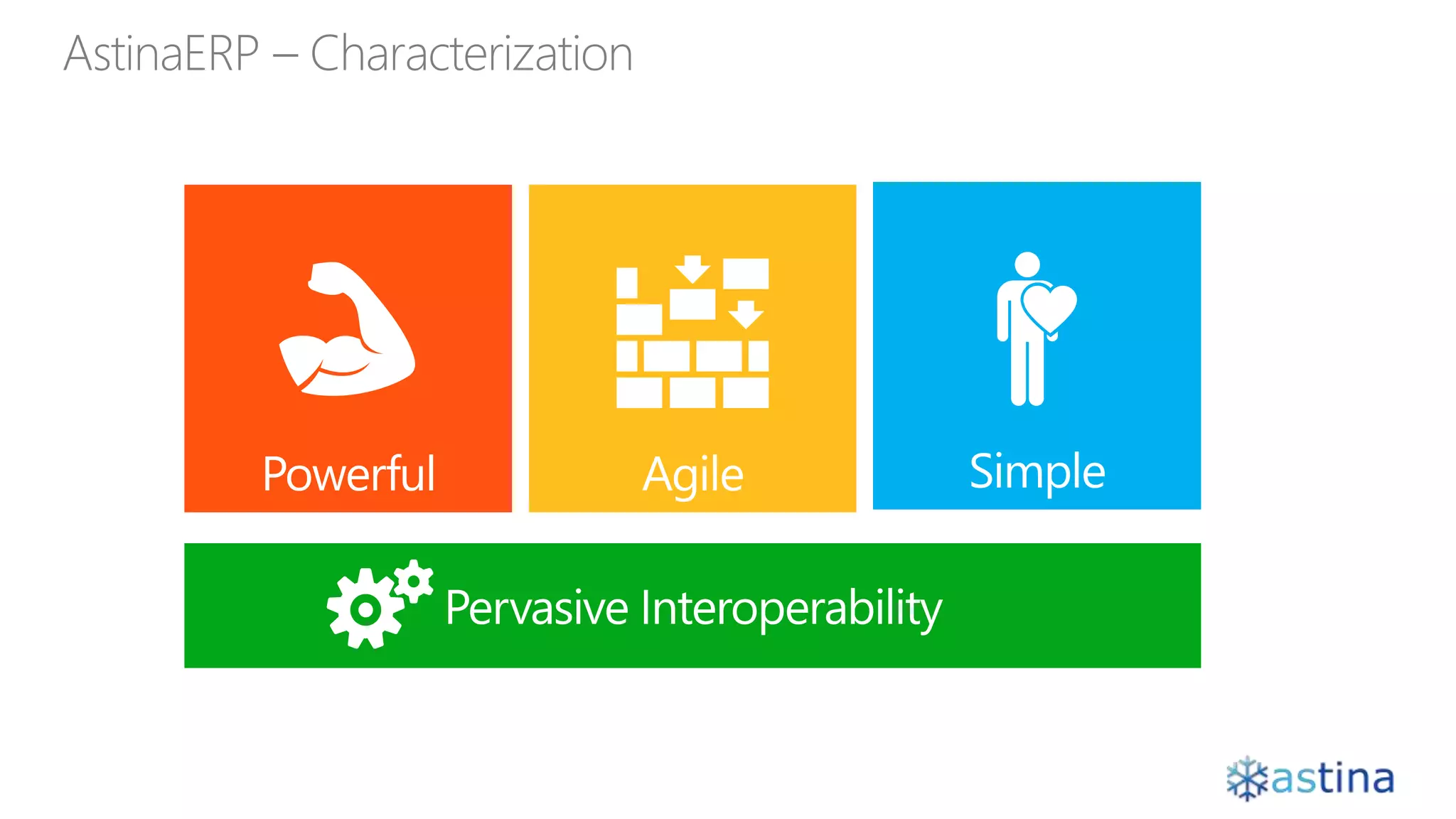
AstinaERP – Characterization
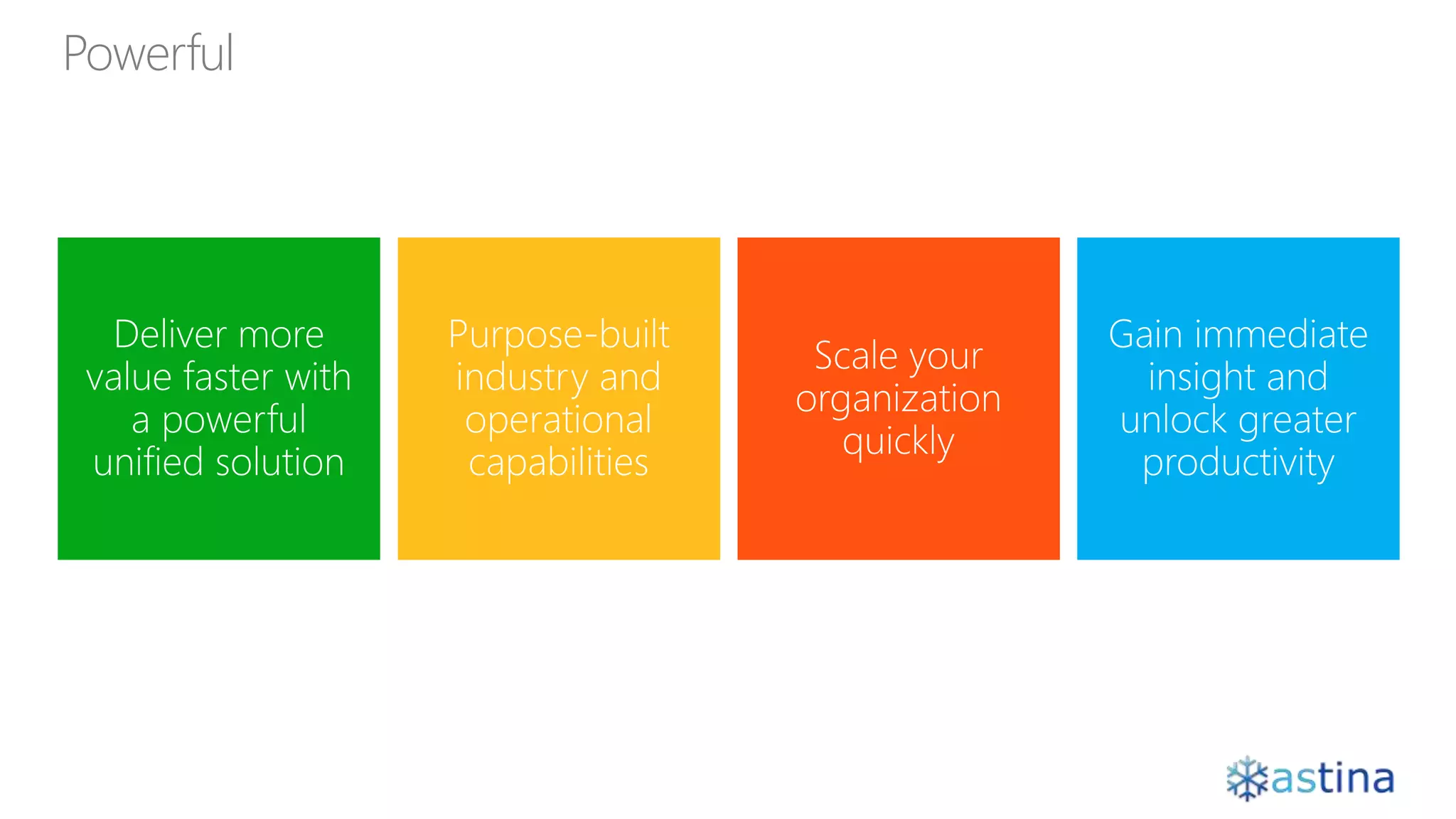
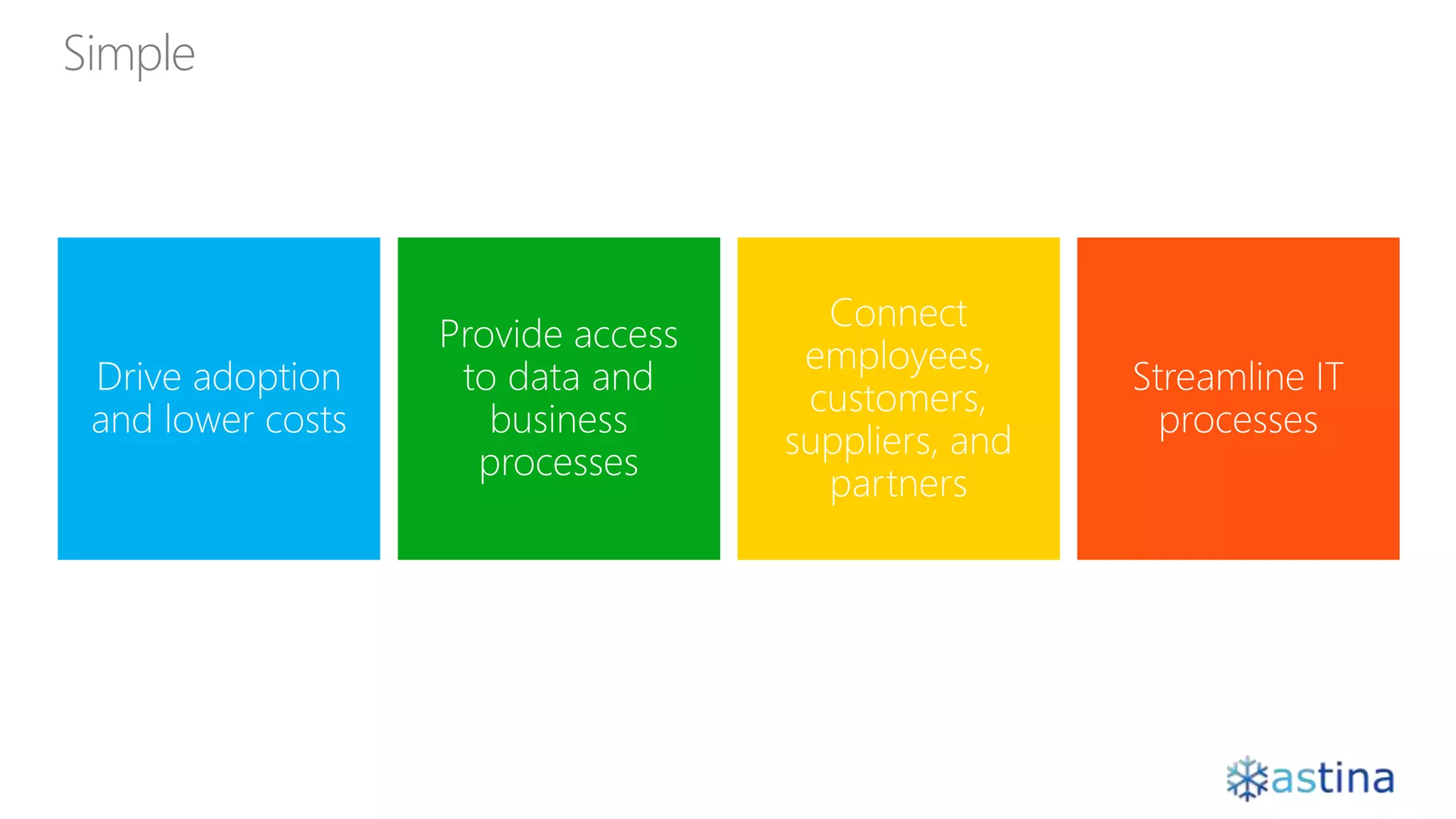
Powerful
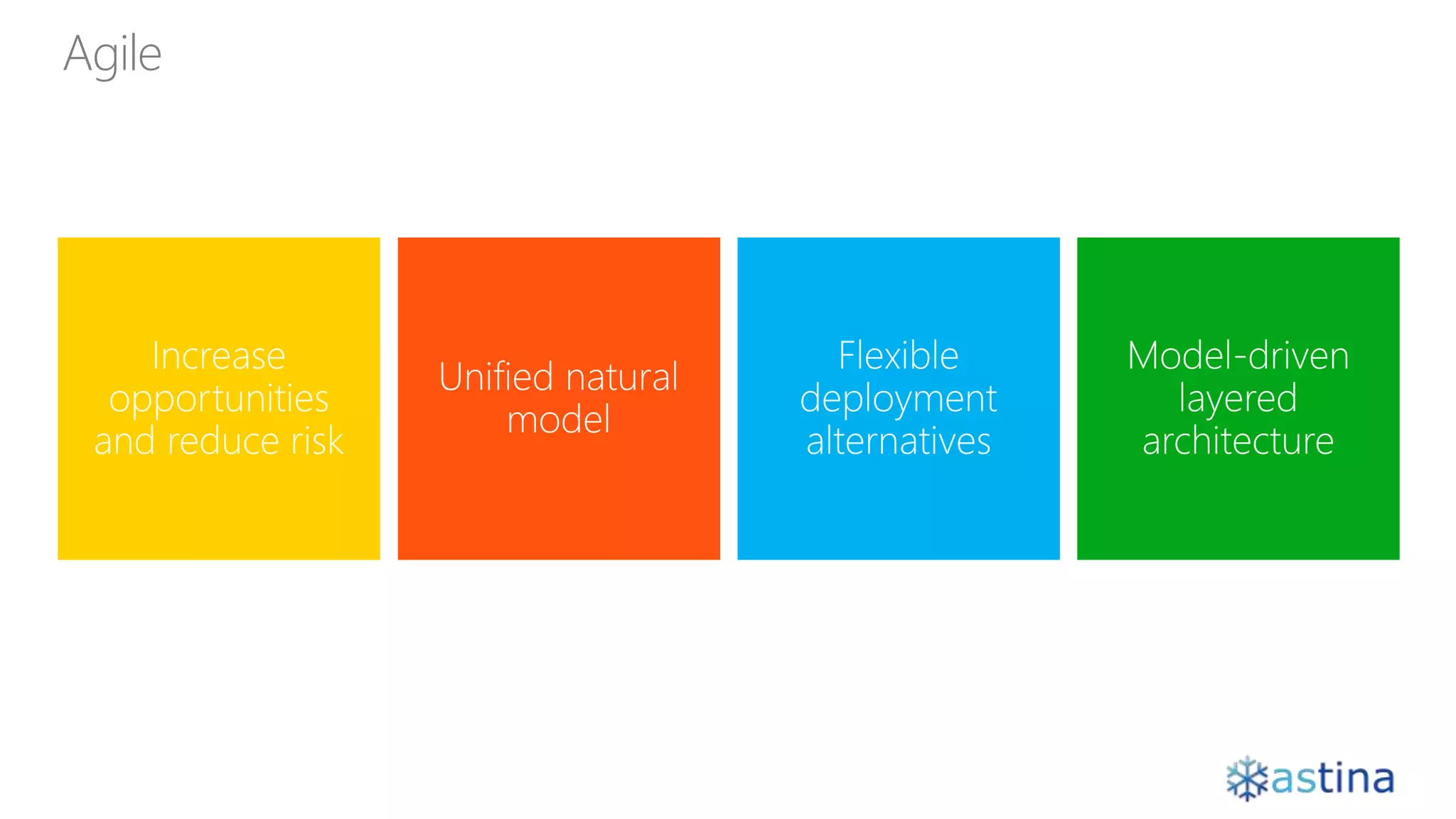
Agile
Simple
Purchase Requisition
Purchase Order
Inventory
Receive
PO Matching
General Ledger
Invoice/CN
Payment Reconcile
Fixed Asset
Asset Addition
Asset Cost,
Depreciation
Invoice/CN
Payment
Receipt
Reconcile
Receive
Transaction
Planning
BOM/Routing
Costing
Sales Order
Planning
Create
BOM/Routing
Create JOB
Close Job
Complete
JOB
Quality
In-Process
Inspection
Out going-
Inspection
Asset
Retirement
Sales Asset
Incoming
Inspection
Generate
Requisition
Warehouse / Delivery
Maintenance
Estimate Pricing
Cash Management
(Bank Reconcile)
Work Order
Sales Order
Account ReceivableAccount Payables
Cash Management
(Bank Reconcile)
Create
Sales Order
Copy data
to JOB
Auto Create
PO
Maintenance
Cost
Customer
Invoice
Delivery
Order
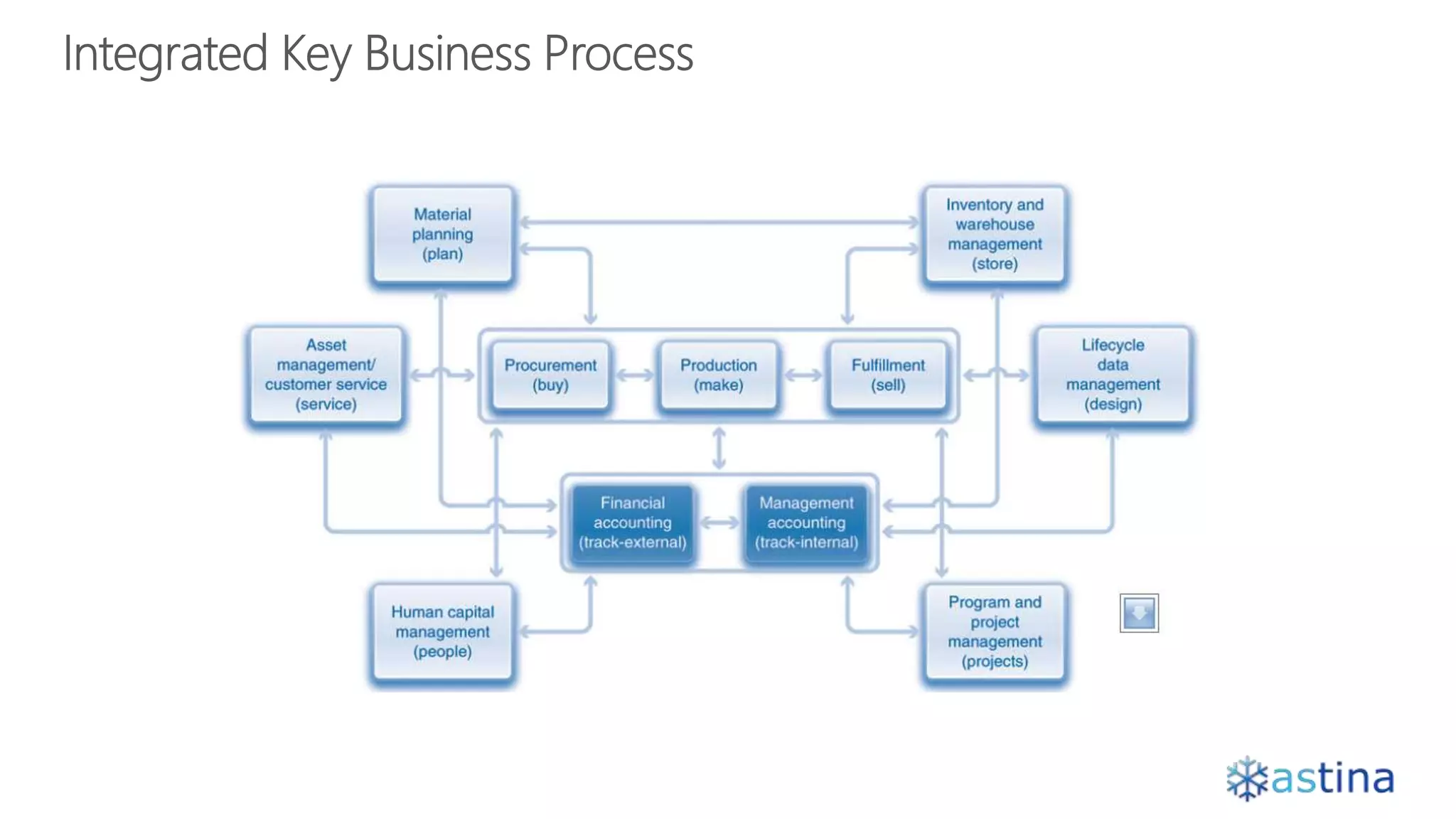
Manufacture
Procurement
Warehouse
Financial
Complete
FG
Manufacturing Distribution Retail Services Public Sector
Organization
Structure
Intuitively model
your organization
graphically
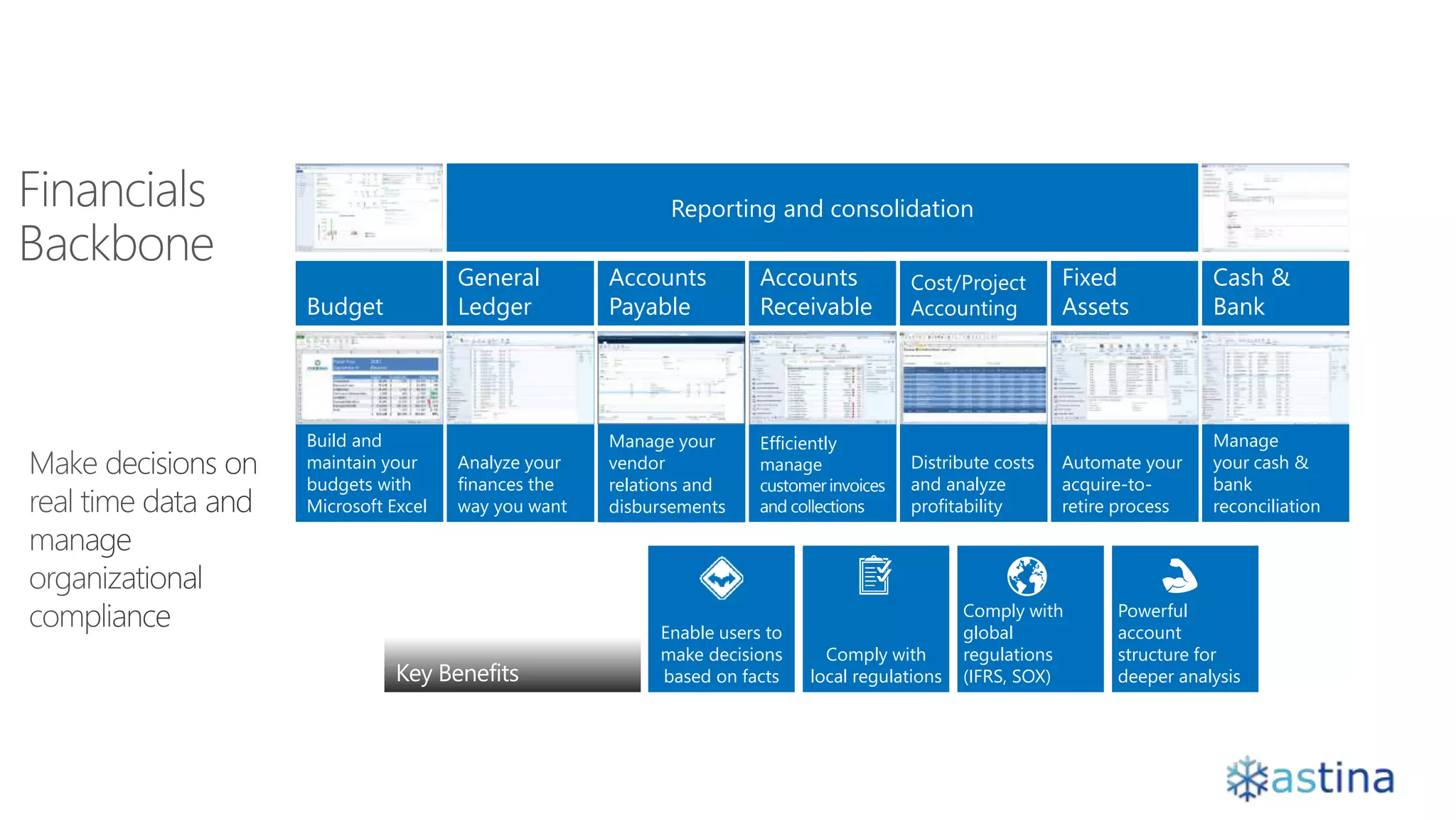
Financials
Make decisions
based on facts and
comply
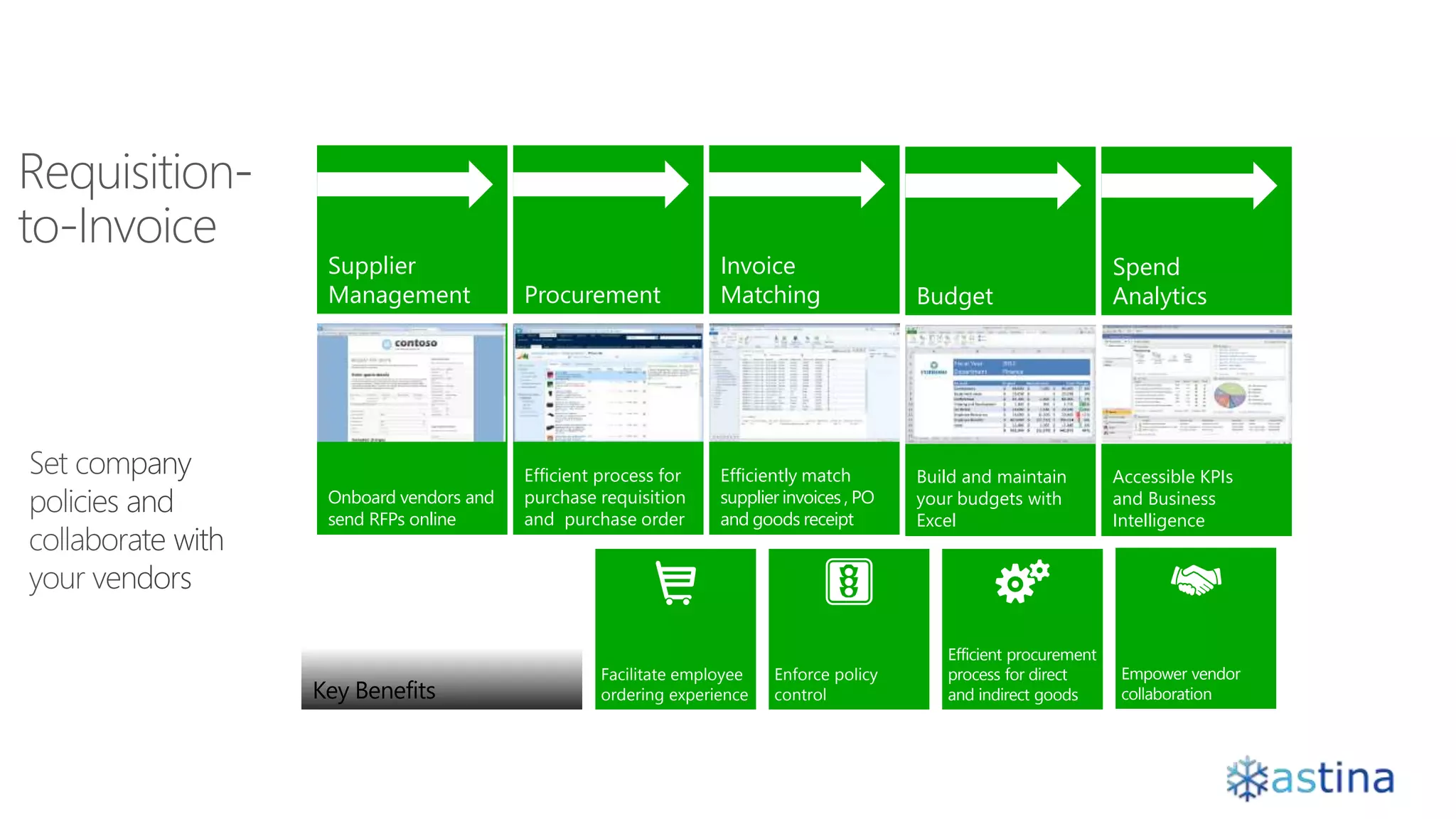
Requisition-to-
Invoice
Set company
policies and
collaborate with
your vendors
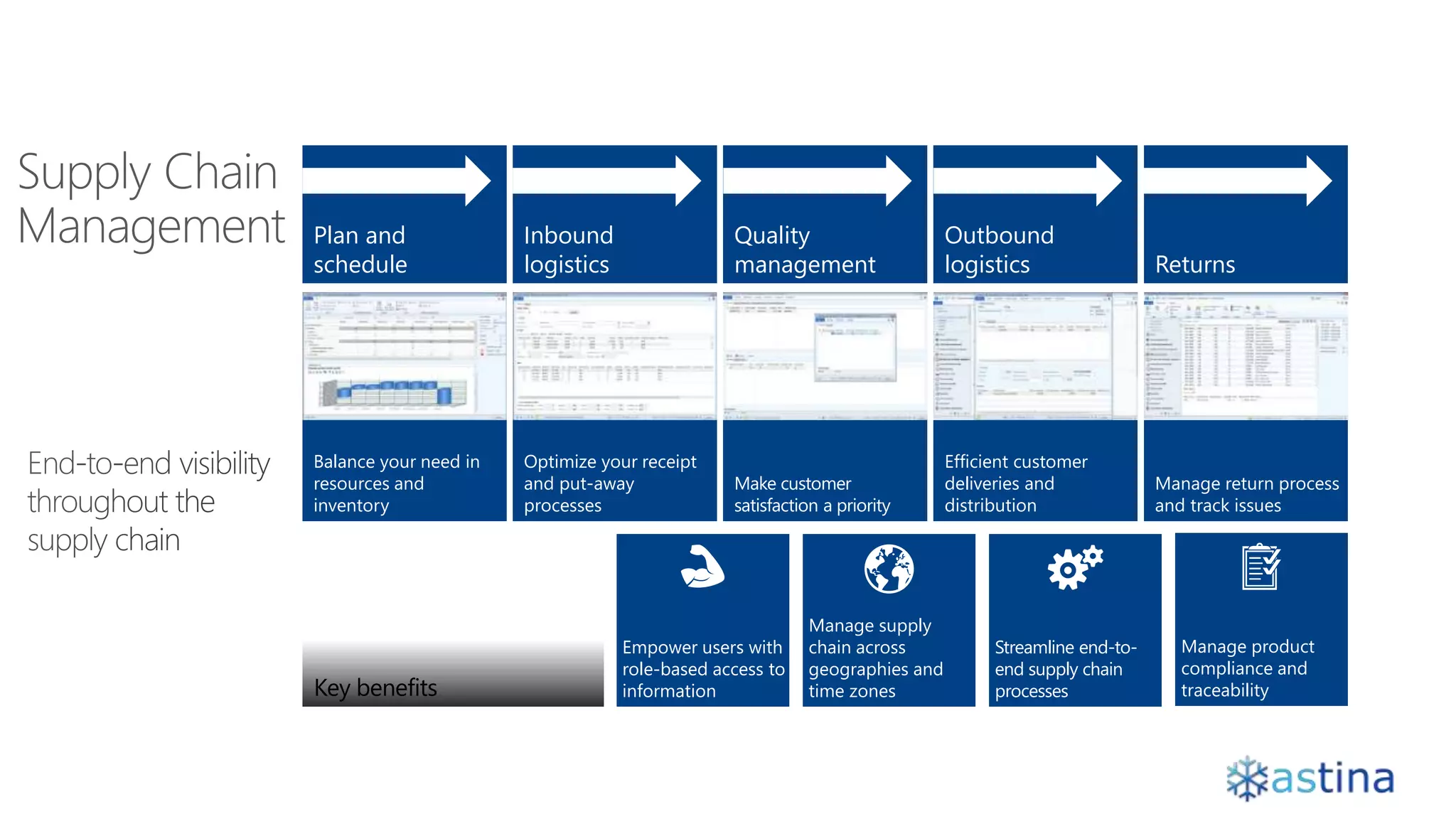
Material
Management
End-to-end
visibility
throughout the
supply chain
Quote-to-
Invoice
Gain loyalty with
improved
customer services
and accuracy
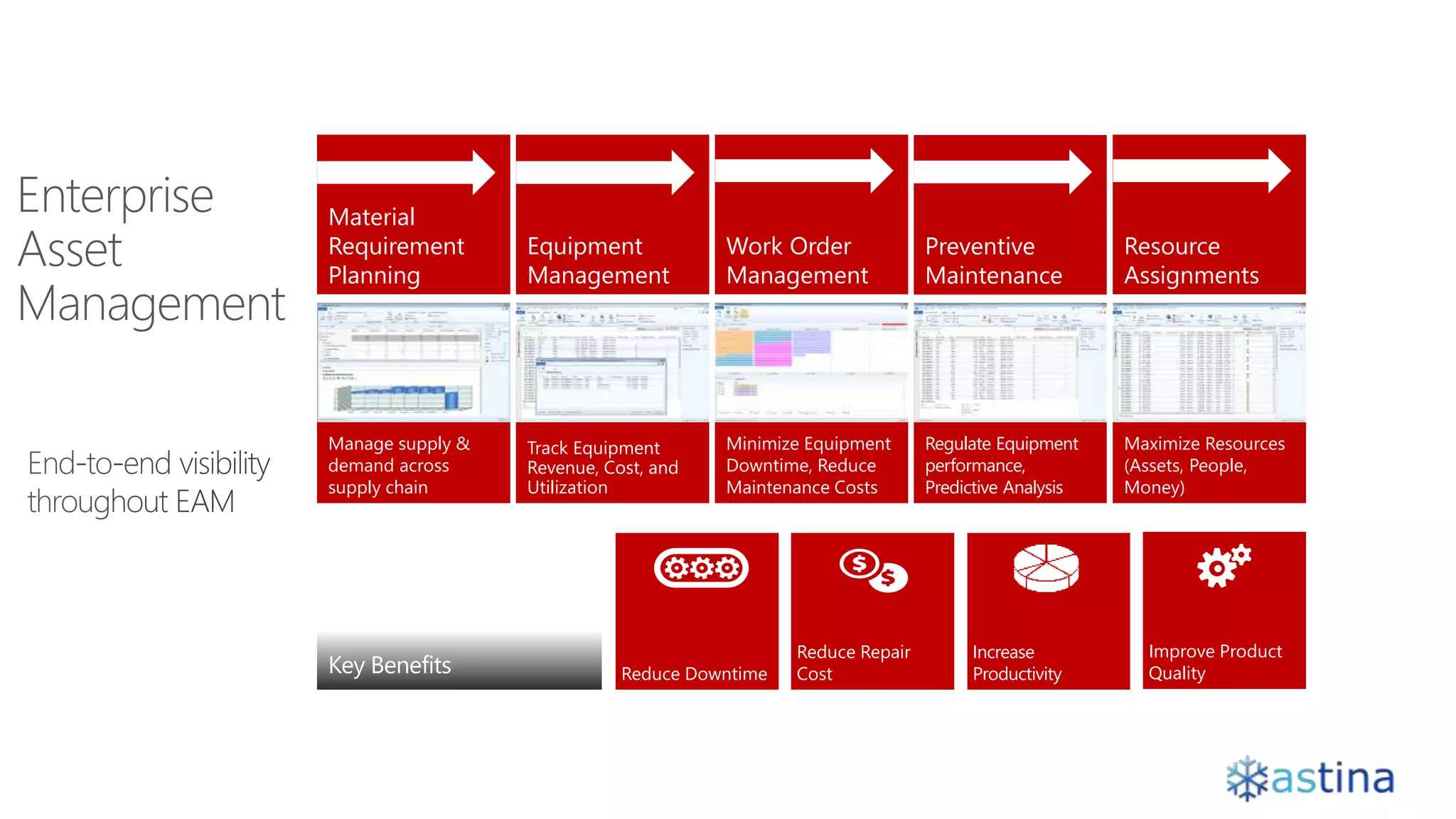
E A M
Centrally manage
your enterprise
asset management
H C M
Manage the entire
human capital of
your company
Reporting and consolidation
Build and
maintain your
budgets with
Microsoft Excel
Budget
Automate your
acquire-to-
retire process
Fixed
Assets
Efficiently
manage
customer invoices
and collections
Accounts
Receivable
Analyze your
finances the
way you want
General
Ledger
Manage your
vendor
relations and
disbursements
Accounts
Payable
Distribute costs
and analyze
profitability
Cost/Project
Accounting
Manage
your cash &
bank
reconciliation
Cash &
Bank
Comply with
local regulationsKey Benefits
Enable users to
make decisions
based on facts
Comply with
global
regulations
(IFRS, SOX)
Powerful
account
structure for
deeper analysis
Budget
Build and maintain
your budgets with
Excel
Spend
Analytics
Accessible KPIs
and Business
Intelligence
Supplier
Management
Onboard vendors and
send RFPs online
Procurement
Efficient process for
purchase requisition
and purchase order
Invoice
Matching
Efficiently match
supplier invoices , PO
and goods receipt
Facilitate employee
ordering experience
Efficient procurement
process for direct
and indirect goods
Enforce policy
control
Empower vendor
collaborationKey Benefits
Plan and
schedule
Balance your need in
resources and
inventory
Inbound
logistics
Optimize your receipt
and put-away
processes
Quality
management
Make customer
satisfaction a priority
Outbound
logistics
Efficient customer
deliveries and
distribution
Returns
Manage return process
and track issues
Empower users with
role-based access to
information
Streamline end-to-
end supply chain
processes
Manage supply
chain across
geographies and
time zones
Manage product
compliance and
traceabilityKey benefits
Material
Requirement
Planning
Manage supply &
demand across
supply chain
Equipment
Management
Track Equipment
Revenue, Cost, and
Utilization
Work Order
Management
Minimize Equipment
Downtime, Reduce
Maintenance Costs
Resource
Assignments
Maximize Resources
(Assets, People,
Money)
Preventive
Maintenance
Regulate Equipment
performance,
Predictive Analysis
Reduce Downtime
Increase
Productivity
Reduce Repair
Cost
Improve Product
QualityKey Benefits
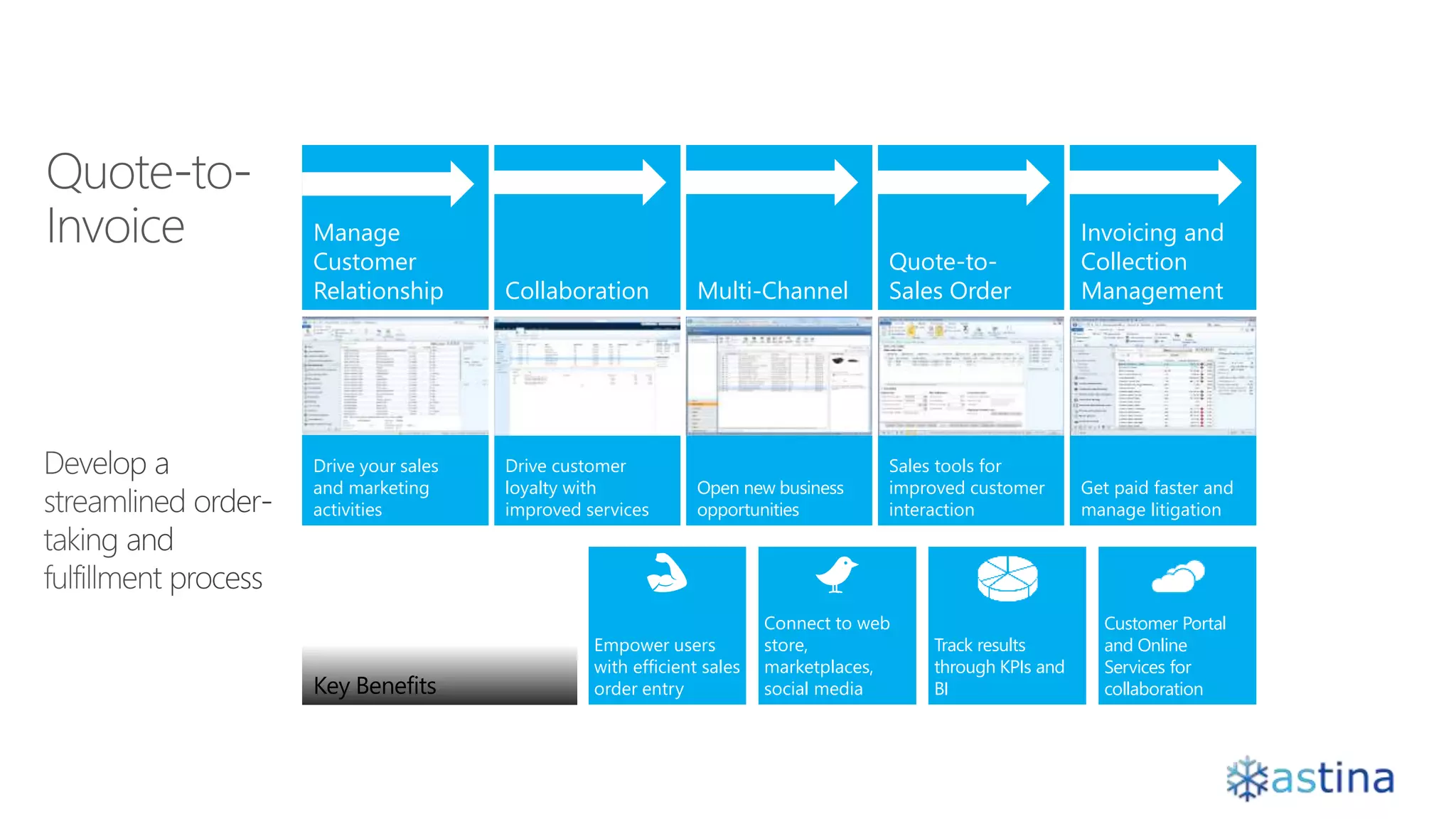
Multi-Channel
Open new business
opportunities
Invoicing and
Collection
Management
Get paid faster and
manage litigation
Quote-to-
Sales Order
Sales tools for
improved customer
interaction
Collaboration
Drive customer
loyalty with
improved services
Manage
Customer
Relationship
Drive your sales
and marketing
activities
Key Benefits
Track results
through KPIs and
BI
Connect to web
store,
marketplaces,
social media
Customer Portal
and Online
Services for
collaboration
Empower users
with efficient sales
order entry
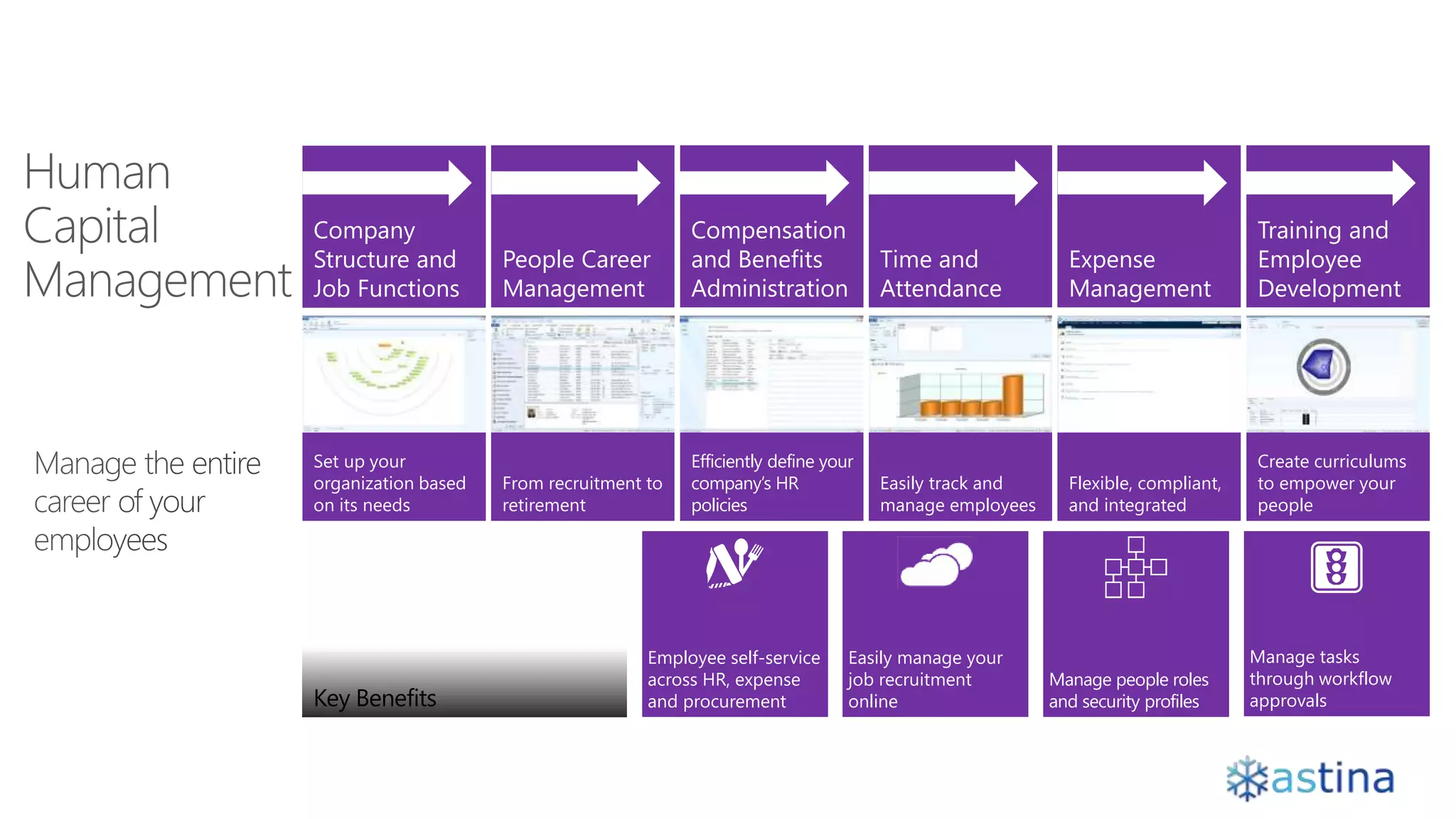
Company
Structure and
Job Functions
Set up your
organization based
on its needs
Training and
Employee
Development
Create curriculums
to empower your
people
People Career
Management
From recruitment to
retirement
Compensation
and Benefits
Administration
Efficiently define your
company’s HR
policies
Time and
Attendance
Easily track and
manage employees
Expense
Management
Flexible, compliant,
and integrated
Employee self-service
across HR, expense
and procurement
Manage people roles
and security profiles
Easily manage your
job recruitment
online
Manage tasks
through workflow
approvalsKey Benefits
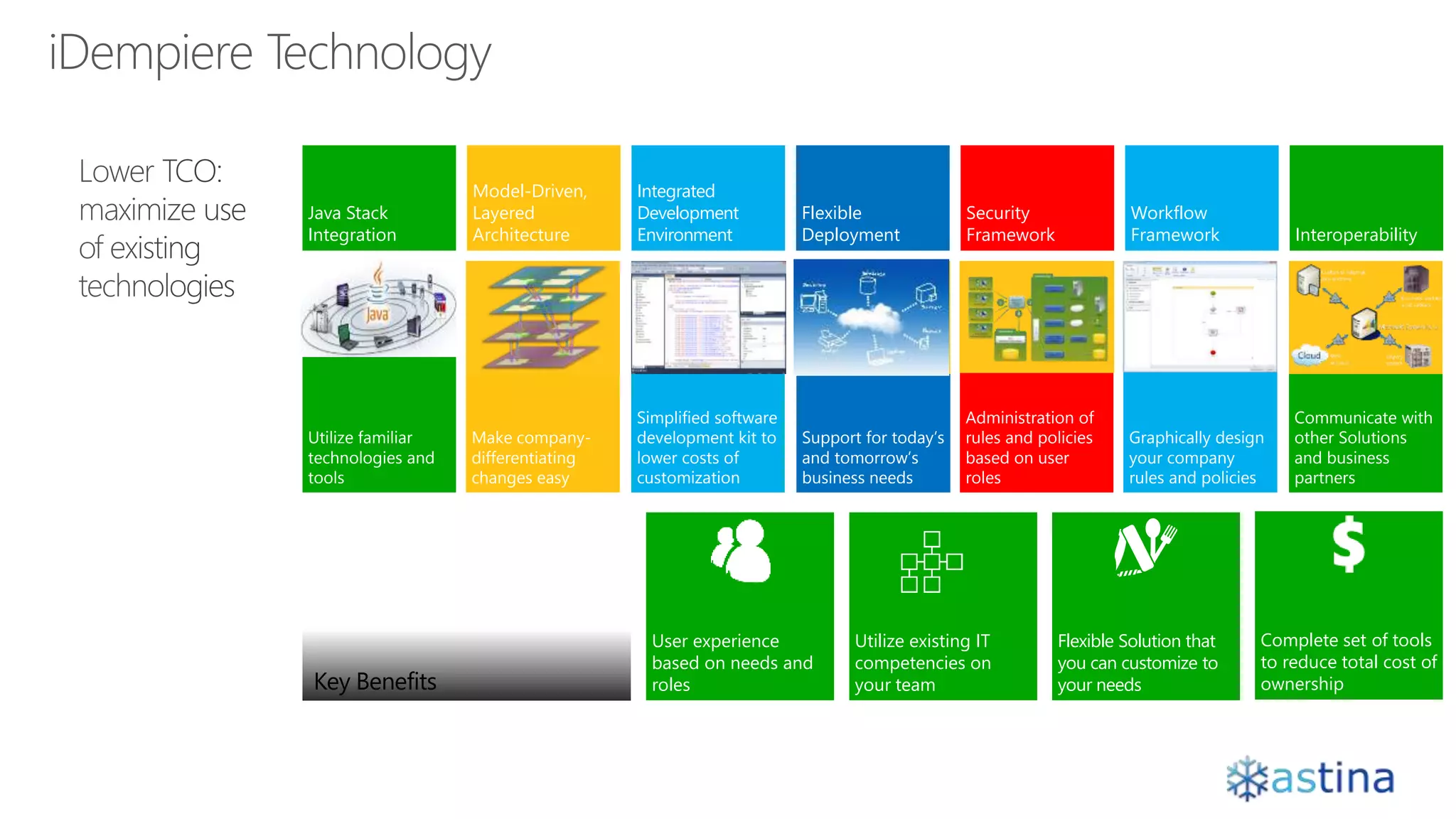
Make company-
differentiating
changes easy
Graphically design
your company
rules and policies
Simplified software
development kit to
lower costs of
customization
Utilize familiar
technologies and
tools
Administration of
rules and policies
based on user
roles
Communicate with
other Solutions
and business
partners
Support for today’s
and tomorrow’s
business needs
Flexible
Deployment
Security
Framework
Integrated
Development
Environment Interoperability
Java Stack
Integration
Model-Driven,
Layered
Architecture
Workflow
Framework
User experience
based on needs and
roles
Flexible Solution that
you can customize to
your needs
Utilize existing IT
competencies on
your team
Complete set of tools
to reduce total cost of
ownershipKey Benefits
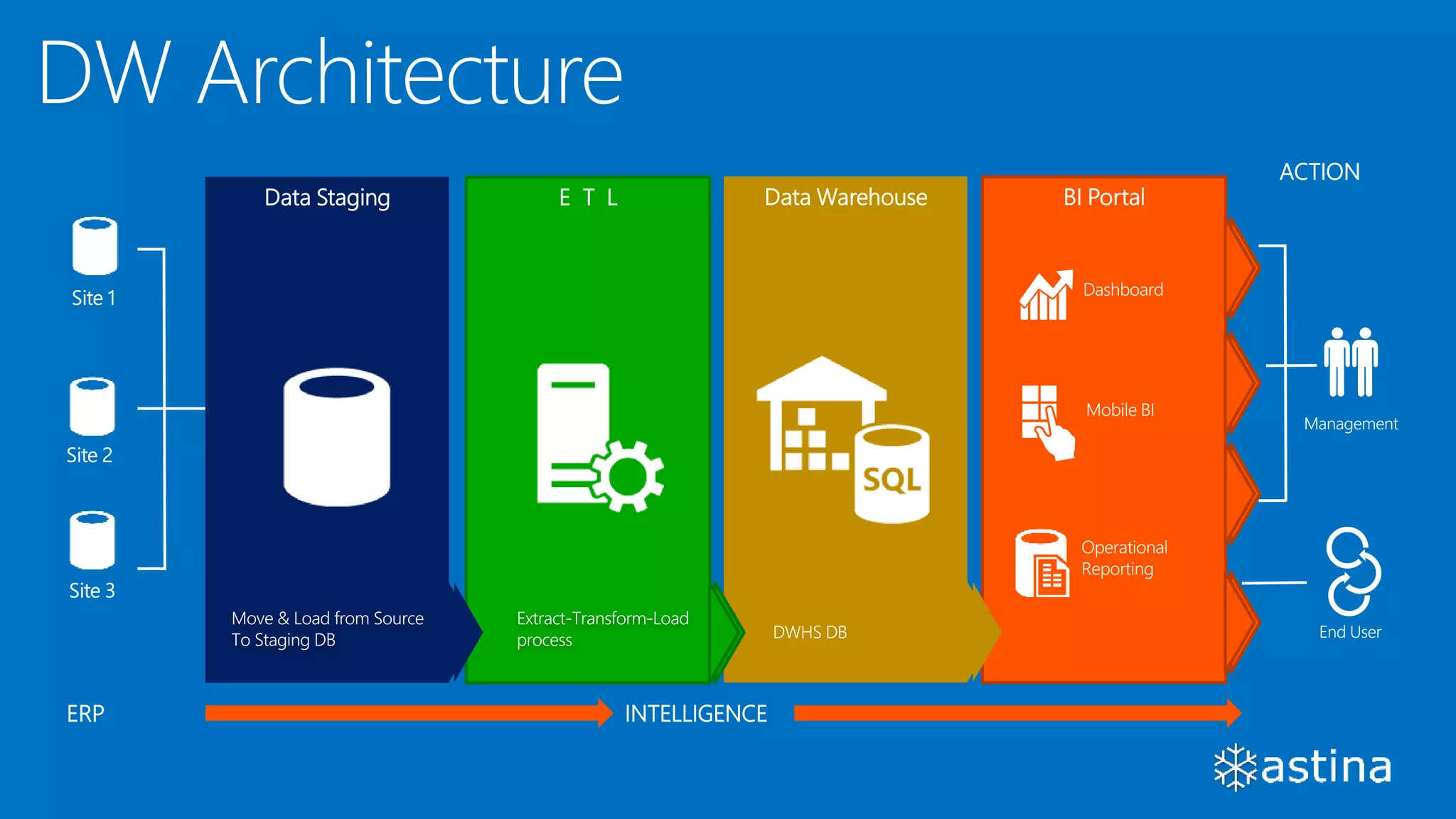
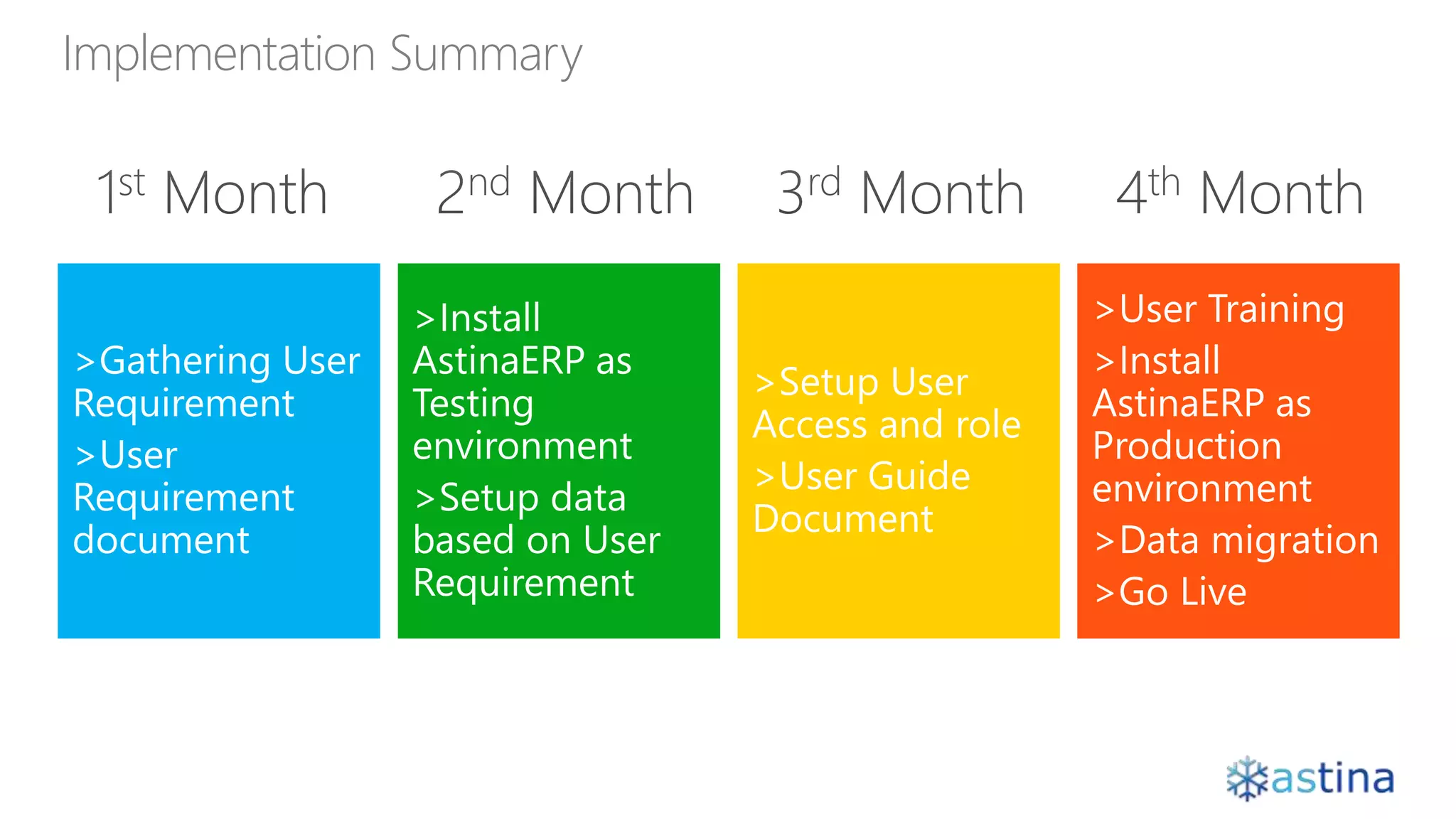
Implementation Summary
Demo
ASTINA
www.astinaconsulting.com
Thank You

Astina erp overview

  • 3.
    Customers Customer Demographic FilesSales Dept. Vendor Orders Parts Accounting Accounting Files Purchasing Purchasing Files Order isplaced with Vendor Invoices accounting Inventory Files Warehouse Checks for Parts Calls back “Not in stock” “We ordered the parts” “We Need parts #XX” “We ordered the parts” Sends report Sends report Sends report Ships parts
  • 4.
    Duplicate Data BatchProcessesComplex Interfaces Functionality in separate applications Reactive Business intelligence (BI) Task-oriented user experience The result: Complexity, inflexibility and high cost
  • 5.
    An ERP systemis an application that integrate all functions across a company to a single computer system that can serve all those functions’ specific needs. Integration is the key word for ERP implementation.
  • 6.
  • 10.
    AstinaERP – OpenSource ERP www.idempiere.org
  • 12.
  • 13.
  • 14.
  • 15.
  • 16.
  • 17.
  • 19.
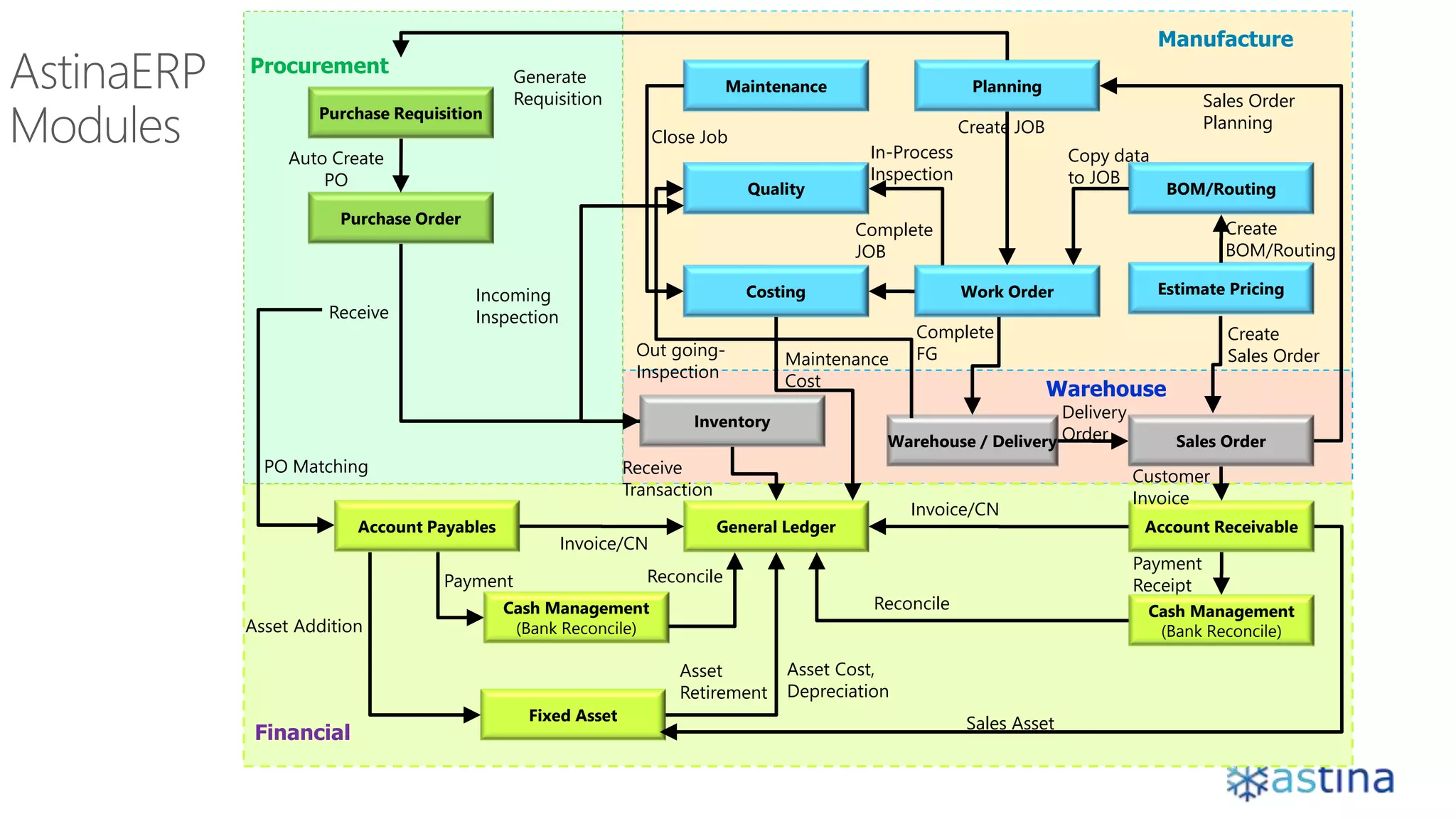
    Purchase Requisition Purchase Order Inventory Receive POMatching General Ledger Invoice/CN Payment Reconcile Fixed Asset Asset Addition Asset Cost, Depreciation Invoice/CN Payment Receipt Reconcile Receive Transaction Planning BOM/Routing Costing Sales Order Planning Create BOM/Routing Create JOB Close Job Complete JOB Quality In-Process Inspection Out going- Inspection Asset Retirement Sales Asset Incoming Inspection Generate Requisition Warehouse / Delivery Maintenance Estimate Pricing Cash Management (Bank Reconcile) Work Order Sales Order Account ReceivableAccount Payables Cash Management (Bank Reconcile) Create Sales Order Copy data to JOB Auto Create PO Maintenance Cost Customer Invoice Delivery Order Manufacture Procurement Warehouse Financial Complete FG
  • 20.
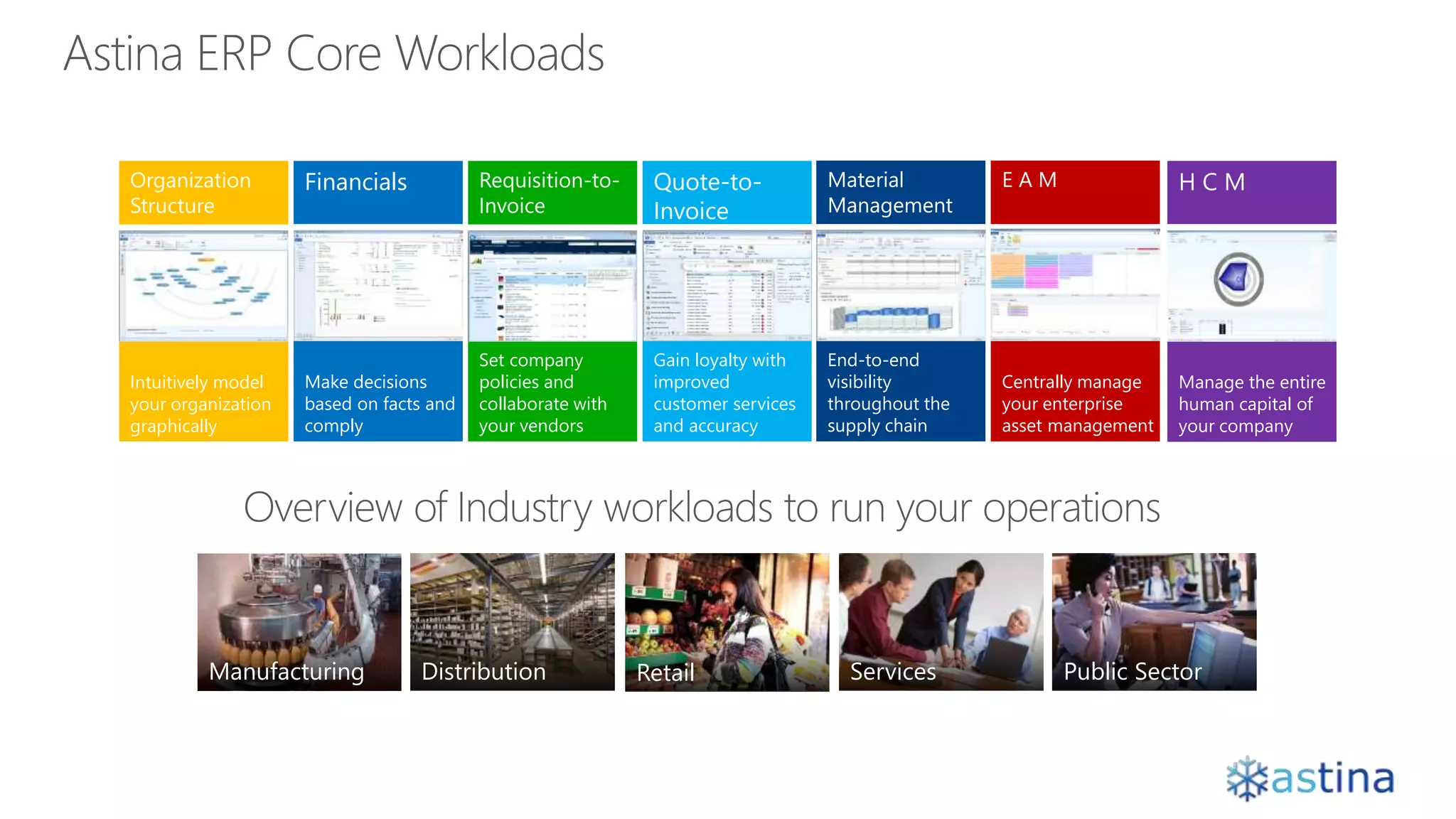
    Manufacturing Distribution RetailServices Public Sector Organization Structure Intuitively model your organization graphically Financials Make decisions based on facts and comply Requisition-to- Invoice Set company policies and collaborate with your vendors Material Management End-to-end visibility throughout the supply chain Quote-to- Invoice Gain loyalty with improved customer services and accuracy E A M Centrally manage your enterprise asset management H C M Manage the entire human capital of your company
  • 21.
    Reporting and consolidation Buildand maintain your budgets with Microsoft Excel Budget Automate your acquire-to- retire process Fixed Assets Efficiently manage customer invoices and collections Accounts Receivable Analyze your finances the way you want General Ledger Manage your vendor relations and disbursements Accounts Payable Distribute costs and analyze profitability Cost/Project Accounting Manage your cash & bank reconciliation Cash & Bank Comply with local regulationsKey Benefits Enable users to make decisions based on facts Comply with global regulations (IFRS, SOX) Powerful account structure for deeper analysis
  • 22.
    Budget Build and maintain yourbudgets with Excel Spend Analytics Accessible KPIs and Business Intelligence Supplier Management Onboard vendors and send RFPs online Procurement Efficient process for purchase requisition and purchase order Invoice Matching Efficiently match supplier invoices , PO and goods receipt Facilitate employee ordering experience Efficient procurement process for direct and indirect goods Enforce policy control Empower vendor collaborationKey Benefits
  • 23.
    Plan and schedule Balance yourneed in resources and inventory Inbound logistics Optimize your receipt and put-away processes Quality management Make customer satisfaction a priority Outbound logistics Efficient customer deliveries and distribution Returns Manage return process and track issues Empower users with role-based access to information Streamline end-to- end supply chain processes Manage supply chain across geographies and time zones Manage product compliance and traceabilityKey benefits
  • 24.
    Material Requirement Planning Manage supply & demandacross supply chain Equipment Management Track Equipment Revenue, Cost, and Utilization Work Order Management Minimize Equipment Downtime, Reduce Maintenance Costs Resource Assignments Maximize Resources (Assets, People, Money) Preventive Maintenance Regulate Equipment performance, Predictive Analysis Reduce Downtime Increase Productivity Reduce Repair Cost Improve Product QualityKey Benefits
  • 25.
    Multi-Channel Open new business opportunities Invoicingand Collection Management Get paid faster and manage litigation Quote-to- Sales Order Sales tools for improved customer interaction Collaboration Drive customer loyalty with improved services Manage Customer Relationship Drive your sales and marketing activities Key Benefits Track results through KPIs and BI Connect to web store, marketplaces, social media Customer Portal and Online Services for collaboration Empower users with efficient sales order entry
  • 26.
    Company Structure and Job Functions Setup your organization based on its needs Training and Employee Development Create curriculums to empower your people People Career Management From recruitment to retirement Compensation and Benefits Administration Efficiently define your company’s HR policies Time and Attendance Easily track and manage employees Expense Management Flexible, compliant, and integrated Employee self-service across HR, expense and procurement Manage people roles and security profiles Easily manage your job recruitment online Manage tasks through workflow approvalsKey Benefits
  • 27.
    Make company- differentiating changes easy Graphicallydesign your company rules and policies Simplified software development kit to lower costs of customization Utilize familiar technologies and tools Administration of rules and policies based on user roles Communicate with other Solutions and business partners Support for today’s and tomorrow’s business needs Flexible Deployment Security Framework Integrated Development Environment Interoperability Java Stack Integration Model-Driven, Layered Architecture Workflow Framework User experience based on needs and roles Flexible Solution that you can customize to your needs Utilize existing IT competencies on your team Complete set of tools to reduce total cost of ownershipKey Benefits
  • 31.
  • 36.
  • 37.
  • 38.

Editor's Notes

  • #6 Before we can talk about these tools, we need to talk about the numerous problems with yesterday’s tools. For many manufacturing organizations, the enterprise resource planning architecture that’s still in use today—and still actively sold by many vendors—originated in the 1980s. It’s complex, inflexible, and unable to provide the power and agility that today’s manufacturing organizations need to change, grow, and thrive. Let’s take a closer look at these systems and the problems they present. Application code and parameters are intertwined and tangled—like spaghetti. There’s no simple, affordable way to customize or integrate the software. Duplicated data structures complicate the task of focusing on what’s critical―extracting, transforming, and presenting accurate data in the most appropriate format to enhance performance and ease of use. Middleware and batch processes are often used as necessary workarounds to overcome the lack of integration and interoperability across implementations and business processes. Key work-related functionality sits in separate applications, so users have to access multiple programs to complete daily tasks. In addition, when upgrading these systems, the customer, not the vendor, faces the challenge of solving integration problems. Business intelligence is an afterthought for many customers. They’ve continued doing business the way they always have because, despite the complexity of their processes, they are still getting acceptable results. So the need for deeper insight into the business is not always given investment priority. BI is not addressed at the time of the initial implementation but in a later phase. Unfortunately, the implementation is not set up with BI in mind, requiring changes or compromises after the fact. The user experience is task-oriented, not role- or process-oriented, and there is little or no opportunity to customize or optimize the user experience. Against this backdrop, it’s easy to understand many of the challenges we discussed in the previous few slides. Organizations are not set up to cope with today’s changing global business climate. And their IT budgets are consumed by maintaining existing systems, leaving fewer available funds to support new initiatives. Such organizations are reactive, not proactive. They need new solutions to keep pace with current and future trends. CLICK