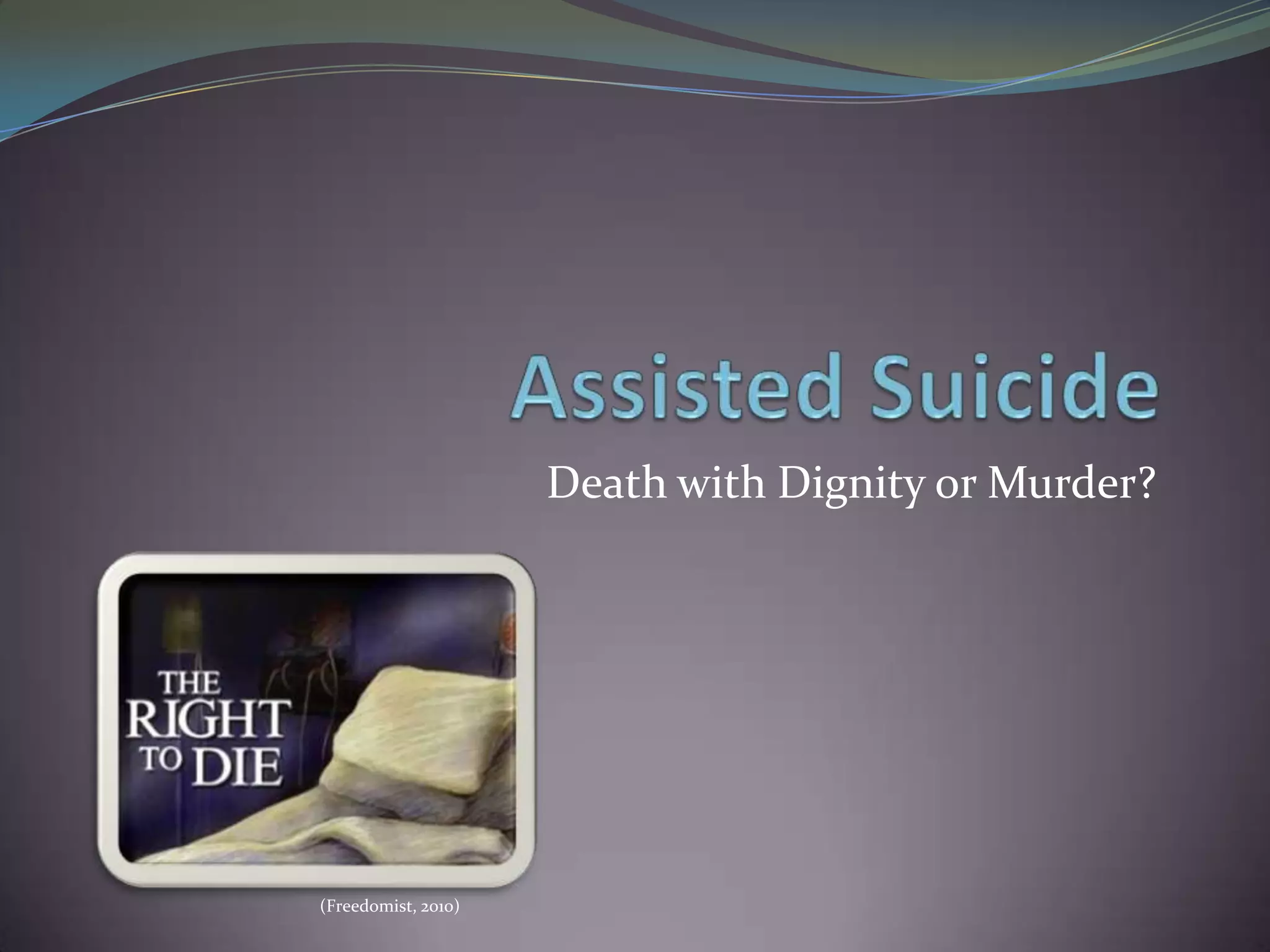
Death with Dignity or Murder?


(Freedomist, 2010)
What is Assisted Suicide?
 General term for helping
 a patient to terminate
 their life

 Majority of assisted
 suicide requests are from
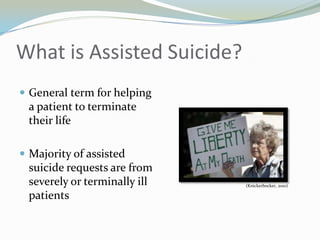
 severely or terminally ill   (Knickerbocker, 2010)

 patients
Types of Assisted Suicide
Euthanasia:                        Physician-assisted suicide:

                                    Physician prescribes the
 Physician prescribes the           treatment
  treatment
                                    Patient administers the
 Physician directly administers     treatment
  the treatment to the patient
                                    Physician does not
                                     administer the treatment
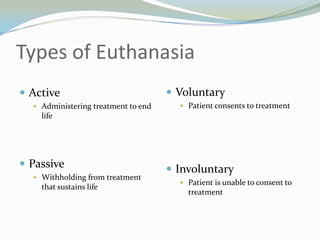
Types of Euthanasia
 Active                              Voluntary
   Administering treatment to end      Patient consents to treatment
    life


 Passive                             Involuntary
   Withholding from treatment
                                        Patient is unable to consent to
    that sustains life
                                         treatment
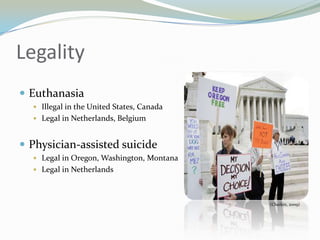
Legality
 Euthanasia
   Illegal in the United States, Canada
   Legal in Netherlands, Belgium


 Physician-assisted suicide
   Legal in Oregon, Washington, Montana
   Legal in Netherlands


                                           (Chaikin, 2009)
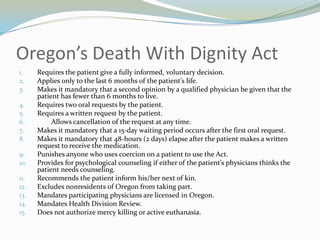
Oregon’s Death With Dignity Act
1.    Requires the patient give a fully informed, voluntary decision.
2.    Applies only to the last 6 months of the patient’s life.
3.    Makes it mandatory that a second opinion by a qualified physician be given that the
      patient has fewer than 6 months to live.
4.    Requires two oral requests by the patient.
5.    Requires a written request by the patient.
6.         Allows cancellation of the request at any time.
7.    Makes it mandatory that a 15-day waiting period occurs after the first oral request.
8.    Makes it mandatory that 48-hours (2 days) elapse after the patient makes a written
      request to receive the medication.
9.    Punishes anyone who uses coercion on a patient to use the Act.
10.   Provides for psychological counseling if either of the patient’s physicians thinks the
      patient needs counseling.
11.   Recommends the patient inform his/her next of kin.
12.   Excludes nonresidents of Oregon from taking part.
13.   Mandates participating physicians are licensed in Oregon.
14.   Mandates Health Division Review.
15.   Does not authorize mercy killing or active euthanasia.
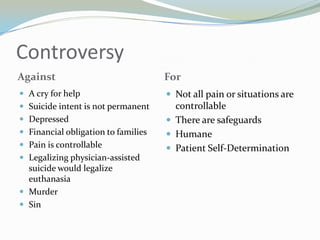
Controversy
Against                              For
 A cry for help                      Not all pain or situations are
 Suicide intent is not permanent      controllable
 Depressed                           There are safeguards
 Financial obligation to families    Humane
 Pain is controllable                Patient Self-Determination
 Legalizing physician-assisted
  suicide would legalize
  euthanasia
 Murder
 Sin
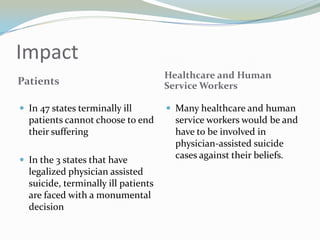
Impact
                                     Healthcare and Human
Patients                             Service Workers

 In 47 states terminally ill         Many healthcare and human
  patients cannot choose to end        service workers would be and
  their suffering                      have to be involved in
                                       physician-assisted suicide
 In the 3 states that have
                                       cases against their beliefs.
  legalized physician assisted
  suicide, terminally ill patients
  are faced with a monumental
  decision
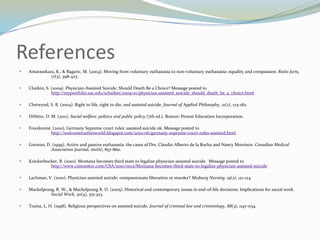
References
   Amarasekara, K., & Bagaric, M. (2004). Moving from voluntary euthanasia to non-voluntary euthanasia: equality and compassion. Ratio Juris,
              17(3), 398-423.

   Chaikin, S. (2009). Physician-Assisted Suicide: Should Death Be a Choice? Message posted to
                http://myportfolio.usc.edu/schaikin/2009/10/physician-assisted_suicide_should_death_be_a_choice.html

   Chetwynd, S. B. (2004). Right to life, right to die, and assisted suicide. Journal of Applied Philosophy, 21(2), 174-182.

   DiNitto, D. M. (2011). Social welfare: politics and public policy (7th ed.). Boston: Person Education Incorporation.

   Freedomist. (2010). Germany Supreme court rules: assisted suicide ok. Message posted to
               http://welcometoafreeworld.blogspot.com/2010/06/germany-supreme-court-rules-assisted.html

   Gorman, D. (1999). Active and passive euthanasia: the cases of Drs. Claudio Alberto de la Rocha and Nancy Morrison. Canadian Medical
              Association Journal, 160(6), 857-860.

   Knickerbocker, B. (2010). Montana becomes third state to legalize physician-assisted suicide. Message posted to
              http://www.csmonitor.com/USA/2010/0102/Montana-becomes-third-state-to-legalize-physician-assisted-suicide

   Lachman, V. (2010). Physician-assisted suicide: compassionate liberation or murder? Medsurg Nursing, 19(2), 121-124.

   Mackelprang, R. W., & Mackelprang R. D. (2005). Historical and contemporary issues in end-of-life decisions: Implications for social work.
              Social Work, 50(4), 315-323.

   Traina, L. H. (1998). Religious perspectives on assisted suicide. Journal of criminal law and criminology, 88(3), 1147-1154.

Assisted suicide presentation

  • 1.
    Death with Dignityor Murder? (Freedomist, 2010)
  • 2.
    What is AssistedSuicide?  General term for helping a patient to terminate their life  Majority of assisted suicide requests are from severely or terminally ill (Knickerbocker, 2010) patients
  • 3.
    Types of AssistedSuicide Euthanasia: Physician-assisted suicide:  Physician prescribes the  Physician prescribes the treatment treatment  Patient administers the  Physician directly administers treatment the treatment to the patient  Physician does not administer the treatment
  • 4.
    Types of Euthanasia Active  Voluntary  Administering treatment to end  Patient consents to treatment life  Passive  Involuntary  Withholding from treatment  Patient is unable to consent to that sustains life treatment
  • 5.
    Legality  Euthanasia  Illegal in the United States, Canada  Legal in Netherlands, Belgium  Physician-assisted suicide  Legal in Oregon, Washington, Montana  Legal in Netherlands (Chaikin, 2009)
  • 6.
    Oregon’s Death WithDignity Act 1. Requires the patient give a fully informed, voluntary decision. 2. Applies only to the last 6 months of the patient’s life. 3. Makes it mandatory that a second opinion by a qualified physician be given that the patient has fewer than 6 months to live. 4. Requires two oral requests by the patient. 5. Requires a written request by the patient. 6. Allows cancellation of the request at any time. 7. Makes it mandatory that a 15-day waiting period occurs after the first oral request. 8. Makes it mandatory that 48-hours (2 days) elapse after the patient makes a written request to receive the medication. 9. Punishes anyone who uses coercion on a patient to use the Act. 10. Provides for psychological counseling if either of the patient’s physicians thinks the patient needs counseling. 11. Recommends the patient inform his/her next of kin. 12. Excludes nonresidents of Oregon from taking part. 13. Mandates participating physicians are licensed in Oregon. 14. Mandates Health Division Review. 15. Does not authorize mercy killing or active euthanasia.
  • 7.
    Controversy Against For  A cry for help  Not all pain or situations are  Suicide intent is not permanent controllable  Depressed  There are safeguards  Financial obligation to families  Humane  Pain is controllable  Patient Self-Determination  Legalizing physician-assisted suicide would legalize euthanasia  Murder  Sin
  • 8.
    Impact Healthcare and Human Patients Service Workers  In 47 states terminally ill  Many healthcare and human patients cannot choose to end service workers would be and their suffering have to be involved in physician-assisted suicide  In the 3 states that have cases against their beliefs. legalized physician assisted suicide, terminally ill patients are faced with a monumental decision
  • 9.
    References  Amarasekara, K., & Bagaric, M. (2004). Moving from voluntary euthanasia to non-voluntary euthanasia: equality and compassion. Ratio Juris, 17(3), 398-423.  Chaikin, S. (2009). Physician-Assisted Suicide: Should Death Be a Choice? Message posted to http://myportfolio.usc.edu/schaikin/2009/10/physician-assisted_suicide_should_death_be_a_choice.html  Chetwynd, S. B. (2004). Right to life, right to die, and assisted suicide. Journal of Applied Philosophy, 21(2), 174-182.  DiNitto, D. M. (2011). Social welfare: politics and public policy (7th ed.). Boston: Person Education Incorporation.  Freedomist. (2010). Germany Supreme court rules: assisted suicide ok. Message posted to http://welcometoafreeworld.blogspot.com/2010/06/germany-supreme-court-rules-assisted.html  Gorman, D. (1999). Active and passive euthanasia: the cases of Drs. Claudio Alberto de la Rocha and Nancy Morrison. Canadian Medical Association Journal, 160(6), 857-860.  Knickerbocker, B. (2010). Montana becomes third state to legalize physician-assisted suicide. Message posted to http://www.csmonitor.com/USA/2010/0102/Montana-becomes-third-state-to-legalize-physician-assisted-suicide  Lachman, V. (2010). Physician-assisted suicide: compassionate liberation or murder? Medsurg Nursing, 19(2), 121-124.  Mackelprang, R. W., & Mackelprang R. D. (2005). Historical and contemporary issues in end-of-life decisions: Implications for social work. Social Work, 50(4), 315-323.  Traina, L. H. (1998). Religious perspectives on assisted suicide. Journal of criminal law and criminology, 88(3), 1147-1154.