Samsung
Which Discover new
Experiences and
Possibilities
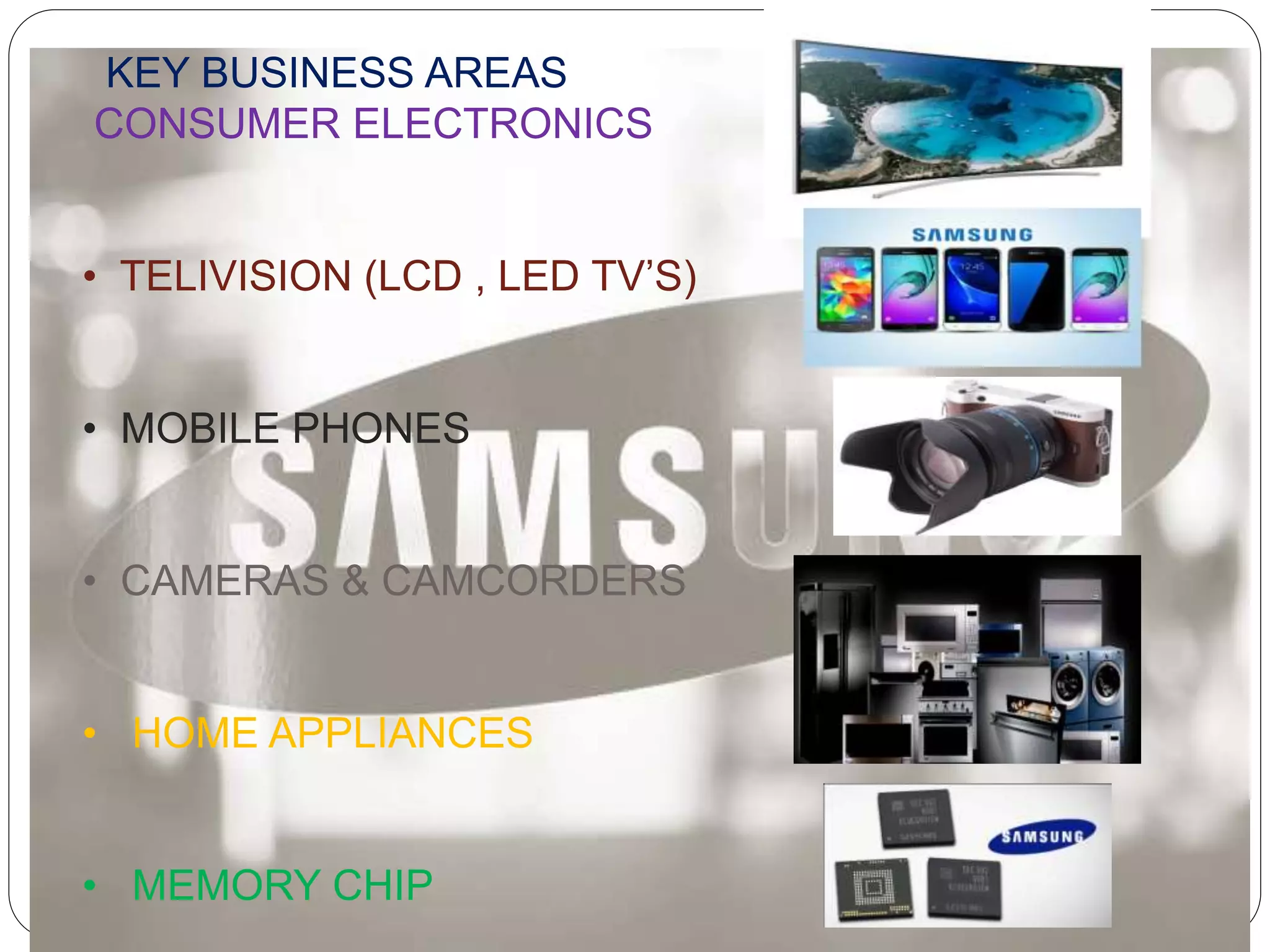
KEY BUSINESS AREAS
CONSUMER ELECTRONICS
• TELIVISION (LCD , LED TV’S)
• MOBILE PHONES
• CAMERAS & CAMCORDERS
• HOME APPLIANCES
• MEMORY CHIP
Samsung’s Focus On Design Innovation
◊ Design looks attractive compared to
competitors.
◊ Too much attention to Volume & Cost of
Production.
◊ Beginnig of design era.
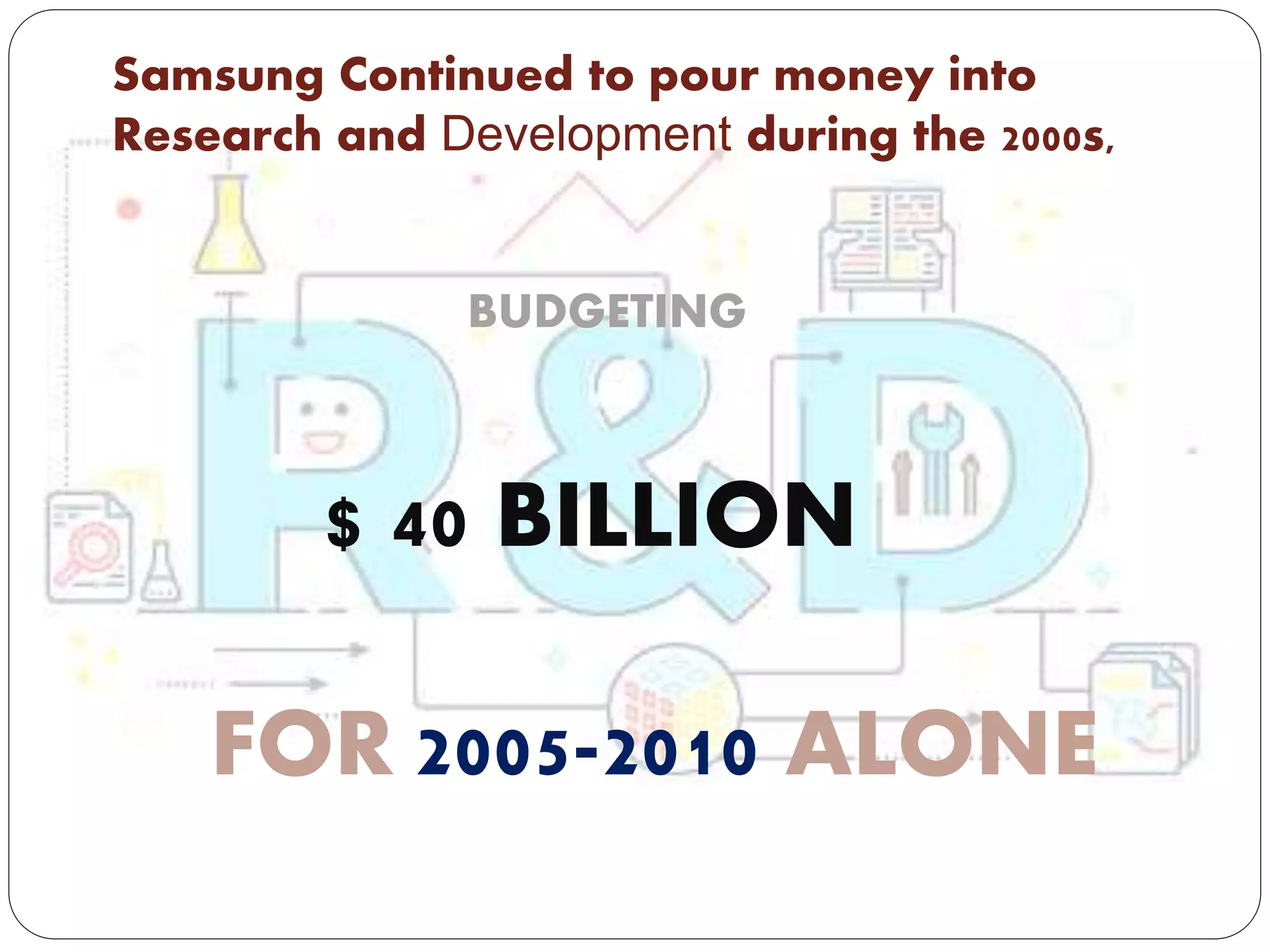
Samsung Continued to pour money into
Research and Development during the 2000s,
BUDGETING
$ 40 BILLION
FOR 2005-2010 ALONE
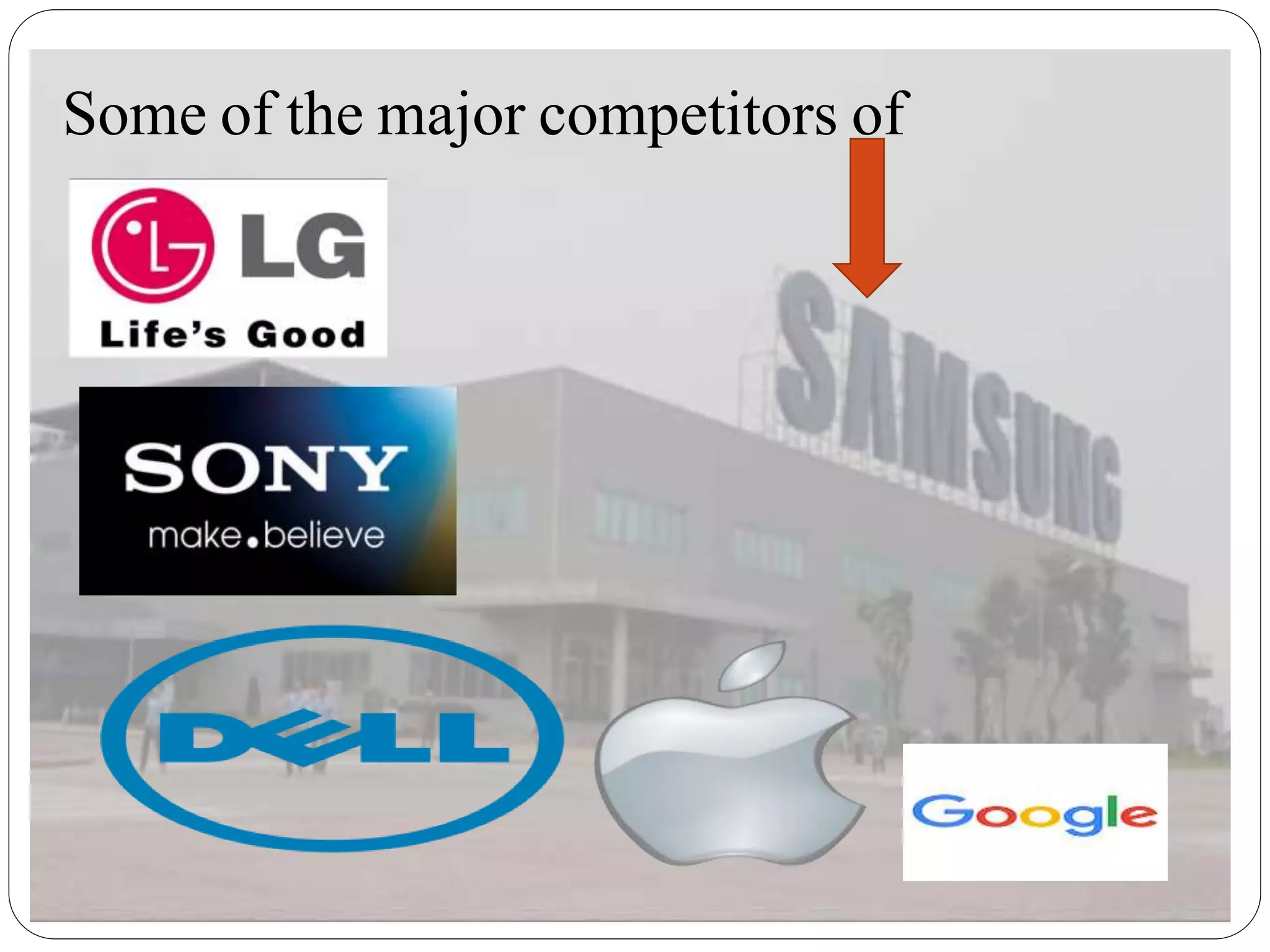
Some of the major competitors of
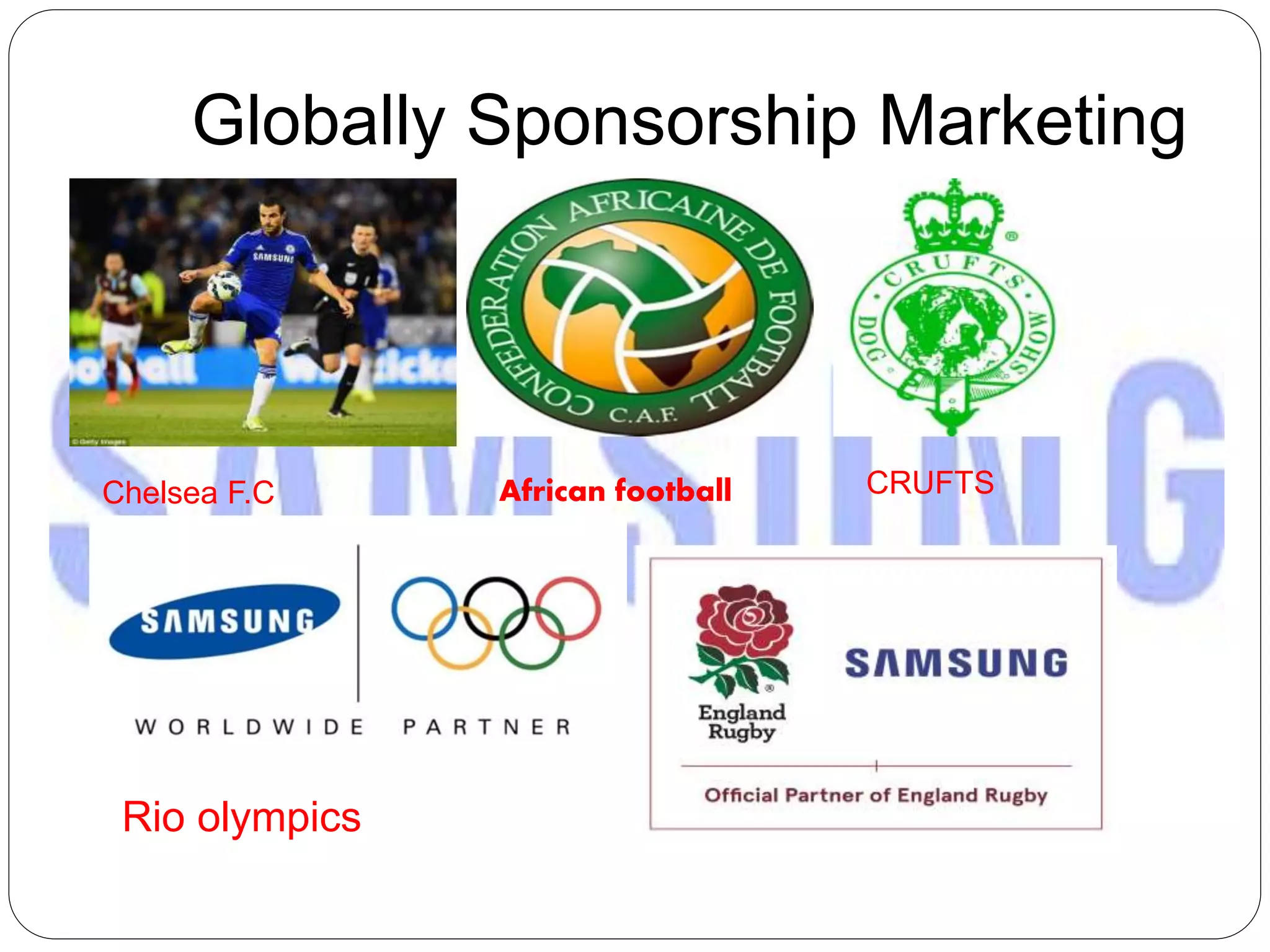
Globally Sponsorship Marketing
Chelsea F.C African football CRUFTS
Rio olympics
• Samsung Electronics now ranks
among the worlds ten most valuable
global brands.
• And also it is become 2nd most
respected electronic company in
the world.
BRAND VALUE
COMPANY GOAL
› With recorded sales of $327 Billion in 2013
and more than 2,75,000 employees world-
wide, Samsung continues to work towards
its goal of earning $400 billion in revenue
by the year 2020.
Questions of the case study
1. what are Samsung’s
Greatest competition
strengths ?
Answer : 1
Throughout Samsung’s existence, the brand evolved with the chang
-ing times resulting in various Competitive strengths. In the begining,
samsung focused on volume and market domination to help expose
the Samsung brand as a true competitor against other powerhouse
brands like sony and RCA. Then, after the Asian financial crisis in the
late 90s, Samsung switched strategies by cutting company fat, empha
-sizing product quality and, allowed Samsung to maximize their prod
-uct turnover ratio to less than six months. More recently, Samsung’s
greatest competitive strength comes from a combination of research
towards innovations technology. Key partenerships with Sony and
Microsoft, and their successful ad campaigns/sponsorships.
2. Samsung’s goal of earning
$400
billion in sales by 2020
would
bring it to the same level as
Walmart. Is this a feasible
goal?
Why or why not?
ANSWER:- 2
We did not see reason why Samsung would
Not be able to reach their goal of $400 billion in
sales by 2020. Samsung is Smart-
Phones, Tv’s, memory semiconductors. Their
leadership position in these Particular
segments of the market suggests the brands
will thrive once it expands into new areas such
as the health
Care and home energy markets.
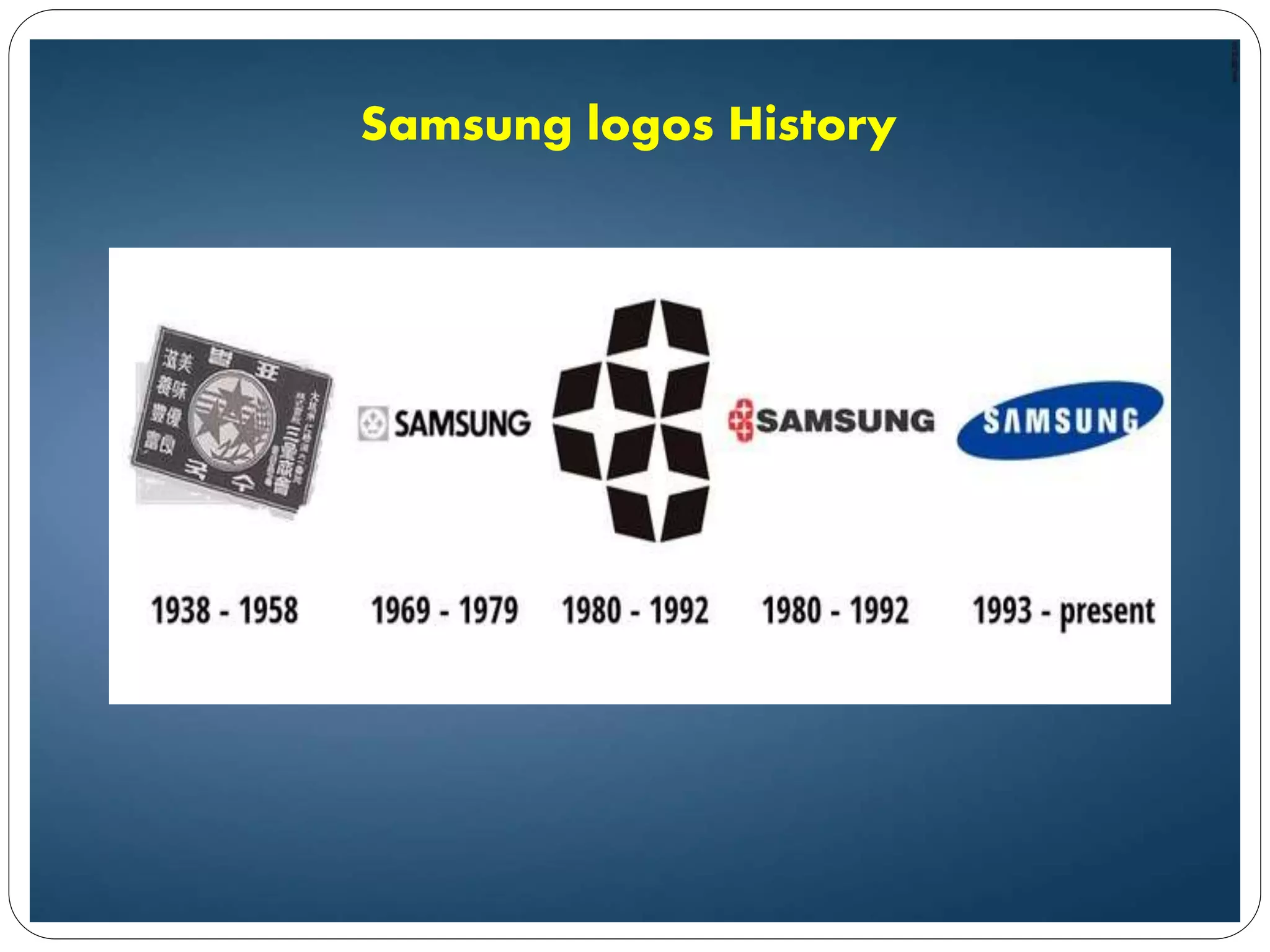
Samsung logos History
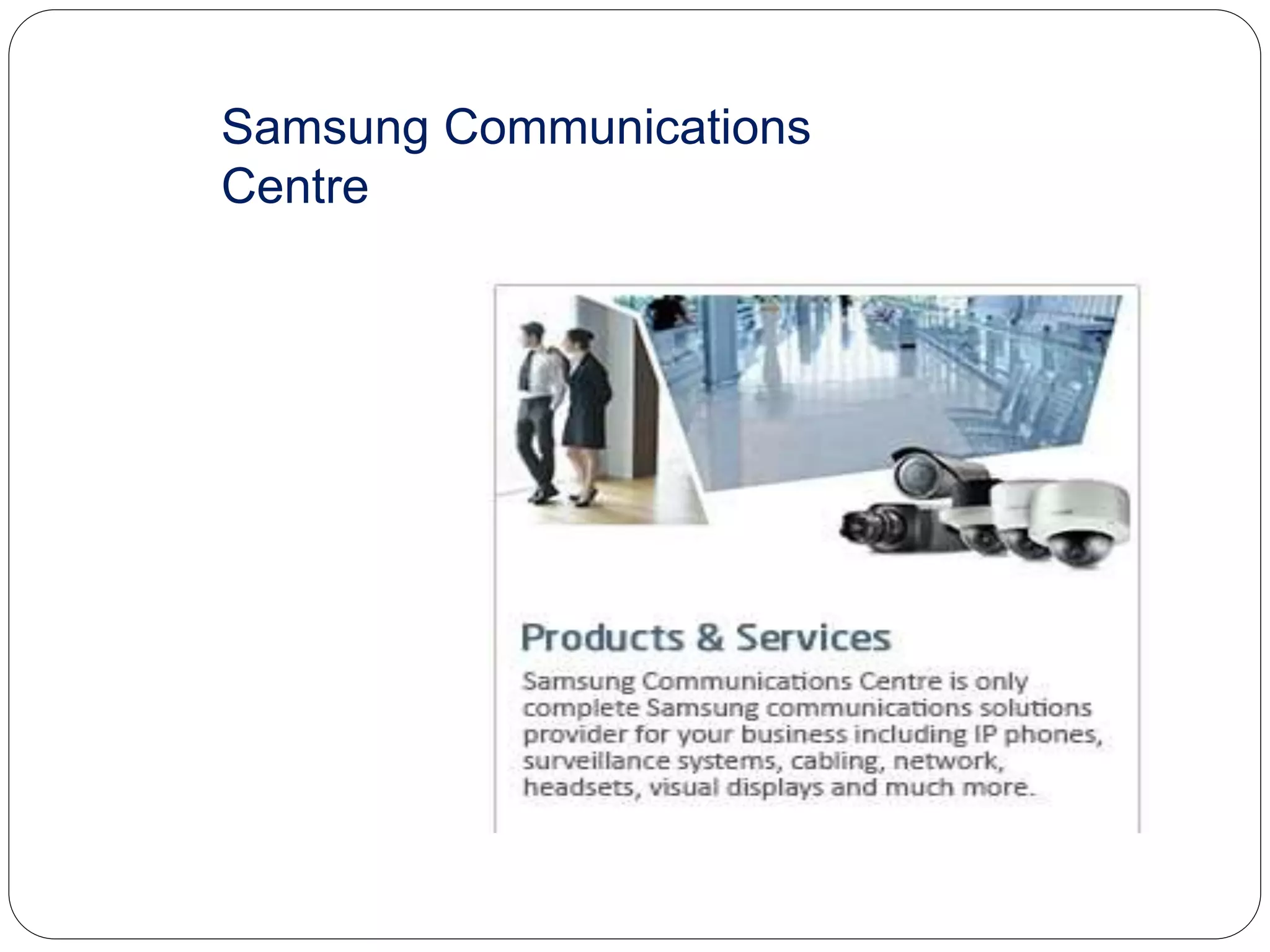
Samsung Communications
Centre
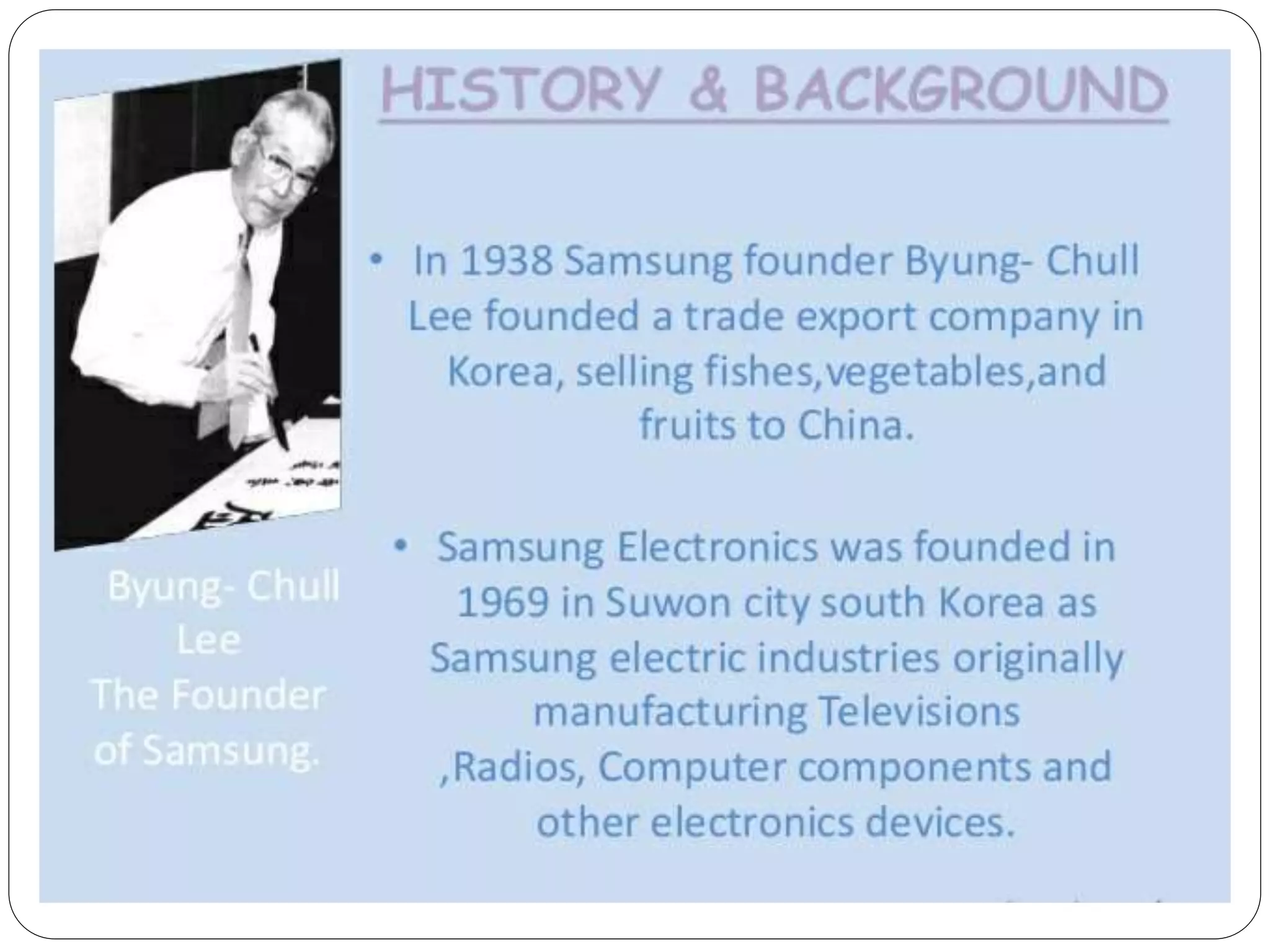
i. History and Background
ii. Key Business Area
iii. Focus on product design
iv. Research and
development
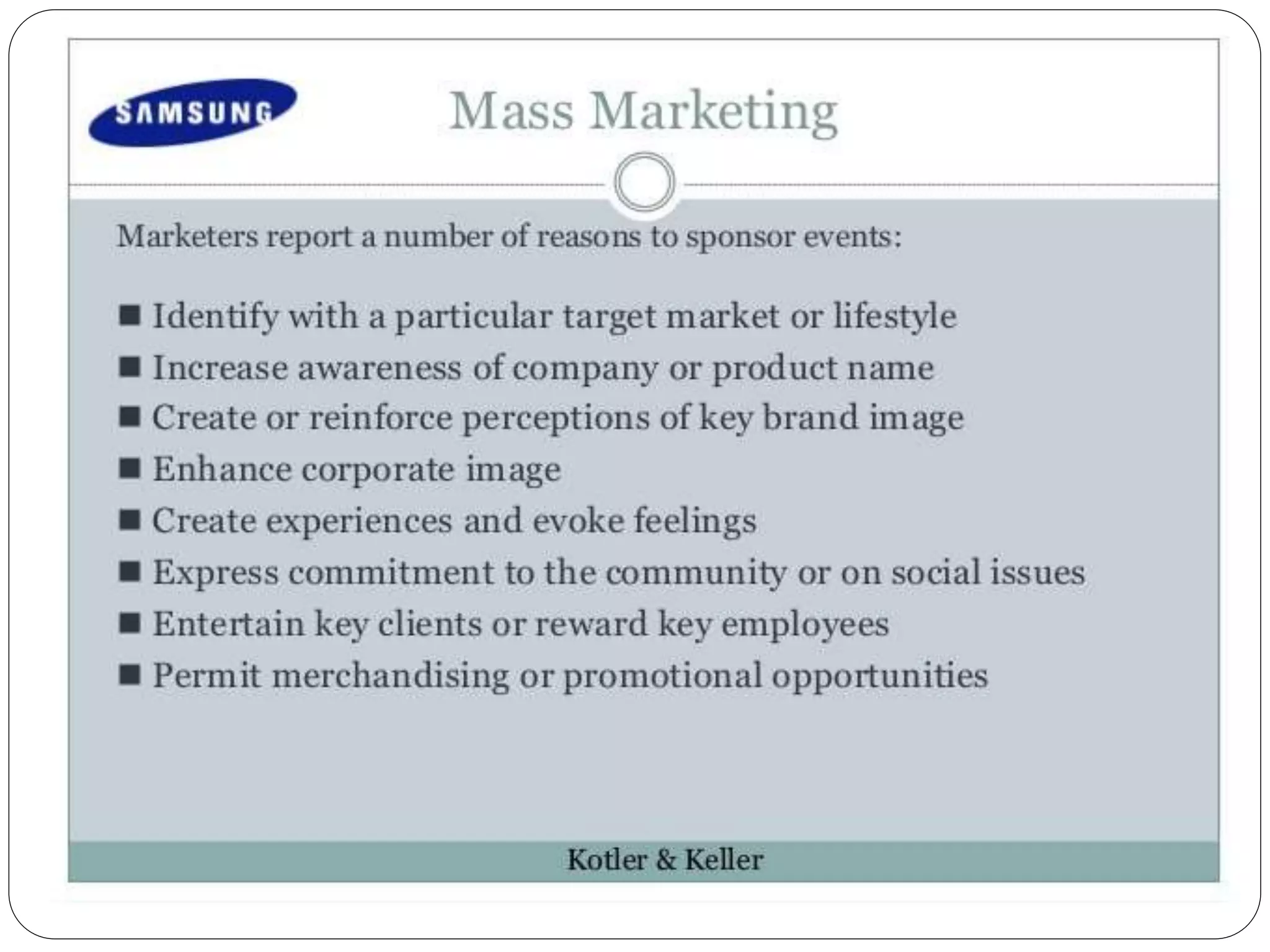
v. Mass marketing by kotler
& keller
vi. Competitors
vii. Globally Sponsorship
Thank
you
Disclaimer!
Created by Akash Nageshwar Sen, SEMCOM College, SPU, during a Marketing
Internship under Prof. Sameer Mathur, IIM – Lucknow.
Akash Nageshwar
Sen
(SEMCOM)
Prof. Sameer Mathur
(IIM – Lucknow)

Assignment 1

  • 1.
  • 4.
    KEY BUSINESS AREAS CONSUMERELECTRONICS • TELIVISION (LCD , LED TV’S) • MOBILE PHONES • CAMERAS & CAMCORDERS • HOME APPLIANCES • MEMORY CHIP
  • 5.
    Samsung’s Focus OnDesign Innovation ◊ Design looks attractive compared to competitors. ◊ Too much attention to Volume & Cost of Production. ◊ Beginnig of design era.
  • 6.
    Samsung Continued topour money into Research and Development during the 2000s, BUDGETING $ 40 BILLION FOR 2005-2010 ALONE
  • 8.
    Some of themajor competitors of
  • 9.
    Globally Sponsorship Marketing ChelseaF.C African football CRUFTS Rio olympics
  • 10.
    • Samsung Electronicsnow ranks among the worlds ten most valuable global brands. • And also it is become 2nd most respected electronic company in the world. BRAND VALUE
  • 11.
    COMPANY GOAL › Withrecorded sales of $327 Billion in 2013 and more than 2,75,000 employees world- wide, Samsung continues to work towards its goal of earning $400 billion in revenue by the year 2020.
  • 12.
    Questions of thecase study 1. what are Samsung’s Greatest competition strengths ?
  • 13.
    Answer : 1 ThroughoutSamsung’s existence, the brand evolved with the chang -ing times resulting in various Competitive strengths. In the begining, samsung focused on volume and market domination to help expose the Samsung brand as a true competitor against other powerhouse brands like sony and RCA. Then, after the Asian financial crisis in the late 90s, Samsung switched strategies by cutting company fat, empha -sizing product quality and, allowed Samsung to maximize their prod -uct turnover ratio to less than six months. More recently, Samsung’s greatest competitive strength comes from a combination of research towards innovations technology. Key partenerships with Sony and Microsoft, and their successful ad campaigns/sponsorships.
  • 14.
    2. Samsung’s goalof earning $400 billion in sales by 2020 would bring it to the same level as Walmart. Is this a feasible goal? Why or why not?
  • 15.
    ANSWER:- 2 We didnot see reason why Samsung would Not be able to reach their goal of $400 billion in sales by 2020. Samsung is Smart- Phones, Tv’s, memory semiconductors. Their leadership position in these Particular segments of the market suggests the brands will thrive once it expands into new areas such as the health Care and home energy markets.
  • 16.
  • 17.
  • 18.
    i. History andBackground ii. Key Business Area iii. Focus on product design iv. Research and development v. Mass marketing by kotler & keller vi. Competitors vii. Globally Sponsorship
  • 19.
  • 20.
    Disclaimer! Created by AkashNageshwar Sen, SEMCOM College, SPU, during a Marketing Internship under Prof. Sameer Mathur, IIM – Lucknow. Akash Nageshwar Sen (SEMCOM) Prof. Sameer Mathur (IIM – Lucknow)