Asia-pacific Institute Of
Management
Presentation on Case Study of Samsung
PGDM GEN.
(2019-21)
Presented By :
(Group – 6)
Ayushi Shekhar (2K19G009)
Dewank (2K19G013)
Harish (2K19G015)
Jini (2K19G016)
Mashad (2K19G055)
Shadabur Rahman
Submitted To :
Dr. Surabhi
Goyal
KEY
POINTS
 Introduction
 Diversification Of Samsung
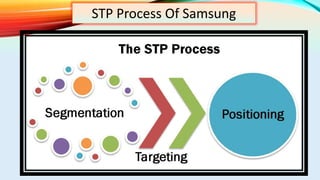
 STP Process Of Samsung
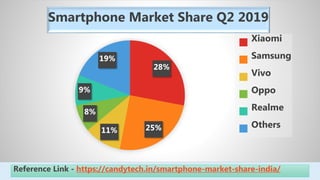
 Smartphone Market Share in Q2 2019
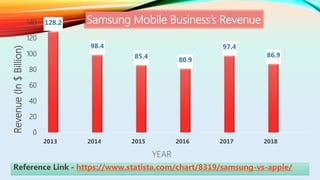
 Samsung Mobile Business’s Revenue
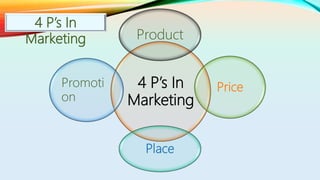
 4 P’s Of Marketing – Marketing Mix
 SWOT Analysis
Introduction
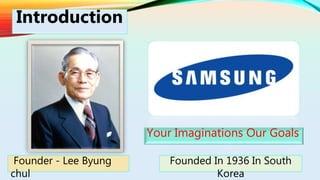
Founder - Lee Byung
chul
Founded In 1936 In South
Korea
Your Imaginations Our Goals
Diversification Of Samsung
 Samsung was Started With Dried Fish, Noodles and Groceries
 Sugar Refinery in 1947 And Woollen Mill in 1954
 In 1960 - Samsung Entered The Electronic Industry
 In 1960 - First Electronic Product was a Black & White Television Set
 In 1980 - Samsung Started To Make Switchboard, Fax Manufacturing System and
then In Mobile Phones
 In 1990 - Samsung Entered in Building Construction and Securities System
Diversification Of Samsung
 Samsung was also in Military Tank
Manufacturing Sector, Insurance Sector,
Medical Sector.
In 1992 - Samsung became World’s Largest
Producer of Memory Chips
 In 1995 - Samsung created its First Liquid-
Crystal Display Screen
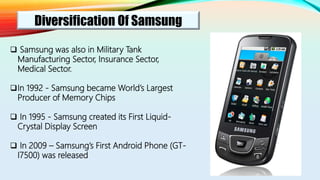
 In 2009 – Samsung’s First Android Phone (GT-
I7500) was released
STP Process Of Samsung
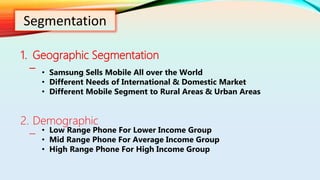
Segmentation
1. Geographic Segmentation
–
2. Demographic
–
• Samsung Sells Mobile All over the World
• Different Needs of International & Domestic Market
• Different Mobile Segment to Rural Areas & Urban Areas
• Low Range Phone For Lower Income Group
• Mid Range Phone For Average Income Group
• High Range Phone For High Income Group
Segmentation
3. Psychographic Segmentation –
4. Behavioural Segmentation –
• Phones Based on The Lifestyle Of People
• Phones Based on The Status quo of People
• Phone is a basic amenity nowadays
• Phones are being designed to cater to personal preferences of customer.
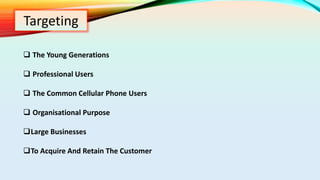
Targeting
 The Young Generations
 Professional Users
 The Common Cellular Phone Users
 Organisational Purpose
Large Businesses
To Acquire And Retain The Customer
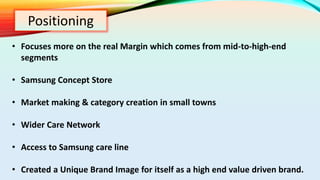
Positioning
• Focuses more on the real Margin which comes from mid-to-high-end
segments
• Samsung Concept Store
• Market making & category creation in small towns
• Wider Care Network
• Access to Samsung care line
• Created a Unique Brand Image for itself as a high end value driven brand.
28%
25%11%
8%
9%
19%
Smartphone Market Share Q2 2019
Xiaomi
Samsung
Vivo
Oppo
Realme
Others
Reference Link - https://candytech.in/smartphone-market-share-india/
128.2
98.4
85.4
80.9
97.4
86.9
0
20
40
60
80
100
120
140
2013 2014 2015 2016 2017 2018
Revenue(In$Billion)
YEAR
Samsung Mobile Business’s Revenue
Reference Link - https://www.statista.com/chart/8319/samsung-vs-apple/
4 P’s In
Marketing
Product
Price
Place
Promoti
on
4 P’s In
Marketing
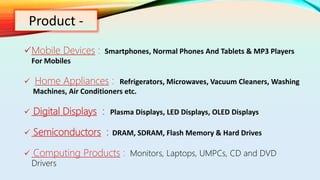
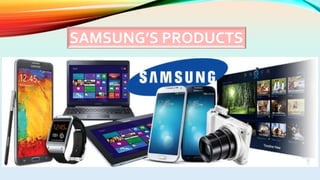
Product -
Mobile Devices : Smartphones, Normal Phones And Tablets & MP3 Players
For Mobiles
 Home Appliances : Refrigerators, Microwaves, Vacuum Cleaners, Washing
Machines, Air Conditioners etc.
 Digital Displays : Plasma Displays, LED Displays, OLED Displays
 Semiconductors : DRAM, SDRAM, Flash Memory & Hard Drives
 Computing Products : Monitors, Laptops, UMPCs, CD and DVD
Drivers
SAMSUNG’S PRODUCTS
Price -
1. Skimming Price Policy –
2. Competitive Price Policy –
• High Price At the Launched Time
• Sacrifice High Sales To Gain High Profit
• Drop The Price of the Product due to Competition
• Maintain the price in the Market
• Price of the Product according to Competitive price
• Brand & Quality Matters of the Product
Place -
 Tie-up With Small as well as Large Retailers
 A large Number of Service Centres
 Samsung has their Own Solo Distributors also
 Selling Through E-Commerce Website
 Samsung has covered from Urban To Rural Area
Promotion -
 Samsung uses both Online & Offline Mode of Promotion
 Samsung promotes itself by Sponsorship
 Samsung is doing Internet Marketing Also.
 Samsung uses their products in the Entertainment or Film Industry
 Advertisement through Display in the Film
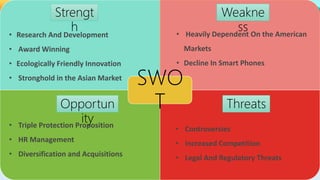
SWO
T
Strengt
h
Weakne
ss
Opportun
ity
Threats
• Research And Development
• Award Winning
• Ecologically Friendly Innovation
• Stronghold in the Asian Market
• Heavily Dependent On the American
Markets
• Decline In Smart Phones
• Triple Protection Proposition
• HR Management
• Diversification and Acquisitions
• Controversies
• Increased Competition
• Legal And Regulatory Threats
Samsung case study Presentation

Samsung case study Presentation

  • 1.
    Asia-pacific Institute Of Management Presentationon Case Study of Samsung PGDM GEN. (2019-21) Presented By : (Group – 6) Ayushi Shekhar (2K19G009) Dewank (2K19G013) Harish (2K19G015) Jini (2K19G016) Mashad (2K19G055) Shadabur Rahman Submitted To : Dr. Surabhi Goyal
  • 2.
    KEY POINTS  Introduction  DiversificationOf Samsung  STP Process Of Samsung  Smartphone Market Share in Q2 2019  Samsung Mobile Business’s Revenue  4 P’s Of Marketing – Marketing Mix  SWOT Analysis
  • 3.
    Introduction Founder - LeeByung chul Founded In 1936 In South Korea Your Imaginations Our Goals
  • 4.
    Diversification Of Samsung Samsung was Started With Dried Fish, Noodles and Groceries  Sugar Refinery in 1947 And Woollen Mill in 1954  In 1960 - Samsung Entered The Electronic Industry  In 1960 - First Electronic Product was a Black & White Television Set  In 1980 - Samsung Started To Make Switchboard, Fax Manufacturing System and then In Mobile Phones  In 1990 - Samsung Entered in Building Construction and Securities System
  • 5.
    Diversification Of Samsung Samsung was also in Military Tank Manufacturing Sector, Insurance Sector, Medical Sector. In 1992 - Samsung became World’s Largest Producer of Memory Chips  In 1995 - Samsung created its First Liquid- Crystal Display Screen  In 2009 – Samsung’s First Android Phone (GT- I7500) was released
  • 6.
  • 7.
    Segmentation 1. Geographic Segmentation – 2.Demographic – • Samsung Sells Mobile All over the World • Different Needs of International & Domestic Market • Different Mobile Segment to Rural Areas & Urban Areas • Low Range Phone For Lower Income Group • Mid Range Phone For Average Income Group • High Range Phone For High Income Group
  • 8.
    Segmentation 3. Psychographic Segmentation– 4. Behavioural Segmentation – • Phones Based on The Lifestyle Of People • Phones Based on The Status quo of People • Phone is a basic amenity nowadays • Phones are being designed to cater to personal preferences of customer.
  • 9.
    Targeting  The YoungGenerations  Professional Users  The Common Cellular Phone Users  Organisational Purpose Large Businesses To Acquire And Retain The Customer
  • 10.
    Positioning • Focuses moreon the real Margin which comes from mid-to-high-end segments • Samsung Concept Store • Market making & category creation in small towns • Wider Care Network • Access to Samsung care line • Created a Unique Brand Image for itself as a high end value driven brand.
  • 11.
    28% 25%11% 8% 9% 19% Smartphone Market ShareQ2 2019 Xiaomi Samsung Vivo Oppo Realme Others Reference Link - https://candytech.in/smartphone-market-share-india/
  • 12.
    128.2 98.4 85.4 80.9 97.4 86.9 0 20 40 60 80 100 120 140 2013 2014 20152016 2017 2018 Revenue(In$Billion) YEAR Samsung Mobile Business’s Revenue Reference Link - https://www.statista.com/chart/8319/samsung-vs-apple/
  • 13.
  • 14.
    Product - Mobile Devices: Smartphones, Normal Phones And Tablets & MP3 Players For Mobiles  Home Appliances : Refrigerators, Microwaves, Vacuum Cleaners, Washing Machines, Air Conditioners etc.  Digital Displays : Plasma Displays, LED Displays, OLED Displays  Semiconductors : DRAM, SDRAM, Flash Memory & Hard Drives  Computing Products : Monitors, Laptops, UMPCs, CD and DVD Drivers
  • 15.
  • 16.
    Price - 1. SkimmingPrice Policy – 2. Competitive Price Policy – • High Price At the Launched Time • Sacrifice High Sales To Gain High Profit • Drop The Price of the Product due to Competition • Maintain the price in the Market • Price of the Product according to Competitive price • Brand & Quality Matters of the Product
  • 17.
    Place -  Tie-upWith Small as well as Large Retailers  A large Number of Service Centres  Samsung has their Own Solo Distributors also  Selling Through E-Commerce Website  Samsung has covered from Urban To Rural Area
  • 18.
    Promotion -  Samsunguses both Online & Offline Mode of Promotion  Samsung promotes itself by Sponsorship  Samsung is doing Internet Marketing Also.  Samsung uses their products in the Entertainment or Film Industry  Advertisement through Display in the Film
  • 19.
    SWO T Strengt h Weakne ss Opportun ity Threats • Research AndDevelopment • Award Winning • Ecologically Friendly Innovation • Stronghold in the Asian Market • Heavily Dependent On the American Markets • Decline In Smart Phones • Triple Protection Proposition • HR Management • Diversification and Acquisitions • Controversies • Increased Competition • Legal And Regulatory Threats