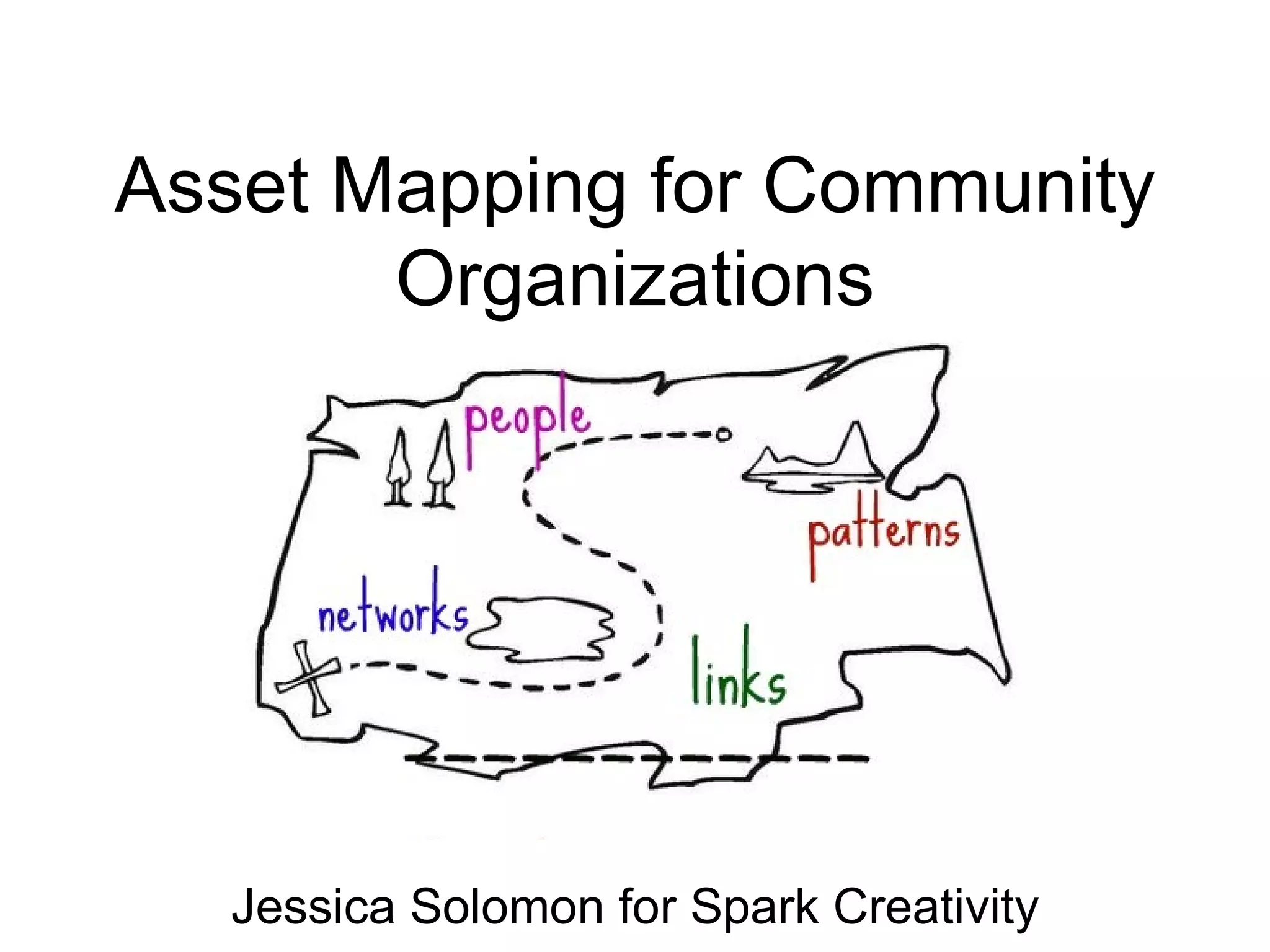
Asset Mapping for Community
       Organizations


   Jessica Solomon for Spark Creativity
What is “Asset Mapping”?
• An Asset Map represents relationships and
  opportunities and helps tell your
  organization’s history (and future!).

• Asset Mapping is the deliberate process of
  synthesizing organizational resources in order
  to build on what’s working and address
  challenges.

     • 1.    What is working in your organization? List at
       least 3 things.
     • 2.   What are some challenges? List 3 things.
Why is Asset Mapping important?
 The information generated can be used in a
   variety of ways, for example:
 • Awareness and marketing — promotion of assets and services to
   stakeholders and potential stakeholders


 • Economic development — information to leverage growth in
   expanding and development


 • Planning and policy — inform municipal decision-making related
   to land use, social planning, community amenities and
   infrastructure


 • Networks and collaboration — information to connect cultural
   groups

 Rank in order of importance to you and your organization.
Well…let’s get to it!!!

Step 1: Brainstorm
Step 2: Refine
Step 3: Create
Step 4: Maintain (you’ll do this step at
  home)
Step 1: Brainstorm
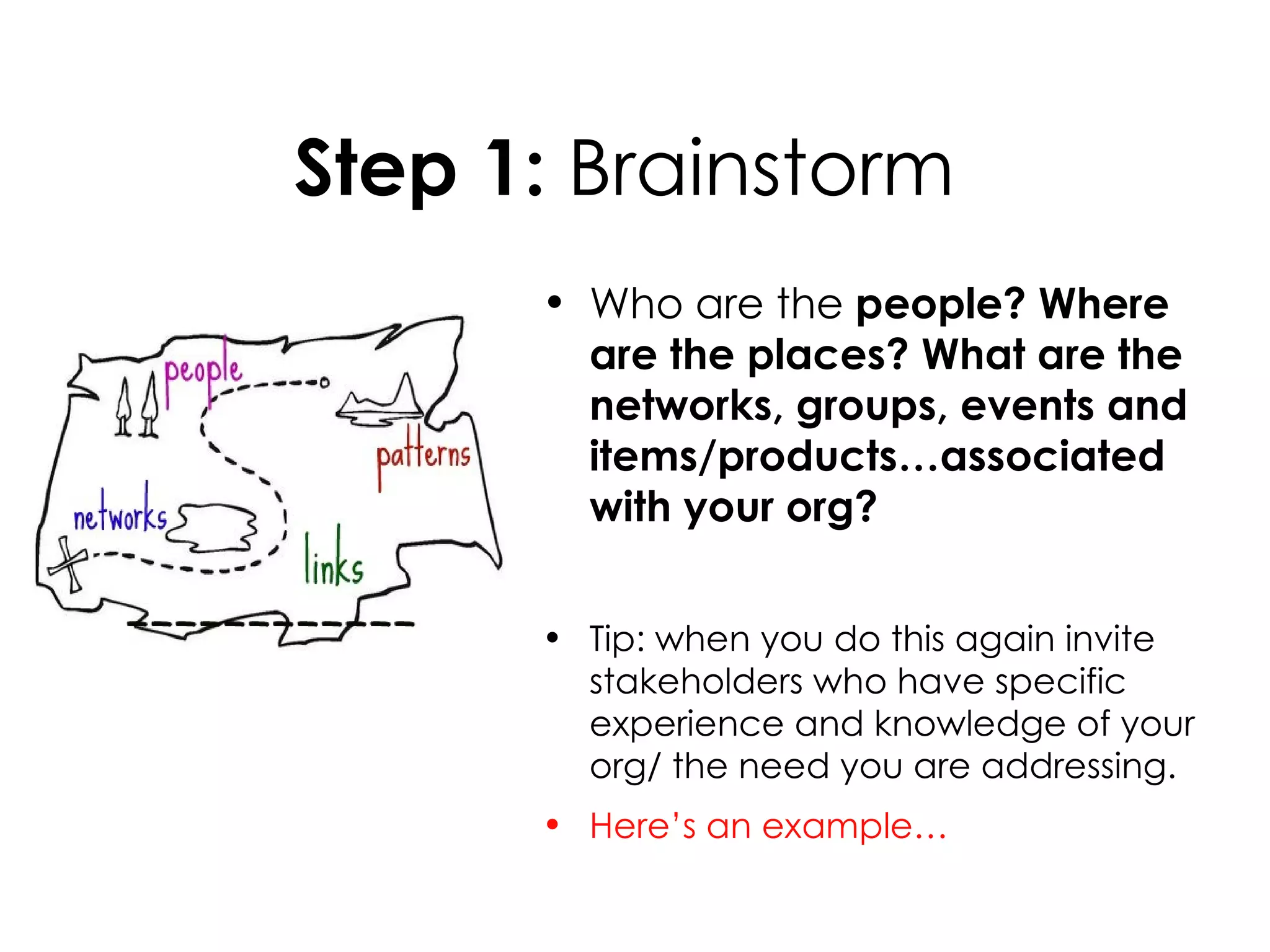
      • Who are the people? Where
        are the places? What are the
        networks, groups, events and
        items/products…associated
        with your org?


      • Tip: when you do this again invite
        stakeholders who have specific
        experience and knowledge of your
        org/ the need you are addressing.
      • Here’s an example…
Step 2: Refine
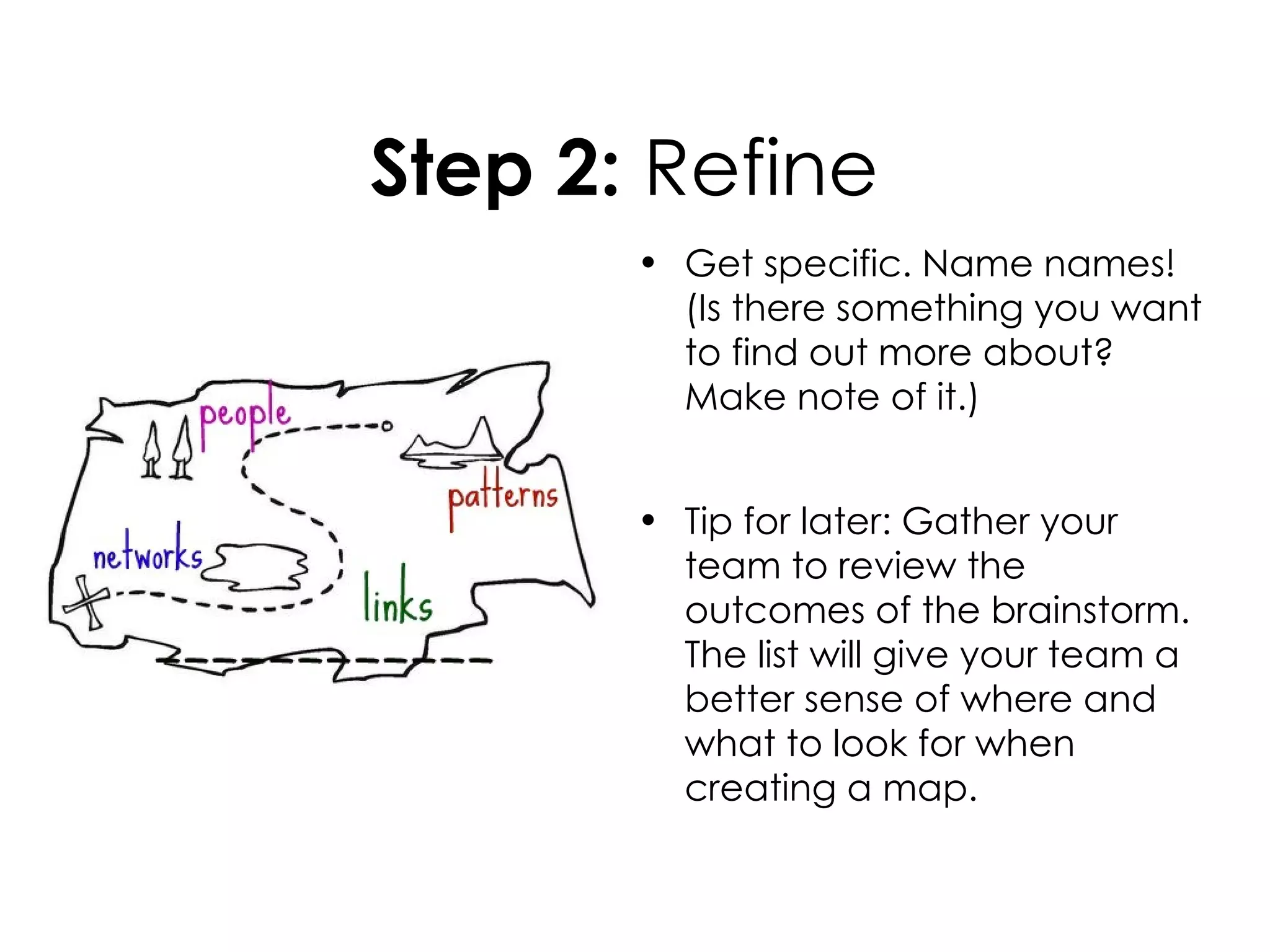
       • Get specific. Name names!
         (Is there something you want
         to find out more about?
         Make note of it.)


       • Tip for later: Gather your
         team to review the
         outcomes of the brainstorm.
         The list will give your team a
         better sense of where and
         what to look for when
         creating a map.
Step 3: Create
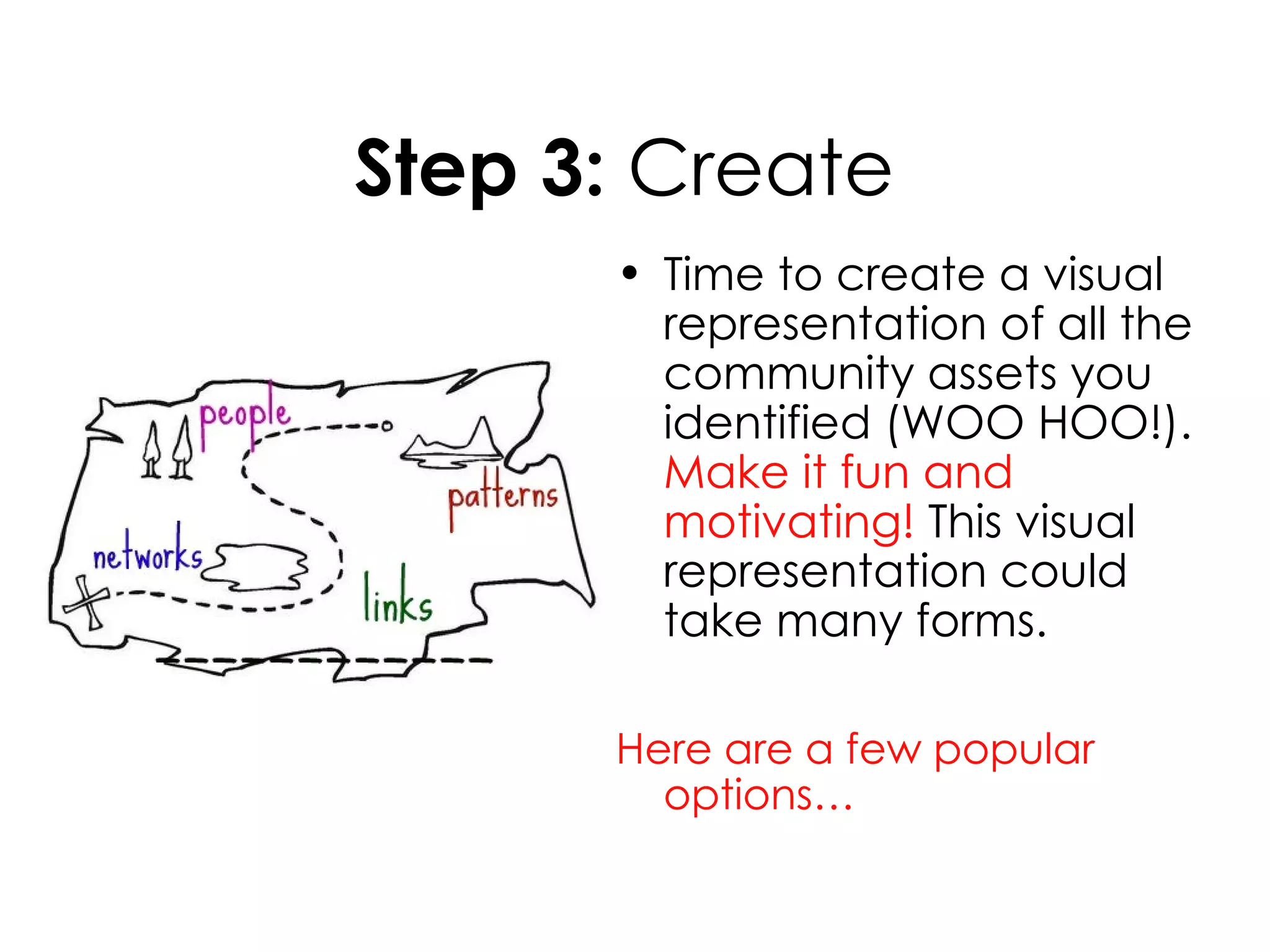
      • Time to create a visual
        representation of all the
        community assets you
        identified (WOO HOO!).
        Make it fun and
        motivating! This visual
        representation could
        take many forms.

      Here are a few popular
        options…
Step 4: Maintain
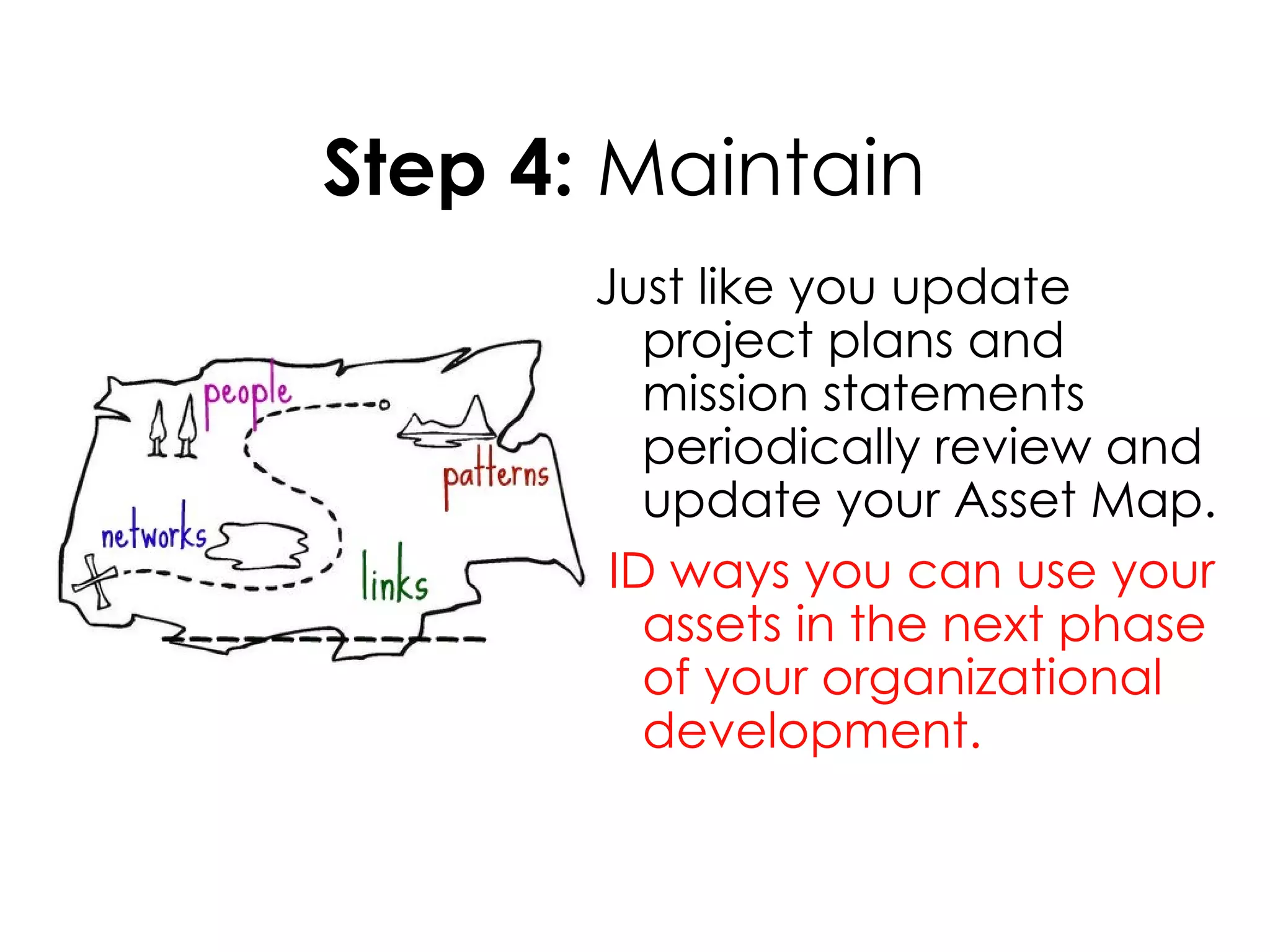
       Just like you update
          project plans and
          mission statements
          periodically review and
          update your Asset Map.
        ID ways you can use your
          assets in the next phase
          of your organizational
          development.
“Critical Praxis = Action +
Reflection"

- Paulo Freire

Assetmapping 12997755836769 Phpapp02

  • 1.
    Asset Mapping forCommunity Organizations Jessica Solomon for Spark Creativity
  • 2.
    What is “AssetMapping”? • An Asset Map represents relationships and opportunities and helps tell your organization’s history (and future!). • Asset Mapping is the deliberate process of synthesizing organizational resources in order to build on what’s working and address challenges. • 1. What is working in your organization? List at least 3 things. • 2. What are some challenges? List 3 things.
  • 3.
    Why is AssetMapping important? The information generated can be used in a variety of ways, for example: • Awareness and marketing — promotion of assets and services to stakeholders and potential stakeholders • Economic development — information to leverage growth in expanding and development • Planning and policy — inform municipal decision-making related to land use, social planning, community amenities and infrastructure • Networks and collaboration — information to connect cultural groups Rank in order of importance to you and your organization.
  • 4.
    Well…let’s get toit!!! Step 1: Brainstorm Step 2: Refine Step 3: Create Step 4: Maintain (you’ll do this step at home)
  • 5.
    Step 1: Brainstorm • Who are the people? Where are the places? What are the networks, groups, events and items/products…associated with your org? • Tip: when you do this again invite stakeholders who have specific experience and knowledge of your org/ the need you are addressing. • Here’s an example…
  • 6.
    Step 2: Refine • Get specific. Name names! (Is there something you want to find out more about? Make note of it.) • Tip for later: Gather your team to review the outcomes of the brainstorm. The list will give your team a better sense of where and what to look for when creating a map.
  • 7.
    Step 3: Create • Time to create a visual representation of all the community assets you identified (WOO HOO!). Make it fun and motivating! This visual representation could take many forms. Here are a few popular options…
  • 8.
    Step 4: Maintain Just like you update project plans and mission statements periodically review and update your Asset Map. ID ways you can use your assets in the next phase of your organizational development.
  • 9.
    “Critical Praxis =Action + Reflection" - Paulo Freire