







Capacity-Focused Framework 
Snapshot of the Room 
Asset Mapping Exercise
ABCD FUNDAMENTALS
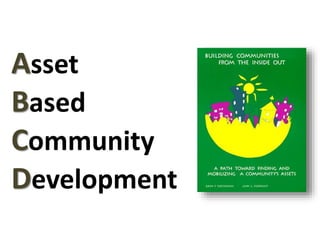
Asset 
Based 
Community 
Development
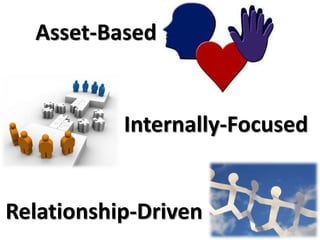
Asset-Based 
Internally-Focused 
Relationship-Driven
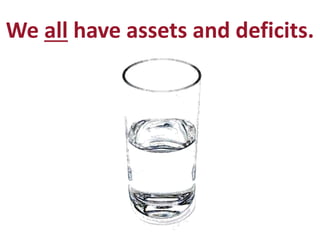
We all have assets and deficits.
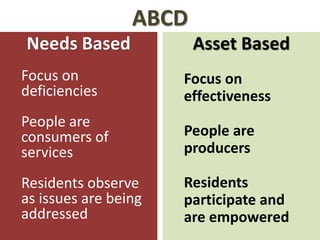
ABCD 
Needs Based 
Focus on 
deficiencies 
People are 
consumers of 
services 
Residents observe 
as issues are being 
addressed 
Asset Based 
Focus on 
effectiveness 
People are 
producers 
Residents 
participate and 
are empowered
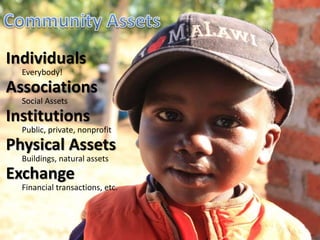
Individuals 
Everybody! 
Associations 
Social Assets 
Institutions 
Public, private, nonprofit 
Physical Assets 
Buildings, natural assets 
Exchange 
Financial transactions, etc.
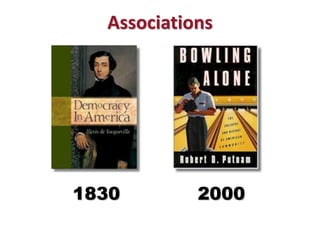
Associations 
1830 2000
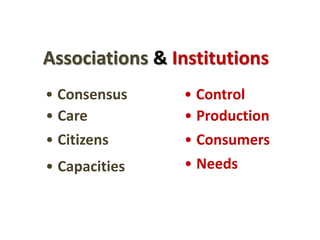
Associations & Institutions 
• Consensus • Control 
• Care • Production 
• Citizens • Consumers 
• Capacities • Needs
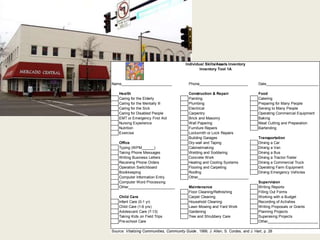
Individual Skills/Assets Inventory 
Inventory Tool 1A 
Name_________________________ Phone________________________ Date__________________________ 
Health Construction & Repair Food 
Caring for the Elderly Painting Catering 
Caring for the Mentally Ill Plumbing Preparing for Many People 
Caring for the Sick Electrical Serving to Many People 
Caring for Disabled People Carpentry Operating Commercial Equipment 
EMT or Emergency First Aid Brick and Masonry Baking 
Nursing Experience Wall Papering Meat Cutting and Preparation 
Nutrition Furniture Repairs Bartending 
Exercise Locksmith or Lock Repairs 
Building Garages Transportation 
Office Dry-wall and Taping Driving a Car 
Typing (WPM______) Cabinetmaking Driving a Van 
Taking Phone Messages Welding and Soddering Driving a Bus 
Writing Business Letters Concrete Work Driving a Tractor-Trailer 
Receiving Phone Orders Heating and Cooling Systems Driving a Commercial Truck 
Operation Switchboard Flooring and Carpeting Operating Farm Equipment 
Bookkeeping Roofing Driving Emergency Vehicles 
Computer Information Entry Other_________________________ 
Computer Word Processing Supervision 
Other_______________________ Maintenance Writing Reports 
Floor Cleaning/Refinishing Filling Out Forms 
Child Care Carpet Cleaning Working with a Budget 
Infant Care (0-1 yr) Household Cleaning Recording of Activities 
Child Care (1-6 yrs) Lawn Mowing and Yard Work Writing Proposals or Grants 
Adolescent Care (7-13) Gardening Planning Projects 
Taking Kids on Field Trips Tree and Shrubbery Care Supervising Projects 
Pre-school Care Other_________________________ 
Source: Vitalizing Communities, Community Guide , 1999, J. Allen, S. Cordes, and J. Hart, p. 28
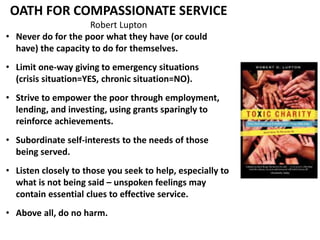
OATH FOR COMPASSIONATE SERVICE 
Robert Lupton 
• Never do for the poor what they have (or could 
have) the capacity to do for themselves. 
• Limit one-way giving to emergency situations 
(crisis situation=YES, chronic situation=NO). 
• Strive to empower the poor through employment, 
lending, and investing, using grants sparingly to 
reinforce achievements. 
• Subordinate self-interests to the needs of those 
being served. 
• Listen closely to those you seek to help, especially to 
what is not being said – unspoken feelings may 
contain essential clues to effective service. 
• Above all, do no harm.
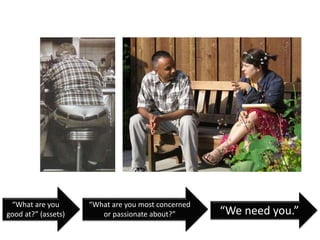
“What are you 
good at?” (assets) 
“What are you most concerned 
or passionate about?” “We need you.”
COYOTE & BADGER
FOUR QUESTIONS ON THE PATH TO 
ASSET-BASED ENGAGEMENT
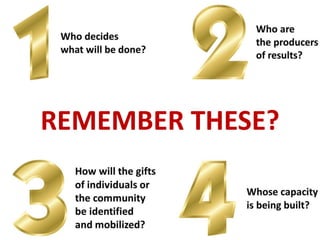
Who decides 
what will be done?
Who are 
the producers 
of results?
How will 
the gifts of 
individuals & 
the community 
be identified 
and mobilized?
Whose capacity 
is being built?
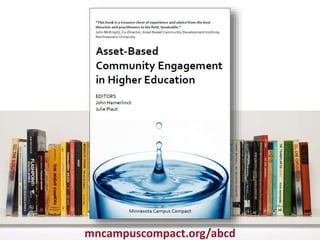
mncampuscompact.org/abcd
STARTING SMALL
Make it asset-based 
from the earliest 
planning stages.
We’re doing this for them; and 
It makes us feel good to do it.
Don’t panic. You don’t have to map the 
assets of the entire community.
What change 
does your 
community 
seek to make?
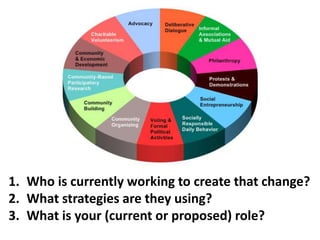
1. Who is currently working to create that change? 
2. What strategies are they using? 
3. What is your (current or proposed) role?
REMEMBER THESE?
?
“The best way 
to have a good 
idea is to have 
lots of ideas.” 
- Linus Pauling
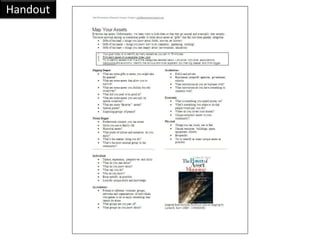
Handout
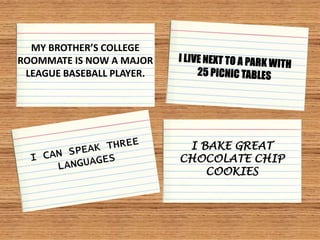
MY BROTHER’S COLLEGE 
ROOMMATE IS NOW A MAJOR 
LEAGUE BASEBALL PLAYER. 
I BAKE GREAT 
CHOCOLATE CHIP 
COOKIES
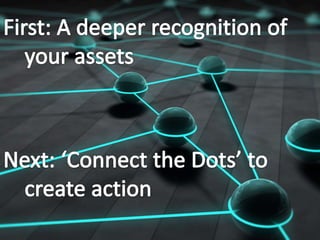
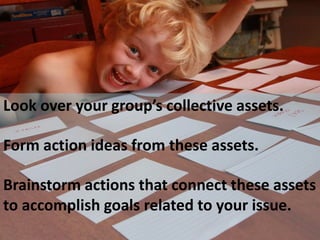
Look over your group’s collective assets. 
Form action ideas from these assets. 
Brainstorm actions that connect these assets 
to accomplish goals related to your issue.
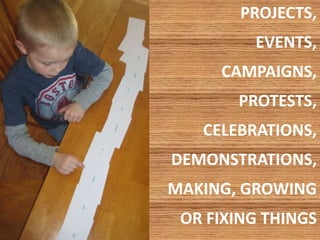
PROJECTS, 
EVENTS, 
CAMPAIGNS, 
PROTESTS, 
CELEBRATIONS, 
DEMONSTRATIONS, 
MAKING, GROWING 
OR FIXING THINGS
ASSET MAPPING OPTIONS
• No special training 
• 1 to 1 conversations 
• Simple surveys 
• Asset inventories
• Define your 
community. 
• Who is available? 
• How much time do 
you have? 
• Resources for info. 
collection (printing 
or online)
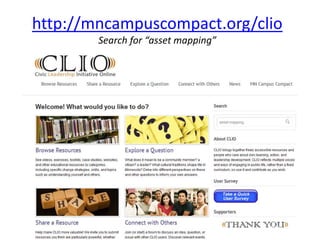
http://mncampuscompact.org/clio 
Search for “asset mapping”
• Identify existing 
relationships. 
• Lists of information are 
good, but stories are even 
better because they can 
reveal hidden social and 
cultural assets. 
• Don’t forget natural and 
built assets (landmarks, 
parks, buildings, etc.). 
Many asset inventory examples at ABCD Institute 
http://www.abcdinstitute.org/
John Hamerlinck 
john@mncampuscompact.org 
http://mncampuscompact.org/abcd/

Asset-Based Community Development Workshop

  • 2.
    Capacity-Focused Framework Snapshotof the Room Asset Mapping Exercise
  • 3.
  • 5.
  • 6.
  • 7.
    We all haveassets and deficits.
  • 8.
    ABCD Needs Based Focus on deficiencies People are consumers of services Residents observe as issues are being addressed Asset Based Focus on effectiveness People are producers Residents participate and are empowered
  • 9.
    Individuals Everybody! Associations Social Assets Institutions Public, private, nonprofit Physical Assets Buildings, natural assets Exchange Financial transactions, etc.
  • 10.
  • 11.
    Associations & Institutions • Consensus • Control • Care • Production • Citizens • Consumers • Capacities • Needs
  • 13.
    Individual Skills/Assets Inventory Inventory Tool 1A Name_________________________ Phone________________________ Date__________________________ Health Construction & Repair Food Caring for the Elderly Painting Catering Caring for the Mentally Ill Plumbing Preparing for Many People Caring for the Sick Electrical Serving to Many People Caring for Disabled People Carpentry Operating Commercial Equipment EMT or Emergency First Aid Brick and Masonry Baking Nursing Experience Wall Papering Meat Cutting and Preparation Nutrition Furniture Repairs Bartending Exercise Locksmith or Lock Repairs Building Garages Transportation Office Dry-wall and Taping Driving a Car Typing (WPM______) Cabinetmaking Driving a Van Taking Phone Messages Welding and Soddering Driving a Bus Writing Business Letters Concrete Work Driving a Tractor-Trailer Receiving Phone Orders Heating and Cooling Systems Driving a Commercial Truck Operation Switchboard Flooring and Carpeting Operating Farm Equipment Bookkeeping Roofing Driving Emergency Vehicles Computer Information Entry Other_________________________ Computer Word Processing Supervision Other_______________________ Maintenance Writing Reports Floor Cleaning/Refinishing Filling Out Forms Child Care Carpet Cleaning Working with a Budget Infant Care (0-1 yr) Household Cleaning Recording of Activities Child Care (1-6 yrs) Lawn Mowing and Yard Work Writing Proposals or Grants Adolescent Care (7-13) Gardening Planning Projects Taking Kids on Field Trips Tree and Shrubbery Care Supervising Projects Pre-school Care Other_________________________ Source: Vitalizing Communities, Community Guide , 1999, J. Allen, S. Cordes, and J. Hart, p. 28
  • 14.
    OATH FOR COMPASSIONATESERVICE Robert Lupton • Never do for the poor what they have (or could have) the capacity to do for themselves. • Limit one-way giving to emergency situations (crisis situation=YES, chronic situation=NO). • Strive to empower the poor through employment, lending, and investing, using grants sparingly to reinforce achievements. • Subordinate self-interests to the needs of those being served. • Listen closely to those you seek to help, especially to what is not being said – unspoken feelings may contain essential clues to effective service. • Above all, do no harm.
  • 15.
    “What are you good at?” (assets) “What are you most concerned or passionate about?” “We need you.”
  • 17.
  • 18.
    FOUR QUESTIONS ONTHE PATH TO ASSET-BASED ENGAGEMENT
  • 19.
    Who decides whatwill be done?
  • 20.
    Who are theproducers of results?
  • 21.
    How will thegifts of individuals & the community be identified and mobilized?
  • 22.
    Whose capacity isbeing built?
  • 23.
  • 24.
  • 25.
    Make it asset-based from the earliest planning stages.
  • 26.
    We’re doing thisfor them; and It makes us feel good to do it.
  • 27.
    Don’t panic. Youdon’t have to map the assets of the entire community.
  • 28.
    What change doesyour community seek to make?
  • 29.
    1. Who iscurrently working to create that change? 2. What strategies are they using? 3. What is your (current or proposed) role?
  • 30.
  • 31.
  • 32.
    “The best way to have a good idea is to have lots of ideas.” - Linus Pauling
  • 34.
  • 37.
    MY BROTHER’S COLLEGE ROOMMATE IS NOW A MAJOR LEAGUE BASEBALL PLAYER. I BAKE GREAT CHOCOLATE CHIP COOKIES
  • 39.
    Look over yourgroup’s collective assets. Form action ideas from these assets. Brainstorm actions that connect these assets to accomplish goals related to your issue.
  • 40.
    PROJECTS, EVENTS, CAMPAIGNS, PROTESTS, CELEBRATIONS, DEMONSTRATIONS, MAKING, GROWING OR FIXING THINGS
  • 42.
  • 43.
    • No specialtraining • 1 to 1 conversations • Simple surveys • Asset inventories
  • 44.
    • Define your community. • Who is available? • How much time do you have? • Resources for info. collection (printing or online)
  • 45.
  • 46.
    • Identify existing relationships. • Lists of information are good, but stories are even better because they can reveal hidden social and cultural assets. • Don’t forget natural and built assets (landmarks, parks, buildings, etc.). Many asset inventory examples at ABCD Institute http://www.abcdinstitute.org/
  • 47.
    John Hamerlinck john@mncampuscompact.org http://mncampuscompact.org/abcd/