www.advisian.com
Craig Robinson, Principal,
Social Infrastructure and
Government Sector Lead QLD
Asset recycling in
school infrastructure
School Infrastructure Forum
27 & 28 November 2017
• A traditional view of asset recycling
• Application to the education sector
• Case study
• Results
• Learnings
• The future
Overview
A traditional view of asset recycling
• Proceeds from asset sales are used to finance the
purchases of other assets
• Approach often includes:
– sale or lease of ‘underperforming’ assets
– creation/relocation of ‘new’ assets
– revitalisation of ‘sustainable’ assets
Often asset recycling is a strategy used
in response to growing population demands
Revenue streams
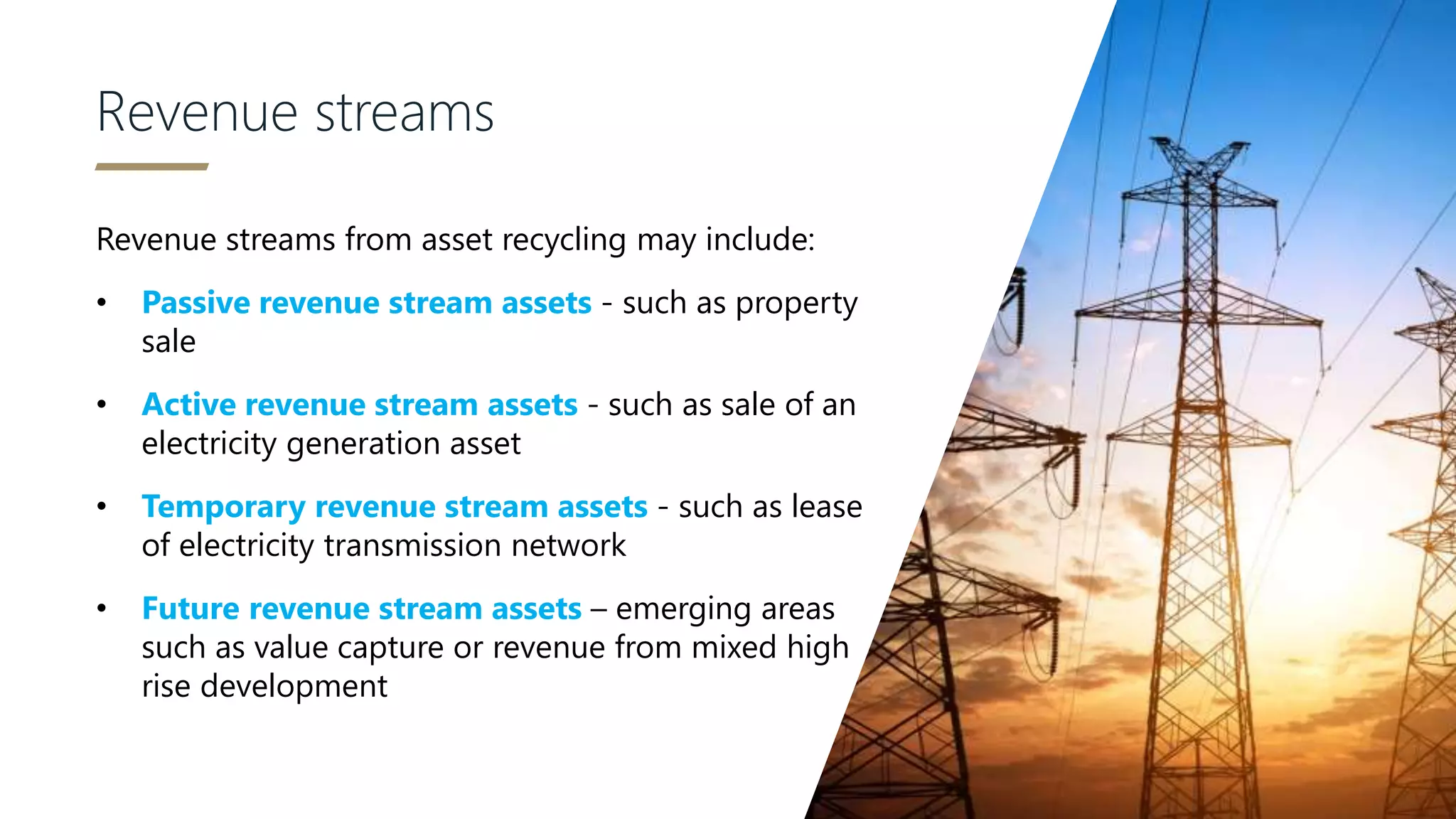
Revenue streams from asset recycling may include:
• Passive revenue stream assets - such as property
sale
• Active revenue stream assets - such as sale of an
electricity generation asset
• Temporary revenue stream assets - such as lease
of electricity transmission network
• Future revenue stream assets – emerging areas
such as value capture or revenue from mixed high
rise development
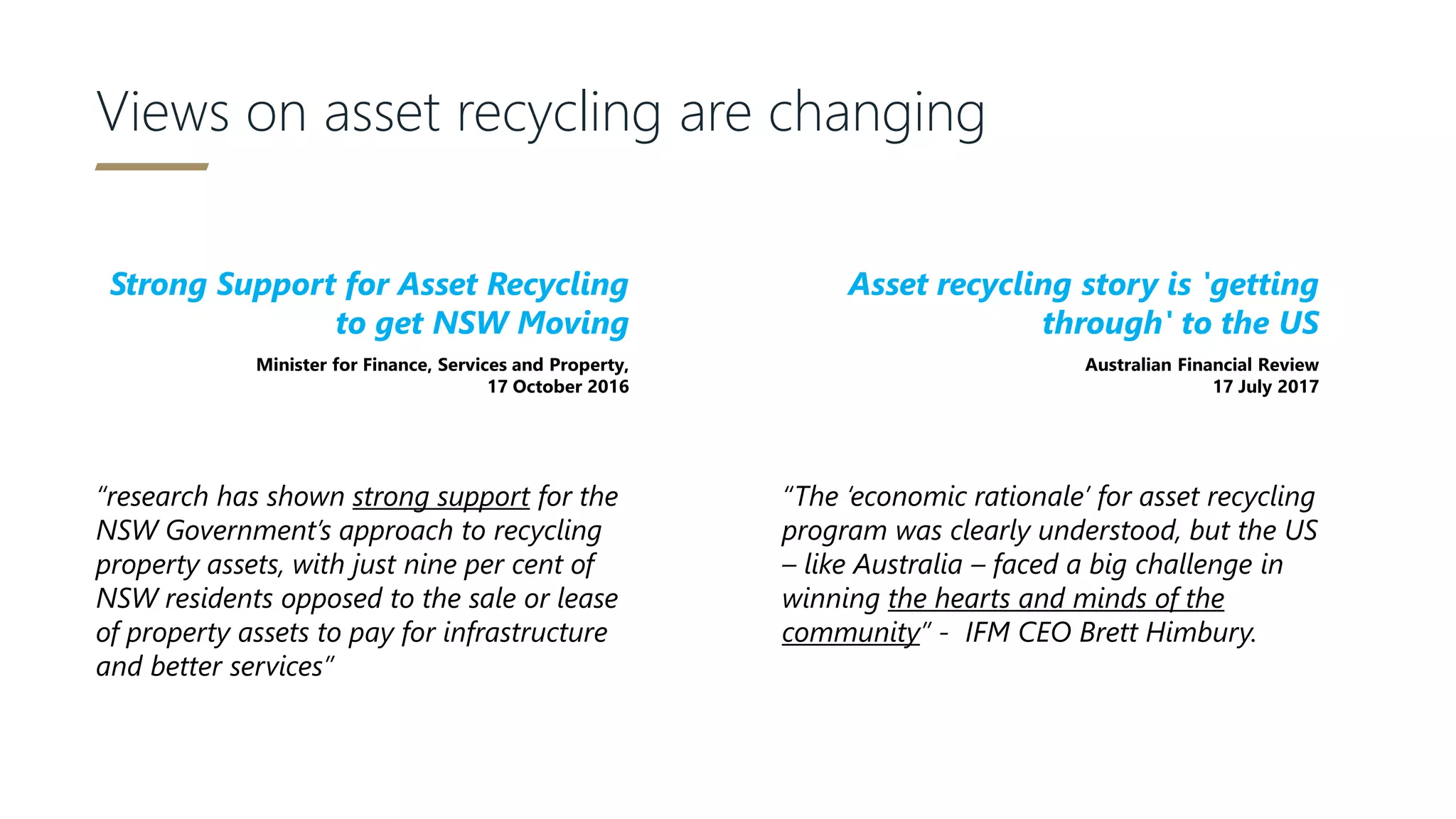
Views on asset recycling are changing
Strong Support for Asset Recycling
to get NSW Moving
Minister for Finance, Services and Property,
17 October 2016
“research has shown strong support for the
NSW Government’s approach to recycling
property assets, with just nine per cent of
NSW residents opposed to the sale or lease
of property assets to pay for infrastructure
and better services”
Asset recycling story is 'getting
through' to the US
Australian Financial Review
17 July 2017
“The ‘economic rationale’ for asset recycling
program was clearly understood, but the US
– like Australia – faced a big challenge in
winning the hearts and minds of the
community” - IFM CEO Brett Himbury.
Application to the education sector
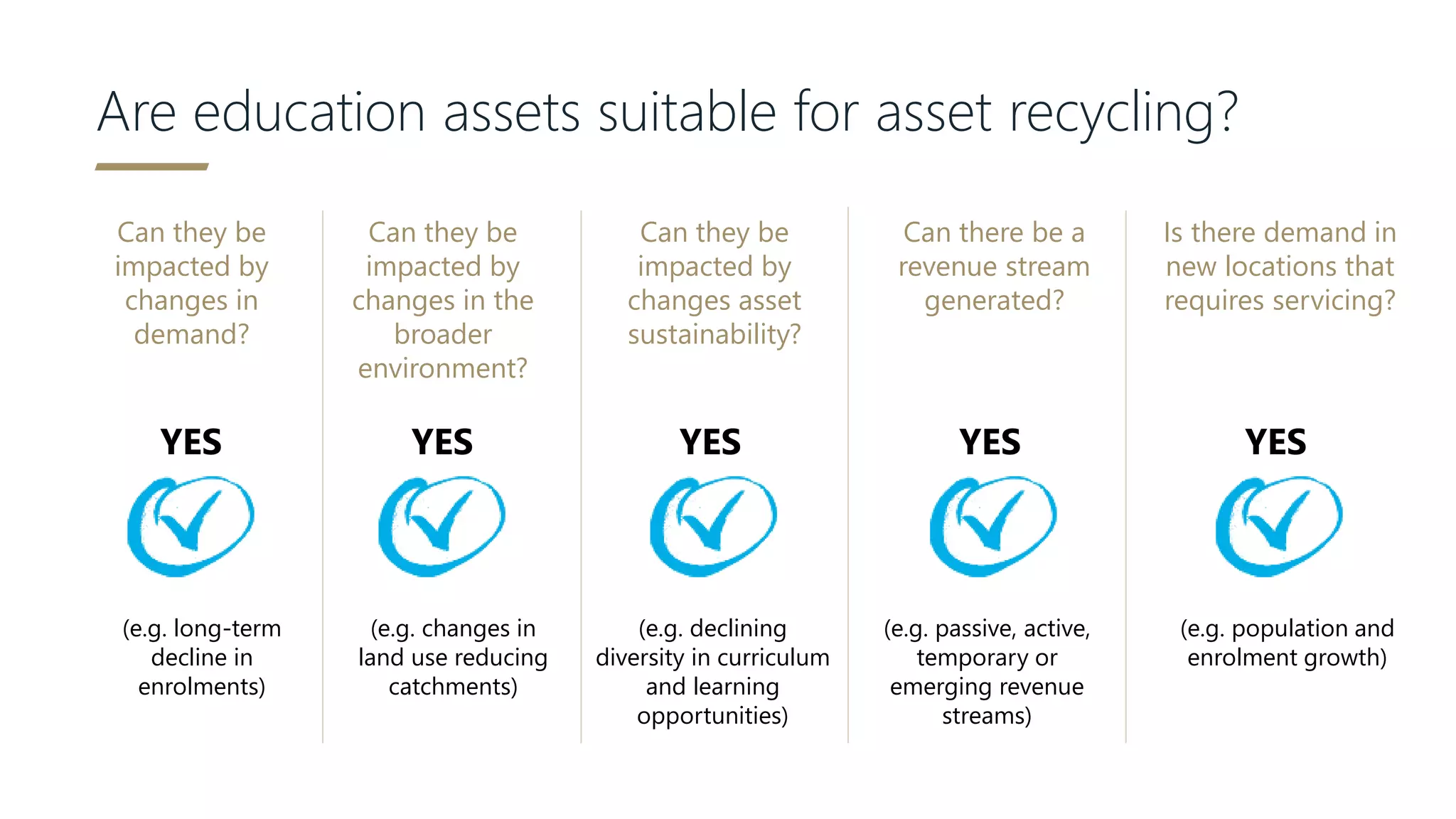
Are education assets suitable for asset recycling?
Can they be
impacted by
changes in
demand?
Can they be
impacted by
changes in the
broader
environment?
Can they be
impacted by
changes asset
sustainability?
Can there be a
revenue stream
generated?
Is there demand in
new locations that
requires servicing?
YES YES YES YES YES
(e.g. long-term
decline in
enrolments)
(e.g. changes in
land use reducing
catchments)
(e.g. declining
diversity in curriculum
and learning
opportunities)
(e.g. passive, active,
temporary or
emerging revenue
streams)
(e.g. population and
enrolment growth)
Case study
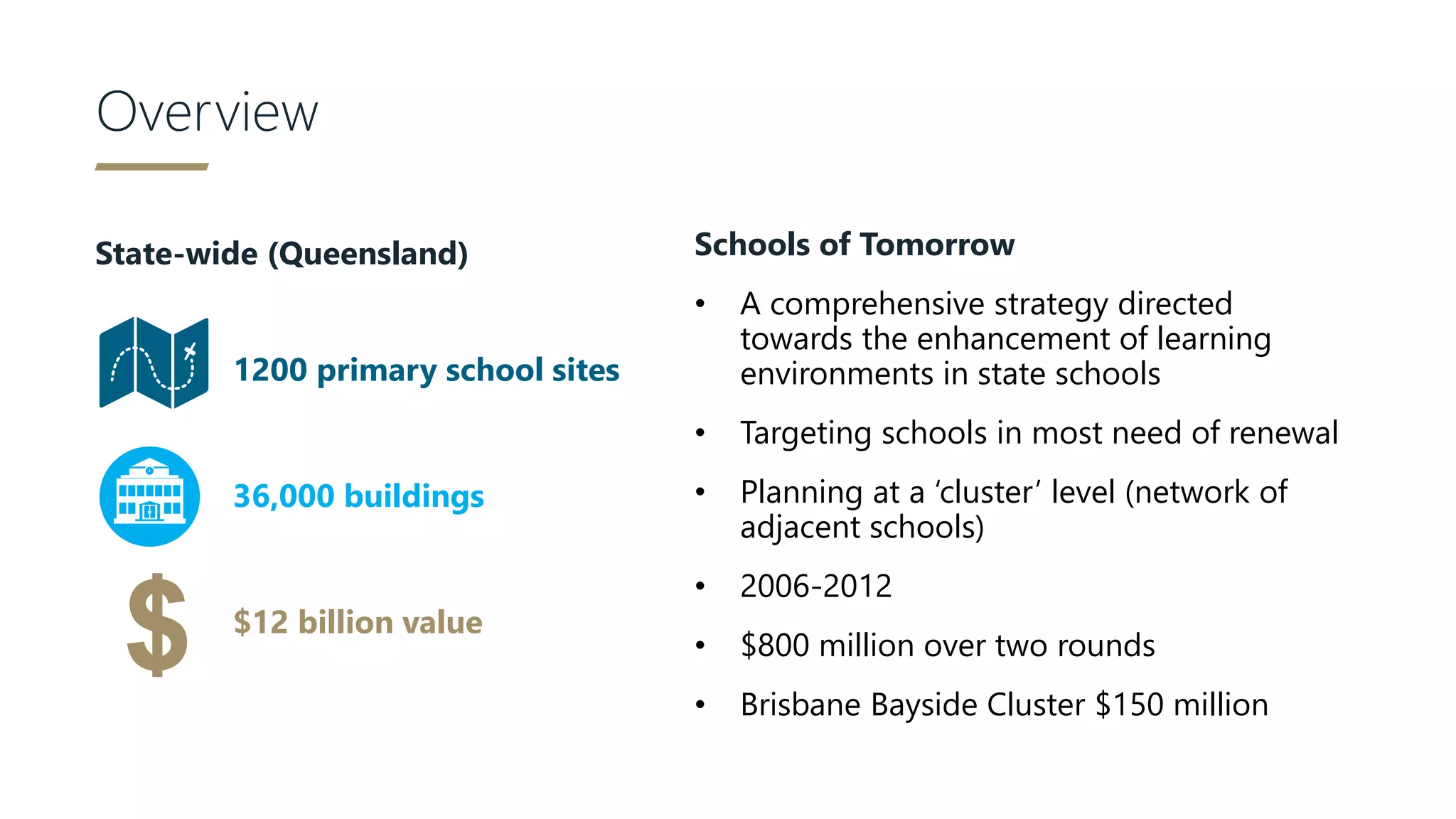
1200 primary school sites
36,000 buildings
$12 billion value
Overview
Schools of Tomorrow
• A comprehensive strategy directed
towards the enhancement of learning
environments in state schools
• Targeting schools in most need of renewal
• Planning at a ‘cluster’ level (network of
adjacent schools)
• 2006-2012
• $800 million over two rounds
• Brisbane Bayside Cluster $150 million
State-wide (Queensland)
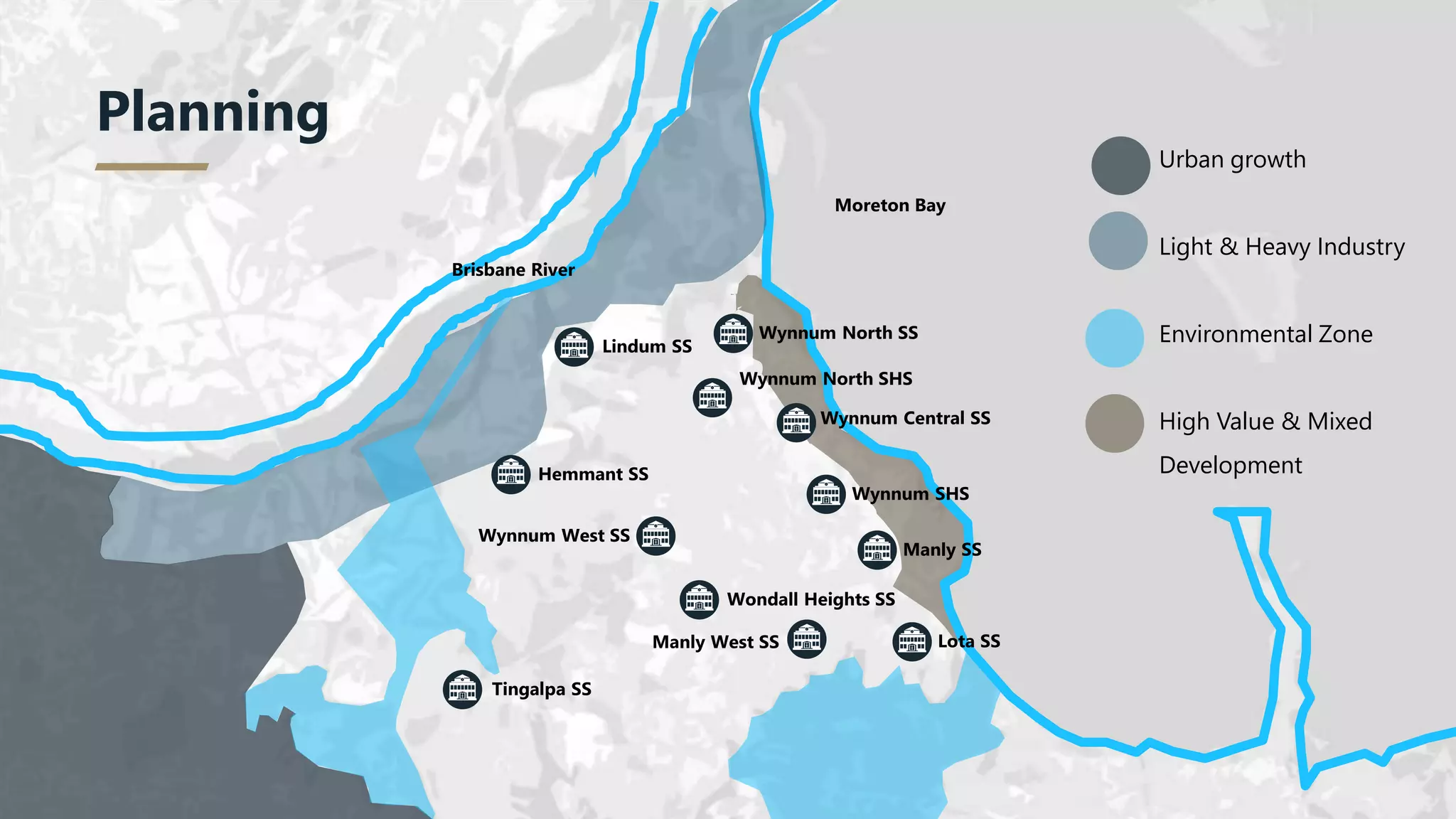
Wynnum North SS
Wynnum North SHS
Wynnum Central SS
Wynnum SHS
Manly SS
Lota SS
Wynnum West SS
Lindum SS
Hemmant SS
Manly West SS
Wondall Heights SS
Tingalpa SS
Urban growth
Light & Heavy Industry
Environmental Zone
High Value & Mixed
Development
Moreton Bay
Brisbane River
Planning
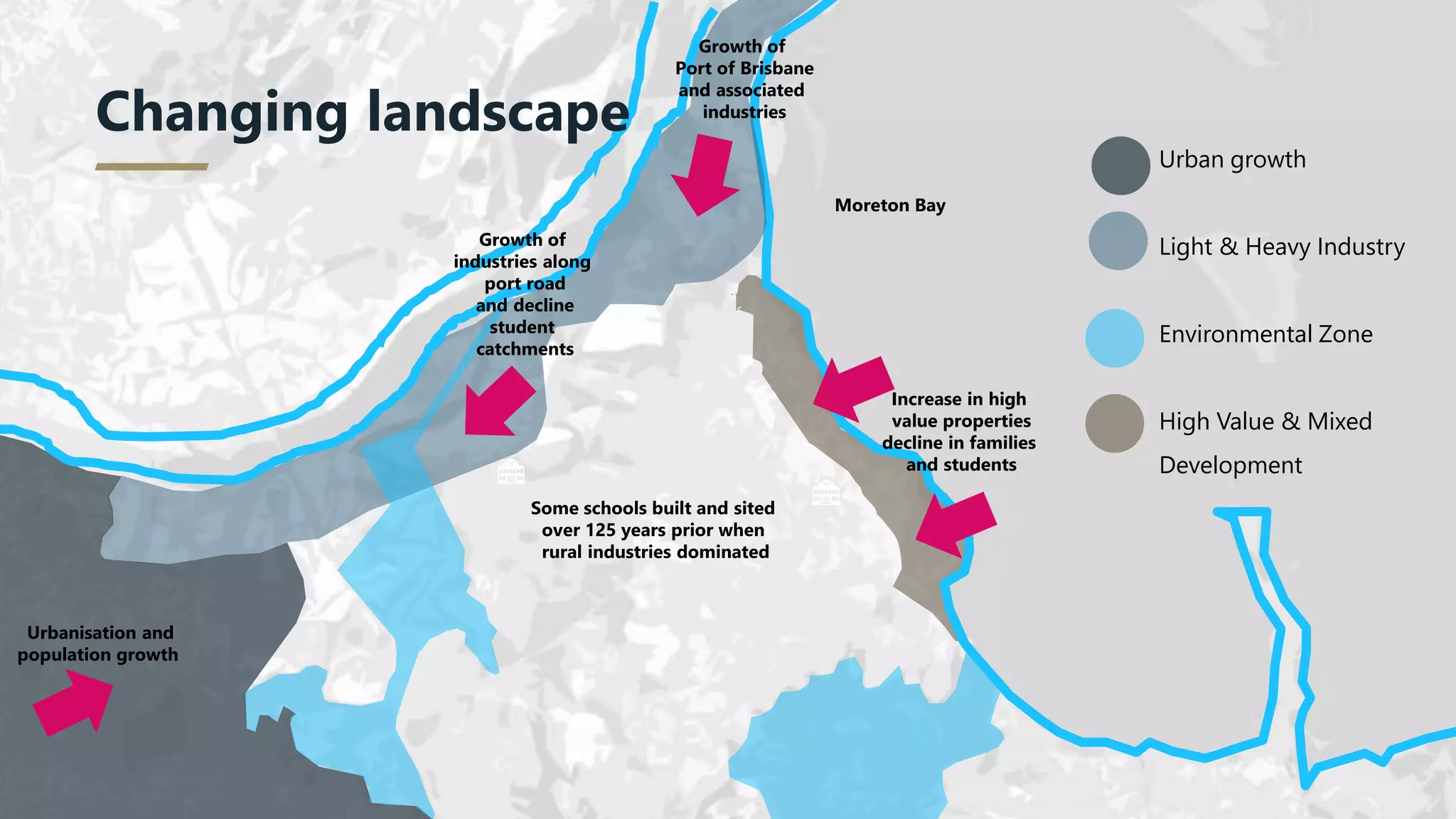
Urban growth
Light & Heavy Industry
Environmental Zone
High Value & Mixed
Development
Moreton Bay
Changing landscape
Urbanisation and
population growth
Growth of
Port of Brisbane
and associated
industries
Growth of
industries along
port road
and decline
student
catchments
Increase in high
value properties
decline in families
and students
Some schools built and sited
over 125 years prior when
rural industries dominated
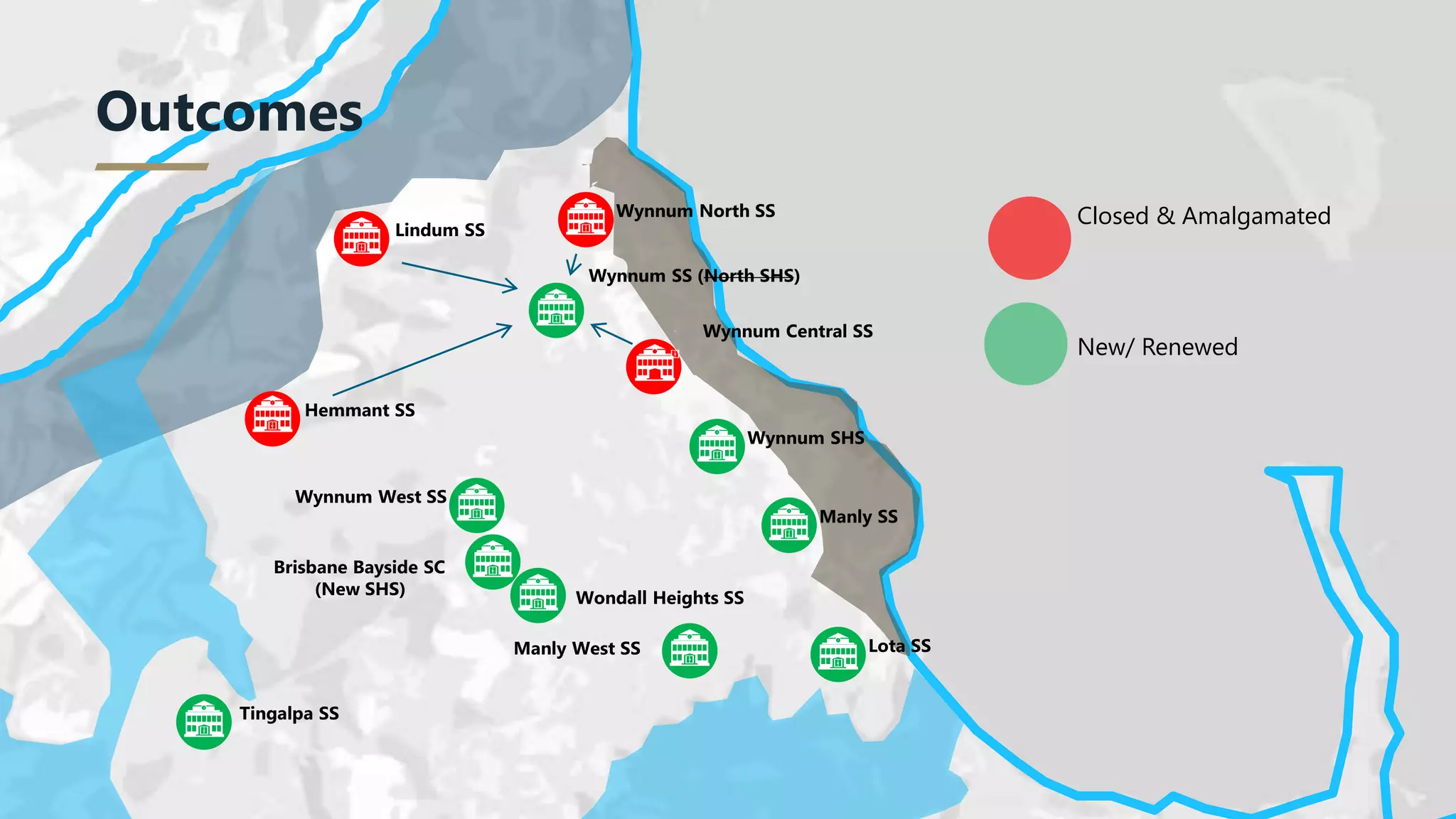
Case study planning
Closed & Amalgamated
New/ Renewed
Wynnum North SS
Wynnum SS (North SHS)
Wynnum Central SS
Wynnum SHS
Manly SS
Lota SS
Wynnum West SS
Lindum SS
Hemmant SS
Manly West SS
Wondall Heights SS
Tingalpa SS
Brisbane Bayside SC
(New SHS)
Outcomes
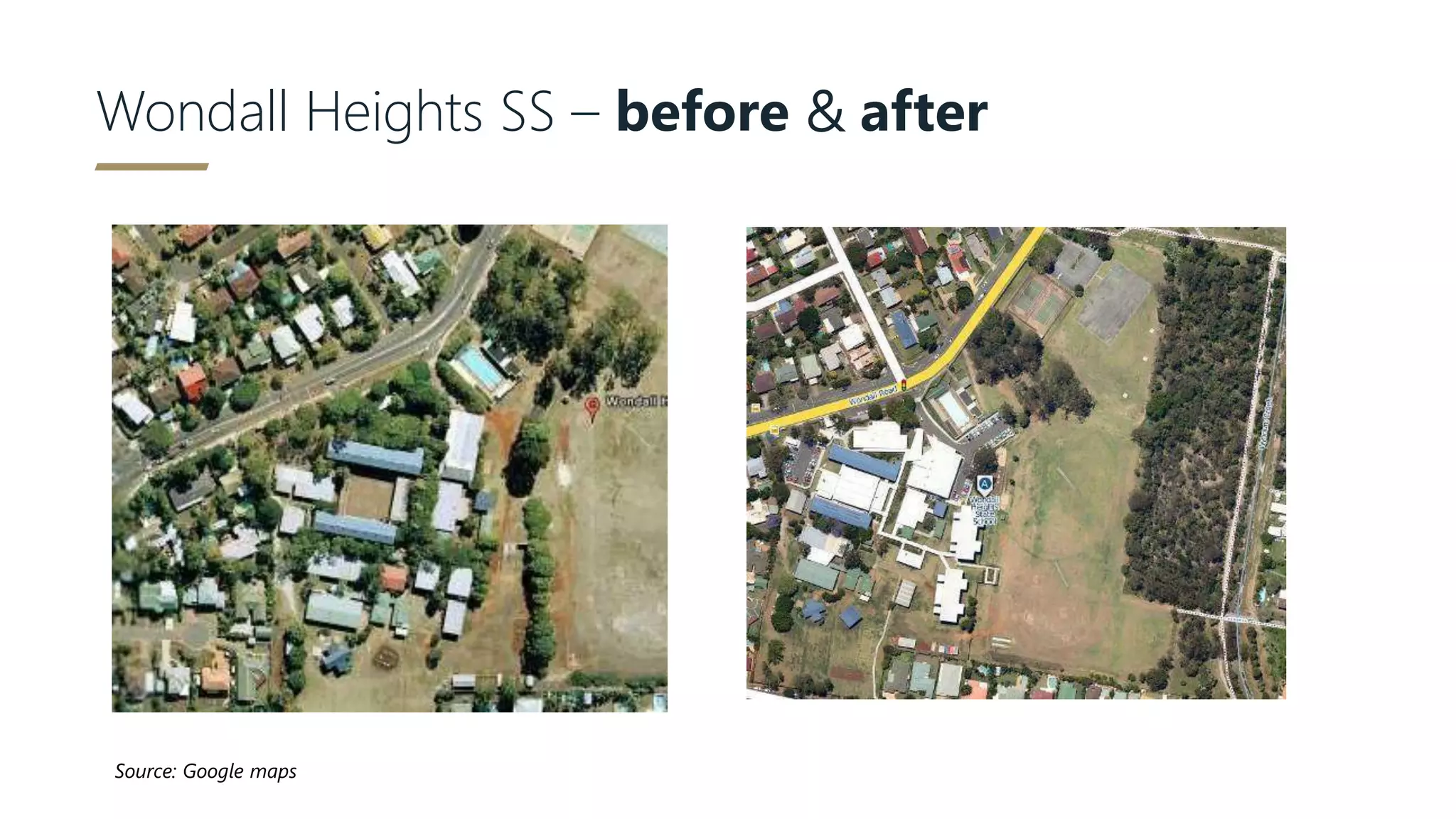
Wondall Heights SS – before & after
Source: Google maps
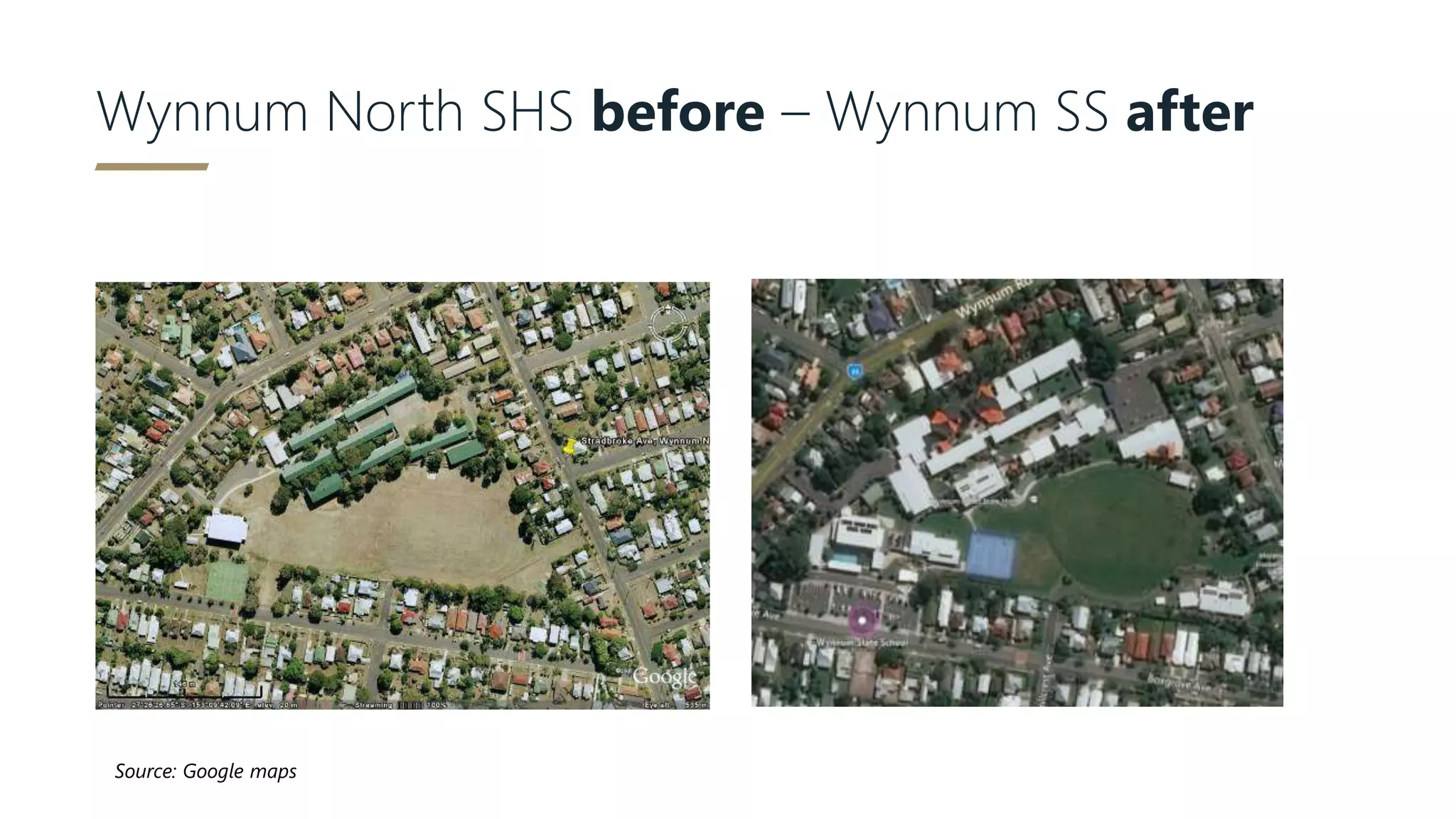
Wynnum North SHS before – Wynnum SS after
Source: Google maps
Learnings
• Clear evidence-based assessments and forecasts
are crucial
• Win the hearts and minds of the community –
consultation is key
• Diversity of stakeholder and community groups
• Consider the whole asset life and the current cohorts
Hold the line! Despite short-term
disruption the results will come
The future
• Monitor and forecast changes to land use and
education demographics
• Dynamically shape the education asset portfolio
• Monitor digital disruption - future pedagogy?
• Infrastructure to continue to support improvement
in teaching, learning and educational outcomes
• Embrace shared use of education assets
• High-rise schools and mixed-use developments
• Embrace emerging revenue streams
• Consider asset recycling as a means to finance
social infrastructure
Asset Recycling in School Infrastructure

Asset Recycling in School Infrastructure

  • 1.
    www.advisian.com Craig Robinson, Principal, SocialInfrastructure and Government Sector Lead QLD Asset recycling in school infrastructure School Infrastructure Forum 27 & 28 November 2017
  • 2.
    • A traditionalview of asset recycling • Application to the education sector • Case study • Results • Learnings • The future Overview
  • 3.
    A traditional viewof asset recycling
  • 4.
    A traditional viewof asset recycling • Proceeds from asset sales are used to finance the purchases of other assets • Approach often includes: – sale or lease of ‘underperforming’ assets – creation/relocation of ‘new’ assets – revitalisation of ‘sustainable’ assets Often asset recycling is a strategy used in response to growing population demands
  • 5.
    Revenue streams Revenue streamsfrom asset recycling may include: • Passive revenue stream assets - such as property sale • Active revenue stream assets - such as sale of an electricity generation asset • Temporary revenue stream assets - such as lease of electricity transmission network • Future revenue stream assets – emerging areas such as value capture or revenue from mixed high rise development
  • 6.
    Views on assetrecycling are changing Strong Support for Asset Recycling to get NSW Moving Minister for Finance, Services and Property, 17 October 2016 “research has shown strong support for the NSW Government’s approach to recycling property assets, with just nine per cent of NSW residents opposed to the sale or lease of property assets to pay for infrastructure and better services” Asset recycling story is 'getting through' to the US Australian Financial Review 17 July 2017 “The ‘economic rationale’ for asset recycling program was clearly understood, but the US – like Australia – faced a big challenge in winning the hearts and minds of the community” - IFM CEO Brett Himbury.
  • 7.
    Application to theeducation sector
  • 8.
    Are education assetssuitable for asset recycling? Can they be impacted by changes in demand? Can they be impacted by changes in the broader environment? Can they be impacted by changes asset sustainability? Can there be a revenue stream generated? Is there demand in new locations that requires servicing? YES YES YES YES YES (e.g. long-term decline in enrolments) (e.g. changes in land use reducing catchments) (e.g. declining diversity in curriculum and learning opportunities) (e.g. passive, active, temporary or emerging revenue streams) (e.g. population and enrolment growth)
  • 9.
  • 10.
    1200 primary schoolsites 36,000 buildings $12 billion value Overview Schools of Tomorrow • A comprehensive strategy directed towards the enhancement of learning environments in state schools • Targeting schools in most need of renewal • Planning at a ‘cluster’ level (network of adjacent schools) • 2006-2012 • $800 million over two rounds • Brisbane Bayside Cluster $150 million State-wide (Queensland)
  • 11.
    Wynnum North SS WynnumNorth SHS Wynnum Central SS Wynnum SHS Manly SS Lota SS Wynnum West SS Lindum SS Hemmant SS Manly West SS Wondall Heights SS Tingalpa SS Urban growth Light & Heavy Industry Environmental Zone High Value & Mixed Development Moreton Bay Brisbane River Planning
  • 12.
    Urban growth Light &Heavy Industry Environmental Zone High Value & Mixed Development Moreton Bay Changing landscape Urbanisation and population growth Growth of Port of Brisbane and associated industries Growth of industries along port road and decline student catchments Increase in high value properties decline in families and students Some schools built and sited over 125 years prior when rural industries dominated
  • 13.
    Case study planning Closed& Amalgamated New/ Renewed Wynnum North SS Wynnum SS (North SHS) Wynnum Central SS Wynnum SHS Manly SS Lota SS Wynnum West SS Lindum SS Hemmant SS Manly West SS Wondall Heights SS Tingalpa SS Brisbane Bayside SC (New SHS) Outcomes
  • 14.
    Wondall Heights SS– before & after Source: Google maps
  • 15.
    Wynnum North SHSbefore – Wynnum SS after Source: Google maps
  • 16.
  • 17.
    • Clear evidence-basedassessments and forecasts are crucial • Win the hearts and minds of the community – consultation is key • Diversity of stakeholder and community groups • Consider the whole asset life and the current cohorts Hold the line! Despite short-term disruption the results will come
  • 18.
  • 19.
    • Monitor andforecast changes to land use and education demographics • Dynamically shape the education asset portfolio • Monitor digital disruption - future pedagogy? • Infrastructure to continue to support improvement in teaching, learning and educational outcomes • Embrace shared use of education assets • High-rise schools and mixed-use developments • Embrace emerging revenue streams • Consider asset recycling as a means to finance social infrastructure