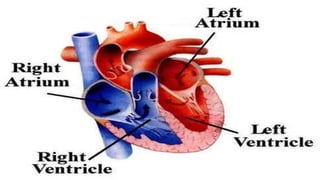
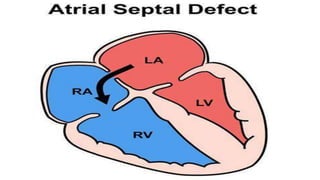
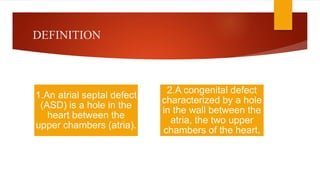
An atrial septal defect (ASD) is a hole in the septum separating the left and right atria. The most common type is ostium secundum ASD. Causes are unclear but may include genetic factors or infections during pregnancy. Symptoms often do not appear until adulthood and may include shortness of breath, fatigue, or heart palpitations. Diagnosis is made through echocardiogram, MRI, or CT scan. Small ASDs may be treated with medications but larger defects often require catheter-based or open-heart surgical repair to close the hole in the septum. Complications can include heart failure, arrhythmias, or pulmonary hypertension if left untreated.