1
2
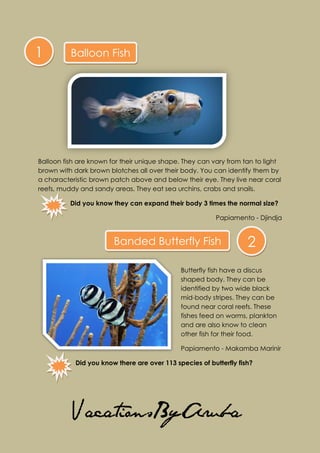
Balloon fish are known for their unique shape. They can vary from tan to light
brown with dark brown blotches all over their body. You can identify them by
a characteristic brown patch above and below their eye. They live near coral
reefs, muddy and sandy areas. They eat sea urchins, crabs and snails.
Did you know they can expand their body 3 times the normal size?
Papiamento - Djindja
Butterfly fish have a discus
shaped body. They can be
identified by two wide black
mid-body stripes. They can be
found near coral reefs. These
fishes feed on worms, plankton
and are also know to clean
other fish for their food.
Papiamento - Makamba Marinir
Did you know there are over 113 species of butterfly fish?
Balloon Fish
Banded Butterfly Fish
4
3
You can recognize a bar jack by a bright blue and black stripe that runs
along its dorsal fin and onto its lower tail. Bar jacks can be found alone or in
groups near coral reefs. They are known to feed on shrimps and small fish.
Did you know they can change from sliver to black when eating?
Papiamento - Yaru
Barred hamlets can be
identified by the six brown
bars across their body. You
can find them near coral
reefs. They spend most of
their time hunting on shrimp,
crabs and fishes
Papiamento - Kakubol
Did you know barred hamlets only live in the Caribbean?
Bar Jack
Barred Hamlet
6
5
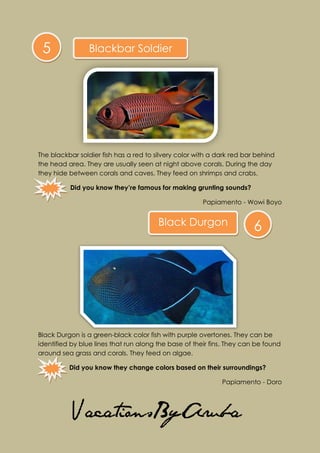
The blackbar soldier fish has a red to silvery color with a dark red bar behind
the head area. They are usually seen at night above corals. During the day
they hide between corals and caves. They feed on shrimps and crabs.
Did you know they’re famous for making grunting sounds?
Papiamento - Wowi Boyo
Black Durgon is a green-black color fish with purple overtones. They can be
identified by blue lines that run along the base of their fins. They can be found
around sea grass and corals. They feed on algae.
Did you know they change colors based on their surroundings?
Papiamento - Doro
Blackbar Soldier
Fish
Black Durgon
Black Durgon
7
8
The blue Chromis can be identified by its brilliant blue color. You can also
notice them by their rear fins ending in a sharp point. They feed on algae and
fish eggs that fail to hatch. You can find them near corals reefs.
Did you know they can detect movements in the oceans currents?
Papiamento - Stelchi Blauw
The Bluehead can be distinguished by their blue head, followed by two dark
bars separated by a white bar. They form large schools near coral reefs.
Did you know they are important, because they clean other fish?
Papiamento - Pepchi Blauw
Blue Chromis
Bluehead
10
9
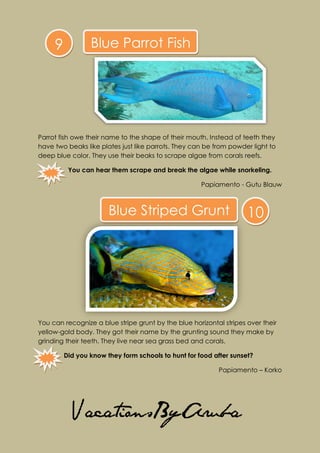
Parrot fish owe their name to the shape of their mouth. Instead of teeth they
have two beaks like plates just like parrots. They can be from powder light to
deep blue color. They use their beaks to scrape algae from corals reefs.
You can hear them scrape and break the algae while snorkeling.
Papiamento - Gutu Blauw
You can recognize a blue stripe grunt by the blue horizontal stripes over their
yellow-gold body. They got their name by the grunting sound they make by
grinding their teeth. They live near sea grass bed and corals.
Did you know they form schools to hunt for food after sunset?
Papiamento – Korko
Blue Parrot Fish
Blue Striped Grunt

Aruba reef-creature-identification-guide-preview

  • 2.
    1 2 Balloon fish areknown for their unique shape. They can vary from tan to light brown with dark brown blotches all over their body. You can identify them by a characteristic brown patch above and below their eye. They live near coral reefs, muddy and sandy areas. They eat sea urchins, crabs and snails. Did you know they can expand their body 3 times the normal size? Papiamento - Djindja Butterfly fish have a discus shaped body. They can be identified by two wide black mid-body stripes. They can be found near coral reefs. These fishes feed on worms, plankton and are also know to clean other fish for their food. Papiamento - Makamba Marinir Did you know there are over 113 species of butterfly fish? Balloon Fish Banded Butterfly Fish
  • 3.
    4 3 You can recognizea bar jack by a bright blue and black stripe that runs along its dorsal fin and onto its lower tail. Bar jacks can be found alone or in groups near coral reefs. They are known to feed on shrimps and small fish. Did you know they can change from sliver to black when eating? Papiamento - Yaru Barred hamlets can be identified by the six brown bars across their body. You can find them near coral reefs. They spend most of their time hunting on shrimp, crabs and fishes Papiamento - Kakubol Did you know barred hamlets only live in the Caribbean? Bar Jack Barred Hamlet
  • 4.
    6 5 The blackbar soldierfish has a red to silvery color with a dark red bar behind the head area. They are usually seen at night above corals. During the day they hide between corals and caves. They feed on shrimps and crabs. Did you know they’re famous for making grunting sounds? Papiamento - Wowi Boyo Black Durgon is a green-black color fish with purple overtones. They can be identified by blue lines that run along the base of their fins. They can be found around sea grass and corals. They feed on algae. Did you know they change colors based on their surroundings? Papiamento - Doro Blackbar Soldier Fish Black Durgon Black Durgon
  • 5.
    7 8 The blue Chromiscan be identified by its brilliant blue color. You can also notice them by their rear fins ending in a sharp point. They feed on algae and fish eggs that fail to hatch. You can find them near corals reefs. Did you know they can detect movements in the oceans currents? Papiamento - Stelchi Blauw The Bluehead can be distinguished by their blue head, followed by two dark bars separated by a white bar. They form large schools near coral reefs. Did you know they are important, because they clean other fish? Papiamento - Pepchi Blauw Blue Chromis Bluehead
  • 6.
    10 9 Parrot fish owetheir name to the shape of their mouth. Instead of teeth they have two beaks like plates just like parrots. They can be from powder light to deep blue color. They use their beaks to scrape algae from corals reefs. You can hear them scrape and break the algae while snorkeling. Papiamento - Gutu Blauw You can recognize a blue stripe grunt by the blue horizontal stripes over their yellow-gold body. They got their name by the grunting sound they make by grinding their teeth. They live near sea grass bed and corals. Did you know they form schools to hunt for food after sunset? Papiamento – Korko Blue Parrot Fish Blue Striped Grunt