Exploring Fish
Species in the
Philippines
Introduction to Philippine Fish Diversity
● The Philippines is part of
the Coral Triangle, a
global center of marine
biodiversity
● Over 2,000 species of
fish inhabit Philippine
waters
● Why do you think the
Philippines has such rich
marine life?
Coral Reef Fish
● Clownfish: Famous for their
symbiotic relationship with
sea anemones
● Butterflyfish: Known for their
vibrant colors and patterns
● Parrotfish: Help maintain
coral reefs by eating algae
● Can you name other fish
species commonly found in
coral reefs?
Pelagic Fish
● Tuna: Various species including yellowfin
and skipjack
● Mackerel: Fast-swimming predators
● Mahi-mahi: Also known as dorado, prized
for sport fishing
● Why are these fish important for the
Philippine economy?
Reef Predators
● Groupers: Large, slow-
moving ambush predators
● Snappers: Important for both
commercial and recreational
fishing
● Barracuda: Known for their
fearsome appearance and
sharp teeth
● How do these predators help
maintain the balance in reef
ecosystems?
Unique Philippine Fish
● Sinarapan: One of the
smallest edible fish in the
world
● Maliputo: Endemic to Taal
Lake, adapts to both fresh
and saltwater
● Mameng: Large wrasse found
in deeper waters
● What challenges might these
unique species face?
Colorful Reef Dwellers
● Mandarin Fish: Known for their psychedelic colors
● Angelfish: Various species with vibrant patterns
● Anthias: Small, colorful fish often seen in large
schools
● How do bright colors benefit some fish and put others
at risk?
Bottom-Dwelling Fish
● Gobies: Small fish that often
live in symbiosis with shrimp
● Blennies: Known for their
comical expressions and
behavior
● Flatfish: Masters of
camouflage on the sea floor
● Why is camouflage
important for these bottom-
dwelling species?
Endangered Species
● Napoleon Wrasse:
Threatened by overfishing
● Seahorses: Various species
at risk due to habitat loss
● Giant Grouper: Vulnerable to
overfishing due to slow
growth
● What actions can be taken to
protect these endangered
species?
Freshwater Fish
● Tilapia: Important for aquaculture and food
security
● Milkfish (Bangus): National fish of the
Philippines
● Catfish (Hito): Common in rivers and fish farms
● How do freshwater fish contribute to the
Philippine diet?
Eels and Morays
● Moray Eels: Fierce predators
that hide in reef crevices
● Garden Eels: Colony-
forming eels that stand up
from the sea floor
● Conger Eels: Large eels
found in deeper waters
● Why do you think eels have
such unique body shapes?
Sharks in Philippine Waters
● Thresher Sharks: Known for
their long, whip-like tails
● Whale Sharks: Gentle giants
that feed on plankton
● Blacktip Reef Sharks:
Common in shallow coral
reefs
● How do sharks help
maintain healthy marine
ecosystems?
Cephalopods
● Cuttlefish: Masters of camouflage and color
change
● Octopuses: Highly intelligent with problem-
solving abilities
● Squid: Fast-swimming predators often found
in schools
● How do these animals differ from fish, and
why are they included in this presentation?
Rays and Skates
● Manta Rays: Giant filter feeders
that can be seen at cleaning
stations
● Stingrays: Bottom-dwelling rays
with venomous stingers
● Blue-spotted Ribbontail Ray: A
beautiful species found on coral
reefs
● How are rays and skates
different from other fish?
Unusual Fish Adaptations
● Lionfish: Venomous spines
for defense
● Pufferfish: Ability to inflate
their bodies when
threatened
● Flying Fish: Can glide
above the water's surface
● Can you think of other
unusual adaptations fish
might have?
Fish in Philippine Culture
● Fish as a staple food in Filipino cuisine
● Fishing traditions and techniques passed down
through generations
● Myths and legends about fish in Philippine
folklore
● How has the importance of fish shaped Philippine
culture?
Conservation Efforts
● Establishment of Marine
Protected Areas (MPAs)
● Sustainable fishing
practices and regulations
● Community-based
conservation initiatives
● What can you do to help
protect fish species in
the Philippines?
Climate Change and Fish
● Impact of rising sea
temperatures on fish habitats
● Changes in fish distribution
and migration patterns
● Coral bleaching and its effect
on reef fish populations
● How might climate change
affect the future of Philippine
fish species?
Fish Farming in the Philippines
● Importance of aquaculture for food security
● Common farmed species: milkfish, tilapia, shrimp
● Challenges and environmental concerns of fish
farming
● How can fish farming be made more sustainable?
The Future of Philippine Fish
● Ongoing research and
discoveries of new species
● Importance of education
and awareness for
conservation
● Balancing human needs
with ecosystem protection
● What role will you play in
protecting the diverse fish
species of the Philippines?
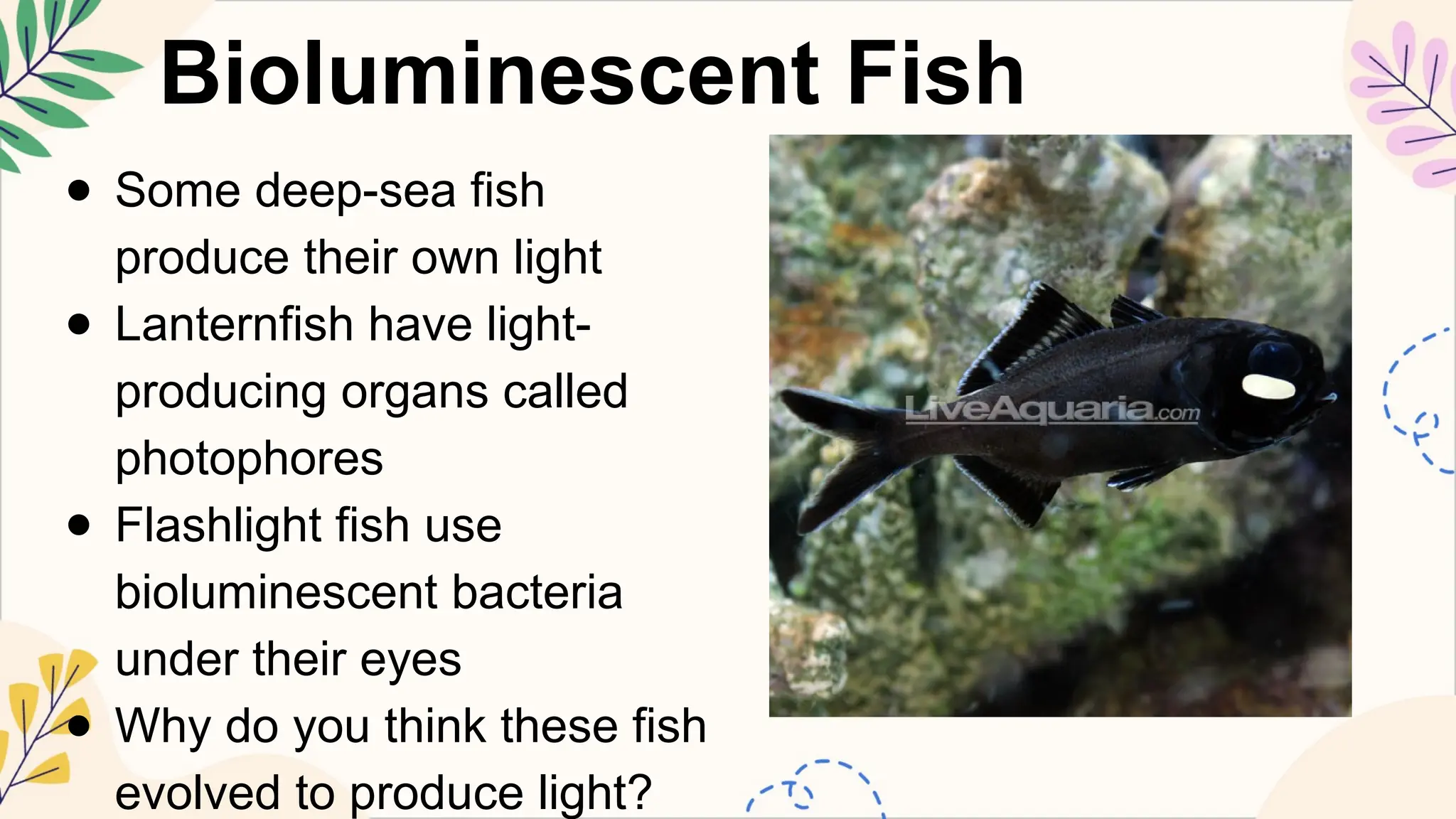
Bioluminescent Fish
● Some deep-sea fish
produce their own light
● Lanternfish have light-
producing organs called
photophores
● Flashlight fish use
bioluminescent bacteria
under their eyes
● Why do you think these fish
evolved to produce light?
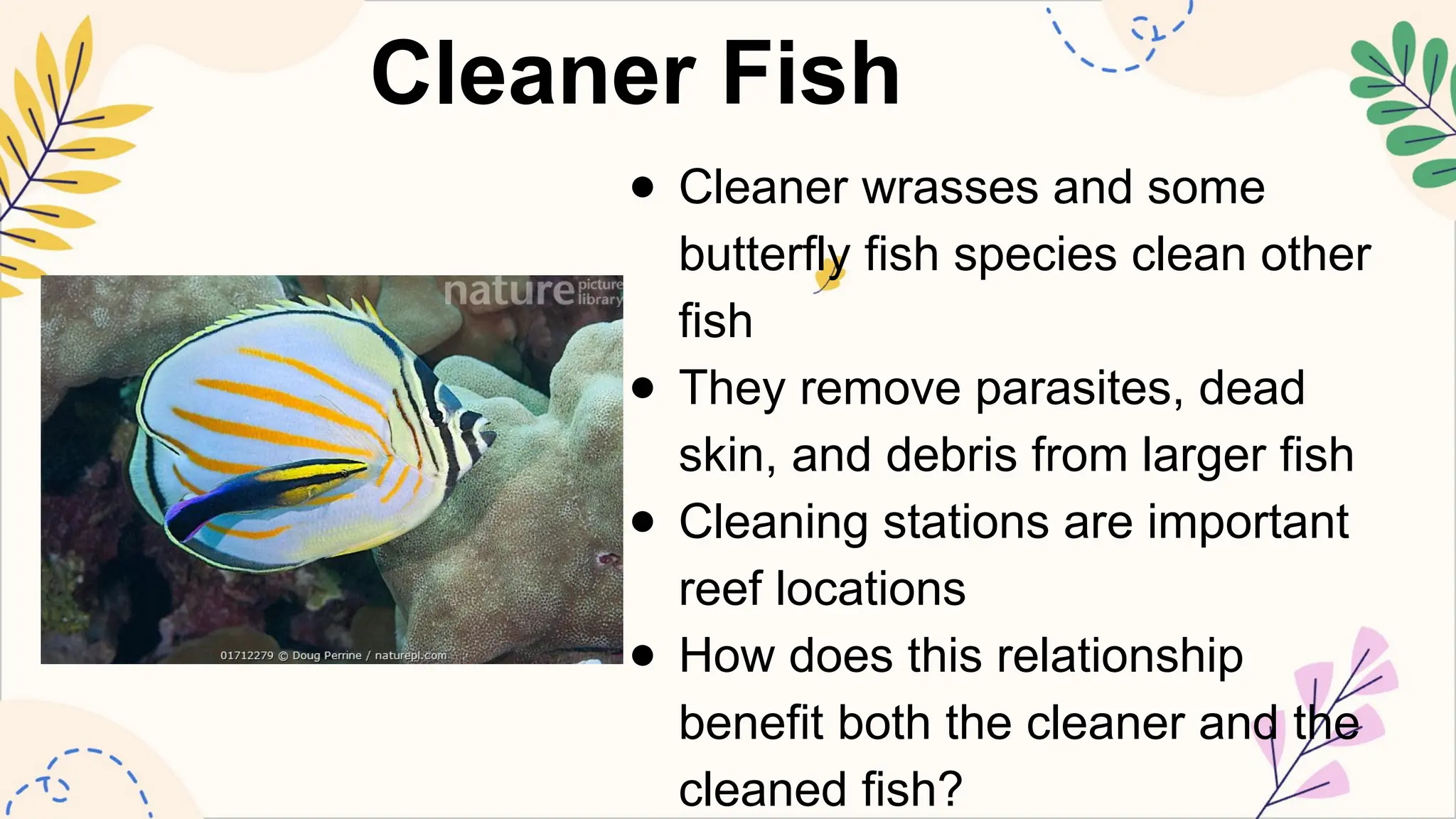
Cleaner Fish
● Cleaner wrasses and some
butterfly fish species clean other
fish
● They remove parasites, dead
skin, and debris from larger fish
● Cleaning stations are important
reef locations
● How does this relationship
benefit both the cleaner and the
cleaned fish?
Venomous Fish
● Some fish use venom for defense, like the
stonefish and lionfish
● Stonefish are masters of camouflage with
potent venom
● Lionfish have beautiful but venomous spines
● Why might these fish have developed such
strong venom?
Schooling Behavior
● Many fish species form large
schools for protection
● Common schooling fish
include sardines, anchovies,
and jack fish
● Schools can have complex
shapes and movements
● How does schooling help
protect individual fish?
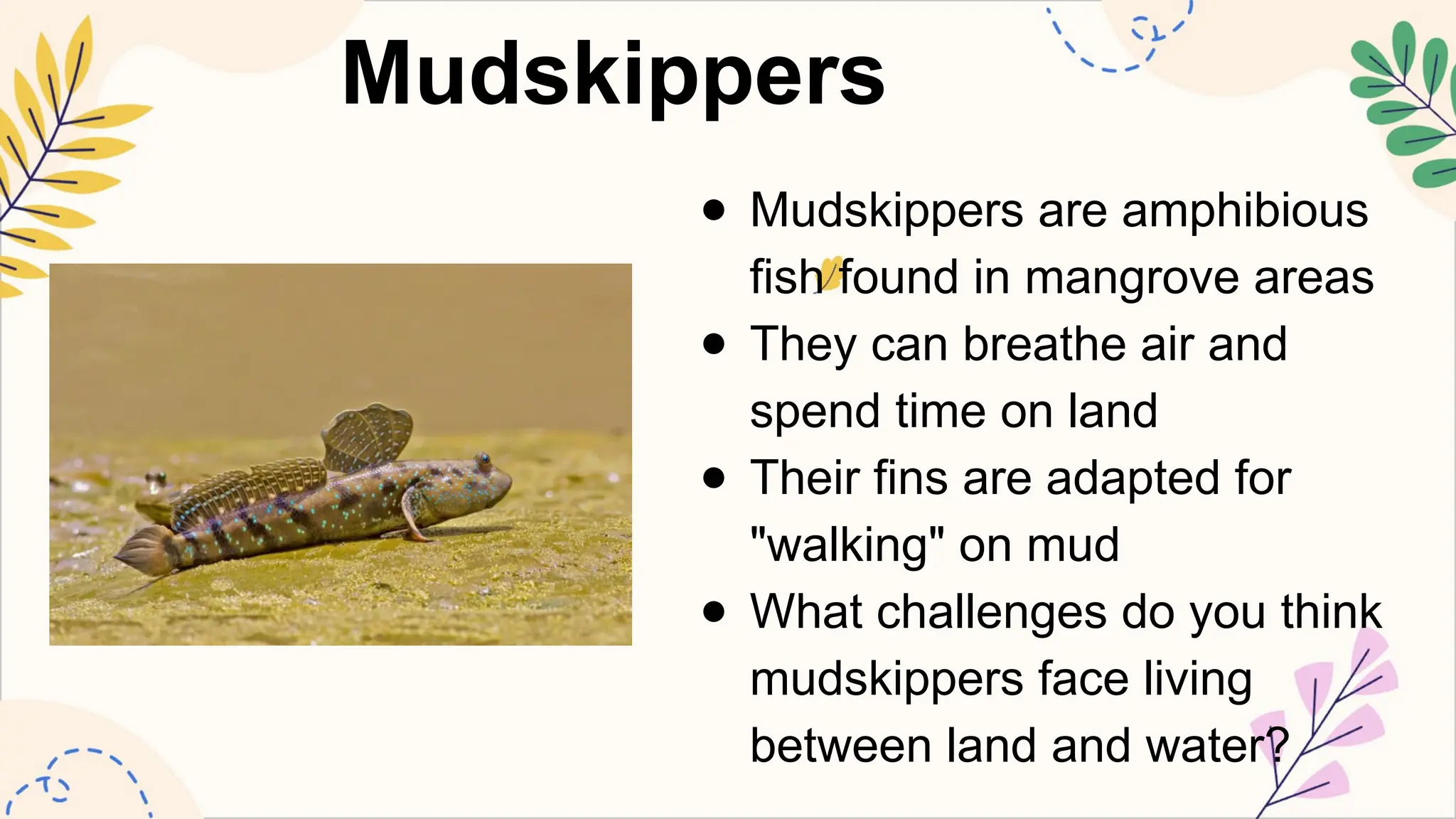
Mudskippers
● Mudskippers are amphibious
fish found in mangrove areas
● They can breathe air and
spend time on land
● Their fins are adapted for
"walking" on mud
● What challenges do you think
mudskippers face living
between land and water?
Coral-Eating Fish
● Some fish, like certain parrotfish species, eat
coral
● Crown-of-thorns starfish (not a fish) are notorious
coral predators
● These animals play a role in reef ecology, but
can be destructive in large numbers
● How might coral-eating species affect reef
health?
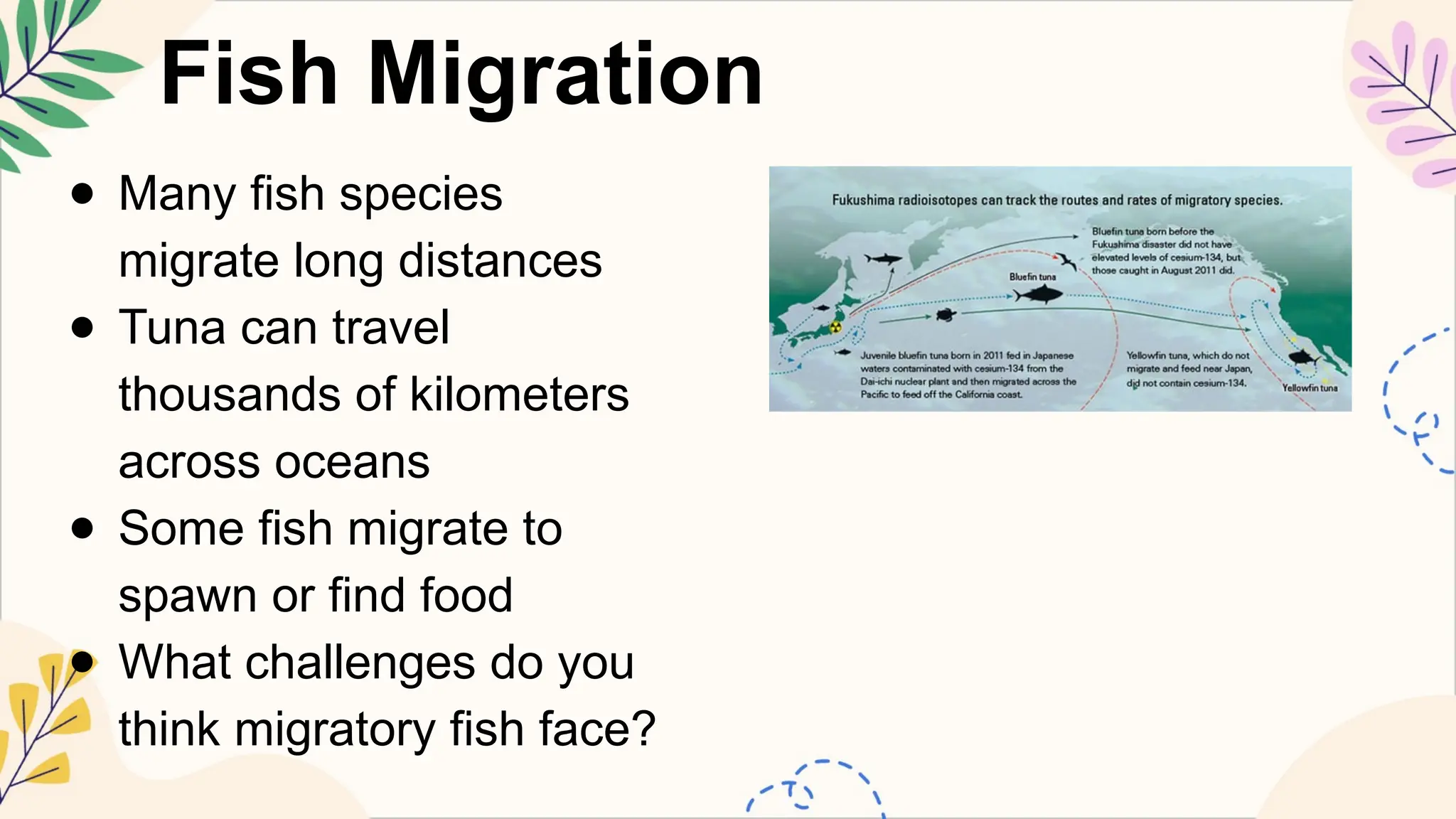
Fish Migration
● Many fish species
migrate long distances
● Tuna can travel
thousands of kilometers
across oceans
● Some fish migrate to
spawn or find food
● What challenges do you
think migratory fish face?
Cryptic Fish
● Some fish are masters of
disguise
● Leaf scorpionfish look
like floating leaves
● Ghost pipefish blend in
with seagrass or coral
● How does camouflage
help these fish survive?
Fish in Philippine Mythology
● Fish play important roles in Philippine myths and
legends
● The Bakunawa is a sea serpent believed to
cause eclipses
● Some stories tell of magical fish granting wishes
● Can you think of any fish-related stories from
your own culture?
Citizen Science and Fish
Conservation
● You can help protect fish by
participating in citizen
science
● Reef Check Philippines trains
volunteers to monitor coral
reefs
● iNaturalist app lets you report
fish sightings
● How else could you get
involved in fish conservation?
Question 1: Coral Triangle
● The Philippines is part of an
area known as the Coral
Triangle
● This region is considered a
global center of marine
biodiversity
● Approximately how many fish
species inhabit Philippine
waters?
● a) 500
● b) 1,000
Question 2: Coral Reef Fish
● Which fish is famous for its
symbiotic relationship with
sea anemones?
● a) Butterflyfish
● b) Clownfish
● c) Parrotfish
● d) Grouper
● Can you explain what
"symbiotic relationship"
means?
Question 3: Pelagic Fish
● These fish are important for the Philippine
economy:
● a) Tuna
● b) Mackerel
● c) Mahi-mahi
● d) All of the above
● Why do you think these fish are economically
important?
Question 4: Unique Philippine Fish
● Which of these is known
as one of the smallest
edible fish in the world?
● a) Maliputo
● b) Mameng
● c) Sinarapan
● d) Tilapia
● Why might very small fish
be challenging to catch
and eat?
Question 5: Endangered Species
● Which of these Philippine fish species is NOT
considered endangered?
● a) Napoleon Wrasse
● b) Seahorses
● c) Giant Grouper
● d) Clownfish
● What factors contribute to a fish species becoming
endangered?
Question 6: Freshwater Fish
● What is the national fish of
the Philippines?
● a) Tilapia
● b) Milkfish (Bangus)
● c) Catfish (Hito)
● d) Carp
● Why do you think this fish
was chosen as the national
fish?
Question 7: Sharks in Philippine
Waters
● Which shark is known for its gentle nature and
plankton diet?
● a) Thresher Shark
● b) Blacktip Reef Shark
● c) Great White Shark
● d) Whale Shark
● How does this shark's diet differ from what people
typically think about sharks?
Question 8: Unusual Fish Adaptations
● Which fish can inflate its
body when threatened?
● a) Lionfish
● b) Flying Fish
● c) Pufferfish
● d) Moray Eel
● What other defense
mechanisms do fish
use?
Question 9: Climate Change and Fish
● How does climate change affect fish in the Philippines?
● a) Rising sea temperatures
● b) Changes in fish migration patterns
● c) Coral bleaching
● d) All of the above
● Can you think of ways to help reduce the impact of climate
change on marine life?
Question 10: Fish Conservation
● Which of these is NOT a method for fish conservation in
the Philippines?
● a) Establishing Marine Protected Areas
● b) Implementing sustainable fishing practices
● c) Encouraging the use of dynamite fishing
● d) Community-based conservation initiatives
● Why do you think the incorrect answer is harmful to fish
populations?

ANSWER KEYS
● 1.B
● 2.B
● 3.D
● 4.C
● 5.D
● 6.B
● 7.D
● 8.C
● 9.D
● 10.C

TLE 8 Q2 6. discuss fish species in the Philippines.pptx

  • 1.
  • 2.
    Introduction to PhilippineFish Diversity ● The Philippines is part of the Coral Triangle, a global center of marine biodiversity ● Over 2,000 species of fish inhabit Philippine waters ● Why do you think the Philippines has such rich marine life?
  • 3.
    Coral Reef Fish ●Clownfish: Famous for their symbiotic relationship with sea anemones ● Butterflyfish: Known for their vibrant colors and patterns ● Parrotfish: Help maintain coral reefs by eating algae ● Can you name other fish species commonly found in coral reefs?
  • 4.
    Pelagic Fish ● Tuna:Various species including yellowfin and skipjack ● Mackerel: Fast-swimming predators ● Mahi-mahi: Also known as dorado, prized for sport fishing ● Why are these fish important for the Philippine economy?
  • 5.
    Reef Predators ● Groupers:Large, slow- moving ambush predators ● Snappers: Important for both commercial and recreational fishing ● Barracuda: Known for their fearsome appearance and sharp teeth ● How do these predators help maintain the balance in reef ecosystems?
  • 6.
    Unique Philippine Fish ●Sinarapan: One of the smallest edible fish in the world ● Maliputo: Endemic to Taal Lake, adapts to both fresh and saltwater ● Mameng: Large wrasse found in deeper waters ● What challenges might these unique species face?
  • 7.
    Colorful Reef Dwellers ●Mandarin Fish: Known for their psychedelic colors ● Angelfish: Various species with vibrant patterns ● Anthias: Small, colorful fish often seen in large schools ● How do bright colors benefit some fish and put others at risk?
  • 8.
    Bottom-Dwelling Fish ● Gobies:Small fish that often live in symbiosis with shrimp ● Blennies: Known for their comical expressions and behavior ● Flatfish: Masters of camouflage on the sea floor ● Why is camouflage important for these bottom- dwelling species?
  • 9.
    Endangered Species ● NapoleonWrasse: Threatened by overfishing ● Seahorses: Various species at risk due to habitat loss ● Giant Grouper: Vulnerable to overfishing due to slow growth ● What actions can be taken to protect these endangered species?
  • 10.
    Freshwater Fish ● Tilapia:Important for aquaculture and food security ● Milkfish (Bangus): National fish of the Philippines ● Catfish (Hito): Common in rivers and fish farms ● How do freshwater fish contribute to the Philippine diet?
  • 11.
    Eels and Morays ●Moray Eels: Fierce predators that hide in reef crevices ● Garden Eels: Colony- forming eels that stand up from the sea floor ● Conger Eels: Large eels found in deeper waters ● Why do you think eels have such unique body shapes?
  • 12.
    Sharks in PhilippineWaters ● Thresher Sharks: Known for their long, whip-like tails ● Whale Sharks: Gentle giants that feed on plankton ● Blacktip Reef Sharks: Common in shallow coral reefs ● How do sharks help maintain healthy marine ecosystems?
  • 13.
    Cephalopods ● Cuttlefish: Mastersof camouflage and color change ● Octopuses: Highly intelligent with problem- solving abilities ● Squid: Fast-swimming predators often found in schools ● How do these animals differ from fish, and why are they included in this presentation?
  • 14.
    Rays and Skates ●Manta Rays: Giant filter feeders that can be seen at cleaning stations ● Stingrays: Bottom-dwelling rays with venomous stingers ● Blue-spotted Ribbontail Ray: A beautiful species found on coral reefs ● How are rays and skates different from other fish?
  • 15.
    Unusual Fish Adaptations ●Lionfish: Venomous spines for defense ● Pufferfish: Ability to inflate their bodies when threatened ● Flying Fish: Can glide above the water's surface ● Can you think of other unusual adaptations fish might have?
  • 16.
    Fish in PhilippineCulture ● Fish as a staple food in Filipino cuisine ● Fishing traditions and techniques passed down through generations ● Myths and legends about fish in Philippine folklore ● How has the importance of fish shaped Philippine culture?
  • 17.
    Conservation Efforts ● Establishmentof Marine Protected Areas (MPAs) ● Sustainable fishing practices and regulations ● Community-based conservation initiatives ● What can you do to help protect fish species in the Philippines?
  • 18.
    Climate Change andFish ● Impact of rising sea temperatures on fish habitats ● Changes in fish distribution and migration patterns ● Coral bleaching and its effect on reef fish populations ● How might climate change affect the future of Philippine fish species?
  • 19.
    Fish Farming inthe Philippines ● Importance of aquaculture for food security ● Common farmed species: milkfish, tilapia, shrimp ● Challenges and environmental concerns of fish farming ● How can fish farming be made more sustainable?
  • 20.
    The Future ofPhilippine Fish ● Ongoing research and discoveries of new species ● Importance of education and awareness for conservation ● Balancing human needs with ecosystem protection ● What role will you play in protecting the diverse fish species of the Philippines?
  • 21.
    Bioluminescent Fish ● Somedeep-sea fish produce their own light ● Lanternfish have light- producing organs called photophores ● Flashlight fish use bioluminescent bacteria under their eyes ● Why do you think these fish evolved to produce light?
  • 22.
    Cleaner Fish ● Cleanerwrasses and some butterfly fish species clean other fish ● They remove parasites, dead skin, and debris from larger fish ● Cleaning stations are important reef locations ● How does this relationship benefit both the cleaner and the cleaned fish?
  • 23.
    Venomous Fish ● Somefish use venom for defense, like the stonefish and lionfish ● Stonefish are masters of camouflage with potent venom ● Lionfish have beautiful but venomous spines ● Why might these fish have developed such strong venom?
  • 24.
    Schooling Behavior ● Manyfish species form large schools for protection ● Common schooling fish include sardines, anchovies, and jack fish ● Schools can have complex shapes and movements ● How does schooling help protect individual fish?
  • 25.
    Mudskippers ● Mudskippers areamphibious fish found in mangrove areas ● They can breathe air and spend time on land ● Their fins are adapted for "walking" on mud ● What challenges do you think mudskippers face living between land and water?
  • 26.
    Coral-Eating Fish ● Somefish, like certain parrotfish species, eat coral ● Crown-of-thorns starfish (not a fish) are notorious coral predators ● These animals play a role in reef ecology, but can be destructive in large numbers ● How might coral-eating species affect reef health?
  • 27.
    Fish Migration ● Manyfish species migrate long distances ● Tuna can travel thousands of kilometers across oceans ● Some fish migrate to spawn or find food ● What challenges do you think migratory fish face?
  • 28.
    Cryptic Fish ● Somefish are masters of disguise ● Leaf scorpionfish look like floating leaves ● Ghost pipefish blend in with seagrass or coral ● How does camouflage help these fish survive?
  • 29.
    Fish in PhilippineMythology ● Fish play important roles in Philippine myths and legends ● The Bakunawa is a sea serpent believed to cause eclipses ● Some stories tell of magical fish granting wishes ● Can you think of any fish-related stories from your own culture?
  • 30.
    Citizen Science andFish Conservation ● You can help protect fish by participating in citizen science ● Reef Check Philippines trains volunteers to monitor coral reefs ● iNaturalist app lets you report fish sightings ● How else could you get involved in fish conservation?
  • 31.
    Question 1: CoralTriangle ● The Philippines is part of an area known as the Coral Triangle ● This region is considered a global center of marine biodiversity ● Approximately how many fish species inhabit Philippine waters? ● a) 500 ● b) 1,000
  • 32.
    Question 2: CoralReef Fish ● Which fish is famous for its symbiotic relationship with sea anemones? ● a) Butterflyfish ● b) Clownfish ● c) Parrotfish ● d) Grouper ● Can you explain what "symbiotic relationship" means?
  • 33.
    Question 3: PelagicFish ● These fish are important for the Philippine economy: ● a) Tuna ● b) Mackerel ● c) Mahi-mahi ● d) All of the above ● Why do you think these fish are economically important?
  • 34.
    Question 4: UniquePhilippine Fish ● Which of these is known as one of the smallest edible fish in the world? ● a) Maliputo ● b) Mameng ● c) Sinarapan ● d) Tilapia ● Why might very small fish be challenging to catch and eat?
  • 35.
    Question 5: EndangeredSpecies ● Which of these Philippine fish species is NOT considered endangered? ● a) Napoleon Wrasse ● b) Seahorses ● c) Giant Grouper ● d) Clownfish ● What factors contribute to a fish species becoming endangered?
  • 36.
    Question 6: FreshwaterFish ● What is the national fish of the Philippines? ● a) Tilapia ● b) Milkfish (Bangus) ● c) Catfish (Hito) ● d) Carp ● Why do you think this fish was chosen as the national fish?
  • 37.
    Question 7: Sharksin Philippine Waters ● Which shark is known for its gentle nature and plankton diet? ● a) Thresher Shark ● b) Blacktip Reef Shark ● c) Great White Shark ● d) Whale Shark ● How does this shark's diet differ from what people typically think about sharks?
  • 38.
    Question 8: UnusualFish Adaptations ● Which fish can inflate its body when threatened? ● a) Lionfish ● b) Flying Fish ● c) Pufferfish ● d) Moray Eel ● What other defense mechanisms do fish use?
  • 39.
    Question 9: ClimateChange and Fish ● How does climate change affect fish in the Philippines? ● a) Rising sea temperatures ● b) Changes in fish migration patterns ● c) Coral bleaching ● d) All of the above ● Can you think of ways to help reduce the impact of climate change on marine life?
  • 40.
    Question 10: FishConservation ● Which of these is NOT a method for fish conservation in the Philippines? ● a) Establishing Marine Protected Areas ● b) Implementing sustainable fishing practices ● c) Encouraging the use of dynamite fishing ● d) Community-based conservation initiatives ● Why do you think the incorrect answer is harmful to fish populations?
  • 41.
    ANSWER KEYS ● 1.B ●2.B ● 3.D ● 4.C ● 5.D ● 6.B ● 7.D ● 8.C ● 9.D ● 10.C