ARTIFICIAL PASSENGER
CONTENTS
 Abstract
 Introduction
 History
 Components
 Features
 Advantages
 Disadvantages
 Future usage of technology
 Conclusion
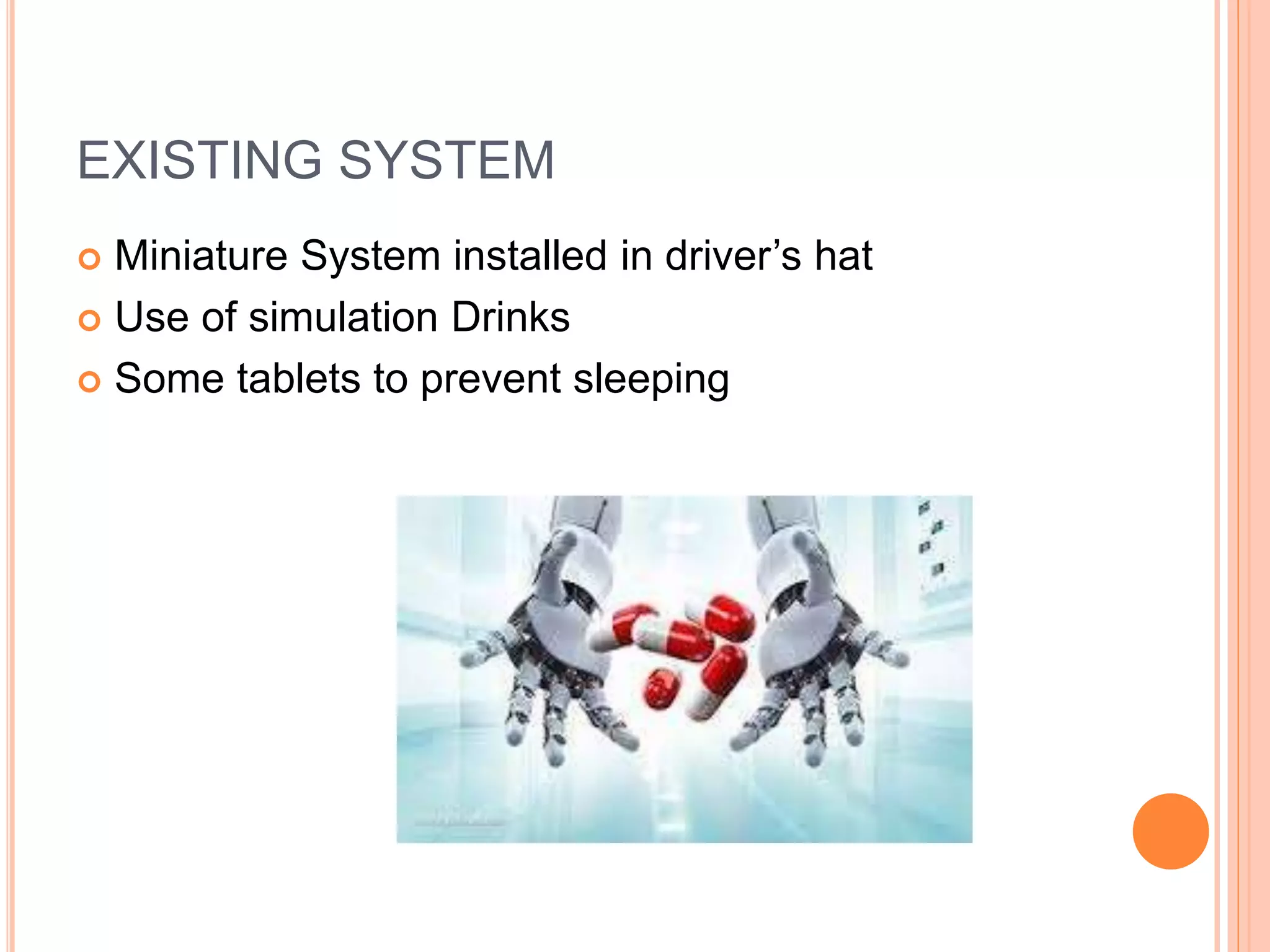
EXISTING SYSTEM
 Miniature System installed in driver’s hat
 Use of simulation Drinks
 Some tablets to prevent sleeping
INTRODUCTION
 According to national survey in UK and USA , it is
observed that the driver fatigue annually causes.
 10000 crashes
 1500 deaths
 7100 injuries
 Majority of road accidents observed were caused
by eye closure of half and even 2-3 seconds, where
normal eye blinks at 0.2-0.3 seconds
BACKGROUND OF THE INVENTION
 In order to overcome disadvantages of existing
methods IBM introduced a new sleep prevention
technology device “ARTIFICIAL PASSENGER”.
 The name for the system was first suggested in an
article in New scientist magazine
 This is designed to make solo journey more safer
TECHNOLOGY INVOLVED
 Artificial intelligence (AI) is the intelligence of
machines and the branch of computer science "the
study and design of intelligent agents“
 An intelligent agent is a system that perceives its
environment and takes actions that maximize its
chances of success .
WHAT IS ARTIFICIAL PASSENGER?
 This is an artificial intelligence based companion.
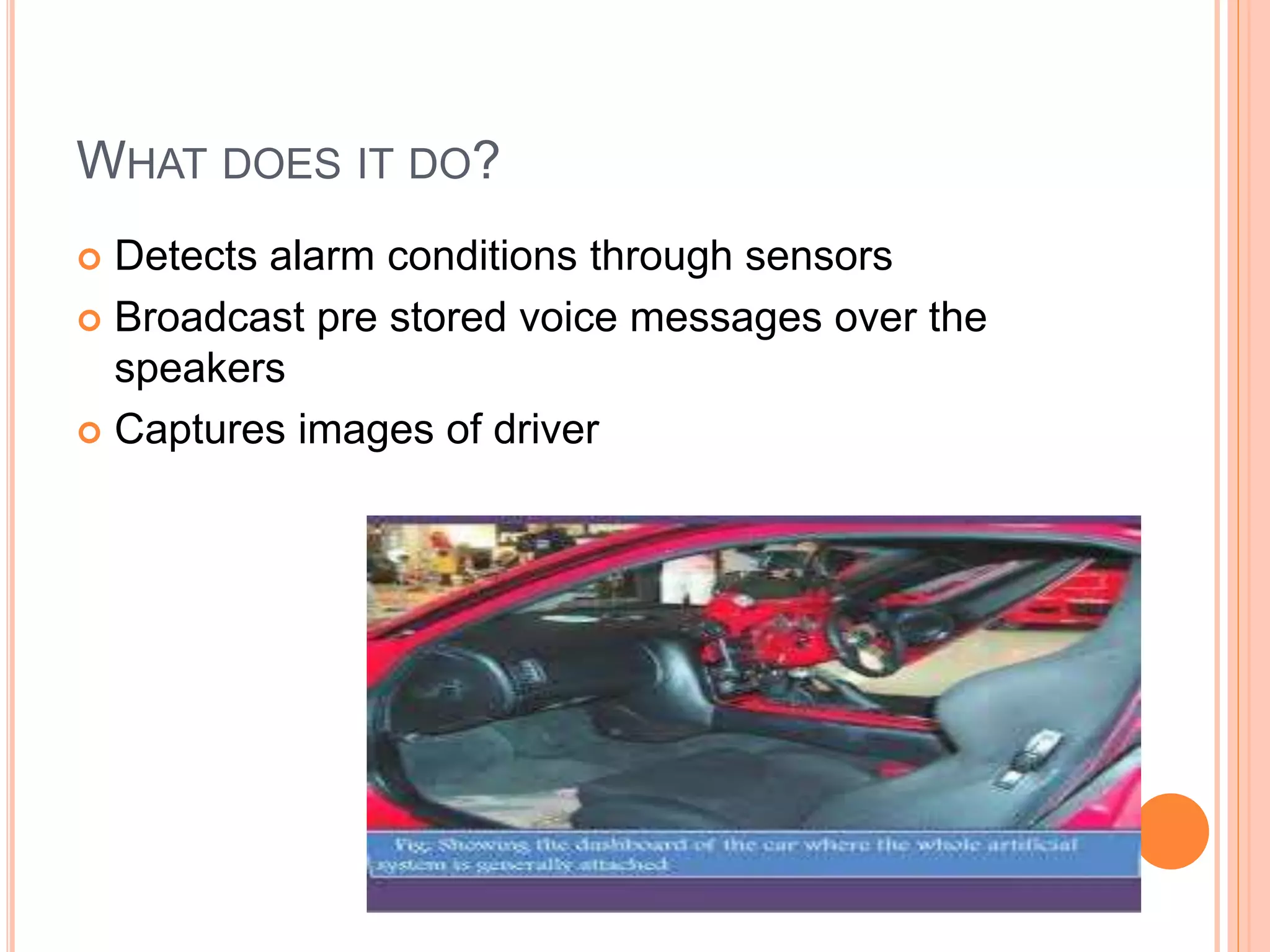
 Resident in software and chips embedded in the
automobile dashboard.
WHAT DOES IT DO?
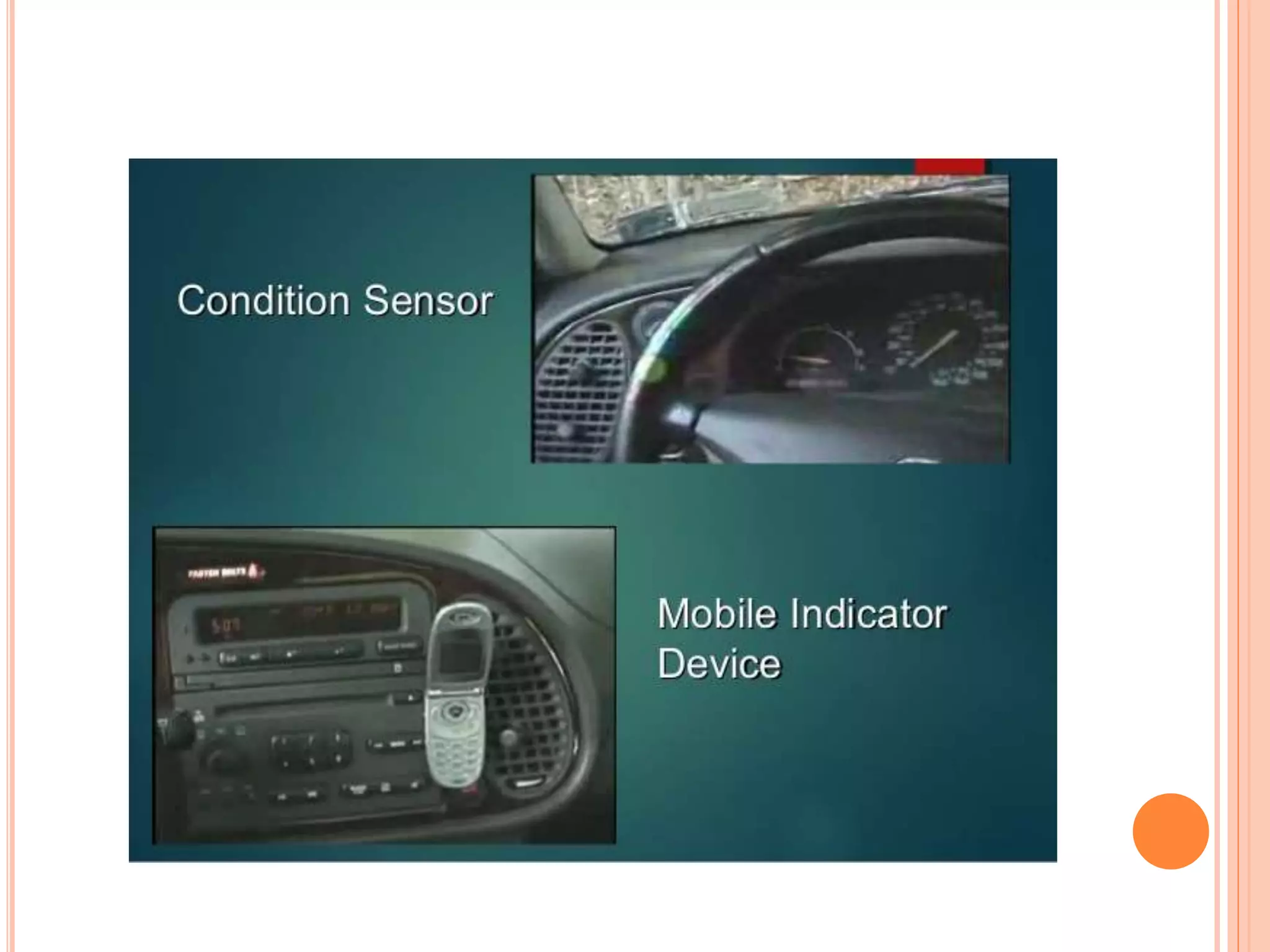
 Detects alarm conditions through sensors
 Broadcast pre stored voice messages over the
speakers
 Captures images of driver
WHY SUCH SYSTEM?
 There are many accidents taking place daily
 To avoid there must be some communication
between driver and vehicle
 This communication helps to prevent unfortunate
things from happening
 So , artificial passenger is pathway to overcome
such things
FEATURES
OF
ARTIFICIAL
PASSENGER
WORKLOAD MANAGER
 These sensors in system:
 allow for the monitoring of driver actions (e.g.
application of brakes, changing lanes)
 provide information about local events (e.g. heavy
rain)
 provide information about driver characteristics
(e.g. speaking speed, eyelid status).
DRIVER’S DROWSINESS PREVENTION
 The invention suggests fighting drowsiness by
detecting drowsiness via speech biometrics
 The purpose of Artificial Passenger is to provide a
higher level of interaction with a driver than current
media, such as CD players or radio stations
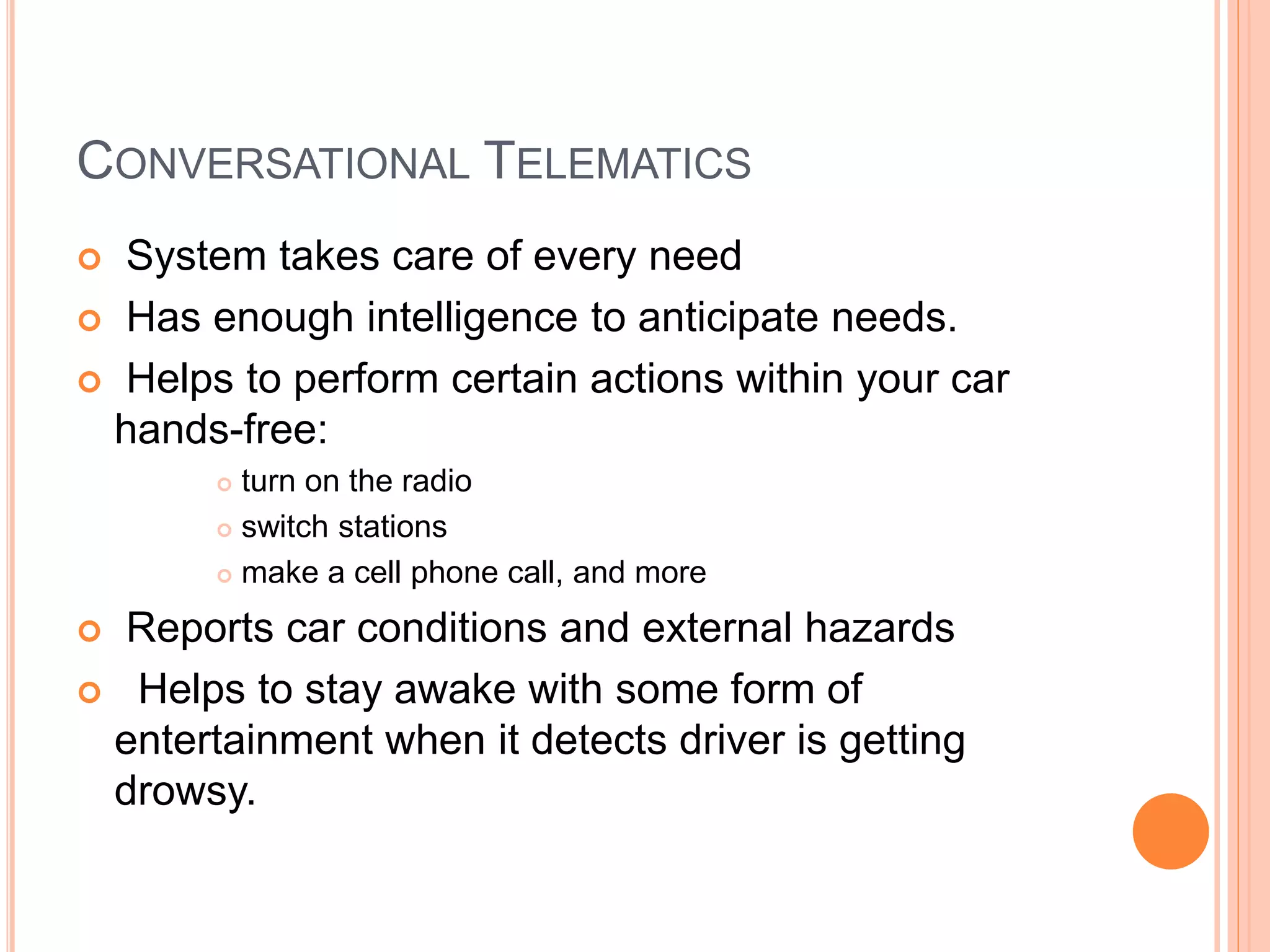
CONVERSATIONAL TELEMATICS
 System takes care of every need
 Has enough intelligence to anticipate needs.
 Helps to perform certain actions within your car
hands-free:
 turn on the radio
 switch stations
 make a cell phone call, and more
 Reports car conditions and external hazards
 Helps to stay awake with some form of
entertainment when it detects driver is getting
drowsy.
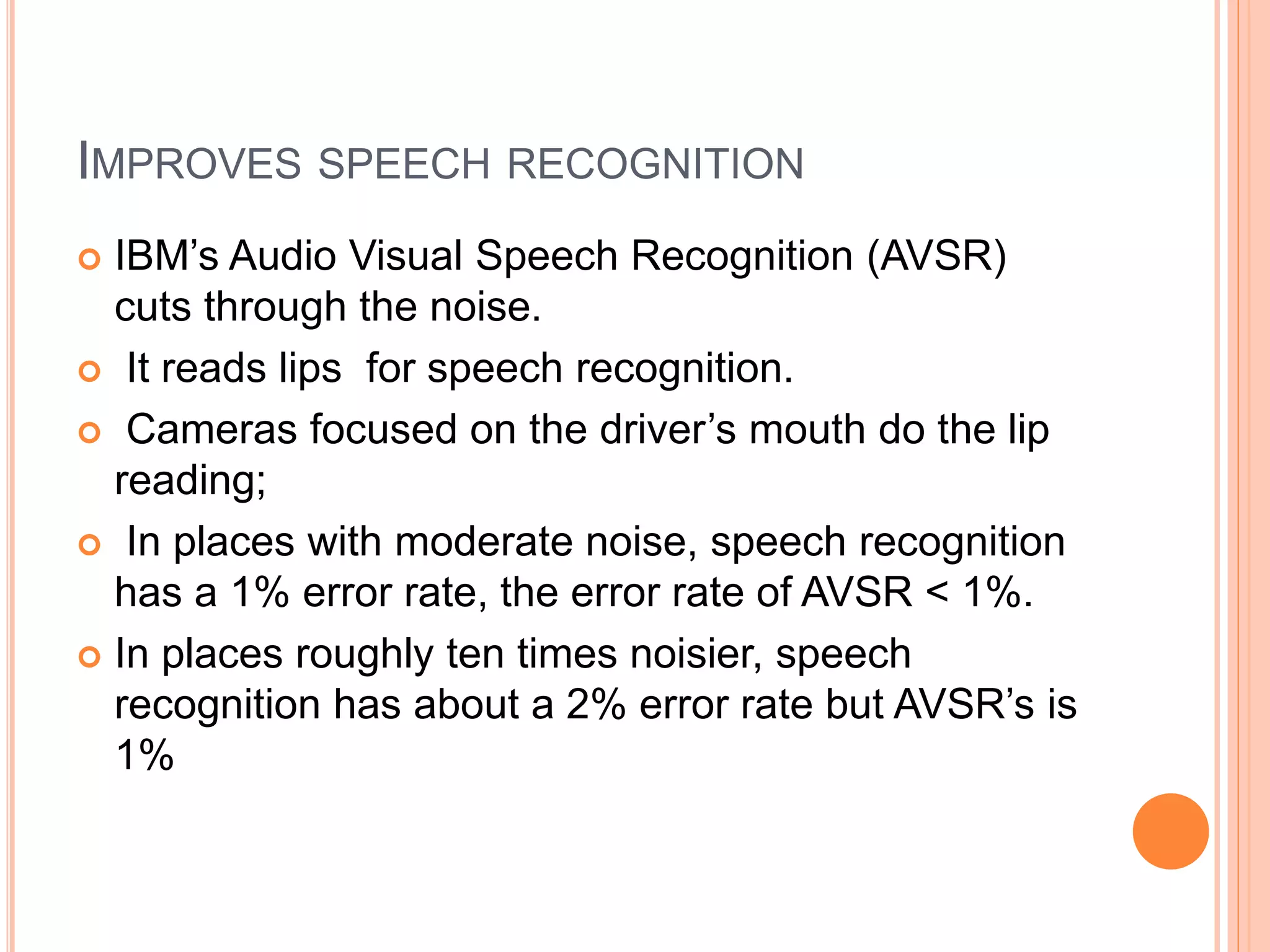
IMPROVES SPEECH RECOGNITION
 IBM’s Audio Visual Speech Recognition (AVSR)
cuts through the noise.
 It reads lips for speech recognition.
 Cameras focused on the driver’s mouth do the lip
reading;
 In places with moderate noise, speech recognition
has a 1% error rate, the error rate of AVSR < 1%.
 In places roughly ten times noisier, speech
recognition has about a 2% error rate but AVSR’s is
1%
COMPONENTS
OF
ARTIFICIAL
PASSENGER
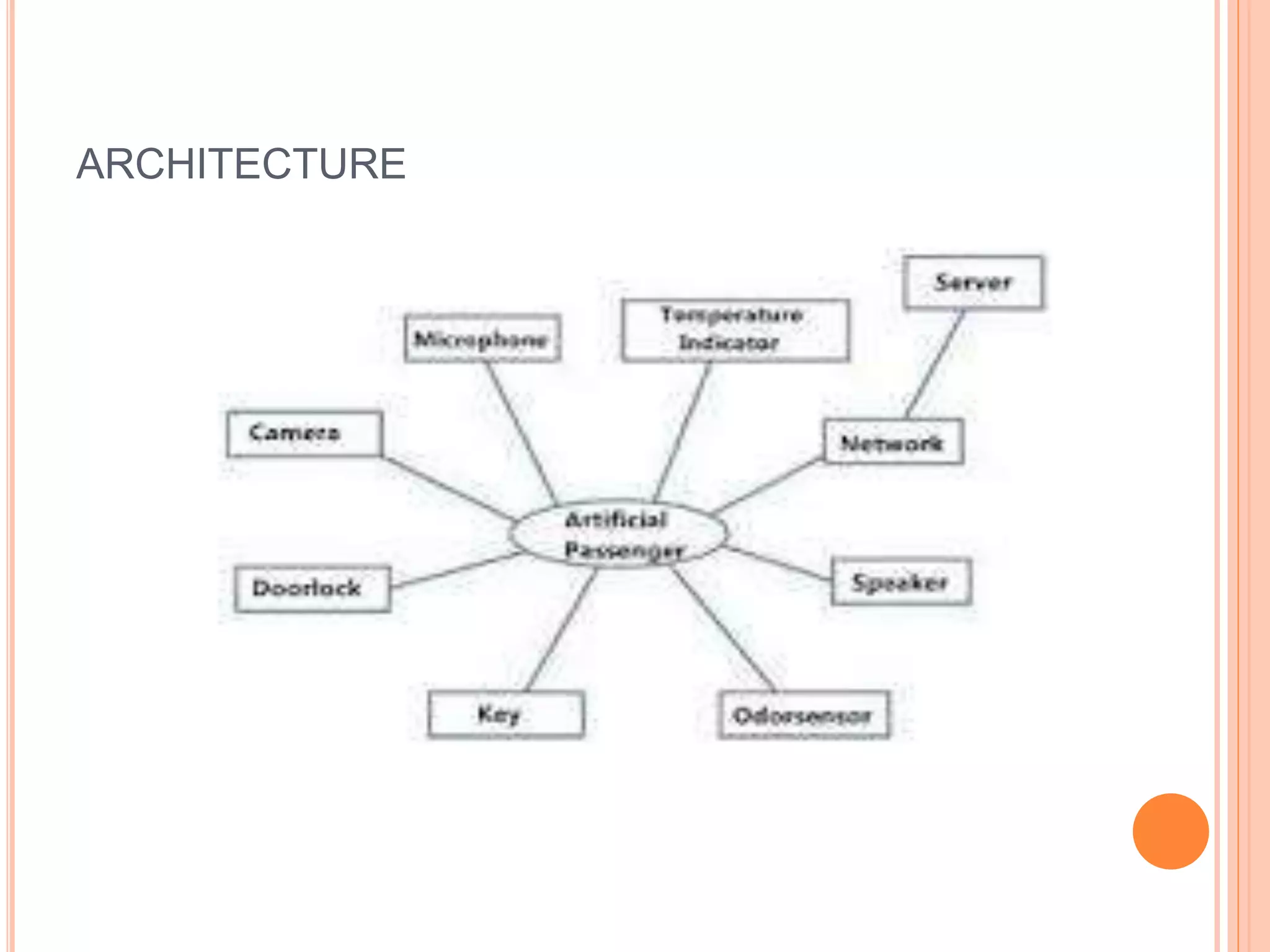
ARCHITECTURE
CONVERSATIONAL PLANNER (CP)
 Heart of the system.
 CP holds the profile of the driver.
 Instruct the language generator to produce
response.
 If the driver is in perfect condition CP instructs
language processor to continue conversation
otherwise it is instructed to change the conversation
(un expected joke).
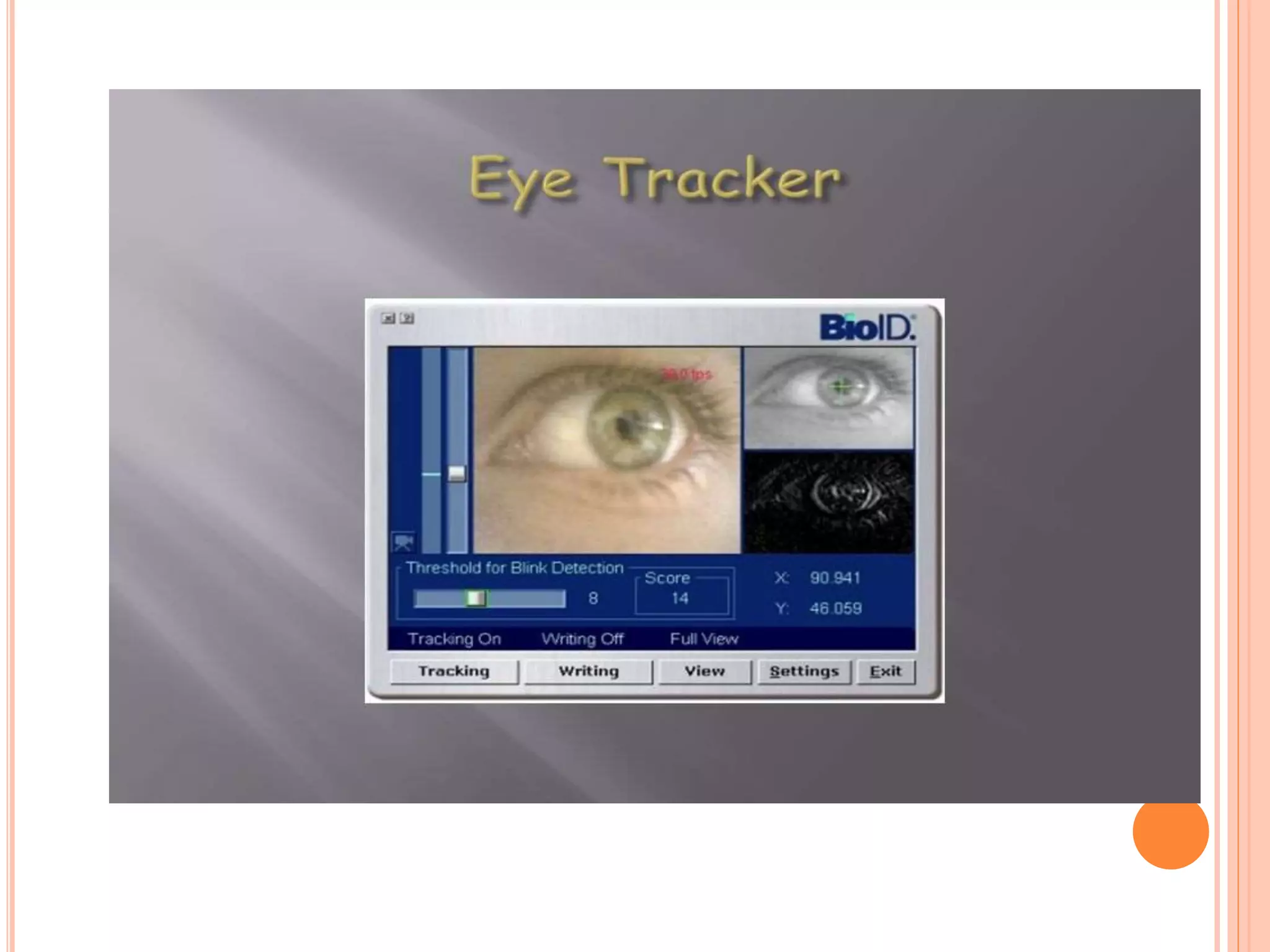
EYE TRACKER
o Eye-tracking hardware is either mounted on a
user's head or mounted remotely.
o Both systems measure the corneal reflection of an
infrared light emitting diode (LED), which
illuminates and generates a reflection off the
surface of the eye.
o This action causes the pupil to appear as a bright
disk in contrast to the surrounding iris and creates a
small glint underneath the pupil. It is this glint that
head-mounted and remote systems use for
calibration and tracking.
ALARM
 If CP receives an info that driver is about to
 Sleep then
 Alarm system is activated
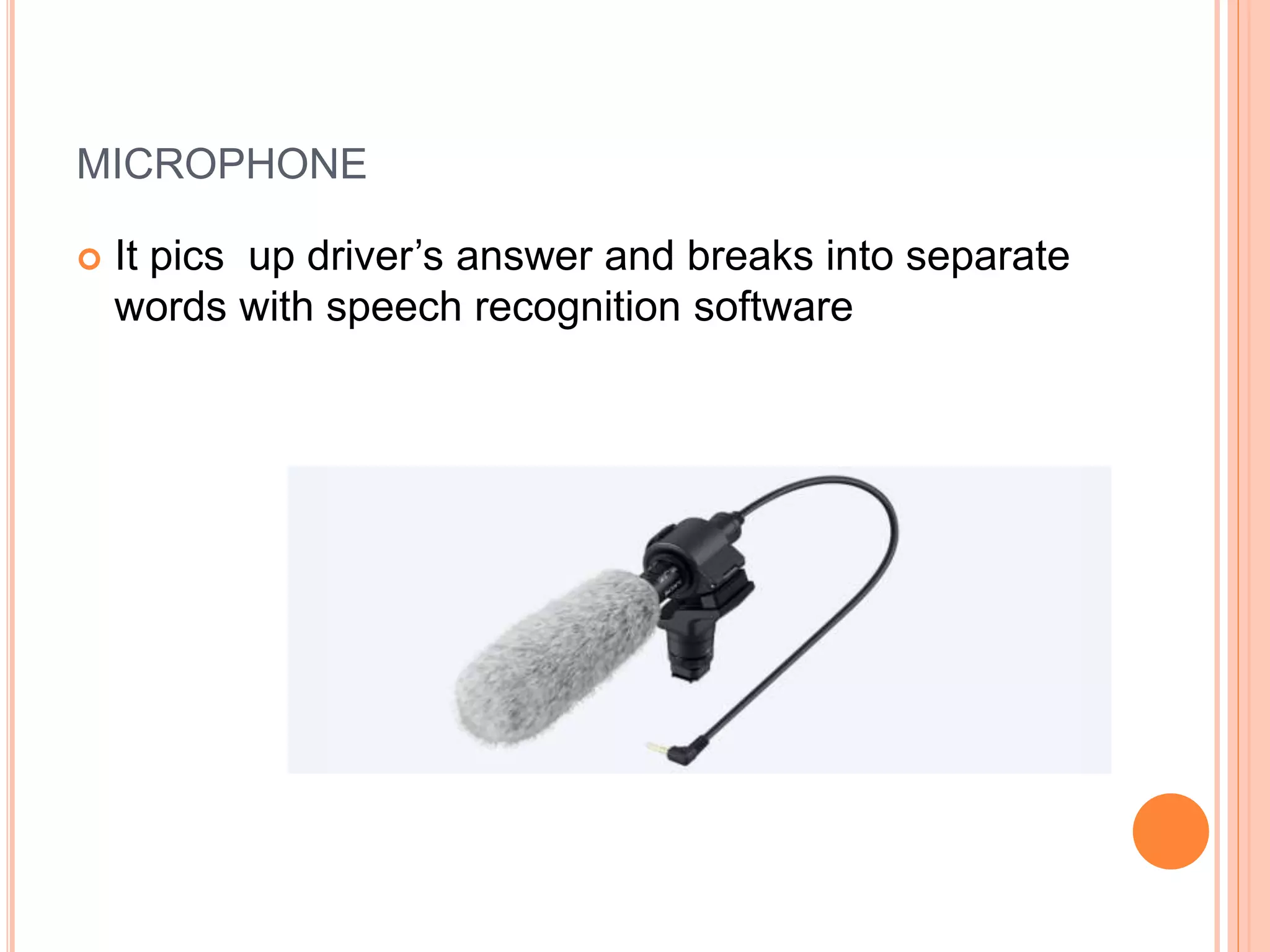
MICROPHONE
 It pics up driver’s answer and breaks into separate
words with speech recognition software
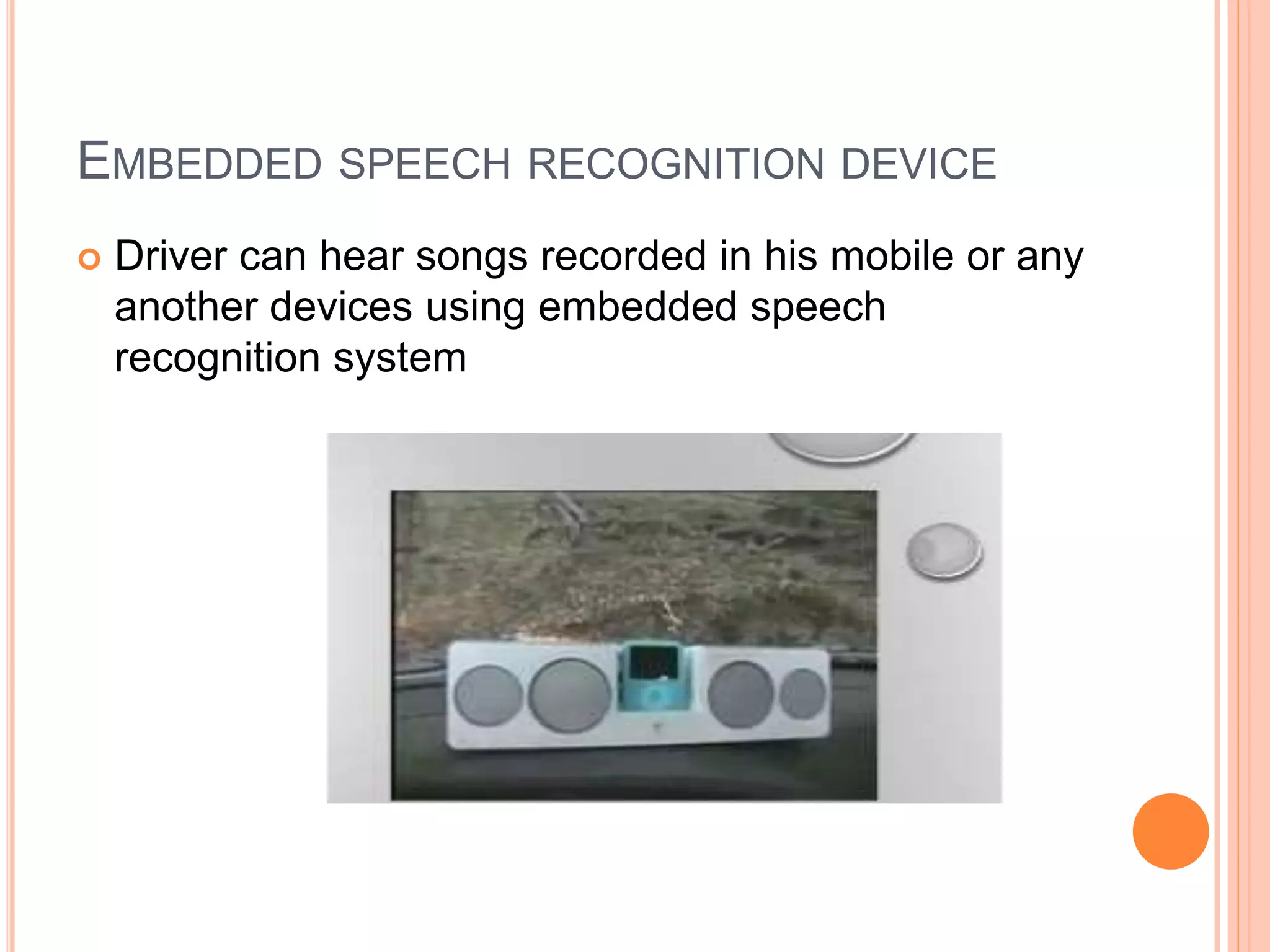
EMBEDDED SPEECH RECOGNITION DEVICE
 Driver can hear songs recorded in his mobile or any
another devices using embedded speech
recognition system
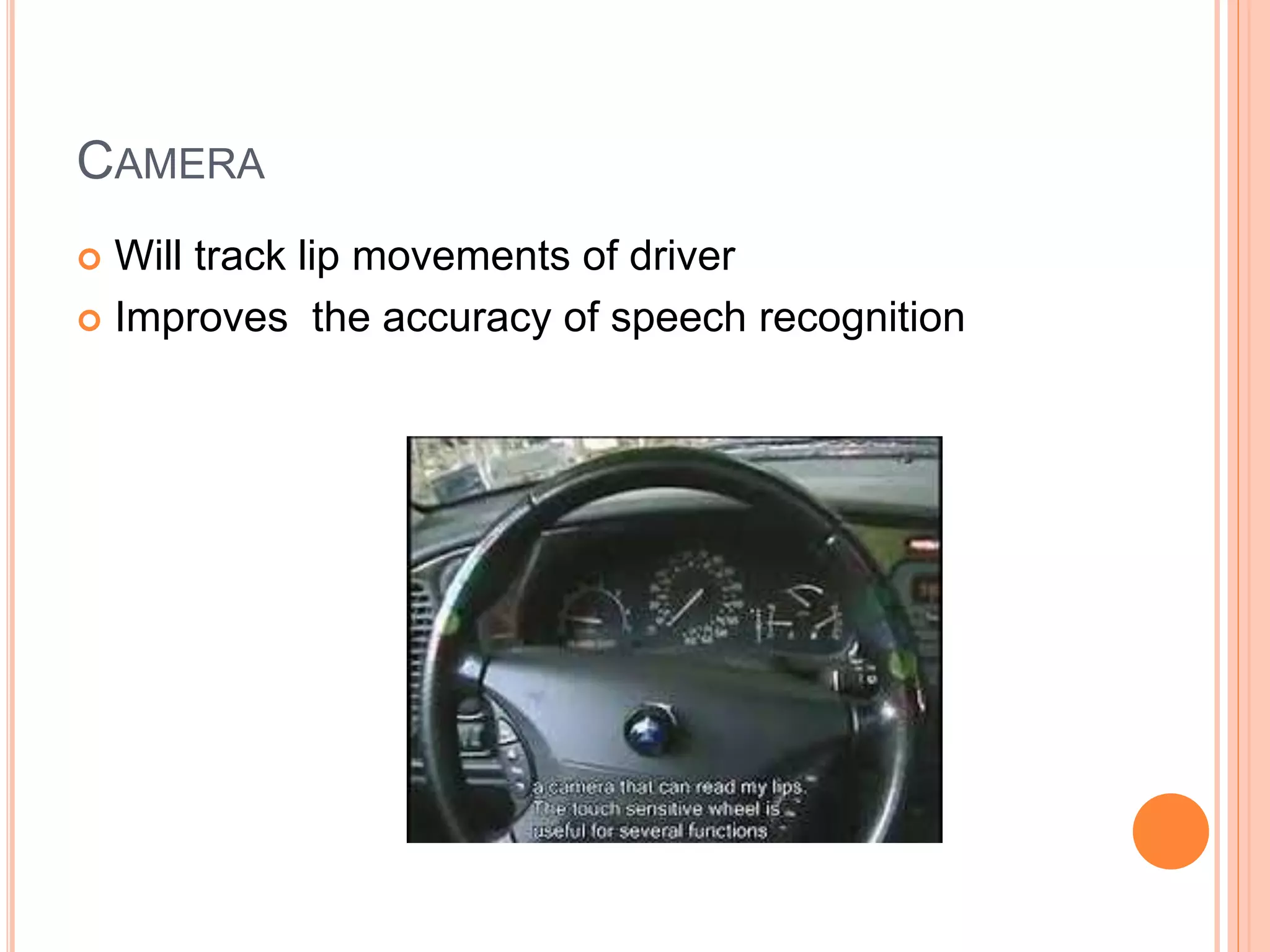
CAMERA
 Will track lip movements of driver
 Improves the accuracy of speech recognition
MOBILE DEVICE INDICATOR
 When driver gets a call ,
 The system takes up the call by driver’s
speech using speech recognition software
Even by driver’s lip movement with the help of
camera
METHOD FOR DETECTING DRIVER VIGILANCE
COMPRISES THE FOLLOWING STEPS
o Detecting frequency of nodding and left to right
rotations of the head within a selected time period
of the driver with the camera.
o Determining frequency of eye blinking and eye
closings of the driver within the selected time period
with the camera.
o Determining frequency of yawning of the driver
within the select period with the camera.
o Generating an alarm signal in real time if a
frequency value of the number of the frequency of
the up and down nodding, the left to right rotations,
the eye blinking, the eye closings, the yawning
exceed a threshold value
ADVANTAGES
 Broadly used to prevent accidents
 Component establishes interface with other drivers
easily
 If drivers gets heart attack or he is drunk it will send
signals to nearby drivers to make them alert
DISADVANTAGES
 The system is expensive
 Installed only in high profile cars
APPLICATIONS OF ARTIFICIAL
PASSENGER
 prevent accidents
 Used for entertainment such as telling jokes and
asking questions.
 Automatically opens and close the window of car
and answers a call for you.
 If a driver gets heart attack or he is drunk, it sends
a signal to vehicles nearby so that there driver
becomes alert.
.
CONTD……
 Can be used in other situations where people must
be alert
 Security guards
 Operators at nuclear plants
 Operators at manufacturing facilities
 Pilots of air planes
FUTURE TECHNOLOGY
We can provide driver with a “shortest time” routing
based on
i. road conditions changing because of weather
and traffic
ii. remote diagnostics of his/her car and cars on
their route
iii. destination requirements and nearby incentives
CONCLUSION
 Method for monitoring driver’s alertness
 Sufficient time to avert an accident.
 Monitoring of full facial occlusion of the driver.
Artificial passenger

Artificial passenger

  • 1.
  • 2.
    CONTENTS  Abstract  Introduction History  Components  Features  Advantages  Disadvantages  Future usage of technology  Conclusion
  • 3.
    EXISTING SYSTEM  MiniatureSystem installed in driver’s hat  Use of simulation Drinks  Some tablets to prevent sleeping
  • 4.
    INTRODUCTION  According tonational survey in UK and USA , it is observed that the driver fatigue annually causes.  10000 crashes  1500 deaths  7100 injuries  Majority of road accidents observed were caused by eye closure of half and even 2-3 seconds, where normal eye blinks at 0.2-0.3 seconds
  • 5.
    BACKGROUND OF THEINVENTION  In order to overcome disadvantages of existing methods IBM introduced a new sleep prevention technology device “ARTIFICIAL PASSENGER”.  The name for the system was first suggested in an article in New scientist magazine  This is designed to make solo journey more safer
  • 6.
    TECHNOLOGY INVOLVED  Artificialintelligence (AI) is the intelligence of machines and the branch of computer science "the study and design of intelligent agents“  An intelligent agent is a system that perceives its environment and takes actions that maximize its chances of success .
  • 7.
    WHAT IS ARTIFICIALPASSENGER?  This is an artificial intelligence based companion.  Resident in software and chips embedded in the automobile dashboard.
  • 8.
    WHAT DOES ITDO?  Detects alarm conditions through sensors  Broadcast pre stored voice messages over the speakers  Captures images of driver
  • 9.
    WHY SUCH SYSTEM? There are many accidents taking place daily  To avoid there must be some communication between driver and vehicle  This communication helps to prevent unfortunate things from happening  So , artificial passenger is pathway to overcome such things
  • 10.
  • 11.
    WORKLOAD MANAGER  Thesesensors in system:  allow for the monitoring of driver actions (e.g. application of brakes, changing lanes)  provide information about local events (e.g. heavy rain)  provide information about driver characteristics (e.g. speaking speed, eyelid status).
  • 12.
    DRIVER’S DROWSINESS PREVENTION The invention suggests fighting drowsiness by detecting drowsiness via speech biometrics  The purpose of Artificial Passenger is to provide a higher level of interaction with a driver than current media, such as CD players or radio stations
  • 13.
    CONVERSATIONAL TELEMATICS  Systemtakes care of every need  Has enough intelligence to anticipate needs.  Helps to perform certain actions within your car hands-free:  turn on the radio  switch stations  make a cell phone call, and more  Reports car conditions and external hazards  Helps to stay awake with some form of entertainment when it detects driver is getting drowsy.
  • 14.
    IMPROVES SPEECH RECOGNITION IBM’s Audio Visual Speech Recognition (AVSR) cuts through the noise.  It reads lips for speech recognition.  Cameras focused on the driver’s mouth do the lip reading;  In places with moderate noise, speech recognition has a 1% error rate, the error rate of AVSR < 1%.  In places roughly ten times noisier, speech recognition has about a 2% error rate but AVSR’s is 1%
  • 15.
  • 16.
  • 17.
    CONVERSATIONAL PLANNER (CP) Heart of the system.  CP holds the profile of the driver.  Instruct the language generator to produce response.  If the driver is in perfect condition CP instructs language processor to continue conversation otherwise it is instructed to change the conversation (un expected joke).
  • 18.
    EYE TRACKER o Eye-trackinghardware is either mounted on a user's head or mounted remotely. o Both systems measure the corneal reflection of an infrared light emitting diode (LED), which illuminates and generates a reflection off the surface of the eye. o This action causes the pupil to appear as a bright disk in contrast to the surrounding iris and creates a small glint underneath the pupil. It is this glint that head-mounted and remote systems use for calibration and tracking.
  • 20.
    ALARM  If CPreceives an info that driver is about to  Sleep then  Alarm system is activated
  • 21.
    MICROPHONE  It picsup driver’s answer and breaks into separate words with speech recognition software
  • 22.
    EMBEDDED SPEECH RECOGNITIONDEVICE  Driver can hear songs recorded in his mobile or any another devices using embedded speech recognition system
  • 23.
    CAMERA  Will tracklip movements of driver  Improves the accuracy of speech recognition
  • 24.
    MOBILE DEVICE INDICATOR When driver gets a call ,  The system takes up the call by driver’s speech using speech recognition software Even by driver’s lip movement with the help of camera
  • 26.
    METHOD FOR DETECTINGDRIVER VIGILANCE COMPRISES THE FOLLOWING STEPS o Detecting frequency of nodding and left to right rotations of the head within a selected time period of the driver with the camera. o Determining frequency of eye blinking and eye closings of the driver within the selected time period with the camera. o Determining frequency of yawning of the driver within the select period with the camera. o Generating an alarm signal in real time if a frequency value of the number of the frequency of the up and down nodding, the left to right rotations, the eye blinking, the eye closings, the yawning exceed a threshold value
  • 27.
    ADVANTAGES  Broadly usedto prevent accidents  Component establishes interface with other drivers easily  If drivers gets heart attack or he is drunk it will send signals to nearby drivers to make them alert
  • 28.
    DISADVANTAGES  The systemis expensive  Installed only in high profile cars
  • 29.
    APPLICATIONS OF ARTIFICIAL PASSENGER prevent accidents  Used for entertainment such as telling jokes and asking questions.  Automatically opens and close the window of car and answers a call for you.  If a driver gets heart attack or he is drunk, it sends a signal to vehicles nearby so that there driver becomes alert. .
  • 30.
    CONTD……  Can beused in other situations where people must be alert  Security guards  Operators at nuclear plants  Operators at manufacturing facilities  Pilots of air planes
  • 31.
    FUTURE TECHNOLOGY We canprovide driver with a “shortest time” routing based on i. road conditions changing because of weather and traffic ii. remote diagnostics of his/her car and cars on their route iii. destination requirements and nearby incentives
  • 32.
    CONCLUSION  Method formonitoring driver’s alertness  Sufficient time to avert an accident.  Monitoring of full facial occlusion of the driver.